

Thai dialogue with translation · A2 · 13 lines
ทำอาหารเป็นไหมคะ Do you know how to cook?
Comic · 7 panels

- แม่ครัว
สวัสดีค่ะ ยินดีต้อนรับค่ะ วันนี้วันแรกของคอร์สนะคะ
Hello. Welcome. Today is the first day of the course (woman speaking).
- ยานา
ฉันสนใจทำอาหารไทยค่ะ คอร์สนี้น่าสนใจมากค่ะ
I’m interested in Thai cooking. This course is very interesting (woman speaking).

- แม่ครัว
ดีมากค่ะ คุณทำอาหารเป็นไหมคะ
Very good. Do you know how to cook? (woman speaking)
- ยานา
ผัดผักเป็นค่ะ แต่ทำอาหารไทยไม่เป็นค่ะ
I know how to stir-fry vegetables, but I don’t know how to cook Thai food (woman speaking).

- แม่ครัว
อ๋อค่ะ แล้วคุณล่ะคะ
Oh, I see. And you? (woman speaking)
- ดีมา
ผมทำอาหารไม่เป็นเลยครับ ต้มไข่ก็ไม่เป็นครับ
I don’t know how to cook at all. I don’t even know how to boil an egg (man speaking).

- แม่ครัว
ไม่เป็นไรค่ะ ตอนแรกทุกคนก็ทำอาหารไม่เป็นนะคะ
It’s OK. At first nobody knows how to cook (woman speaking).
- ดีมา
งั้นคุณทำอาหารให้ผมได้ไหมครับ
Then can you cook for me? (man speaking)
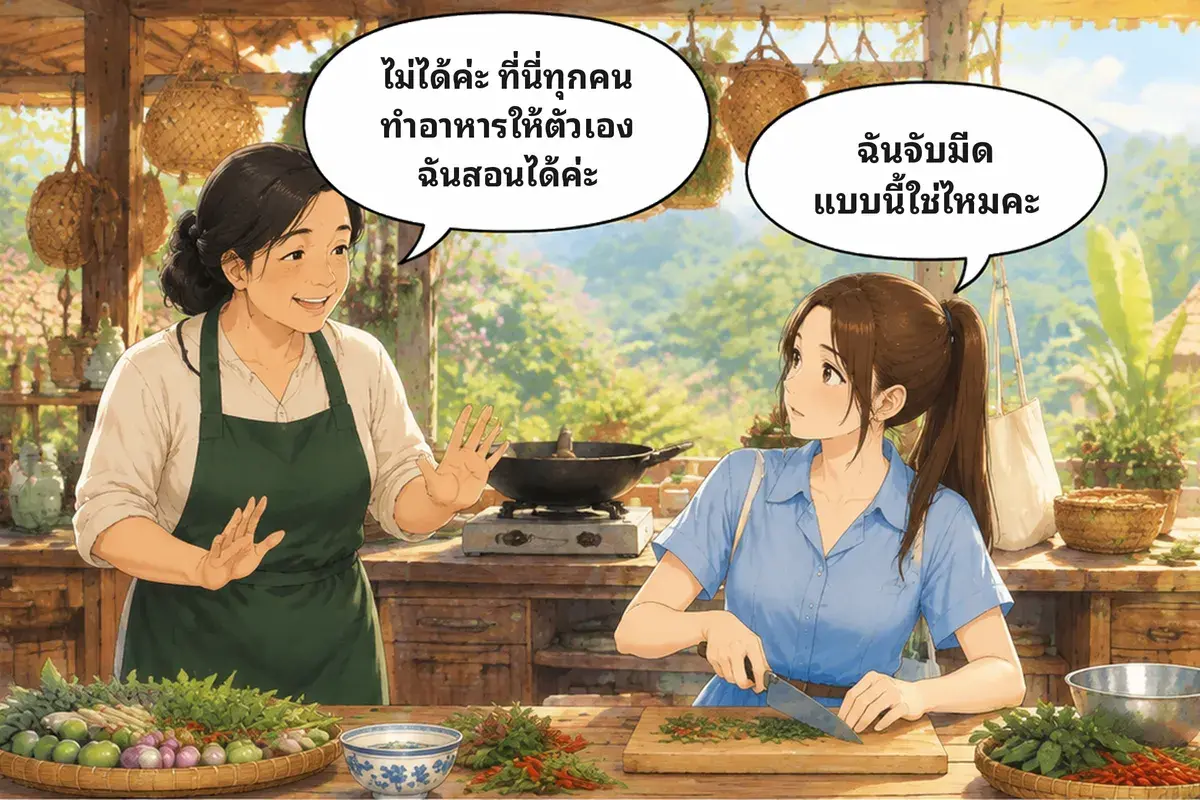
- แม่ครัว
ไม่ได้ค่ะ ที่นี่ทุกคนทำอาหารให้ตัวเอง ฉันสอนได้ค่ะ
No, I can’t. Here everyone cooks for themselves. I can teach (woman speaking).
- ยานา
ฉันจับมีดแบบนี้ใช่ไหมคะ
Am I holding the knife like this? (woman speaking)
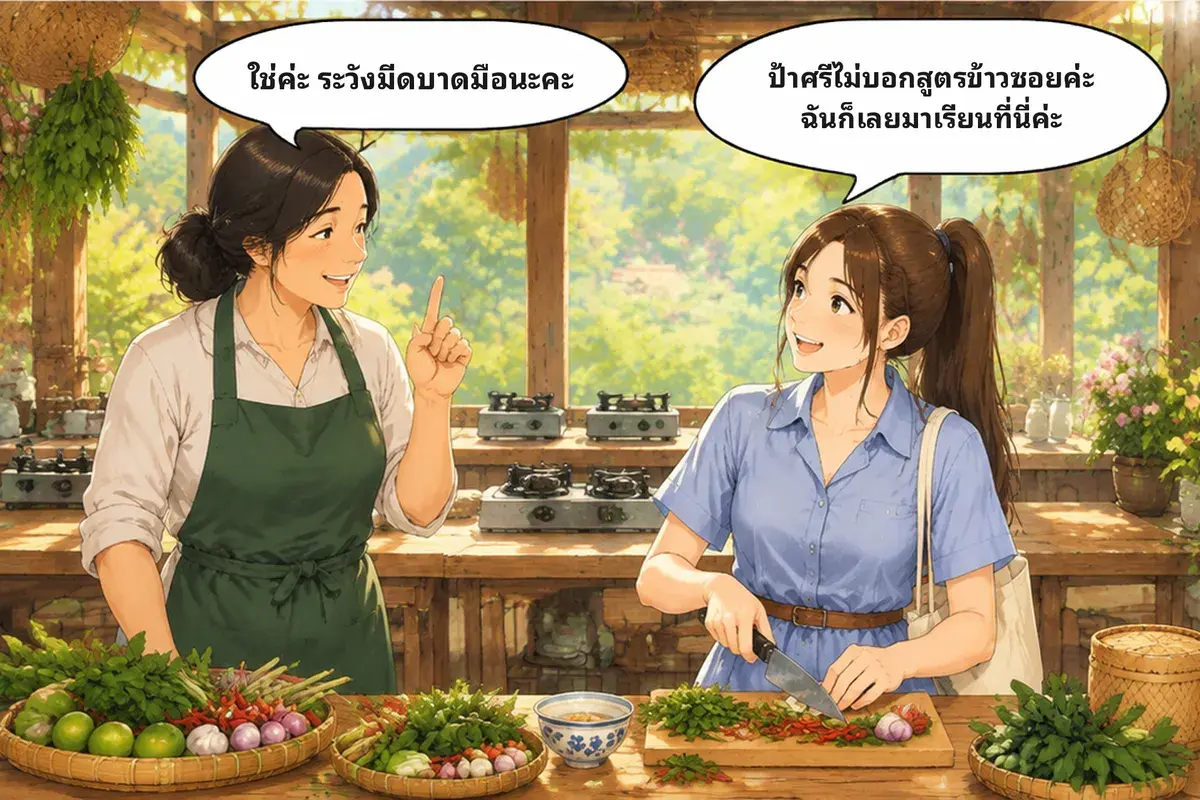
- แม่ครัว
ใช่ค่ะ ระวังมีดบาดมือนะคะ
Yes. Be careful, the knife can cut your hand (woman speaking).
- ยานา
ป้าศรีไม่บอกสูตรข้าวซอยค่ะ ฉันก็เลยมาเรียนที่นี่ค่ะ
Auntie Sri doesn’t share the khao soi recipe, so I came to study here (woman speaking).

- แม่ครัว
ที่นี่ฉันบอกได้ทุกสูตรค่ะ แต่ฝีมือดีต้องฝึกทุกวันนะคะ
Here I can tell you every recipe. But good cooking skill takes practice every day (woman speaking).
Grammar for this text
- ทำอาหารเป็นไหมคะ — “Do you know how to cook? (woman speaking)”
เป็นafter an action means “I can, because I learned how.” A question is…เป็นไหม; the answer isเป็นorไม่เป็น:ไม่goes beforeเป็น. - ผัดผักเป็นค่ะ — “I know how to stir-fry vegetables (woman speaking).” You don’t answer “yes”: you repeat the action and add
เป็น. So you can say exactly which skills you have:ผัดผักเป็น, butทำอาหารไทยไม่เป็น. - ไม่เป็นเลยครับ — “I don’t know how at all (man speaking).”
เลยat the end makes the negative stronger: “at all, totally.” - ไม่เป็นไรค่ะ — “It’s OK (woman speaking).” Don’t mix it up with
ไม่เป็น(“don’t know how”): in this fixed phraseไรfollowsเป็น. - ฉันสอนได้ค่ะ — “I can teach (woman speaking).” Here
ได้means “can, it’s possible,” not a learned skill: the cook can teach right now, but she can’t cook for a guest (ไม่ได้ค่ะ). - ระวังมีดบาดมือนะคะ — “Be careful, the knife can cut your hand (woman speaking).” After
ระวังyou say what might happen:มีดบาดมือmeans “the knife cuts your hand.”
Words and grammar of the unit: Cook a Thai dish.
Learn the words from the texts with flashcards
In the app, you can tap any word in a text to see its translation, forms and examples, and new words stick with flashcards. 15 minutes a day.
Start for freeEverything is open for free. No card needed to sign up.