

Thai dialogue with translation · A2 · 12 lines
หั่นผักเป็นครับ I know how to slice vegetables
Comic · 12 panels

- แม่ครัว
วันนี้เราทำยำตะไคร้ค่ะ ปอกกระเทียมก่อนนะคะ
Today we’re making a spicy lemongrass salad. Peel the garlic first (woman speaking).

- ยานา
ใส่อะไรบ้างคะ ขอจดหน่อยนะคะ
What goes in it? May I write it down? (woman speaking)
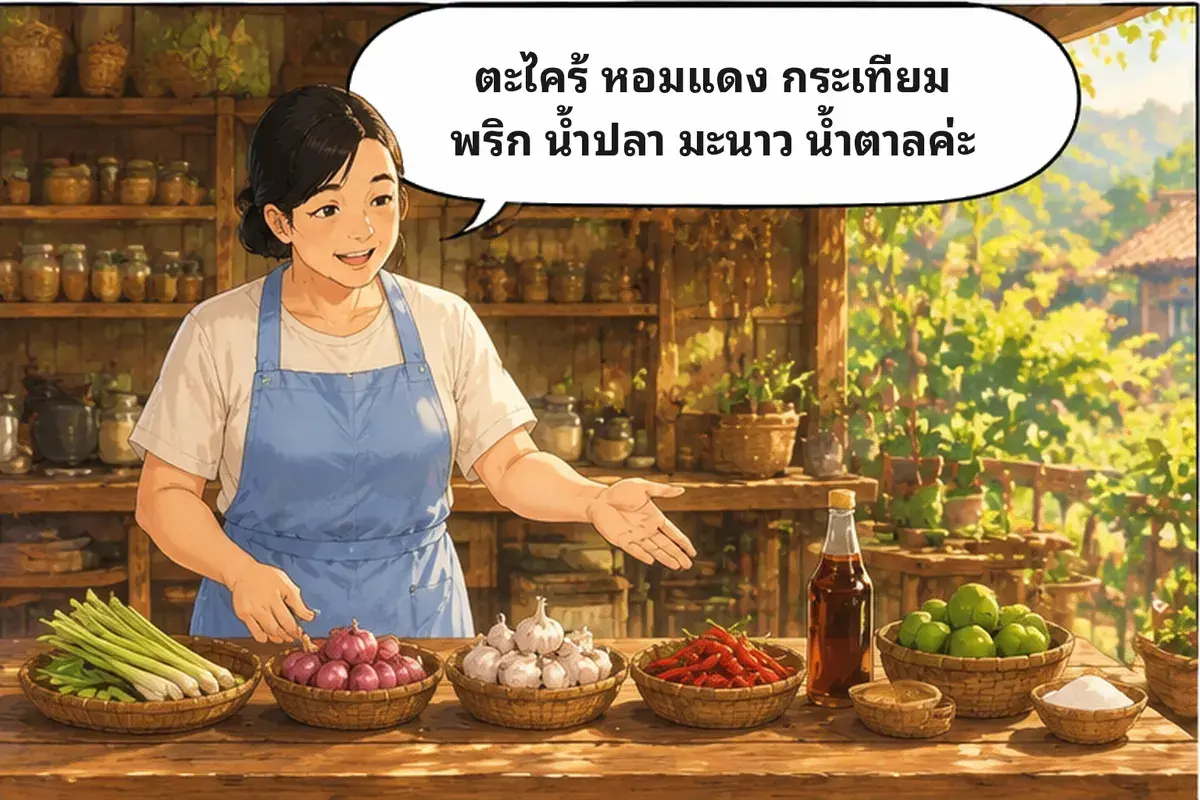
- แม่ครัว
ตะไคร้ หอมแดง กระเทียม พริก น้ำปลา มะนาว น้ำตาลค่ะ
Lemongrass, shallots, garlic, chilies, fish sauce, lime, and sugar (woman speaking).

- ดีมา
ผมทำอาหารไม่เป็น แต่หั่นผักเป็นครับ
I don’t know how to cook, but I know how to slice vegetables (man speaking).

- แม่ครัว
ดีค่ะ หั่นตะไคร้ แล้วสับหอมแดงนะคะ
Good. Slice the lemongrass, then finely chop the shallots (woman speaking).
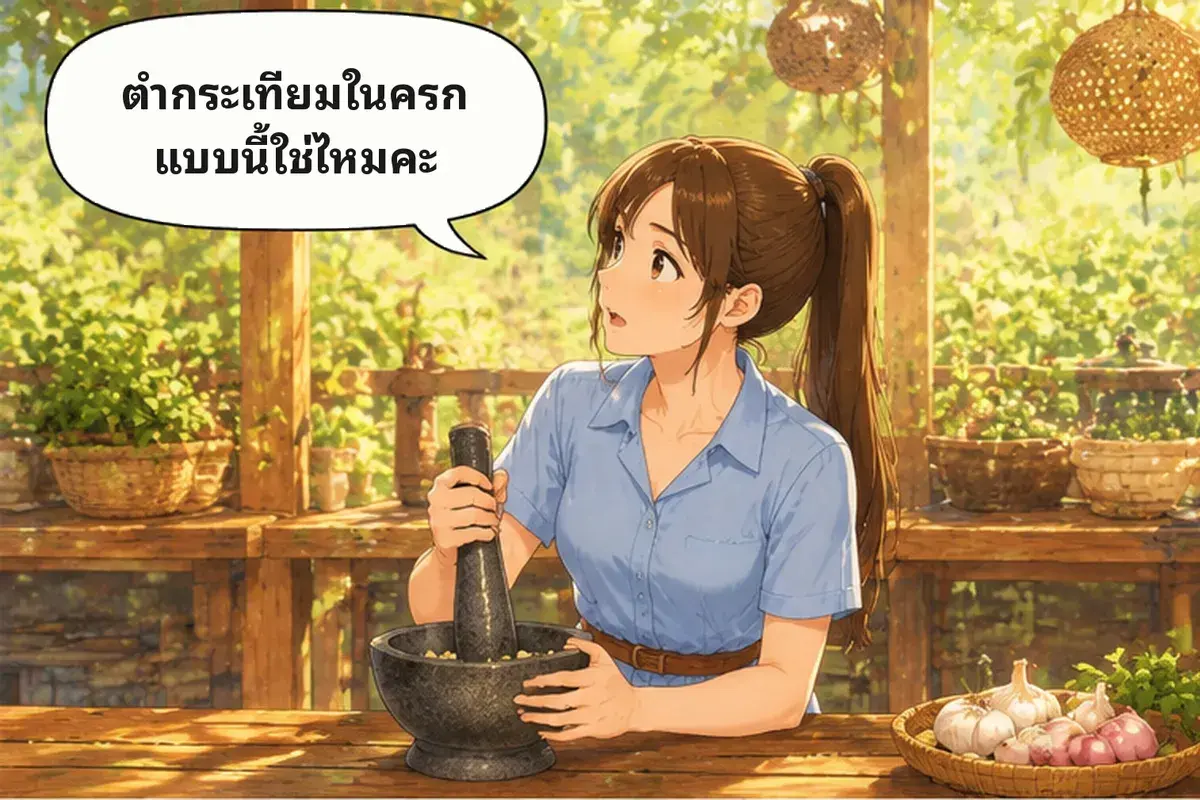
- ยานา
ตำกระเทียมในครกแบบนี้ใช่ไหมคะ
I pound the garlic in the mortar like this, right? (woman speaking)
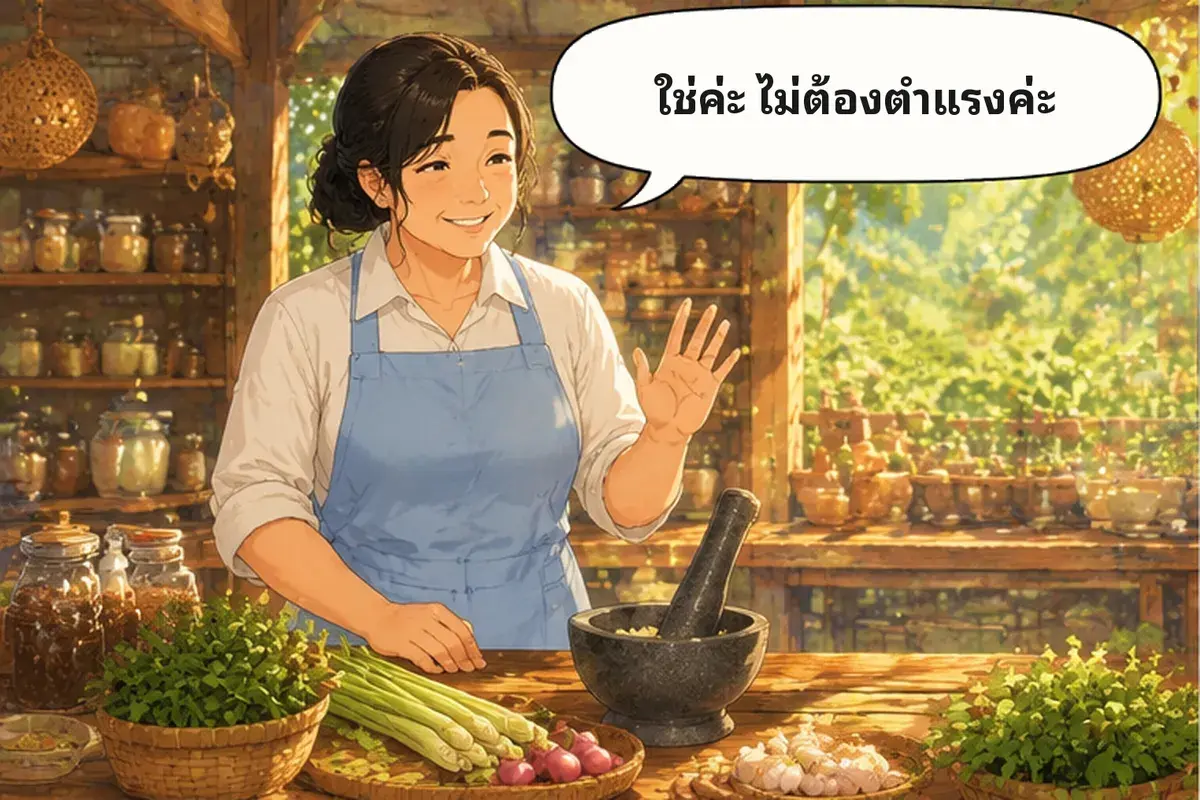
- แม่ครัว
ใช่ค่ะ ไม่ต้องตำแรงค่ะ
Yes. You don’t have to pound hard (woman speaking).

- ดีมา
หั่นเสร็จแล้วครับ ใส่น้ำปลากับมะนาวได้ไหมครับ
I’m done slicing. Can I add the fish sauce and lime? (man speaking)

- แม่ครัว
ได้ค่ะ ใส่น้ำตาลนิดหน่อย แล้วชิมดูนะคะ
Yes. Add a little sugar, then taste it (woman speaking).

- ดีมา
ยำของผมน่ากินใช่ไหมครับ พี่ชิมดูสิครับ
My salad looks delicious, doesn’t it? Come on, taste it (man speaking).

- ยานา
หอมมากค่ะ แต่เผ็ดมาก ฉันกินไม่ได้ค่ะ
It smells great. But it’s very spicy, I can’t eat it (woman speaking).

- แม่ครัว
ไม่เป็นไรค่ะ ยานาทำอีกจาน ไม่ใส่พริกนะคะ
It’s OK. Yana, make one more plate, without chilies (woman speaking).
Grammar for this text
- ปอกกระเทียมก่อนนะคะ — “Peel the garlic first (woman speaking).” In the kitchen you ask simply: verb, food,
ก่อน(“first”), andนะคะmakes it softer. - หั่นผักเป็นครับ — “I know how to slice vegetables (man speaking).” You can use
เป็นfor a single action too:ทำอาหารไม่เป็นis general,หั่นผักเป็นis specific. - หั่นตะไคร้ — “slice the lemongrass.”
หั่นis for cutting into pieces. - สับหอมแดง — “finely chop the shallots.”
สับis for chopping fine and hard. Each job has its own verb. - ไม่ต้องตำแรงค่ะ — “You don’t have to pound hard (woman speaking).”
ไม่ต้องmeans “don’t need to,” andแรงgoes after the verb as “hard.” - น่ากินใช่ไหมครับ — “Looks delicious, doesn’t it? (man speaking)”
น่า+กินmeans “makes you want to eat,” so “looks appetizing.” - ชิมดูสิครับ — “Come on, taste it! (man speaking)”
ดูafter a verb means “try and see how it turns out,” andสิis an urging “come on.”
Words and grammar of the unit: Cook a Thai dish.
Learn the words from the texts with flashcards
In the app, you can tap any word in a text to see its translation, forms and examples, and new words stick with flashcards. 15 minutes a day.
Start for freeEverything is open for free. No card needed to sign up.