

Thai dialogue with translation · A2 · 13 lines
ขอไปกลับหนึ่งใบค่ะ One round-trip ticket, please
Comic · 11 panels

- ยานา
ขอโทษค่ะ กระเช้าขึ้นวัดเท่าไหร่คะ
Excuse me. How much is the cable car up to the temple? (woman speaking)
- พนักงาน
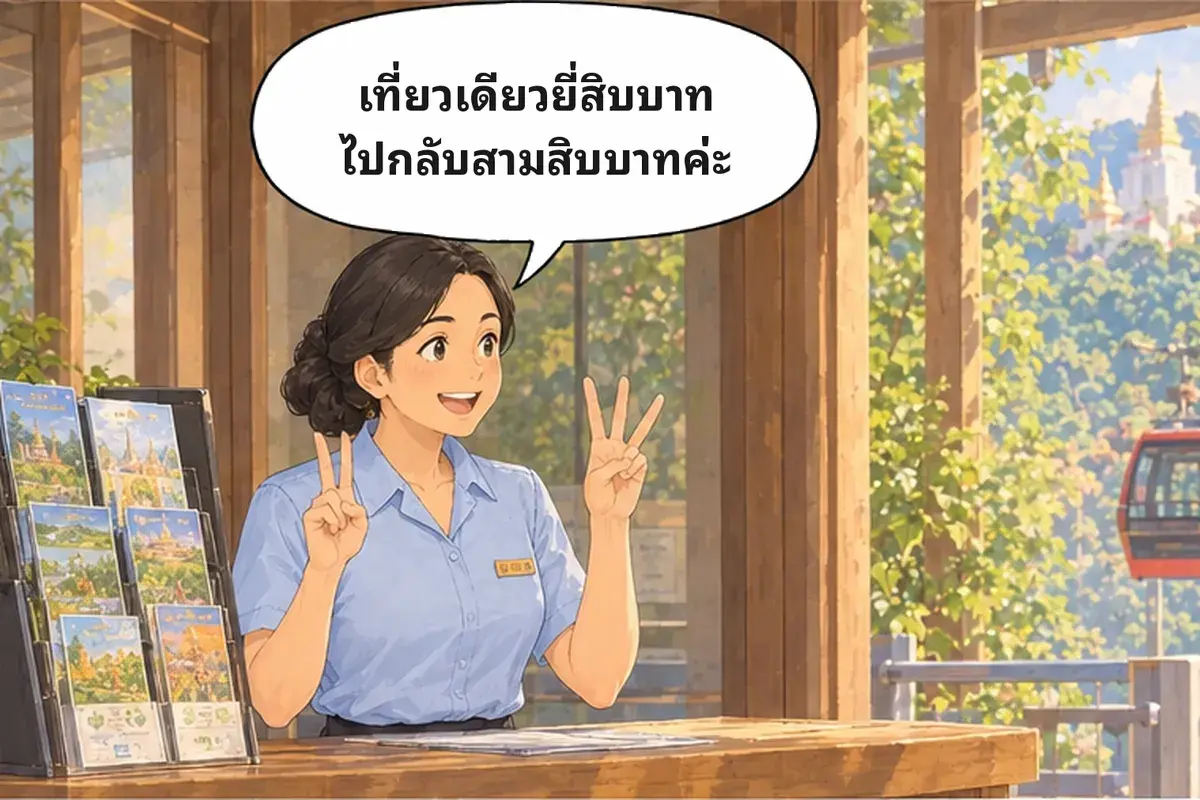
เที่ยวเดียวยี่สิบบาท ไปกลับสามสิบบาทค่ะ
One way is twenty baht, and a round trip is thirty baht (woman speaking).

- ยานา
ขอไปกลับหนึ่งใบค่ะ น้องชายฉันวิ่งขึ้นบันไดเพราะอยากออกกำลังกายค่ะ
One round-trip ticket, please. My younger brother is running up the stairs because he wants to work out (woman speaking).
- พนักงาน
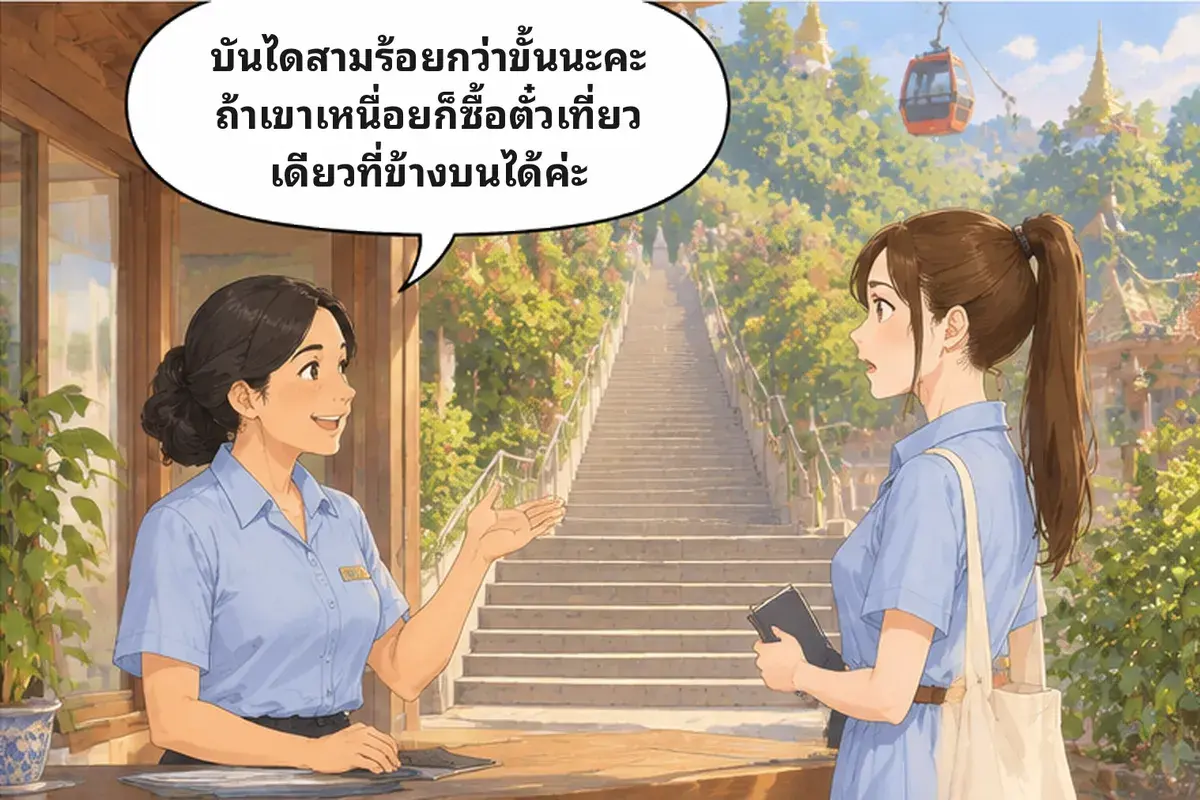
บันไดสามร้อยกว่าขั้นนะคะ ถ้าเขาเหนื่อยก็ซื้อตั๋วเที่ยวเดียวที่ข้างบนได้ค่ะ
The stairs have over three hundred steps, you know. If he gets tired, he can buy a one-way ticket at the top (woman speaking).

- ยานา
ดีค่ะ แล้วต้องซื้อตั๋วเข้าวัดด้วยไหมคะ
Good. And do I need to buy a ticket for the temple too? (woman speaking)
- พนักงาน
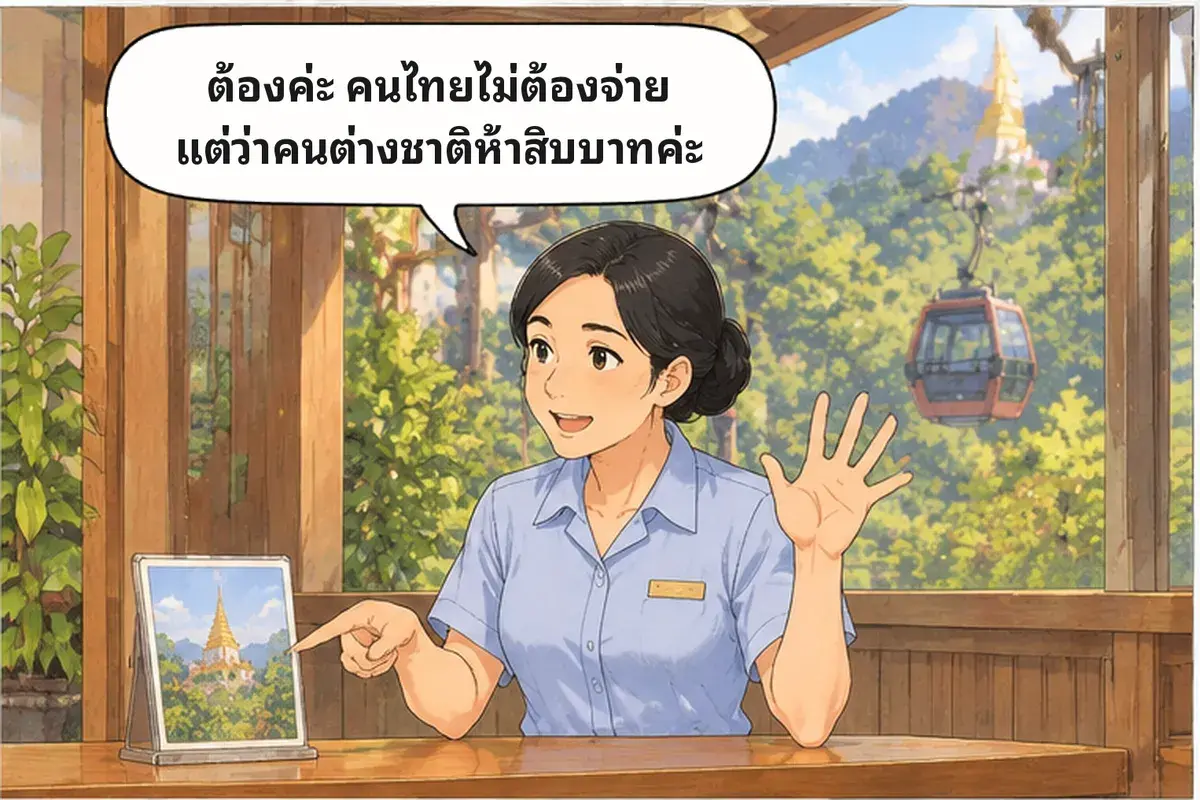
ต้องค่ะ คนไทยไม่ต้องจ่าย แต่ว่าคนต่างชาติห้าสิบบาทค่ะ
Yes, you do. Thai people don't have to pay, but for foreigners it's fifty baht (woman speaking).
- ยานา
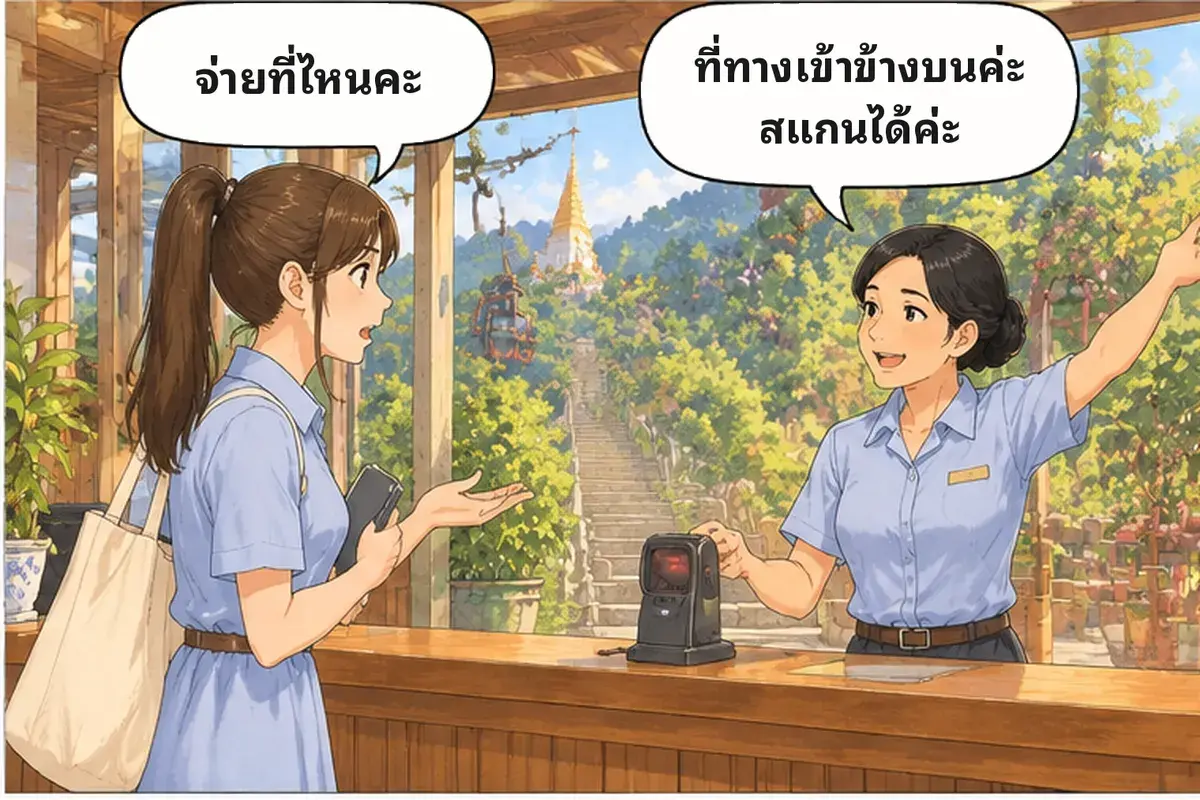
จ่ายที่ไหนคะ
Where do I pay? (woman speaking)
- พนักงาน
ที่ทางเข้าข้างบนค่ะ สแกนได้ค่ะ
At the entrance at the top. You can scan to pay (woman speaking).
- ยานา
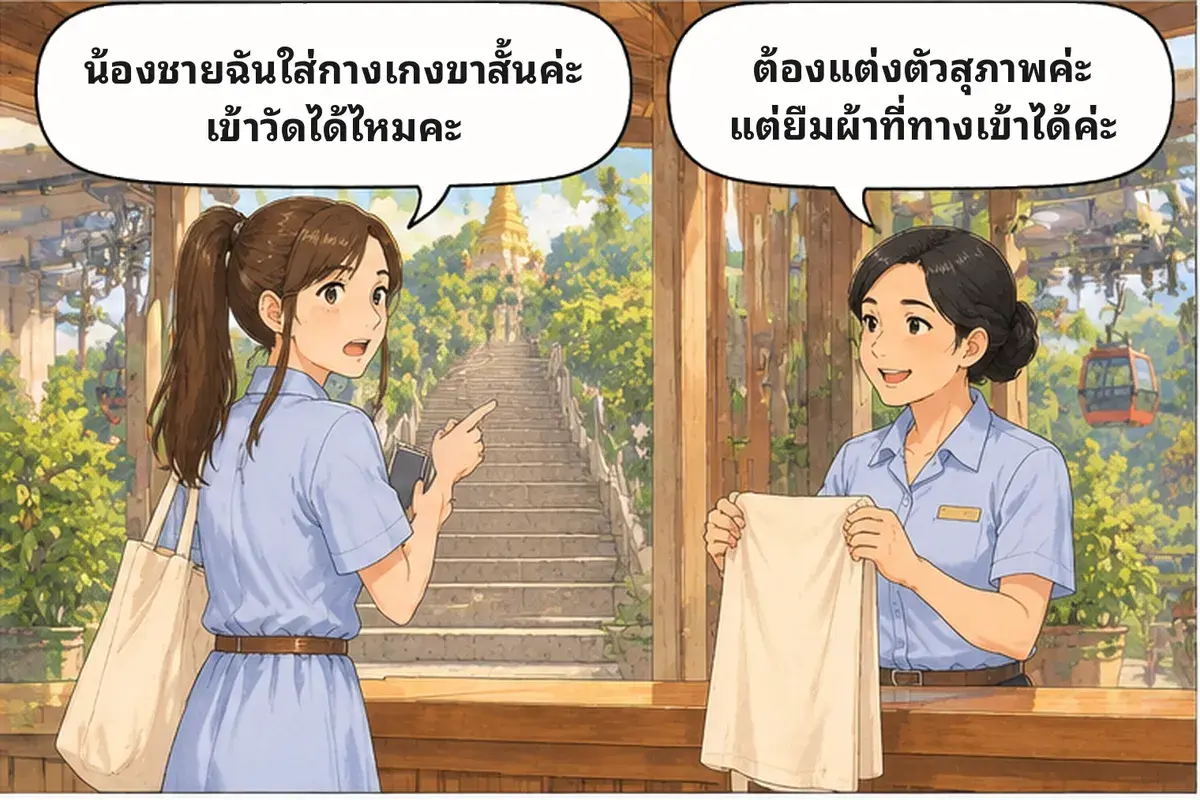
น้องชายฉันใส่กางเกงขาสั้นค่ะ เข้าวัดได้ไหมคะ
My younger brother is wearing shorts. Can he go into the temple? (woman speaking)
- พนักงาน
ต้องแต่งตัวสุภาพค่ะ แต่ยืมผ้าที่ทางเข้าได้ค่ะ
You have to dress modestly. But you can borrow a cloth at the entrance (woman speaking).
- ยานา
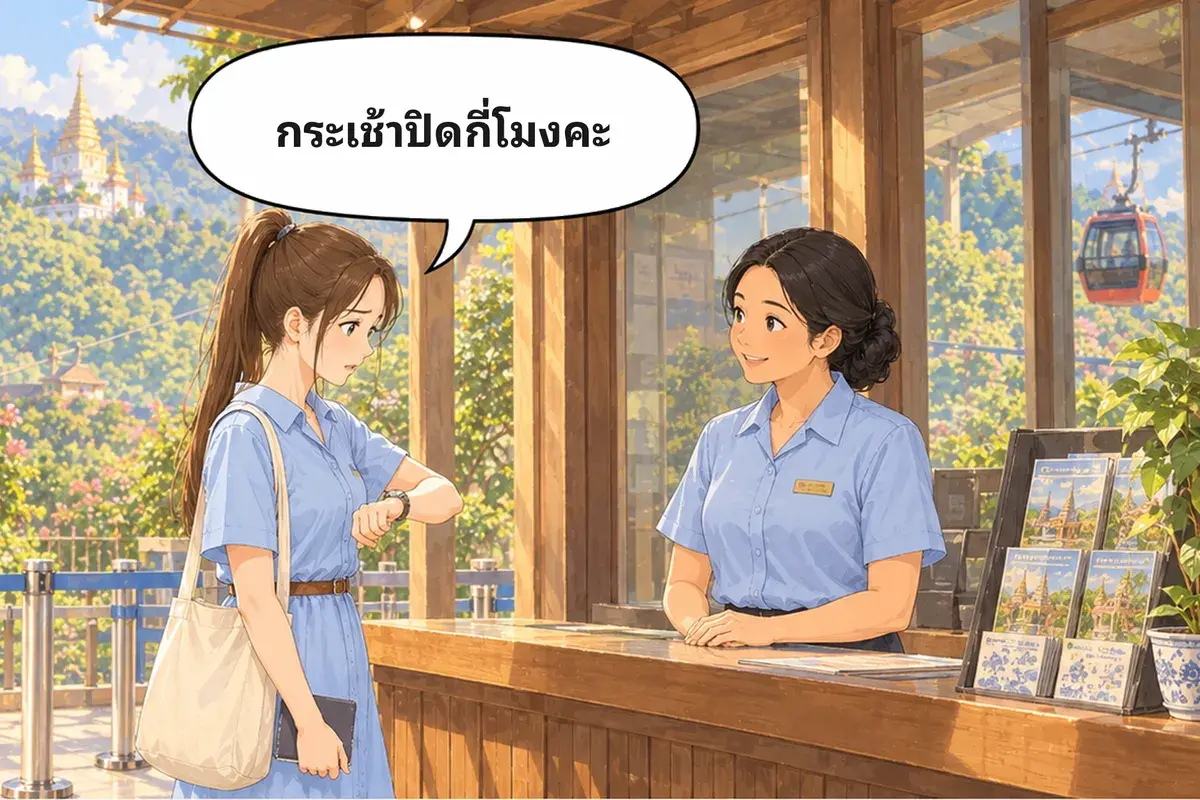
กระเช้าปิดกี่โมงคะ
What time does the cable car close? (woman speaking)
- พนักงาน
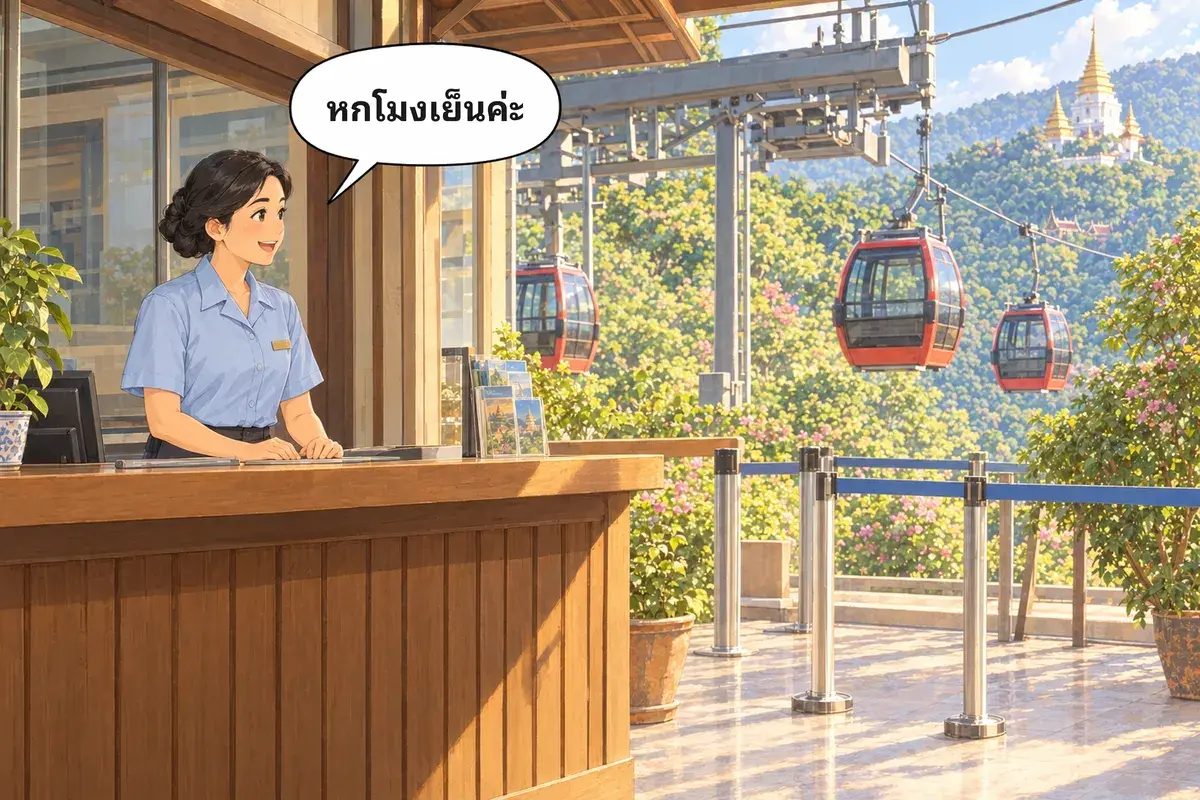
หกโมงเย็นค่ะ
At six in the evening (woman speaking).
- ยานา
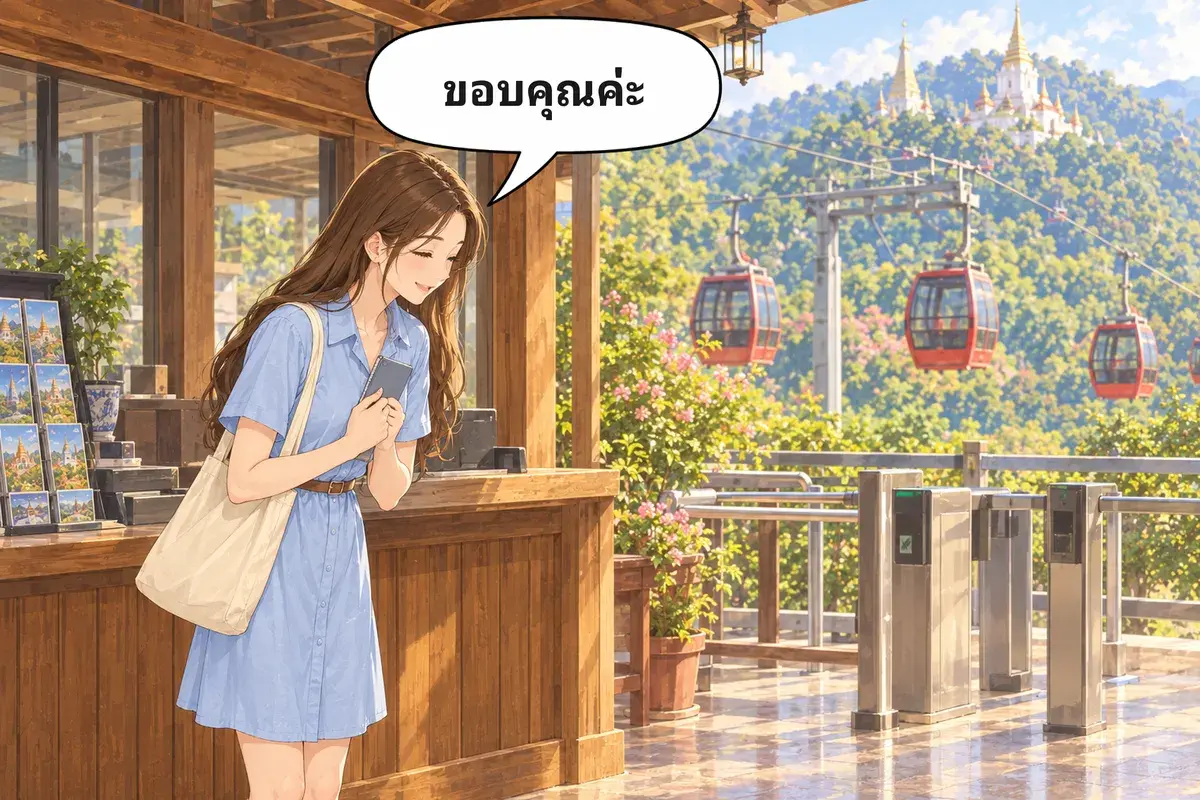
ขอบคุณค่ะ
Thank you (woman speaking).
Grammar for this text
- บันไดสามร้อยกว่าขั้นนะคะ — The stairs have over three hundred steps, you know (woman speaking). After a round number,
กว่า(gwàa) means "over, more than": สาม ร้อย กว่า — over three hundred.ขั้น(kân) is its own classifier: สาม ร้อย ขั้น — three hundred steps. - ถ้าเขาเหนื่อยก็ซื้อตั๋วเที่ยวเดียวที่ข้างบนได้ค่ะ — If he gets tired, he can buy a one-way ticket at the top (woman speaking). Here is
ถ้า…ก็…at work: "if he gets tired, then...".ได้at the end means "can".ที่ข้างบนmeans "up at the top". - ต้องค่ะ — Yes, you do (woman speaking). To answer a "do I have to?" question, repeat the same verb:
ต้อง— "yes, you have to",ไม่ต้อง— "no need". - แต่ว่าคนต่างชาติห้าสิบบาทค่ะ — But for foreigners it's fifty baht (woman speaking). Many temples and parks have two prices: one for Thais and one for foreigners (
คนต่างชาติ, kon-dtàang-châat).แต่ว่าis a polite "but": the clerk isn't arguing, she's just giving the price. - สแกนได้ค่ะ — You can scan to pay (woman speaking). You can pay by QR code almost everywhere. To ask about it, say
สแกนได้ไหมคะ. - ต้องแต่งตัวสุภาพค่ะ — You have to dress modestly (woman speaking). You don't go into a temple in shorts (
กางเกงขาสั้น) or with bare shoulders.แต่งตัว(dtɛ̀ng-dtuua) means "to get dressed, to dress". At the entrance to big temples you can borrow a cloth (ยืมผ้า) to wrap around yourself.
Words and grammar of the unit: Visit a mountain temple and explain why.
Learn the words from the texts with flashcards
In the app, you can tap any word in a text to see its translation, forms and examples, and new words stick with flashcards. 15 minutes a day.
Start for freeEverything is open for free. No card needed to sign up.