

Thai dialogue with translation · A2 · 14 lines
พี่ขอพรอะไรครับ What did you wish for?
Comic · 13 panels
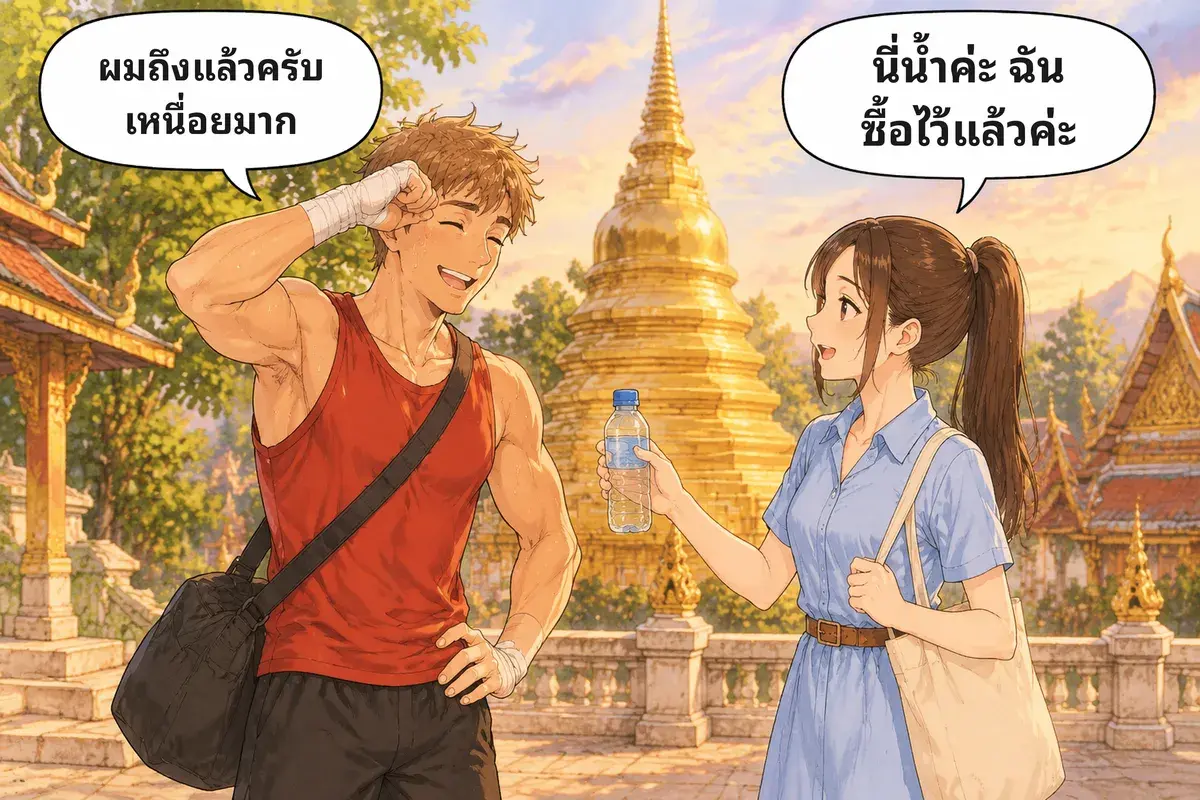
- ดีมา
ผมถึงแล้วครับ เหนื่อยมาก
I'm here. I'm very tired (man speaking).
- ยานา
นี่น้ำค่ะ ฉันซื้อไว้แล้วค่ะ
Here's some water. I already bought it (woman speaking).
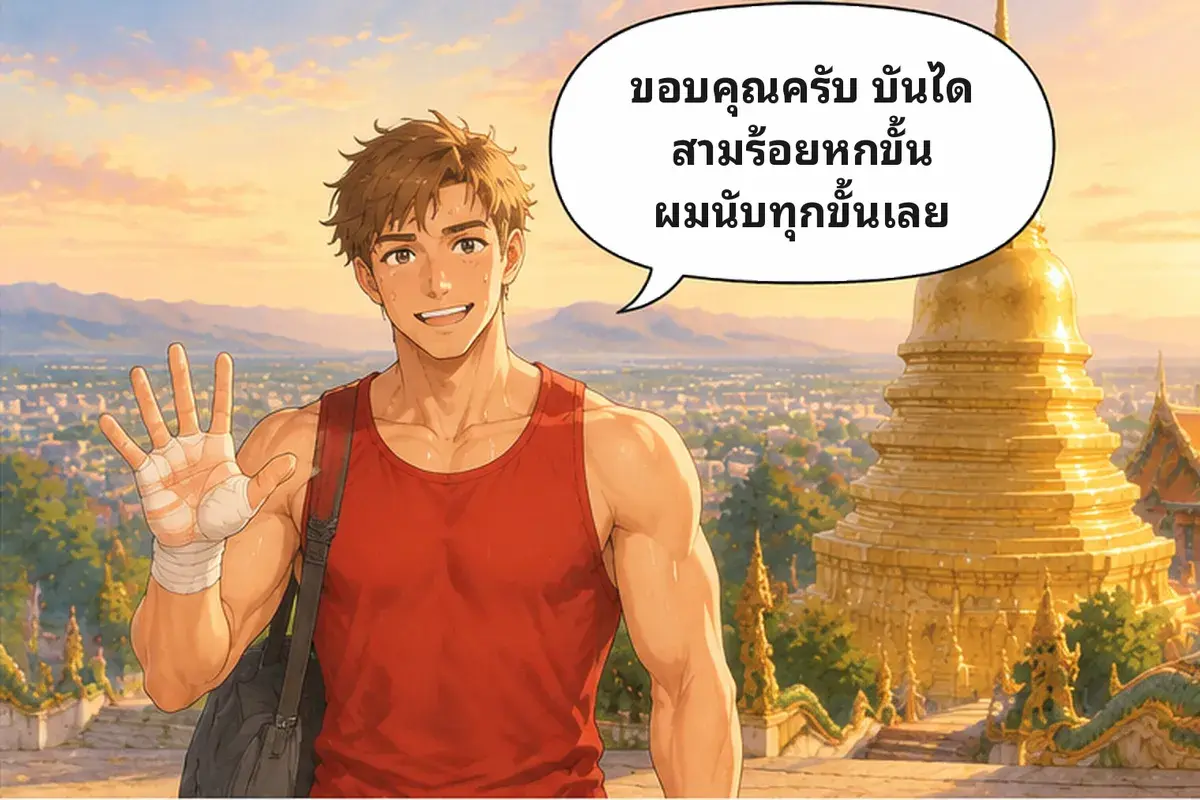
- ดีมา
ขอบคุณครับ บันไดสามร้อยหกขั้น ผมนับทุกขั้นเลย
Thank you. Three hundred and six steps. I counted every single one (man speaking).
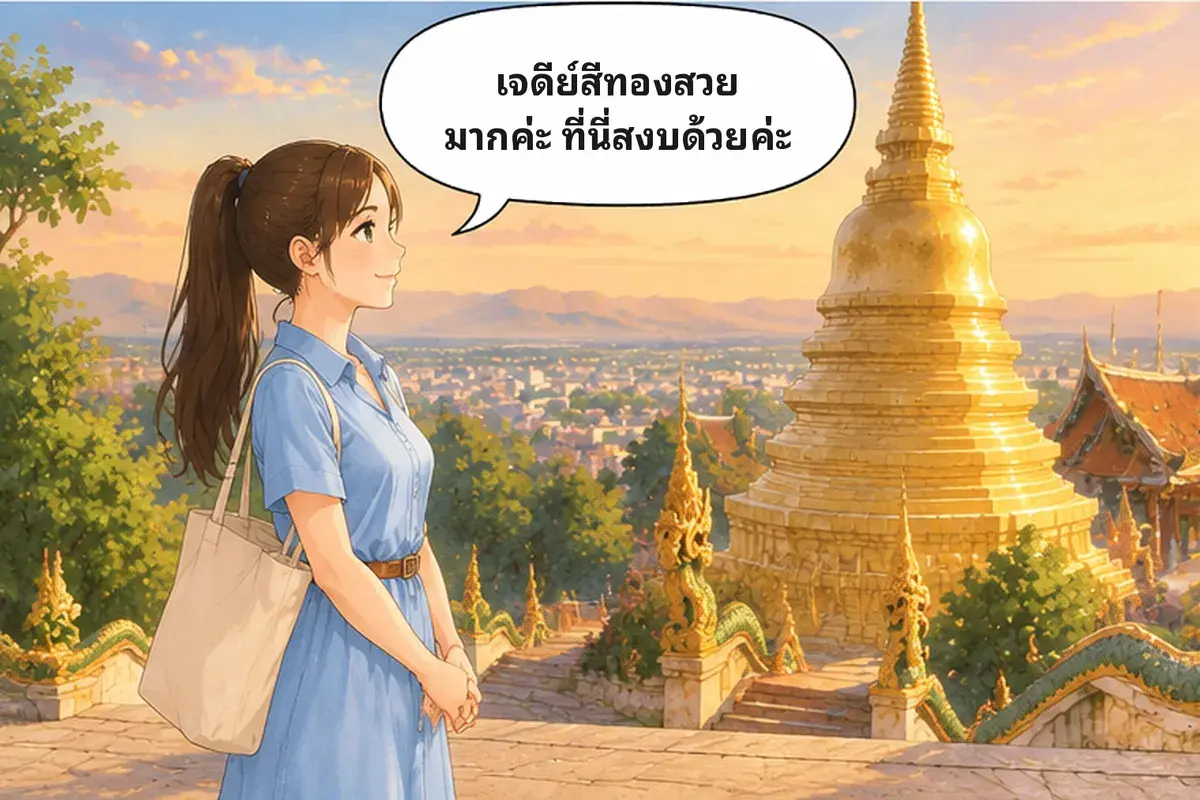
- ยานา
เจดีย์สีทองสวยมากค่ะ ที่นี่สงบด้วยค่ะ
The golden stupa is very beautiful. And it's peaceful here too (woman speaking).

- ดีมา
ผมอยากไหว้พระครับ ต้องซื้ออะไรบ้างครับ
I want to pay respects to the Buddha. What do I need to buy? (man speaking)
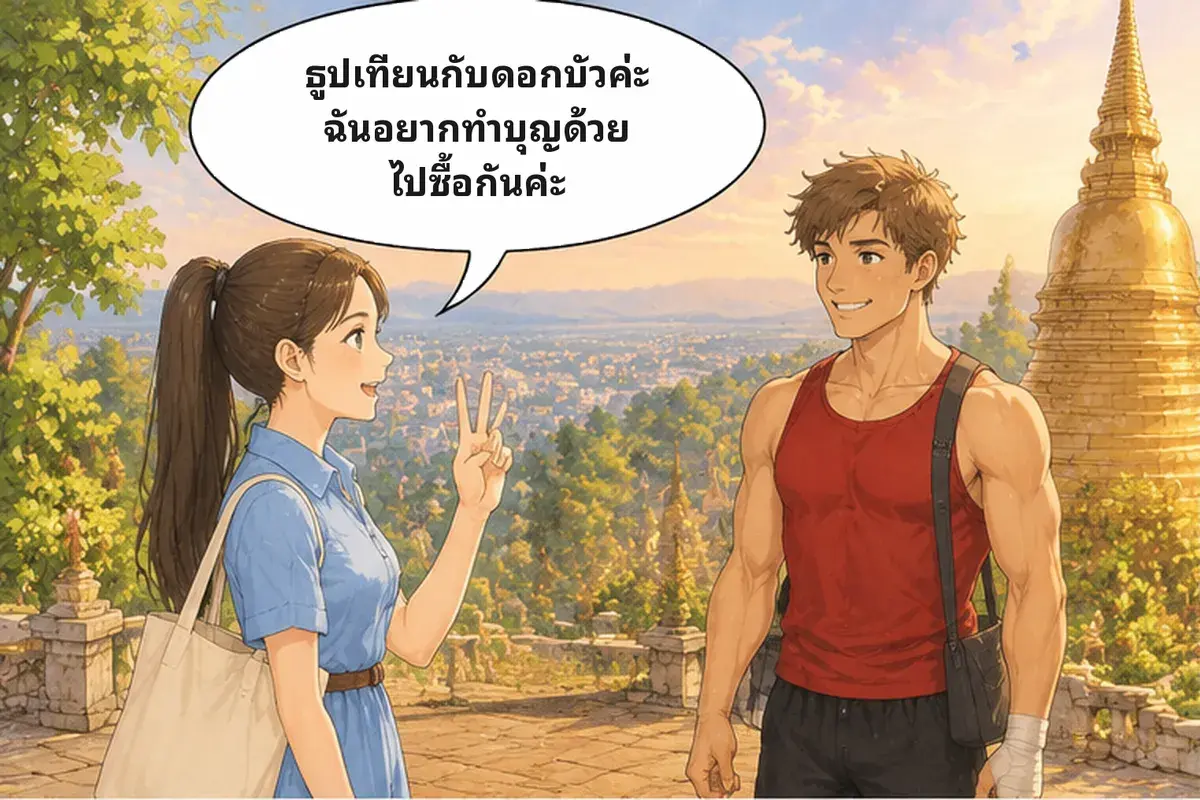
- ยานา
ธูปเทียนกับดอกบัวค่ะ ฉันอยากทำบุญด้วย ไปซื้อกันค่ะ
Incense sticks, a candle and a lotus. I want to make merit too. Let's go buy them (woman speaking).
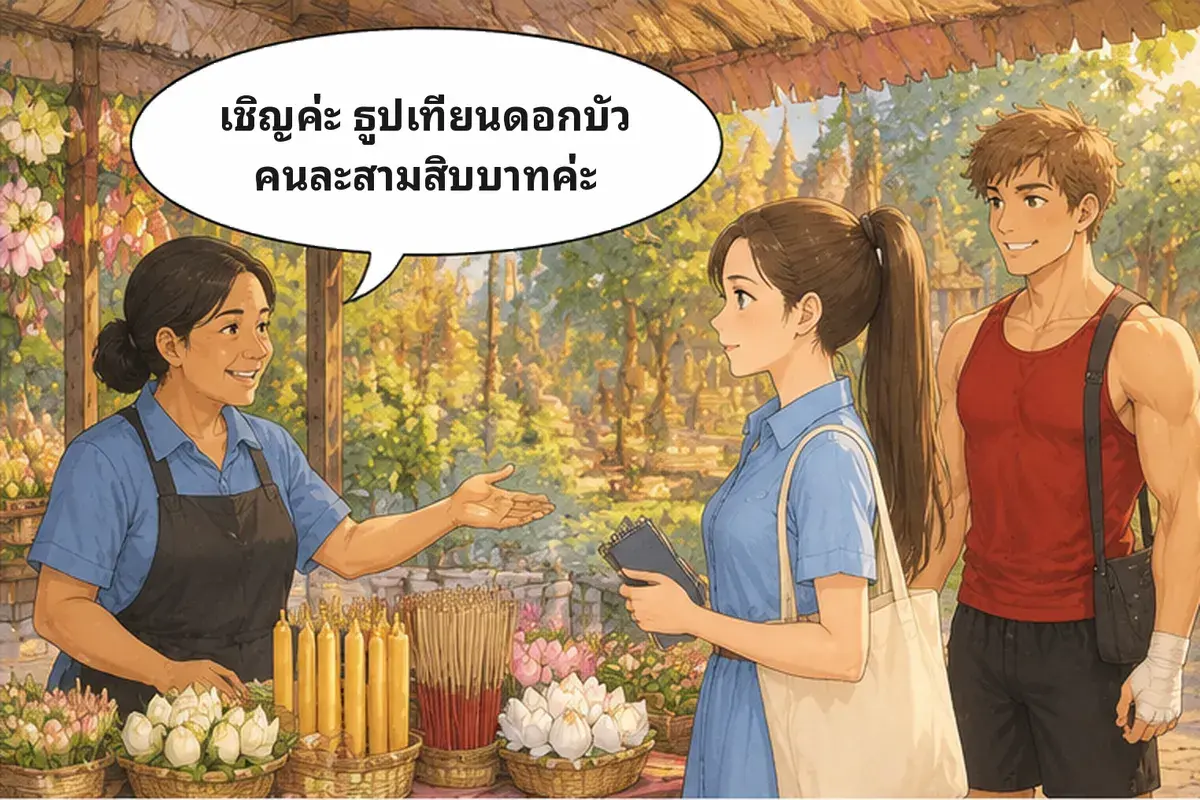
- แม่ค้า
เชิญค่ะ ธูปเทียนดอกบัวคนละสามสิบบาทค่ะ
Please, go ahead. Incense sticks, a candle and a lotus are thirty baht per person (woman speaking).
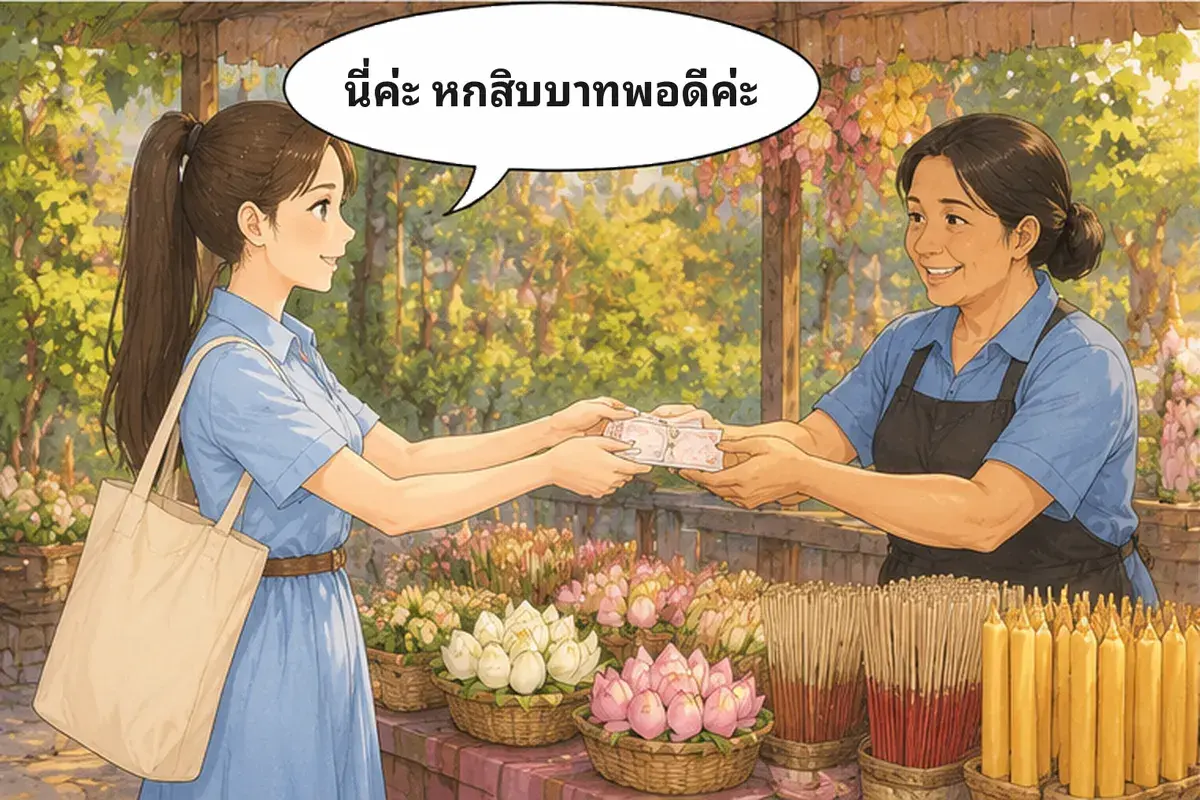
- ยานา
นี่ค่ะ หกสิบบาทพอดีค่ะ
Here you are. Exactly sixty baht (woman speaking).
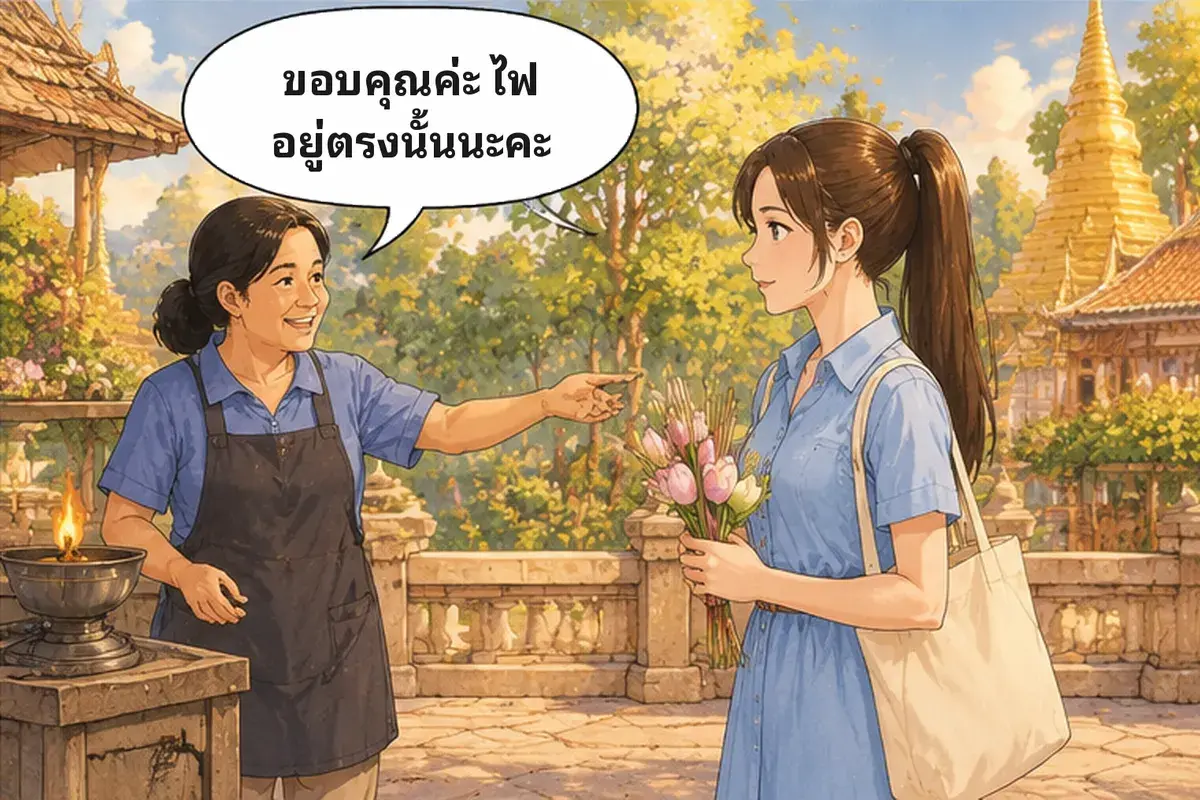
- แม่ค้า
ขอบคุณค่ะ ไฟอยู่ตรงนั้นนะคะ
Thank you. The fire is over there (woman speaking).

- ดีมา
พี่ขอพรอะไรครับ
What did you wish for? (man speaking)

- ยานา
ไม่บอกค่ะ ดีมาขอพรอะไรคะ
I'm not telling. What did you wish for, Dima? (woman speaking)

- ดีมา
ผมขอพรเรื่องขาครับ ขาผมปวดมากเพราะวิ่งขึ้นบันไดครับ
I made a wish about my legs. My legs hurt a lot because I ran up the stairs (man speaking).

- ยานา
ขากลับดีมาวิ่งลงไหมคะ
On the way back, are you running down, Dima? (woman speaking)

- ดีมา
ไม่วิ่งครับ ขาปวดก็เลยจะนั่งกระเช้าครับ
No, I'm not running. My legs hurt, so I'll take the cable car (man speaking).
Grammar for this text
- ผมอยากไหว้พระครับ — I want to pay respects to the Buddha (man speaking).
ไหว้พระ(wâi-prá) means putting your palms together and bowing to a Buddha image. A foreigner just needs to do what Thais do: palms together, a small bow. - ธูปเทียนกับดอกบัวค่ะ — Incense sticks, a candle and a lotus (woman speaking). This is the set for an offering. It's sold at the entrance, usually as one set.
ดอกบัว(dɔ̀ɔk-buua) is counted with the classifierดอก(dɔ̀ɔk). - ไฟอยู่ตรงนั้นนะคะ — The fire is over there (woman speaking). Here
ไฟ(fai) isn't "light" but "fire": it's for lighting the incense sticks and the candle. - พี่ขอพรอะไรครับ — What did you wish for? (man speaking)
ขอพร(kɔ̌ɔ-pɔɔn) means "to make a wish, to ask for a blessing";อะไรhere means "what ... for". People usually keep their wishes to themselves, so ไม่บอกค่ะ — I'm not telling (woman speaking) — is a polite refusal. - ผมขอพรเรื่องขาครับ — I made a wish about my legs (man speaking).
เรื่อง(rʉ̂ʉang) before a noun means "about":ขอพรเรื่องขา— "make a wish about my legs". - ขากลับดีมาวิ่งลงไหมคะ — On the way back, are you running down, Dima? (woman speaking)
ขากลับ(kǎa-glàp) goes at the start of the sentence: "on the way back". Its pair isขาไป(kǎa-bpai), "on the way there".
Words and grammar of the unit: Visit a mountain temple and explain why.
Learn the words from the texts with flashcards
In the app, you can tap any word in a text to see its translation, forms and examples, and new words stick with flashcards. 15 minutes a day.
Start for freeEverything is open for free. No card needed to sign up.