

Serbian dialogue with translation · B1 · 13 lines
Не могу свако вече да радим до десет I can't work until ten every evening
Comic · 13 panels
- Милица
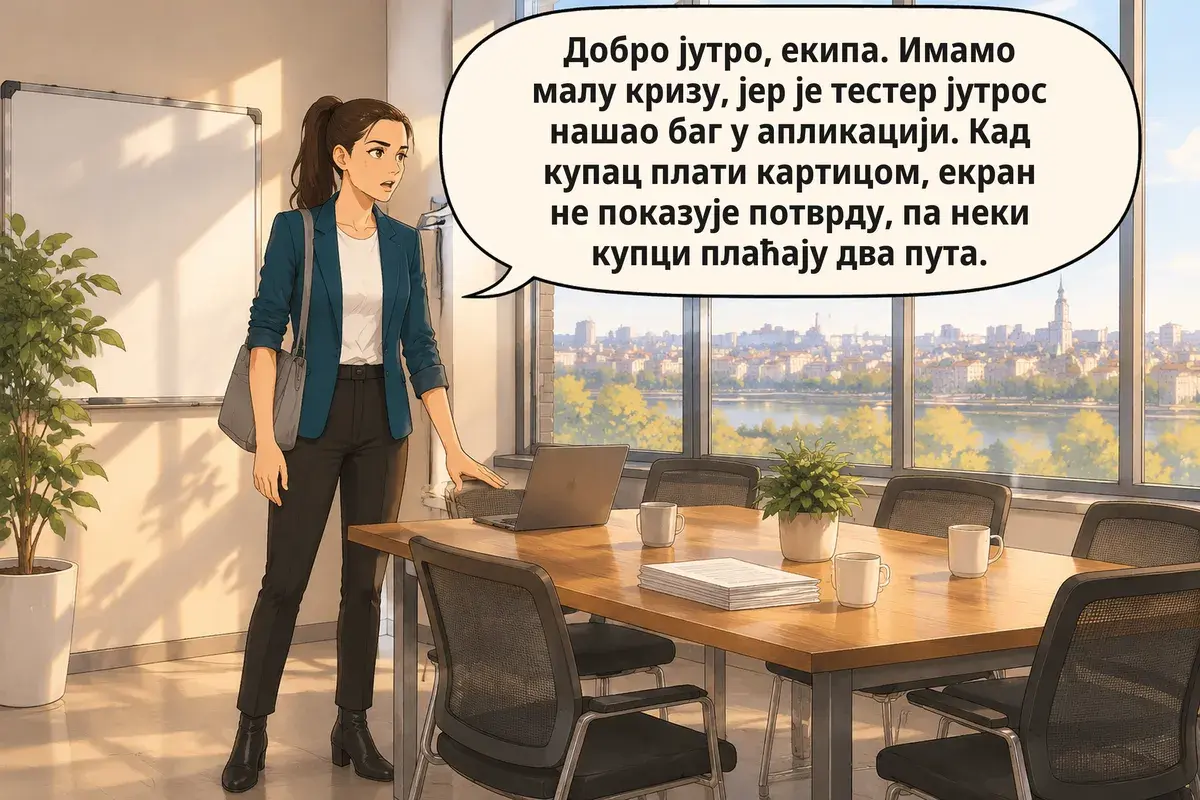
Добро јутро, екипа. Имамо малу кризу, јер је тестер јутрос нашао баг у апликацији. Кад купац плати картицом, екран не показује потврду, па неки купци плаћају два пута.
Good morning, team. We have a small crisis, because the tester found a bug in the app this morning. When a customer pays by card, the screen doesn't show a confirmation, so some customers pay twice.

- Душан
Видећемо. Прво морам да проверим да ли је баг у нашем програму. Ако је тако, исправићемо га до петка.
We'll see. First I have to check whether the bug is in our program. If it is, we'll fix it by Friday.

- Ана
Прочитала сам извештај тестера, а екран са потврдом је мој посао. Могу да га нацртам поново још данас, јер је Душан ових дана јако оптерећен.
I've read the tester's report (woman speaking), and the confirmation screen is my job. I can redraw it as early as today, because Dušan is very busy these days.
- Милица
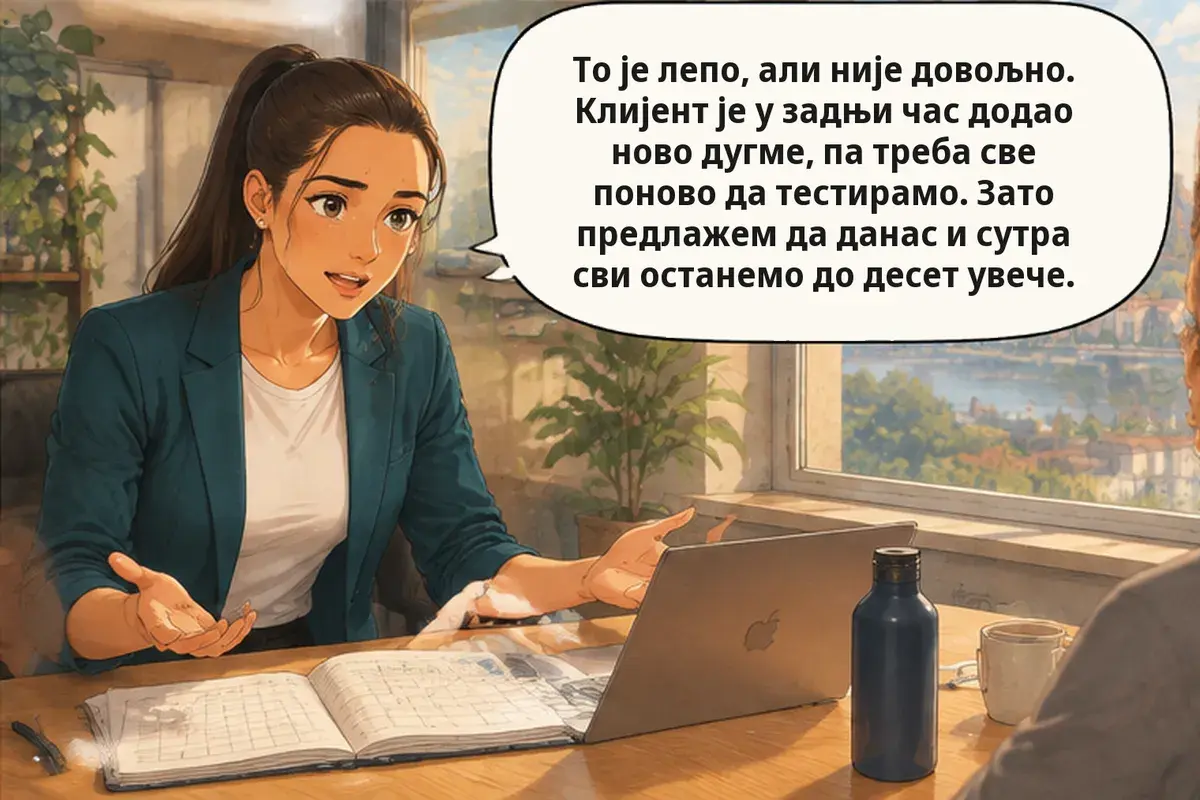
То је лепо, али није довољно. Клијент је у задњи час додао ново дугме, па треба све поново да тестирамо. Зато предлажем да данас и сутра сви останемо до десет увече.
That's nice, but it's not enough. At the last minute the client added a new button, so we have to test everything again. That's why I suggest that today and tomorrow we all stay until ten in the evening.
- Ана
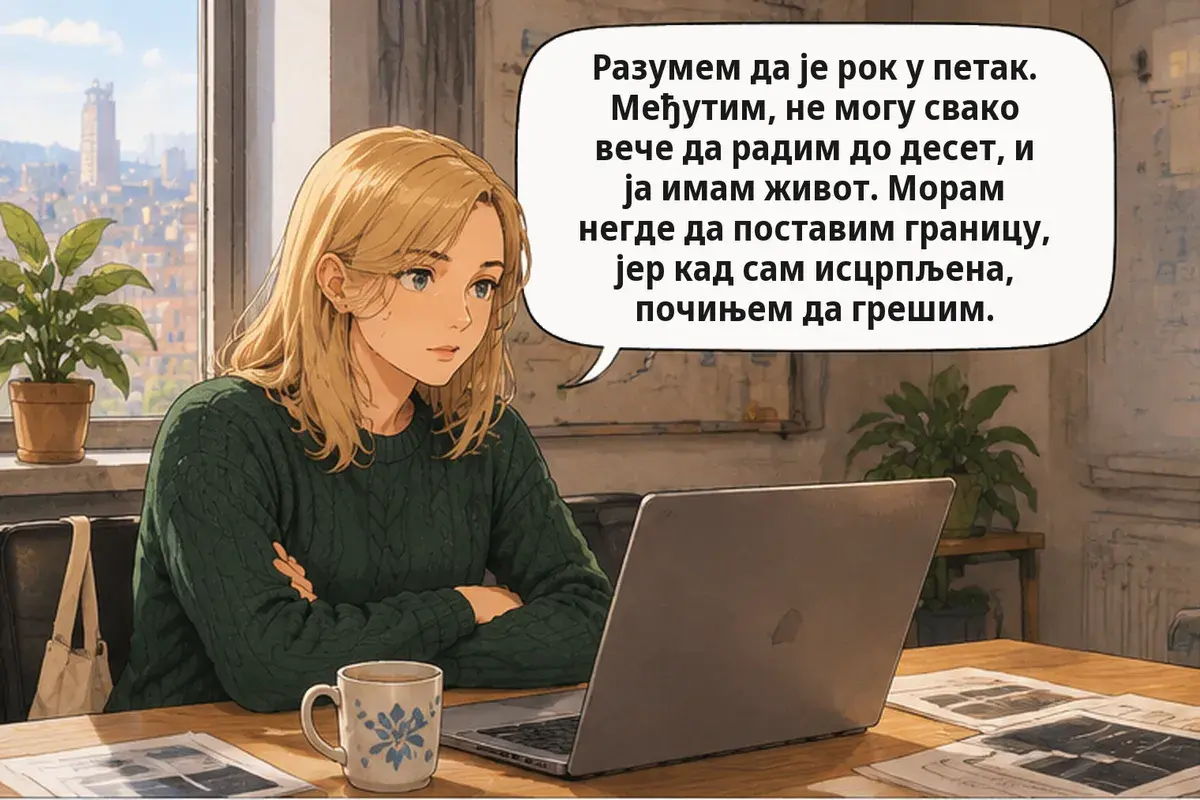
Разумем да је рок у петак. Међутим, не могу свако вече да радим до десет, и ја имам живот. Морам негде да поставим границу, јер кад сам исцрпљена, почињем да грешим.
I understand that the deadline is Friday. However, I can't work until ten every evening, I have a life too. I have to set a limit somewhere, because when I'm exhausted, I start making mistakes (woman speaking).
- Милица
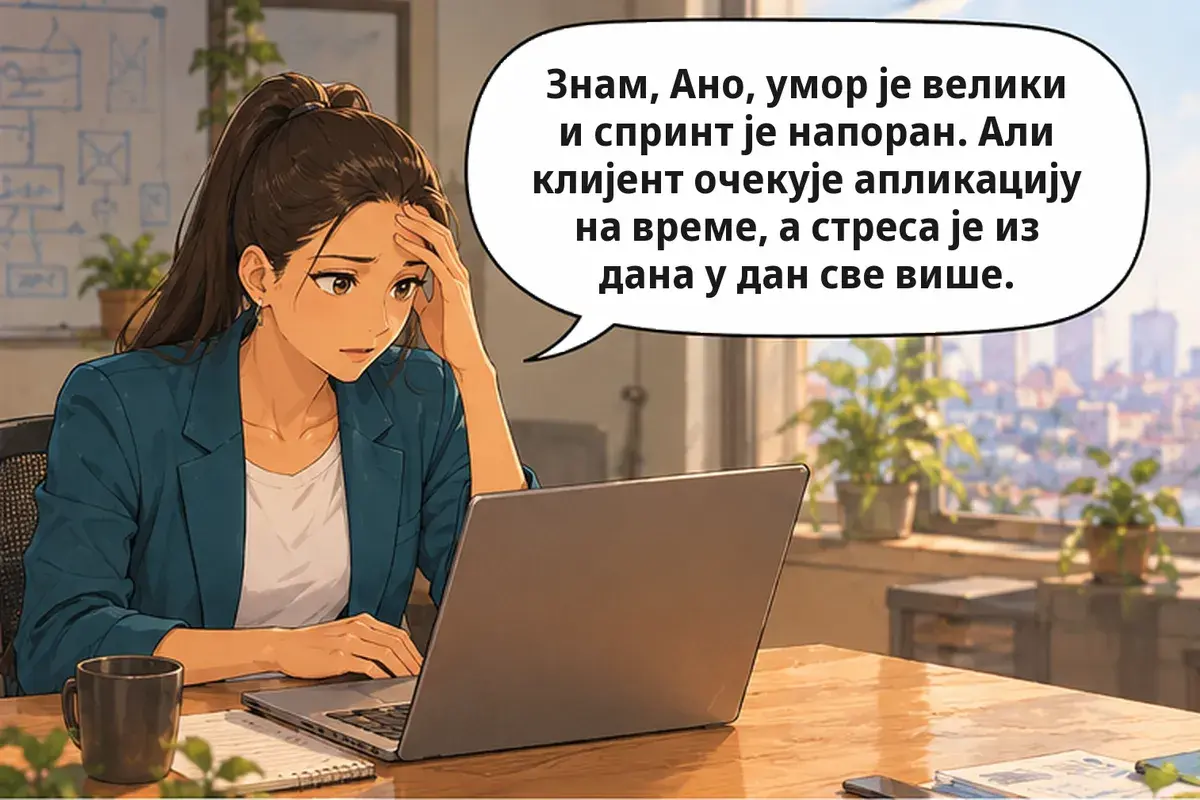
Знам, Ано, умор је велики и спринт је напоран. Али клијент очекује апликацију на време, а стреса је из дана у дан све више.
I know, Ana, the tiredness is serious and the sprint is exhausting. But the client expects the app on time, and there's more and more stress day after day.
- Душан
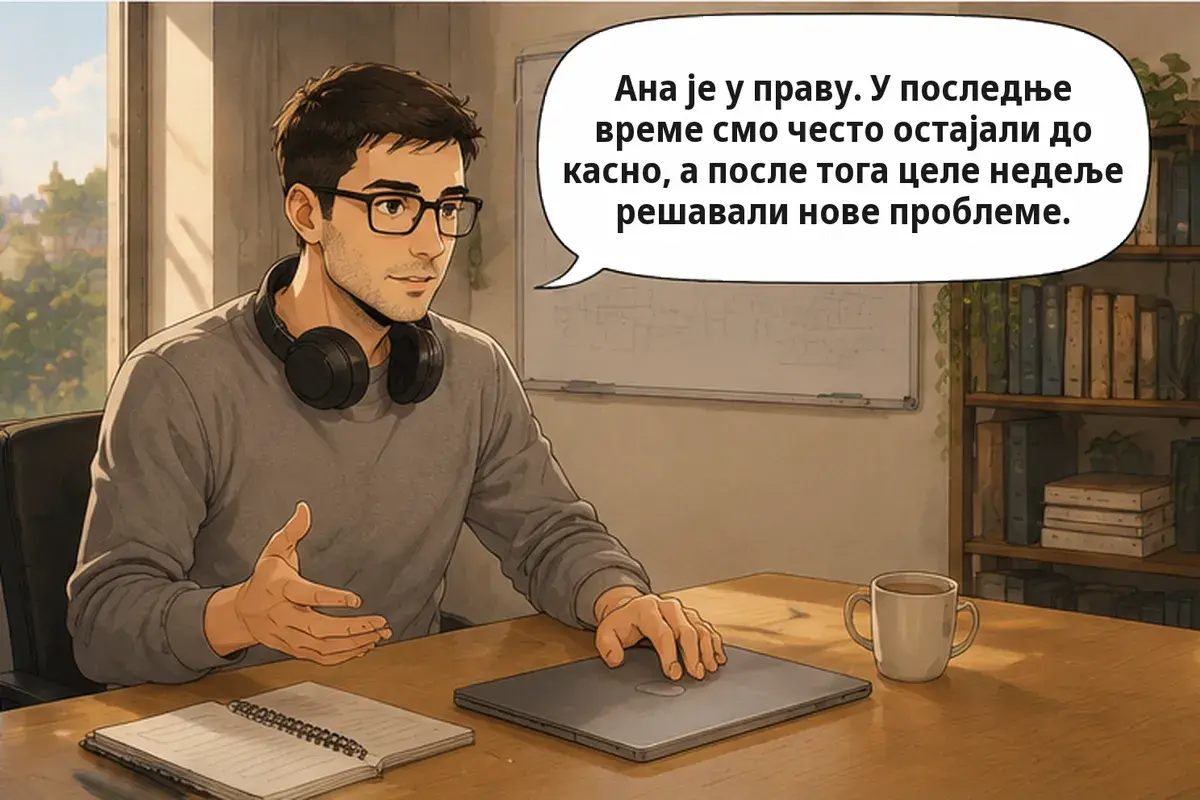
Ана је у праву. У последње време смо често остајали до касно, а после тога целе недеље решавали нове проблеме.
Ana is right. Lately we've often stayed late, and after that we spent whole weeks solving new problems.
- Милица
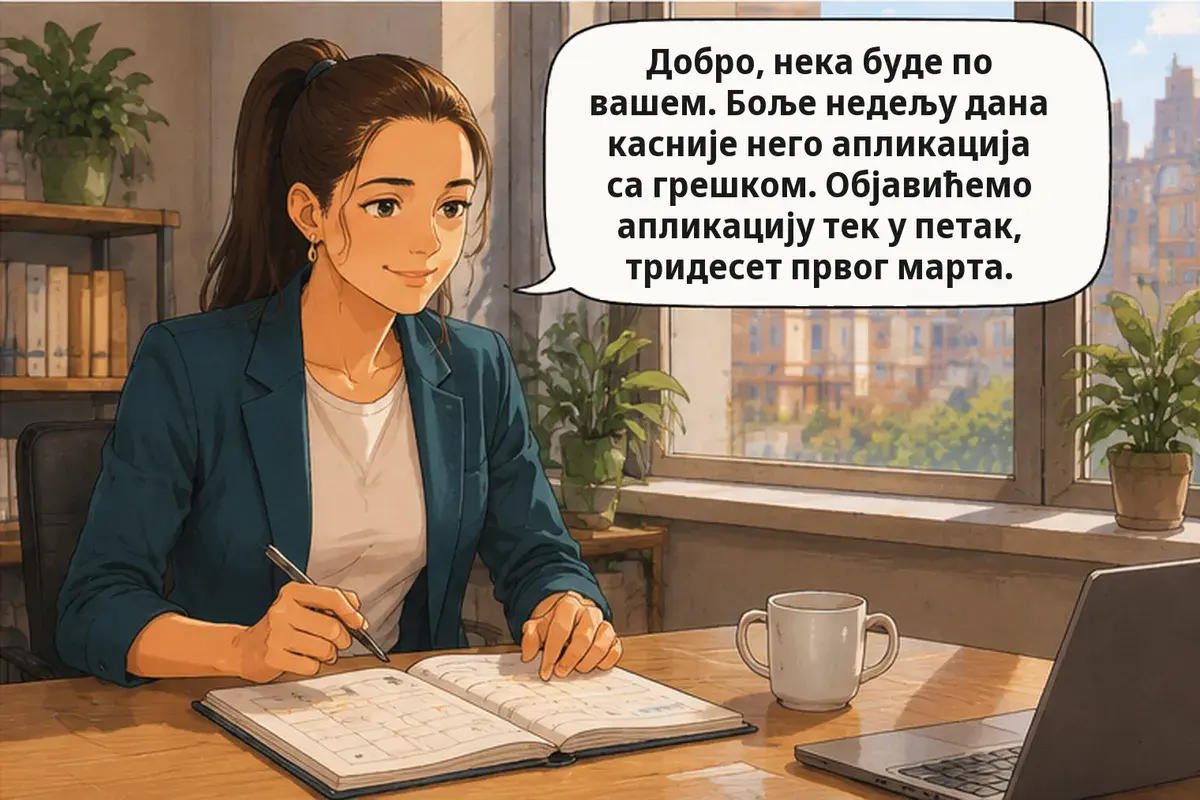
Добро, нека буде по вашем. Боље недељу дана касније него апликација са грешком. Објавићемо апликацију тек у петак, тридесет првог марта.
Okay, have it your way (to several people). Better a week later than an app with an error. We'll release the app only on Friday, March 31.

- Ана
Хвала, Милице. Писмо клијенту могу да напишем ја, јер са њим разговарам о дизајну. У њему ћу објаснити када ћемо испоручити нову верзију.
Thanks, Milica. I can write the letter to the client, because I talk to him about the design. In it I'll explain when we'll deliver the new version.

- Милица
Може, али ми пошаљи текст што пре, најкасније до сутра у подне. Одговорност је моја, па ћу одмах да позовем клијента.
That works, but send me the text as soon as possible, by tomorrow at noon at the latest. The responsibility is mine, so I'll call the client right away.
- Душан
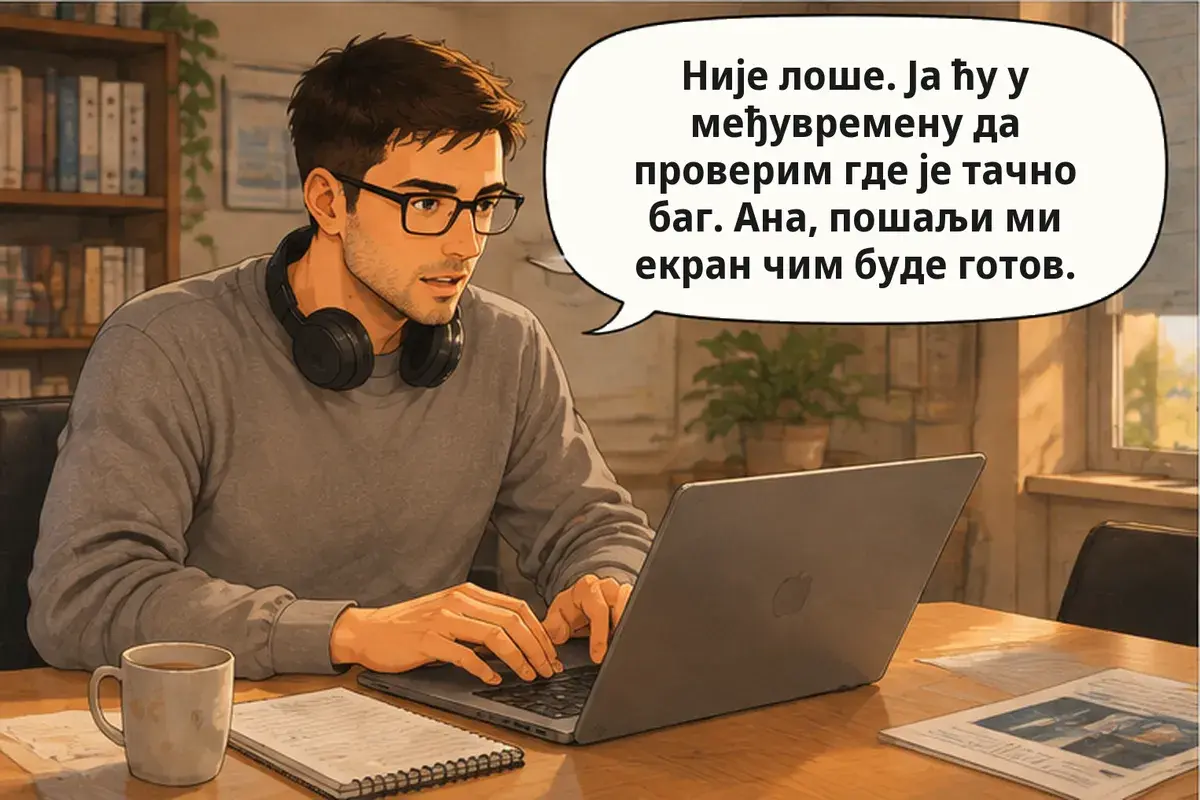
Није лоше. Ја ћу у међувремену да проверим где је тачно баг. Ана, пошаљи ми екран чим буде готов.
Not bad. Meanwhile, I'll check where exactly the bug is. Ana, send me the screen as soon as it's ready.

- Милица
Јављајте ми с времена на време како иде тестирање. Ако не буде нових багова, следеће недеље нико неће остајати после пет.
Let me know from time to time how the testing is going (to several people). If there are no new bugs, nobody will stay after five next week.
- Ана
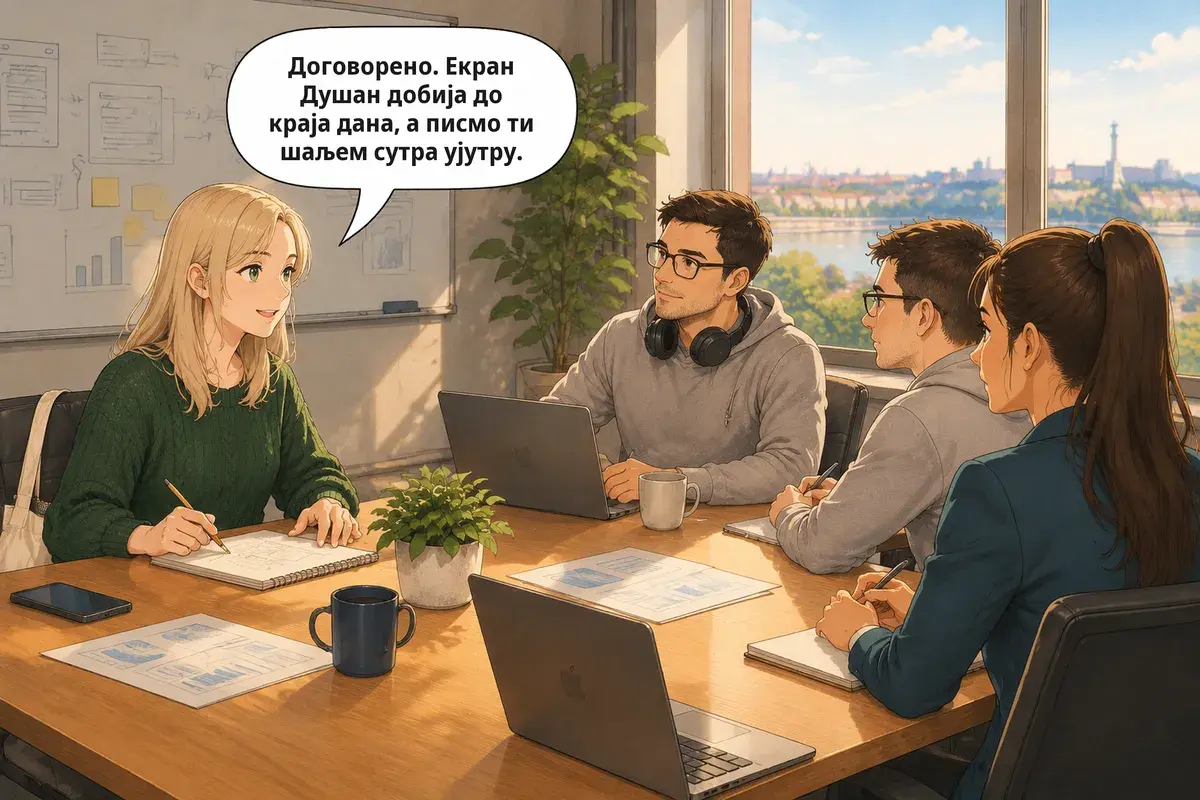
Договорено. Екран Душан добија до краја дана, а писмо ти шаљем сутра ујутру.
Agreed. Dušan gets the screen by the end of the day, and I'm sending you the letter tomorrow morning.
Grammar for this text
Разумем да је рок у петак. Међутим, не могу свако вече да радим до десет— This is how Ana politely says no: first she acknowledges what the other person said (Разумем да…— “I understand that…”; there is no comma beforeда), then a softМеђутим,(“however”) and her own condition.свако вече— “every evening”:вечеis neuter, so it isсвако, notсваки.Видећемо.— the future tense ofвидети: literally “we'll see”. Dušan answers dryly and promises nothing.Ана је у праву.—бити у правуmeans “to be right”. Don't mix it up withправо“straight ahead” (A1) orправо“a right to something” (unit 4).нека буде по вашем—нека+ present tense: “let it be”.по вашем— “your way”, a set phrase. Hereвашемis lowercase: this is a conversation, not a letter.Боље недељу дана касније него апликација са грешком.— a sentence with no verb: “Better a week later than an app with a bug.”недељу данаis the accusative case, “by a week”;недељаmeans both “week” and “Sunday”.Ја ћу у међувремену да проверим где је тачно баг.—ћу … да проверимis the spoken future: “I'll check”.где је тачно багis an indirect question. Serbian keeps the word order of a direct question, while English changes it: “where exactly the bug is”.чим буде готов—будеis a form ofбитиafterчим, and it points to the future: “as soon as it's ready”. English does the same with the present tense. There is no comma beforeчим, because this part comes second.Ако не буде нових багова— the sameбуде, now afterако: “if there are no new bugs”. This is future II, which unit 15 explains; for now just recognize it.
Words and grammar of the unit: Meet a deadline without burning out.
Learn the words from the texts with flashcards
In the app, you can tap any word in a text to see its translation, forms and examples, and new words stick with flashcards. 15 minutes a day.
Start for freeEverything is open for free. No card needed to sign up.