

Serbian dialogue with translation · B1 · 16 lines
Одакле вам толико сигурности? Where do you get so much certainty? (to several people)
Comic · 16 panels
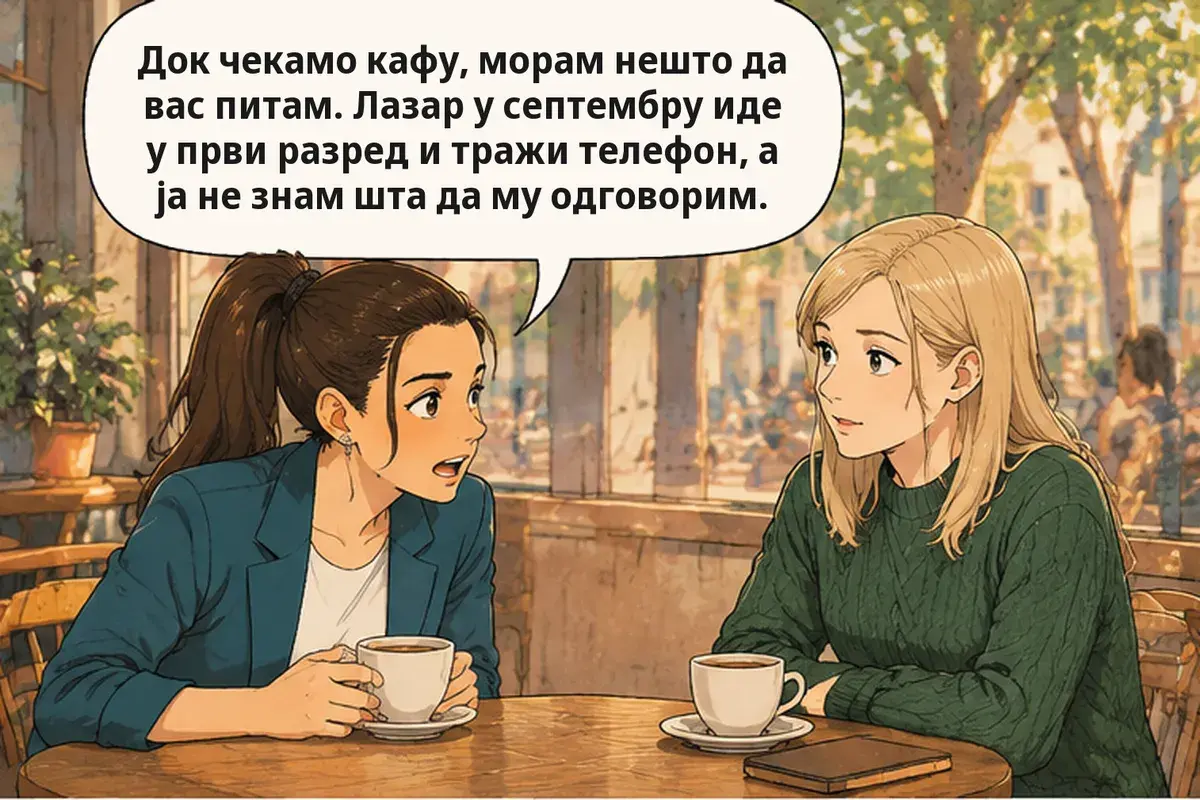
- Милица
Док чекамо кафу, морам нешто да вас питам. Лазар у септембру иде у први разред и тражи телефон, а ја не знам шта да му одговорим.
While we wait for our coffee, I have to ask you something (to several people). In September Lazar is starting first grade and he's asking for a phone, and I don't know what to tell him.
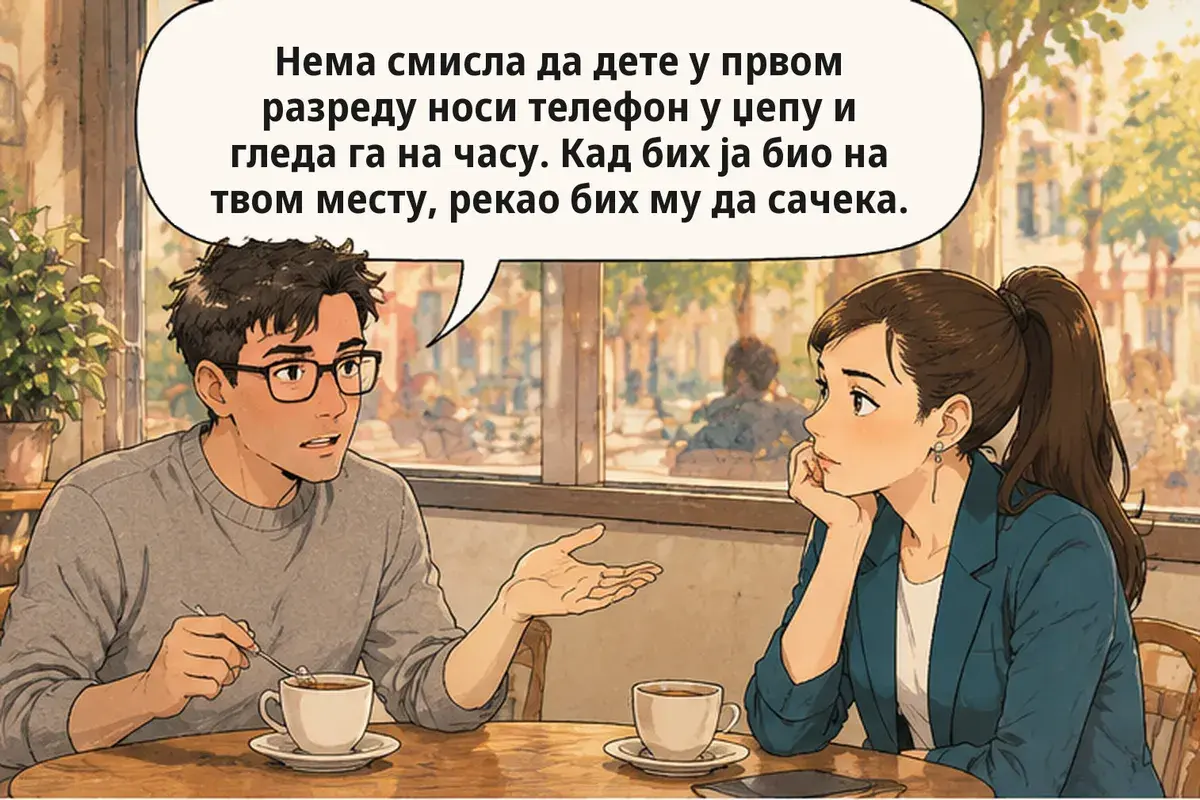
- Душан
Нема смисла да дете у првом разреду носи телефон у џепу и гледа га на часу. Кад бих ја био на твом месту, рекао бих му да сачека.
There's no point in a first grader carrying a phone in his pocket and looking at it in class. If I were in your shoes, I'd tell him to wait (man speaking).
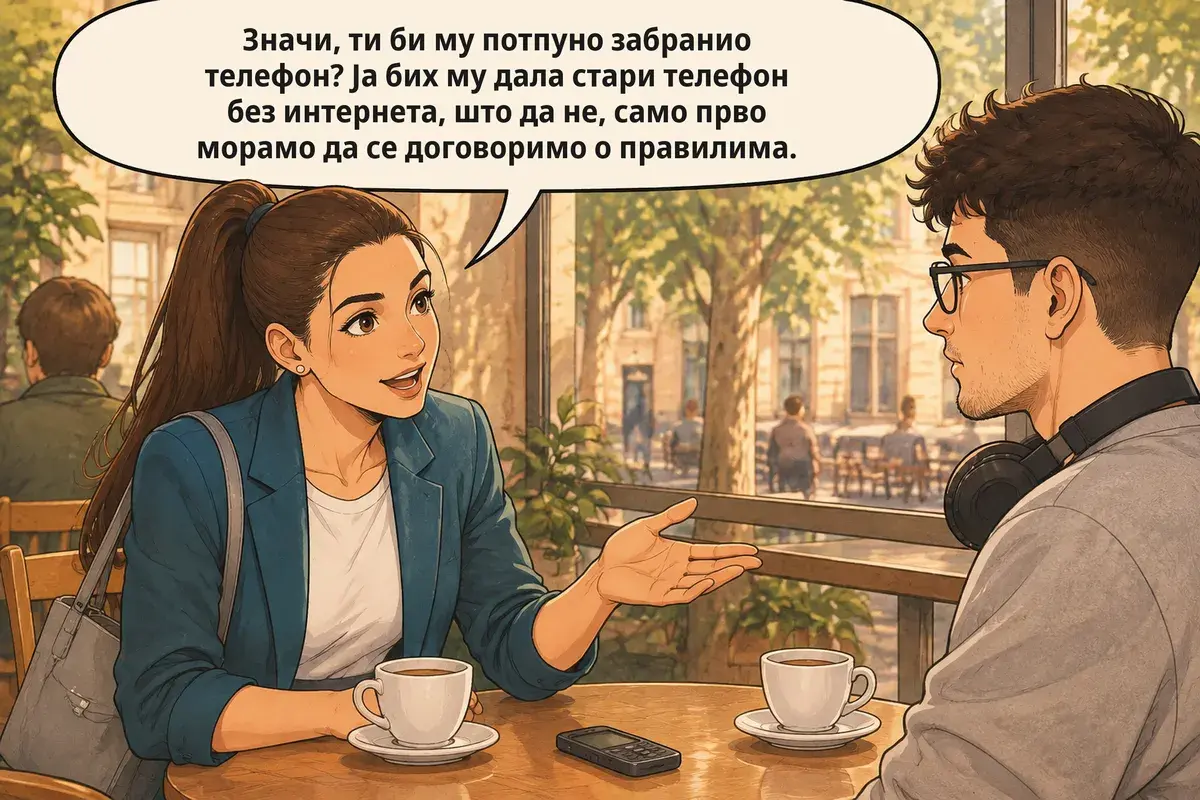
- Милица
Значи, ти би му потпуно забранио телефон? Ја бих му дала стари телефон без интернета, што да не, само прво морамо да се договоримо о правилима.
So you'd ban his phone completely? (to a man) I'd give him an old phone without internet, why not, we just have to agree on the rules first (woman speaking).
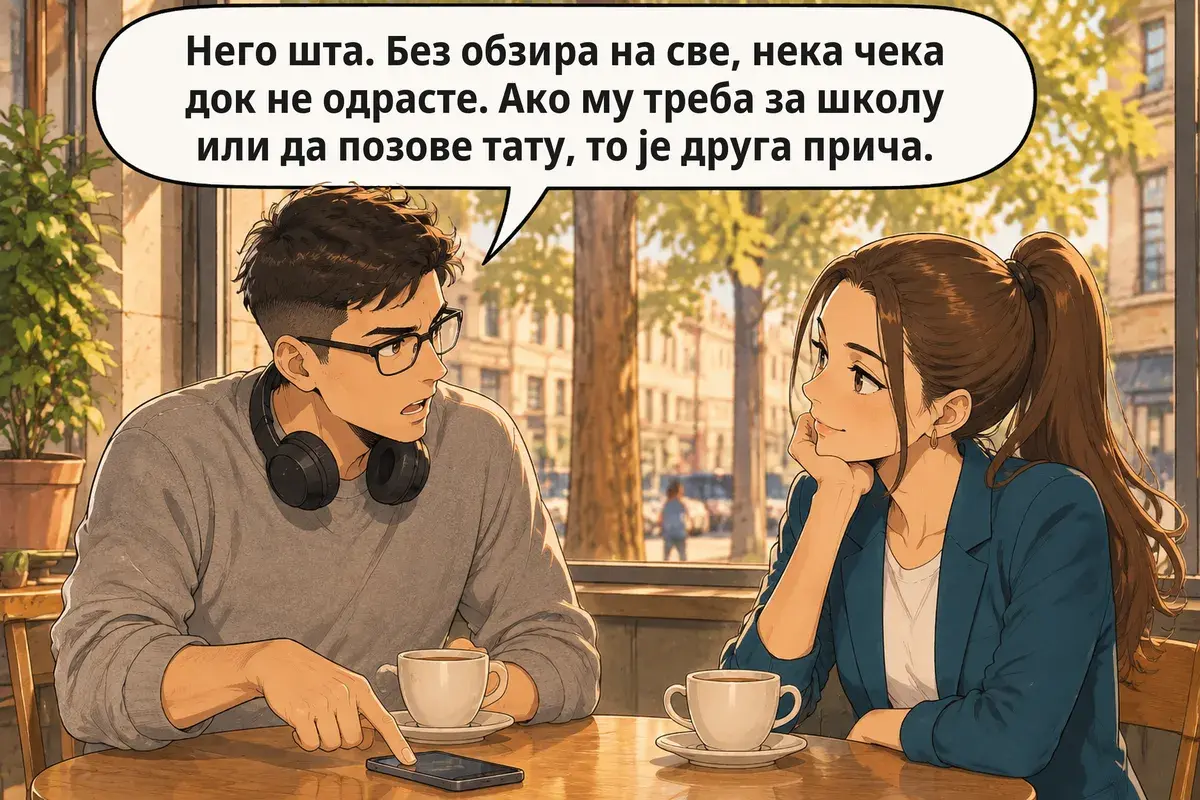
- Душан
Него шта. Без обзира на све, нека чека док не одрасте. Ако му треба за школу или да позове тату, то је друга прича.
You bet. Regardless of everything, let him wait until he grows up. If he needs it for school or to call his dad, that's a different story.
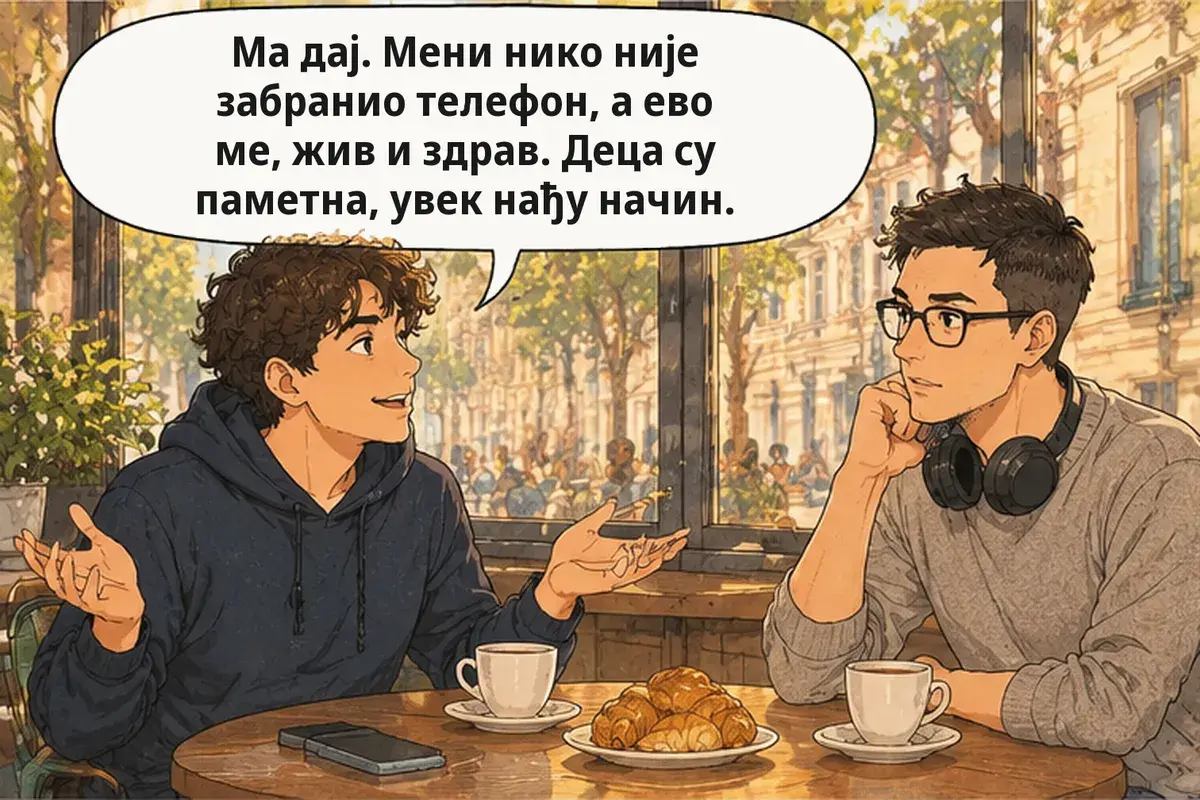
- Стефан
Ма дај. Мени нико није забранио телефон, а ево ме, жив и здрав. Деца су паметна, увек нађу начин.
Come on. Nobody banned my phone, and look at me, alive and well (man speaking). Kids are smart, they always find a way.
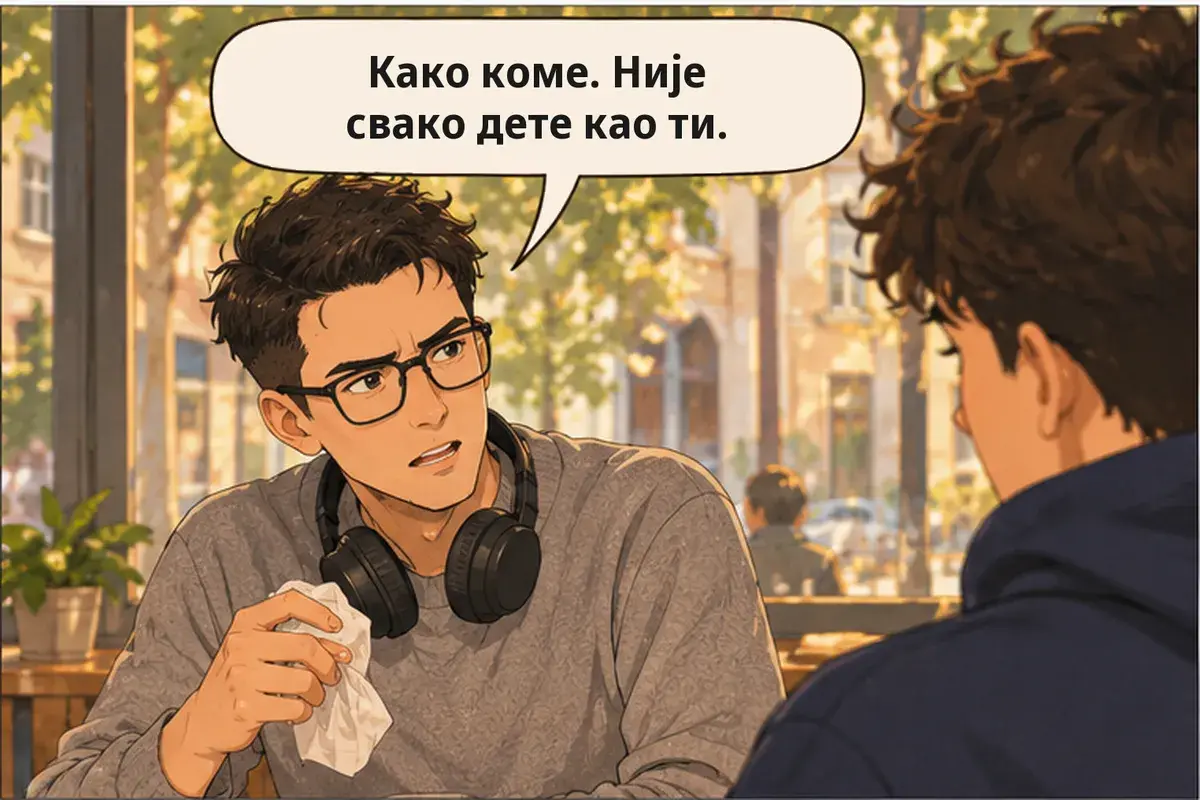
- Душан
Како коме. Није свако дете као ти.
It depends on the person. Not every child is like you.
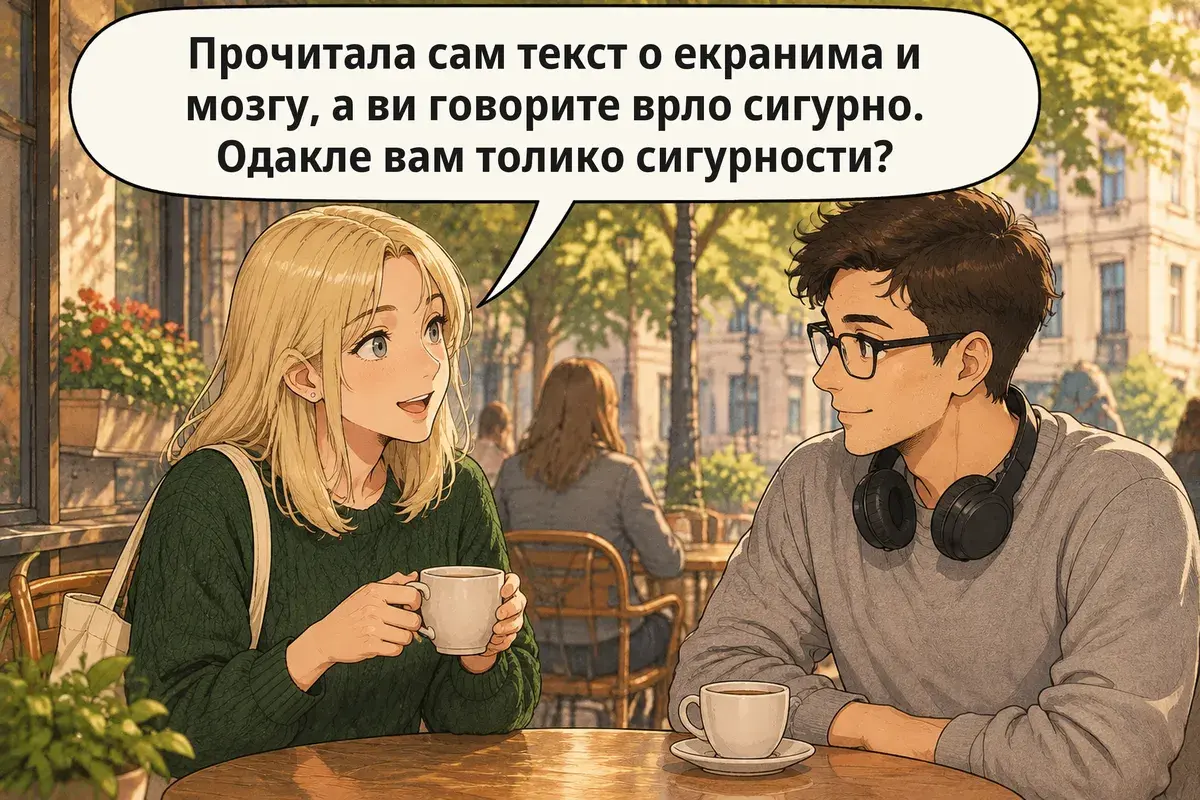
- Ана
Прочитала сам текст о екранима и мозгу, а ви говорите врло сигурно. Одакле вам толико сигурности?
I read a text about screens and the brain, and you sound very sure (woman speaking, to several people). Where do you get so much certainty? (to several people)
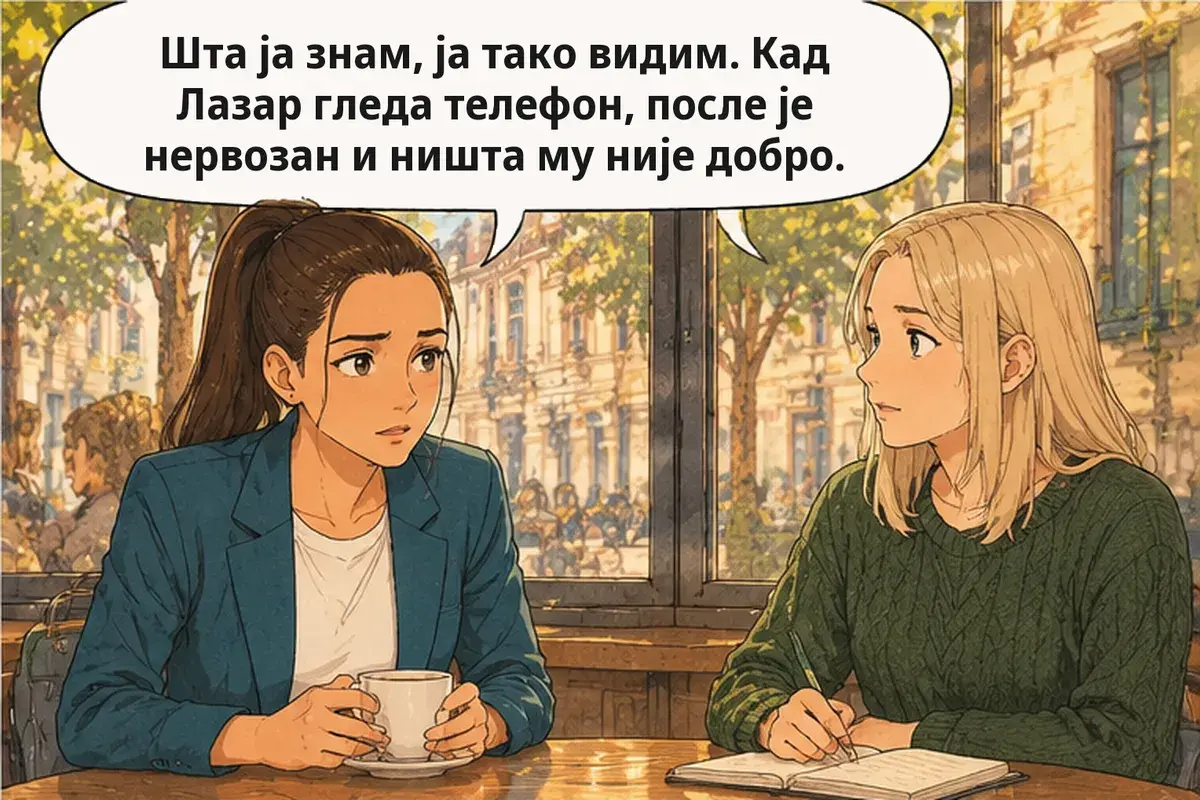
- Милица
Шта ја знам, ја тако видим. Кад Лазар гледа телефон, после је нервозан и ништа му није добро.
I don't know, that's just how I see it. When Lazar looks at a phone, he's nervous afterward and nothing is right for him.
- Ана
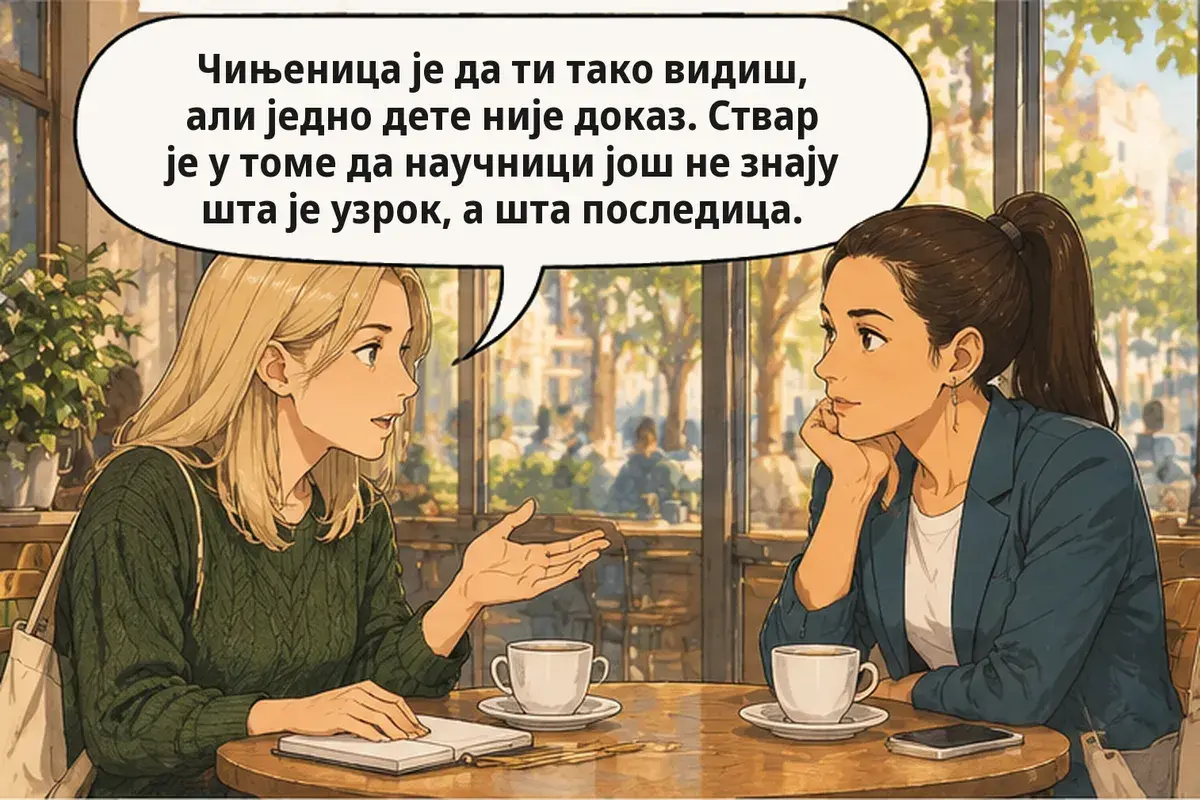
Чињеница је да ти тако видиш, али једно дете није доказ. Ствар је у томе да научници још не знају шта је узрок, а шта последица.
The fact is that you see it that way, but one child isn't proof. The thing is that scientists still don't know which is the cause and which is the effect.
- Душан
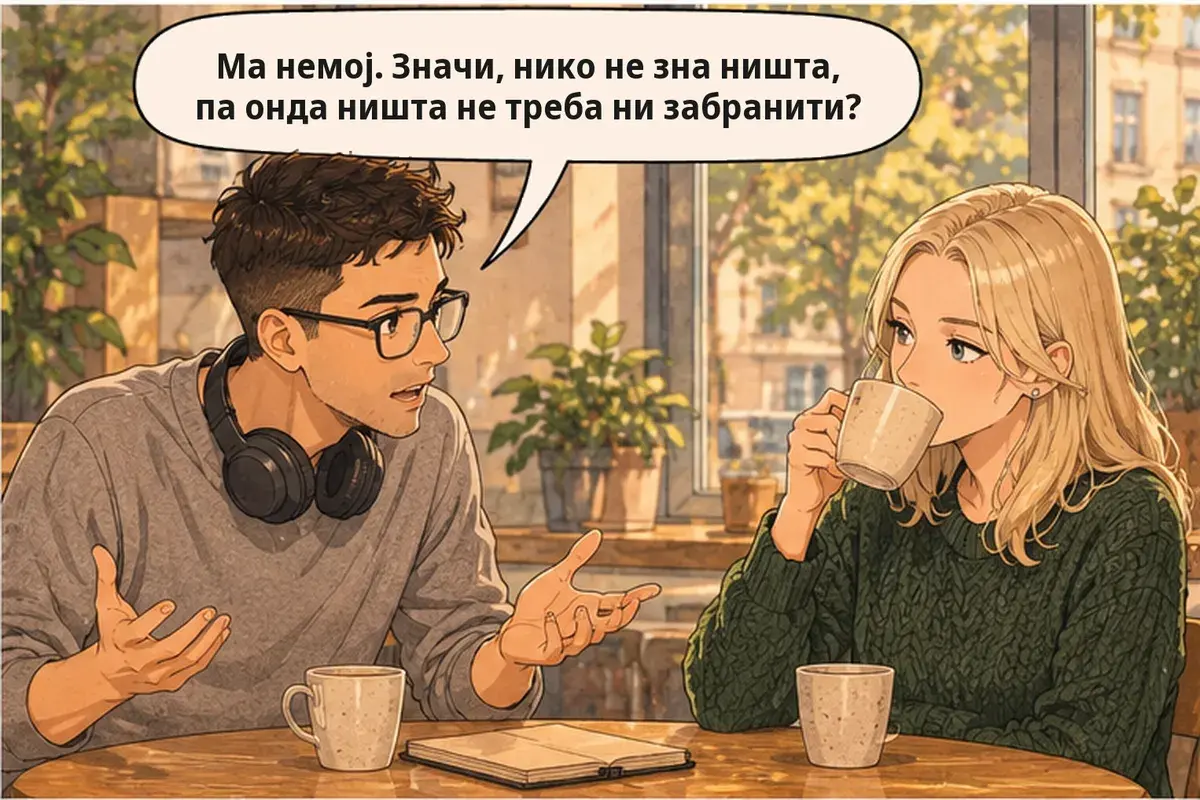
Ма немој. Значи, нико не зна ништа, па онда ништа не треба ни забранити?
No way. So nobody knows anything, and then nothing should be banned?
- Ана
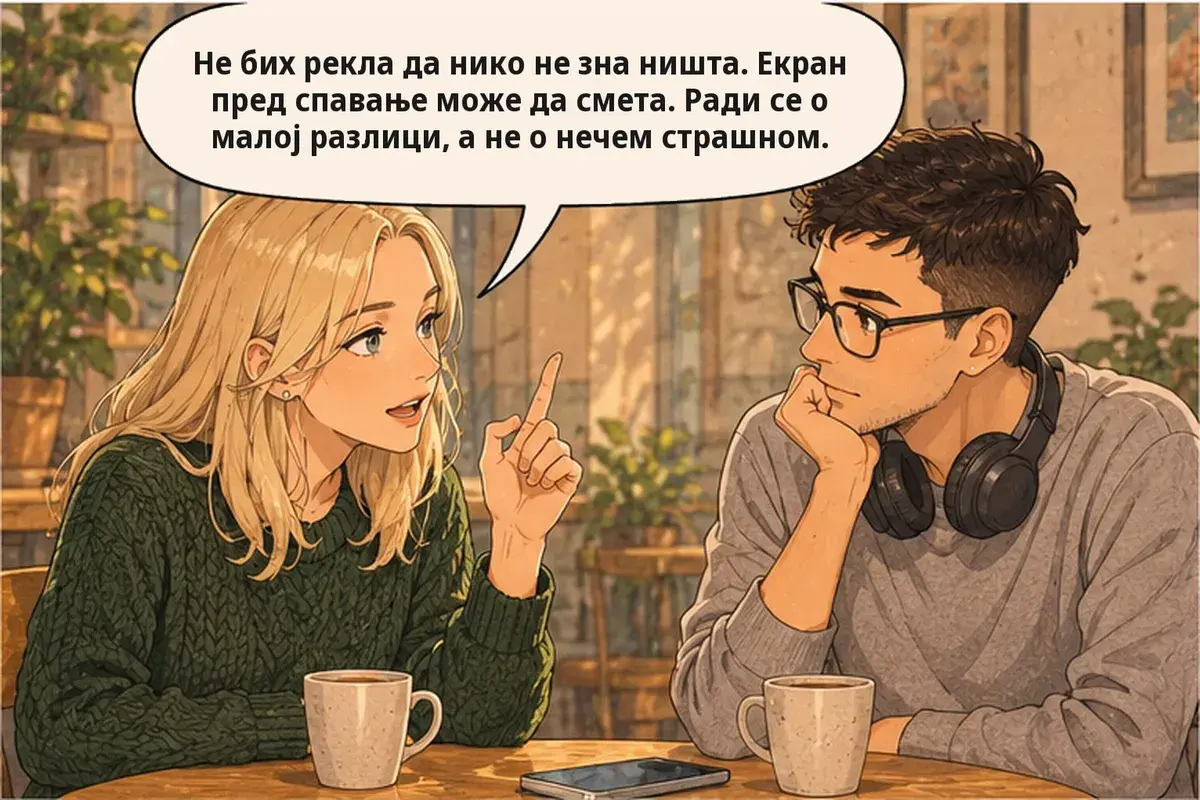
Не бих рекла да нико не зна ништа. Екран пред спавање може да смета. Ради се о малој разлици, а не о нечем страшном.
I wouldn't say that nobody knows anything (woman speaking). A screen before bed can interfere. It's about a small difference, not something terrible.
- Милица
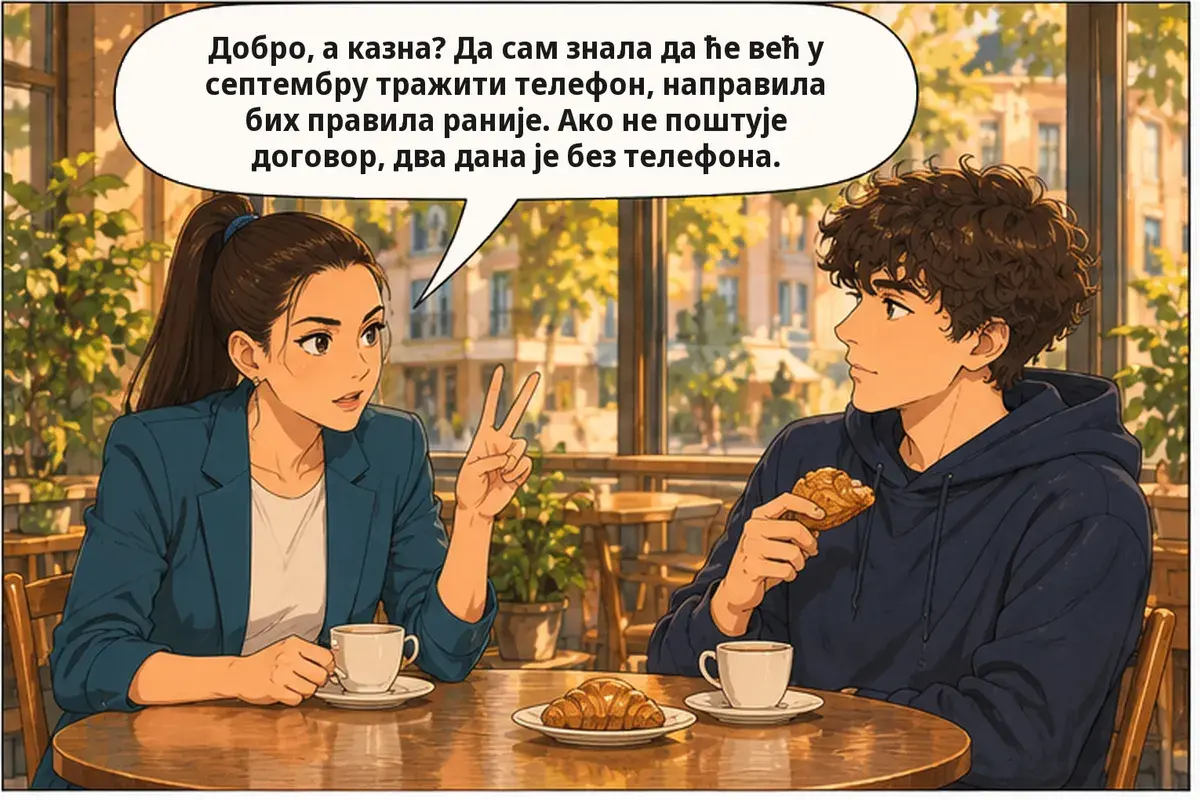
Добро, а казна? Да сам знала да ће већ у септембру тражити телефон, направила бих правила раније. Ако не поштује договор, два дана је без телефона.
Okay, but what about punishment? If I had known he'd ask for a phone as early as September, I would have made rules sooner (woman speaking). If he doesn't keep the agreement, he goes two days without a phone.
- Стефан
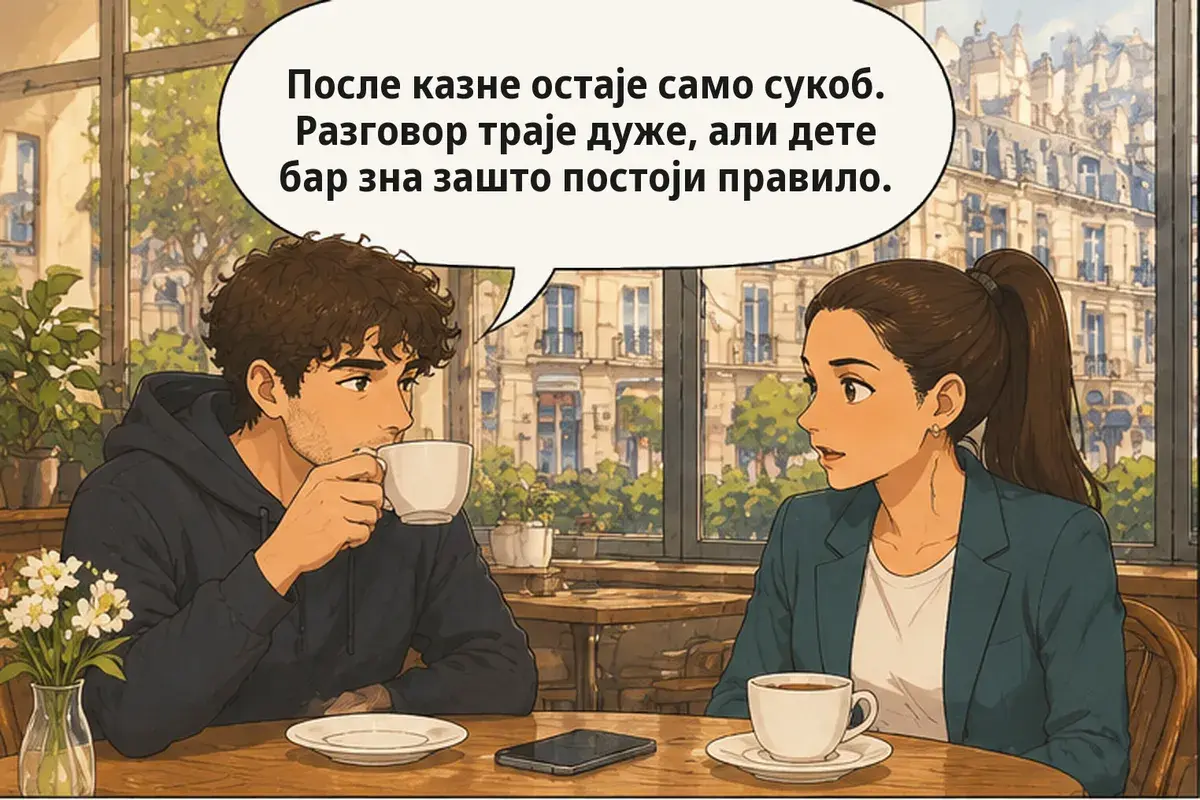
После казне остаје само сукоб. Разговор траје дуже, али дете бар зна зашто постоји правило.
After punishment only conflict remains. A conversation takes longer, but at least the child knows why the rule exists.
- Милица
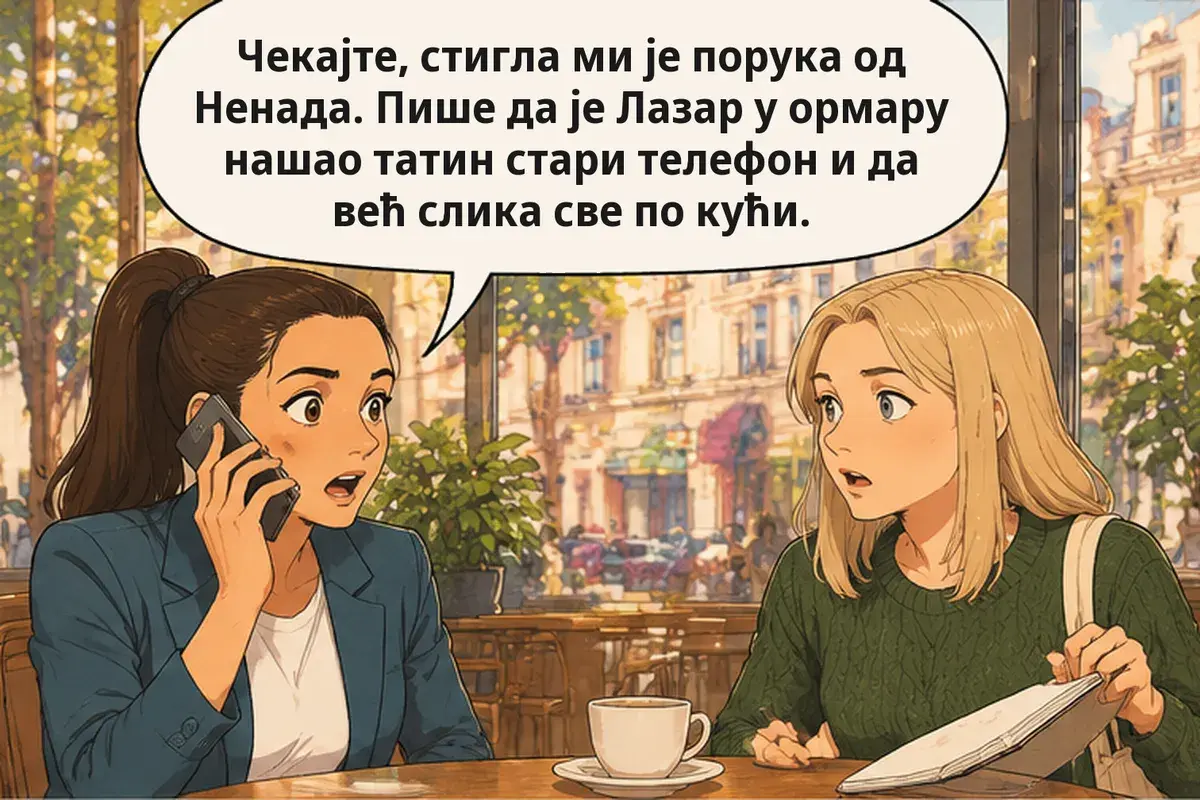
Чекајте, стигла ми је порука од Ненада. Пише да је Лазар у ормару нашао татин стари телефон и да већ слика све по кући.
Wait, I got a message from Nenad (to several people). He writes that Lazar found his dad's old phone in the closet and is already taking pictures of everything around the house.
- Душан
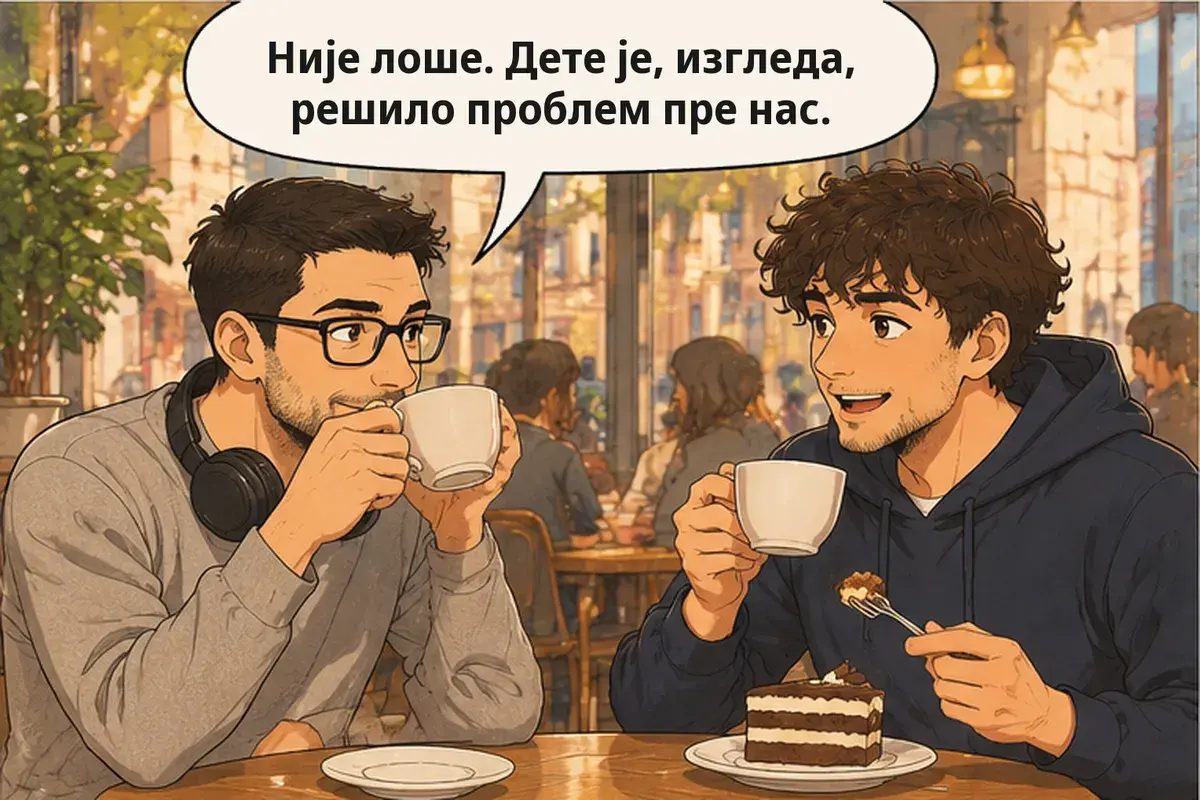
Није лоше. Дете је, изгледа, решило проблем пре нас.
Not bad. The kid seems to have solved the problem before us.
- Ана
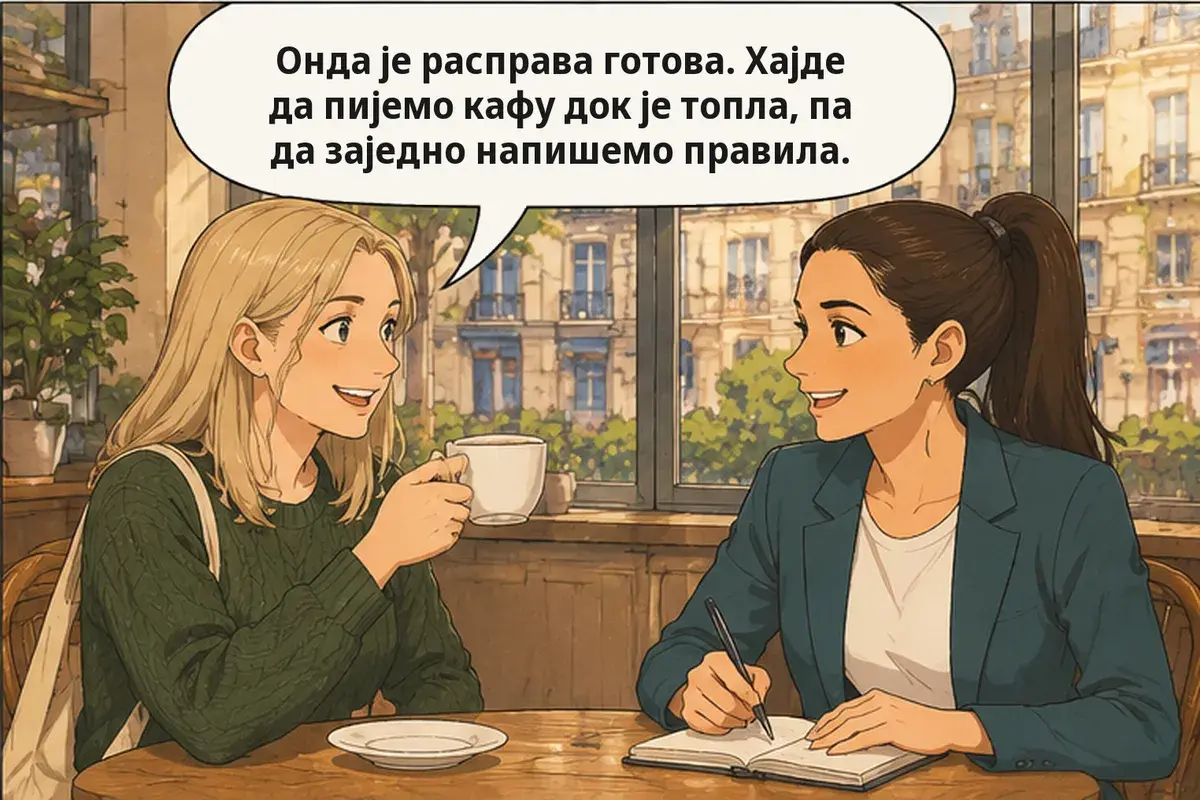
Онда је расправа готова. Хајде да пијемо кафу док је топла, па да заједно напишемо правила.
Then the debate is over. Let's drink coffee while it's hot, and then write the rules together.
Grammar for this text
Док чекамо кафу, морам нешто да вас питам— While we wait for our coffee, I have to ask you something. Theдок(while) part comes first, so a comma follows it (A2, unit 26).Кад бих ја био на твом месту, рекао бих му да сачека— If I were in your shoes, I'd tell him to wait. This is an unreal condition in the present (unit 13):кад бих+ the -o/-la form, thenбих+ the -o/-la form. A woman would sayрекла бих.Ја бих му дала стари телефон без интернета, што да не— I'd give him an old phone without internet, why not.што да неmeans "why not".Без обзира на све, нека чека док не одрасте— Regardless of everything, let him wait until he grows up.без обзира на+ accusative means "regardless of" (unit 11);нека чекаmeans "let him wait" (unit 1); afterдок неthe verb is perfective.Него шта— You bet. It's a way of agreeing, not the wordнего(but rather).Како коме— It depends on the person.Ма немој— No way! / Really? It can be joy or irony; the tone decides.Чињеница је да ти тако видиш, али једно дете није доказ— The fact is that you see it that way, but one child isn't proof.Ствар је у томе да научници још не знају шта је узрок, а шта последица— The thing is that scientists still don't know which is the cause and which is the effect.штаhere starts an indirect question (unit 10).Шта ја знам, тако видим— I don't know, that's how I see it. This is not a question.Не бих рекла да нико не зна ништа— I wouldn't say that nobody knows anything. A man would sayне бих рекао. The double negative (нико не зна ништа) is correct in Serbian, unlike in English.Да сам знала да ће већ у септембру тражити телефон, направила бих правила раније— If I had known he'd ask for a phone as early as September, I would have made rules sooner. This is an unreal condition in the past (unit 17):да сам знала(if I had known) +бих+ the -o/-la form.Хајде да пијемо кафу док је топла, па да заједно напишемо правила— Let's drink coffee while it's hot, and then write the rules together.хајде да+ present means "let's".
Words and grammar of the unit: Argue about opinions.
Learn the words from the texts with flashcards
In the app, you can tap any word in a text to see its translation, forms and examples, and new words stick with flashcards. 15 minutes a day.
Start for freeEverything is open for free. No card needed to sign up.