

Serbian story with translation · B1 · 15 lines
Упознајте Ану, нашу нову дизајнерку Meet Ana, our new designer
Comic · 10 panels

Ја сам Милица, менаџерка у Битлабу. Ове недеље вам представљам нашу нову колегиницу, Ану.
I'm Milica, a manager at Bitlab (woman speaking). This week I'm introducing our new coworker, Ana, to you (to several people).
Ана је дизајнерка чији су цртежи Београда већ на зиду у нашој кухињи.
Ana is a designer whose drawings of Belgrade are already on the wall in our kitchen.

Ана није одавде, а осам година се бави дизајном апликација. До овог лета је радила код куће за фирму у другој земљи.
Ana isn't from here, and she has been working in app design for eight years. Until this summer, she worked from home for a company in another country.
Кад смо се упознале прошле јесени у једном кафићу, Ана је већ тада поручила кафу на српском. Данас говори тако добро да већина нас заборавља да јој српски није први језик.
When we met in a café last fall (women speaking), Ana already ordered coffee in Serbian back then. Today she speaks so well that most of us forget Serbian isn't her first language.

Првог дана нам је показала своју свеску, у којој црта улице и људе које види на путу до посла.
On her first day, she showed us her notebook, in which she draws the streets and the people she sees on her way to work.
То је једини предмет који увек носи са собом. За њу то није обична свеска, него мапа града.
It's the only thing she always carries with her. For her, it's not an ordinary notebook but a map of the city.
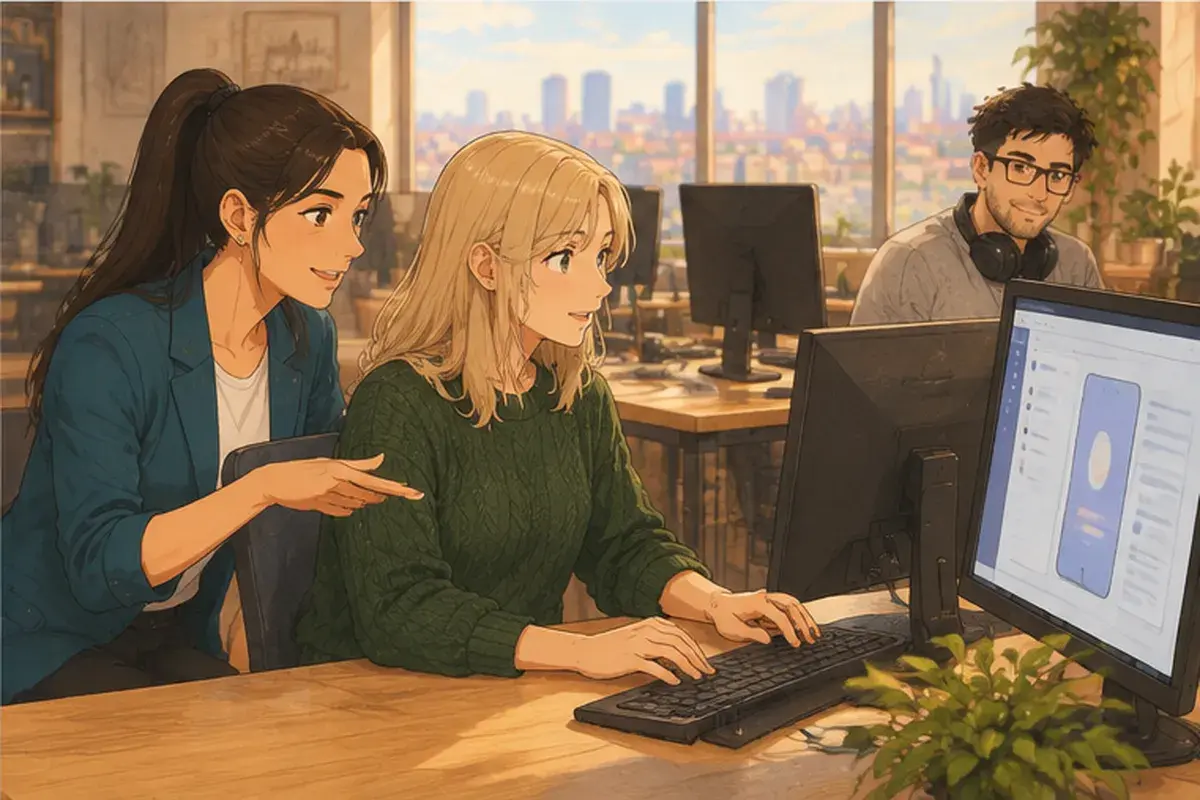
Њен први задатак је апликација за ланац пекара. Ана је задужена за кориснички део.
Her first task is an app for a bakery chain. Ana is in charge of the user part.
То се тиче свега што корисник види на екрану.
That concerns everything the user sees on the screen.

Душан, који увек говори мало, рекао је о њеним скицама само „Није лоше“. То код њега значи: одлично.
Dušan, who always says little, only said "Not bad" about her sketches. Coming from him, that means: excellent.

Ана води листу чудних речи из нашег језика, а најновија је „екипа“.
Ana keeps a list of strange words from our language, and the newest one is "ekipa."

Претпостављам да ће нас ускоро све питати: „Како се каже…?“
I suppose she'll soon be asking all of us: "How do you say…?"
Сви смо заузети, али јој слободно одговорите, јер је радознала.
We're all busy, but feel free to answer her, because she's curious (to several people).

По карактеру је смирена, а њена најбоља особина је да пита све што не разуме. Сви одмах виде да је искрена и способна.
Her character is calm, and her best quality is that she asks about everything she doesn't understand. Everyone can see right away that she's sincere and capable.

Свака екипа би волела овакву колегиницу. Ана каже да је добила посао какав је дуго тражила.
Every team would like a coworker like this. Ana says she got the kind of job she had long been looking for.

Добро нам дошла, Ано!
Welcome among us, Ana! (to a woman)
Grammar for this text
Ана је дизајнерка чији су цртежи Београда већ на зиду у нашој кухињи—чијиmeans 'whose'. It's masculine plural becauseцртежи(drawings) is masculine plural; Ana's gender doesn't matter here. The short wordсуstands second in its clause.у којој црта улице и људе које види на путу до посла— two forms ofкојиand two comma rules.свеску, у којојadds information about a notebook that is already named, so there's a comma.људе које видиtells you which people, so there's no comma.којеis the accusative plural forљуди.Душан, који увек говори мало, рекао је…— the name already tells you who it is; the clause only adds information, so it stands between commas.То се тиче свега што корисник види на екрану—тицати сеmeans 'to concern':тиче се+ genitive. Afterсве(everything) Serbian usesшто, which never changes, instead ofкоји; the case shows onсве:свега.Претпостављам да ће нас ускоро све питати—претпостављамmeans 'I suppose'; no comma beforeда(that).Како се каже…?is a set phrase, 'How do you say…?'; its rule comes in unit 8.Свака екипа би волела овакву колегиницу—би волелаmeans 'would like', as at A2 (unit 27).оваквуmeans 'like this';екипаhere means 'team'.добила посао какав је дуго тражила—какавmeans 'what kind', and in the middle of a sentence 'the kind that': the kind of job she had long been looking for. When you speak, sayпосао који је дуго тражила;какавyou only need to recognize.
Words and grammar of the unit: Talk about your coworkers and a project.
Learn the words from the texts with flashcards
In the app, you can tap any word in a text to see its translation, forms and examples, and new words stick with flashcards. 15 minutes a day.
Start for freeEverything is open for free. No card needed to sign up.