

Serbian dialogue with translation · B1 · 12 lines
Тестер са којим ћеш радити седи поред прозора The tester you'll work with sits by the window
Comic · 12 panels
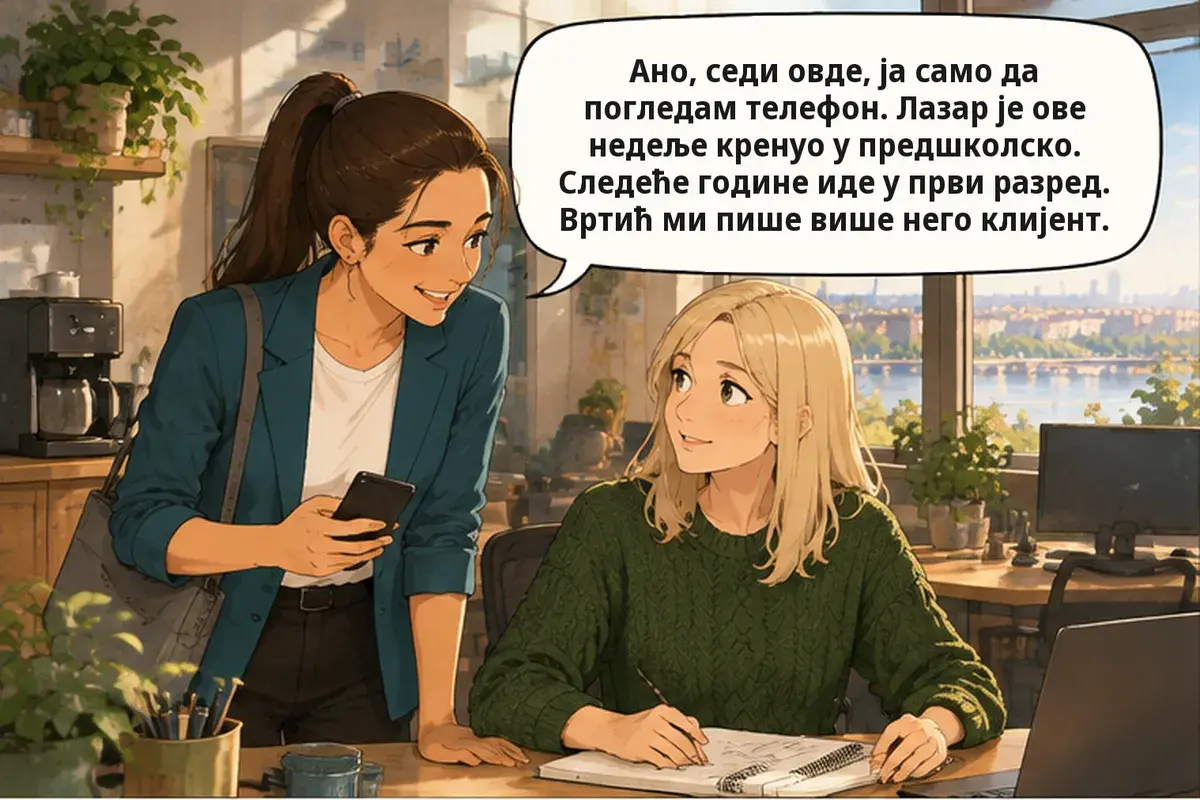
- Милица
Ано, седи овде, ја само да погледам телефон. Лазар је ове недеље кренуо у предшколско. Следеће године иде у први разред. Вртић ми пише више него клијент.
Ana, sit here, I just need to check my phone. Lazar started preschool this week. Next year he's starting first grade. The kindergarten writes to me more than the client does.
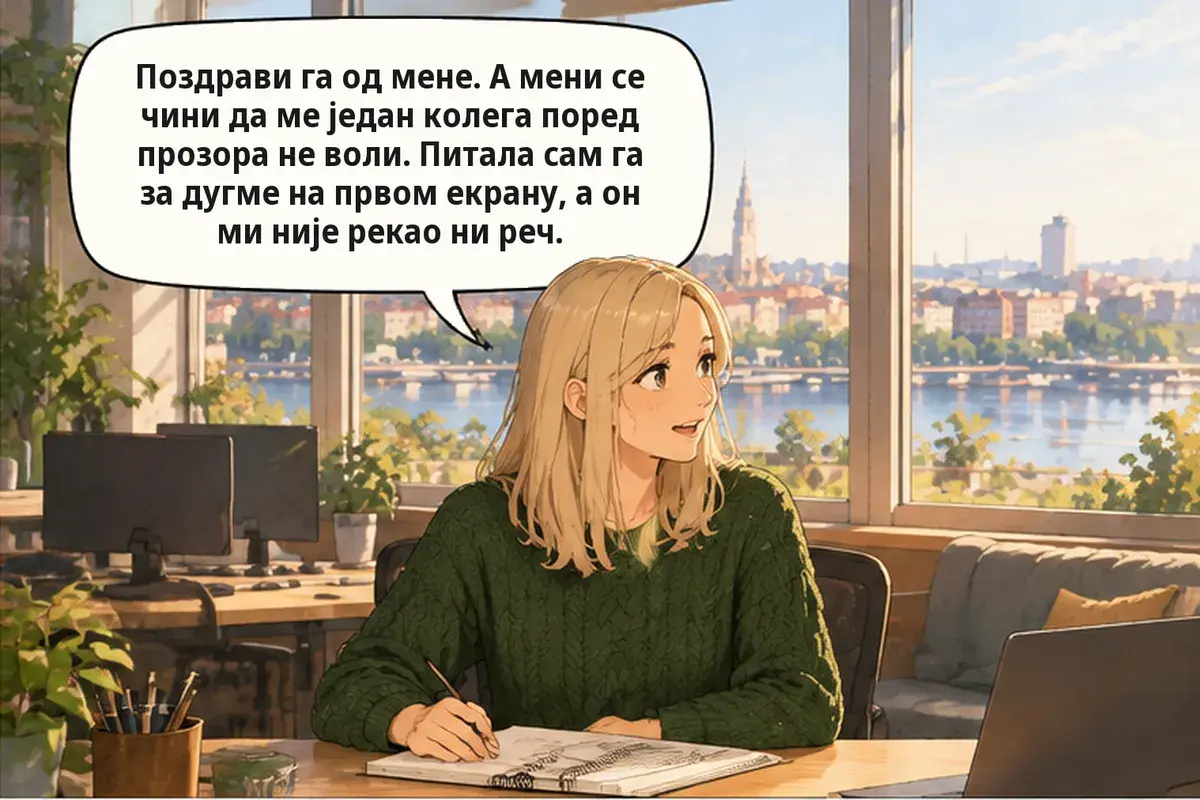
- Ана
Поздрави га од мене. А мени се чини да ме један колега поред прозора не воли. Питала сам га за дугме на првом екрану, а он ми није рекао ни реч.
Say hi to him for me. And it seems to me that a coworker by the window doesn't like me. I asked him about the button on the first screen, and he didn't say a word to me (woman speaking).
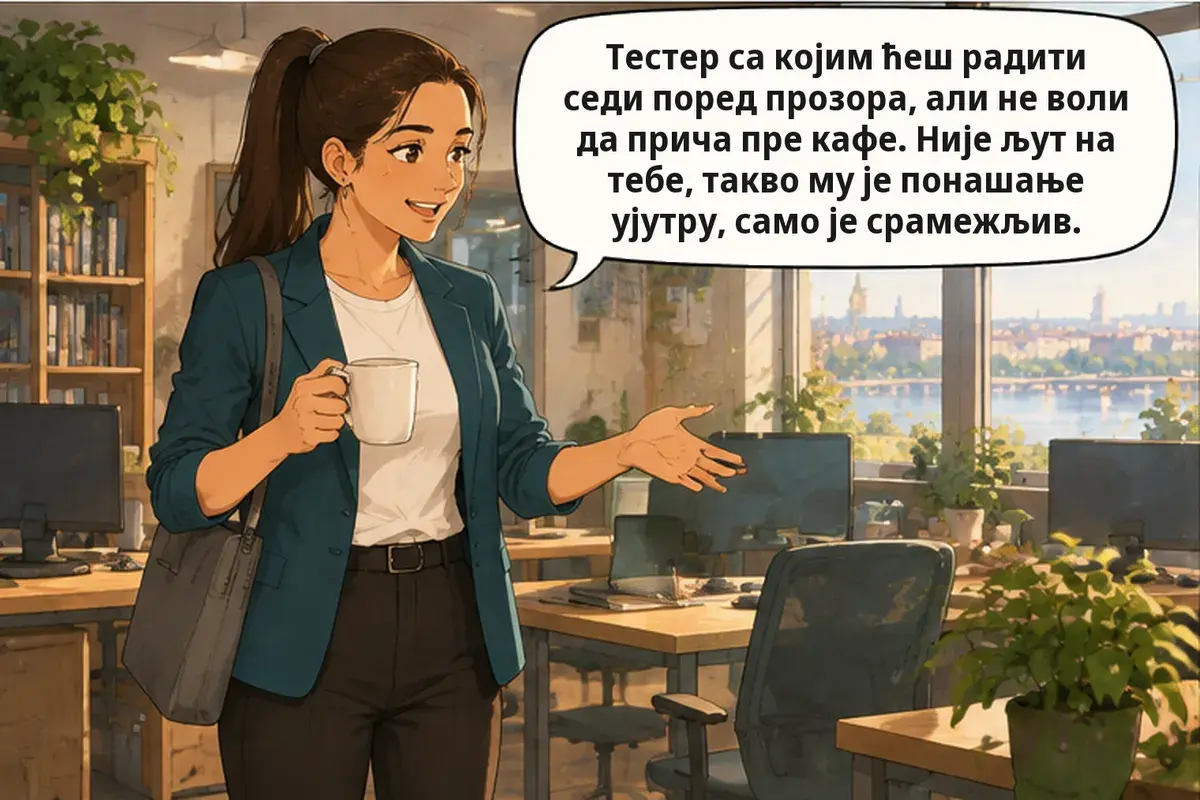
- Милица
Тестер са којим ћеш радити седи поред прозора, али не воли да прича пре кафе. Није љут на тебе, такво му је понашање ујутру, само је срамежљив.
The tester you'll work with sits by the window, but he doesn't like to talk before coffee. He isn't angry with you; that's just his behavior in the morning, he's only shy.

- Душан
После кафе је други човек. Цео сат прича о функцијама и верзијама, а увек је фин.
After coffee he's a different man. He talks about features and versions for a whole hour, and he's always nice.

- Ана
Значи, прво кафа, па питања. Могу ли нешто да питам и о клијенту?
So, coffee first, then questions. Can I also ask something about the client?
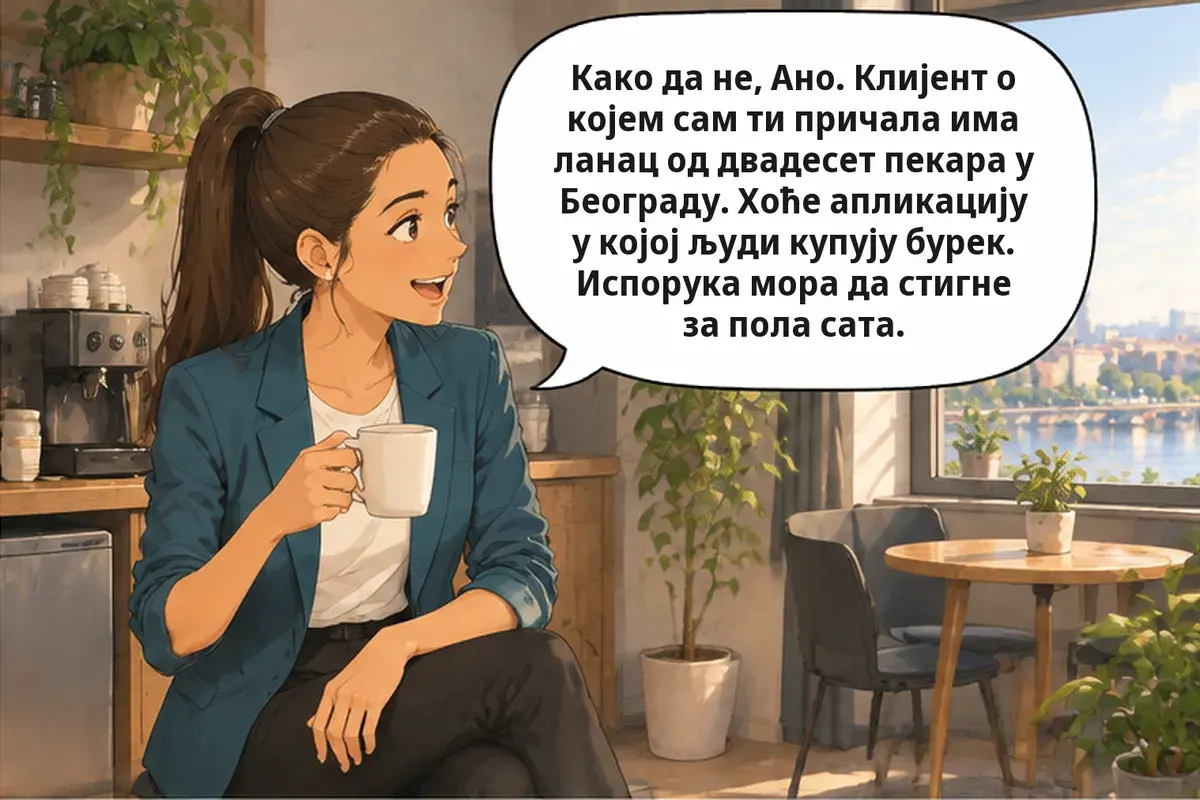
- Милица
Како да не, Ано. Клијент о којем сам ти причала има ланац од двадесет пекара у Београду. Хоће апликацију у којој људи купују бурек. Испорука мора да стигне за пола сата.
Of course, Ana. The client I told you about has a chain of twenty bakeries in Belgrade (woman speaking). He wants an app where people buy burek. The delivery has to arrive within half an hour.
- Душан
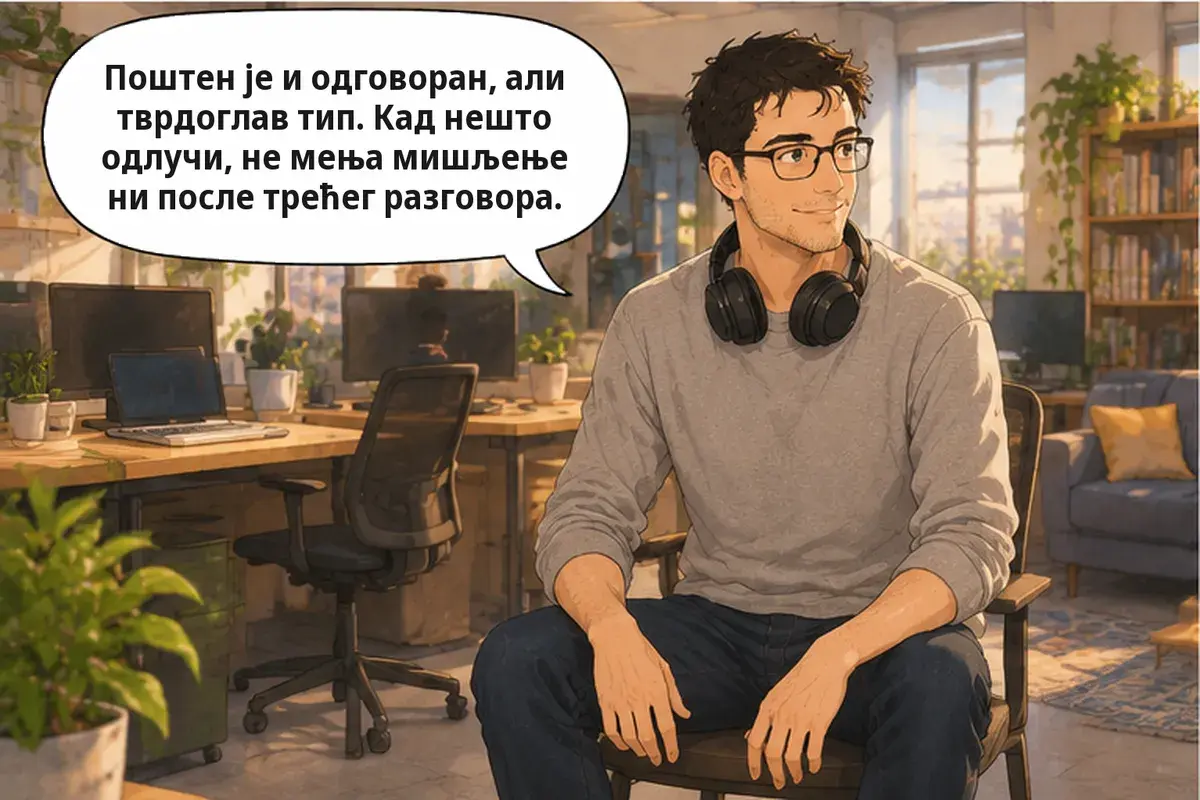
Поштен је и одговоран, али тврдоглав тип. Кад нешто одлучи, не мења мишљење ни после трећег разговора.
He's honest and responsible, but a stubborn guy. When he decides something, he doesn't change his mind, not even after the third conversation.

- Ана
Онда ћемо се слагати, јер сам и ја помало тврдоглава. Која је тачно моја улога у томе?
Then we'll get along, because I'm a bit stubborn too (woman speaking). What exactly is my role in this?
- Милица
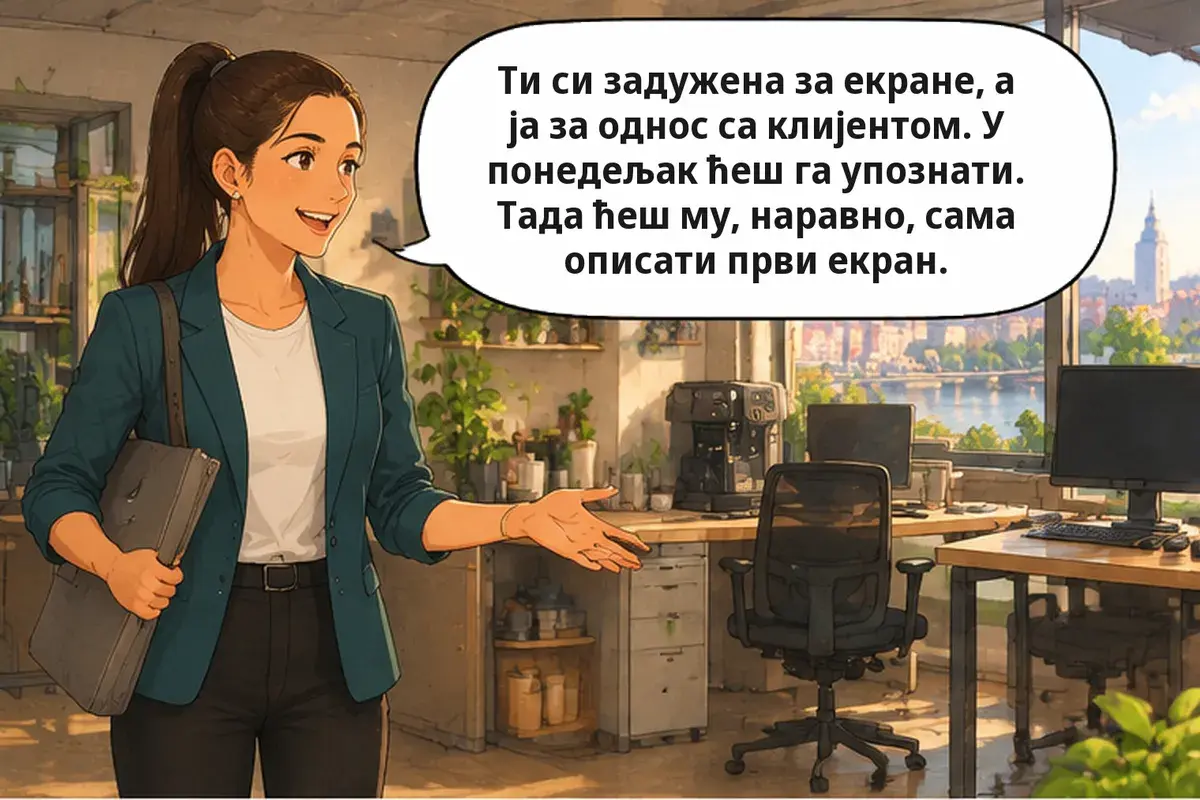
Ти си задужена за екране, а ја за однос са клијентом. У понедељак ћеш га упознати. Тада ћеш му, наравно, сама описати први екран.
You're in charge of the screens, and I'm in charge of the relationship with the client. You'll meet him on Monday. Then, of course, you'll describe the first screen to him yourself (to a woman).
- Ана
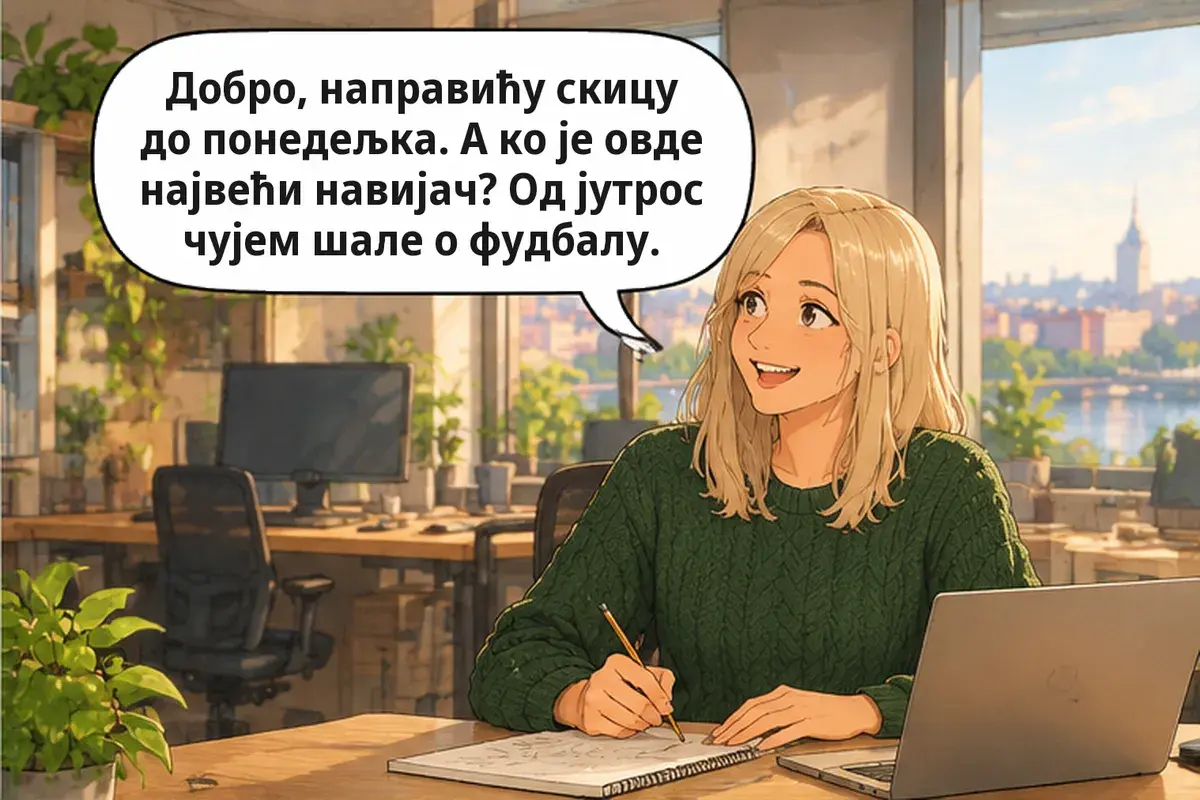
Добро, направићу скицу до понедељка. А ко је овде највећи навијач? Од јутрос чујем шале о фудбалу.
OK, I'll make a sketch by Monday. And who's the biggest fan here? I've been hearing jokes about soccer since this morning.
- Милица
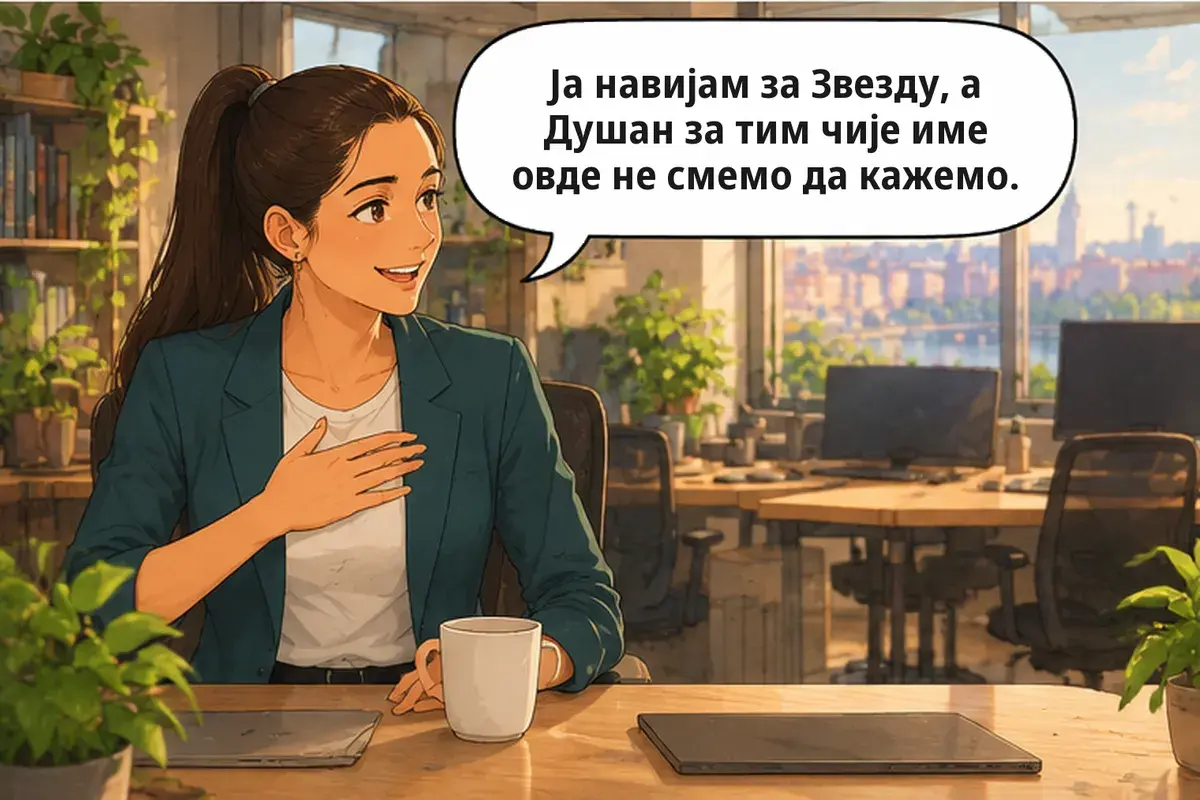
Ја навијам за Звезду, а Душан за тим чије име овде не смемо да кажемо.
I support Zvezda, and Dušan supports the team whose name we're not allowed to say here.
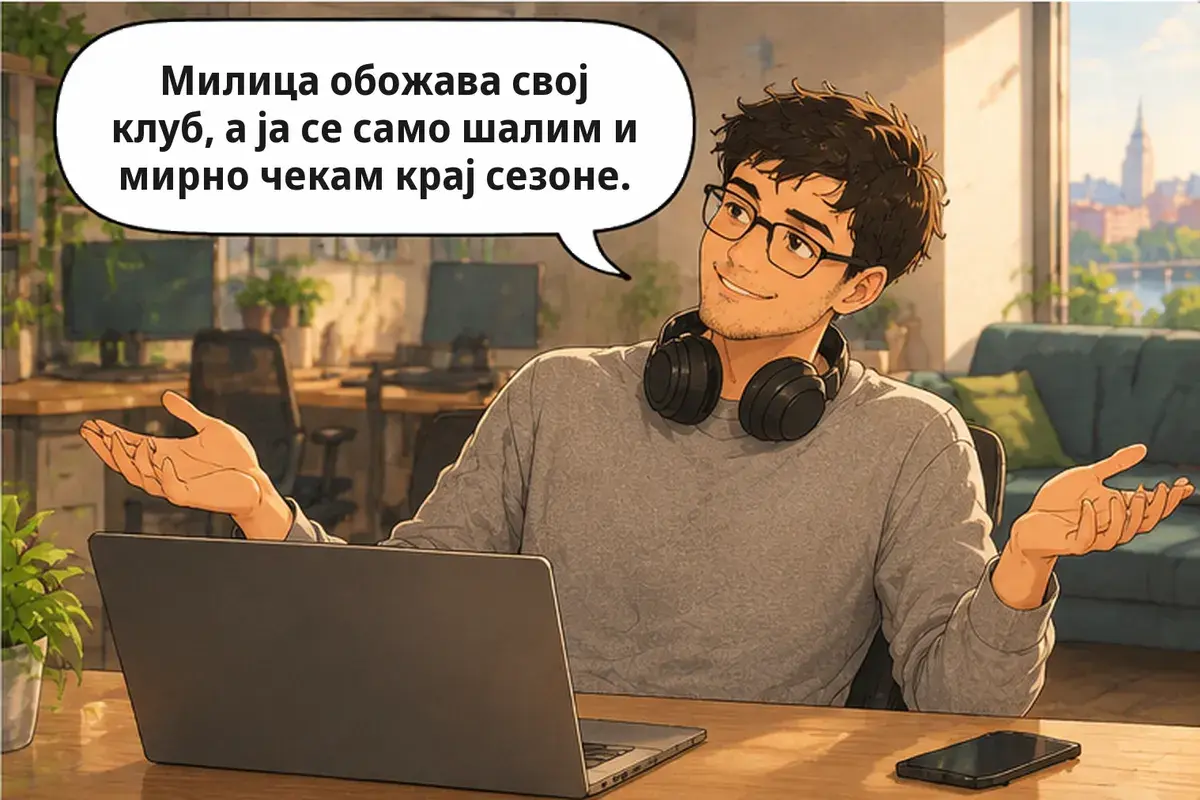
- Душан
Милица обожава свој клуб, а ја се само шалим и мирно чекам крај сезоне.
Milica adores her club, and I just joke around and calmly wait for the end of the season.
Grammar for this text
Тестер са којим ћеш радити седи поред прозора—са којимmeans 'with whom'.Тестерis masculine, so the form comes fromкоји, andса(with) takes the instrumental:којим. No comma: the clause tells you which tester. The short wordћешcomes right afterса којим, second in its clause.Клијент о којем сам ти причала—о којемmeans 'about whom':оtakes the locative, masculineкојем. The short wordsсам тиcome right afterо којем;причалаis the feminine form because Milica is speaking.Хоће апликацију у којој људи купују бурек—апликацијаis feminine, andуanswers 'where?', so it'sу којој(in which).Хоћеmeans 'he wants' (fromхтети).тим чије име овде не смемо да кажемо—чијеmeans 'whose'. Its gender followsиме(name, neuter), not the owner.не смемо да кажемоmeans 'we're not allowed to say':смети+да+ present.А мени се чини да ме један колега поред прозора не воли—чинити сеmeans 'to seem':мени се чини(it seems to me); the short wordсеstands second. No comma beforeда(that).меhere means 'me'.Како да не— a set phrase meaning 'of course'. Word for word it's 'how not?', but it means yes.Цео сат прича о функцијама и верзијама, а увек је фин—причаhere is the verbпричати(he talks), not the noun. A trap: inОд јутрос чујем шале о фудбалу,шалеcomes fromшала(joke), not fromшал(scarf).
Words and grammar of the unit: Talk about your coworkers and a project.
Learn the words from the texts with flashcards
In the app, you can tap any word in a text to see its translation, forms and examples, and new words stick with flashcards. 15 minutes a day.
Start for freeEverything is open for free. No card needed to sign up.