
Serbian dialogue with translation · A2 · 14 lines
Нас две имамо цело преподне The two of us have the whole morning (women speaking)
Comic · 14 panels
- Гордана
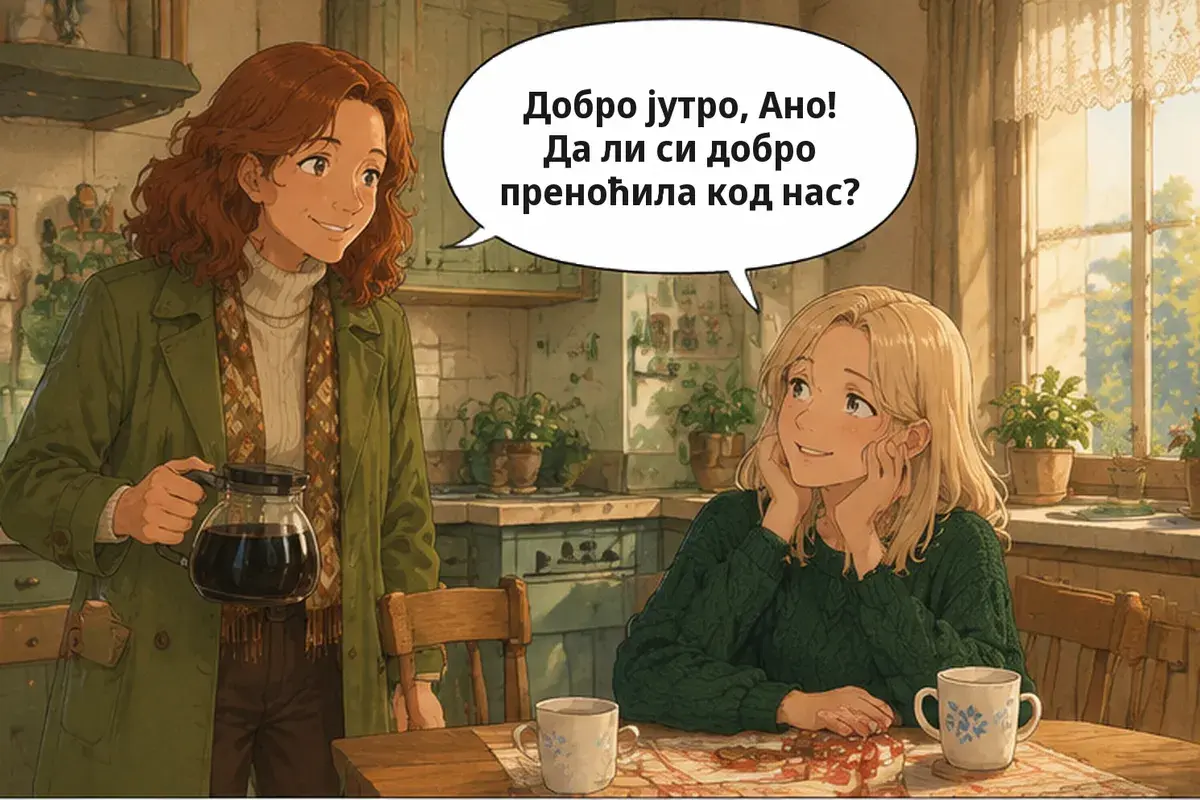
Добро јутро, Ано! Да ли си добро преноћила код нас?
Good morning, Ana! Did you have a good night at our place? (to a woman)
- Ана
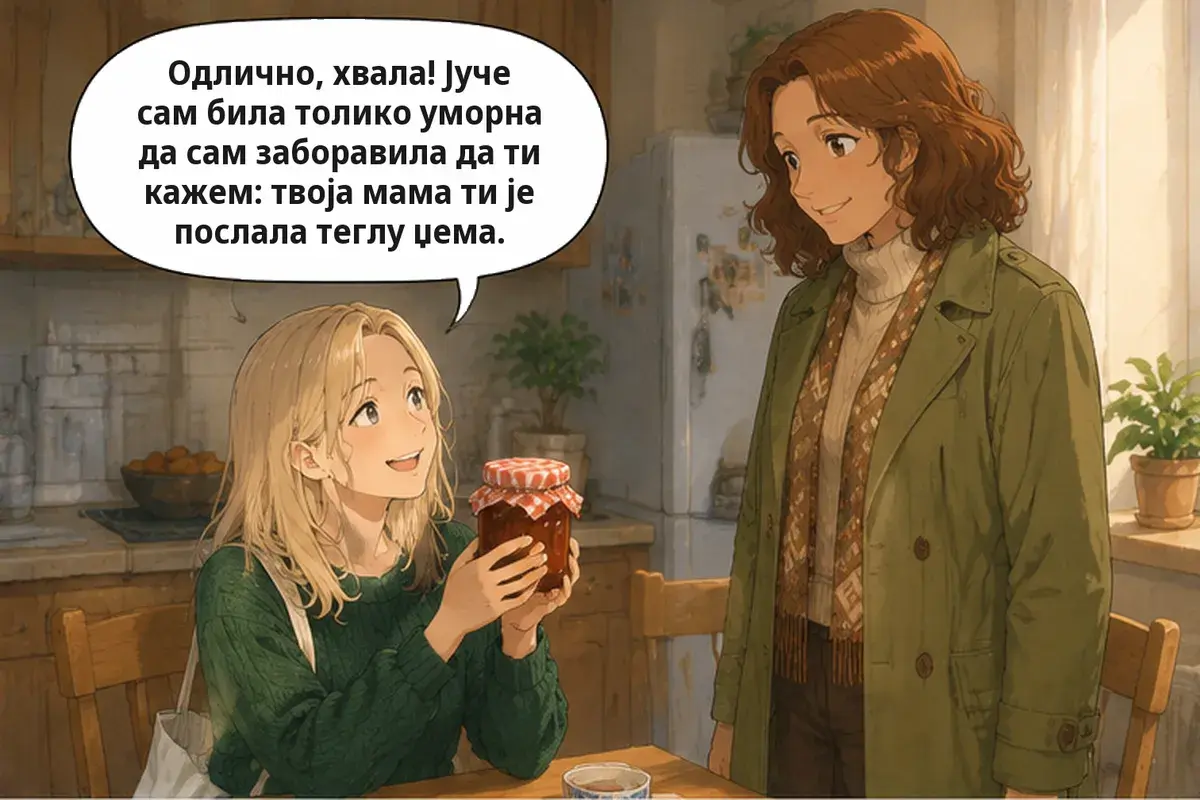
Одлично, хвала! Јуче сам била толико уморна да сам заборавила да ти кажем: твоја мама ти је послала теглу џема.
Great, thanks! Yesterday I was so tired that I forgot to tell you: your mom sent you a jar of jam (woman speaking).
- Гордана
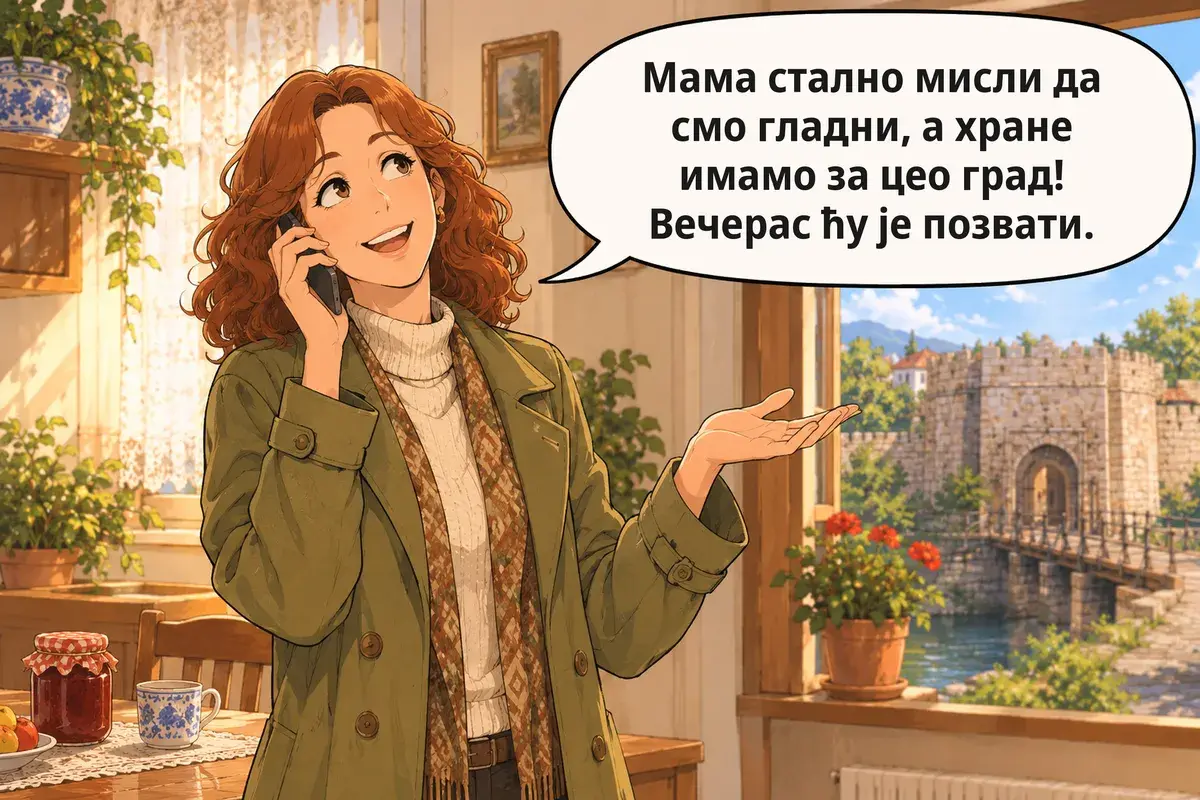
Мама стално мисли да смо гладни, а хране имамо за цео град! Вечерас ћу је позвати.
Mom always thinks we're hungry, and we have enough food for the whole city! I'll call her tonight.
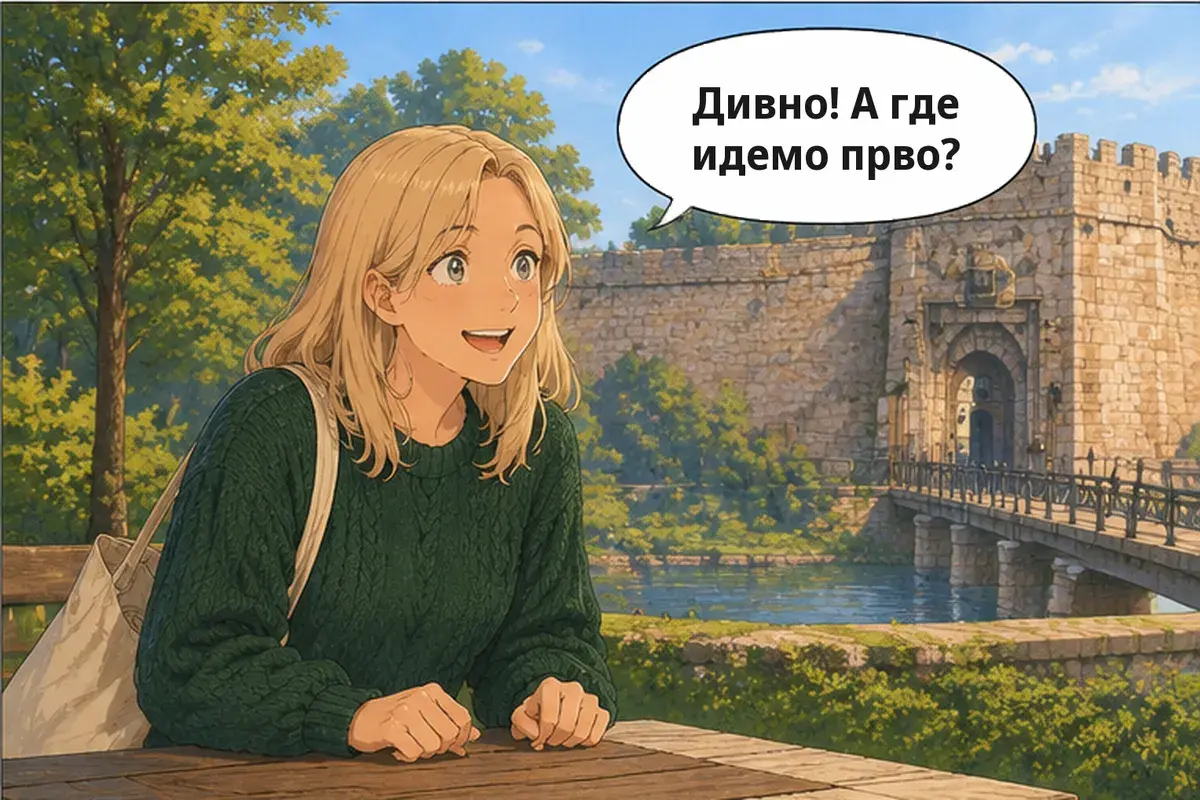
- Ана
Дивно! А где идемо прво?
Wonderful! And where are we going first?
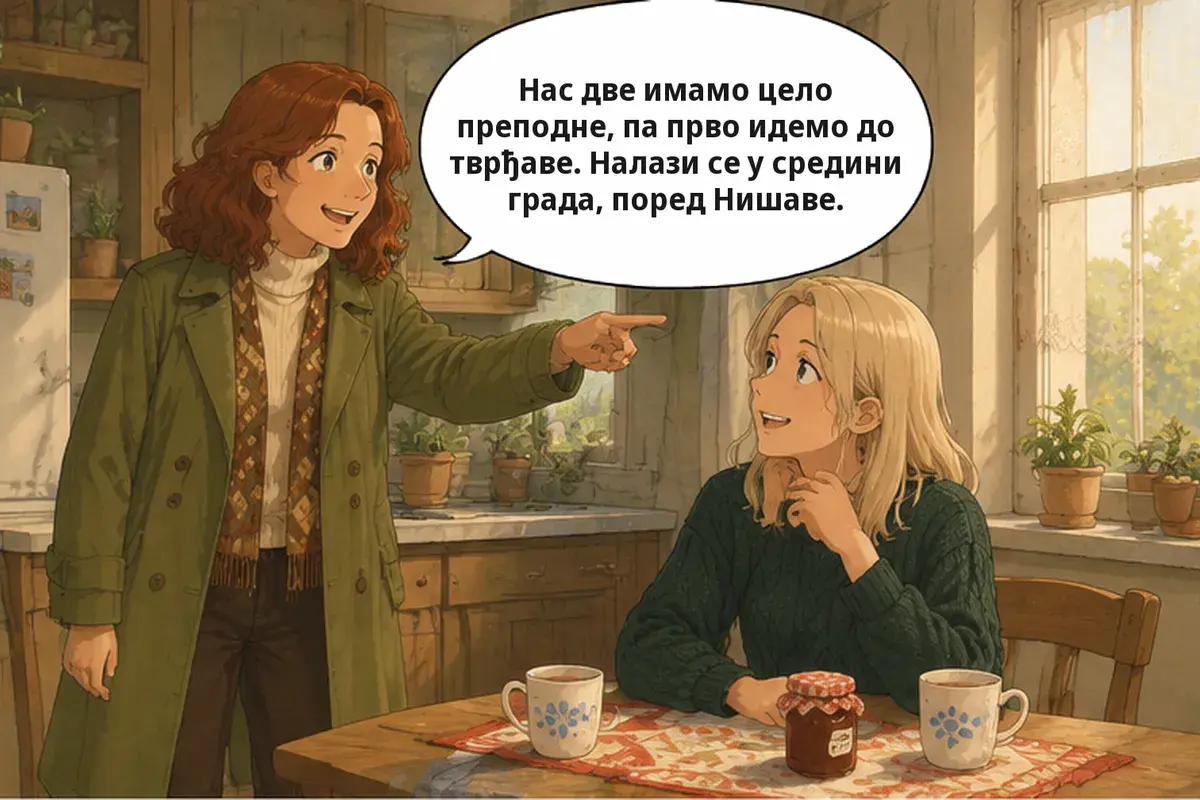
- Гордана
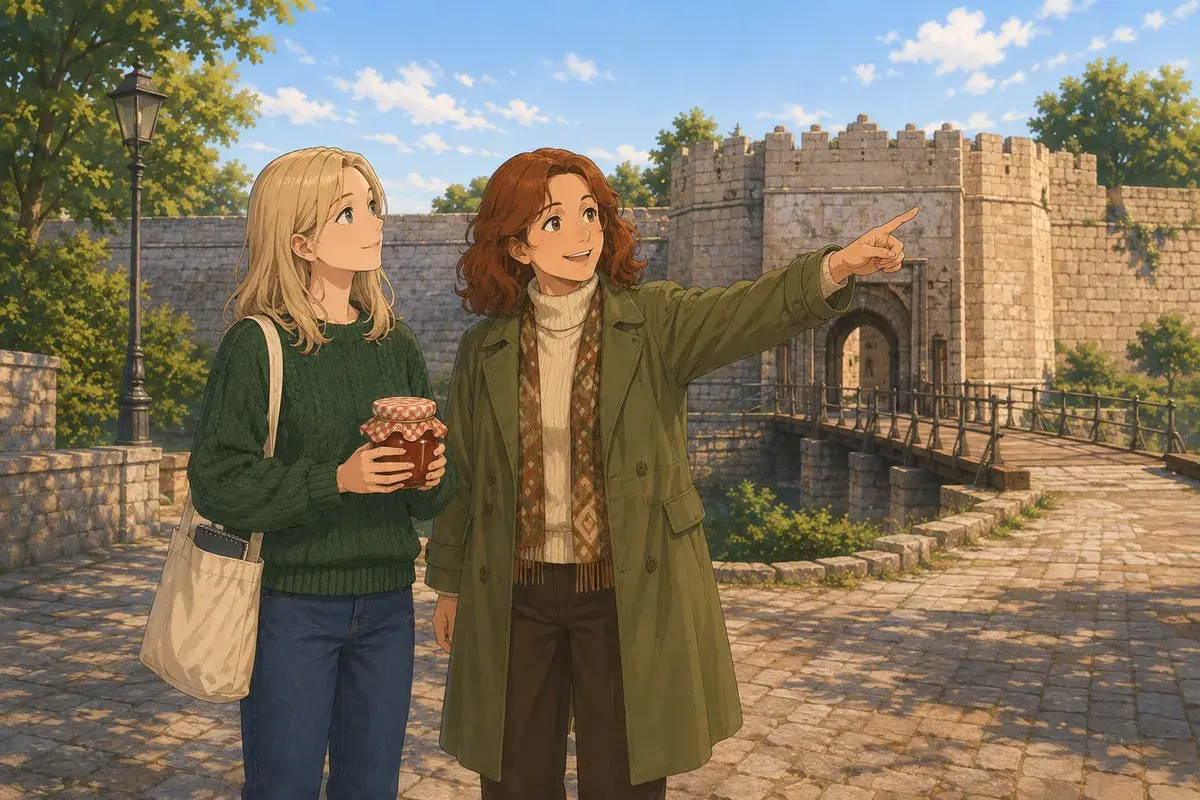
Нас две имамо цело преподне, па прво идемо до тврђаве. Налази се у средини града, поред Нишаве.
The two of us have the whole morning, so first we're going to the fortress (women speaking). It's located in the middle of the city, next to the Nišava.
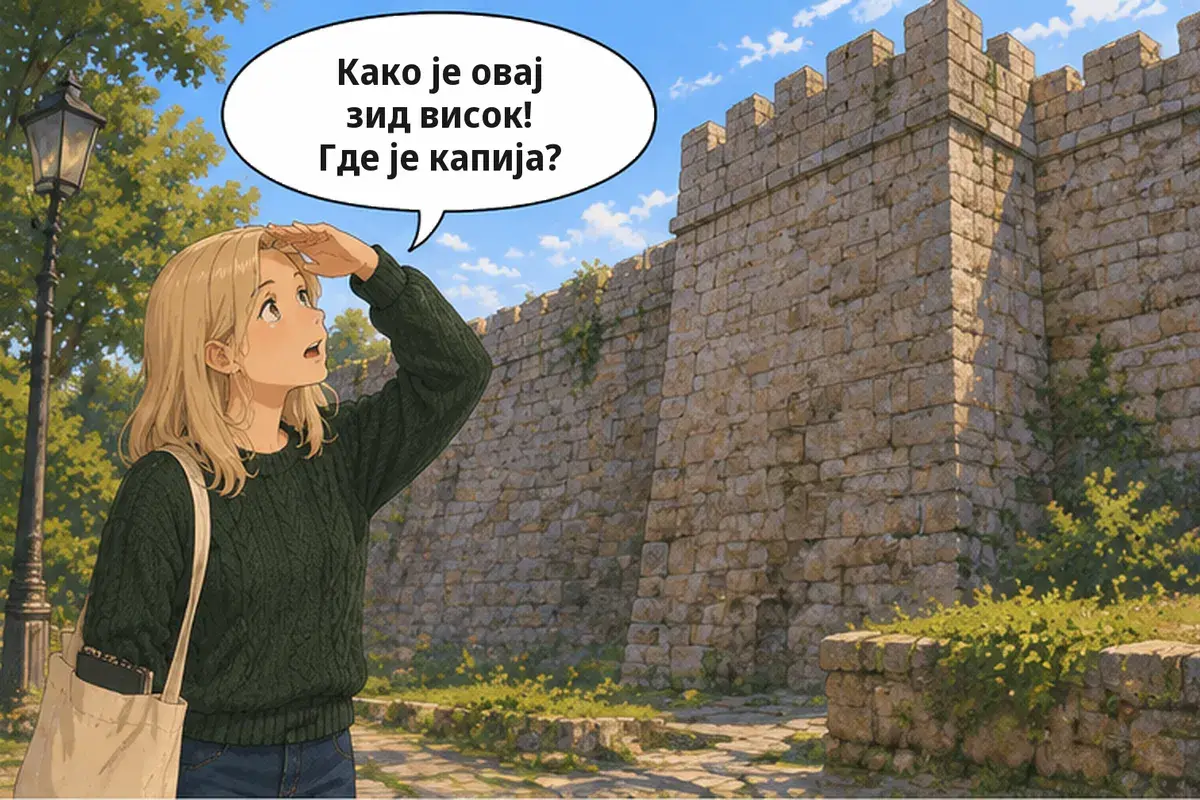
- Ана
Како је овај зид висок! Где је капија?
How high this wall is! Where's the gate?
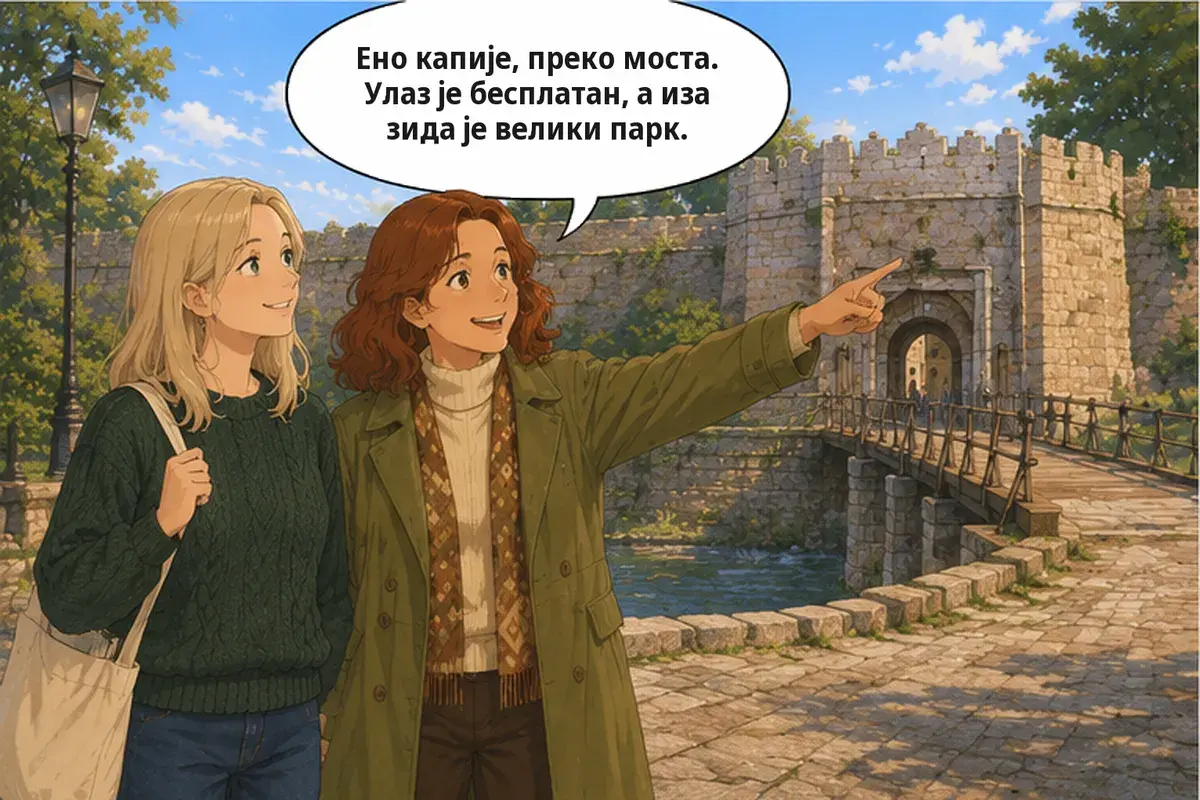
- Гордана
Ено капије, преко моста. Улаз је бесплатан, а иза зида је велики парк.
There's the gate, across the bridge. Entry is free, and behind the wall there's a big park.
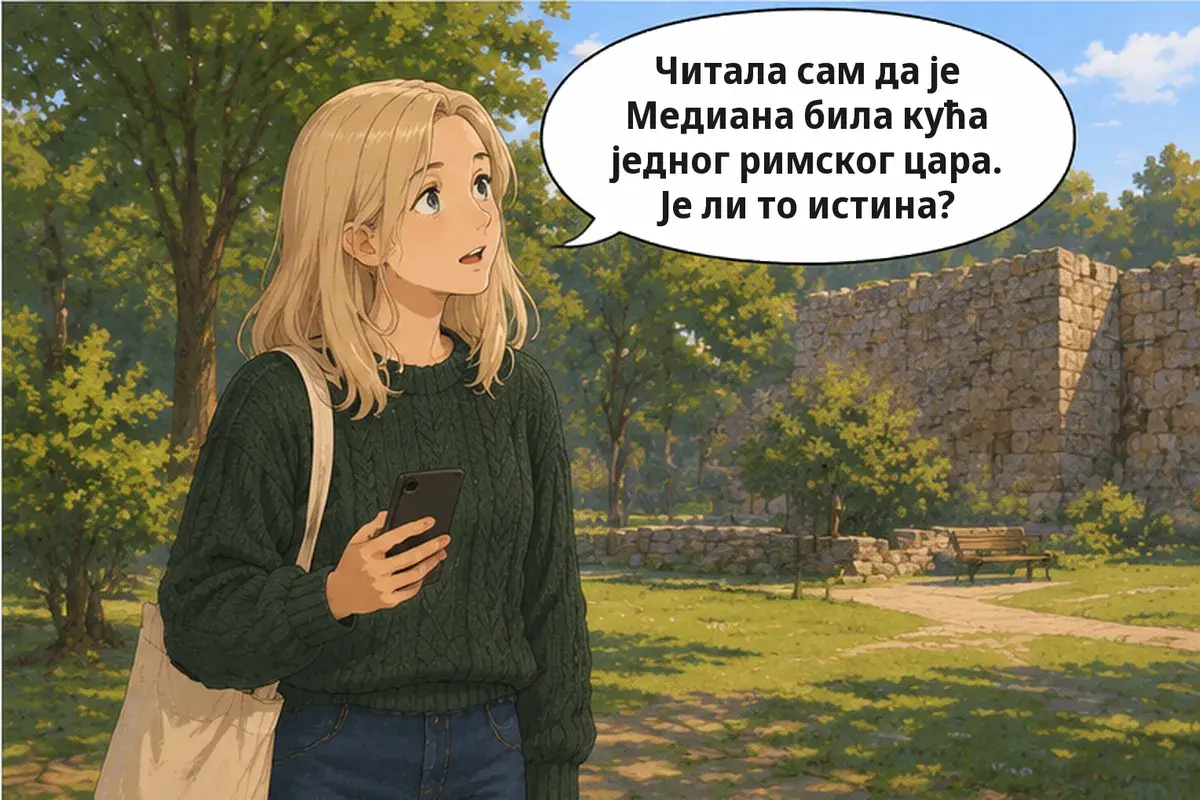
- Ана
Читала сам да је Медиана била кућа једног римског цара. Је ли то истина?
I read that Mediana was the house of a Roman emperor (woman speaking). Is that true?
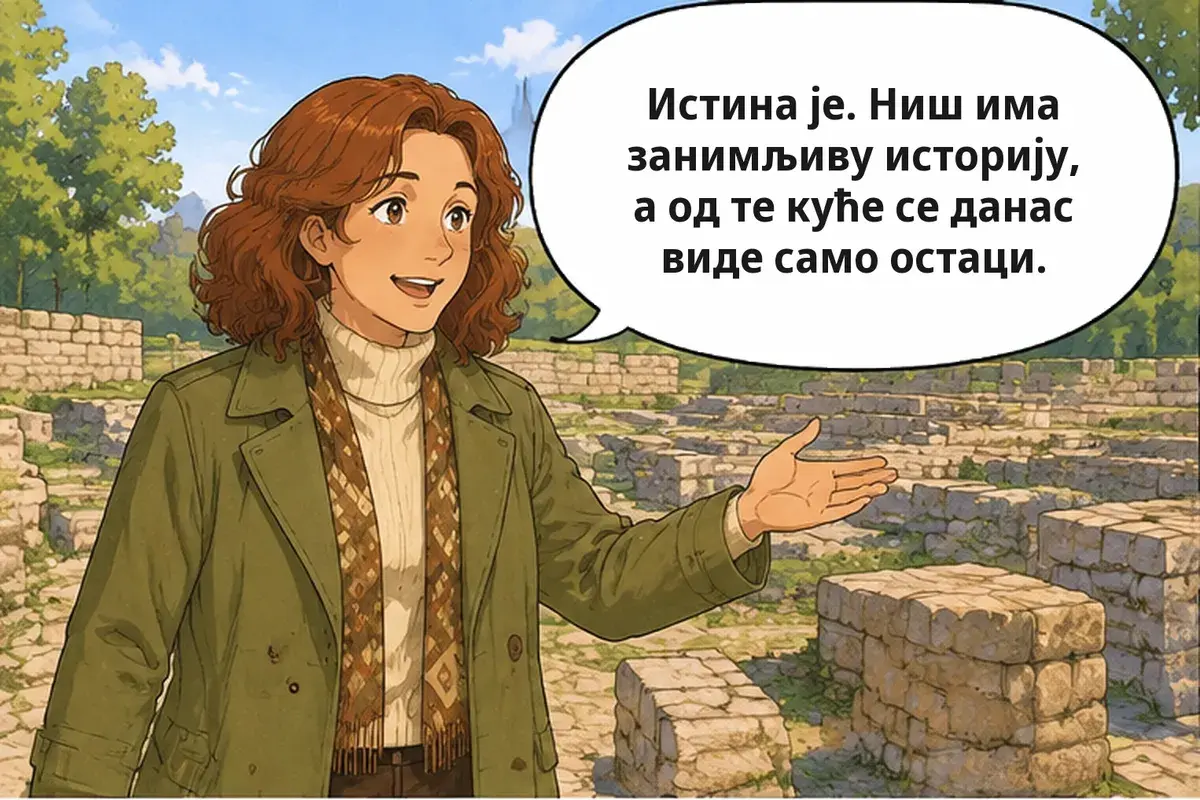
- Гордана
Истина је. Ниш има занимљиву историју, а од те куће се данас виде само остаци.
It's true. Niš has an interesting history, and today you can see only the remains of that house.
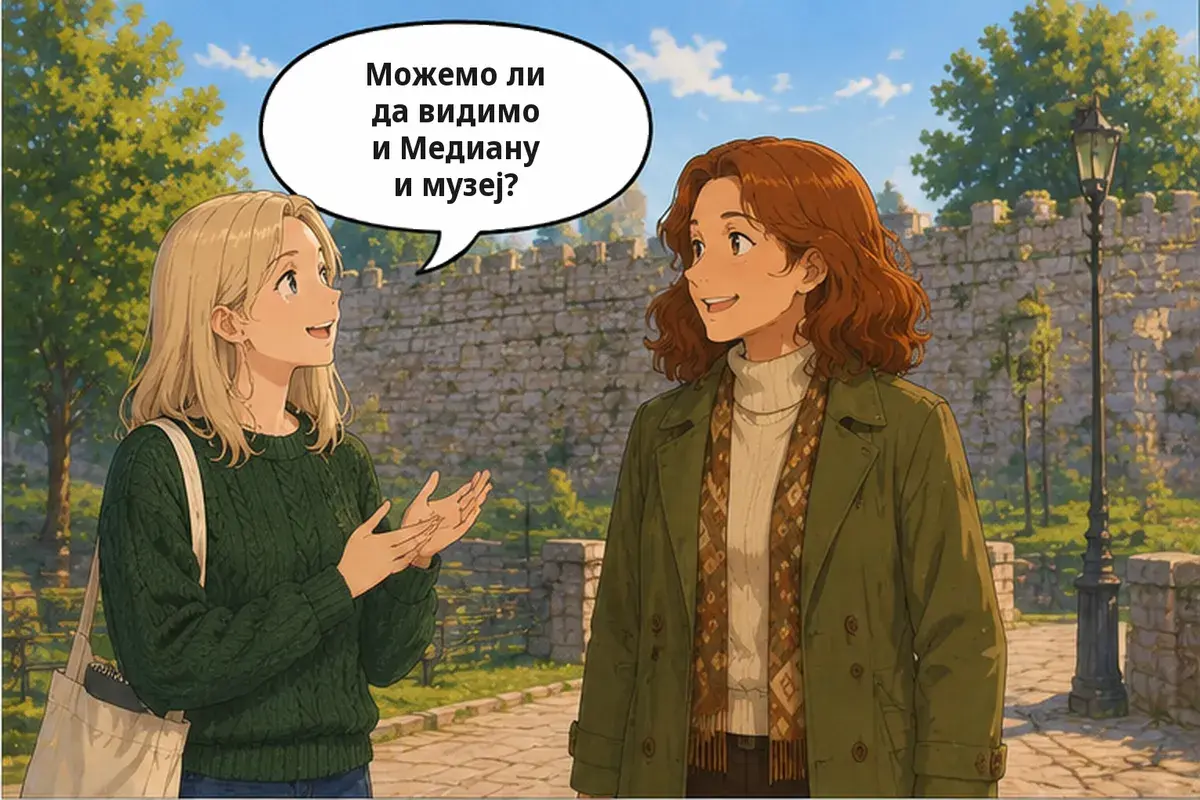
- Ана
Можемо ли да видимо и Медиану и музеј?
Can we see both Mediana and the museum?
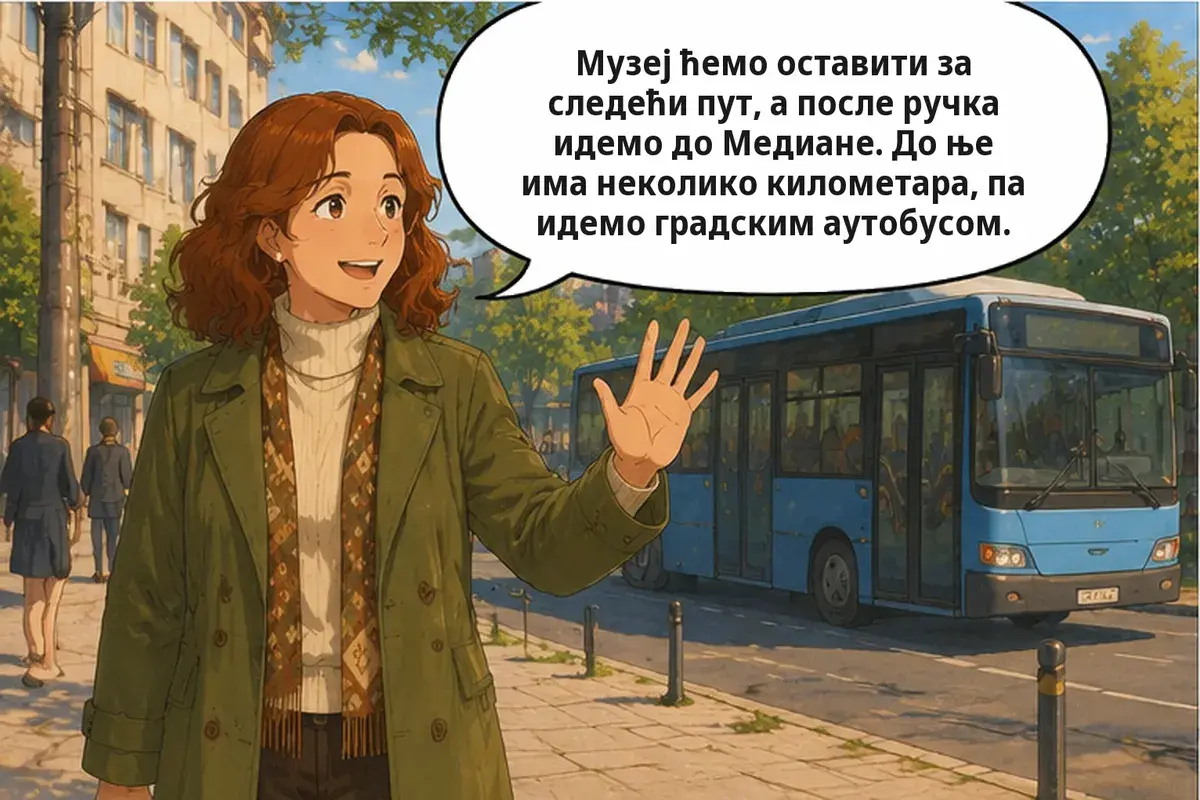
- Гордана
Музеј ћемо оставити за следећи пут, а после ручка идемо до Медиане. До ње има неколико километара, па идемо градским аутобусом.
We'll leave the museum for next time, and after lunch we're going to Mediana. It's a few kilometers away, so we're going by city bus.
- Ана
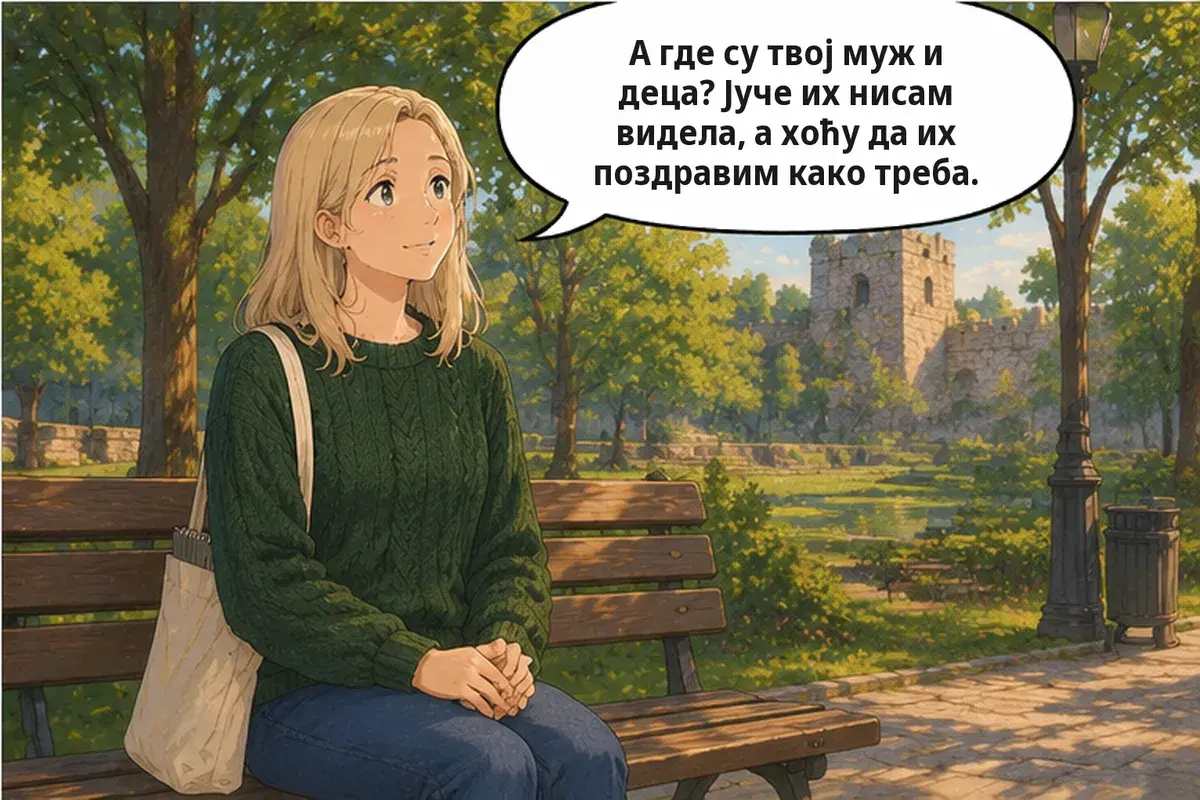
А где су твој муж и деца? Јуче их нисам видела, а хоћу да их поздравим како треба.
And where are your husband and the children? I didn't see them yesterday, and I want to say hello to them properly (woman speaking).
- Гордана
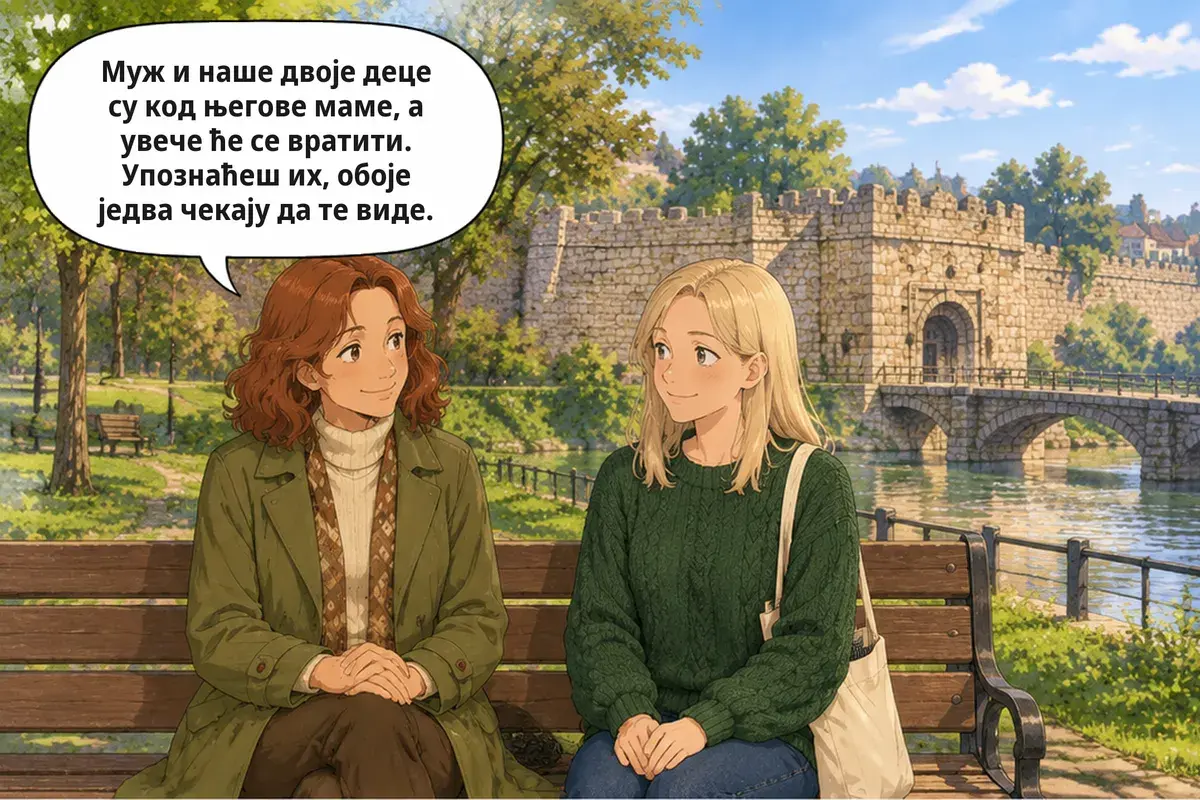
Муж и наше двоје деце су код његове маме, а увече ће се вратити. Упознаћеш их, обоје једва чекају да те виде.
My husband and our two children are at his mom's, and they'll come back in the evening. You'll meet them; they both can't wait to see you.
- Ана
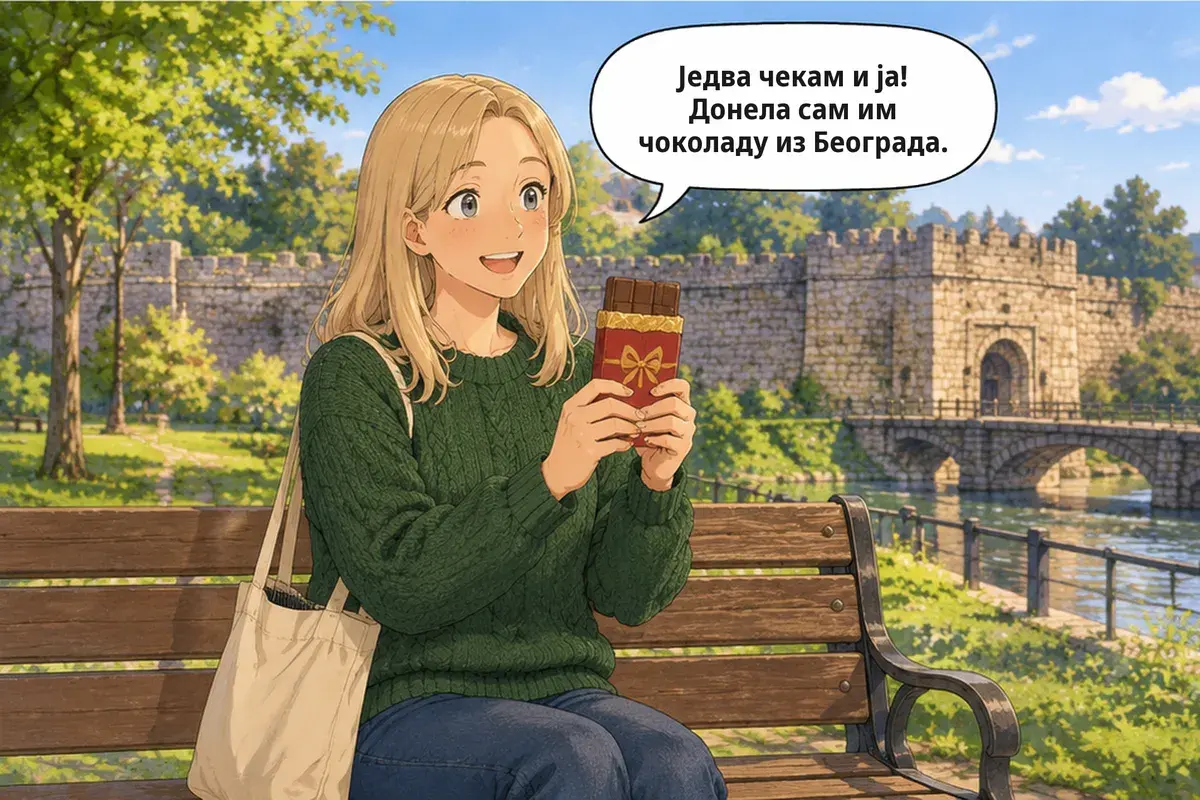
Једва чекам и ја! Донела сам им чоколаду из Београда.
I can't wait either! I brought them chocolate from Belgrade (woman speaking).
Grammar for this text
Да ли си добро преноћила код нас?—преноћилаis the feminine past form ofпреноћити— to spend the night: Gordana is talking to a woman.код нас— at our place:кодtakes the genitive, andнасis 'us'.Јуче сам била толико уморна да сам заборавила да ти кажем: твоја мама ти је послала теглу џема— the order of the short words: firstти(to you), thenје(the helper of the past tense).теглуis the accusative (тегла → теглу),џема— of jam (genitive).Нас две имамо цело преподне—нас две— the two of us, said about two women (a set form); a man and a woman sayнас двоје.Налази се у средини града, поред Нишаве—налазити се— to be located;сеstands second.поред Нишаве— next to the Nišava (river).Ено капије, преко моста—ено— there it is (pointing); the thing comes next in the genitive (капија → капије).преко моста— across the bridge.иза зида— behind the wall.Читала сам да је Медиана била кућа једног римског цара—читала сам— I read (a woman speaking). Inда је … била, the past tense helperјеcomes right afterда.једног римског цара— of a Roman emperor: masculine genitive,-огon the adjectives,цар → цара.Музеј ћемо оставити за следећи пут— the future: the short wordћемо+ the infinitive (unit 3).До ње има неколико километара— after the prepositionдоcomes the long formње(her, it).Муж и наше двоје деце су код његове маме, а увече ће се вратити—двоје деце— two children;ће се вратити— they'll come back.Упознаћеш их, обоје једва чекају да те виде—упознаћеш— you'll meet (future),обоје— both;их— them,те— you.
Words and grammar of the unit: Take the bus to Niš.
Learn the words from the texts with flashcards
In the app, you can tap any word in a text to see its translation, forms and examples, and new words stick with flashcards. 15 minutes a day.
Start for freeEverything is open for free. No card needed to sign up.