
Serbian story with translation · A2 · 11 lines
Гибаница је трајала само до паузе The gibanica lasted only until the break
Comic · 6 panels
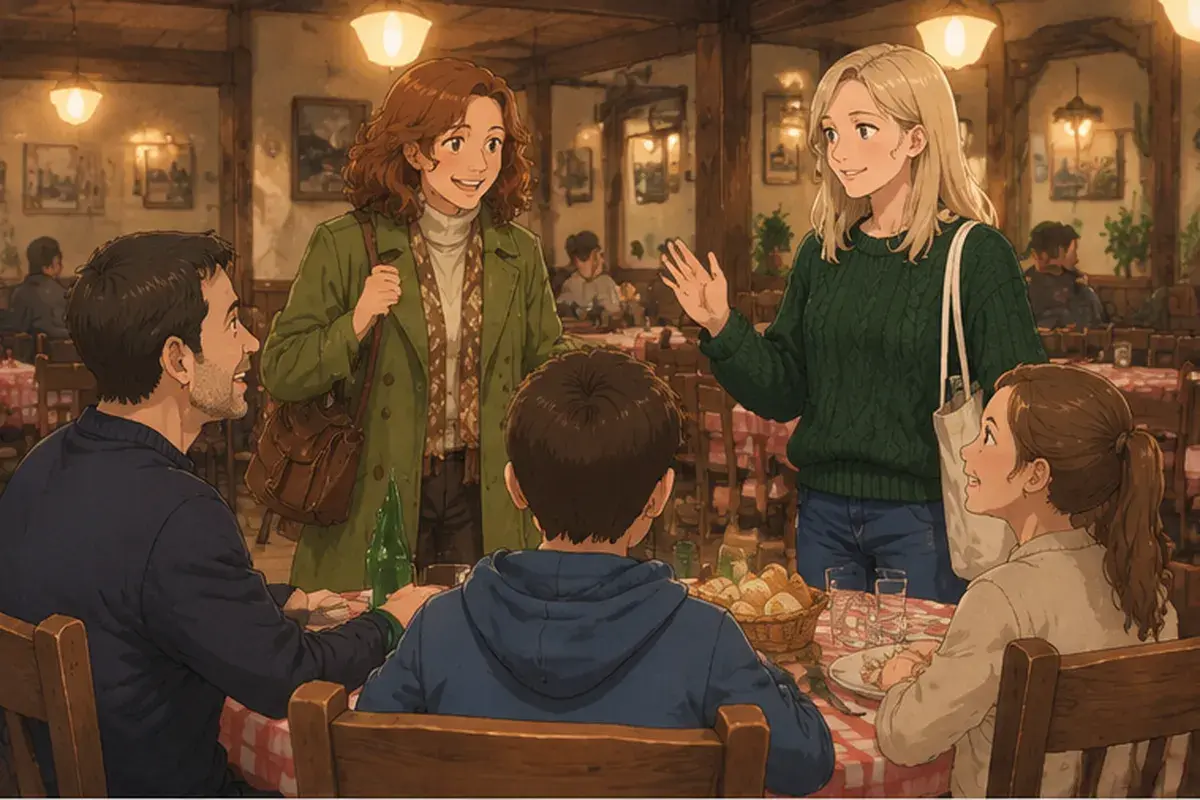
Увече сам код Гордане упознала њеног мужа и обоје деце, па смо отишли у кафану.
In the evening, at Gordana's, I met her husband and both children, and then we went to a kafana (woman speaking).
Деца су била мирна цело вече.
The children were calm the whole evening.
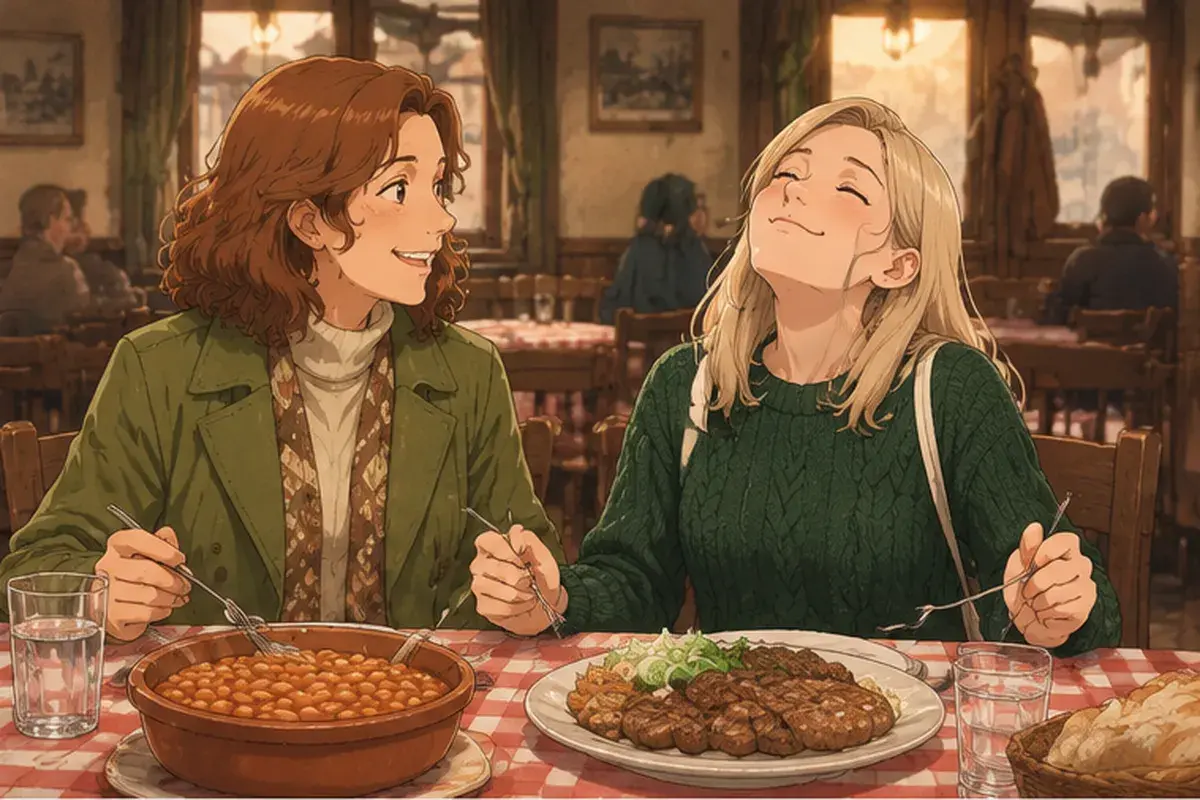
Гордана је наручила пребранац и пљескавицу. Храна је била тако добра да сам тражила још.
Gordana ordered prebranac and a pljeskavica. The food was so good that I asked for more (woman speaking).
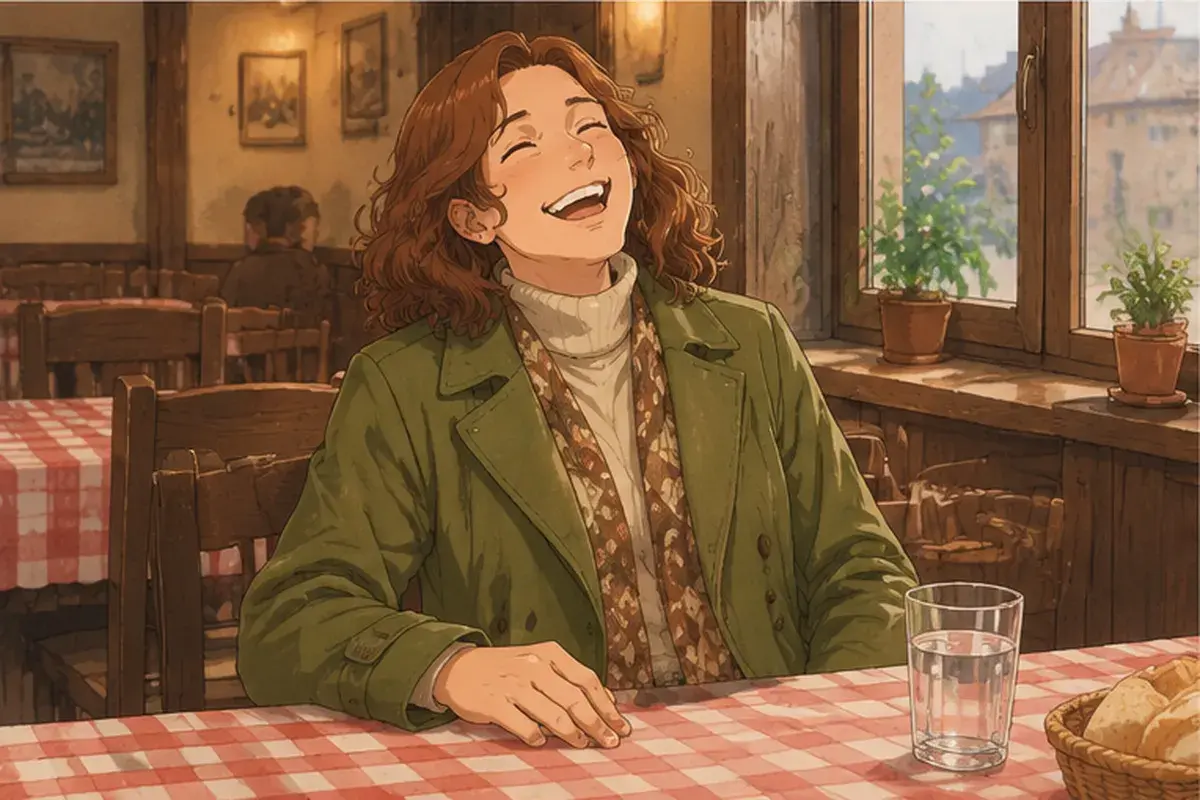
Гордана се само насмејала.
Gordana just laughed.
Узели смо и велику шопску салату за све.
We also got a big Shopska salad for everyone.
После је један човек свирао хармонику, а њен муж је певао са њим.
Later a man played the accordion, and her husband sang along with him.
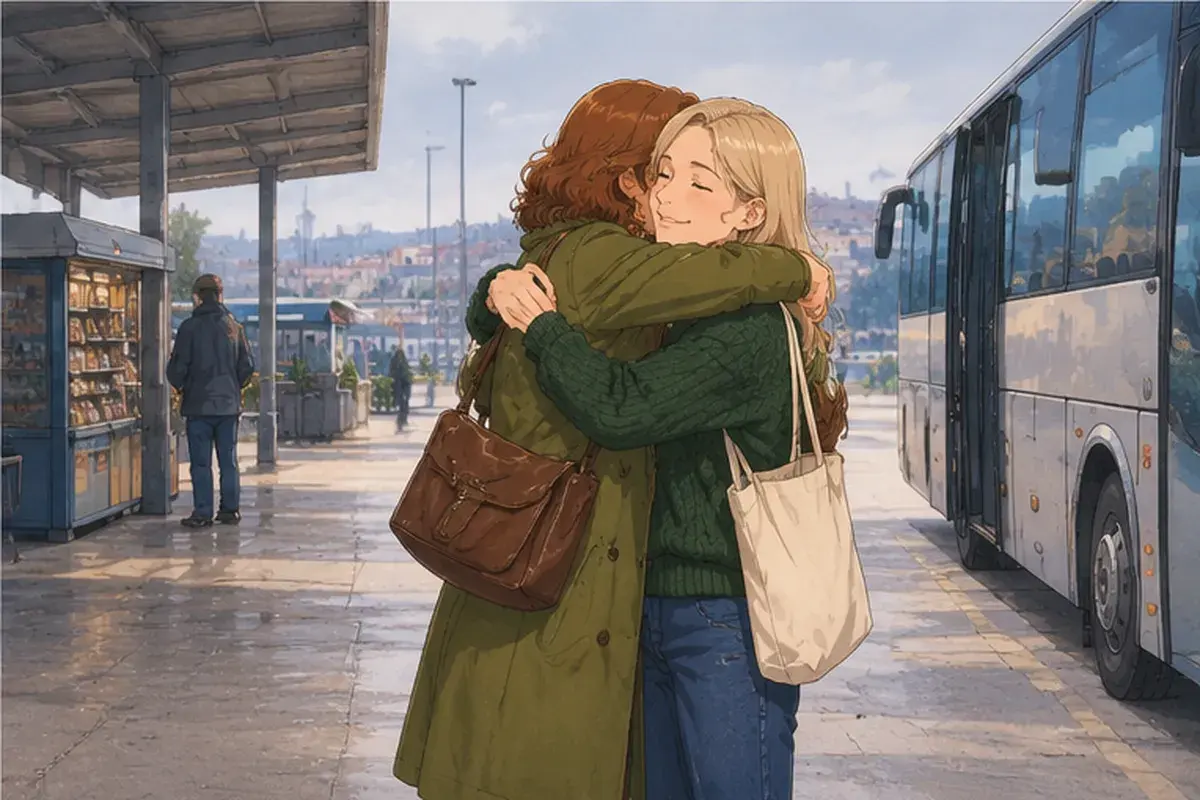
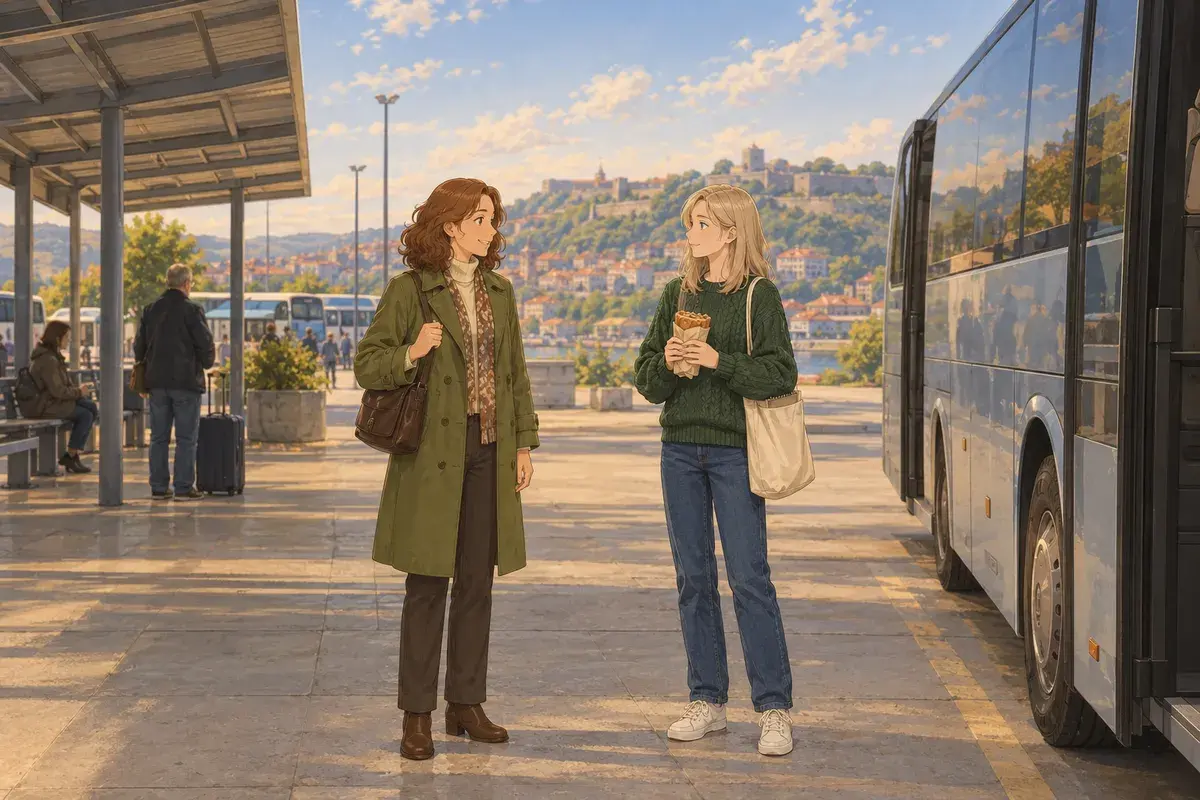
У недељу ме је одвела на станицу, а испред аутобуса ме је дуго загрлила.
On Sunday she took me to the station, and in front of the bus she hugged me for a long time.
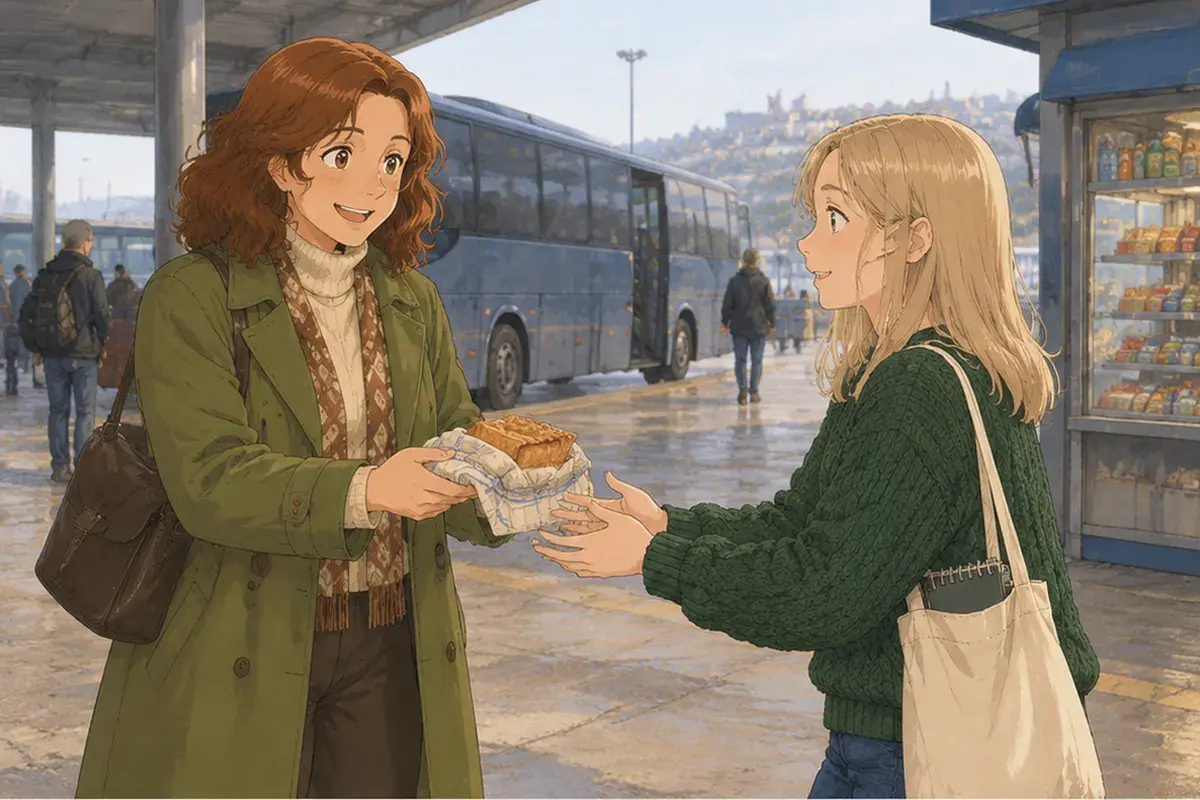
Дала ми је гибаницу за пут.
She gave me gibanica for the trip.
Из аутобуса сам јој махала, а она је махала мени.
From the bus I waved to her, and she waved to me (woman speaking).
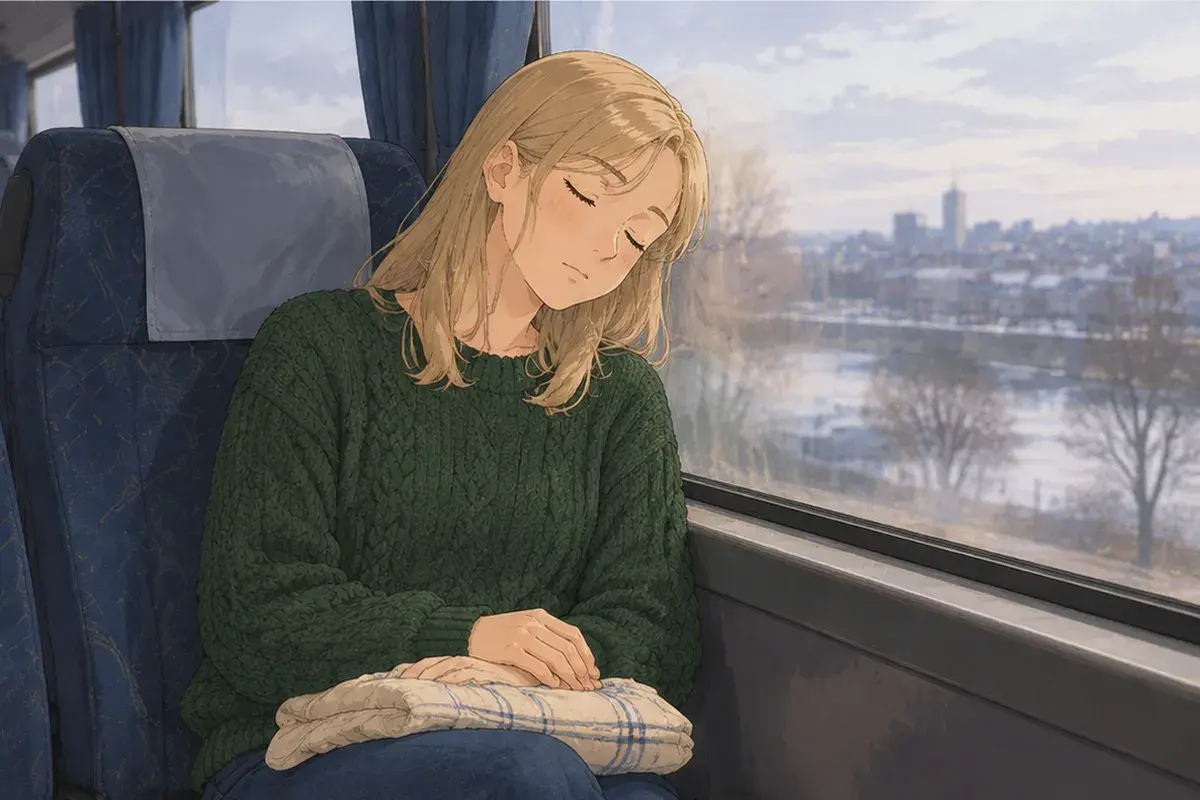
Гибаница је трајала само до паузе, а остатак пута сам спавала.
The gibanica lasted only until the break, and I slept for the rest of the trip (woman speaking).
Послала сам Гордани поруку: „Тужан случај, гибанице више нема!“
I sent Gordana a message: "A sad case, there's no more gibanica!" (woman speaking)
Grammar for this text
Увече сам код Гордане упознала њеног мужа и обоје деце—код Гордане— at Gordana's (-аchanges to-е).њеног мужа— her husband: for people and animals, the masculine object form is the same as the genitive.обоје деце— both children, a set form.Гордана је наручила пребранац и пљескавицу—пребранац— baked beans with onion;пљескавица— a big grilled meat patty;пљескавицуis the accusative (-а→-у).Храна је била тако добра да сам тражила још—тако … да— so … that (unit 12).Гордана се само насмејала— withсе, the he/she form of the past tense dropsје: not ✗насмејала се је.У недељу ме је одвела на станицу, а испред аутобуса ме је дуго загрлила— inме је одвела,ме(me) comes beforeје.испред аутобуса— in front of the bus (masculine-а).Дала ми је гибаницу за пут—ми(to me) comes beforeје;гибаницуis the accusative;гибаницаis a pie with cheese and eggs.Гибаница је трајала само до паузе, а остатак пута сам спавала—до паузе— until the break (пауза → паузе),остатак пута— the rest of the trip. Ana's joke: the food for the trip didn't make it to Belgrade.Послала сам Гордани поруку— to whom? The dative:Гордана → Гордани.случај— case, in the sense of an event or a situation (not the grammar word 'case').Узели смо и велику шопску салату за све—шопска салата— Shopska salad, a vegetable salad with white cheese. As the object, both words end in-у:велику шопску салату.за све— for everyone.После је један човек свирао хармонику, а њен муж је певао са њим—јеcomes second:После је…. To play an instrument isсвирати+ the instrument as a direct object, with no preposition:свирати хармонику. After a preposition the full pronoun form is used:са њим— with him.Из аутобуса сам јој махала, а она је махала мени—махати— to wave: in the presentхbecomesш:машем, машеш.јој— to her (short form);мени— to me, the full form, used for emphasis: and she waved to me.
Words and grammar of the unit: Take the bus to Niš.
Learn the words from the texts with flashcards
In the app, you can tap any word in a text to see its translation, forms and examples, and new words stick with flashcards. 15 minutes a day.
Start for freeEverything is open for free. No card needed to sign up.