
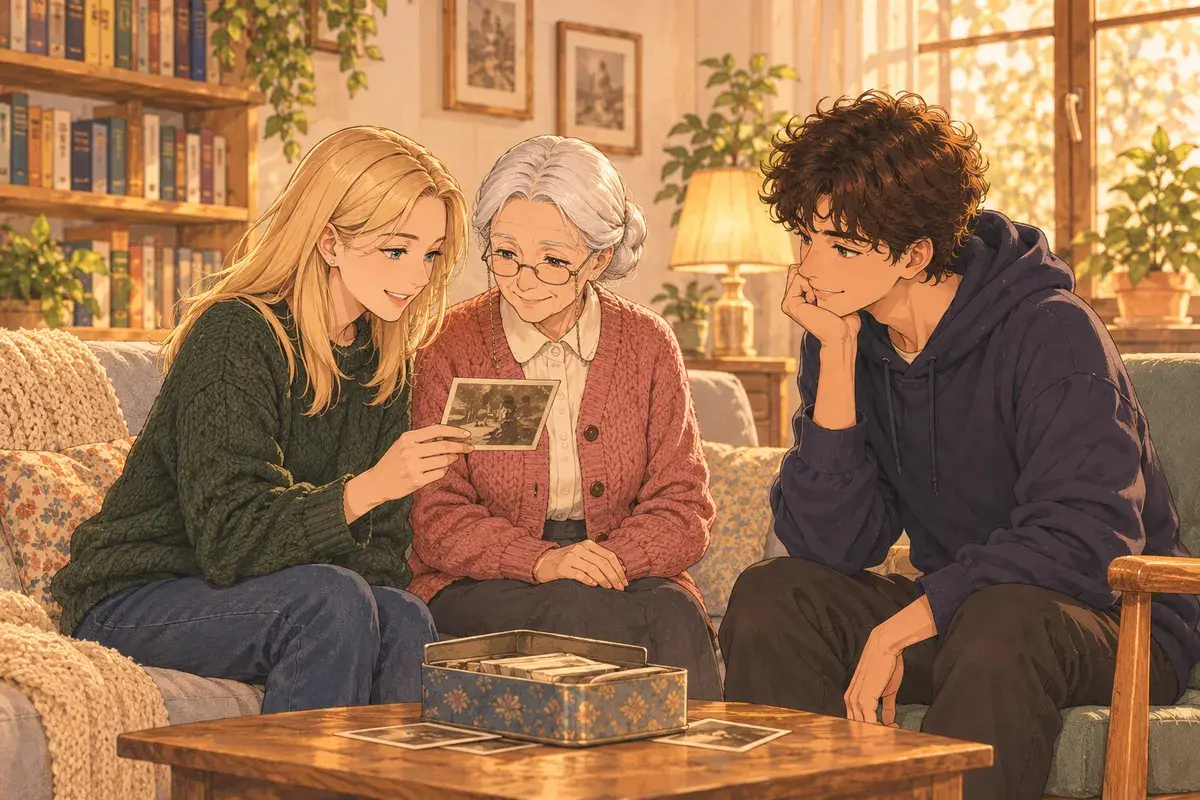
Serbian dialogue with translation · A2 · 15 lines
Свако лето смо проводили у селу We used to spend every summer in the village
Comic · 15 panels
- Стефан
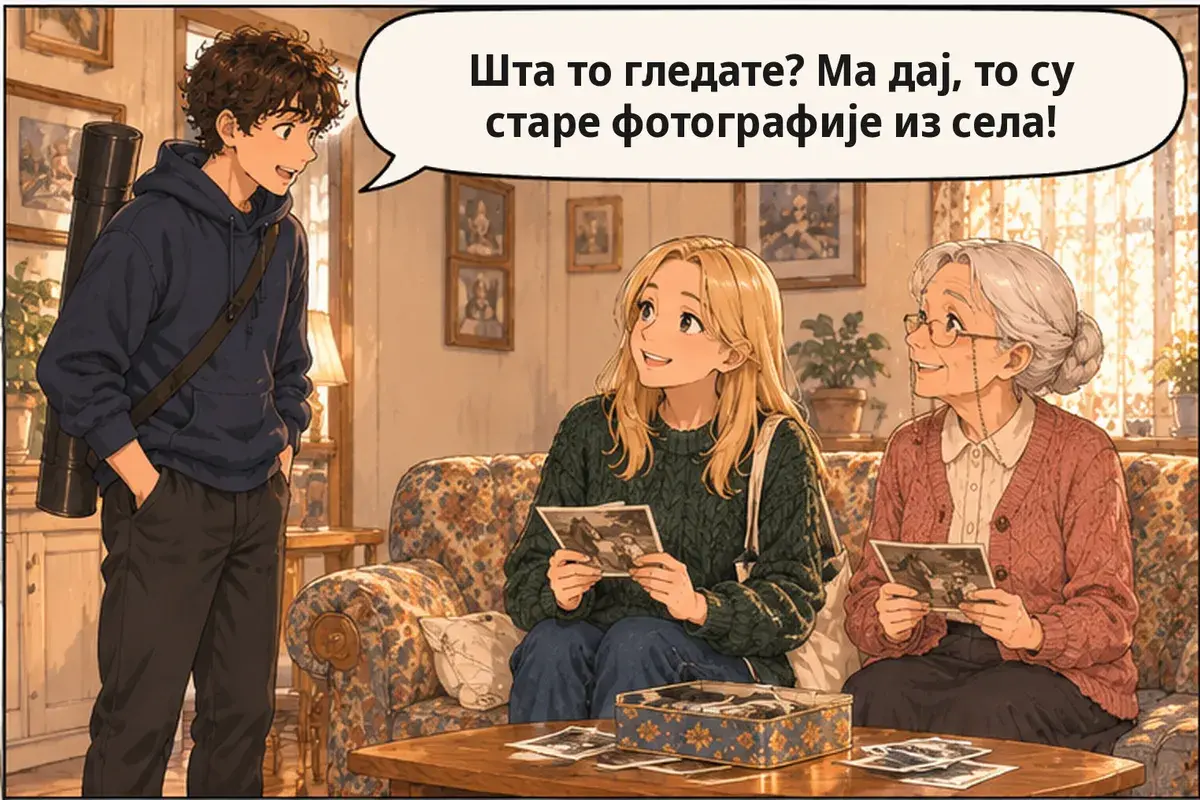
Шта то гледате? Ма дај, то су старе фотографије из села!
What are you looking at? (to several people) No way, those are the old photos from the village!
- Радмила
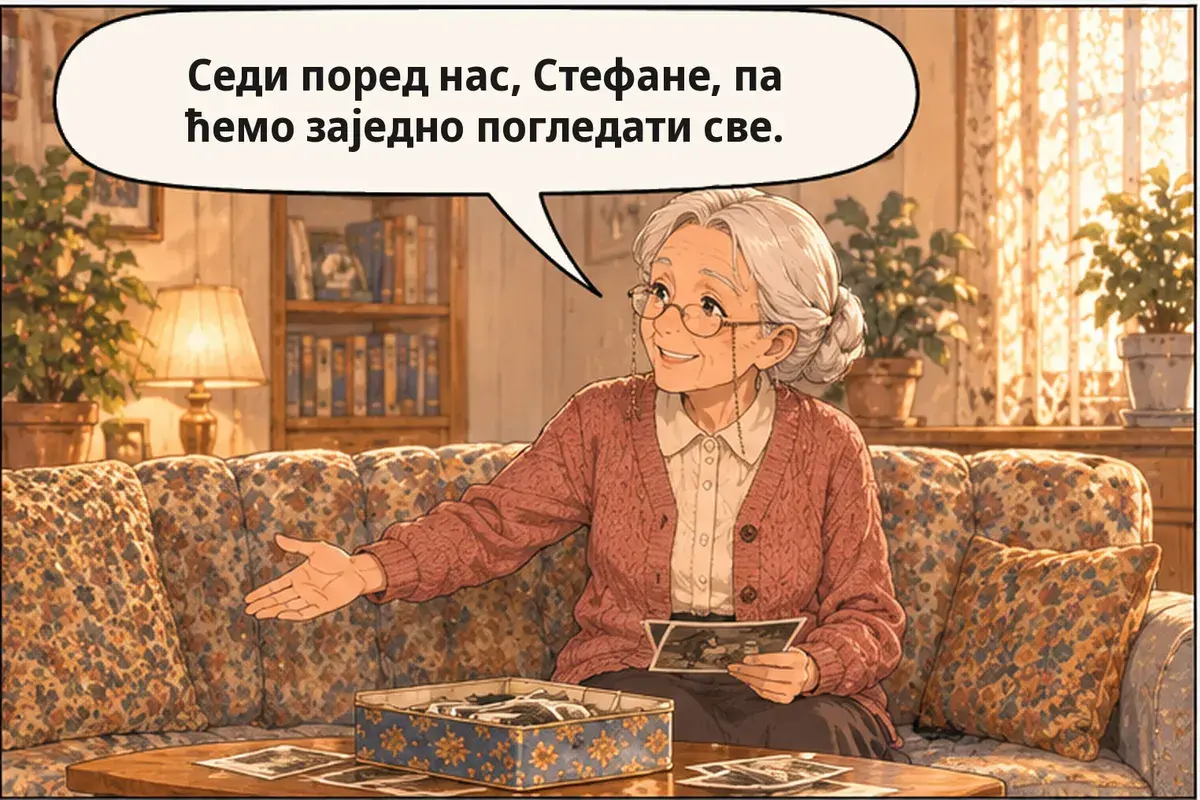
Седи поред нас, Стефане, па ћемо заједно погледати све.
Sit next to us, Stefan, and we'll look at everything together.
- Ана
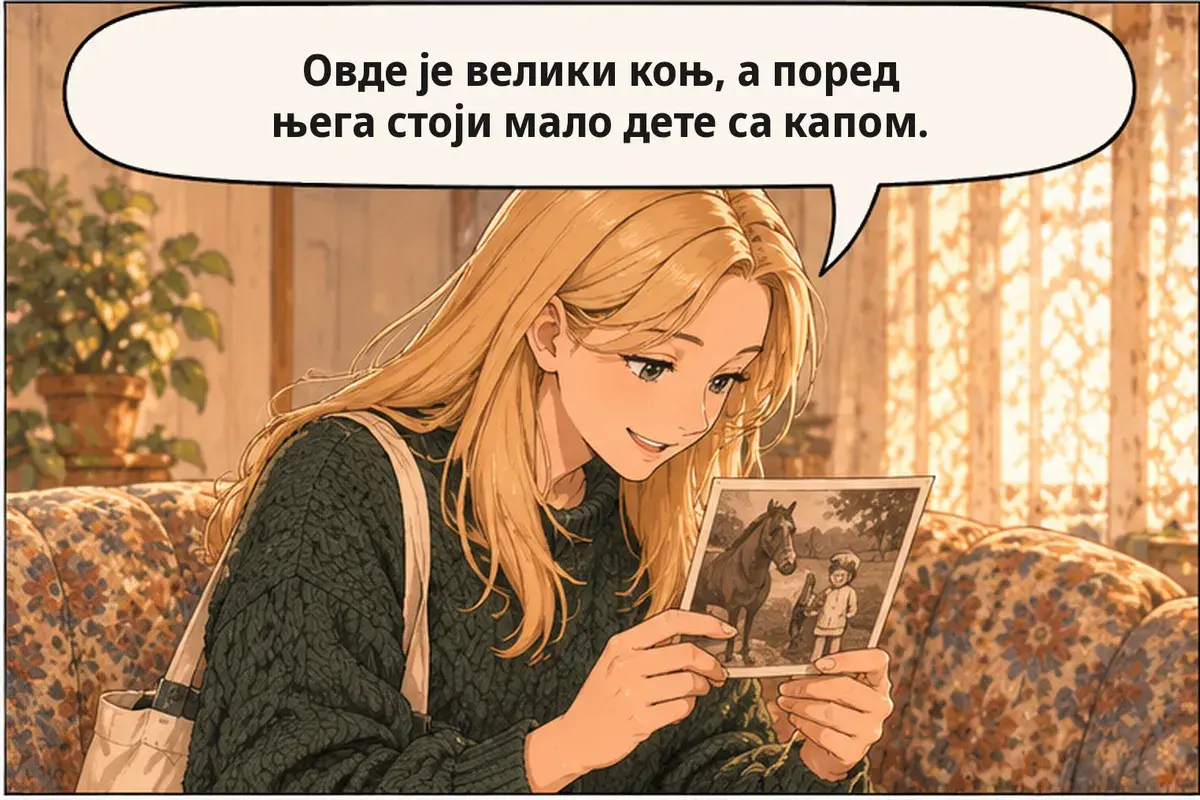
Овде је велики коњ, а поред њега стоји мало дете са капом.
Here's a big horse, and next to it stands a little child in a cap.
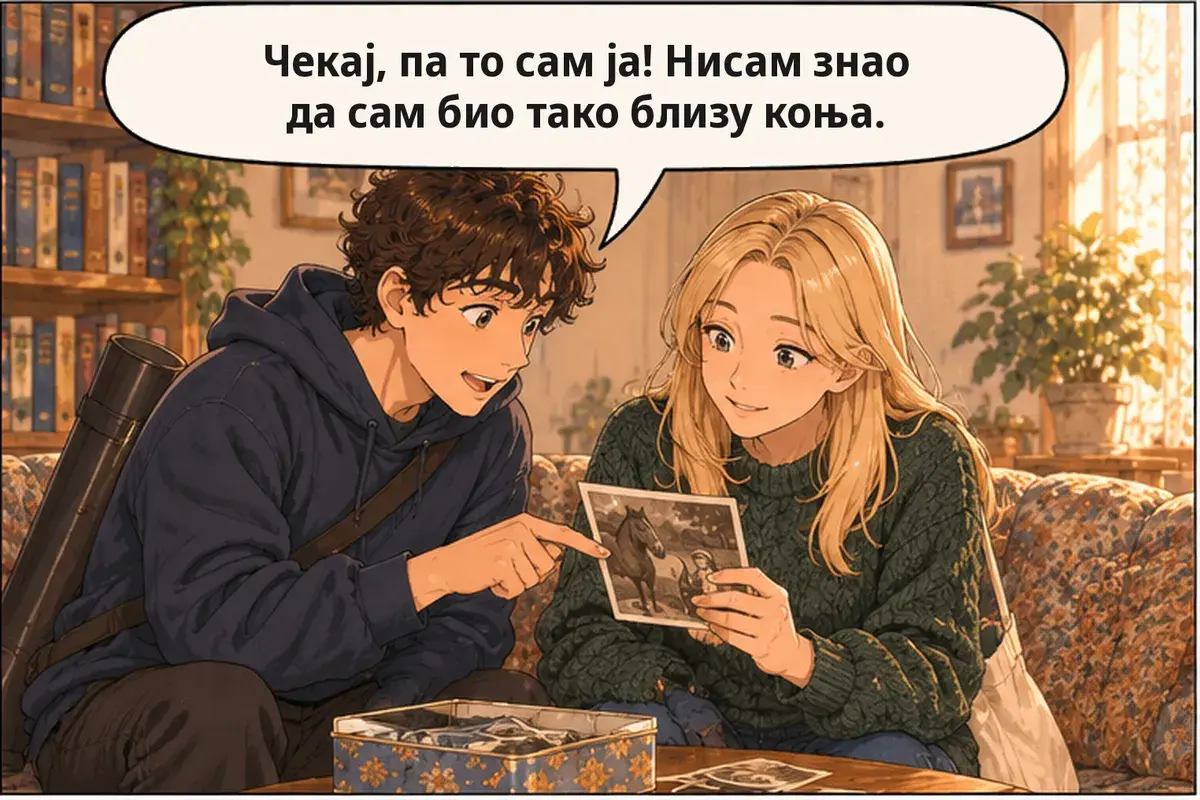
- Стефан
Чекај, па то сам ја! Нисам знао да сам био тако близу коња.
Wait, that's me! I didn't know I was so close to a horse (man speaking).
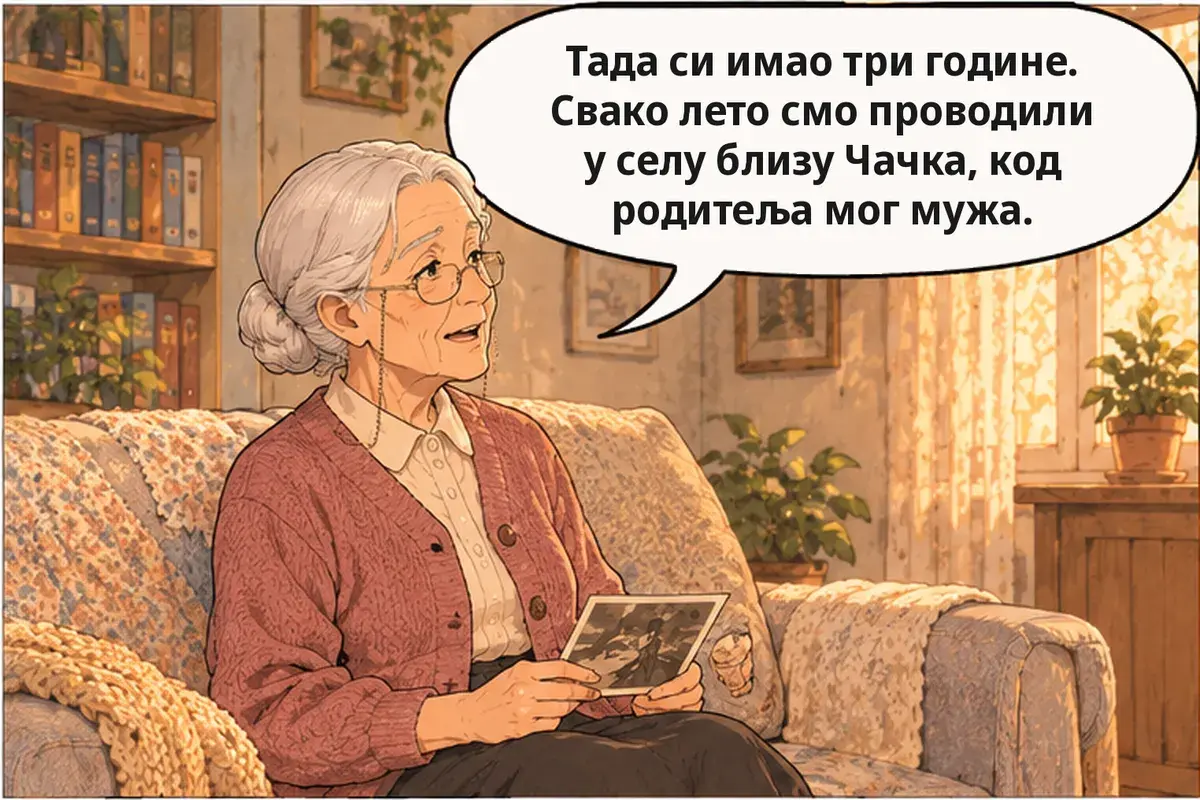
- Радмила
Тада си имао три године. Свако лето смо проводили у селу близу Чачка, код родитеља мог мужа.
You were three then (to a man). We used to spend every summer in a village near Čačak, at my husband's parents' place.
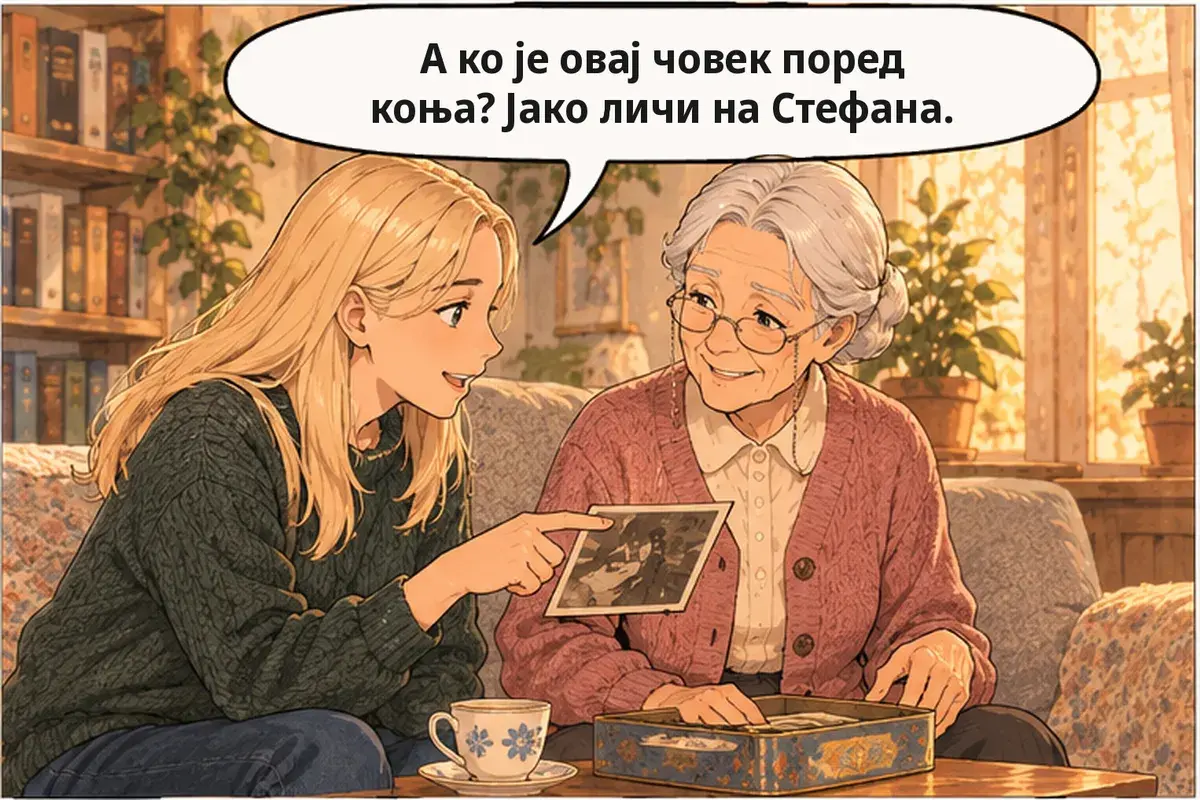
- Ана
А ко је овај човек поред коња? Јако личи на Стефана.
And who's this man next to the horse? He looks a lot like Stefan.
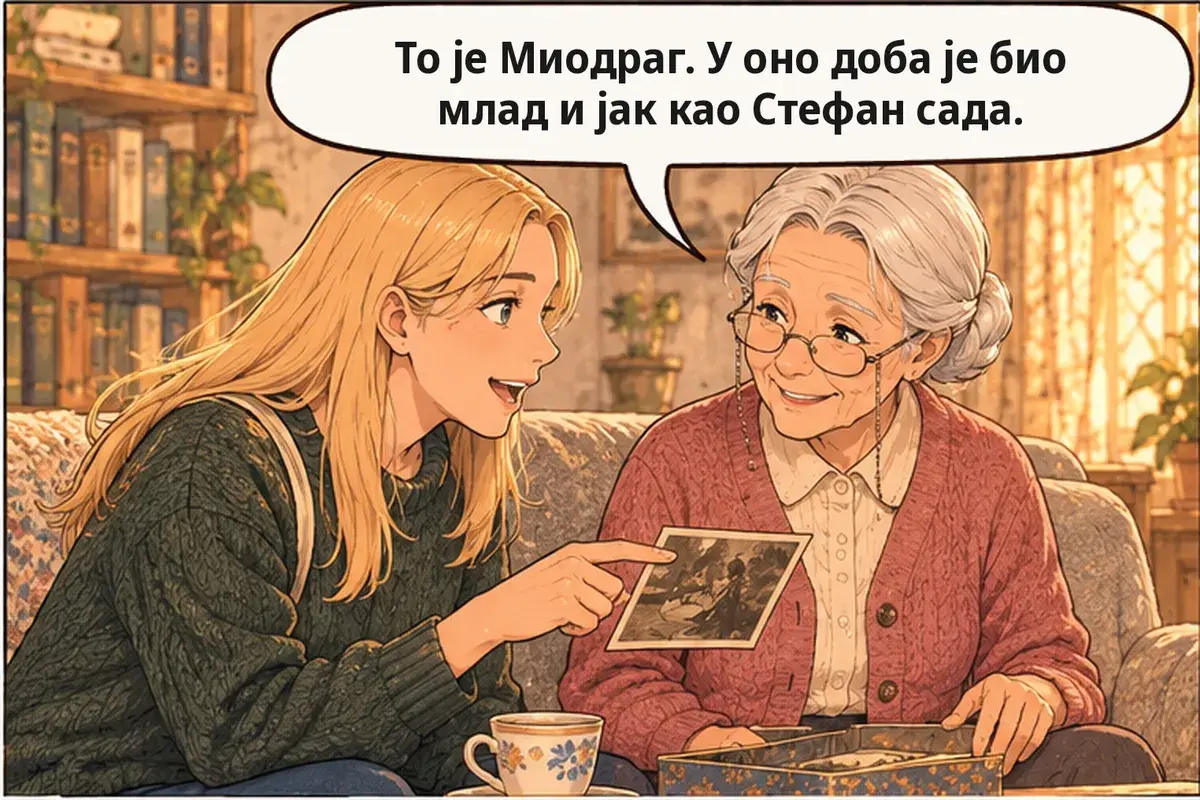
- Радмила
То је Миодраг. У оно доба је био млад и јак као Стефан сада.
That's Miodrag. In those days he was young and strong, like Stefan is now.
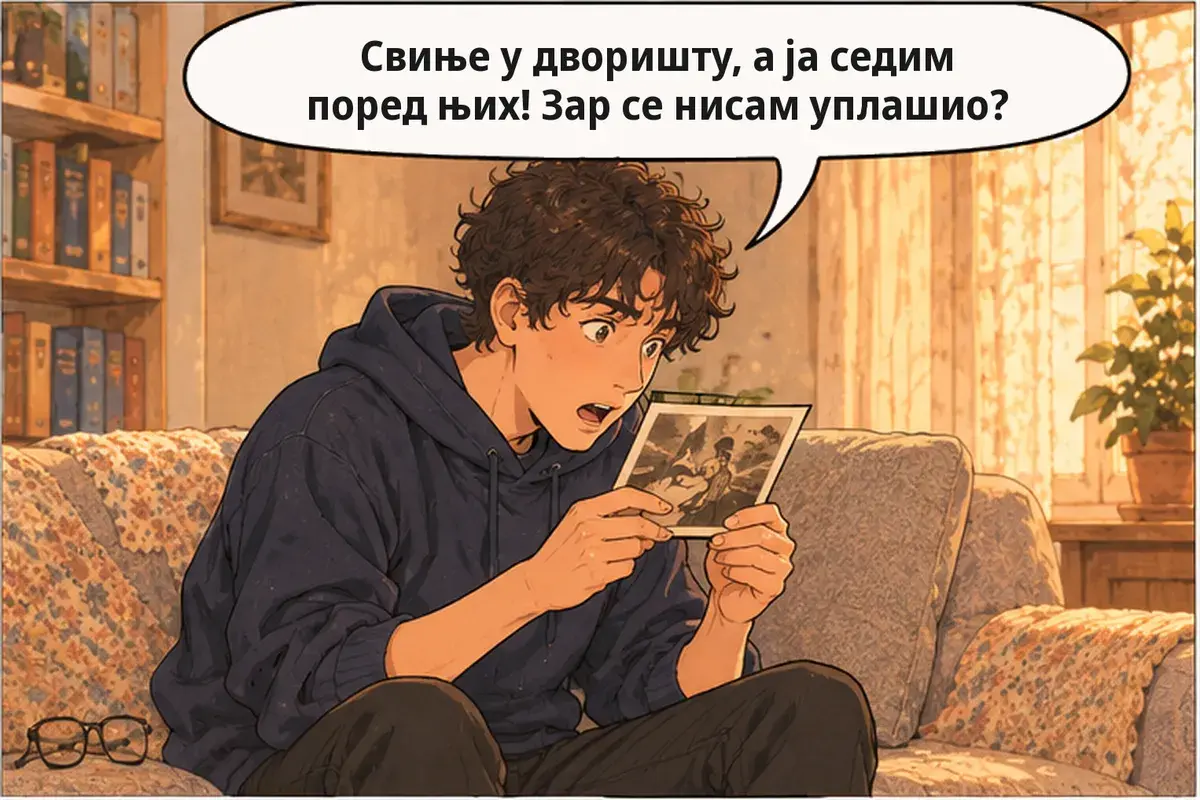
- Стефан
Свиње у дворишту, а ја седим поред њих! Зар се нисам уплашио?
Pigs in the yard, and I'm sitting next to them! Wasn't I scared? (man speaking)
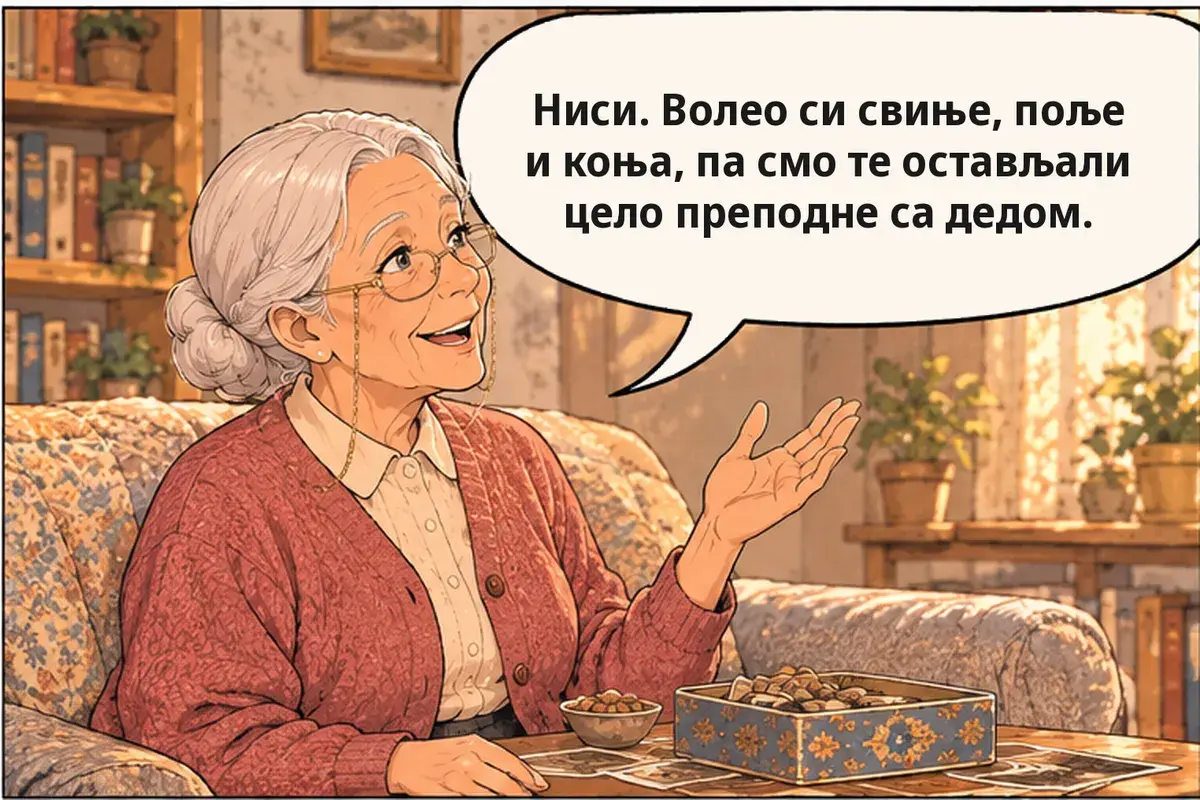
- Радмила
Ниси. Волео си свиње, поље и коња, па смо те остављали цело преподне са дедом.
No, you weren't. You loved the pigs, the field and the horse, so we used to leave you with Grandpa for the whole morning (to a man).
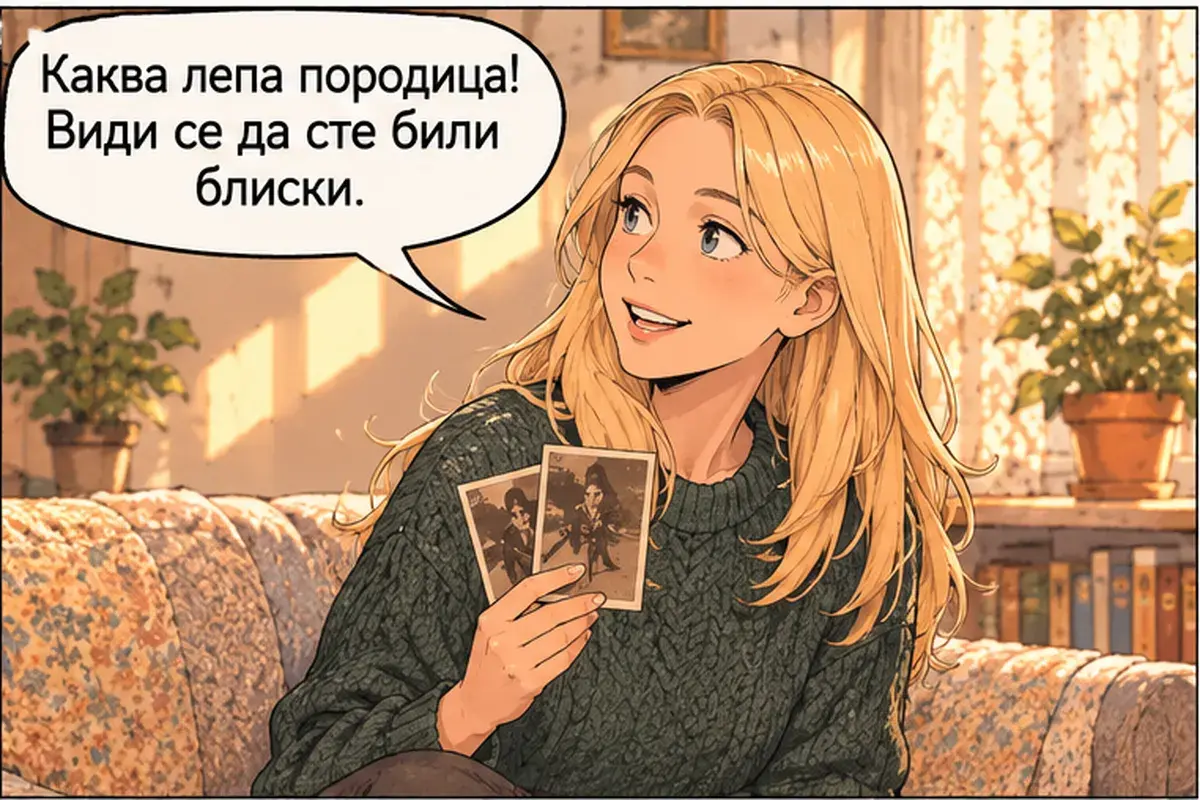
- Ана
Каква лепа породица! Види се да сте били блиски.
What a lovely family! You can tell you were all close.
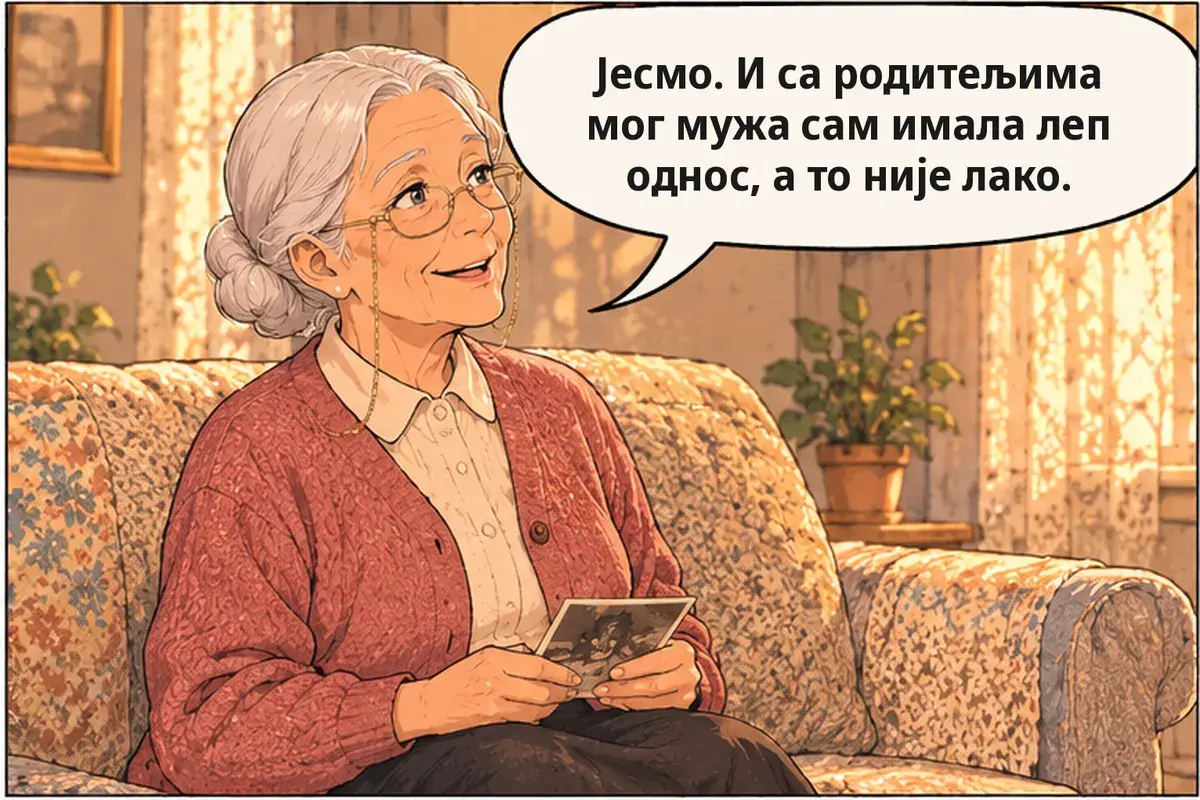
- Радмила
Јесмо. И са родитељима мог мужа сам имала леп однос, а то није лако.
We were. And I had a nice relationship with my husband's parents too, and that's not easy (woman speaking).
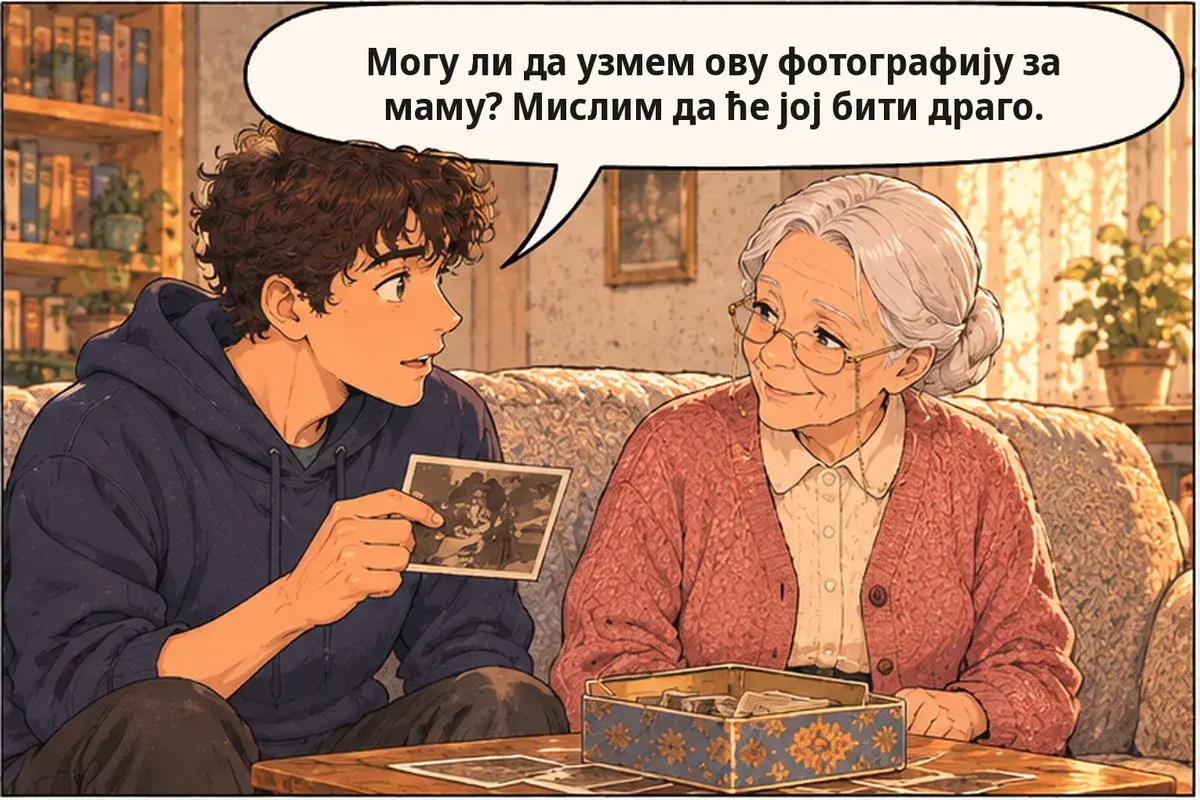
- Стефан
Могу ли да узмем ову фотографију за маму? Мислим да ће јој бити драго.
Can I take this photo for Mom? I think she'll be glad.
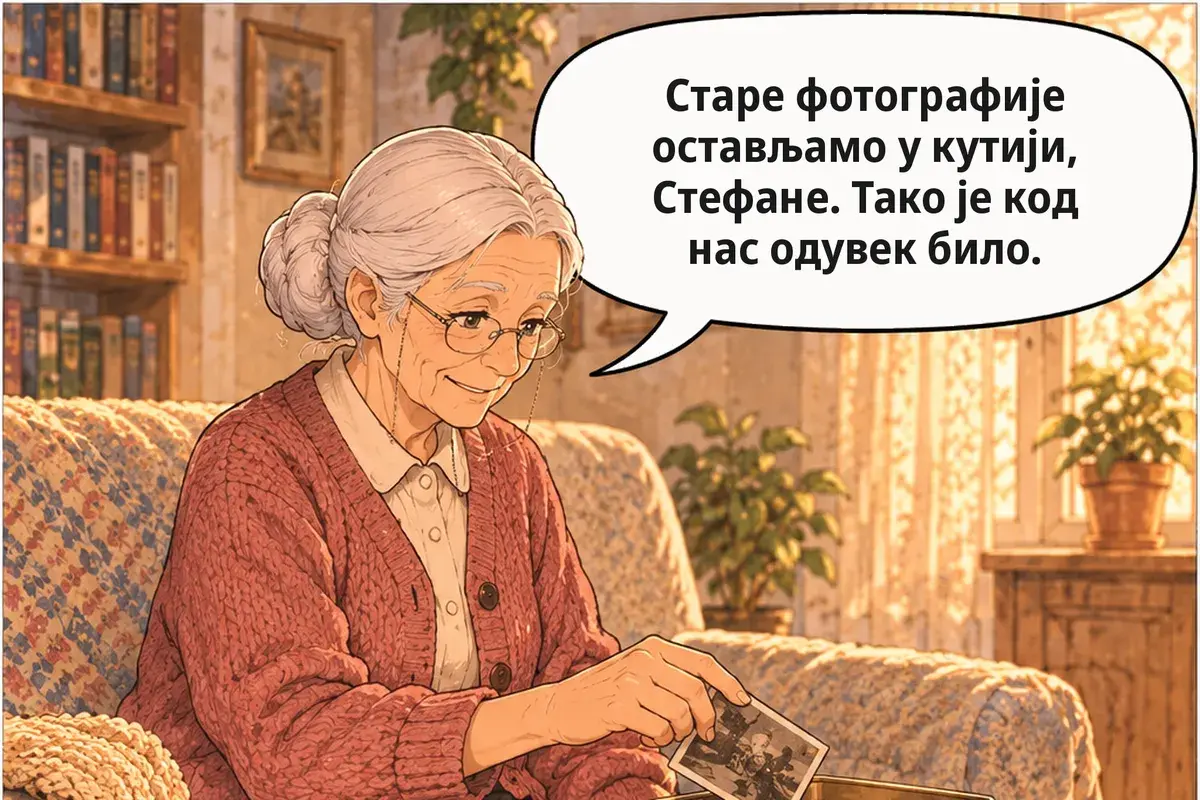
- Радмила
Старе фотографије остављамо у кутији, Стефане. Тако је код нас одувек било.
We leave old photos in the box, Stefan. That's how it's always been with us.
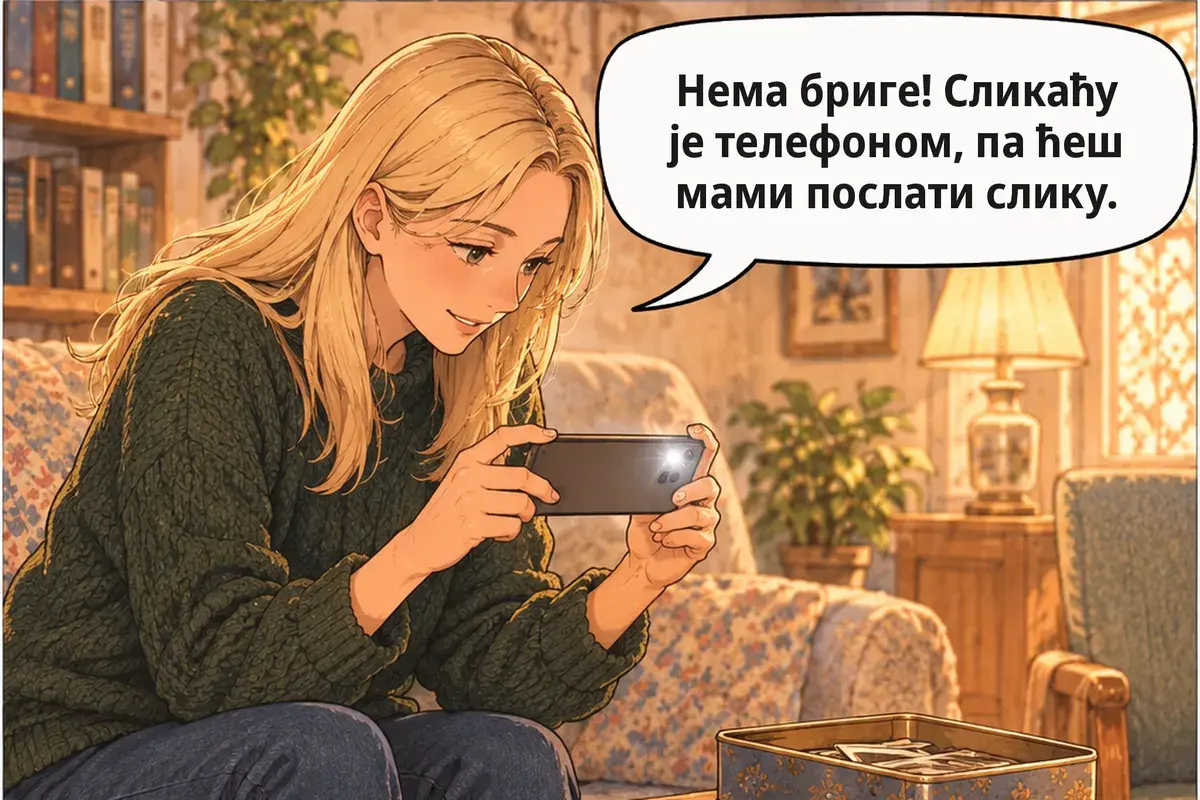
- Ана
Нема бриге! Сликаћу је телефоном, па ћеш мами послати слику.
No worries! I'll snap it with my phone, and you'll send Mom the picture.
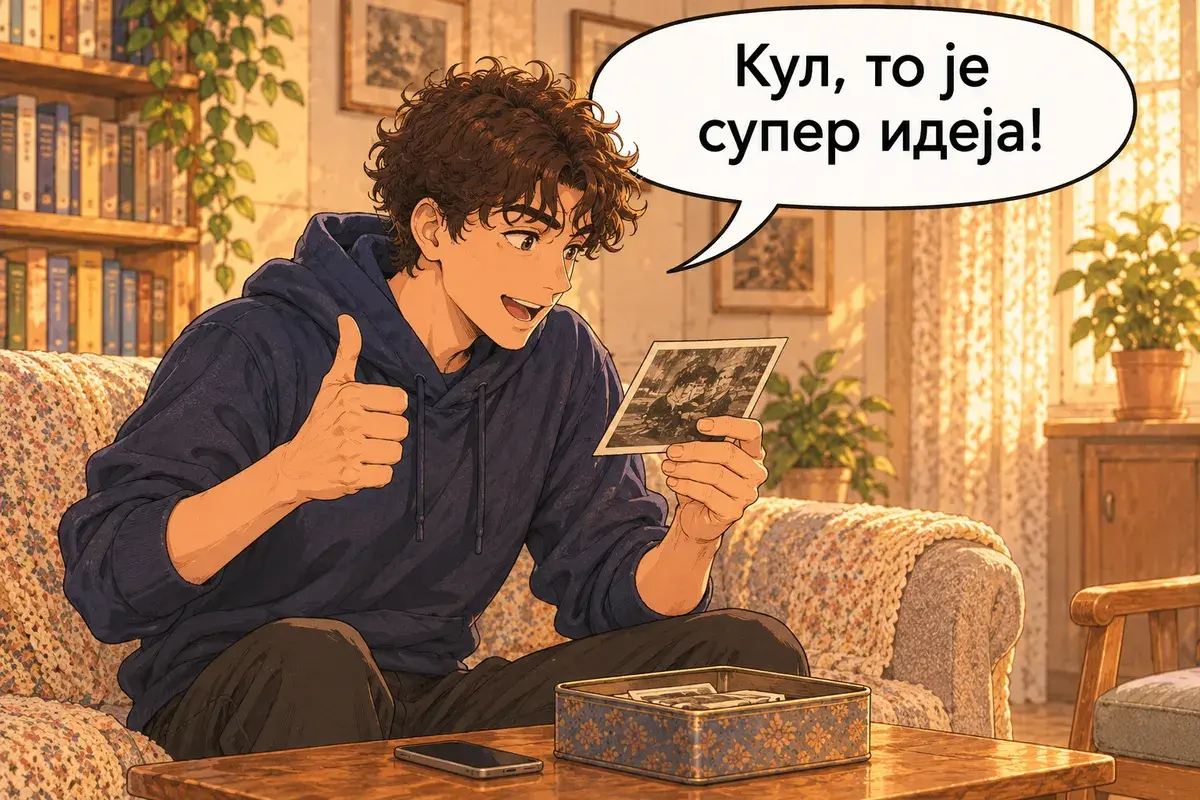
- Стефан
Кул, то је супер идеја!
Cool, that's a great idea!
Grammar for this text
Свако лето смо проводили у селу близу Чачка—свакоis the neuter form ofсваки(every), to matchлето(summer), which is neuter.проводити(to spend time) is imperfective: it happened every summer, like English "used to".близу Чачка(near Čačak) isблизу+ genitive (Чачак→Чачка, the disappearing a).код родитеља мог мужа(at my husband's parents' place) —код+ genitive;мог мужа(of my husband) is also genitive:мој→мог,муж→мужа.У оно доба је био млад и јак—у оно добаmeans back then, in those days;добаis neuter and hardly ever changes its ending.Зар се нисам уплашио?—зарmakes a surprised question (really?).се нисам уплашио(I wasn't scared) comes fromуплашити се: the -o/-la form for a man, because Stefan is speaking.сеstands beforeнисам.Волео си свиње, поље и коња, па смо те остављали цело преподне са дедом—коњаis the animate accusative: for a male animal the object looks like the genitive.остављалиis imperfective: it happened many times.теmeans you, as an object (unit 8);са дедом(with Grandpa) is the instrumental (unit 10).Види се да сте били блиски—види сеmeans you can tell, it's clear;блискиis the plural ofблизак(the a disappears).Нема бриге! Сликаћу је телефоном—Нема бригеmeans don't worry, no worries.сликаћу(I'll take a photo) is the future ofсликати, which here means to take a photo, not to paint.јеmeans it, the photo (unit 8).
Words and grammar of the unit: Talk about old family photos.
Learn the words from the texts with flashcards
In the app, you can tap any word in a text to see its translation, forms and examples, and new words stick with flashcards. 15 minutes a day.
Start for freeEverything is open for free. No card needed to sign up.