
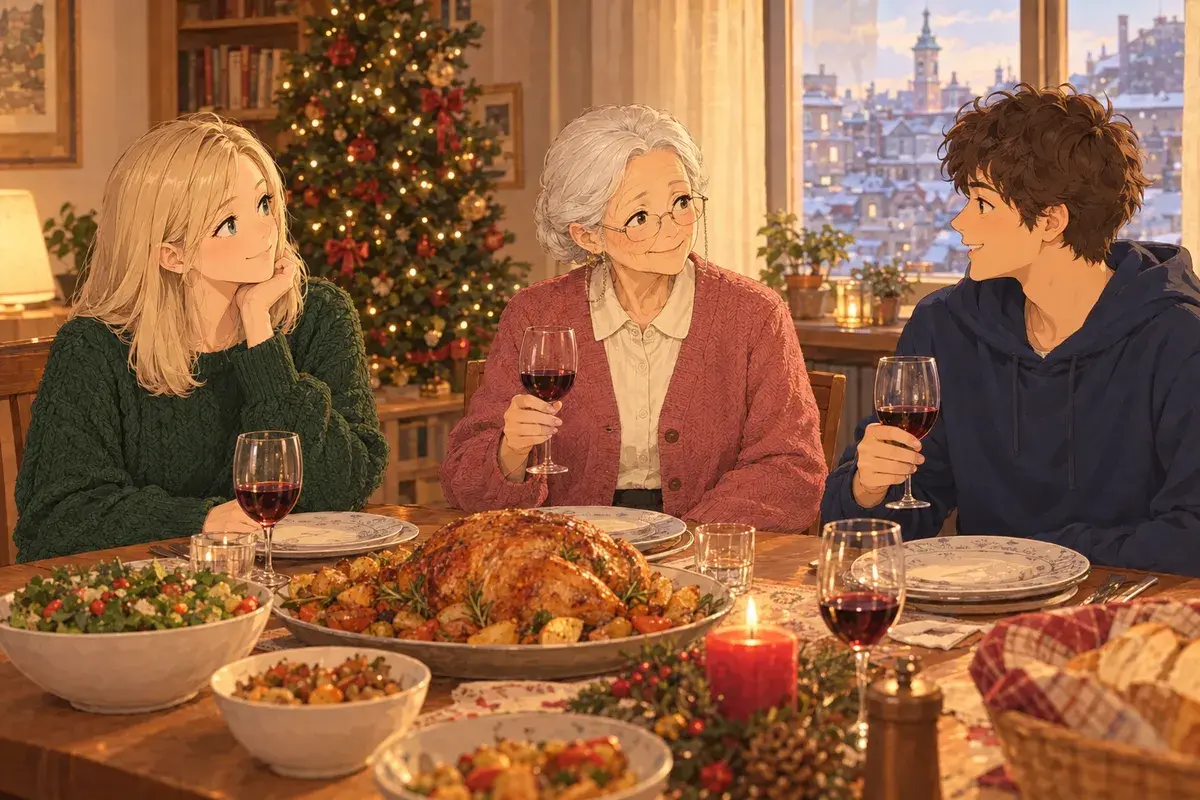
Serbian dialogue with translation · A2 · 14 lines
Зашто је Божић седмог јануара? Why is Christmas on January 7?
Comic · 14 panels
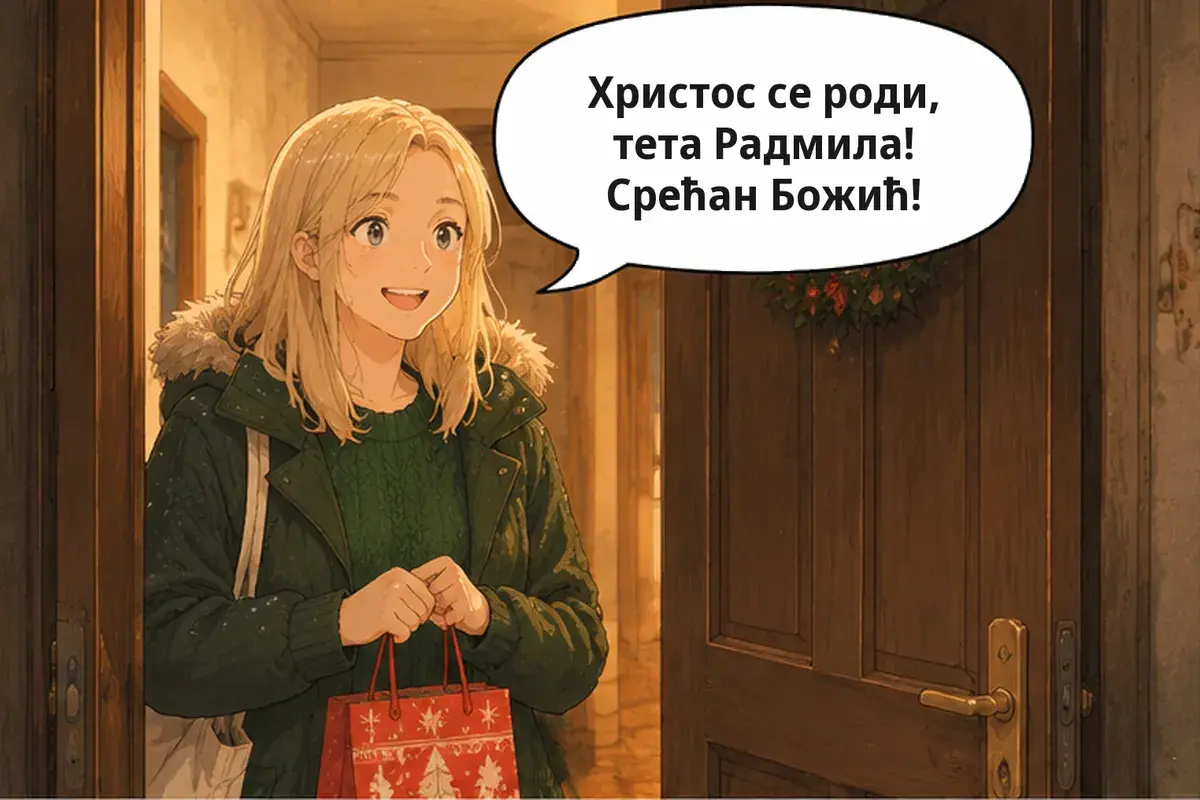
- Ана
Христос се роди, тета Радмила! Срећан Божић!
Christ is born, Aunt Radmila! Merry Christmas!
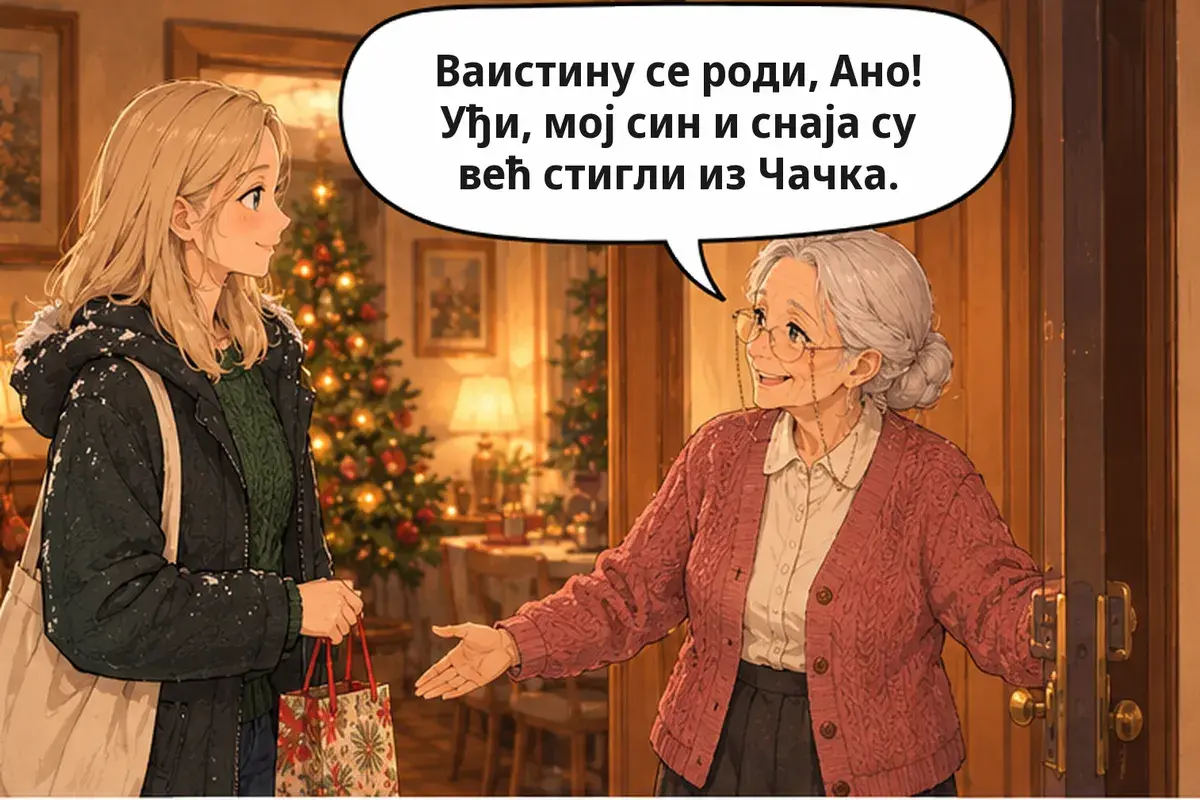
- Радмила
Ваистину се роди, Ано! Уђи, мој син и снаја су већ стигли из Чачка.
Truly He is born, Ana! Come in, my son and daughter-in-law have already arrived from Čačak.
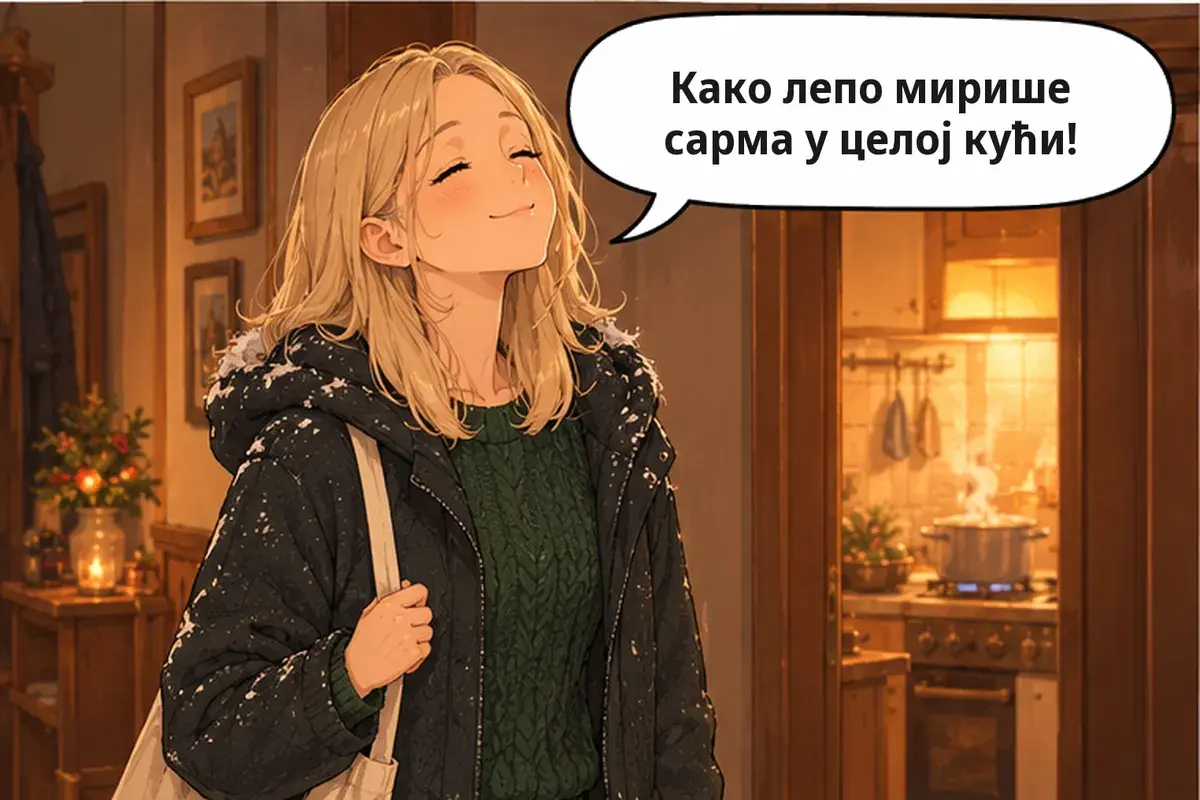
- Ана
Како лепо мирише сарма у целој кући!
The sarma smells so good all over the house!
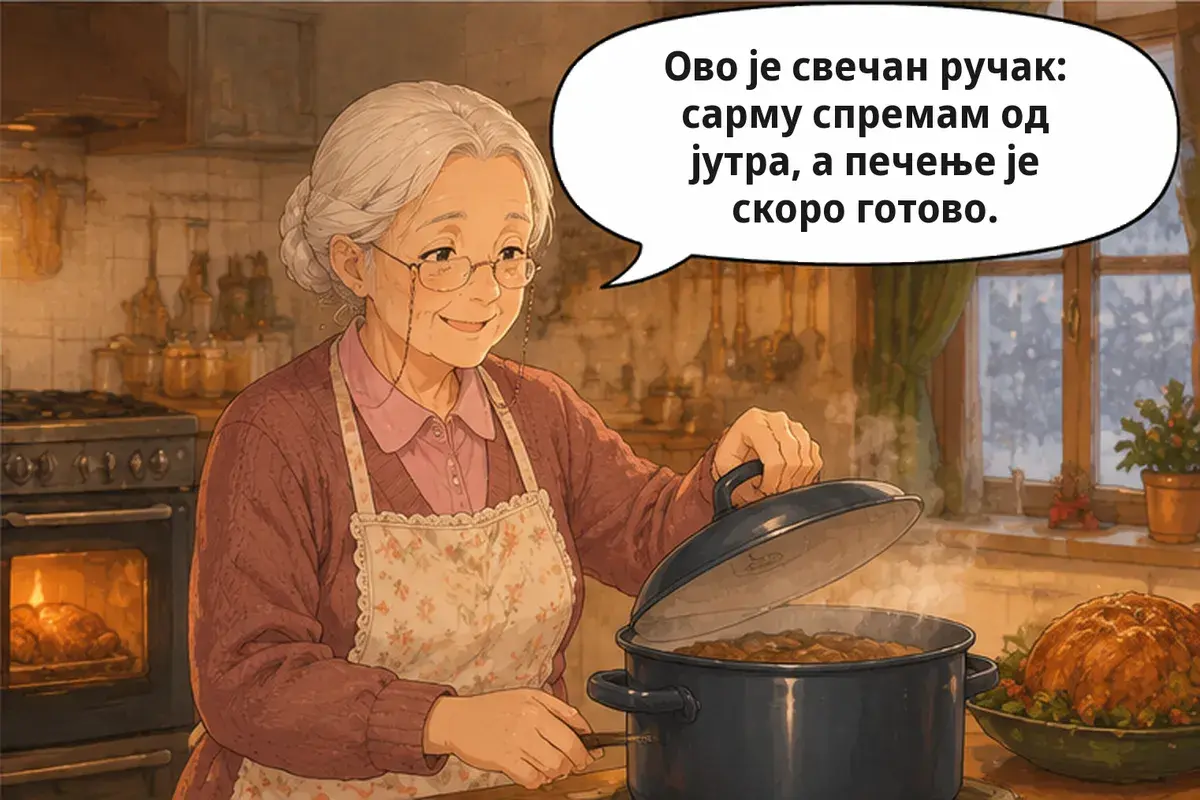
- Радмила
Ово је свечан ручак: сарму спремам од јутра, а печење је скоро готово.
This is a festive lunch: I've been making the sarma since morning, and the roast is almost done.
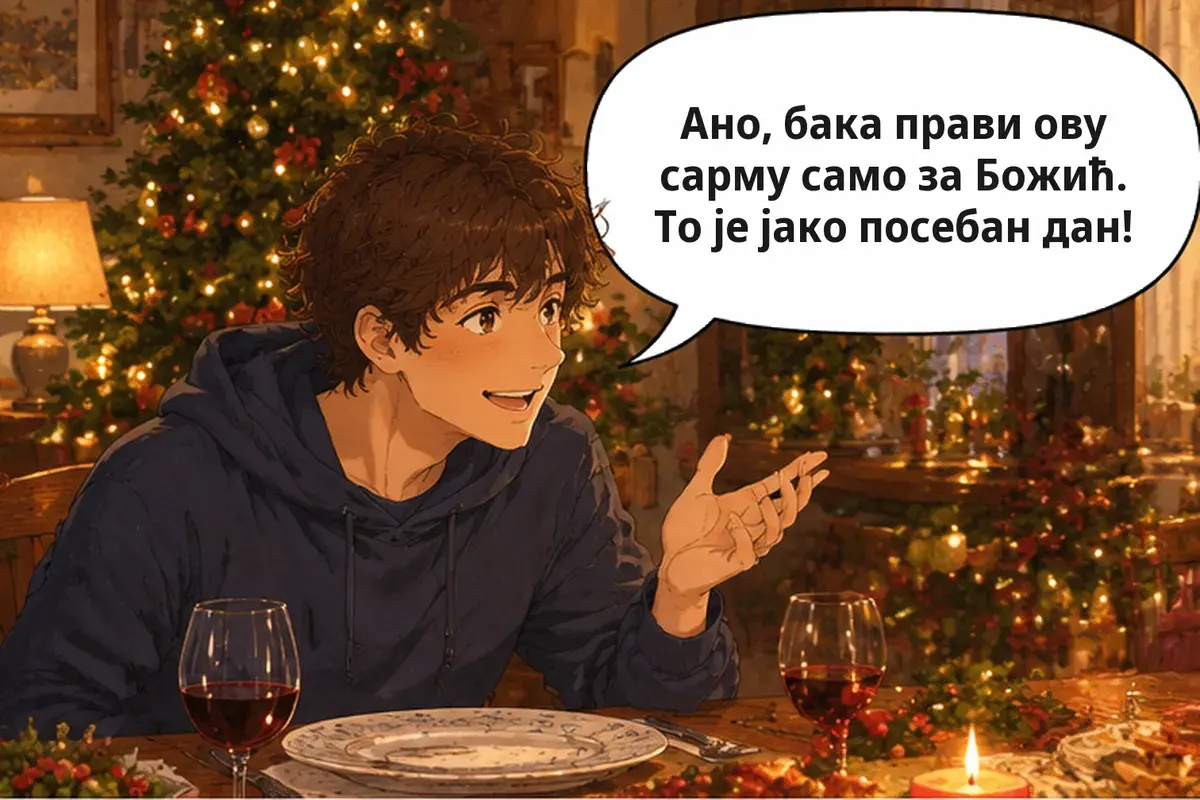
- Стефан
Ано, бака прави ову сарму само за Божић. То је јако посебан дан!
Ana, Grandma makes this sarma only for Christmas. It's a very special day!
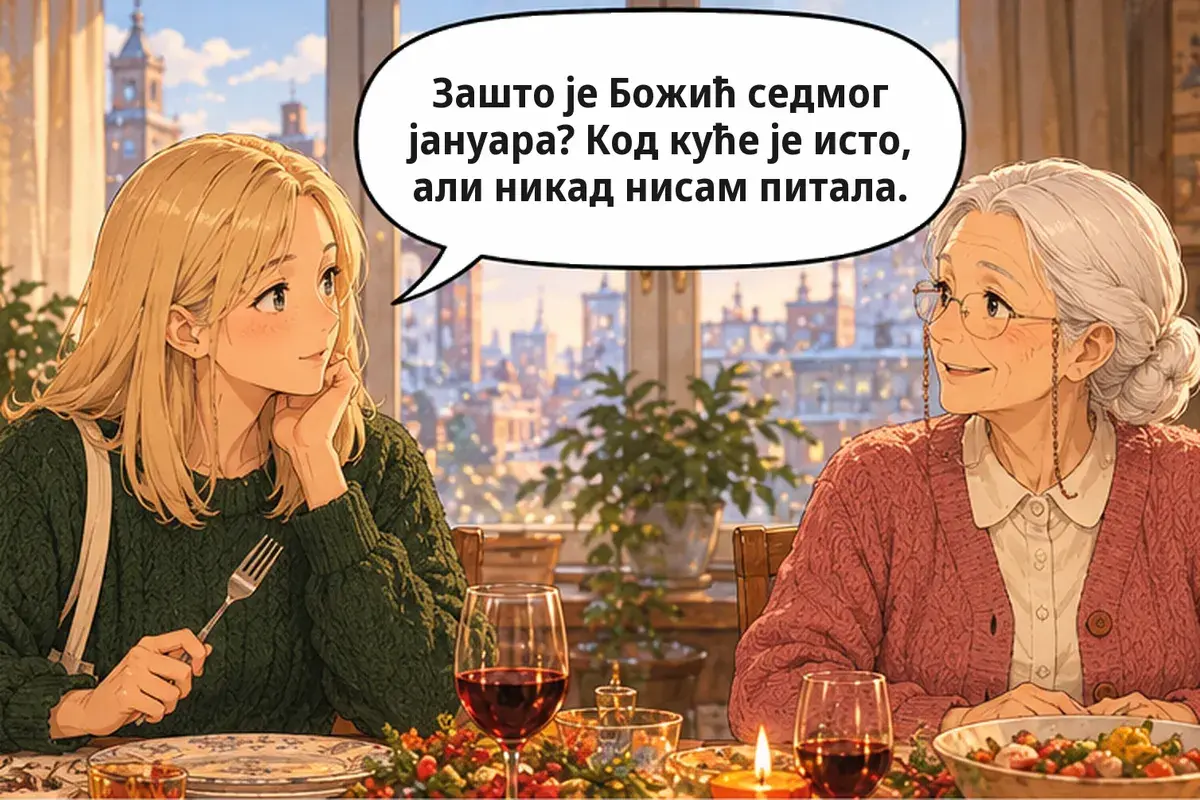
- Ана
Зашто је Божић седмог јануара? Код куће је исто, али никад нисам питала.
Why is Christmas on January 7? It's the same back home, but I've never asked (woman speaking).
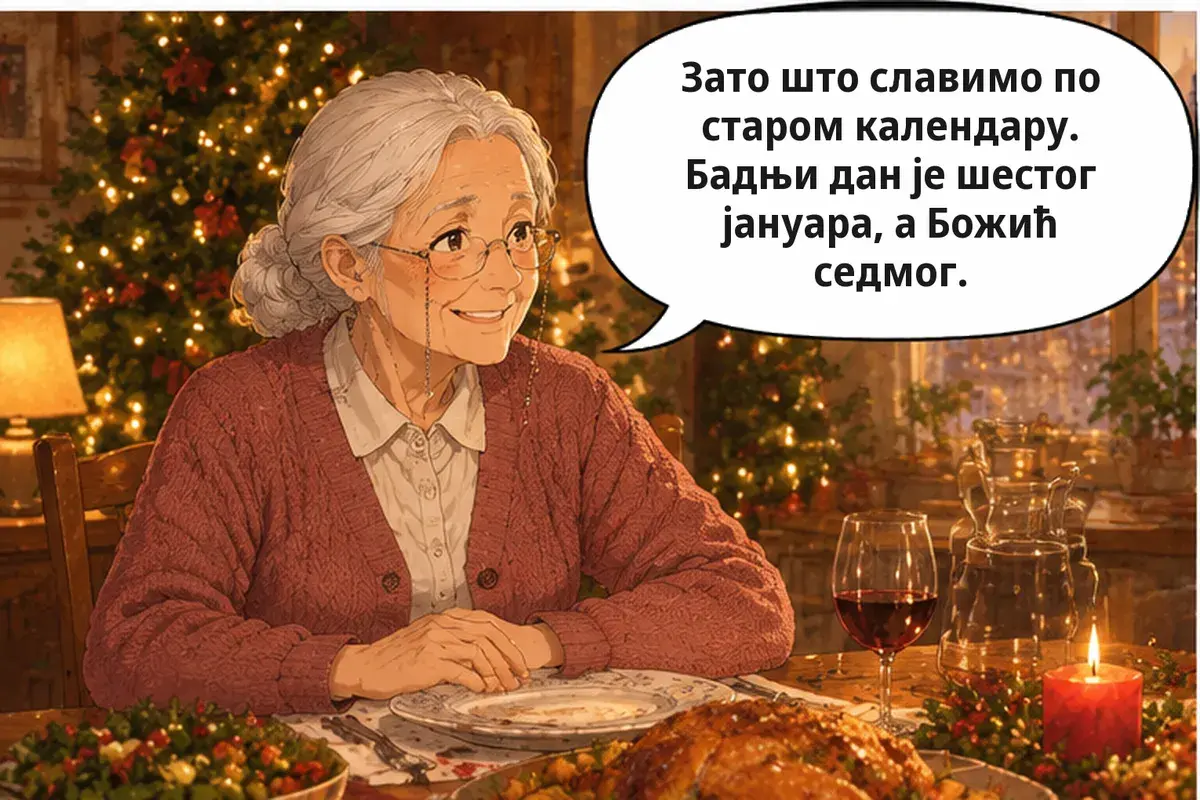
- Радмила
Зато што славимо по старом календару. Бадњи дан је шестог јануара, а Божић седмог.
Because we celebrate by the old calendar. Christmas Eve is on January 6, and Christmas on the 7th.
- Стефан
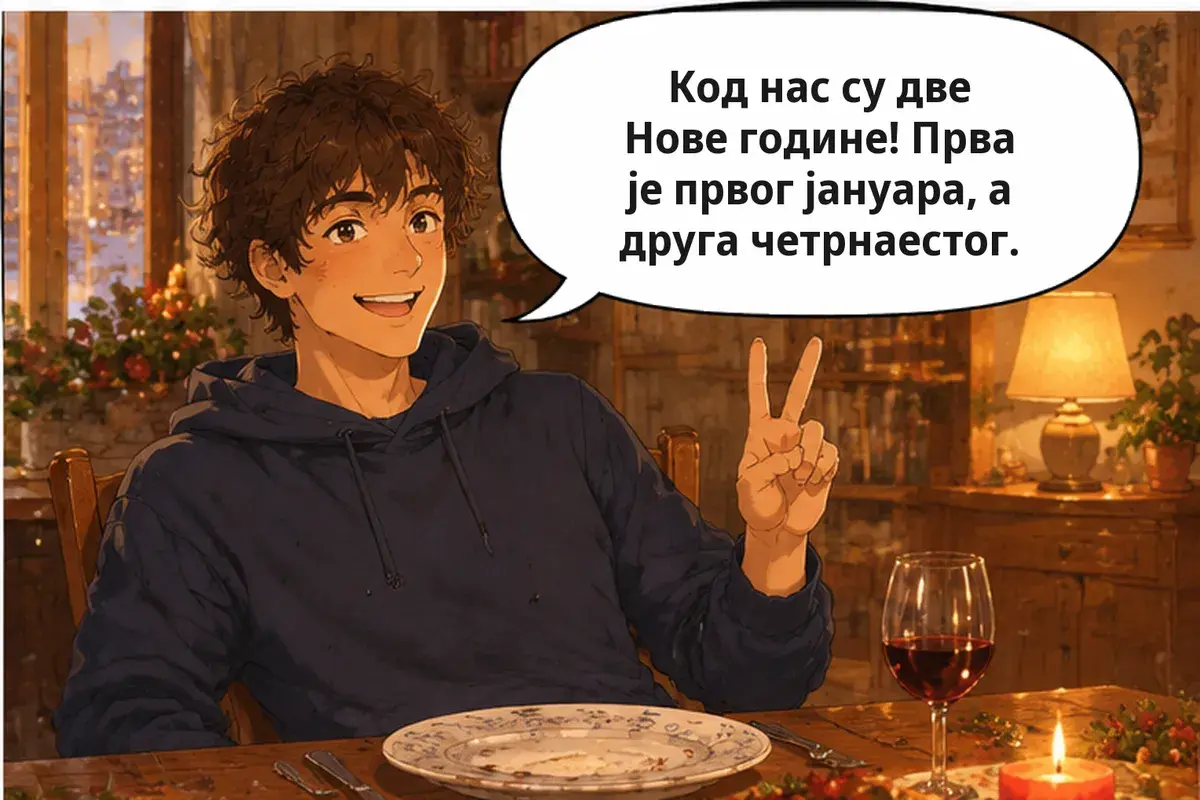
Код нас су две Нове године! Прва је првог јануара, а друга четрнаестог.
We have two New Year's Days! The first is on January 1, and the second on the 14th.
- Радмила
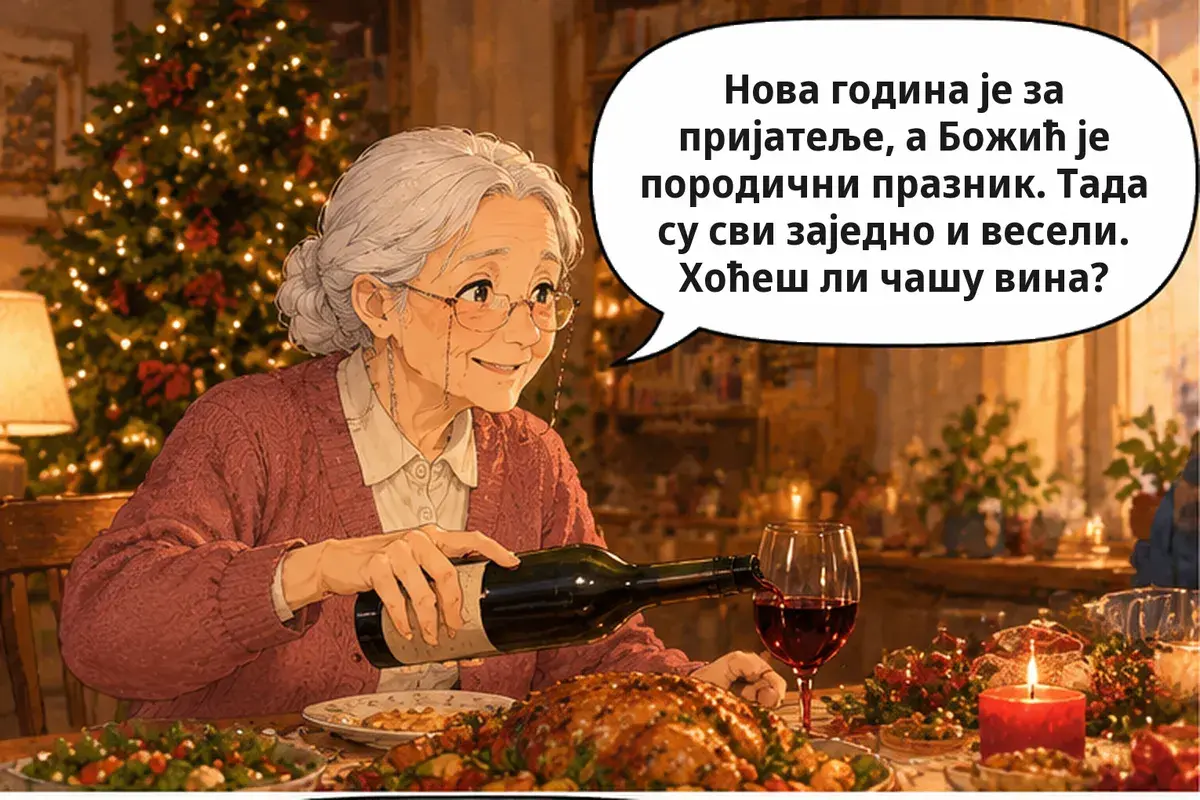
Нова година је за пријатеље, а Божић је породични празник. Тада су сви заједно и весели. Хоћеш ли чашу вина?
New Year's is for friends, and Christmas is a family holiday. Then everyone is together and cheerful. Do you want a glass of wine?
- Ана
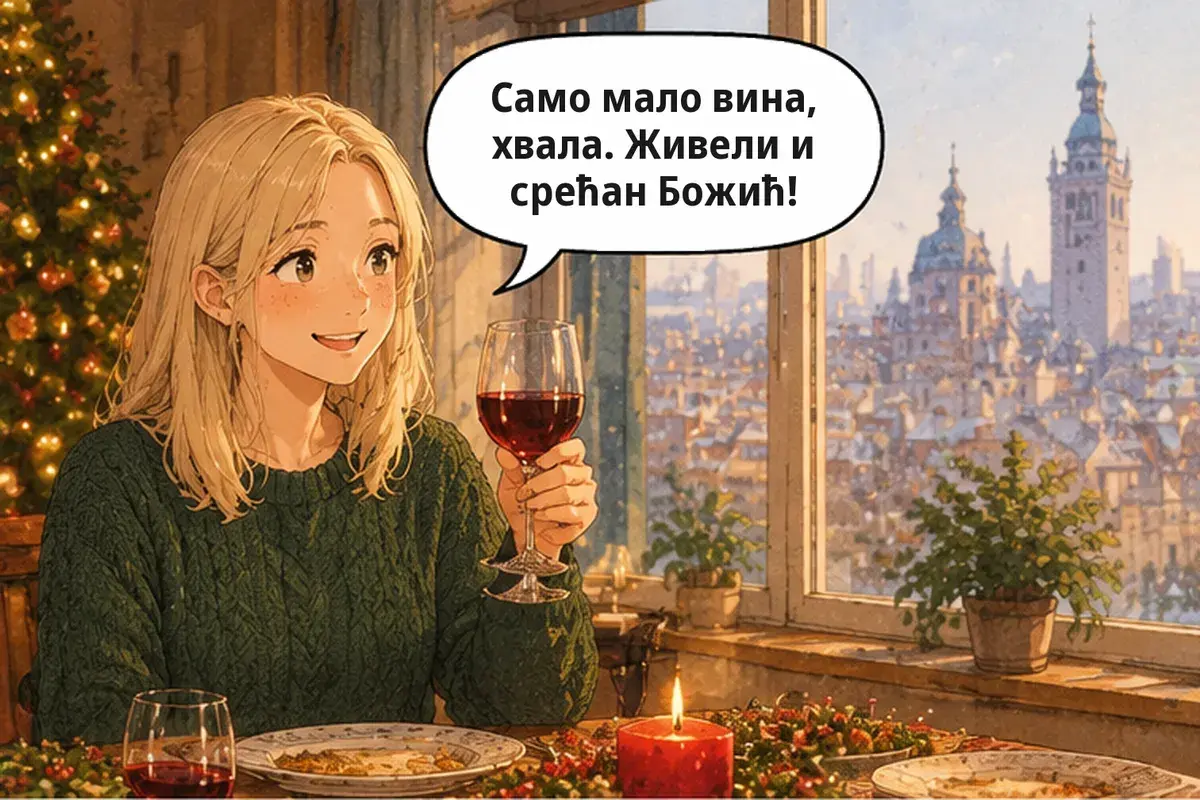
Само мало вина, хвала. Живели и срећан Божић!
Just a little wine, thanks. Cheers, and Merry Christmas!
- Радмила
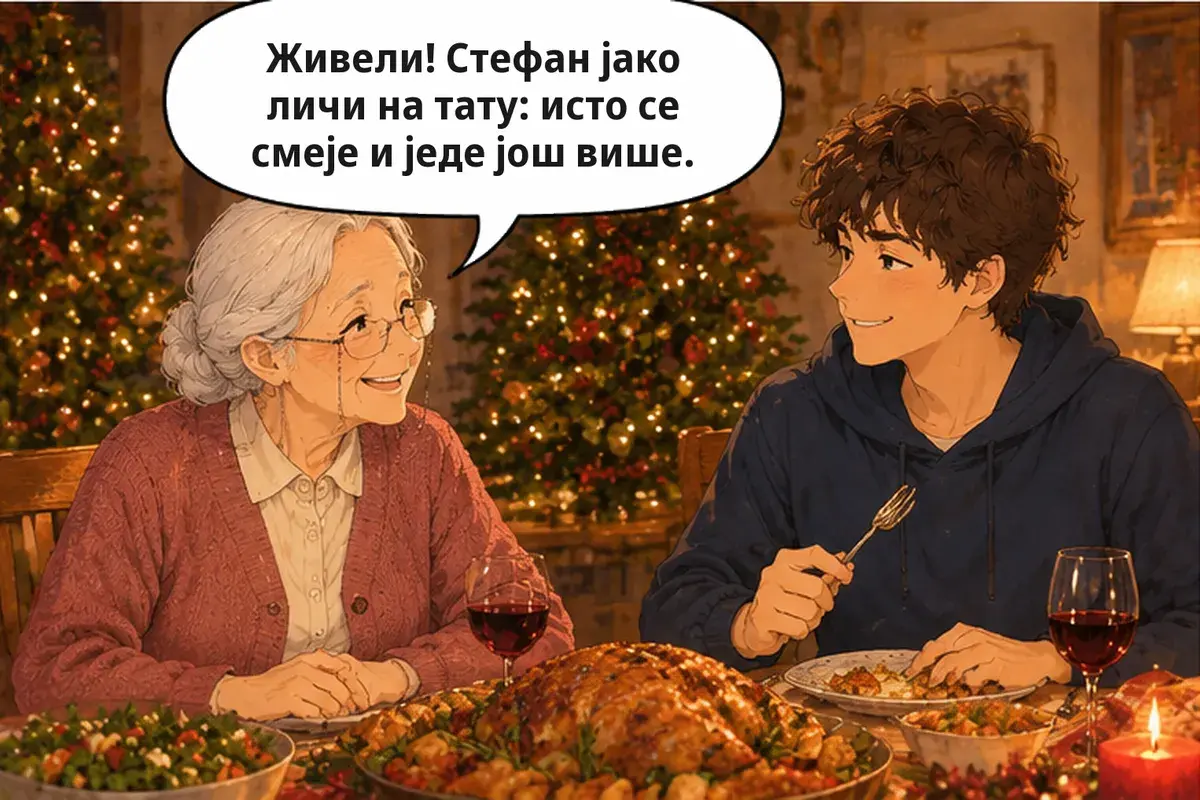
Живели! Стефан јако личи на тату: исто се смеје и једе још више.
Cheers! Stefan really looks like his dad: he laughs the same way and eats even more.

- Стефан
Бако, ја не једем тако много!
Grandma, I don't eat that much!
- Радмила
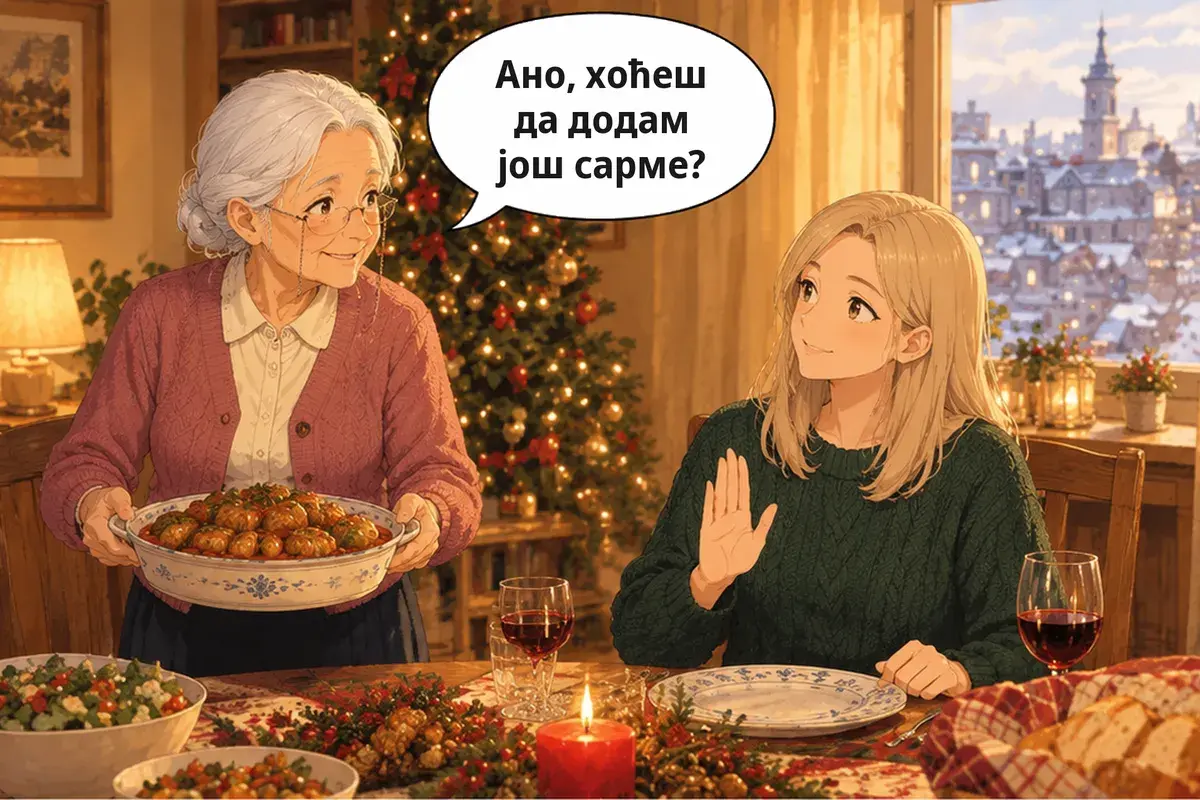
Ано, хоћеш да додам још сарме?
Ana, do you want me to add some more sarma?
- Ана
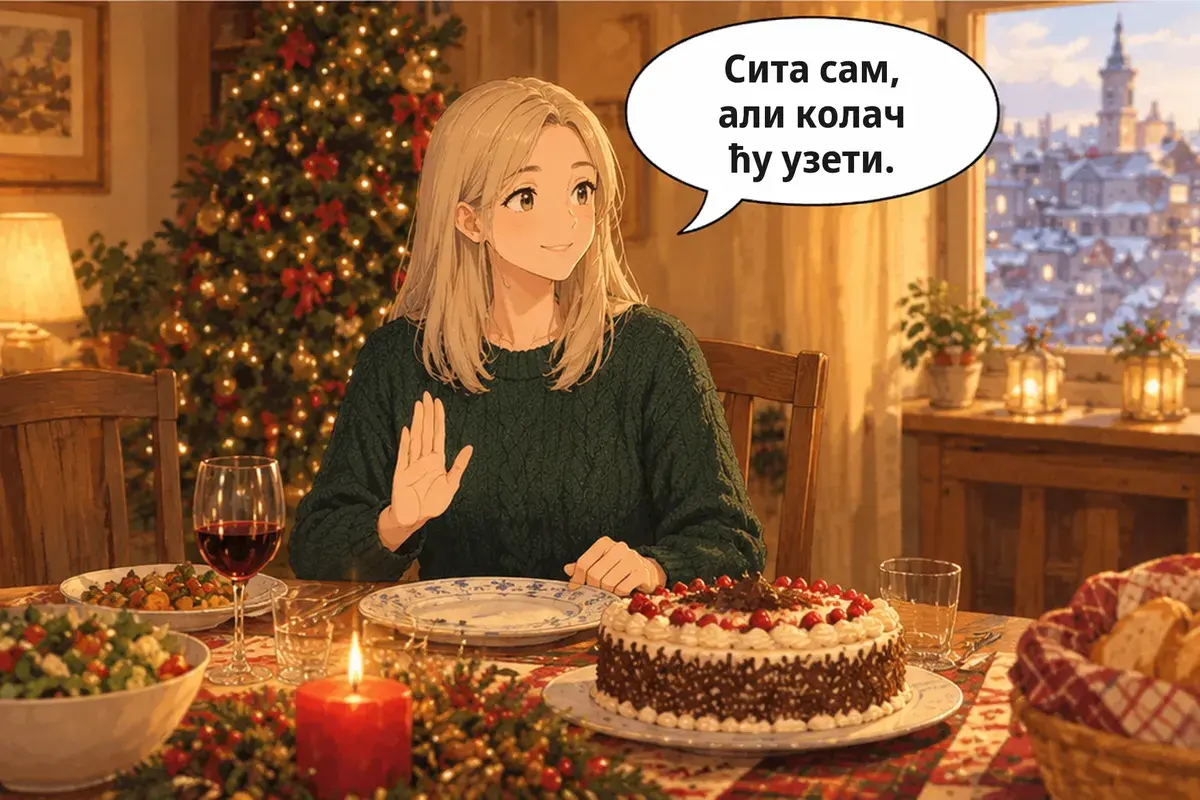
Сита сам, али колач ћу узети.
I'm full, but I'll take a cake (woman speaking).
Grammar for this text
Христос се роди, тета Радмила!— the set Christmas greeting, "Christ is born!".родиis an old past form ofродити се(to be born); you hear it only in this phrase.сеstands second. The answer:Ваистину се роди— "Truly He is born".Уђи, мој син и снаја су већ стигли из Чачка.—Уђи— come in (fromући): Radmila saysтиto Ana.снаја— daughter-in-law, a son's wife. Afterиз(from) comes the genitive, and inЧачакtheаdrops out:Чачка.Ово је свечан ручак: сарму спремам од јутра, а печење је скоро готово.—сармуis the object (the accusative: what?);спремам— I'm making;од јутра— since morning.печење— roast meat from the oven.Зато што славимо по старом календару.—Зато што— because: the set answer toЗашто?(why?); more in unit 12.по старом календару— by the old calendar: afterпоcomes the locative, with the endings-омand-у.Зашто је Божић седмог јануара?— "when?" is answered with a date in the genitive, both words:седмог јануара. InБадњи дан је шестог јануара, а Божић седмогthe month isn't repeated.Код нас су две Нове године!—годинаis feminine, soпрва,друга; afterдве(two) the noun takes the 2–4 form:Нове године.Стефан јако личи на тату—личити на+ accusative:на тату— like his dad.Ано, хоћеш да додам још сарме?— "do you want me to add…":да+ present.сармеis the genitive, likeмало вина: some of it, a part of the whole.Сита самis what a woman says (a man saysСит сам);колач— a cake or pastry.
Words and grammar of the unit: Celebrate Christmas at Radmila's.
Learn the words from the texts with flashcards
In the app, you can tap any word in a text to see its translation, forms and examples, and new words stick with flashcards. 15 minutes a day.
Start for freeEverything is open for free. No card needed to sign up.