
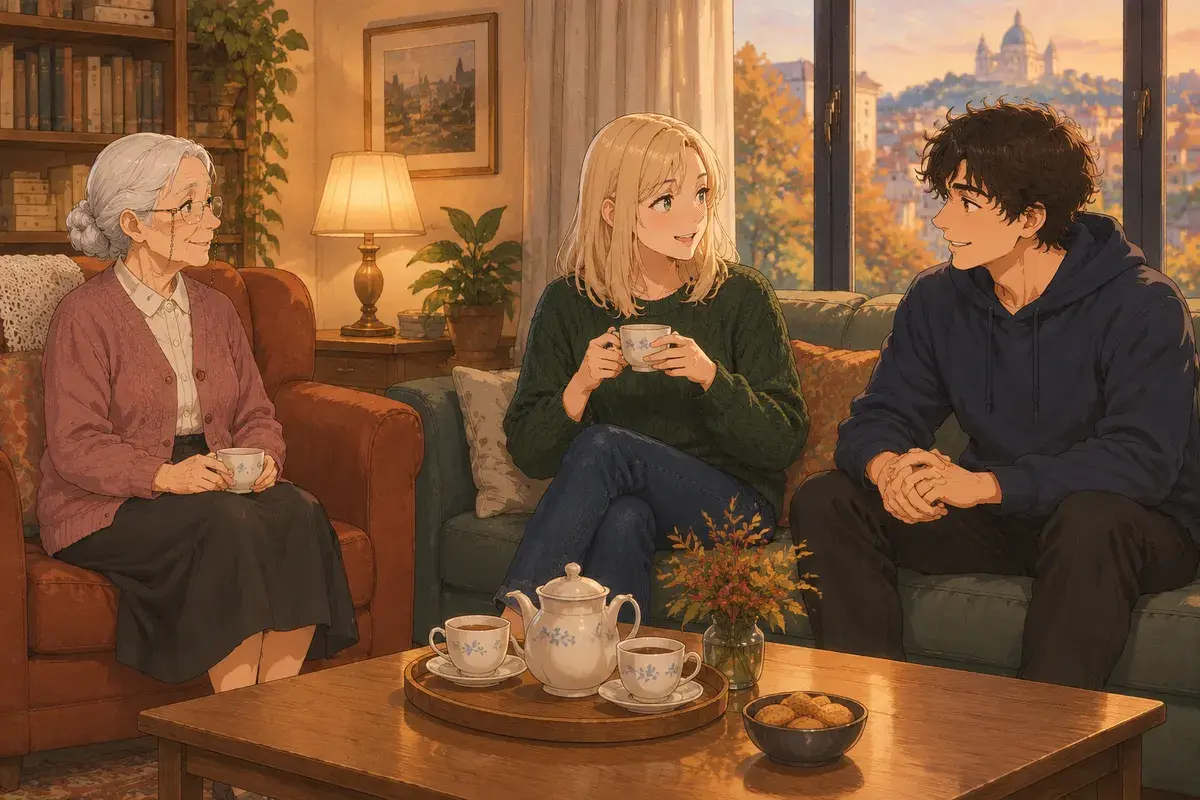
Serbian dialogue with translation · A1 · 15 lines
Где сте били данас? Where were you today? (to several people)
Comic · 15 panels
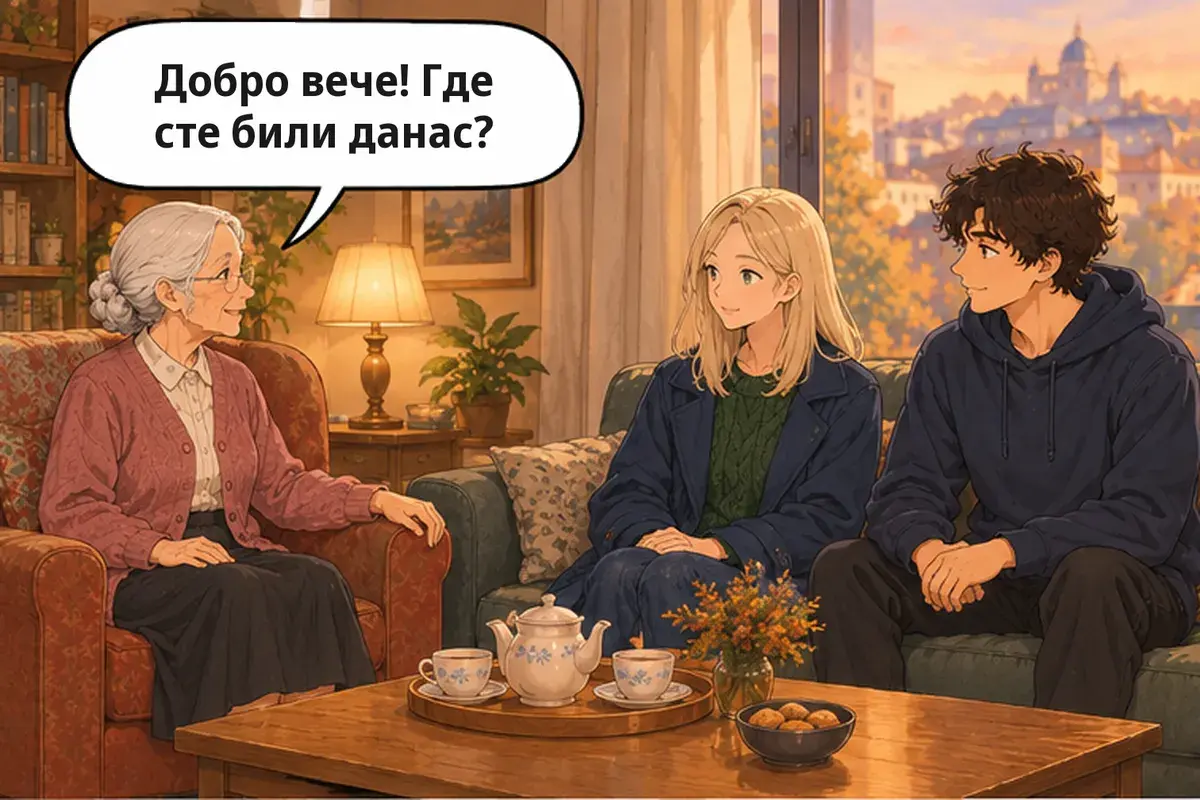
- Радмила
Добро вече! Где сте били данас?
Good evening! Where were you today? (to several people)
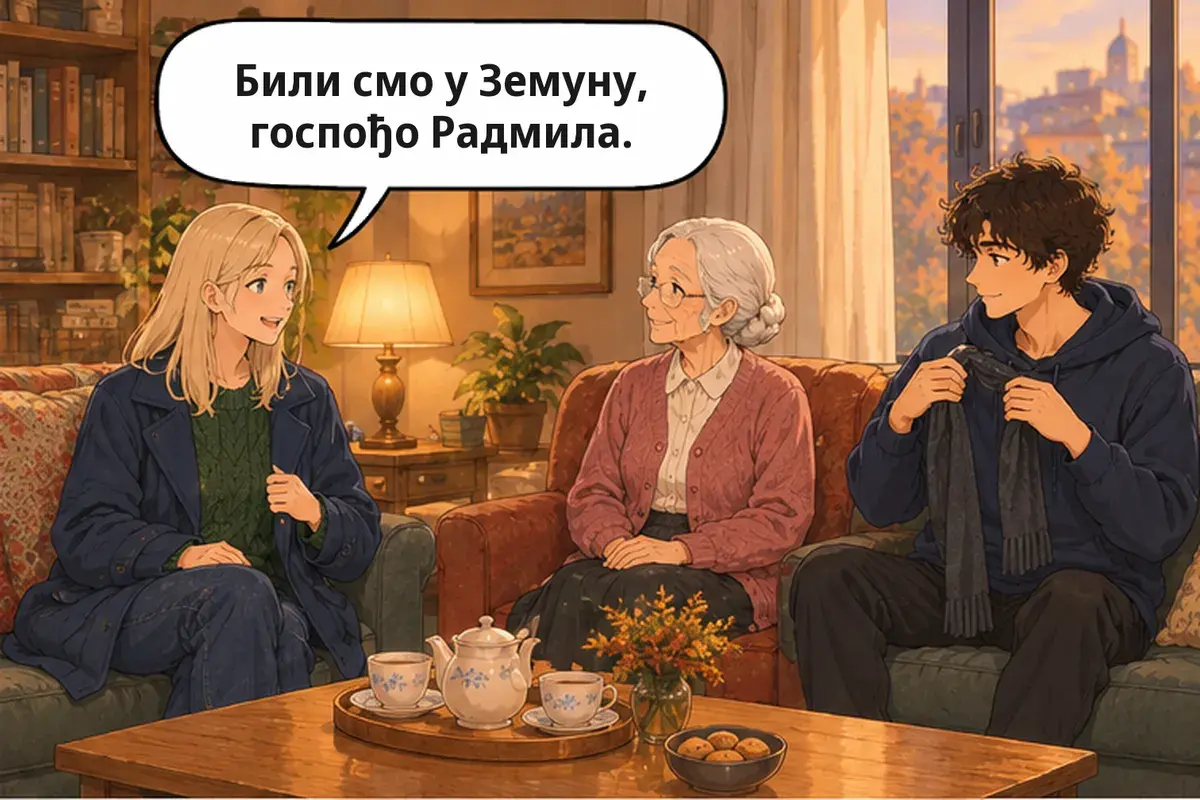
- Ана
Били смо у Земуну, госпођо Радмила.
We were in Zemun, Mrs. Radmila.
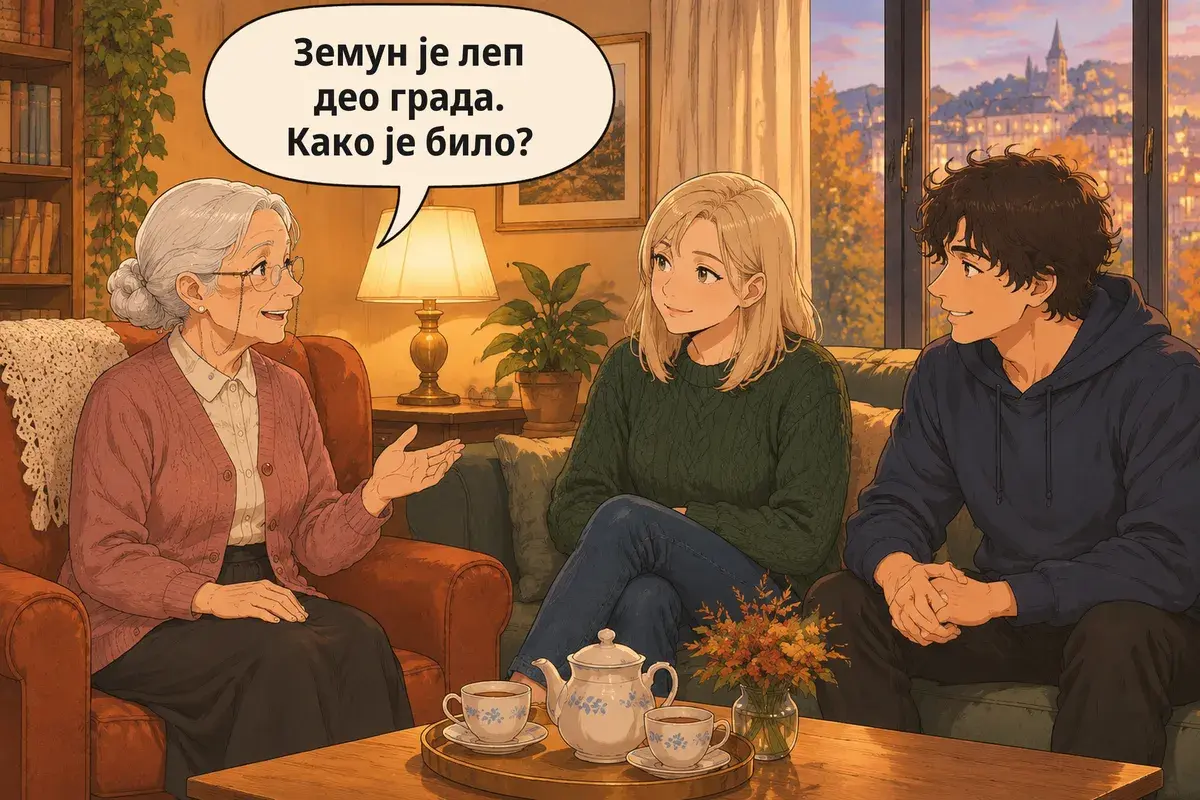
- Радмила
Земун је леп део града. Како је било?
Zemun is a beautiful part of the city. How was it?
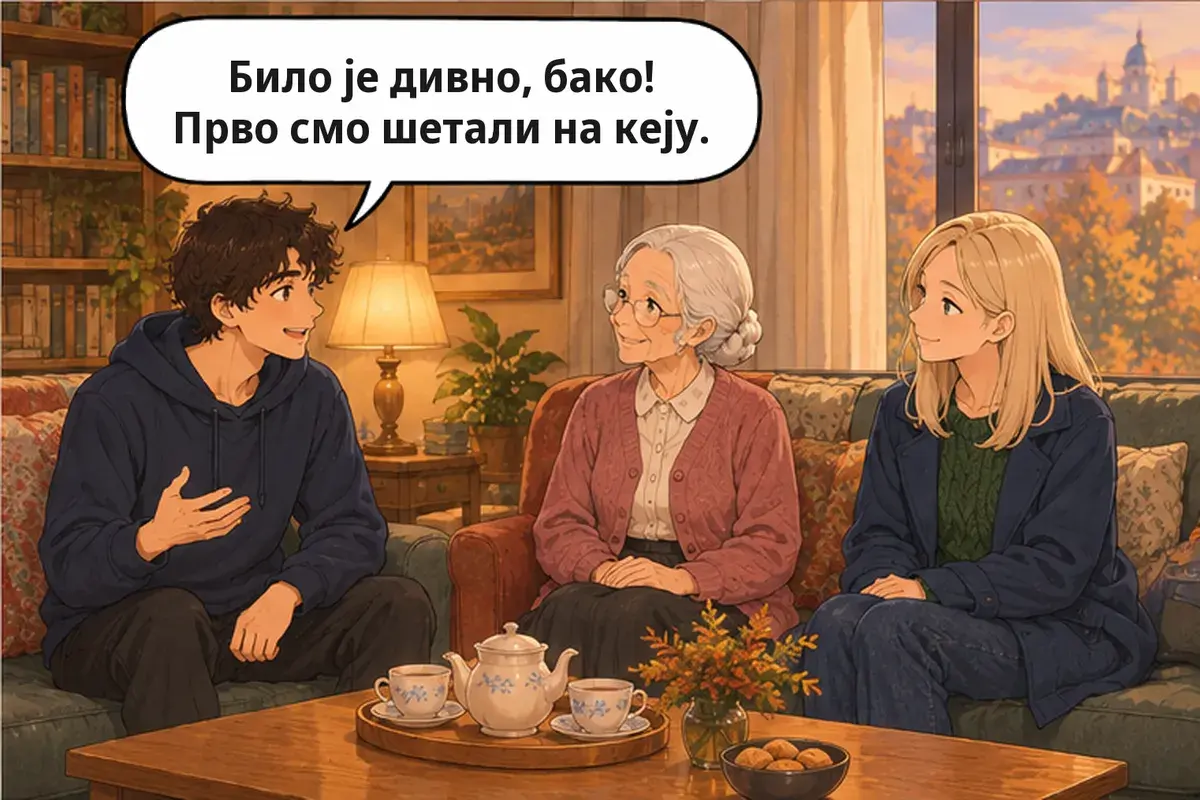
- Стефан
Било је дивно, бако! Прво смо шетали на кеју.
It was wonderful, Grandma! First we walked on the waterfront.
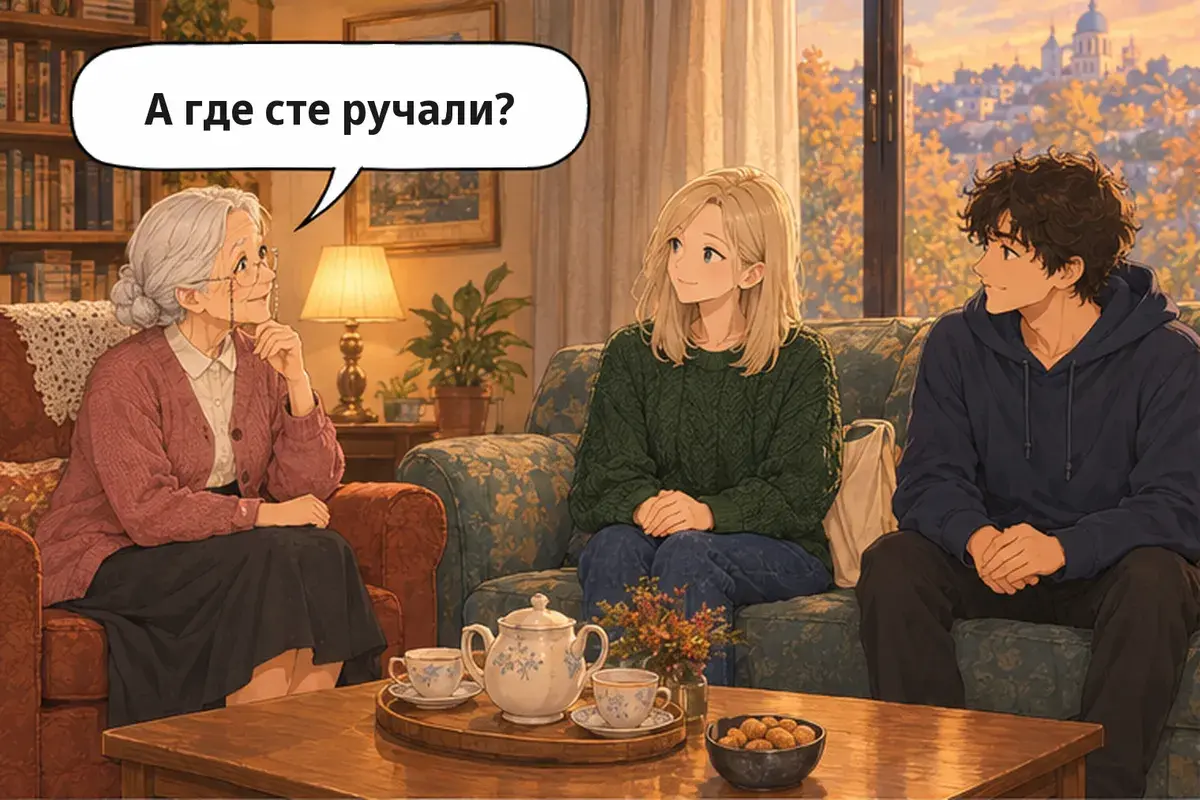
- Радмила
А где сте ручали?
And where did you have lunch? (to several people)
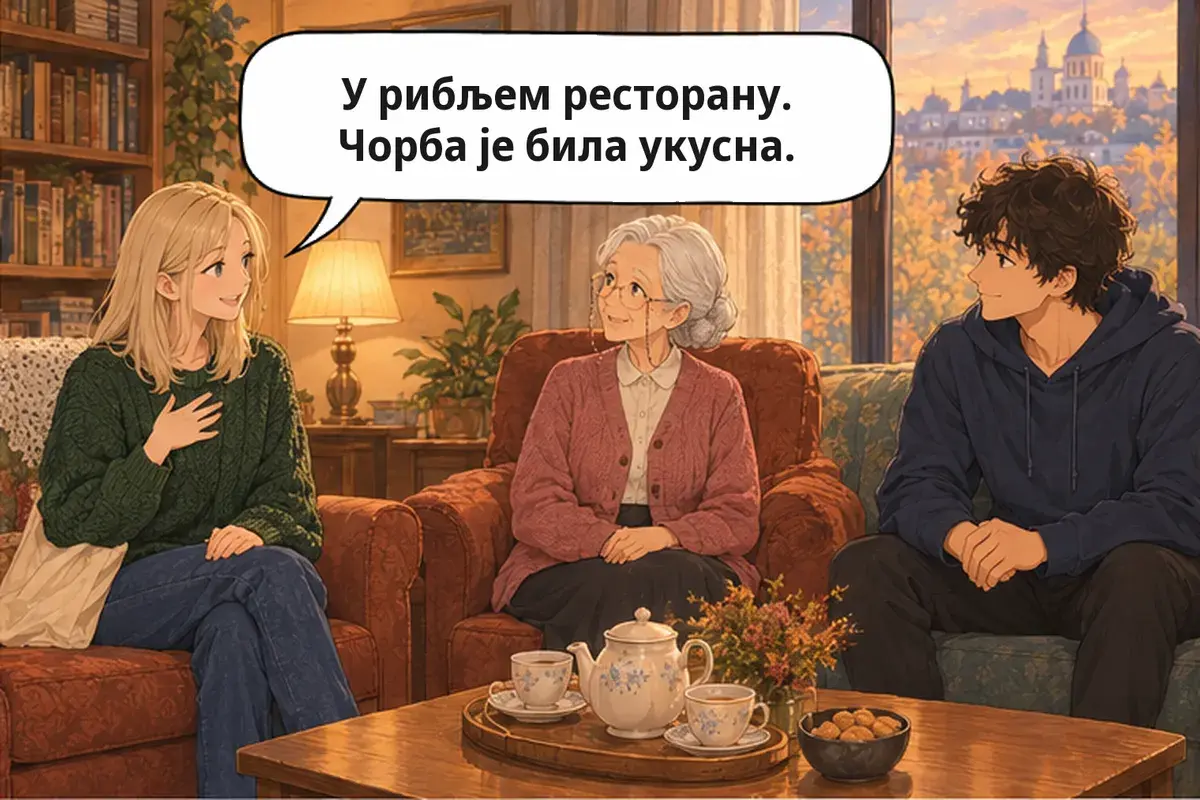
- Ана
У рибљем ресторану. Чорба је била укусна.
At a fish restaurant. The soup was delicious.
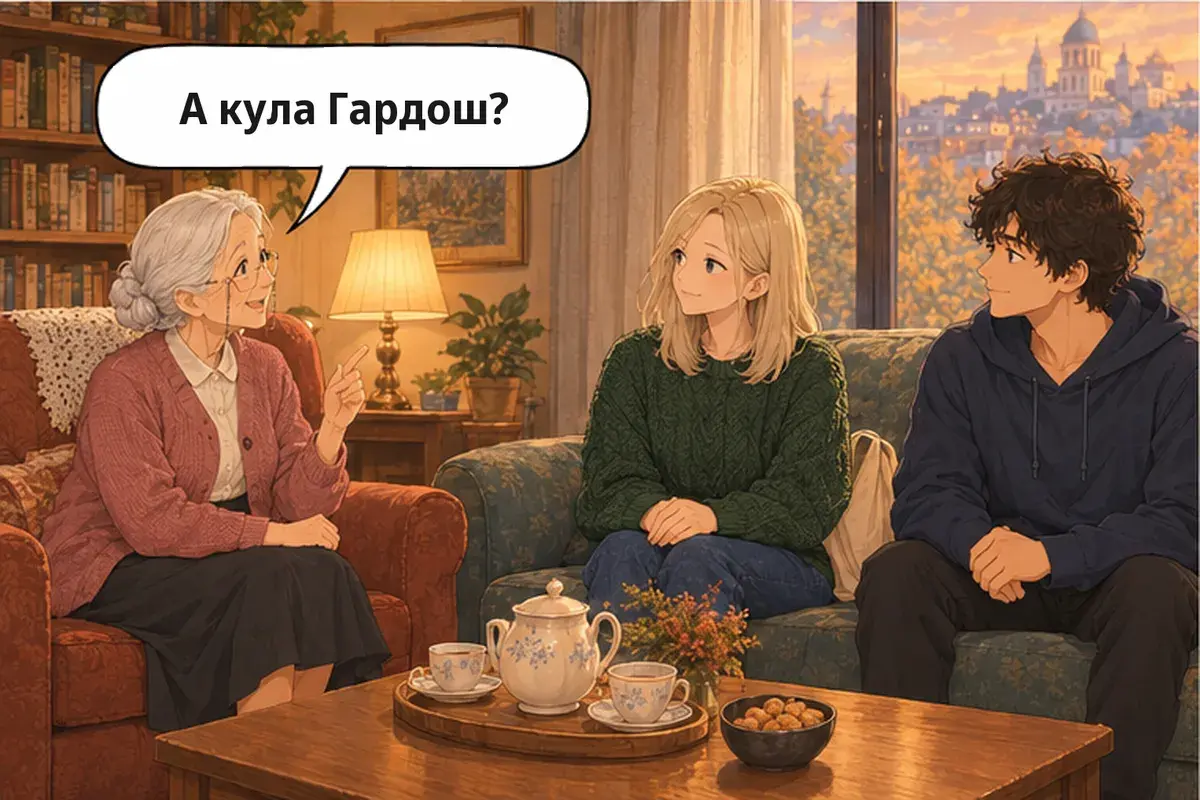
- Радмила
А кула Гардош?
And Gardoš Tower?
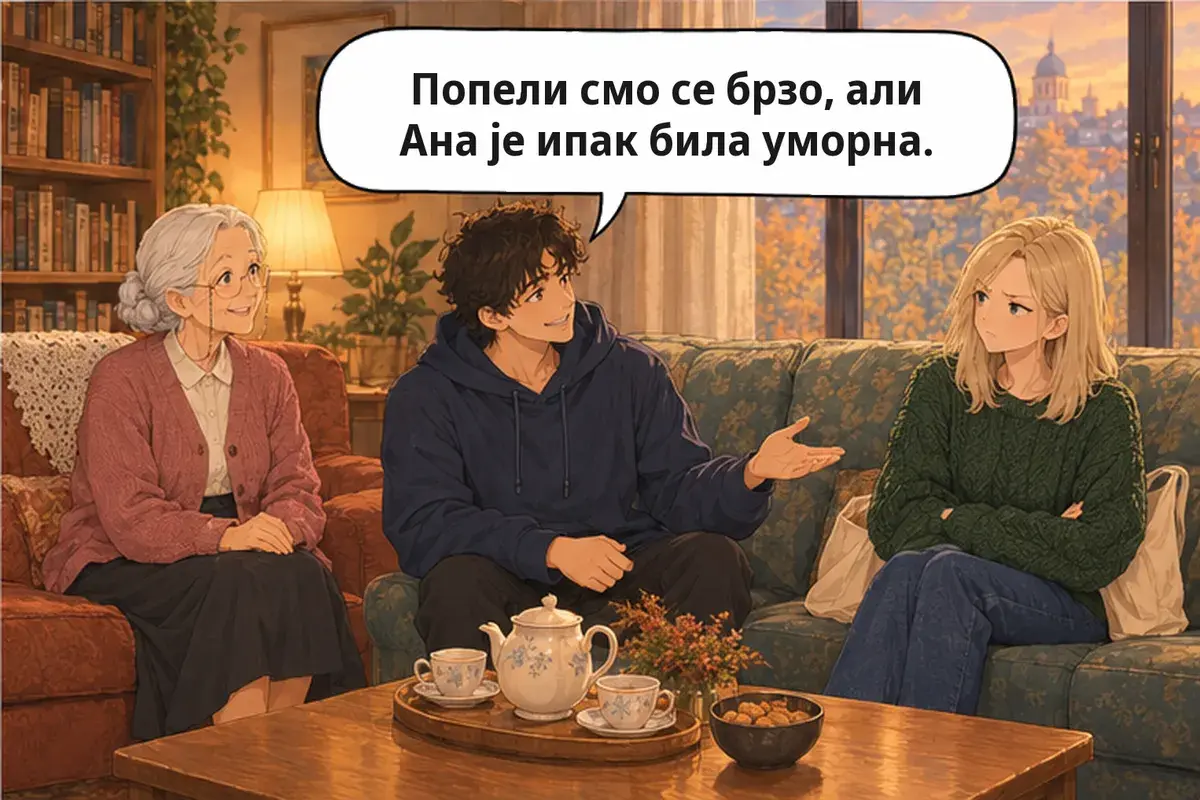
- Стефан
Попели смо се брзо, али Ана је ипак била уморна.
We climbed up quickly, but Ana was tired all the same.
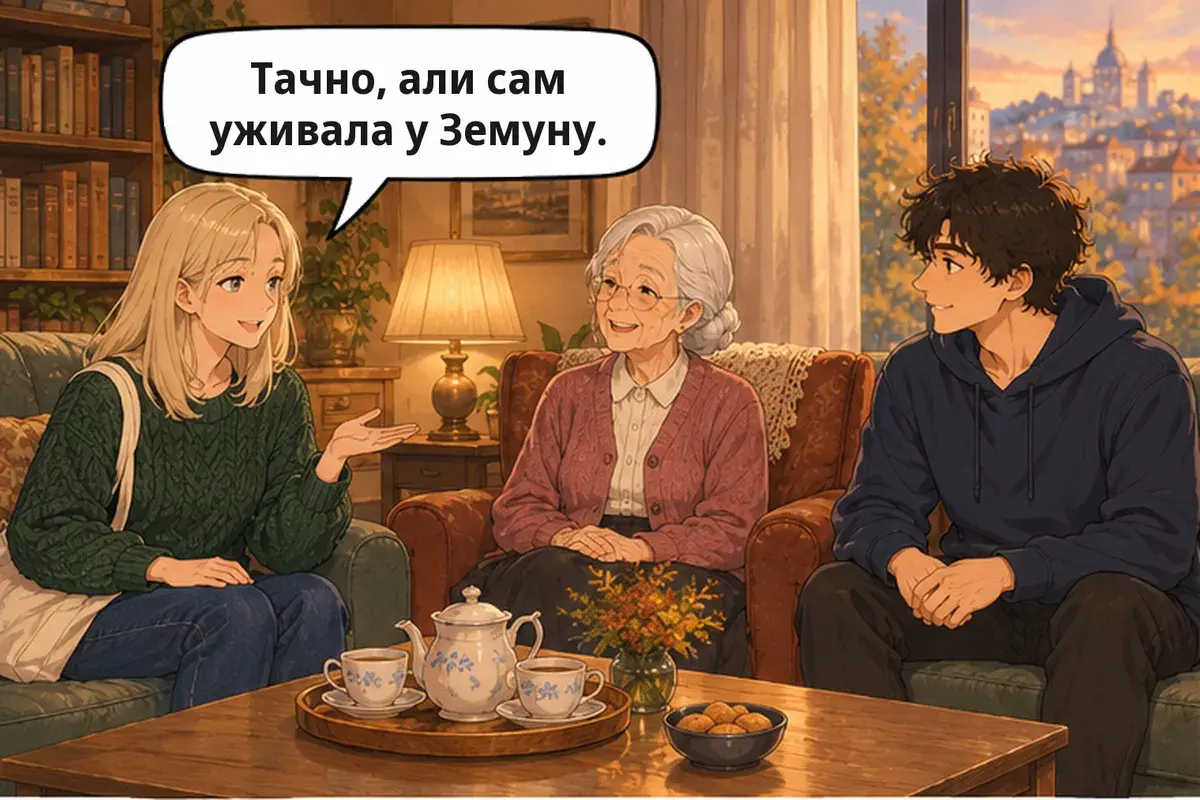
- Ана
Тачно, али сам уживала у Земуну.
That's right, but I enjoyed Zemun (woman speaking).
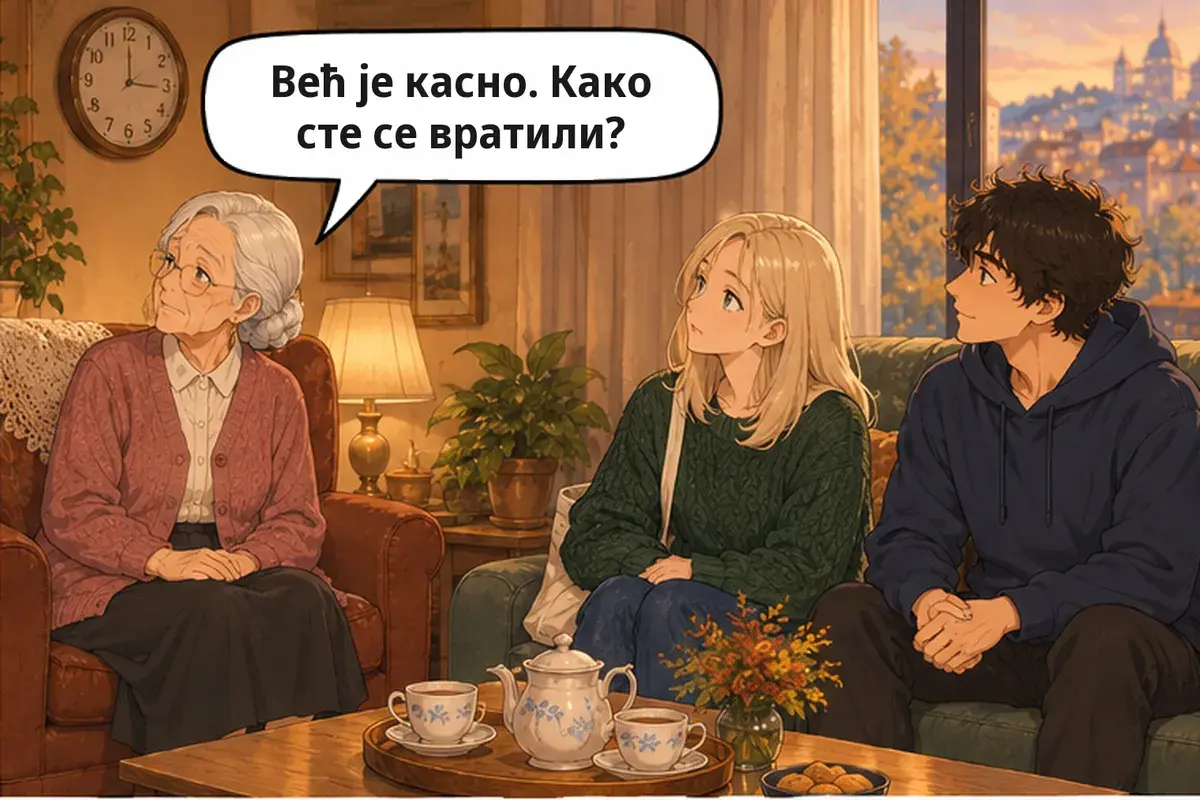
- Радмила
Већ је касно. Како сте се вратили?
It's already late. How did you get back? (to several people)
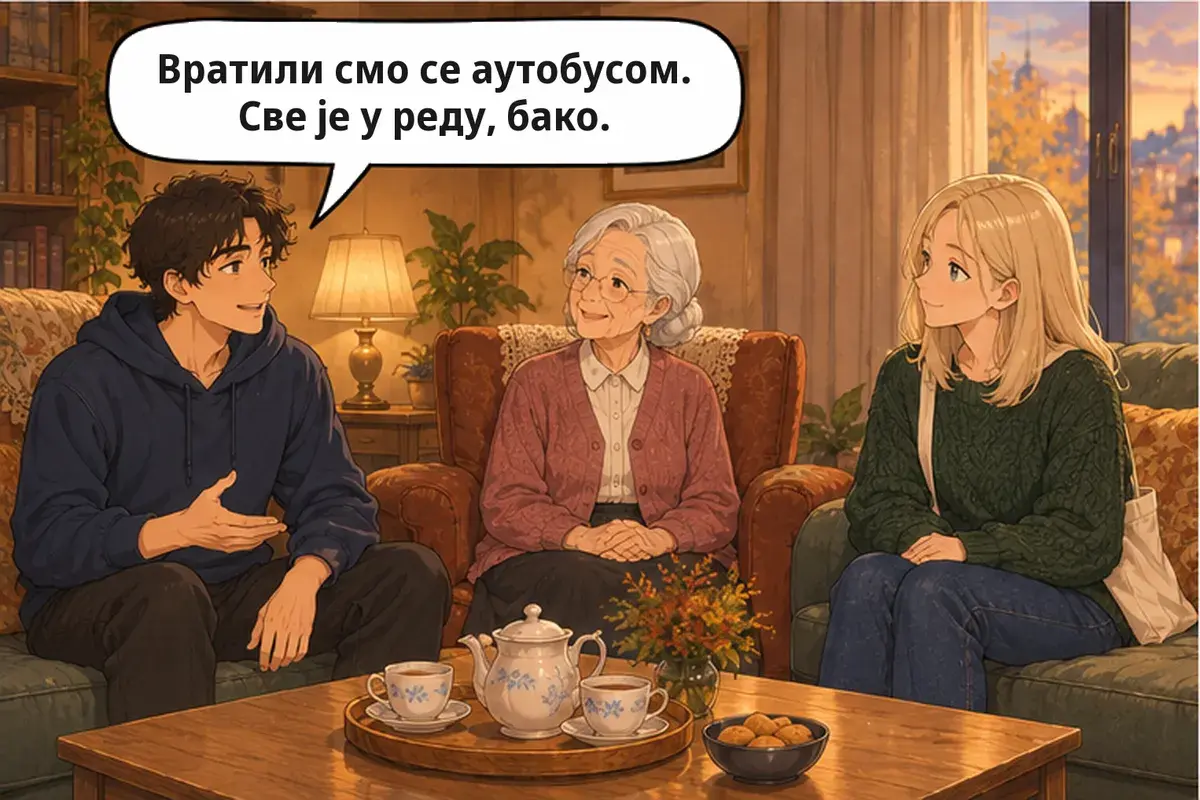
- Стефан
Вратили смо се аутобусом. Све је у реду, бако.
We came back by bus. Everything's all right, Grandma.
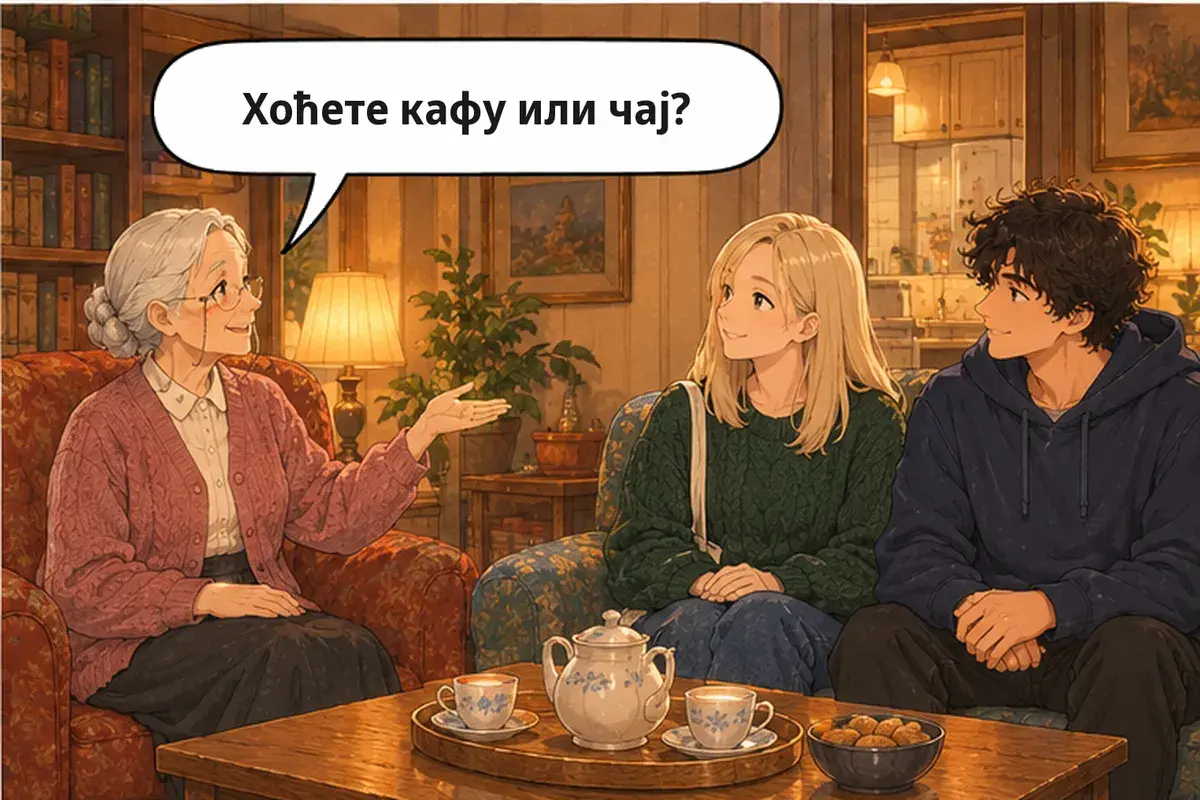
- Радмила
Хоћете кафу или чај?
Do you want coffee or tea? (to several people)
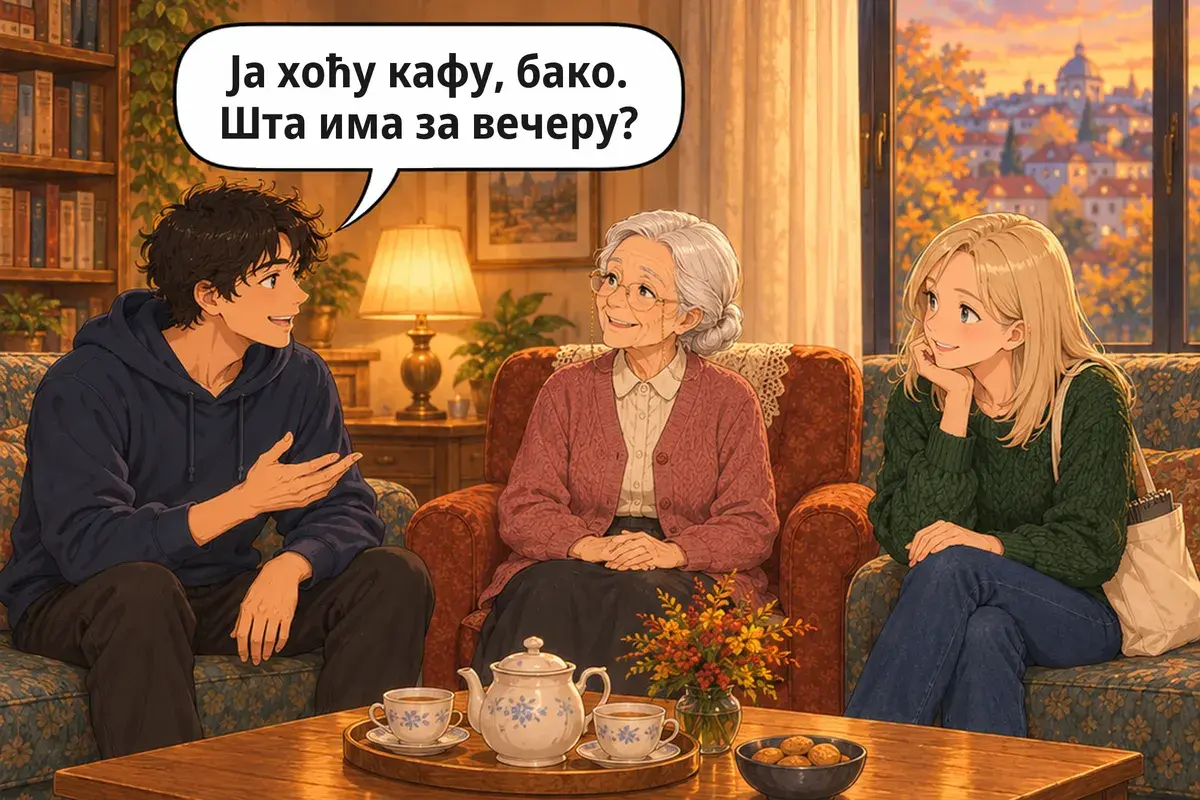
- Стефан
Ја хоћу кафу, бако. Шта има за вечеру?
I want coffee, Grandma. What's for dinner?
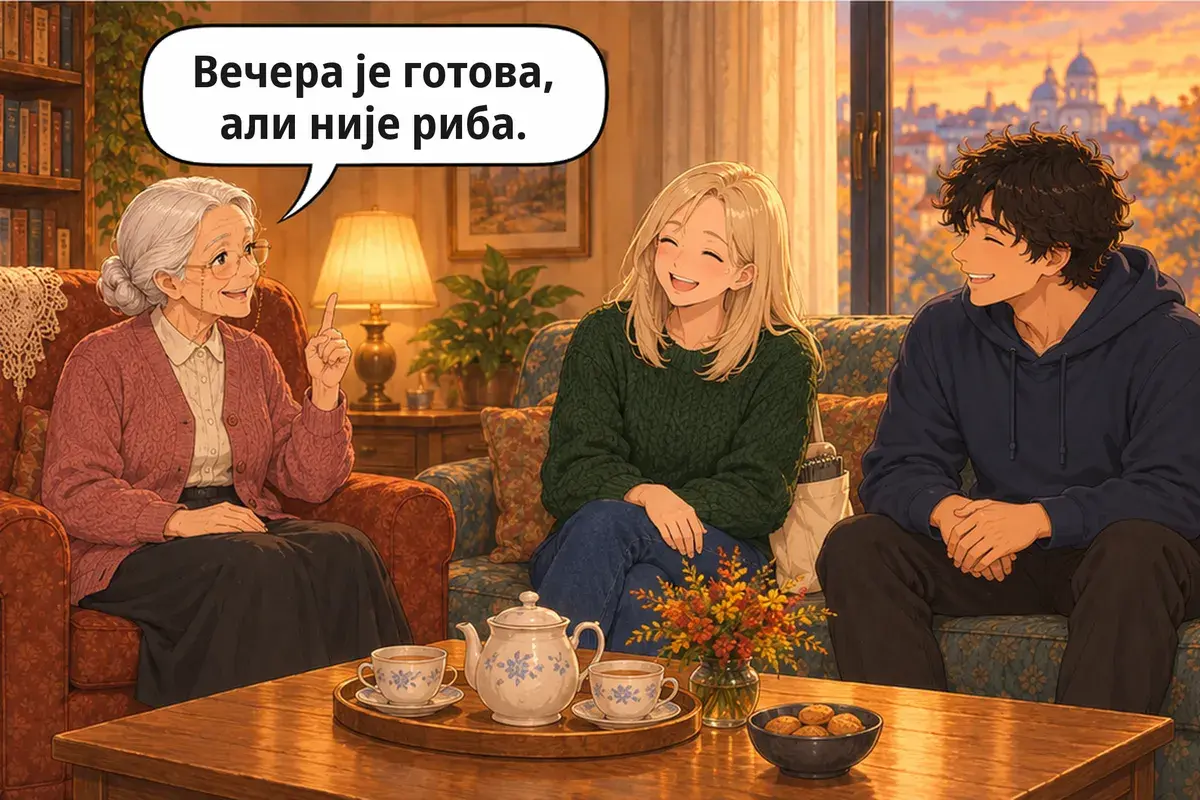
- Радмила
Вечера је готова, али није риба.
Dinner's ready, but it's not fish.
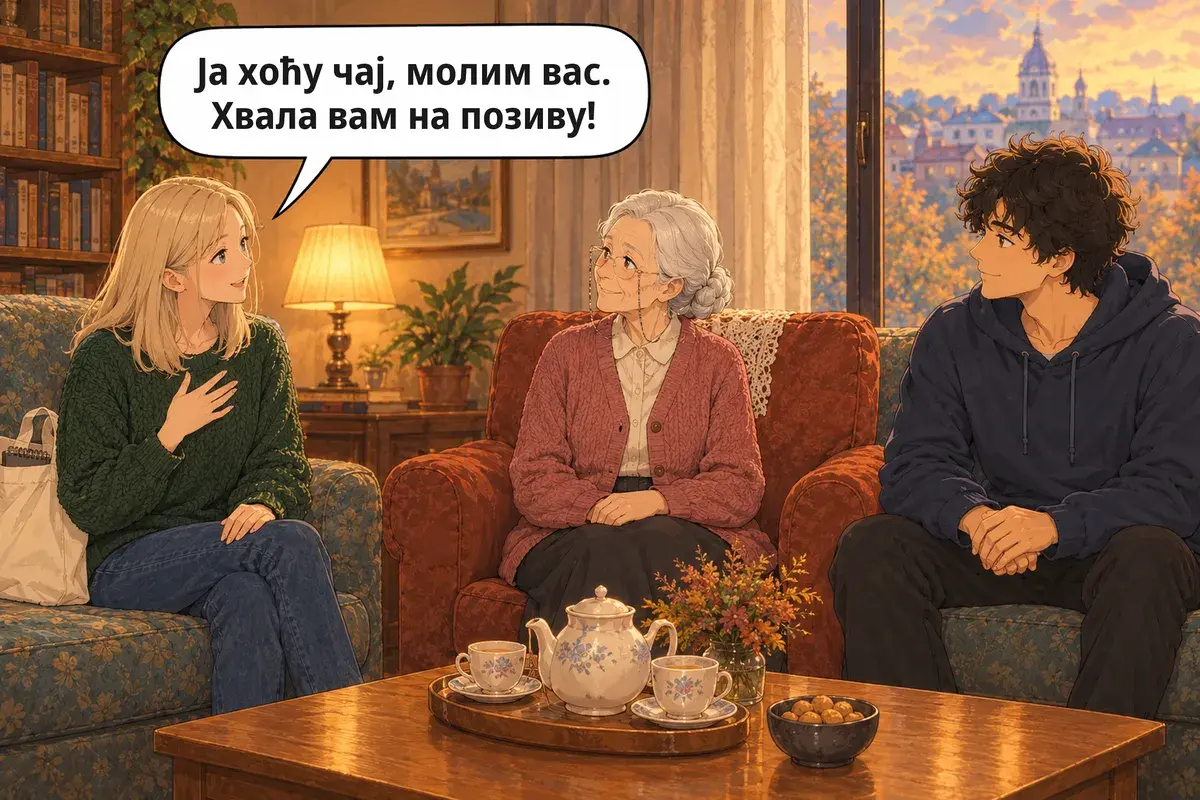
- Ана
Ја хоћу чај, молим вас. Хвала вам на позиву!
I want tea, please. Thank you for the invitation! (formal)
Grammar for this text
Где сте били данас?— the past tense.билиis the -o/-la form ofбити(to be) for several people.стеstands second, afterгде. Radmila asks two people at once (Ana and Stefan), so she uses theвиform:сте,били.Били смо у Земуну, госпођо Радмила.— we were: the -o/-la form first,смоsecond.госпођоis the calling form ofгоспођа(Mrs.), used when you speak to a woman. The name after it doesn't change:госпођо Радмила— Mrs. Radmila.Како је било?andБило је дивно, бако!— a set question and answer: How was it? — It was wonderful.било— it was (neuter),јеsecond.бакоis the calling form ofбака(Grandma).Попели смо се брзо—попети сеmeans to climb up. The order: first the helperсмо, thenсе.Чорба је била укусна—била, becauseчорбаis feminine.Ана је ипак била уморна.— Ana is a woman, soбила, notбио;јеis second, afterАна.ипак— still, all the same.Тачно, али сам уживала у Земуну—уживати у+ a place: to enjoy it.Вратили смо се аутобусом.—вратити се— to come back.аутобусом— by bus (the instrumental case, which comes in A2; for now learn the phrase).Вечера је готова, али није риба.—није— is not (не+је): it's not fish.
Words and grammar of the unit: Talk about a day out in Zemun.
Learn the words from the texts with flashcards
In the app, you can tap any word in a text to see its translation, forms and examples, and new words stick with flashcards. 15 minutes a day.
Start for freeEverything is open for free. No card needed to sign up.