
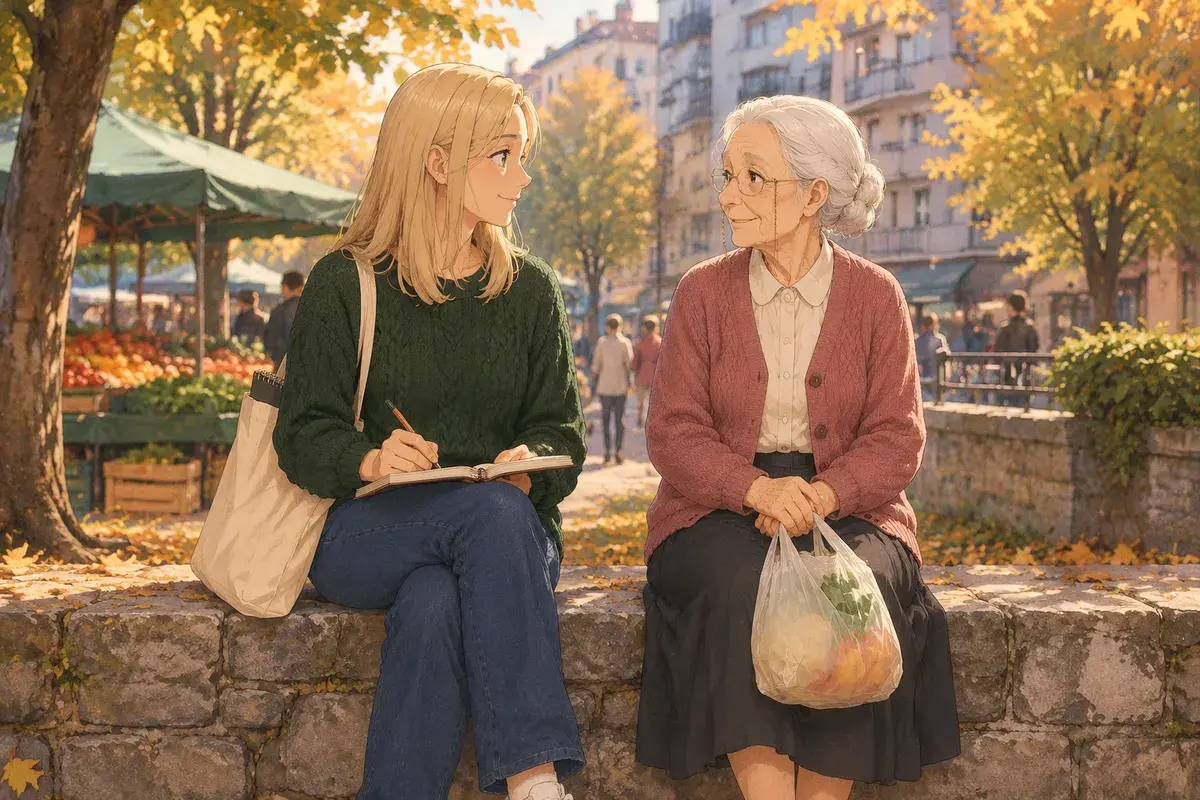
Serbian dialogue with translation · A1 · 14 lines
Одакле сте? Из Србије? Where are you from? From Serbia?
Comic · 8 panels
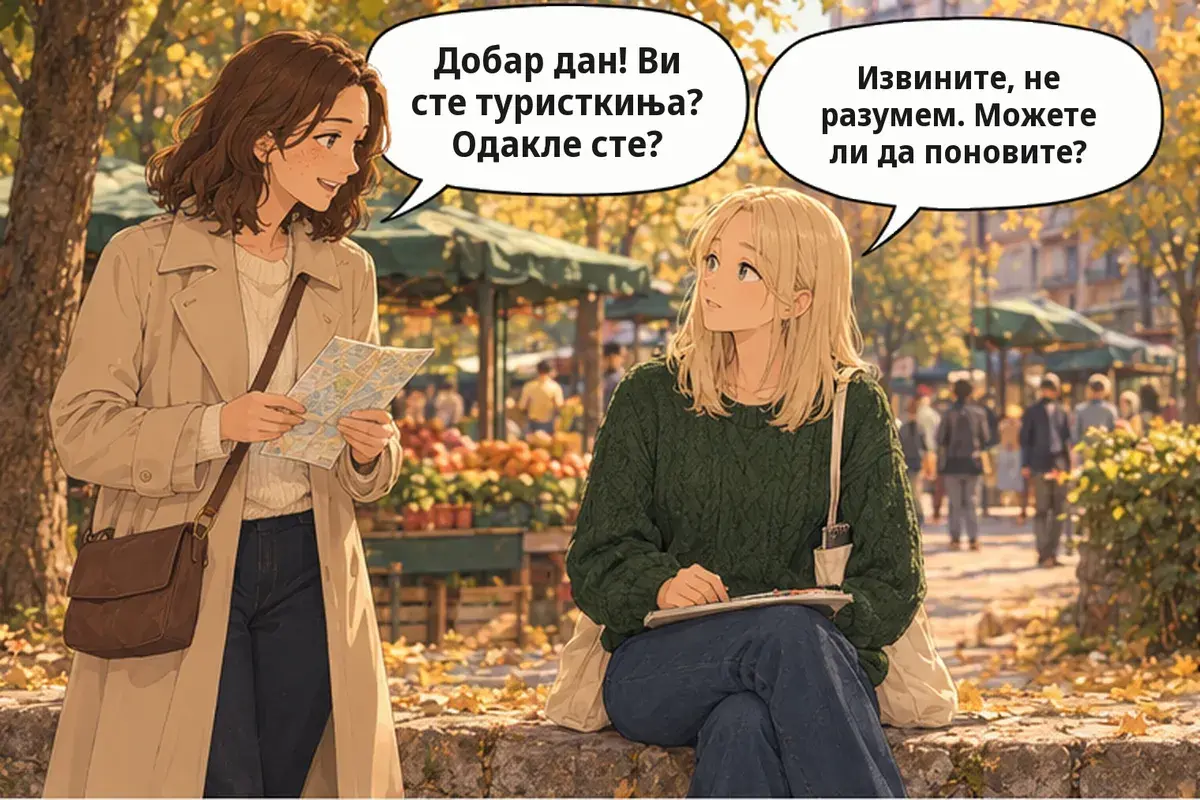
- Путница
Добар дан! Ви сте туристкиња? Одакле сте?
Good afternoon! Are you a tourist? Where are you from? (to a woman, formal)
- Ана
Извините, не разумем. Можете ли да поновите?
Sorry, I don't understand. Could you repeat that? (formal)
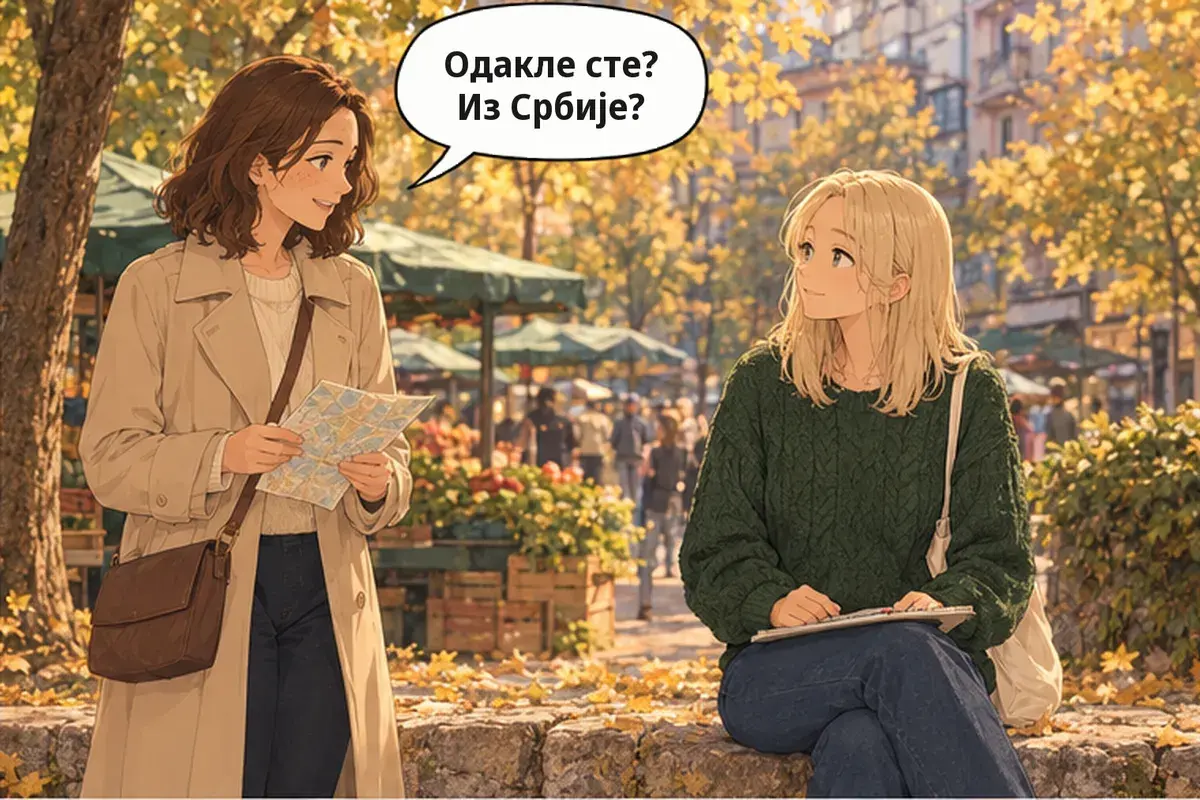
- Путница
Одакле сте? Из Србије?
Where are you from? From Serbia? (formal)
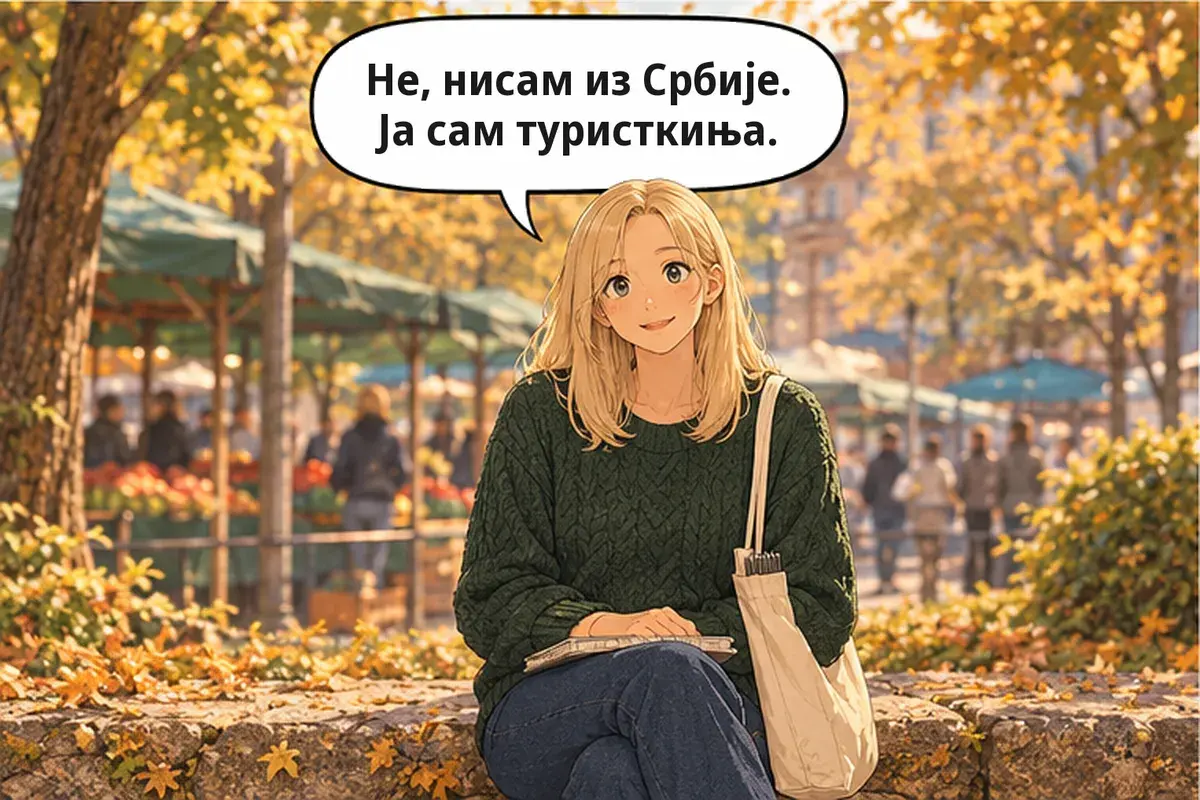
- Ана
Не, нисам из Србије. Ја сам туристкиња.
No, I'm not from Serbia. I'm a tourist (woman speaking).
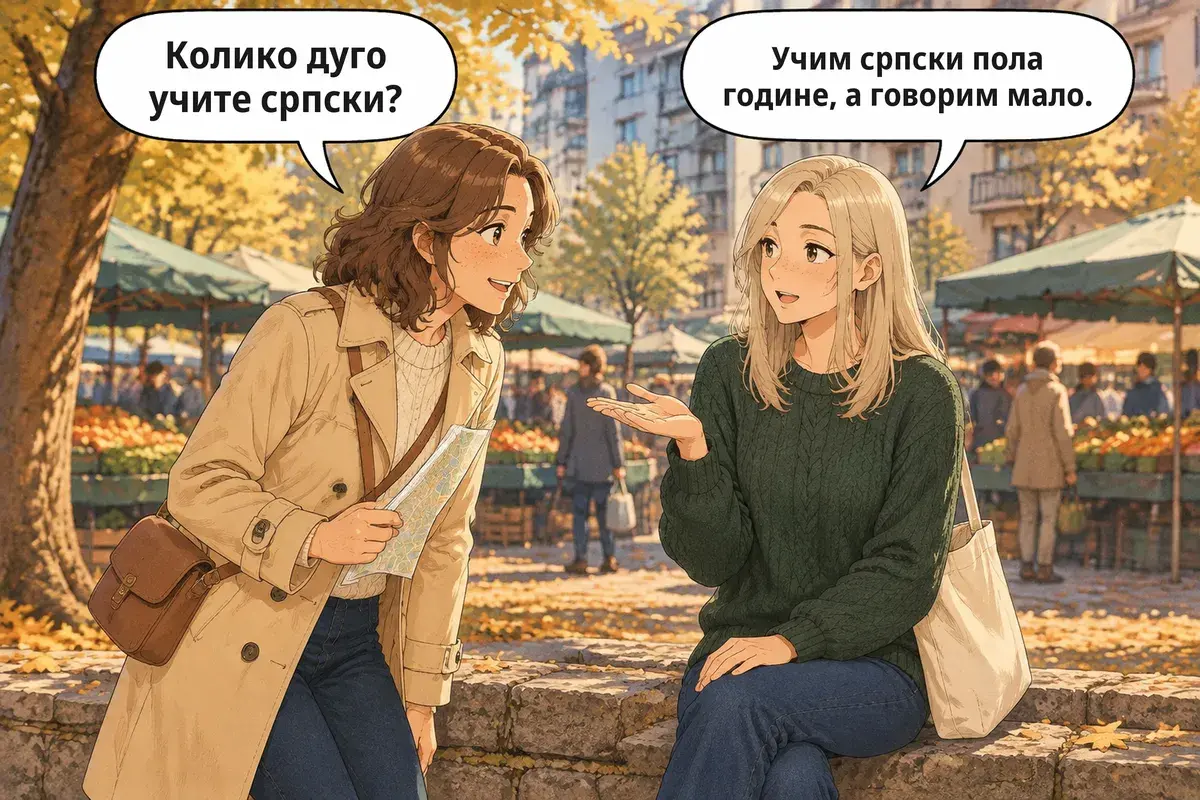
- Путница
Колико дуго учите српски?
How long have you been learning Serbian? (formal)
- Ана
Учим српски пола године, а говорим мало.
I've been learning Serbian for half a year, and I speak a little.
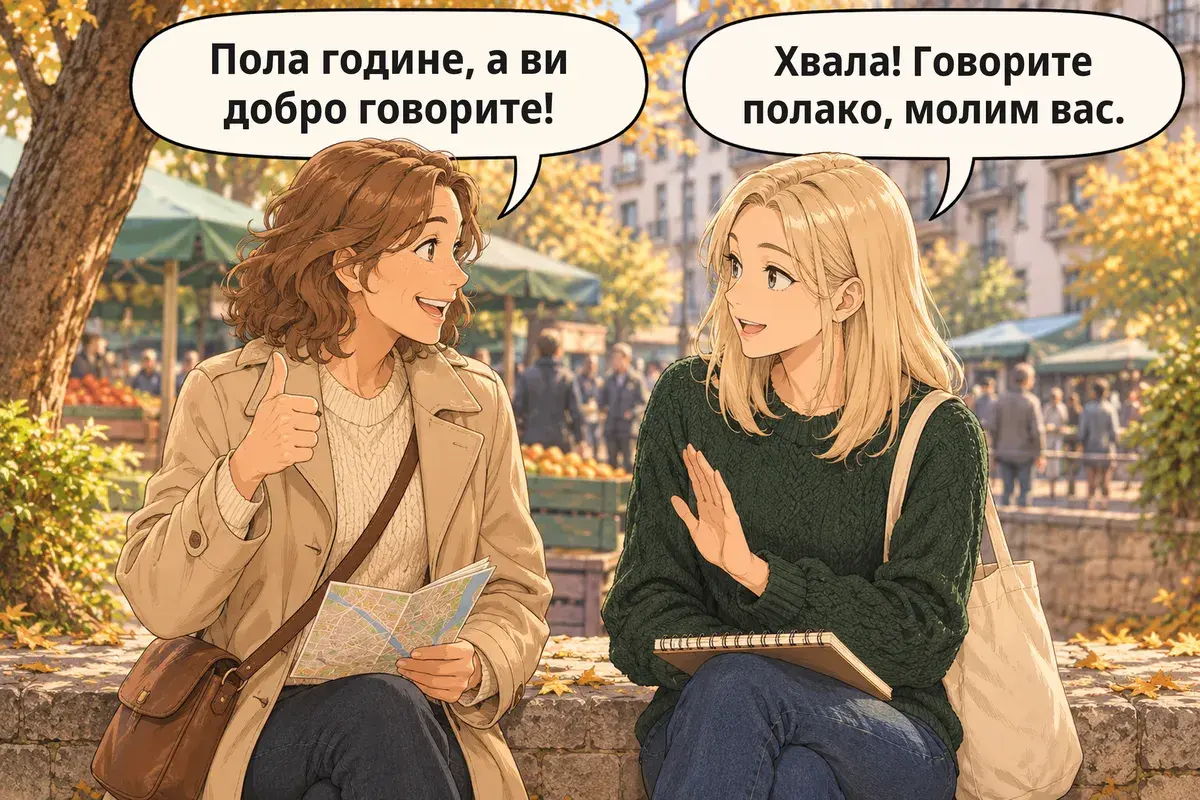
- Путница
Пола године, а ви добро говорите!
Half a year, and you speak well! (formal)
- Ана
Хвала! Говорите полако, молим вас.
Thanks! Speak slowly, please (formal).
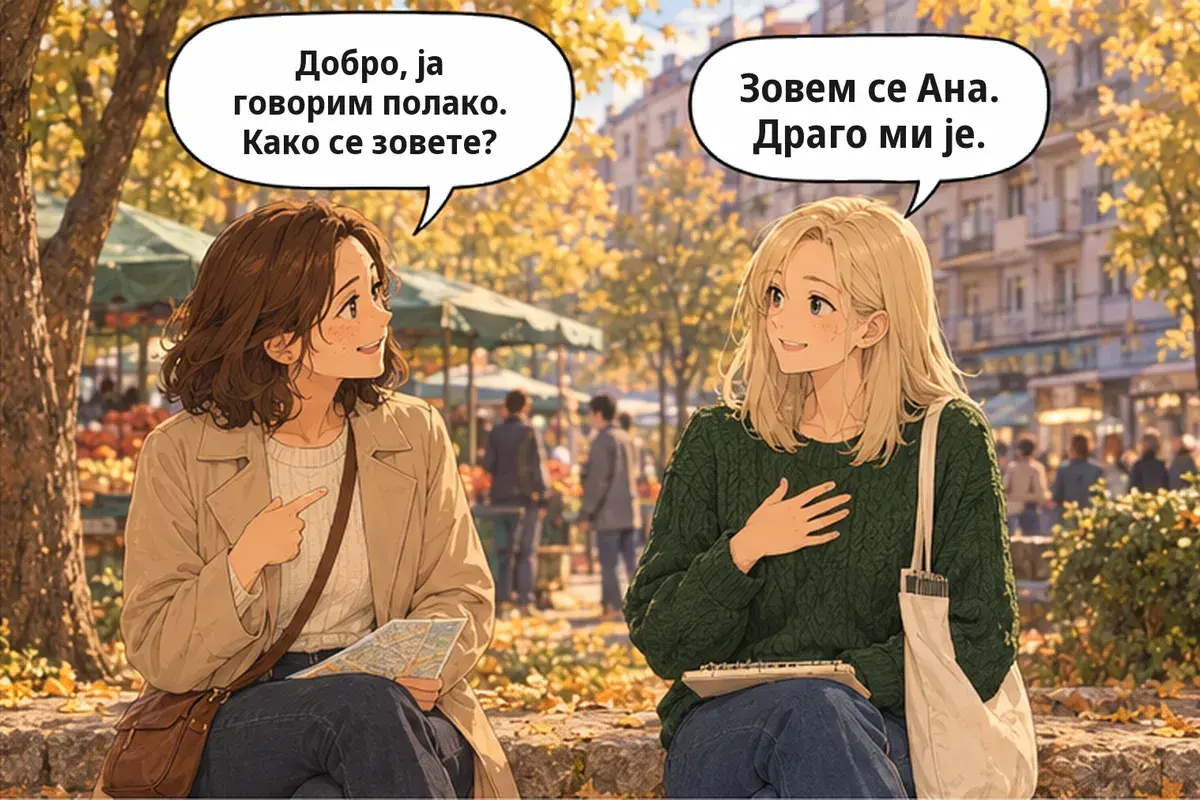
- Путница
Добро, ја говорим полако. Како се зовете?
OK, I'm speaking slowly. What's your name? (formal)
- Ана
Зовем се Ана. Драго ми је.
My name is Ana. Nice to meet you.
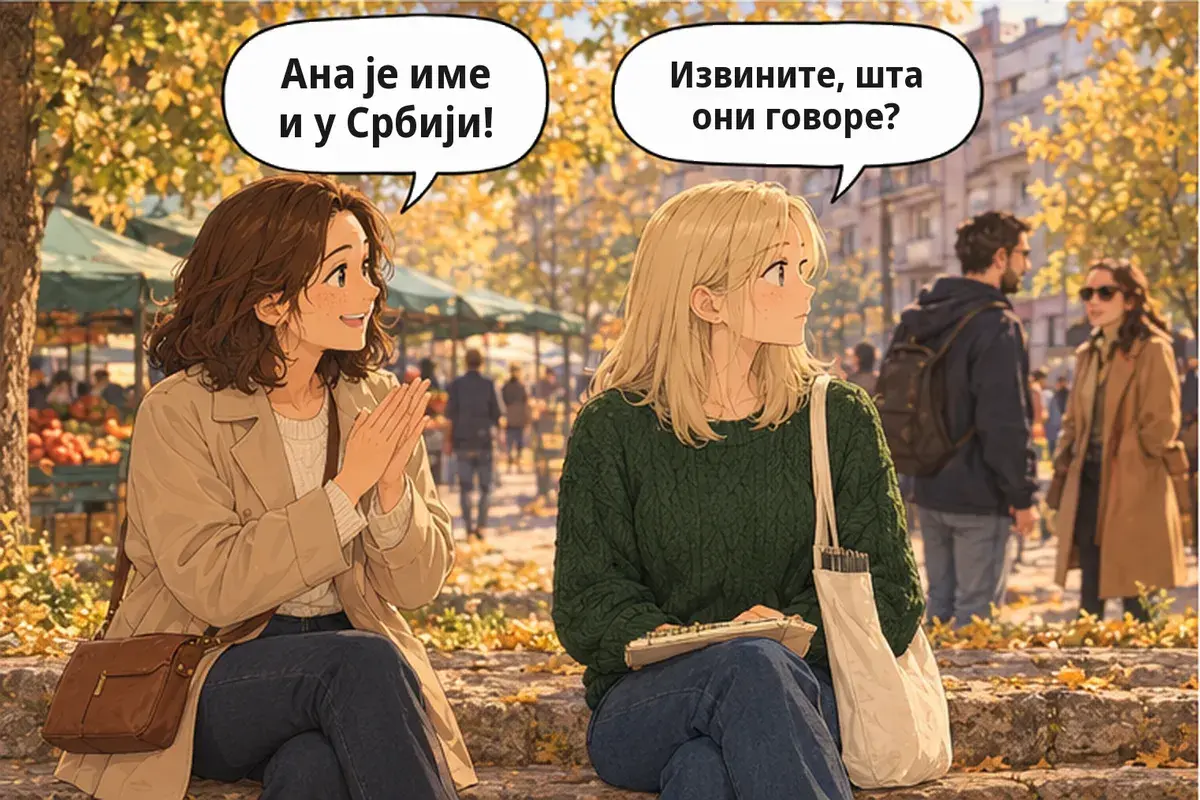
- Путница
Ана је име и у Србији!
Ana is a name in Serbia too!
- Ана
Извините, шта они говоре?
Excuse me, what are they saying? (formal)
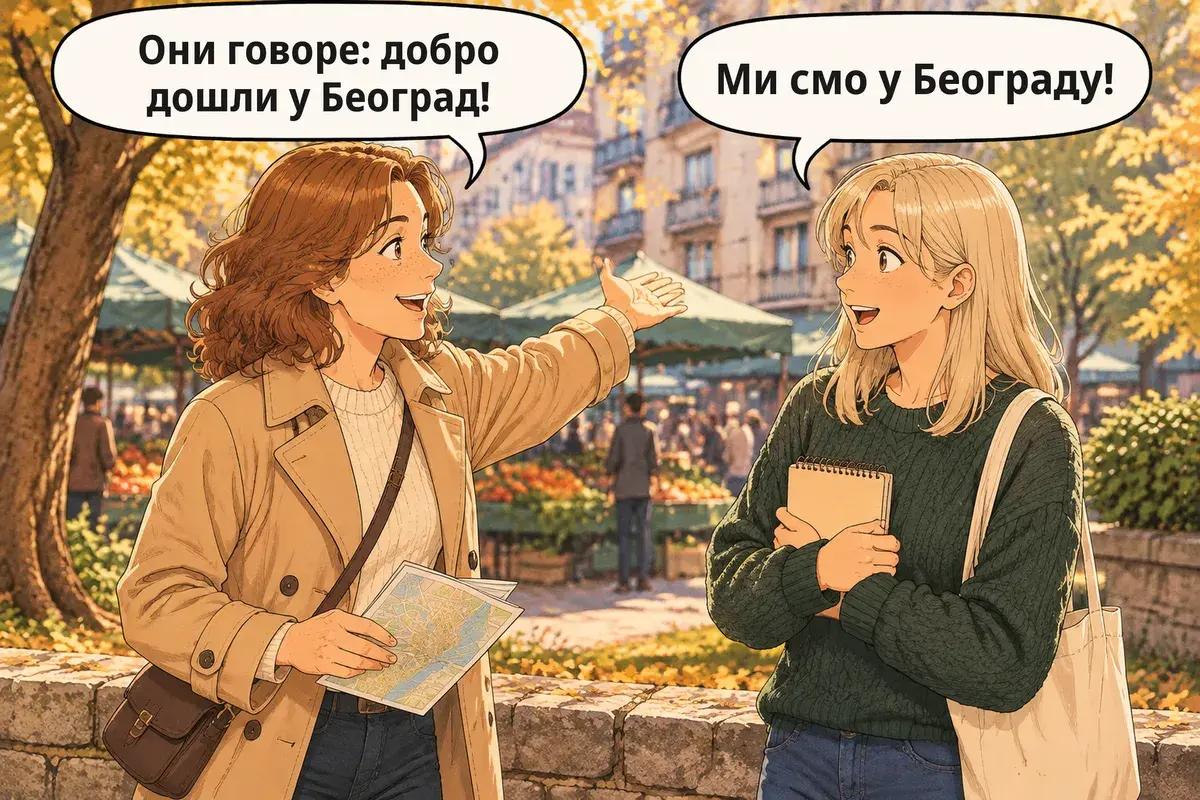
- Путница
Они говоре: добро дошли у Београд!
They're saying: welcome to Belgrade!
- Ана
Ми смо у Београду!
We're in Belgrade!
Grammar for this text
Ви сте туристкиња?is a question with no question word: only the voice goes up at the end.стеmeans "are" (withви). The short formsсам, си, је, смо, сте, суalways stand second:Ви сте,Ми смо,Зовем се.туристкињаis a woman tourist; a man isтуриста.Можете ли да поновите?means "Could you repeat that?".можетеis "you can" (fromмоћи, an irregular verb:могу, можеш, може).лиmakes it a question and always stands second. Learnда поновитеas part of the phrase for now (да+ verb comes in unit 10).Одакле сте? Из Србије?одаклеmeans "where from". Afterизthe word changes its ending:Србијаbecomesиз Србије(unit 12). InНе, нисам из Србије,нисамmeans "I'm not": the negative ofбитиis one word.Учим српски пола године:учимmeans "I learn",говоримmeans "I speak". Serbian needs no word for "for" here:српскиalone is "Serbian",пола годинеalone is "for half a year" (година→године, unit 12).Говорите полако, молим васmeans "Speak slowly, please". Hereговоритеis a request (the command form comes in A2).молим васis "please" to someone you callви;васis a form ofви.Зовем се Анаmeans "My name is Ana", word for word "I call myself Ana".Како се зовете?means "What's your name?" (toви).Драго ми јеmeans "Nice to meet you", word for word "it's dear to me";миmeans "to me" (A2). Learn it as one phrase.Ми смо у Београду:смоmeans "we are".у Београдуmeans "in Belgrade" (where? — the ending-у, unit 8). Just before that,шта они говореmeans "what are they saying":ониis "they",говореis a form ofговорити(unit 3).
Words and grammar of the unit: Say hello and introduce yourself.
Learn the words from the texts with flashcards
In the app, you can tap any word in a text to see its translation, forms and examples, and new words stick with flashcards. 15 minutes a day.
Start for freeEverything is open for free. No card needed to sign up.