

Serbian story with translation · A1 · 9 lines
Ја сам Ана I'm Ana
Comic · 6 panels

Здраво, како си? Ја сам Ана.
Hi, how are you? I'm Ana.

Ко сам ја? Ја сам туристкиња и дизајнерка.
Who am I? I'm a tourist and a designer (woman speaking).
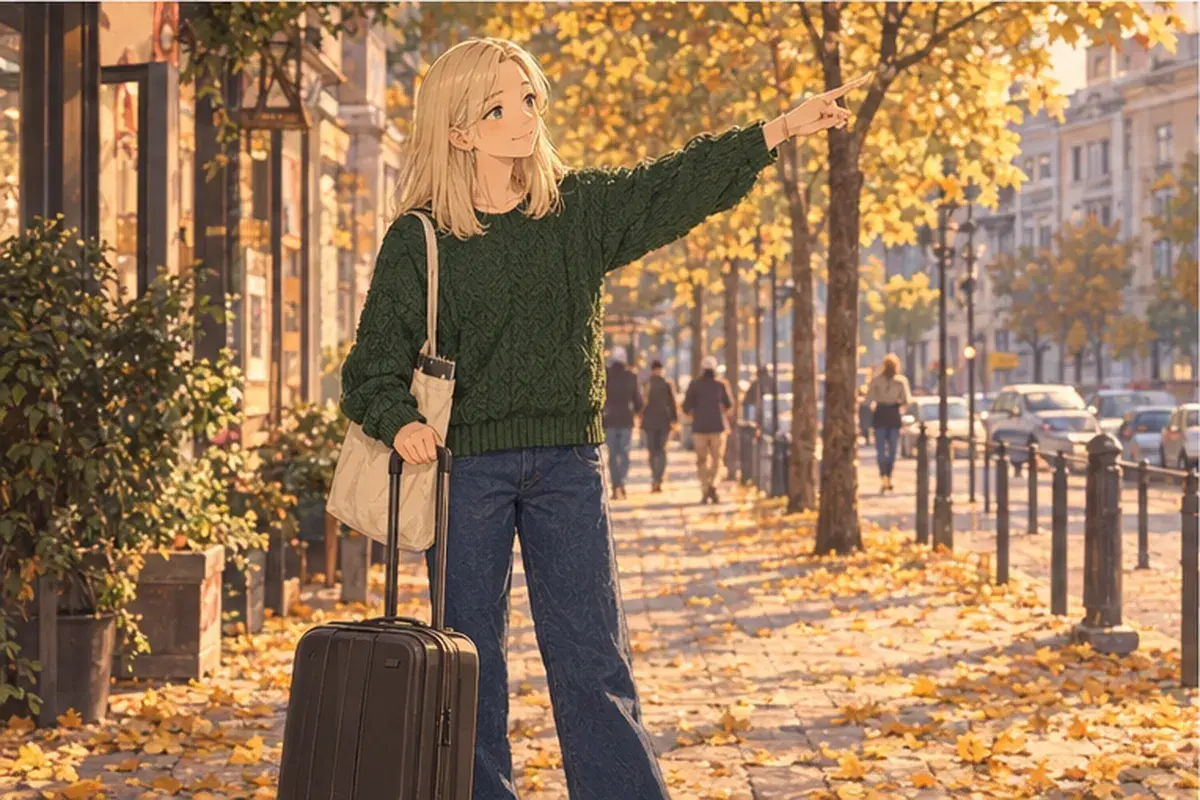
Ја нисам из Београда и нисам из Србије.
I'm not from Belgrade, and I'm not from Serbia.
А овде остајем две и по недеље.
And I'm staying here for two and a half weeks.

Ја учим српски пола године.
I've been learning Serbian for half a year.
Ја разумем мало, а говорим полако.
I understand a little, and I speak slowly.

На аеродрому не разумем ово.
At the airport, I don't understand this.
Шта је ово? Како се каже ово?
What's this? How do you say this?

А ти? Како се зовеш? Одакле си ти?
And you? What's your name? Where are you from?
Grammar for this text
Ко сам ја?means "Who am I?":коis "who".самis a short form, so it can't start the sentence: never ✗Сам ја.Ја сам туристкиња и дизајнерка: words for jobs have two forms, for a man and for a woman:туристаandтуристкиња,дизајнерandдизајнерка. Ana uses the women's forms about herself. English uses one word for both.Ја нисам из Београда:нисамmeans "I'm not", one word (нисам, ниси, није, нисмо, нисте, нису; see the grammar block onбити).из Београдаmeans "from Belgrade" (unit 12).Ја разумем мало, а говорим полако:разумемmeans "I understand" (fromразумети:разумем, разумеш, разуме; unit 3).аmeans "and" with a contrast.полакоmeans "slowly"; Serbs say it all the time, also meaning "take it easy".А овде остајем две и по недеље:остајемmeans "I'm staying" (fromостајати:остајем, остајеш, остаје).две и по недељеmeans "two and a half weeks":поmeans "and a half", only in this pattern. Every Serbian noun is masculine, feminine or neuter;недељаis feminine, so the number isдве, notдва.недељаalso means "Sunday".Како се каже ово?means "How do you say this?", word for word "how is this said". Learnсе кажеas part of the phrase.овоis "this" (something near you, that you can point at);тоis "that" (farther away, or near the other person).Како се зовеш?means "What's your name?" to someone you callти:зовешis theтиform ofзвати се(зовем, зовеш, зове).Како сиandОдакле сиareтиquestions too (see the grammar block onтиandви).
Words and grammar of the unit: Say hello and introduce yourself.
Learn the words from the texts with flashcards
In the app, you can tap any word in a text to see its translation, forms and examples, and new words stick with flashcards. 15 minutes a day.
Start for freeEverything is open for free. No card needed to sign up.