
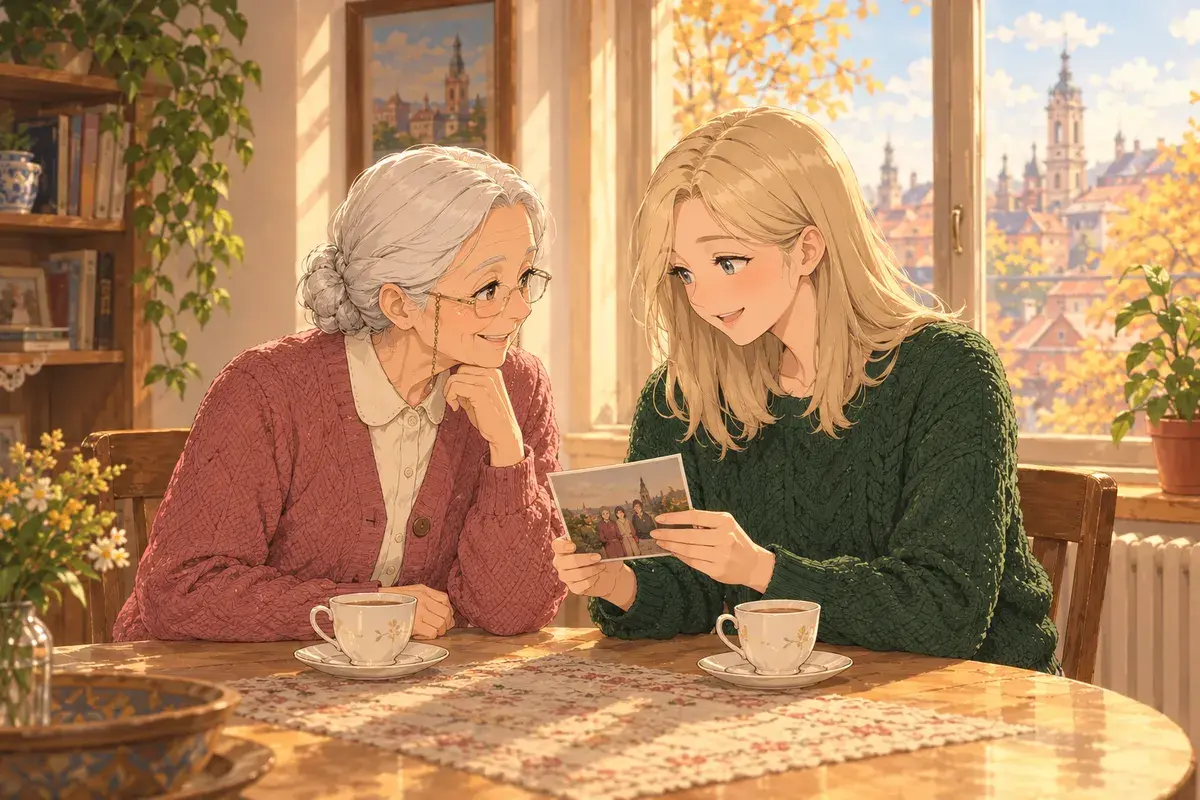
Serbian dialogue with translation · A1 · 13 lines
Ово је моја породица на слици This is my family in the photo
Comic · 13 panels
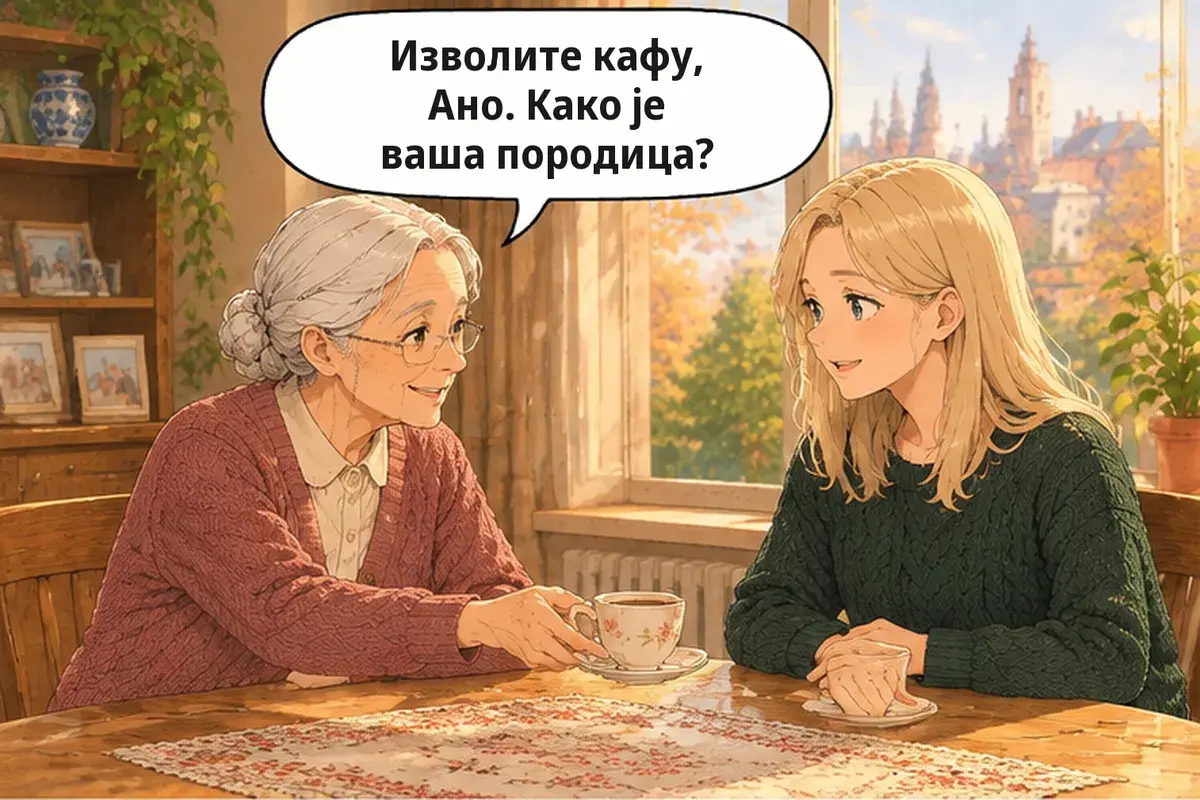
- Радмила
Изволите кафу, Ано. Како је ваша породица?
Here's some coffee, Ana. How's your family? (formal)
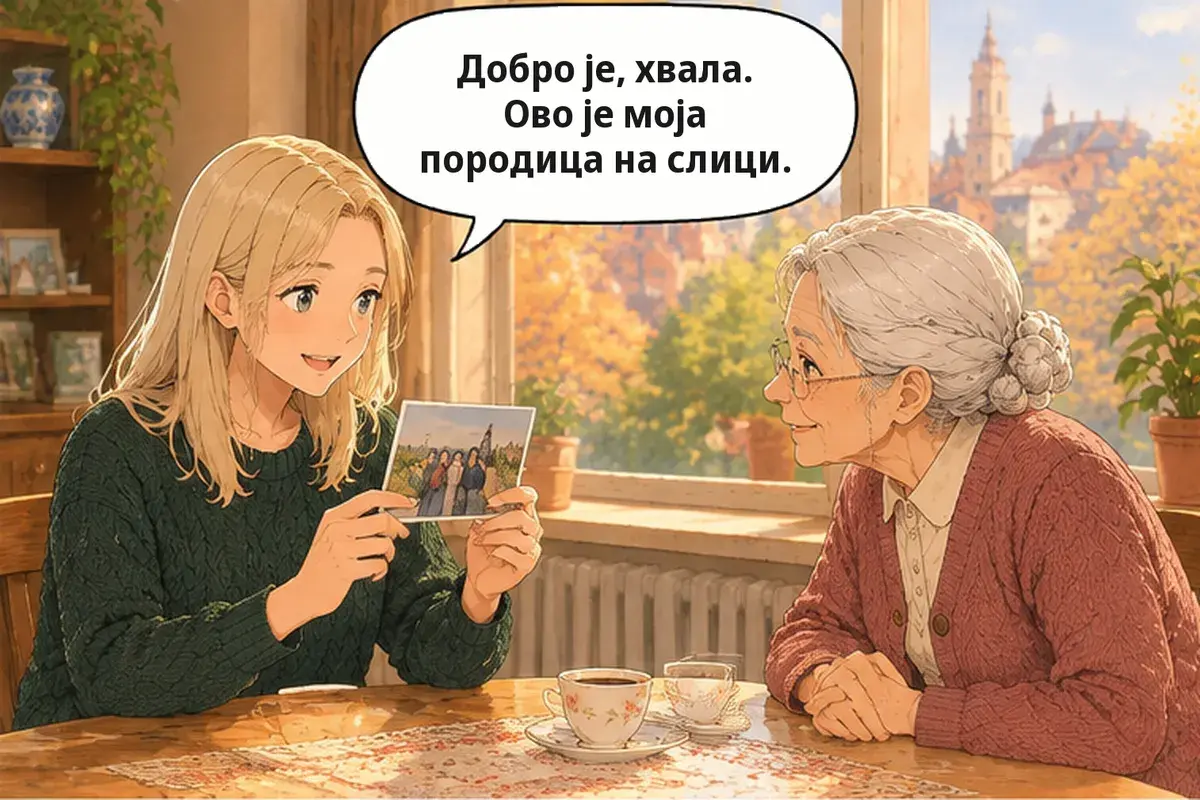
- Ана
Добро је, хвала. Ово је моја породица на слици.
Fine, thanks. This is my family in the photo.
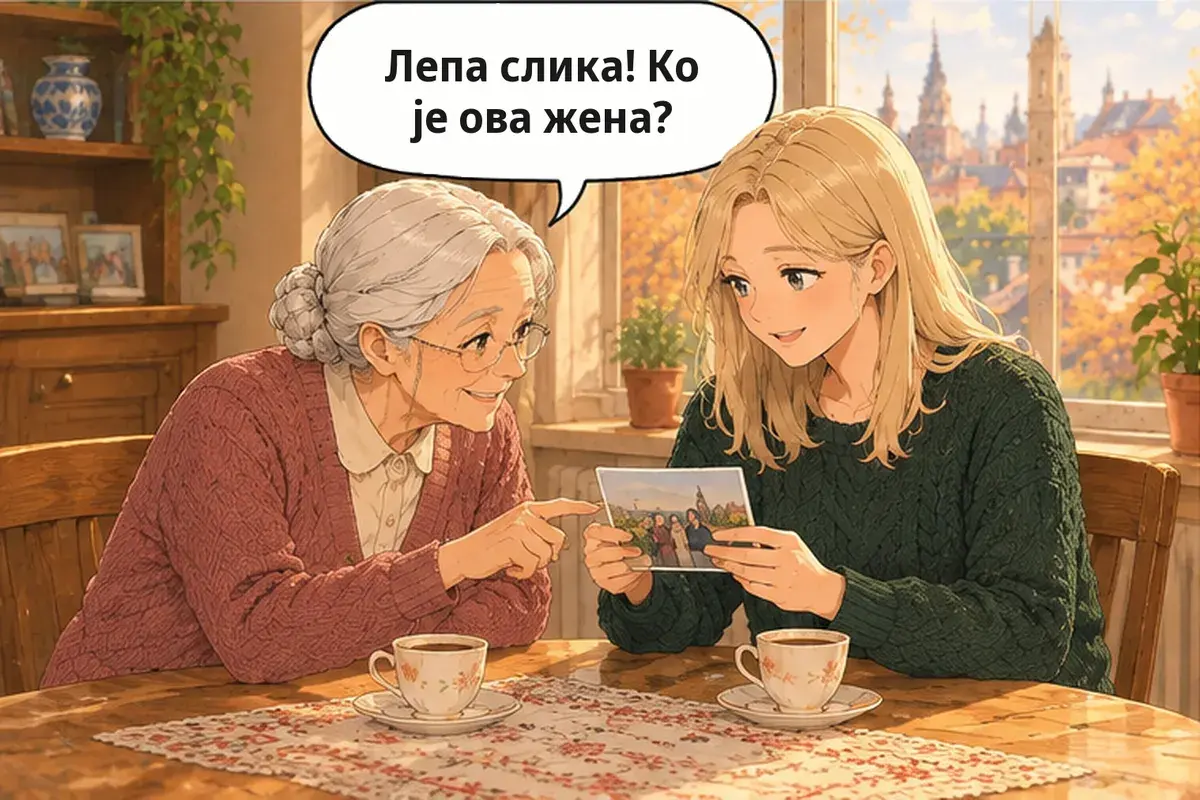
- Радмила
Лепа слика! Ко је ова жена?
Nice photo! Who's this woman?
- Ана
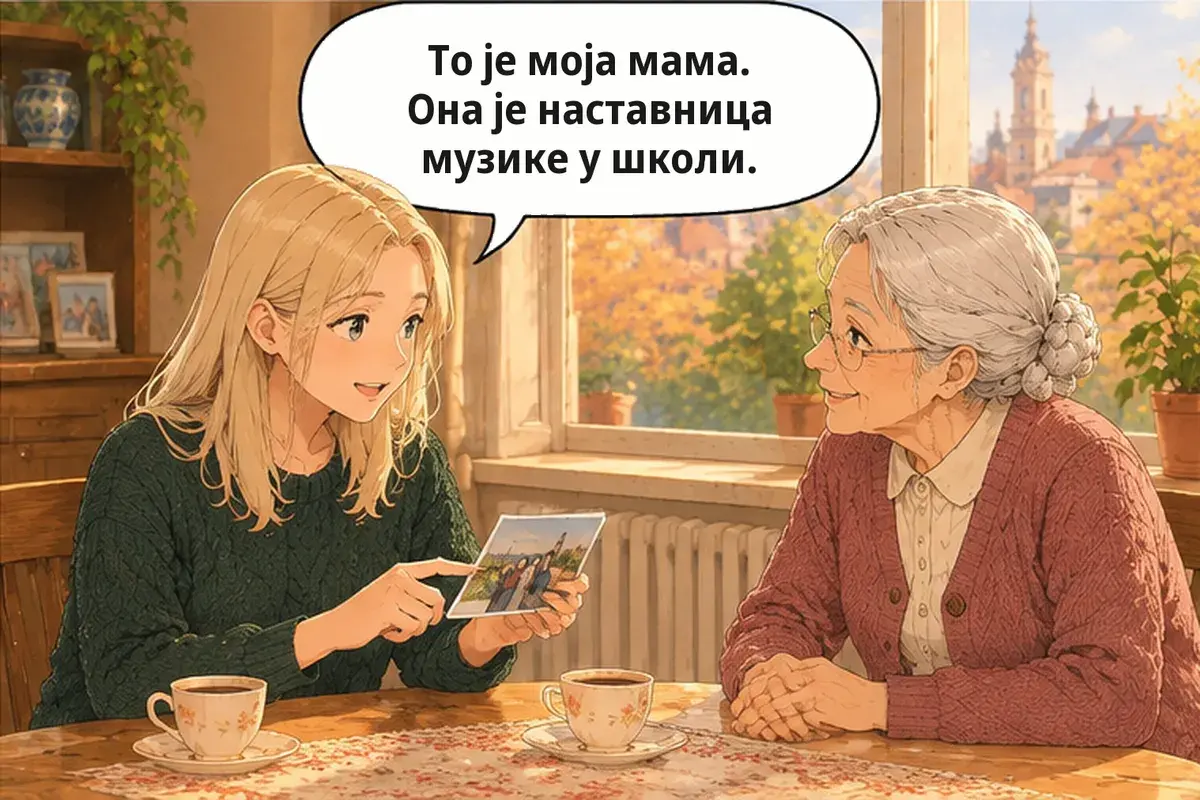
То је моја мама. Она је наставница музике у школи.
That's my mom. She's a music teacher at a school.
- Радмила
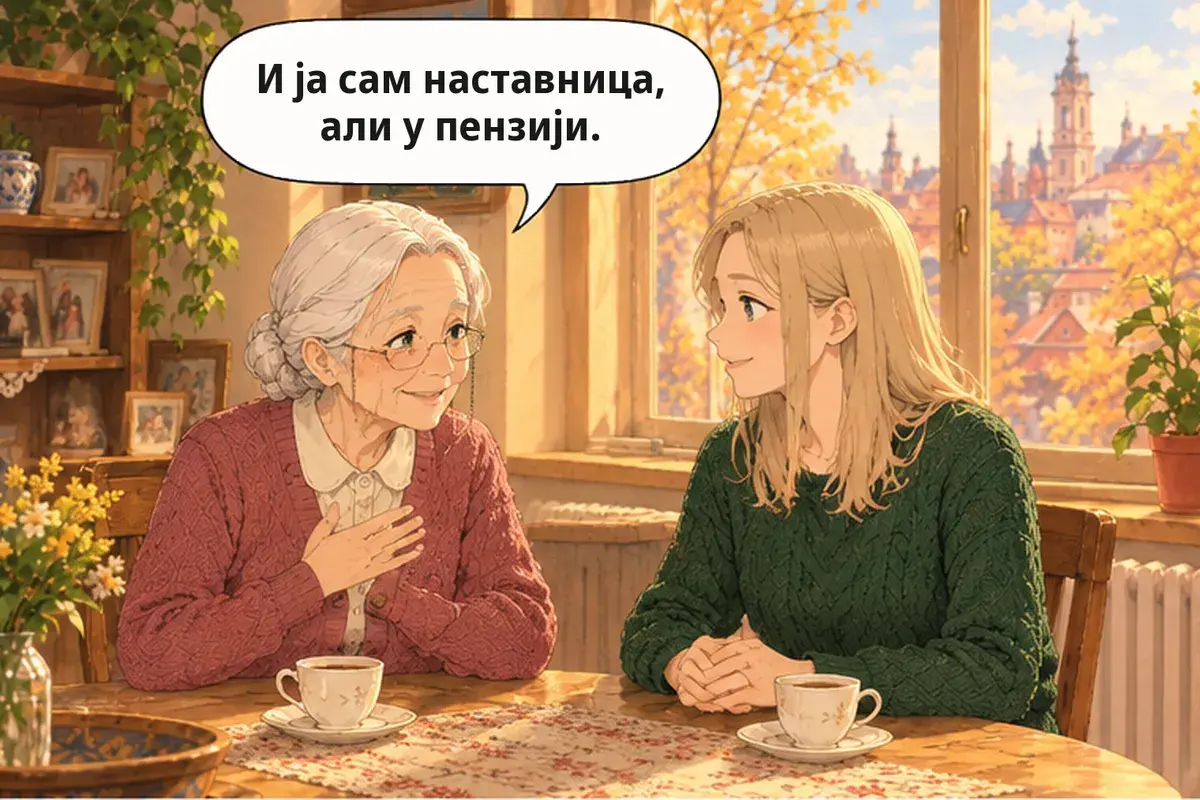
И ја сам наставница, али у пензији.
I'm a teacher too, but retired (woman speaking).
- Ана
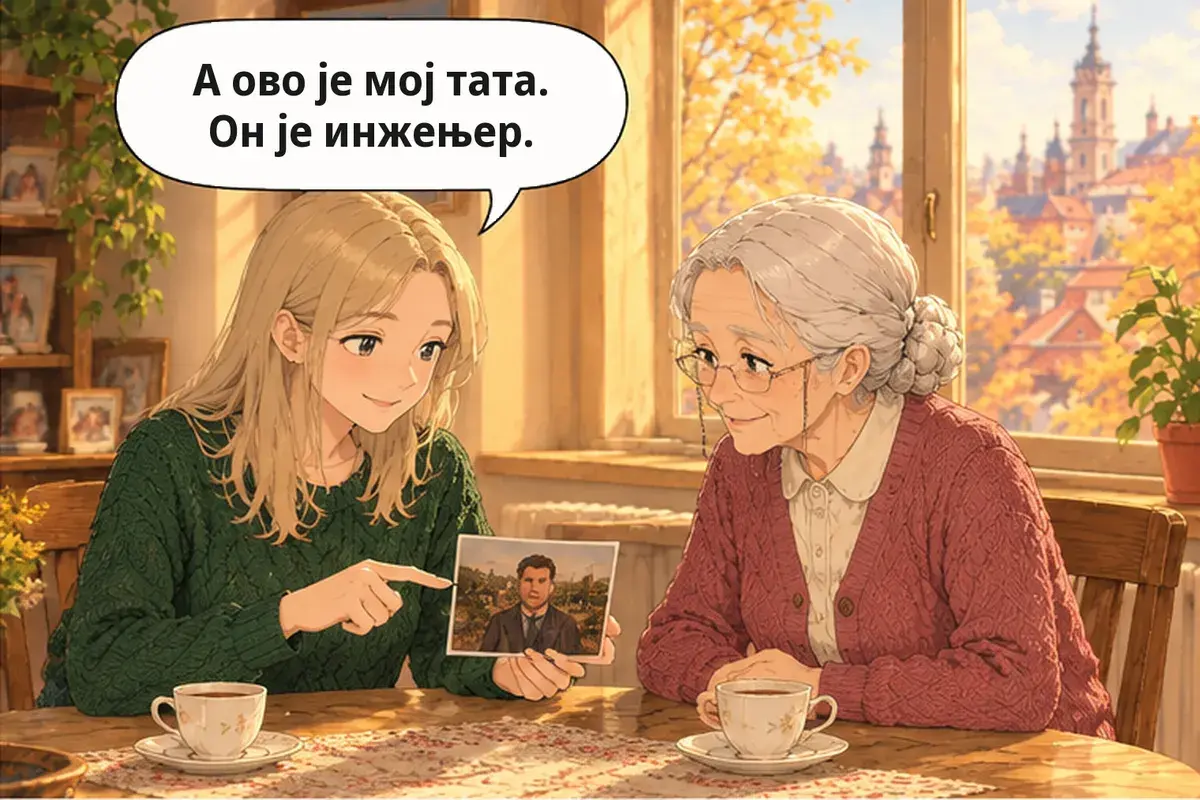
А ово је мој тата. Он је инжењер.
And this is my dad. He's an engineer.
- Радмила
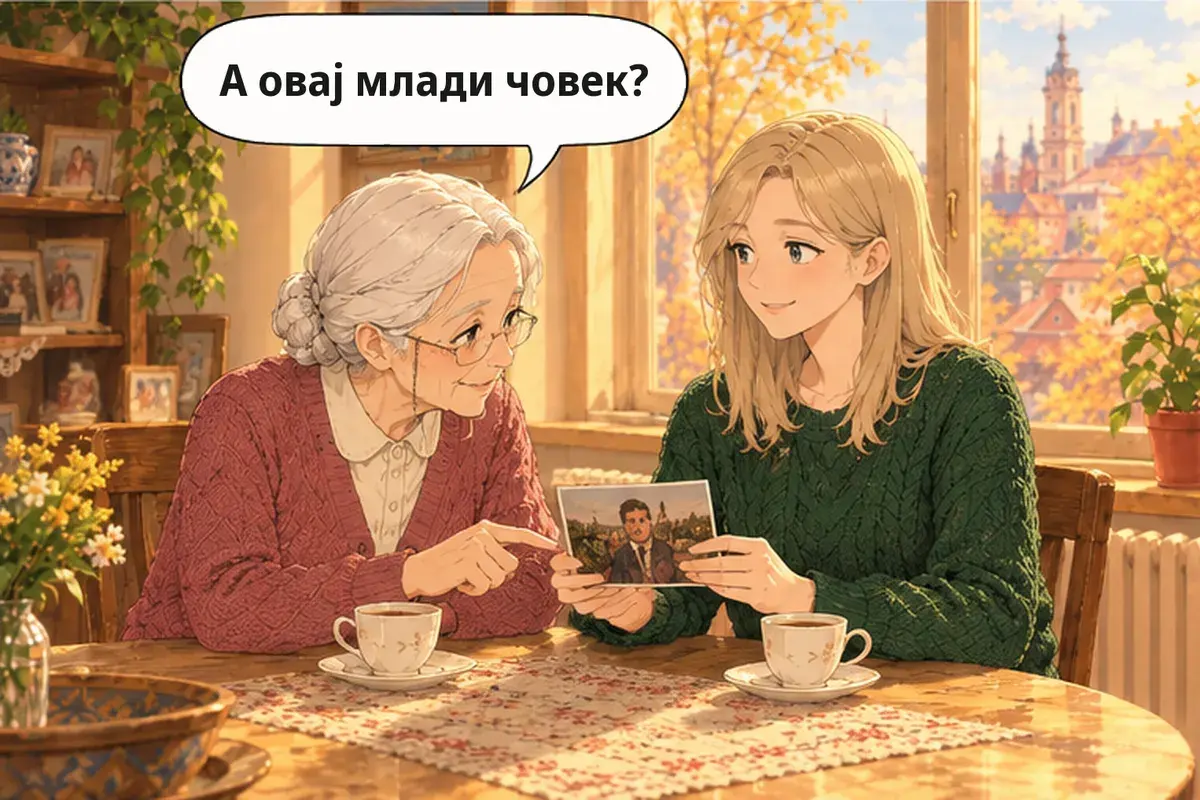
А овај млади човек?
And this young man?
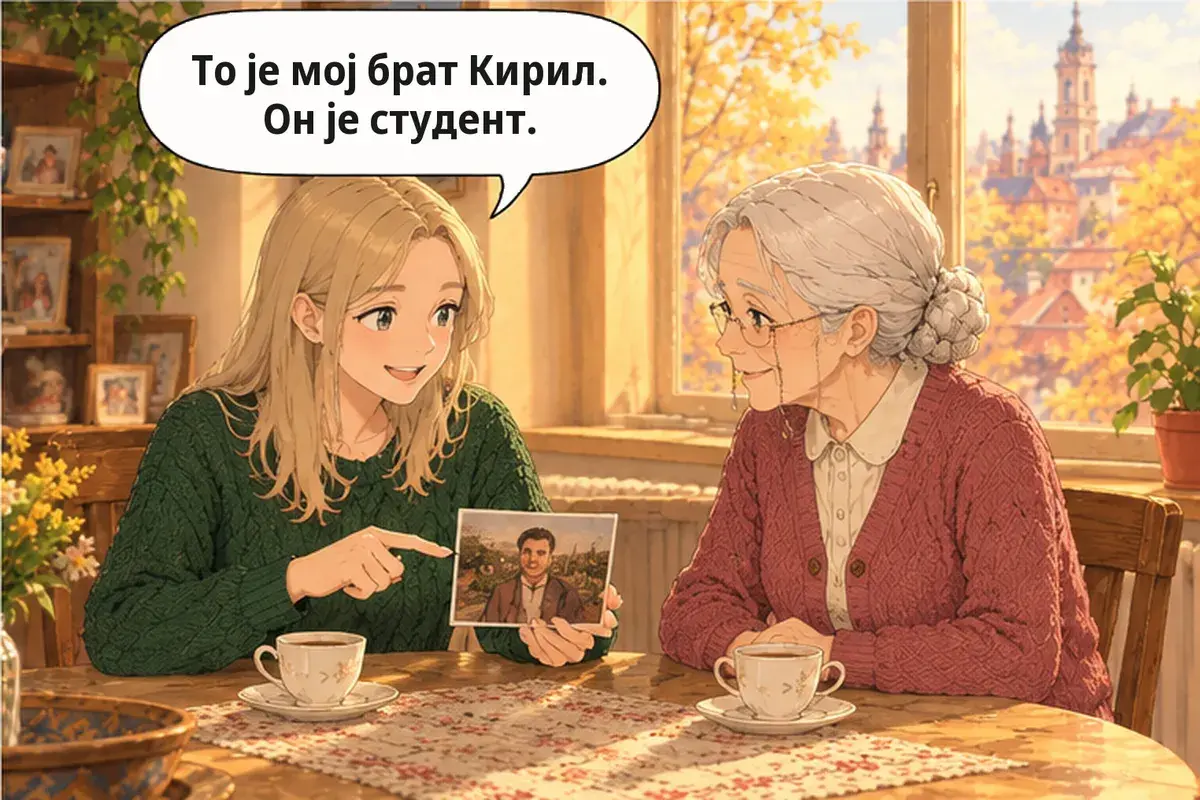
- Ана
То је мој брат Кирил. Он је студент.
That's my brother Kiril. He's a student.
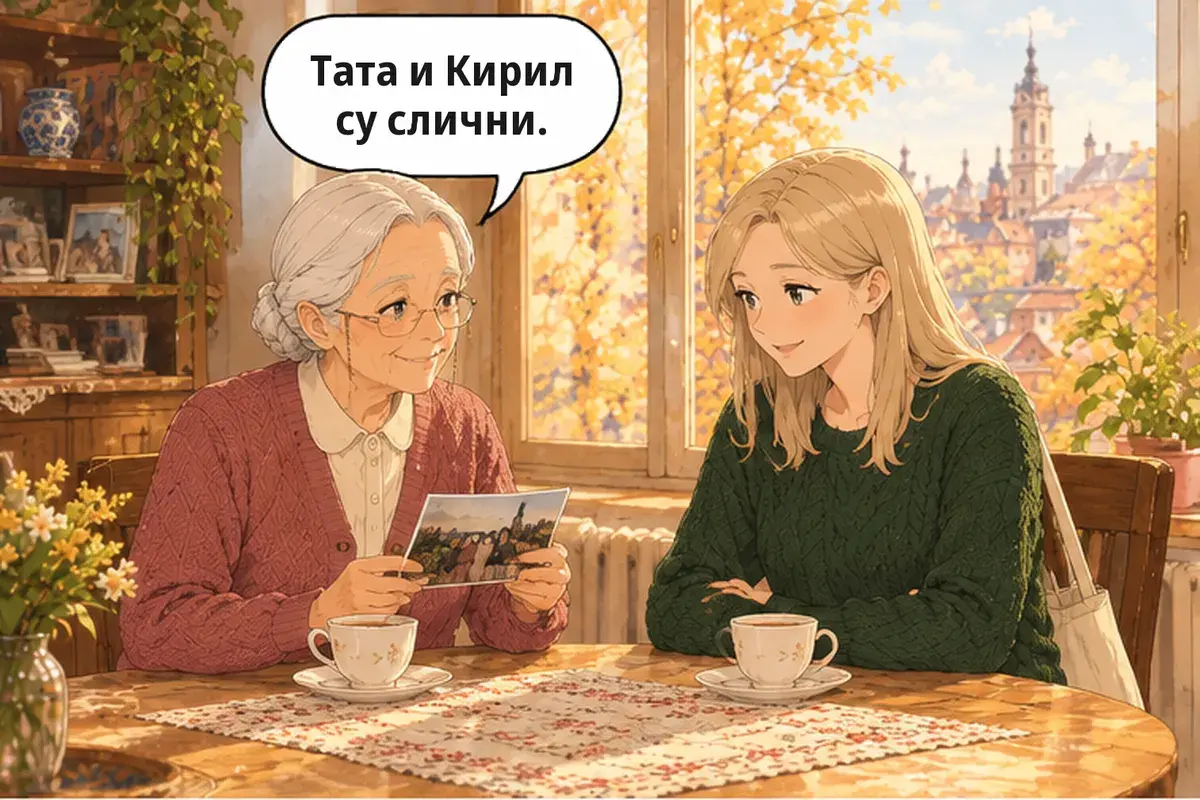
- Радмила
Тата и Кирил су слични.
Dad and Kiril look alike.
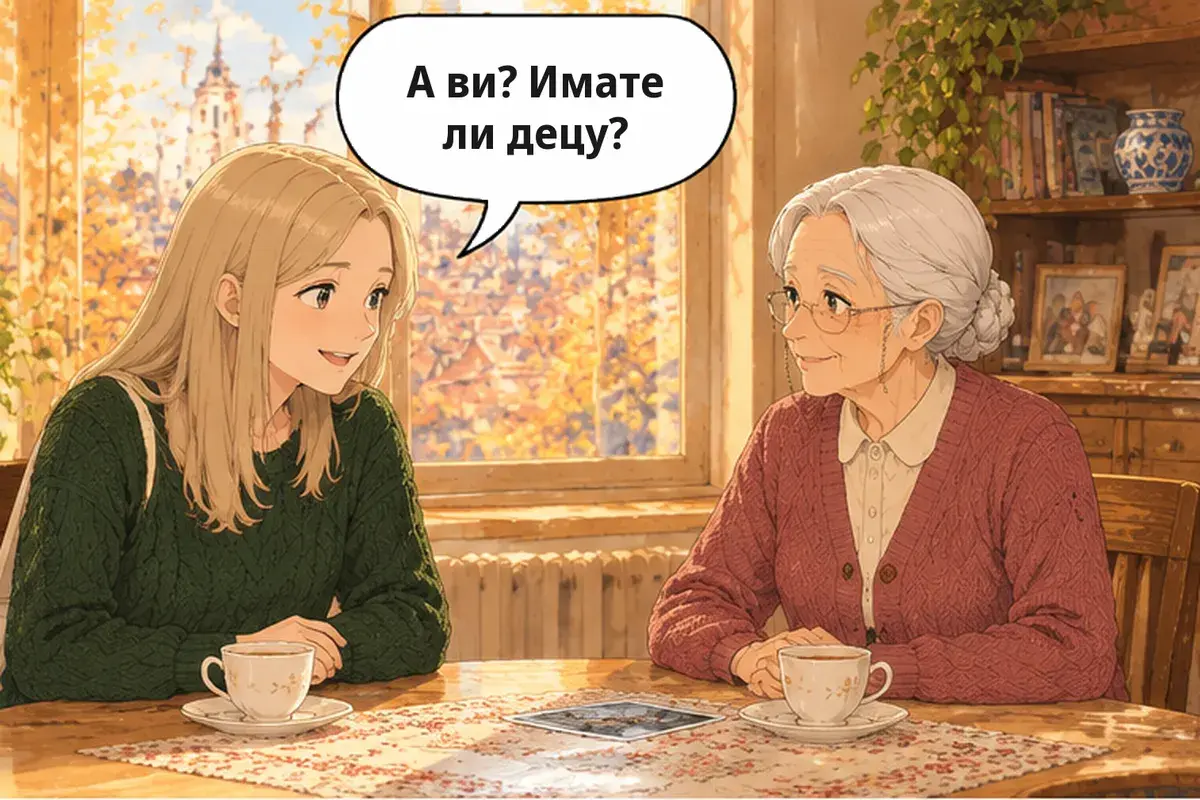
- Ана
А ви? Имате ли децу?
And you? Do you have children? (formal)
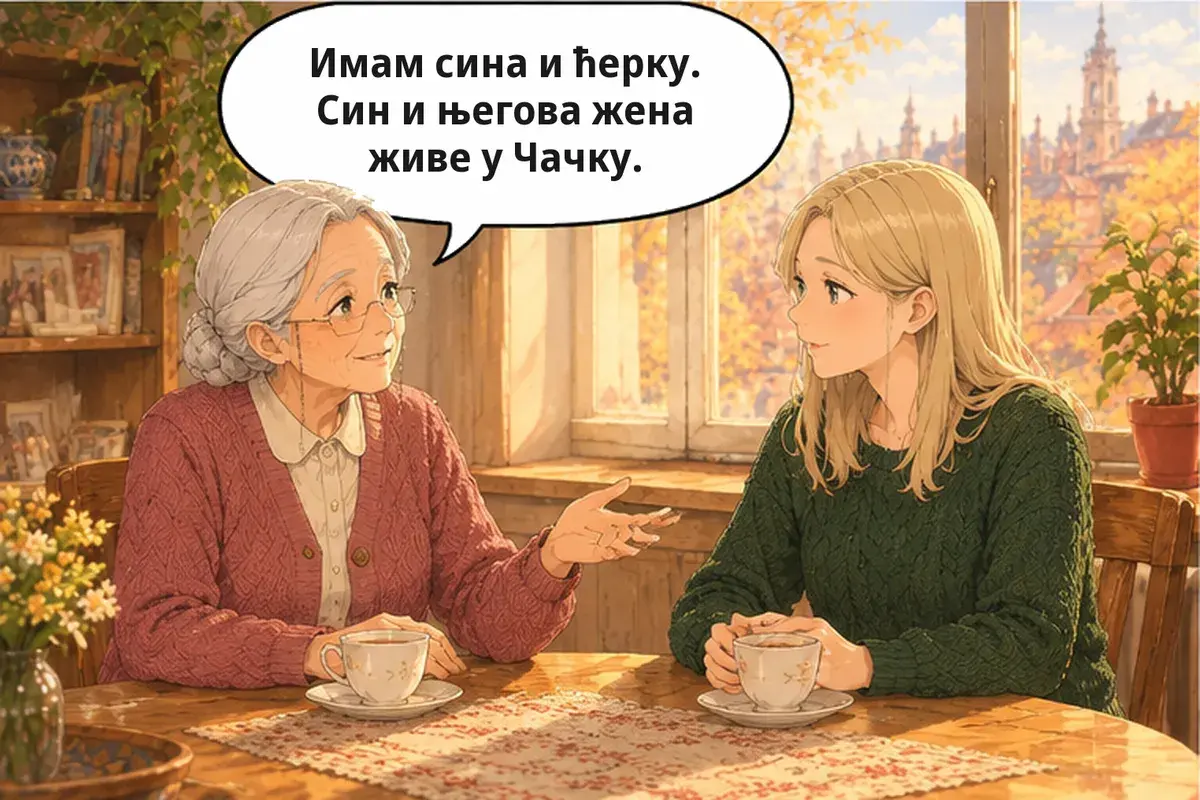
- Радмила
Имам сина и ћерку. Син и његова жена живе у Чачку.
I have a son and a daughter. My son and his wife live in Čačak.
- Ана
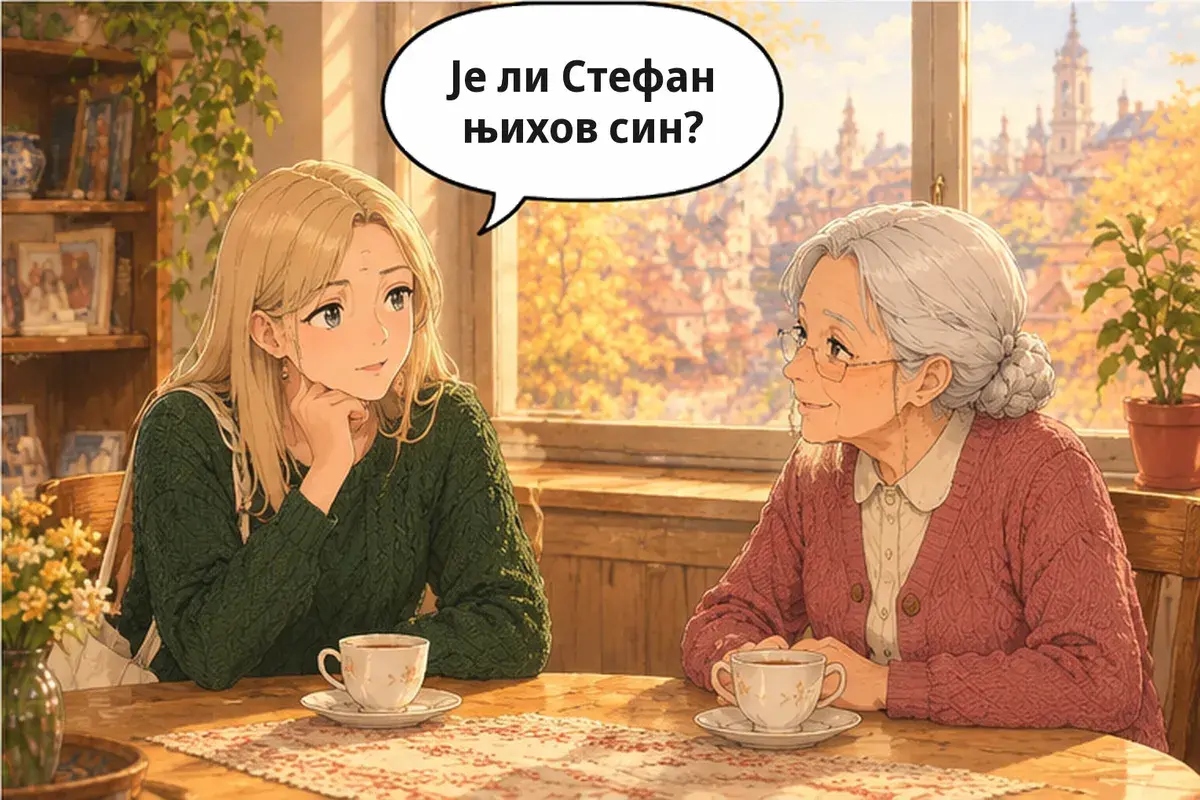
Је ли Стефан њихов син?
Is Stefan their son?
- Радмила
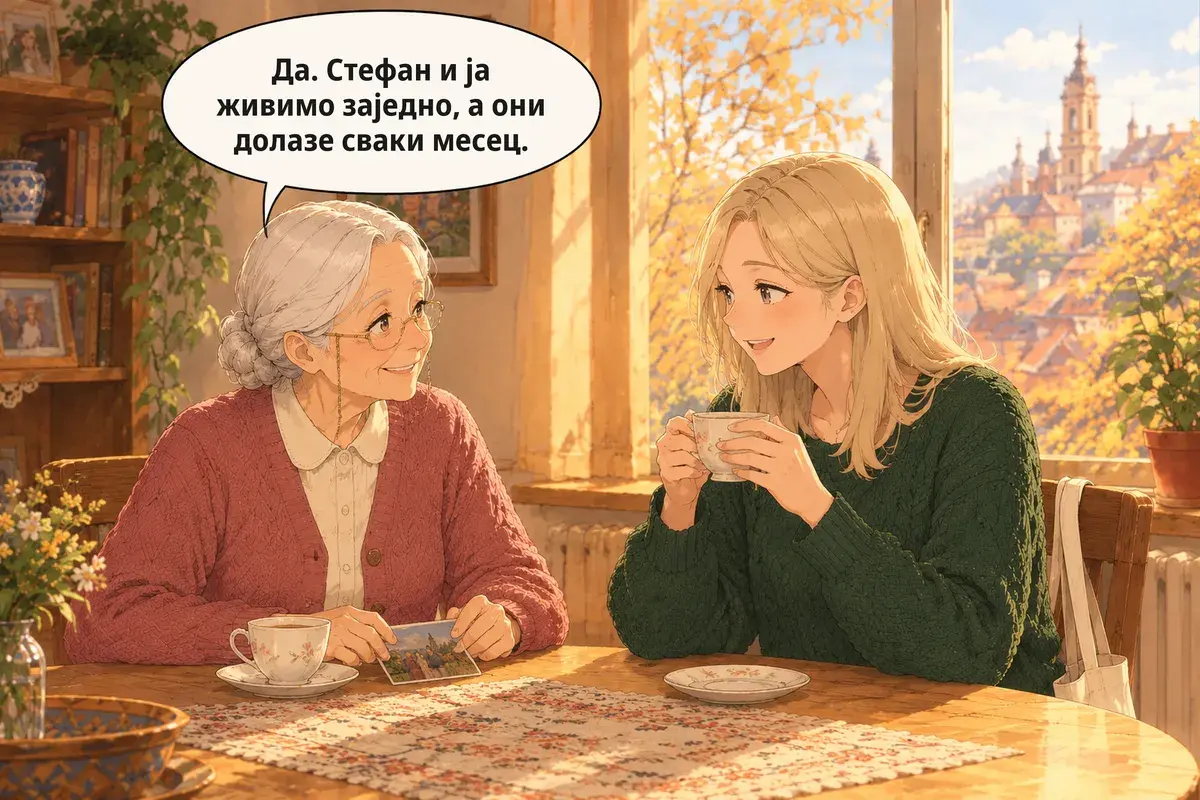
Да. Стефан и ја живимо заједно, а они долазе сваки месец.
Yes. Stefan and I live together, and they come every month.
Grammar for this text
на слици— in the photo:слика→слици. This is the locative case, the form for 'where' afterуandна, likeу Београду— in Belgrade (unit 8).Она је наставница музике у школи—наставникis a male teacher,наставницаa female one; English says teacher for both.музикеis the genitive case ('of'):наставница музикеis word for word 'teacher of music', a set phrase for now; the genitive comes in unit 12.у школи— at school (locative).И ја сам наставница, али у пензији—сам(am) is a clitic, a short word that must stand second in the sentence. Here it comes right afterја;и(too) doesn't count.у пензији— retired (пензија→пензији, locative).Тата и Кирил су слични— it's about two people, so the adjective is plural:сличан→слични.Имате ли децу?andИмам сина и ћерку—детеis a child,децаchildren (an irregular plural),децуits object form, the accusative. The accusative also shows inсина(masculine nouns for people add-а) and inћерку(ћерка→ћерку, likeкафа→кафу).Син и његова жена живе у Чачку—живе— they live (живети; theониform ends in-е).Чачак→у Чачку(where?; theаdrops out). Hereженаmeans wife (његова жена— his wife); above,ова женаis this woman: one word, two meanings.Стефан и ја живимо заједно, а они долазе сваки месец— Stefan and I make a 'we', so the verb takes theмиform:живимо.долазе— they come (долазити; theониform in-е, likeживе).сваки месец— every month;свакиis masculine, the feminine isсвака.
Words and grammar of the unit: Talk about your family.
Learn the words from the texts with flashcards
In the app, you can tap any word in a text to see its translation, forms and examples, and new words stick with flashcards. 15 minutes a day.
Start for freeEverything is open for free. No card needed to sign up.