
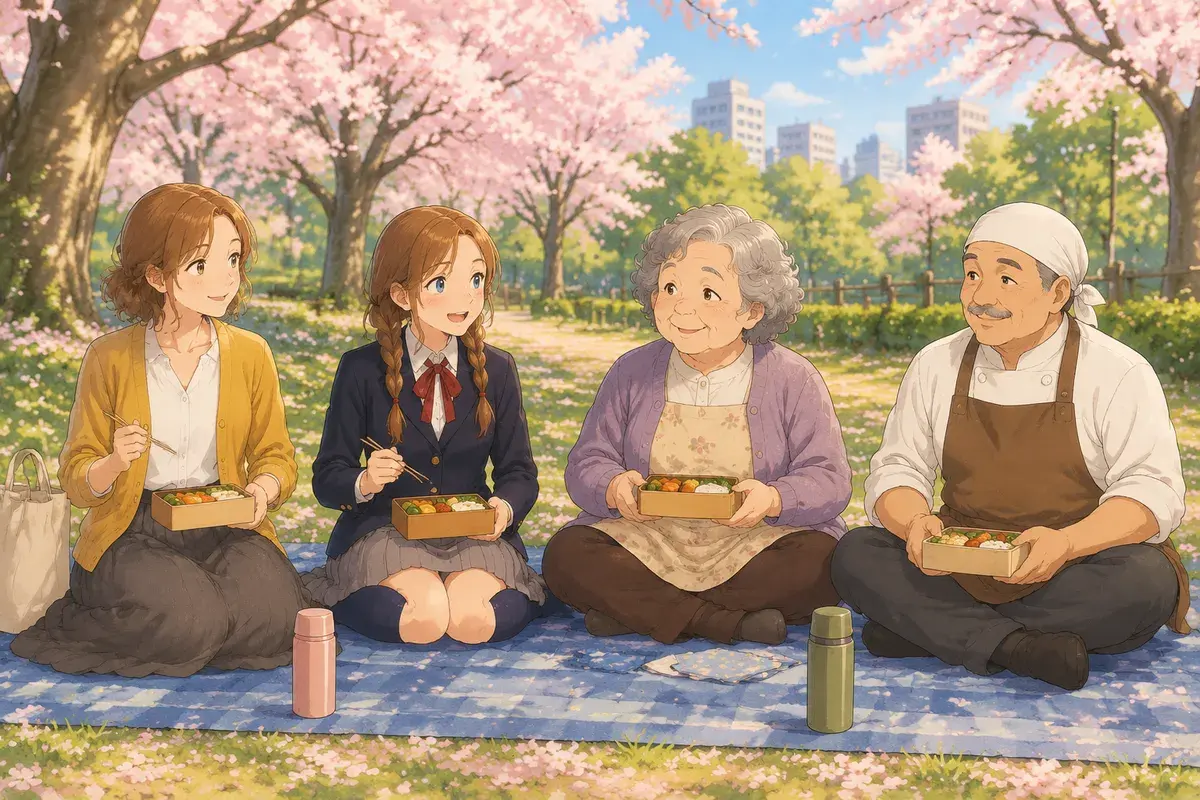
Japanese dialogue with translation · A2 · 16 lines
全部売り切れだよ Everything's sold out!
Comic · 15 panels
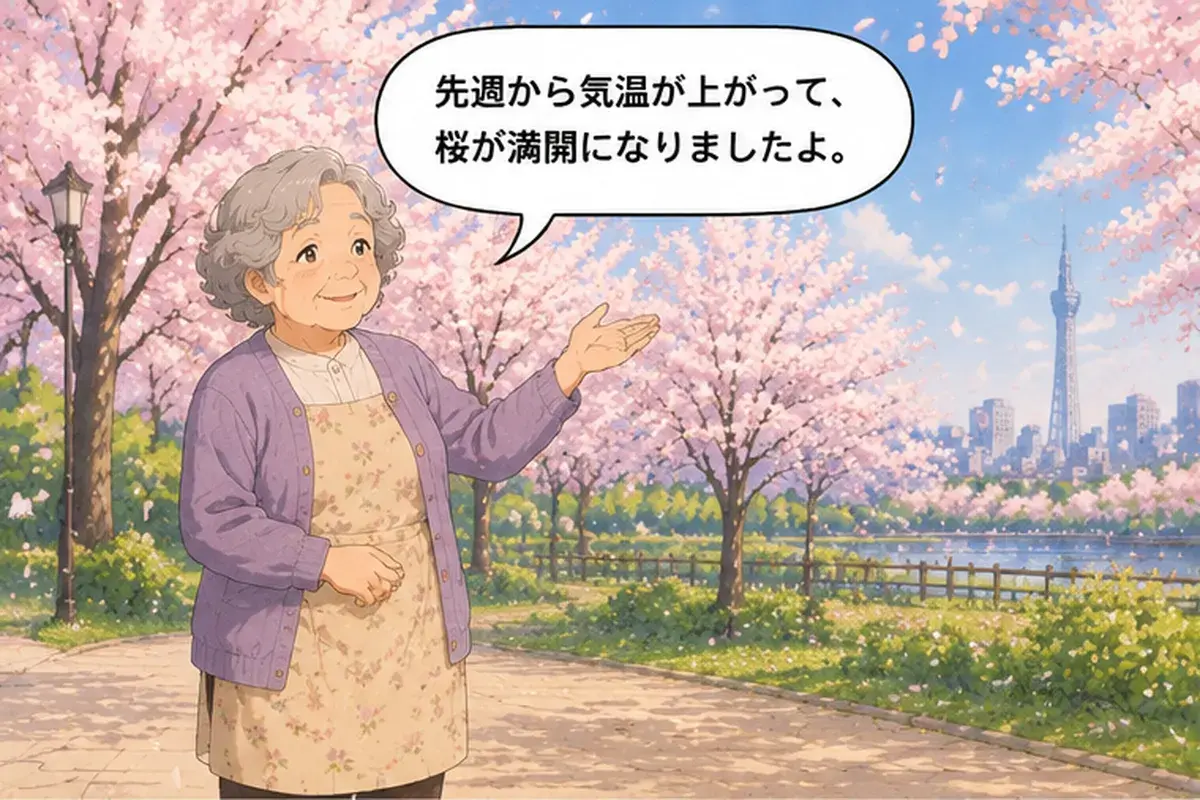
- 田中
先週から気温が上がって、桜が満開になりましたよ。
Since last week it's gotten warmer, and the cherry blossoms are in full bloom.
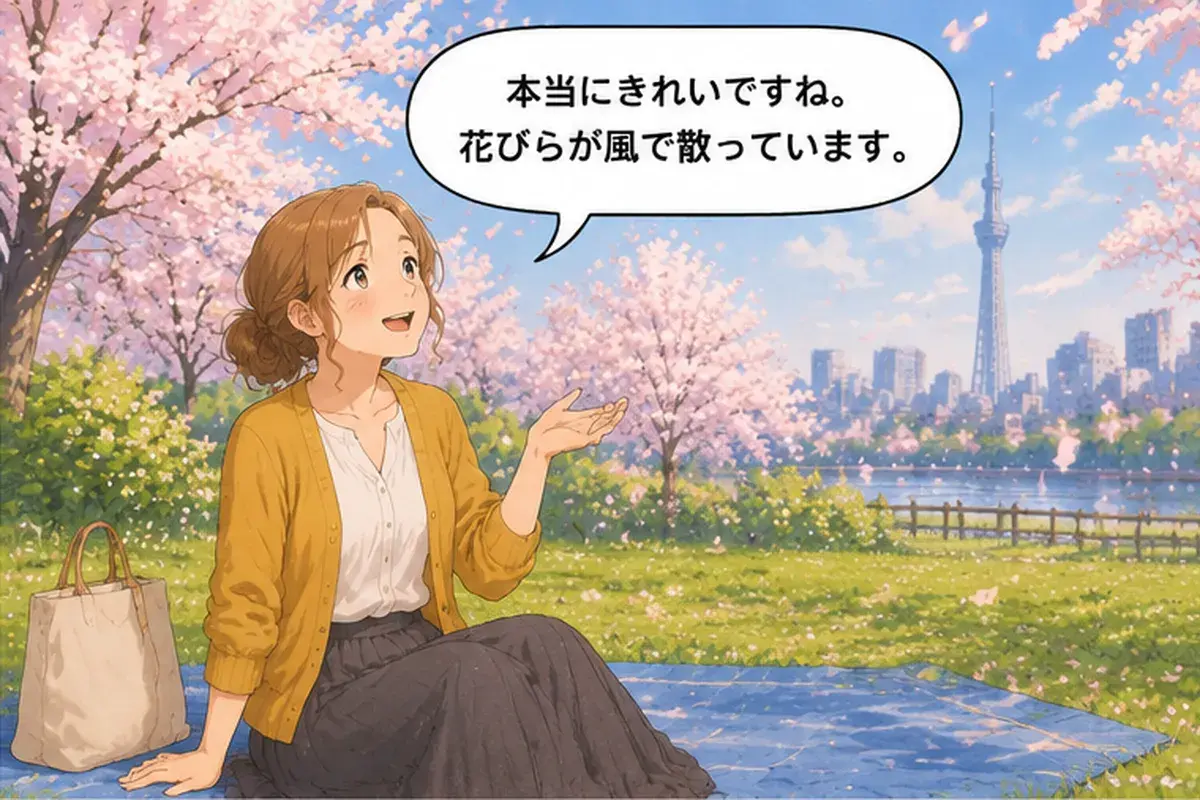
- アンナ
本当にきれいですね。花びらが風で散っています。
They're really beautiful, aren't they? The petals are scattering in the wind.
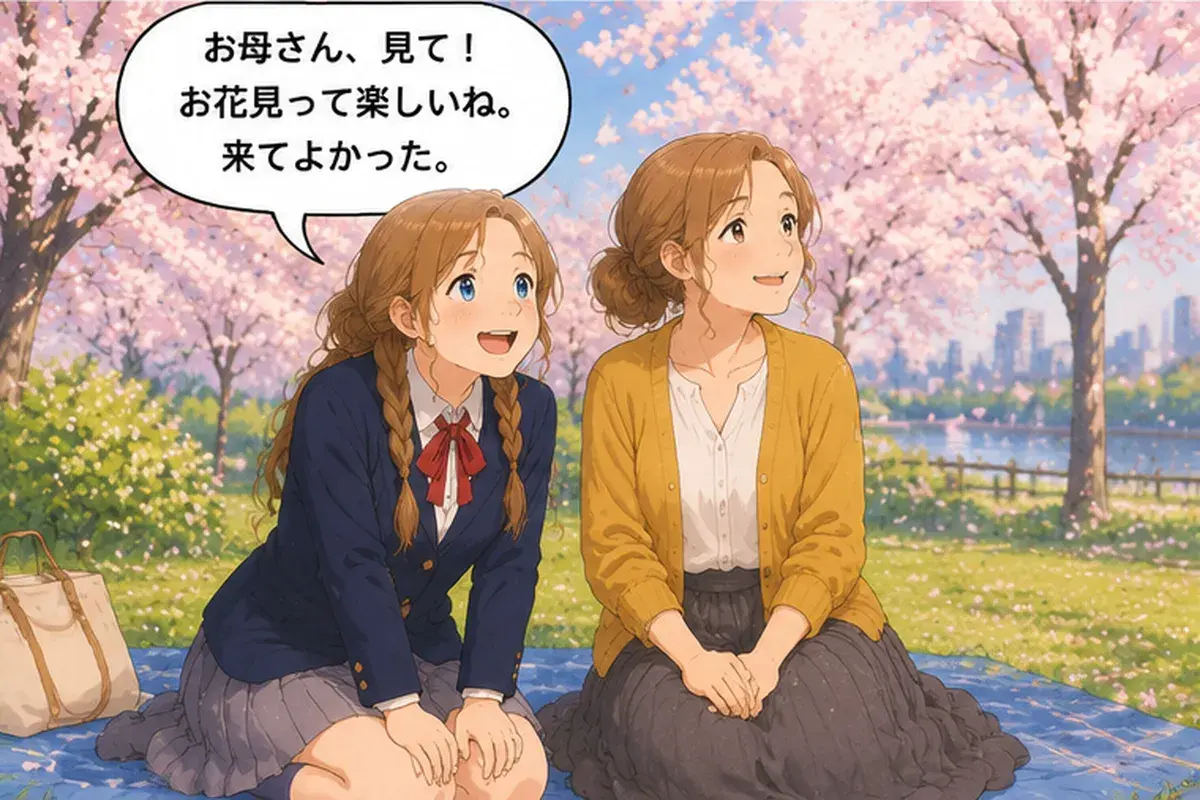
- ソーニャ
お母さん、見て!お花見って楽しいね。来てよかった。
Mom, look! Cherry blossom viewing is so much fun. I'm glad we came (casual).
- 田中
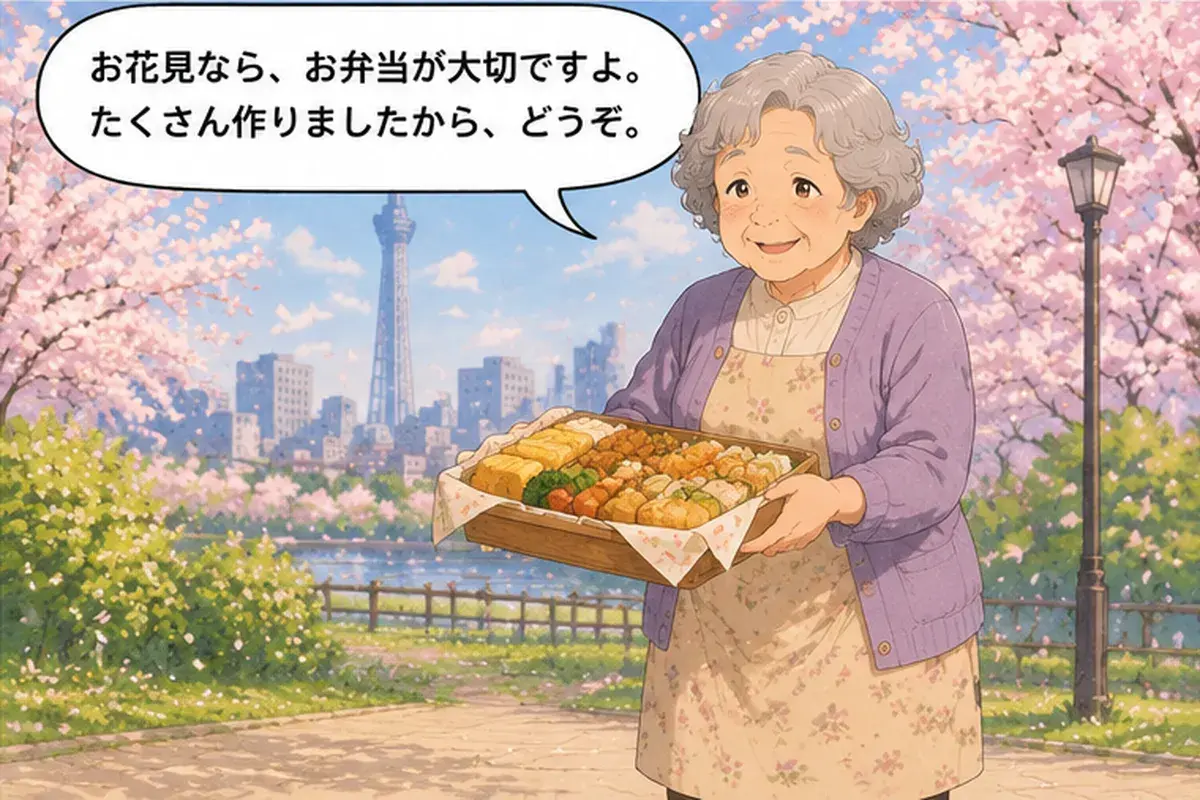
お花見なら、お弁当が大切ですよ。たくさん作りましたから、どうぞ。
If it's cherry blossom viewing, the bento is what matters. I made a lot, so please, help yourselves.
- アンナ
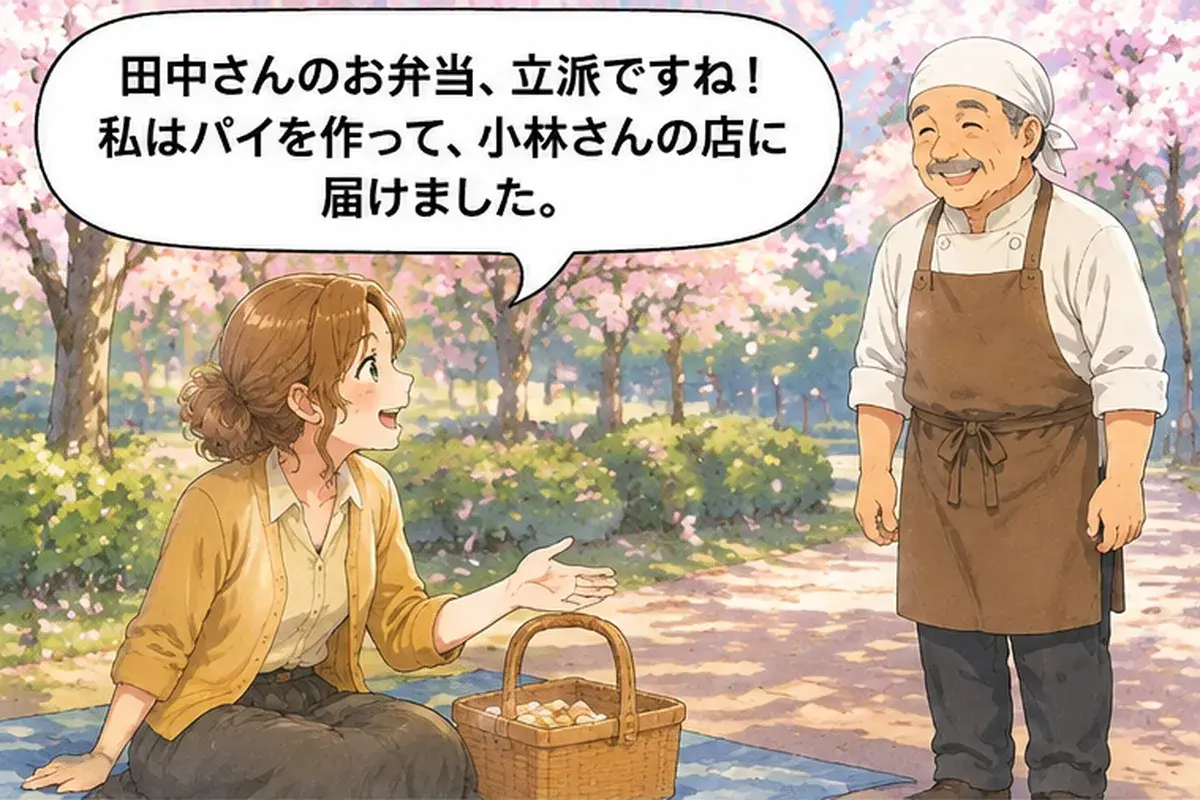
田中さんのお弁当、立派ですね!私はパイを作って、小林さんの店に届けました。
Tanaka-san, your bento is wonderful! I made pies and delivered them to Kobayashi-san's shop.
- 小林
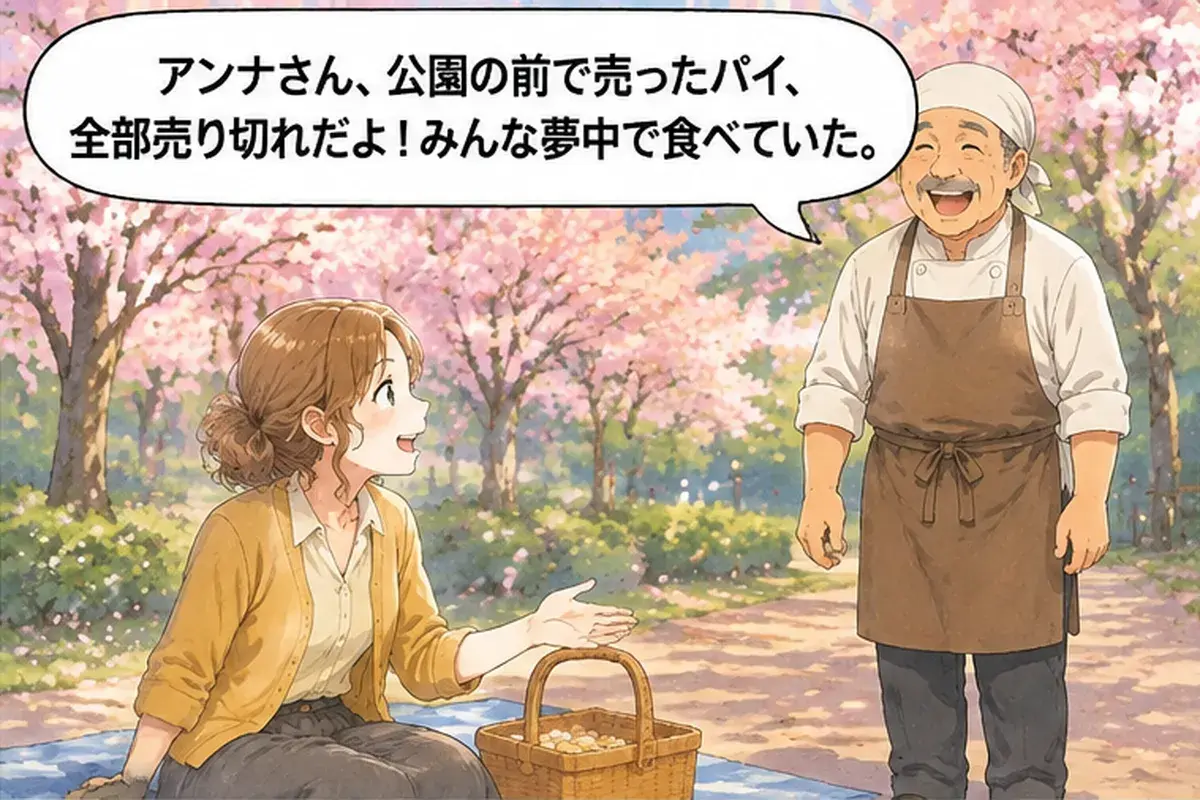
アンナさん、公園の前で売ったパイ、全部売り切れだよ!みんな夢中で食べていた。
Anna-san, the pies we sold in front of the park are all sold out! Everyone was eating them like crazy (casual).
- アンナ
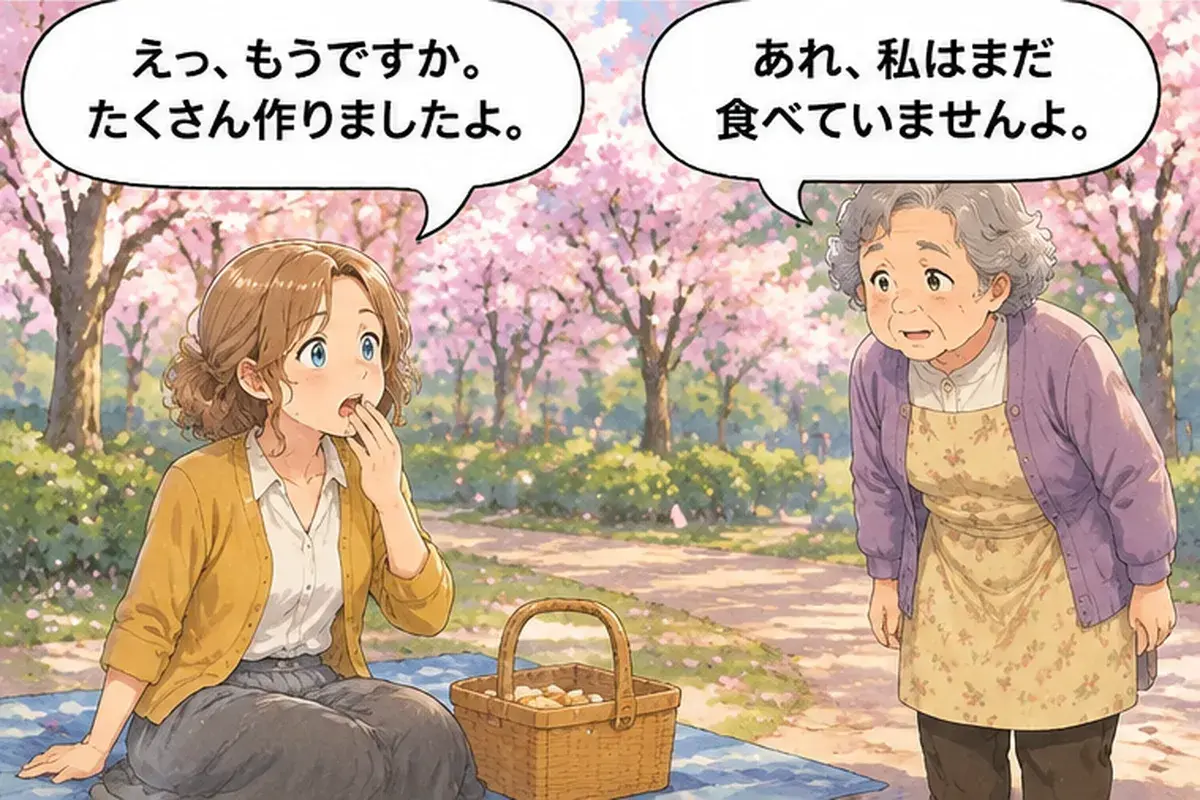
えっ、もうですか。たくさん作りましたよ。
What, already? I made a lot.
- 田中
あれ、私はまだ食べていませんよ。
Oh, I haven't eaten any yet.
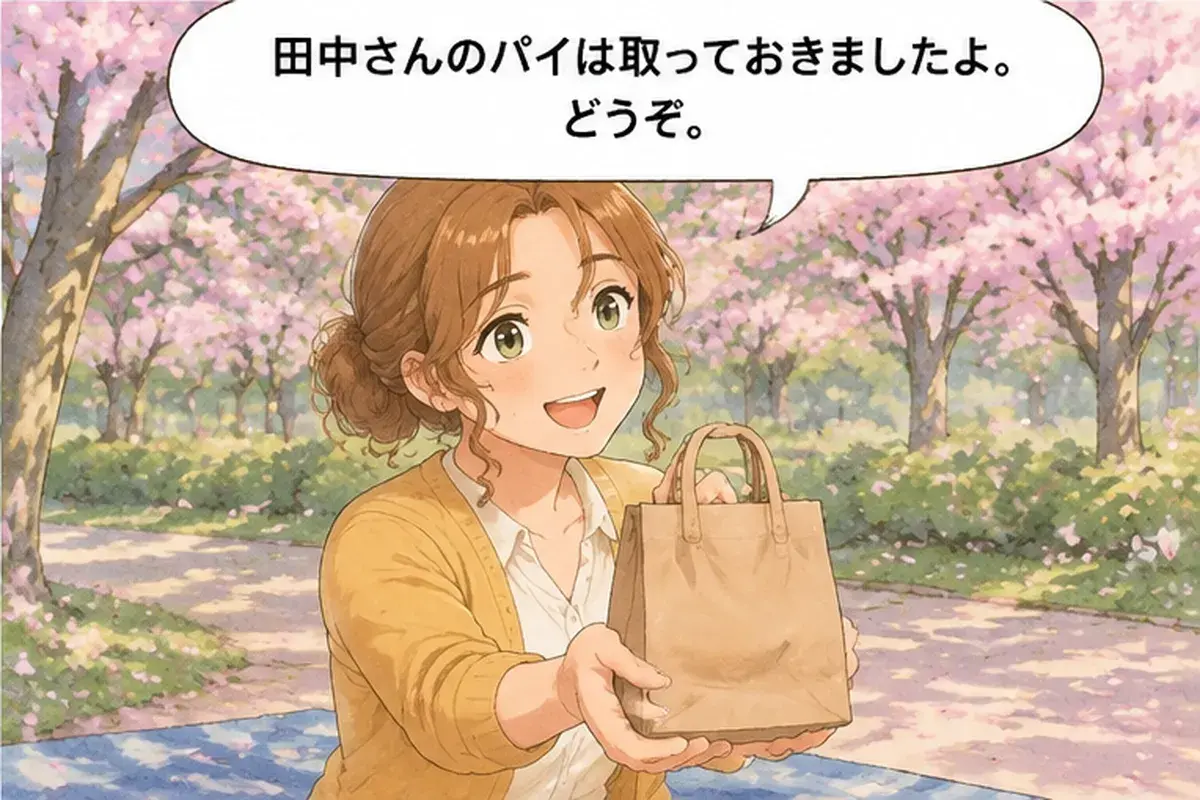
- アンナ
田中さんのパイは取っておきましたよ。どうぞ。
I set aside a pie for you ahead of time, Tanaka-san. Here you go.
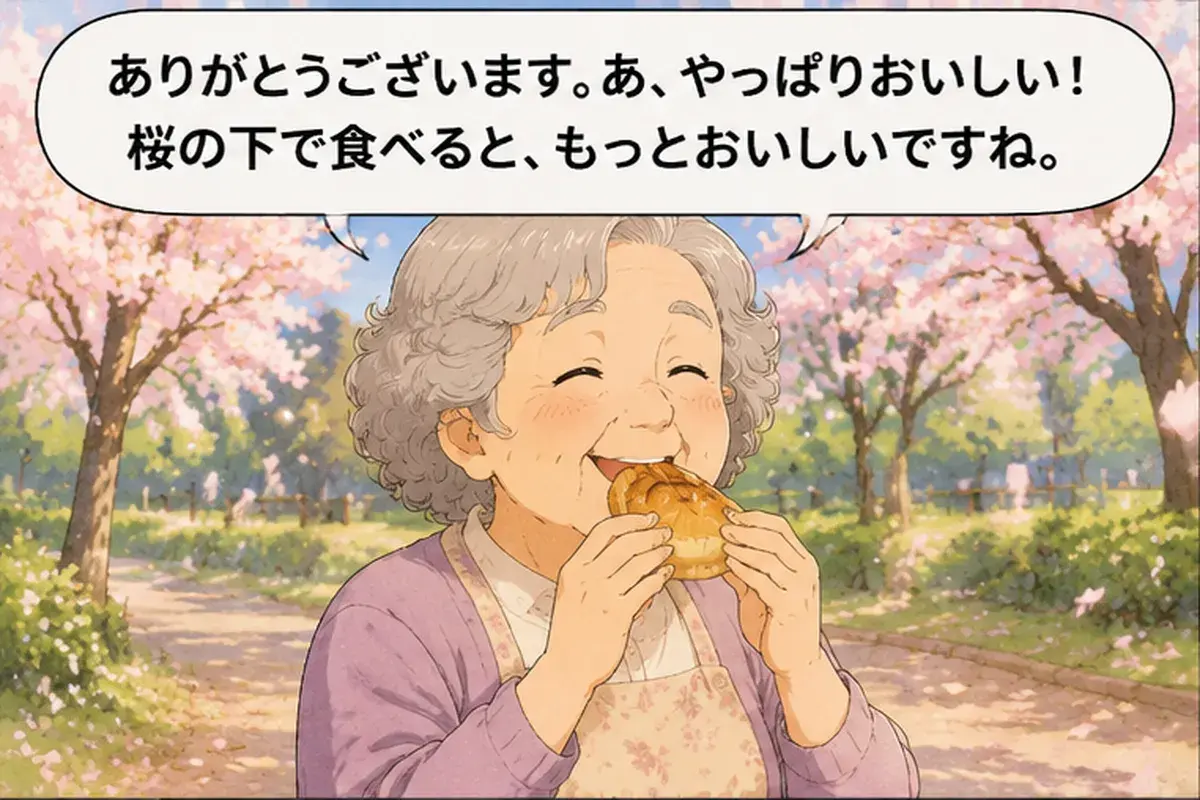
- 田中
ありがとうございます。あ、やっぱりおいしい!桜の下で食べると、もっとおいしいですね。
Thank you. Oh, it's delicious, just as I thought! It's even better when you eat it under the cherry trees.
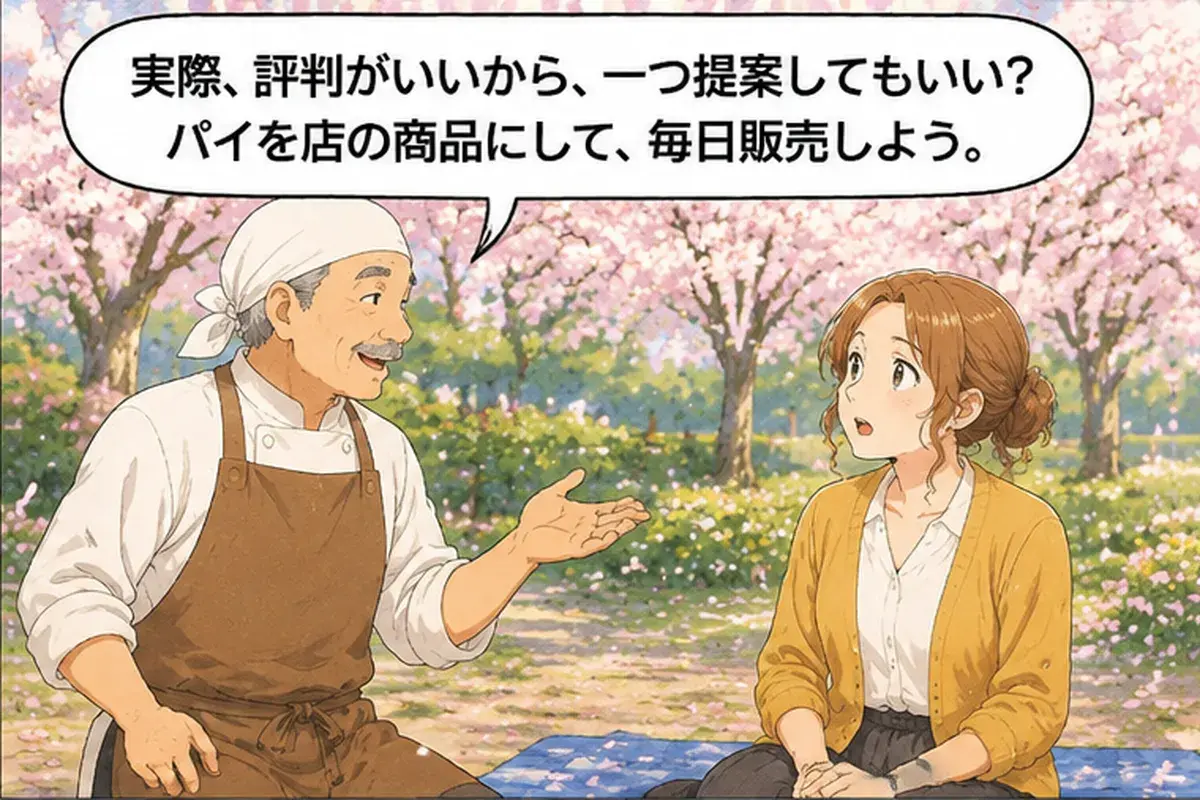
- 小林
実際、評判がいいから、一つ提案してもいい?パイを店の商品にして、毎日販売しよう。
They really do have a good reputation, so can I suggest something? Let's make the pies one of the shop's products and sell them every day (casual).
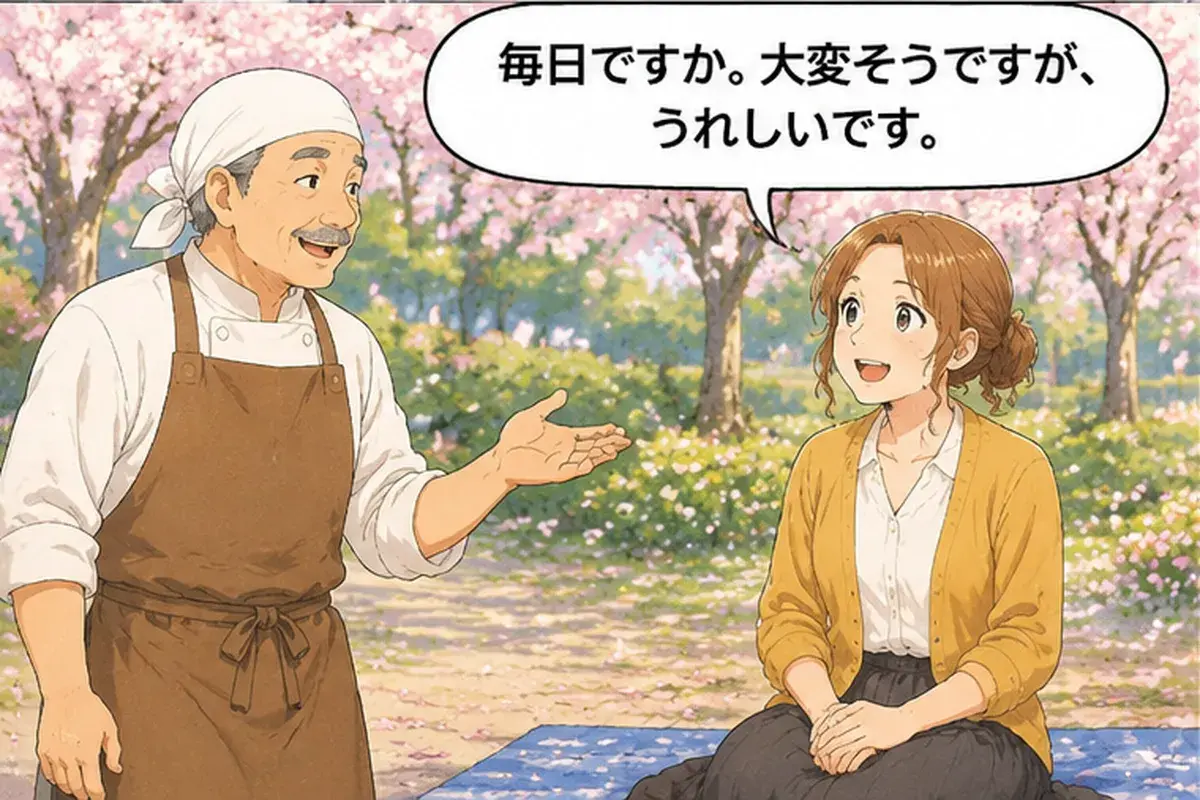
- アンナ
毎日ですか。大変そうですが、うれしいです。
Every day? It sounds like a lot of work, but I'm happy.
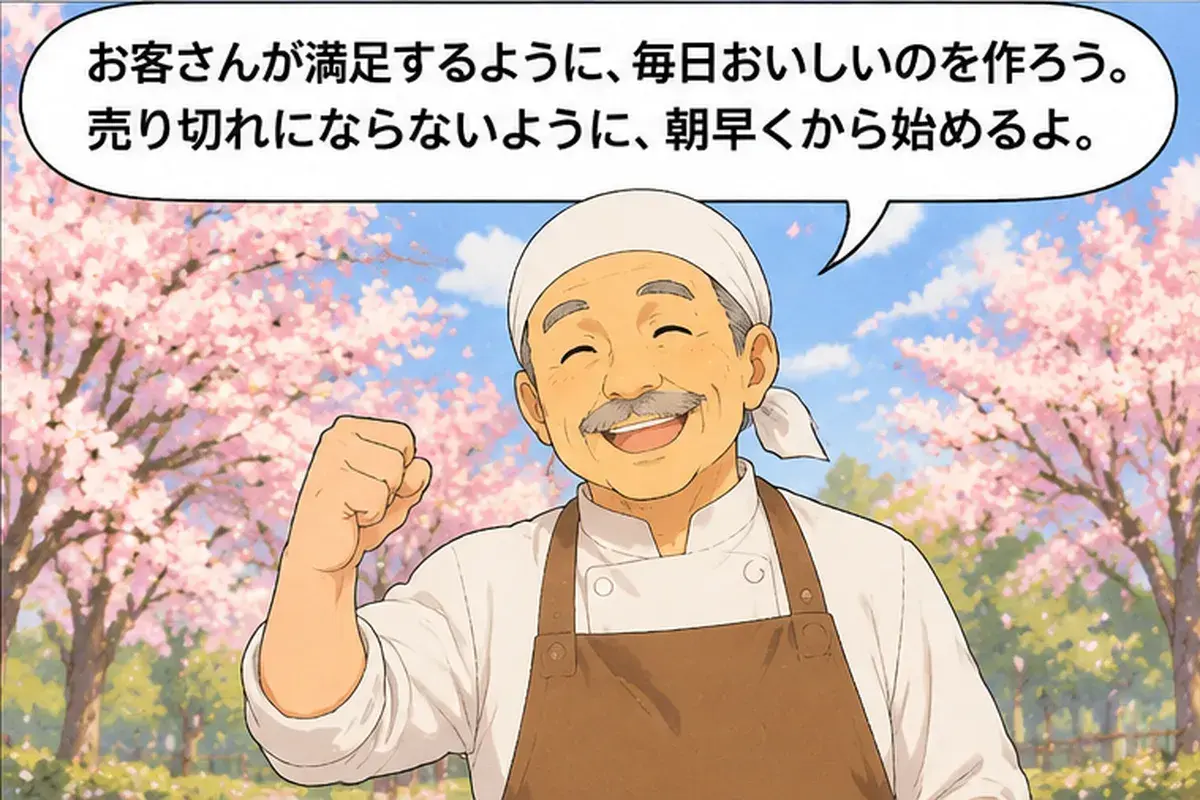
- 小林
お客さんが満足するように、毎日おいしいのを作ろう。売り切れにならないように、朝早くから始めるよ。
Let's make something tasty every day so the customers are satisfied. We'll start early in the morning so we don't sell out (casual).
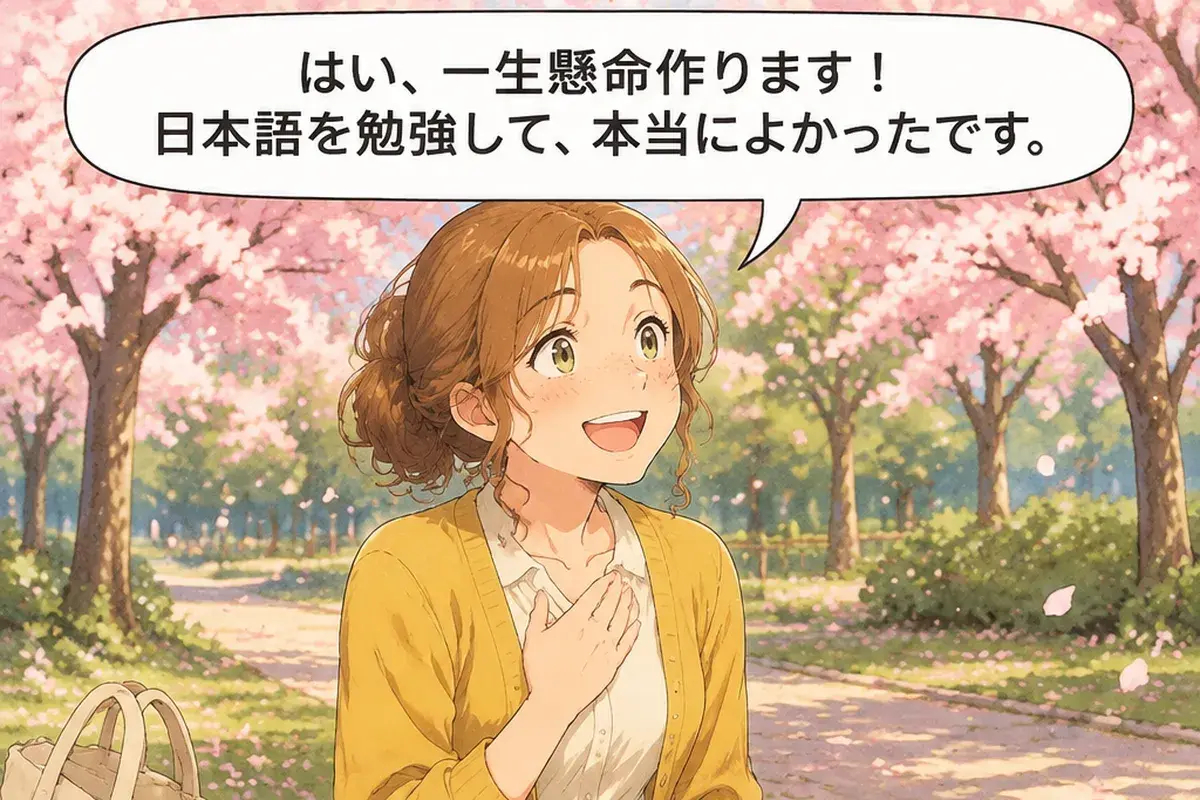
- アンナ
はい、一生懸命作ります!日本語を勉強して、本当によかったです。
Yes, I'll work hard on them! I'm really glad I studied Japanese.
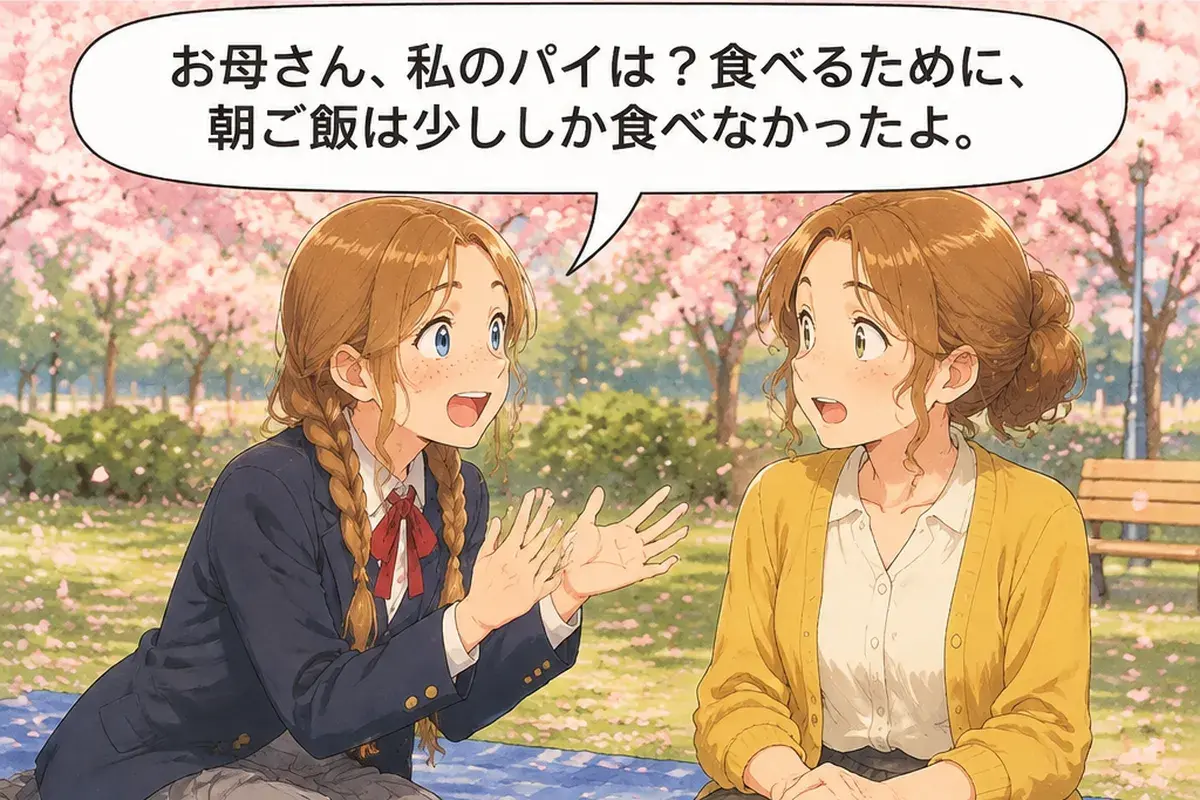
- ソーニャ
お母さん、私のパイは?食べるために、朝ご飯は少ししか食べなかったよ。
Mom, what about my pie? I only ate a little breakfast so I could eat it (casual).
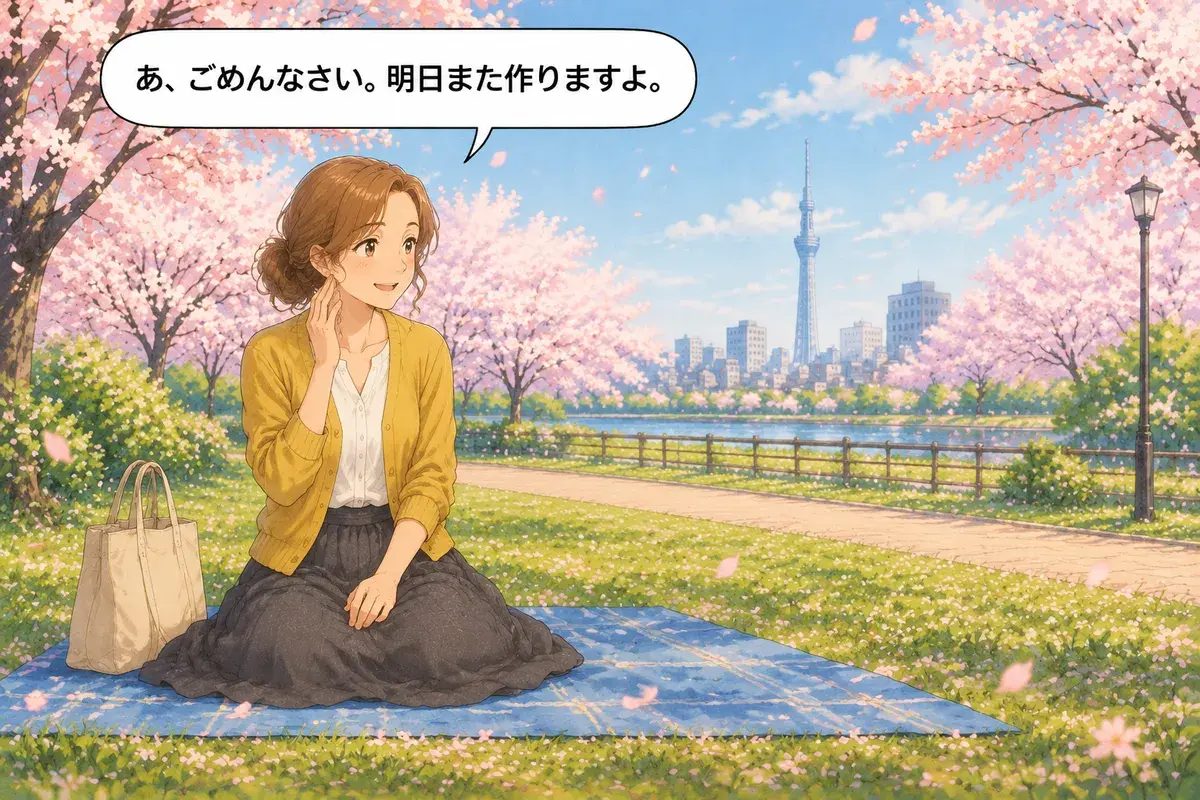
- アンナ
あ、ごめんなさい。明日また作りますよ。
Oh, I'm sorry. I'll make more tomorrow.
Grammar for this text
来て よかった— I'm glad we came. The te-form +よかったmeans "I'm glad (that)...": you're happy about something that has already happened. Sonya talks to her mom in casual speech, so there is noです; Anna later uses the polite form:勉強して、 本当 に よかった です— I'm really glad I studied.お花見 なら、 お弁当 が 大切 です よ— If it's cherry blossom viewing, the bento is what matters.ならpicks up a topic someone has just mentioned (Sonya brought up the picnic): "if we're talking about that...". It is not the "if" of〜たら.公園 の 前 で 売った パイ— the pies we sold in front of the park. The word売ったcomes before the noun and describes it, like "that we sold" in English (unit 8).取って おきました— I set it aside in advance.取る+おくmeans to do something ahead of time, for later (unit 11).一つ 提案して も いい?— Can I suggest something? Kobayashi starts the conversation gently, even though he is the boss. With Anna he speaks in short, casual sentences, so the question has noか.満足する ように,ならない ように— so that the customers are satisfied, so that we don't sell out. The goal is not an action but a result that should come about. Beforeようにcomes the plain form of the verb.食べる ために— in order to eat it. Here the goal is the person's own action. Sonya jokes that she barely ate breakfast for the sake of the pie (しか 〜ない, unit 3).上がって— here上がるmeans "to rise, go up": the temperature went up.
Words and grammar of the unit: Look back and say thank you.
Learn the words from the texts with flashcards
In the app, you can tap any word in a text to see its translation, forms and examples, and new words stick with flashcards. 15 minutes a day.
Start for freeEverything is open for free. No card needed to sign up.