
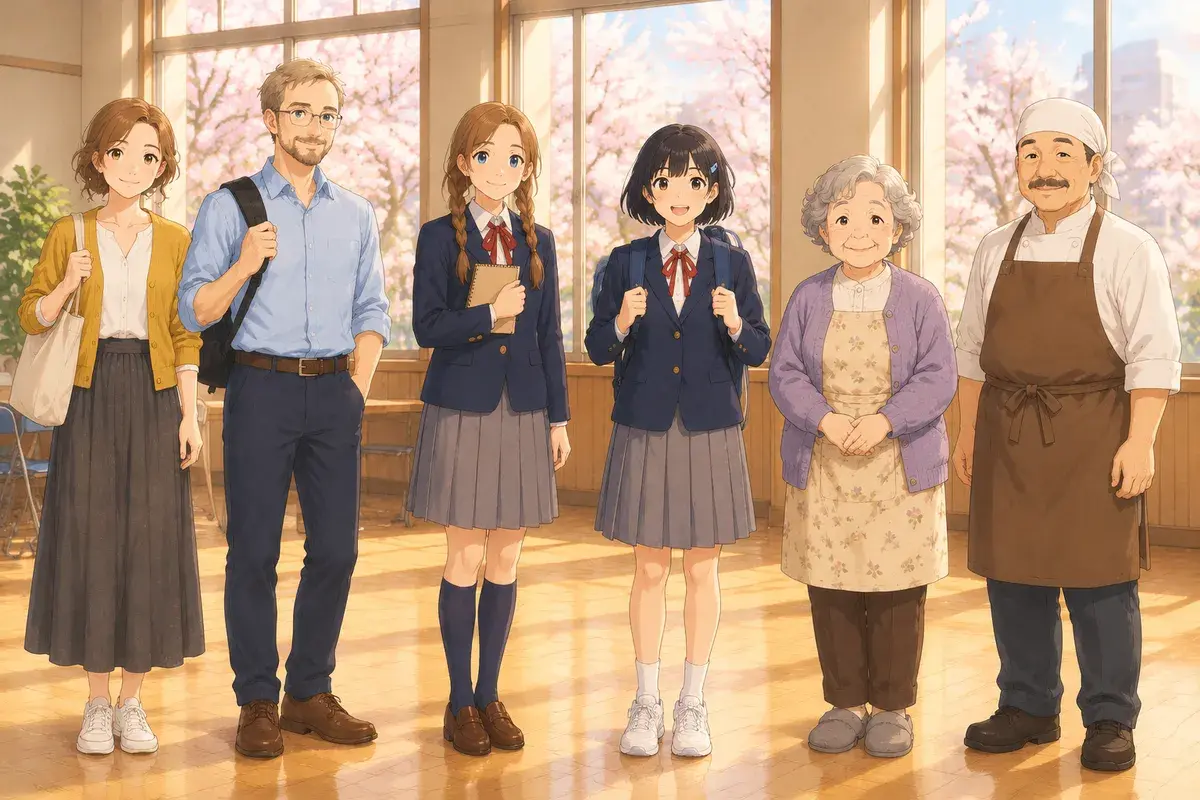
Japanese dialogue with translation · A2 · 16 lines
本当にお世話になりました Thank you so much for everything
Comic · 16 panels
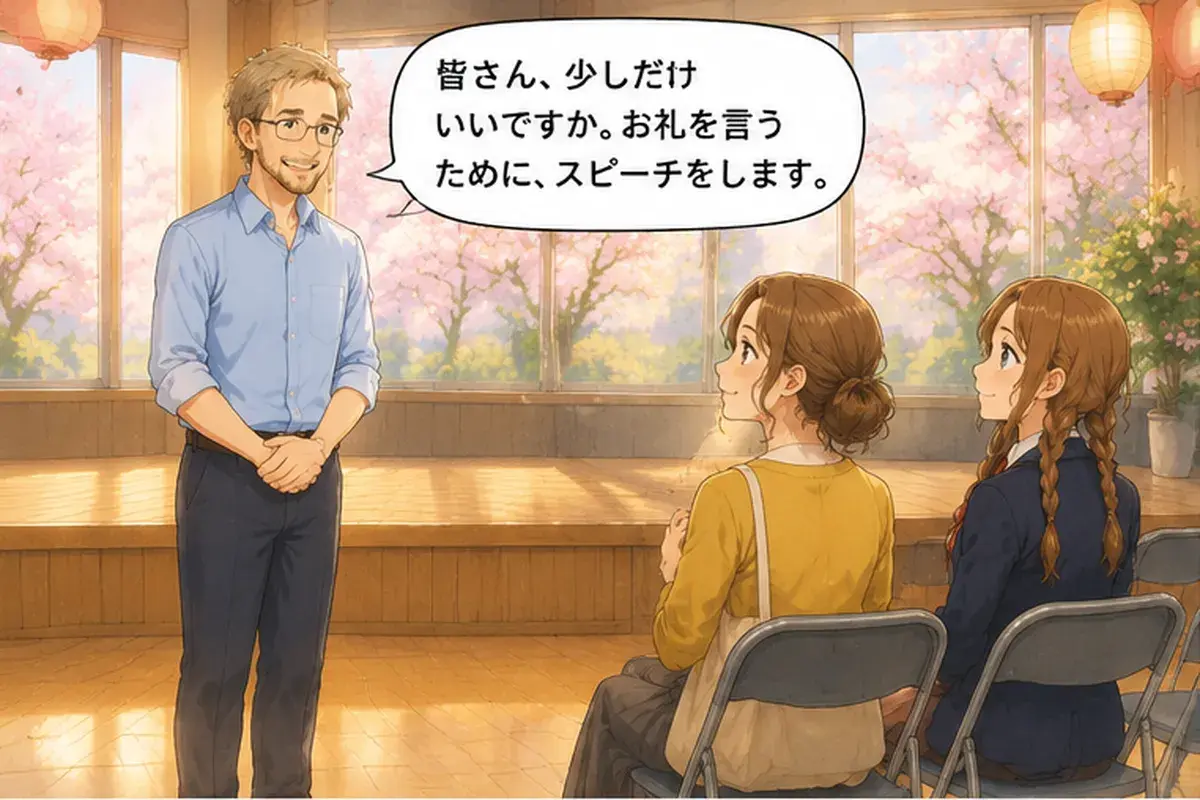
- マルク
皆さん、少しだけいいですか。お礼を言うために、スピーチをします。
Everyone, do you have a minute? I'm going to give a speech to say thank you.
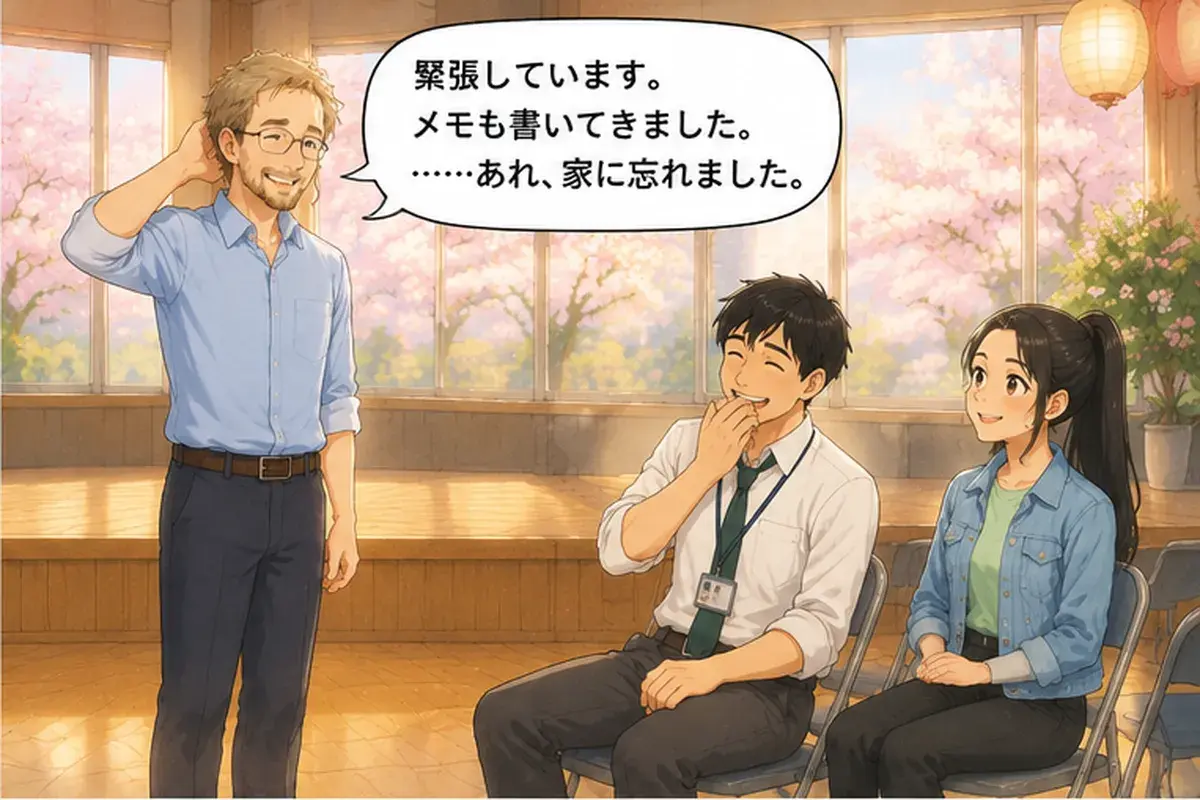
- マルク
緊張しています。メモも書いてきました。……あれ、家に忘れました。
I'm nervous. I even wrote some notes. ... Oh, I left them at home.
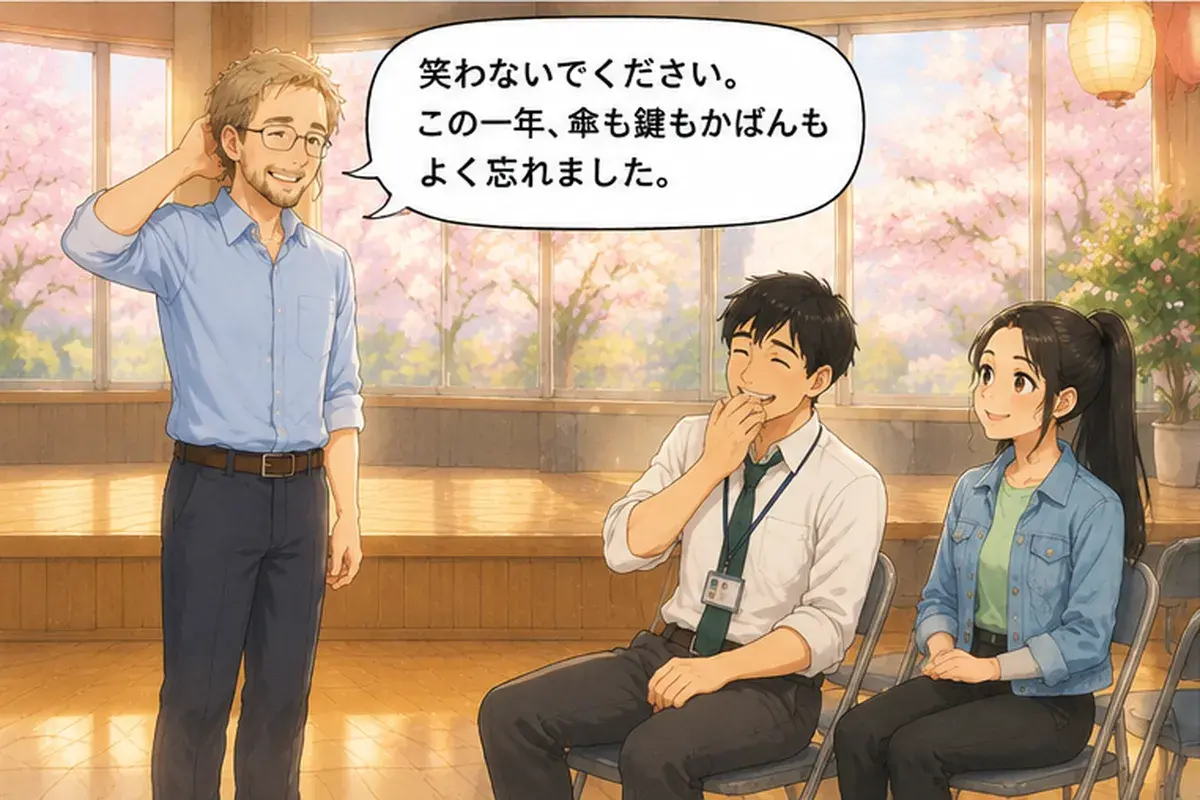
- マルク
笑わないでください。この一年、傘も鍵もかばんもよく忘れました。
Please don't laugh. This past year, I often forgot my umbrella, my keys and my bag.
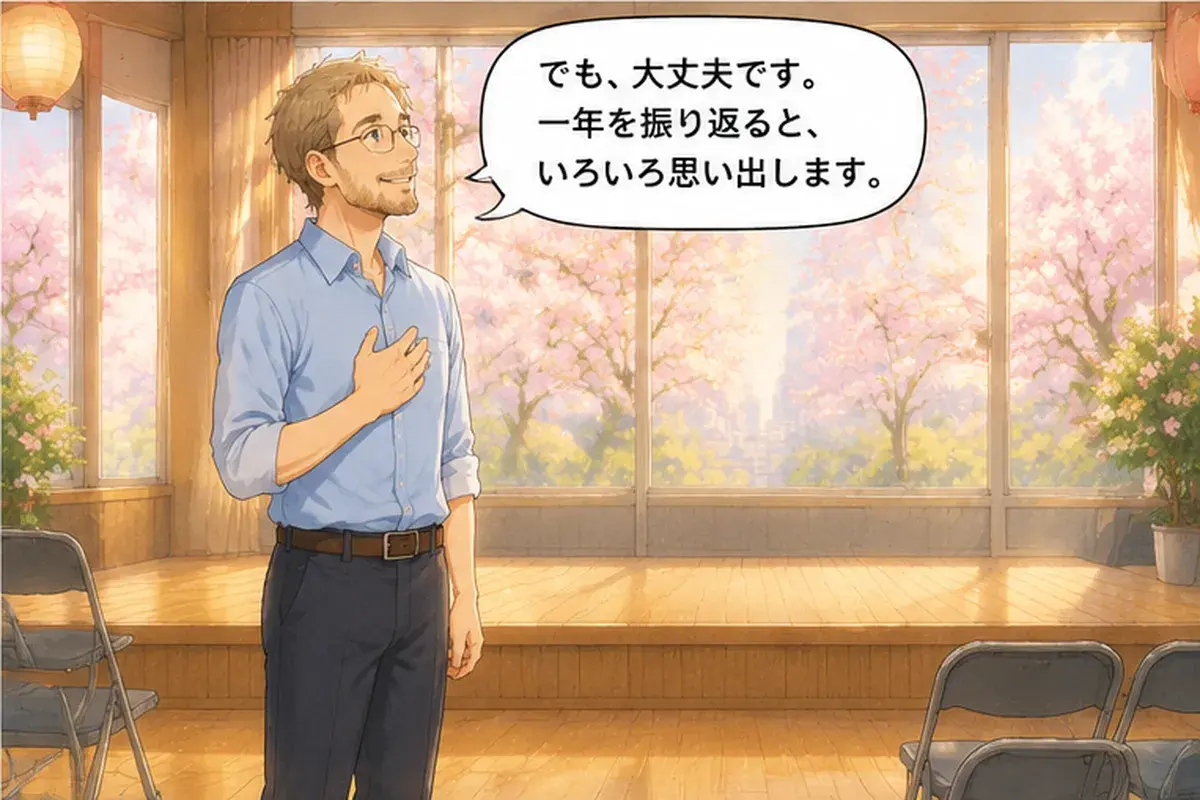
- マルク
でも、大丈夫です。一年を振り返ると、いろいろ思い出します。
But it's OK. When I look back on the year, I remember a lot of things.
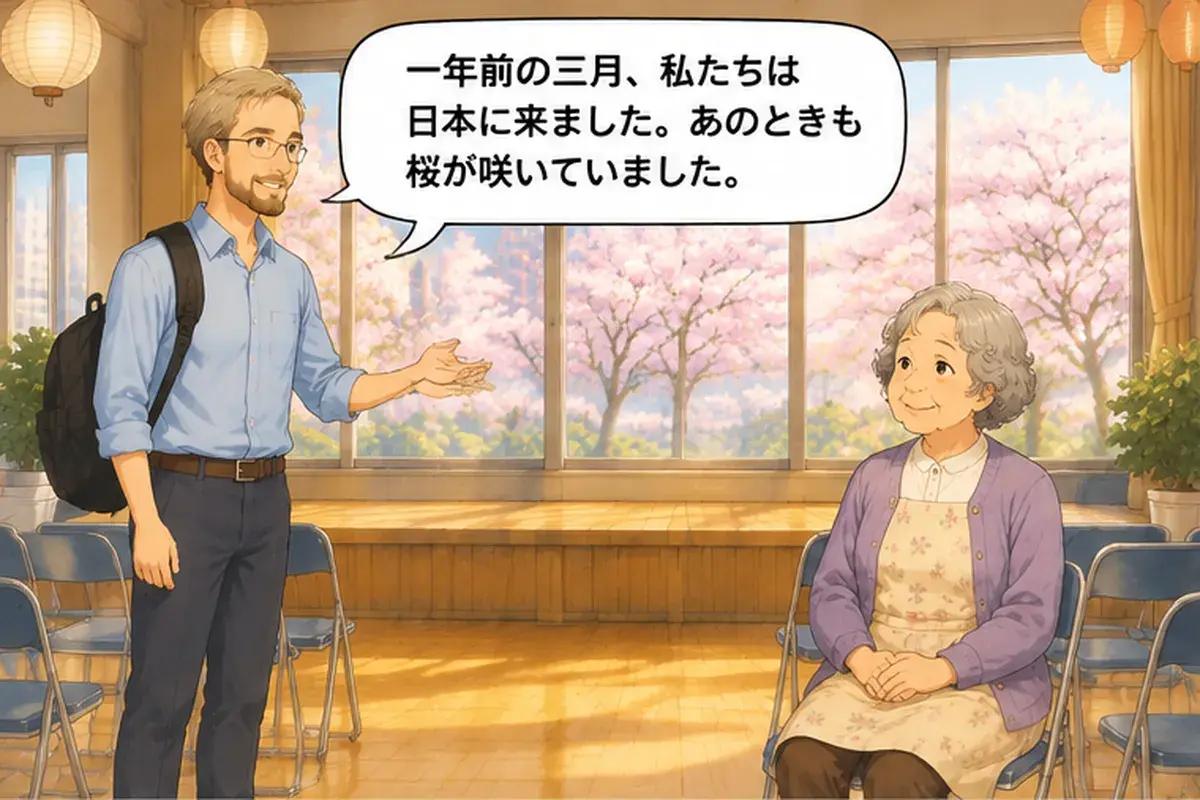
- マルク
一年前の三月、私たちは日本に来ました。あのときも桜が咲いていました。
A year ago in March, we came to Japan. The cherry blossoms were blooming then, too.
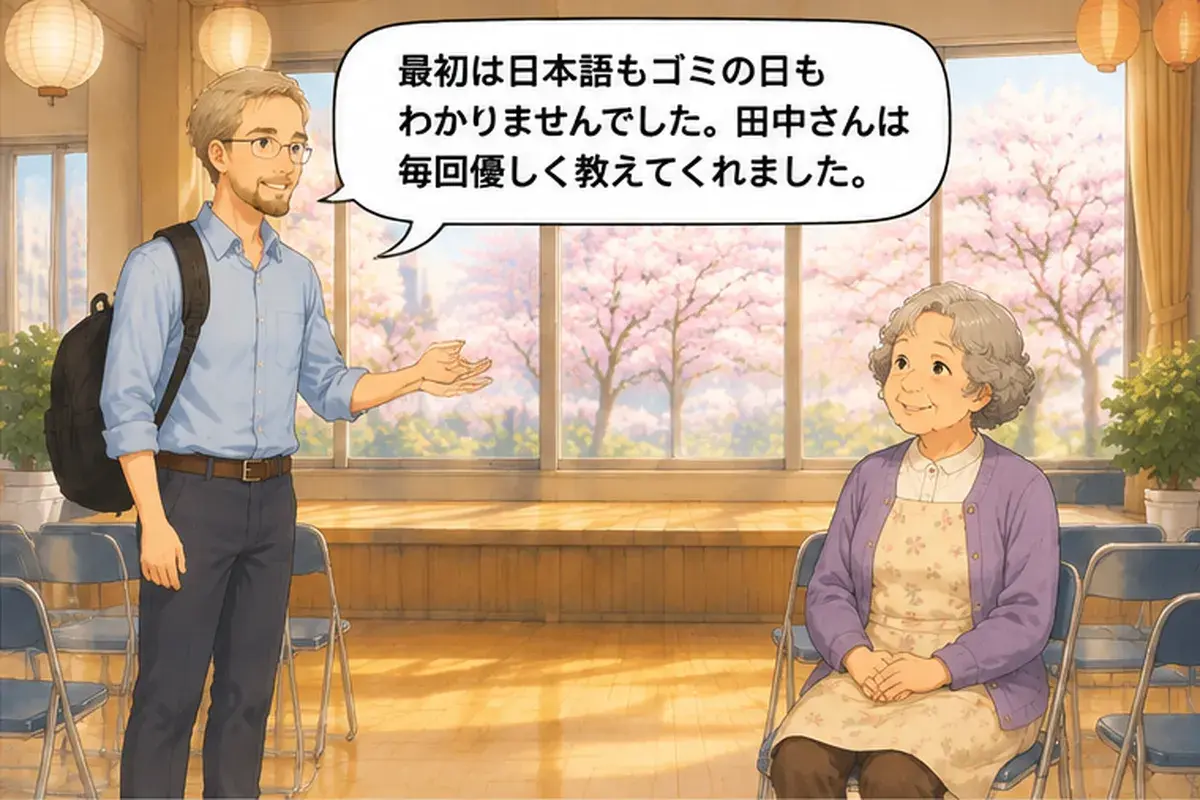
- マルク
最初は日本語もゴミの日もわかりませんでした。田中さんは毎回優しく教えてくれました。
At first I didn't understand Japanese or the trash days. Tanaka-san kindly taught me every time.
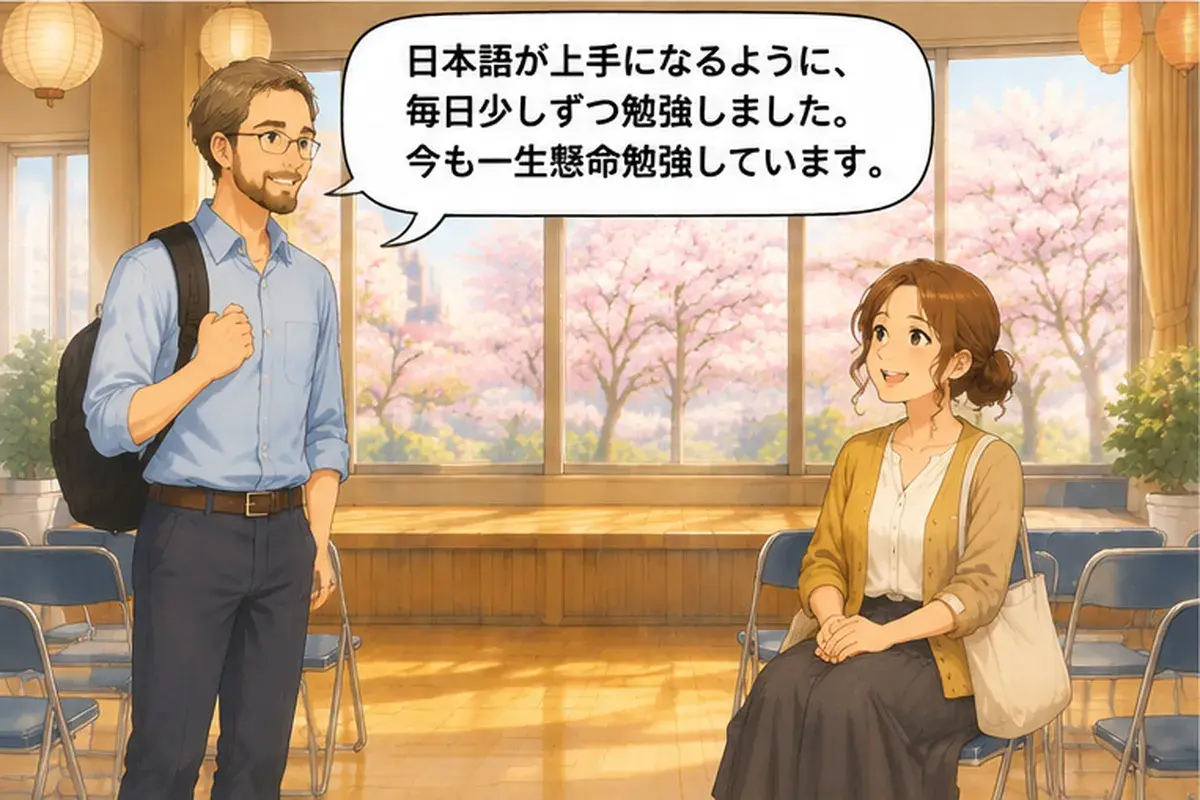
- マルク
日本語が上手になるように、毎日少しずつ勉強しました。今も一生懸命勉強しています。
I studied a little every day so that my Japanese would get better. I'm still studying hard now.
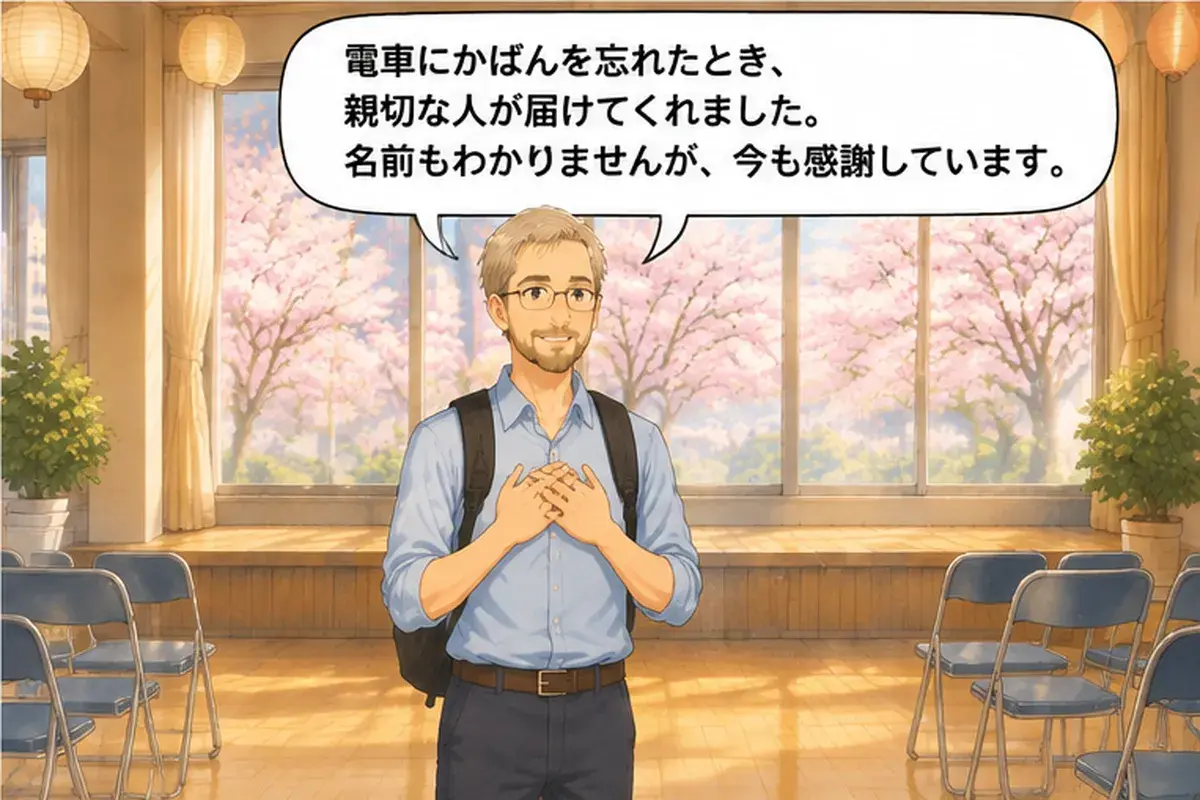
- マルク
電車にかばんを忘れたとき、親切な人が届けてくれました。名前もわかりませんが、今も感謝しています。
When I left my bag on the train, a kind person brought it to me. I don't know their name, but I'm still grateful.
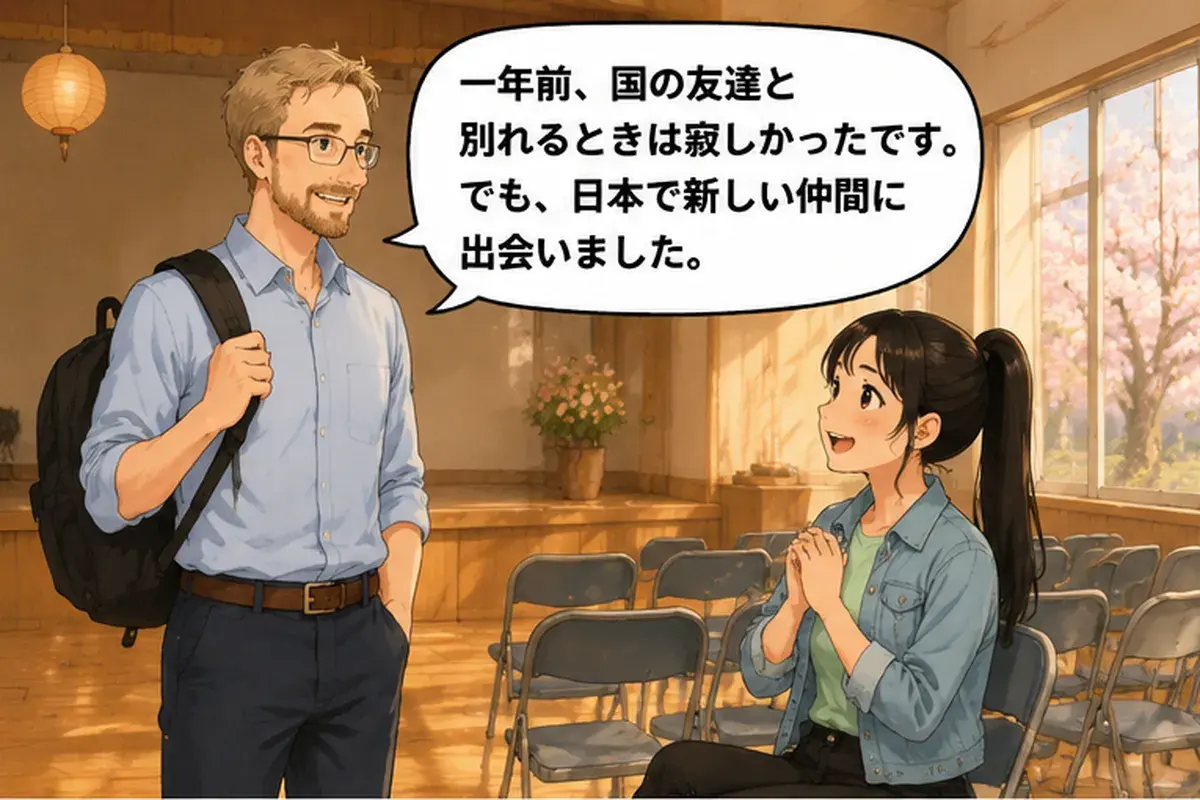
- マルク
一年前、国の友達と別れるときは寂しかったです。でも、日本で新しい仲間に出会いました。
A year ago, I felt lonely when I parted from my friends back home. But in Japan I met new companions.
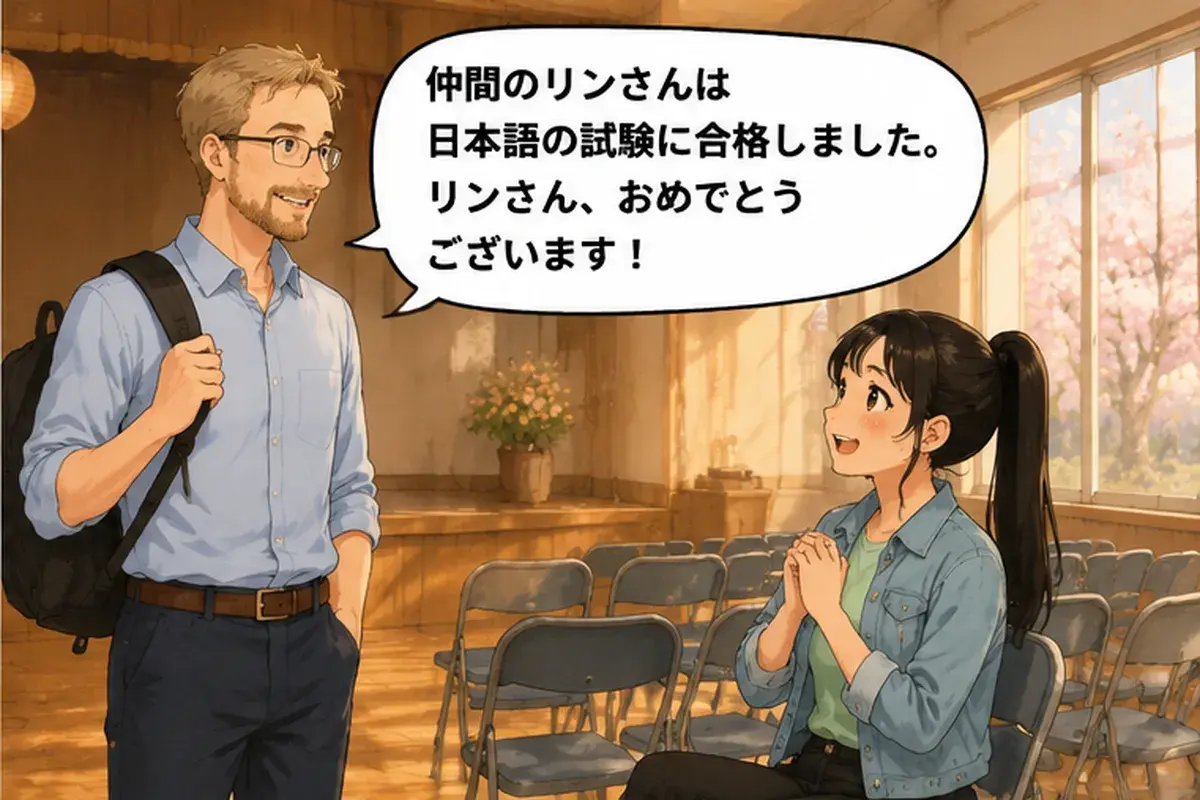
- マルク
仲間のリンさんは日本語の試験に合格しました。リンさん、おめでとうございます!
My companion Linh-san passed the Japanese exam. Linh-san, congratulations!
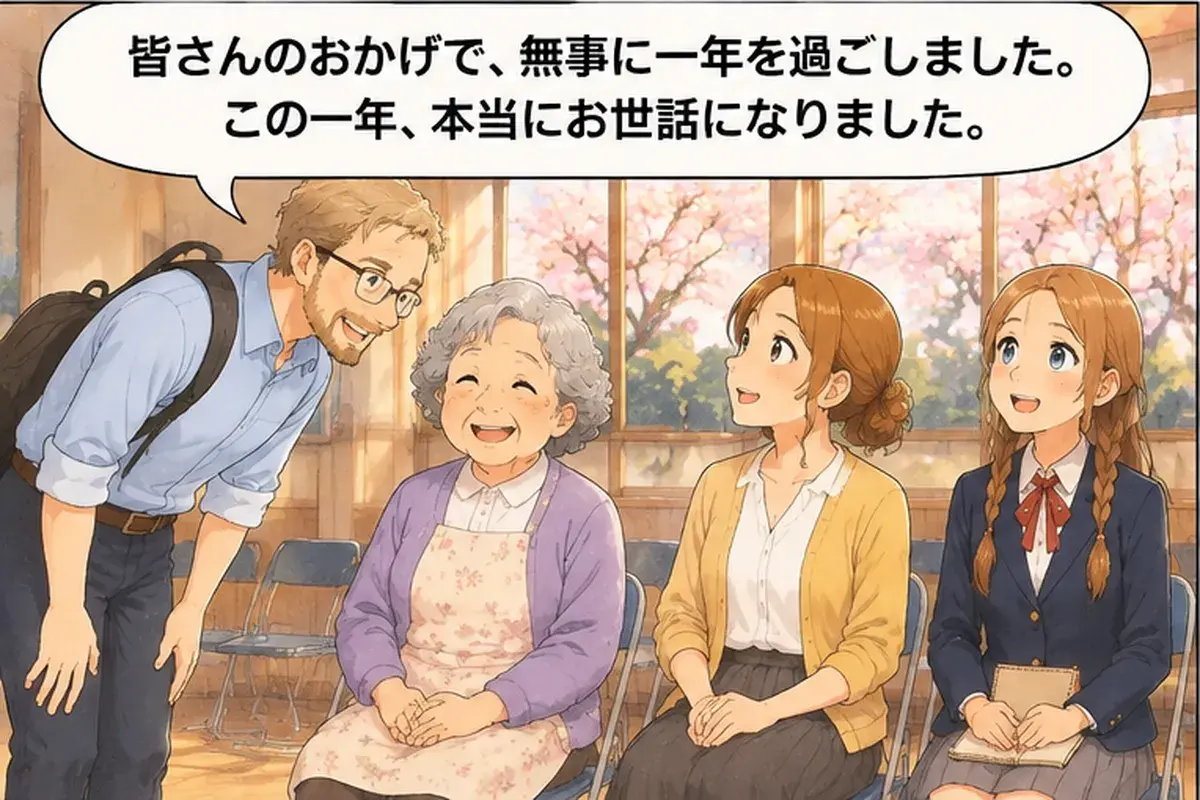
- マルク
皆さんのおかげで、無事に一年を過ごしました。この一年、本当にお世話になりました。
Thanks to all of you, we spent the year safely. Thank you so much for everything this year.
- マルク
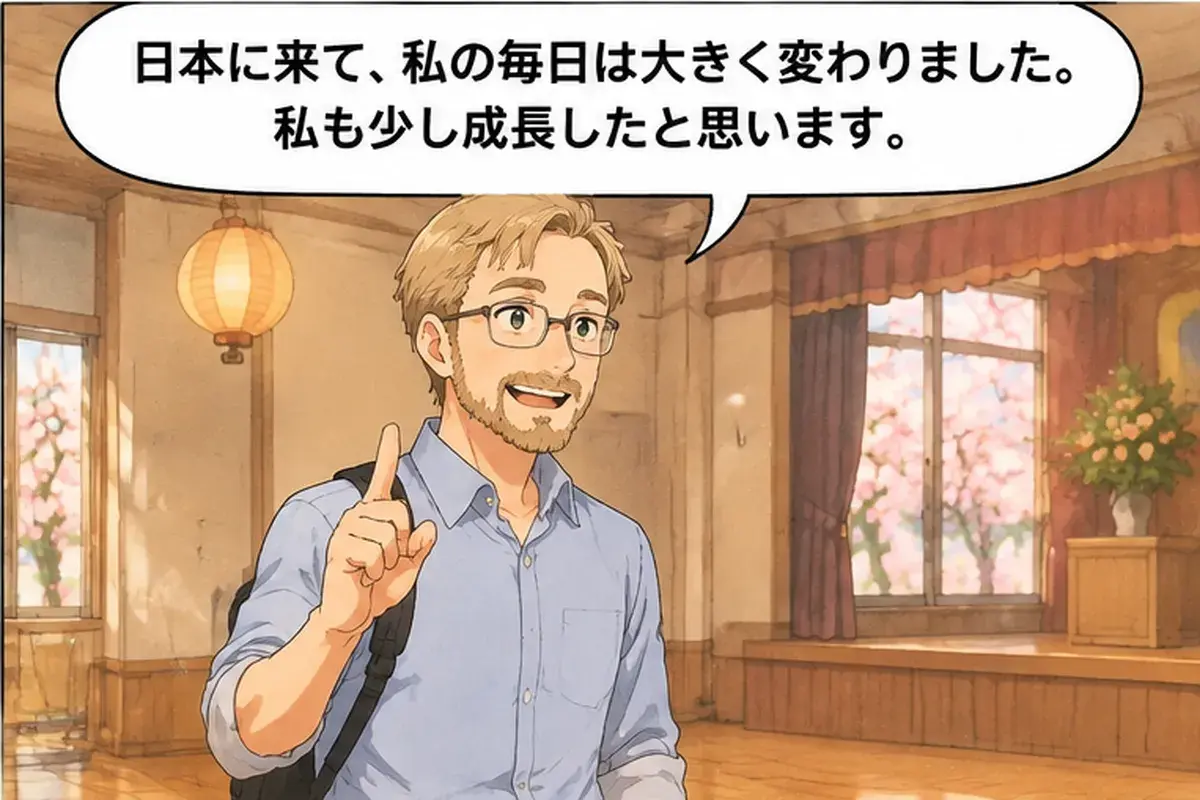
日本に来て、私の毎日は大きく変わりました。私も少し成長したと思います。
Since coming to Japan, my daily life has changed a lot. I think I've grown a little, too.
- マルク
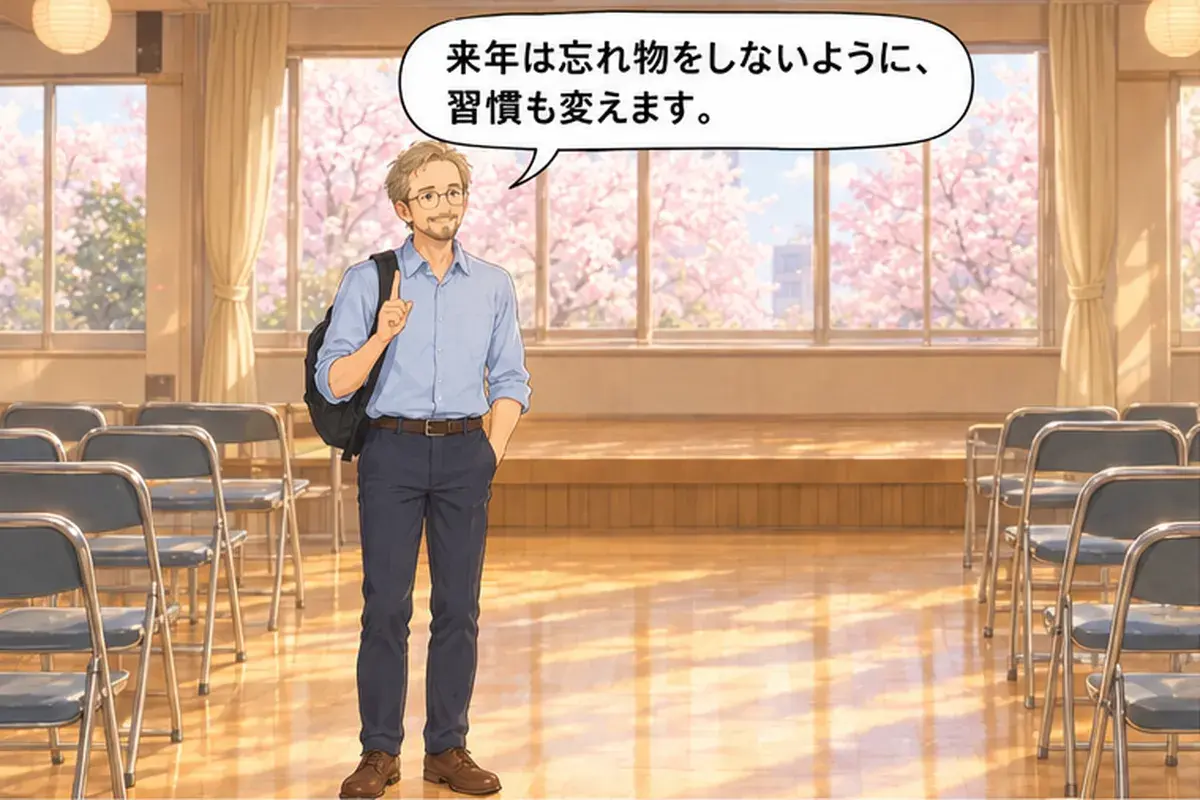
来年は忘れ物をしないように、習慣も変えます。
Next year I'll change my habits, too, so that I don't forget things.
- マルク
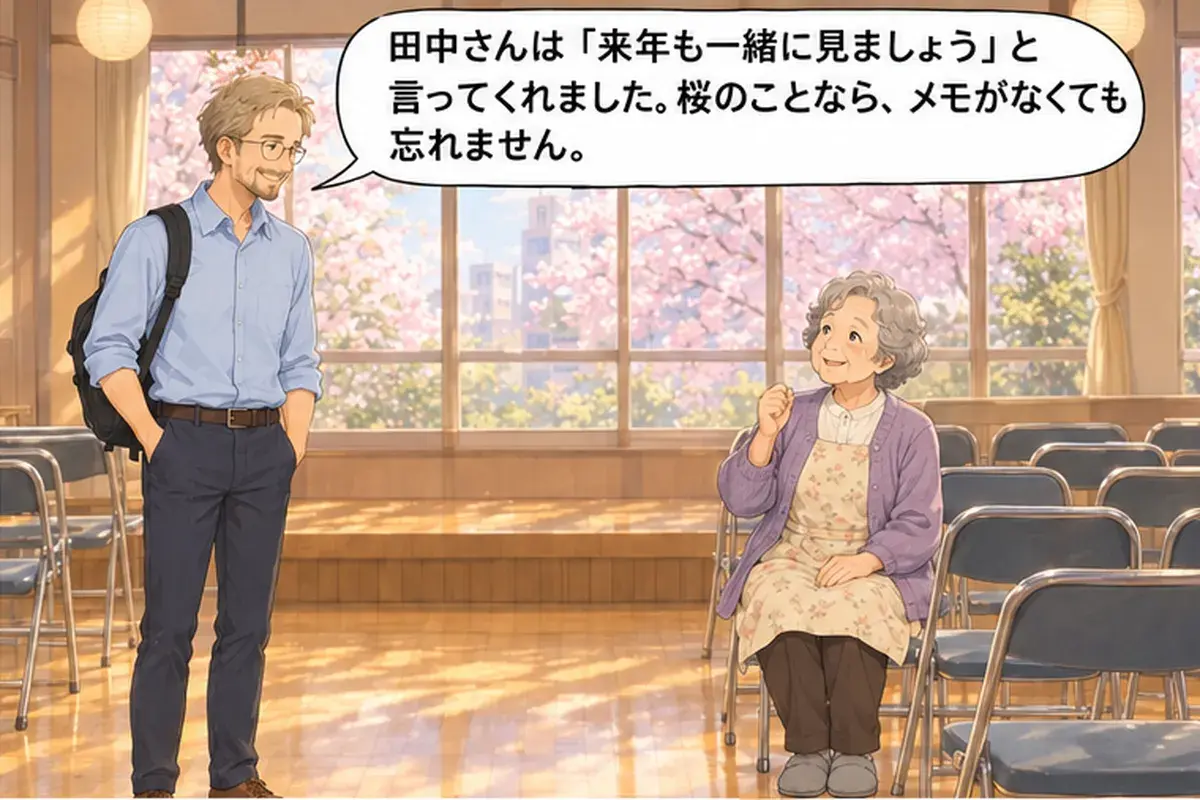
田中さんは「来年も一緒に見ましょう」と言ってくれました。桜のことなら、メモがなくても忘れません。
Tanaka-san said, "Let's watch them together next year." As for cherry blossoms, I won't forget them even without notes.
- マルク
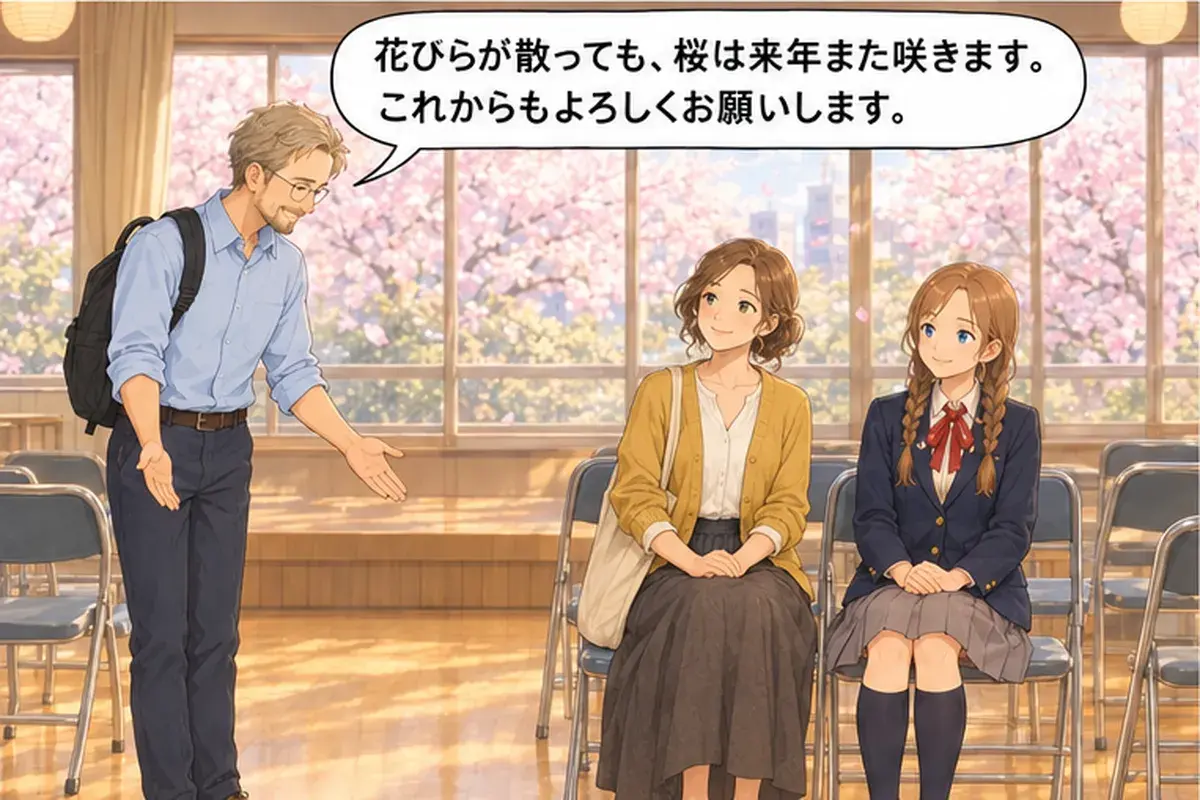
花びらが散っても、桜は来年また咲きます。これからもよろしくお願いします。
Even if the petals fall, the cherry blossoms will bloom again next year. I hope we'll keep getting along from now on.
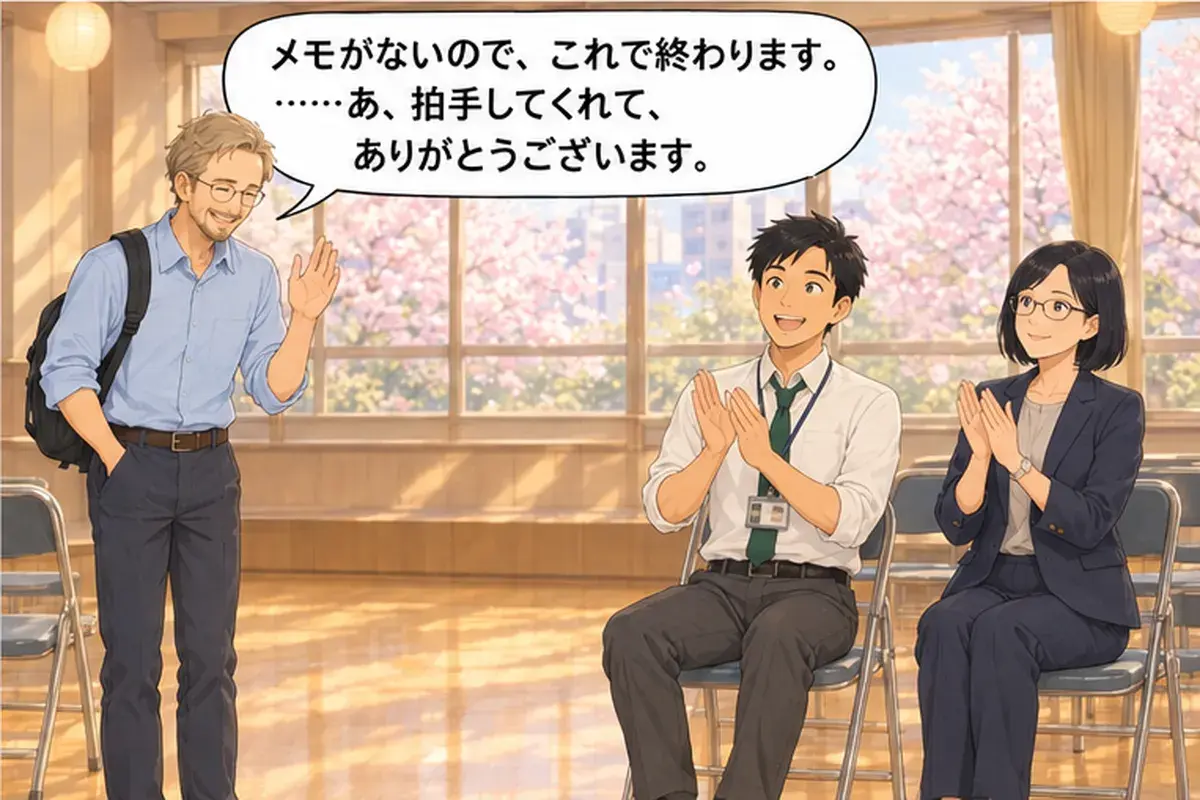
- マルク
メモがないので、これで終わります。……あ、拍手してくれて、ありがとうございます。
Since I have no notes, I'll end here. ... Oh, thank you for applauding.
Grammar for this text
お礼 を 言う ために— in order to say thank you. Beforeためにcomes the dictionary form. The goal is something the person does, soために.上手 に なる ように,忘れ物 を しない ように— so that (my Japanese) gets better, so that I don't forget things. This goal doesn't depend on one action: Japanese "becomes" better, things "don't get forgotten". Beforeようにcomes the dictionary form or theないform.皆さん の おかげ で— thanks to all of you.おかげis like "credit, kindness": you use it when something good happened because of someone.本当 に お世話に なりました— thank you so much for everything. It is a set phrase: "thank you for everything you've done for me". You say it at the end of a long period, such as a year, a job or school.お世話means "care, looking after someone" andなりましたcomes fromなる. For now, learn it as one phrase.仲間 の リン さん は— Linh-san, a friend of mine.仲間 のbefore the name tells you who she is to Mark.おめでとう ございますis the polite "congratulations" (unit 19): in front of everyone you say it this way, not the shortおめでとう.桜 の こと なら— as for cherry blossoms.〜の こと ならmeans "if it's about...". Mark jokes that he needs notes for the speech, but he remembers the cherry blossoms without them.「来年 も 一緒に 見ましょう」 と 言って くれました— Tanaka-san said, "Let's watch them together next year." The words being quoted go in the brackets「 」, thenと 言う.くれましたshows that she said it kindly, for us: thanks for her action (unit 12).拍手して—拍手するmeans "to clap, applaud"; you can also say拍手 を する.
Words and grammar of the unit: Look back and say thank you.
Learn the words from the texts with flashcards
In the app, you can tap any word in a text to see its translation, forms and examples, and new words stick with flashcards. 15 minutes a day.
Start for freeEverything is open for free. No card needed to sign up.