
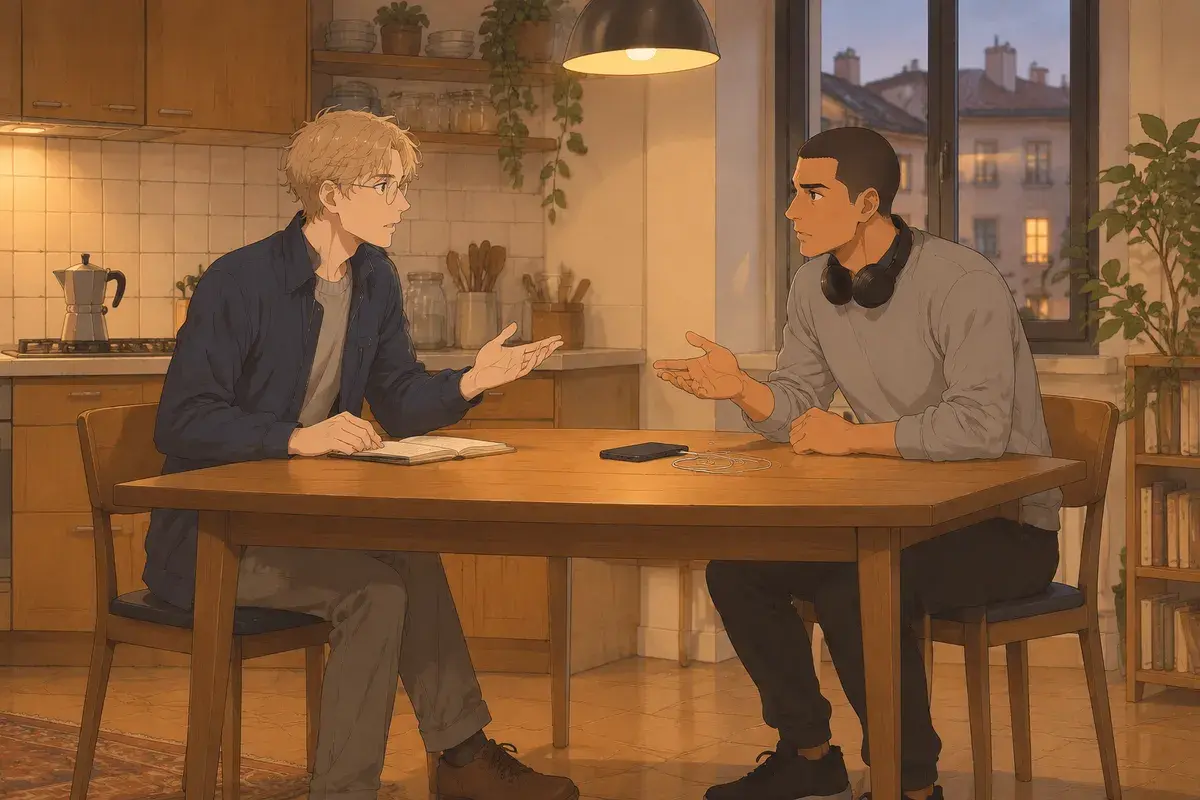
Italian dialogue with translation · B1 · 16 lines
Il telefono dorme in cucina The phone sleeps in the kitchen
Comic · 16 panels
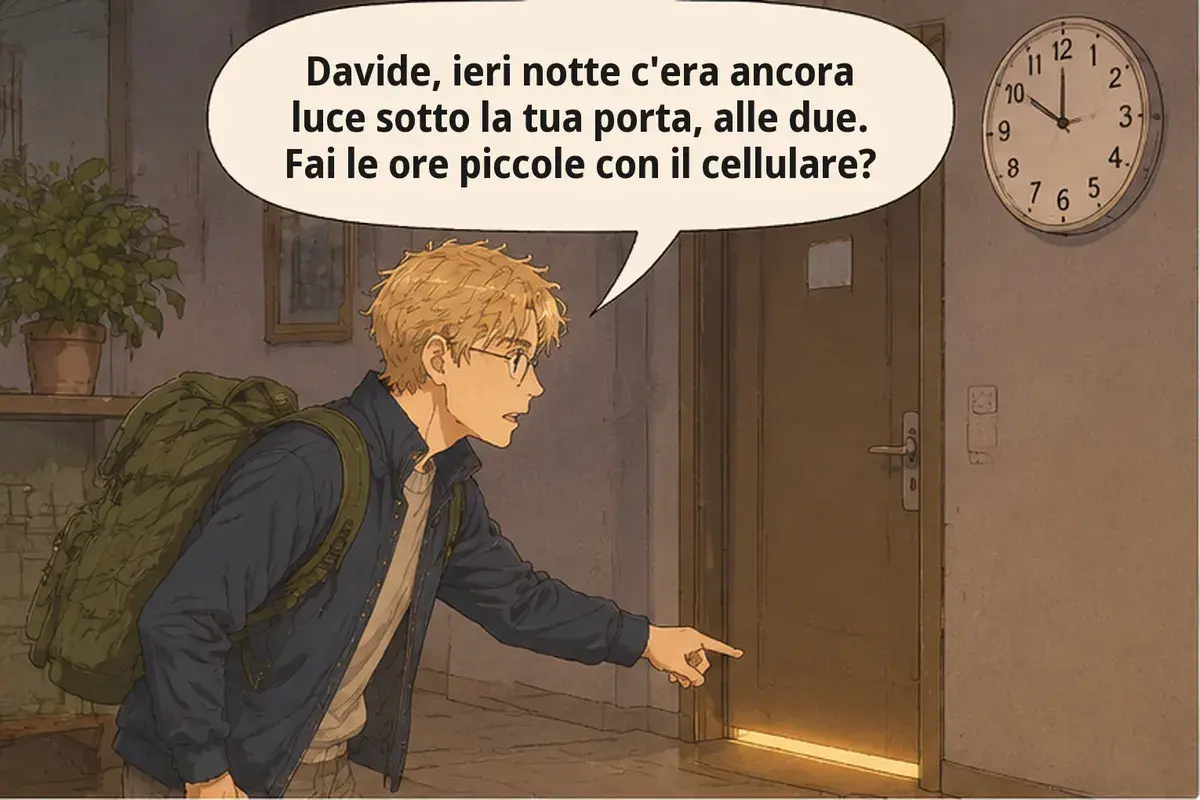
- Misha
Davide, ieri notte c'era ancora luce sotto la tua porta, alle due. Fai le ore piccole con il cellulare?
Davide, last night there was still light under your door at two. Are you staying up late with your phone?
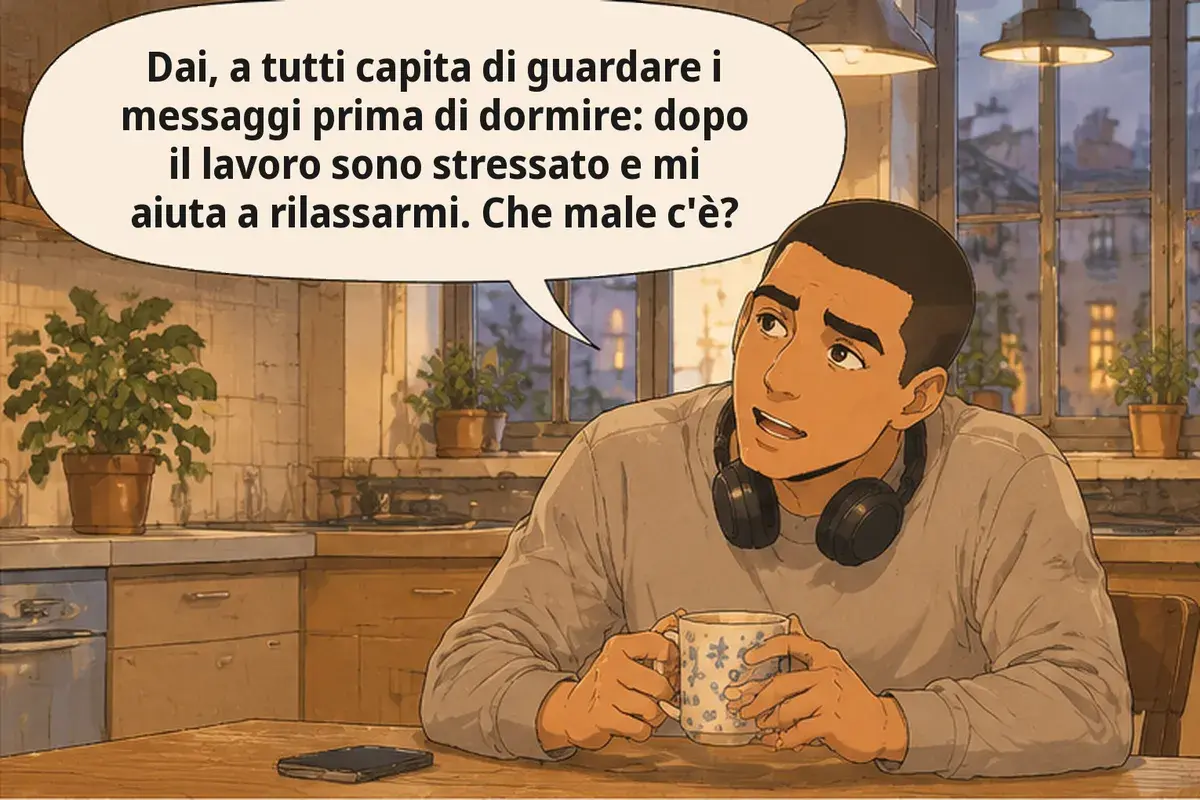
- Davide
Dai, a tutti capita di guardare i messaggi prima di dormire: dopo il lavoro sono stressato e mi aiuta a rilassarmi. Che male c'è?
Come on, everybody looks at their messages before bed: after work I'm stressed (man speaking) and it helps me relax. What's wrong with that?
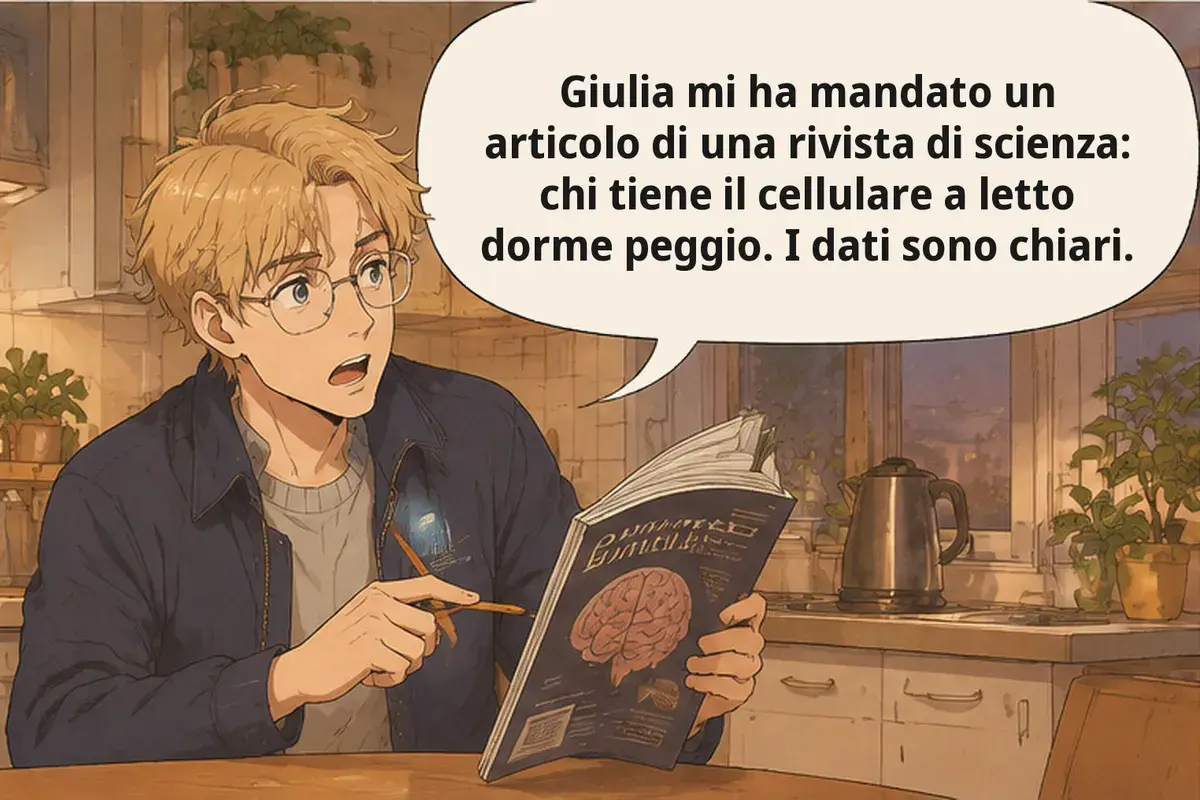
- Misha
Giulia mi ha mandato un articolo di una rivista di scienza: chi tiene il cellulare a letto dorme peggio. I dati sono chiari.
Giulia sent me an article from a science magazine: people who keep their phone in bed sleep worse. The data are clear.
- Davide
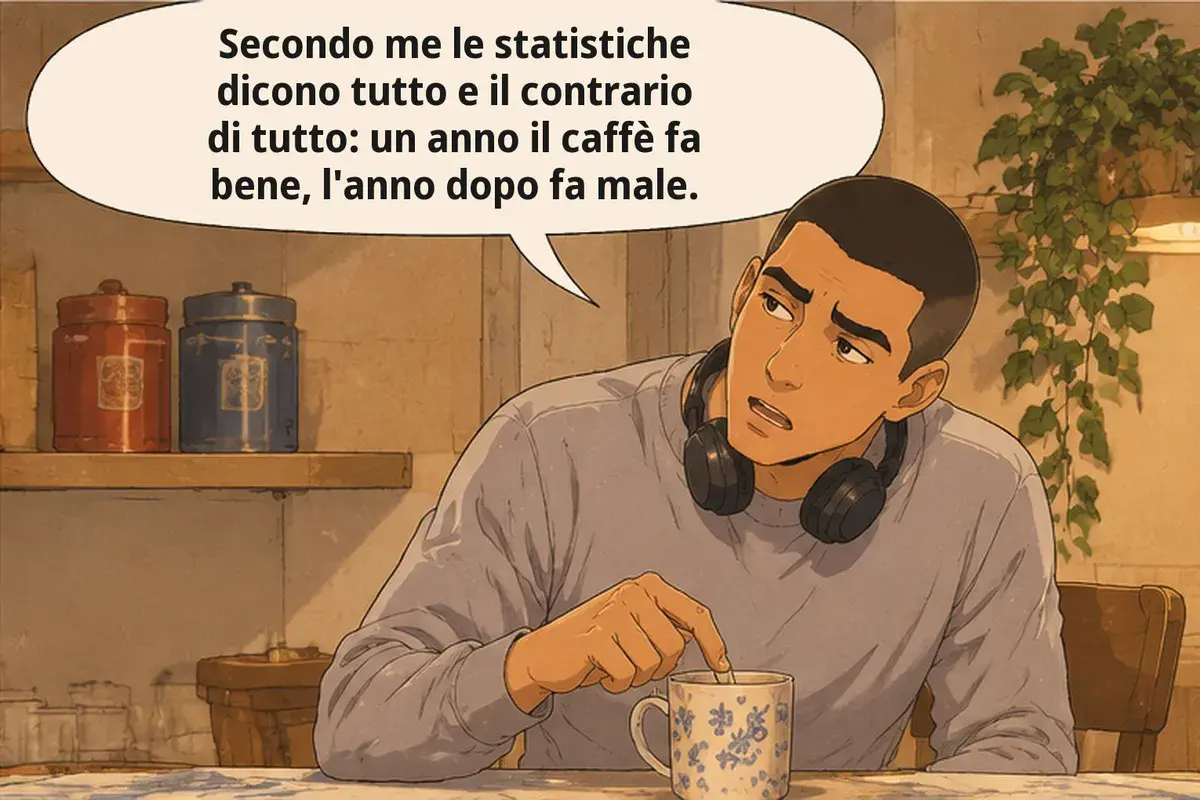
Secondo me le statistiche dicono tutto e il contrario di tutto: un anno il caffè fa bene, l'anno dopo fa male.
In my opinion, statistics say everything and the opposite of everything: one year coffee is good for you, the next year it's bad for you.
- Misha
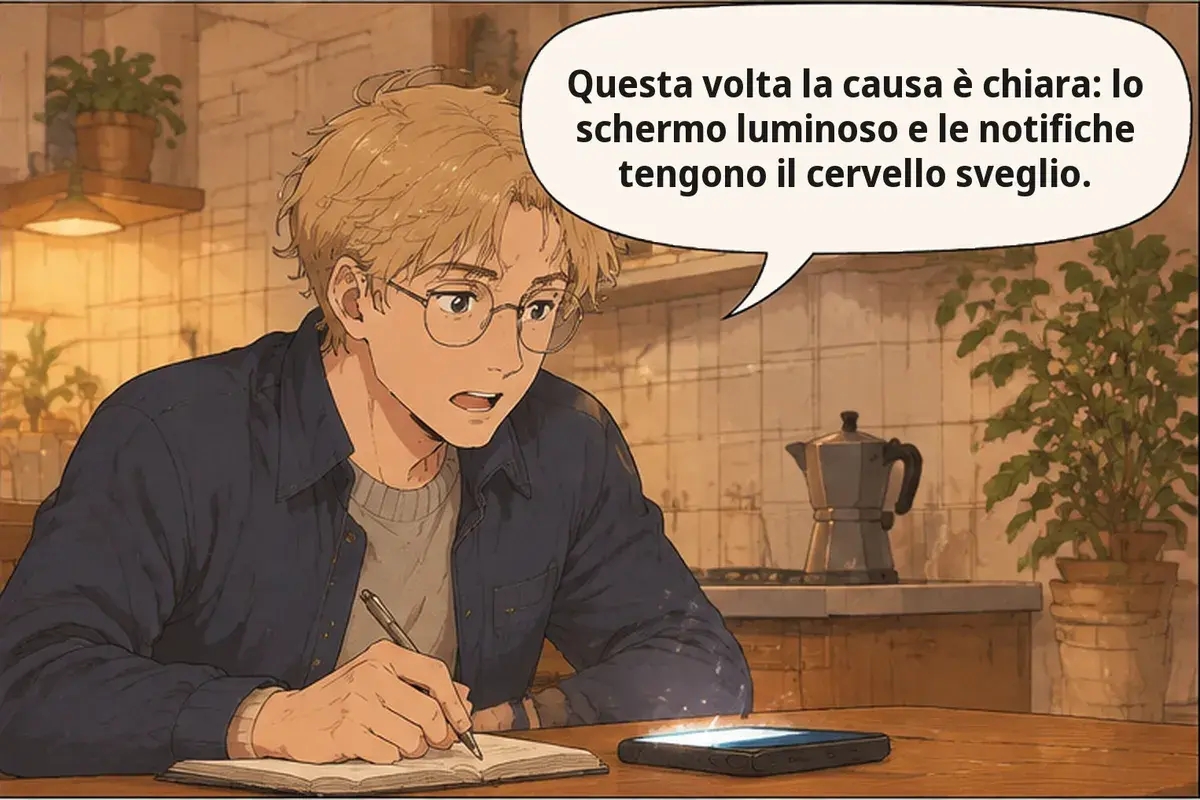
Questa volta la causa è chiara: lo schermo luminoso e le notifiche tengono il cervello sveglio.
This time the cause is clear: the bright screen and the notifications keep the brain awake.

- Davide
Sveglio io? Sara dice che dormo della grossa.
Me, awake (man speaking)? Sara says I sleep like a log.
- Misha
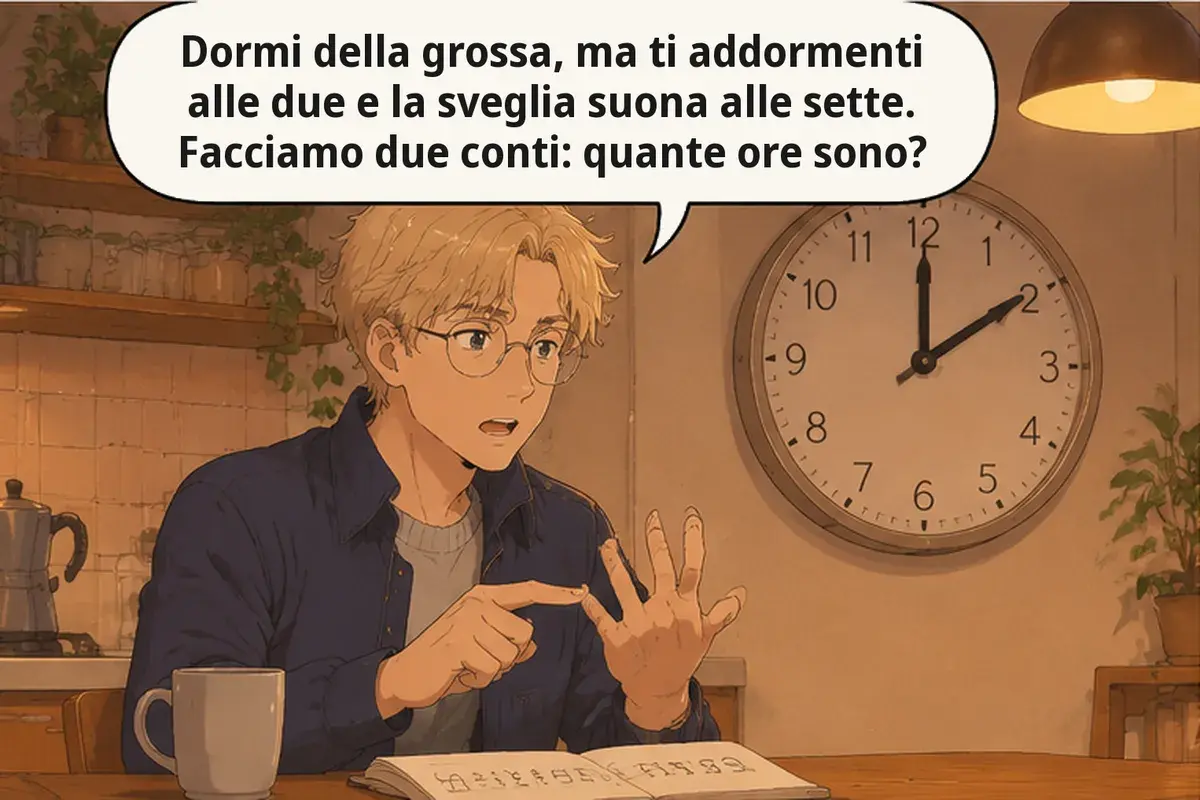
Dormi della grossa, ma ti addormenti alle due e la sveglia suona alle sette. Facciamo due conti: quante ore sono?
You sleep like a log, but you fall asleep at two and the alarm goes off at seven. Let's do the math: how many hours is that?

- Davide
Cinque, grosso modo. Ma lavoro da casa e ogni tanto faccio un pisolino.
Five, roughly. But I work from home and now and then I take a nap.
- Misha
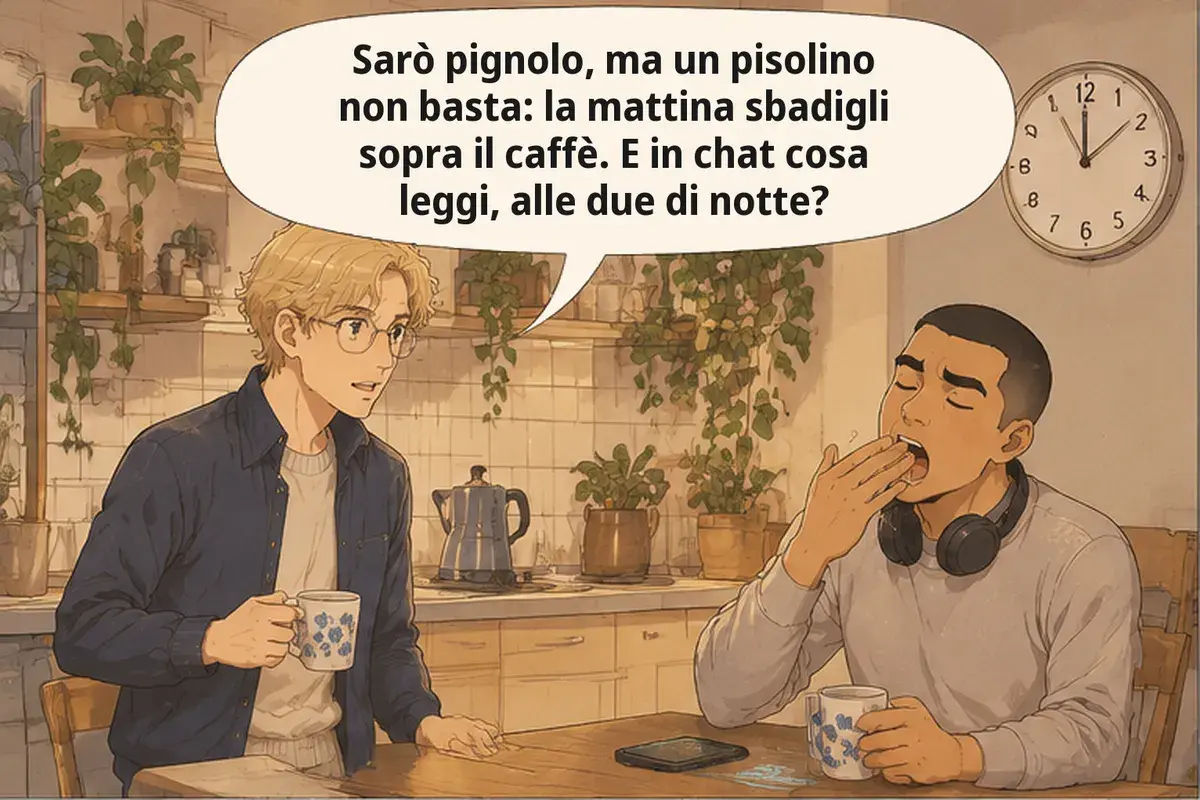
Sarò pignolo, ma un pisolino non basta: la mattina sbadigli sopra il caffè. E in chat cosa leggi, alle due di notte?
I may be picky (man speaking), but a nap isn't enough: in the morning you yawn over your coffee. And what do you read in the chat at two in the morning?
- Davide
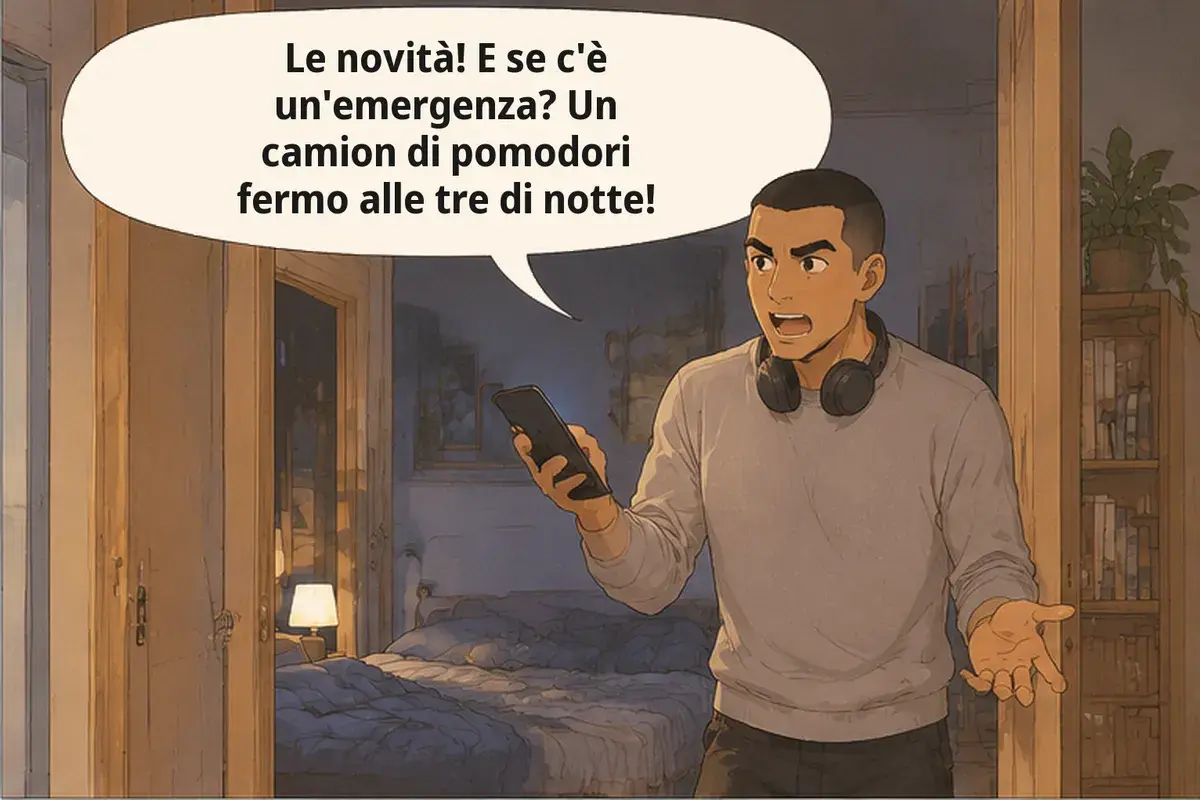
Le novità! E se c'è un'emergenza? Un camion di pomodori fermo alle tre di notte!
The news! And what if there's an emergency? A truck full of tomatoes stuck at three in the morning!
- Misha
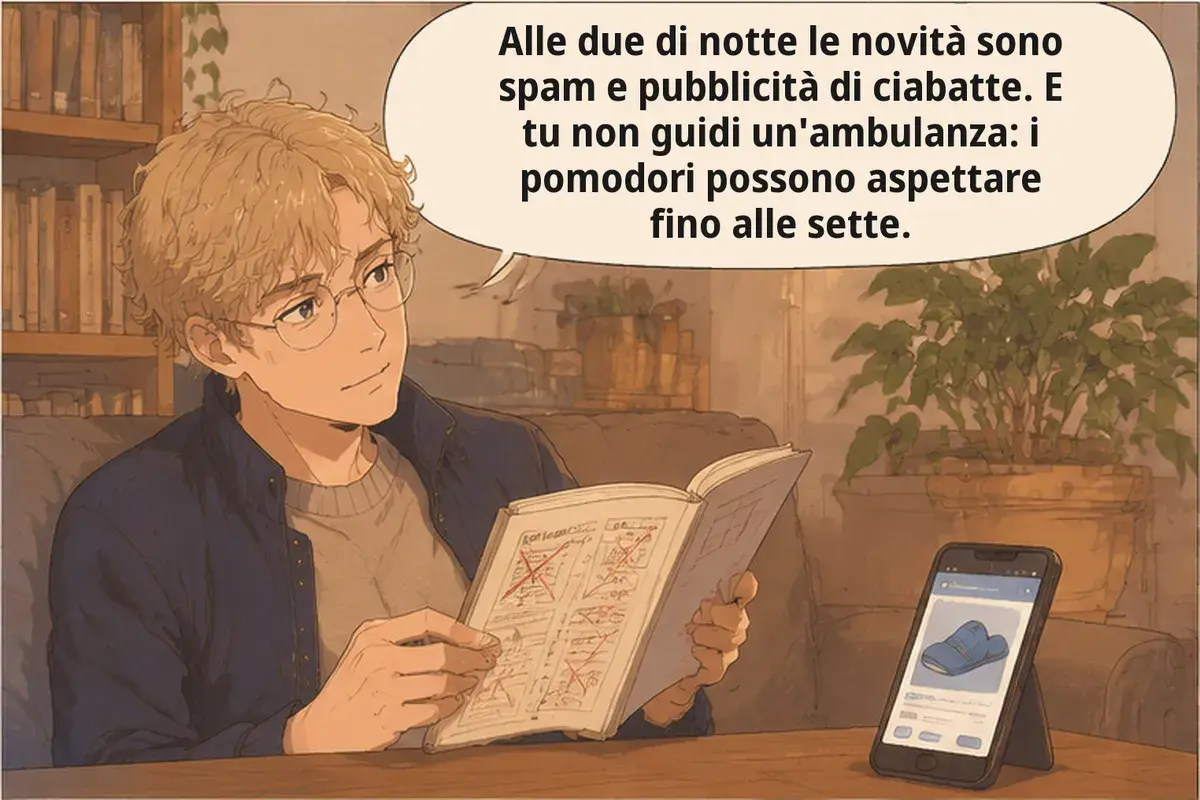
Alle due di notte le novità sono spam e pubblicità di ciabatte. E tu non guidi un'ambulanza: i pomodori possono aspettare fino alle sette.
At two in the morning the news is spam and ads for slippers. And you don't drive an ambulance: the tomatoes can wait until seven.
- Davide
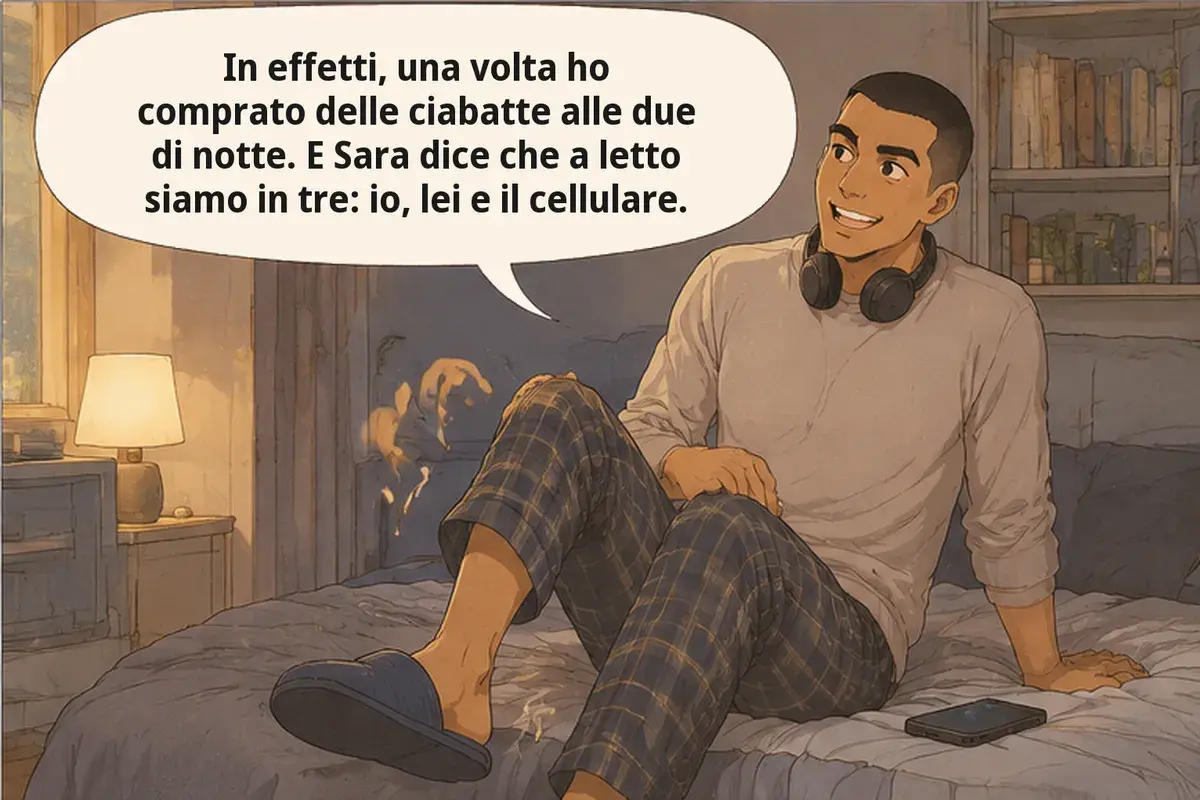
In effetti, una volta ho comprato delle ciabatte alle due di notte. E Sara dice che a letto siamo in tre: io, lei e il cellulare.
Actually, once I bought slippers at two in the morning. And Sara says there are three of us in bed: me, her and the phone.
- Misha
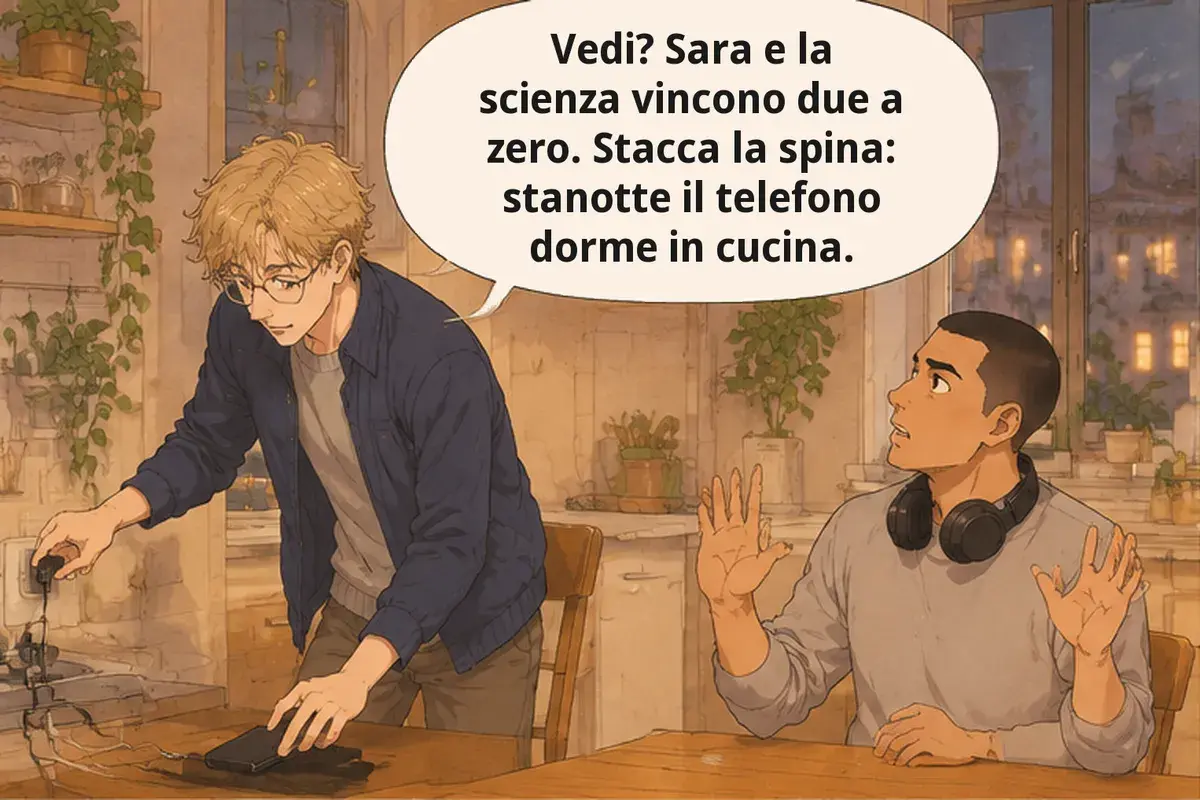
Vedi? Sara e la scienza vincono due a zero. Stacca la spina: stanotte il telefono dorme in cucina.
See? Sara and science are winning two to nothing. Unplug: tonight the phone sleeps in the kitchen.
- Davide
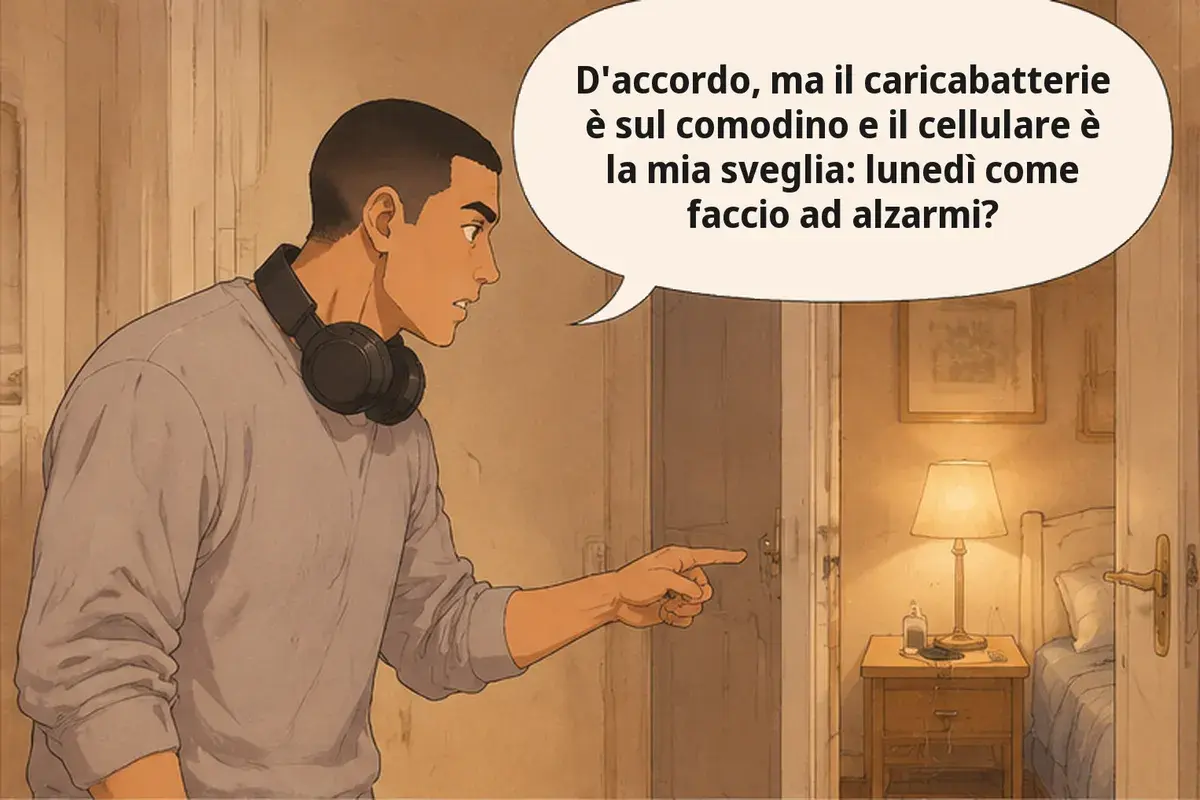
D'accordo, ma il caricabatterie è sul comodino e il cellulare è la mia sveglia: lunedì come faccio ad alzarmi?
OK, but the charger is on my nightstand and my phone is my alarm clock: how am I supposed to get up on Monday?
- Misha
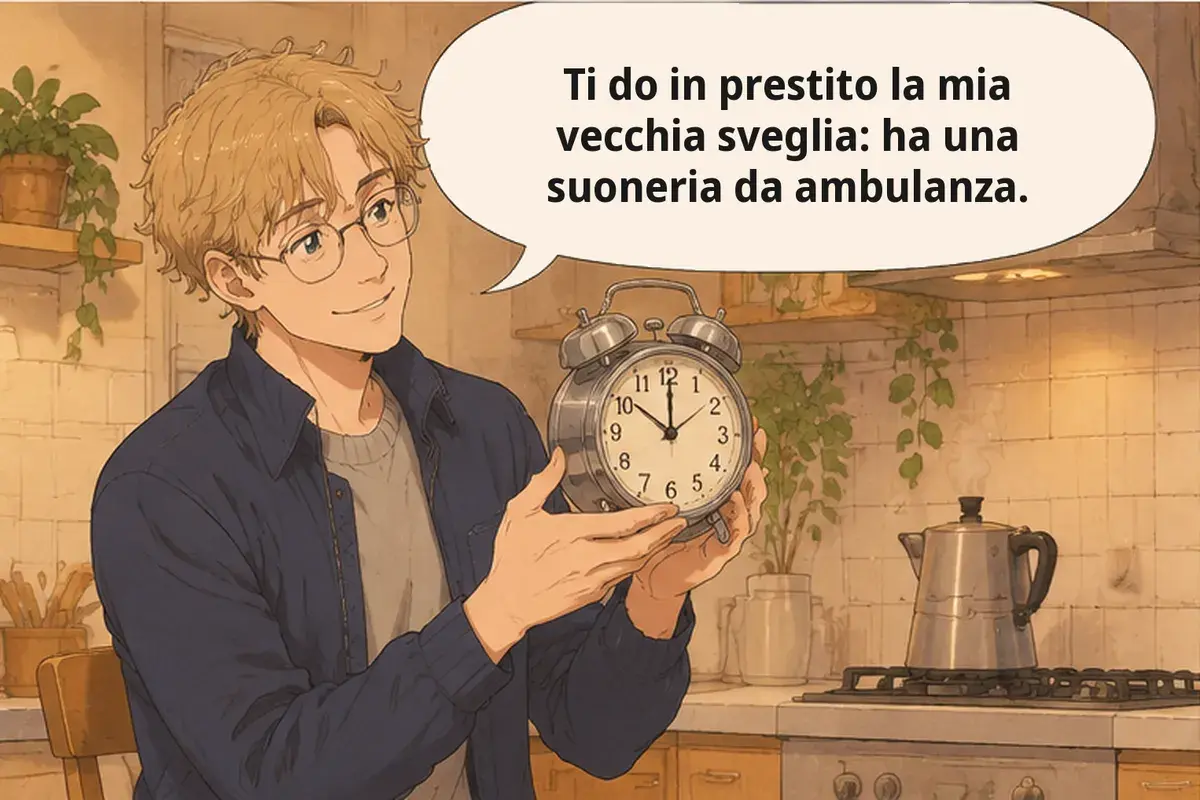
Ti do in prestito la mia vecchia sveglia: ha una suoneria da ambulanza.
I'll loan you my old alarm clock: it has an ambulance ringtone.
- Davide
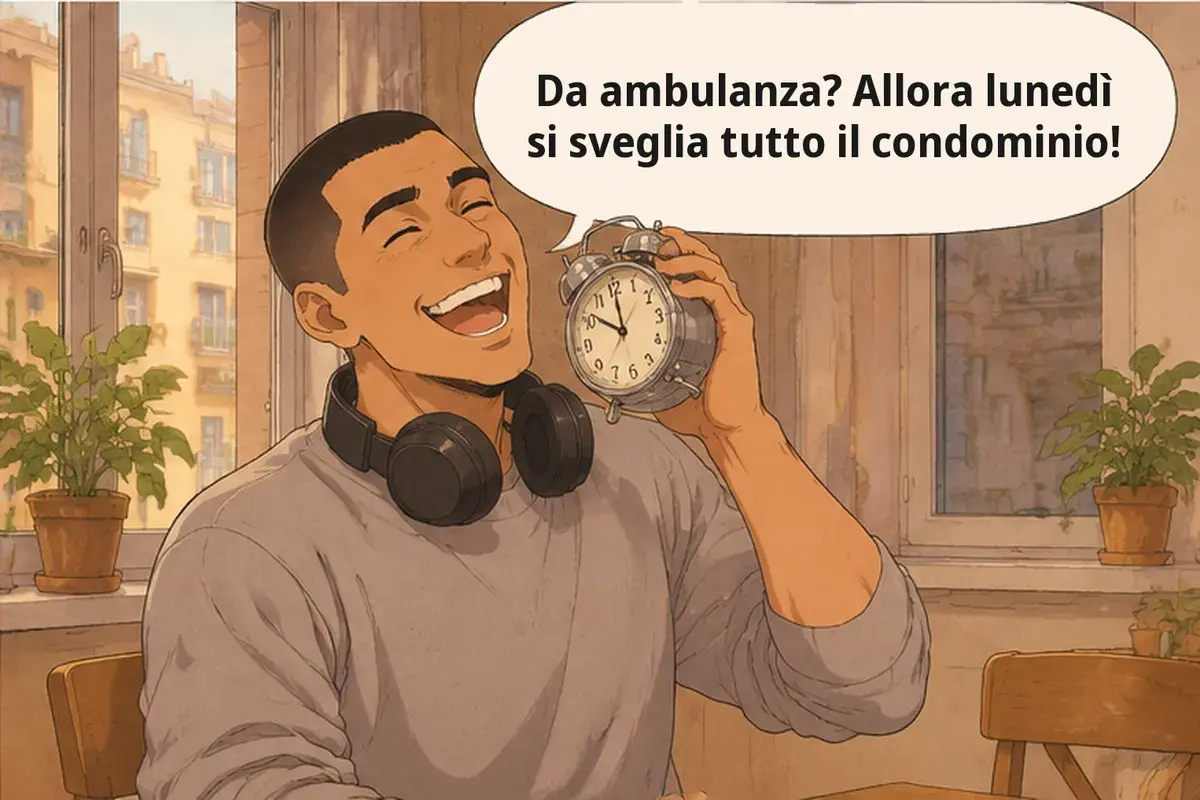
Da ambulanza? Allora lunedì si sveglia tutto il condominio!
An ambulance ringtone? Then on Monday the whole building will wake up!
Grammar for this text
- Fai le ore piccole con il cellulare? —
fare le ore piccolemeans "to stay up late" (le ore piccoleare the hours after midnight). - c'era ancora luce —
c'eraisci+era: a description of the background (imperfetto, the past of habits and descriptions). - a tutti capita di guardare i messaggi —
capitaremeans "to happen"; aftercapita dicomes an infinitive. - Che male c'è? — "What's wrong with that?"
- Sara dice che dormo della grossa —
dormire della grossais an idiom: "to sleep like a log". It can't be translated word for word. Afterdice che(reporting someone's words) the normal form is used, not the congiuntivo. - Facciamo due conti — "let's do the math": a quick estimate, not an exact calculation.
- Cinque, grosso modo — "five, roughly".
- Secondo me — "in my opinion".
- In effetti — "actually, fair enough": you use it to admit that the other person's point convinced you.
- Stacca la spina —
staccais the tu imperative ofstaccare;staccare la spinameans "to unplug", "to switch off from everything". Here it is literal too: the phone stays in the kitchen. - Ti do in prestito la mia vecchia sveglia —
dare in prestitomeans "to lend";dois a form ofdare(A1). - lunedì si sveglia tutto il condominio —
svegliarsimeans "to wake up":si svegliais "wakes up".
Words and grammar of the unit: Discuss a science article.
Learn the words from the texts with flashcards
In the app, you can tap any word in a text to see its translation, forms and examples, and new words stick with flashcards. 15 minutes a day.
Start for freeEverything is open for free. No card needed to sign up.