

Italian story with translation · B1 · 10 lines
Sembrano due trattorie diverse They seem like two different trattorias
Comic · 8 panels
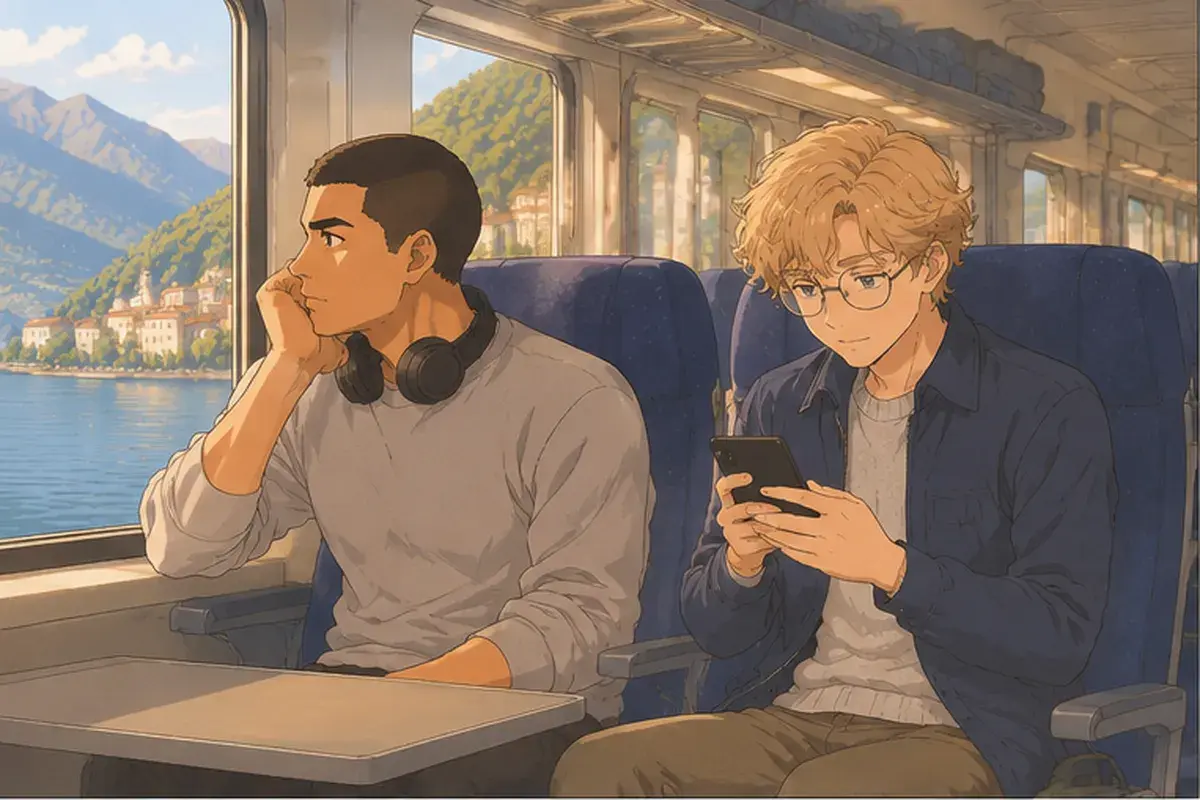
Sul treno per Varenna Davide guarda il paesaggio, e io leggo sul telefono le recensioni della trattoria dove vuole pranzare.
On the train to Varenna, Davide looks at the scenery, and on my phone I read the reviews of the trattoria where he wants to have lunch.
La prima recensione ha cinque stelle: «Polenta fantastica! Il servizio è gentile e dalla terrazza si vede tutto il lago.»
The first review has five stars: "Fantastic polenta! The service is friendly and you can see the whole lake from the terrace."

«Le porzioni sono grandi, ma io ne ho mangiate due. Tornerò sicuramente!»
"The portions are big, but I ate two of them. I'll definitely be back!"

La seconda recensione ha una stella sola: «Posto deludente! Abbiamo fatto la fila per un'ora e il servizio è lento.»
The second review has just one star: "Disappointing place! We stood in line for an hour and the service is slow."
«La polenta era fredda e il pesce costa un occhio della testa!»
"The polenta was cold and the fish costs an arm and a leg!"

Cinque stelle e una stella: sembrano due trattorie diverse.
Five stars and one star: they seem like two different trattorias.

Secondo me la verità sta nel mezzo: la polenta sarà buona, ma il pesce costa troppo.
In my opinion, the truth is somewhere in the middle: the polenta is probably good, but the fish costs too much.

Meno male che oggi non abbiamo fretta: un'ora di fila, con il lago davanti, si sopporta.
Thank goodness we're not in a hurry today: an hour in line, with the lake right in front of you, is bearable.

Davide mi guarda e chiede: «Allora, cinque stelle o una?»
Davide looks at me and asks: "So, five stars or one?"

«Tutte e due», rispondo. «Prendiamo la polenta e non guardiamo il prezzo del pesce.»
"Both," I answer. "Let's have the polenta and not look at the price of the fish."
Grammar for this text
- io ne ho mangiate due —
nemeans "of them" (of the portions), and it goes together with the numberdue: "I ate two of them." The participlemangiateis feminine plural, likeporzioni(unit 10). - il pesce costa un occhio della testa — a set phrase meaning "it costs an arm and a leg"; word for word it is "it costs an eye of the head."
- Abbiamo fatto la fila per un'ora —
fare la filameans "to stand in line." - Cinque stelle e una stella: sembrano due trattorie diverse —
sembranomeans "they seem": the two reviews of the same place sound nothing alike.recensioneis "review";deludenteis "disappointing." - la polenta sarà buona —
saràis a guess about now: "is probably good" (unit 1). - Secondo me — "in my opinion", "I think."
- Meno male che oggi non abbiamo fretta —
meno male chemeans "thank goodness"; after it comes a fact, in the normal form. - si sopporta — impersonal
si: "you can put up with it", "it's bearable."
Words and grammar of the unit: Talk openly about dreams and regrets.
Learn the words from the texts with flashcards
In the app, you can tap any word in a text to see its translation, forms and examples, and new words stick with flashcards. 15 minutes a day.
Start for freeEverything is open for free. No card needed to sign up.