

Italian dialogue with translation · B1 · 18 lines
Mi dispiace che tu debba andare via I'm sorry you have to leave
Comic · 18 panels
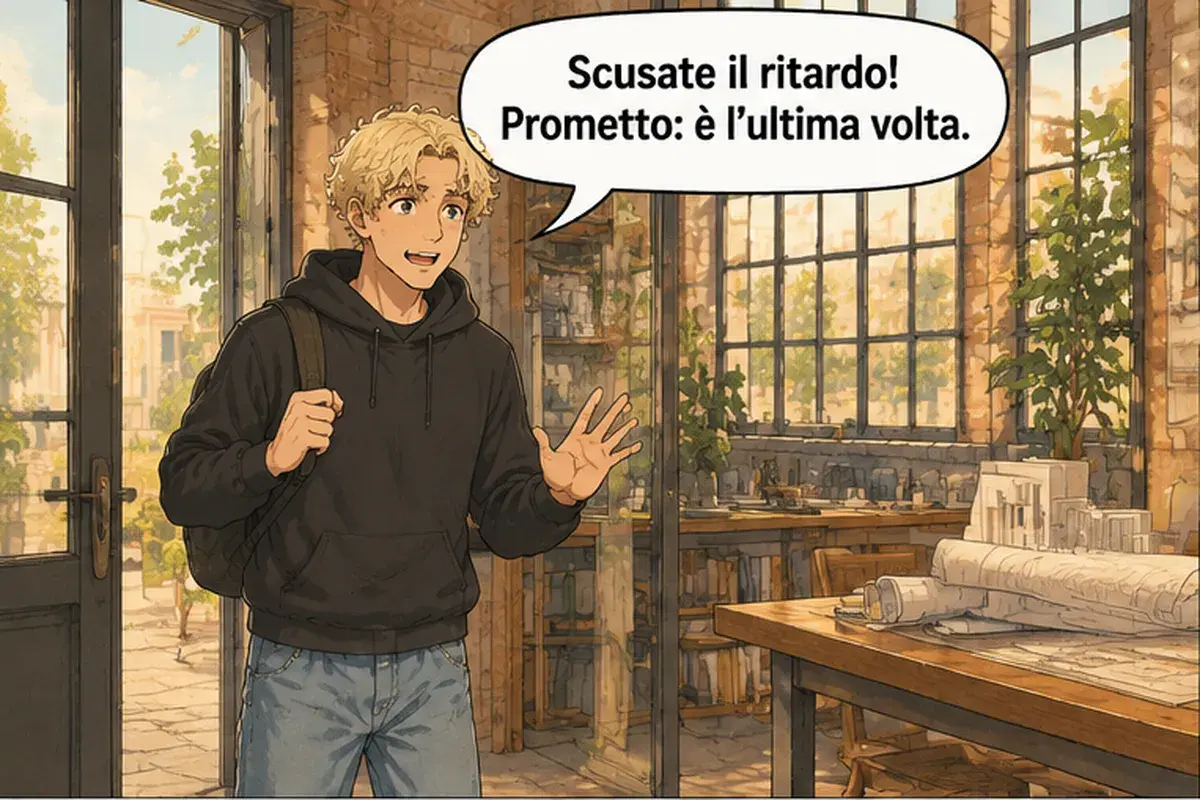
- Tommaso
Scusate il ritardo! Prometto: è l'ultima volta.
Sorry I'm late (to several people)! I promise: it's the last time.
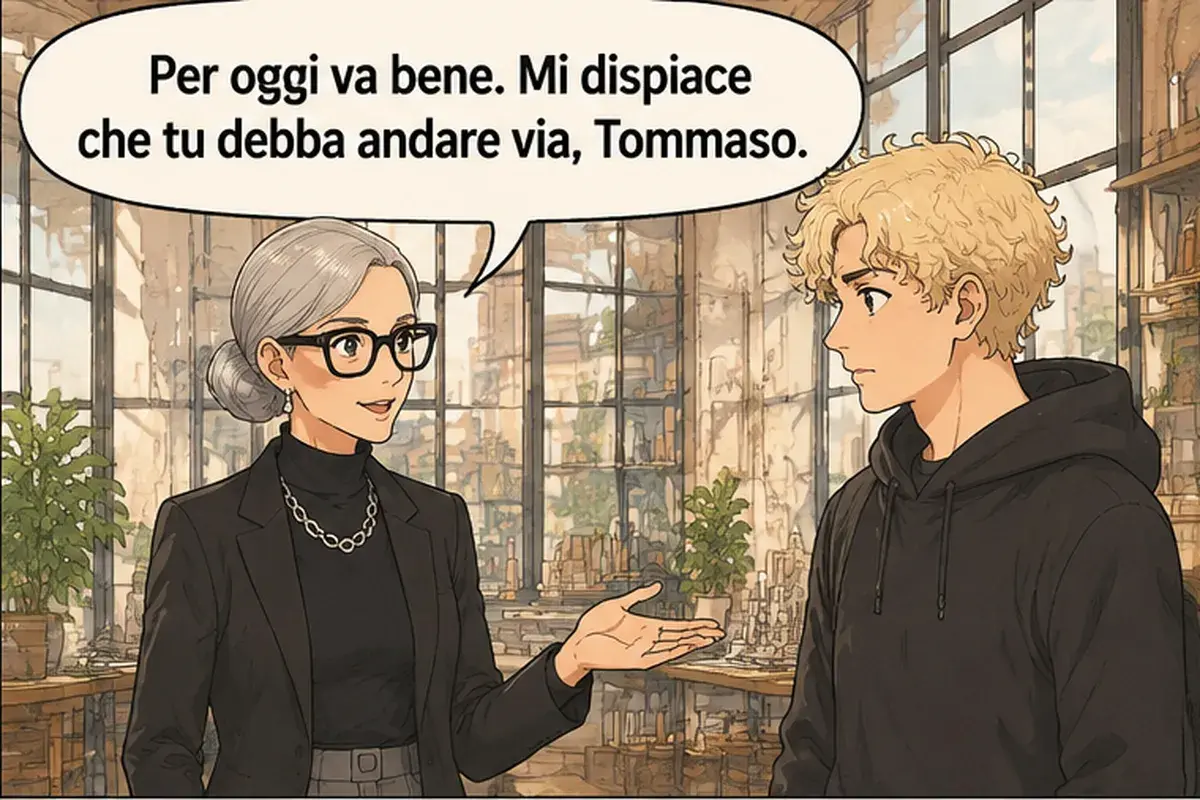
- Ludovica
Per oggi va bene. Mi dispiace che tu debba andare via, Tommaso.
That's fine for today. I'm sorry you have to leave, Tommaso.
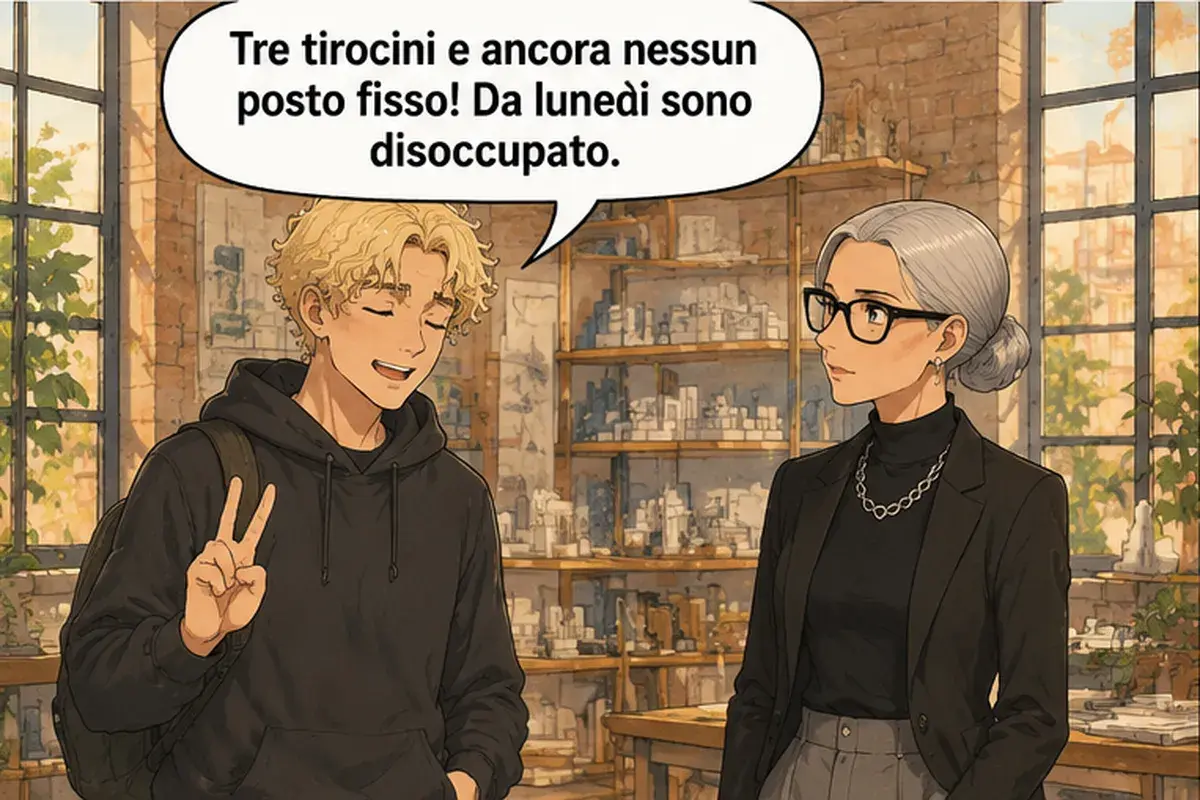
- Tommaso
Tre tirocini e ancora nessun posto fisso! Da lunedì sono disoccupato.
Three internships and still no steady job! Starting Monday, I'm unemployed (man speaking).
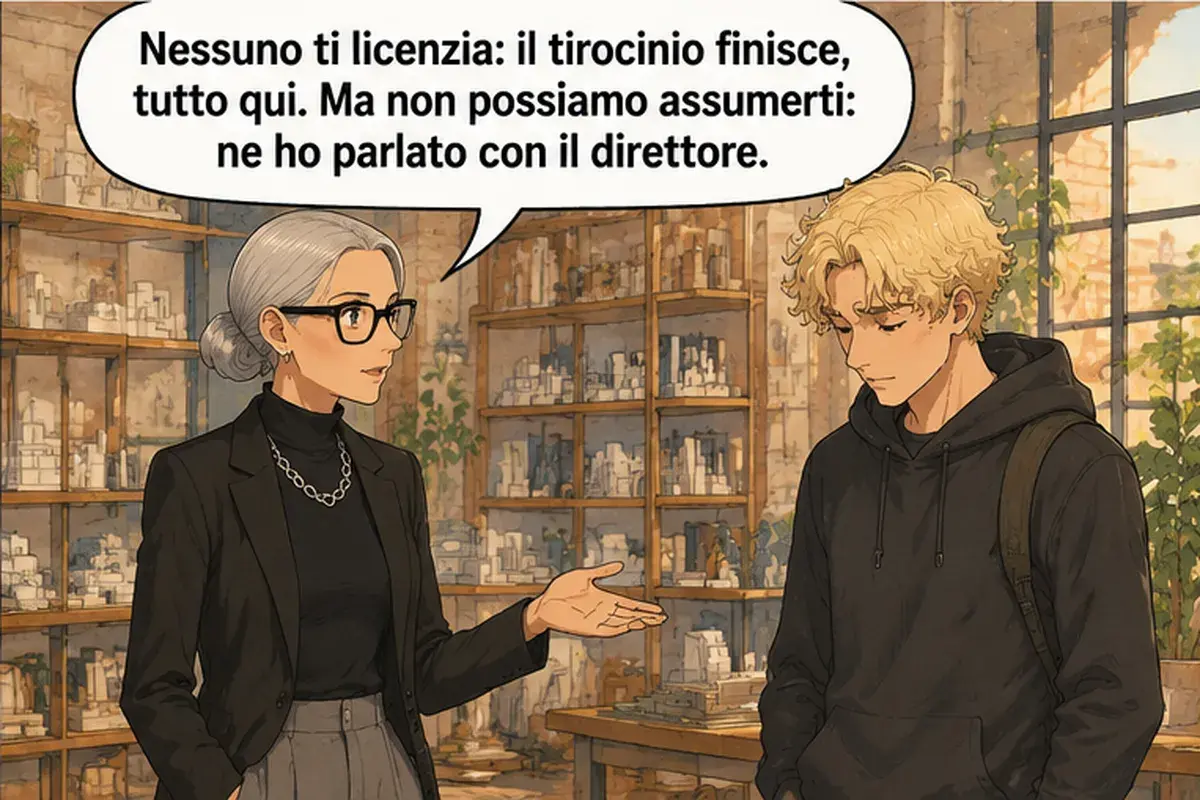
- Ludovica
Nessuno ti licenzia: il tirocinio finisce, tutto qui. Ma non possiamo assumerti: ne ho parlato con il direttore.
Nobody's firing you: the internship is ending, that's all. But we can't hire you: I talked to the director about it.
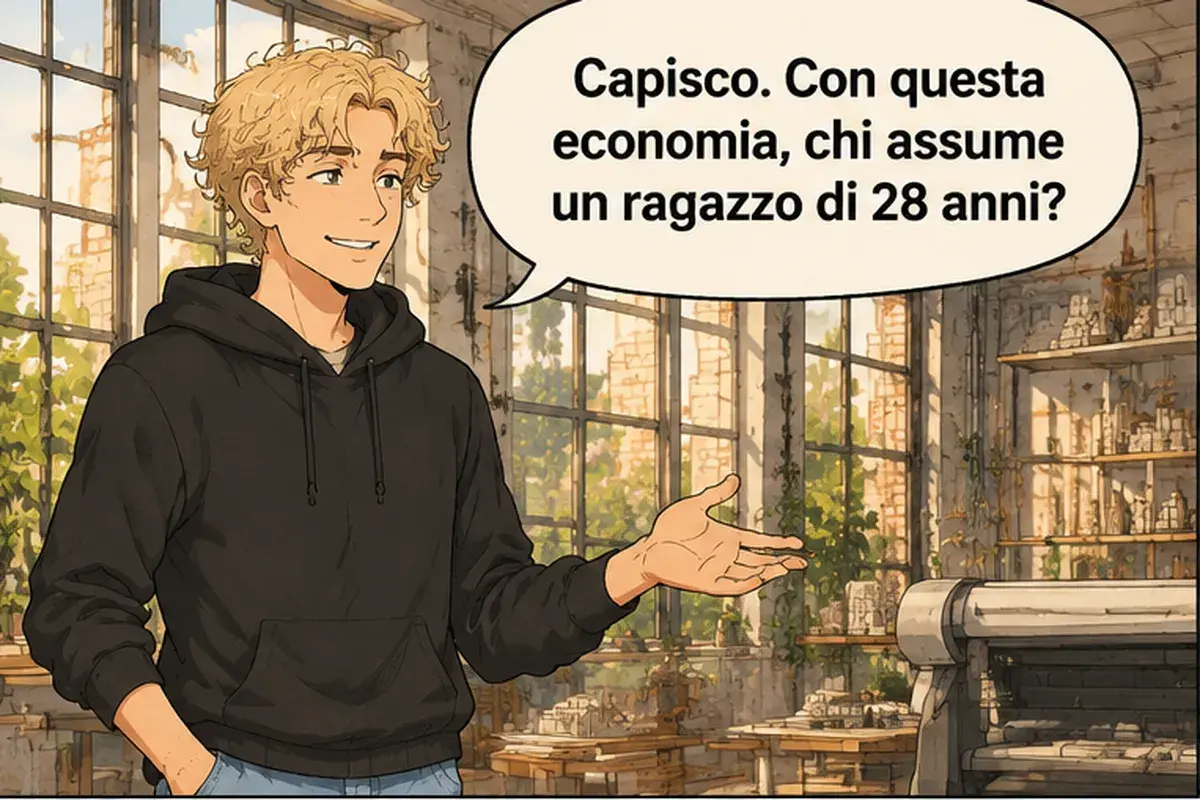
- Tommaso
Capisco. Con questa economia, chi assume un ragazzo di 28 anni?
I understand. With this economy, who's hiring a 28-year-old guy?
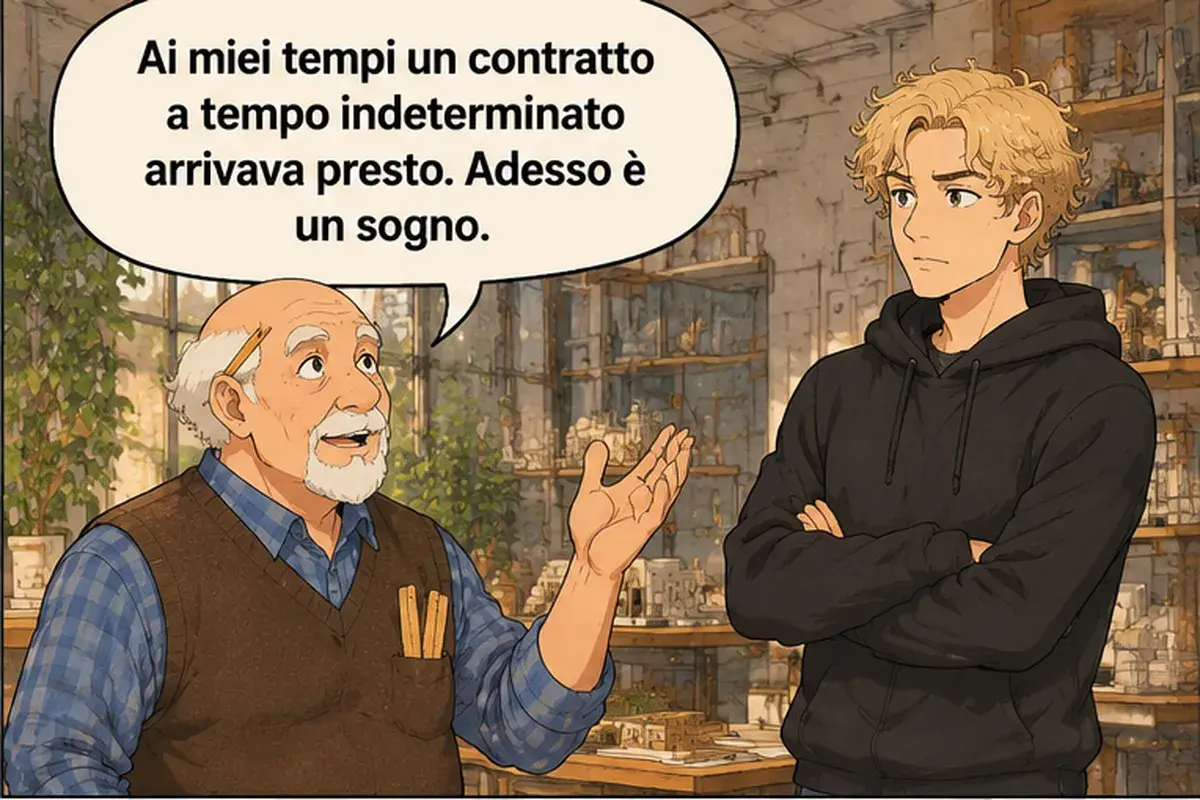
- Gianni
Ai miei tempi un contratto a tempo indeterminato arrivava presto. Adesso è un sogno.
In my day a permanent contract used to come quickly. Now it's a dream.
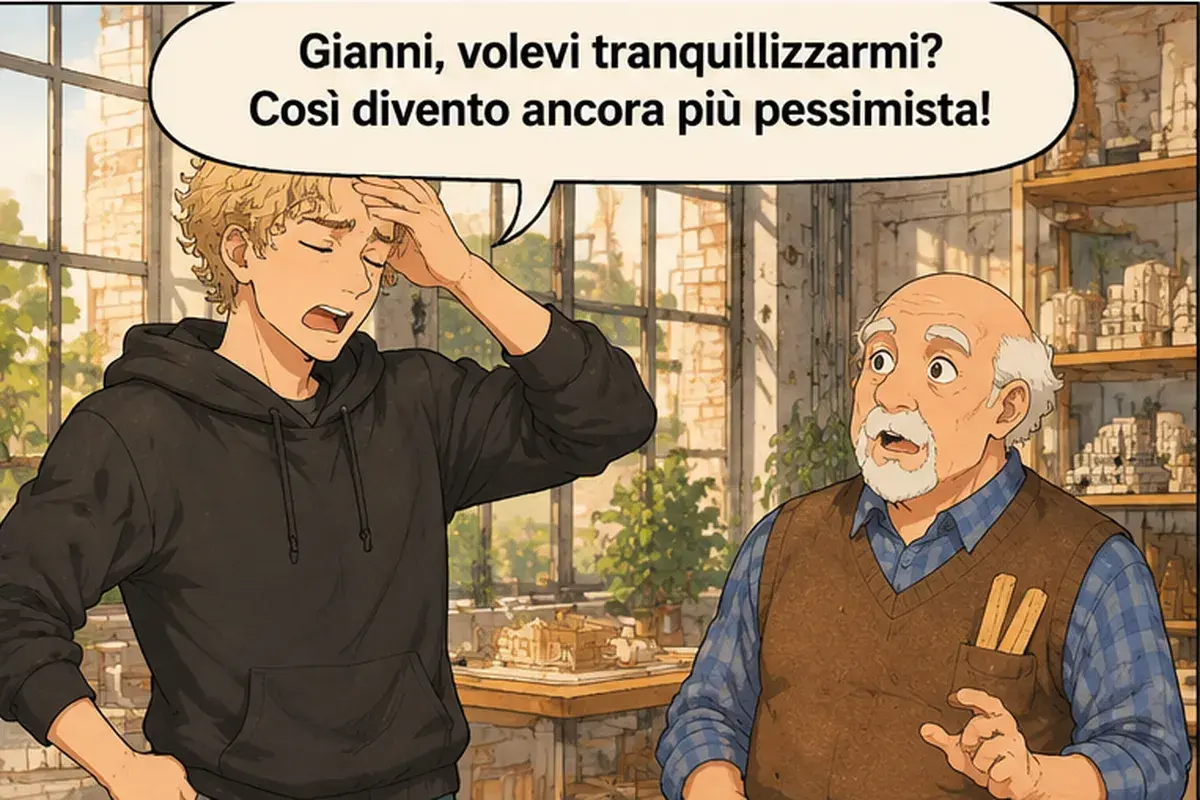
- Tommaso
Gianni, volevi tranquillizzarmi? Così divento ancora più pessimista!
Gianni, did you want to reassure me? This way I'm becoming even more pessimistic!
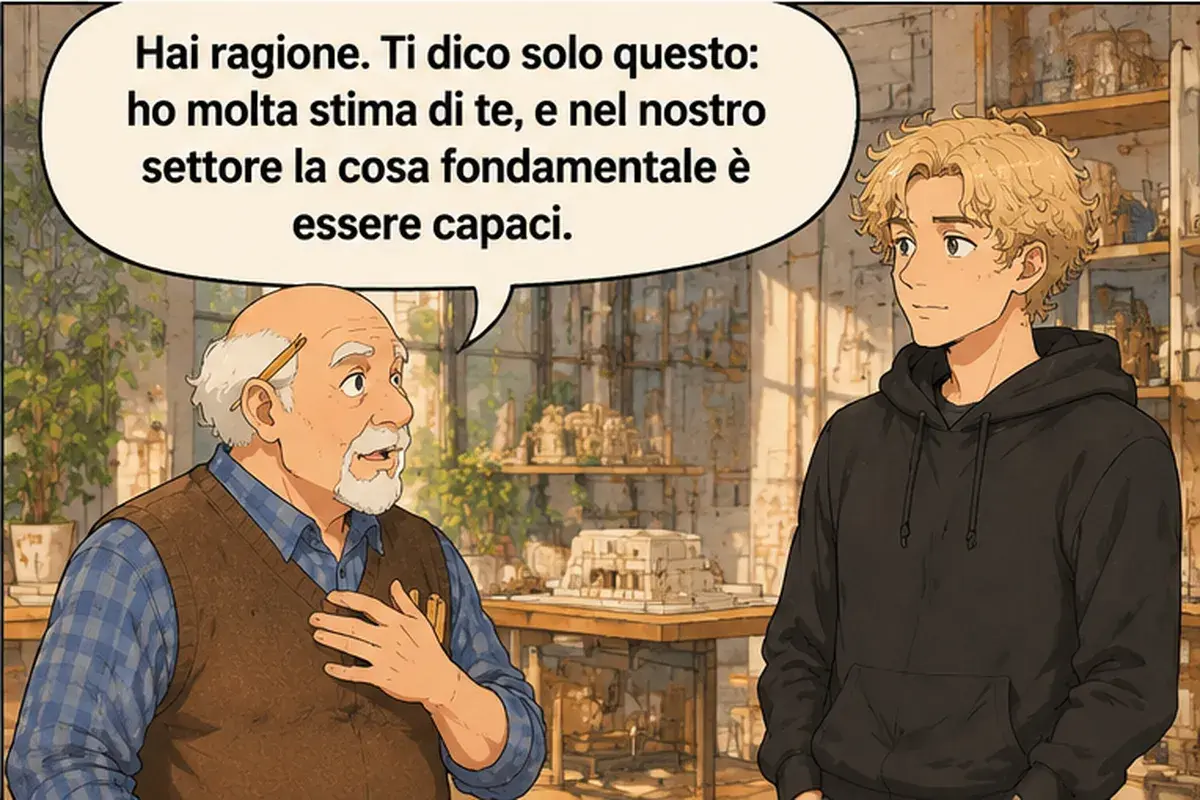
- Gianni
Hai ragione. Ti dico solo questo: ho molta stima di te, e nel nostro settore la cosa fondamentale è essere capaci.
You're right. I'll just tell you this: I have a lot of respect for you, and in our sector the essential thing is being capable.
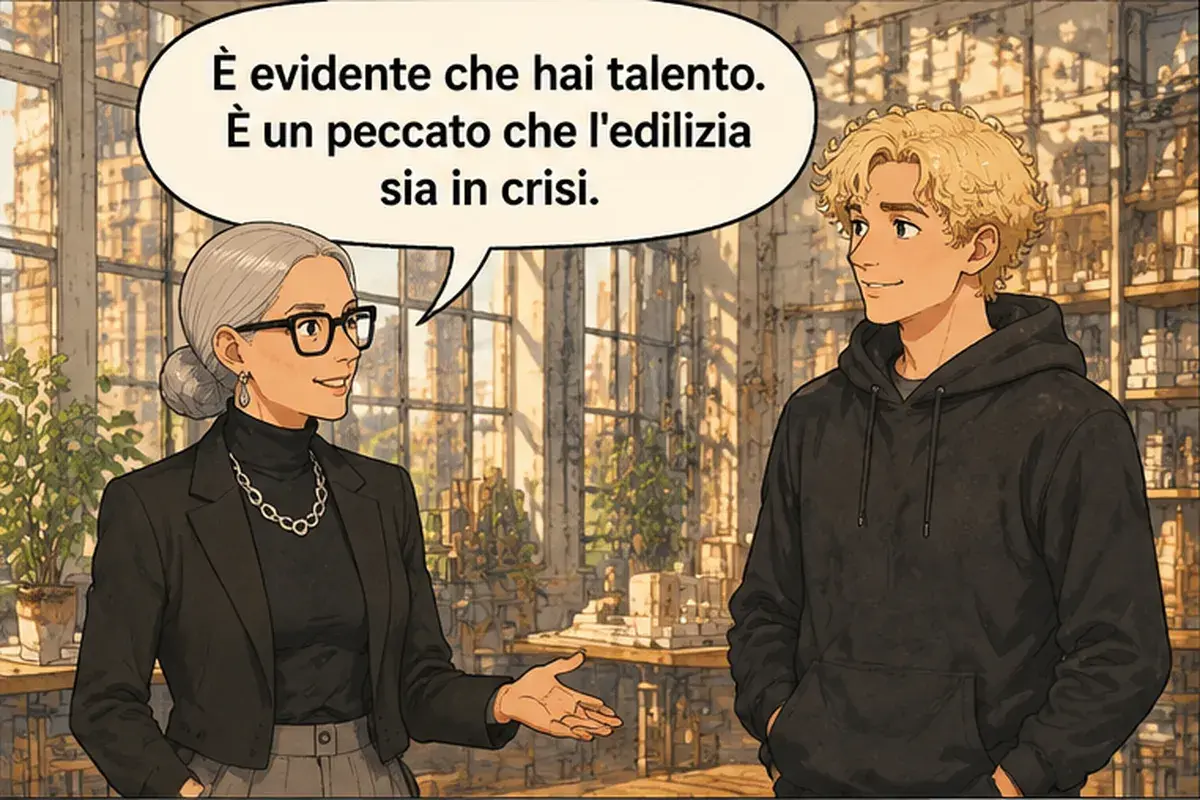
- Ludovica
È evidente che hai talento. È un peccato che l'edilizia sia in crisi.
It's evident that you have talent. It's a shame the construction industry is in crisis.
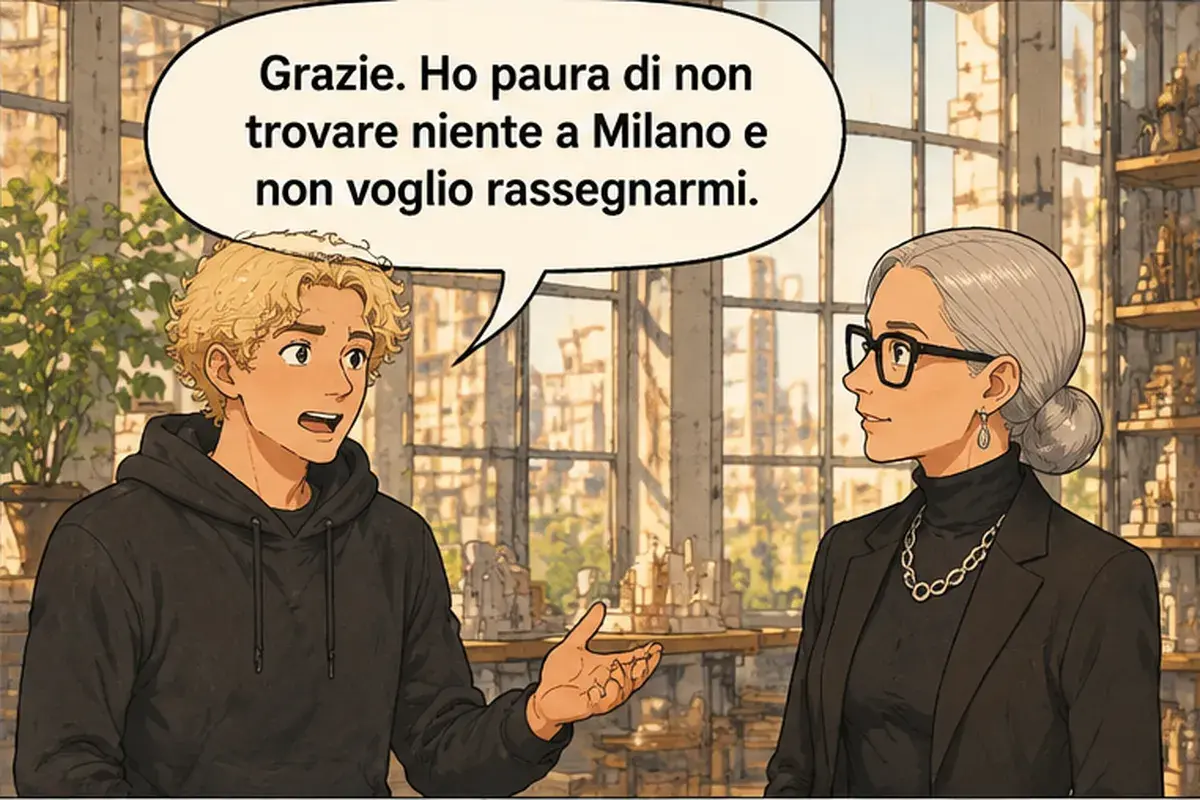
- Tommaso
Grazie. Ho paura di non trovare niente a Milano e non voglio rassegnarmi.
Thanks. I'm afraid of not finding anything in Milan, and I don't want to give up.
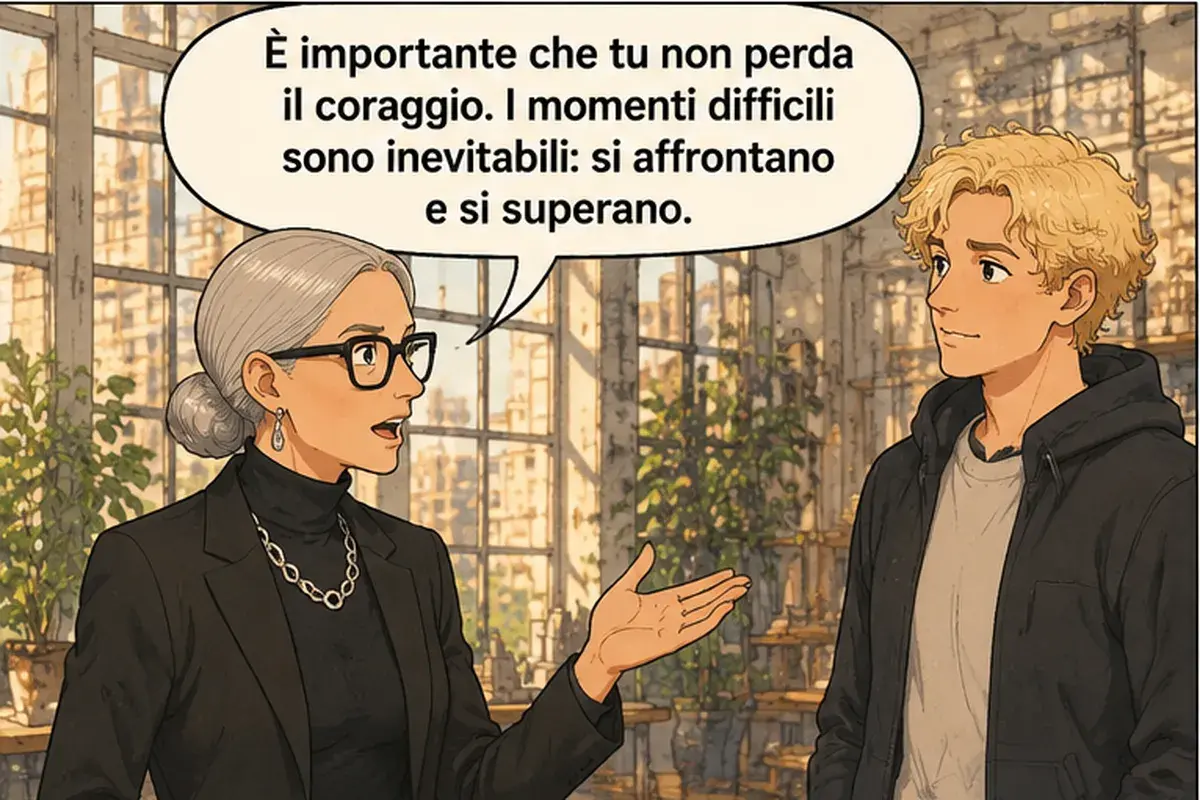
- Ludovica
È importante che tu non perda il coraggio. I momenti difficili sono inevitabili: si affrontano e si superano.
It's important for you not to lose heart. Difficult moments are inevitable: you face them and you overcome them.
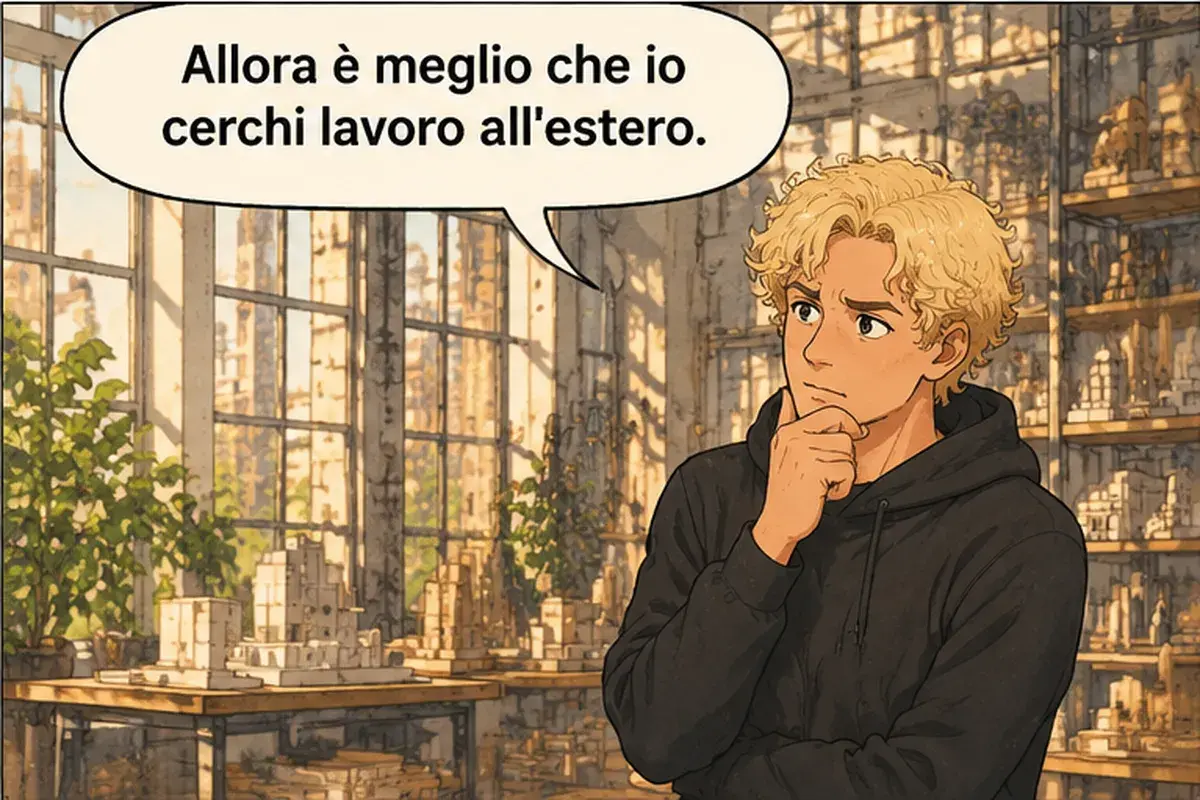
- Tommaso
Allora è meglio che io cerchi lavoro all'estero.
Then it's better for me to look for work abroad.
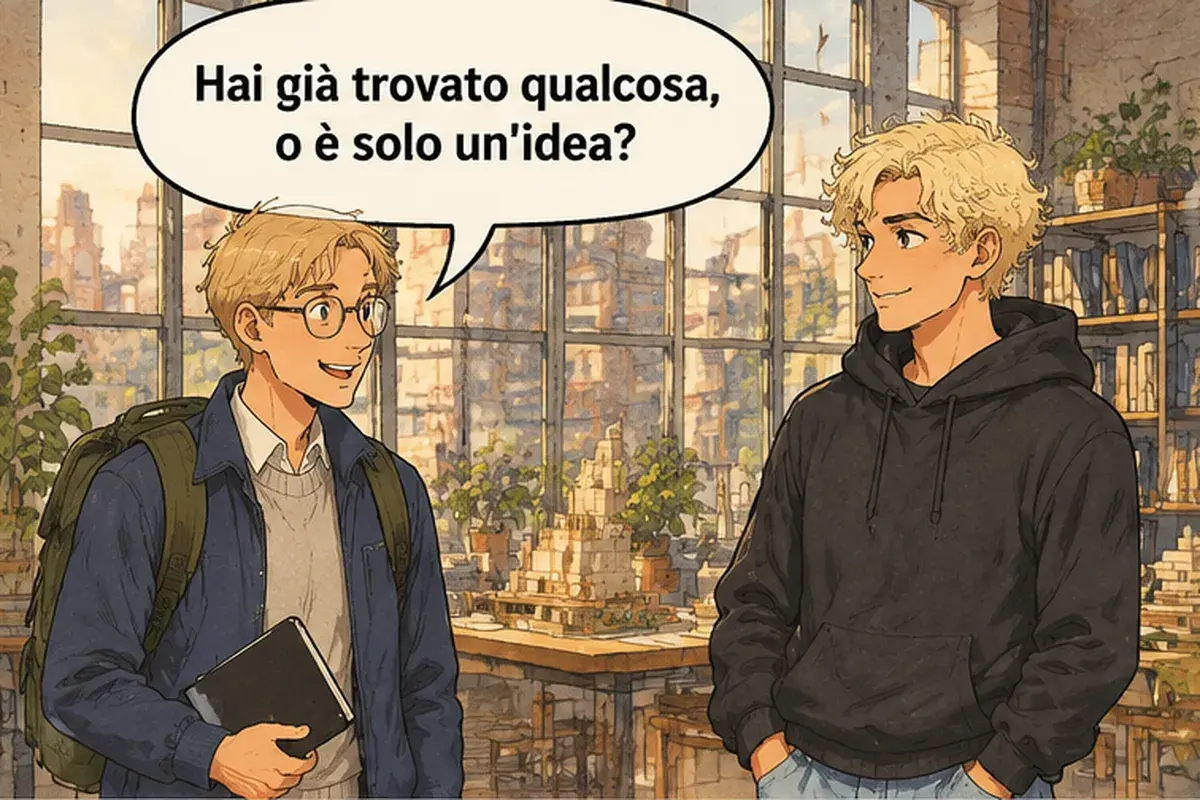
- Misha
Hai già trovato qualcosa, o è solo un'idea?
Have you already found something, or is it just an idea?
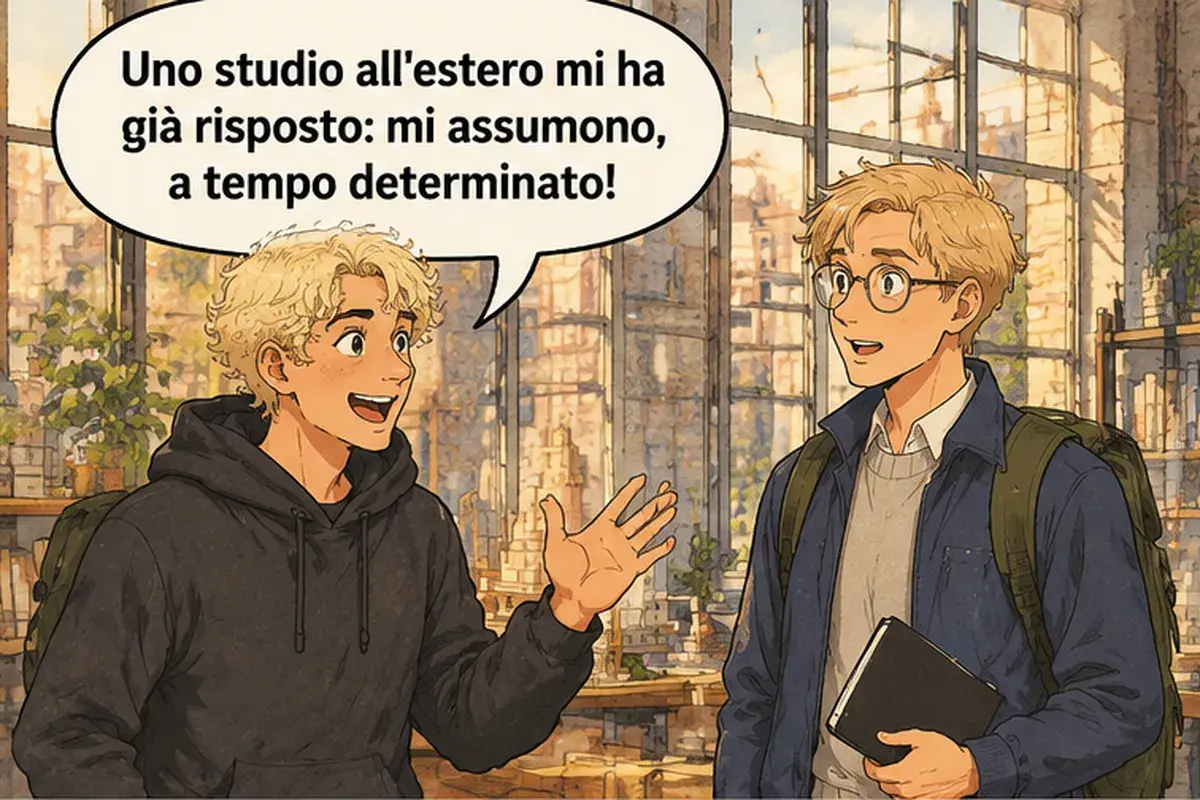
- Tommaso
Uno studio all'estero mi ha già risposto: mi assumono, a tempo determinato!
A firm abroad has already written back to me: they're hiring me, on a fixed-term contract!
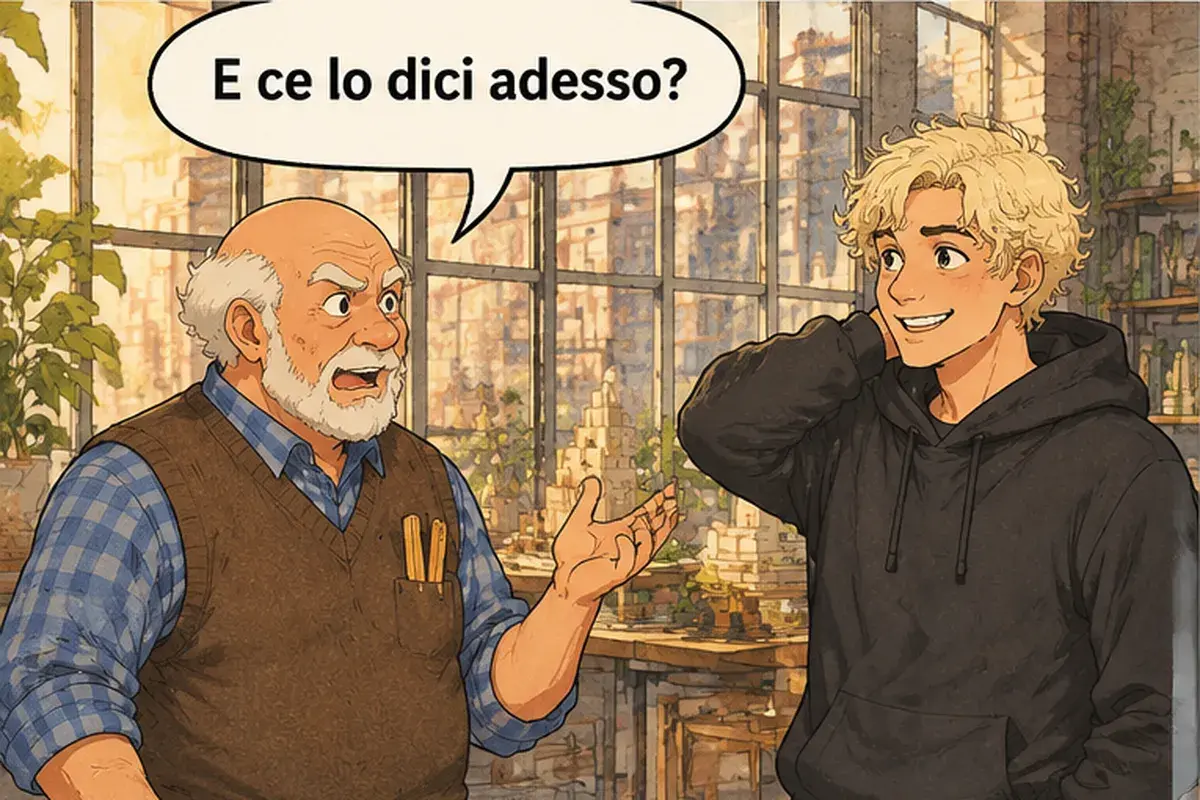
- Gianni
E ce lo dici adesso?
And you're telling us now?
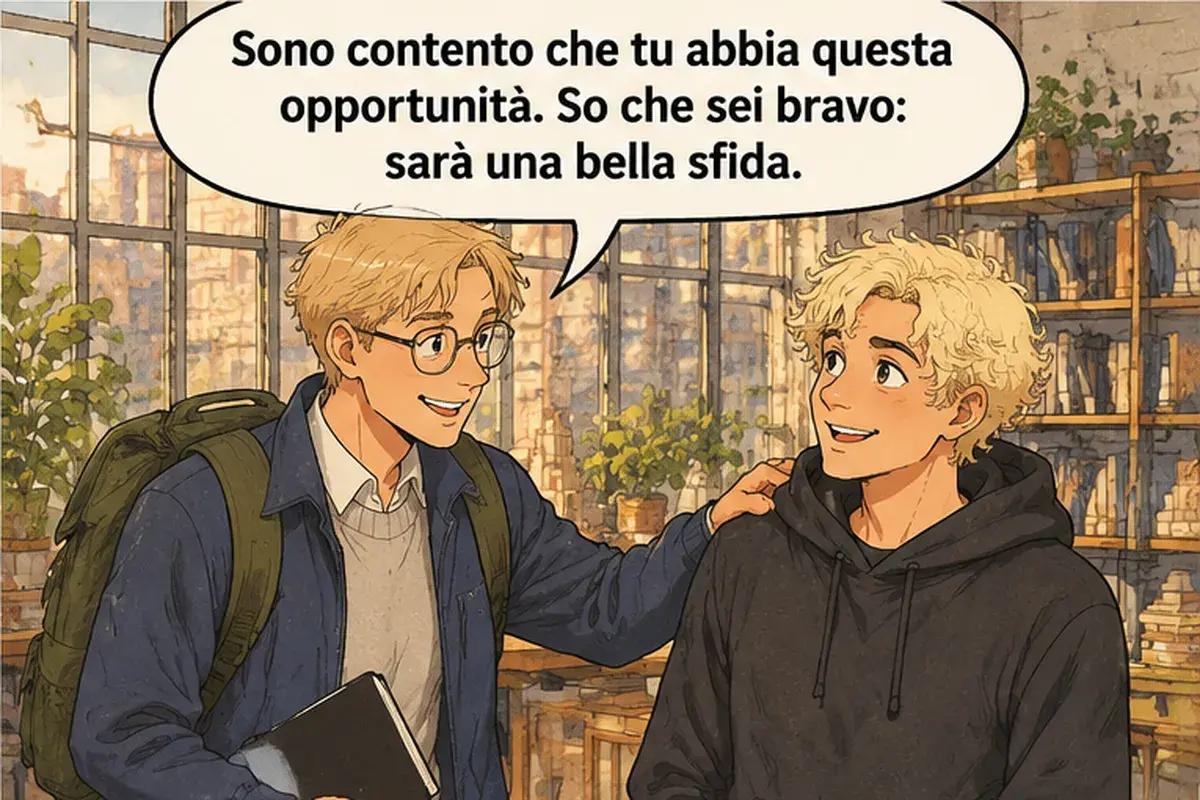
- Misha
Sono contento che tu abbia questa opportunità. So che sei bravo: sarà una bella sfida.
I'm glad you have this opportunity. I know you're good: it'll be a great challenge (man speaking, to a man).
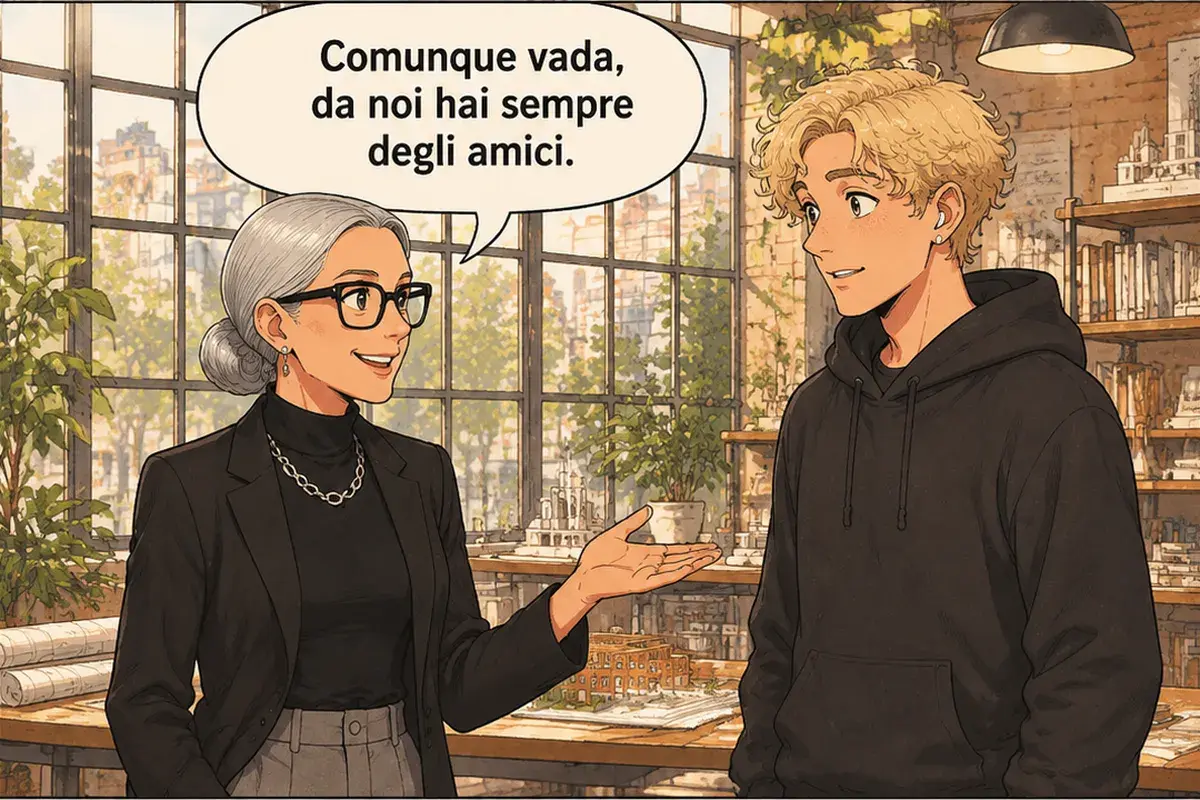
- Ludovica
Comunque vada, da noi hai sempre degli amici.
Whatever happens, you always have friends with us.
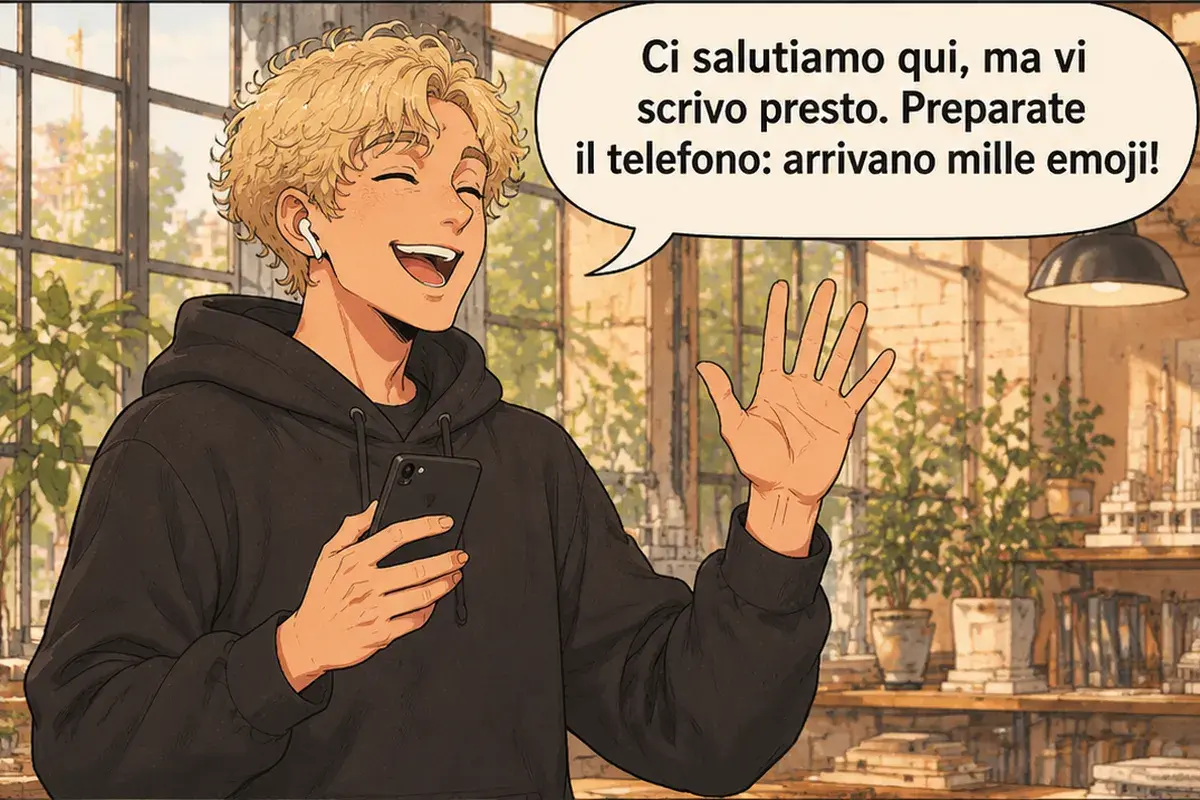
- Tommaso
Ci salutiamo qui, ma vi scrivo presto. Preparate il telefono: arrivano mille emoji!
We'll say goodbye here, but I'll write to you soon. Get your phone ready: a thousand emojis are coming (to several people)!
Grammar for this text
- Mi dispiace che tu debba andare via — debba is the congiuntivo (present subjunctive) of dovere: after "I'm sorry that", Italian uses this special verb form. The same goes for sia (from essere) in è un peccato che l'edilizia sia in crisi, perda (from perdere), cerchi (from cercare; the h keeps the hard k sound) and abbia (from avere). The rule is in this unit's grammar.
- Ho paura di non trovare niente — the same person is afraid and is looking, so there's no che: di + infinitive.
- È evidente che hai talento — it's a fact, so the normal form (hai), not the congiuntivo. The same with so che sei bravo.
- Comunque vada — a set phrase, "whatever happens"; vada is the congiuntivo of andare. Learn it whole for now; the reason comes in B2.
- a tempo determinato, a tempo indeterminato — a fixed-term and a permanent contract; posto fisso — a steady job.
- Uno studio all'estero — here studio is a firm, like Studio Daccapo, not "I study".
- Ci salutiamo qui — "we say goodbye here" (a reciprocal verb, unit 9).
Words and grammar of the unit: See off a colleague and cheer them on.
Learn the words from the texts with flashcards
In the app, you can tap any word in a text to see its translation, forms and examples, and new words stick with flashcards. 15 minutes a day.
Start for freeEverything is open for free. No card needed to sign up.