

Italian dialogue with translation · B1 · 16 lines
È meglio che tu glielo dica presto It's better for you to tell him soon
Comic · 16 panels
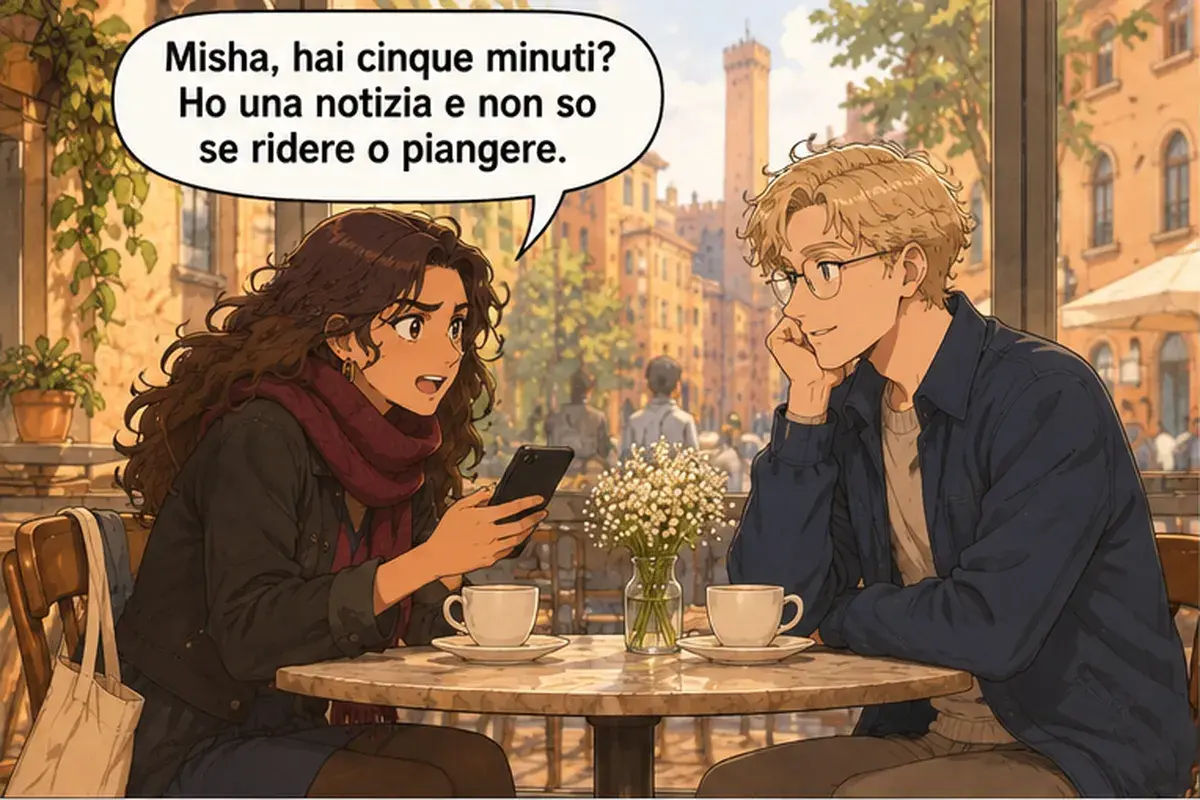
- Giulia
Misha, hai cinque minuti? Ho una notizia e non so se ridere o piangere.
Misha, do you have five minutes? I have some news and I don't know whether to laugh or cry.
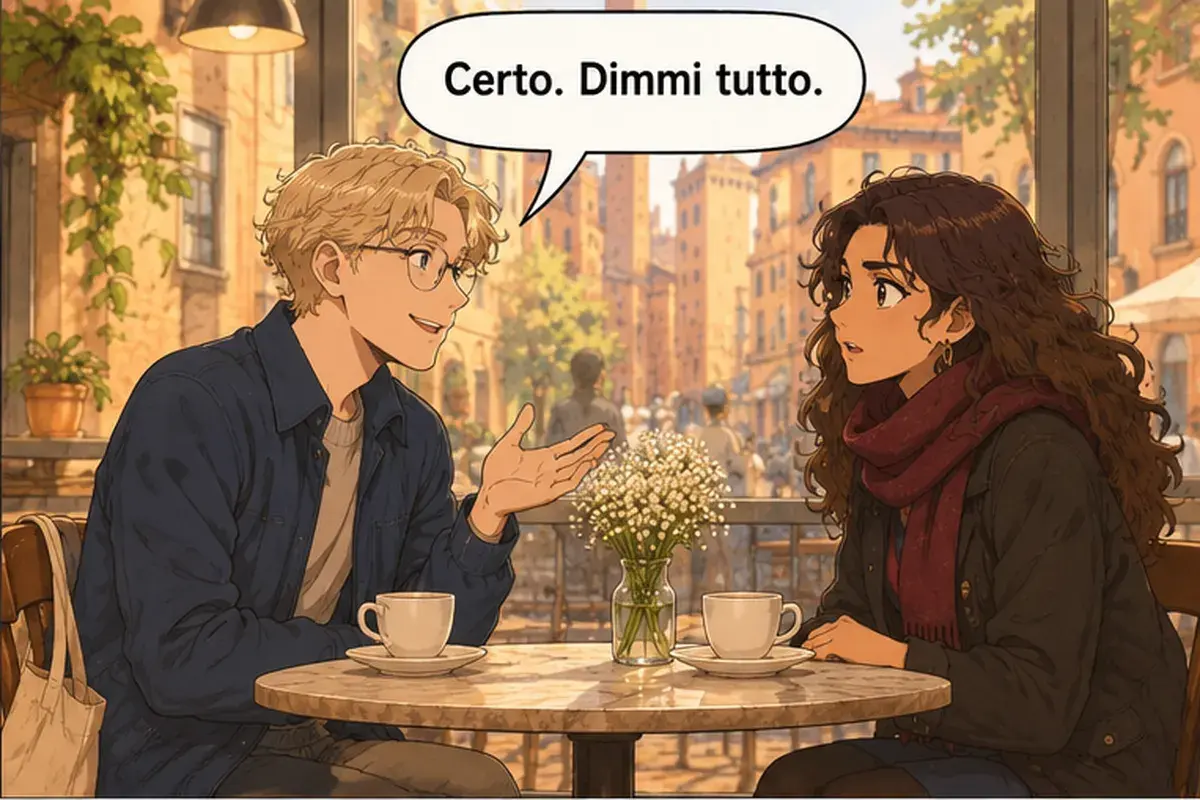
- Misha
Certo. Dimmi tutto.
Sure. Tell me everything.
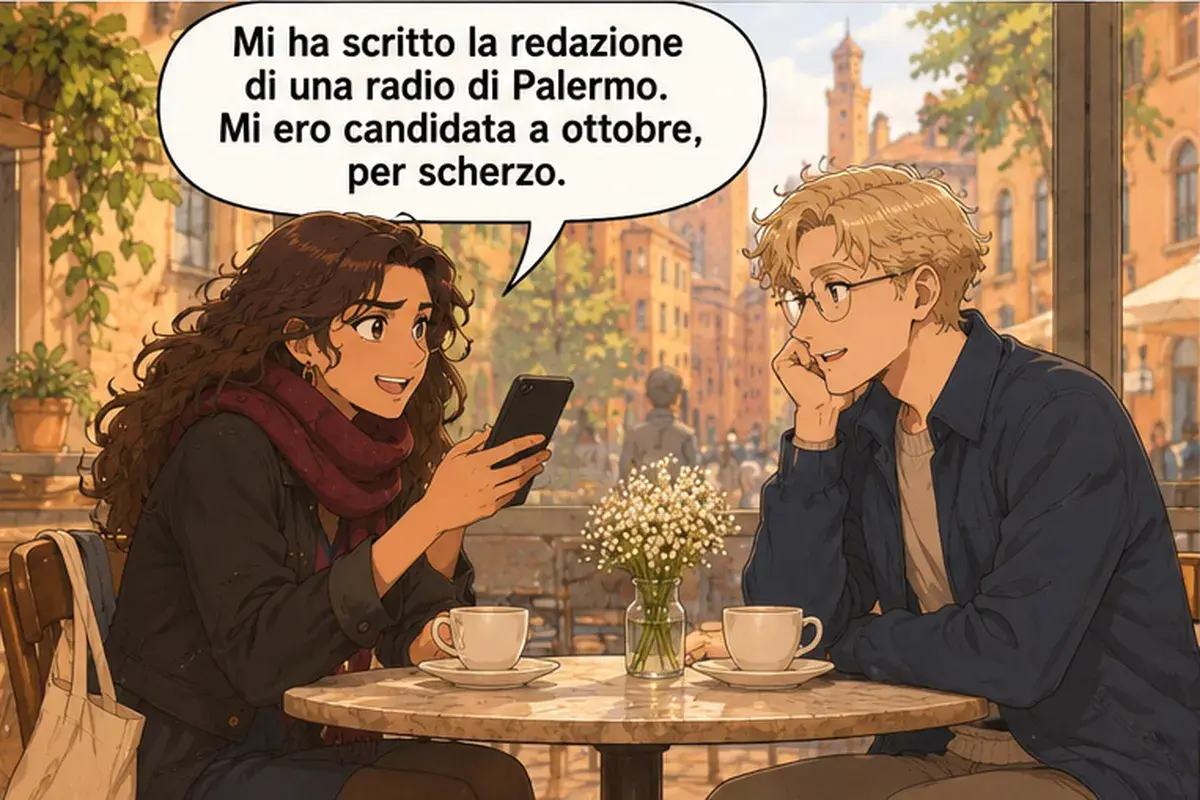
- Giulia
Mi ha scritto la redazione di una radio di Palermo. Mi ero candidata a ottobre, per scherzo.
The newsroom of a radio station in Palermo wrote to me. I had applied in October, as a joke (woman speaking).
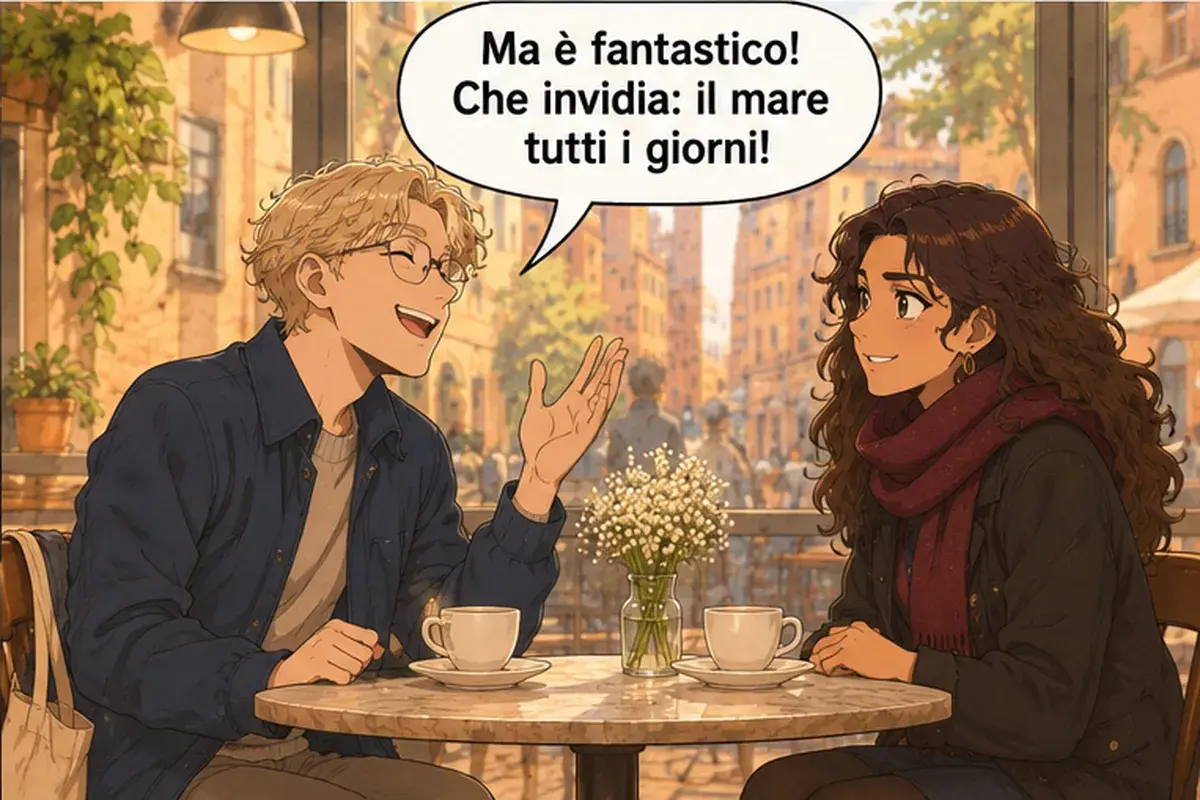
- Misha
Ma è fantastico! Che invidia: il mare tutti i giorni!
But that's fantastic! I'm so jealous: the sea every day!
- Giulia
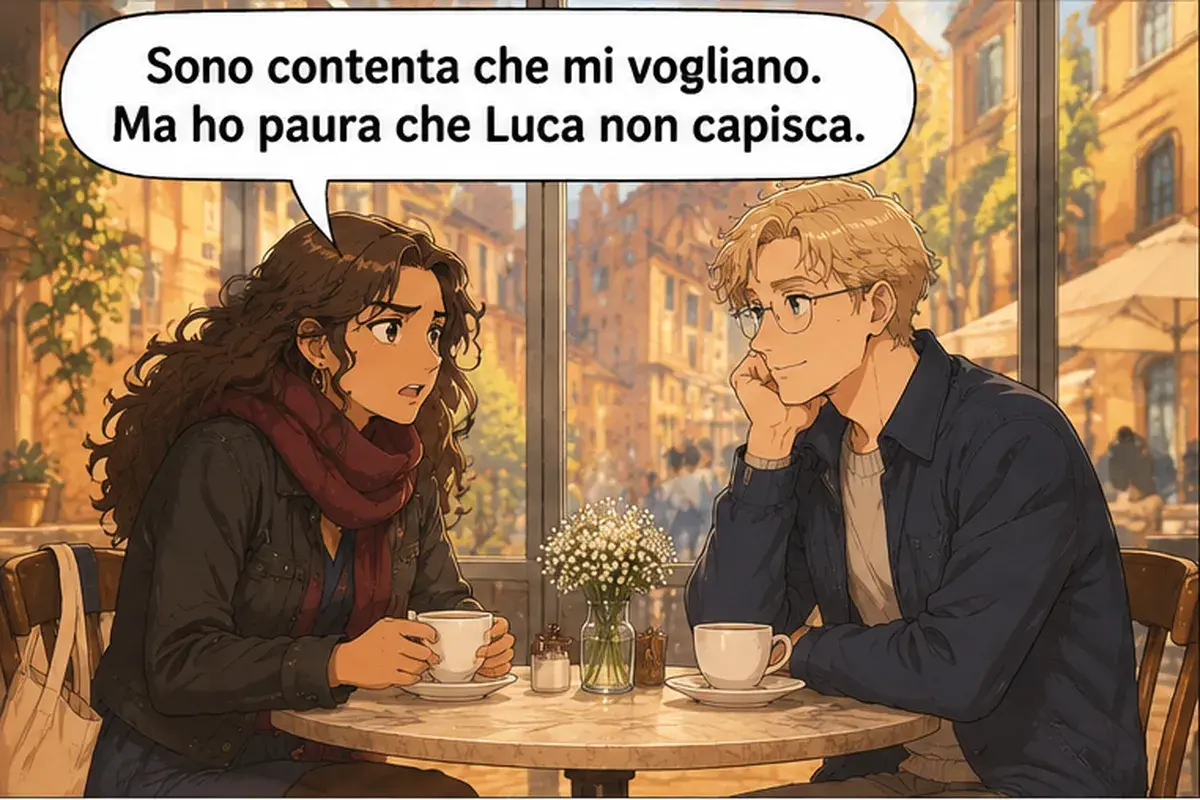
Sono contenta che mi vogliano. Ma ho paura che Luca non capisca.
I'm glad they want me (woman speaking). But I'm afraid Luca won't understand.
- Misha
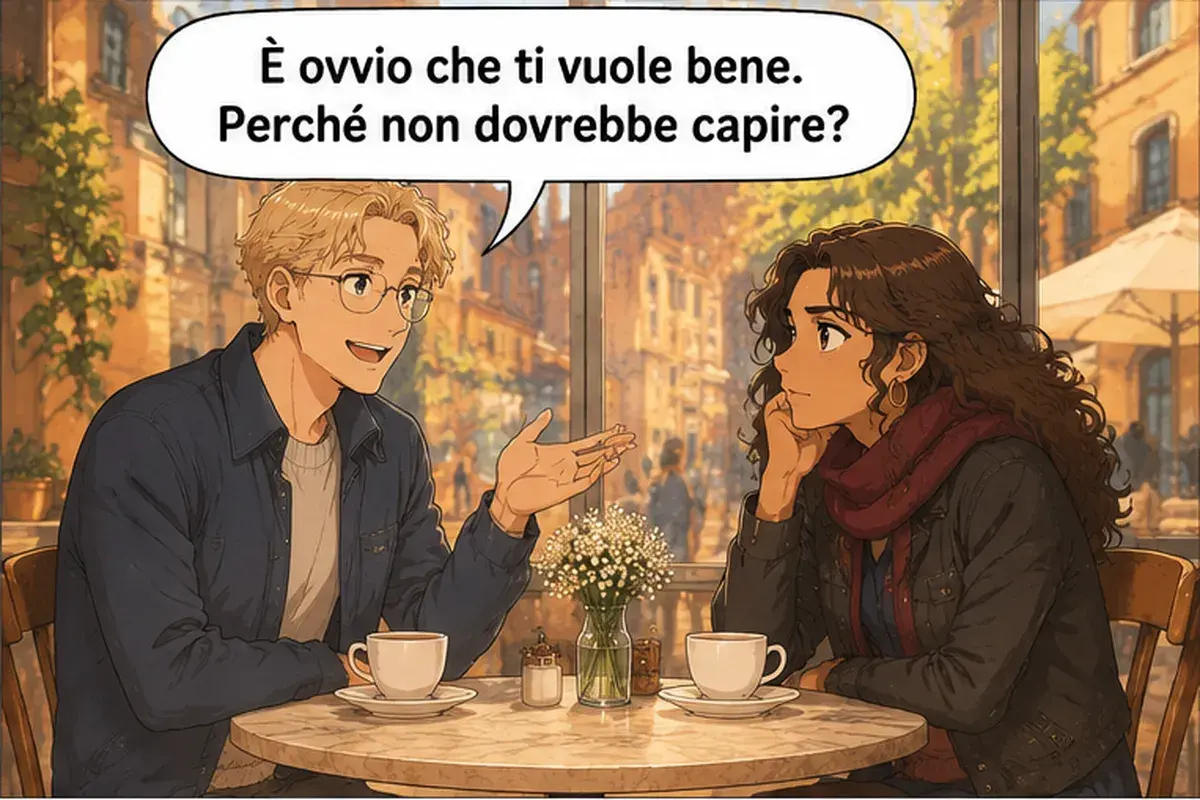
È ovvio che ti vuole bene. Perché non dovrebbe capire?
It's obvious that he loves you. Why shouldn't he understand?
- Giulia
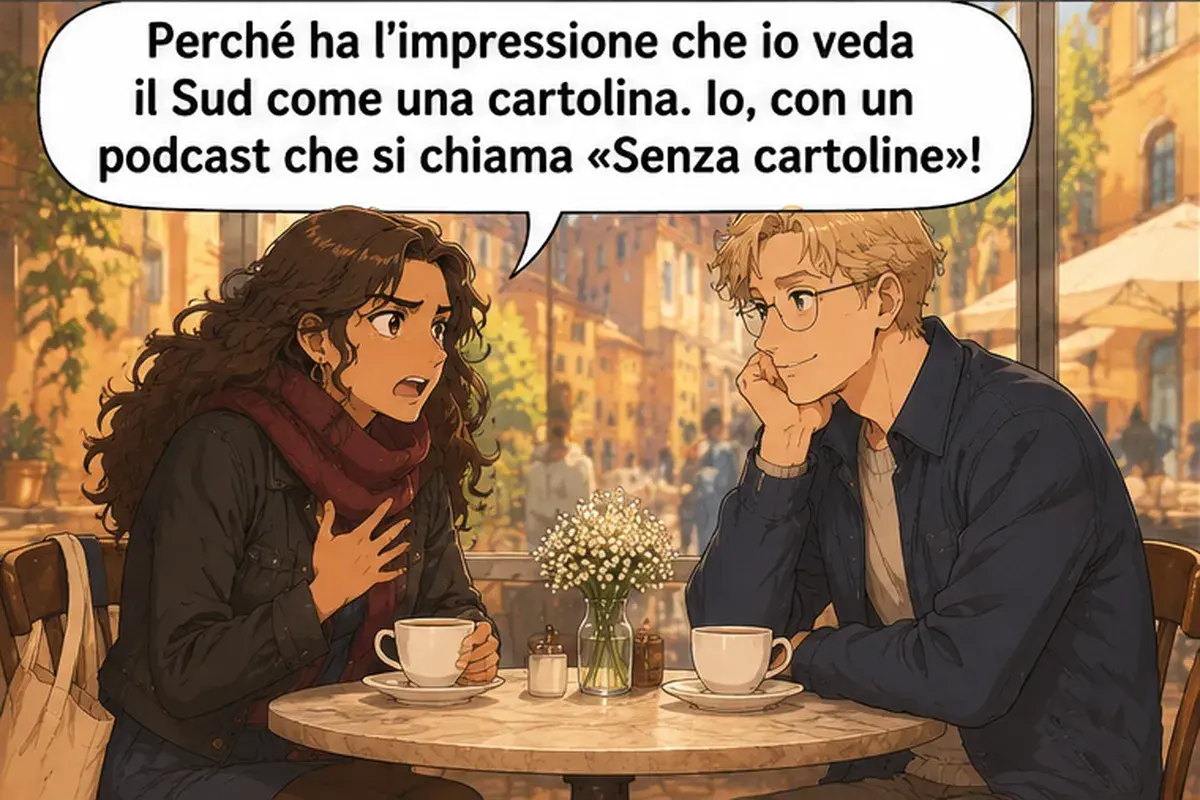
Perché ha l'impressione che io veda il Sud come una cartolina. Io, con un podcast che si chiama «Senza cartoline»!
Because he has the impression that I see the South as a postcard. Me, with a podcast called "Senza cartoline"!
- Misha
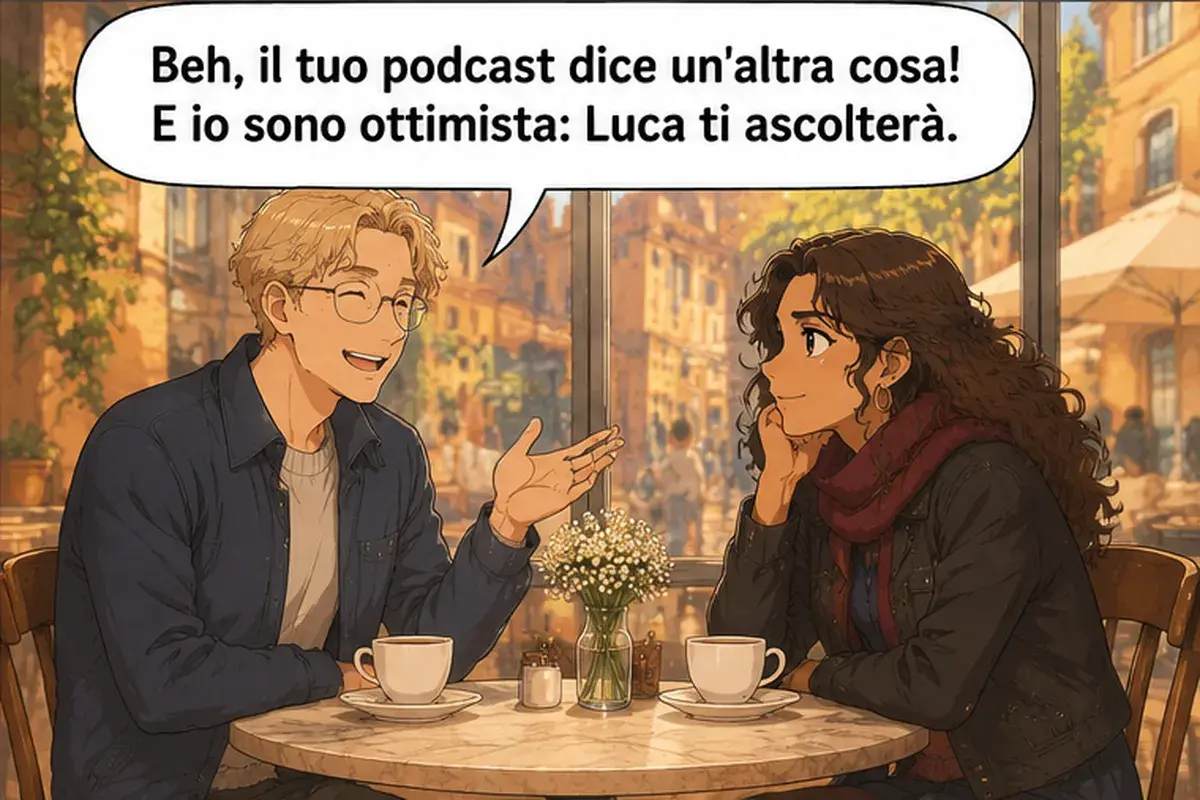
Beh, il tuo podcast dice un'altra cosa! E io sono ottimista: Luca ti ascolterà.
Well, your podcast says something else! And I'm optimistic: Luca will listen to you.
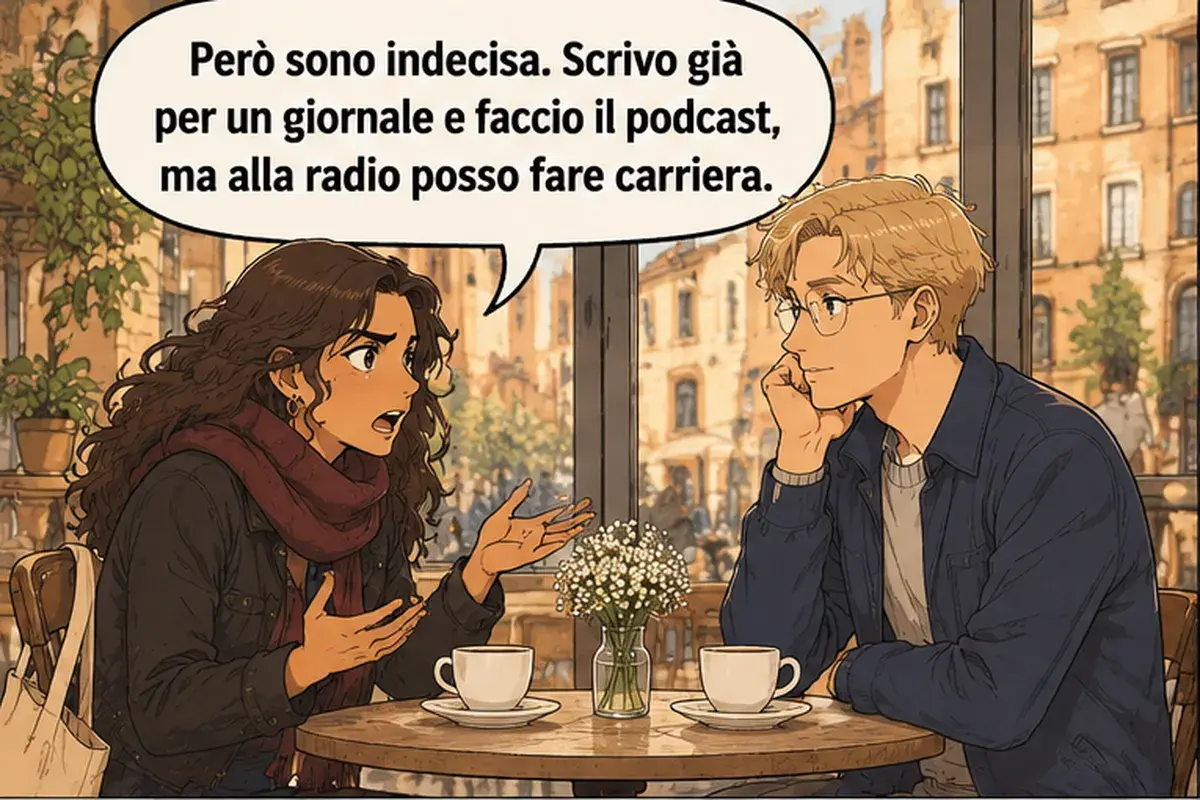
- Giulia
Però sono indecisa. Scrivo già per un giornale e faccio il podcast, ma alla radio posso fare carriera.
But I'm torn (woman speaking). I already write for a newspaper and do the podcast, but in radio I can build a career.
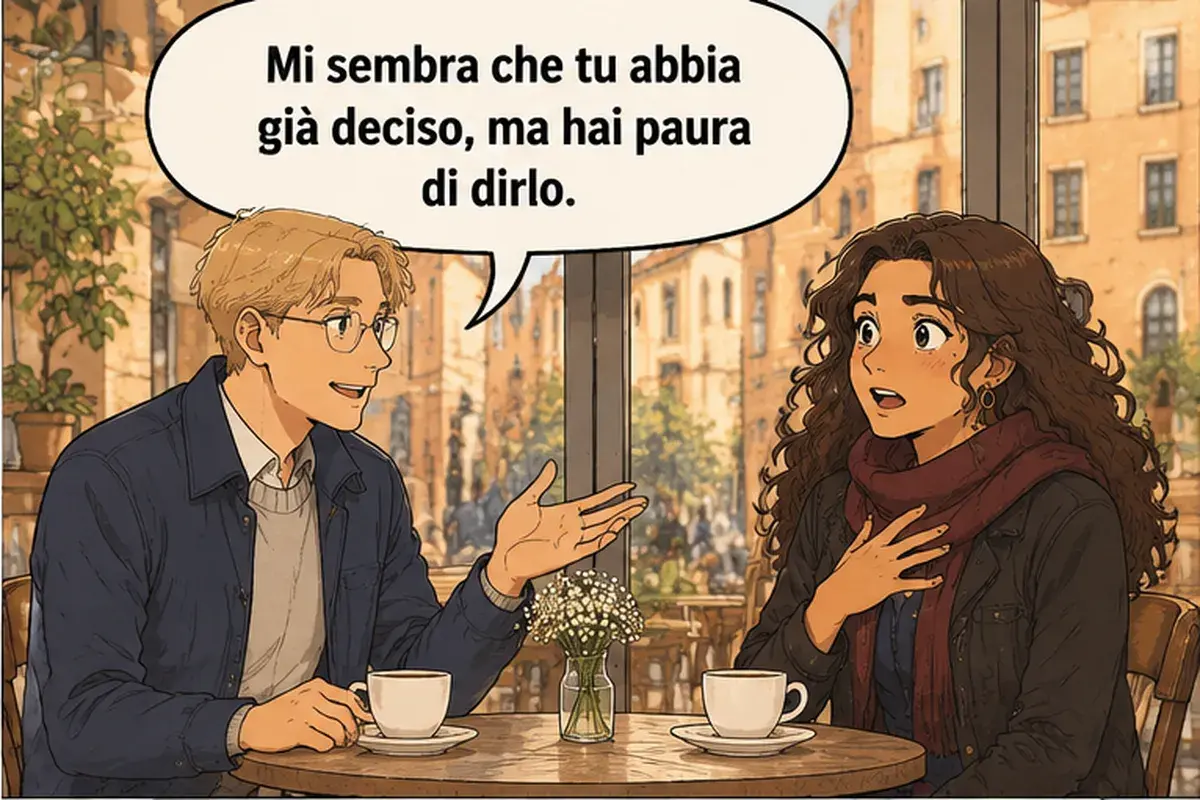
- Misha
Mi sembra che tu abbia già deciso, ma hai paura di dirlo.
It seems to me you've already decided, but you're afraid to say it.
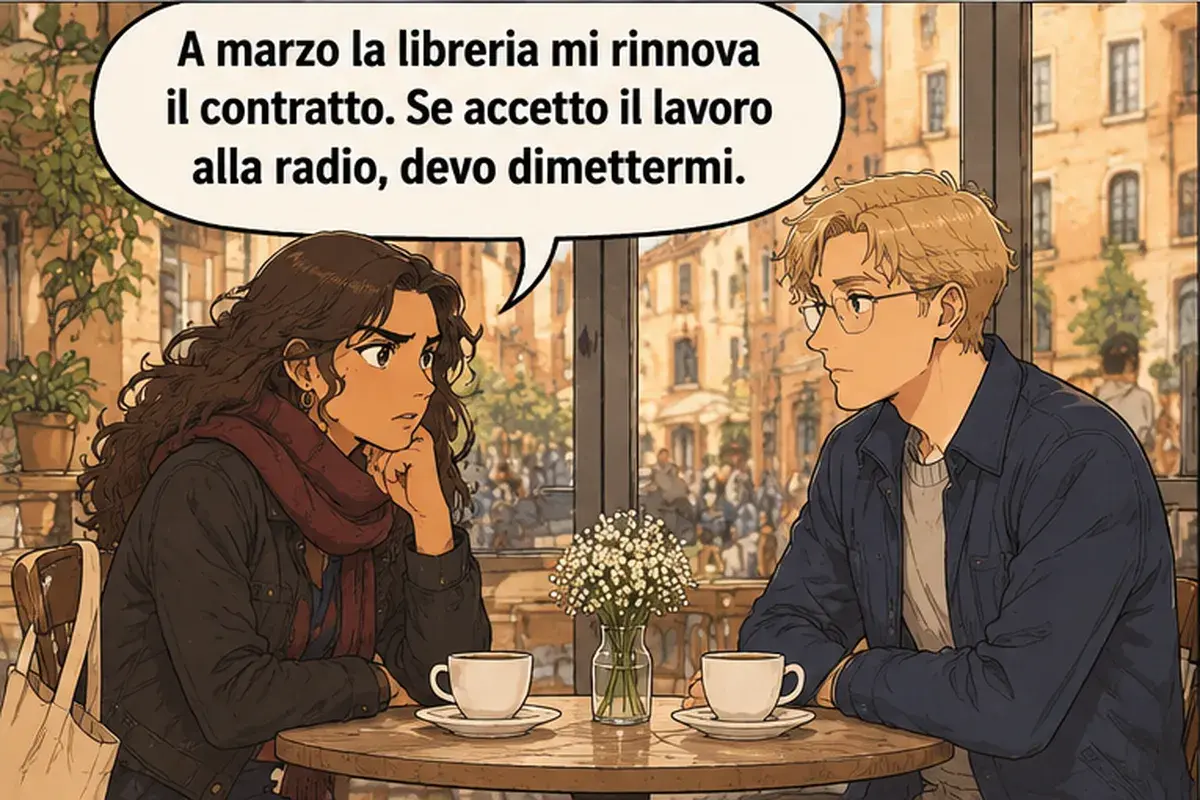
- Giulia
A marzo la libreria mi rinnova il contratto. Se accetto il lavoro alla radio, devo dimettermi.
In March the bookstore renews my contract. If I accept the job at the radio station, I have to quit.
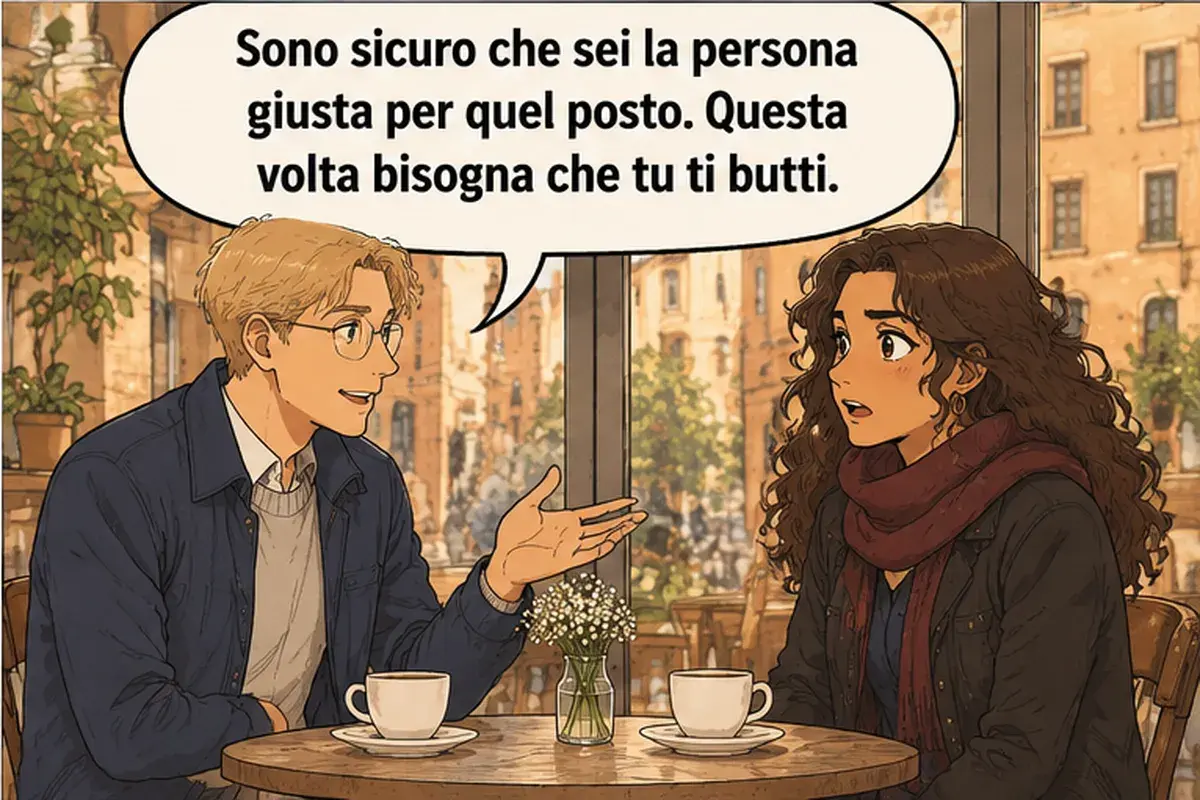
- Misha
Sono sicuro che sei la persona giusta per quel posto. Questa volta bisogna che tu ti butti.
I'm sure you're the right person for that job (man speaking). This time you need to go for it.
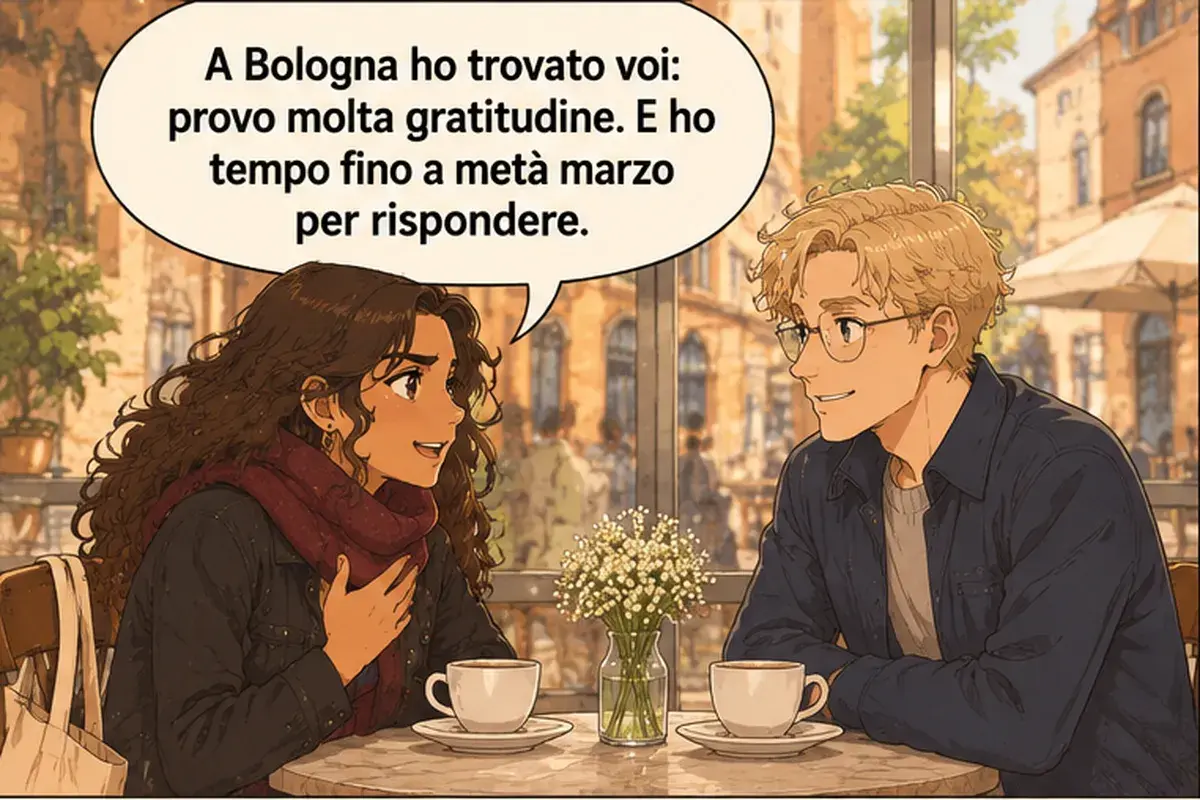
- Giulia
A Bologna ho trovato voi: provo molta gratitudine. E ho tempo fino a metà marzo per rispondere.
In Bologna I found you all: I feel a lot of gratitude. And I have until mid-March to answer.
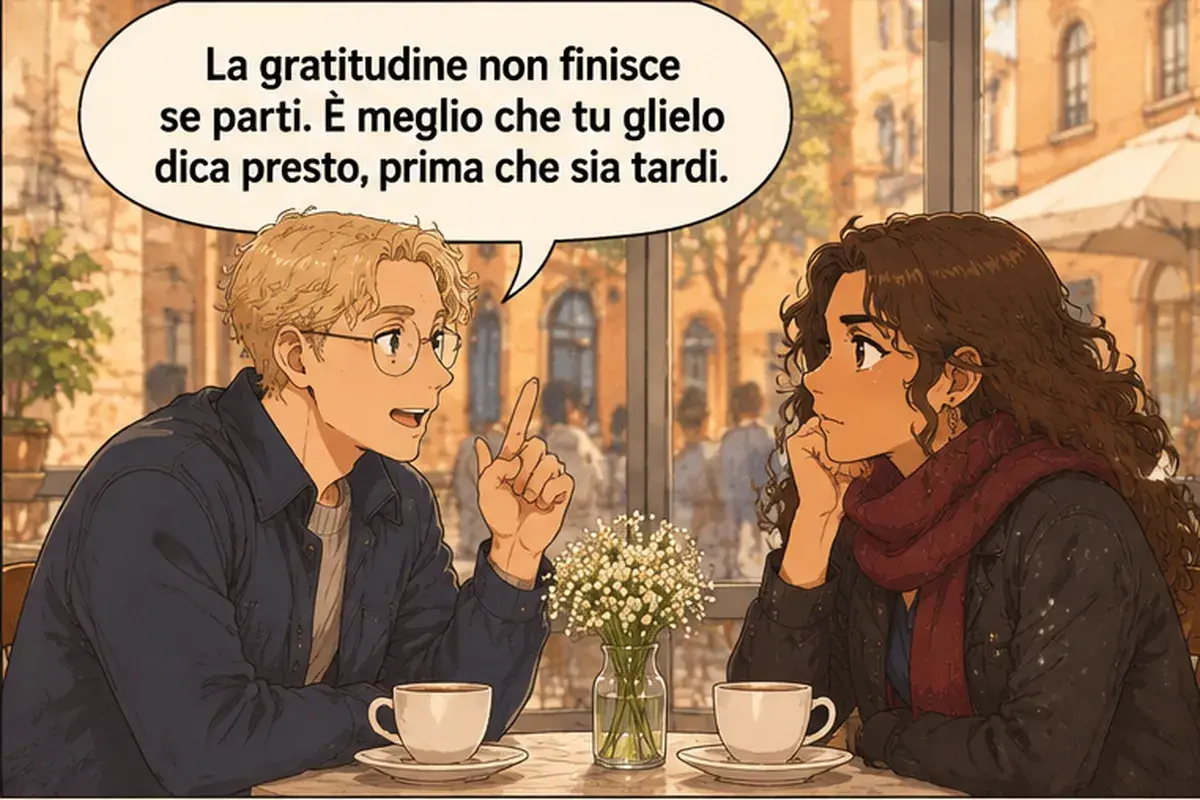
- Misha
La gratitudine non finisce se parti. È meglio che tu glielo dica presto, prima che sia tardi.
Gratitude doesn't end if you leave. It's better for you to tell him soon, before it's too late.
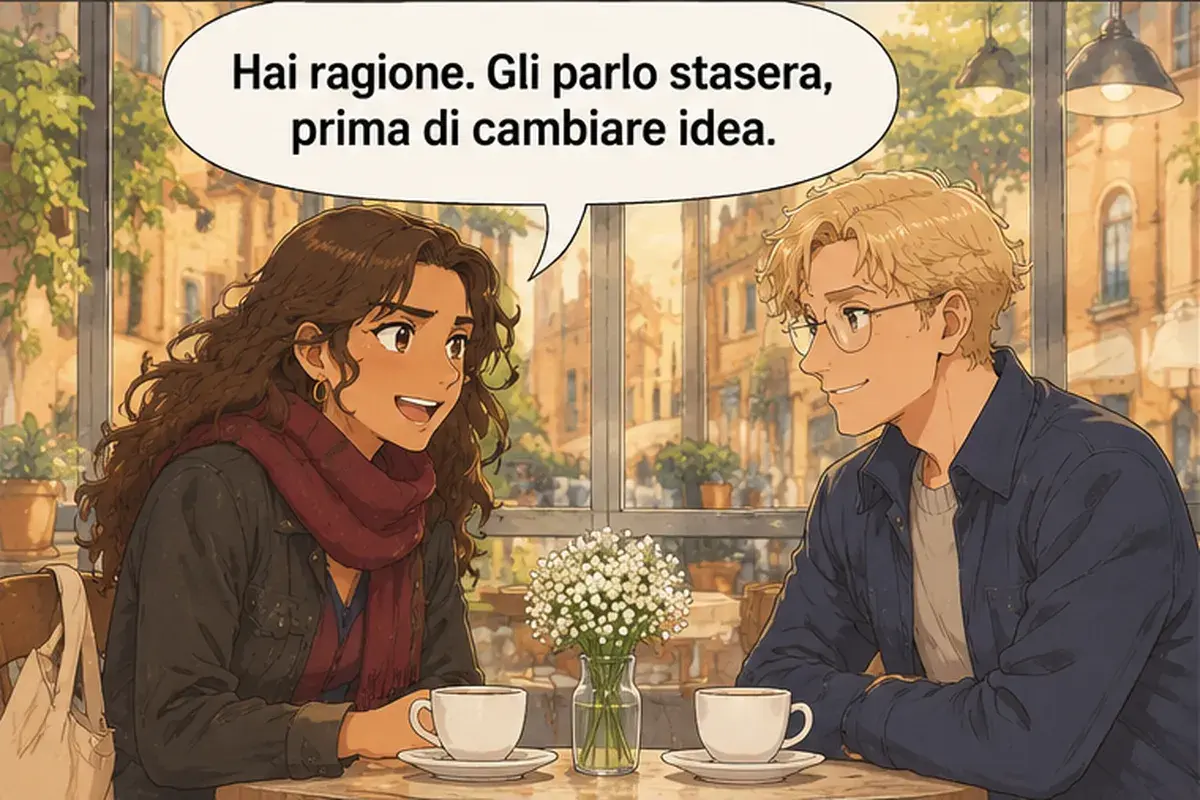
- Giulia
Hai ragione. Gli parlo stasera, prima di cambiare idea.
You're right. I'll talk to him tonight, before I change my mind.
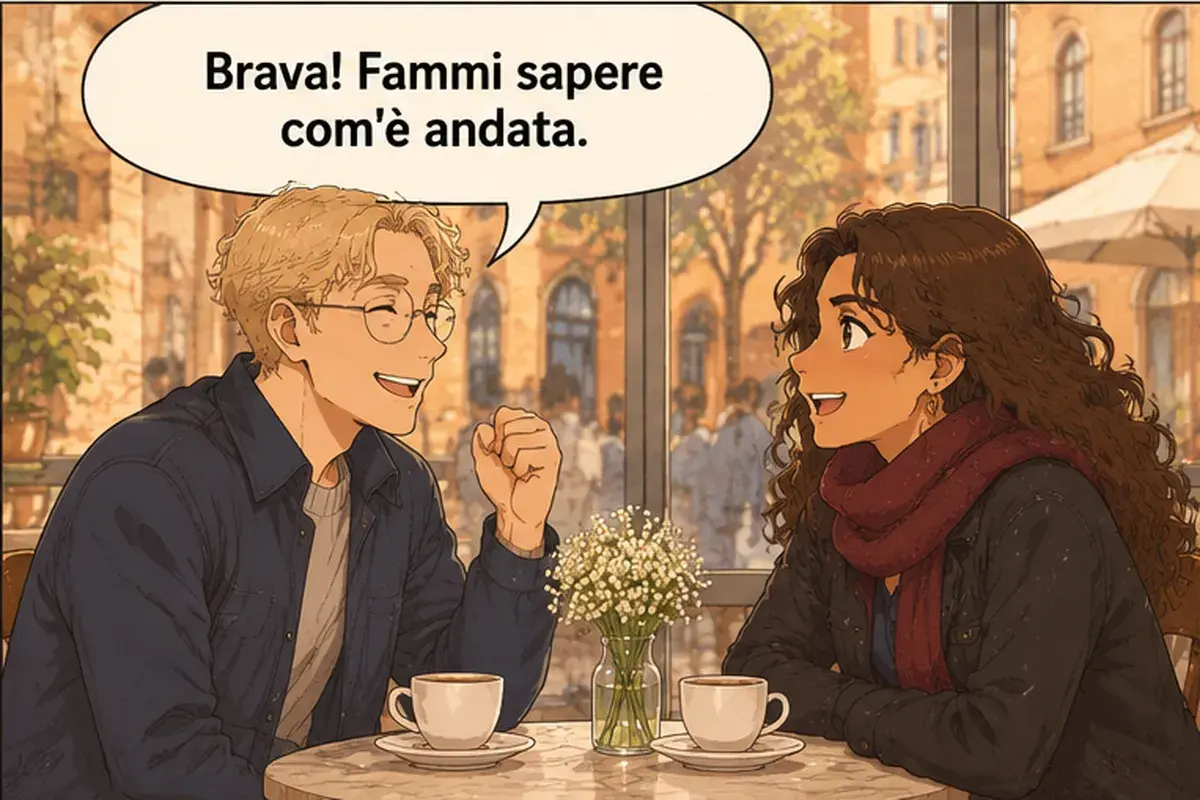
- Misha
Brava! Fammi sapere com'è andata.
Well done (to a woman)! Let me know how it went.
Grammar for this text
- Sono contenta che mi vogliano — vogliano is the congiuntivo of volere, the loro form: after "I'm glad that" the verb takes this special form. The same with capisca (from capire: ho paura che Luca non capisca), veda (from vedere), abbia (from avere), ti butti (from buttarsi, "to go for it"; casual), dica (from dire) and sia (from essere). The rules are in this unit's grammar and in unit 12.
- Ha l'impressione che io veda il Sud come una cartolina — "he has the impression that…". A postcard here is a pretty picture instead of real life. That's why it's funny: Giulia's podcast is called Senza cartoline ("No Postcards").
- Sono sicuro che sei la persona giusta, È ovvio che ti vuole bene — certainty and things that are obvious are facts, so the normal form, not the congiuntivo. volere bene a qualcuno — to love someone, to care about them (family, friends, a partner).
- È meglio che tu glielo dica presto — glielo = gli + lo, "it to him" (unit 4).
- prima che sia tardi — a set phrase, "before it's too late". After prima che you always use the congiuntivo; the rule comes in B2, so learn it whole for now.
Words and grammar of the unit: See off a colleague and cheer them on.
Learn the words from the texts with flashcards
In the app, you can tap any word in a text to see its translation, forms and examples, and new words stick with flashcards. 15 minutes a day.
Start for freeEverything is open for free. No card needed to sign up.