

Italian story with translation · B1 · 17 lines
Il destinatario è un certo Michele The recipient is a certain Michele
Comic · 17 panels

La signora Paola mi aveva scritto: «Michele, ti ho spedito un pacco da Bologna. Arriva lunedì!»
Signora Paola had written to me: "Michele, I've sent you a package from Bologna. It arrives on Monday!"

Lunedì pomeriggio l'app del corriere ha scritto: «Spedizione consegnata». Ma nella cassetta della posta non c'era niente, e sulle scale neanche.
On Monday afternoon the courier's app said: "Shipment delivered." But there was nothing in the mailbox, and nothing on the stairs either.
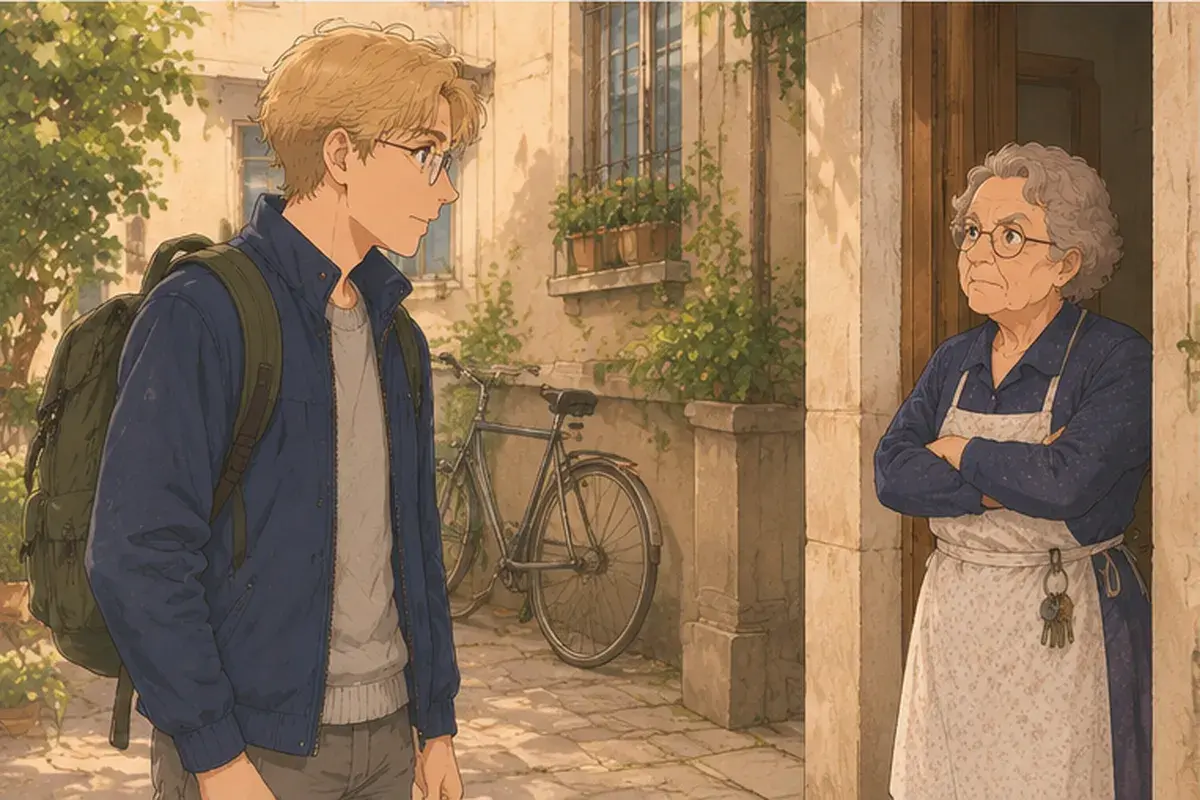
Sono andato dalla portinaia, la signora Pina: una vera sciura milanese. Ogni mattina brontola per la mia bici nel cortile.
I went to the concierge, Signora Pina, a true Milanese sciura (man speaking). Every morning she grumbles about my bike in the courtyard.
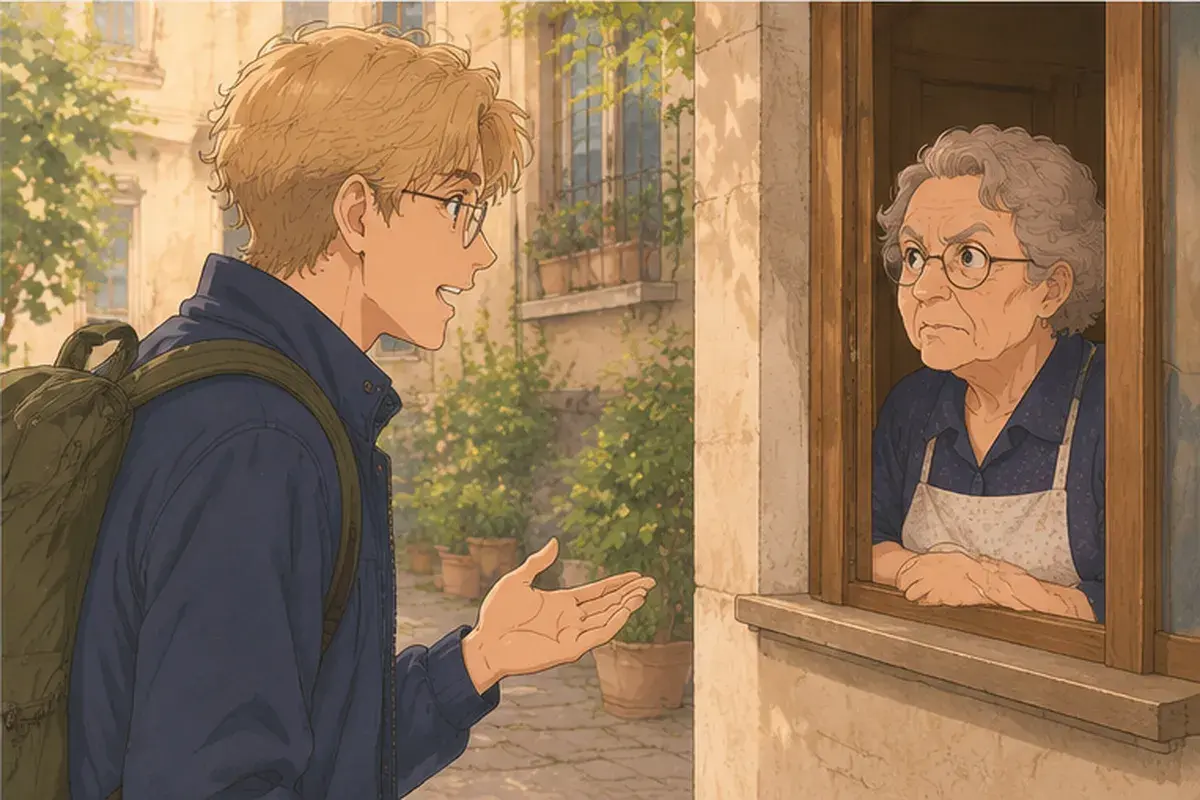
Ho chiesto: «Scusi, è arrivato un pacco per me?» La portinaia ha risposto: «Il destinatario è un certo Michele. Qui nessuno si chiama Michele!»
I asked: "Excuse me, has a package arrived for me? (formal)" The concierge answered: "The recipient is a certain Michele. Nobody here is called Michele!"
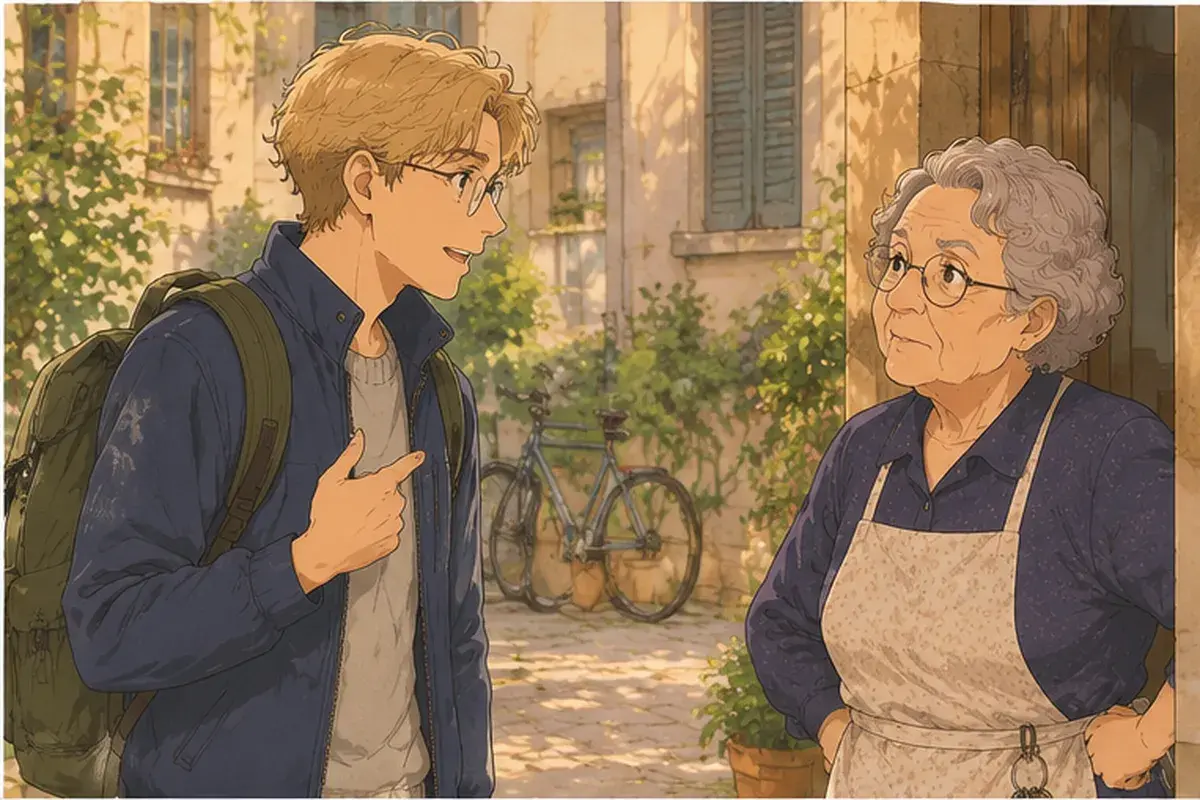
Ho detto: «Sono io, ma la signora Paola mi chiama Michele».
I said: "It's me, but Signora Paola calls me Michele."
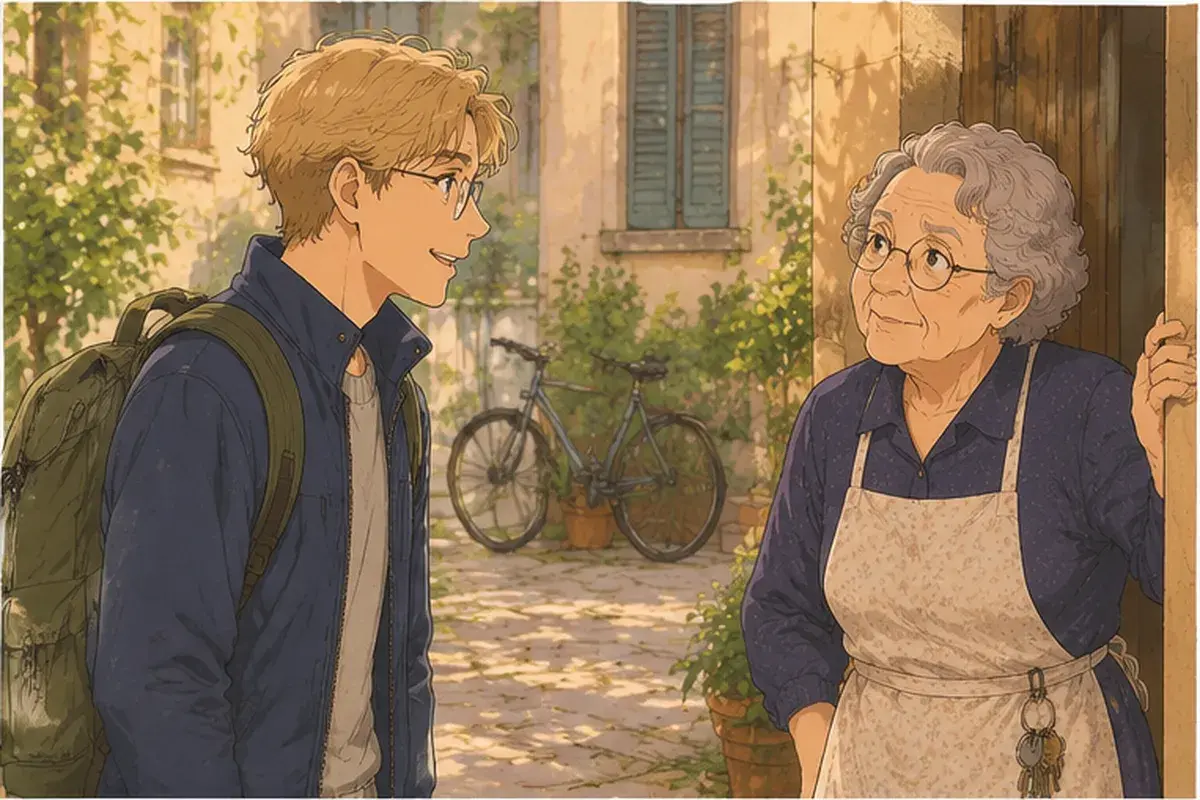
La portinaia mi ha guardato bene: «Ah, il coinquilino del siciliano! Mi dica chi è il mittente».
The concierge took a good look at me: "Ah, the Sicilian's roommate! Tell me who the sender is (formal)."
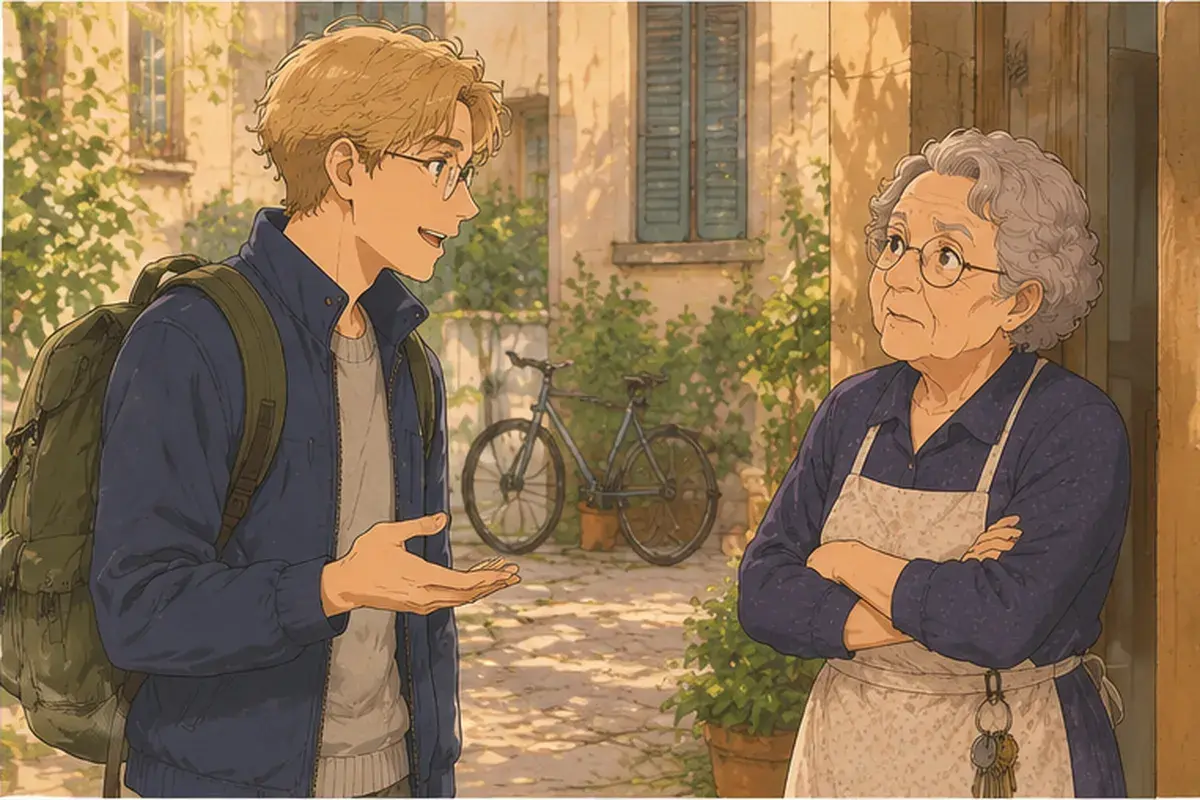
Ho risposto: «La signora Paola, di Bologna. È la mamma di Luca, un mio amico».
I answered: "Signora Paola, from Bologna. She's the mom of Luca, a friend of mine."
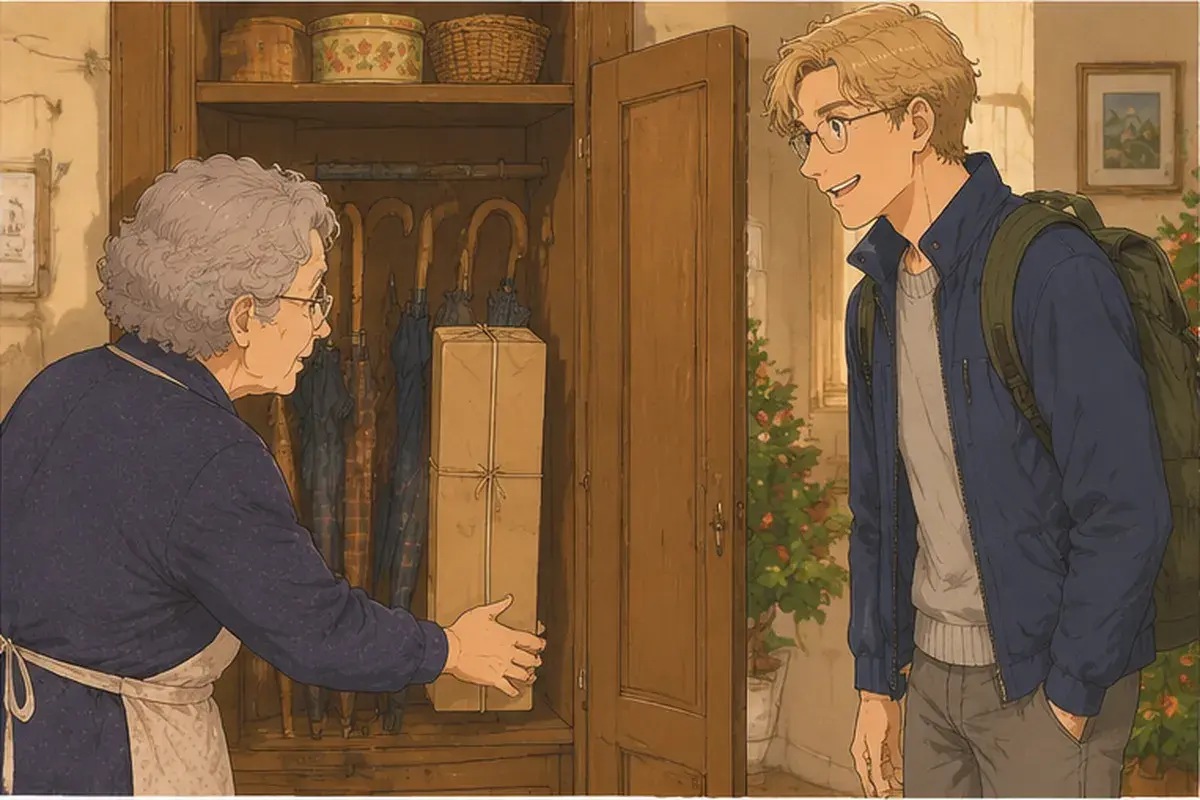
«Va bene», ha detto, e ha aperto un armadio. Meno male: il mio pacco era lì, tra gli ombrelli.
"All right," she said, and opened a closet. Thank goodness: my package was there, among the umbrellas.
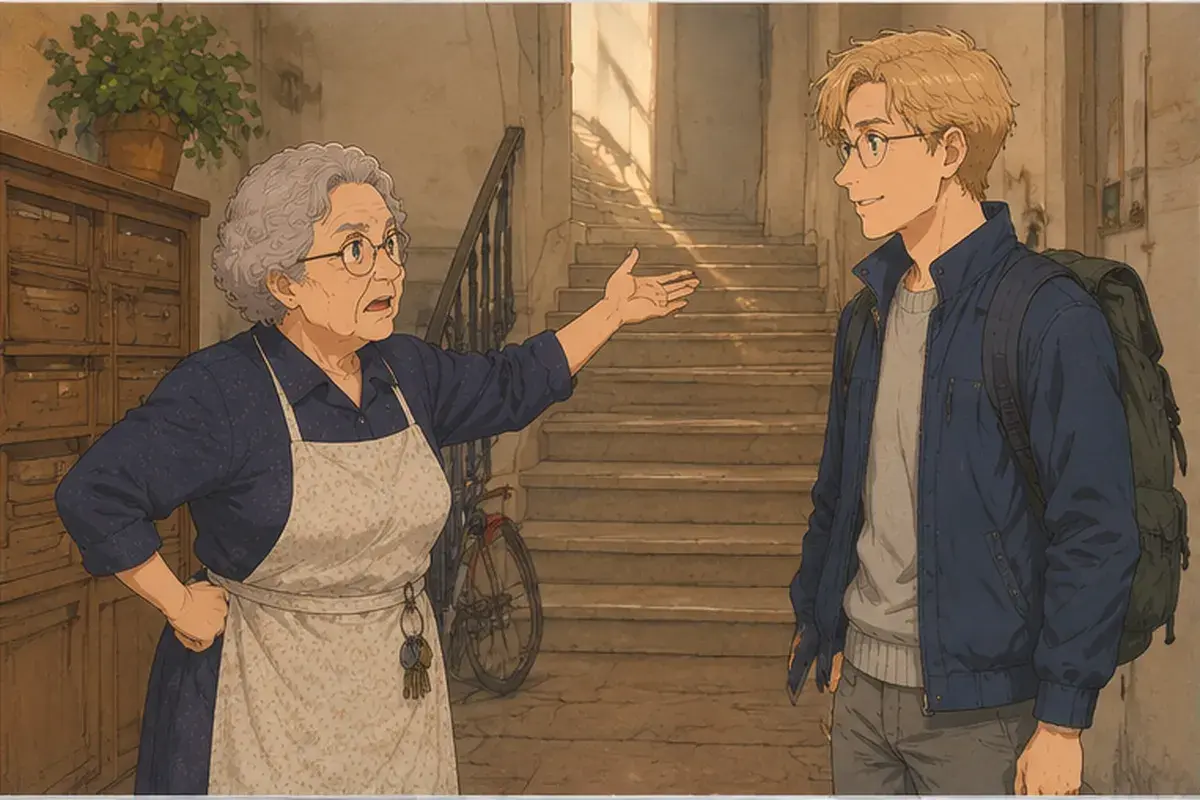
Poi ha spiegato: «I corrieri sono maleducati: lasciano tutto sulle scale e vanno via. Nel mio palazzo i pacchi non spariscono: è il mio orgoglio!»
Then she explained: "Couriers are rude: they leave everything on the stairs and go away. In my building packages don't disappear: that's my pride!"
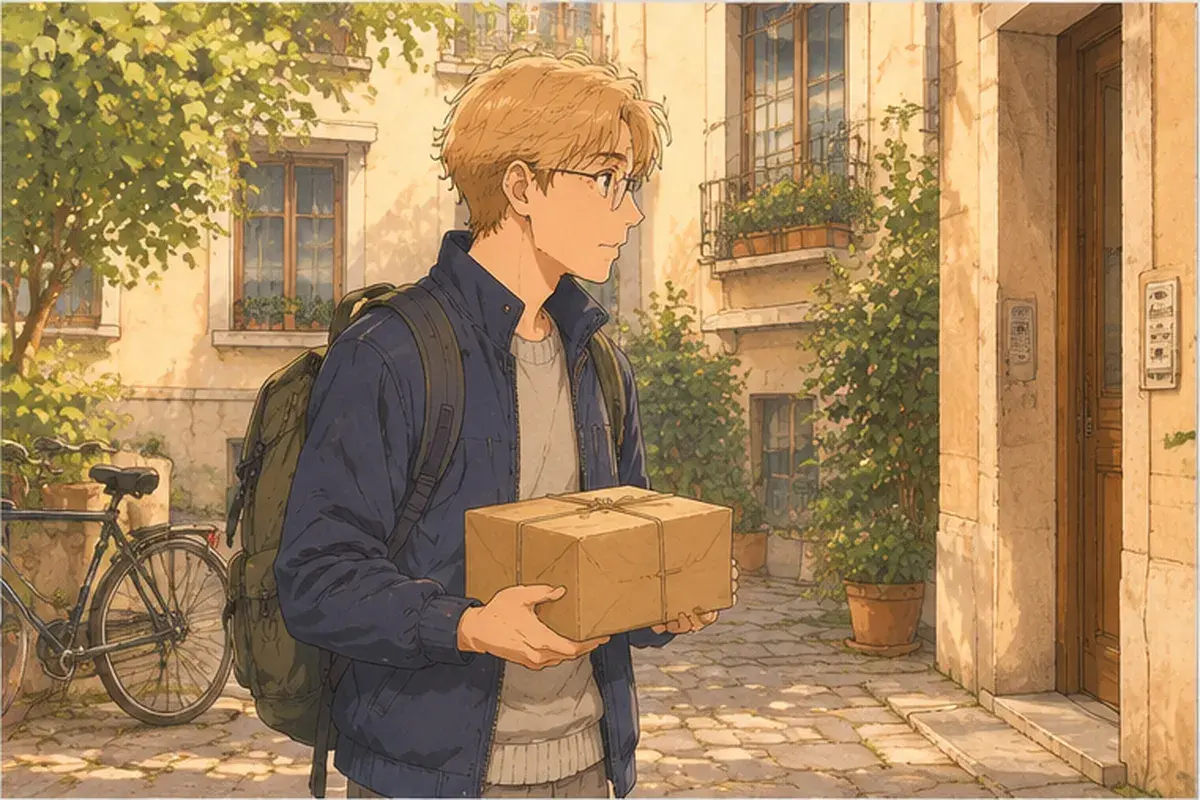
Ecco la ragione per cui faceva tante domande! Ero sicuro che mi odiava, e invece teneva il mio pacco al sicuro.
So that's the reason why she asked so many questions! I was sure she hated me, and instead she was keeping my package safe (man speaking).
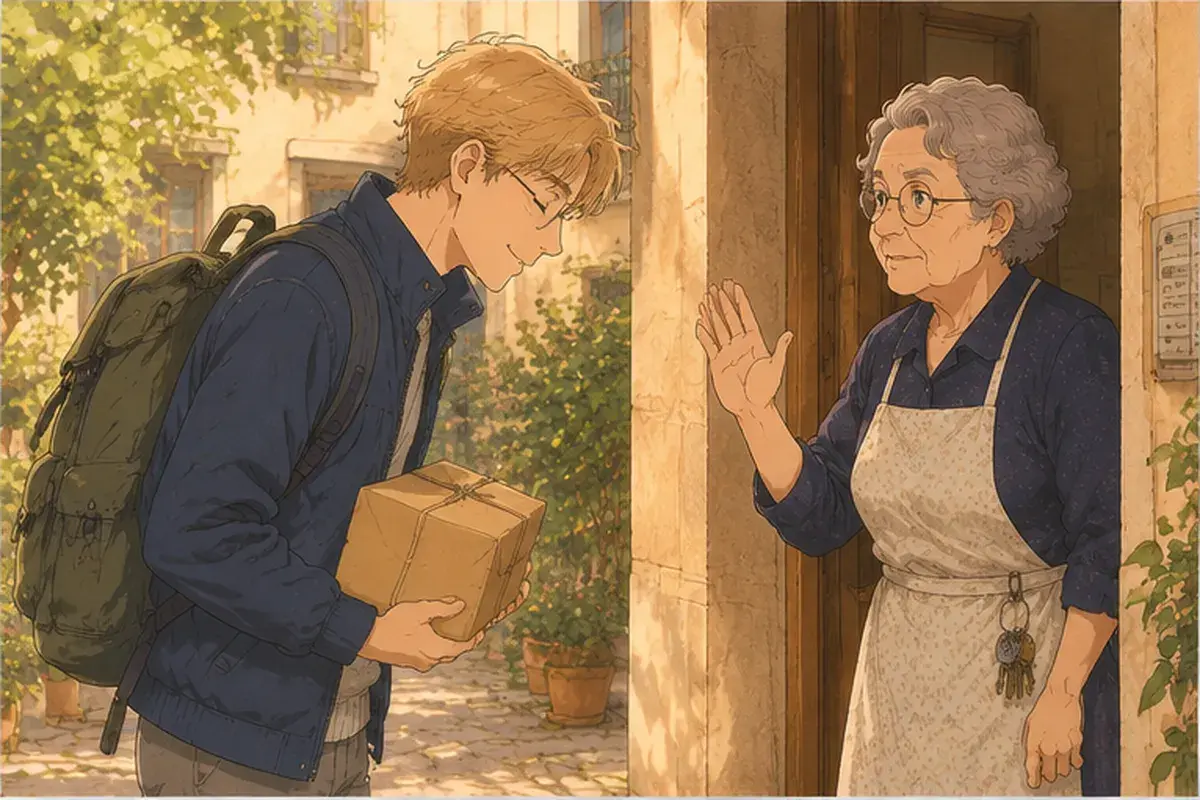
«Grazie della gentilezza!», le ho detto. «Non è gentilezza: è il mio lavoro», ha risposto, burbera come sempre.
"Thank you for your kindness!" I told her. "It's not kindness: it's my job," she answered, gruff as always.
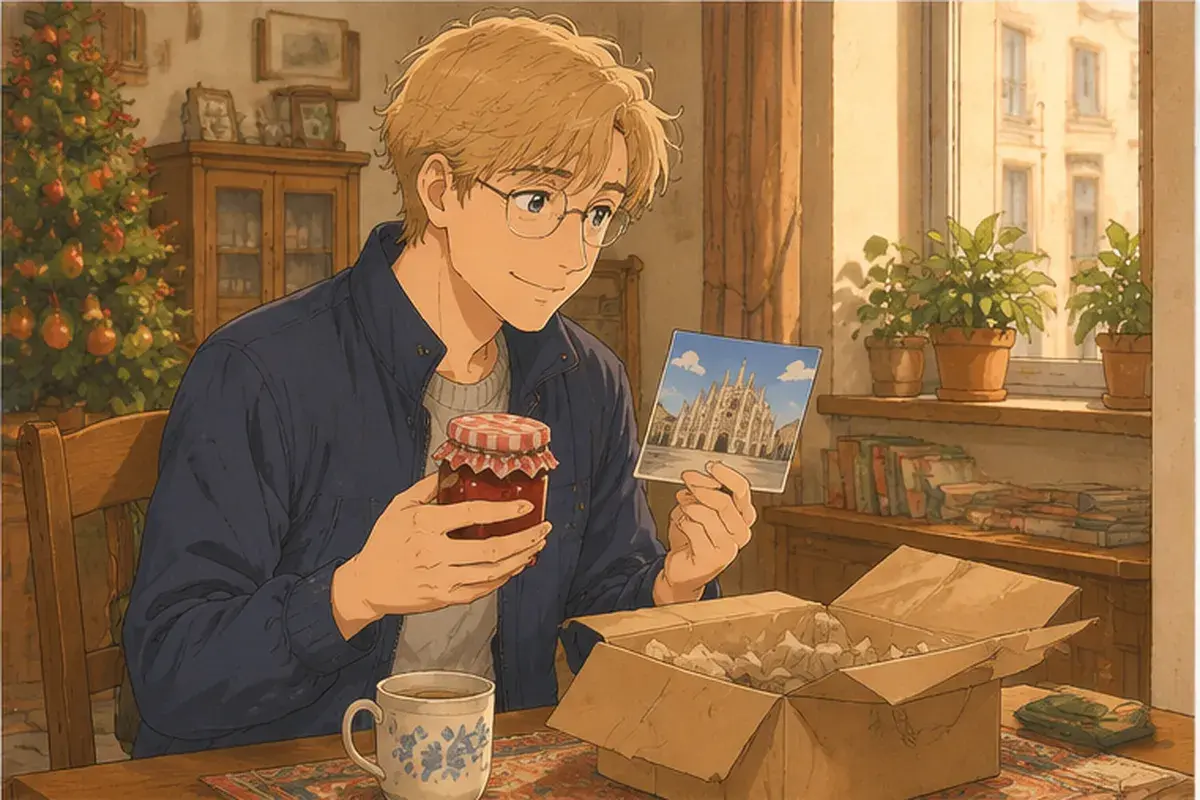
Sul pacco c'era una cartolina: «Caro Michele, un pensierino da Bologna per le tue mattine a Milano. Un abbraccio, Paola». Dentro, un barattolo di marmellata fatta in casa.
On the package there was a postcard: "Dear Michele, a little something from Bologna for your mornings in Milan. Hugs, Paola." Inside, a jar of homemade jam.
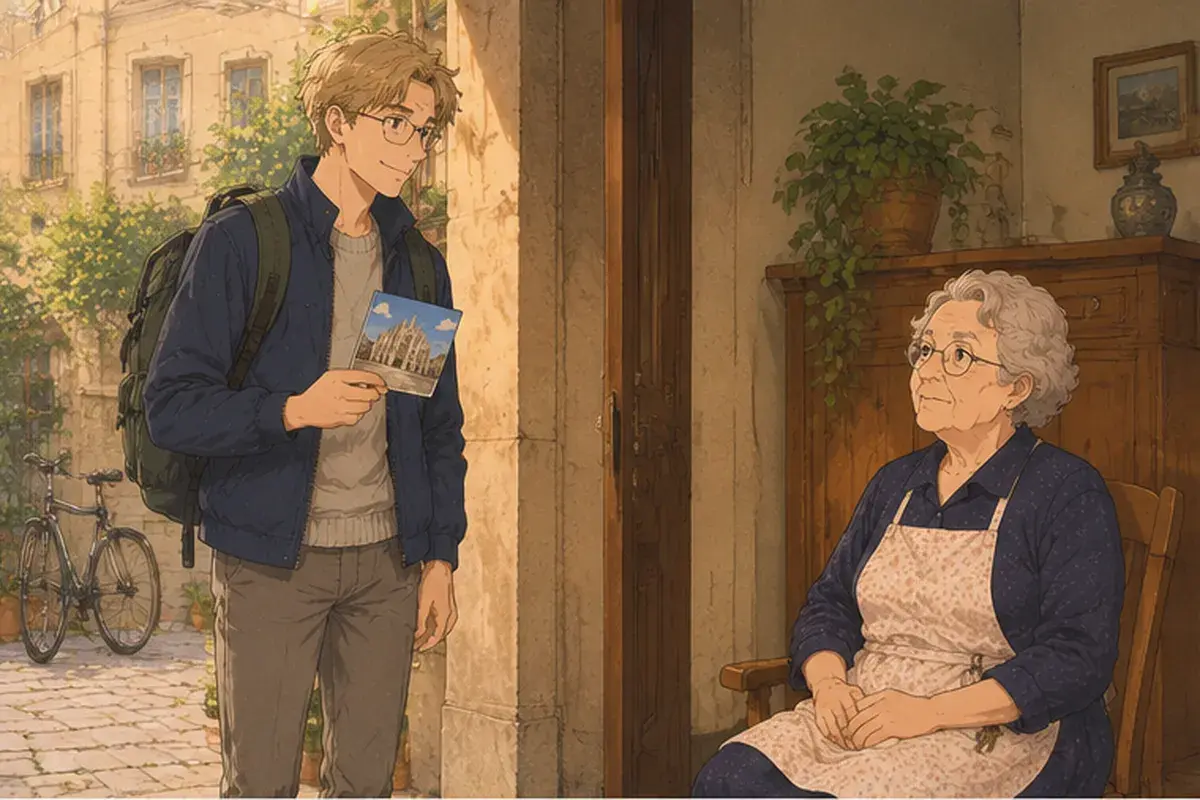
A dire il vero, mi sono commosso. «Lei ha letto la cartolina?», le ho chiesto.
To tell the truth, I got emotional (man speaking). "Have you read the postcard? (formal)" I asked her.
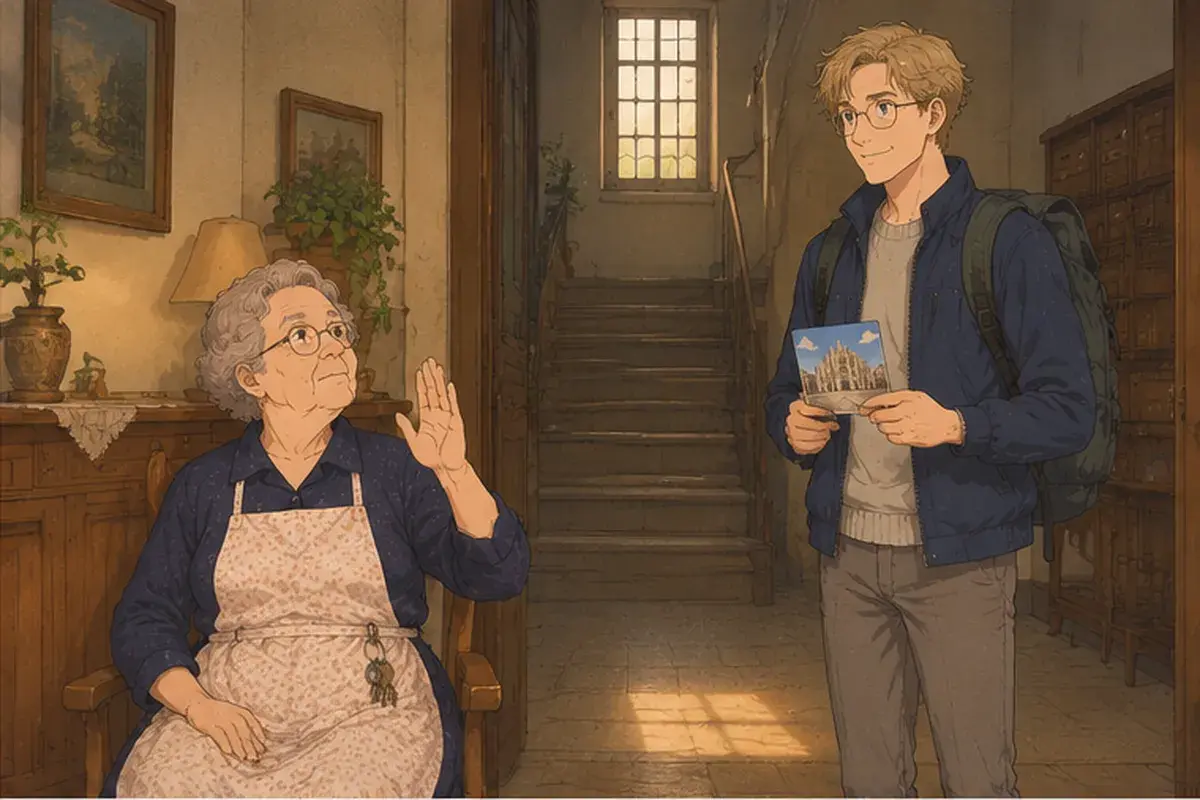
«Tutti leggono le cartoline», ha risposto. «Io non sono una ficcanaso!»
"Everybody reads postcards," she answered. "I'm not a busybody! (woman speaking)"
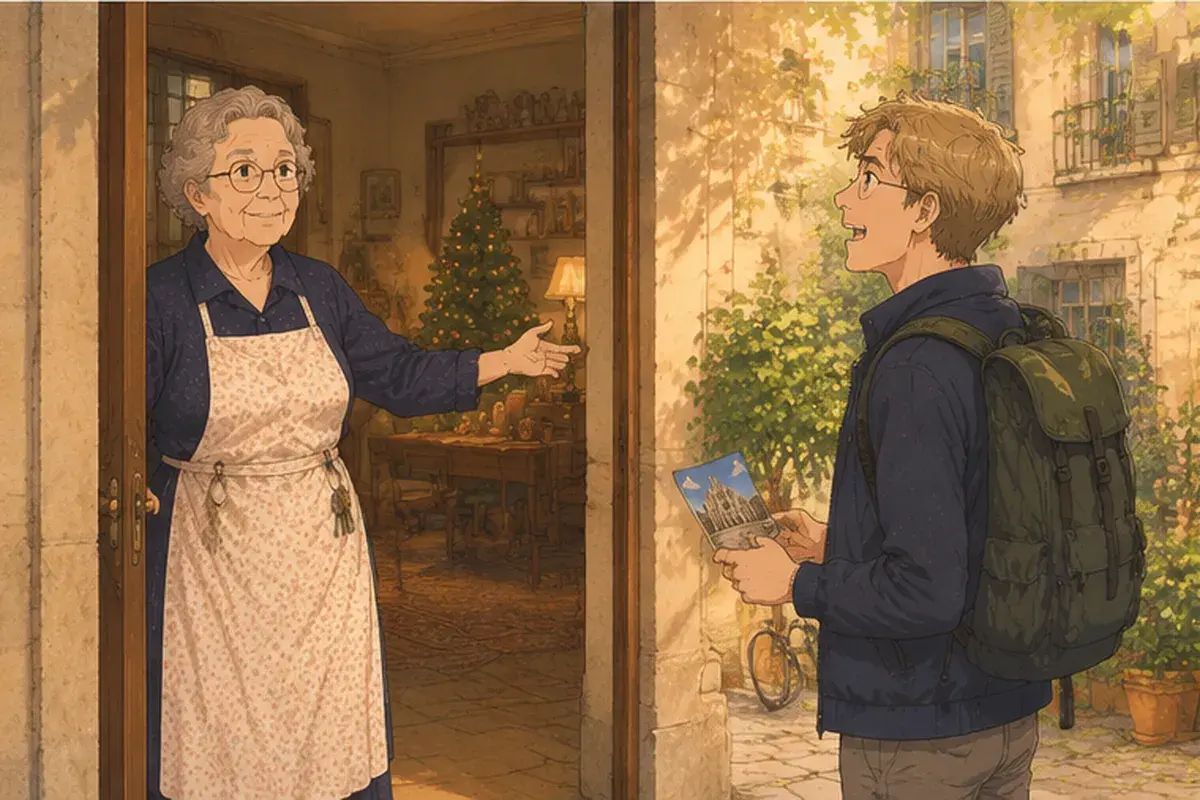
Poi ha aggiunto: «Michele è un bel nome. Venga, Le offro un caffè».
Then she added: "Michele is a nice name. Come in, let me get you a coffee (formal)."

La persona di cui avevo paura mi ha invitato a prendere un caffè! Ho accettato, ma prima ho portato la bici fuori dal cortile.
The person I was afraid of invited me for a coffee! I accepted, but first I took my bike out of the courtyard.

In soggiorno, tra gli oggetti d'antiquariato e gli addobbi di Natale, la signora Pina ha assaggiato la marmellata: «Per essere di Bologna, non è male».
In the living room, among the antiques and the Christmas decorations, Signora Pina tasted the jam: "For something from Bologna, it's not bad."
Grammar for this text
- Il destinatario è un certo Michele — un certo Michele — "a certain Michele": that's how you talk about someone you don't know or don't recognize by name. il destinatario — the person it's addressed to, il mittente — the person who sent it.
- La persona di cui avevo paura — avere paura di → di cui: "the person I was afraid of". English leaves "of" at the end; Italian puts di before cui. The same with la ragione per cui — "the reason why". The rule is in the unit grammar, block 1.
- Mi dica chi è il mittente — dica is the formal imperative (the Lei form) of dire ("tell me"); Misha and Signora Pina use Lei with each other. The same with Venga (from venire) and Le offro un caffè, where Le means "(to) you (formal)" (unit 2).
- una vera sciura milanese — sciura is a Milanese word for an older, well-off lady. People say it in Milan and in the north.
- il coinquilino del siciliano — "the Sicilian" is what the concierge calls Davide: he's from Sicily. il coinquilino — roommate.
- mi aveva scritto — aveva scritto is the trapassato prossimo (past perfect, unit 7): she had written before Monday came.
- Per essere di Bologna, non è male — "for something from Bologna, it's not bad": a Milanese lady praises jam from Bologna, but with a catch.
Words and grammar of the unit: Talk about a city festival.
Learn the words from the texts with flashcards
In the app, you can tap any word in a text to see its translation, forms and examples, and new words stick with flashcards. 15 minutes a day.
Start for freeEverything is open for free. No card needed to sign up.