

Italian dialogue with translation · B1 · 18 lines
È la festa di cui ti ho parlato It's the festival I told you about
Comic · 18 panels
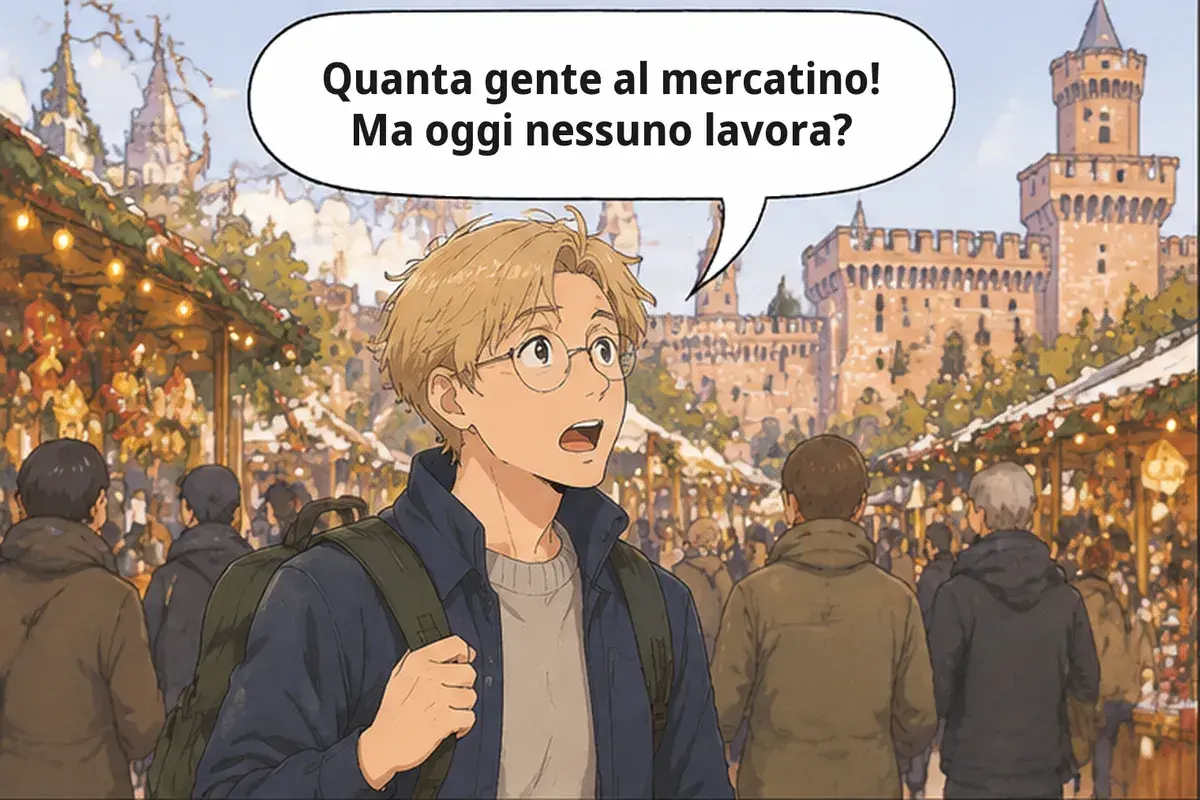
- Misha
Quanta gente al mercatino! Ma oggi nessuno lavora?
So many people at the street fair! Isn't anybody working today?
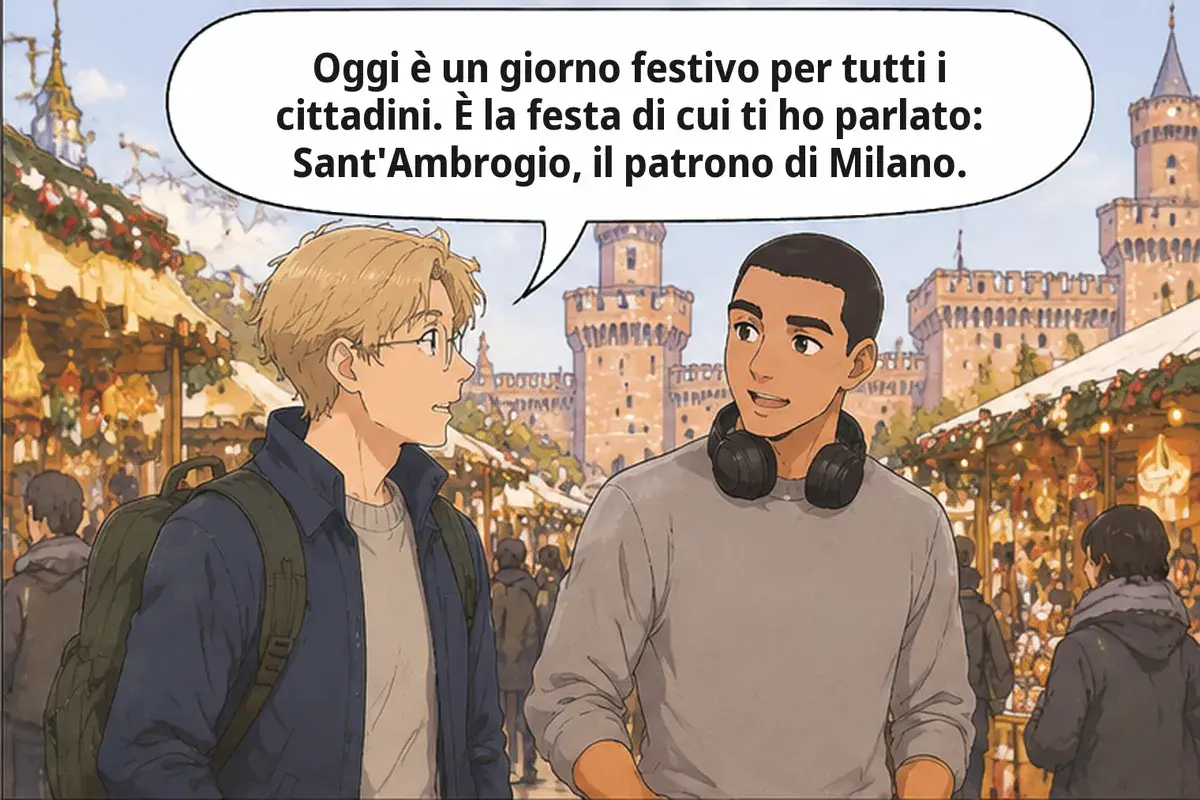
- Davide
Oggi è un giorno festivo per tutti i cittadini. È la festa di cui ti ho parlato: Sant'Ambrogio, il patrono di Milano.
Today is a holiday for all the citizens. It's the festival I told you about: Saint Ambrose, the patron saint of Milan.
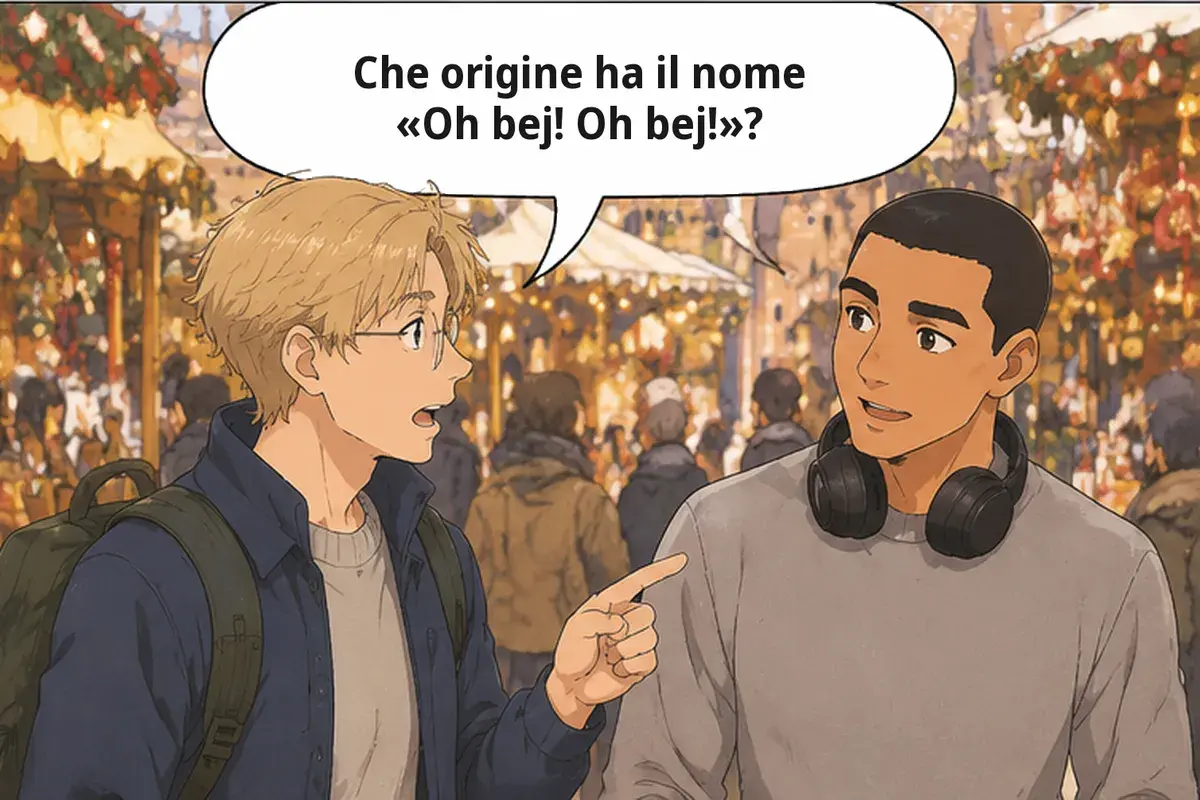
- Misha
Che origine ha il nome «Oh bej! Oh bej!»?
What's the origin of the name "Oh bej! Oh bej!"?
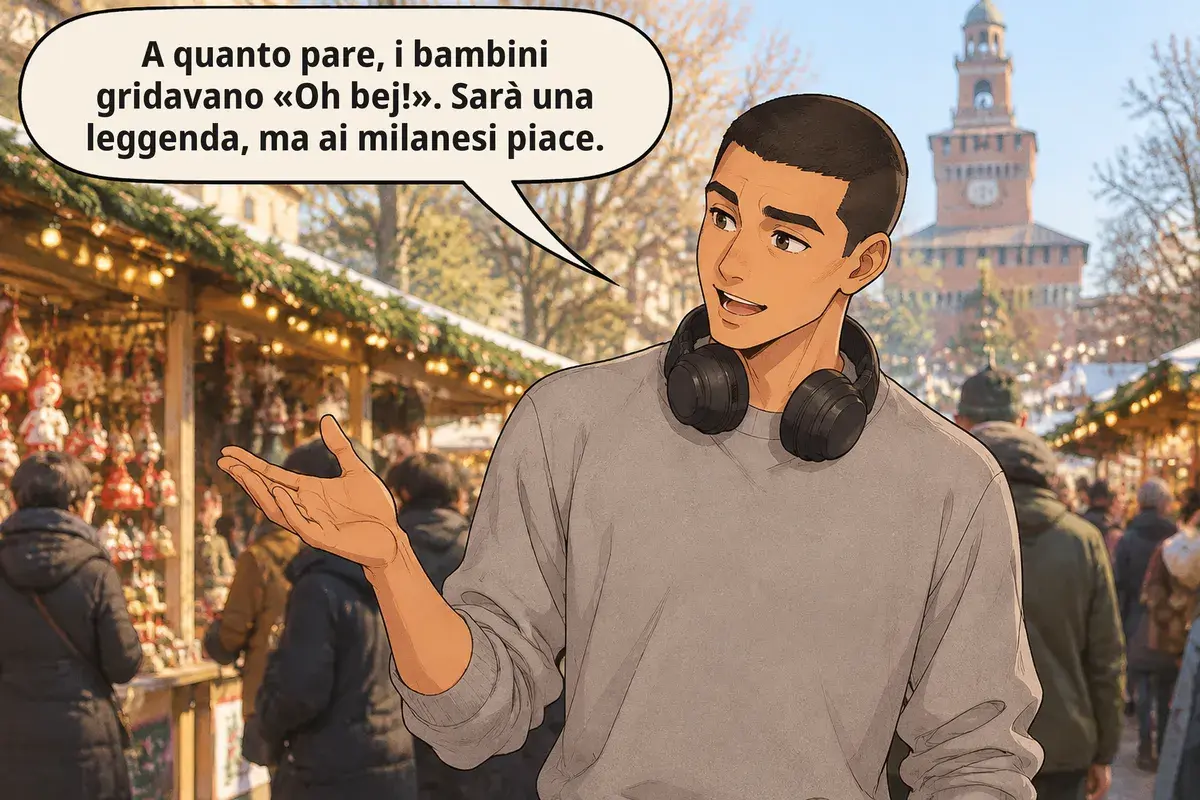
- Davide
A quanto pare, i bambini gridavano «Oh bej!». Sarà una leggenda, ma ai milanesi piace.
Apparently, children used to shout "Oh bej!". It may be a legend, but the Milanese like it.
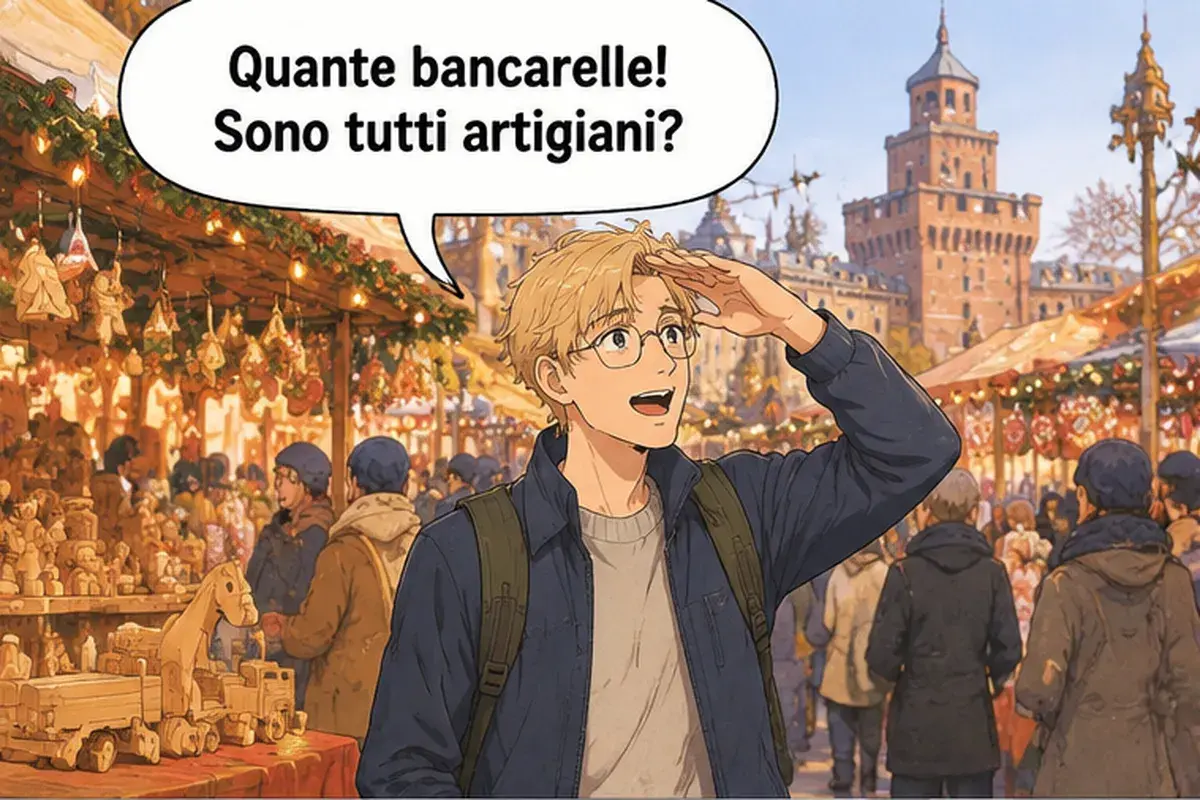
- Misha
Quante bancarelle! Sono tutti artigiani?
So many stalls! Are they all craftspeople?
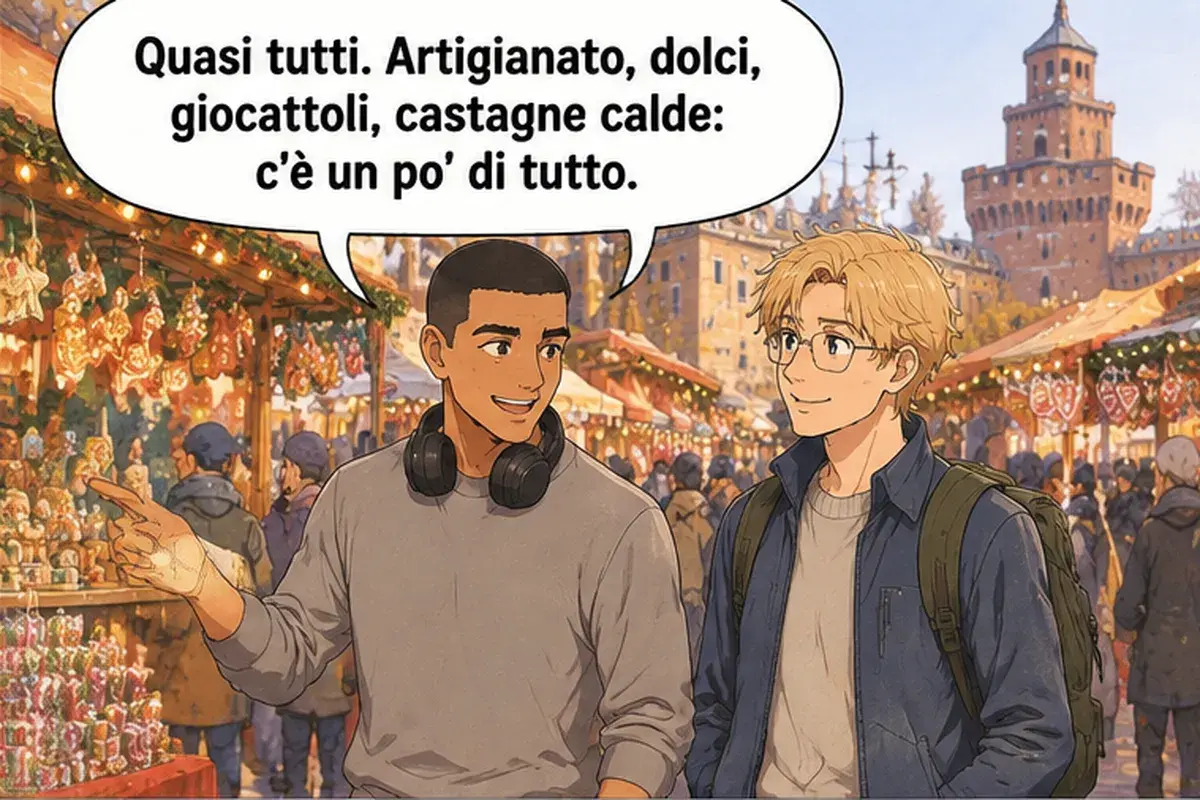
- Davide
Quasi tutti. Artigianato, dolci, giocattoli, castagne calde: c'è un po' di tutto.
Almost all. Craftwork, sweets, toys, hot chestnuts: there's a bit of everything.
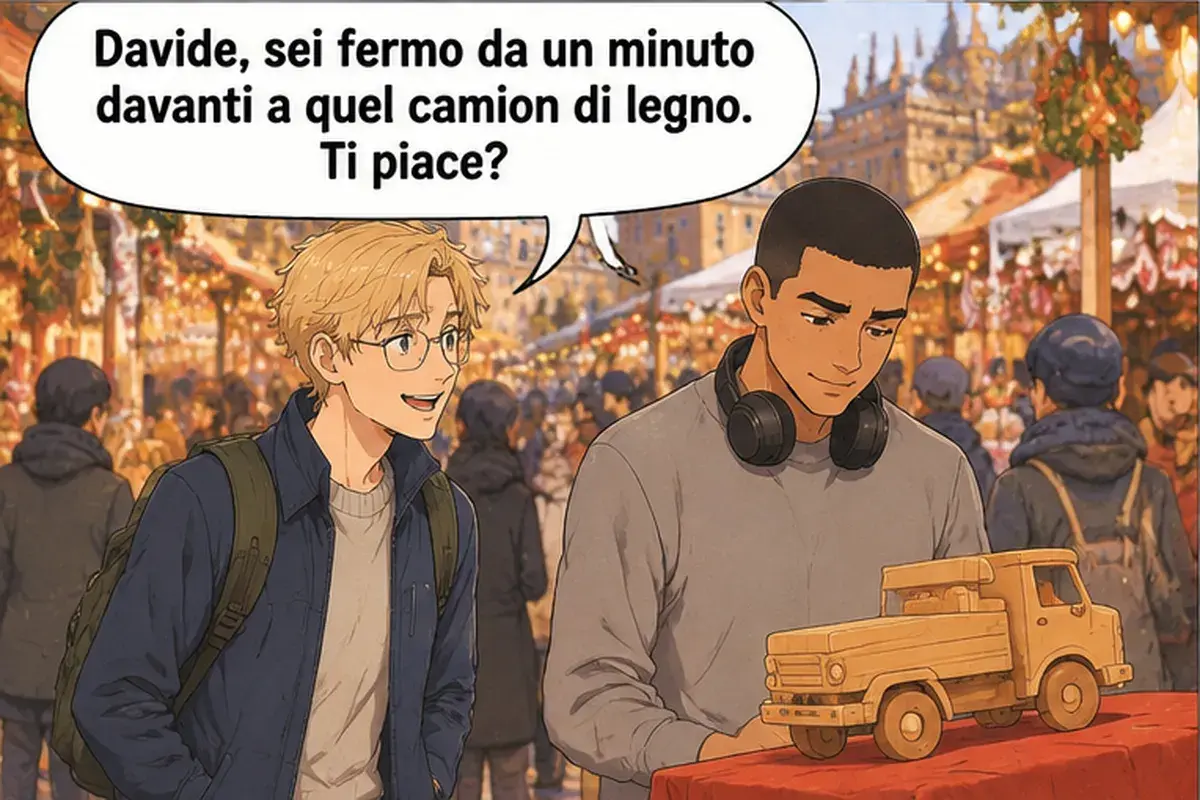
- Misha
Davide, sei fermo da un minuto davanti a quel camion di legno. Ti piace?
Davide, you've been standing in front of that wooden truck for a minute. Do you like it?
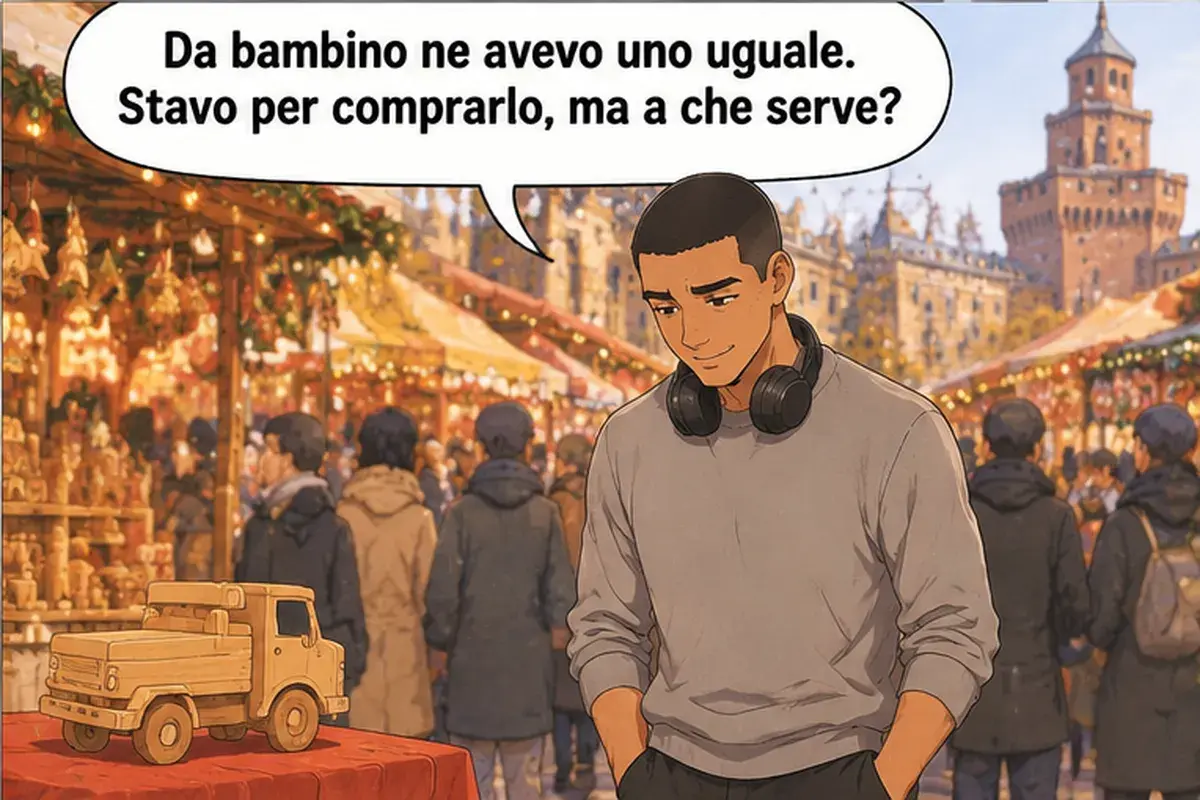
- Davide
Da bambino ne avevo uno uguale. Stavo per comprarlo, ma a che serve?
As a kid I had one just like it. I was about to buy it, but what's the point?
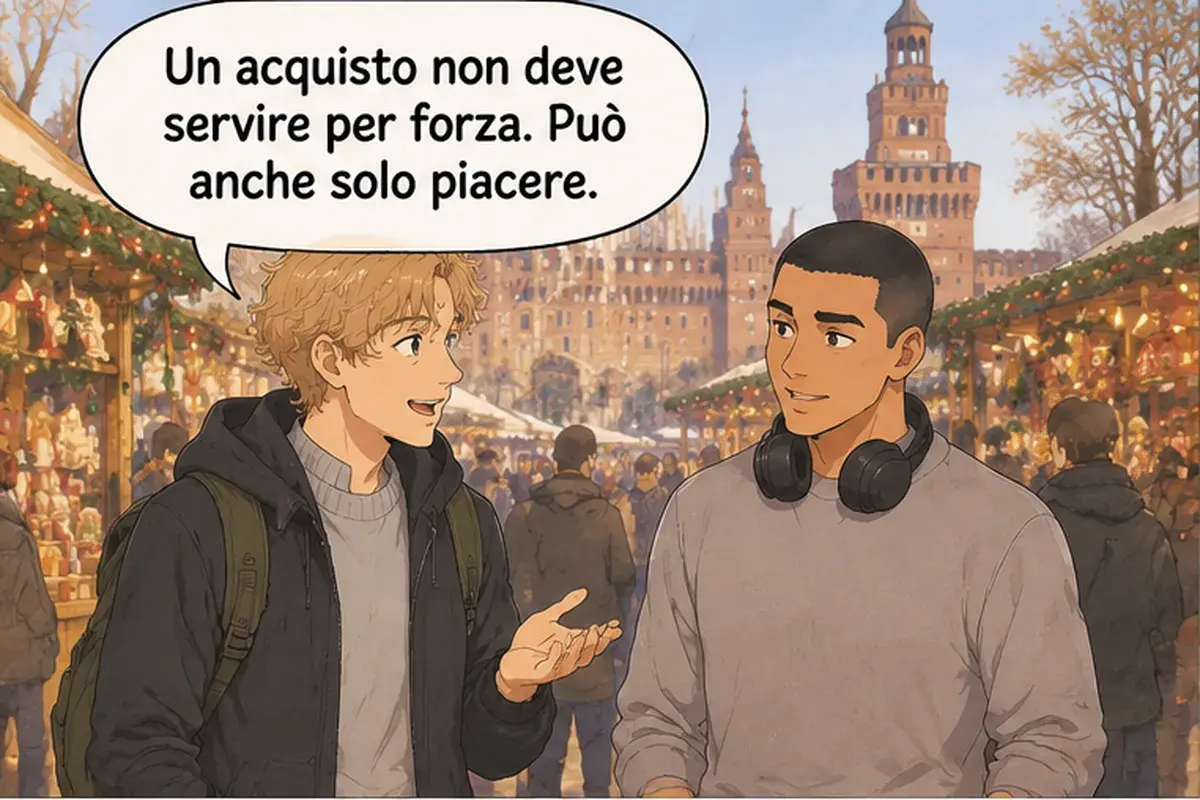
- Misha
Un acquisto non deve servire per forza. Può anche solo piacere.
A purchase doesn't have to be useful. It can just be something you like.
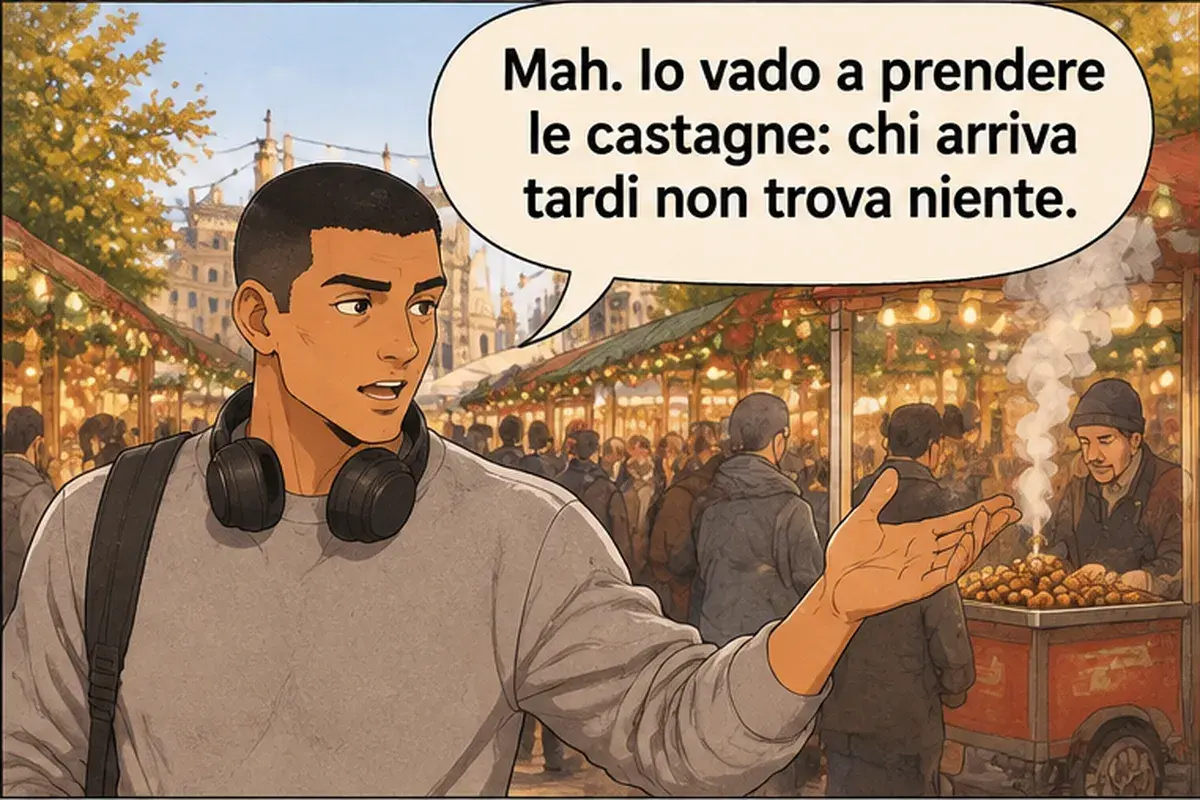
- Davide
Mah. Io vado a prendere le castagne: chi arriva tardi non trova niente.
Hmm. I'm going to get the chestnuts: whoever comes late finds nothing.
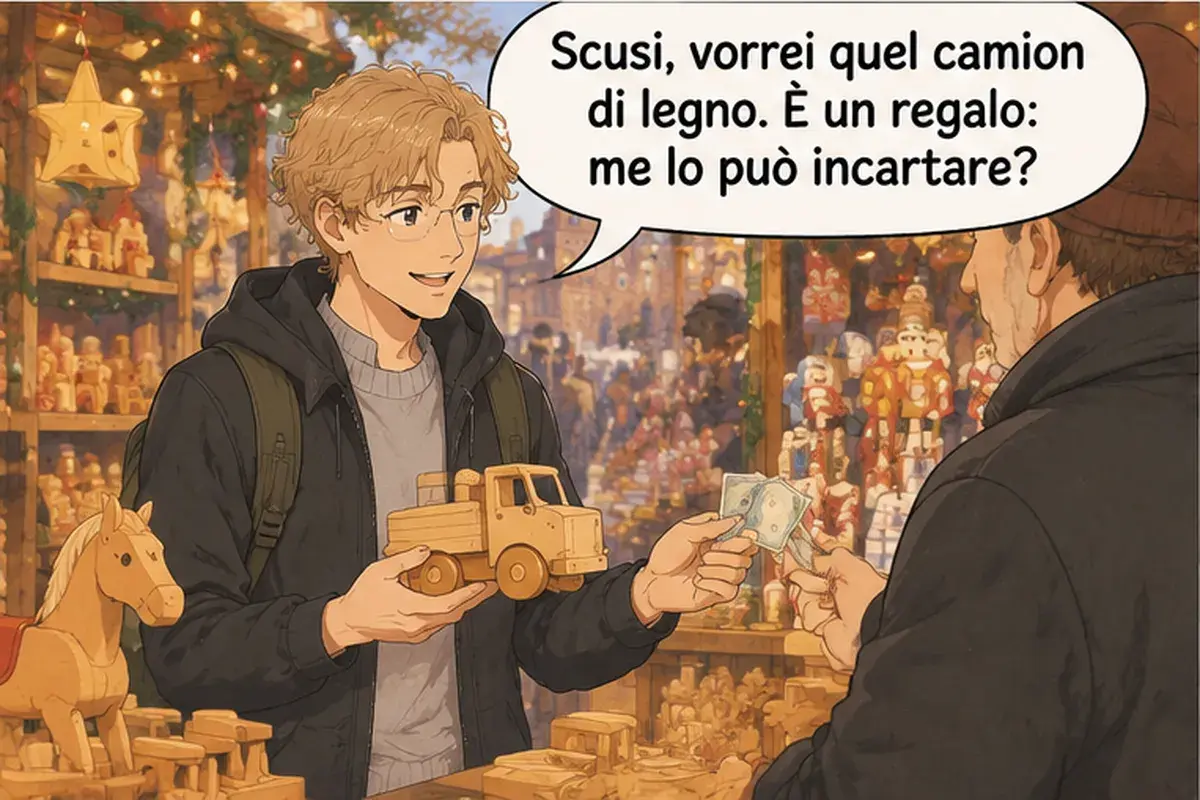
- Misha
Scusi, vorrei quel camion di legno. È un regalo: me lo può incartare?
Excuse me, I'd like that wooden truck. It's a gift: can you wrap it for me? (formal)
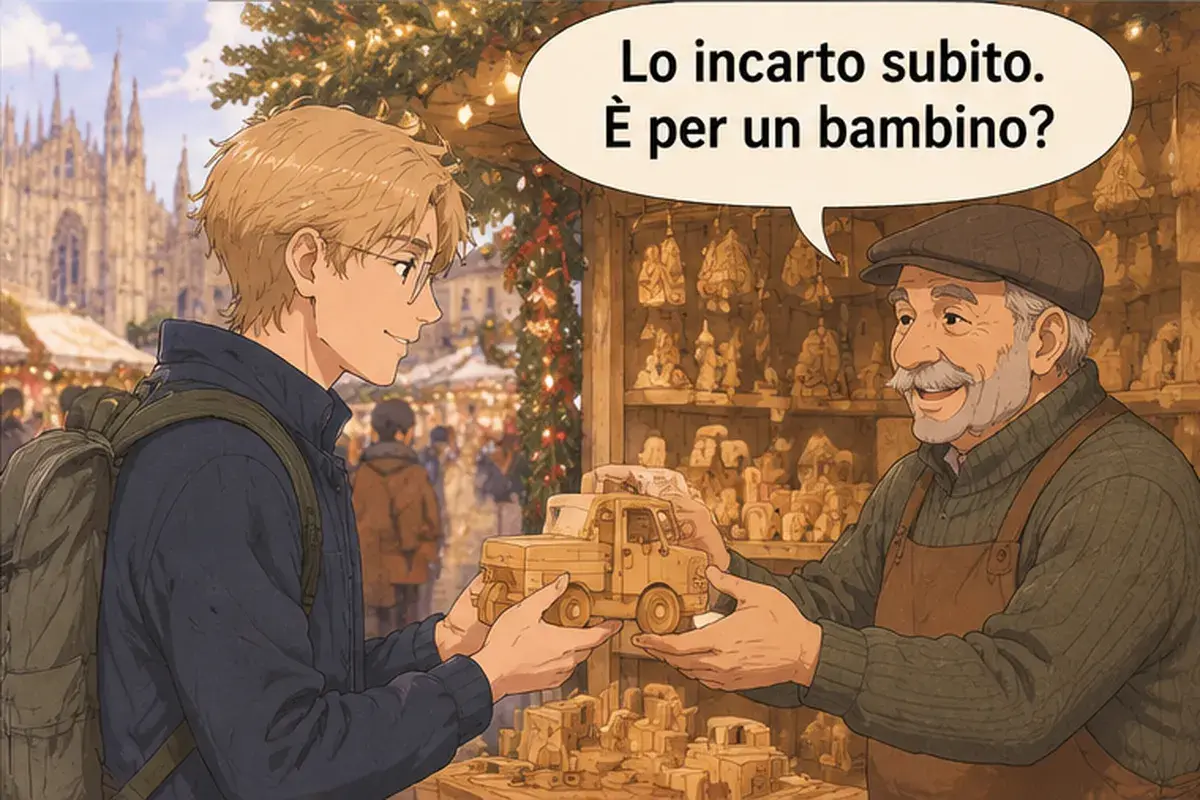
- Signore
Lo incarto subito. È per un bambino?
I'll wrap it right away. Is it for a child?
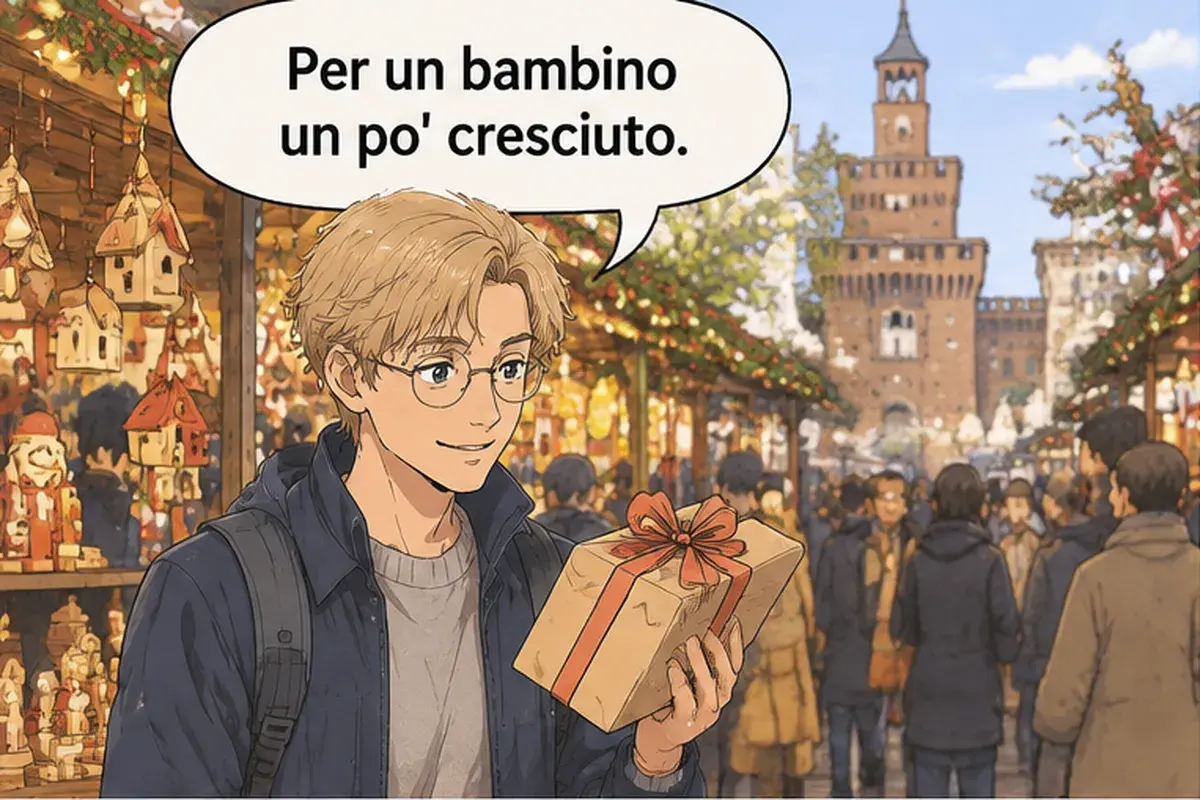
- Misha
Per un bambino un po' cresciuto.
For a child who's a bit grown up.
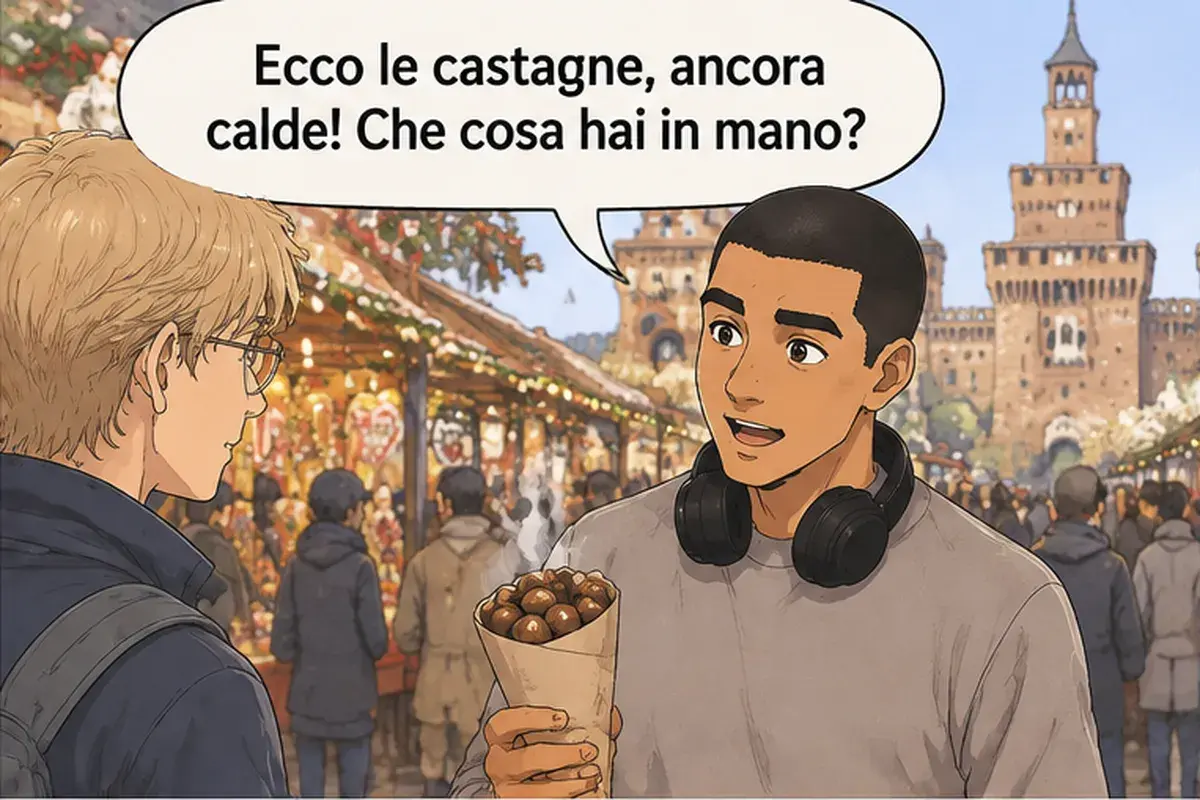
- Davide
Ecco le castagne, ancora calde! Che cosa hai in mano?
Here are the chestnuts, still hot! What do you have in your hand?
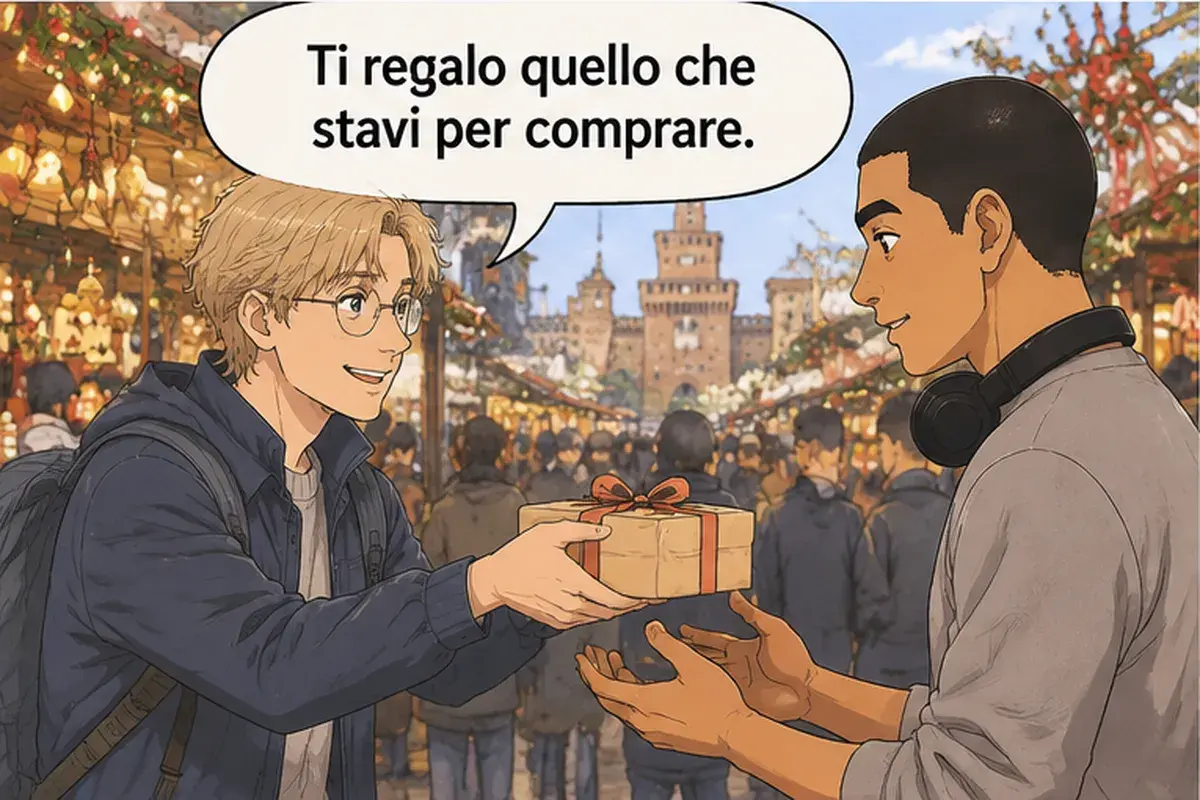
- Misha
Ti regalo quello che stavi per comprare.
I'm giving you what you were about to buy.
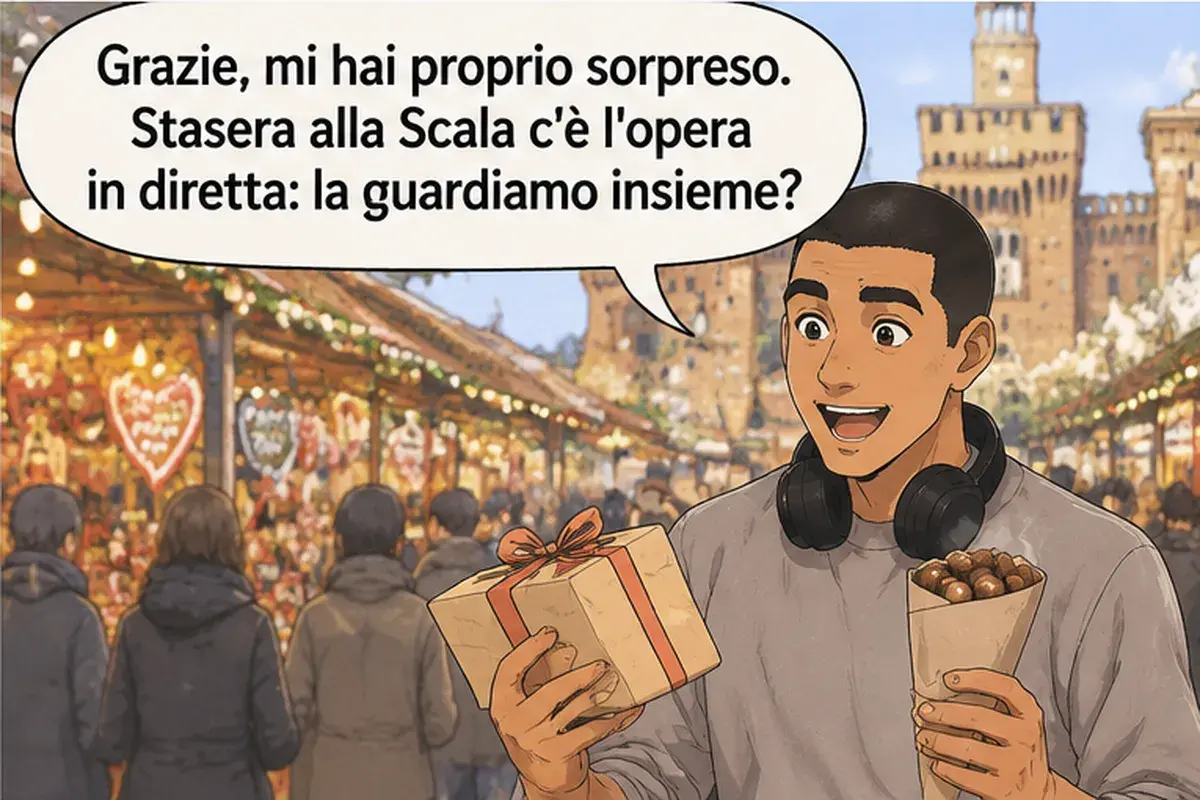
- Davide
Grazie, mi hai proprio sorpreso. Stasera alla Scala c'è l'opera in diretta: la guardiamo insieme?
Thanks, you really surprised me. Tonight the opera at La Scala is broadcast live: shall we watch it together?
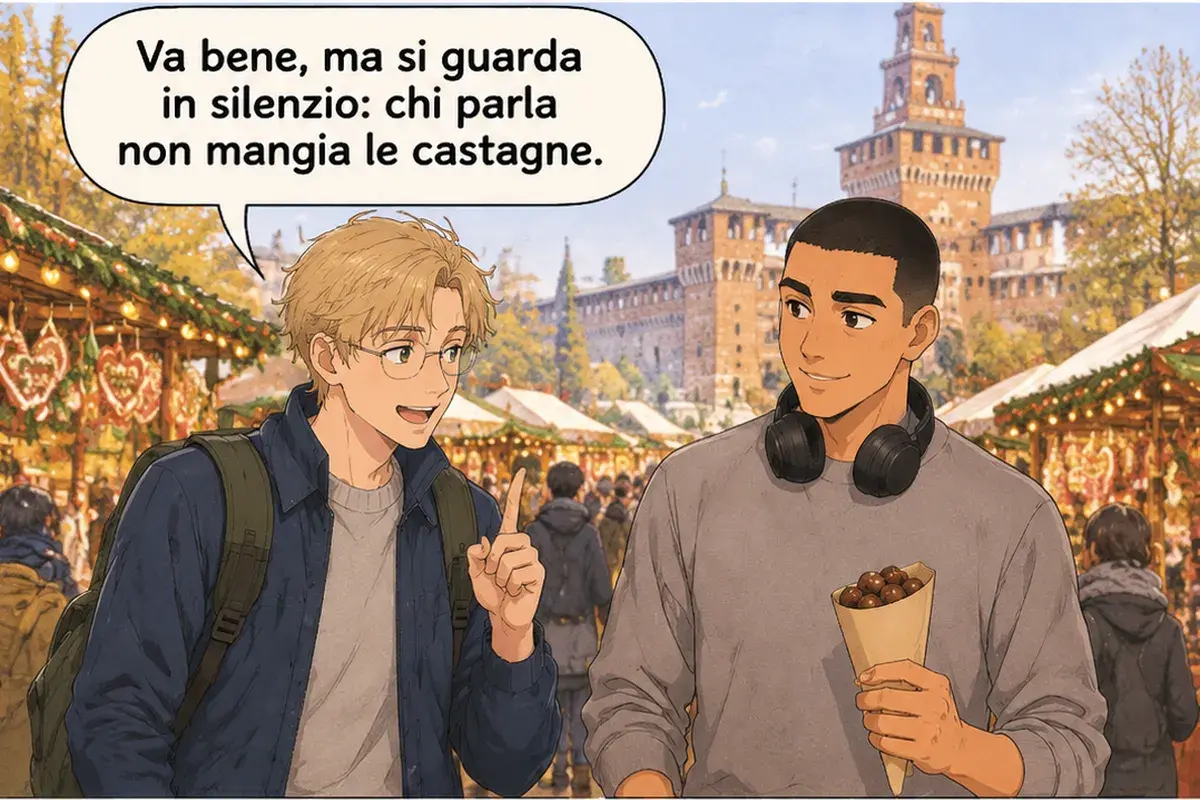
- Misha
Va bene, ma si guarda in silenzio: chi parla non mangia le castagne.
OK, but we watch in silence: whoever talks doesn't eat the chestnuts.
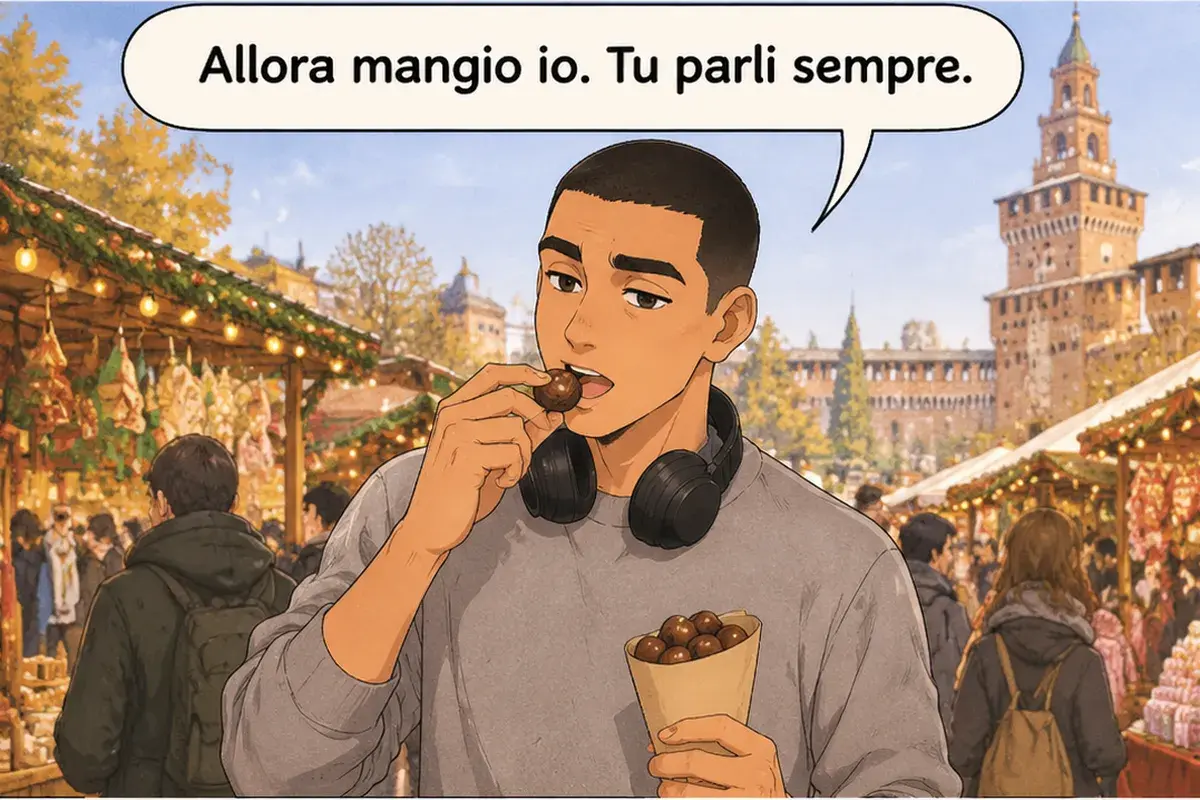
- Davide
Allora mangio io. Tu parli sempre.
Then I'll be the one eating. You're always talking.
Grammar for this text
- È la festa di cui ti ho parlato — cui means "which, whom" and comes only after a preposition: parlare di → di cui. English says "the festival I told you about" and moves "about" to the end; Italian puts di right before cui. Without a preposition use che. The rule is in the unit grammar, block 1.
- chi arriva tardi non trova niente — here chi means "whoever, the one who"; the verb after it is always singular: "whoever comes late finds nothing". The same goes for chi parla non mangia le castagne.
- Stavo per comprarlo — stavo is the imperfetto (past of habits and descriptions) of stare. stare per + infinitive — "to be about to"; comprarlo = comprare + lo. "I was about to buy it" — and he didn't. Block 3.
- Ti regalo quello che stavi per comprare — quello che — "what, the thing that" (block 2); regalo here is a verb, "I give as a gift" (from regalare), not the noun "gift".
- me lo può incartare? — me lo = mi + lo ("it for me", unit 4). Misha uses Lei with the seller, so può is the lui / lei form.
- un bambino un po' cresciuto — cresciuto is the past participle of crescere ("to grow"): "a child who has grown up a bit". It's a joke: this "child", Davide, is over thirty.
- Sant'Ambrogio — Sant' is santo before a vowel: Saint Ambrose, Milan's patron saint. Oh bej! is Milanese dialect for "how beautiful!".
Words and grammar of the unit: Talk about a city festival.
Learn the words from the texts with flashcards
In the app, you can tap any word in a text to see its translation, forms and examples, and new words stick with flashcards. 15 minutes a day.
Start for freeEverything is open for free. No card needed to sign up.