
Italian story with translation · A2 · 16 lines
Per arrivare in cima ci vuole coraggio It takes courage to get to the top
Comic · 16 panels
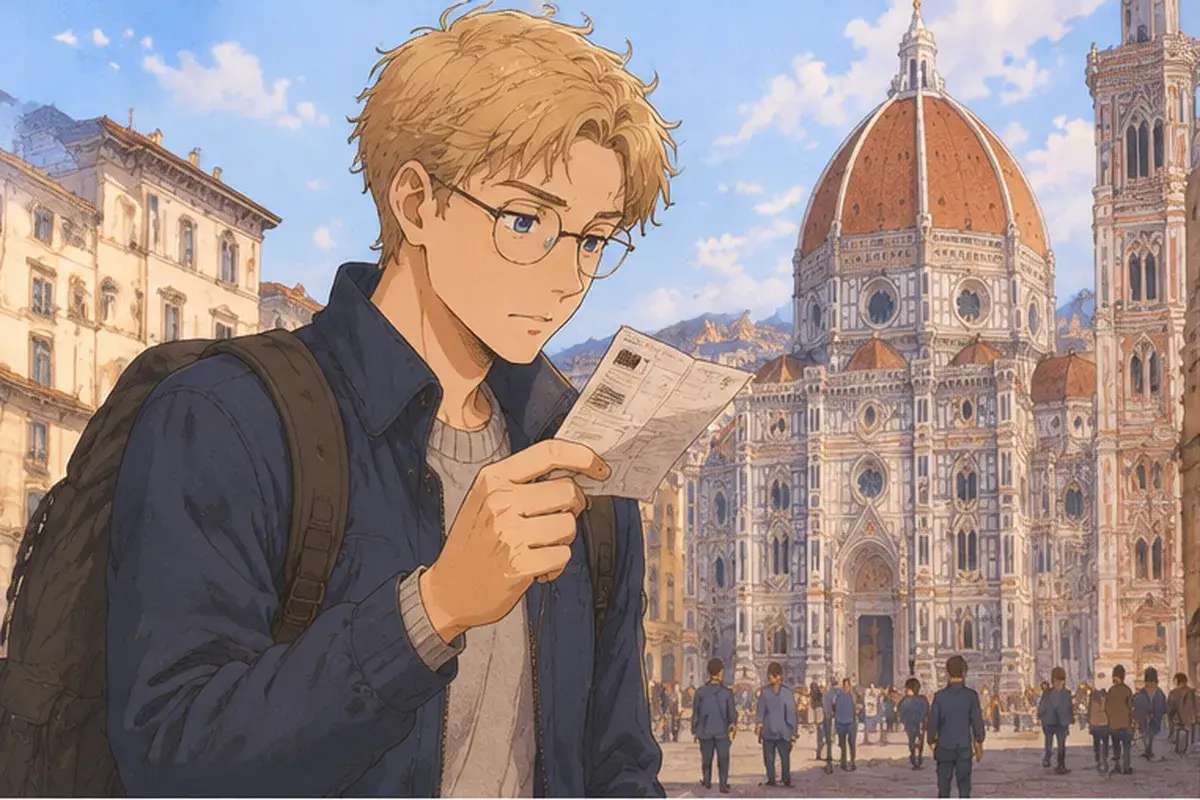
Sul biglietto per la cupola del duomo c'è l'orario di ingresso: le undici.
On the ticket for the cathedral dome there's the entry time: eleven o'clock.
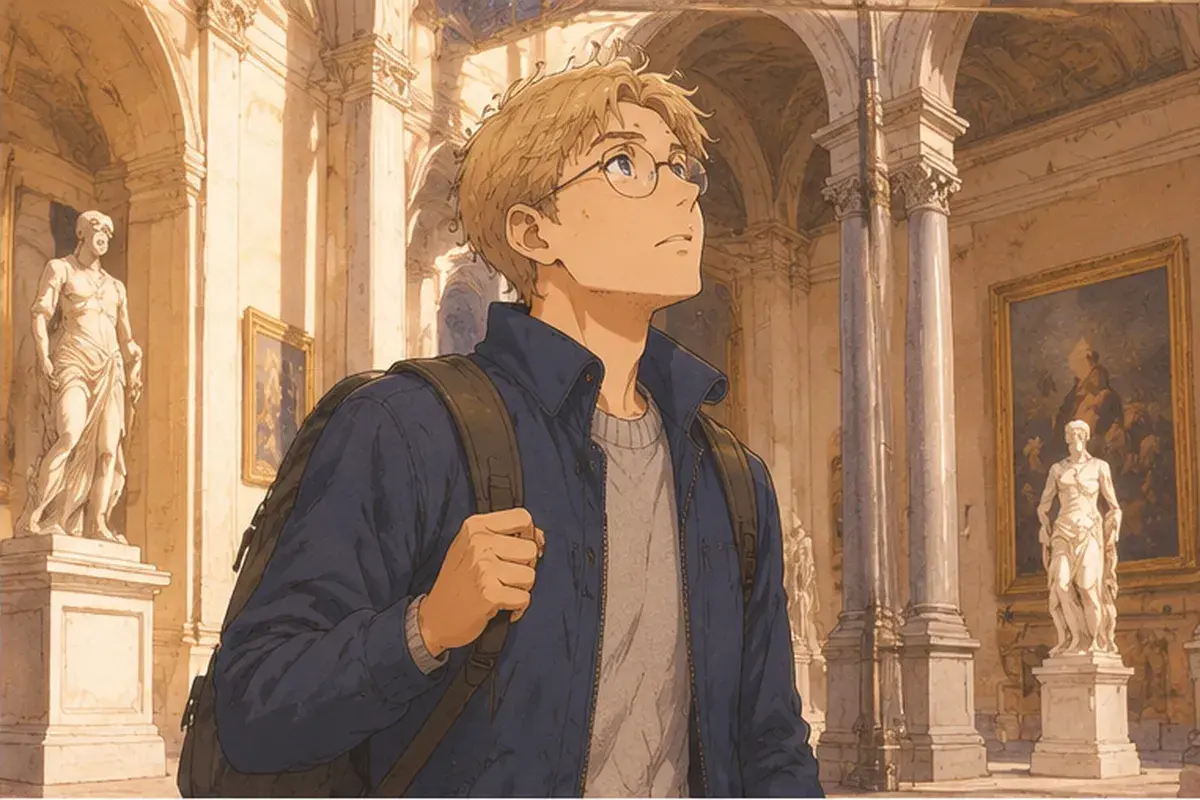
A Firenze ci sono statue e quadri dappertutto, ma io penso solo alla cupola.
In Florence there are statues and paintings everywhere, but I'm only thinking about the dome.

All'università, per l'esame di storia dell'architettura, studiavo questa cupola ogni sera in biblioteca.
At the university, for the architecture history exam, I used to study this dome every evening in the library.

Allora era solo una foto in un libro. Oggi finalmente sono qui.
Back then it was just a photo in a book. Today I'm finally here.
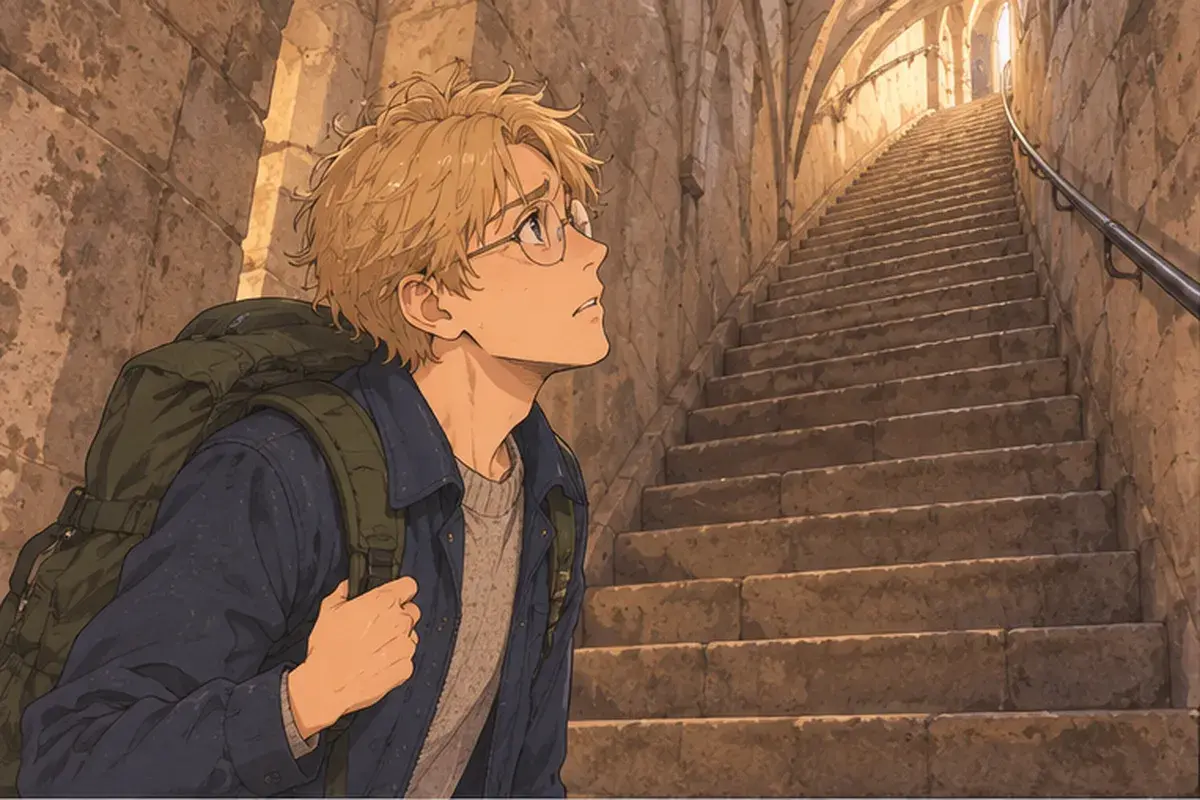
I gradini sono 463 e l'ascensore non c'è.
There are 463 steps, and there's no elevator.
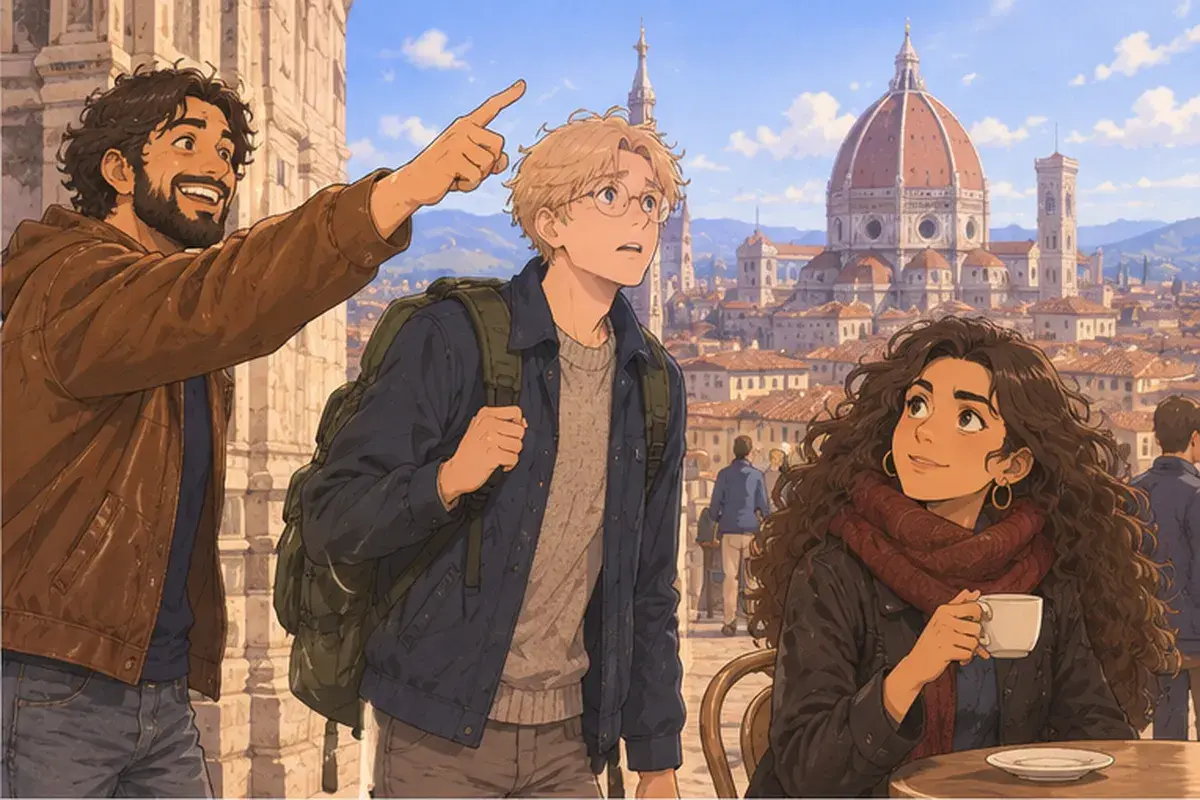
«Per arrivare in cima ci vuole coraggio», dice Luca. Giulia non sale: aspetta in piazza con un caffè.
"It takes courage to get to the top," says Luca. Giulia doesn't go up: she waits in the square with a coffee.
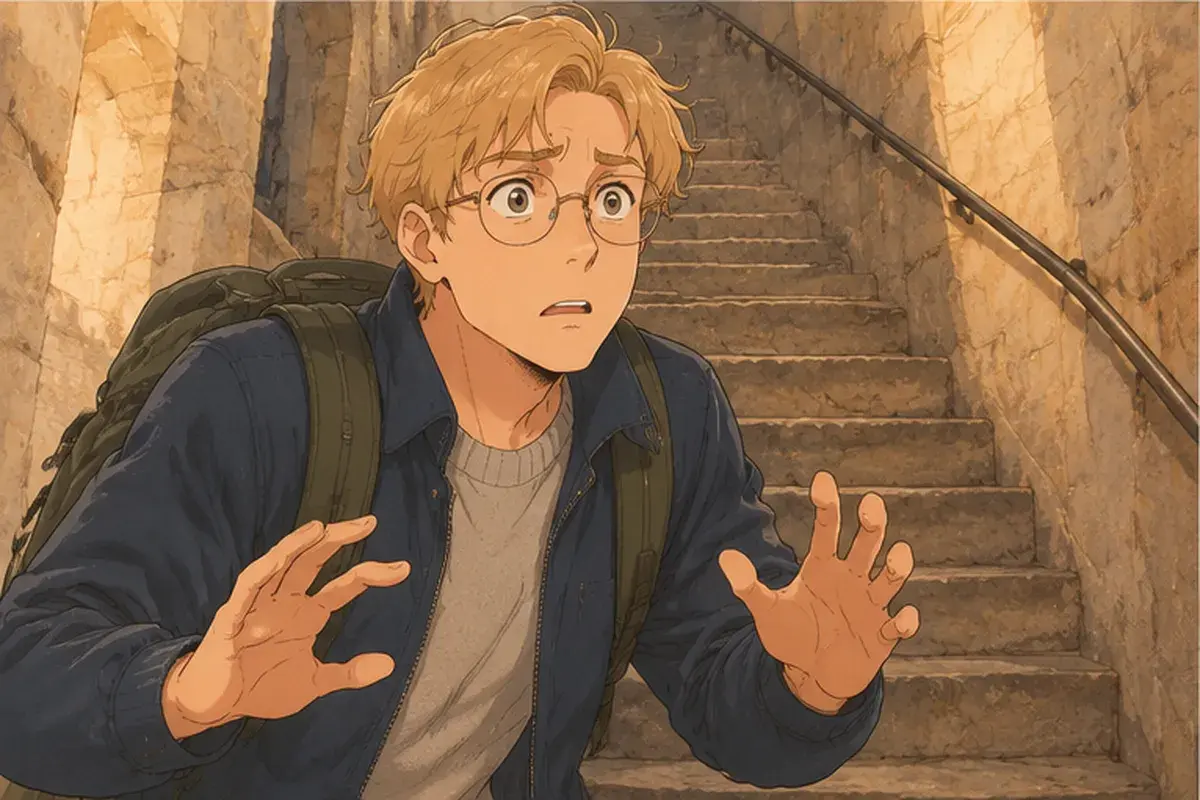
Io ho paura dell'altezza: ho già le mani fredde al primo gradino.
I'm afraid of heights: my hands are already cold on the first step.
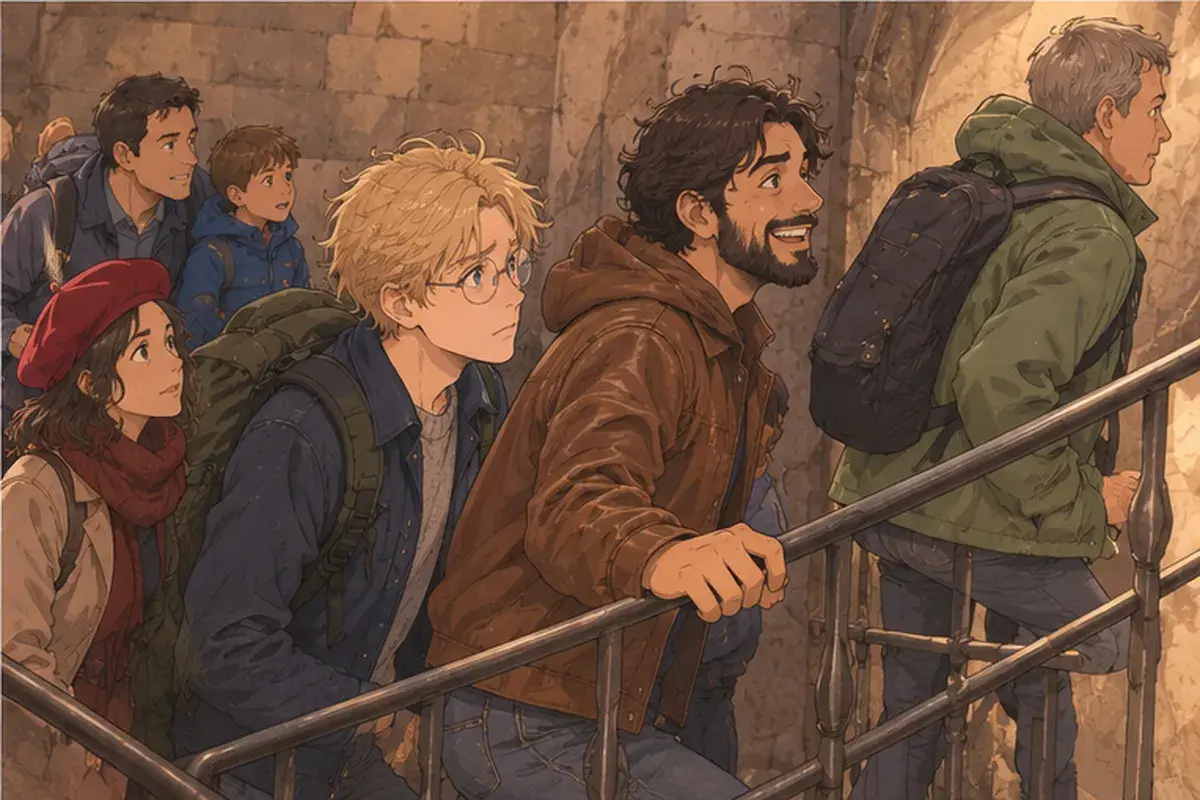
La scala è stretta: davanti a noi ci sono turisti tedeschi, dietro una famiglia americana e una signora francese.
The staircase is narrow: in front of us there are German tourists, behind us an American family and a French lady.
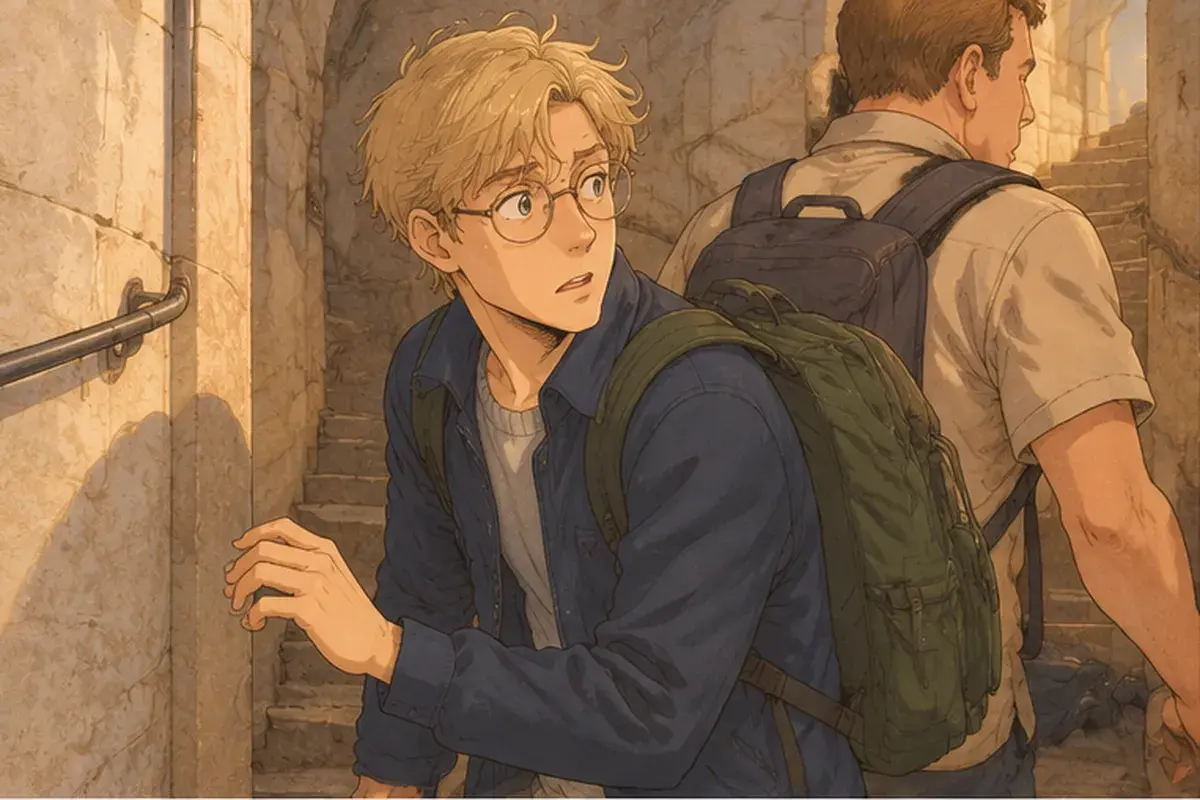
Il mio zaino tocca un turista tedesco.
My backpack bumps into a German tourist.
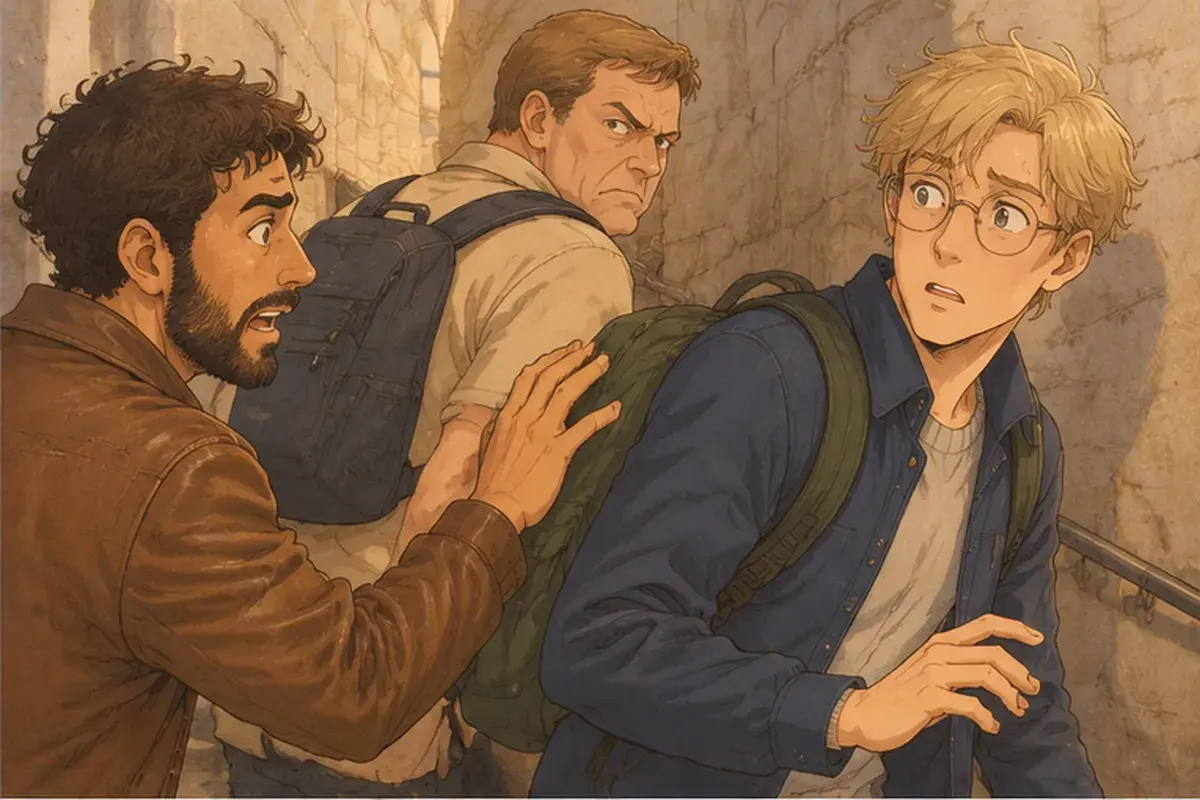
«Attento allo zaino!», dice Luca. Troppo tardi: il tedesco mi guarda male.
"Careful with the backpack!" says Luca (to a man). Too late: the German gives me a dirty look.
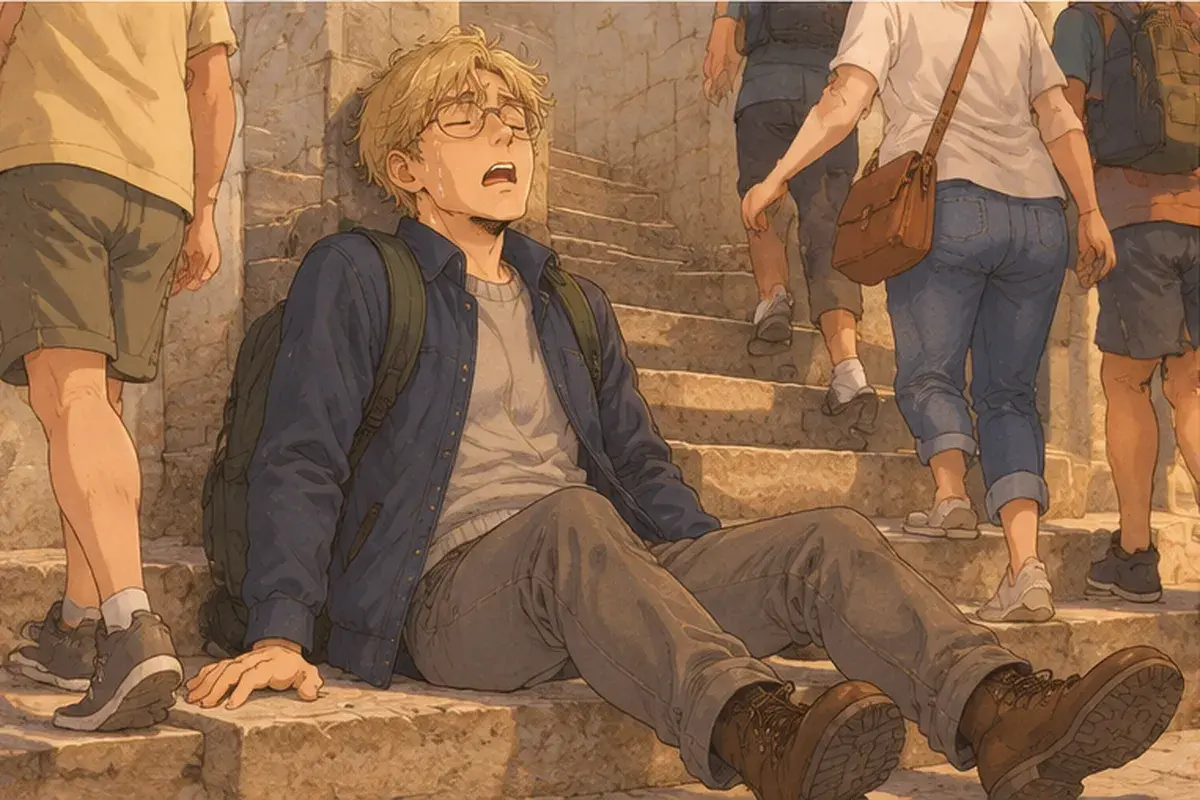
Al gradino duecento non sento più le gambe e ci metto più tempo degli altri.
At step two hundred I can't feel my legs anymore, and it takes me longer than the others.
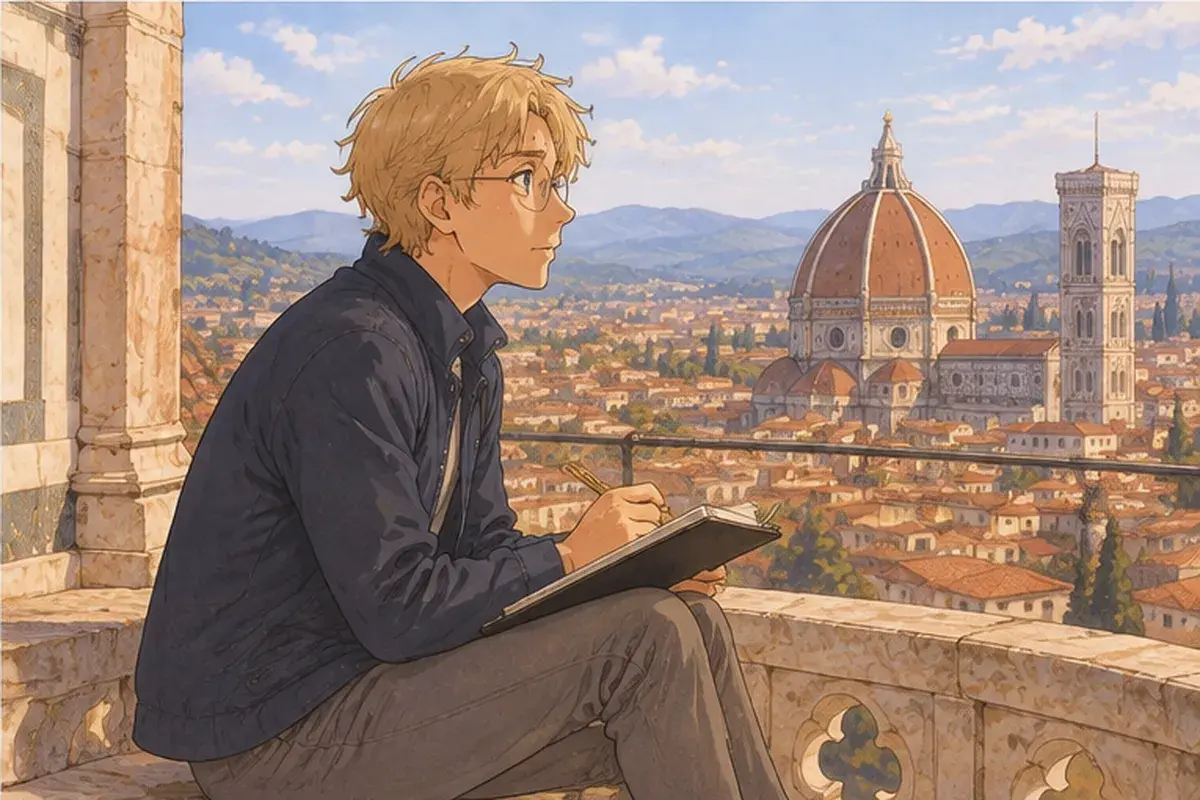
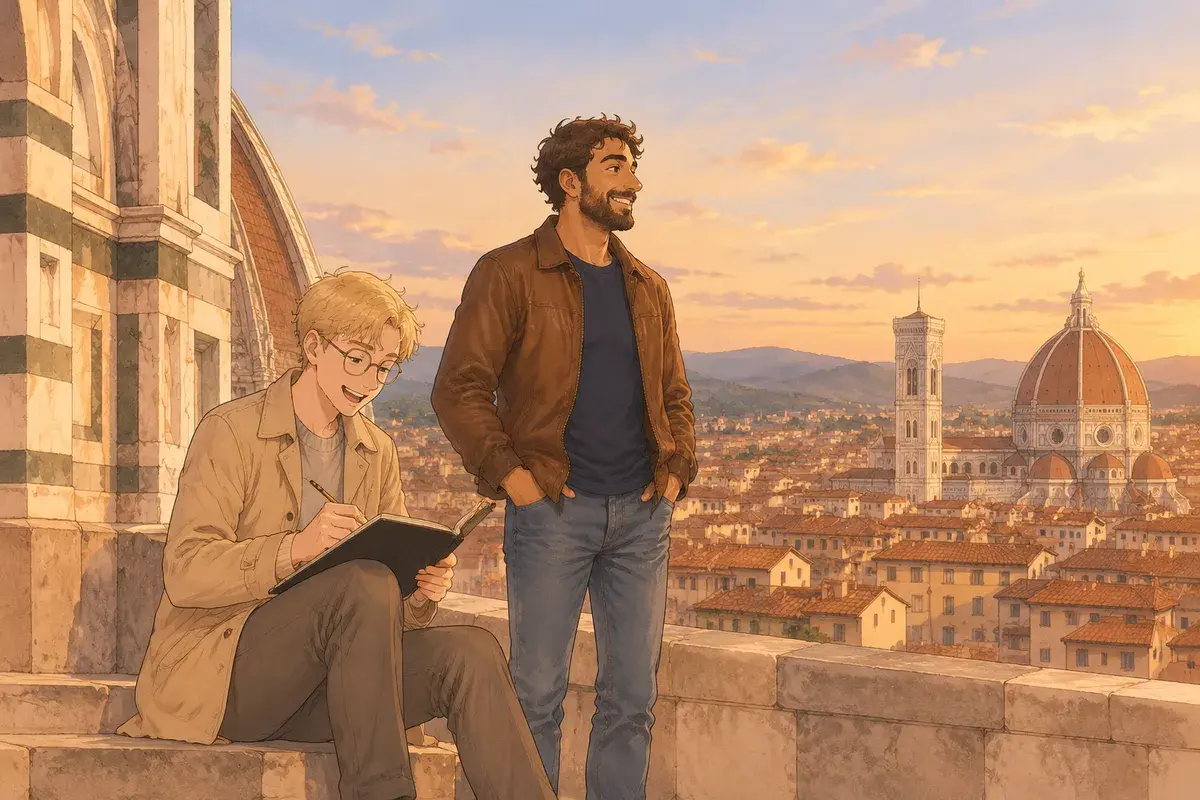
In cima apro il taccuino e prendo la matita. Non guardo giù: disegno il panorama.
At the top I open my notebook and take my pencil. I don't look down: I draw the view.
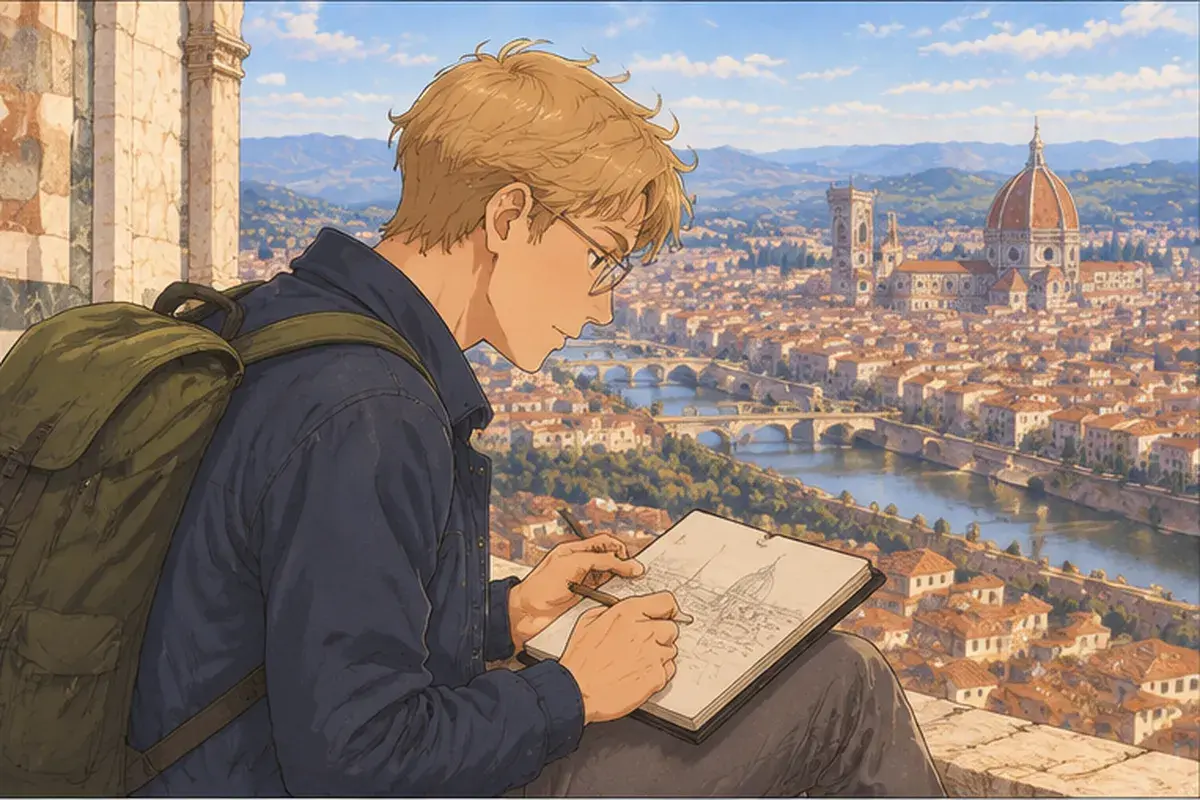
Il fiume, i ponti, le strade piccole: tutta Firenze entra nel mio taccuino.
The river, the bridges, the little streets: all of Florence fits into my notebook.
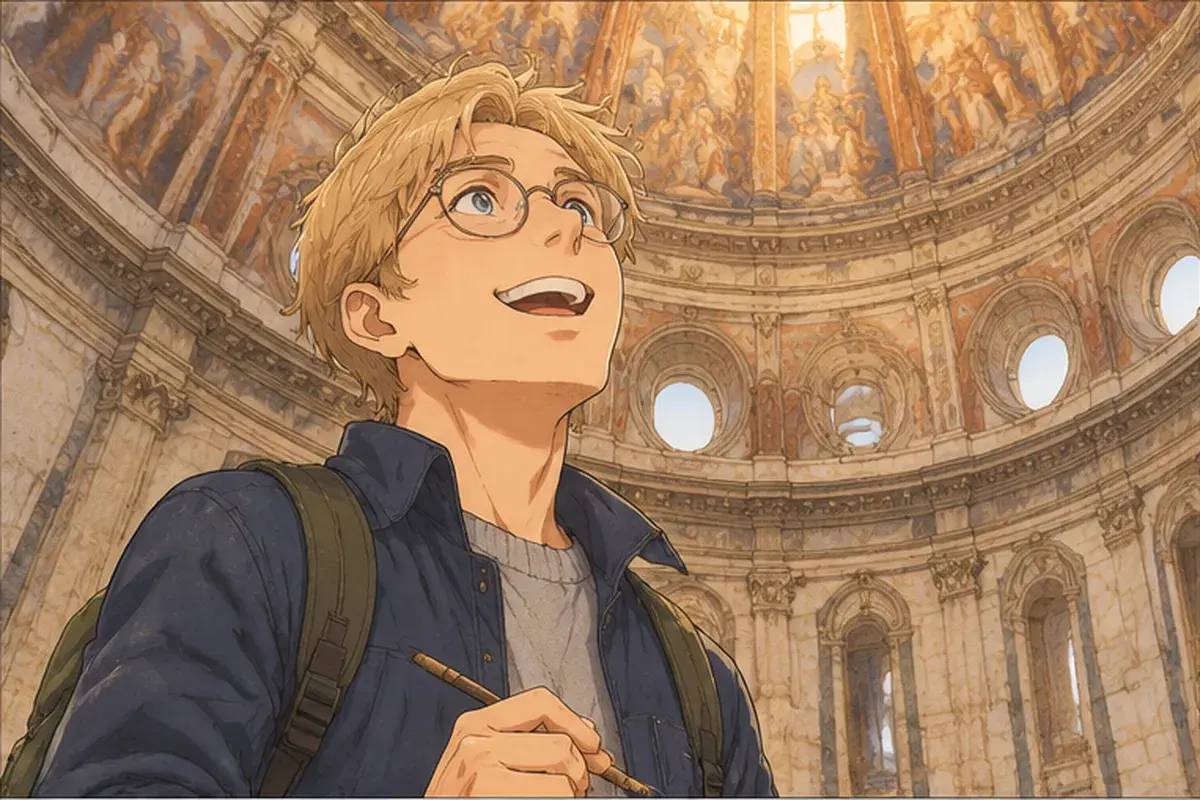
La cupola ha più di cinque secoli. Qui nascono le idee di ogni architetto, e io sono felice come un bambino.
The dome is more than five centuries old. Every architect's ideas are born here, and I'm as happy as a child.
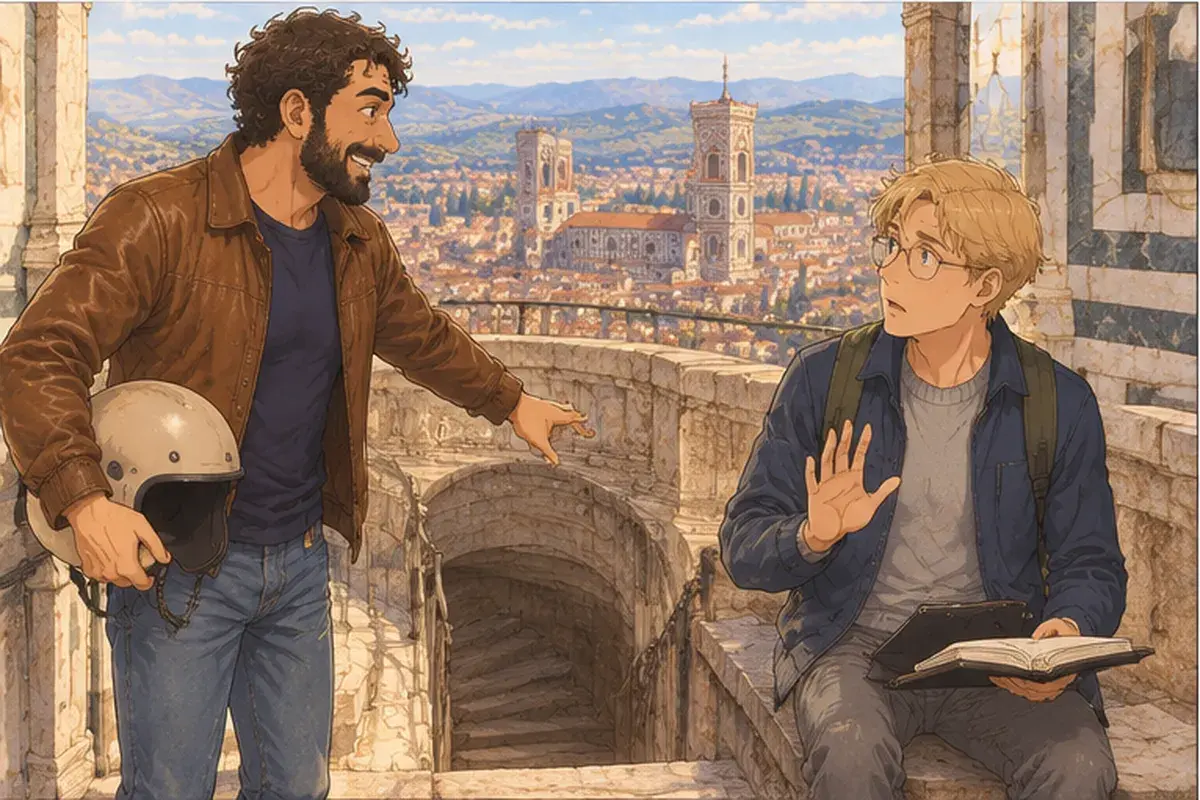
«Adesso dobbiamo scendere», dice Luca. «Ancora cinque minuti», rispondo.
"Now we have to go down," says Luca. "Five more minutes," I answer.
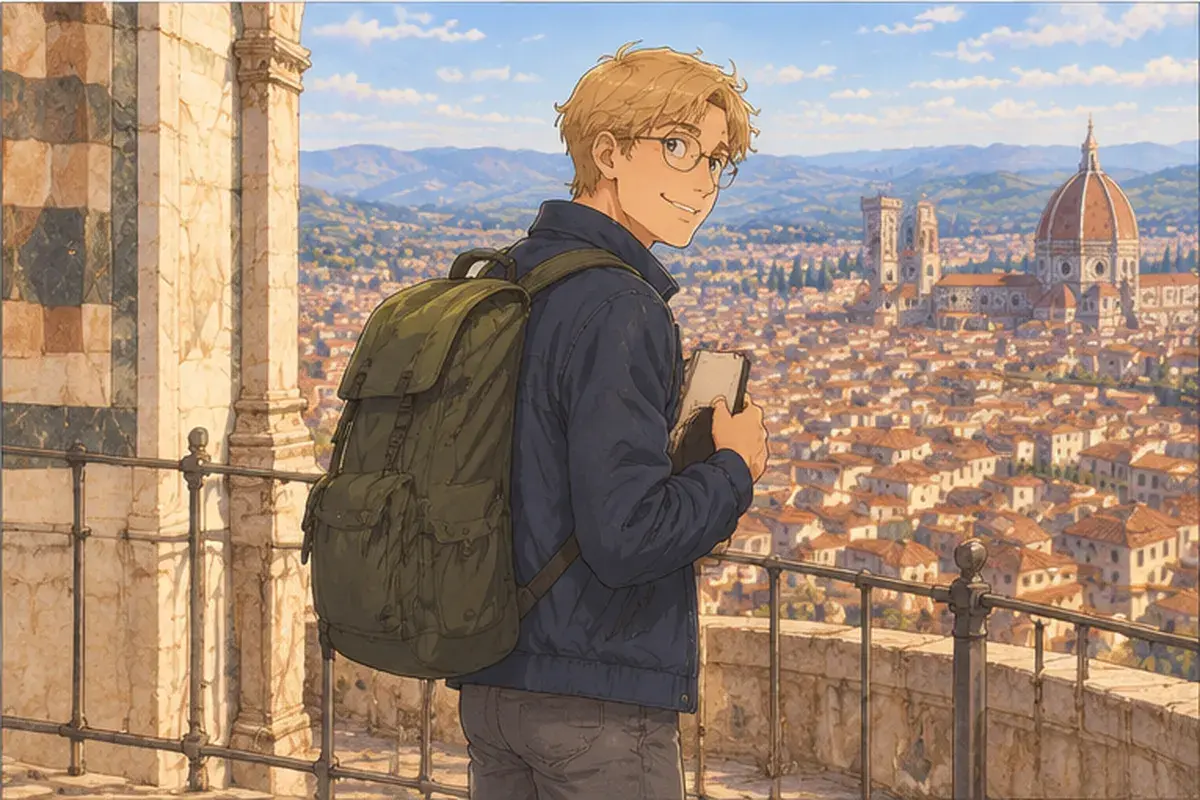
Prima non volevo salire. Adesso non voglio più scendere.
Before, I didn't want to go up. Now I don't want to go down anymore.
Grammar for this text
- Per arrivare in cima ci vuole coraggio — ci vuole means "it takes, you need": one thing is needed (here, courage), so it's ci vuole. In cima — "at the top".
- Giulia non sale — sale here means "goes up" (from salire), not "salt".
- Al gradino duecento non sento più le gambe e ci metto più tempo degli altri. — ci metto — "it takes me (some time)": this is how a person talks about the time they need. Degli altri = di + gli altri ("than the others"). Duecento is two hundred (unit 6); non… più — "not anymore".
- studiavo questa cupola ogni sera — studiavo is the imperfetto: a habit in the past. All'università = a + l'università; dell'architettura = di + l'architettura.
- Attento allo zaino! — attento means "careful"; you warn someone with attento a… ("careful with…"), and to a woman you say attenta. It's an adjective, not a command form. Allo = a + lo.
- il tedesco mi guarda male — il tedesco — "the German" (the adjective works as a noun); the plural is tedeschi, not ✗ tedesci. Mi guarda male — "gives me a dirty look".
- La cupola ha più di cinque secoli — the age of a thing, like a person's age, uses avere: ha cinque secoli — it's five centuries old. Più di — "more than".
- Prima non volevo salire. — prima here means "before"; volevo is the imperfetto (back then), voglio is the present (now).
Words and grammar of the unit: Talk about your childhood.
Learn the words from the texts with flashcards
In the app, you can tap any word in a text to see its translation, forms and examples, and new words stick with flashcards. 15 minutes a day.
Start for freeEverything is open for free. No card needed to sign up.