
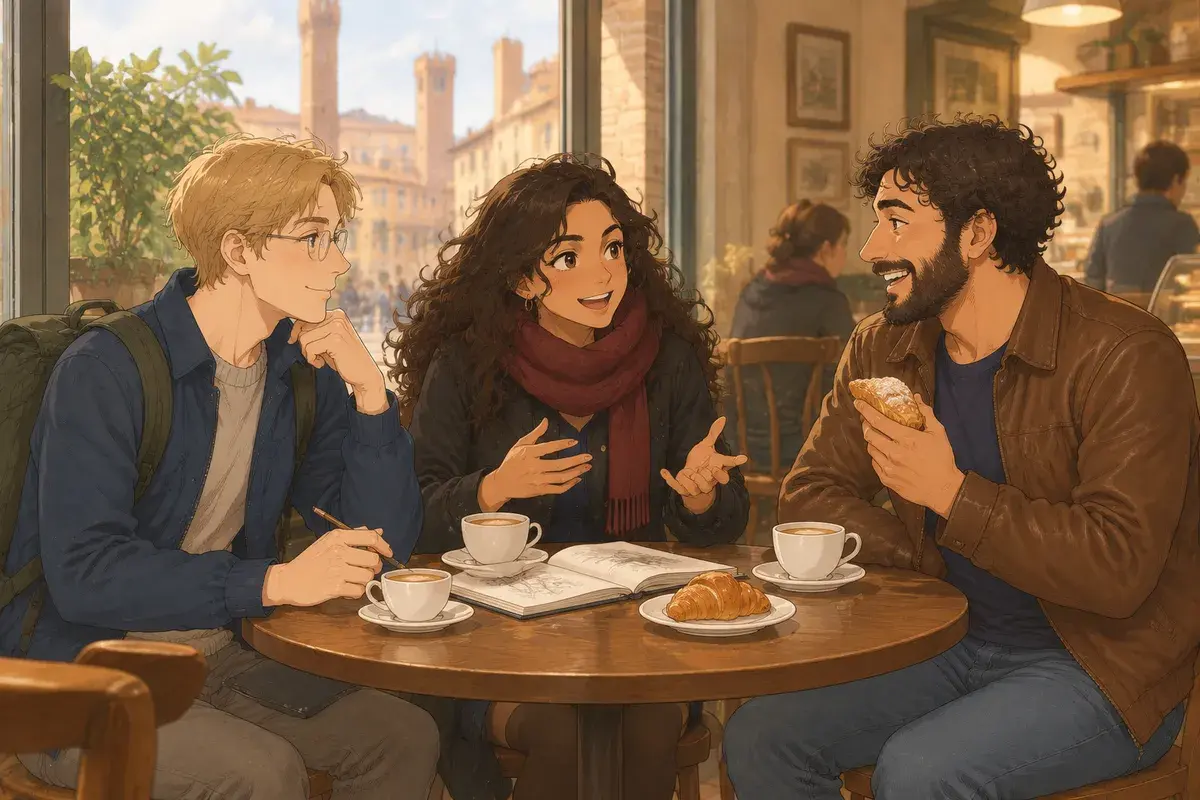
Italian dialogue with translation · A2 · 16 lines
Da grande faccio il pilota di moto! When I grow up, I'm going to be a motorcycle racer!
Comic · 16 panels
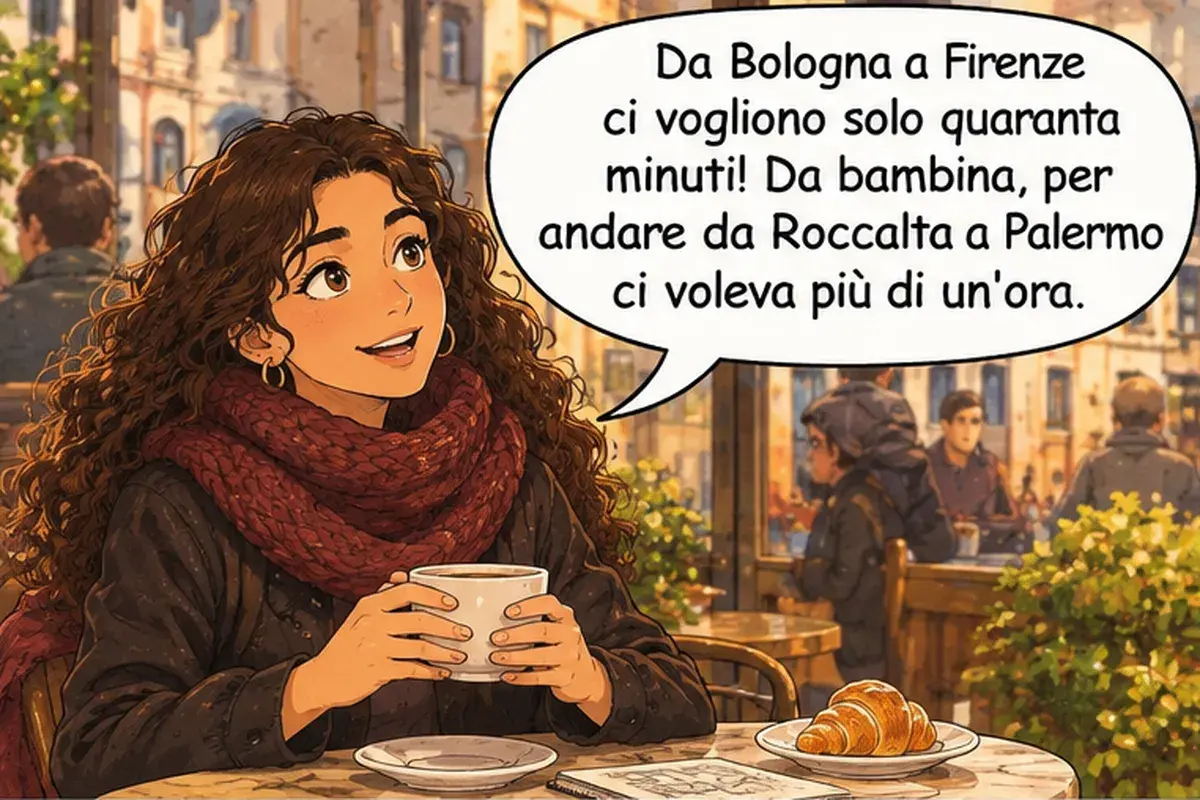
- Giulia
Da Bologna a Firenze ci vogliono solo quaranta minuti! Da bambina, per andare da Roccalta a Palermo ci voleva più di un'ora.
It only takes forty minutes from Bologna to Florence! As a kid, it took more than an hour to get from Roccalta to Palermo (woman speaking).
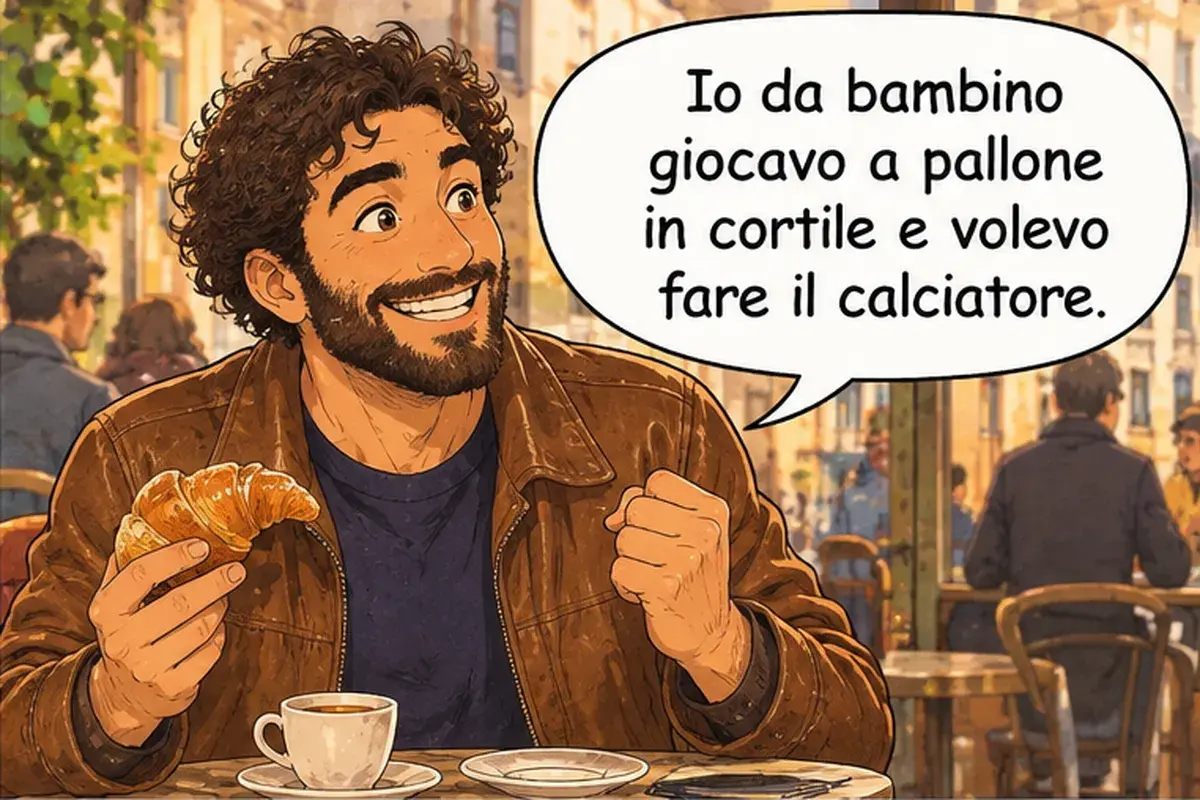
- Luca
Io da bambino giocavo a pallone in cortile e volevo fare il calciatore.
As a kid, I used to play ball in the courtyard and I wanted to be a soccer player (man speaking).
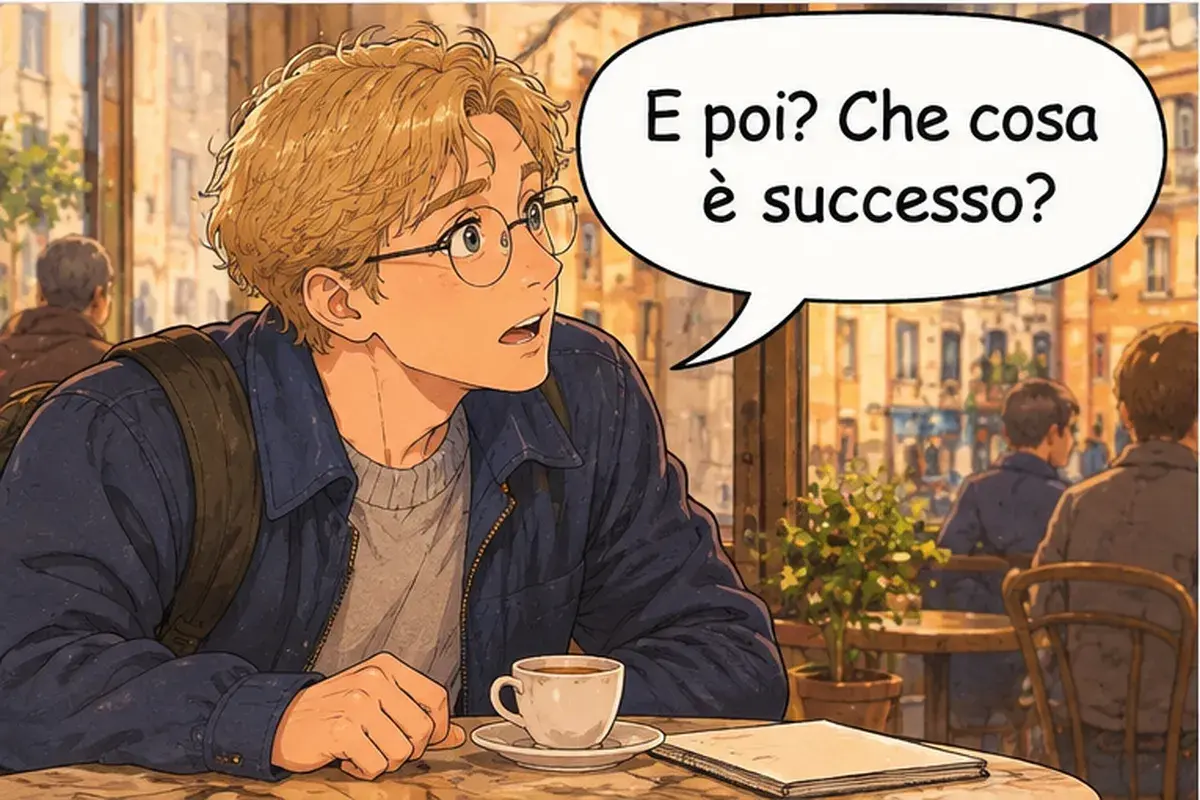
- Misha
E poi? Che cosa è successo?
And then? What happened?
- Luca
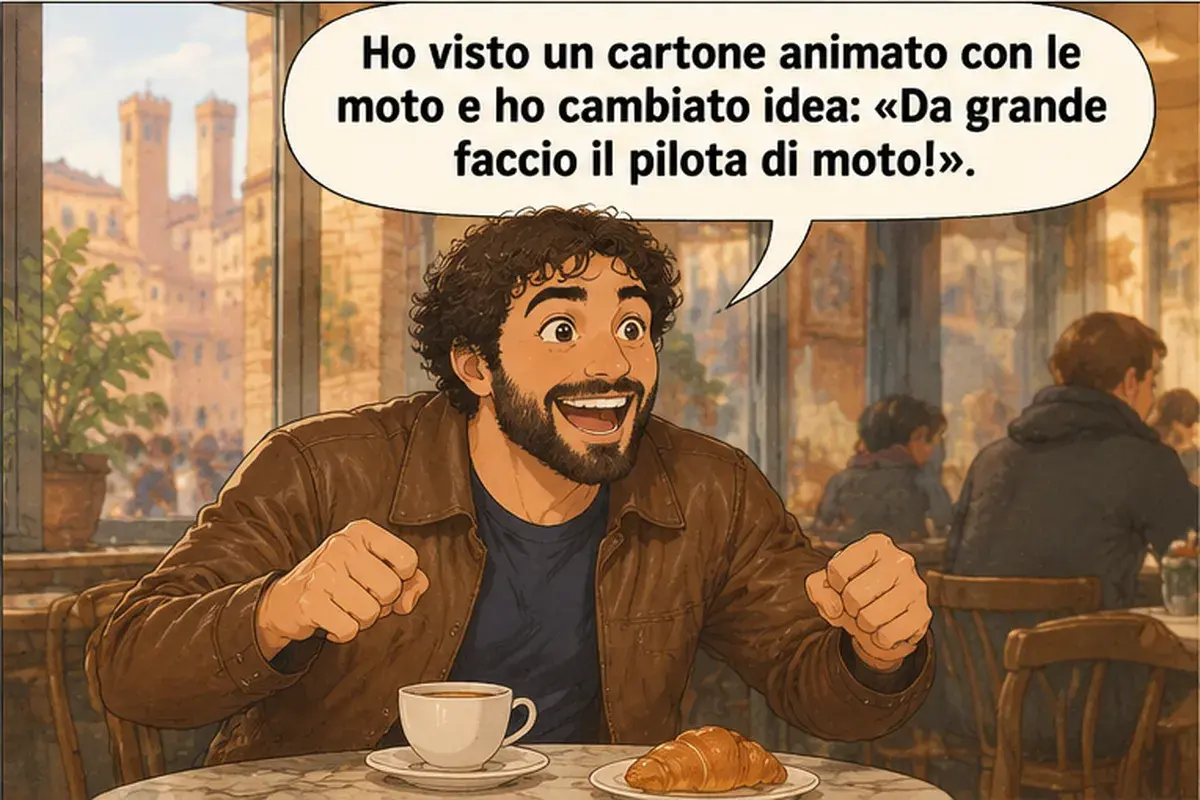
Ho visto un cartone animato con le moto e ho cambiato idea: «Da grande faccio il pilota di moto!»
I saw a cartoon with motorcycles and changed my mind: "When I grow up, I'm going to be a motorcycle racer!"
- Giulia
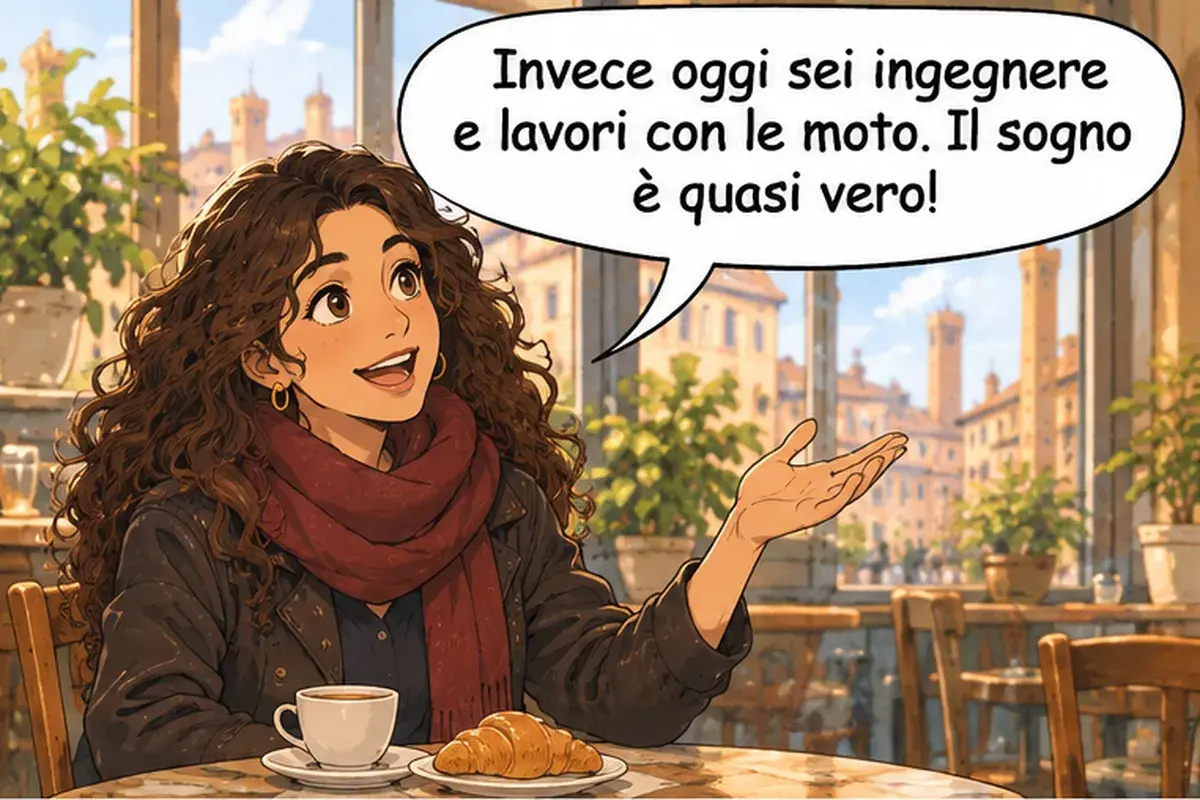
Invece oggi sei ingegnere e lavori con le moto. Il sogno è quasi vero!
But today you're an engineer and you work with motorcycles. The dream has almost come true!
- Luca
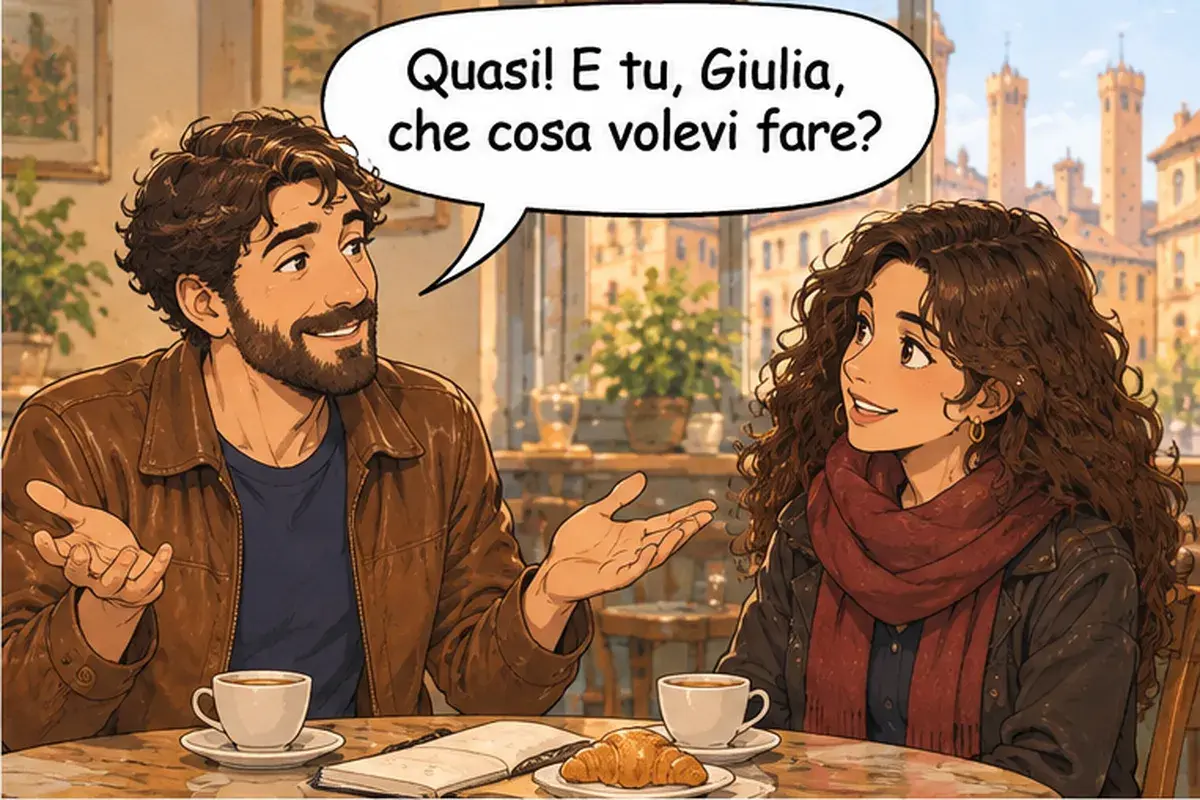
Quasi! E tu, Giulia, che cosa volevi fare?
Almost! And you, Giulia, what did you want to be?
- Giulia
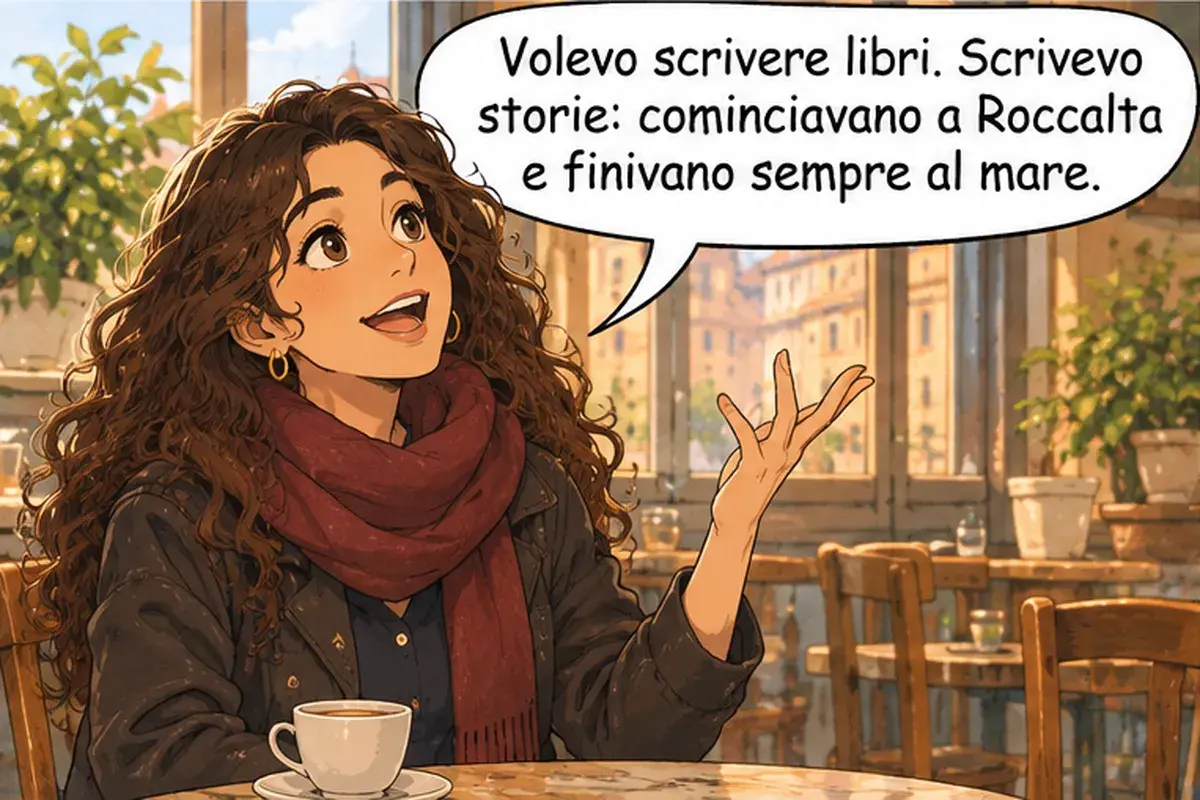
Volevo scrivere libri. Scrivevo storie: cominciavano a Roccalta e finivano sempre al mare.
I wanted to write books. I used to write stories: they started in Roccalta and always ended at the sea.
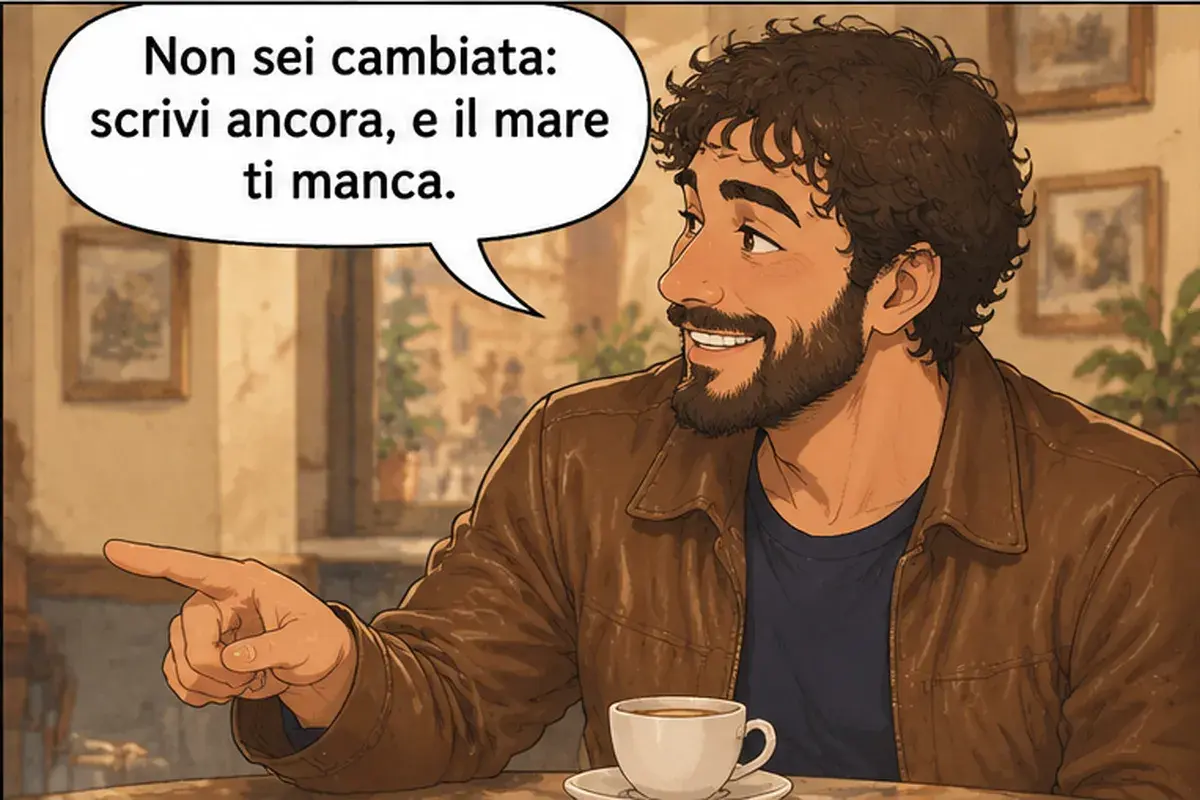
- Luca
Non sei cambiata: scrivi ancora, e il mare ti manca.
You haven't changed (to a woman): you still write, and you miss the sea.
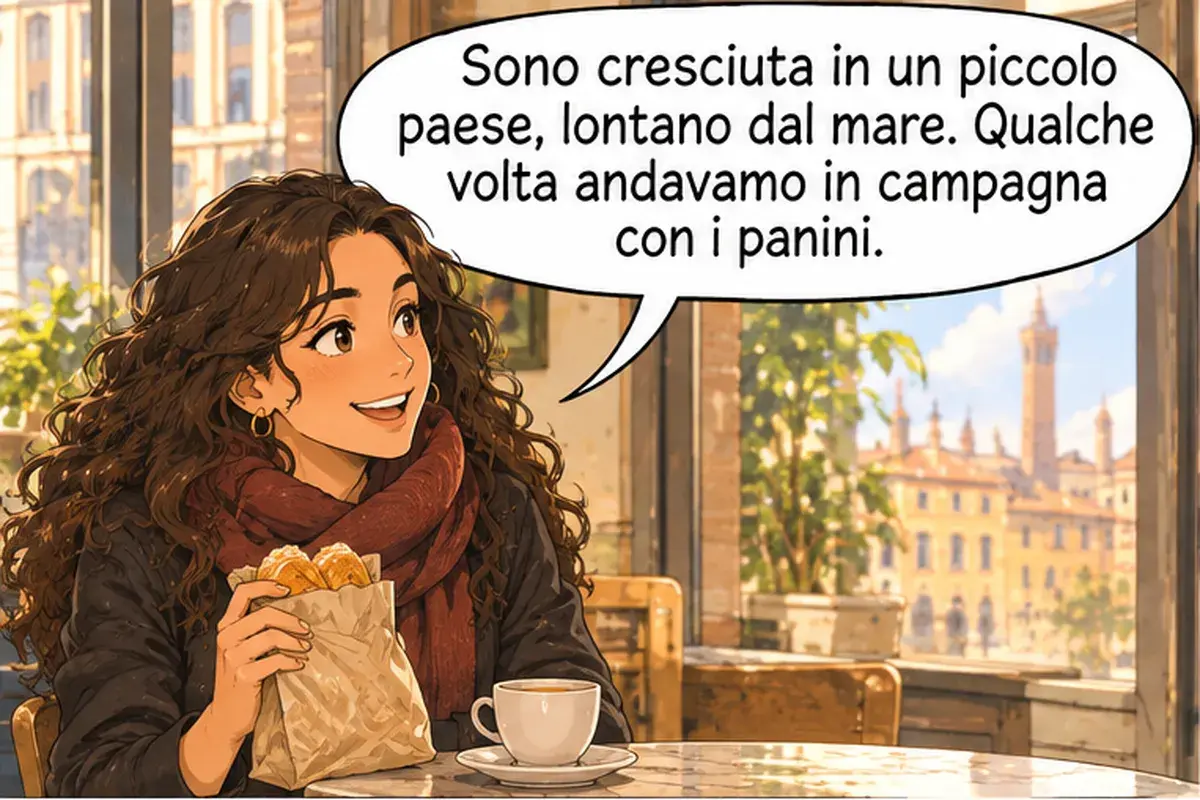
- Giulia
Sono cresciuta in un piccolo paese, lontano dal mare. Qualche volta andavamo in campagna con i panini.
I grew up in a small town, far from the sea (woman speaking). Sometimes we went to the countryside with sandwiches.
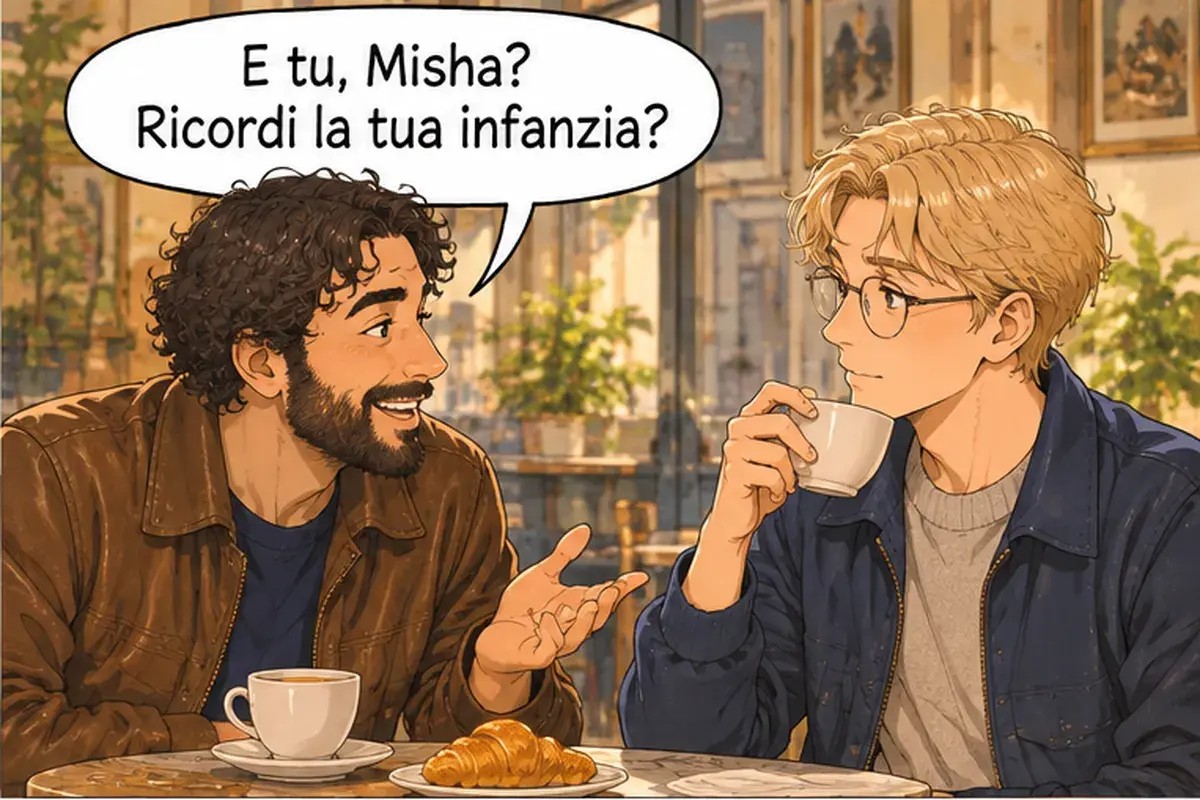
- Luca
E tu, Misha? Ricordi la tua infanzia?
And you, Misha? Do you remember your childhood?
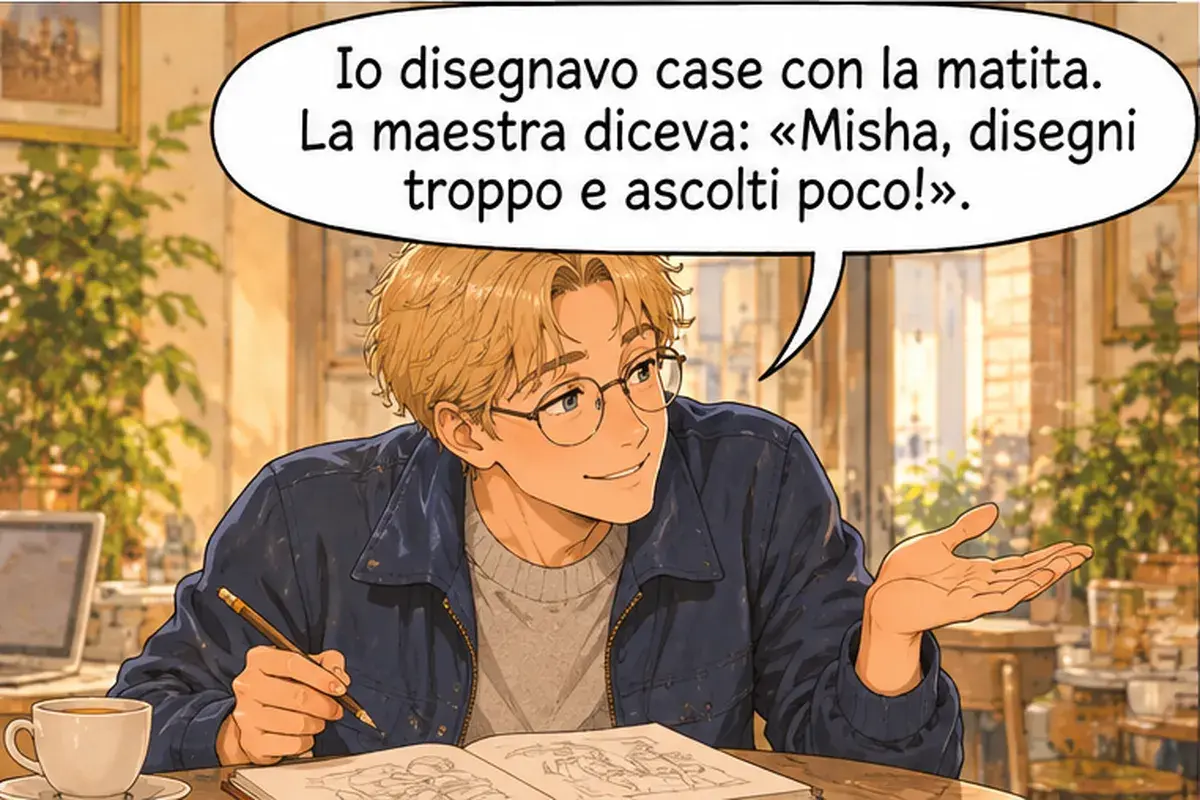
- Misha
Io disegnavo case con la matita. La maestra diceva: «Misha, disegni troppo e ascolti poco!»
I used to draw houses with a pencil. The teacher used to say: "Misha, you draw too much and listen too little!"
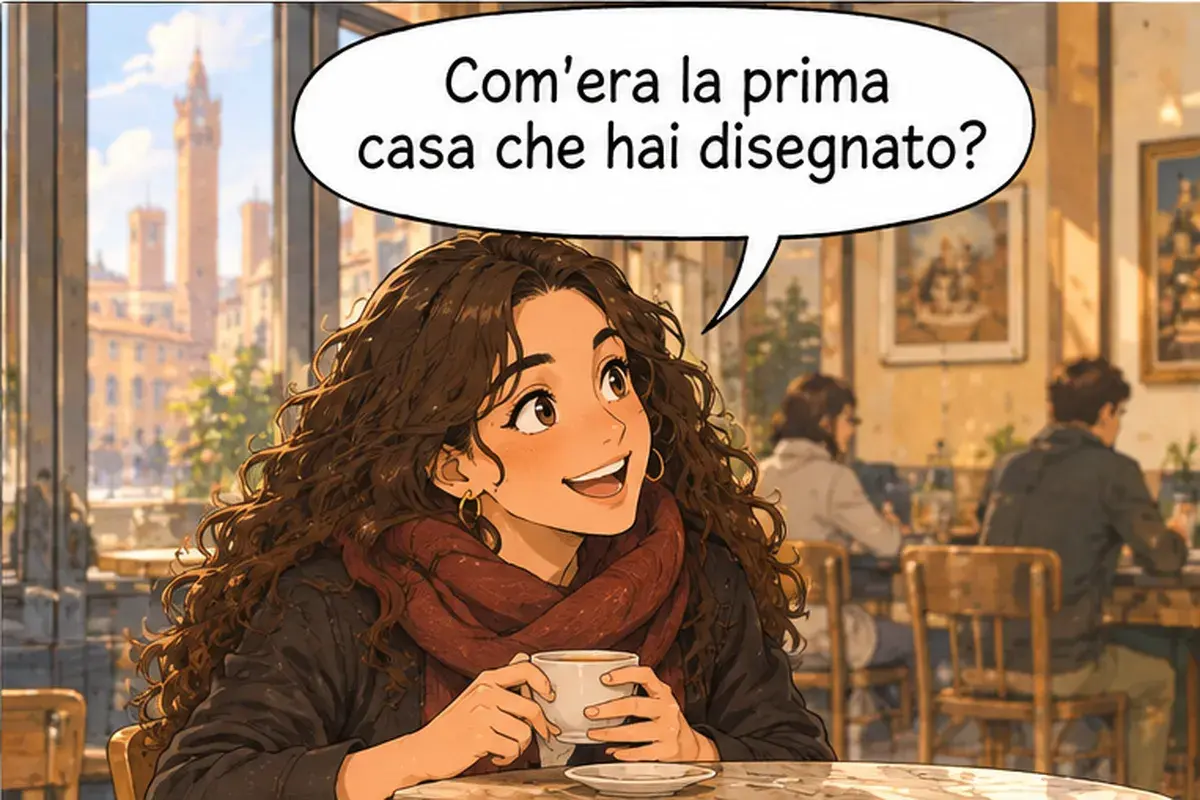
- Giulia
Com'era la prima casa che hai disegnato?
What was the first house you drew like?
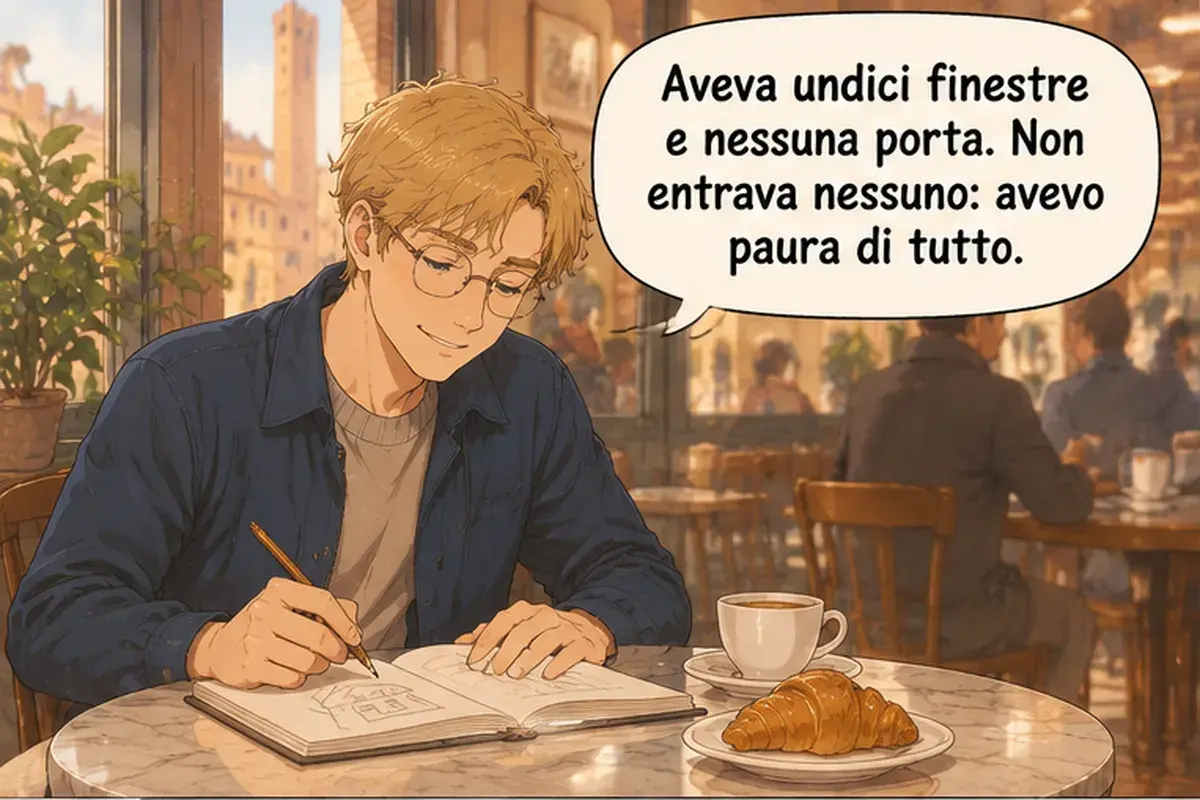
- Misha
Aveva undici finestre e nessuna porta. Non entrava nessuno: avevo paura di tutto.
It had eleven windows and no door. Nobody came in: I was afraid of everything.
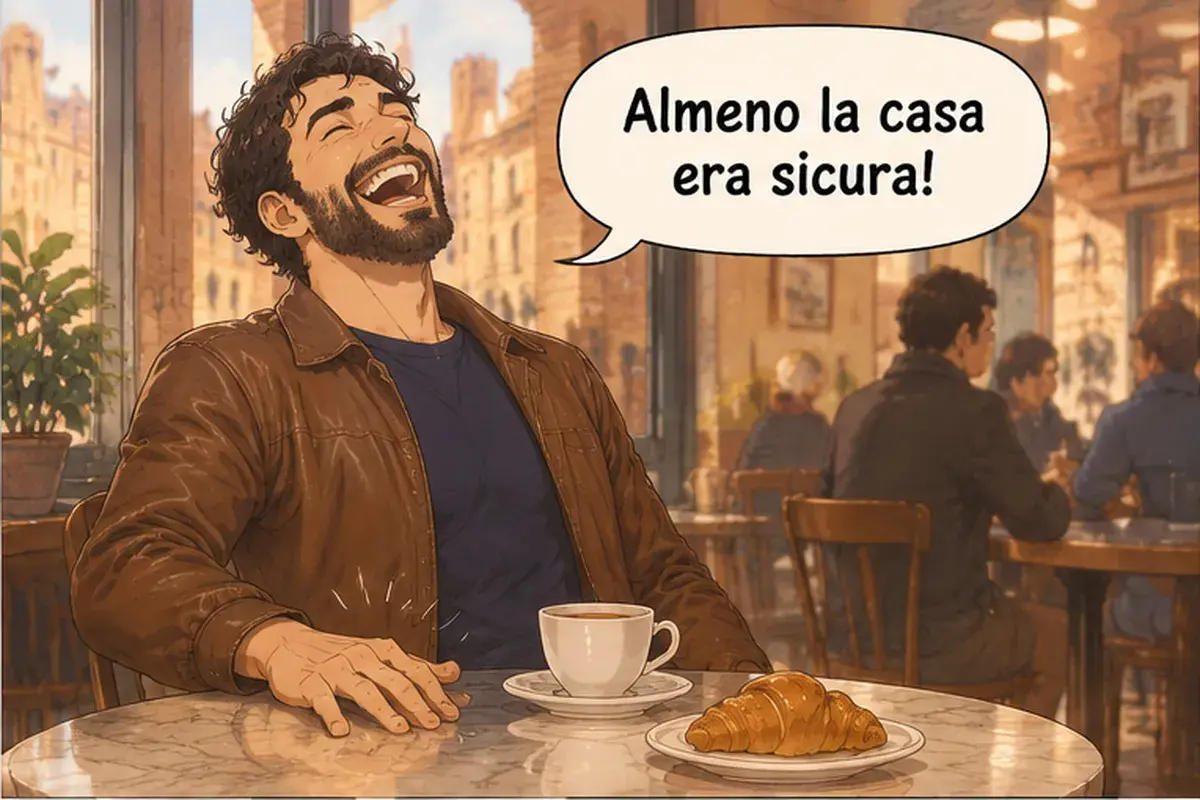
- Luca
Almeno la casa era sicura!
At least the house was safe!
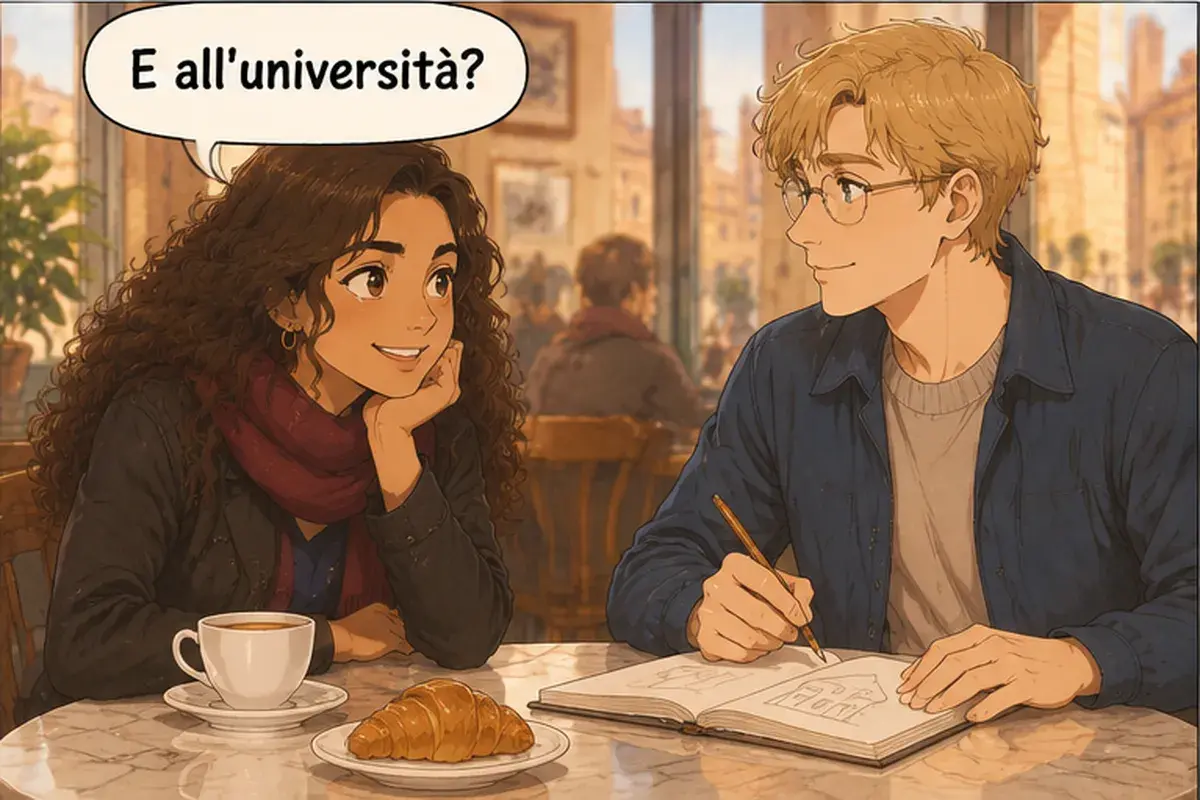
- Giulia
E all'università?
And at the university?
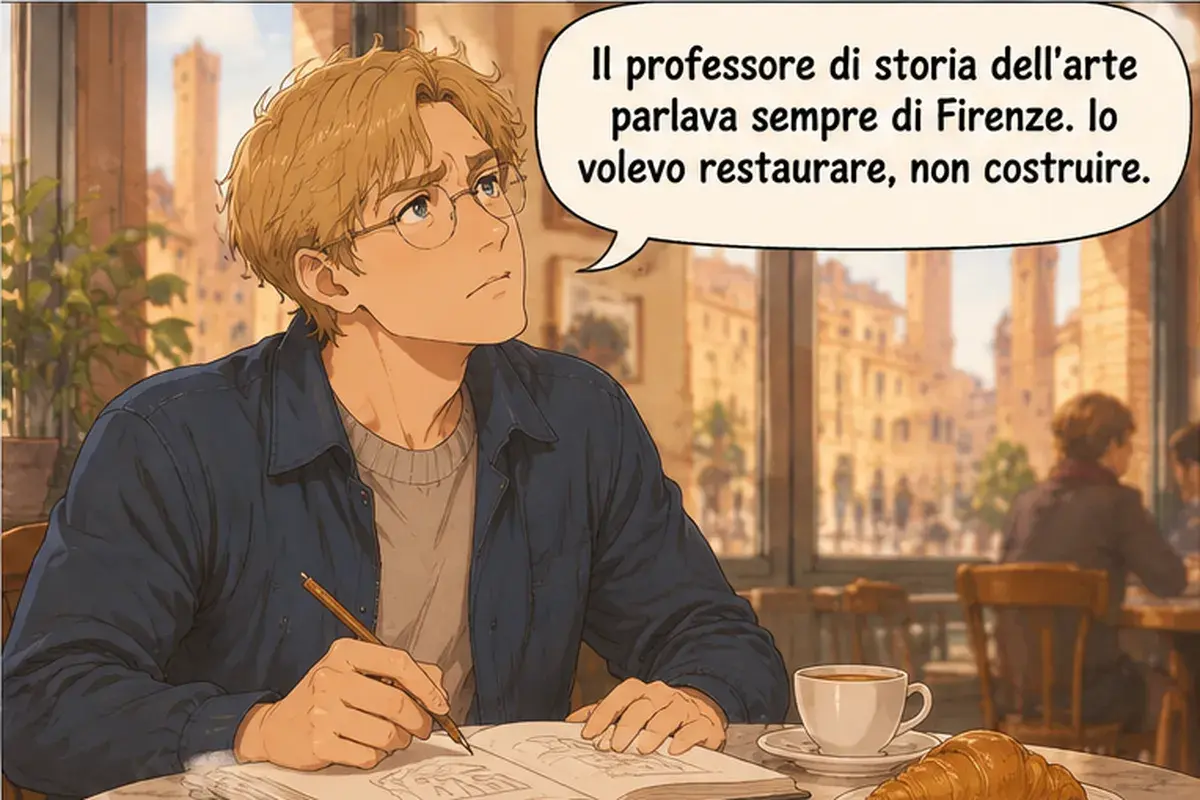
- Misha
Il professore di storia dell'arte parlava sempre di Firenze. Io volevo restaurare, non costruire.
The art history professor was always talking about Florence. I wanted to restore, not to build.
Grammar for this text
- Da Bologna a Firenze ci vogliono solo quaranta minuti! — ci vogliono means "it takes": the ci here isn't "us", it's part of the expression. In the past it's ci voleva (ci voleva più di un'ora — it took more than an hour).
- Io da bambino giocavo a pallone in cortile e volevo fare il calciatore. — giocavo and volevo are the imperfetto: what used to happen back then. In cortile has no article, like in centro. Ho visto un cartone animato… e ho cambiato idea is the passato prossimo: it happened once.
- Da grande faccio il pilota di moto! — kids say "when I grow up, I do…" in the present tense; the future tense comes in unit 20. Il pilota is masculine even though it ends in -a; la moto is feminine and doesn't change (le moto).
- Sono cresciuta in un piccolo paese, lontano dal mare. — cresciuta is the irregular feminine past participle of crescere (to grow up); the masculine is cresciuto. The helper verb is essere. Qualche volta andavamo… — qualche volta means "sometimes"; andavamo — "we used to go".
- La maestra diceva — diceva is the imperfetto of dire, with the stem dice- (as in dicevo); a maestra is an elementary school teacher (a woman).
- Com'era la prima casa che hai disegnato? — com'era = come + era; prima here means "first", not "before"; che hai disegnato — "that you drew".
Words and grammar of the unit: Talk about your childhood.
Learn the words from the texts with flashcards
In the app, you can tap any word in a text to see its translation, forms and examples, and new words stick with flashcards. 15 minutes a day.
Start for freeEverything is open for free. No card needed to sign up.