

Italian dialogue with translation · A1 · 14 lines
Vuoi venire allo stadio? Do you want to come to the stadium?
Comic · 14 panels
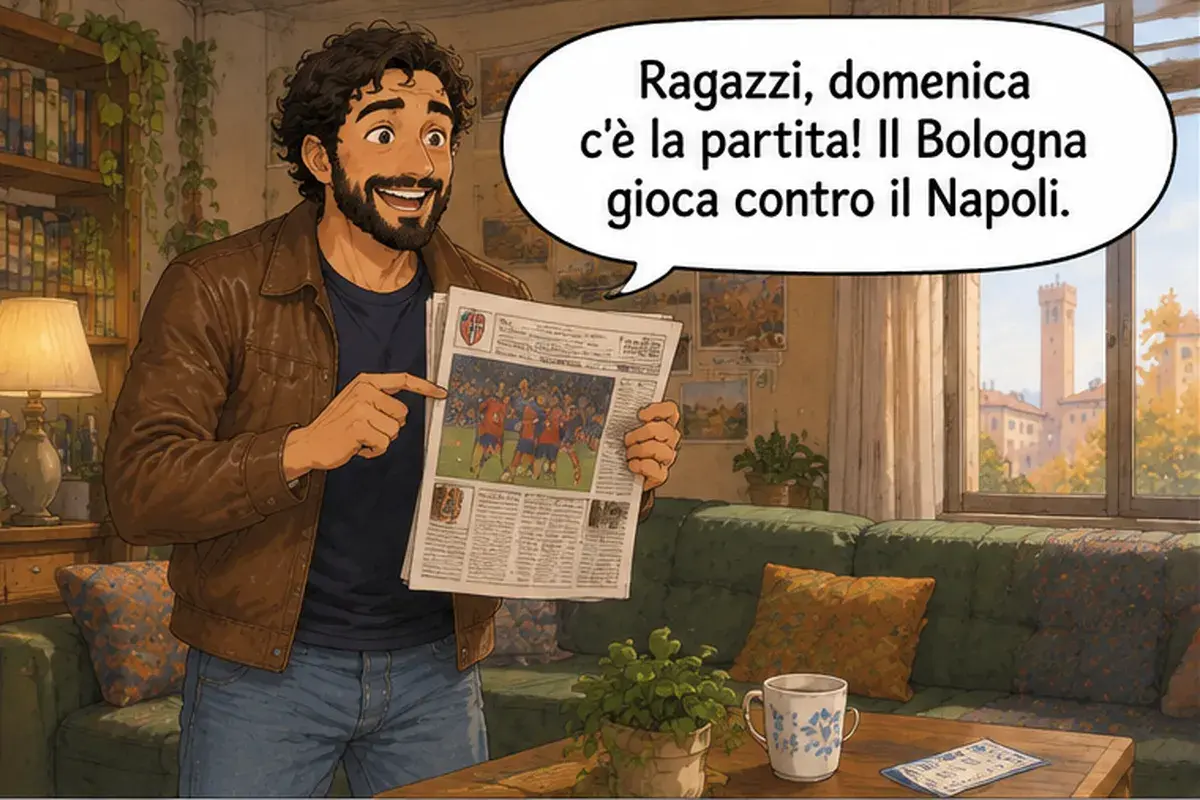
- Luca
Ragazzi, domenica c'è la partita! Il Bologna gioca contro il Napoli.
Guys, there's a game on Sunday! Bologna is playing against Napoli.

- Misha
Chi vince?
Who's going to win?

- Luca
Boh! A volte vince, a volte no. Ma io sono tifoso: vado sempre.
Dunno! Sometimes they win, sometimes they don't. But I'm a fan: I always go.

- Misha
Io non ho mai visto una partita di calcio.
I've never seen a soccer game.

- Luca
Mai? Vuoi venire allo stadio? Ho preso tre biglietti!
Never? Do you want to come to the stadium? I got three tickets!

- Misha
Volentieri!
I'd love to!
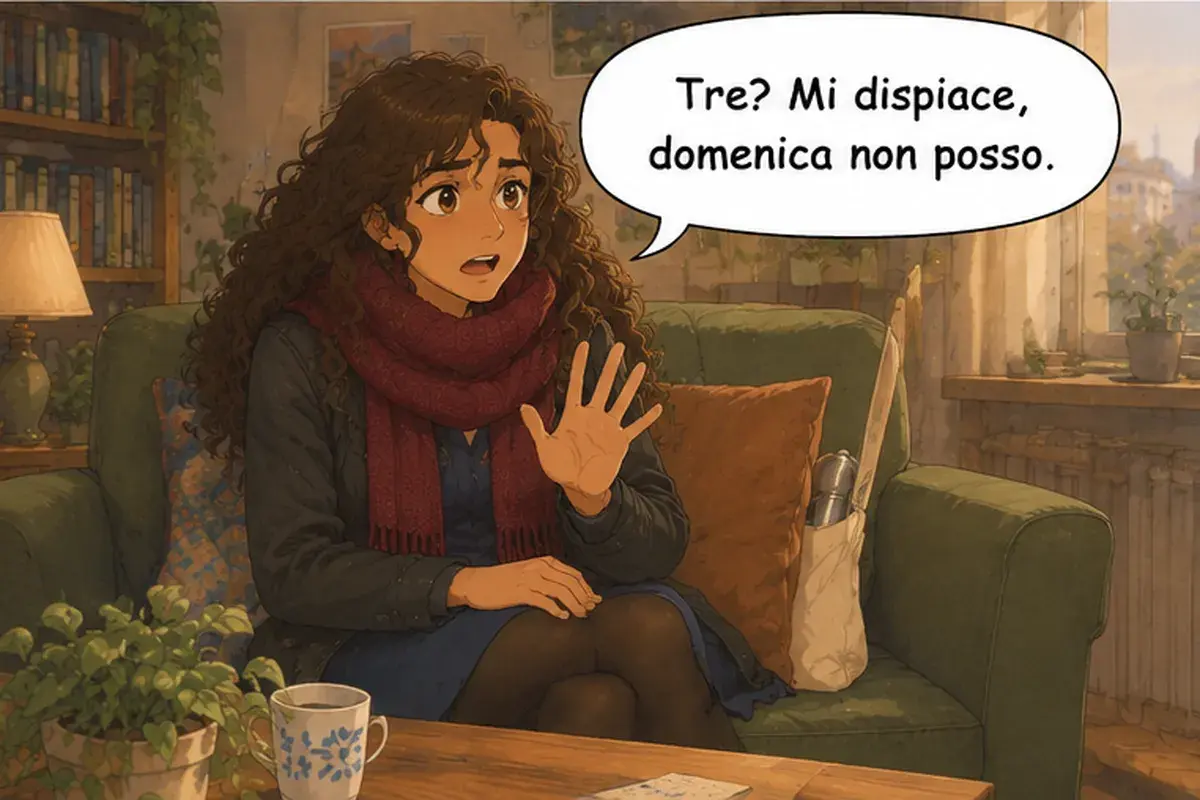
- Giulia
Tre? Mi dispiace, domenica non posso.
Three? I'm sorry, I can't on Sunday.

- Luca
Perché non puoi?
Why can't you?

- Giulia
Scusa, ma il calcio è noioso. E allo stadio fa freddo!
Sorry, but soccer is boring. And it's cold at the stadium!

- Luca
Dai! C'è tanta gente, c'è la birra, e dopo andiamo in pizzeria.
Come on! There are lots of people, there's beer, and afterward we're going to a pizzeria.

- Giulia
In pizzeria? Va bene, vengo. Ma solo per la pizza.
To a pizzeria? OK, I'll come. But only for the pizza.

- Misha
E i posti? Sono in alto?
What about the seats? Are they up high?

- Luca
Sì, in alto! Giulia ha freddo, tu hai paura, io ho fame: siamo una bella squadra!
Yes, up high! Giulia's cold, you're scared, I'm hungry: we're a great team!

- Giulia
Forza Bologna… e forza pizza!
Go Bologna… and go pizza!
Grammar for this text
- Il Bologna gioca contro il Napoli. — the team names are masculine and take the article: il Bologna, il Napoli (these are the clubs, not the cities). gioca — plays, from giocare (unit 15).
- Io non ho mai visto una partita di calcio. — the passato prossimo (everyday past): ho (from avere) + the past participle visto, from vedere. It's irregular: the pattern would give veduto, but people say visto. All such forms are in the unit grammar. non… mai — never: Italian needs the non too.
- Ho preso tre biglietti! — preso is the past participle of prendere: "I got", word for word "I took". Also irregular.
- Vuoi venire allo stadio? — word for word "do you want to come to the stadium?": vuoi — you want (volere), venire — to come. This is how you invite someone along. allo = a + lo: before st- the article is lo. To say yes: Volentieri!
- Mi dispiace, domenica non posso. — mi dispiace — I'm sorry: for now, learn it as a whole (how it works comes at A2). non posso — I can't (potere). domenica with no article means this coming Sunday.
- Forza Bologna… e forza pizza! — forza means "strength", but as a shout it means "come on! go!". Giulia is joking: she's cheering for the pizza.
Words and grammar of the unit: Invite a friend to a game or a movie.
Learn the words from the texts with flashcards
In the app, you can tap any word in a text to see its translation, forms and examples, and new words stick with flashcards. 15 minutes a day.
Start for freeEverything is open for free. No card needed to sign up.