
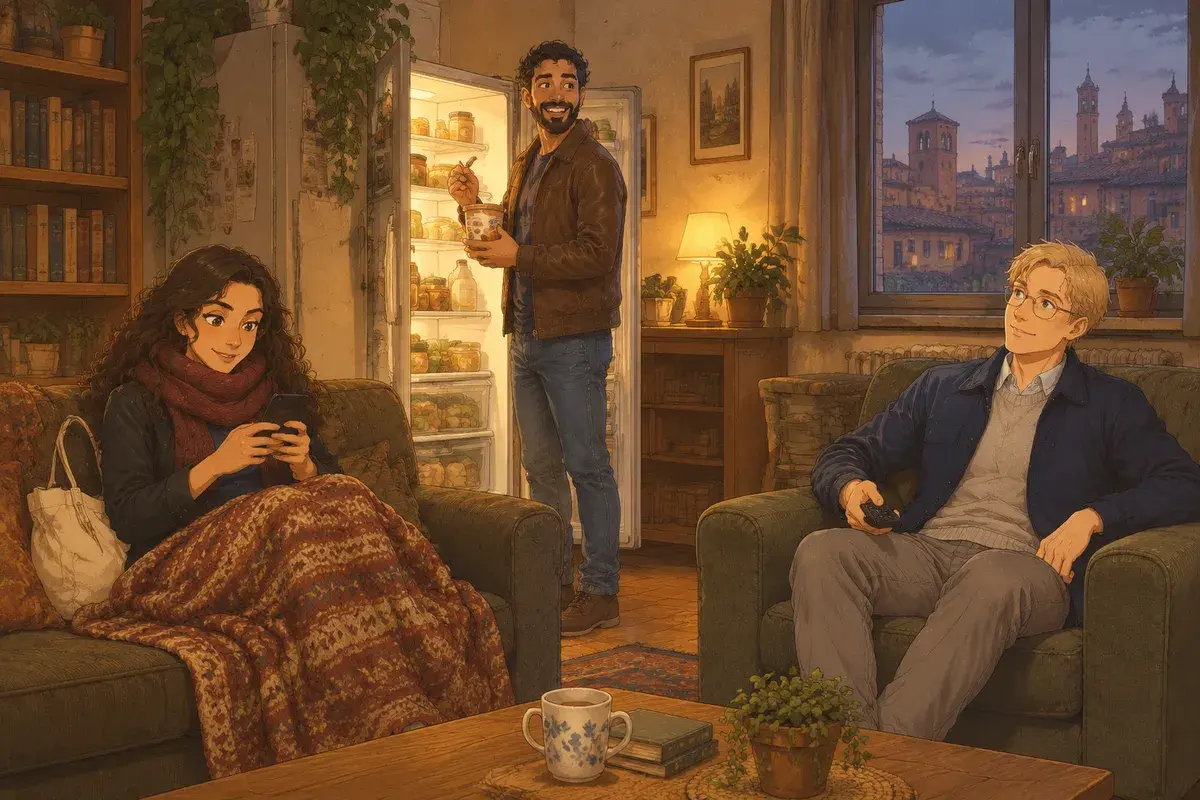
Italian dialogue with translation · A1 · 14 lines
Ho già visto questo film I've already seen this movie
Comic · 14 panels
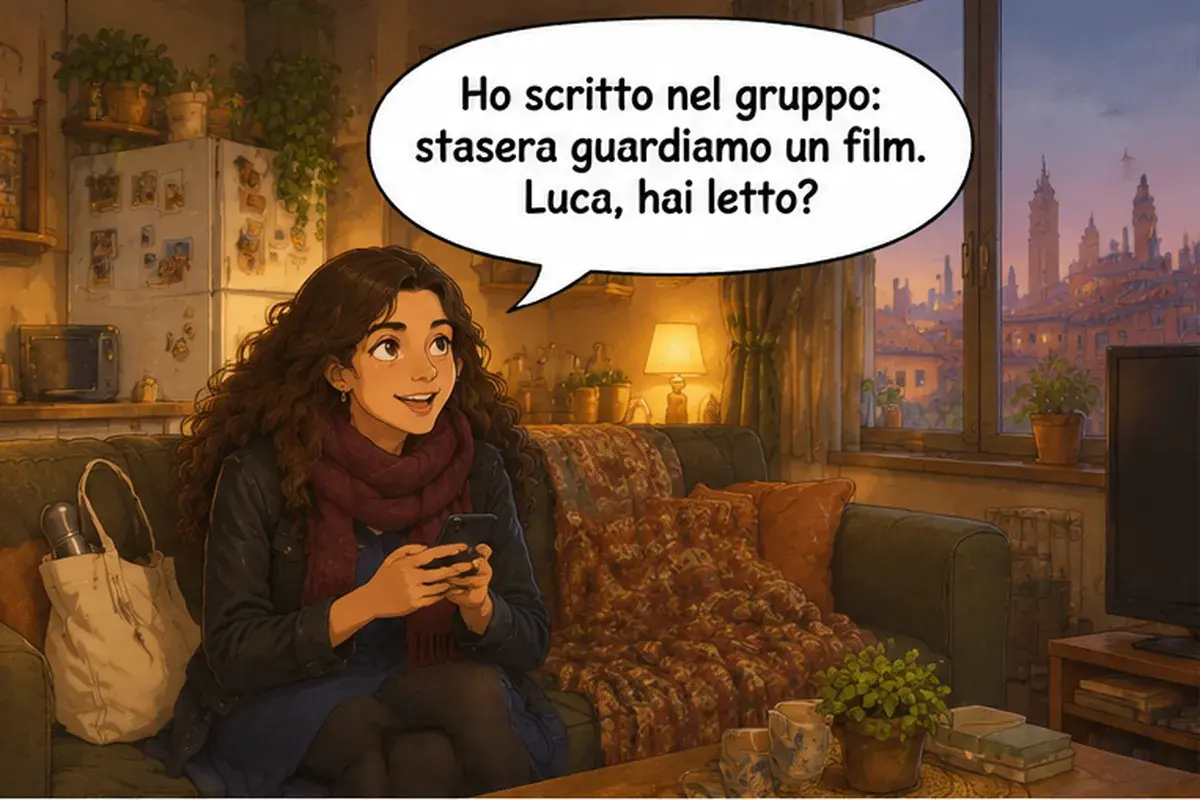
- Giulia
Ho scritto nel gruppo: stasera guardiamo un film. Luca, hai letto?
I wrote in the group chat: tonight we're watching a movie. Luca, did you read it?
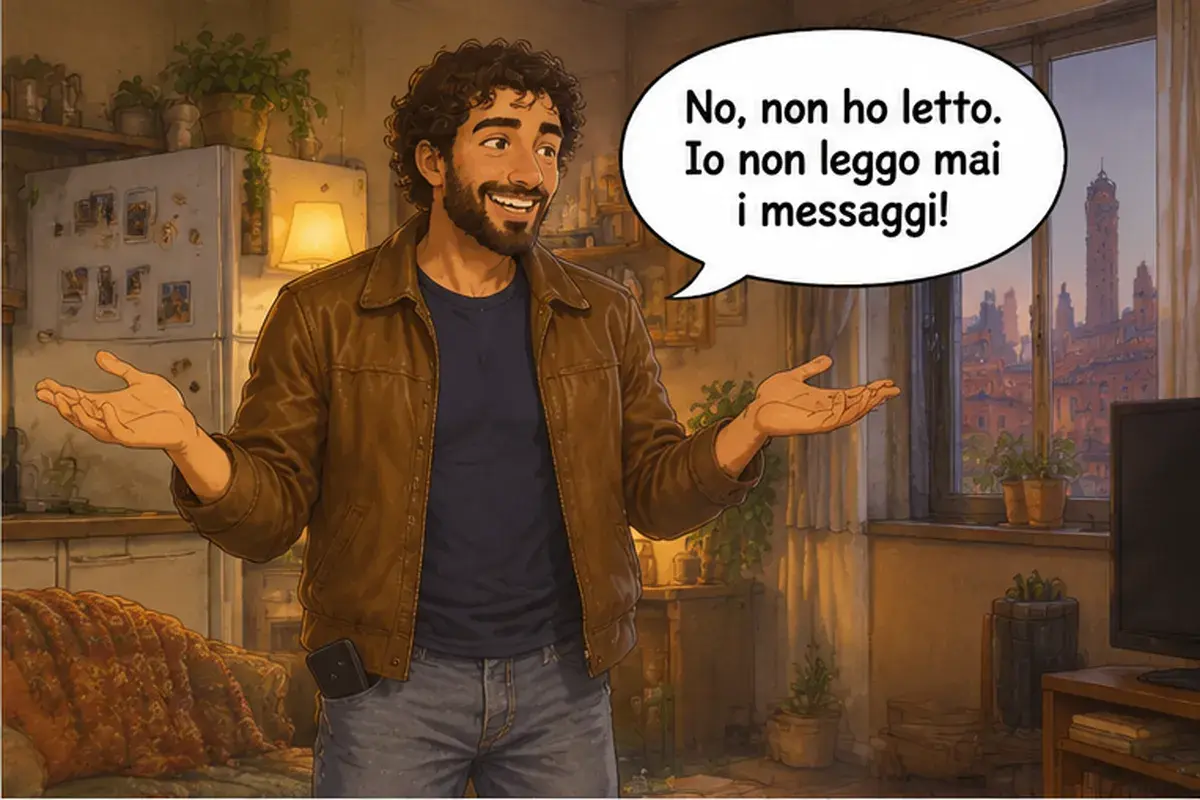
- Luca
No, non ho letto. Io non leggo mai i messaggi!
No, I didn't read it. I never read messages!
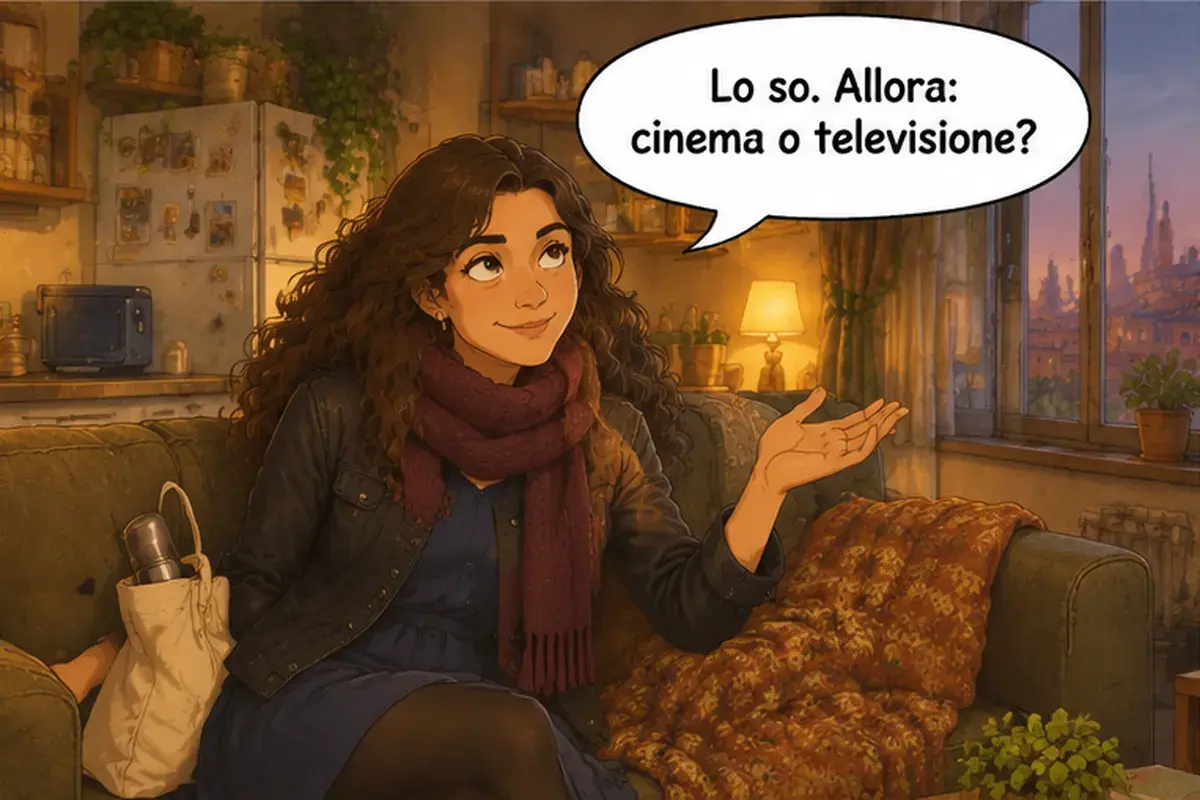
- Giulia
Lo so. Allora: cinema o televisione?
I know. So: the movies or TV?
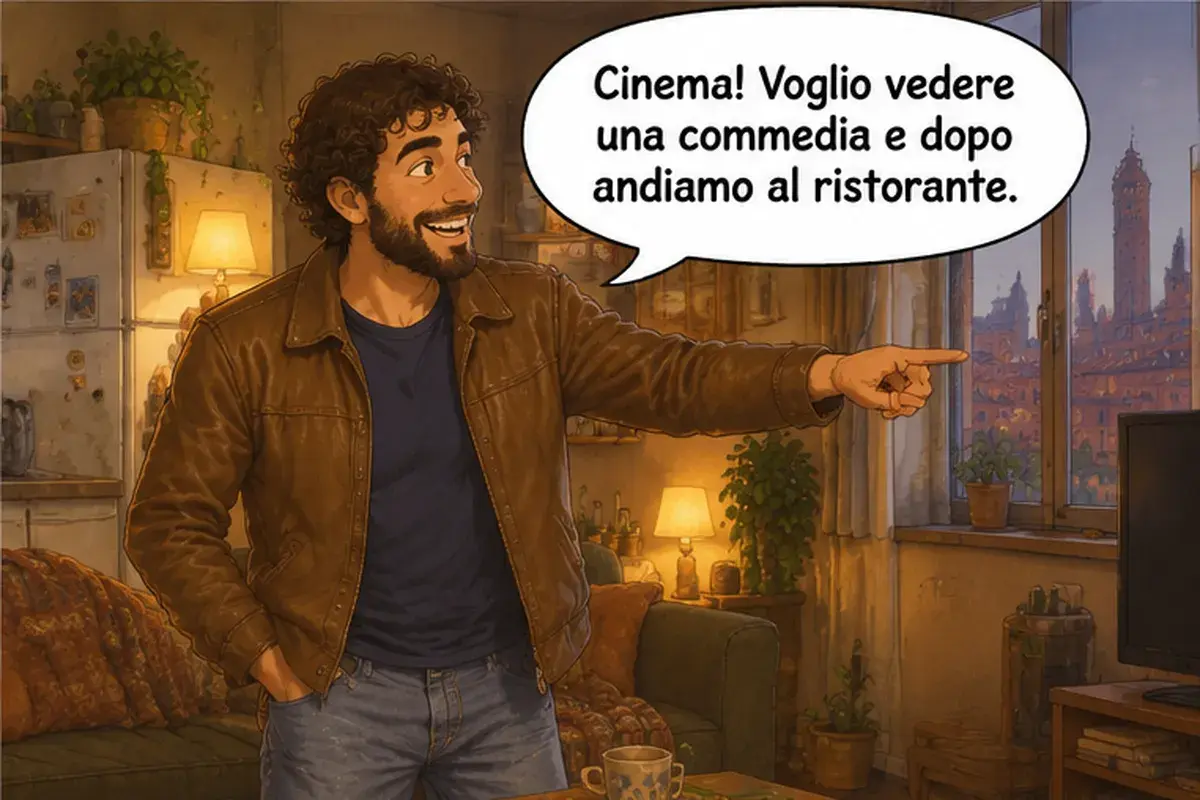
- Luca
Cinema! Voglio vedere una commedia e dopo andiamo al ristorante.
The movies! I want to see a comedy, and afterward we'll go to a restaurant.
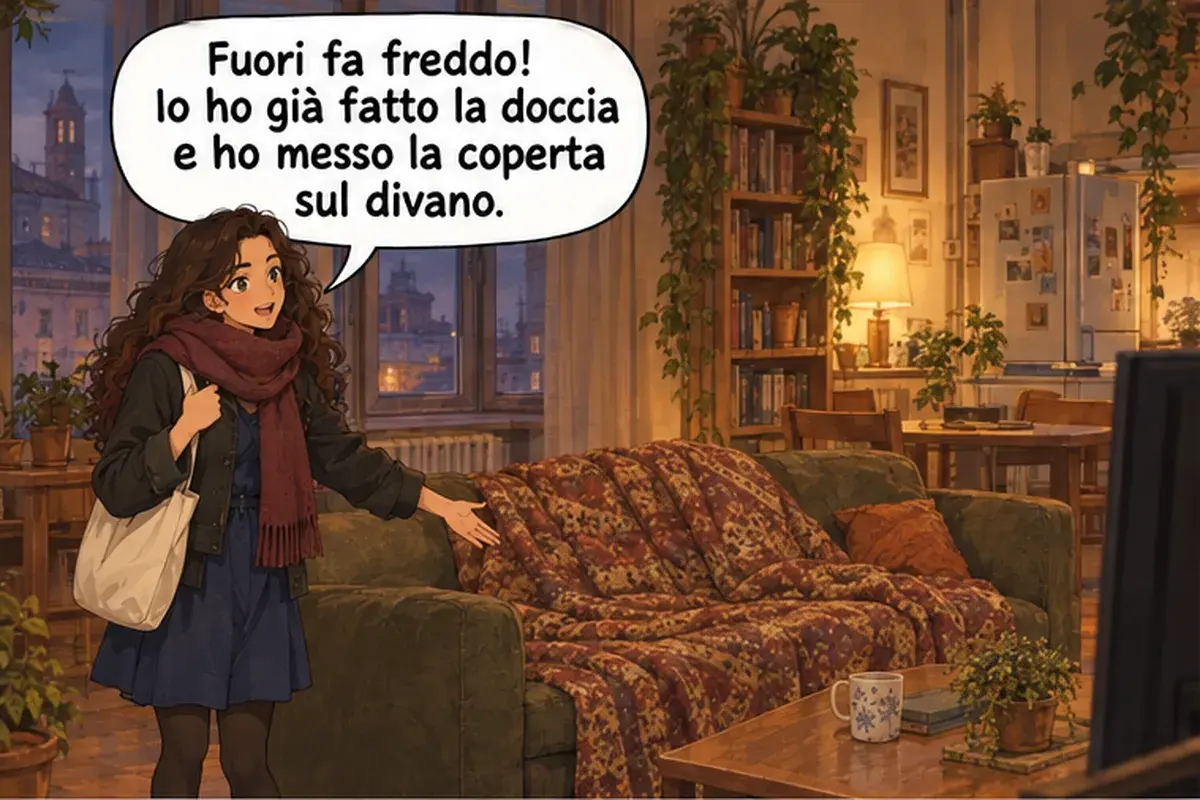
- Giulia
Fuori fa freddo! Io ho già fatto la doccia e ho messo la coperta sul divano.
It's cold outside! I've already taken a shower and put the blanket on the couch.
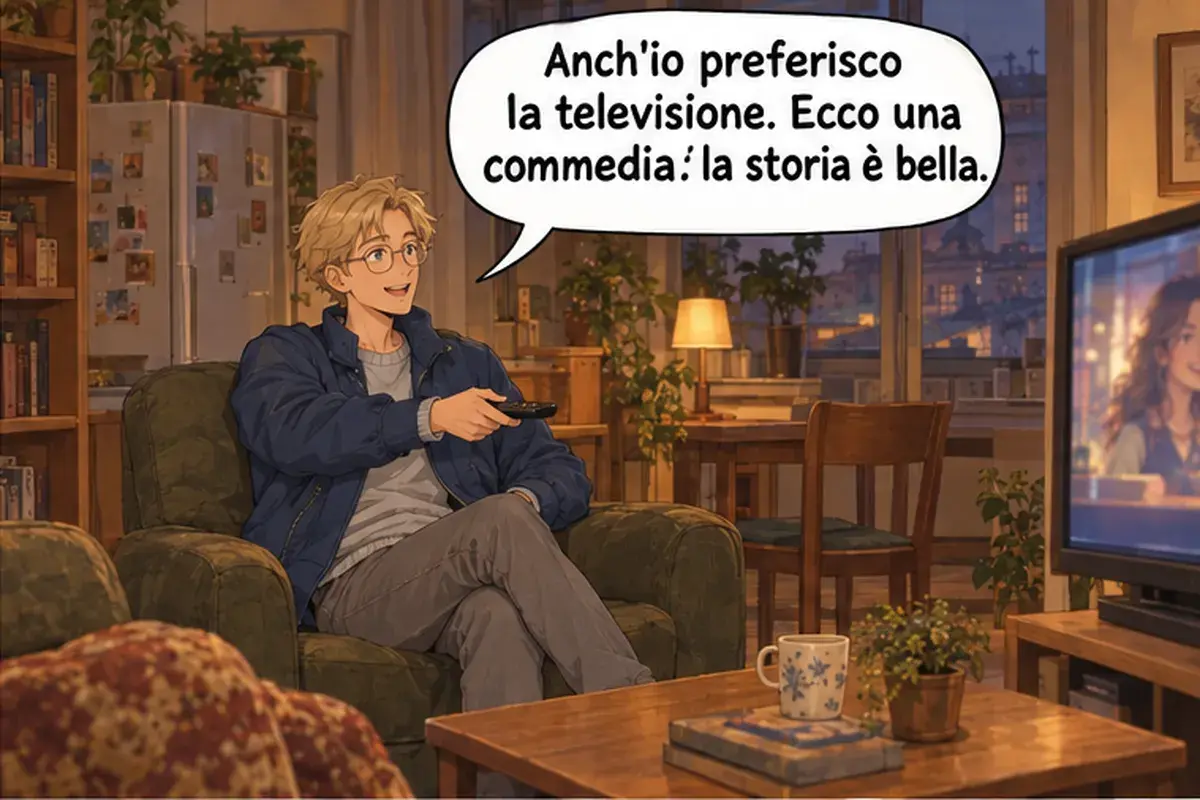
- Misha
Anch'io preferisco la televisione. Ecco una commedia: la storia è bella.
I prefer TV too. Here's a comedy: the story is good.
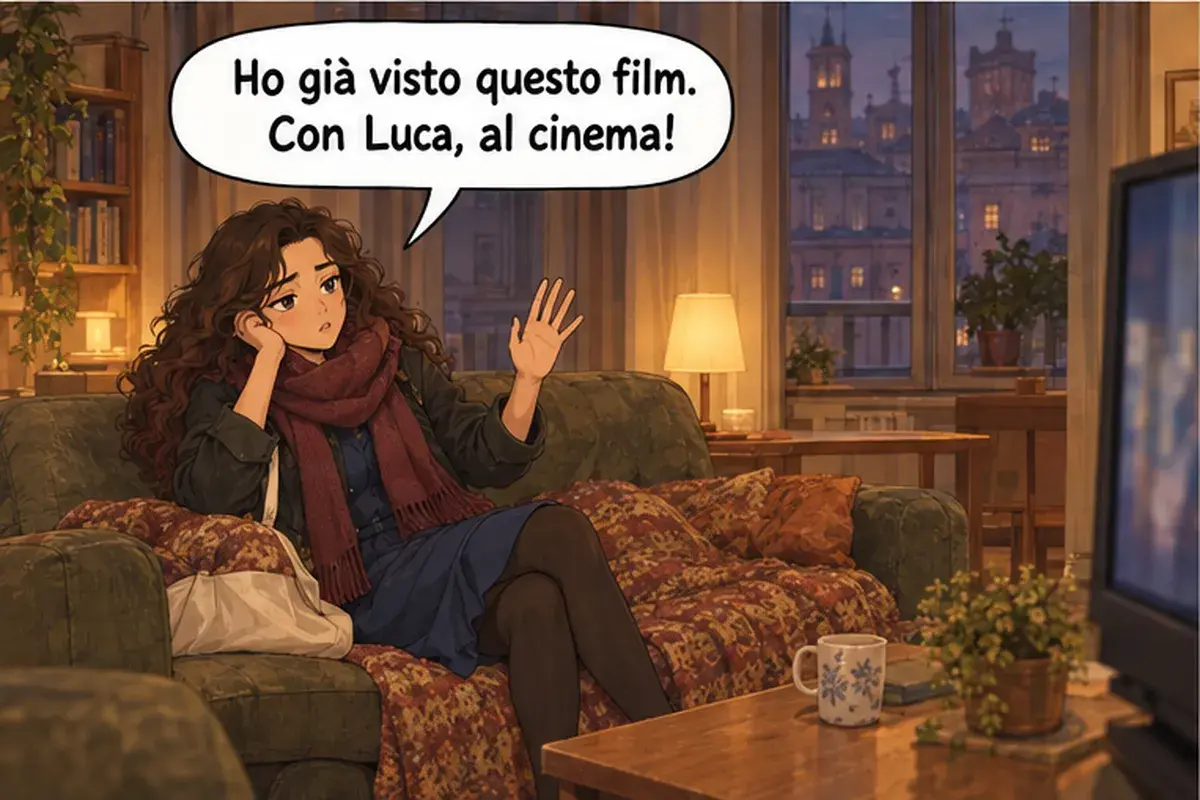
- Giulia
Ho già visto questo film. Con Luca, al cinema!
I've already seen this movie. With Luca, at the movies!
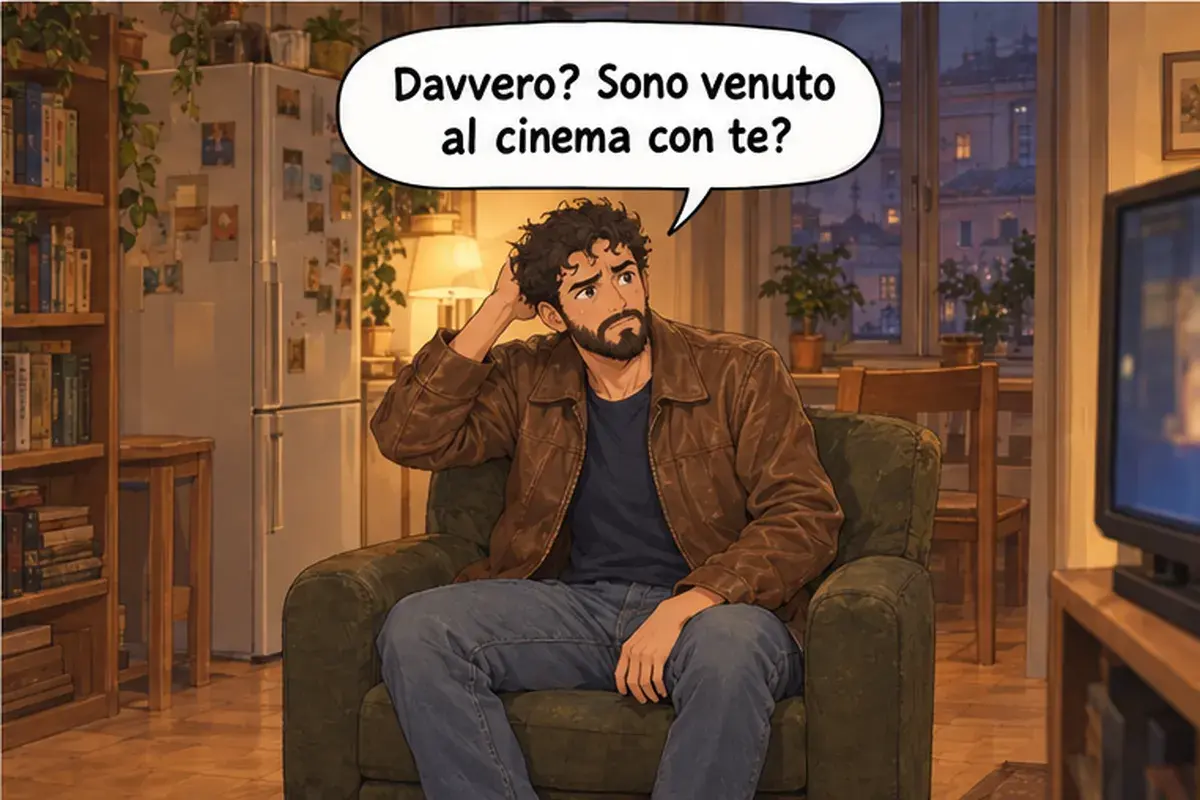
- Luca
Davvero? Sono venuto al cinema con te?
Really? I came to the movies with you? (man speaking)
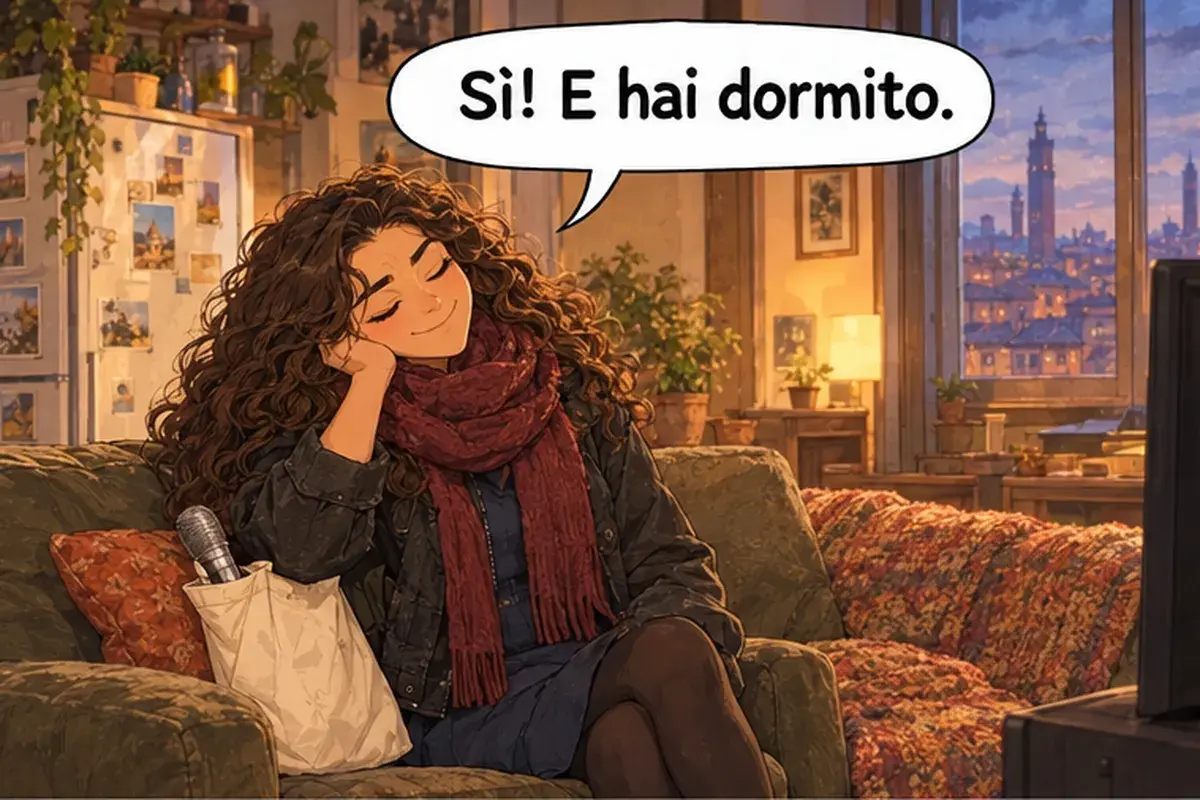
- Giulia
Sì! E hai dormito.
Yes! And you slept.
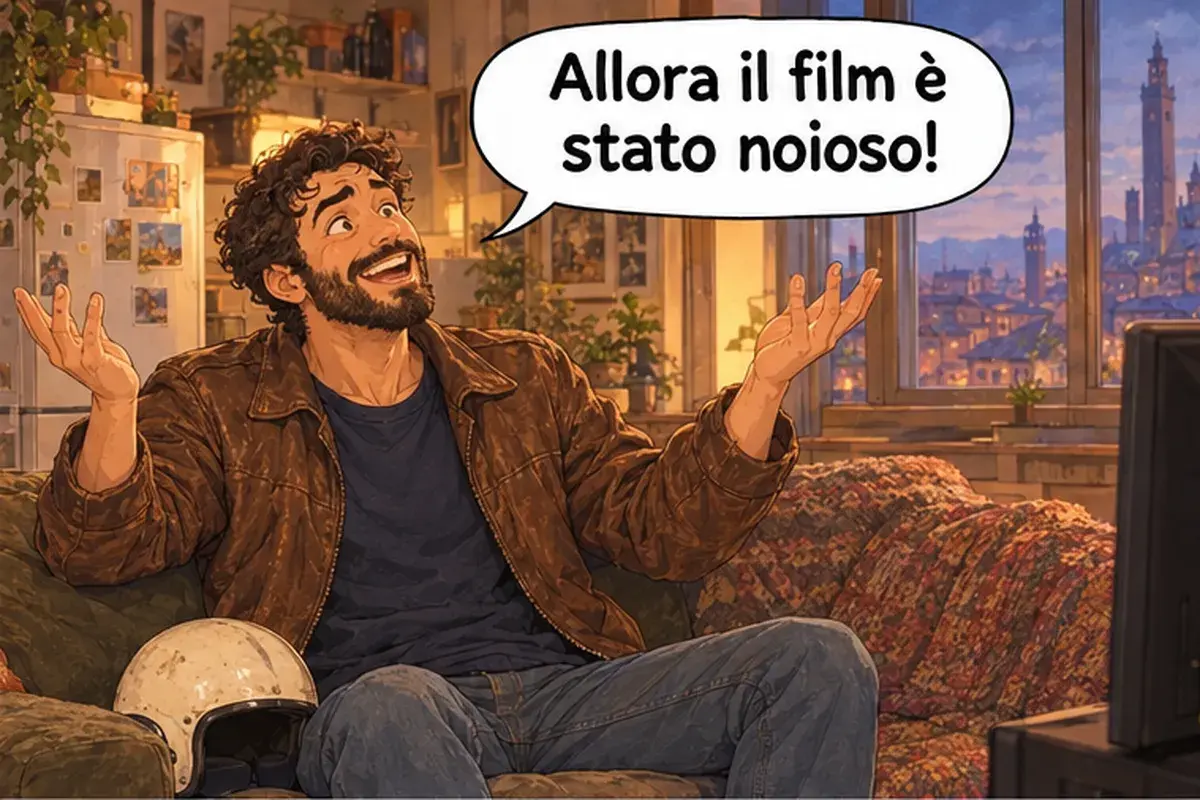
- Luca
Allora il film è stato noioso!
So the movie was boring!
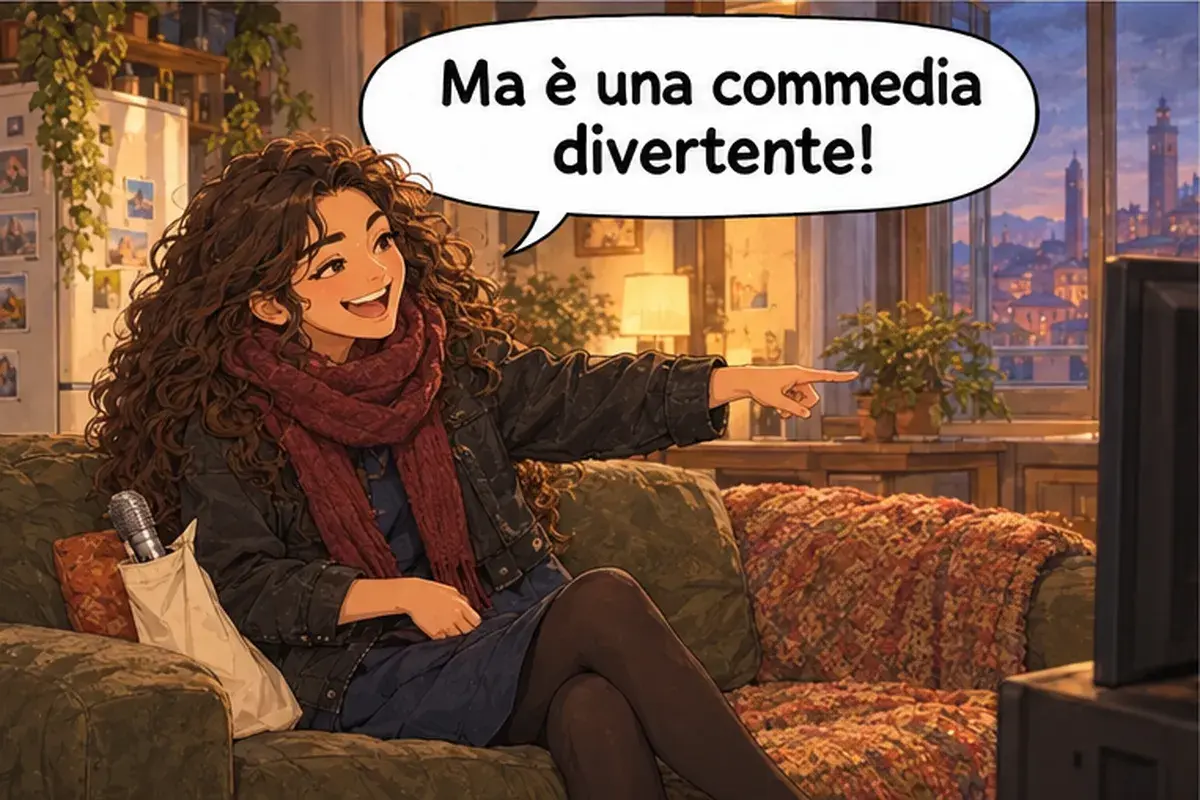
- Giulia
Ma è una commedia divertente!
But it's a funny comedy!
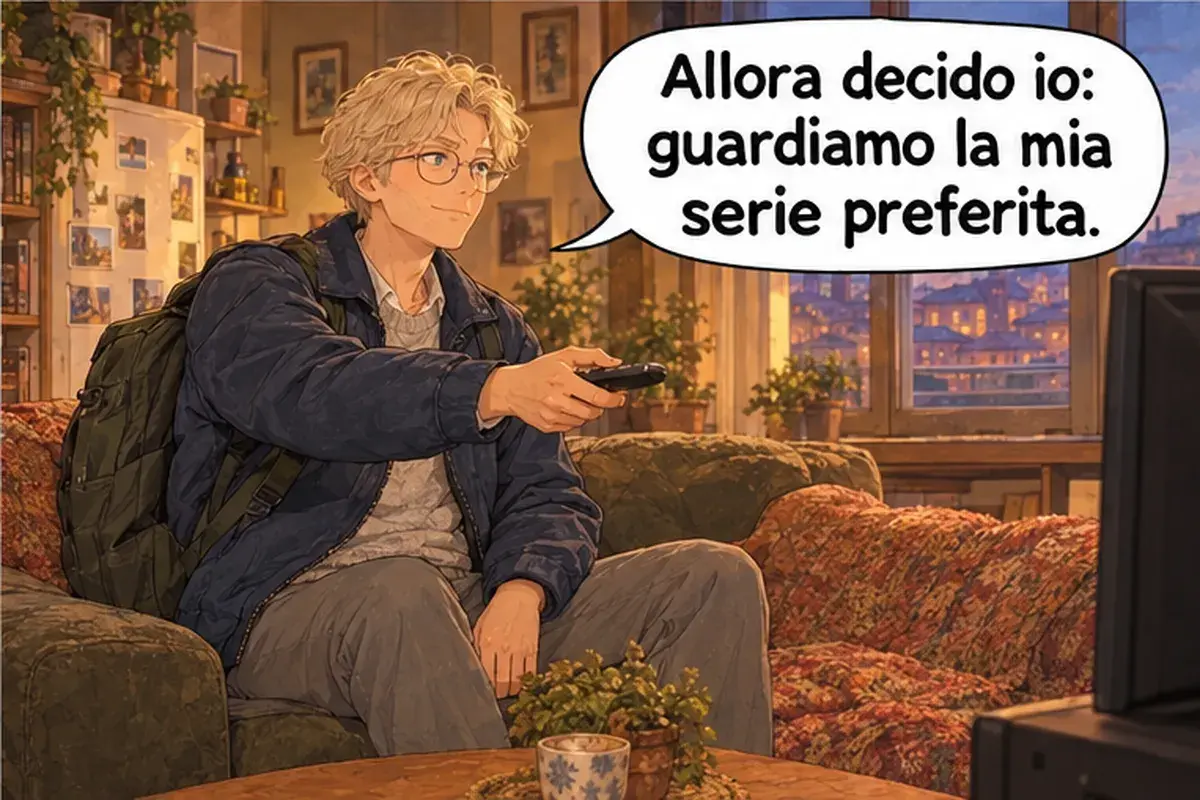
- Misha
Allora decido io: guardiamo la mia serie preferita.
Then I'll decide: we're watching my favorite series.
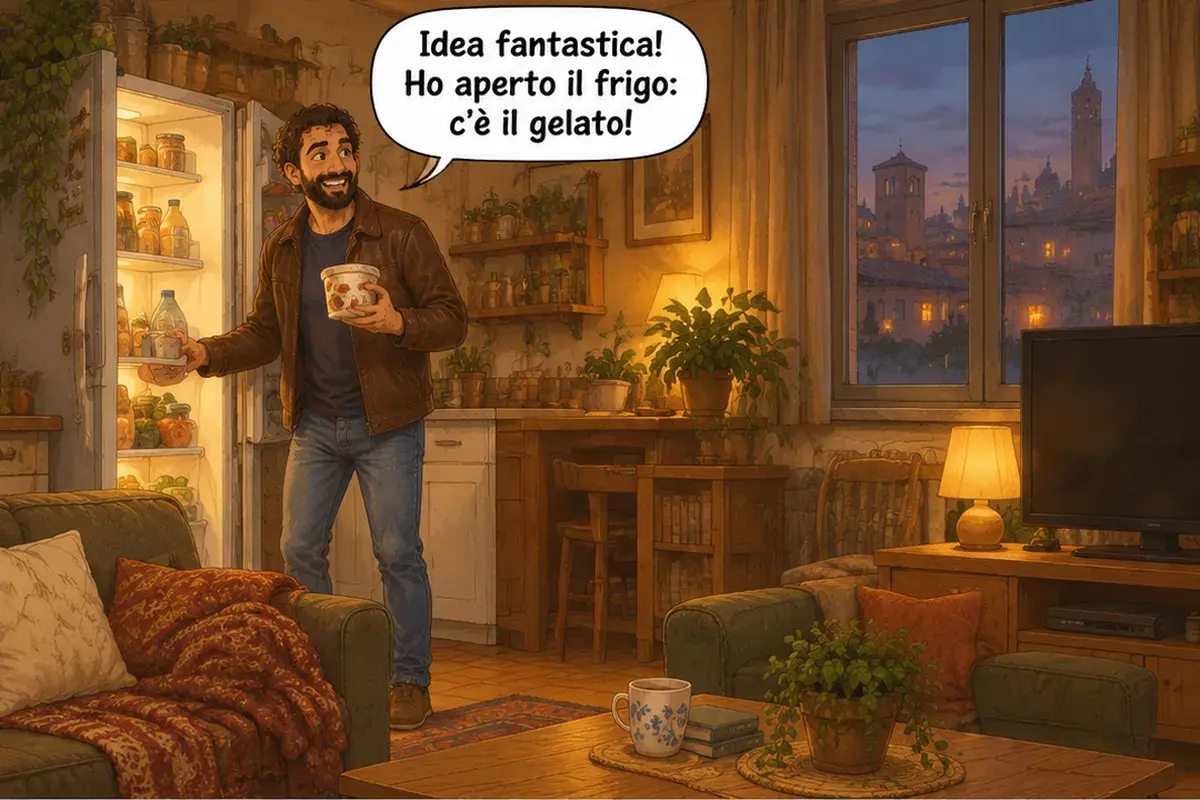
- Luca
Idea fantastica! Ho aperto il frigo: c'è il gelato!
Fantastic idea! I opened the fridge: there's ice cream!
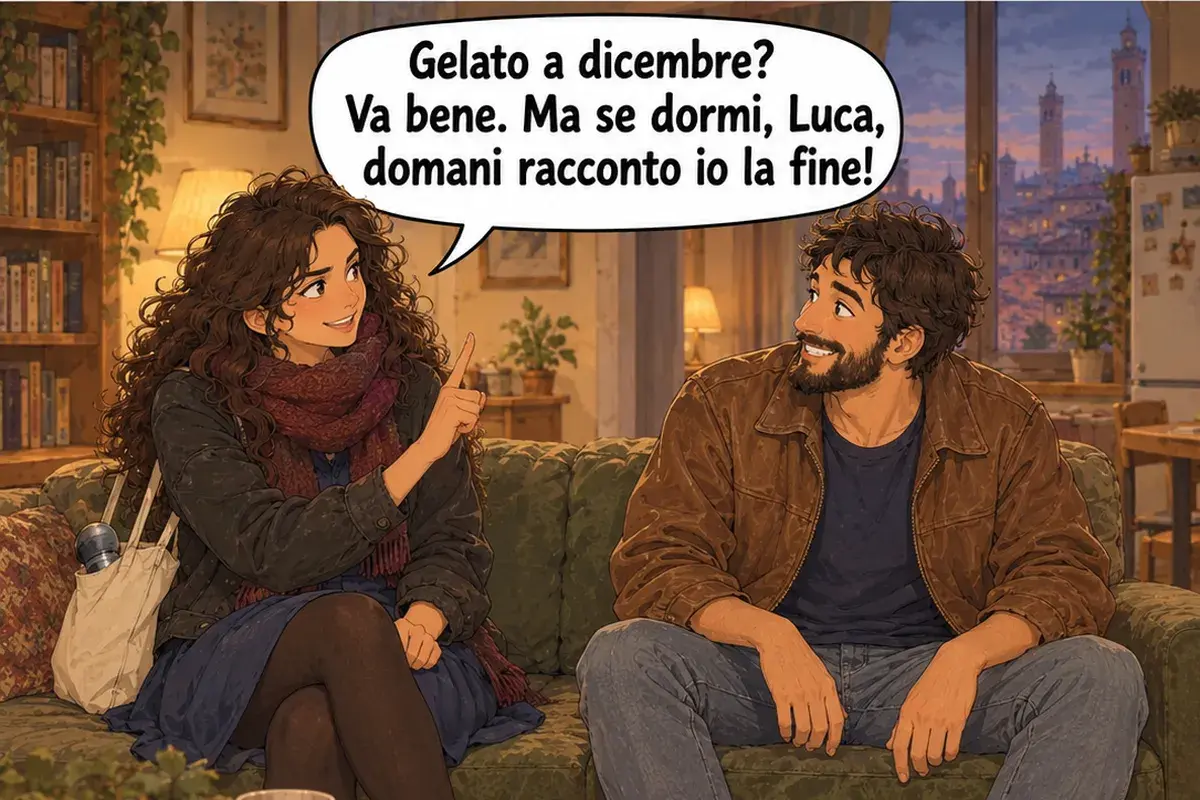
- Giulia
Gelato a dicembre? Va bene. Ma se dormi, Luca, domani racconto io la fine!
Ice cream in December? OK. But if you sleep, Luca, tomorrow I'm telling the ending!
Grammar for this text
- Ho scritto nel gruppo: stasera guardiamo un film. — the passato prossimo (everyday past): ho (from avere) + a past participle. scritto is from scrivere, and letto (hai letto?) is from leggere: both participles are irregular (see the unit grammar). letto is also the word for "bed" (unit 3), but here it means "read".
- Io ho già fatto la doccia e ho messo la coperta sul divano. — fatto (from fare) and messo (from mettere) are irregular too. già (already) goes between ho and the participle. sul = su + il.
- Ho già visto questo film. — visto is from vedere. Giulia is speaking, but the form doesn't change: after ho the participle always stays the same.
- Sono venuto al cinema con te? — in the past, venire takes essere, not avere: sono venuto — I came. Luca is speaking; a woman would say sono venuta (unit 16).
- Allora il film è stato noioso! — è stato — it was: è (from essere) + the participle stato, which essere and stare share.
- Ho aperto il frigo: c'è il gelato! — aperto is the past participle of aprire: "I opened". The same form is also an adjective, "open" (unit 10).
- Allora decido io — decido — I decide. io after the verb means "I'm the one deciding". Se dormi, Luca, domani racconto io la fine! — after se (if) Italian uses the present tense, just like English; racconto — I'll tell (raccontare); la fine — the ending.
Words and grammar of the unit: Invite a friend to a game or a movie.
Learn the words from the texts with flashcards
In the app, you can tap any word in a text to see its translation, forms and examples, and new words stick with flashcards. 15 minutes a day.
Start for freeEverything is open for free. No card needed to sign up.