
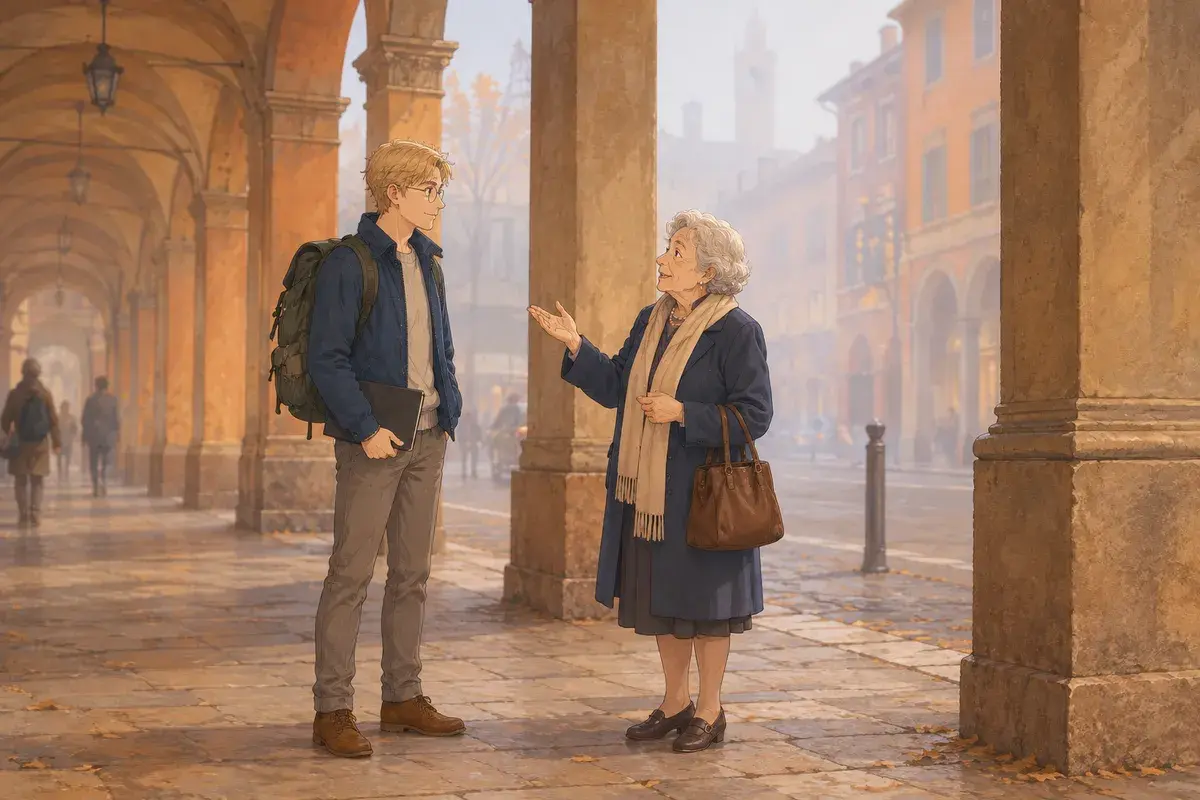
Italian dialogue with translation · A1 · 12 lines
Può ripetere, per favore? Could you say that again, please?
Comic · 11 panels
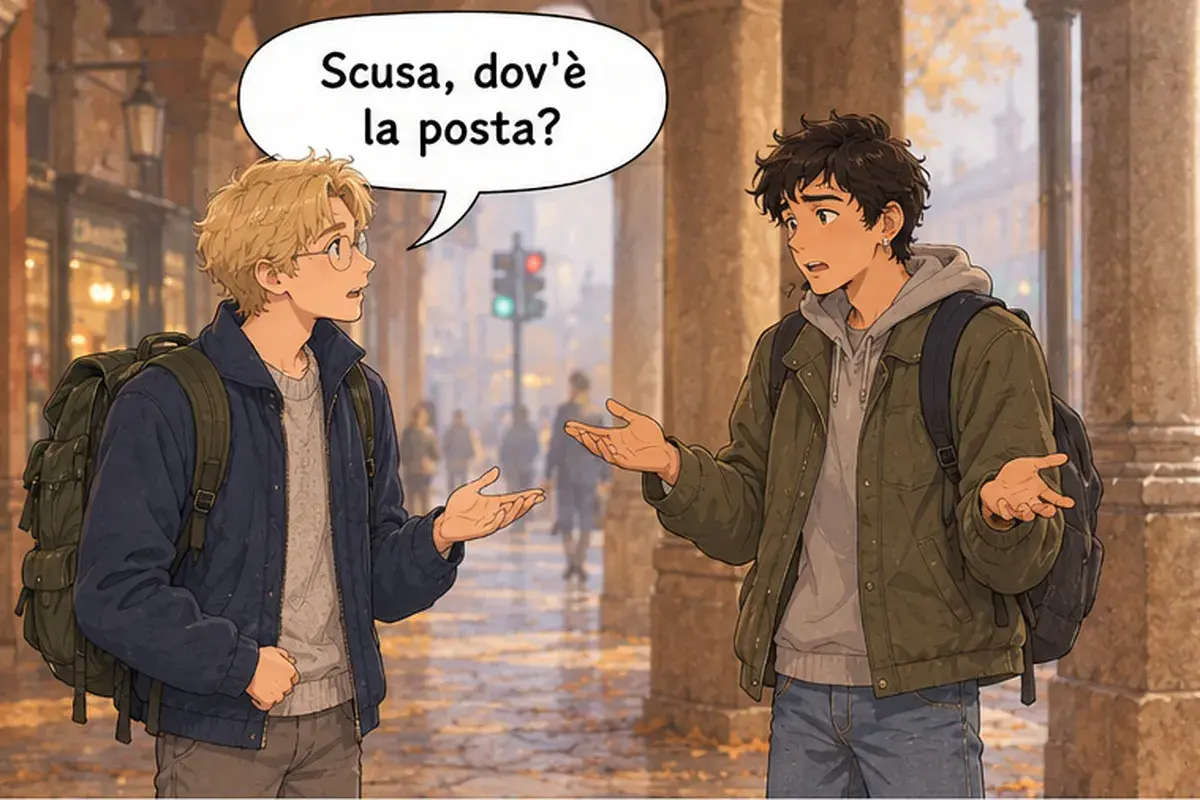
- Misha
Scusa, dov'è la posta?
Excuse me, where's the post office?
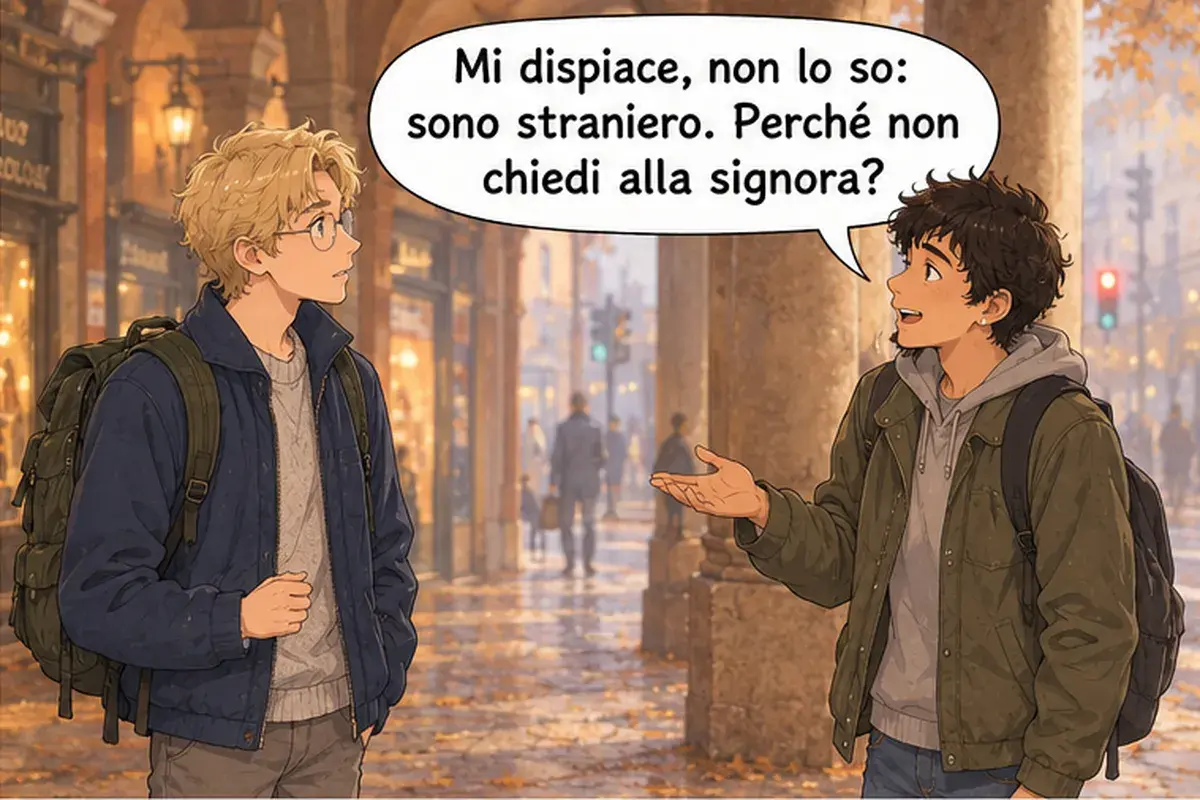
- Ragazzo
Mi dispiace, non lo so: sono straniero. Perché non chiedi alla signora?
I'm sorry, I don't know: I'm a foreigner. Why don't you ask the lady? (man speaking)
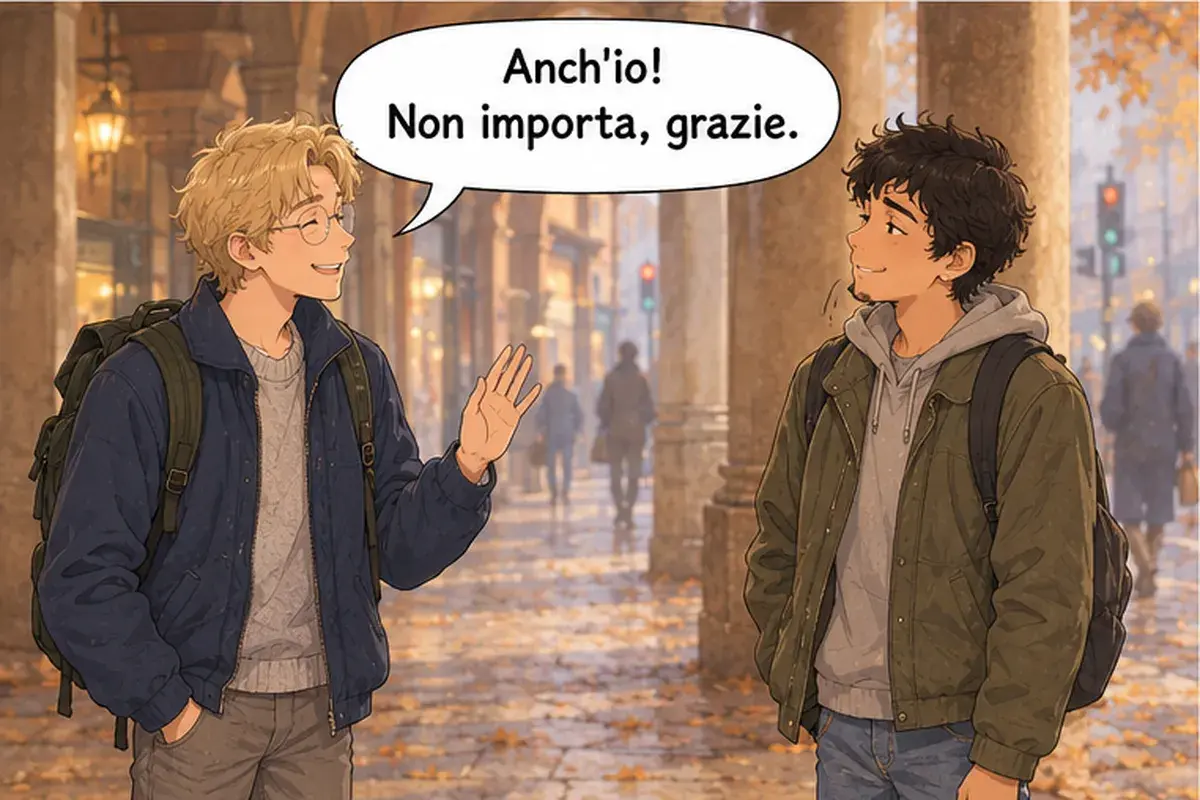
- Misha
Anch'io! Non importa, grazie.
Me too! Never mind, thanks.
- Misha
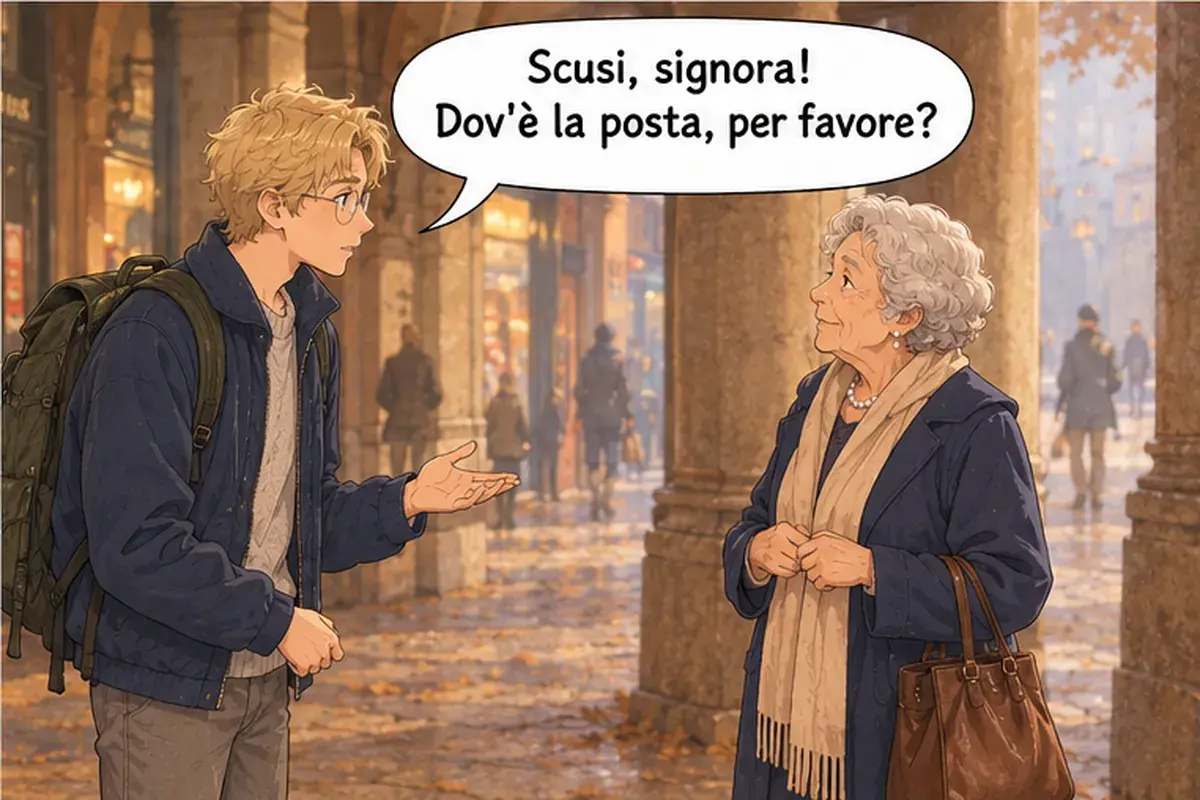
Scusi, signora! Dov'è la posta, per favore?
Excuse me, ma'am! Where's the post office, please? (formal)
- Signora
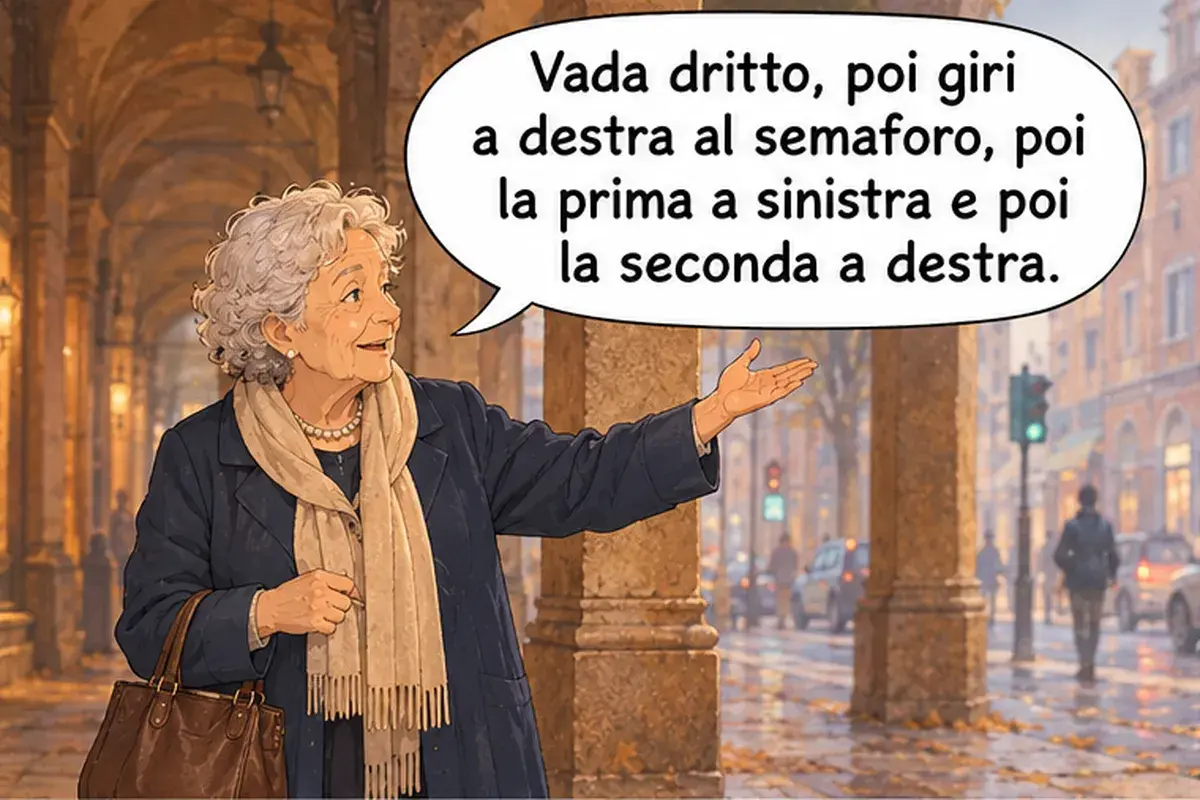
Vada dritto, poi giri a destra al semaforo, poi la prima a sinistra e poi la seconda a destra.
Go straight, then turn right at the traffic light, then the first left, and then the second right (formal).
- Misha
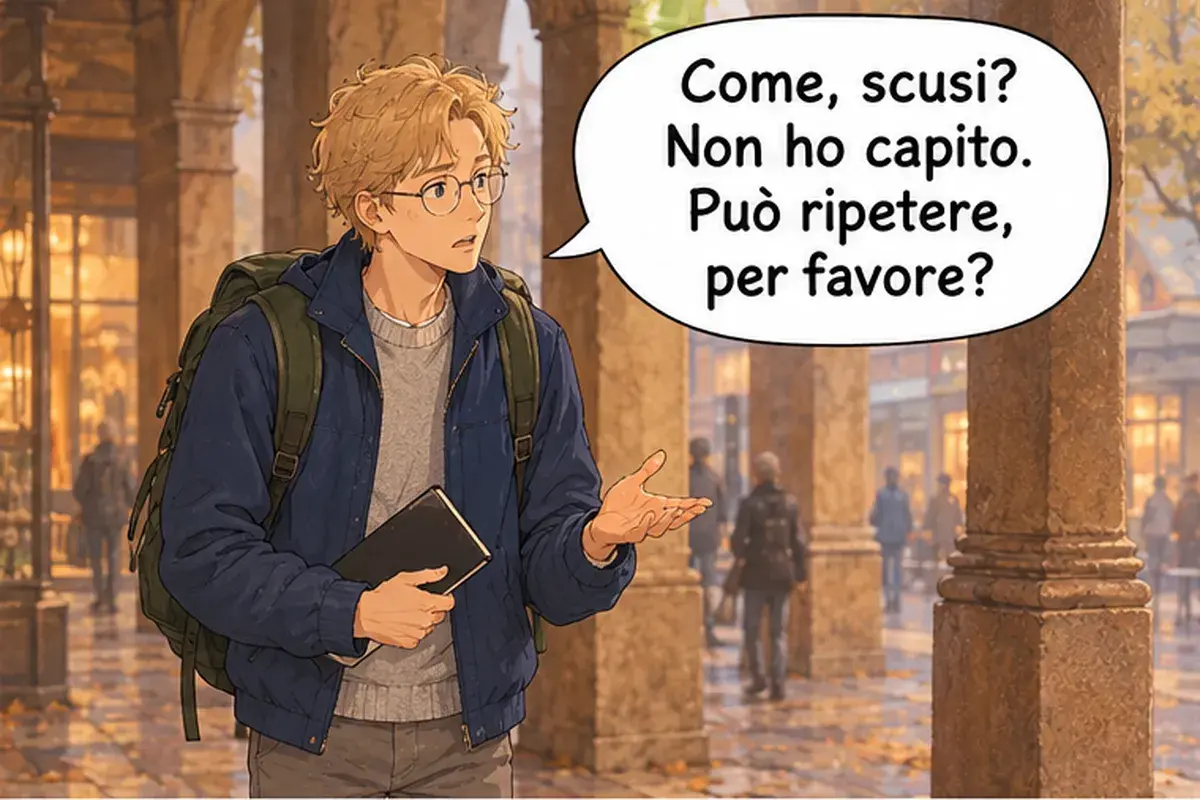
Come, scusi? Non ho capito. Può ripetere, per favore?
Sorry, what was that? I didn't understand. Could you say that again, please? (formal)
- Signora
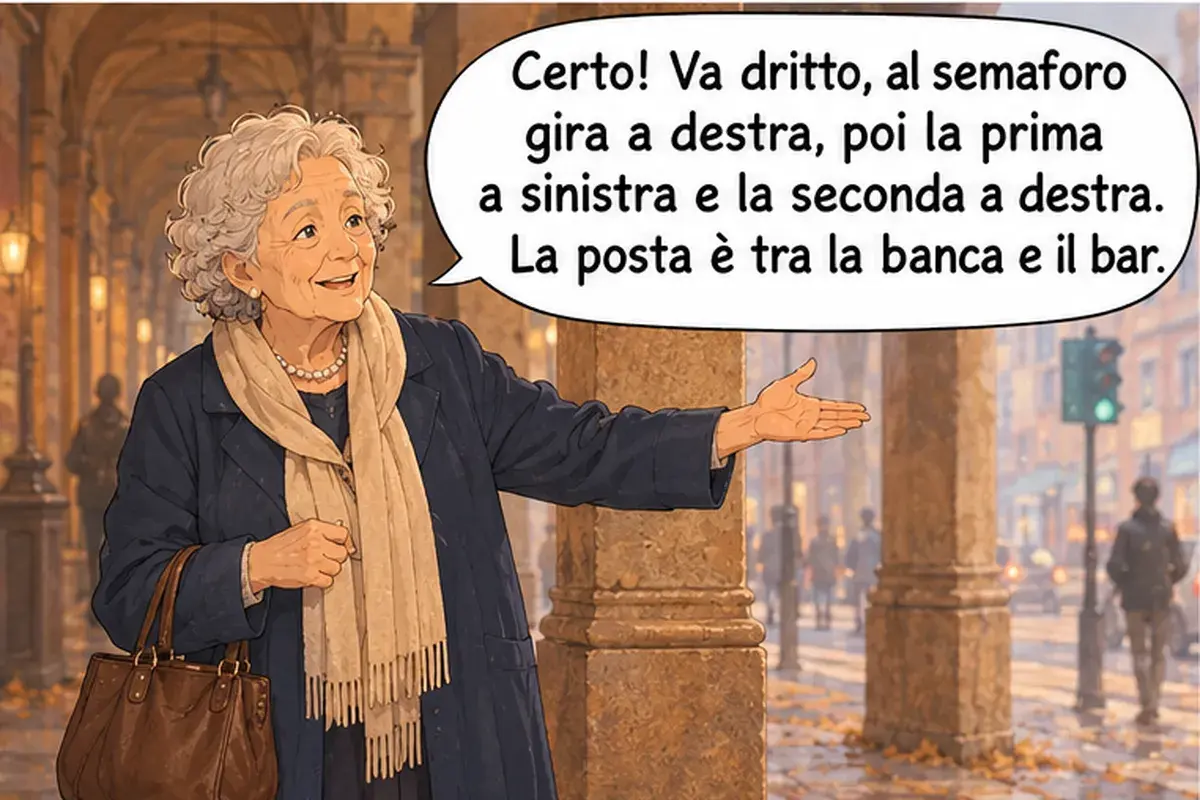
Certo! Va dritto, al semaforo gira a destra, poi la prima a sinistra e la seconda a destra. La posta è tra la banca e il bar.
Of course! You go straight, turn right at the traffic light, then the first left and the second right. The post office is between the bank and the bar (formal).
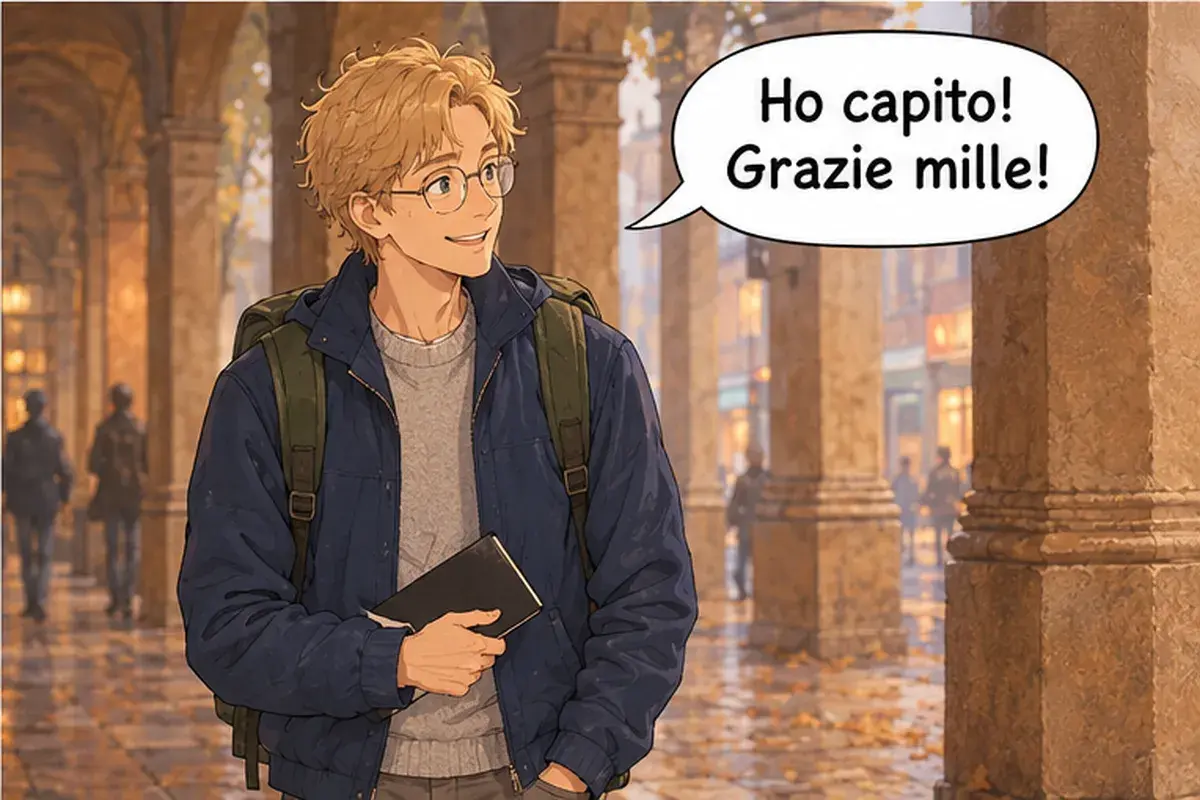
- Misha
Ho capito! Grazie mille!
Got it! Thanks a lot!
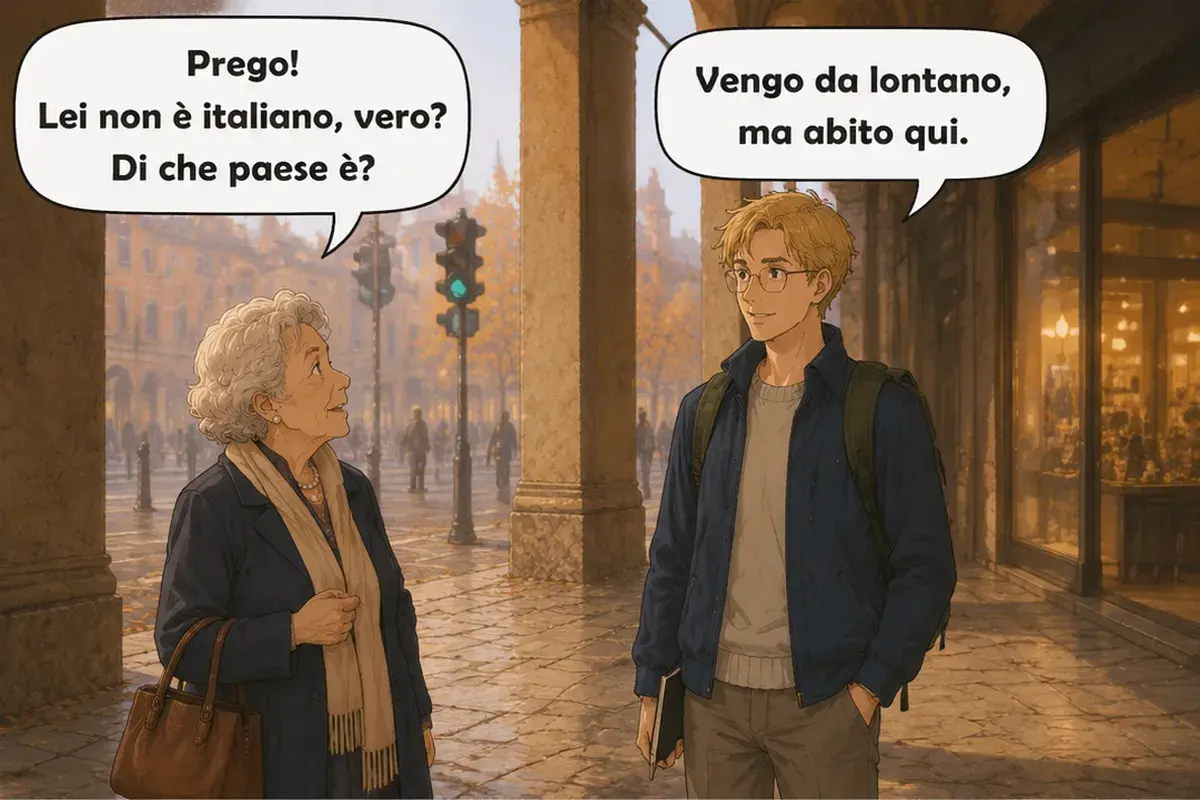
- Signora
Prego! Lei non è italiano, vero? Di che paese è?
You're welcome! You're not Italian, are you? What country are you from? (to a man, formal)
- Misha
Vengo da lontano, ma abito qui.
I come from far away, but I live here.
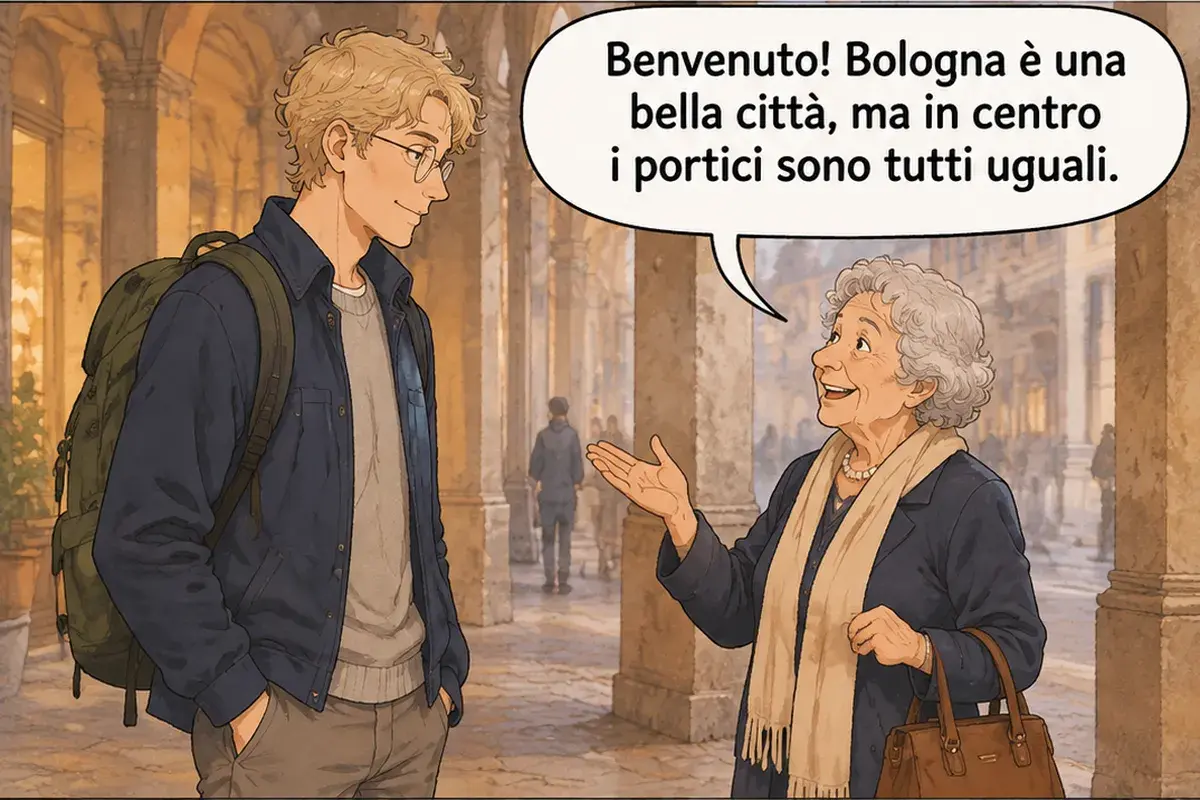
- Signora
Benvenuto! Bologna è una bella città, ma in centro i portici sono tutti uguali.
Welcome! Bologna is a beautiful city, but downtown the porticoes are all the same (to a man).
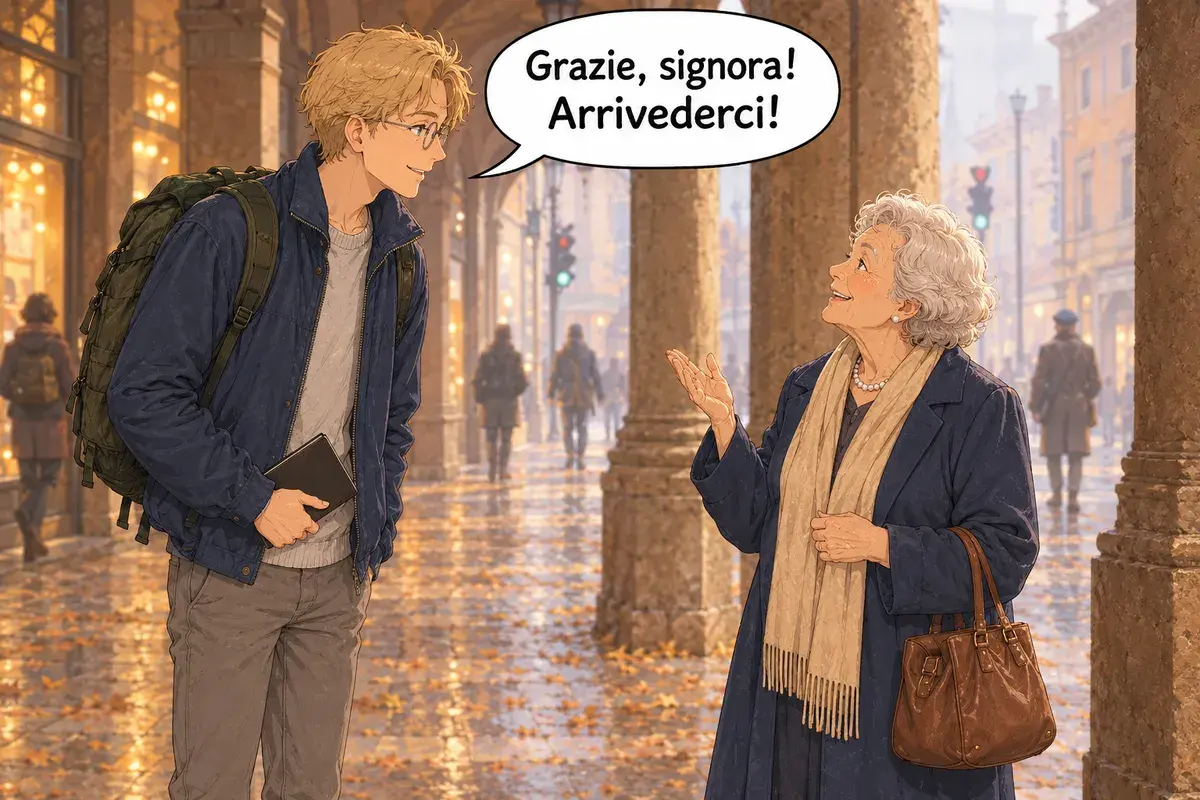
- Misha
Grazie, signora! Arrivederci!
Thank you, ma'am! Goodbye!
Grammar for this text
- Vada dritto, poi giri a destra al semaforo, poi la prima a sinistra e poi la seconda a destra. — the signora uses Lei, so her directions are polite commands: vada is from andare (to go), giri is from girare (to turn): "go", "turn". The rule comes at B1; for now, learn the phrase whole. al semaforo: al = a + il.
- Come, scusi? Non ho capito. Può ripetere, per favore? — scusi is the polite scusa (unit 1). Non ho capito — I didn't understand: ho is the io form of avere, capito comes from capire; it's the past tense (unit 15), for now a set phrase. Può — you can, the Lei form of potere (unit 10).
- Certo! Va dritto, al semaforo gira a destra — the same directions, more simply: va and gira are the lui / lei forms, and that's exactly the form you use with Lei. The same here: Lei non è italiano, vero? — You're not Italian, are you? (to a man, formal)
- Mi dispiace, non lo so: sono straniero. — mi dispiace — I'm sorry, a set phrase (the rule comes at A2). non lo so — I don't know: so is the io form of sapere (unit 11).
- Anch'io! — anche + io, me too.
- Perché non chiedi alla signora? — Why don't you ask the lady?: chiedi is the tu form of chiedere (to ask), alla = a + la; this is how a friend gives advice without ordering you around.
- Vengo da lontano, ma abito qui. — vengo is the io form of venire, da means "from" (grammar block 2): da lontano — from far away.
Words and grammar of the unit: Ask for directions.
Learn the words from the texts with flashcards
In the app, you can tap any word in a text to see its translation, forms and examples, and new words stick with flashcards. 15 minutes a day.
Start for freeEverything is open for free. No card needed to sign up.