
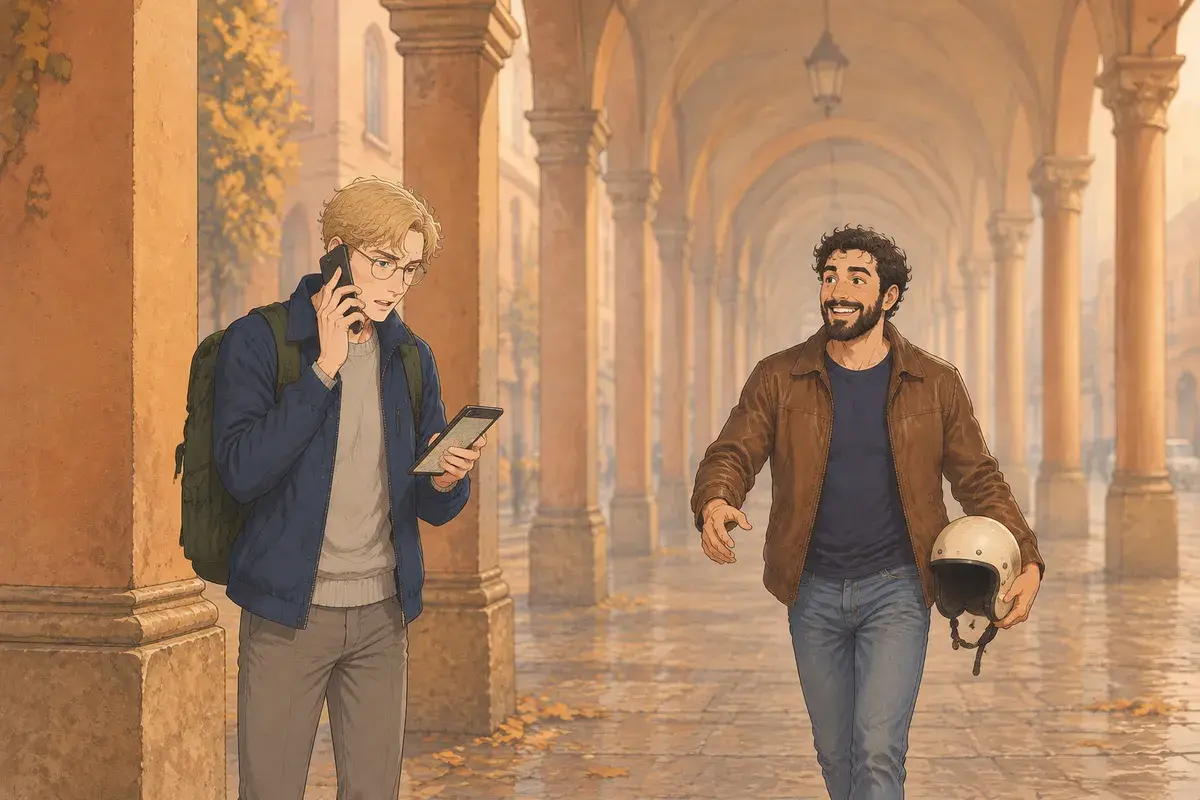
Italian story with translation · A1 · 14 lines
Allora sei a Bologna! Then you're in Bologna!
Comic · 14 panels
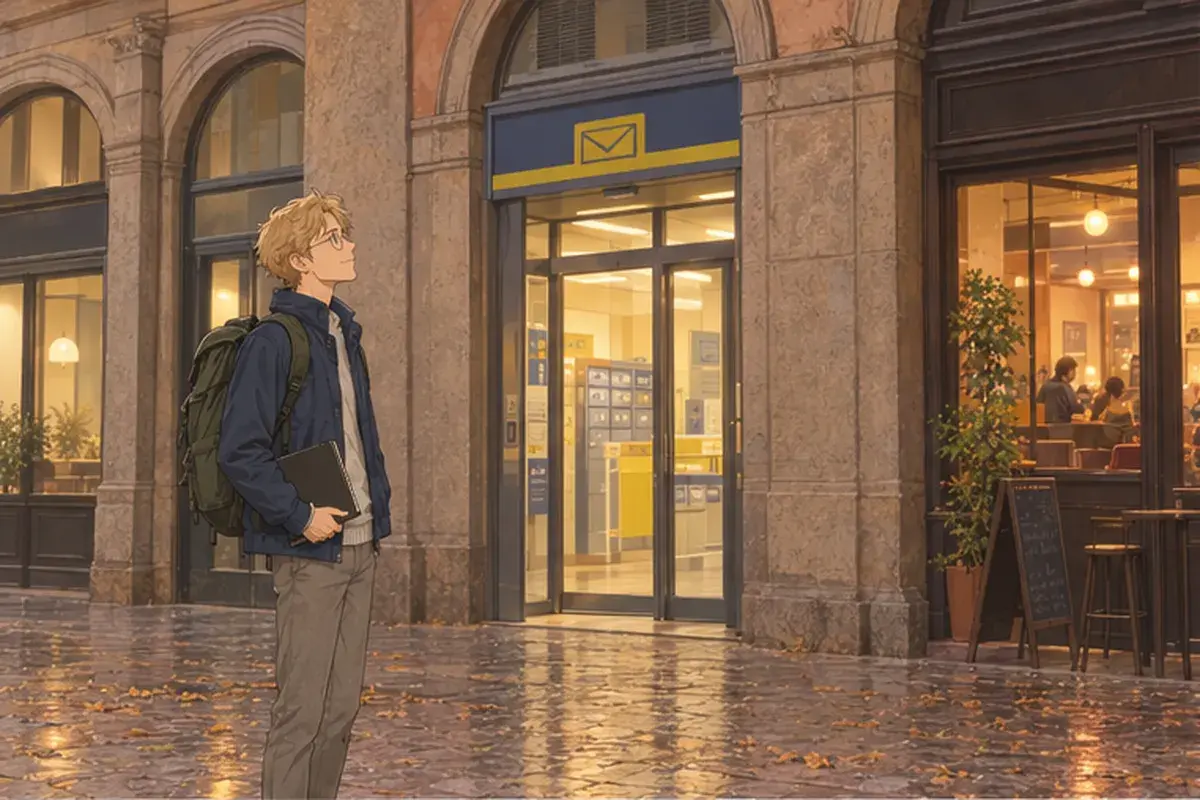
Trovo la posta! È tra la banca e il bar.
I find the post office! It's between the bank and the bar.

Dalla posta vado a casa a piedi: via Mascarella non è lontana.
From the post office, I go home on foot: via Mascarella isn't far.

Bologna è una città bellissima e io sono architetto: mi piacciono i portici.
Bologna is a very beautiful city, and I'm an architect: I like the porticoes.

Ma oggi giro a destra: un portico. Giro a sinistra: un altro portico.
But today I turn right: a portico. I turn left: another portico.

Cerco una piazza o una torre, ma all'angolo vedo solo portici. Questa è la strada sbagliata?
I'm looking for a square or a tower, but on the corner I only see porticoes. Is this the wrong street?

Ho la mappa sul telefono, ma anche per un architetto i portici sono tutti uguali.
I have the map on my phone, but even for an architect, the porticoes are all the same.

Basta: chiamo Luca. «Ciao, Luca! Mi sono perso!»
Enough: I'm calling Luca. "Hi, Luca! I'm lost!" (man speaking)

«Tranquillo, Misha! Dove sei?»
"Don't worry, Misha! Where are you?"

«Un portico davanti, un portico accanto, un portico di fronte!»
"A portico in front, a portico next to me, a portico across from me!"

«Allora sei a Bologna!»
"Then you're in Bologna!"
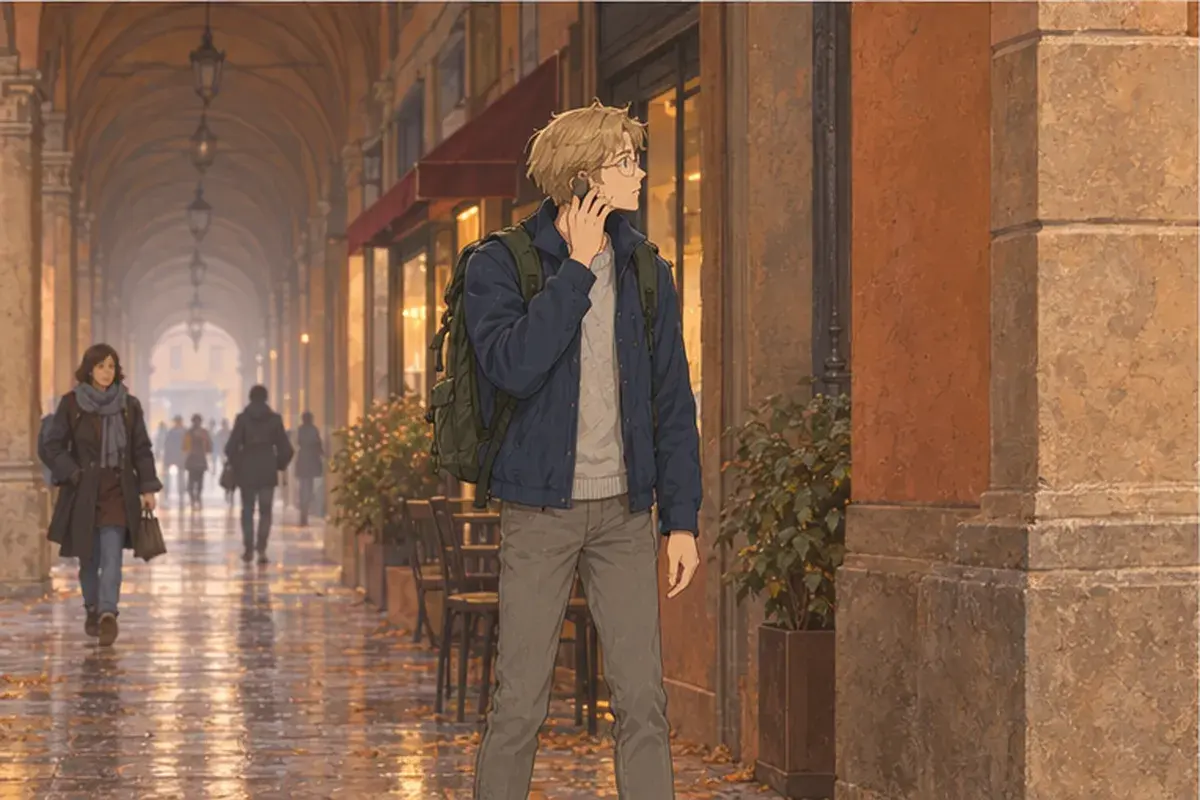
«Che strada è? Guarda il nome.»
"What street is it? Look at the name."

«Guardo il nome della strada: via Mascarella!»
"I'm looking at the street name: via Mascarella!"

«Ma è la nostra strada! Sei vicino a casa: vengo io!»
"But that's our street! You're near home: I'll come to you!"
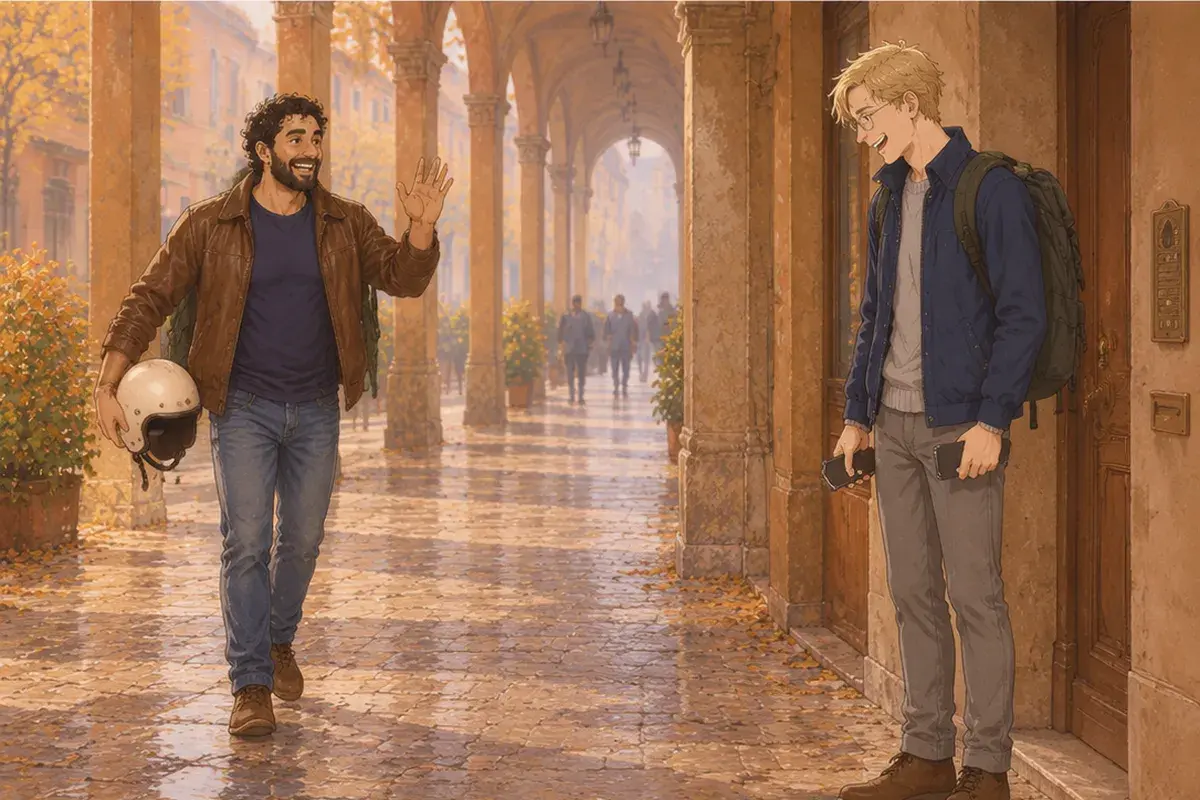
Luca arriva a piedi in un minuto. La nostra casa è il numero 24, e io sono davanti al 22!
Luca gets here on foot in one minute. Our house is number 24, and I'm in front of number 22!
Grammar for this text
- Mi sono perso! — I'm lost!, literally "I lost myself": the past tense of perdersi, sono is the io form of essere. A man says perso, a woman says persa. The rule comes at A2; for now, learn the phrase whole.
- Allora sei a Bologna! — sei here is "you are" (essere), not the number six. Allora — then, so. Tranquillo — calm: that's Luca's answer to any trouble. The joke: porticoes everywhere means you're in Bologna.
- Dalla posta vado a casa a piedi: via Mascarella non è lontana. — dalla = da + la, from the post office; vado is the io form of andare; a piedi — on foot, literally "on feet"; a casa — home, with no article.
- Un portico davanti, un portico accanto, un portico di fronte! — davanti, accanto, di fronte stand on their own here; before a place they need a: davanti alla banca.
- Guardo il nome della strada: via Mascarella! — della = di + la: the name of the street. Before that, Luca said Guarda il nome: guarda — look, a ready-made tu form of guardare; the rule comes at A2.
- Ma è la nostra strada! Sei vicino a casa: vengo io! — vicino a casa — near home. Vengo io — I'll come: vengo is the io form of venire (movement toward the person you're talking to); io adds contrast: I'll come to you, not the other way around.
- La nostra casa è il numero 24, e io sono davanti al 22! — al = a + il: in front of number 22; a house number is just the number.
Words and grammar of the unit: Ask for directions.
Learn the words from the texts with flashcards
In the app, you can tap any word in a text to see its translation, forms and examples, and new words stick with flashcards. 15 minutes a day.
Start for freeEverything is open for free. No card needed to sign up.