

French dialogue with translation · B2 · 16 lines
Deux heures de train Two hours by train
Comic · 16 panels

- Inès
Pacha, tu as cinq minutes ? Je suis à la Part-Dieu, mon train a vingt minutes de retard et j'ai besoin de parler à quelqu'un qui écoute.
Pacha, do you have five minutes? I'm at Part-Dieu, my train is twenty minutes late and I need to talk to someone who listens.
- Pacha
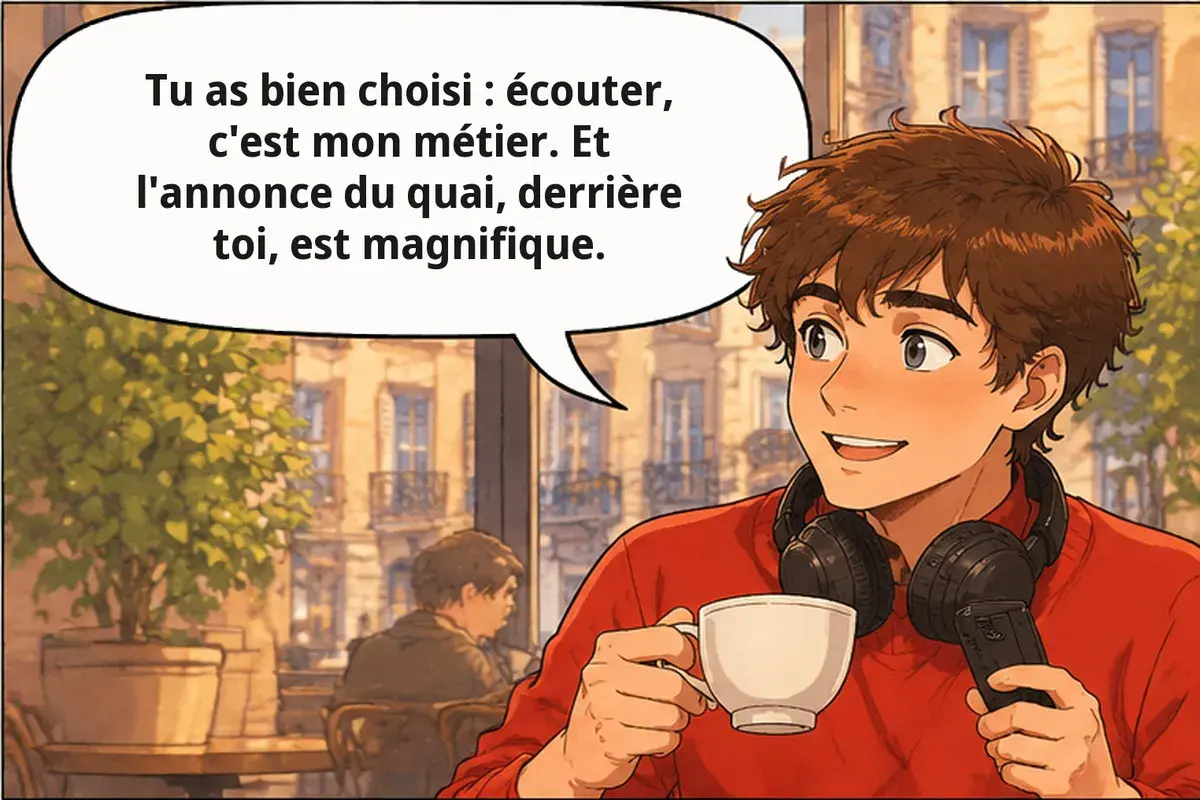
Tu as bien choisi : écouter, c'est mon métier. Et l'annonce du quai, derrière toi, est magnifique.
You chose well: listening is my job. And the announcement on the platform behind you is magnificent.
- Inès
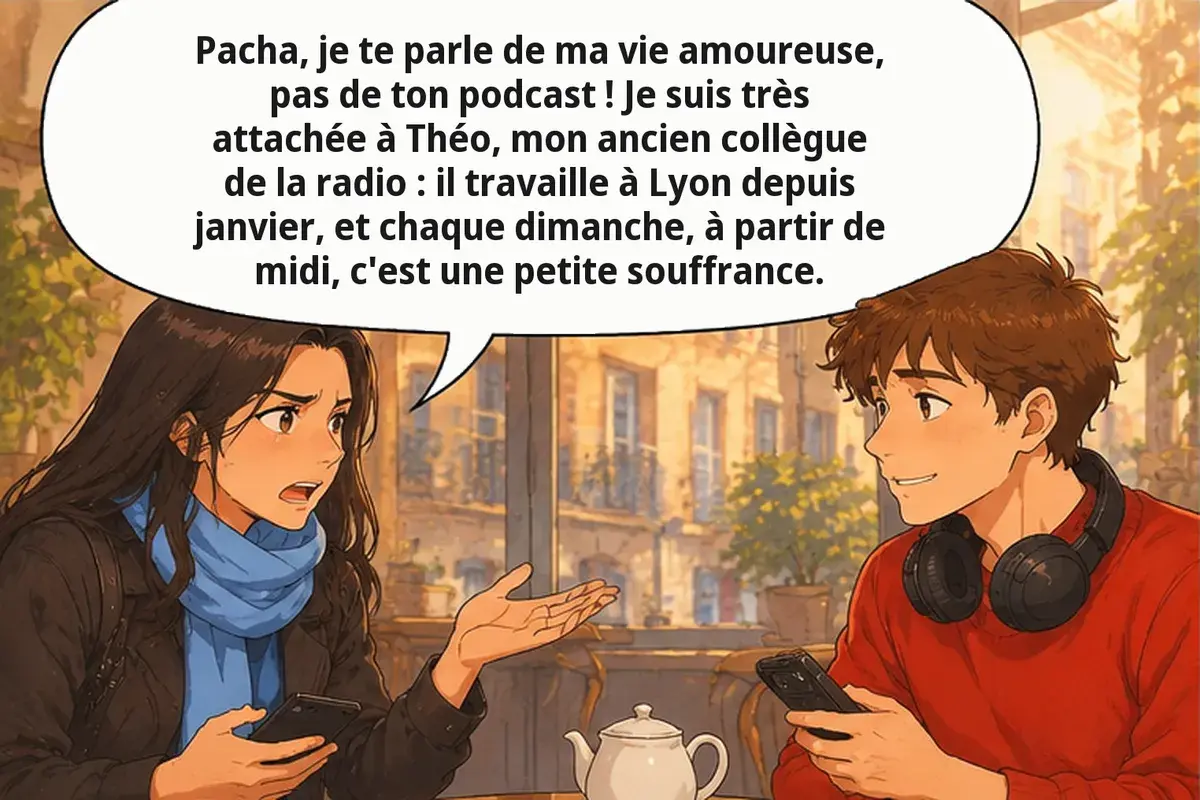
Pacha, je te parle de ma vie amoureuse, pas de ton podcast ! Je suis très attachée à Théo, mon ancien collègue de la radio : il travaille à Lyon depuis janvier, et chaque dimanche, à partir de midi, c'est une petite souffrance.
Pacha, I'm talking to you about my love life, not your podcast! I'm very attached to Théo, my former coworker from the radio station: he's worked in Lyon since January, and every Sunday, from noon on, it's a little bit of suffering (woman speaking).
- Pacha
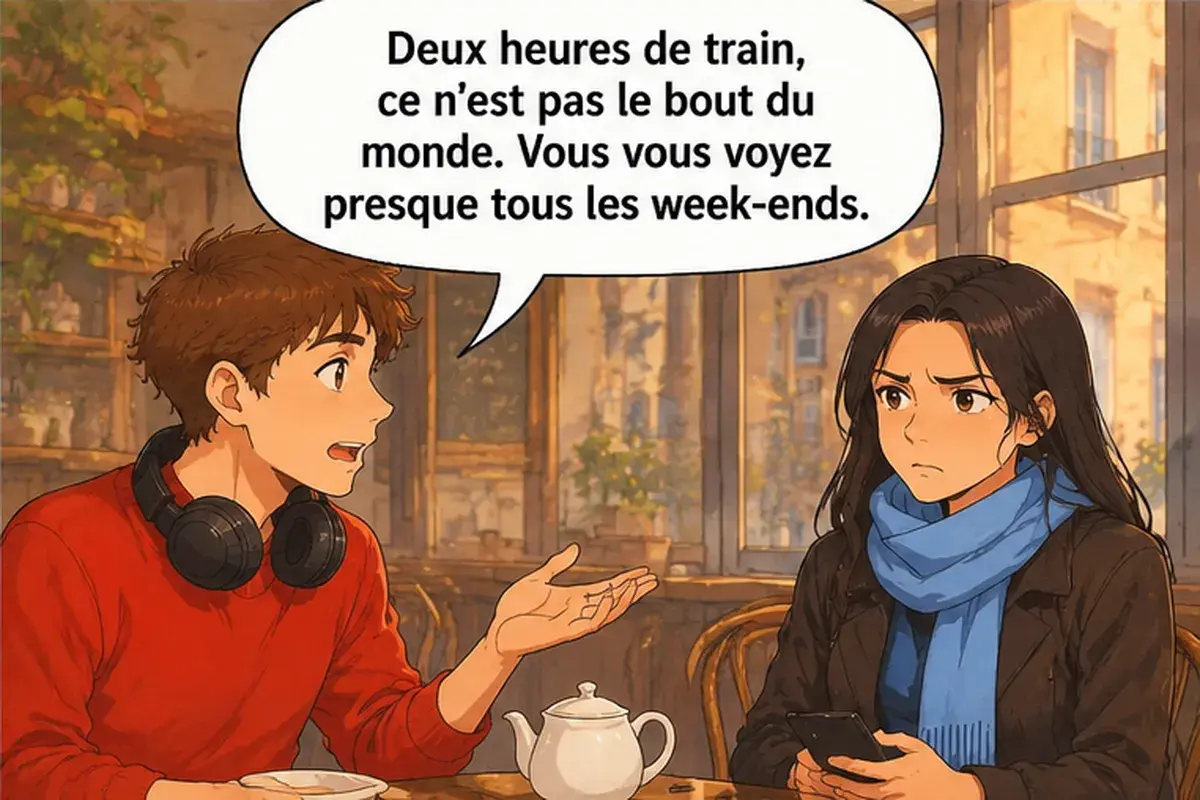
Deux heures de train, ce n'est pas le bout du monde. Vous vous voyez presque tous les week-ends.
Two hours by train isn't the end of the world. You two see each other almost every weekend.
- Inès
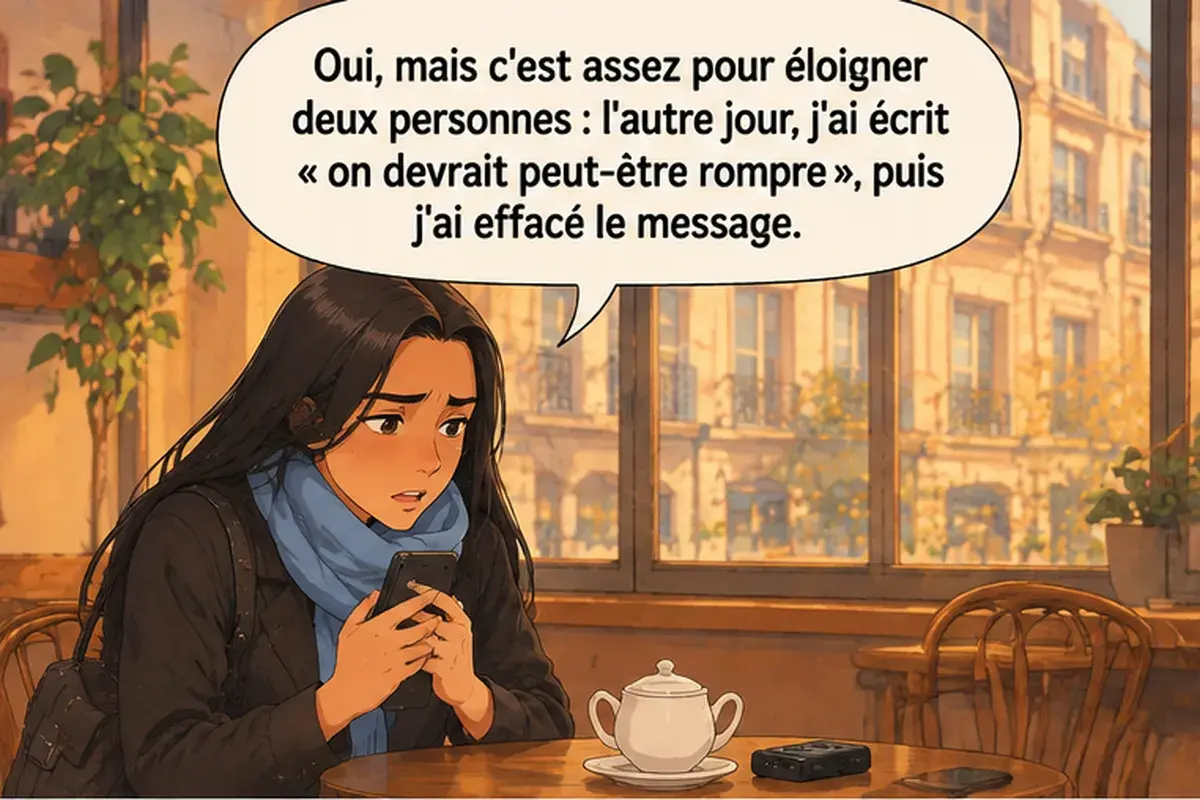
Oui, mais c'est assez pour éloigner deux personnes : l'autre jour, j'ai écrit « on devrait peut-être rompre », puis j'ai effacé le message.
Yes, but it's enough to push two people apart: the other day, I wrote "maybe we should break up," then I deleted the message.
- Pacha
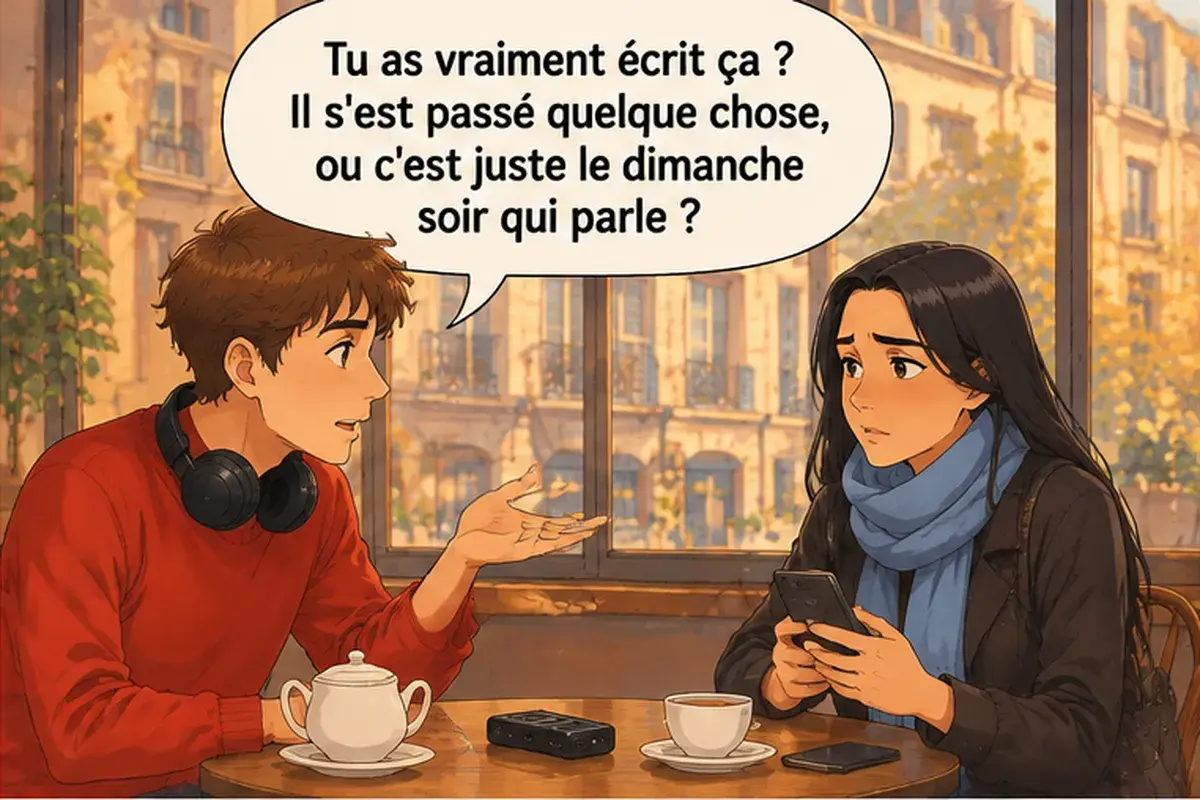
Tu as vraiment écrit ça ? Il s'est passé quelque chose, ou c'est juste le dimanche soir qui parle ?
Did you really write that? Did something happen, or is it just Sunday night talking?
- Inès
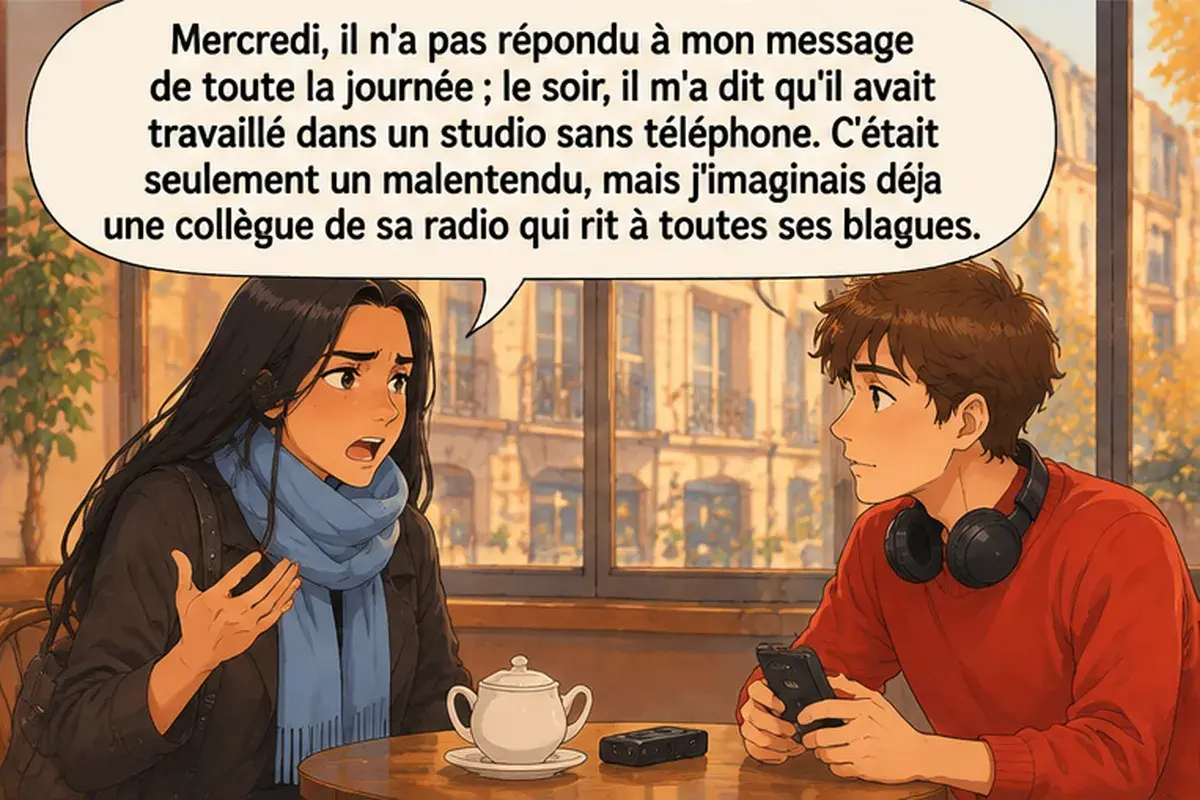
Mercredi, il n'a pas répondu à mon message de toute la journée ; le soir, il m'a dit qu'il avait travaillé dans un studio sans téléphone. C'était seulement un malentendu, mais j'imaginais déjà une collègue de sa radio qui rit à toutes ses blagues.
On Wednesday, he didn't answer my message all day; in the evening, he told me he'd been working in a studio with no phone. It was only a misunderstanding, but I was already imagining a female coworker from his radio station laughing at all his jokes.

- Pacha
Ça s'appelle la jalousie, Inès, et ça arrive à tout le monde.
That's called jealousy, Inès, and it happens to everyone.
- Inès
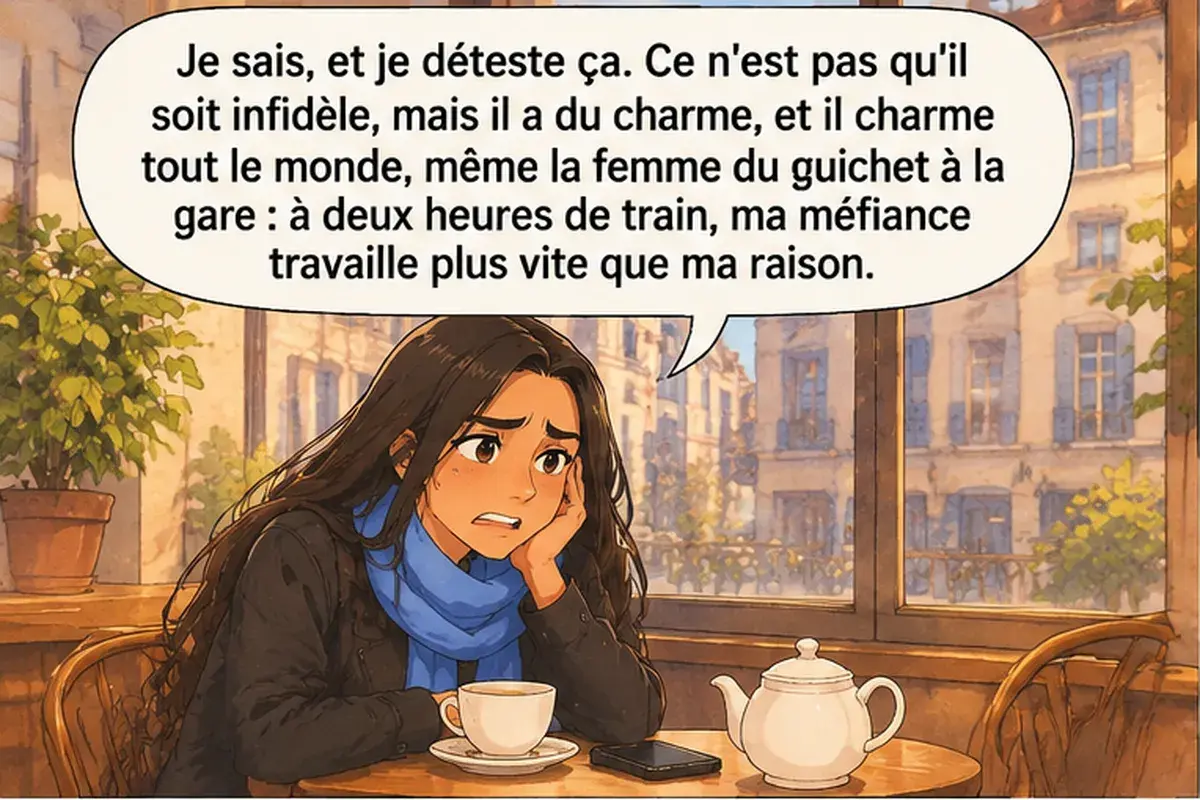
Je sais, et je déteste ça. Ce n'est pas qu'il soit infidèle, mais il a du charme, et il charme tout le monde, même la femme du guichet à la gare : à deux heures de train, ma méfiance travaille plus vite que ma raison.
I know, and I hate it. It's not that he's unfaithful, but he has charm, and he charms everyone, even the woman at the ticket window at the station: two hours away by train, my distrust works faster than my reason.
- Pacha
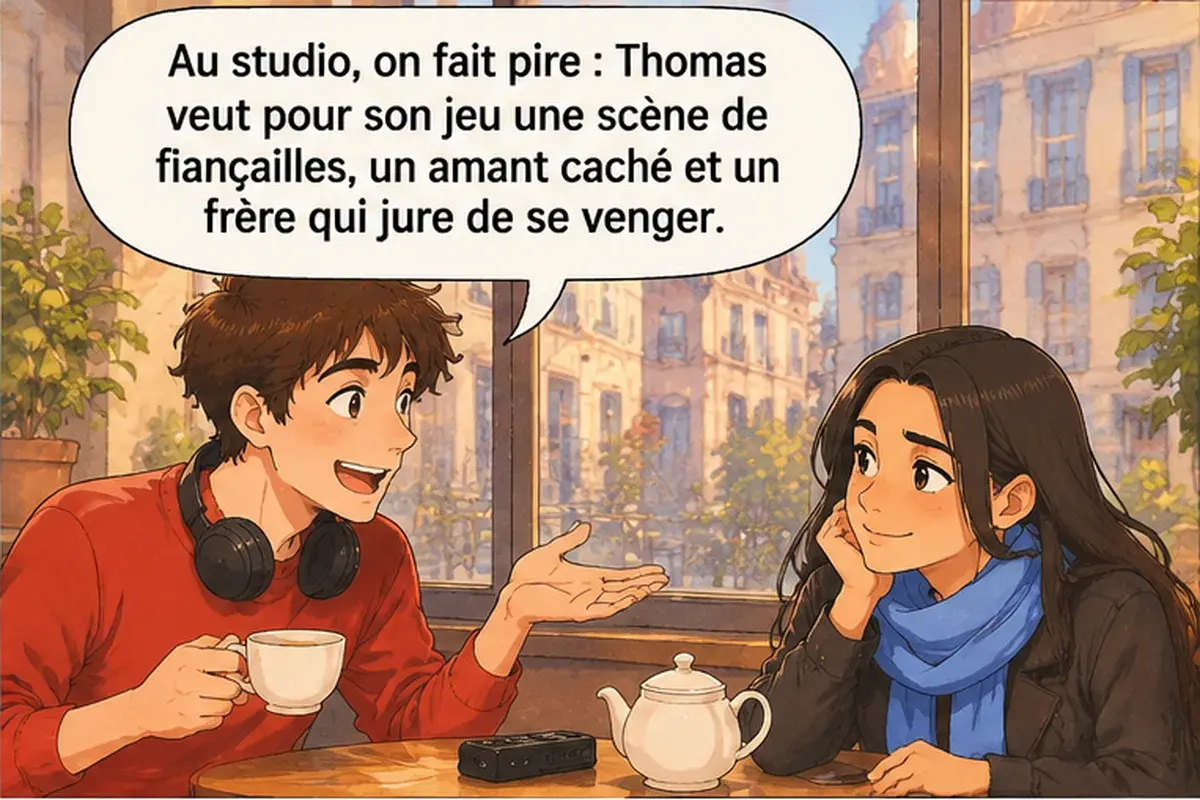
Au studio, on fait pire : Thomas veut pour son jeu une scène de fiançailles, un amant caché et un frère qui jure de se venger.
At the studio, they do worse: Thomas wants an engagement scene for his game, a secret lover and a brother who swears to take revenge.

- Inès
Mais c'est une série télé ! Et ma mère, elle, parle déjà de « ton fiancé », alors que nous n'habitons même pas dans la même ville.
But that's a TV series! And my mom is already talking about "your fiancé," even though we don't even live in the same city.
- Pacha
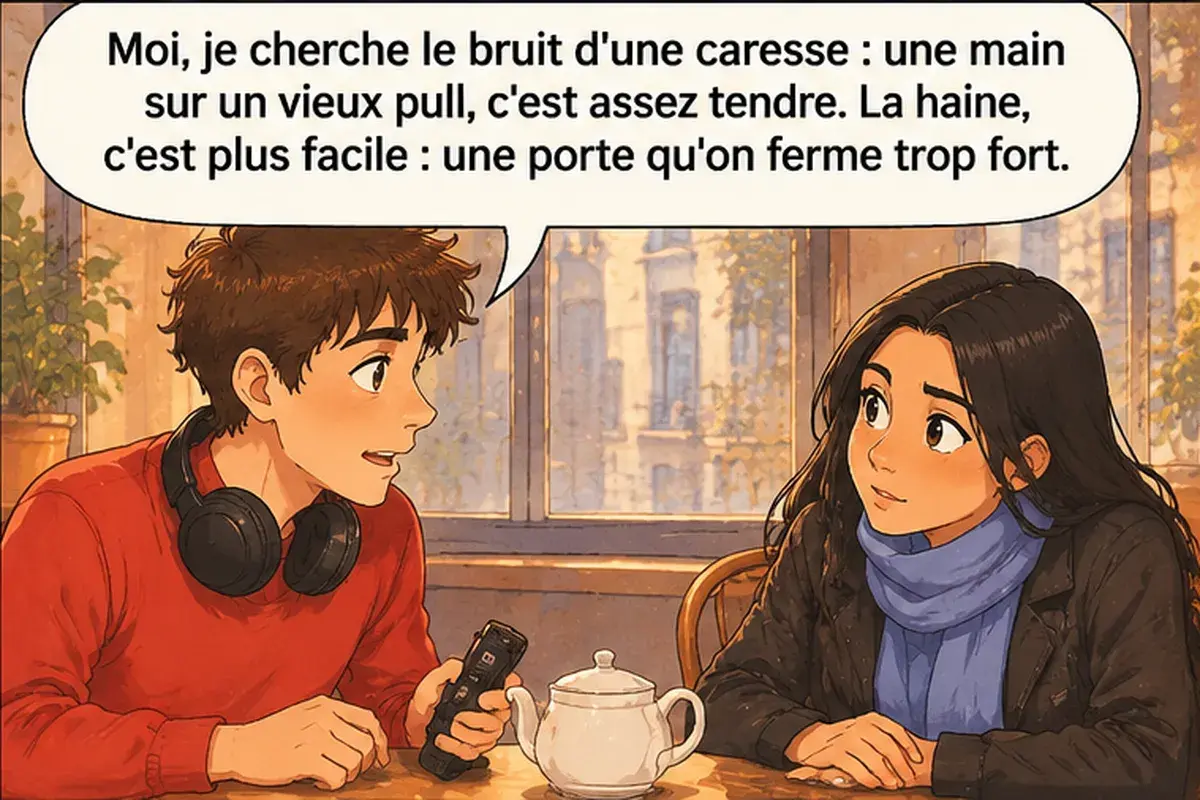
Moi, je cherche le bruit d'une caresse : une main sur un vieux pull, c'est assez tendre. La haine, c'est plus facile : une porte qu'on ferme trop fort.
Me, I'm looking for the sound of a caress: a hand on an old sweater is pretty tender. Hate is easier: a door being closed too hard.

- Inès
Et la fidélité, ça fait quel bruit ?
And fidelity, what sound does it make?
- Pacha
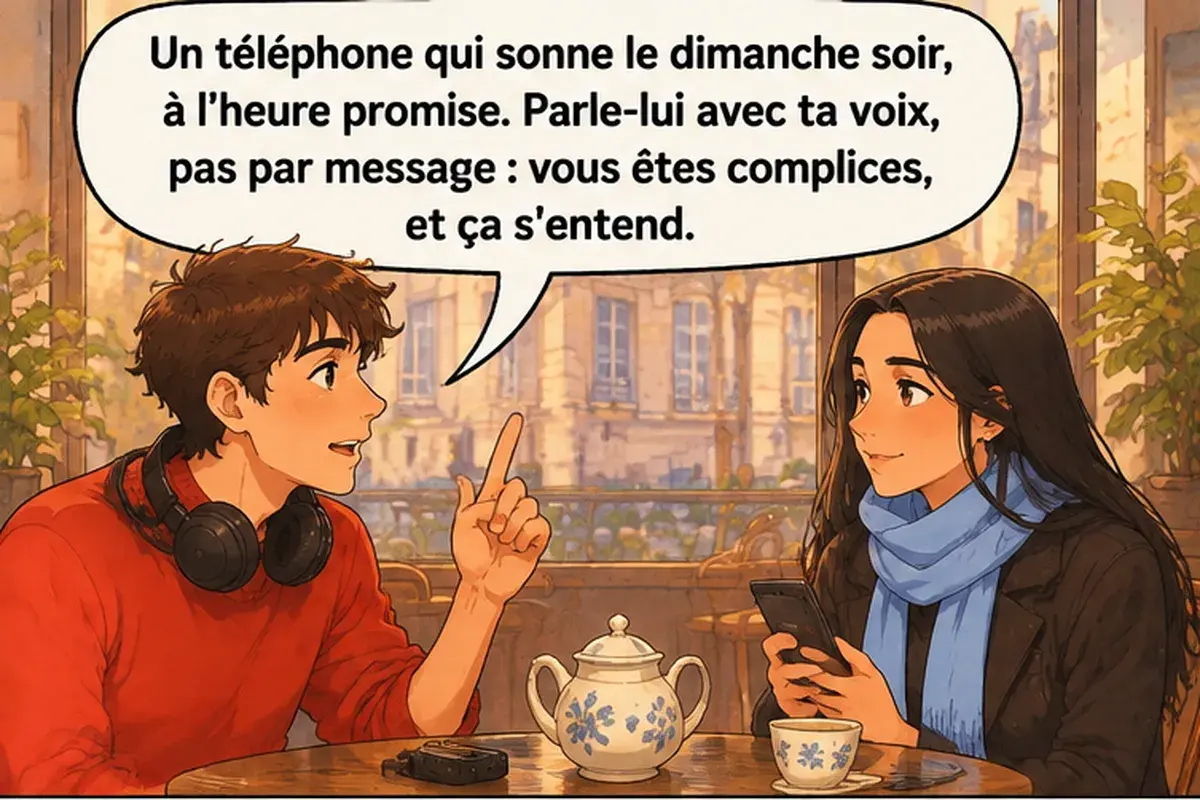
Un téléphone qui sonne le dimanche soir, à l'heure promise. Parle-lui avec ta voix, pas par message : vous êtes complices, et ça s'entend.
A phone ringing on Sunday night, at the promised time. Talk to him with your voice, not by message: you two are in sync, and you can hear it.

- Inès
Tu sais, je suis tombée amoureuse de lui à la soirée chez Léa, pendant que vous parliez de micros. Il ne cherchait pas à me séduire : il était adorable, c'est tout.
You know, I fell in love with him at the party at Léa's, while you were talking about microphones (woman speaking, to several people). He wasn't trying to seduce me: he was adorable, that's all.
- Pacha
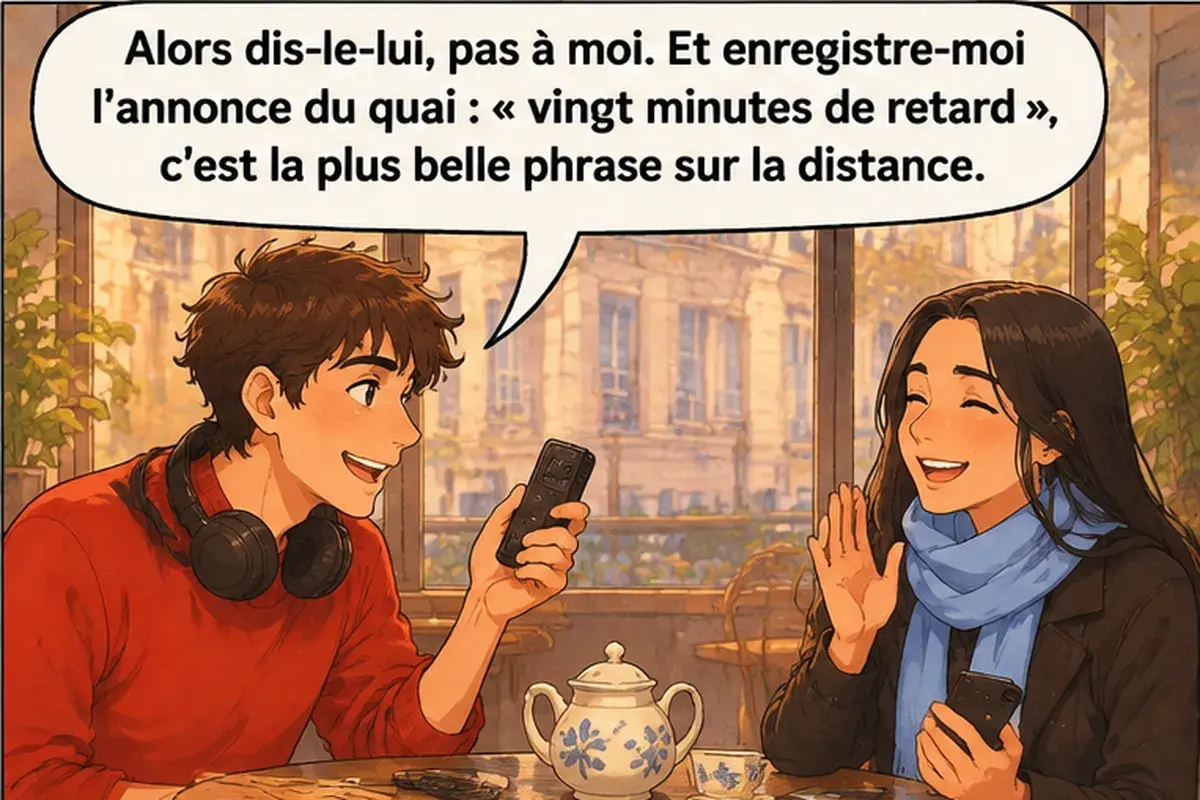
Alors dis-le-lui, pas à moi. Et enregistre-moi l'annonce du quai : « vingt minutes de retard », c'est la plus belle phrase sur la distance.
Then tell him, not me. And record the platform announcement for me: "twenty minutes late" is the most beautiful sentence about distance.
Grammar for this text
- Deux heures de train, ce n'est pas le bout du monde — two hours by train isn't the end of the world.
le bout du mondeis the end of the world: people say it when a distance seems big but isn't. - on devrait peut-être rompre — maybe we should break up.
devraitis the conditional ofdevoir(should): a soft, unsure piece of advice to herself.rompremeans to break up, and in speech people also sayse séparer.éloignermeans to push apart. - il m'a dit qu'il avait travaillé dans un studio — he told me he'd been working in a studio. In reported speech about the past,
j'ai travaillé(I worked) becomesil avait travaillé.un malentenduis a misunderstanding: the words were taken the wrong way. - Ce n'est pas qu'il soit infidèle — it's not that he's unfaithful.
ce n'est pas queis followed by the subjunctive (soit).infidèlemeans unfaithful, andla fidélitéis fidelity. - il a du charme, et il charme tout le monde — he has charm, and he charms everyone.
le charmeis charm andcharmeris to charm: same root.séduiremeans to seduce or to attract. - Parle-lui avec ta voix — talk to him with your voice. In a command with a pronoun,
parle-luimeans talk to him, anddis-le-luimeans tell it to him (two pronouns, B2, unit 15). - vous êtes complices, et ça s'entend — you two are in sync, and you can hear it.
ça s'entendmeans you can hear it, andcomplicesdescribes people who understand each other without words.
Words and grammar of the unit: Talk about feelings with nuance.
Learn the words from the texts with flashcards
In the app, you can tap any word in a text to see its translation, forms and examples, and new words stick with flashcards. 15 minutes a day.
Start for freeEverything is open for free. No card needed to sign up.