

French dialogue with translation · B2 · 18 lines
Certes, c'est rapide, mais il n'invente rien Sure, it's fast, but it doesn't invent anything
Comic · 18 panels
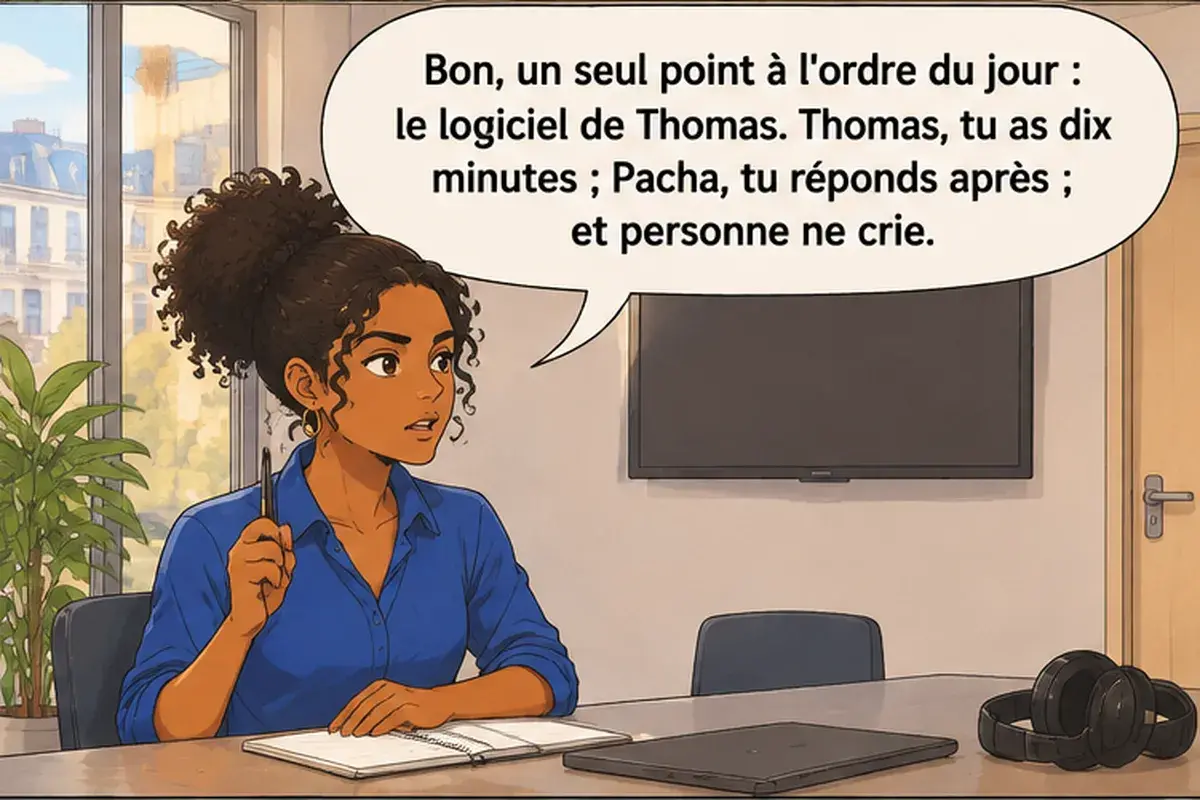
- Aïcha
Bon, un seul point à l'ordre du jour : le logiciel de Thomas. Thomas, tu as dix minutes ; Pacha, tu réponds après ; et personne ne crie.
Okay, just one item on the agenda: Thomas's software. Thomas, you have ten minutes; Pacha, you answer afterward; and nobody yells.
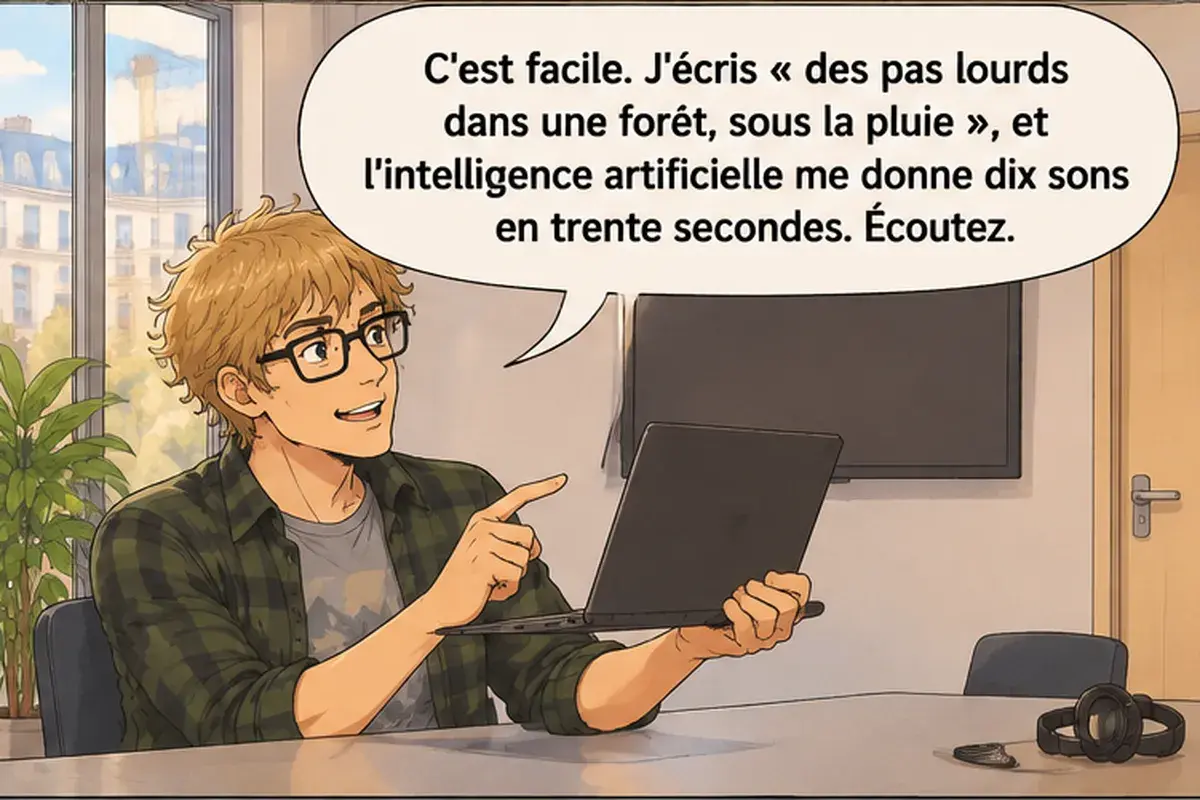
- Thomas
C'est facile. J'écris « des pas lourds dans une forêt, sous la pluie », et l'intelligence artificielle me donne dix sons en trente secondes. Écoutez.
It's easy. I type "heavy steps in a forest, in the rain," and artificial intelligence gives me ten sounds in thirty seconds. Listen. (to several people)
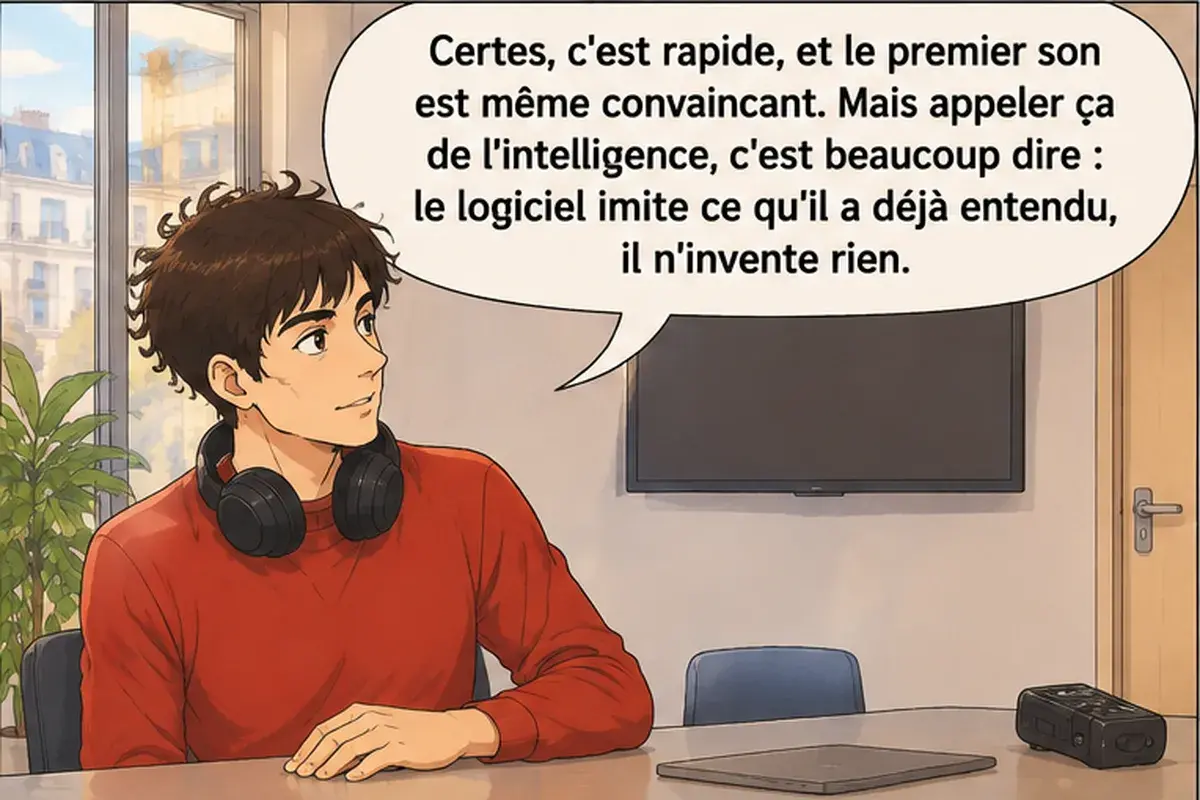
- Pacha
Certes, c'est rapide, et le premier son est même convaincant. Mais appeler ça de l'intelligence, c'est beaucoup dire : le logiciel imite ce qu'il a déjà entendu, il n'invente rien.
Sure, it's fast, and the first sound is even convincing. But calling that intelligence is a stretch: the software imitates what it has already heard, it doesn't invent anything.
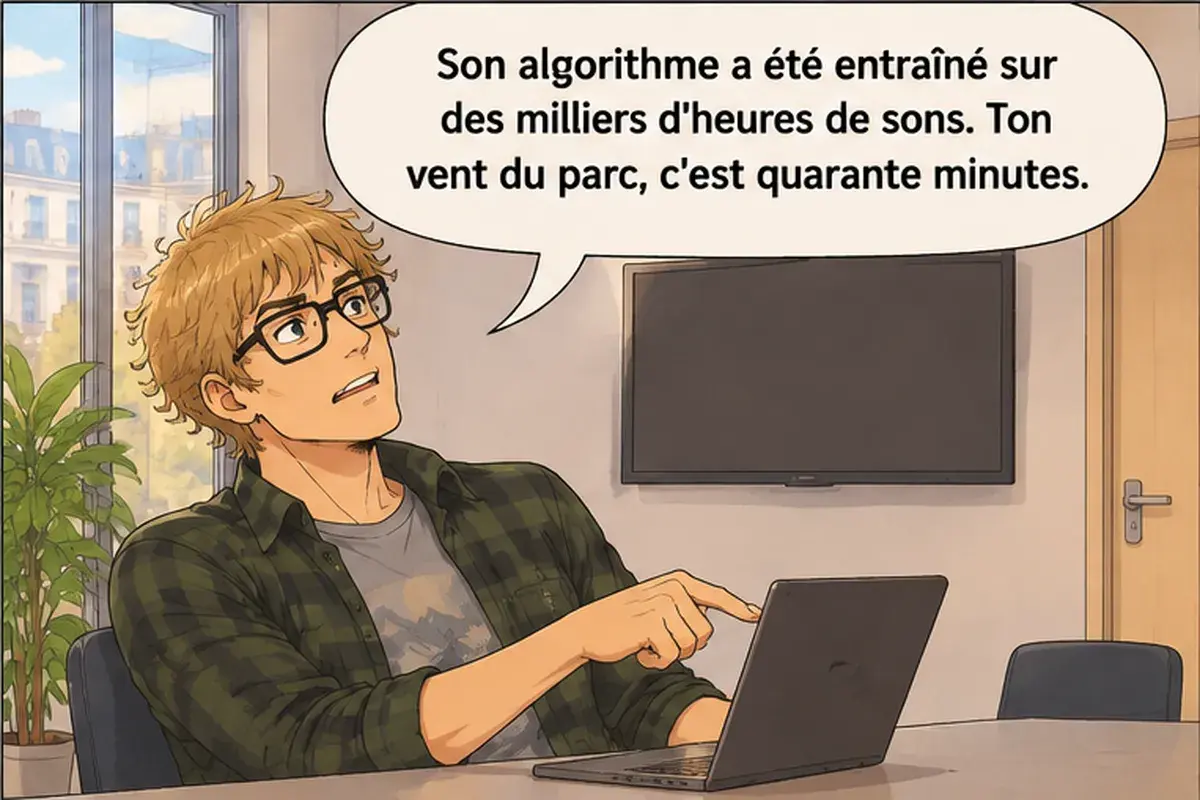
- Thomas
Son algorithme a été entraîné sur des milliers d'heures de sons. Ton vent du parc, c'est quarante minutes.
Its algorithm was trained on thousands of hours of sounds. Your wind from the park is forty minutes.
- Pacha
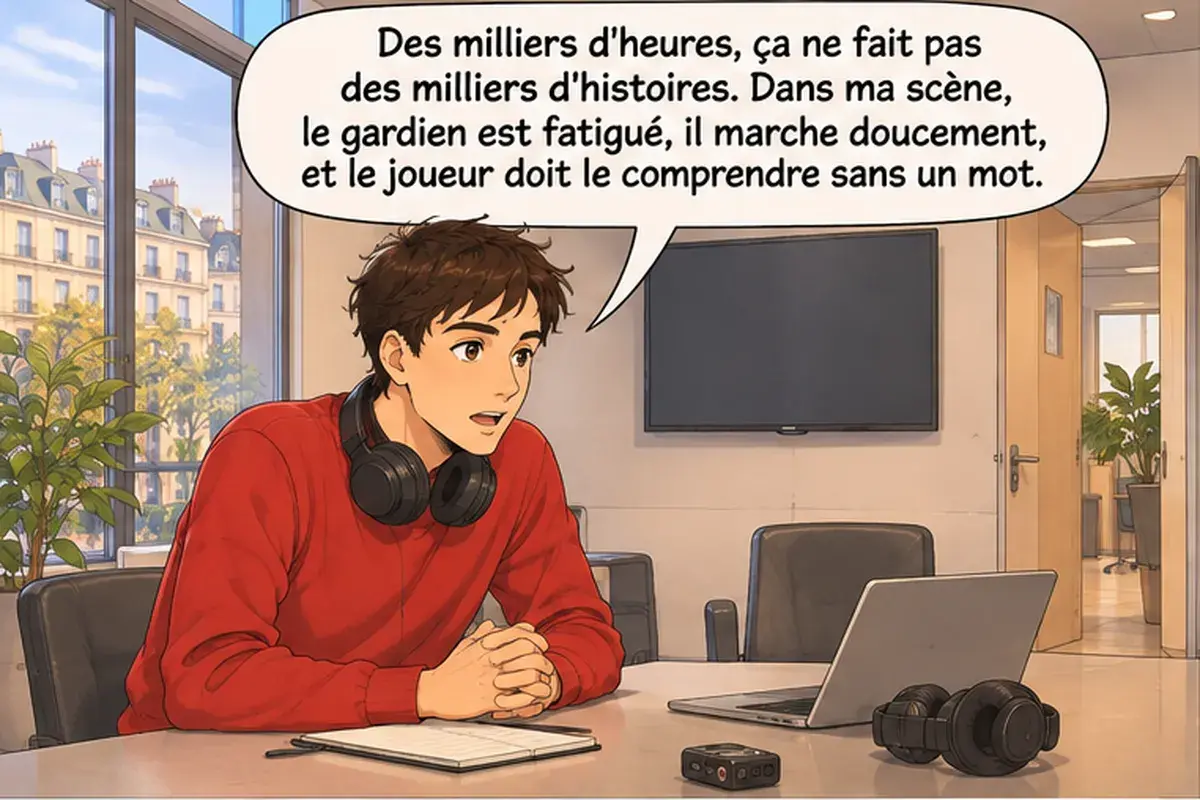
Des milliers d'heures, ça ne fait pas des milliers d'histoires. Dans ma scène, le gardien est fatigué, il marche doucement, et le joueur doit le comprendre sans un mot.
Thousands of hours don't make thousands of stories. In my scene, the guard is tired, he walks slowly, and the player has to understand it without a word.
- Thomas
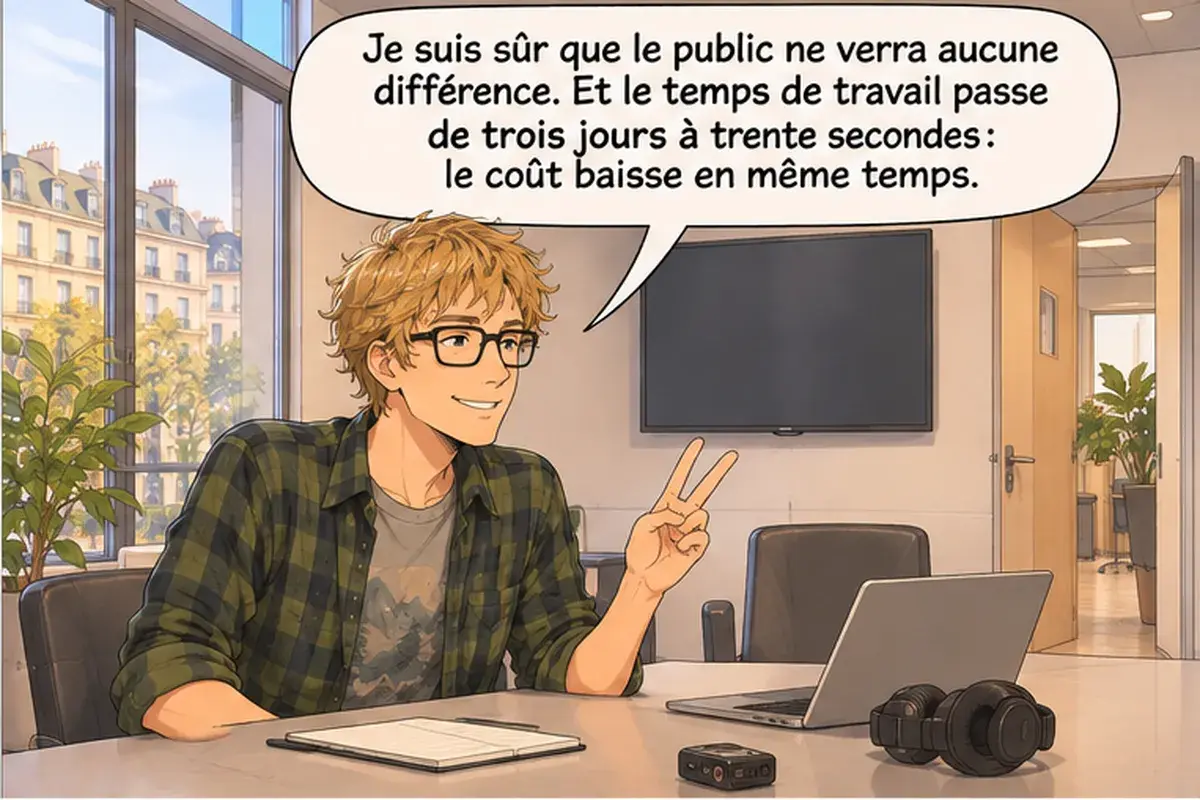
Je suis sûr que le public ne verra aucune différence. Et le temps de travail passe de trois jours à trente secondes : le coût baisse en même temps.
I'm sure the audience won't see any difference (man speaking). And the working time goes from three days to thirty seconds: the cost drops at the same time.
- Aïcha
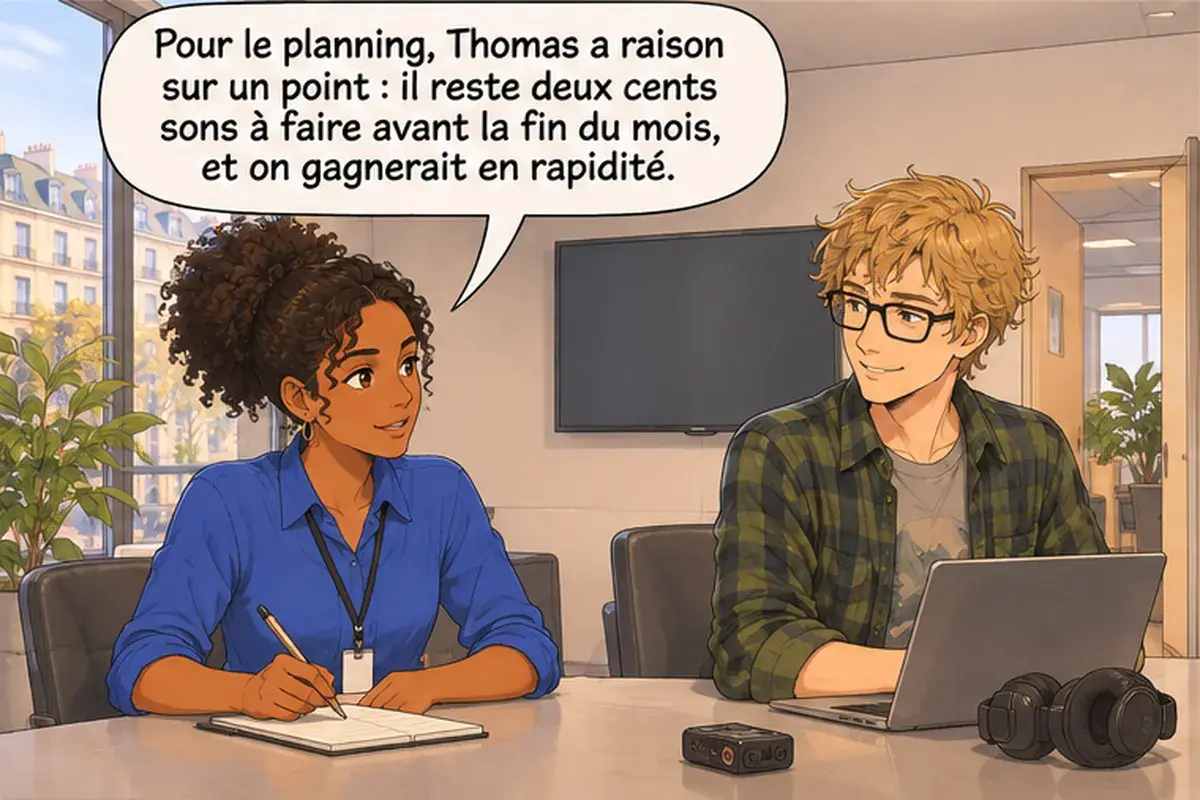
Pour le planning, Thomas a raison sur un point : il reste deux cents sons à faire avant la fin du mois, et on gagnerait en rapidité.
For the schedule, Thomas is right on one point: there are two hundred sounds left to do before the end of the month, and we'd gain in speed.
- Pacha
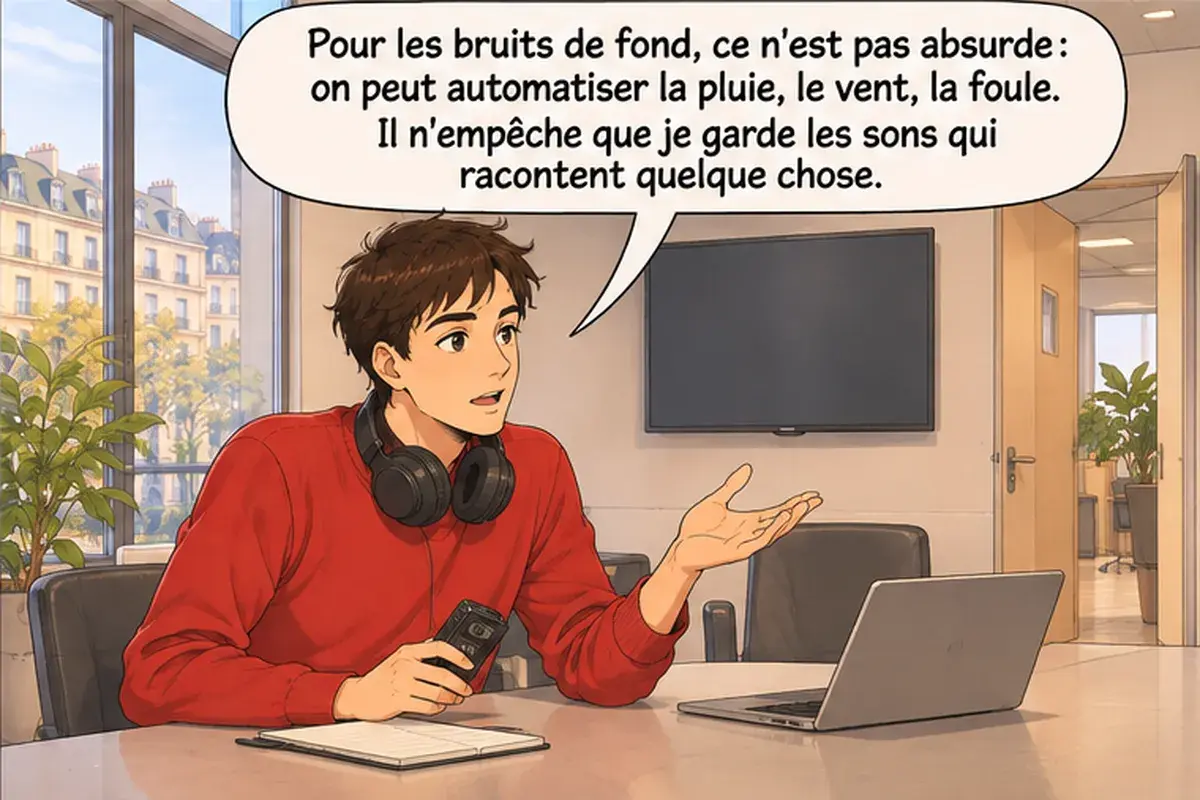
Pour les bruits de fond, ce n'est pas absurde : on peut automatiser la pluie, le vent, la foule. Il n'empêche que je garde les sons qui racontent quelque chose.
For background noise, it's not absurd: you can automate the rain, the wind, the crowd. Even so, I'm keeping the sounds that tell a story.
- Thomas
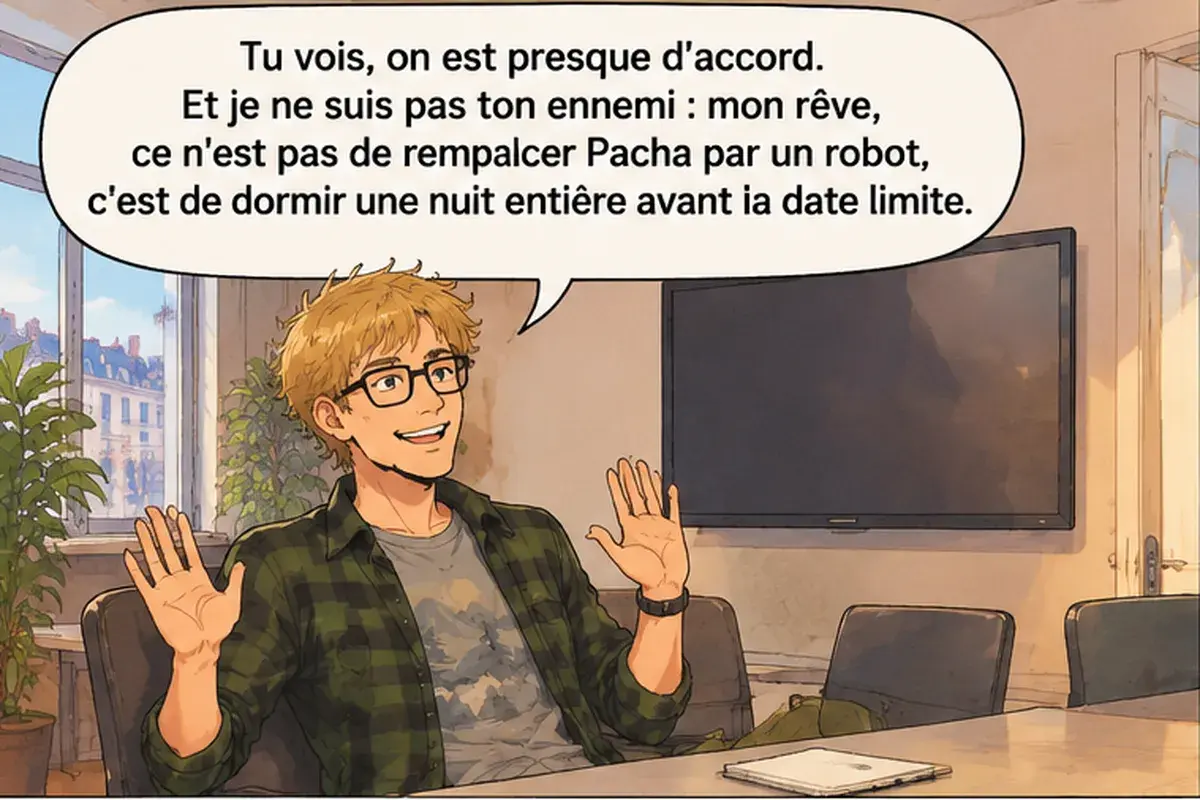
Tu vois, on est presque d'accord. Et je ne suis pas ton ennemi : mon rêve, ce n'est pas de remplacer Pacha par un robot, c'est de dormir une nuit entière avant la date limite.
See, we almost agree. And I'm not your enemy: my dream isn't to replace Pacha with a robot, it's to sleep a whole night before the deadline.
- Pacha
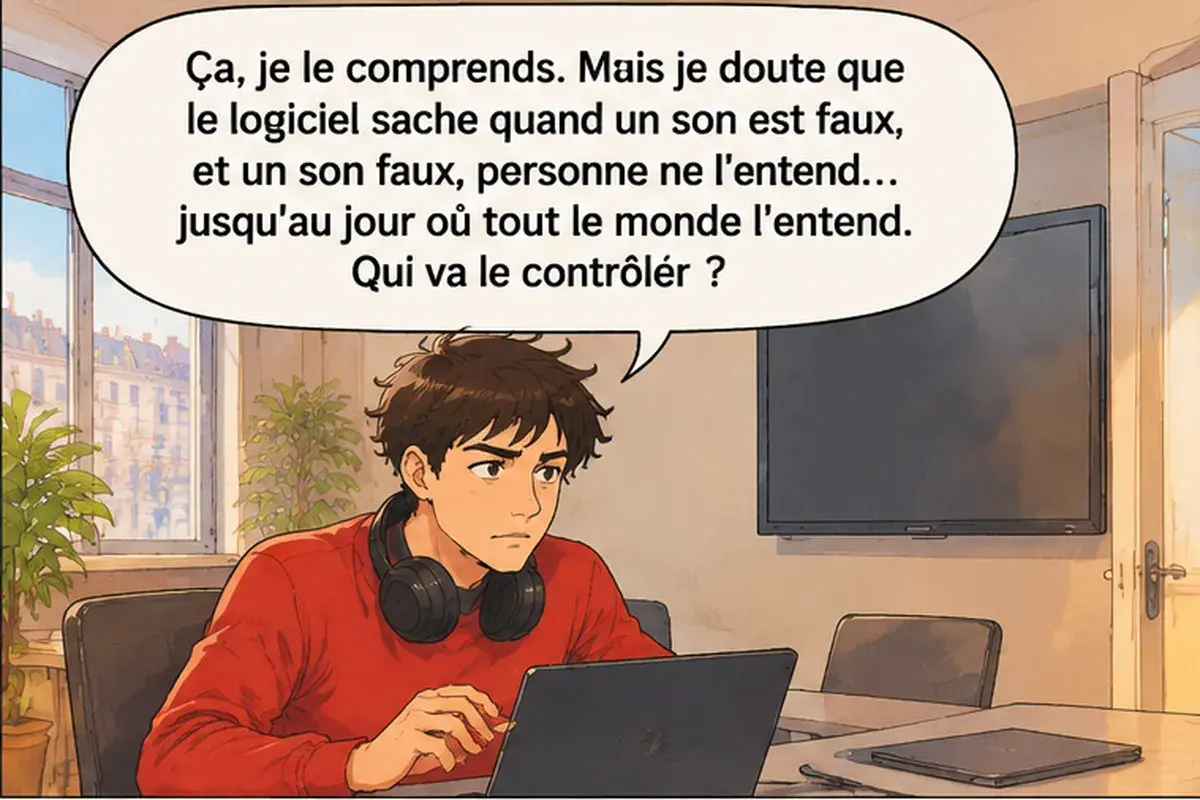
Ça, je le comprends. Mais je doute que le logiciel sache quand un son est faux, et un son faux, personne ne l'entend… jusqu'au jour où tout le monde l'entend. Qui va le contrôler ?
That, I understand. But I doubt the software knows when a sound is wrong, and a wrong sound, nobody hears it… until the day everybody hears it. Who's going to check it?
- Thomas
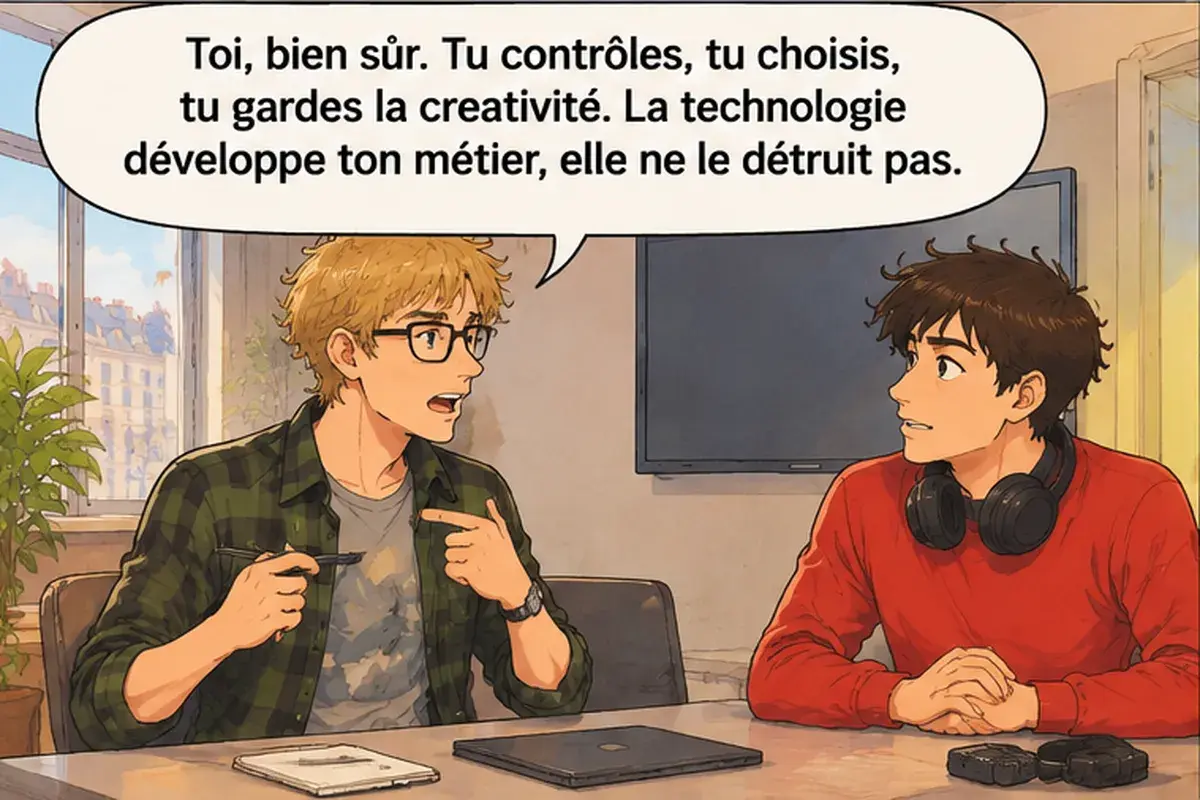
Toi, bien sûr. Tu contrôles, tu choisis, tu gardes la créativité. La technologie développe ton métier, elle ne le détruit pas.
You, of course. You check, you choose, you keep the creativity. Technology develops your craft, it doesn't destroy it.
- Madame Lefèvre
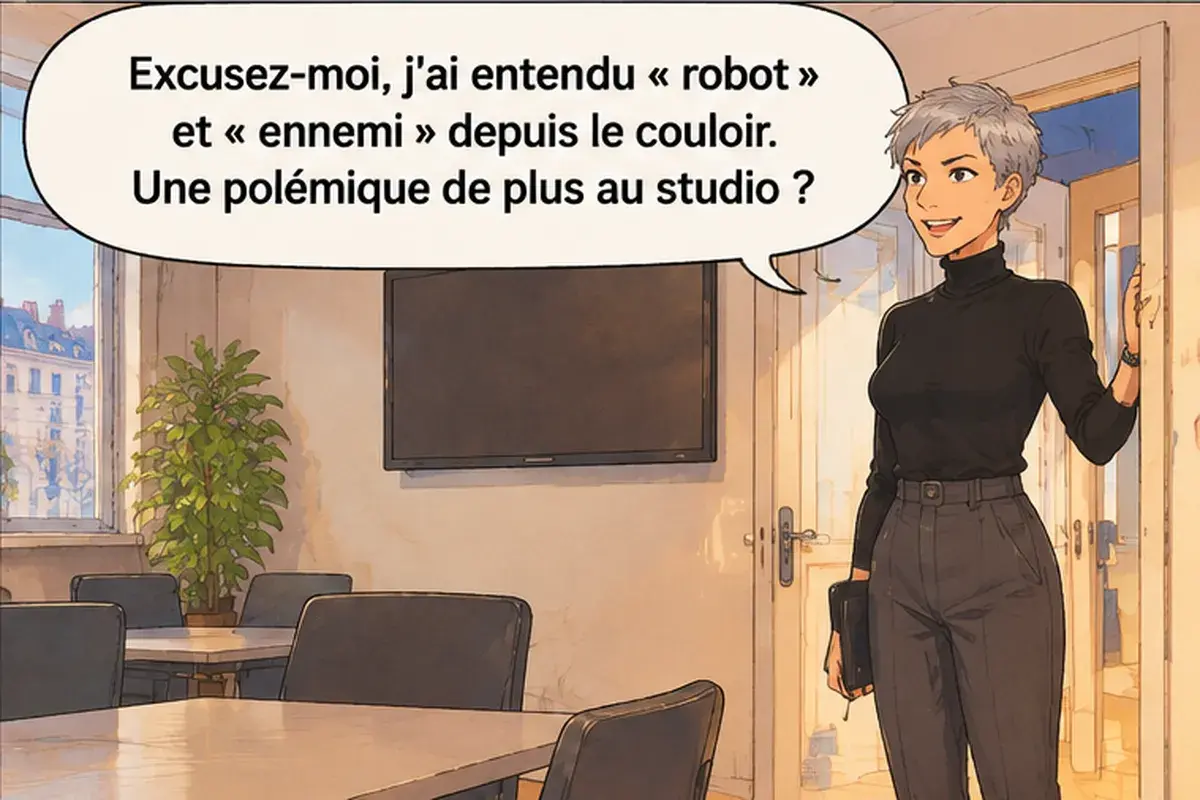
Excusez-moi, j'ai entendu « robot » et « ennemi » depuis le couloir. Une polémique de plus au studio ?
Excuse me, I heard "robot" and "enemy" from the hallway. (to several people) One more controversy at the studio?
- Aïcha
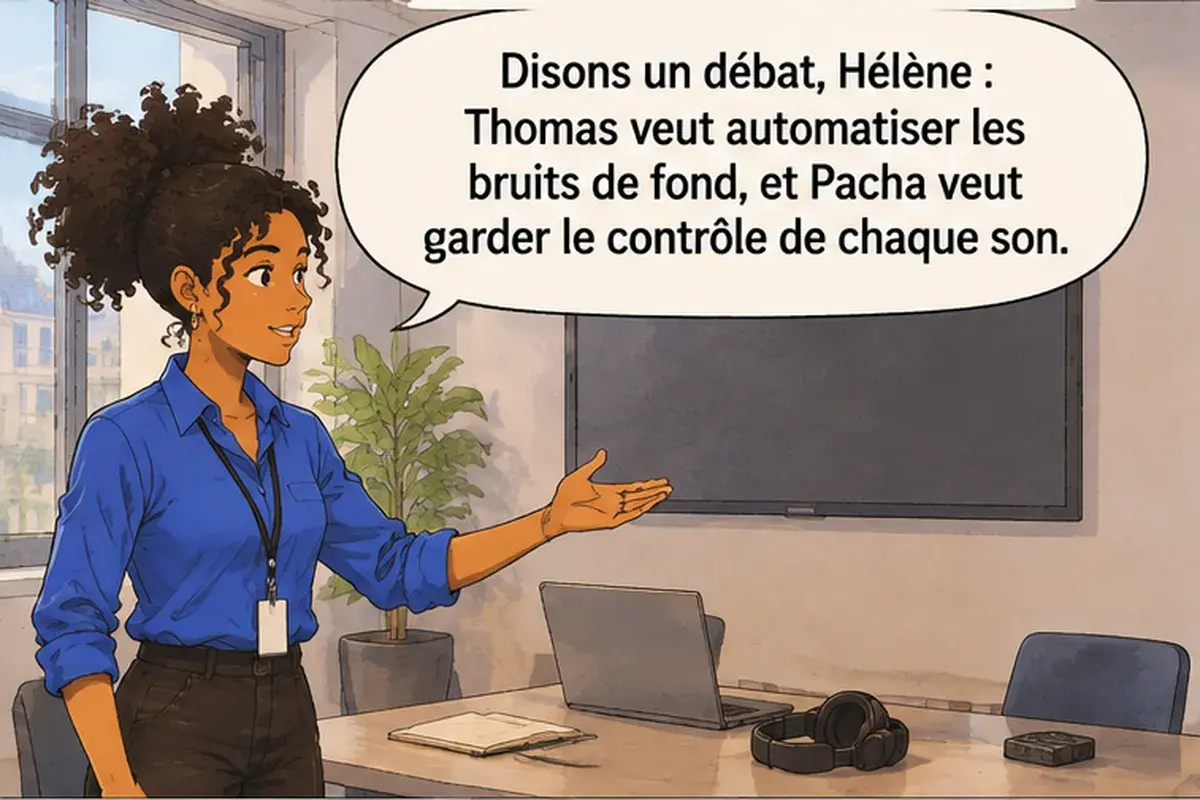
Disons un débat, Hélène : Thomas veut automatiser les bruits de fond, et Pacha veut garder le contrôle de chaque son.
Let's call it a debate, Hélène: Thomas wants to automate background noise, and Pacha wants to keep control of every sound.
- Madame Lefèvre
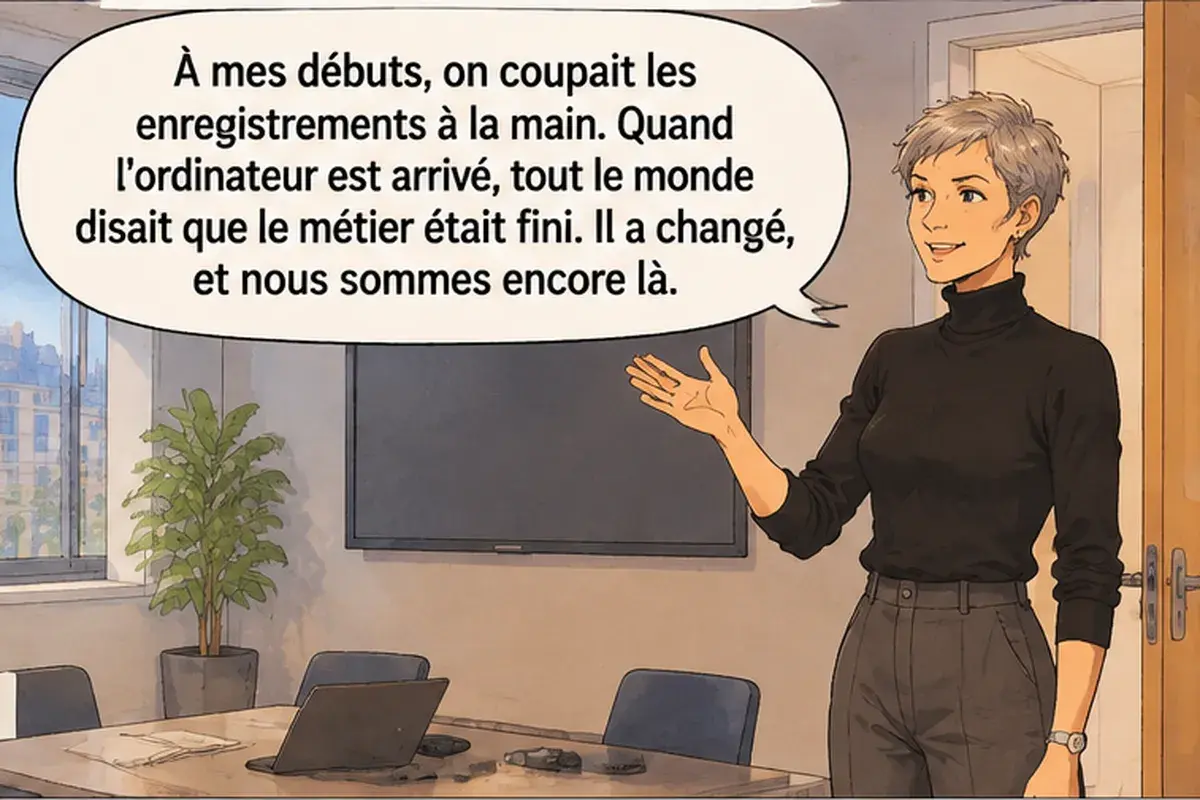
À mes débuts, on coupait les enregistrements à la main. Quand l'ordinateur est arrivé, tout le monde disait que le métier était fini. Il a changé, et nous sommes encore là.
When I started out, we used to cut recordings by hand. When the computer arrived, everybody was saying the profession was finished. It changed, and we're still here.
- Thomas
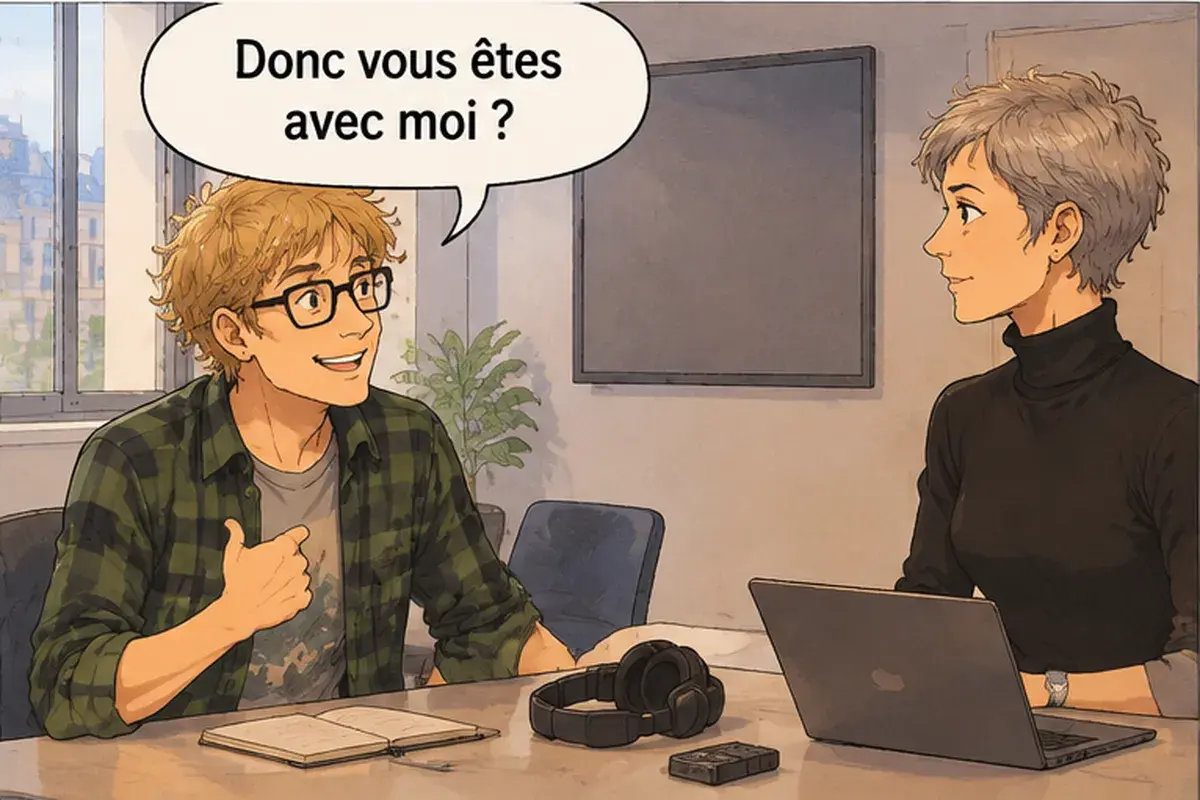
Donc vous êtes avec moi ?
So you're with me? (formal)
- Madame Lefèvre
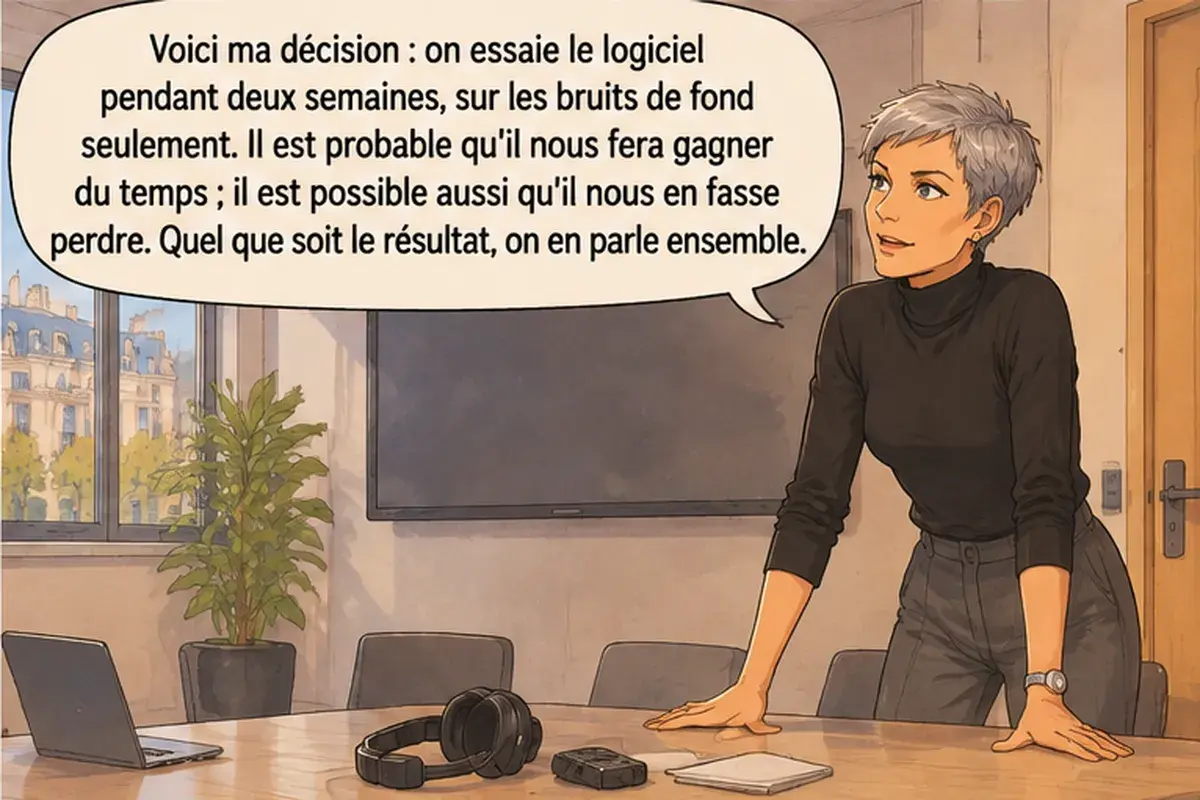
Voici ma décision : on essaie le logiciel pendant deux semaines, sur les bruits de fond seulement. Il est probable qu'il nous fera gagner du temps ; il est possible aussi qu'il nous en fasse perdre. Quel que soit le résultat, on en parle ensemble.
Here's my decision: we try the software for two weeks, on background noise only. It'll probably save us time; it's also possible that it'll cost us time. Whatever the result is, we'll talk about it together.
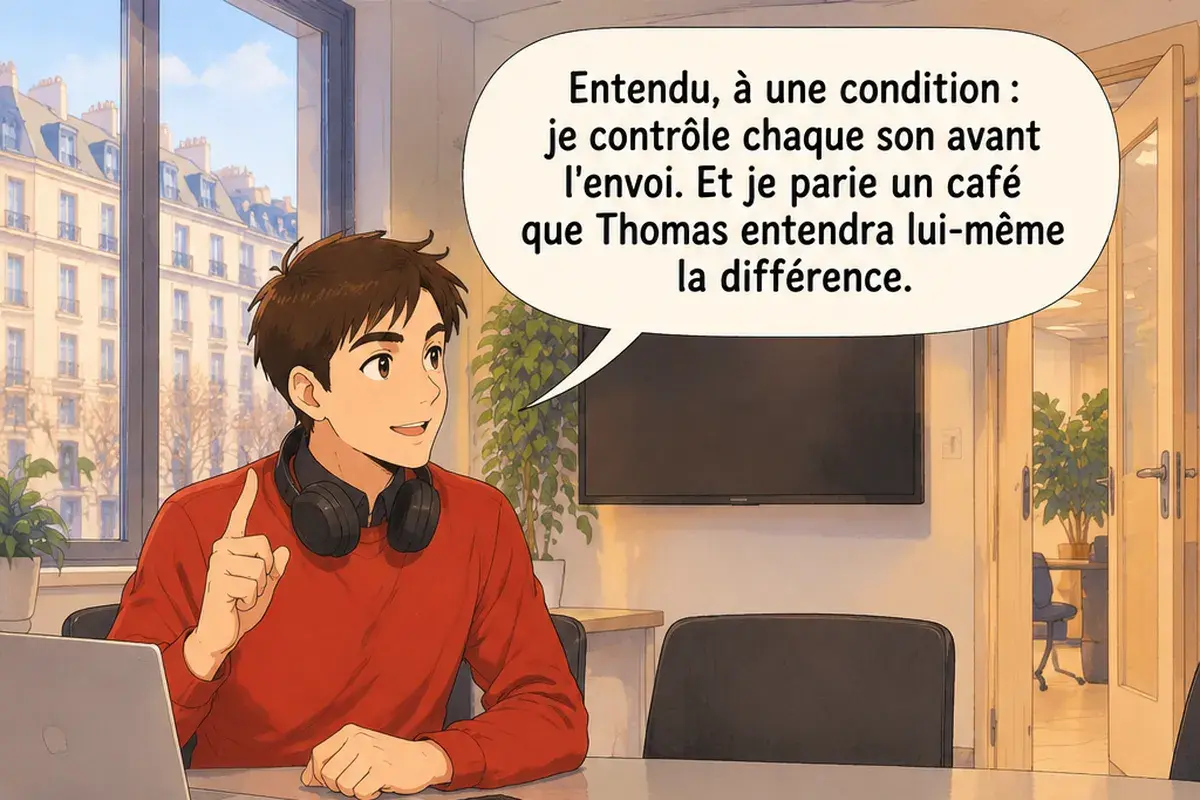
- Pacha
Entendu, à une condition : je contrôle chaque son avant l'envoi. Et je parie un café que Thomas entendra lui-même la différence.
Agreed, on one condition: I check every sound before it's sent. And I bet a coffee that Thomas will hear the difference himself.
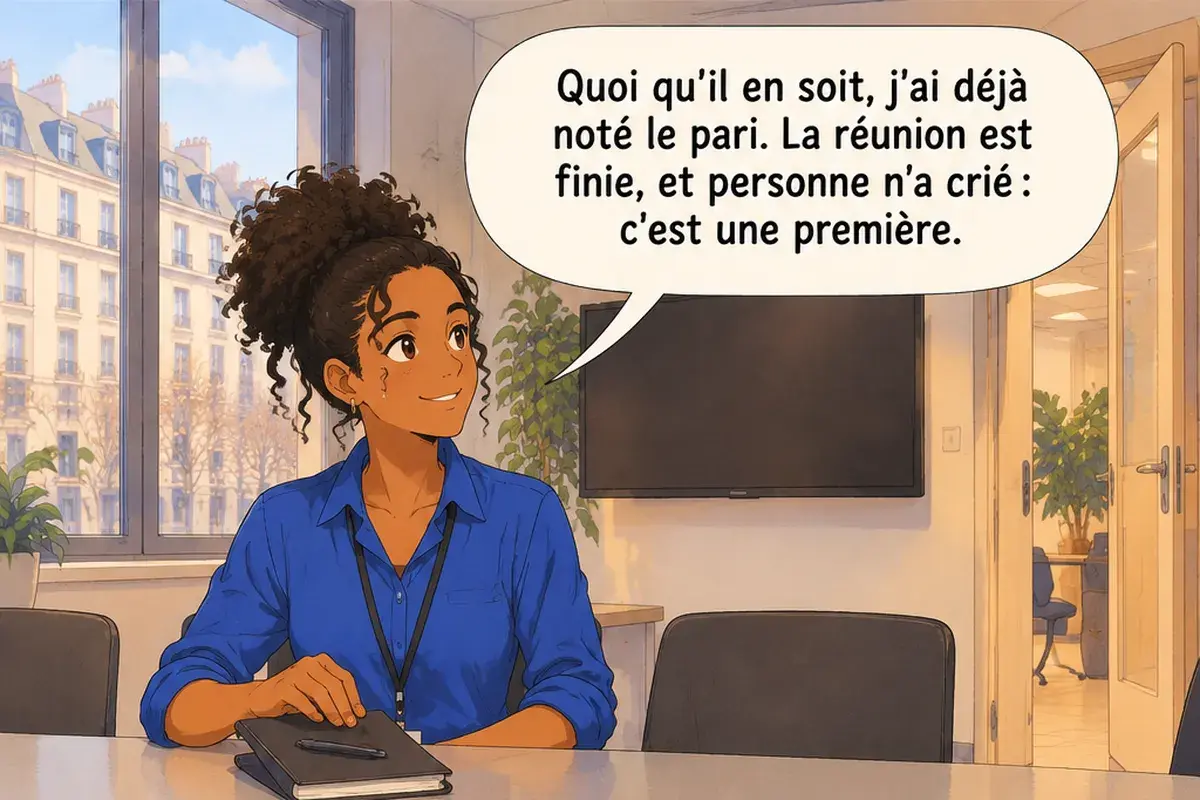
- Aïcha
Quoi qu'il en soit, j'ai déjà noté le pari. La réunion est finie, et personne n'a crié : c'est une première.
Be that as it may, I've already written down the bet. The meeting is over, and nobody yelled: that's a first.
Grammar for this text
- Certes, c'est rapide, et le premier son est même convaincant. Mais appeler ça de l'intelligence, c'est beaucoup dire — Sure, it's fast, and the first sound is even convincing. But calling that intelligence is a stretch. With
certes… mais, Pacha grants Thomas's point, then goes back to his own.C'est beaucoup diremeans "that's a stretch". - Son algorithme a été entraîné sur des milliers d'heures de sons — Its algorithm was trained on thousands of hours of sounds. This is the passive:
a été entraîné("was trained").Entraînerfor software means "to train".Des milliers demeans "thousands of" (un millier, unit 14). - des pas lourds — heavy steps. Here
pasmeans "steps", not a negative. - Je suis sûr que le public ne verra aucune différence — I'm sure the audience won't see any difference. And je doute que le logiciel sache quand un son est faux — I doubt the software knows when a sound is wrong. This is sure versus doubtful: after
sûr queuse the normal form (indicative:verra), afterdouter queuse the subjunctive (sache, fromsavoir). More in the grammar block about the verb form. - Il n'empêche que je garde les sons qui racontent quelque chose — Even so, I'm keeping the sounds that tell a story. After
que, use the normal form (indicative). - Il est probable qu'il nous fera gagner du temps ; il est possible aussi qu'il nous en fasse perdre — It'll probably save us time; it's also possible that it'll cost us time. After
probableuse the normal form (fera), afterpossibleuse the subjunctive (fasse).Nous fera gagnerisfaire+ a verb;nous en fasse perdrehas two pronouns in a row: "cost us some". - Quel que soit le résultat, on en parle ensemble — Whatever the result is, we'll talk about it together. This is a ready-made phrase. Quoi qu'il en soit means "be that as it may". Je parie un café — I bet a coffee.
Pariermeans "to bet".
Words and grammar of the unit: Argue fairly.
Learn the words from the texts with flashcards
In the app, you can tap any word in a text to see its translation, forms and examples, and new words stick with flashcards. 15 minutes a day.
Start for freeEverything is open for free. No card needed to sign up.