

French dialogue with translation · B2 · 17 lines
Je suis d'accord à moitié I half agree
Comic · 17 panels
- Pacha
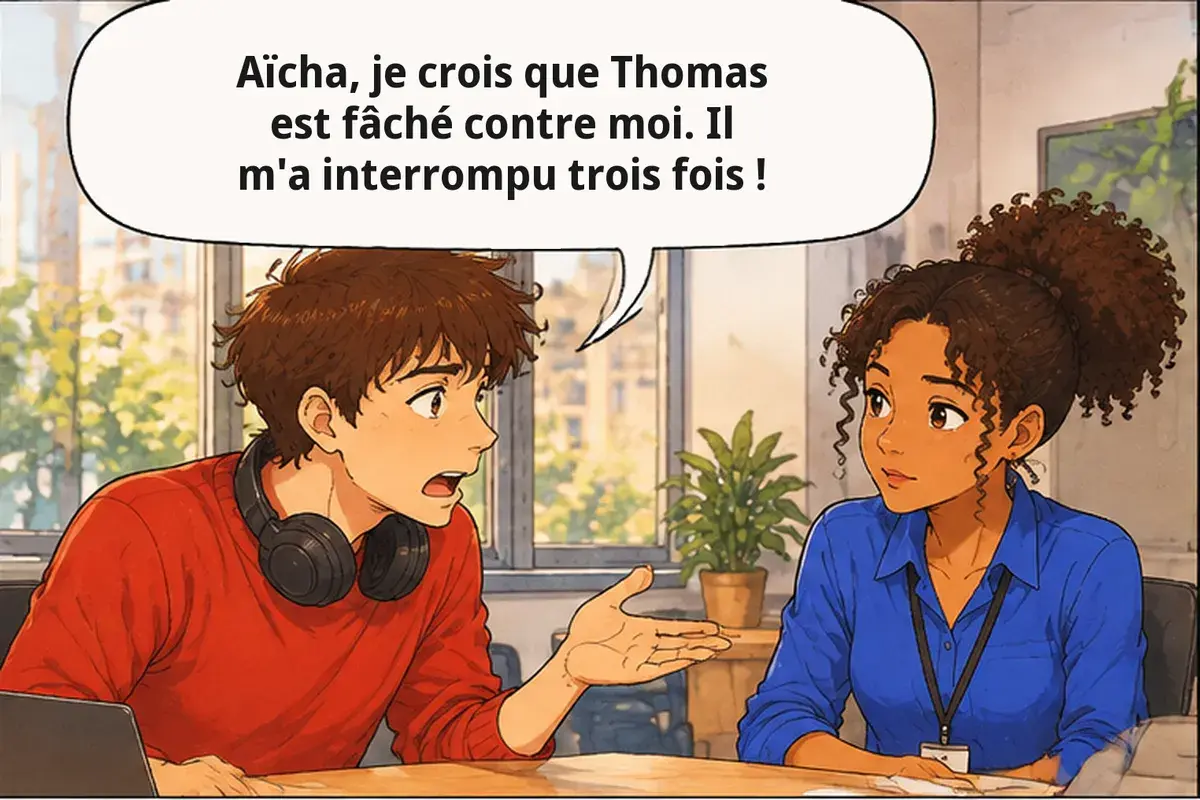
Aïcha, je crois que Thomas est fâché contre moi. Il m'a interrompu trois fois !
Aïcha, I think Thomas is mad at me. He interrupted me three times!
- Aïcha
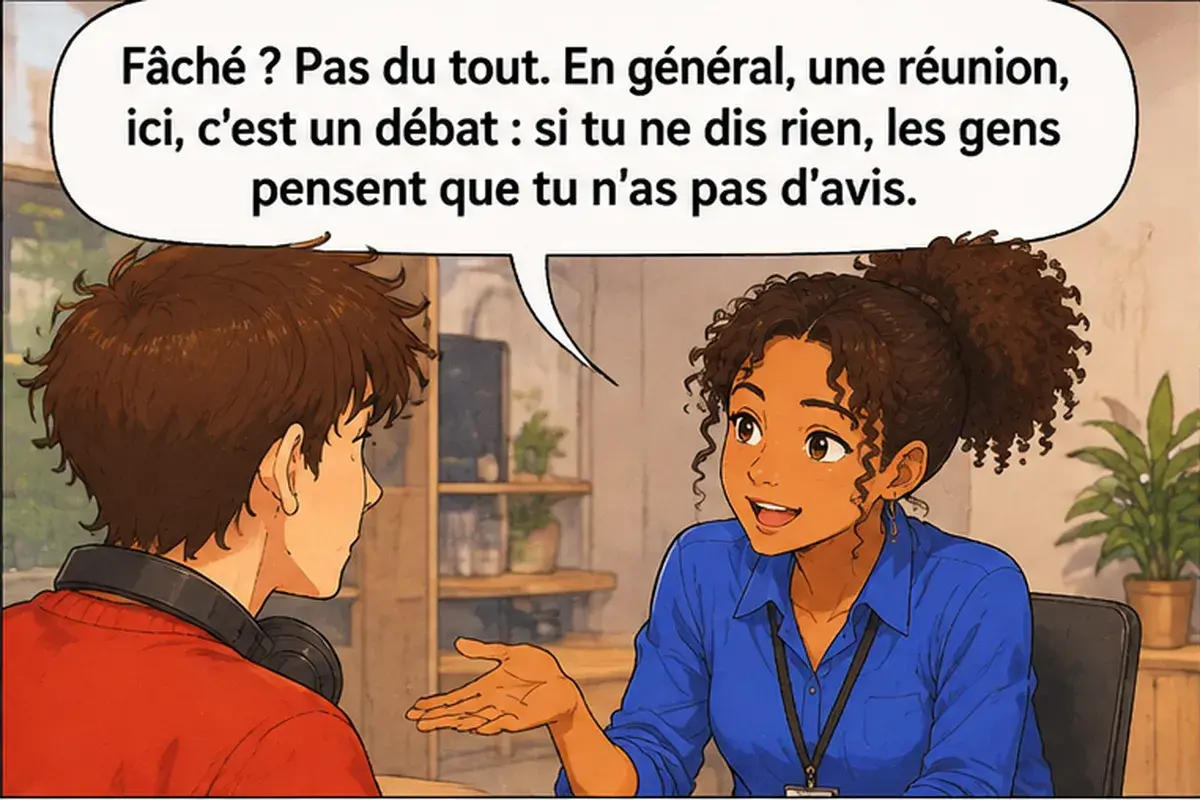
Fâché ? Pas du tout. En général, une réunion, ici, c'est un débat : si tu ne dis rien, les gens pensent que tu n'as pas d'avis.
Mad? Not at all. Generally, a meeting here is a debate: if you say nothing, people think you have no opinion.
- Pacha
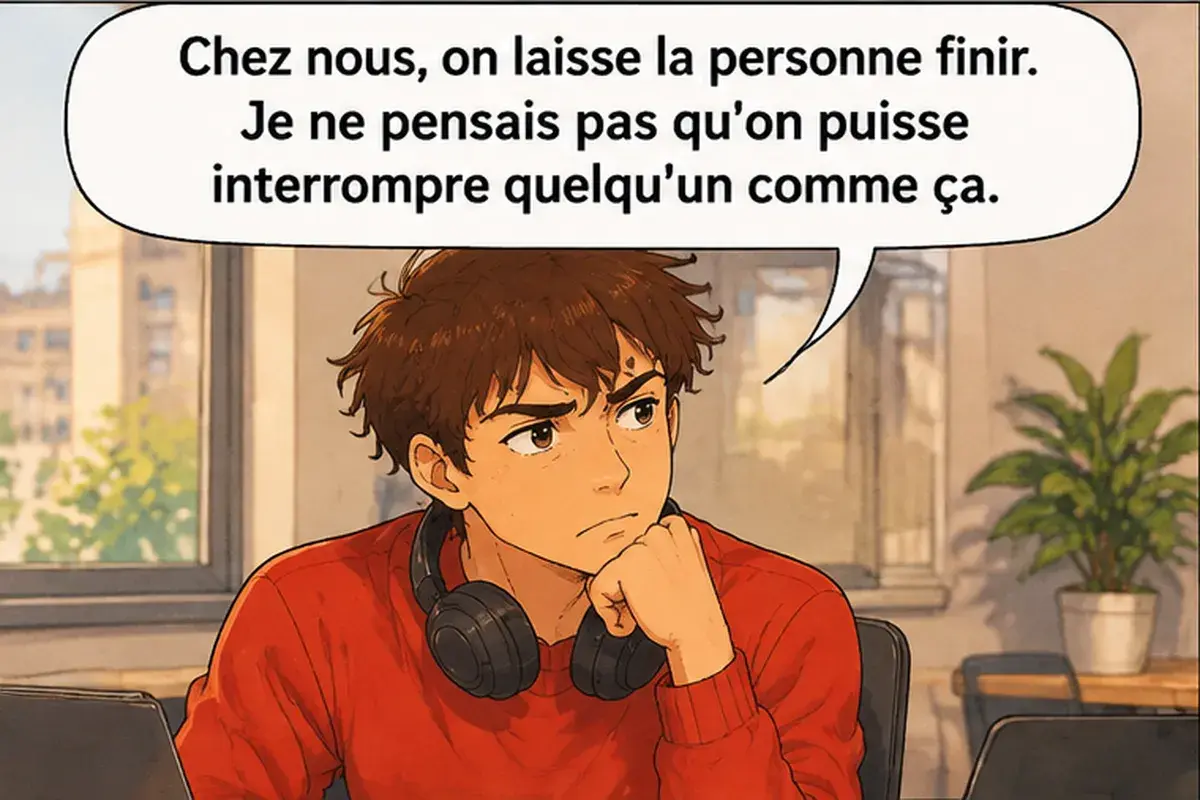
Chez nous, on laisse la personne finir. Je ne pensais pas qu'on puisse interrompre quelqu'un comme ça.
Back home, people let the person finish. I didn't think people could interrupt someone like that.
- Aïcha
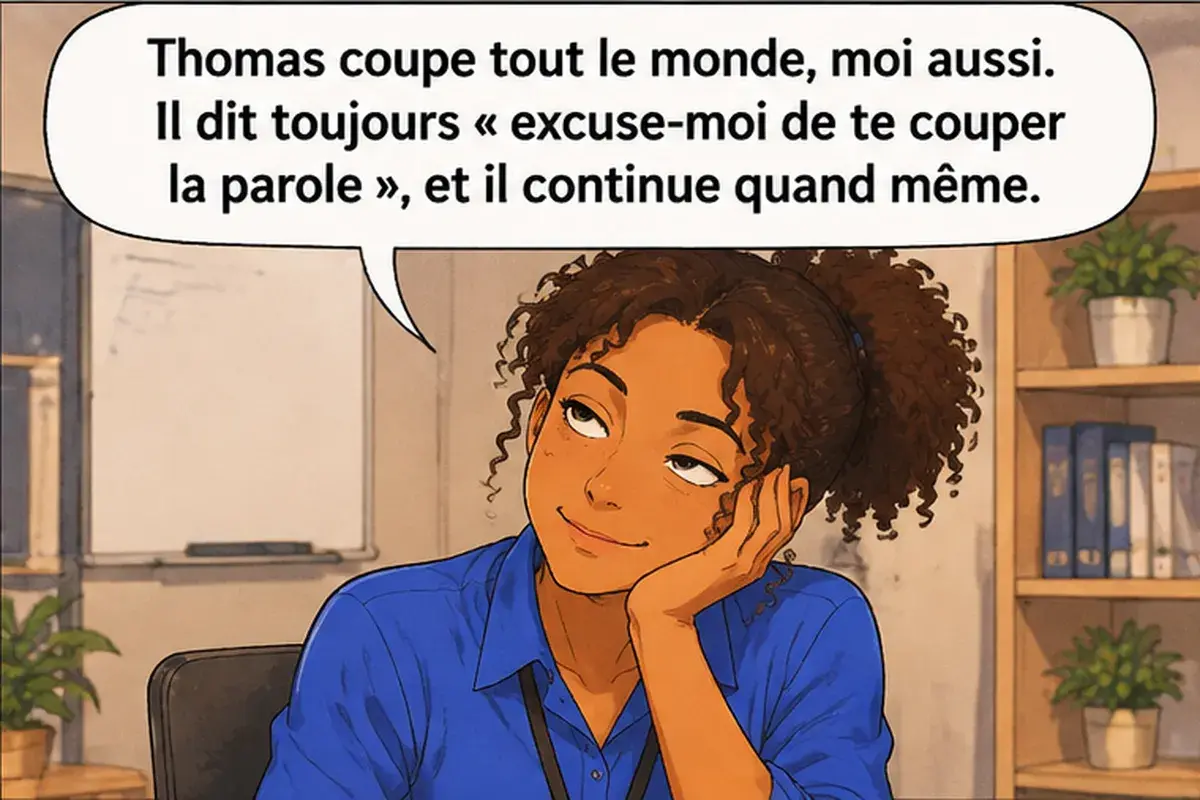
Thomas coupe tout le monde, moi aussi. Il dit toujours « excuse-moi de te couper la parole », et il continue quand même.
Thomas cuts everyone off, me too. He always says "sorry to interrupt you," and he keeps going anyway.
- Pacha
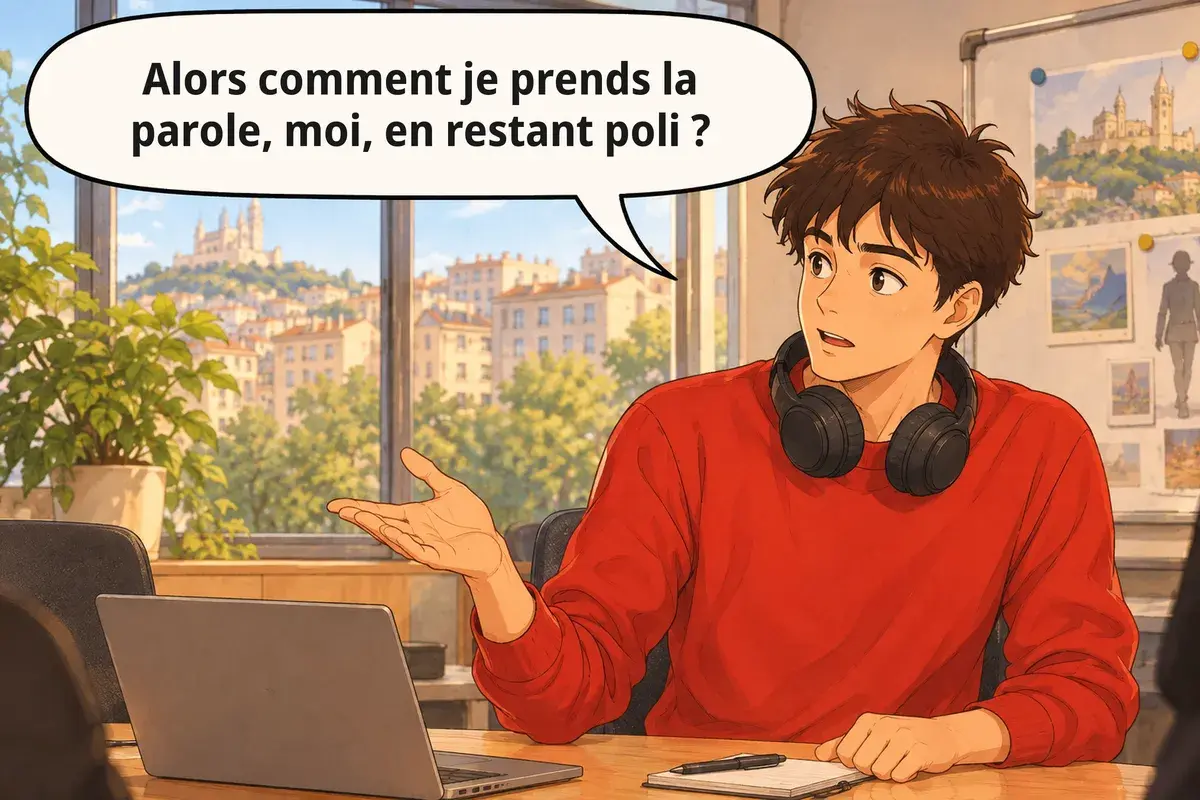
Alors comment je prends la parole, moi, en restant poli ?
So how do I take the floor, while staying polite (man speaking)?
- Aïcha
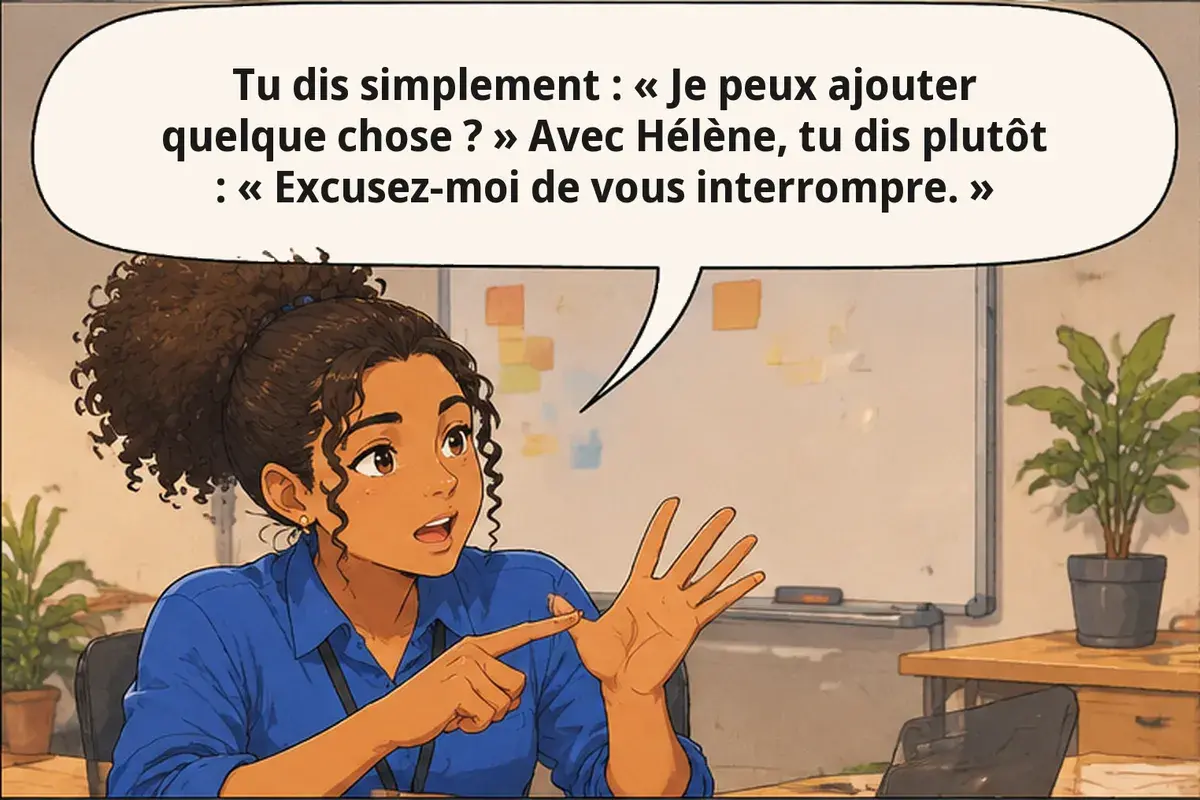
Tu dis simplement : « Je peux ajouter quelque chose ? » Avec Hélène, tu dis plutôt : « Excusez-moi de vous interrompre. »
You just say: "Can I add something?" With Hélène, you say instead: "Sorry to interrupt you (formal)."
- Pacha
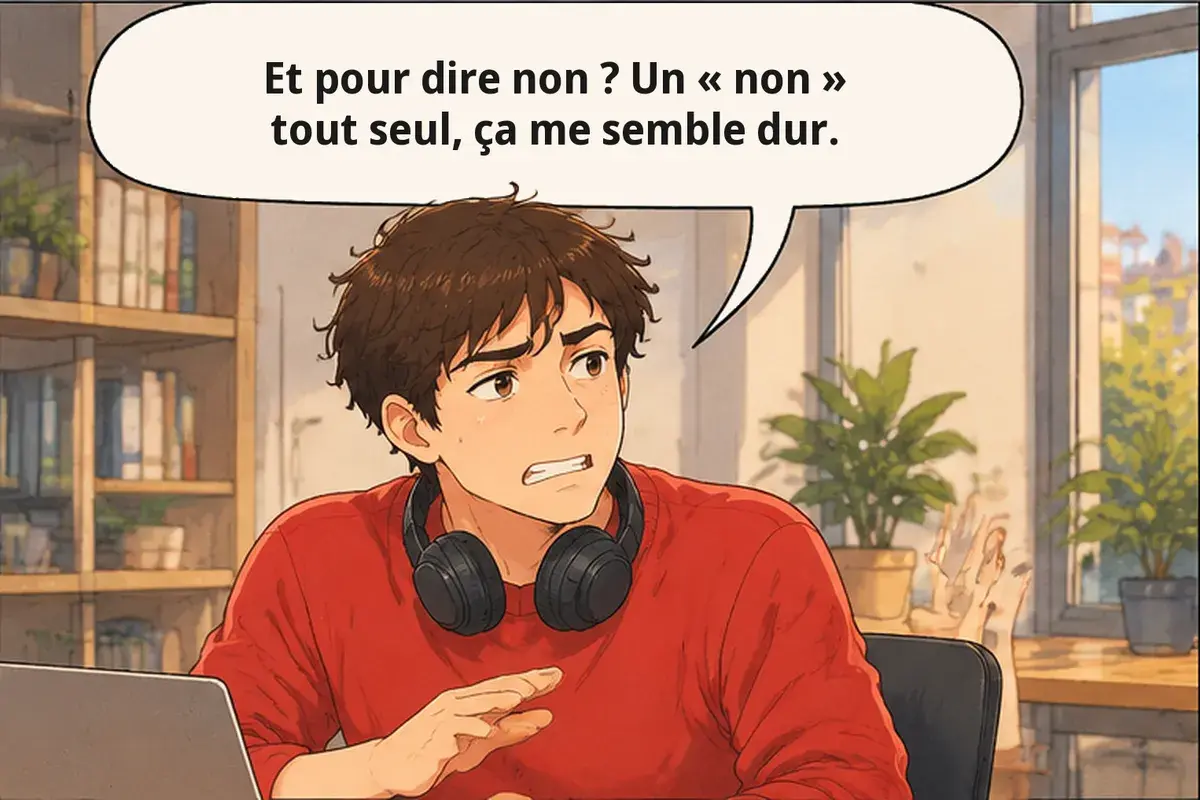
Et pour dire non ? Un « non » tout seul, ça me semble dur.
And to say no? A bare "no" seems harsh to me.
- Aïcha
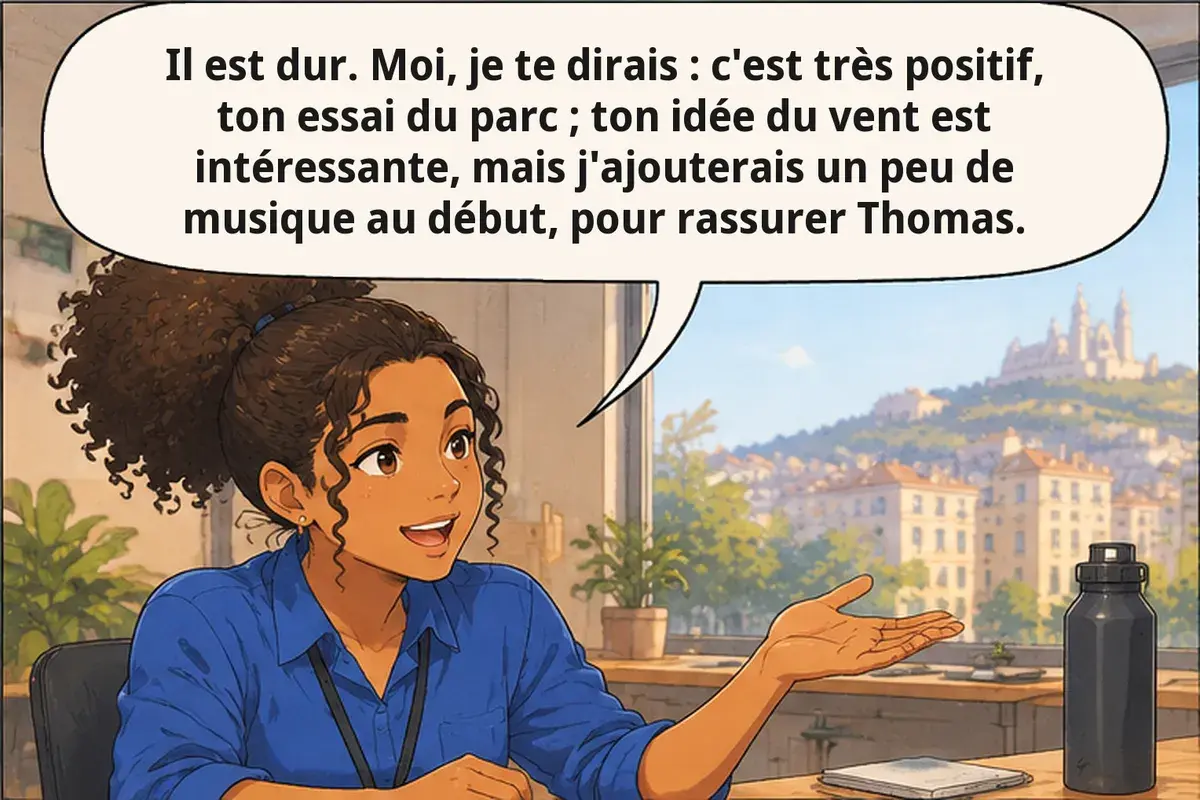
Il est dur. Moi, je te dirais : c'est très positif, ton essai du parc ; ton idée du vent est intéressante, mais j'ajouterais un peu de musique au début, pour rassurer Thomas.
It is harsh. Me, I'd tell you: it's very positive, your park test; your idea about the wind is interesting, but I'd add a little music at the start, to reassure Thomas.
- Pacha
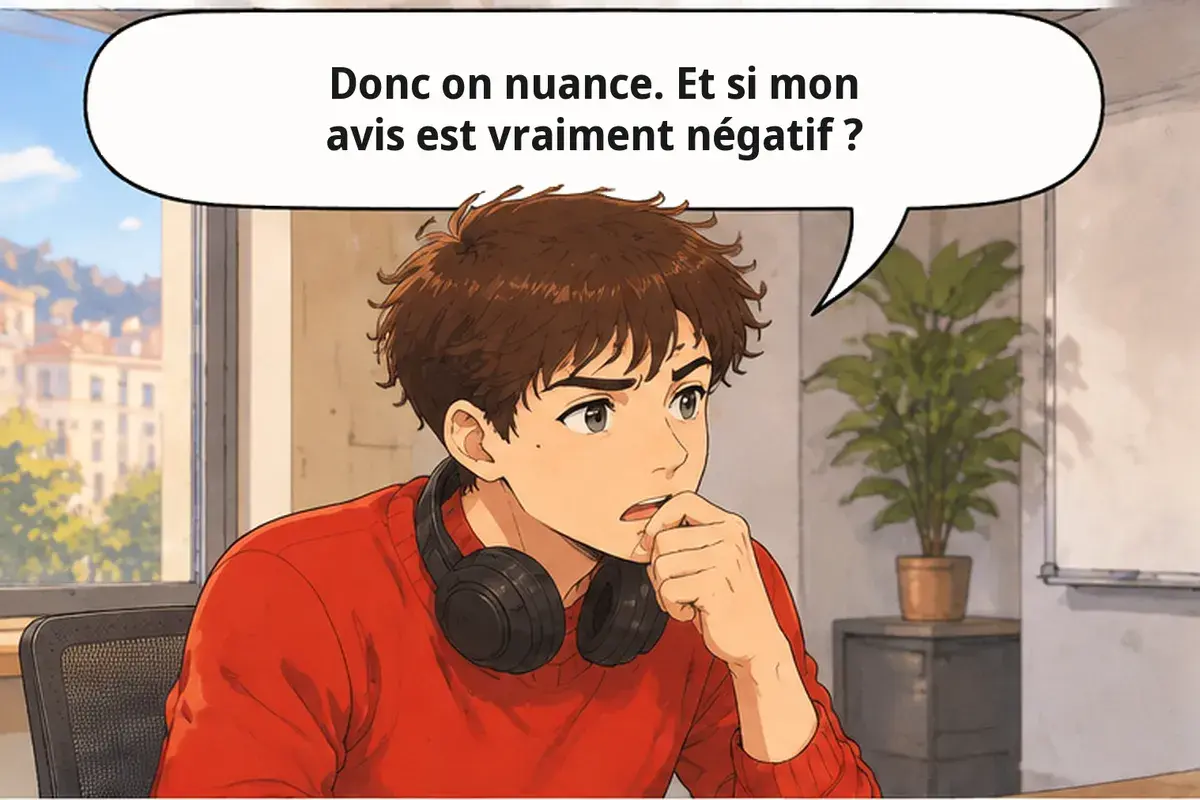
Donc on nuance. Et si mon avis est vraiment négatif ?
So we add some nuance. And what if my opinion is really negative?
- Aïcha
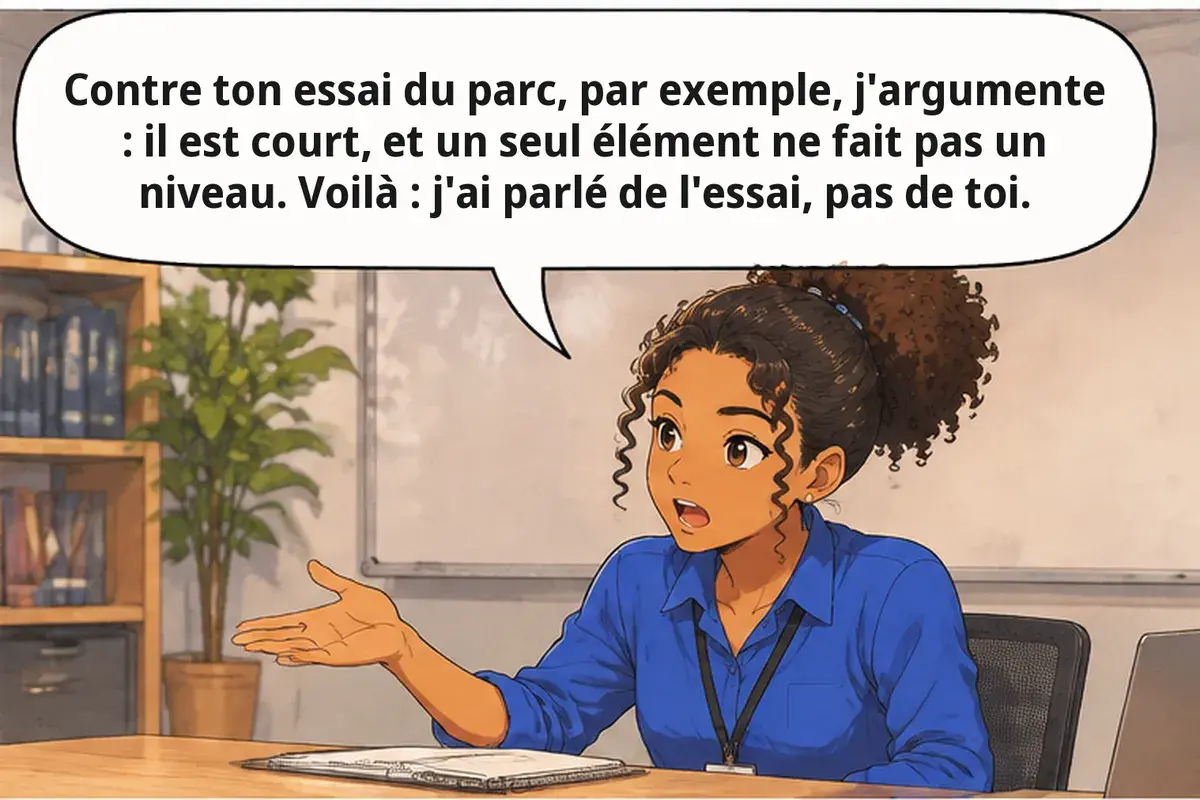
Contre ton essai du parc, par exemple, j'argumente : il est court, et un seul élément ne fait pas un niveau. Voilà : j'ai parlé de l'essai, pas de toi.
Against your park test, for example, I argue: it's short, and a single element doesn't make a level. There: I talked about the test, not about you.
- Pacha
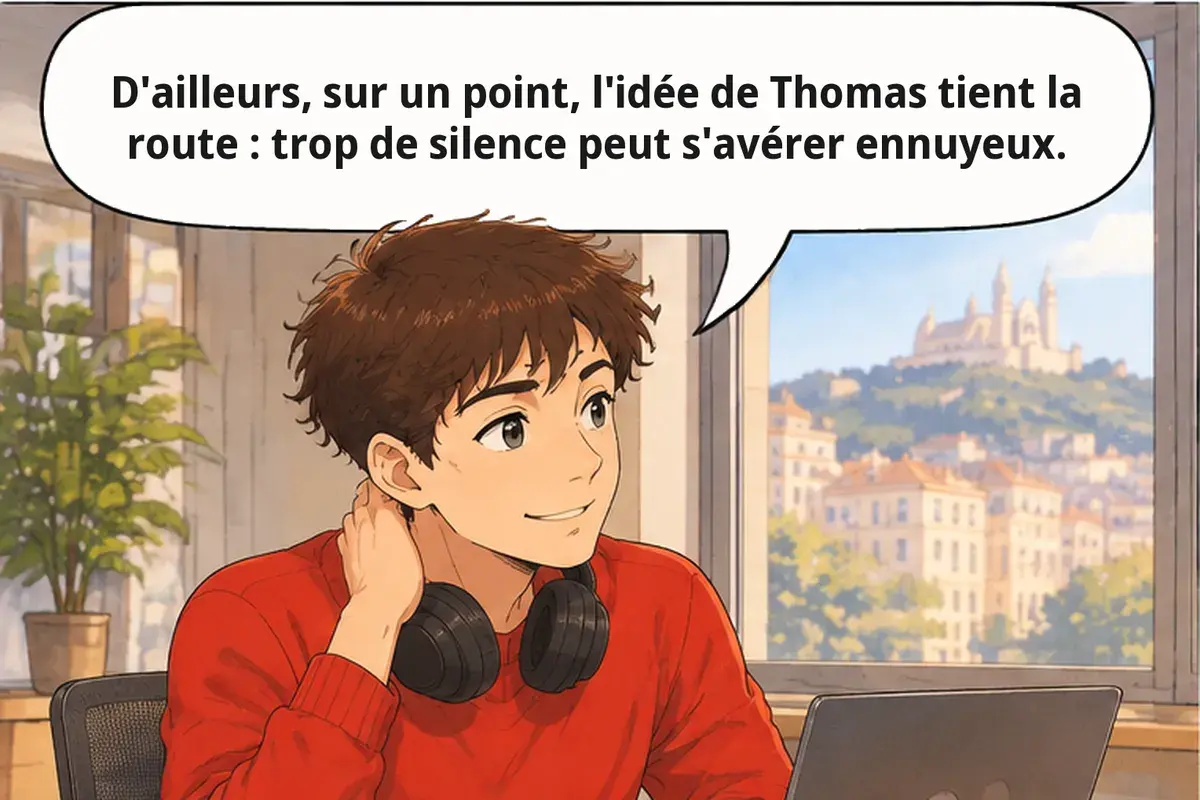
D'ailleurs, sur un point, l'idée de Thomas tient la route : trop de silence peut s'avérer ennuyeux.
By the way, on one point, Thomas's idea holds up: too much silence can turn out to be boring.
- Aïcha
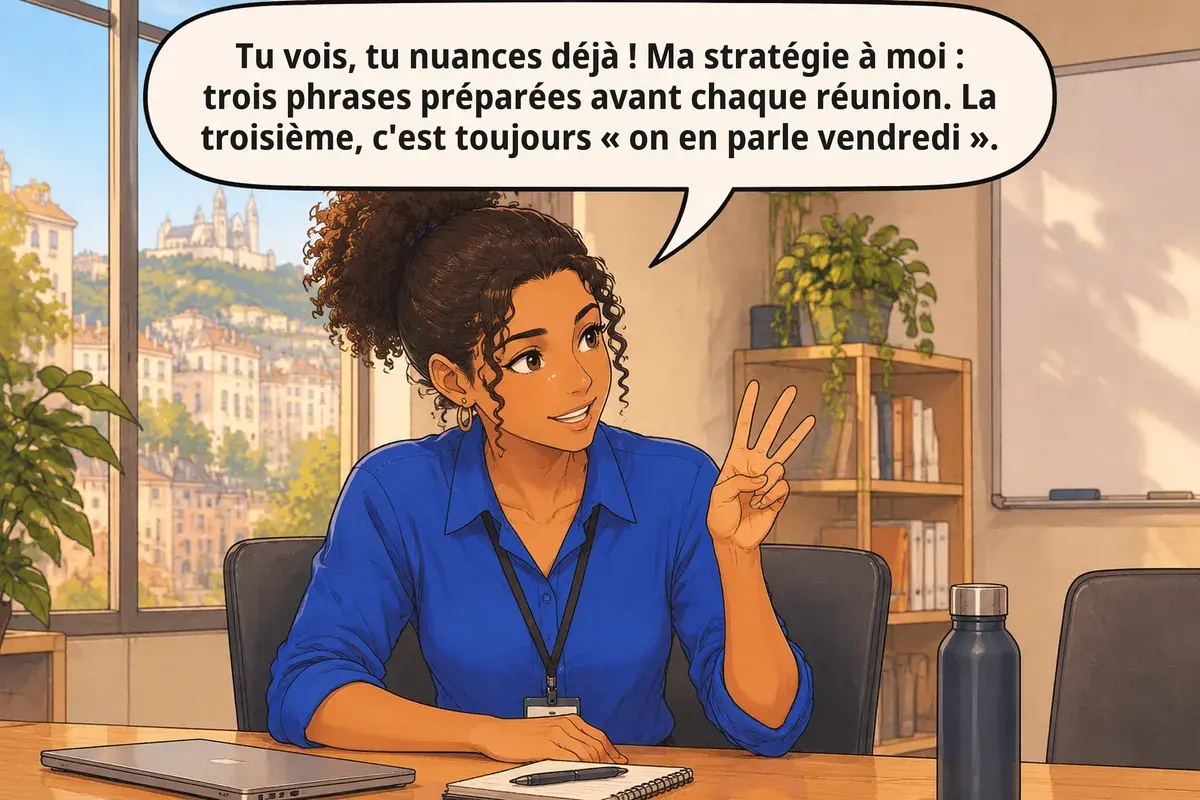
Tu vois, tu nuances déjà ! Ma stratégie à moi : trois phrases préparées avant chaque réunion. La troisième, c'est toujours « on en parle vendredi ».
See, you're already adding nuance! My own strategy: three sentences prepared before every meeting. The third is always "let's talk about it on Friday."
- Pacha
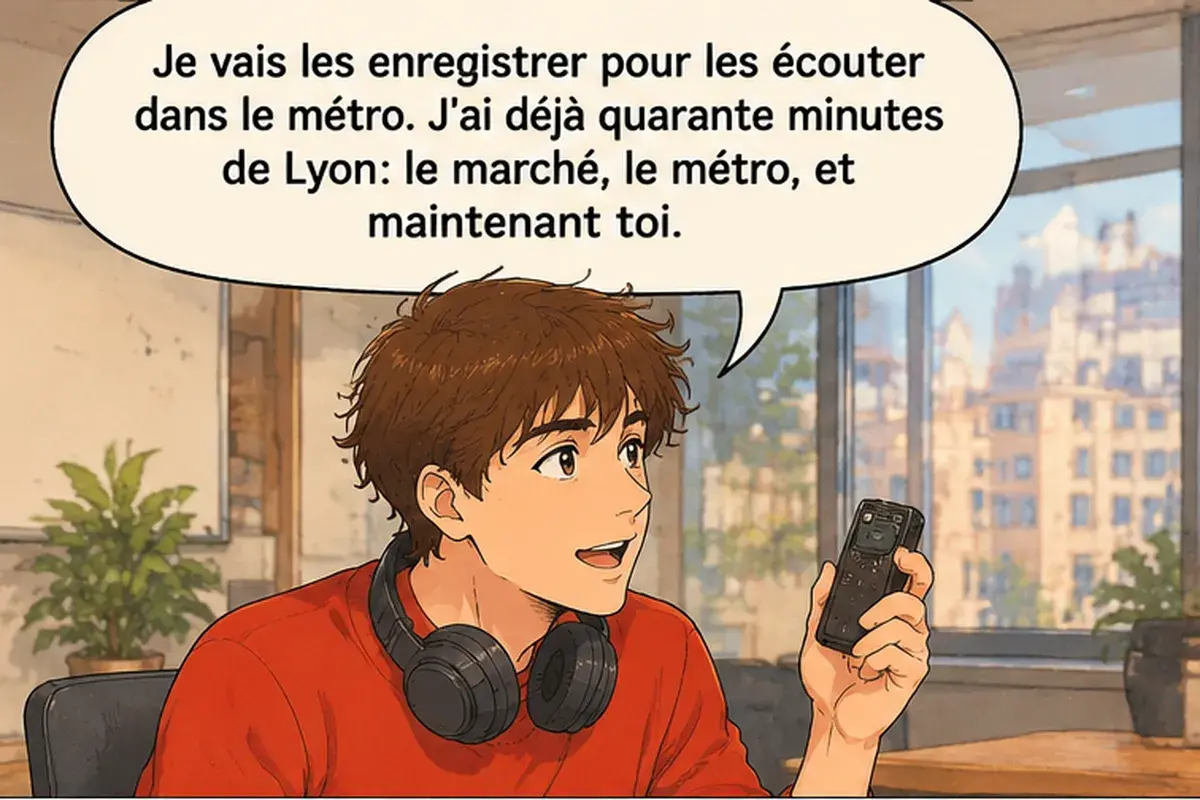
Je vais les enregistrer pour les écouter dans le métro. J'ai déjà quarante minutes de Lyon : le marché, le métro, et maintenant toi.
I'm going to record them so I can listen to them on the metro. I already have forty minutes of Lyon: the market, the metro, and now you.
- Thomas
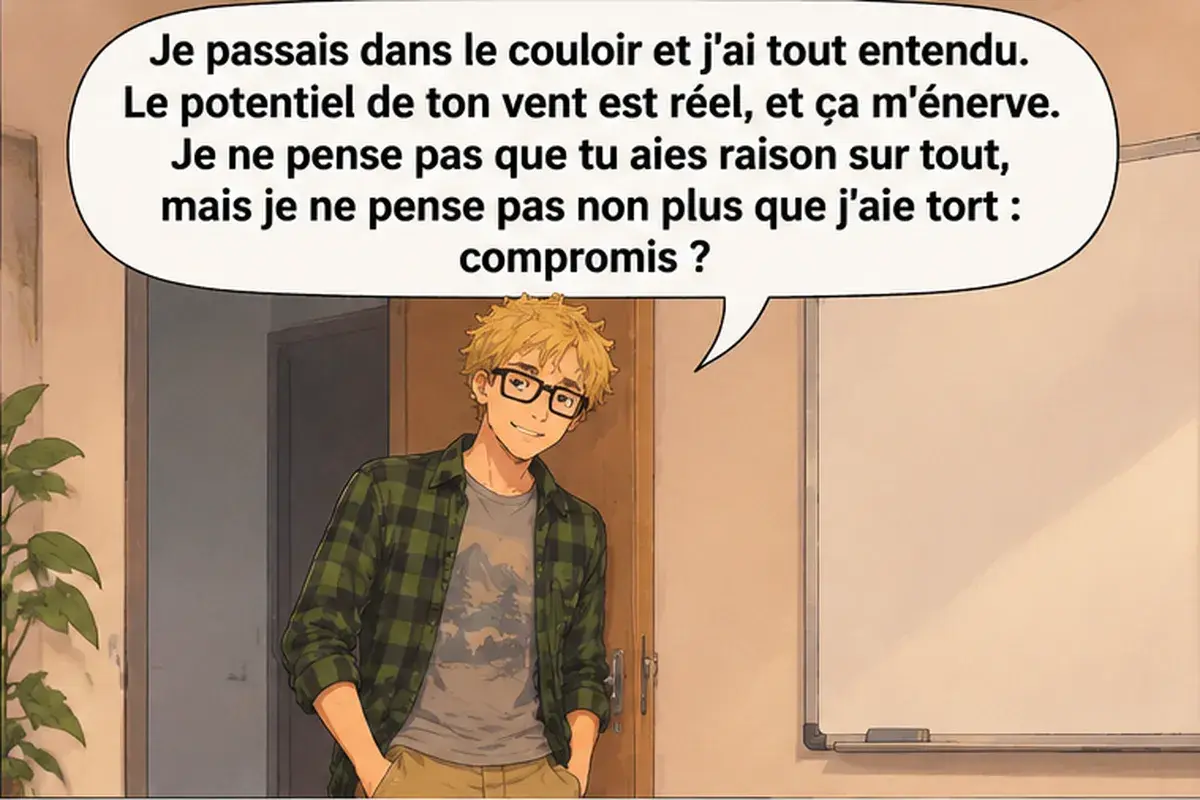
Je passais dans le couloir et j'ai tout entendu. Le potentiel de ton vent est réel, et ça m'énerve. Je ne pense pas que tu aies raison sur tout, mais je ne pense pas non plus que j'aie tort : compromis ?
I was walking by in the hallway and heard everything. The potential of your wind is real, and it annoys me. I don't think you're right about everything, but I don't think I'm wrong either: compromise?
- Pacha
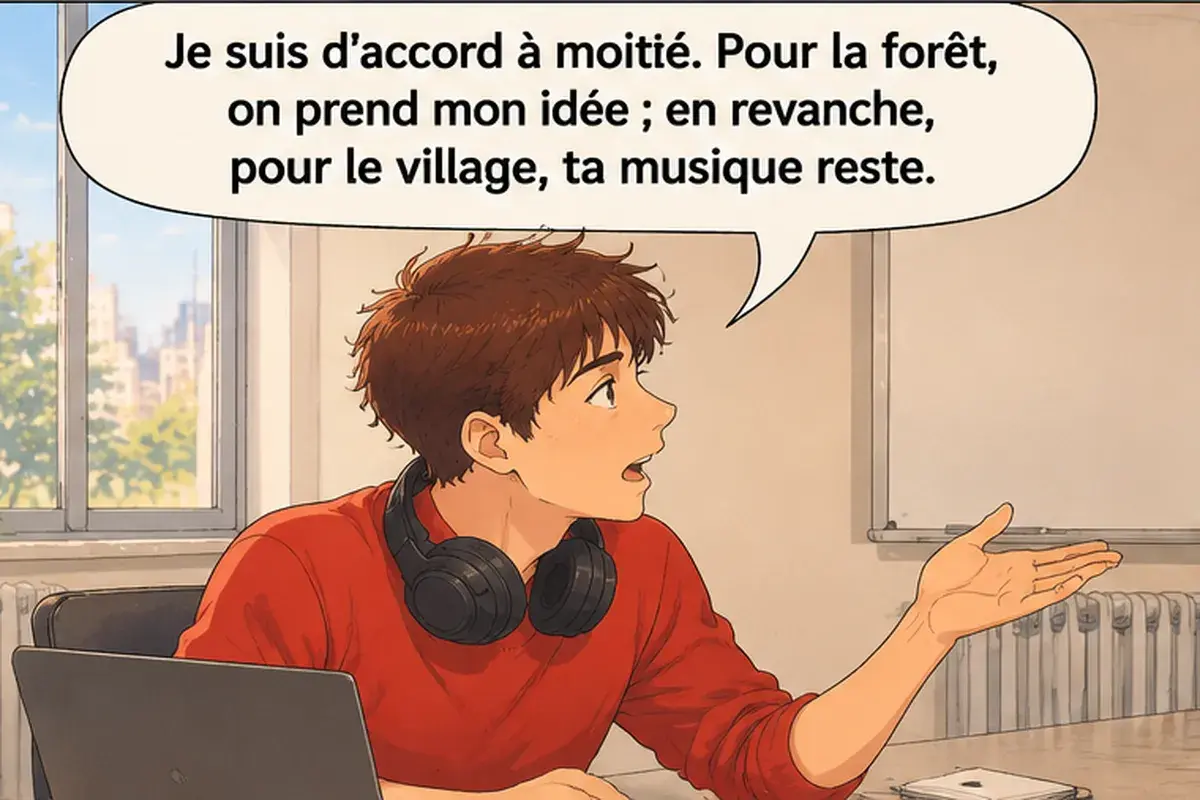
Je suis d'accord à moitié. Pour la forêt, on prend mon idée ; en revanche, pour le village, ta musique reste.
I half agree. For the forest, we go with my idea; on the other hand, for the village, your music stays.
- Aïcha
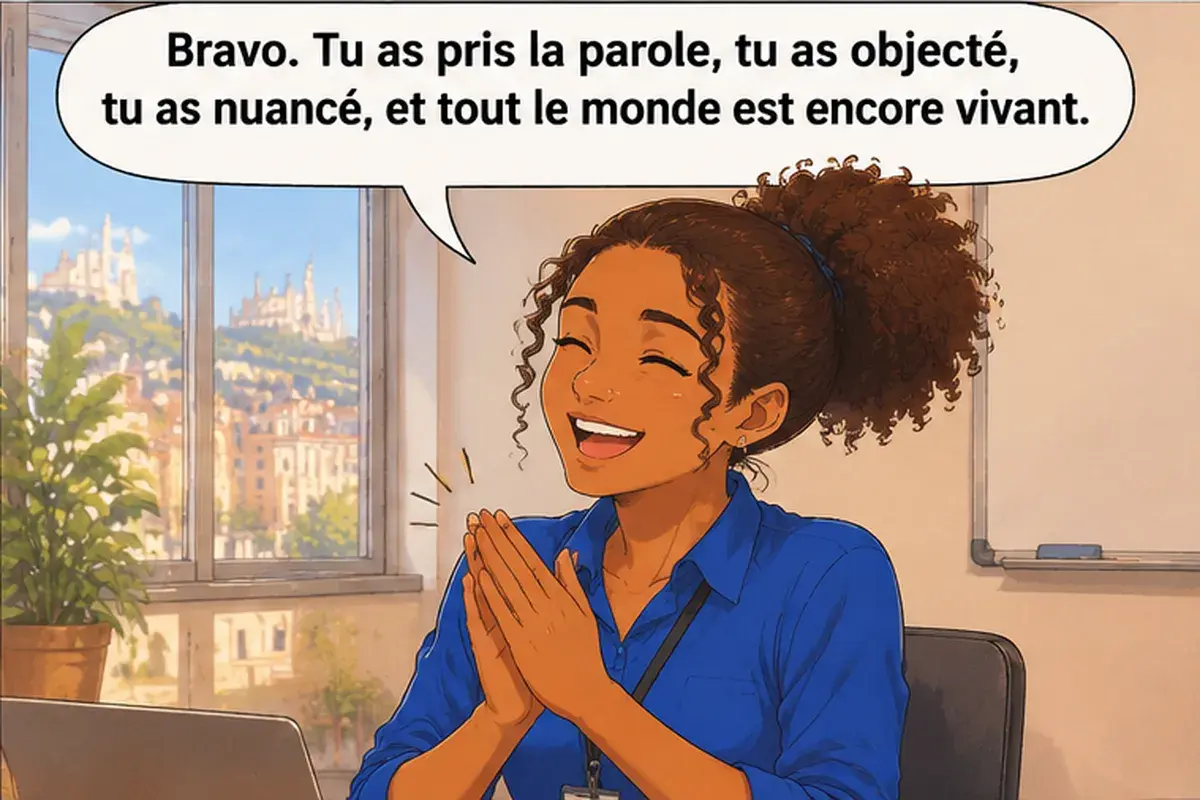
Bravo. Tu as pris la parole, tu as objecté, tu as nuancé, et tout le monde est encore vivant.
Bravo. You took the floor, you objected, you added nuance, and everyone is still alive.

- Thomas
Néanmoins, vendredi, on écoute les deux essais. Et le premier café est pour toi : ça se fait, quand on objecte bien.
Nevertheless, on Friday we listen to both tests. And the first coffee is for you: that's how it's done when you object well.
Grammar for this text
- Je ne pensais pas qu'on puisse interrompre quelqu'un comme ça — I didn't think people could interrupt someone like that. It's the same rule as in the grammar section:
ne pas penser que+ subjunctive.puisseispouvoirin the subjunctive (B1, unit 21);pensais— "thought" (the imperfect (imparfait), a past tense). - Fâché ? Pas du tout. — Mad? Not at all.
fâché— mad, angry;pas du tout— not at all. En général — generally, usually. - Excusez-moi de vous interrompre — sorry to interrupt you (formal). With your boss (Hélène) you use vous; with a colleague it would be
Excuse-moi de t'interrompre. - ton idée du vent est intéressante, mais… — your idea about the wind is interesting, but… This is a soft way to object: first say what you agree with. Je suis d'accord à moitié — I half agree.
- tu aies raison — you're right, j'aie tort — I'm wrong: both are
avoirin the subjunctive (it sounds like the "eh" in "met").avoir raison— to be right,avoir tort— to be wrong. Herene pense pas queis paired withnon plus— "either." - ça se fait — it's the done thing (unit 8): it talks about what people do in society, without saying who does it.
- c'est très positif… mais — it's very positive… but, and j'argumente — I argue: Aïcha doesn't explain the technique, she shows it on Pacha. First she praises (
positif), then she objects with facts (argumenter— to give arguments,un élément— a point, a detail) and criticizes the test, not the person. - l'idée de Thomas tient la route — Thomas's idea holds up.
tenir la route— to hold up, to be convincing; about a car it literally means "to hold the road." Ma stratégie — my strategy:une stratégieis a plan of action worked out in advance.
Words and grammar of the unit: Speak up in a meeting.
Learn the words from the texts with flashcards
In the app, you can tap any word in a text to see its translation, forms and examples, and new words stick with flashcards. 15 minutes a day.
Start for freeEverything is open for free. No card needed to sign up.