

French dialogue with translation · B2 · 18 lines
Nous avons le plaisir de vous convier We are pleased to invite you
Comic · 18 panels
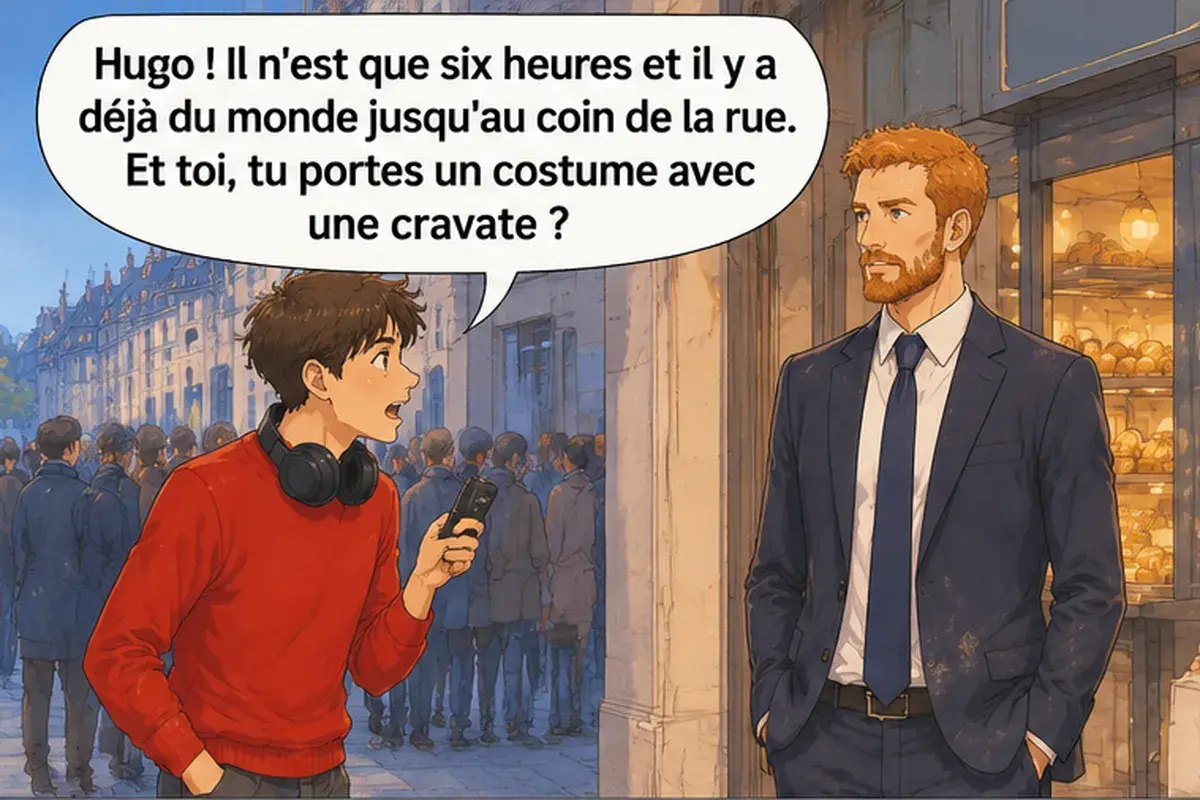
- Pacha
Hugo ! Il n'est que six heures et il y a déjà du monde jusqu'au coin de la rue. Et toi, tu portes un costume avec une cravate ?
Hugo! It's only six o'clock and there are already people all the way to the corner of the street. And you're wearing a suit with a tie?
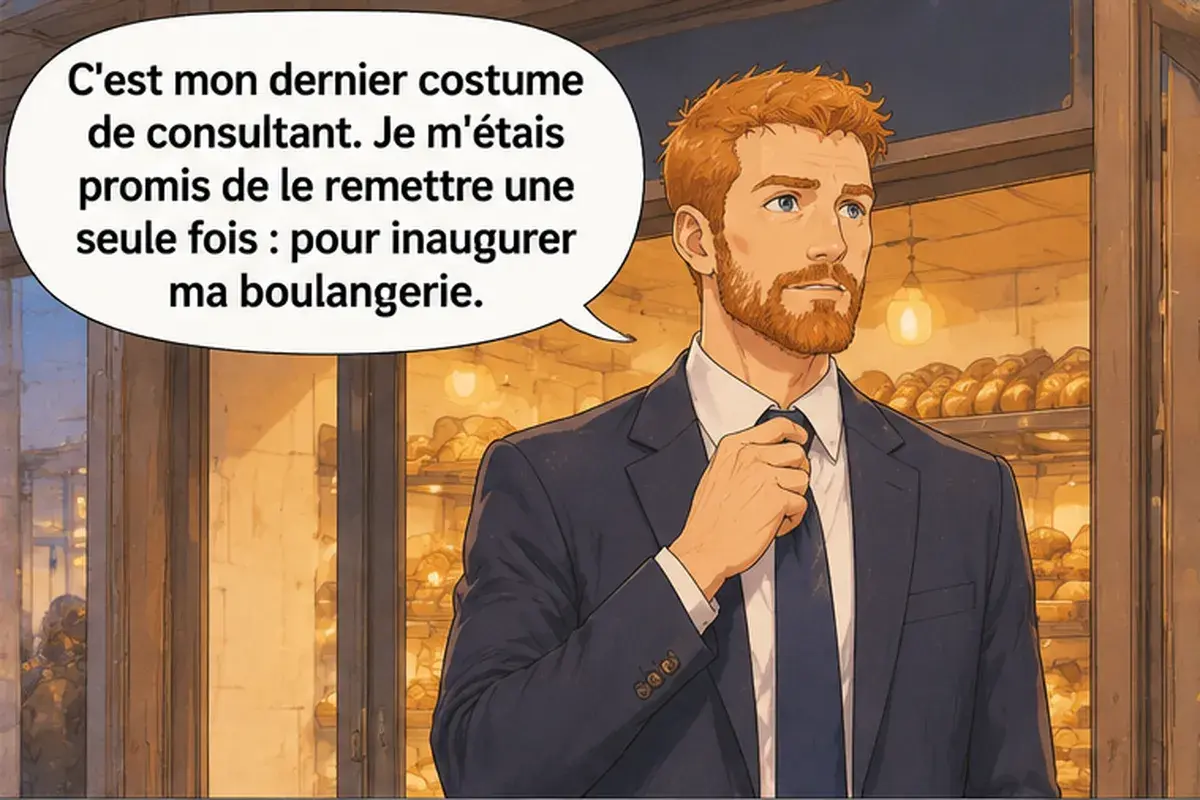
- Hugo
C'est mon dernier costume de consultant. Je m'étais promis de le remettre une seule fois : pour inaugurer ma boulangerie.
It's my last consultant suit. I had promised myself I'd put it back on just once: to inaugurate my bakery.
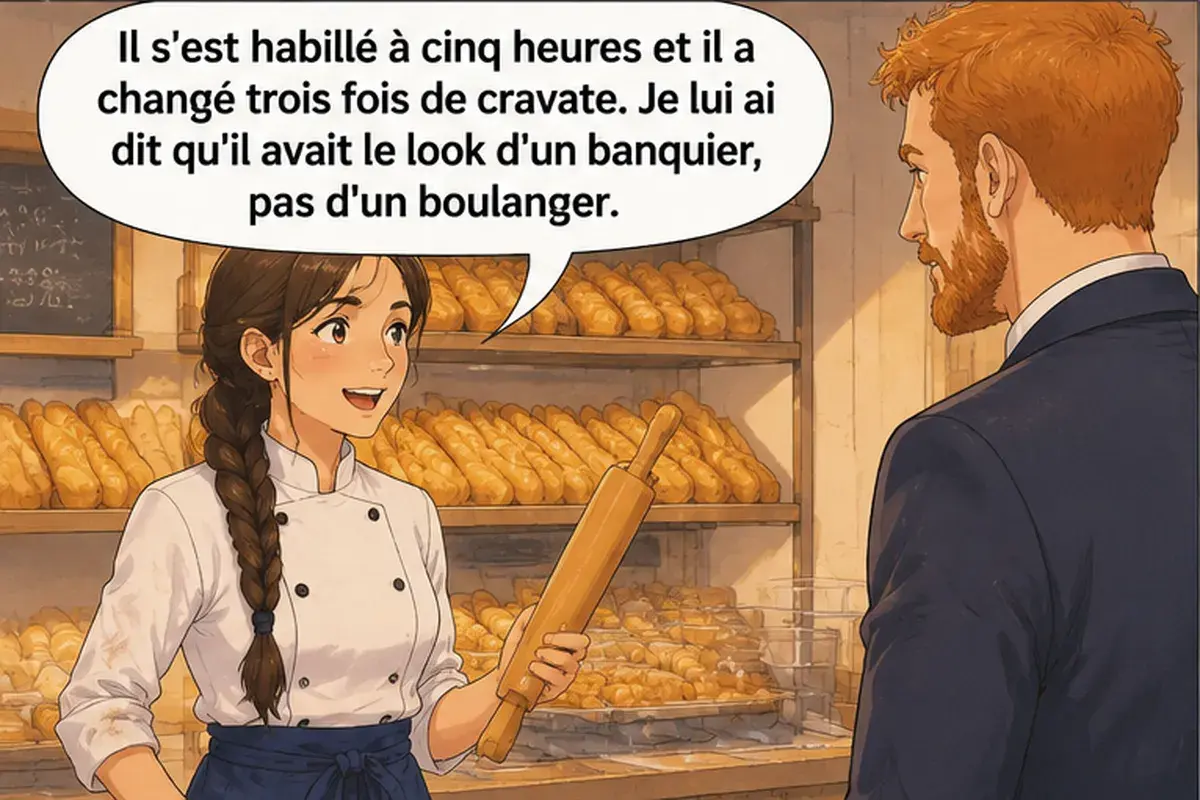
- Camille
Il s'est habillé à cinq heures et il a changé trois fois de cravate. Je lui ai dit qu'il avait le look d'un banquier, pas d'un boulanger.
He got dressed at five and changed ties three times. I told him he had the look of a banker, not a baker.
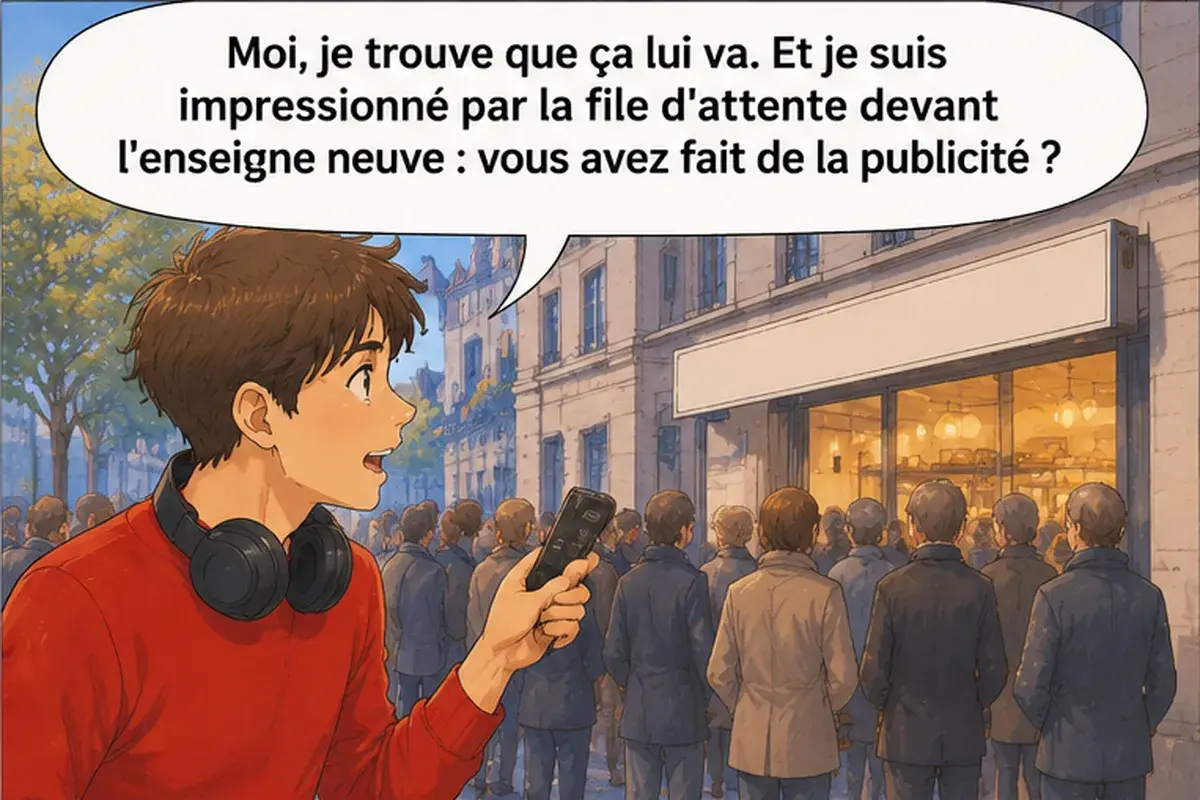
- Pacha
Moi, je trouve que ça lui va. Et je suis impressionné par la file d'attente devant l'enseigne neuve : vous avez fait de la publicité ?
Personally, I think it suits him. And I'm impressed (man speaking) by the line in front of the new sign: did you do any advertising? (to several people)
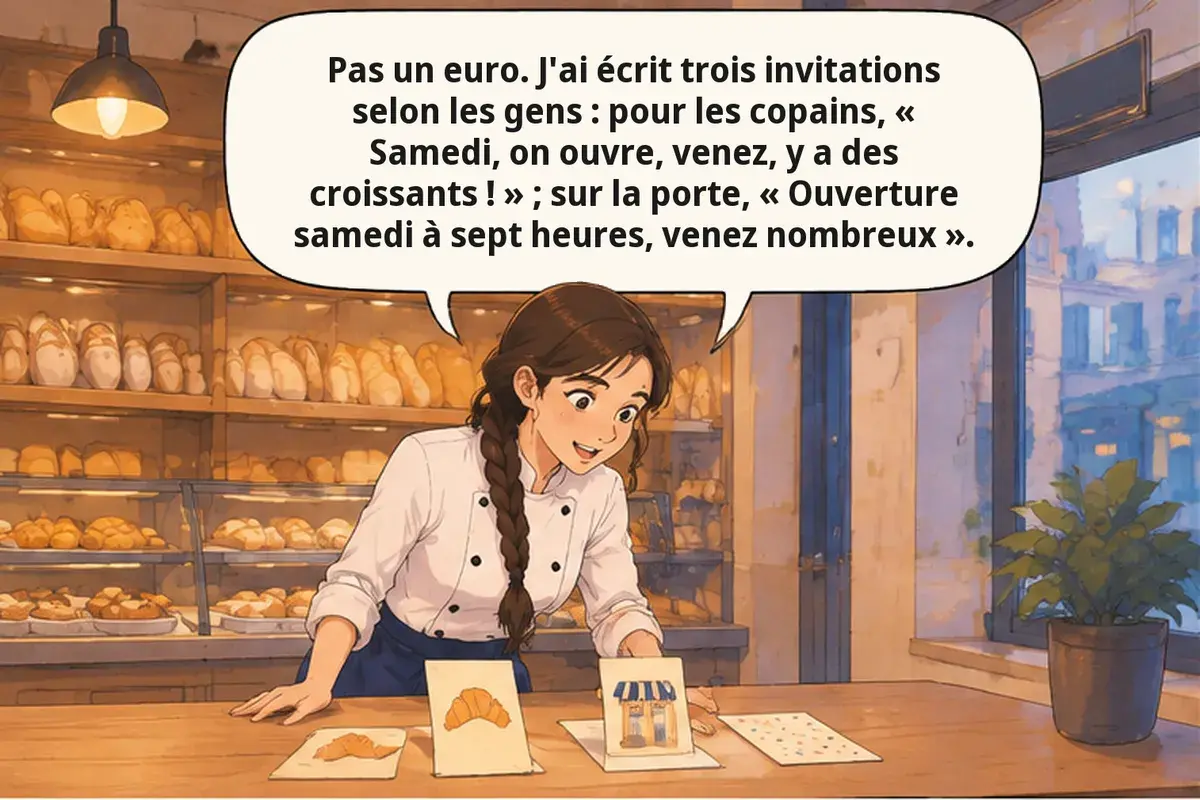
- Camille
Pas un euro. J'ai écrit trois invitations selon les gens : pour les copains, « Samedi, on ouvre, venez, y a des croissants ! » ; sur la porte, « Ouverture samedi à sept heures, venez nombreux ».
Not a euro. I wrote three invitations depending on the people: for friends, "Saturday, we're opening, come, there are croissants!"; on the door, "Opening Saturday at seven o'clock, come in large numbers."
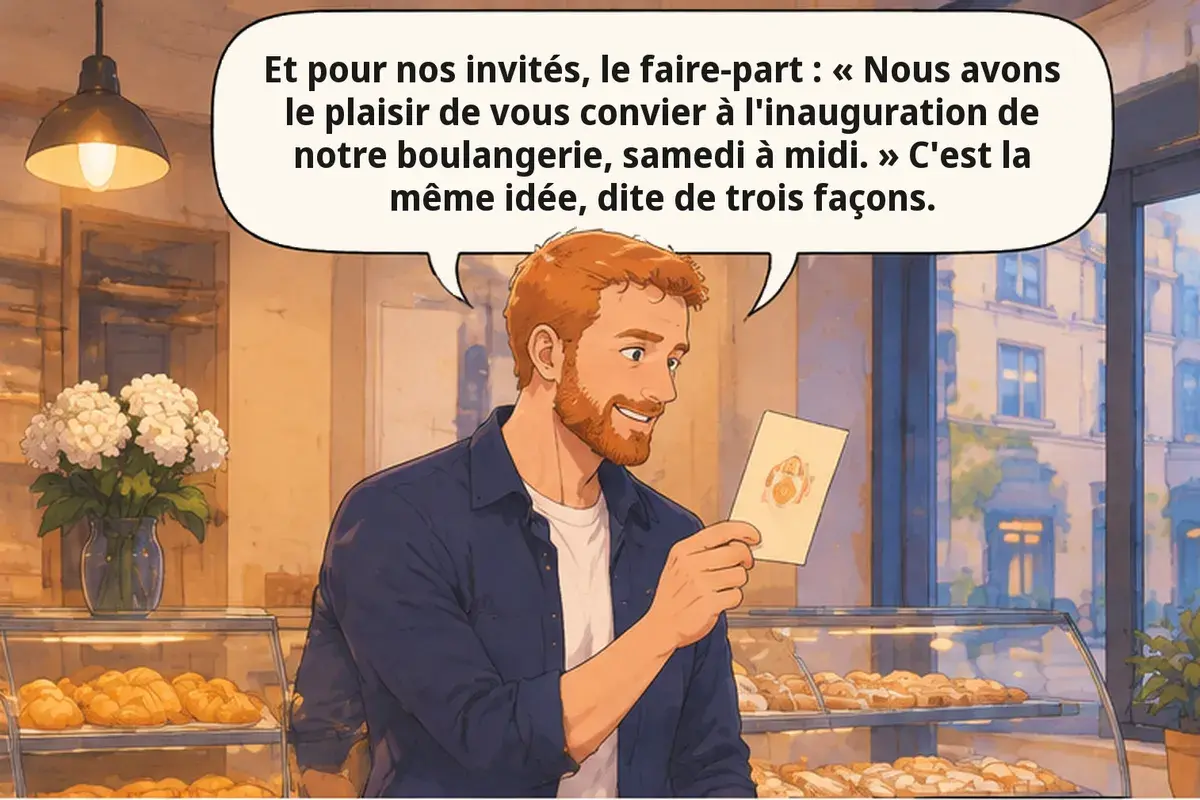
- Hugo
Et pour nos invités, le faire-part : « Nous avons le plaisir de vous convier à l'inauguration de notre boulangerie, samedi à midi. » C'est la même idée, dite de trois façons.
And for our guests, the faire-part: "We are pleased to invite you to the inauguration of our bakery, Saturday at noon." It's the same idea, said three ways.
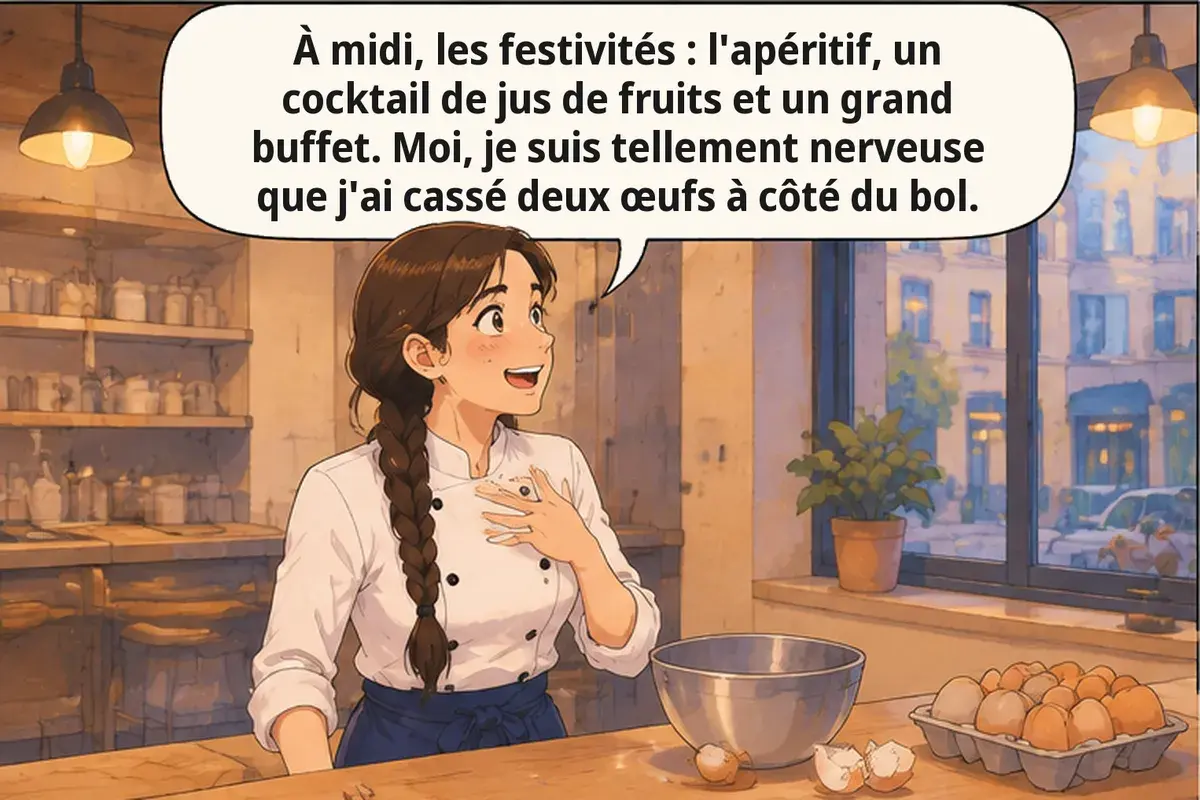
- Camille
À midi, les festivités : l'apéritif, un cocktail de jus de fruits et un grand buffet. Moi, je suis tellement nerveuse que j'ai cassé deux œufs à côté du bol.
At noon, the festivities: the apéritif, a fruit juice cocktail and a big buffet. Me, I'm so nervous that I broke two eggs next to the bowl (woman speaking).
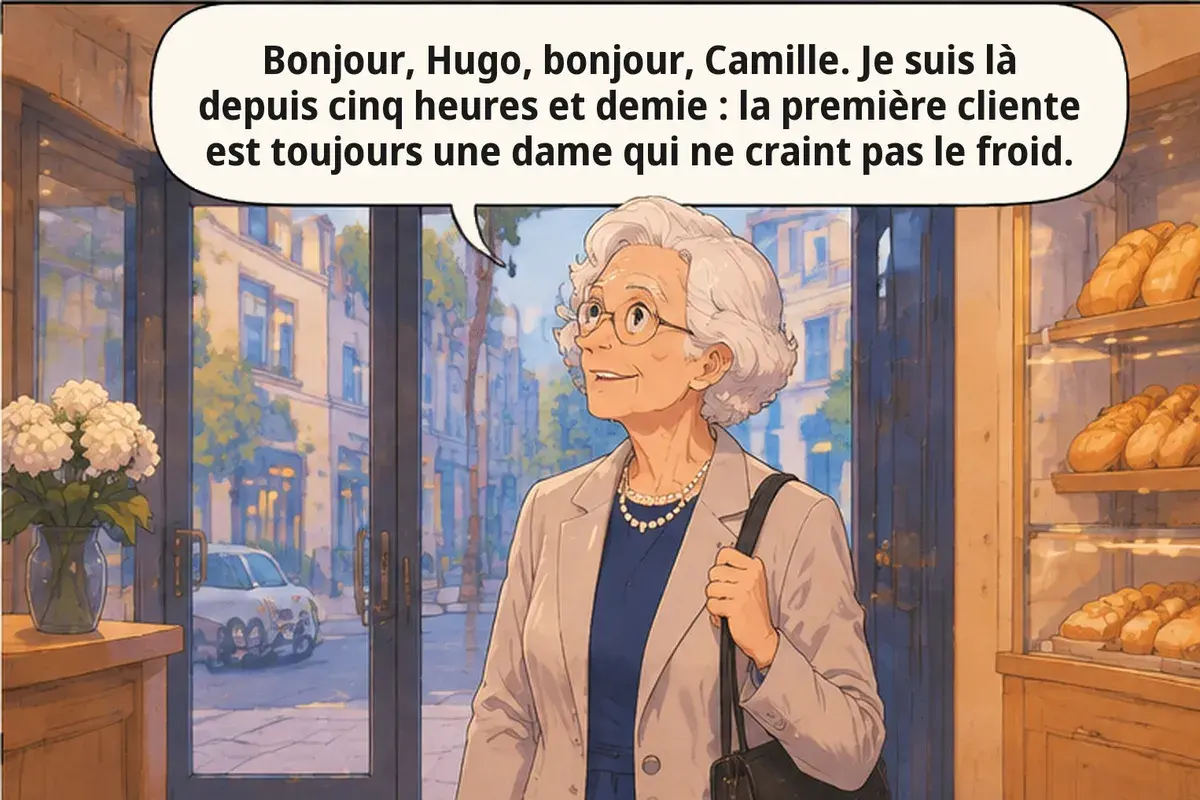
- Madame Morel
Bonjour, Hugo, bonjour, Camille. Je suis là depuis cinq heures et demie : la première cliente est toujours une dame qui ne craint pas le froid.
Hello, Hugo, hello, Camille. I've been here since five thirty: the first customer is always a lady who isn't afraid of the cold.
- Hugo
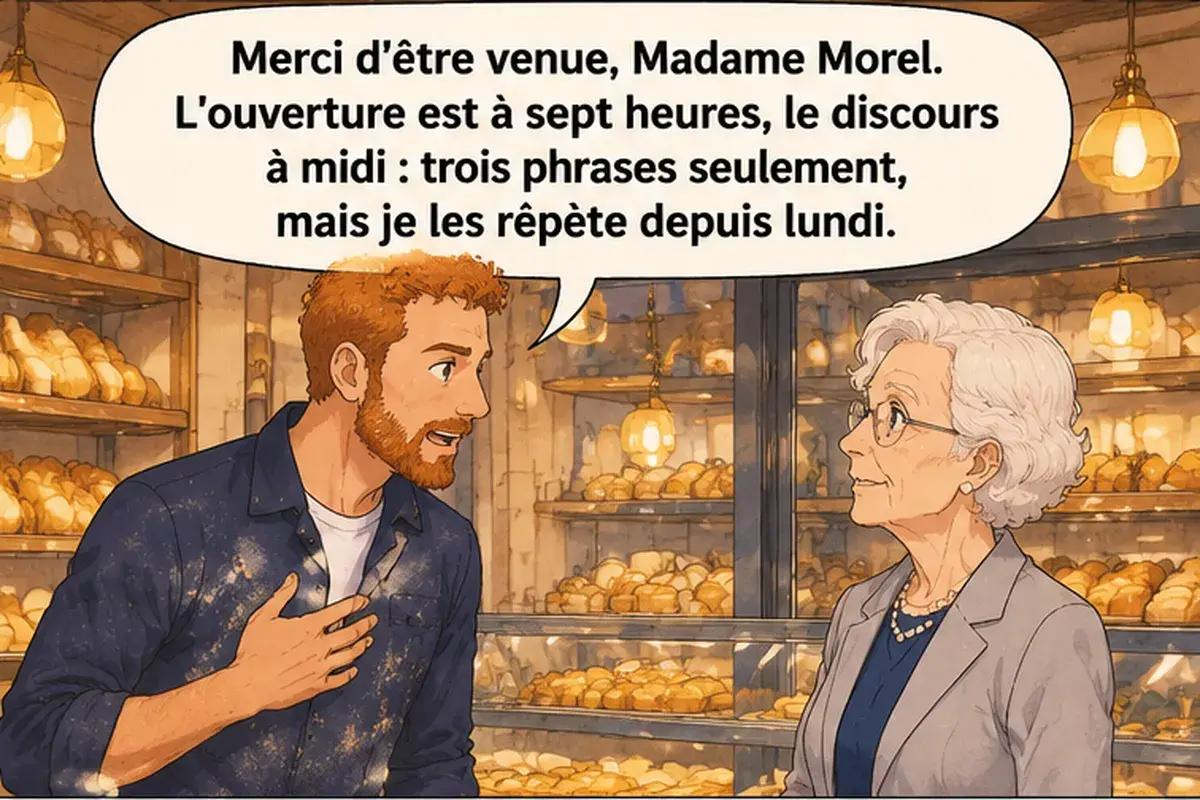
Merci d'être venue, Madame Morel. L'ouverture est à sept heures, le discours à midi : trois phrases seulement, mais je les répète depuis lundi.
Thank you for coming, Madame Morel (to a woman). The opening is at seven, the speech at noon: just three sentences, but I've been rehearsing them since Monday.
- Madame Morel
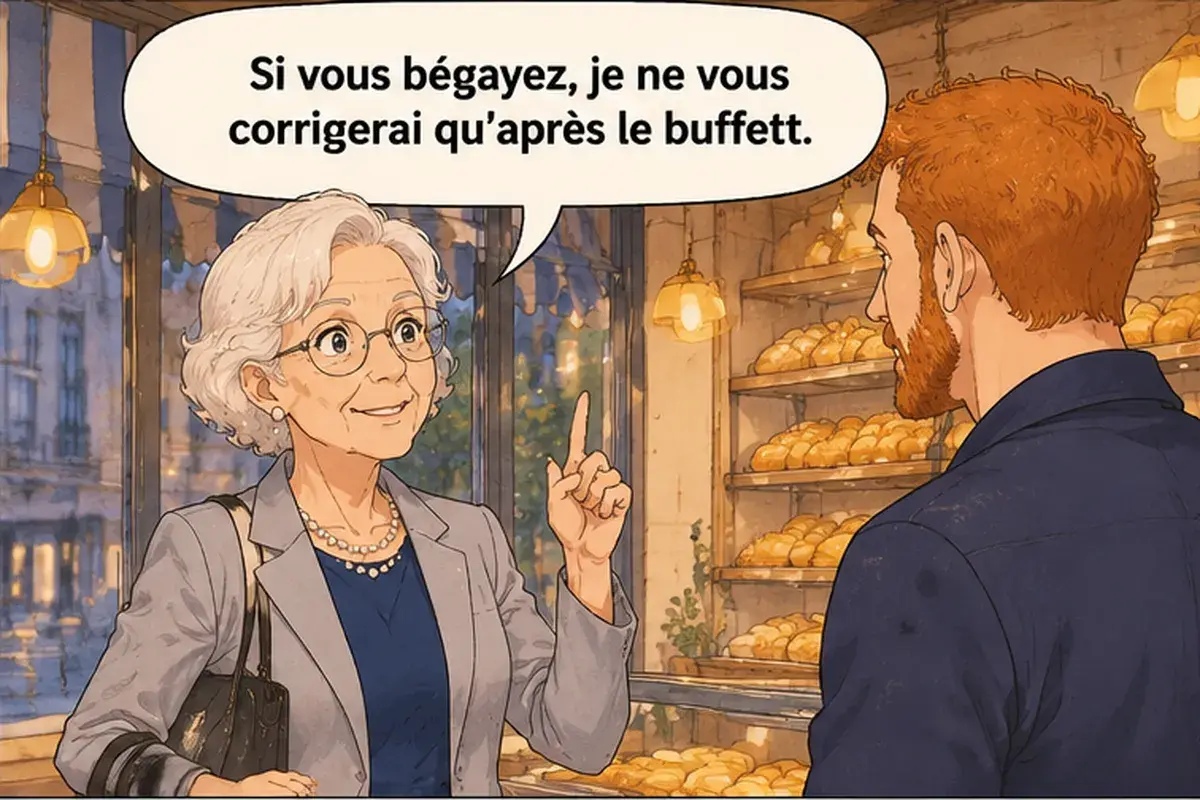
Si vous bégayez, je ne vous corrigerai qu'après le buffet.
If you stutter, I'll only correct you after the buffet. (formal)
- Camille
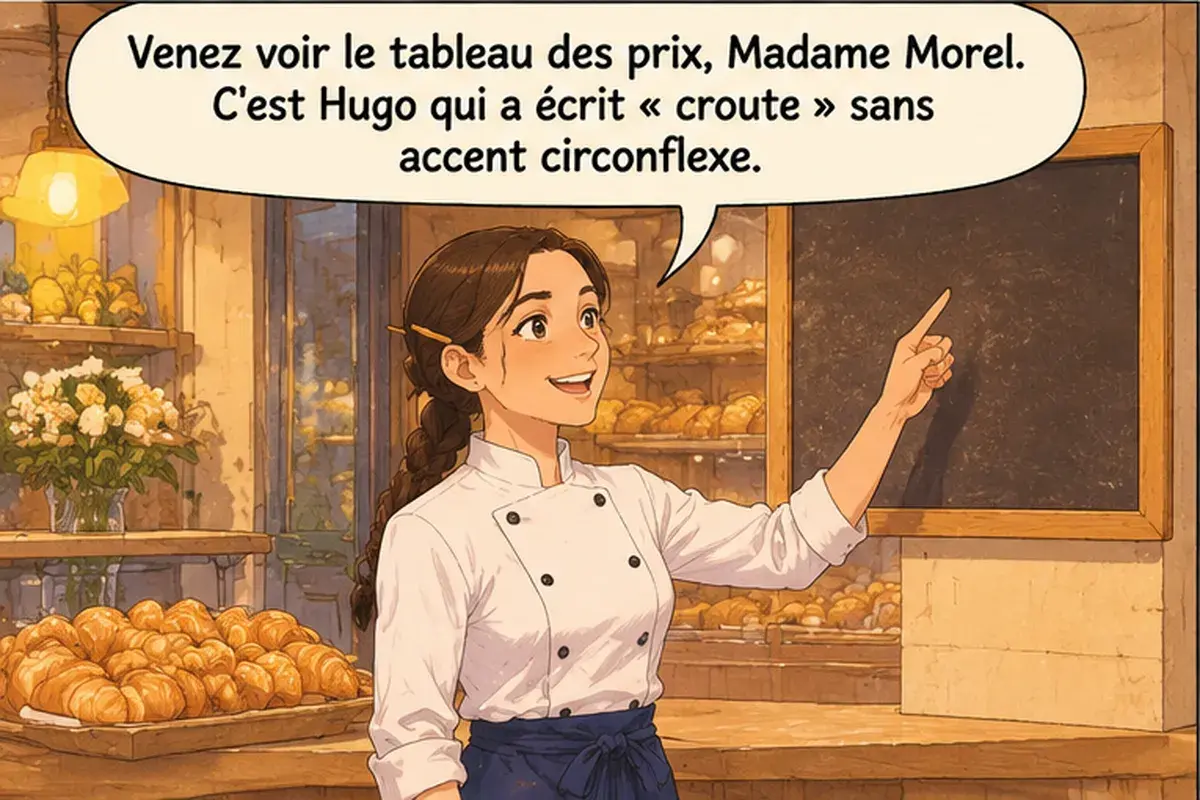
Venez voir le tableau des prix, Madame Morel. C'est Hugo qui a écrit « croute » sans accent circonflexe.
Come look at the price board, Madame Morel (formal). Hugo is the one who wrote "croute" without a circumflex accent.
- Madame Morel
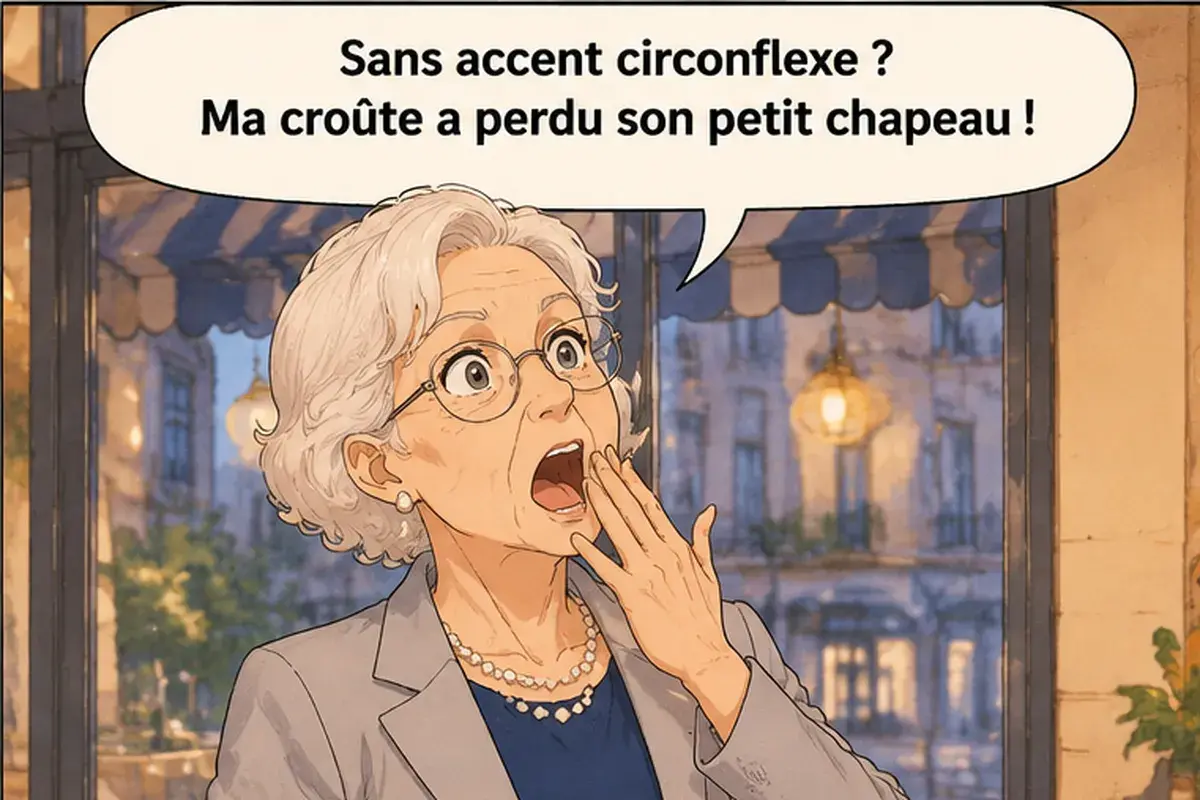
Sans accent circonflexe ? Ma croûte a perdu son petit chapeau !
Without a circumflex accent? My crust has lost its little hat!
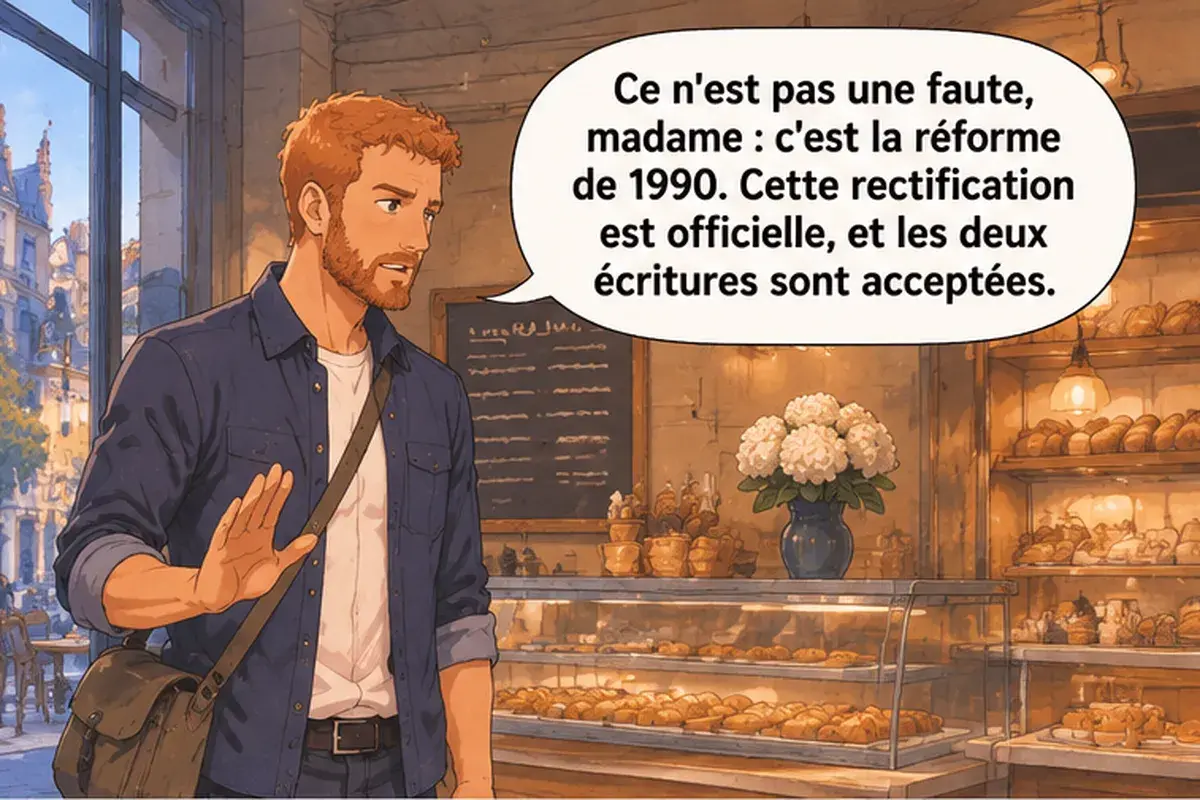
- Hugo
Ce n'est pas une faute, madame : c'est la réforme de 1990. Cette rectification est officielle, et les deux écritures sont acceptées.
It's not a mistake, ma'am: it's the 1990 reform. This rectification is official, and both spellings are accepted.
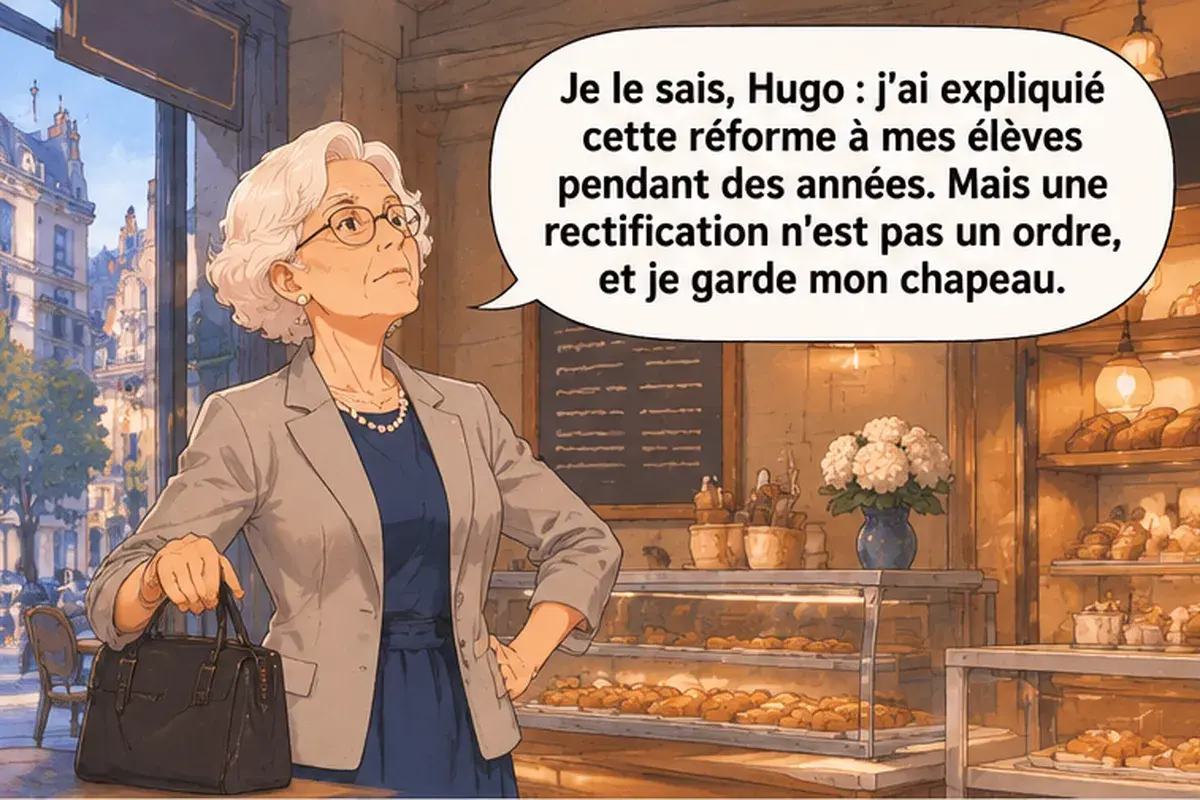
- Madame Morel
Je le sais, Hugo : j'ai expliqué cette réforme à mes élèves pendant des années. Mais une rectification n'est pas un ordre, et je garde mon chapeau.
I know that, Hugo: I explained this reform to my students for years. But a rectification isn't an order, and I'm keeping my hat.
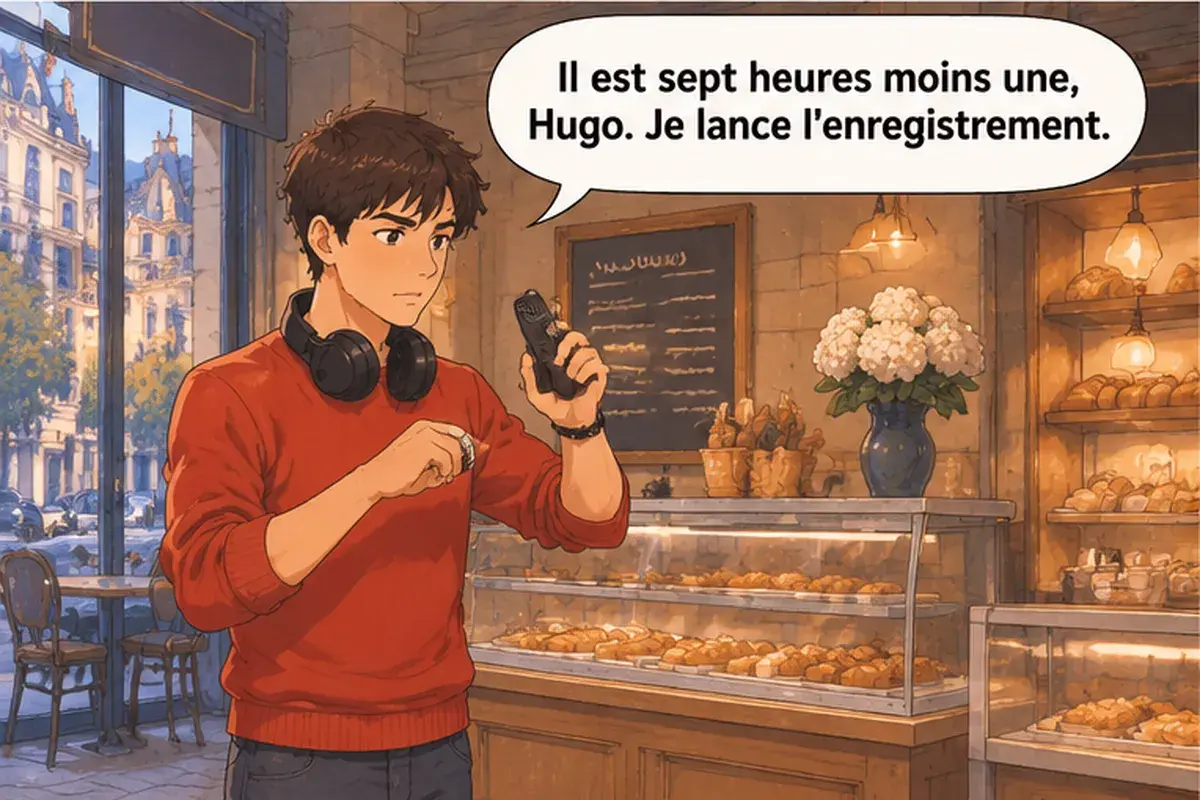
- Pacha
Il est sept heures moins une, Hugo. Je lance l'enregistrement.
It's one minute to seven, Hugo. I'm starting the recording.
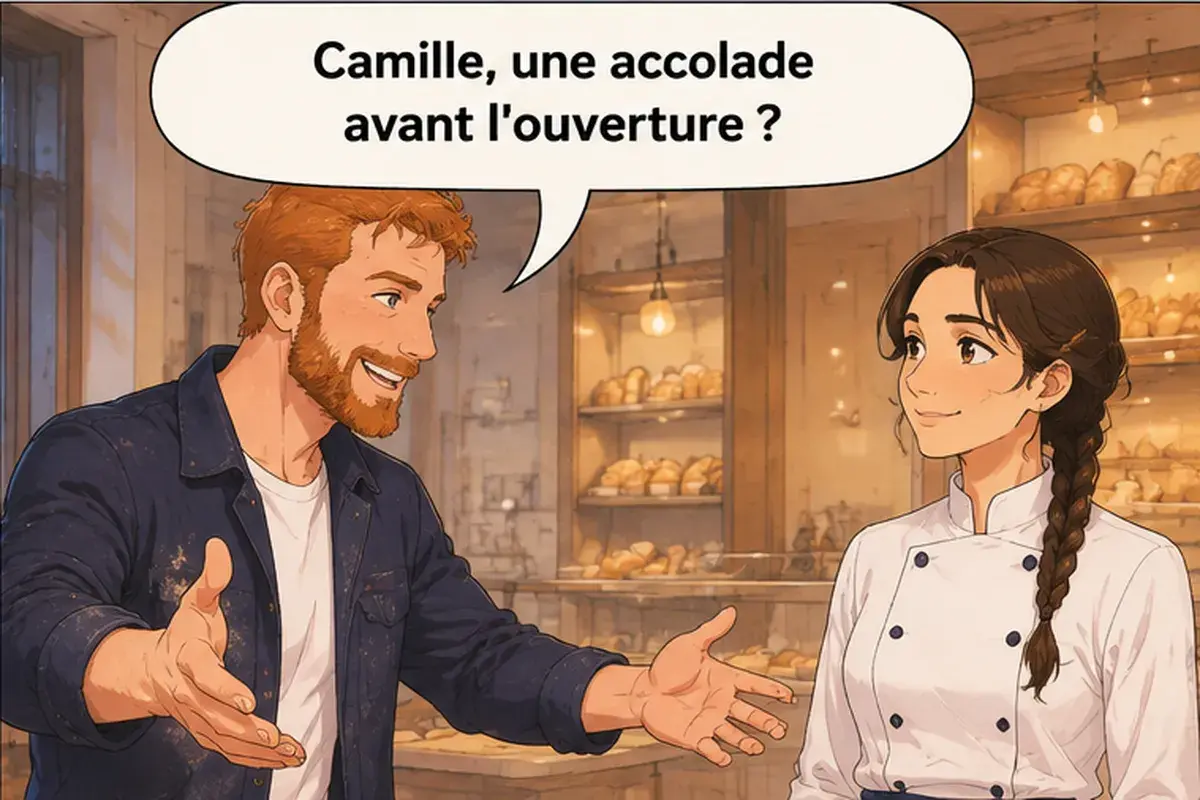
- Hugo
Camille, une accolade avant l'ouverture ?
Camille, a hug before the opening?
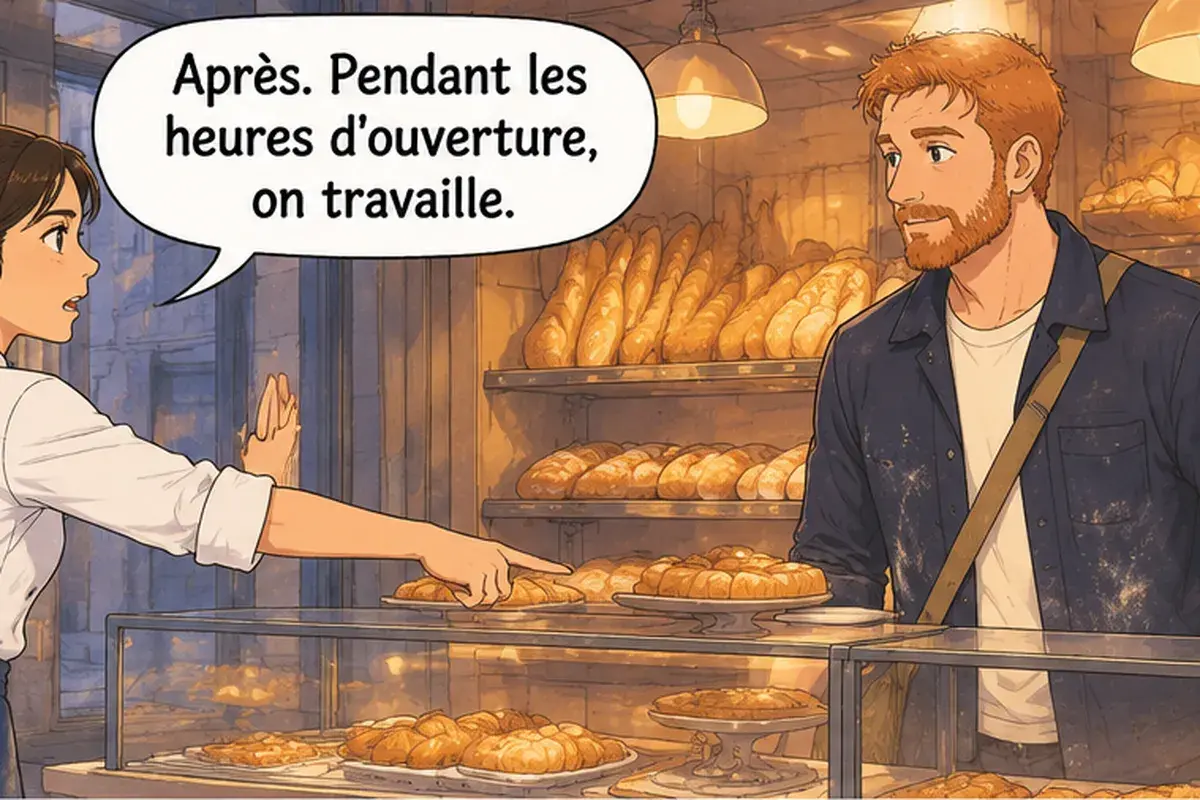
- Camille
Après. Pendant les heures d'ouverture, on travaille.
After. During opening hours, we work.
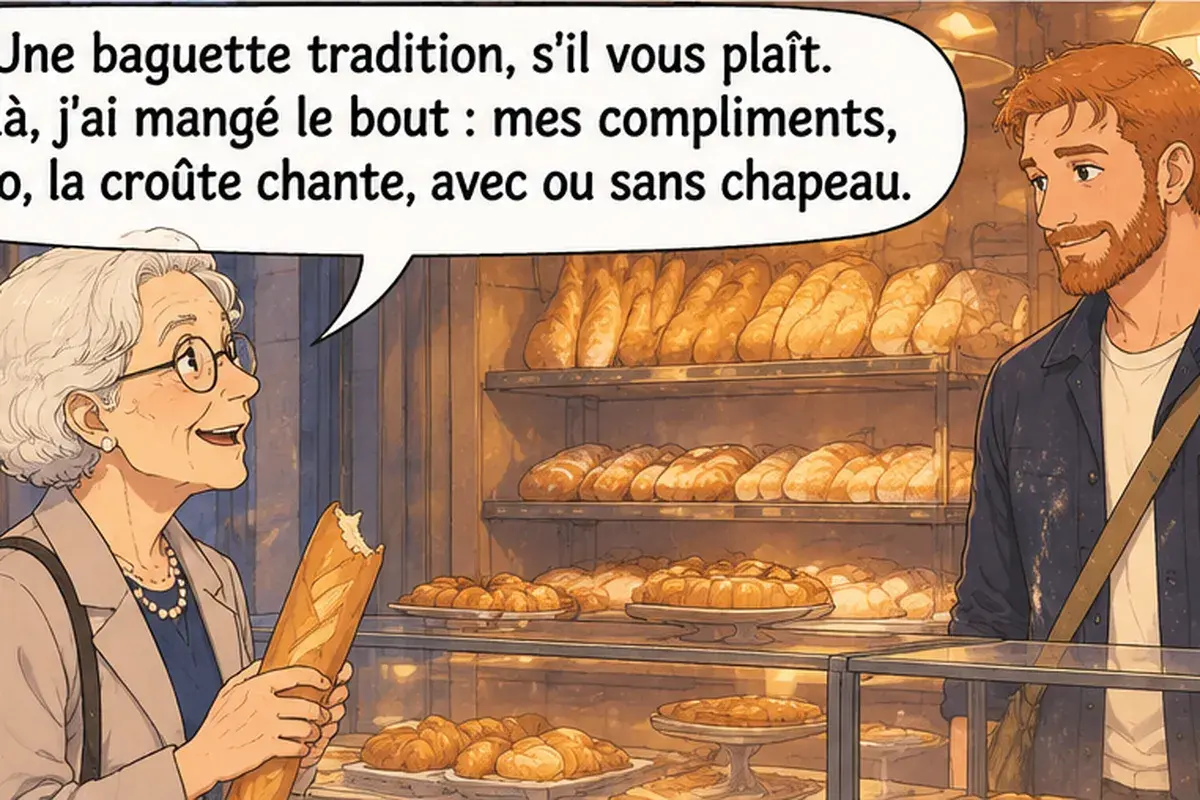
- Madame Morel
Une baguette tradition, s'il vous plaît. Voilà, j'ai mangé le bout : mes compliments, Hugo, la croûte chante, avec ou sans chapeau.
A traditional baguette, please (formal). There, I ate the end: my compliments, Hugo, the crust sings, with or without a hat.
Grammar for this text
- Nous avons le plaisir de vous convier à l'inauguration —
avoir le plaisir de+ infinitive: the formal "to be pleased to".convieris a ceremonial "to invite" (the everyday word isinviter). You write this on an invitation card, afaire-part. - Samedi, on ouvre, venez, y a des croissants ! — casual style:
oninstead ofnous,y ainstead ofil y a(theilis dropped). You only write this to friends. - Je lui ai dit qu'il avait le look d'un banquier — reported speech in the past: "he has the look" becomes
il avait(B2, unit 7).lookis the same word as English "look" in the sense of style. - Il s'est habillé à cinq heures —
s'habillerin the passé composé (the main past tense) usesêtre:il s'est habillé. - Si vous bégayez, je ne vous corrigerai qu'après le buffet —
ne … quemeans "only";corrigeraiis the future tense ofcorriger("to correct");bégayermeans "to stutter". - Ma croûte a perdu son petit chapeau ! — the circumflex
^looks like a little hat, and Madame Morel jokes like a teacher. Don't mix it up with the exclamationChapeau !, "hats off" or "well done". - tellement nerveuse que j'ai cassé deux œufs —
tellement … quemeans "so … that";nerveuseends inebecause Camille is a woman.
Words and grammar of the unit: Invite people to an opening and give a speech.
Learn the words from the texts with flashcards
In the app, you can tap any word in a text to see its translation, forms and examples, and new words stick with flashcards. 15 minutes a day.
Start for freeEverything is open for free. No card needed to sign up.