
French story with translation · B2 · 16 lines
Mesdames et messieurs, chers convives Ladies and gentlemen, dear guests
Comic · 16 panels
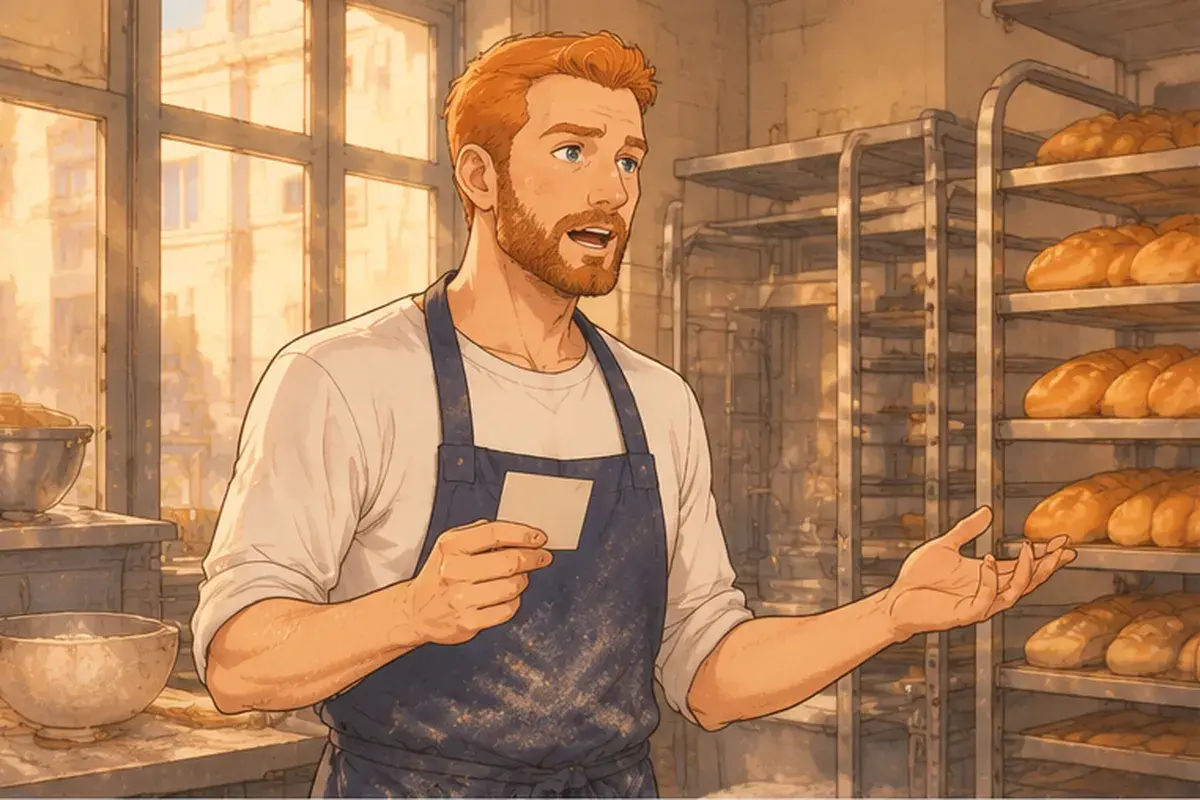
Depuis lundi, Hugo répète trois phrases : sous la douche, dans le fournil, et même dans le métro. Il les a écrites sur une fiche, puis apprises par cœur.
Since Monday, Hugo has been rehearsing three sentences: in the shower, in the bakery workroom, and even on the metro. He wrote them on a card, then learned them by heart.
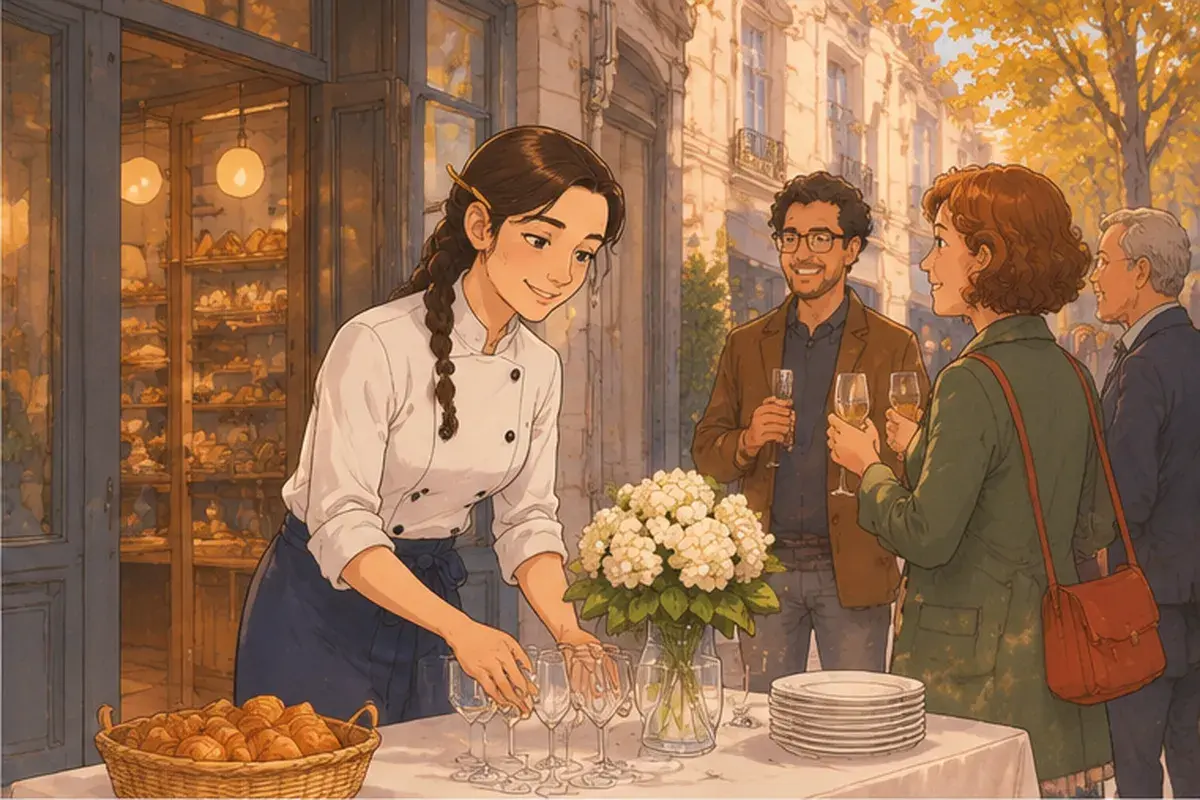
À midi, la boulangerie ressemble à un petit village en fête. Camille a installé le buffet devant la porte, et les convives arrivent un verre à la main, par groupes de cinq ou six.
At noon, the bakery looks like a little village at a festival. Camille has set up the buffet in front of the door, and the guests arrive glass in hand, in groups of five or six.
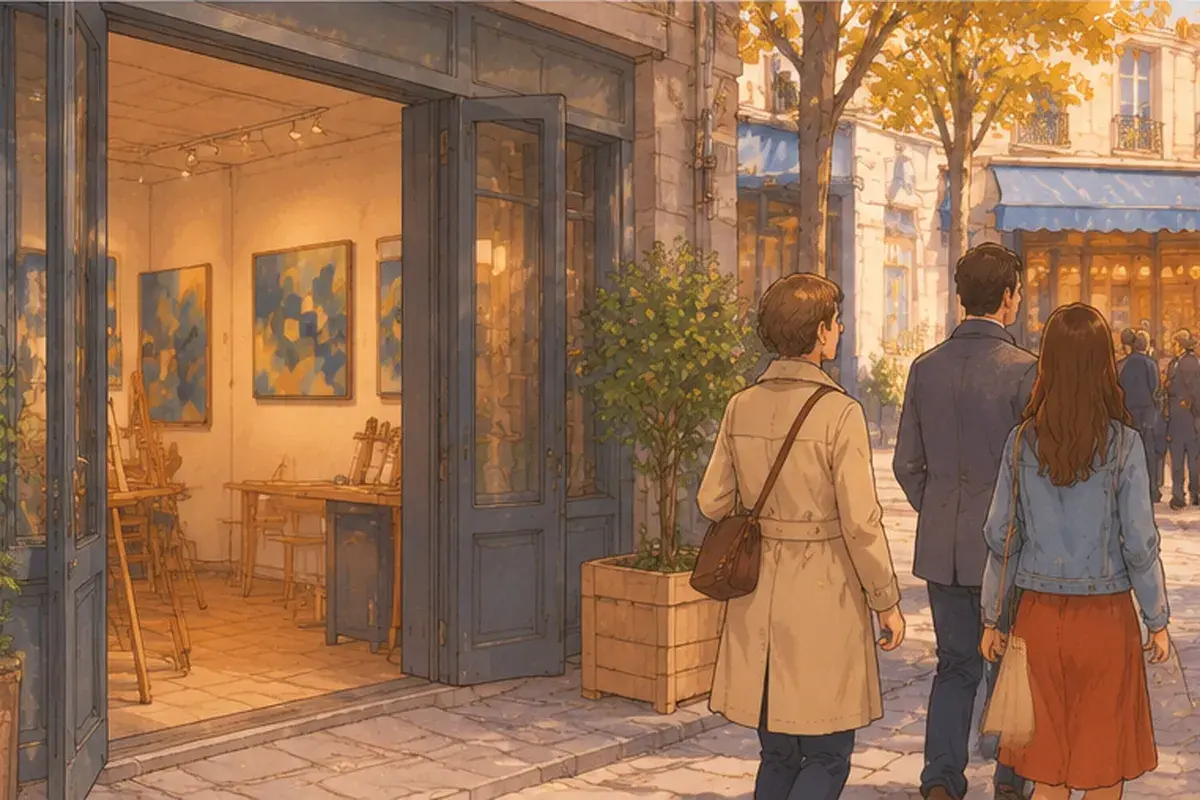
Même l'atelier d'artiste d'à côté, qui fait son vernissage le même jour, a perdu ses invités : ils sont venus voir ce qui attire tant de monde ici.
Even the artist's studio next door, which is having its vernissage (art opening) the same day, has lost its guests: they came to see what's drawing so many people here.
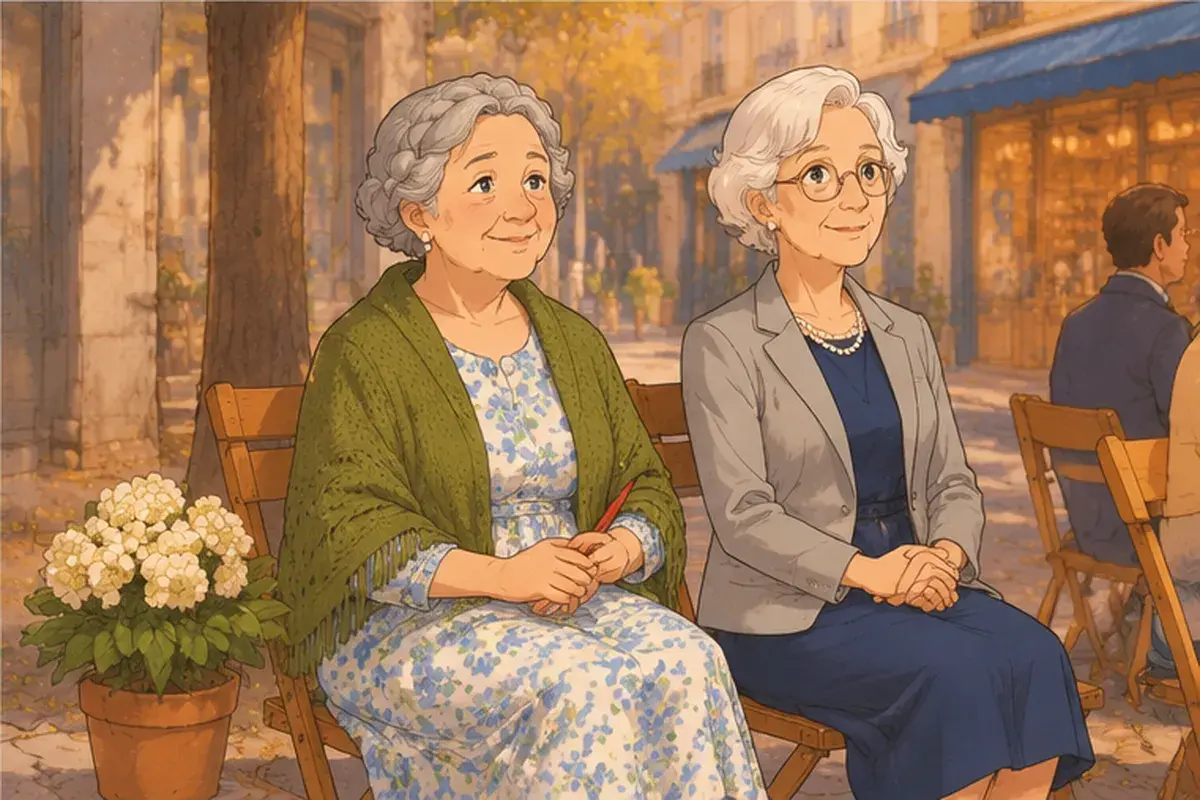
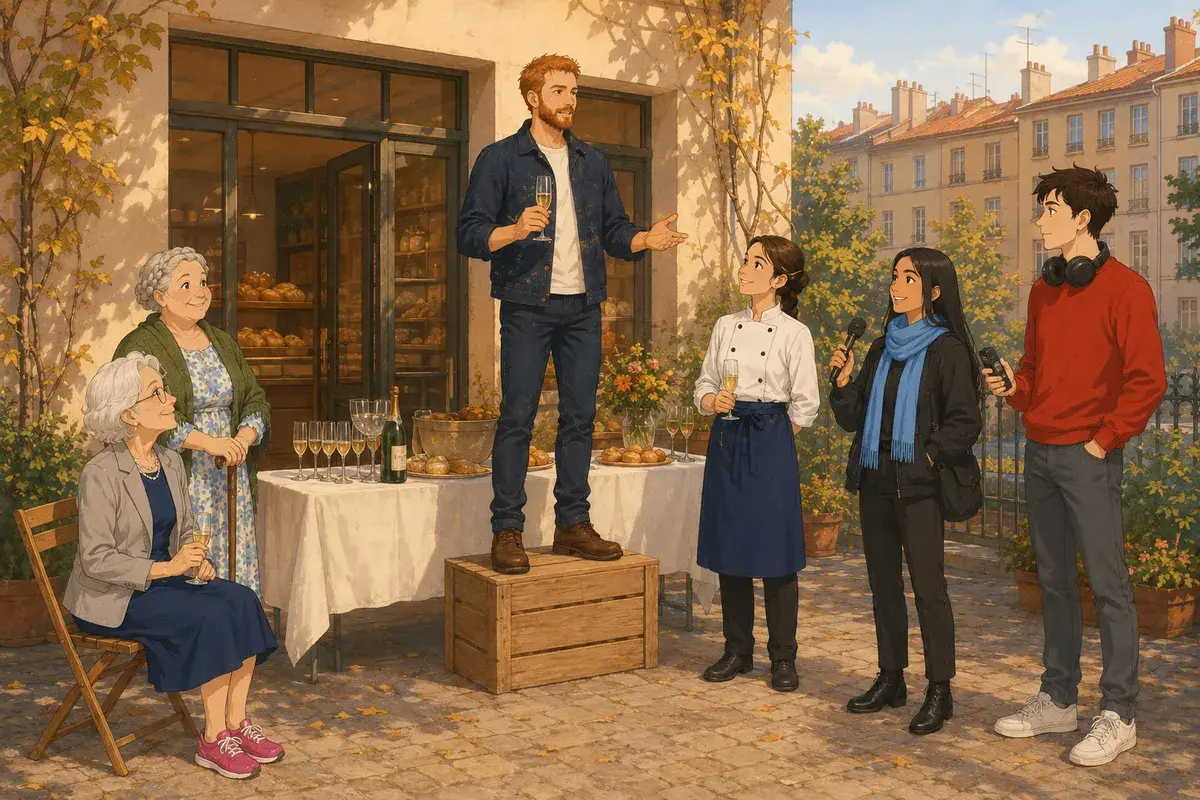
Madame Morel est assise au premier rang, à côté de sa sœur Jeanne. Elle a apporté une plante verte pour la boulangerie et son stylo rouge pour le discours.
Madame Morel is sitting in the front row, next to her sister Jeanne. She brought a green plant for the bakery and her red pen for the speech.
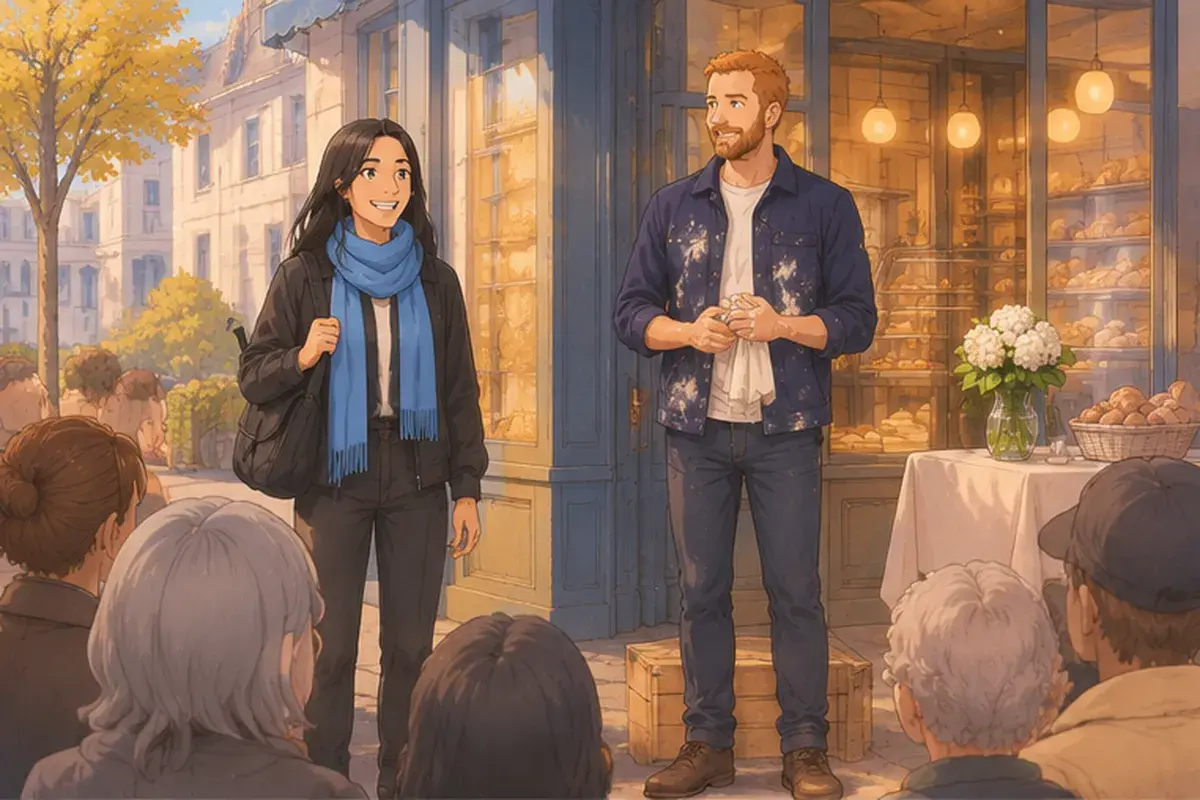
Inès est arrivée de Paris par le premier train, un micro dans son sac. En voyant la foule, elle demande s'il y aura un bal ; Hugo répond qu'il ne danse qu'avec la pâte.
Inès arrived from Paris on the first train, with a microphone in her bag. Seeing the crowd, she asks whether there will be a dance; Hugo answers that he only dances with dough.
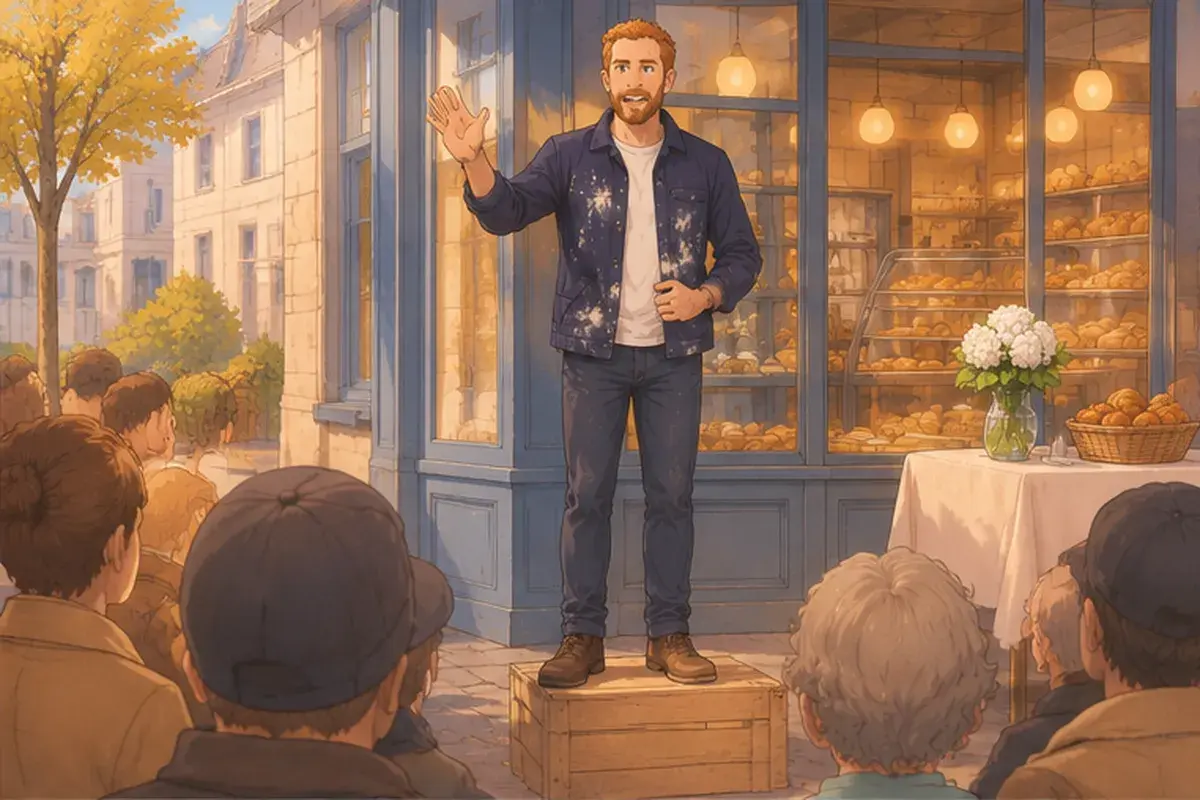
Quand Hugo monte sur une caisse en bois, tout le monde se tait. Il salue la foule d'un signe de tête, comme un chef d'orchestre, puis cherche sa fiche dans les poches de son costume.
When Hugo climbs onto a wooden crate, everyone goes quiet. He greets the crowd with a nod, like a conductor, then looks for his card in the pockets of his suit.
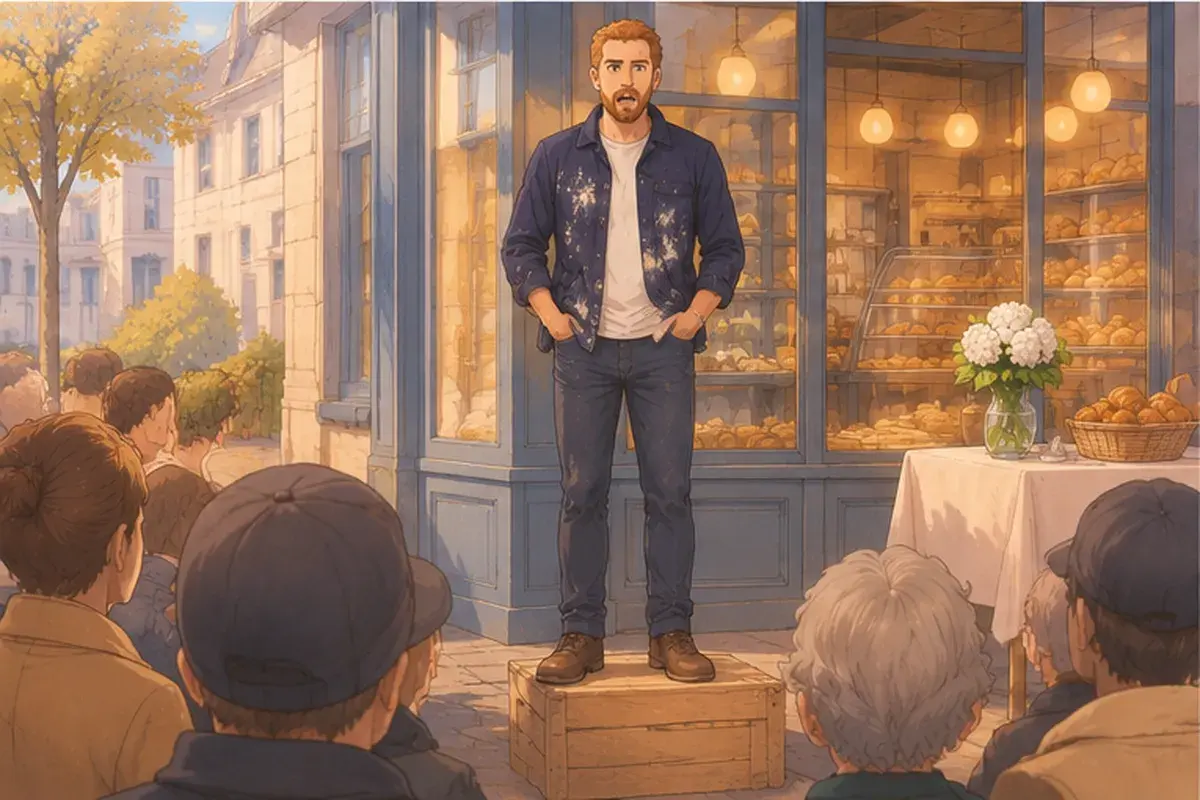
La fiche est restée dans la poche de sa veste de boulanger, accrochée derrière la porte du fournil. Hugo ouvre la bouche : « Mesdames et messieurs, chers convives… » Il a le trac : il bégaie deux fois sur « Mesdames », puis il a un trou et se tait.
The card stayed in the pocket of his baker's jacket, hanging behind the workroom door. Hugo opens his mouth: "Ladies and gentlemen, dear guests…" He has stage fright: he stutters twice on "Ladies", then he draws a blank and goes quiet.
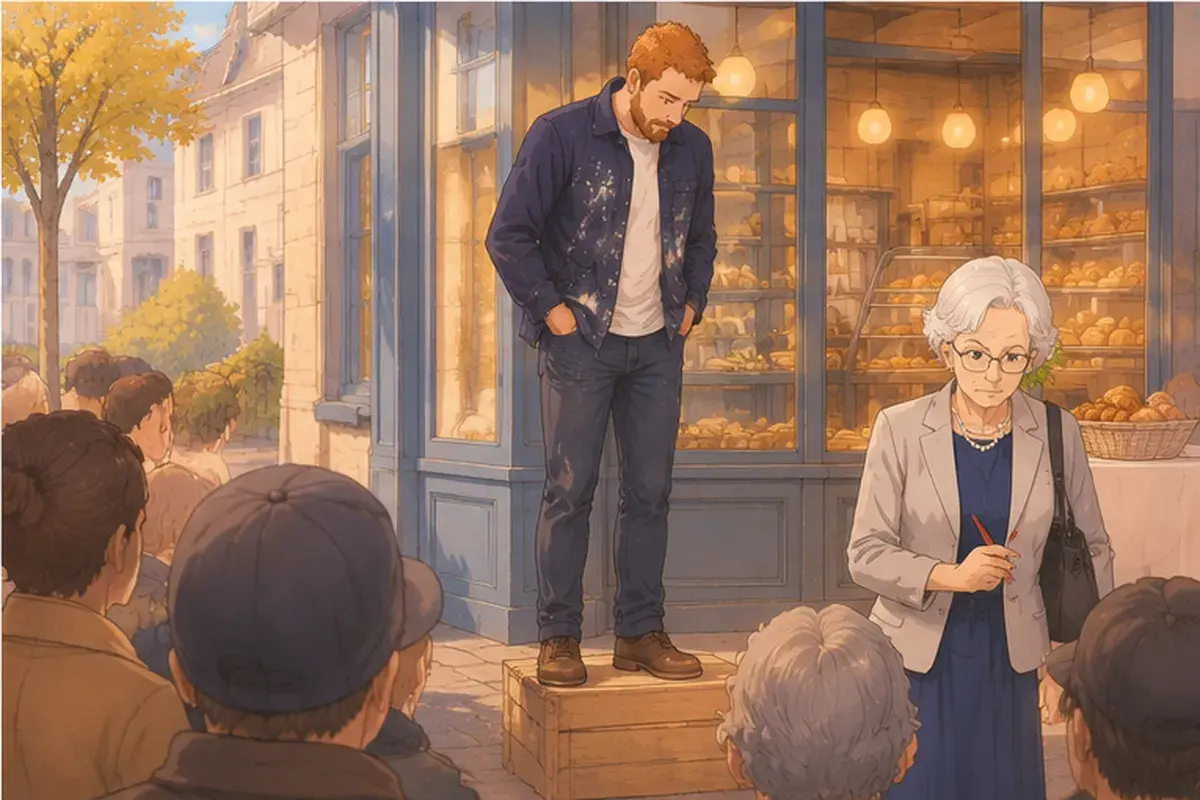
Il bafouille quelque chose sur la farine, regarde la foule, regarde ses chaussures. Au premier rang, Madame Morel baisse son stylo rouge : pour l'instant, il n'y a rien à corriger, il n'y a presque rien du tout.
He mumbles something about flour, looks at the crowd, looks at his shoes. In the front row, Madame Morel lowers her red pen: for now there's nothing to correct, there's hardly anything at all.
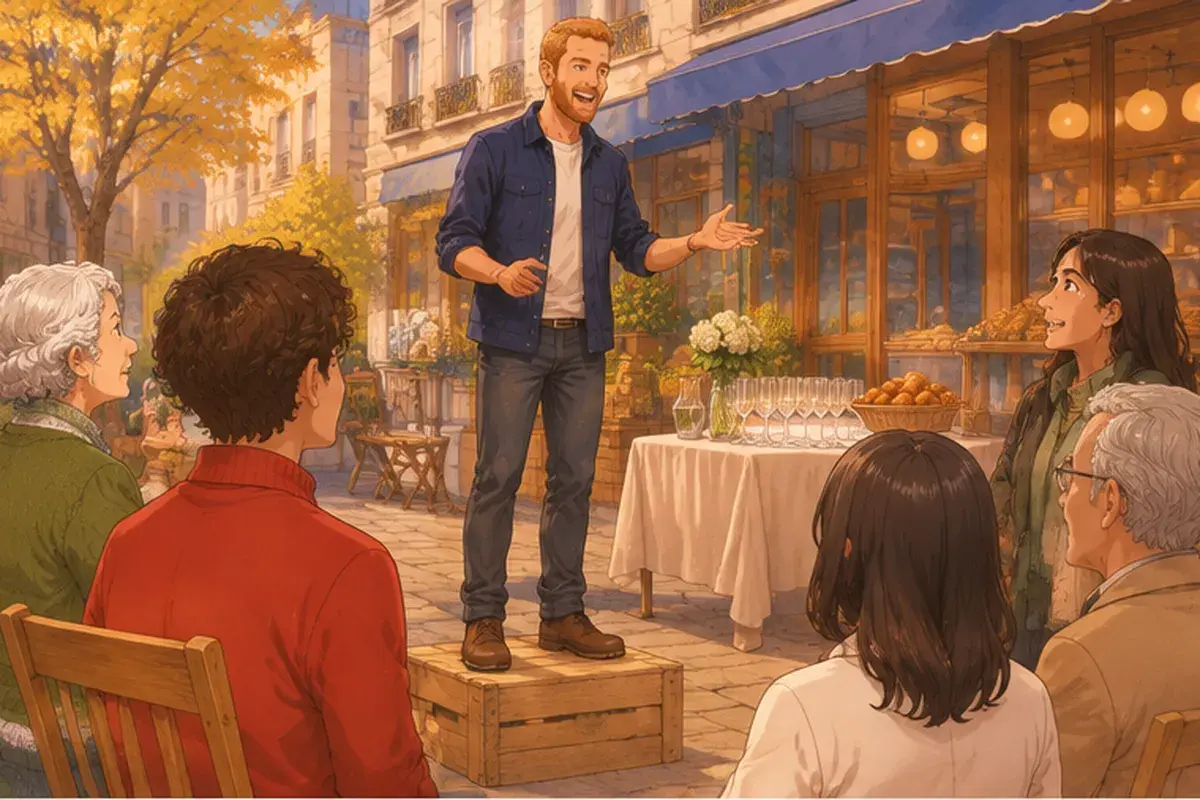
Alors Hugo rit et improvise : « Si j'avais pris ma fiche, je vous aurais lu trois phrases bien polies. Mais il y a deux ans, j'étais dans une tour de verre et je faisais des tableaux que personne ne lisait. Aujourd'hui, je fais du pain, et tout le monde le mange. »
Then Hugo laughs and improvises: "If I had taken my card, I would have read you three very polite sentences. But two years ago I was in a glass tower making spreadsheets that nobody read. Today I make bread, and everyone eats it." (to several people)
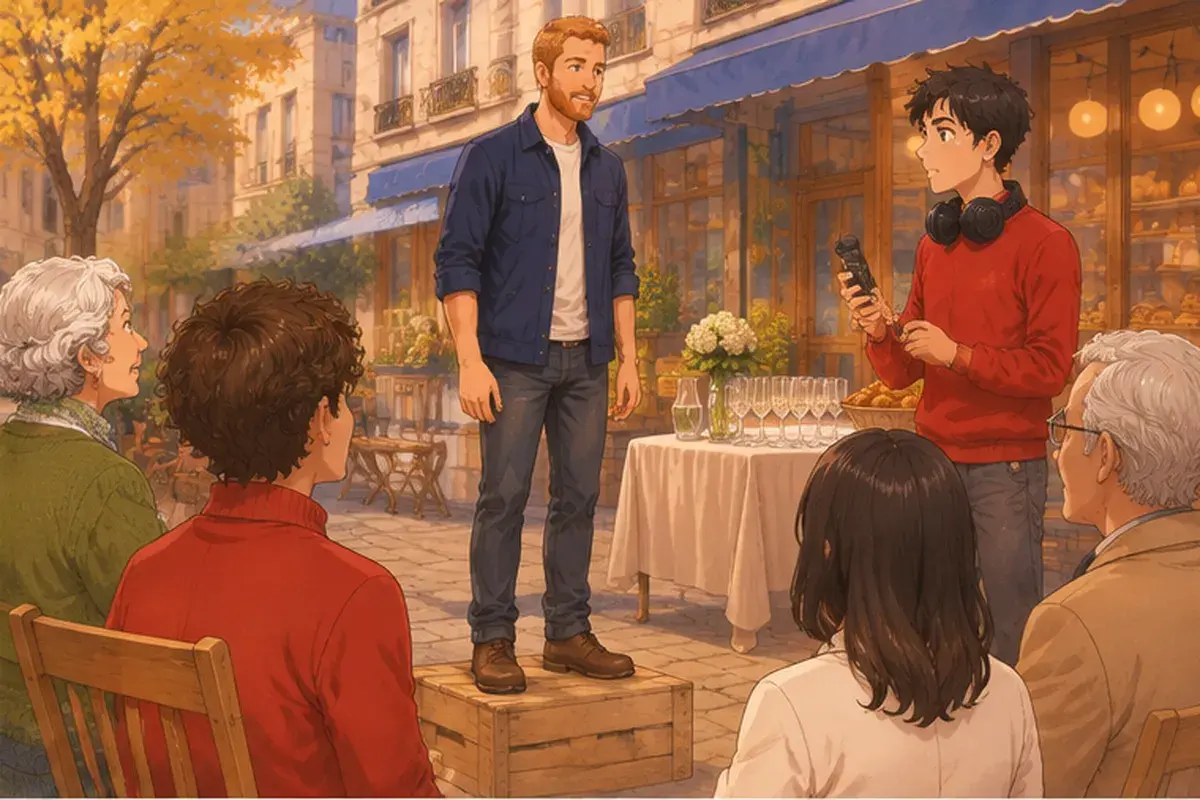
« Ce qui m'a surpris, c'est qu'un four ne ment jamais : si le pain est raté, on le voit tout de suite. Et sans Camille, il n'y aurait pas de boulangerie. » Il parle de plus en plus doucement, et je règle le niveau de mon enregistreur sans quitter Hugo des yeux.
"What surprised me is that an oven never lies: if the bread doesn't turn out right, you can see it right away. And without Camille, there wouldn't be a bakery." He speaks more and more softly, and I adjust the level on my recorder without taking my eyes off Hugo.
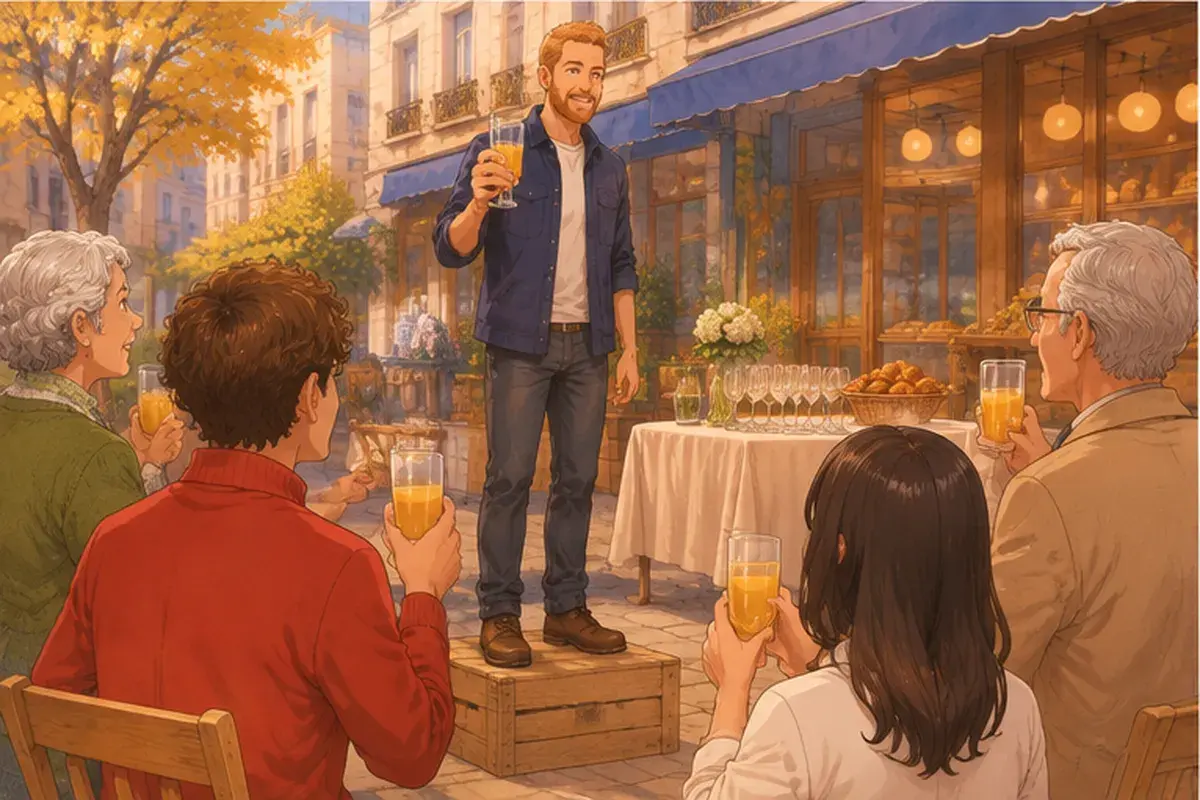
Puis il prend son verre de jus de pomme : « Je voudrais porter un toast à Camille, à la farine, et à tous ceux qui font la queue à six heures du matin pour du pain. »
Then he picks up his glass of apple juice: "I'd like to raise a toast to Camille, to the flour, and to everyone who waits in line at six in the morning for bread."

Les applaudissements éclatent si fort que les oiseaux quittent le toit. Camille rit et pleure en même temps ; Inès crie « Bravo ! » avec son accent de Marseille.
The applause breaks out so loudly that the birds fly off the roof. Camille laughs and cries at the same time; Inès shouts "Bravo!" with her Marseille accent.
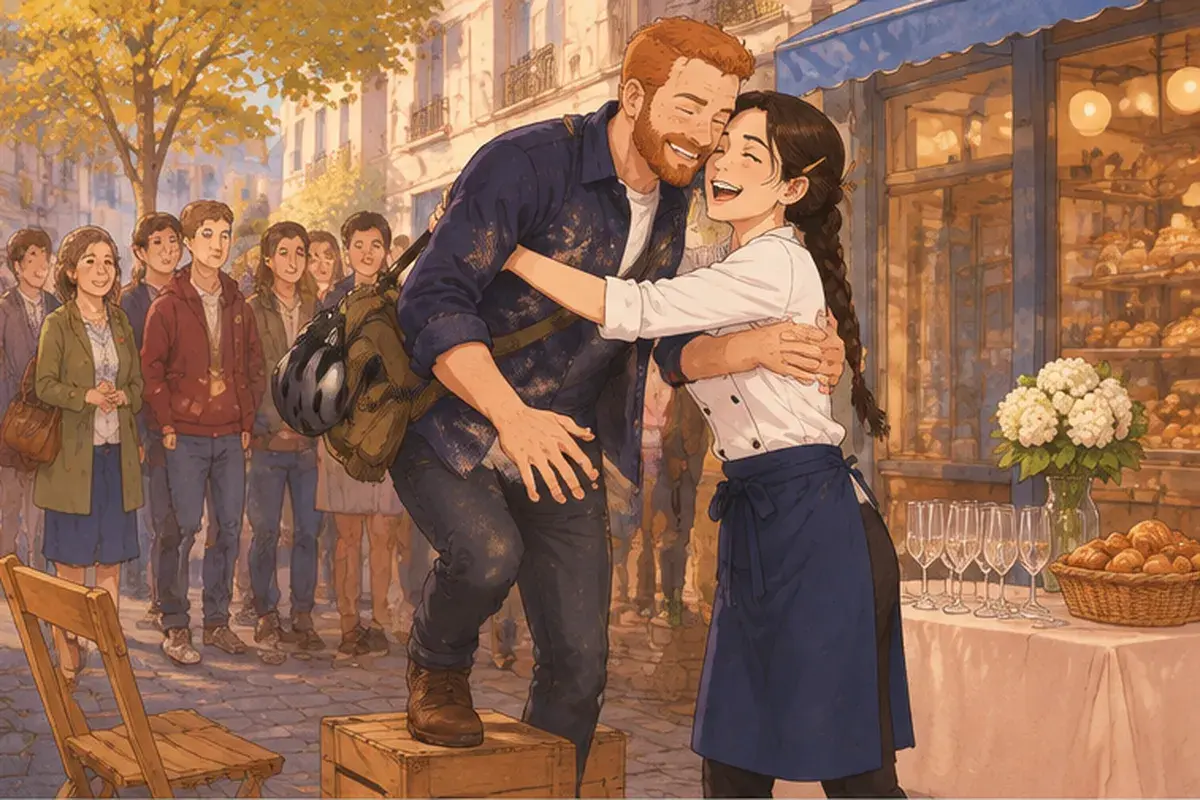
Hugo descend de sa caisse, et Camille lui donne enfin l'accolade promise le matin. La cérémonie a duré six minutes ; la file d'attente, elle, est toujours aussi longue.
Hugo climbs down from his crate, and Camille finally gives him the hug she promised that morning. The ceremony lasted six minutes; the line, meanwhile, is still just as long.
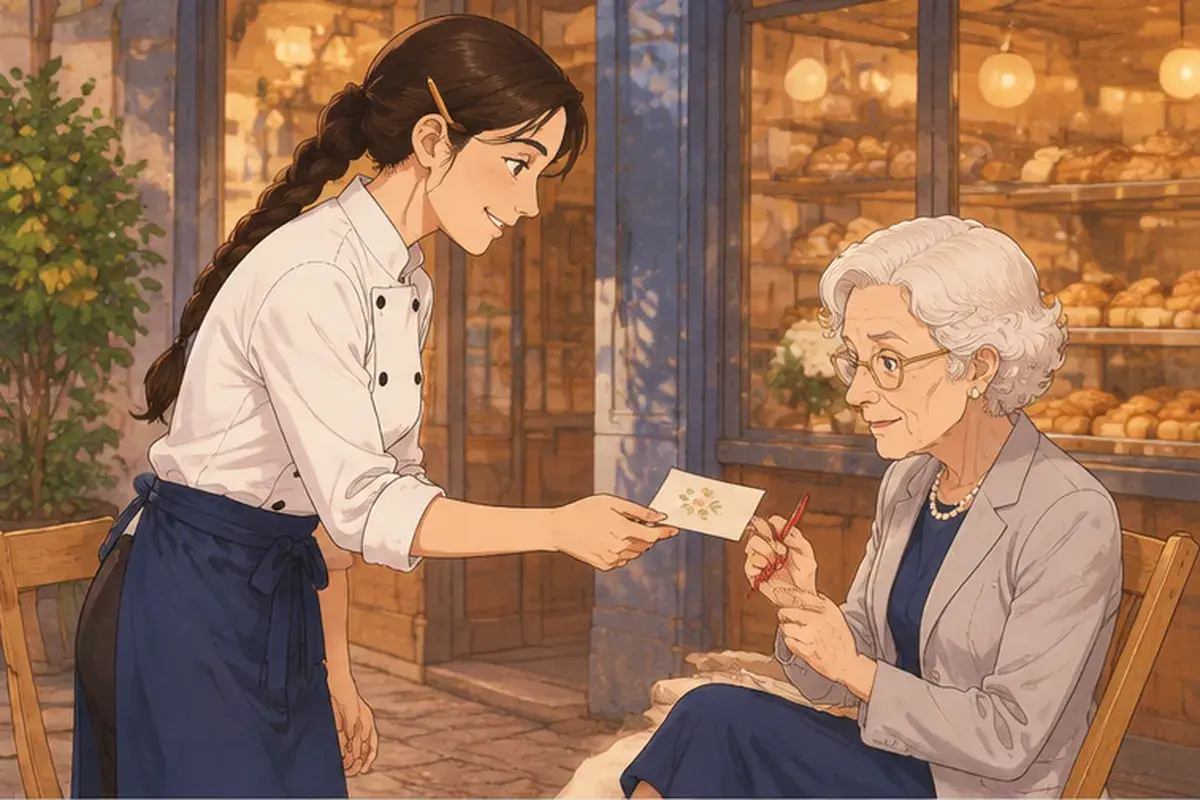
Camille a couru chercher la fiche dans la veste de boulanger. Madame Morel la lit de près, stylo rouge à la main : pas un accent oublié, pas un trait d'union de trop.
Camille ran to get the card from the baker's jacket. Madame Morel reads it up close, red pen in hand: not one accent forgotten, not one hyphen too many.
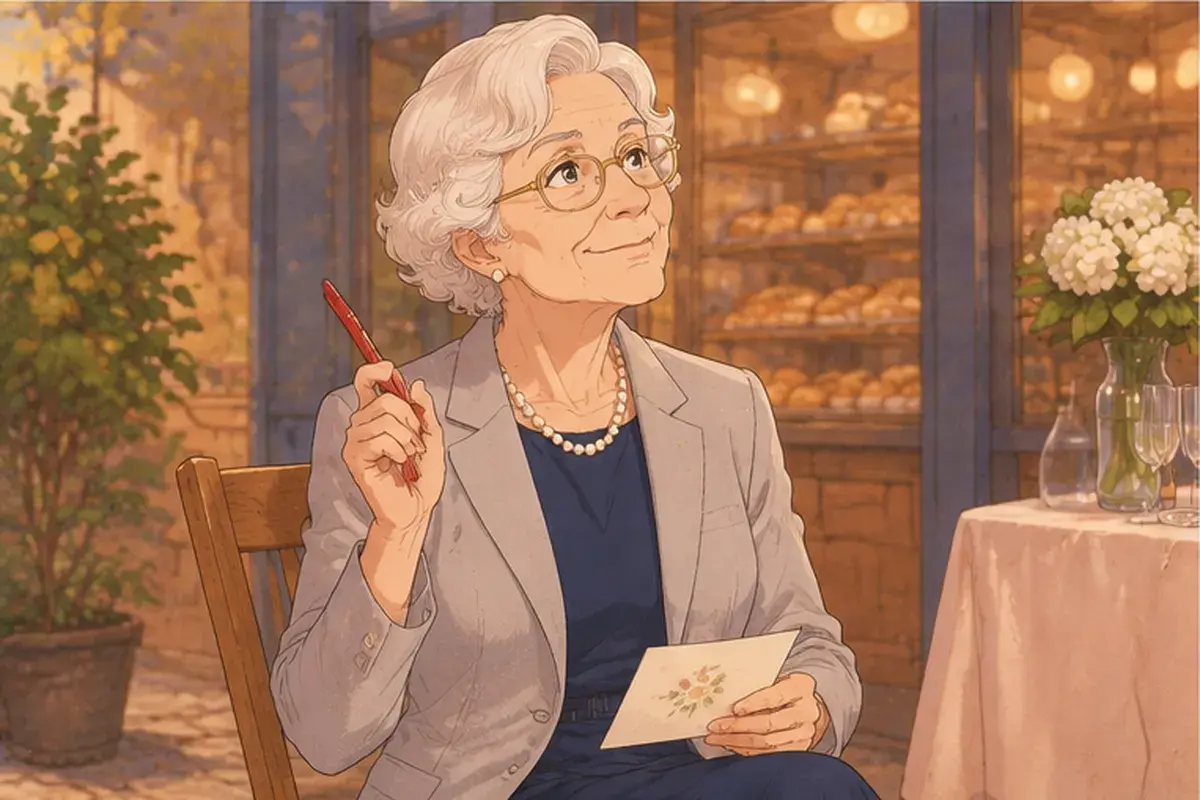
Elle donne son avis : « Vous aviez prévu trois phrases, vous en avez dit quinze, et il n'y a pas une faute. La fiche était parfaite, mais ce que vous avez dit sans elle était mieux. »
She gives her opinion: "You had planned three sentences, you said fifteen of them, and there isn't a single mistake. The card was perfect, but what you said without it was better." (formal)
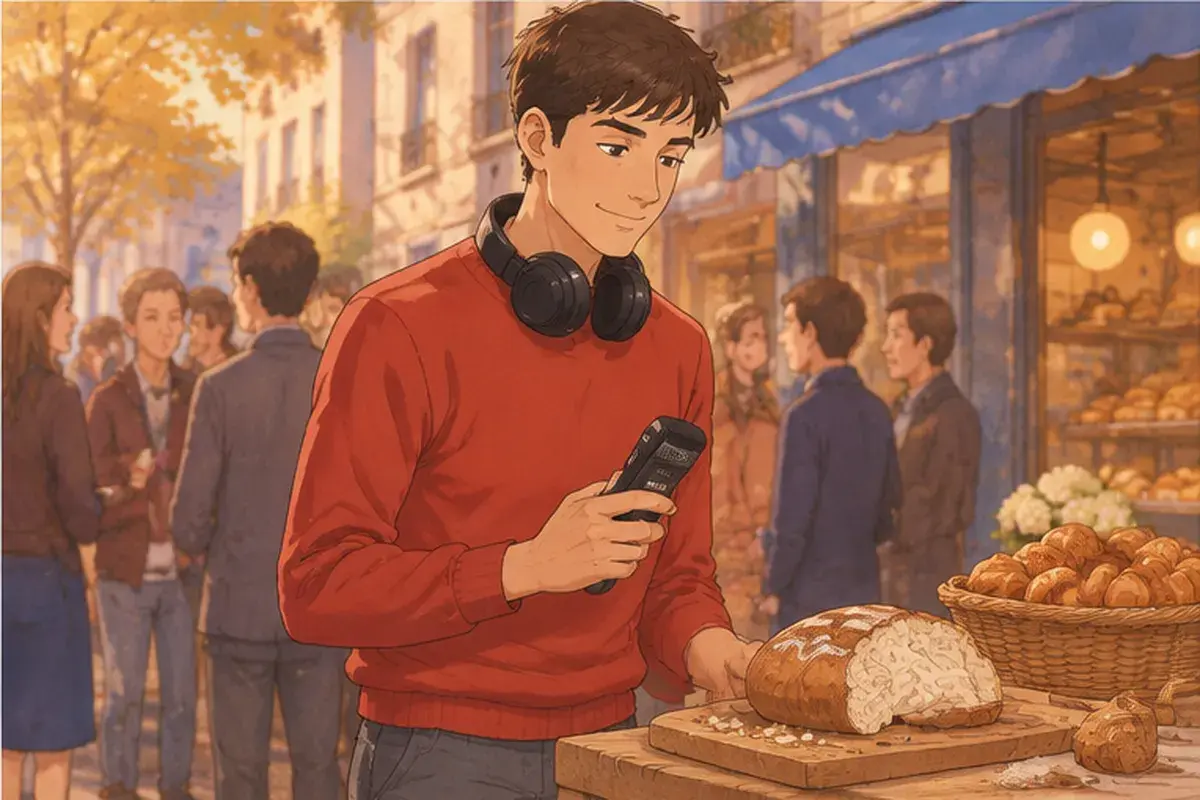
J'ai tout enregistré : Hugo qui bégaie, les applaudissements et le bruit d'une croûte qu'on casse. Hugo m'a demandé de garder ce moment-là : c'est le seul de la journée où il n'a pas fait semblant.
I recorded everything: Hugo stuttering, the applause and the sound of a crust being broken. Hugo asked me to keep that moment: it's the only one all day when he wasn't pretending.
Grammar for this text
- Mesdames et messieurs, chers convives — the formal opening of a speech. A
conviveis someone sitting at a festive table. - Il bégaie deux fois sur « Mesdames », Il bafouille quelque chose sur la farine —
bégayermeans to repeat one sound (to stutter);bafouillermeans to get tangled up and mumble. - Il a le trac, il a un trou —
avoir le tracmeans "to have stage fright";avoir un troumeans "to suddenly forget what you wanted to say" (to draw a blank). Both useavoir:j'ai le trac,il a eu un trou. - Si j'avais pris ma fiche, je vous aurais lu trois phrases — an "if" sentence about the past:
si+j'avais pris(past perfect), thenje vous aurais lu(past conditional). He didn't take the card, so he speaks differently. English works the same way: "If I had taken my card, I would have read…". - Ce qui m'a surpris, c'est qu'un four ne ment jamais — emphasis: "what surprised me is that…".
surprisis the past participle ofsurprendre. - sans Camille, il n'y aurait pas de boulangerie —
sans+ a name + the conditional: "without Camille, there wouldn't be…", the same as "if it weren't for Camille…" (like unit 13). - Je voudrais porter un toast à Camille —
porter un toast àmeans "to raise a glass to";je voudraisis the polite "I'd like". - Les applaudissements éclatent —
éclaterhere means "to break out" (not "to burst"). - vous en avez dit quinze —
enmeans "of them": "you said fifteen of them". pas un trait d'union de trop —trait d'unionis a hyphen, andde tropmeans "too many".
Words and grammar of the unit: Invite people to an opening and give a speech.
Learn the words from the texts with flashcards
In the app, you can tap any word in a text to see its translation, forms and examples, and new words stick with flashcards. 15 minutes a day.
Start for freeEverything is open for free. No card needed to sign up.