

French dialogue with translation · B2 · 18 lines
Le salarié est tenu de… The employee is required to…
Comic · 18 panels
- Baptiste
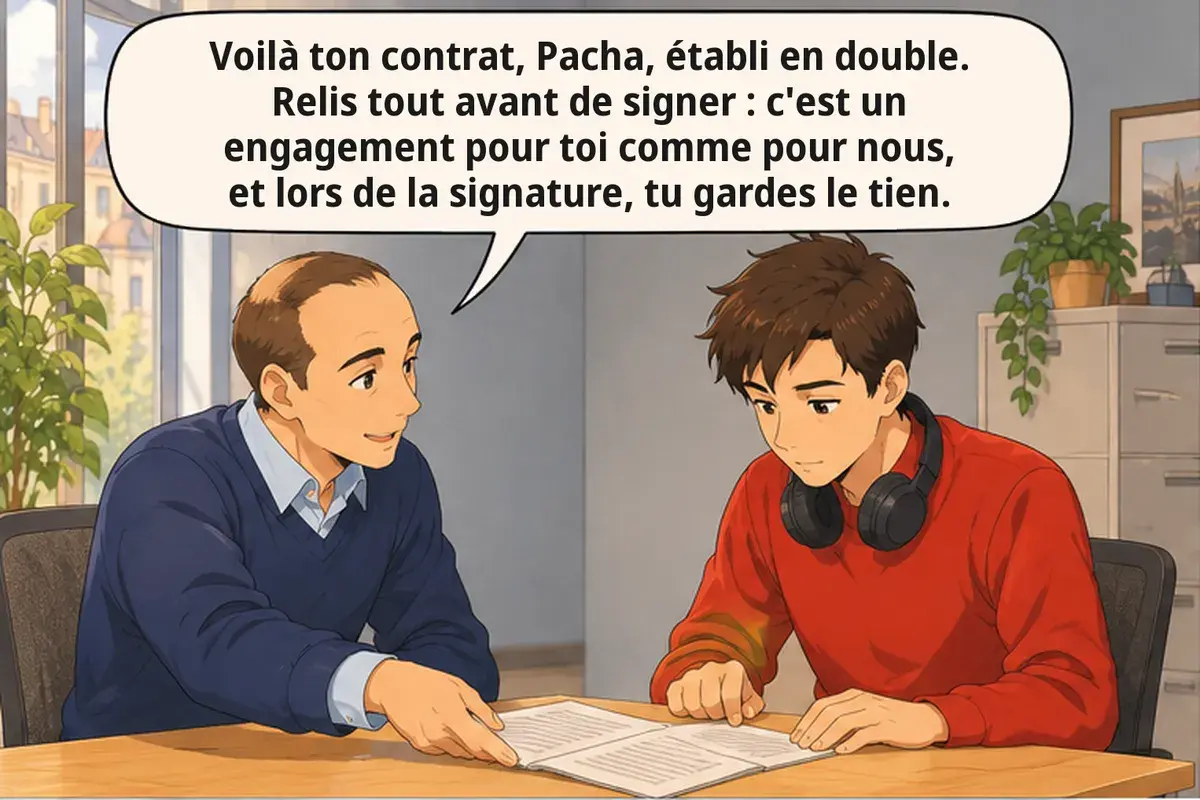
Voilà ton contrat, Pacha, établi en double. Relis tout avant de signer : c'est un engagement pour toi comme pour nous, et lors de la signature, tu gardes le tien.
Here's your contract, Pacha, drawn up in two copies. Reread everything before you sign: it's a commitment for you as much as for us, and when you sign, you keep yours.
- Pacha
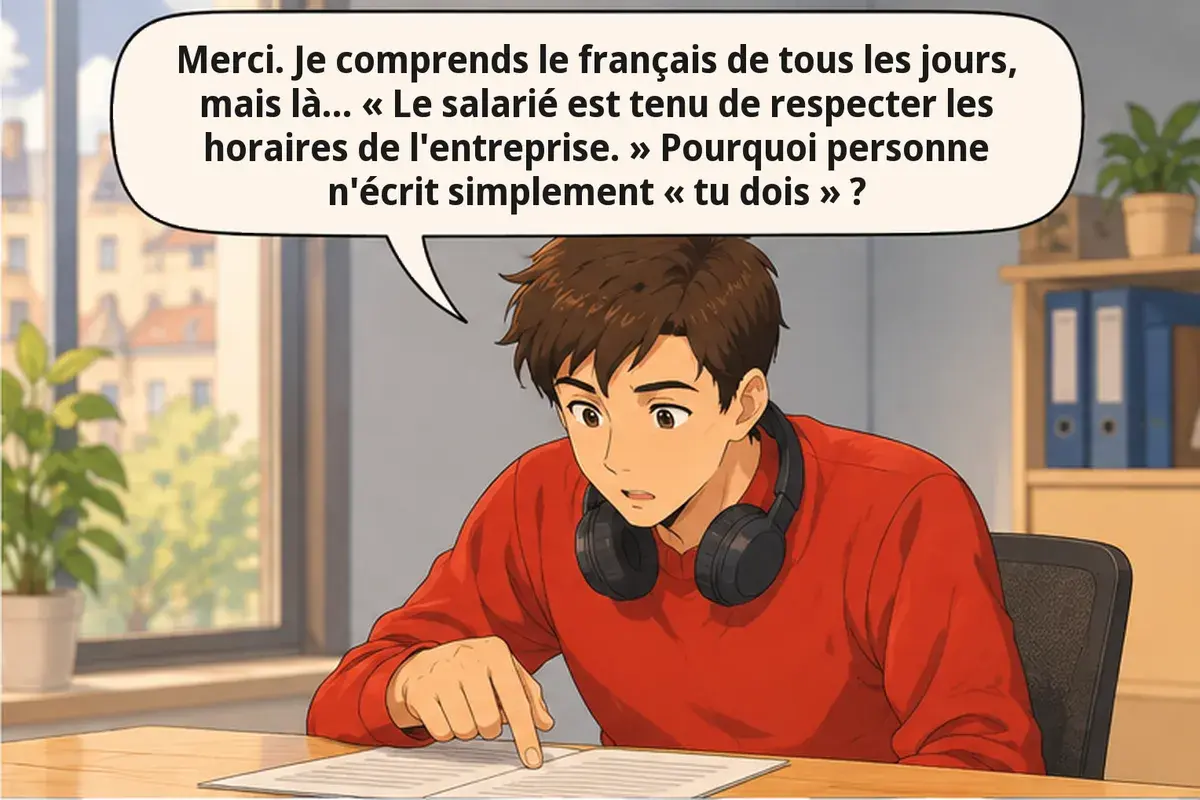
Merci. Je comprends le français de tous les jours, mais là… « Le salarié est tenu de respecter les horaires de l'entreprise. » Pourquoi personne n'écrit simplement « tu dois » ?
Thanks. I understand everyday French, but this… "The employee is required to respect the company's working hours." Why doesn't anyone just write "you must"?
- Baptiste
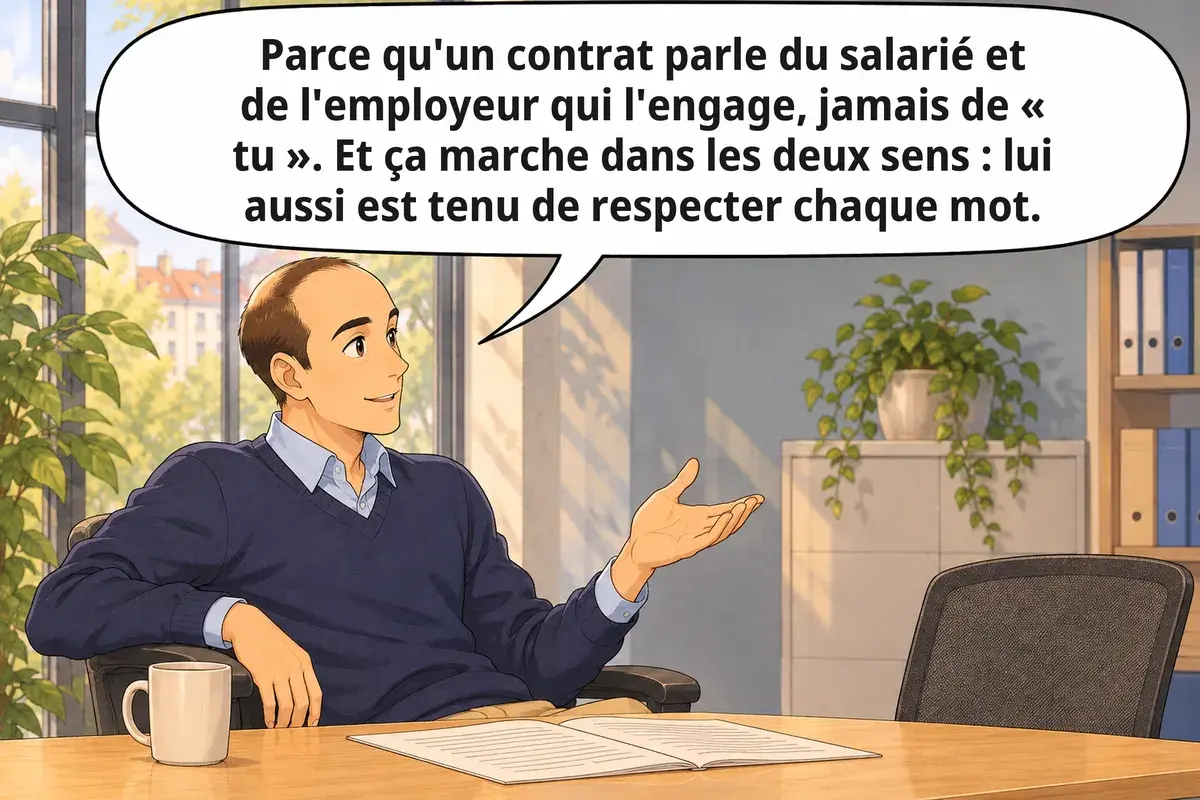
Parce qu'un contrat parle du salarié et de l'employeur qui l'engage, jamais de « tu ». Et ça marche dans les deux sens : lui aussi est tenu de respecter chaque mot.
Because a contract talks about the employee and the employer who hires them, never about "you." And it works both ways: the employer too is required to respect every word.
- Pacha
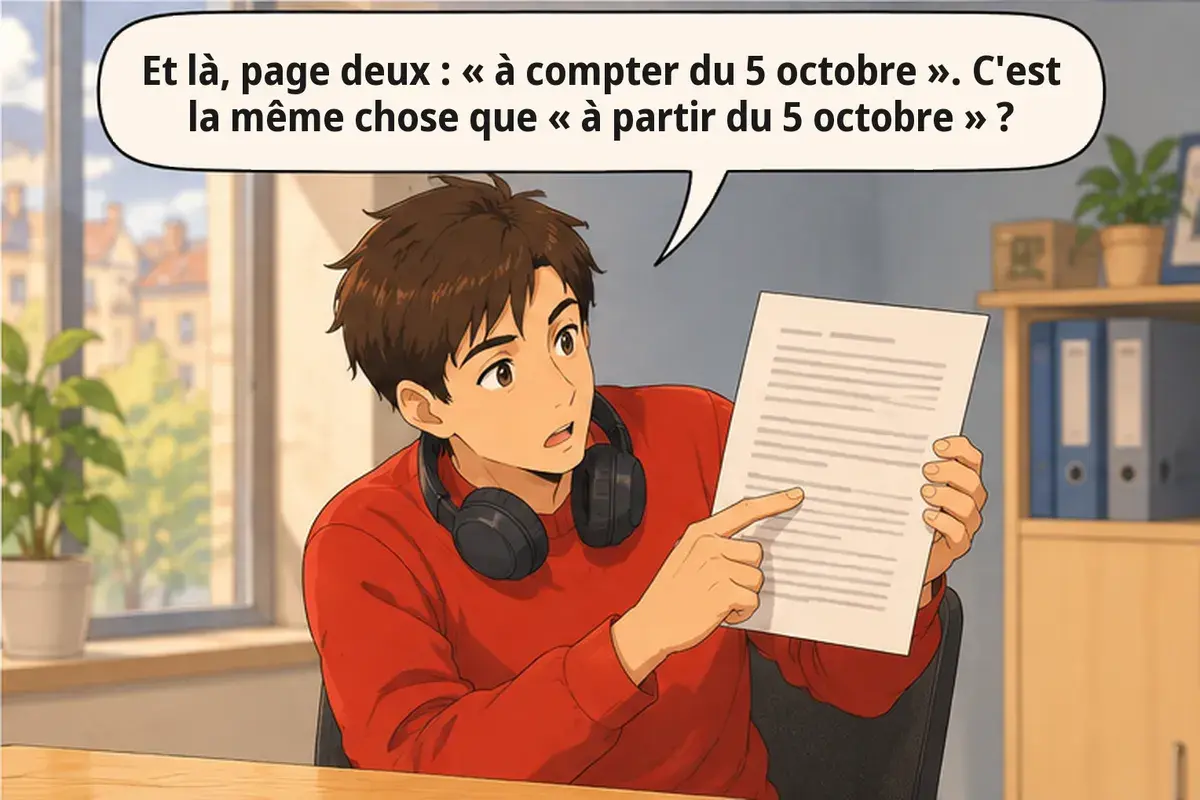
Et là, page deux : « à compter du 5 octobre ». C'est la même chose que « à partir du 5 octobre » ?
And here, page two: "as of October 5." Is that the same as "starting October 5"?
- Baptiste
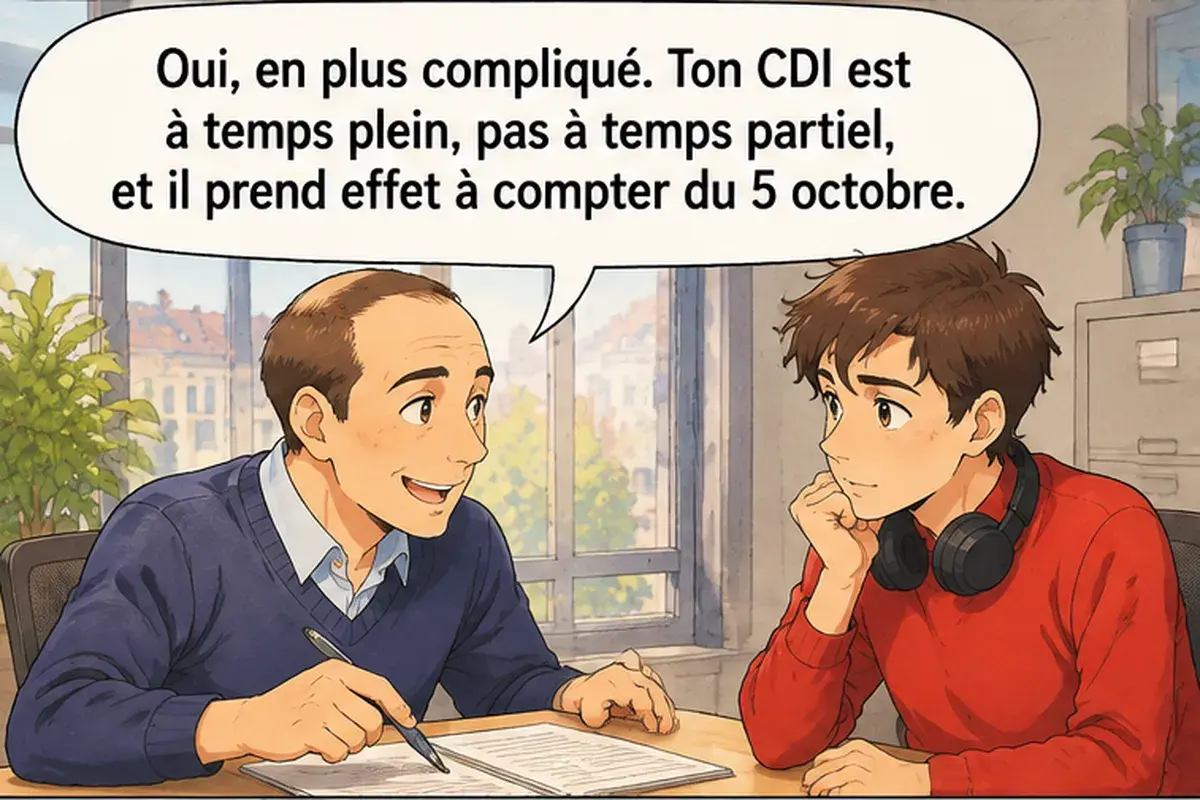
Oui, en plus compliqué. Ton CDI est à temps plein, pas à temps partiel, et il prend effet à compter du 5 octobre.
Yes, only more complicated. Your permanent contract (CDI) is full-time, not part-time, and it takes effect as of October 5.
- Pacha
Et la période d'essai, elle dure combien de temps ? Qu'est-ce qui se passe lorsqu'elle finit ?
And the trial period, how long does it last? What happens when it ends?
- Baptiste
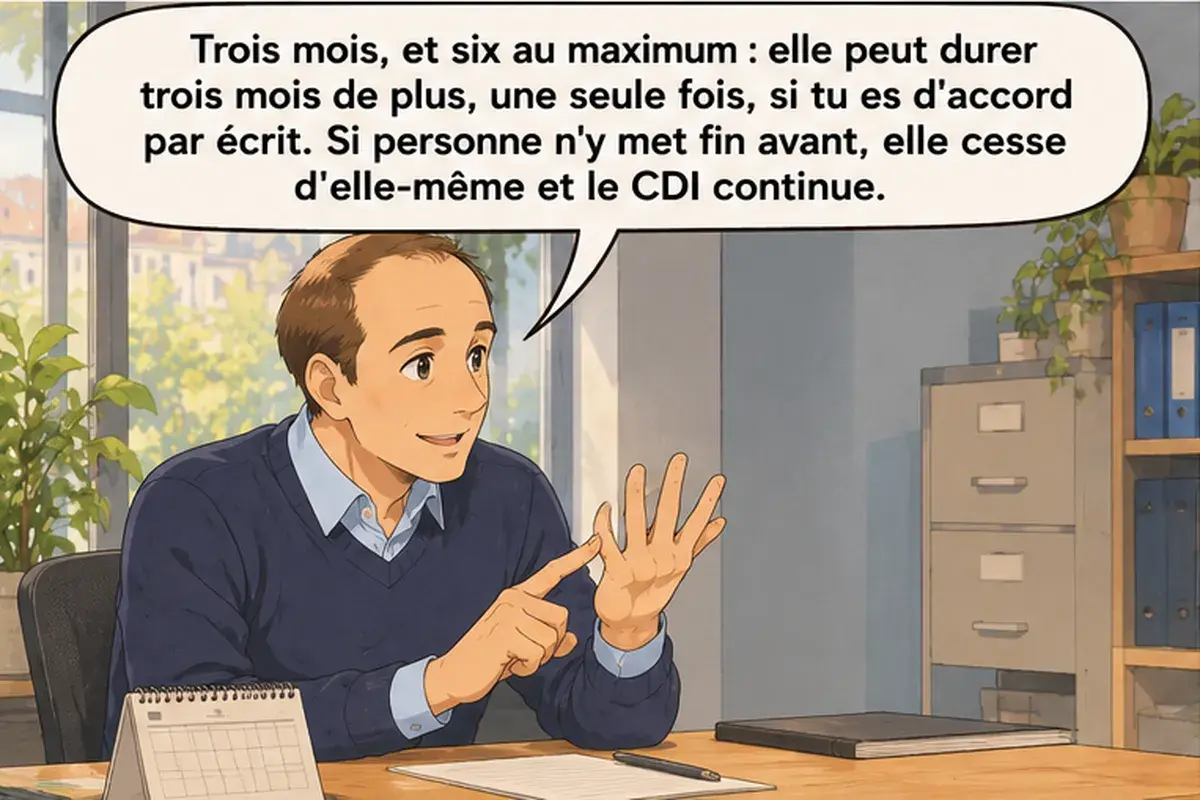
Trois mois, et six au maximum : elle peut durer trois mois de plus, une seule fois, si tu es d'accord par écrit. Si personne n'y met fin avant, elle cesse d'elle-même et le CDI continue.
Three months, and six at the most: it can last three more months, just once, if you agree in writing. If no one ends it before then, it ends by itself and the permanent contract continues.
- Pacha
Et pendant ces trois mois, chacun peut arrêter le contrat quand il veut ?
And during those three months, can each side end the contract whenever it wants?
- Baptiste
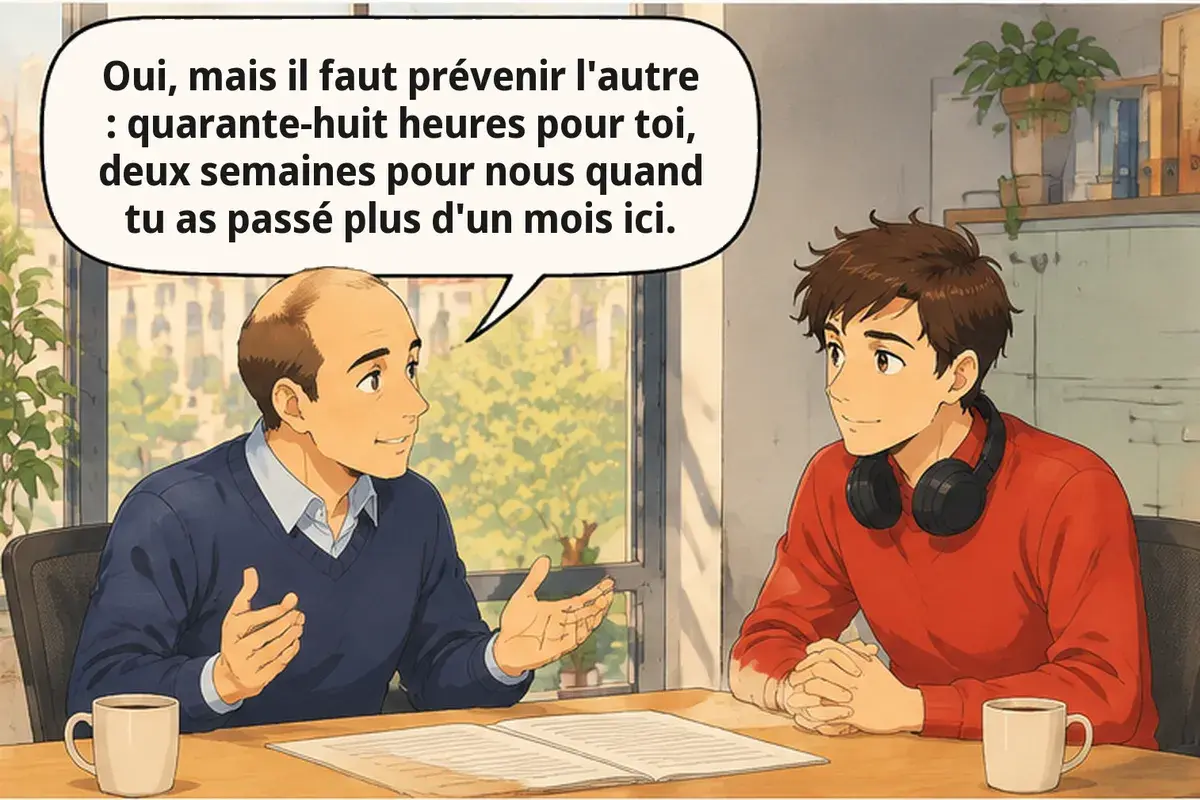
Oui, mais il faut prévenir l'autre : quarante-huit heures pour toi, deux semaines pour nous quand tu as passé plus d'un mois ici.
Yes, but you have to give the other side notice: forty-eight hours for you, two weeks for us once you've been here more than a month.
- Pacha
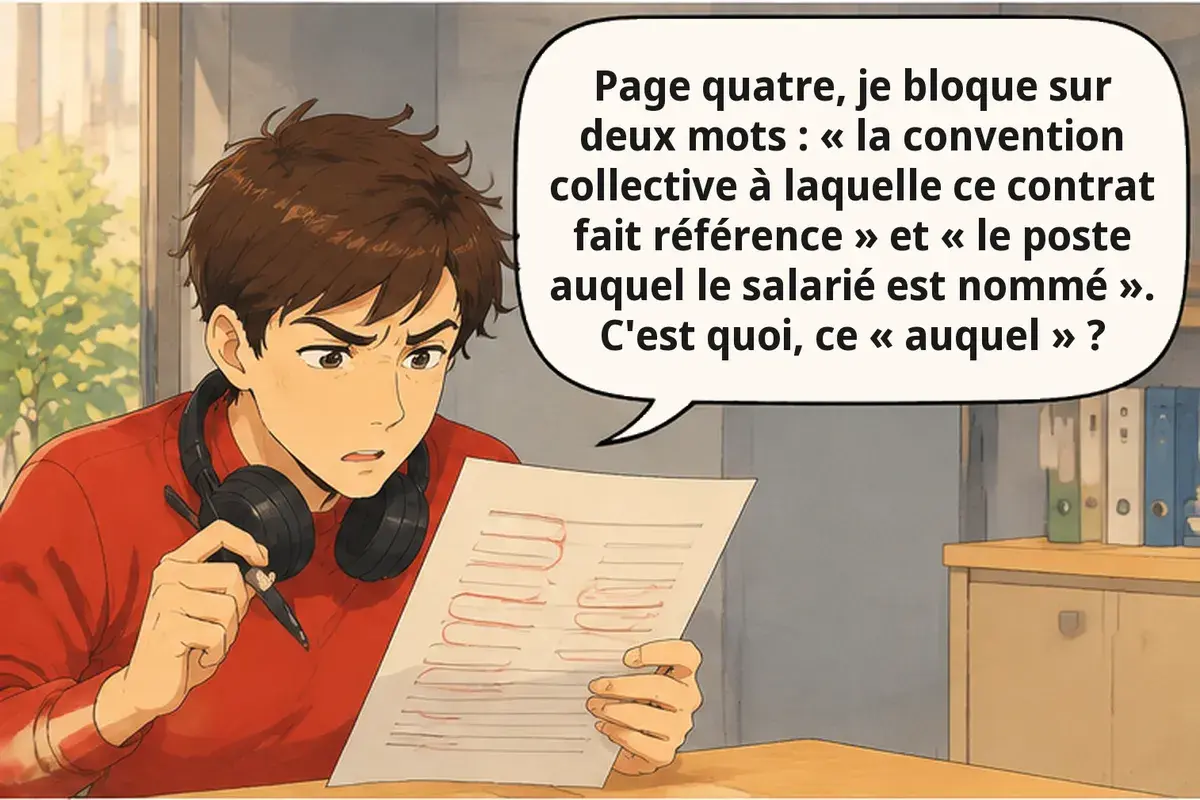
Page quatre, je bloque sur deux mots : « la convention collective à laquelle ce contrat fait référence » et « le poste auquel le salarié est nommé ». C'est quoi, ce « auquel » ?
Page four, I'm stuck on two phrases: "the collective agreement to which this contract refers" and "the position to which the employee is appointed." What is this "auquel"?
- Baptiste
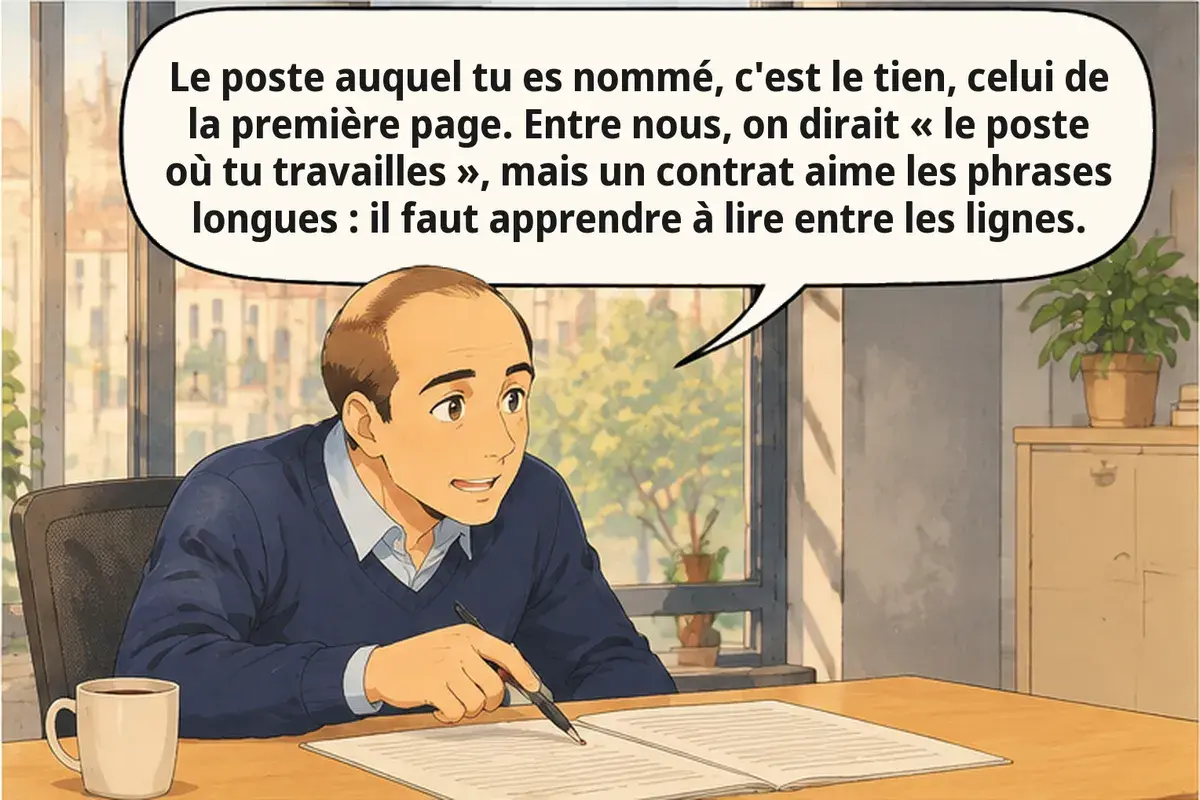
Le poste auquel tu es nommé, c'est le tien, celui de la première page. Entre nous, on dirait « le poste où tu travailles », mais un contrat aime les phrases longues : il faut apprendre à lire entre les lignes.
The position you're appointed to is yours, the one on the first page (to a man). Between us, we'd say "the position where you work," but a contract likes long sentences: you have to learn to read between the lines.
- Pacha
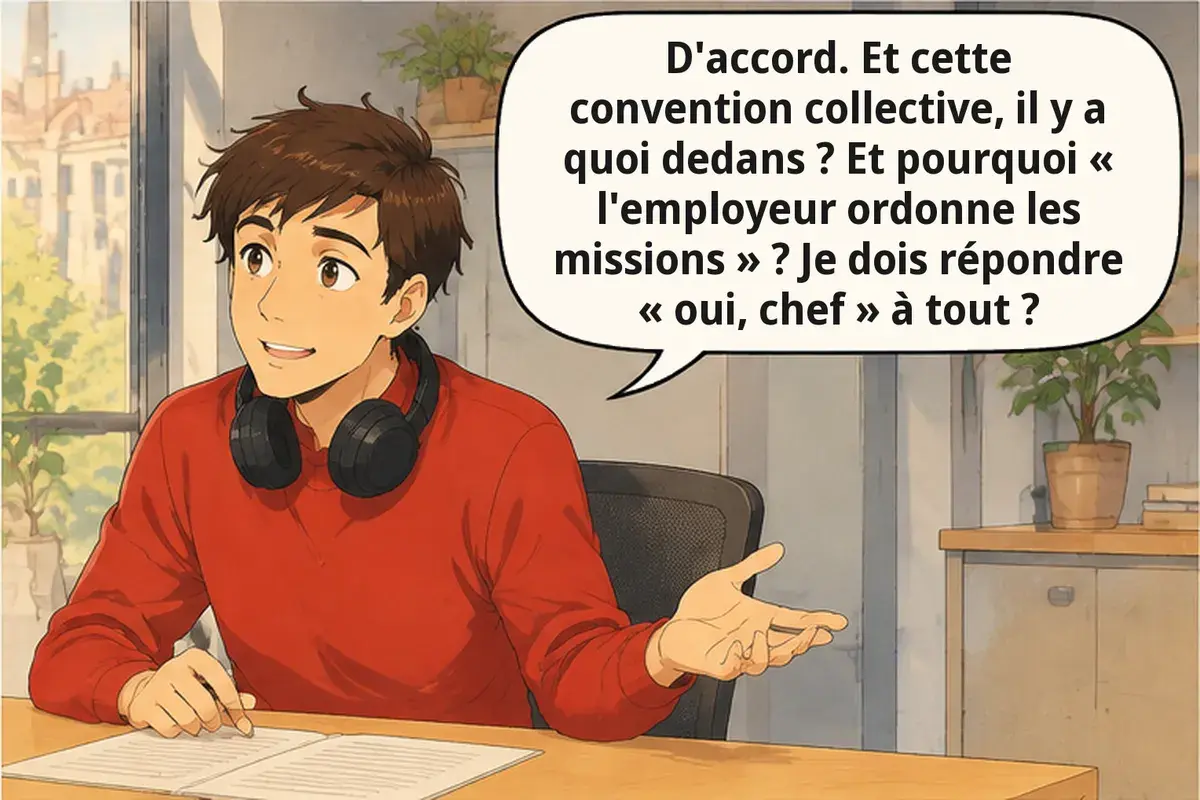
D'accord. Et cette convention collective, il y a quoi dedans ? Et pourquoi « l'employeur ordonne les missions » ? Je dois répondre « oui, chef » à tout ?
OK. And this collective agreement, what's in it? And why does it say "the employer orders the assignments"? Do I have to answer "yes, boss" to everything?
- Baptiste
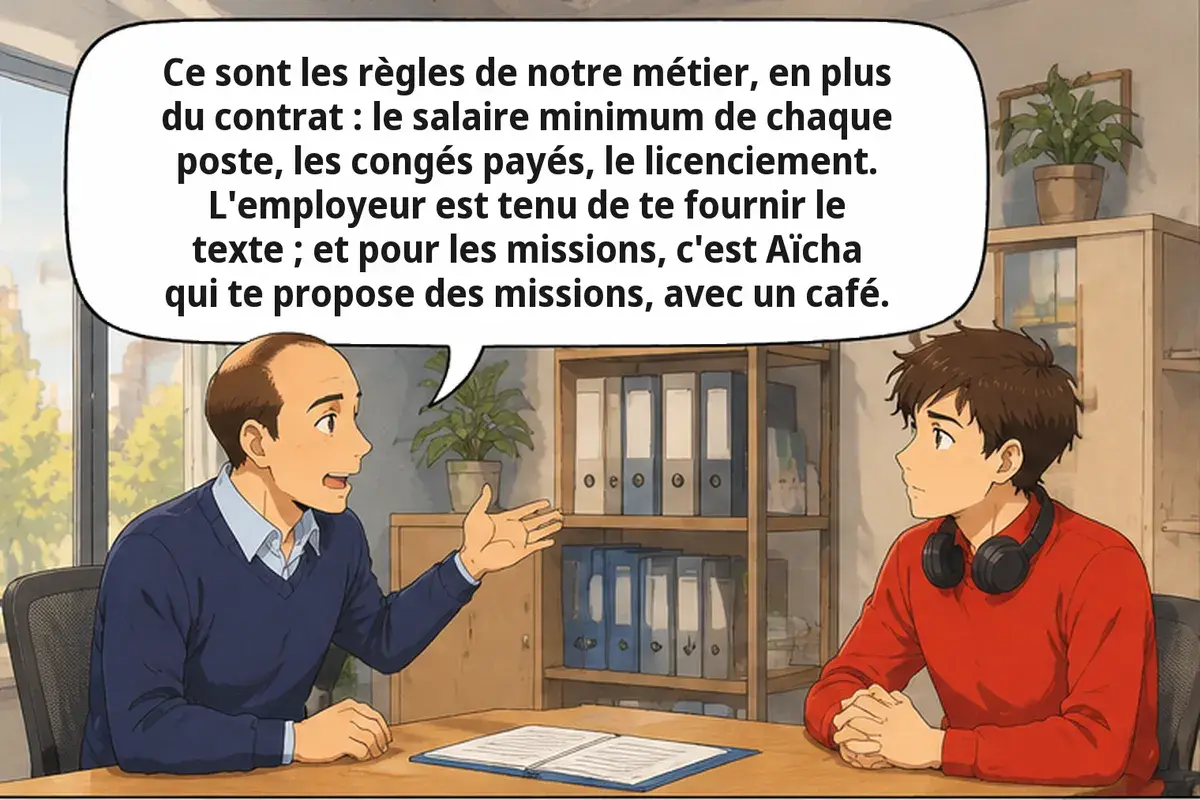
Ce sont les règles de notre métier, en plus du contrat : le salaire minimum de chaque poste, les congés payés, le licenciement. L'employeur est tenu de te fournir le texte ; et pour les missions, c'est Aïcha qui te propose des missions, avec un café.
These are the rules of our profession, on top of the contract: the minimum salary for each position, paid vacation, dismissal. The employer is required to provide you with the text; and as for assignments, Aïcha is the one who suggests assignments to you, over a coffee.
- Pacha
Et la mutuelle ? Je ne connais pas du tout ce système : c'est obligatoire ?
And the supplemental health insurance? I don't know this system at all: is it mandatory?
- Baptiste
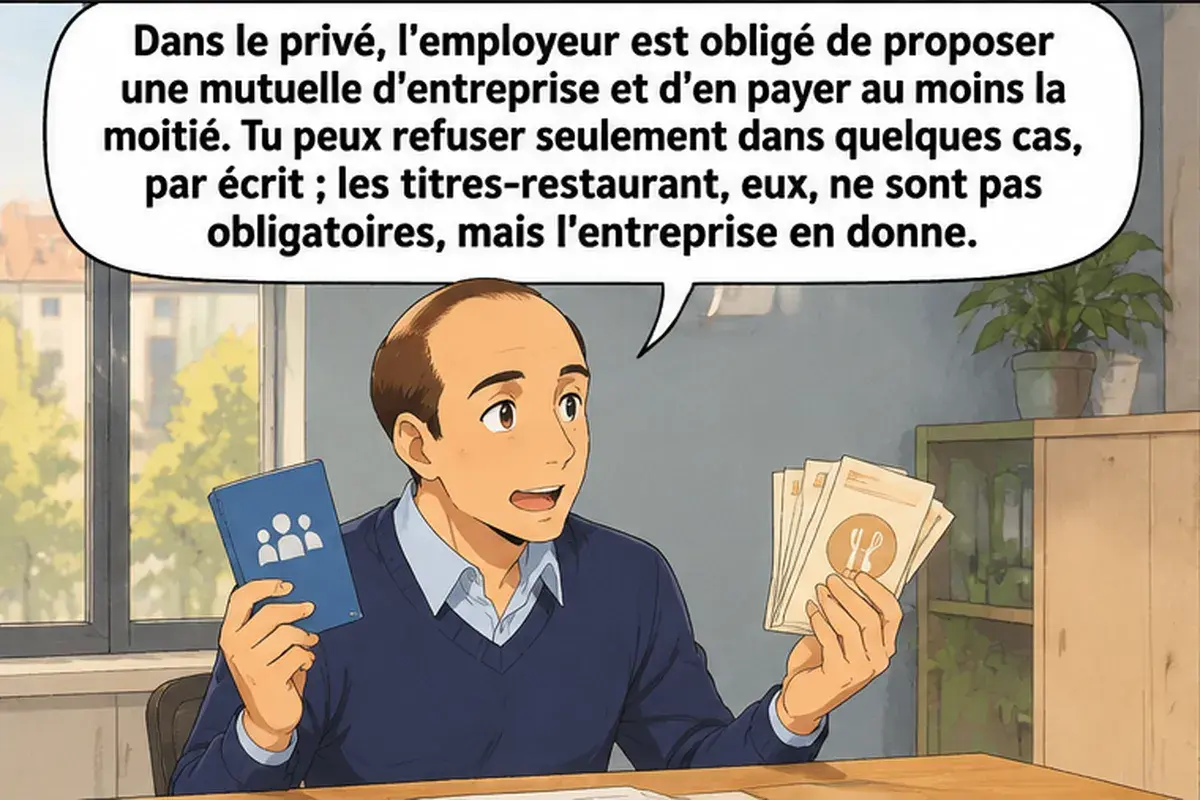
Dans le privé, l'employeur est obligé de proposer une mutuelle d'entreprise et d'en payer au moins la moitié. Tu peux refuser seulement dans quelques cas, par écrit ; les titres-restaurant, eux, ne sont pas obligatoires, mais l'entreprise en donne.
In the private sector, the employer is required to offer company supplemental health insurance and to pay at least half of it. You can opt out only in a few cases, in writing; meal vouchers, on the other hand, aren't mandatory, but the company gives them.

- Pacha
Dernière question : le télétravail. Avant, je travaillais chez moi, et je n'ai pas envie de subir les transports tous les jours.
Last question: remote work. Before, I worked from home, and I don't feel like putting up with public transit every day.
- Baptiste
Pour l'instant, aucune clause ni règle de l'entreprise n'en parle, donc Hélène peut refuser sans donner de raison. Si elle t'accorde un jour de télétravail, on l'écrit dans un avenant, avec son autorisation écrite, et les frais du télétravail sont à la charge de l'entreprise.
For now, no clause or company rule mentions it, so Hélène can refuse without giving a reason. If she grants you a day of remote work, we'll write it into an amendment, with her written authorization, and the remote work costs are the company's responsibility.
- Pacha
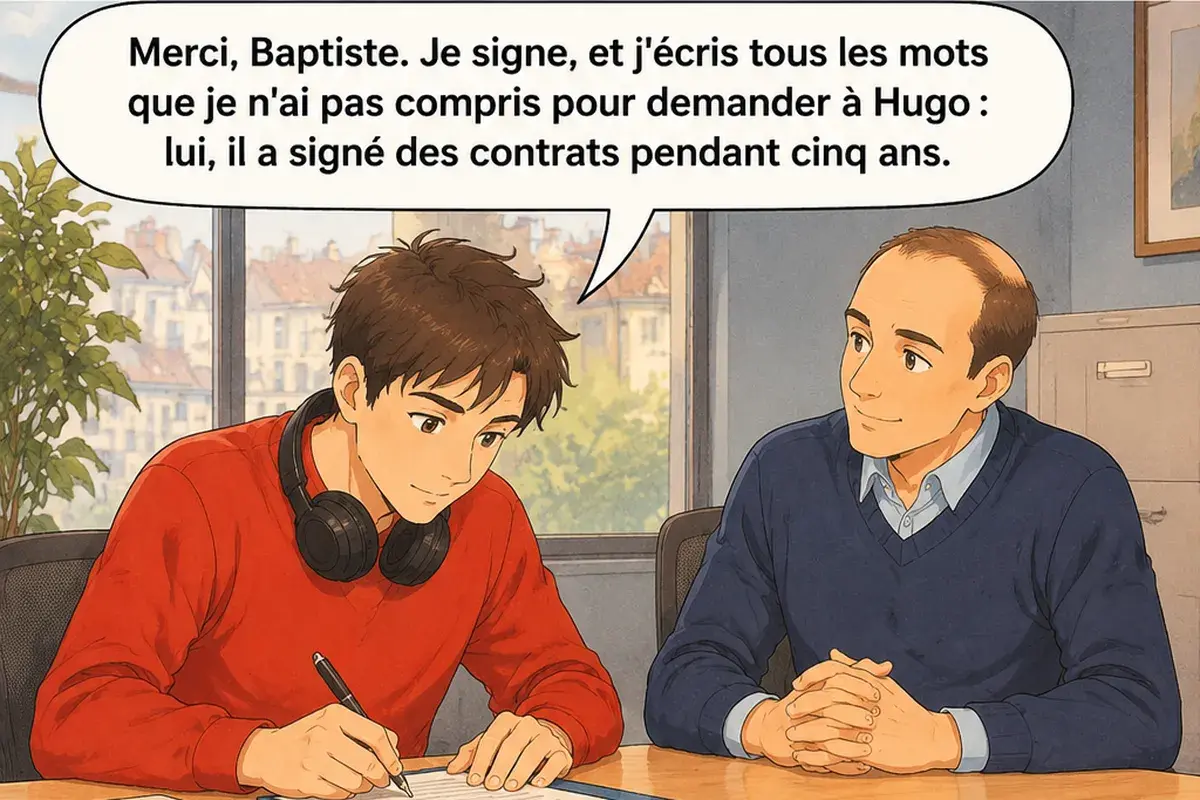
Merci, Baptiste. Je signe, et j'écris tous les mots que je n'ai pas compris pour demander à Hugo : lui, il a signé des contrats pendant cinq ans.
Thanks, Baptiste. I'll sign, and I'll write down all the words I didn't understand to ask Hugo: he signed contracts for five years.
Grammar for this text
- Le salarié est tenu de respecter les horaires de l'entreprise — The employee is required to respect the company's working hours.
est tenu de+ infinitive means "is required to," likeest obligé de, but it sounds stricter:tenuis a form oftenir. A contract never says "you": onlyle salarié(the employee) andl'employeur(the employer). - à compter du 5 octobre — as of October 5.
à compter demeans "as of, starting";de + lejoined intodu. This is how documents are written; in speech people sayà partir du. - Ton CDI est à temps plein, pas à temps partiel — Your CDI is full-time, not part-time.
CDIis a permanent contract with no end date.temps pleinis full-time,temps partielis part-time. - elle cesse d'elle-même — it ends by itself.
cesserwith nothing after it means "to end": the period stops on its own if no one steps in. Inn'y met fin,mettre fin àmeans "to put an end to," andystands forà+ the trial period. - la convention collective à laquelle ce contrat fait référence — the collective agreement to which this contract refers. Also le poste auquel le salarié est nommé — the position to which the employee is appointed. Both use
à+lequel:à laquelle(feminine, stays separate) andauquel(masculine, one word, likeau). The full explanation is in the grammar section of the unit. - je n'ai pas envie de subir les transports — I don't feel like putting up with public transit.
subirmeans to put up with something you didn't choose. - Si elle t'accorde un jour de télétravail — If she grants you a day of remote work. Here
accordermeans "to grant." Also à la charge de l'entreprise — the company's responsibility (chargeis something that has to be paid or carried). - lire entre les lignes — to read between the lines: understand what isn't said. Contracts and polite letters say less than they mean.
Words and grammar of the unit: Understand an employment contract.
Learn the words from the texts with flashcards
In the app, you can tap any word in a text to see its translation, forms and examples, and new words stick with flashcards. 15 minutes a day.
Start for freeEverything is open for free. No card needed to sign up.