

French dialogue with translation · B2 · 18 lines
Le brut, c'est avant les cotisations Gross is before contributions
Comic · 18 panels
- Pacha
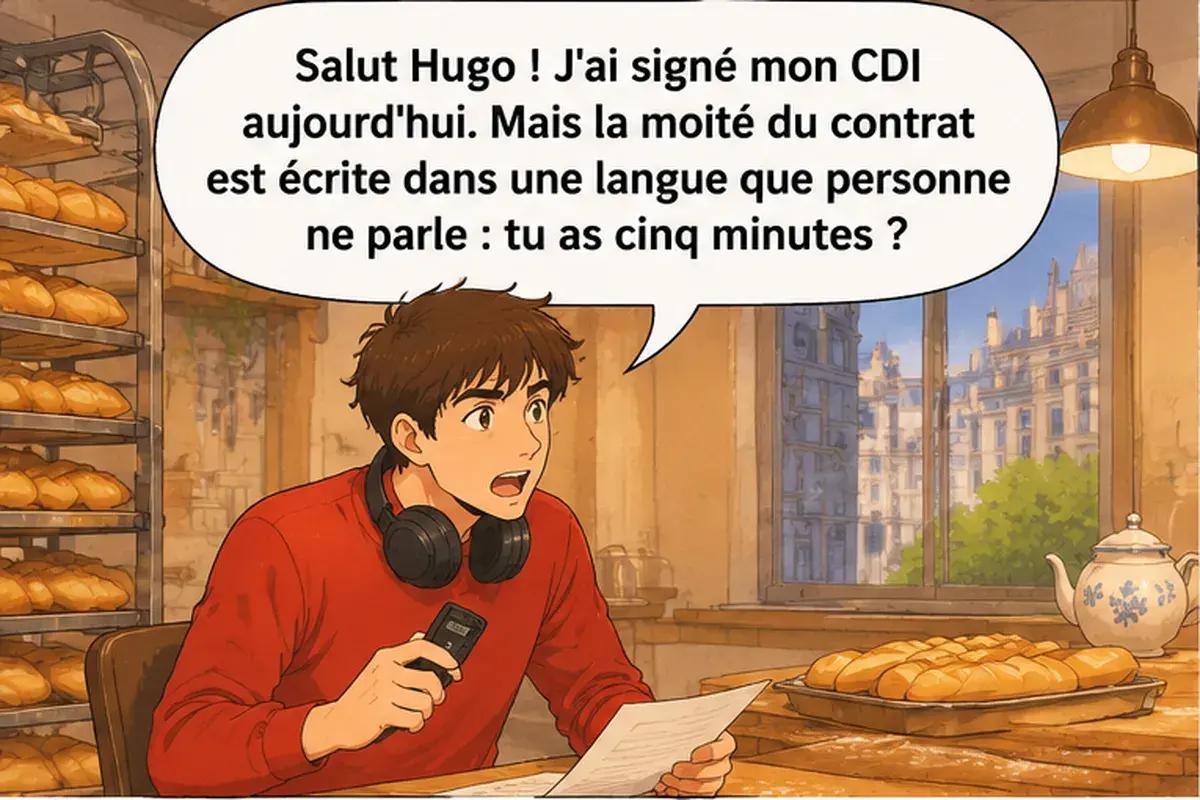
Salut Hugo ! J'ai signé mon CDI aujourd'hui. Mais la moitié du contrat est écrite dans une langue que personne ne parle : tu as cinq minutes ?
Hi Hugo! I signed my permanent contract (CDI) today. But half of the contract is written in a language nobody speaks: do you have five minutes?

- Hugo
Félicitations, salarié Pacha ! J'ai cinq minutes, pas plus : il est neuf heures moins cinq, et un boulanger ne plaisante pas avec son sommeil.
Congratulations, employee Pacha! I have five minutes, no more: it's five to nine, and a baker doesn't joke around with his sleep.
- Pacha
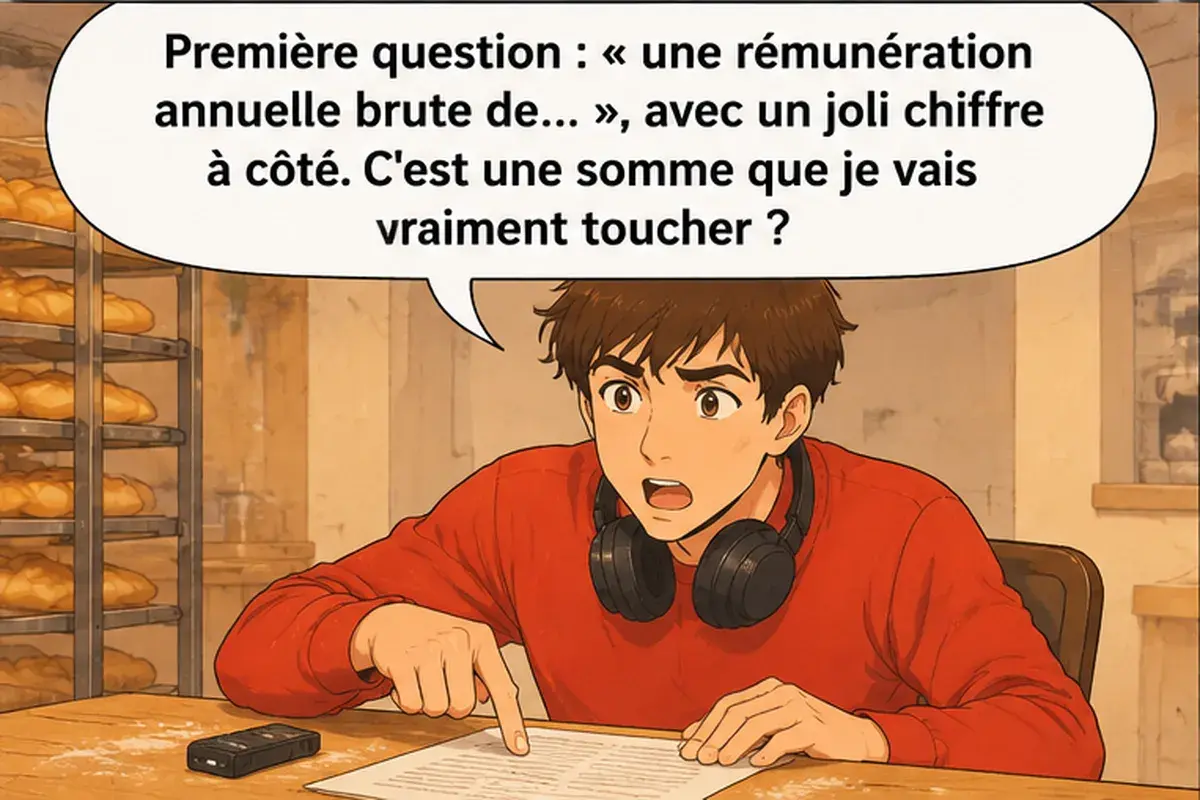
Première question : « une rémunération annuelle brute de… », avec un joli chiffre à côté. C'est une somme que je vais vraiment toucher ?
First question: "an annual gross compensation of…" with a nice number next to it. Is that an amount I'll actually get?

- Hugo
Non, pas tout à fait. Le brut, c'est avant les cotisations ; le net, c'est ce qui reste après. Sur ta fiche de paie, tu verras les deux.
No, not quite. Gross is before contributions; net is what's left afterward. On your pay stub, you'll see both.
- Pacha
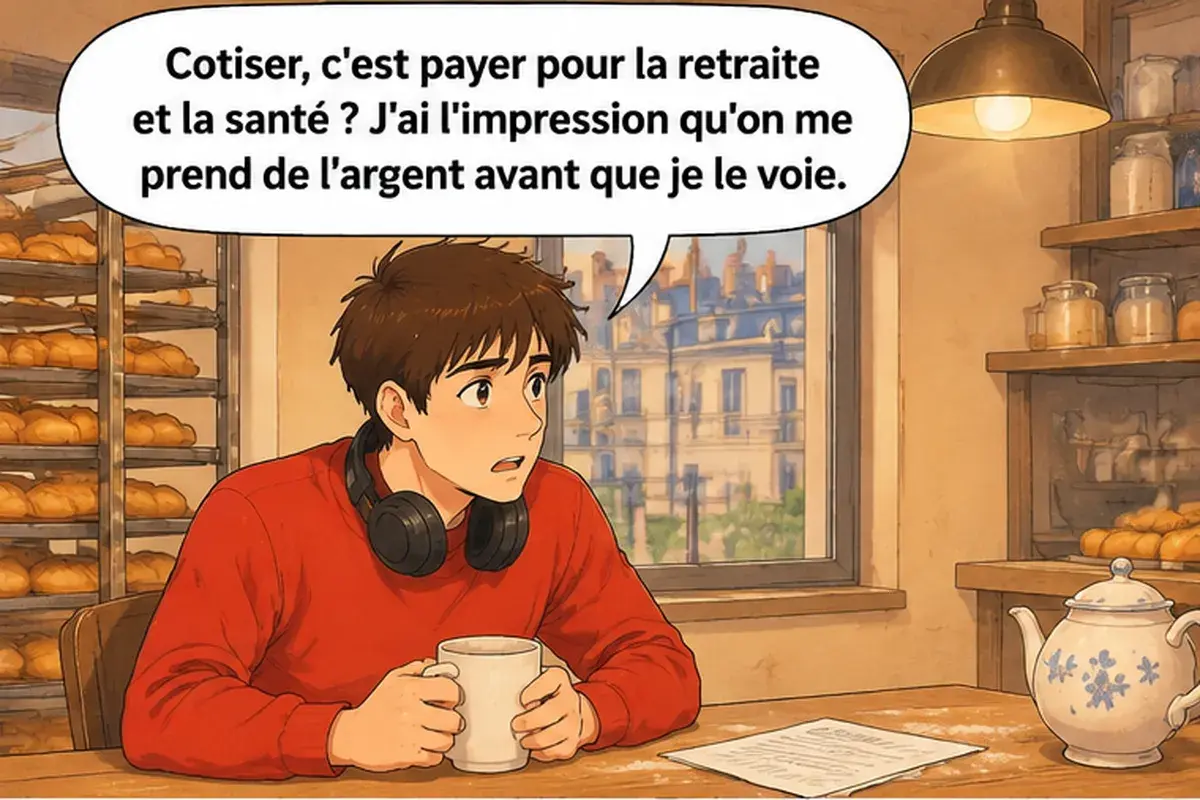
Cotiser, c'est payer pour la retraite et la santé ? J'ai l'impression qu'on me prend de l'argent avant que je le voie.
So paying contributions means paying for retirement and health care? I feel like they take money from me before I see it.
- Hugo
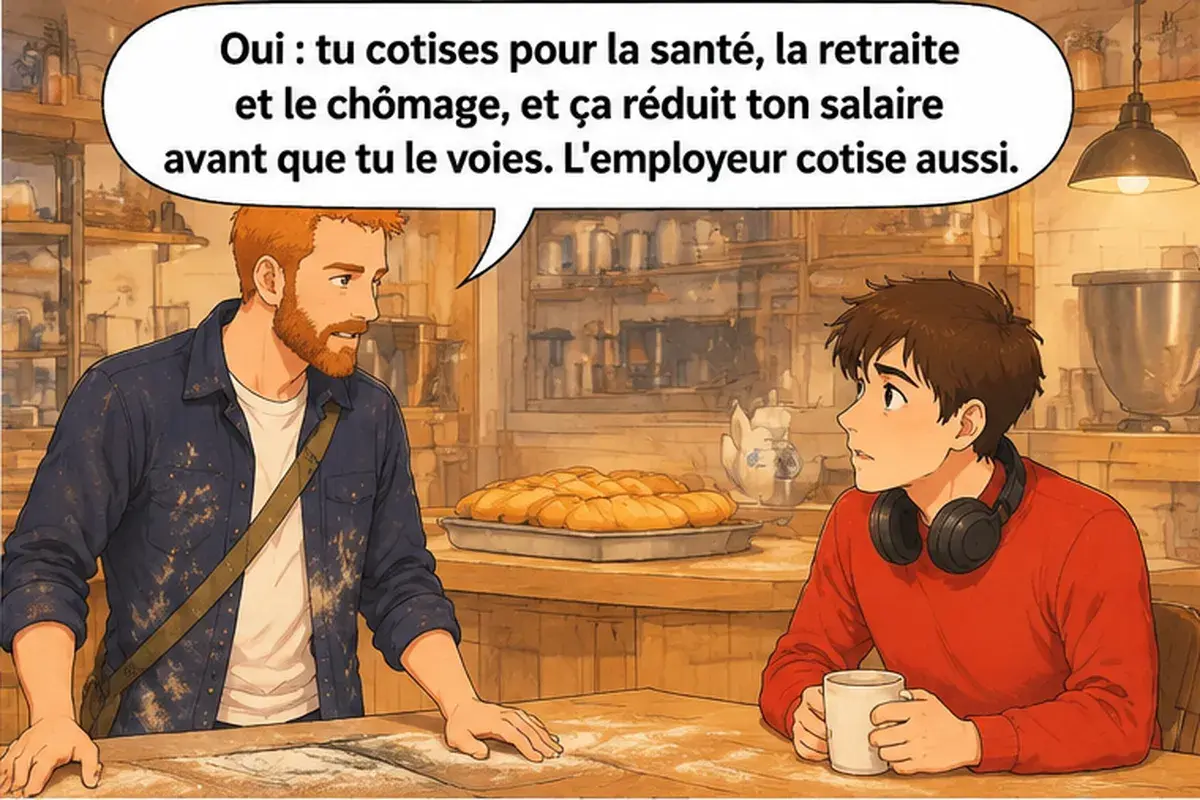
Oui : tu cotises pour la santé, la retraite et le chômage, et ça réduit ton salaire avant que tu le voies. L'employeur cotise aussi.
Yes: you pay contributions for health care, retirement and unemployment, and that reduces your salary before you see it. The employer pays contributions too.

- Pacha
Et le net, c'est exactement ce qui arrivera sur mon compte ?
And is the net exactly what will land in my account?

- Hugo
Presque. Il y a encore une dernière chose qui part de ton salaire, mais c'est une autre histoire, pour le printemps.
Almost. There's still one last thing that comes out of your salary, but that's another story, for the spring.
- Pacha
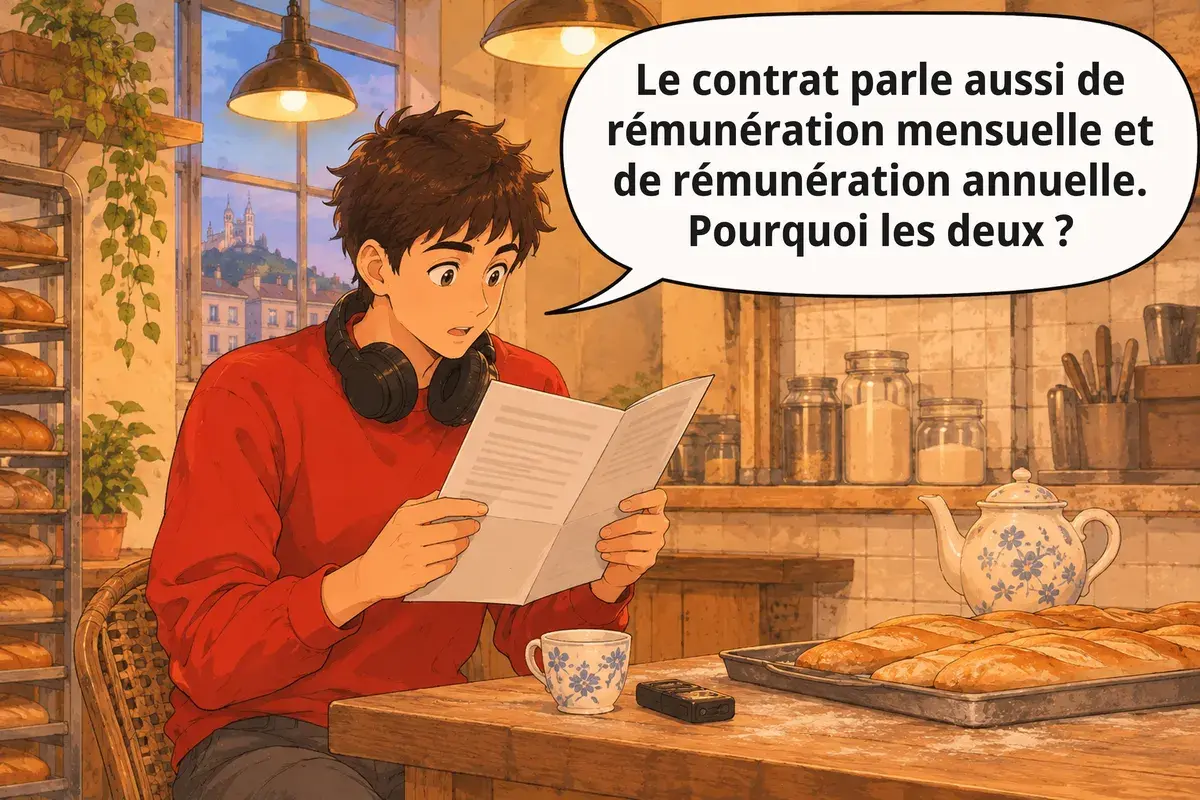
Le contrat parle aussi de rémunération mensuelle et de rémunération annuelle. Pourquoi les deux ?
The contract also talks about monthly compensation and annual compensation. Why both?
- Hugo
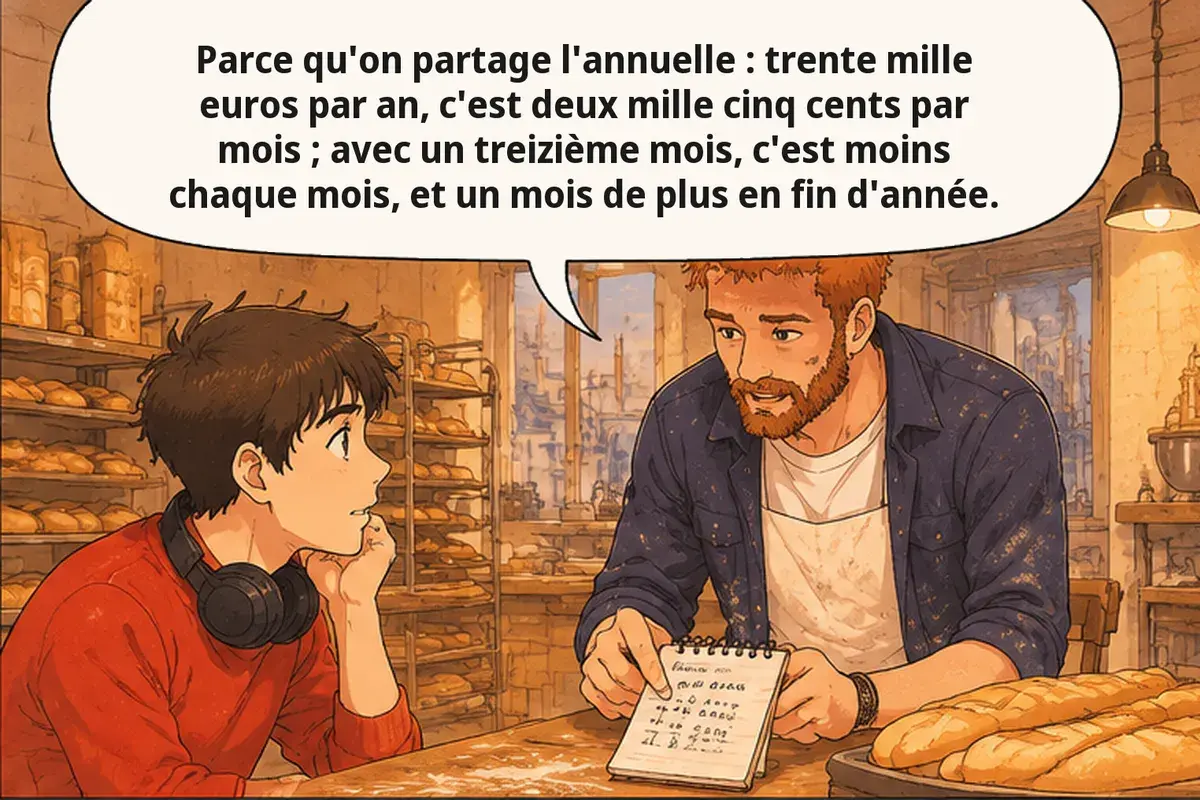
Parce qu'on partage l'annuelle : trente mille euros par an, c'est deux mille cinq cents par mois ; avec un treizième mois, c'est moins chaque mois, et un mois de plus en fin d'année.
Because the annual amount gets divided: thirty thousand euros a year is two thousand five hundred a month; with thirteenth-month pay, it's less each month, and one more month at the end of the year.
- Pacha
Il n'y en a pas. C'est grave ?
There isn't one. Is that bad?

- Hugo
Non, ce n'est pas obligatoire : ça dépend de l'entreprise ou de la convention collective. Dans mon ancienne boîte, on en avait un ; c'est la seule chose que je regrette, avec la machine à café.
No, it's not mandatory: it depends on the company or the collective agreement. At my old place, we had one; it's the only thing I miss, along with the coffee machine.

- Pacha
Thomas m'a parlé d'une prime d'ancienneté. Je suis arrivé lundi, je prends mes marques : j'ai droit à combien ?
Thomas told me about a seniority bonus. I arrived Monday (man speaking), I'm finding my feet: how much am I entitled to?

- Hugo
Pour l'instant, rien : tu es arrivé lundi ! Si cette prime n'est écrite nulle part, ni dans le contrat ni dans la convention collective, elle n'existe pas. Ne t'inquiète pas : au début, personne ne s'y retrouve, dans ces papiers.
Nothing for now: you arrived Monday! (to a man) If that bonus isn't written anywhere, neither in the contract nor in the collective agreement, it doesn't exist. Don't worry: at first, nobody can make sense of these papers.
- Pacha
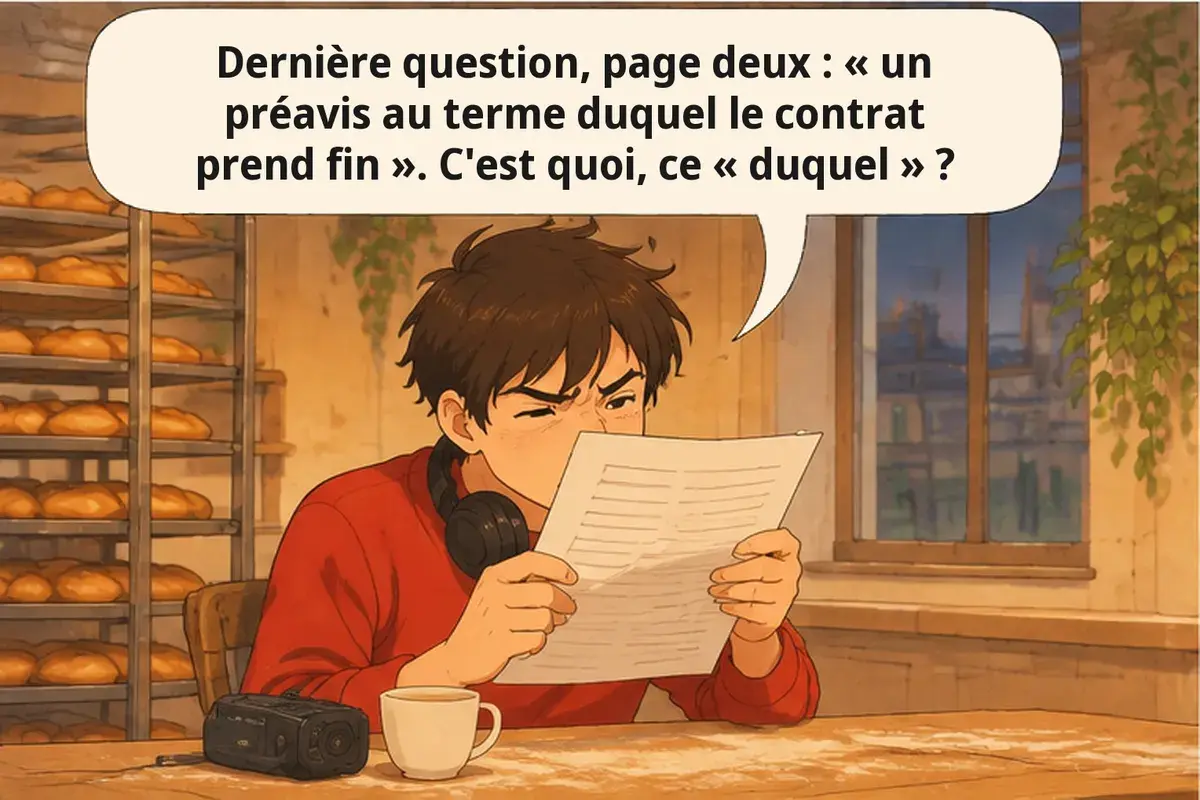
Dernière question, page deux : « un préavis au terme duquel le contrat prend fin ». C'est quoi, ce « duquel » ?
Last question, page two: "a notice period at the end of which the contract ends." What is this "duquel"?
- Hugo
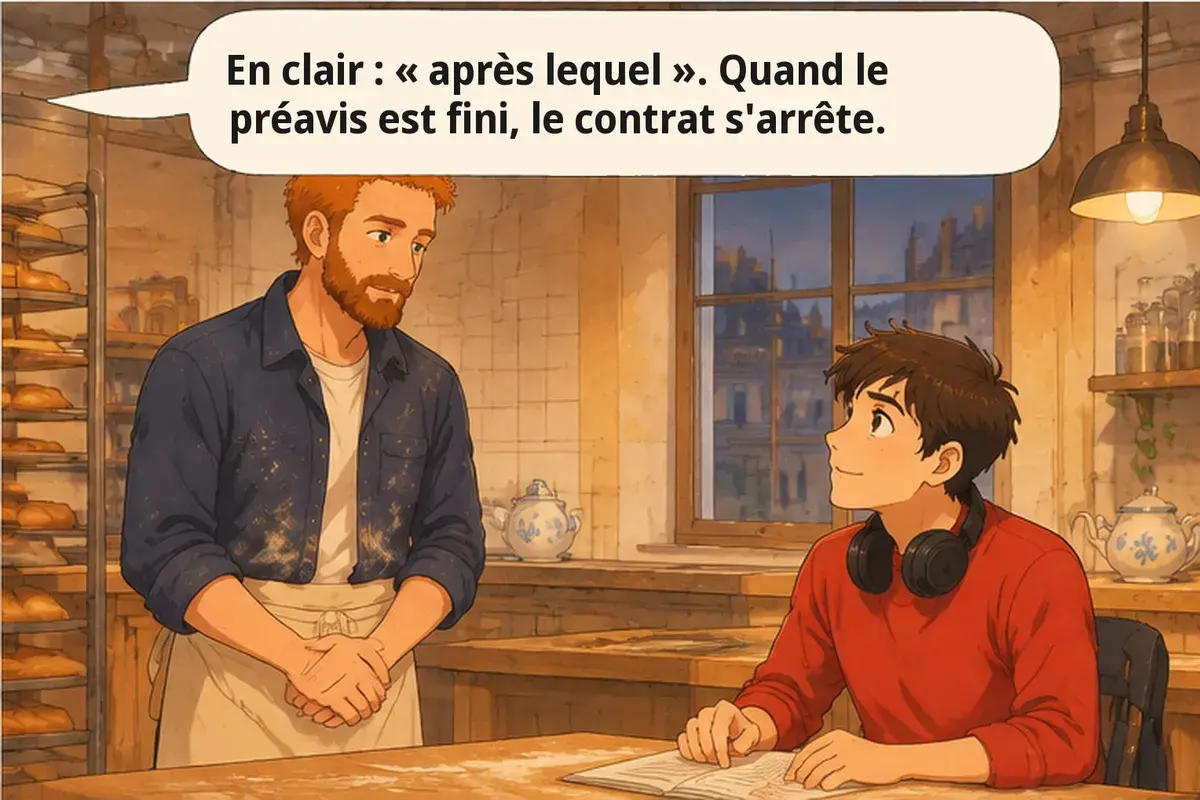
En clair : « après lequel ». Quand le préavis est fini, le contrat s'arrête.
Put simply: "after which." When the notice period is over, the contract stops.

- Pacha
Merci, professeur. Et mes fiches de paie, je les range où ?
Thanks, professor. And my pay stubs, where do I keep them?

- Hugo
Garde-les toutes : lors de la location d'un appartement, on voudra voir les trois dernières. Bonne nuit, et ne signe rien que tu ne comprennes pas, sauf une commande de baguettes !
Keep them all: when you rent an apartment, they'll want to see the last three. Good night, and don't sign anything you don't understand, except an order for baguettes!
Grammar for this text
- une rémunération annuelle brute — an annual gross compensation.
brutmeans "before deductions";annuelleis feminine becauserémunérationis a feminine word. Next to it ismensuelle, "monthly." - Le brut, c'est avant les cotisations ; le net, c'est ce qui reste après — Gross is before contributions; net is what's left afterward.
cotisationis a contribution for health care, retirement and unemployment benefits;netis the amount after contributions. - tu cotises — you pay contributions.
cotisermeans "to pay contributions." Also ça réduit ton salaire avant que tu le voies — that reduces your salary before you see it:réduiremeans "to reduce," and afteravant quethe verb is in the subjunctive:que tu voies(B1, unit 14). - on partage l'annuelle — the annual amount gets divided across the months: €30,000 a year gives €2,500 a month.
Un treizième moisis a thirteenth-month bonus: the yearly total is the same, but it is split into 13 parts. - d'une prime d'ancienneté — of a seniority bonus.
anciennetéis how long you've been at one company;primeis money on top of your salary (a bonus). - un préavis au terme duquel le contrat prend fin — a notice period at the end of which the contract ends.
duquelisde+lequel: afterau terme deorau bout deyou can't usedont.Préavisis the notice you give in advance. - lors de la location d'un appartement — when renting an apartment.
lors de+ a noun means "during, upon"; with a verb it would belorsque. People really do ask for the last three pay stubs when you rent an apartment. - je prends mes marques — I'm finding my feet.
prendre ses marquesmeans "to get your bearings." - personne ne s'y retrouve — nobody can make sense of it.
s'y retrouvermeans "to find your way around, not get lost." - ne signe rien que tu ne comprennes pas — don't sign anything you don't understand. After
rien quecomes the subjunctive:comprennes.
Words and grammar of the unit: Understand an employment contract.
Learn the words from the texts with flashcards
In the app, you can tap any word in a text to see its translation, forms and examples, and new words stick with flashcards. 15 minutes a day.
Start for freeEverything is open for free. No card needed to sign up.