
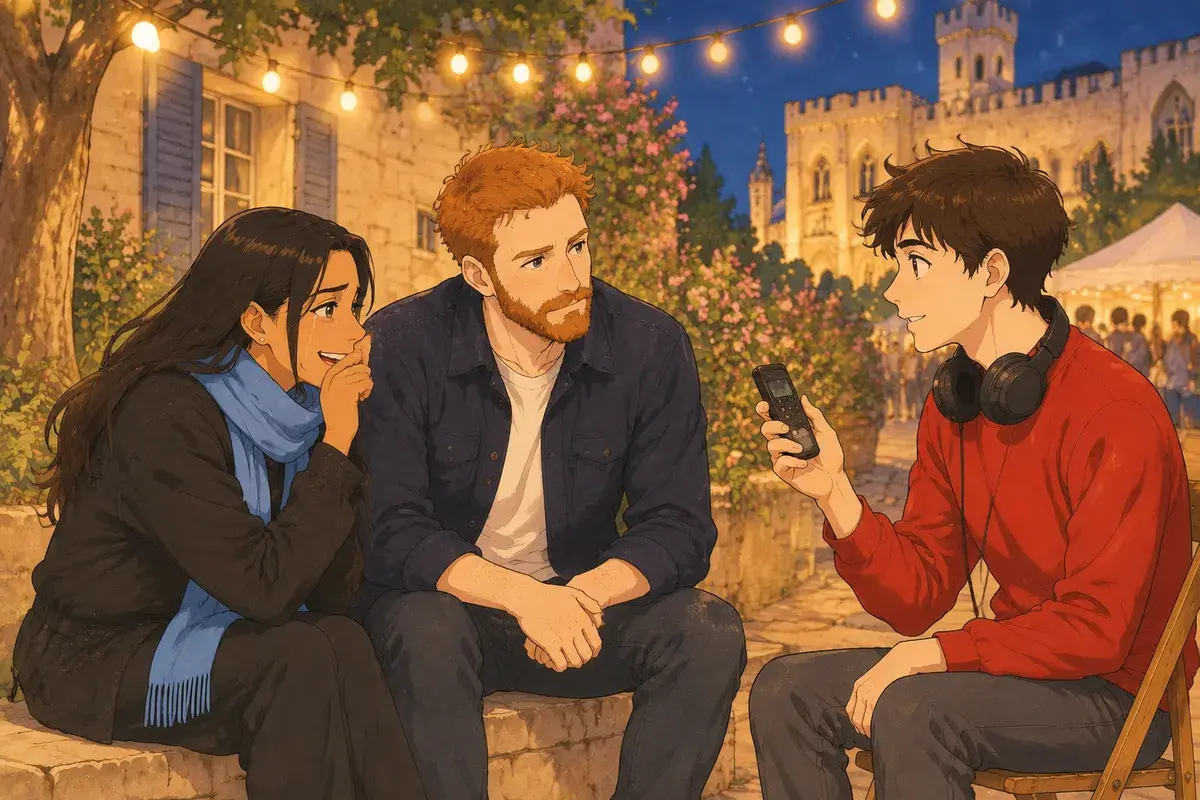
French dialogue with translation · B1 · 18 lines
J'avais décidé de ne pas aimer I had decided not to like it
Comic · 18 panels
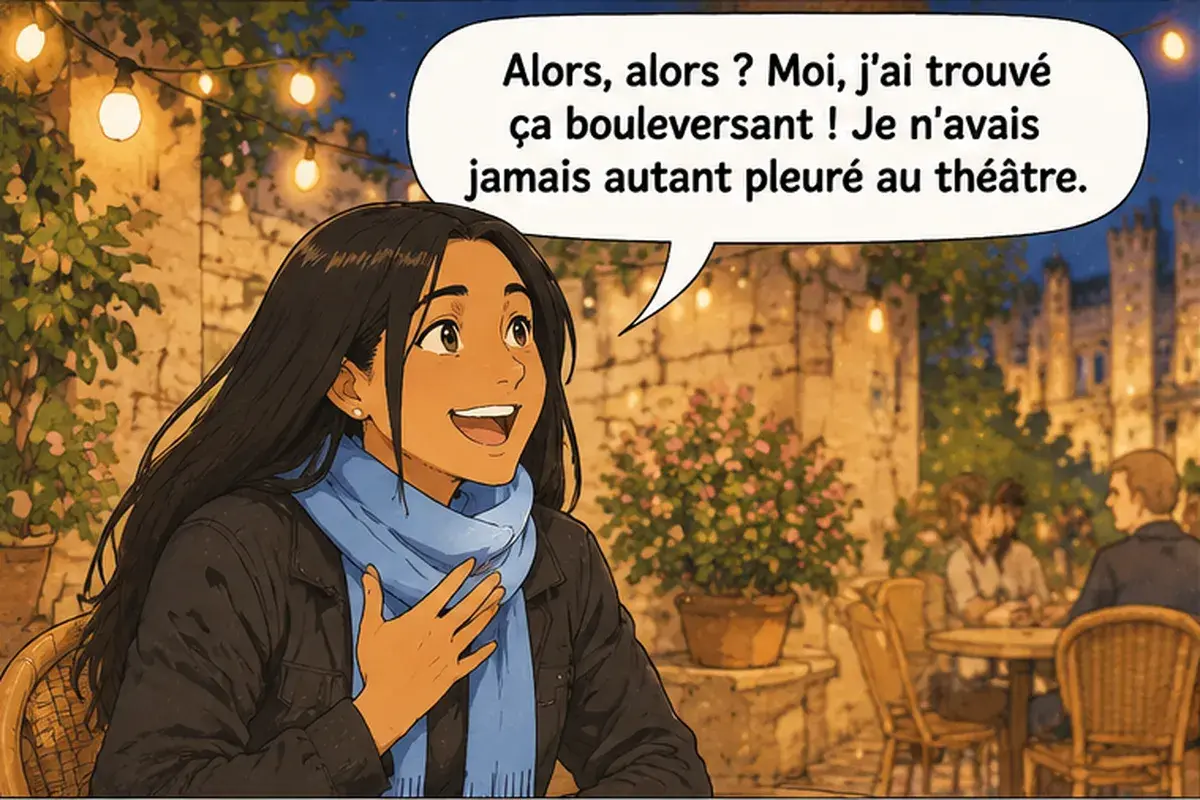
- Inès
Alors, alors ? Moi, j'ai trouvé ça bouleversant ! Je n'avais jamais autant pleuré au théâtre.
Well? Well? I found it deeply moving! I'd never cried so much at the theater.
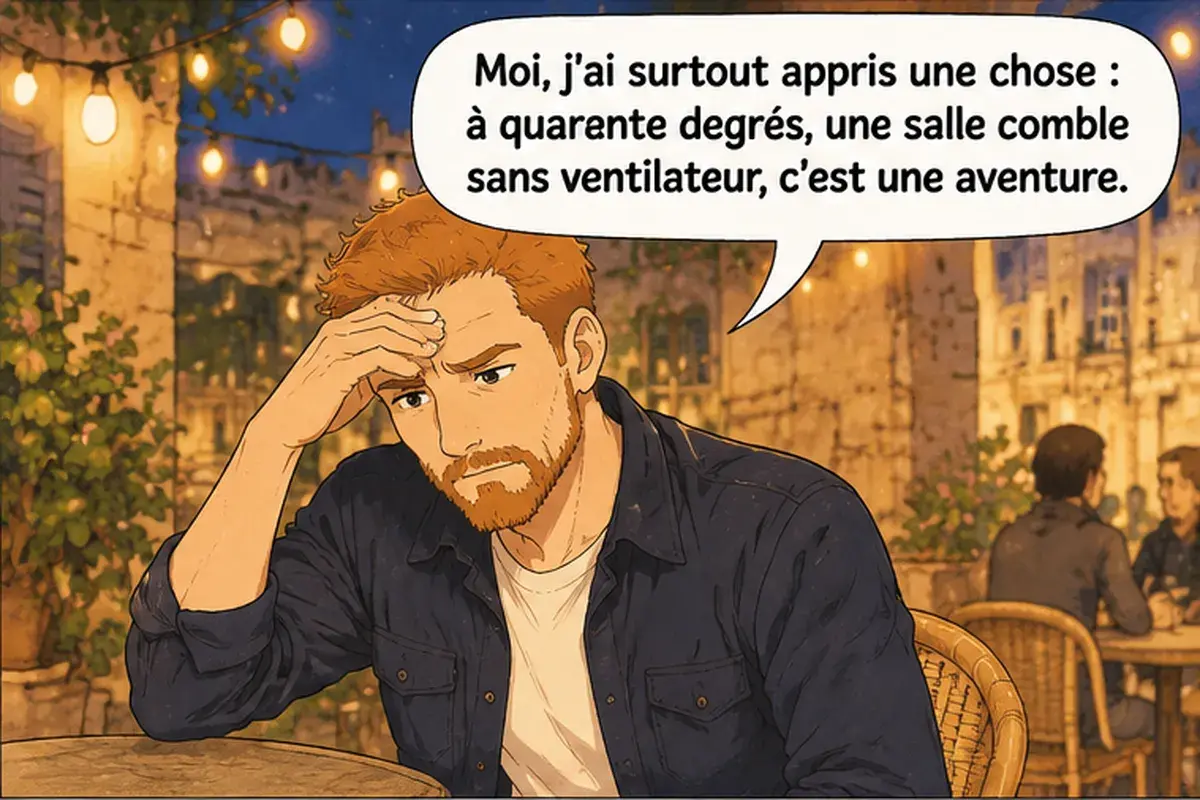
- Hugo
Moi, j'ai surtout appris une chose : à quarante degrés, une salle comble sans ventilateur, c'est une aventure.
Me, I mostly learned one thing: at forty degrees, a full house with no fan is an adventure.
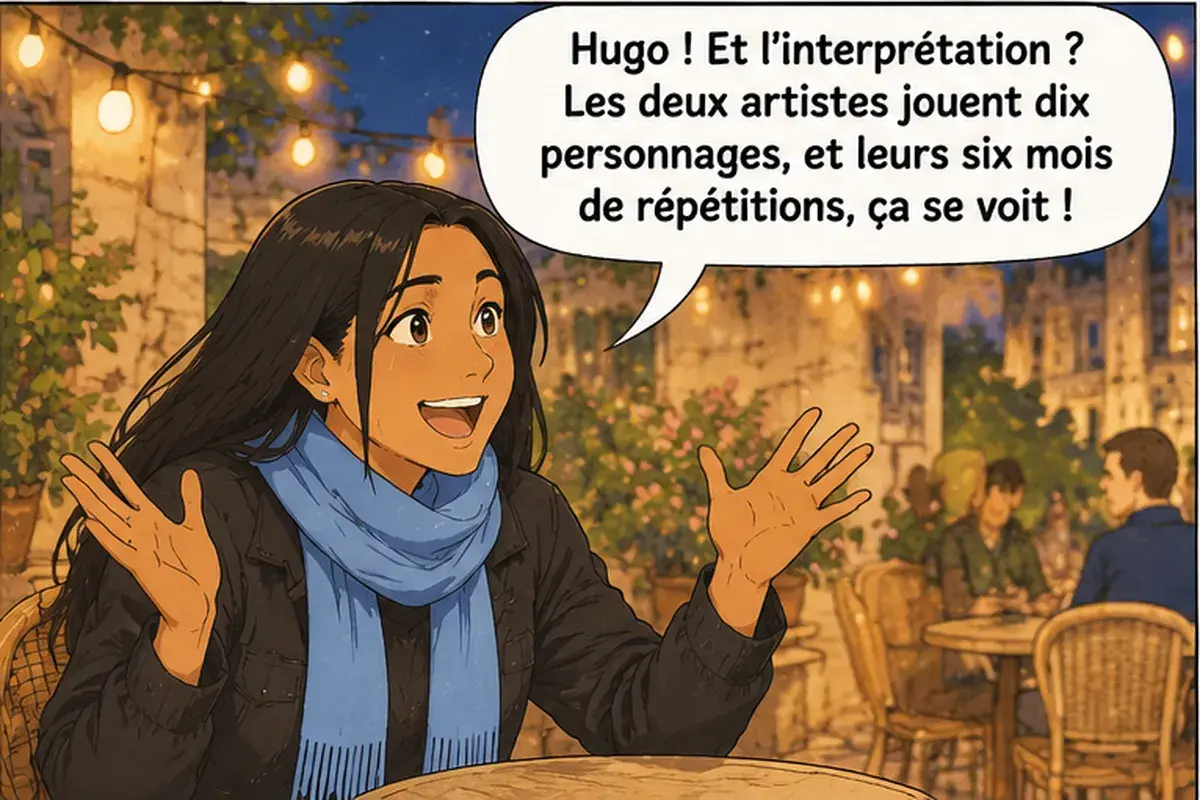
- Inès
Hugo ! Et l'interprétation ? Les deux artistes jouent dix personnages, et leurs six mois de répétitions, ça se voit !
Hugo! What about the performance? The two artists play ten characters, and their six months of rehearsals really show!
- Hugo
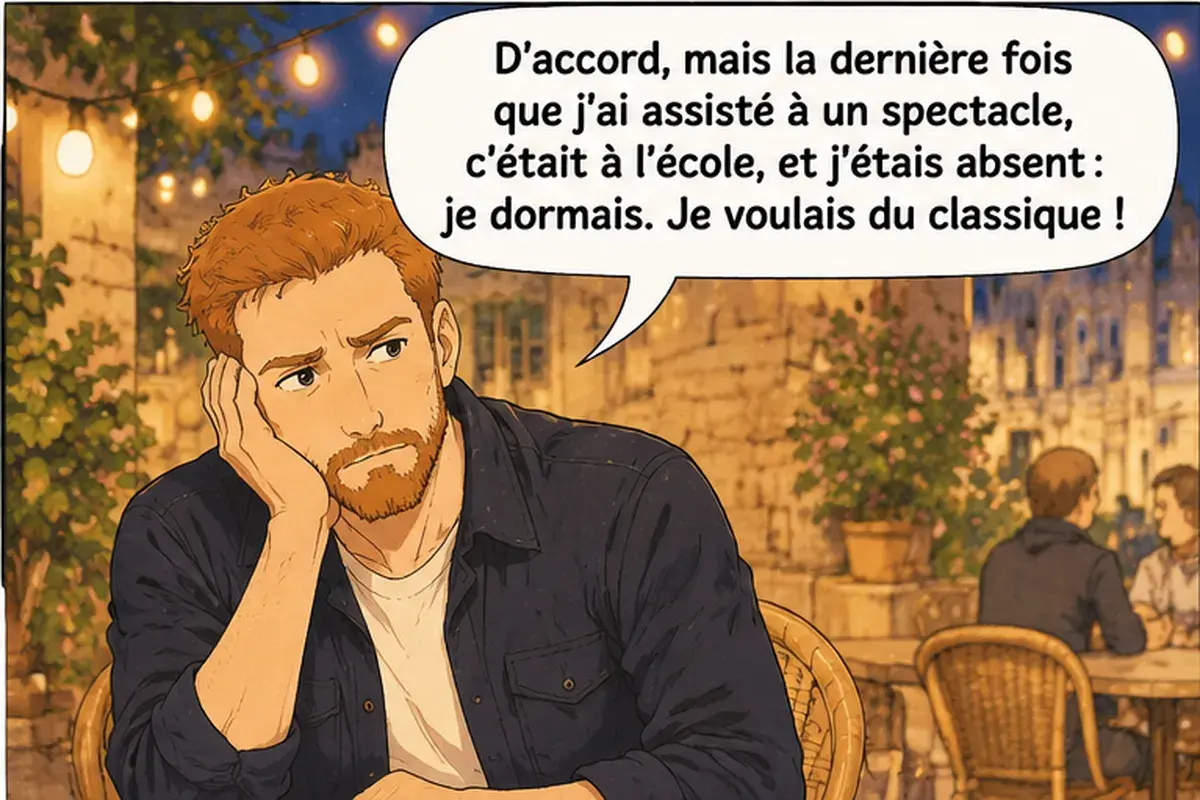
D'accord, mais la dernière fois que j'ai assisté à un spectacle, c'était à l'école, et j'étais absent : je dormais. Je voulais du classique !
OK, but the last time I attended a show, it was at school, and I was absent: I was sleeping (man speaking). I wanted something classic!
- Inès
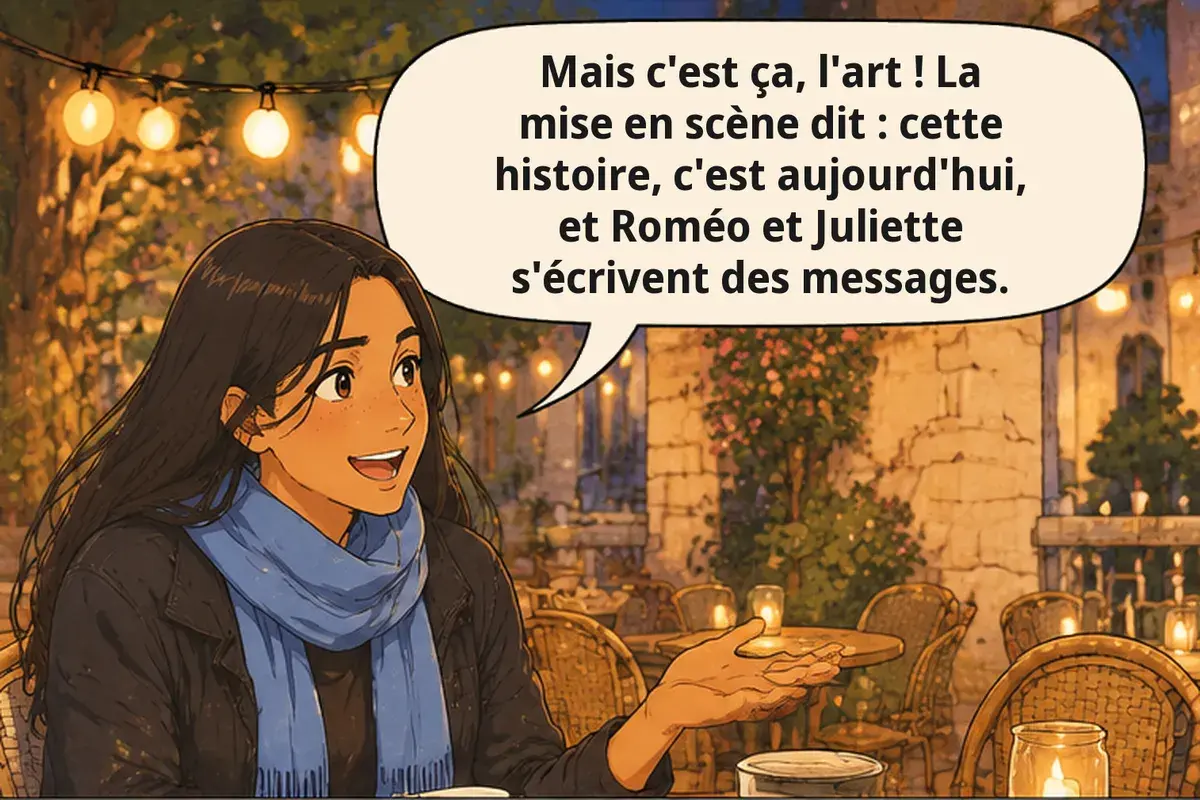
Mais c'est ça, l'art ! La mise en scène dit : cette histoire, c'est aujourd'hui, et Roméo et Juliette s'écrivent des messages.
But that's what art is! The staging says: this story is happening today, and Roméo and Juliette text each other.
- Hugo
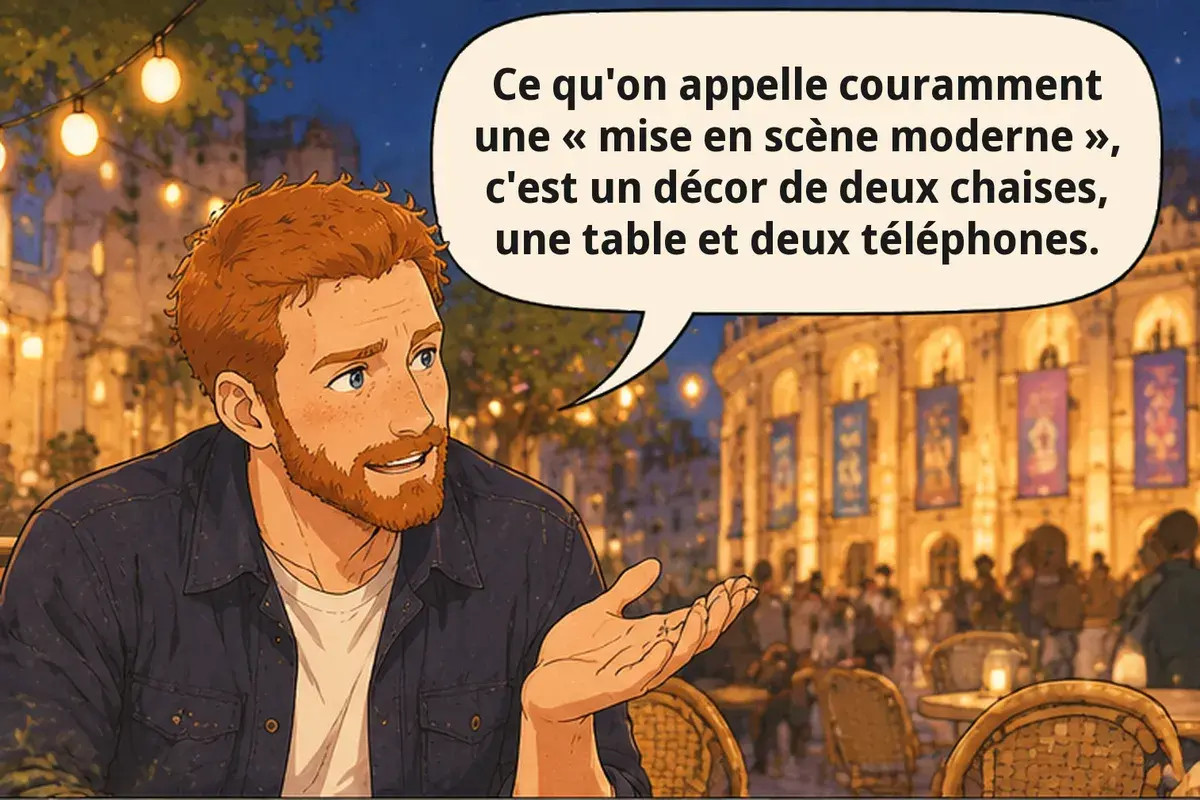
Ce qu'on appelle couramment une « mise en scène moderne », c'est un décor de deux chaises, une table et deux téléphones.
What people commonly call a "modern staging" is a set made of two chairs, a table and two phones.
- Pacha
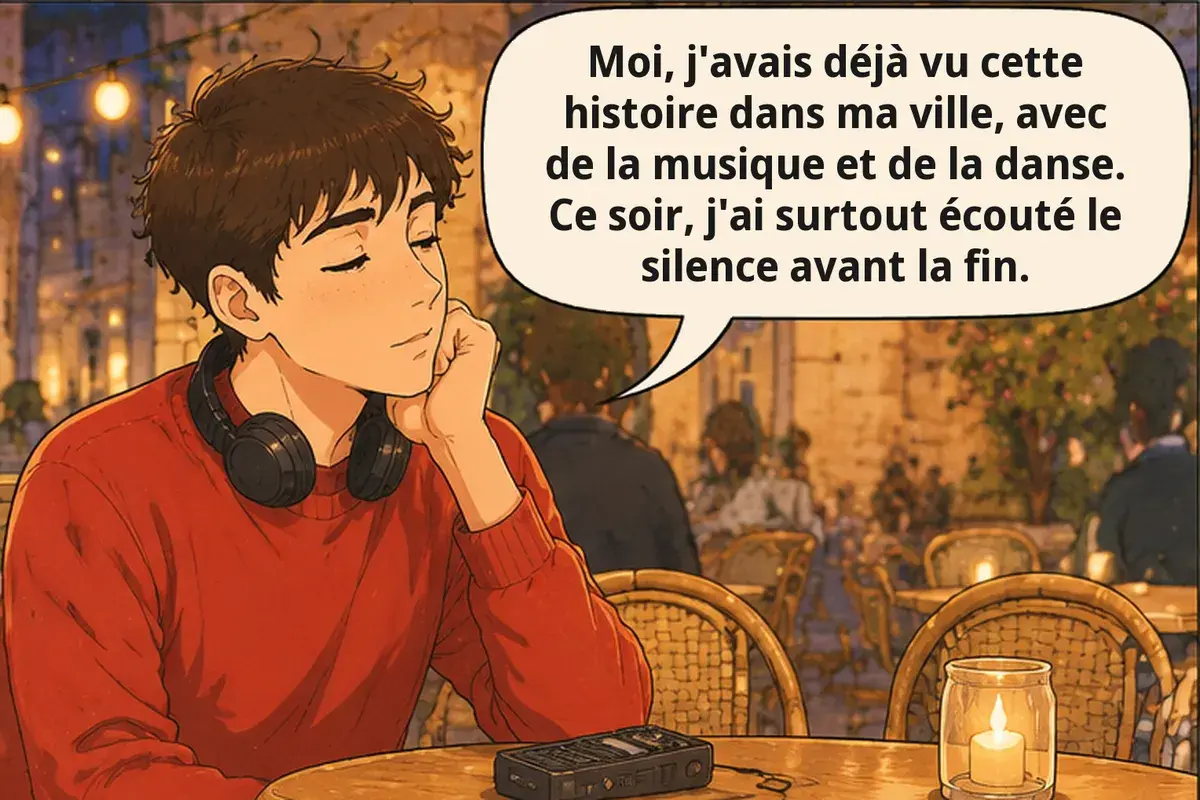
Moi, j'avais déjà vu cette histoire dans ma ville, avec de la musique et de la danse. Ce soir, j'ai surtout écouté le silence avant la fin.
Me, I had already seen this story in my city, with music and dancing. Tonight, I mostly listened to the silence before the end.
- Hugo
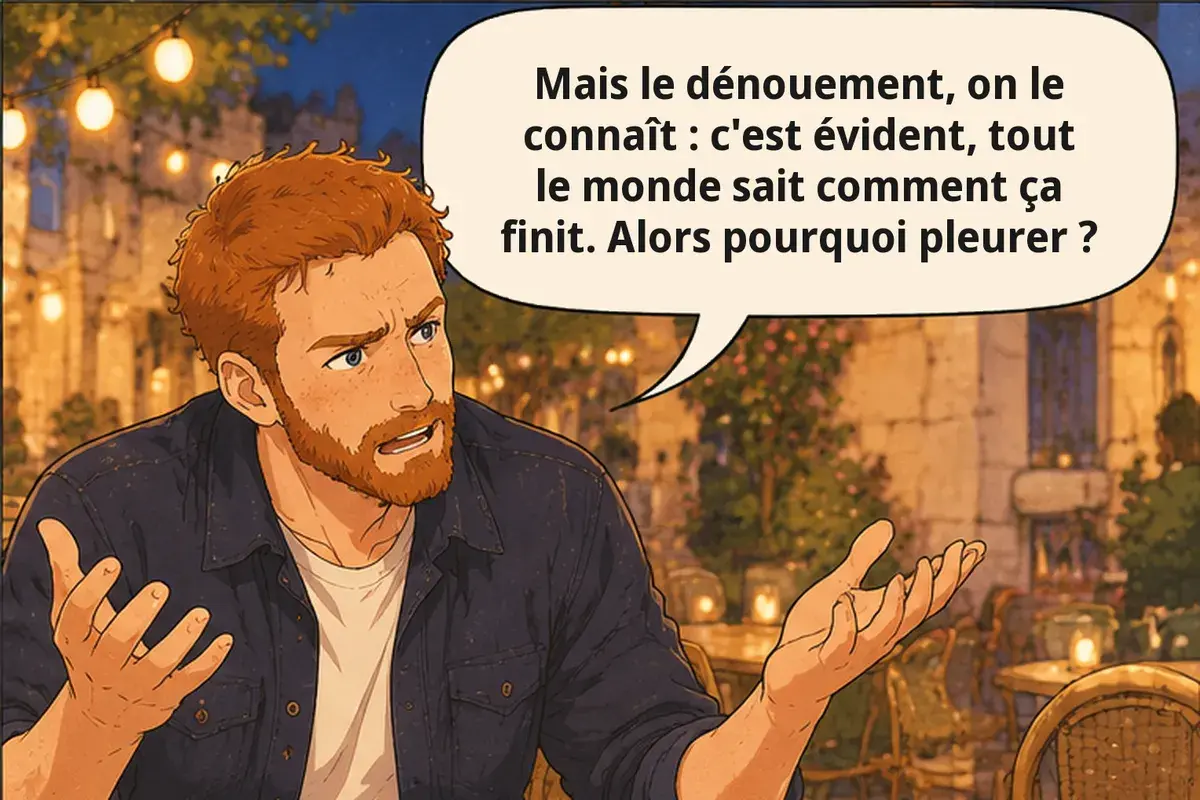
Mais le dénouement, on le connaît : c'est évident, tout le monde sait comment ça finit. Alors pourquoi pleurer ?
But the ending, we know it: it's obvious, everyone knows how it ends. So why cry?
- Inès
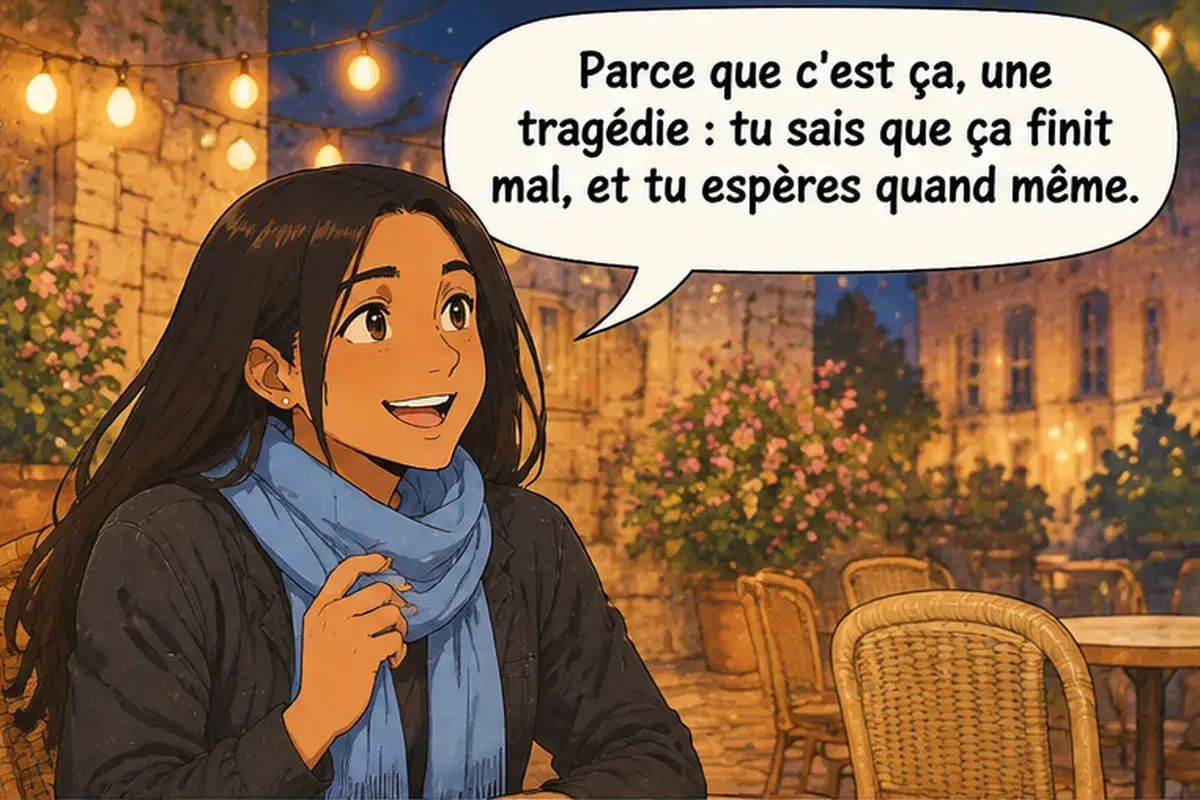
Parce que c'est ça, une tragédie : tu sais que ça finit mal, et tu espères quand même.
Because that's what a tragedy is: you know it ends badly, and you hope anyway.
- Hugo
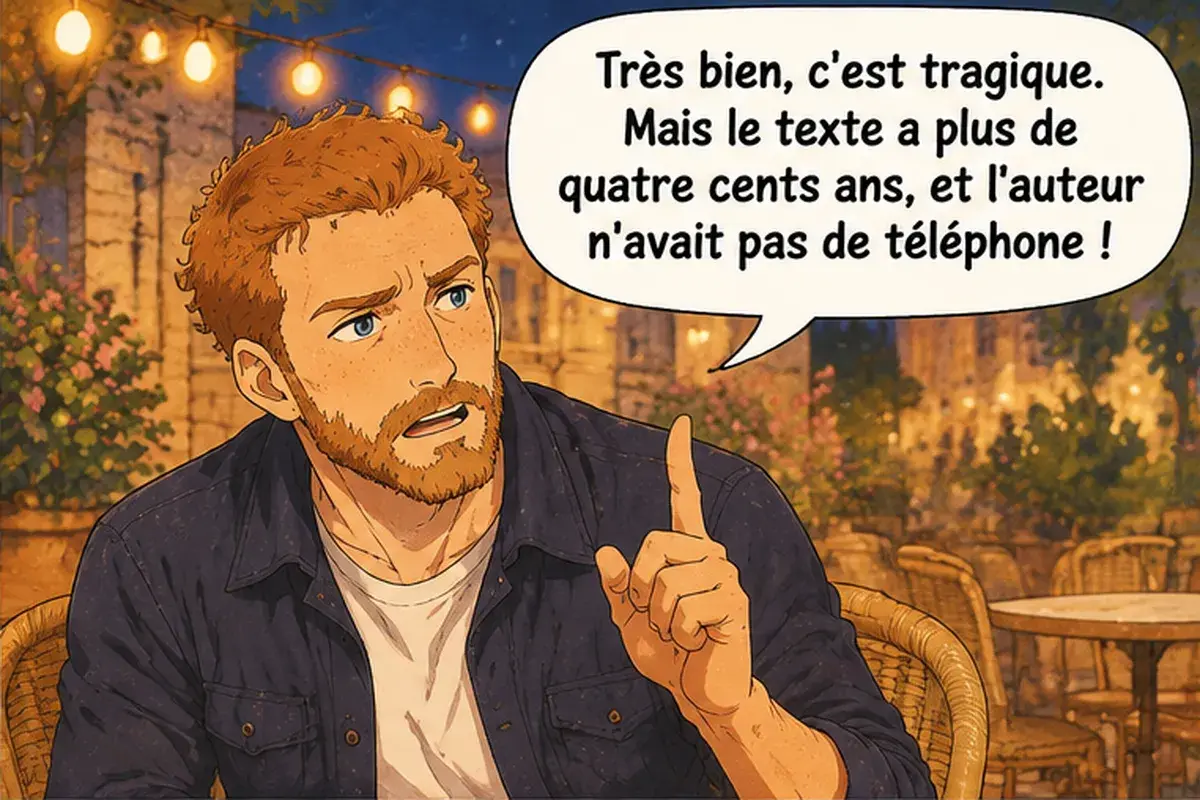
Très bien, c'est tragique. Mais le texte a plus de quatre cents ans, et l'auteur n'avait pas de téléphone !
Fine, it's tragic. But the text is more than four hundred years old, and the author didn't have a phone!
- Pacha
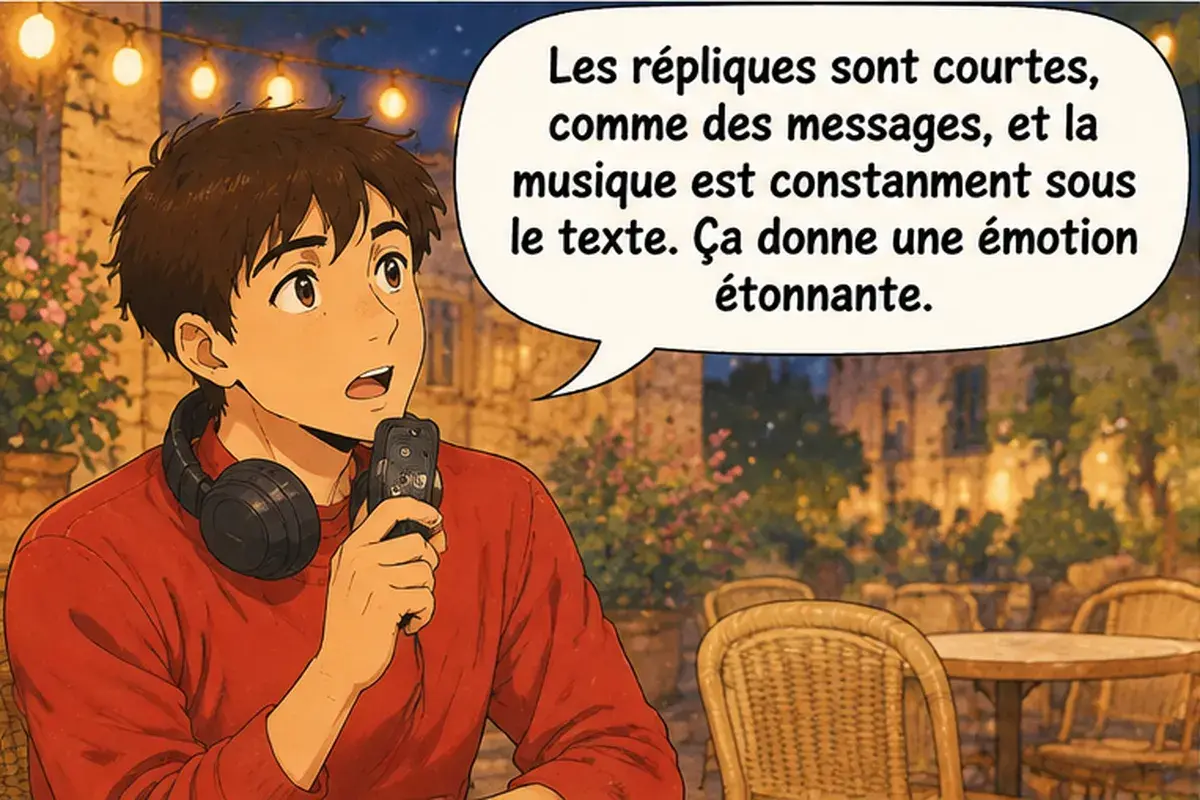
Les répliques sont courtes, comme des messages, et la musique est constamment sous le texte. Ça donne une émotion étonnante.
The lines are short, like text messages, and the music is constantly under the text. It creates an amazing emotion.
- Inès
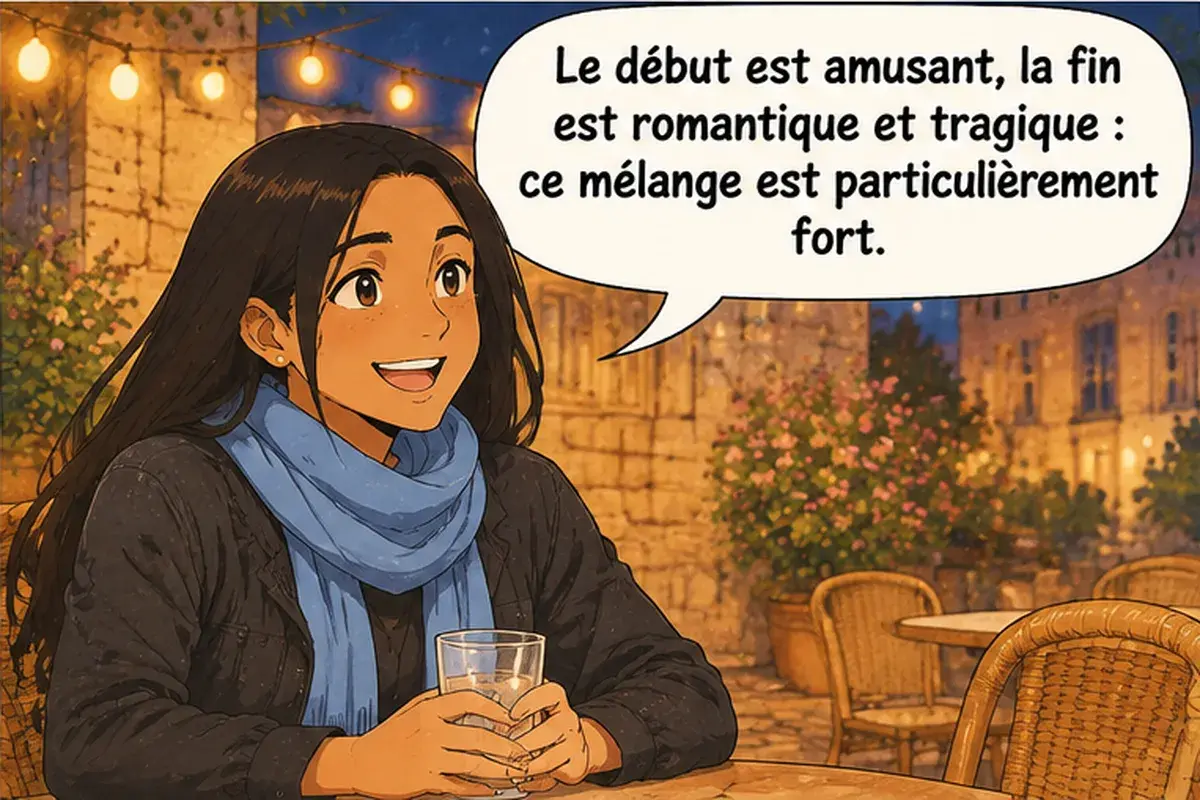
Le début est amusant, la fin est romantique et tragique : ce mélange est particulièrement fort.
The beginning is fun, the end is romantic and tragic: this mix is particularly powerful.
- Pacha
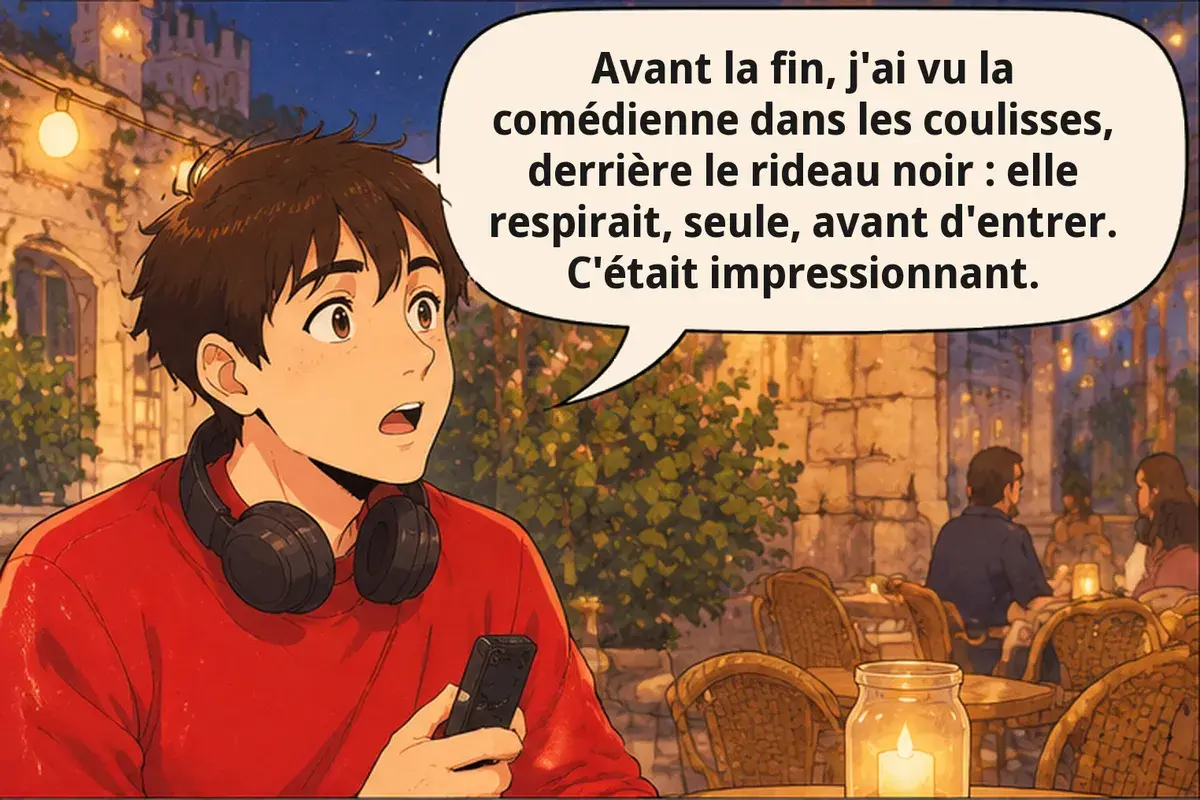
Avant la fin, j'ai vu la comédienne dans les coulisses, derrière le rideau noir : elle respirait, seule, avant d'entrer. C'était impressionnant.
Before the end, I saw the actress backstage, behind the black curtain: she was breathing, alone, before going on. It was impressive.
- Inès
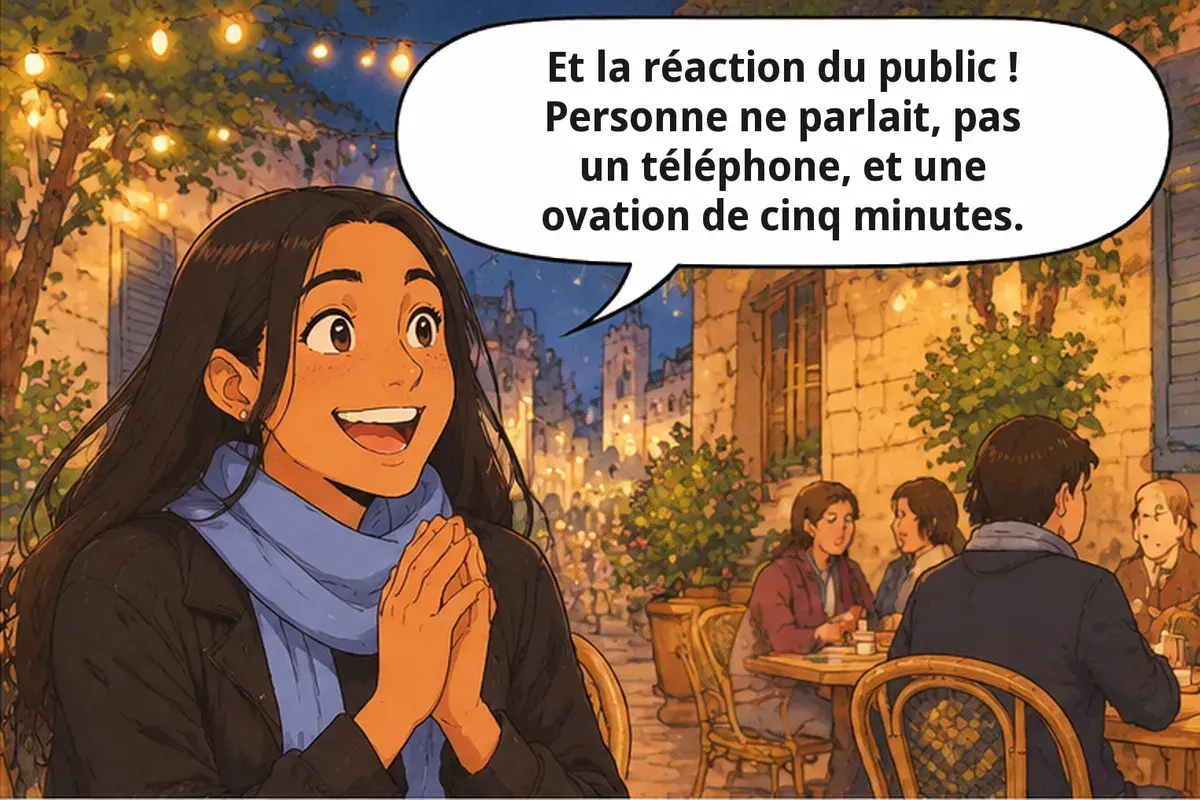
Et la réaction du public ! Personne ne parlait, pas un téléphone, et une ovation de cinq minutes.
And the audience's reaction! Nobody was talking, not a single phone, and a five-minute ovation.
- Hugo
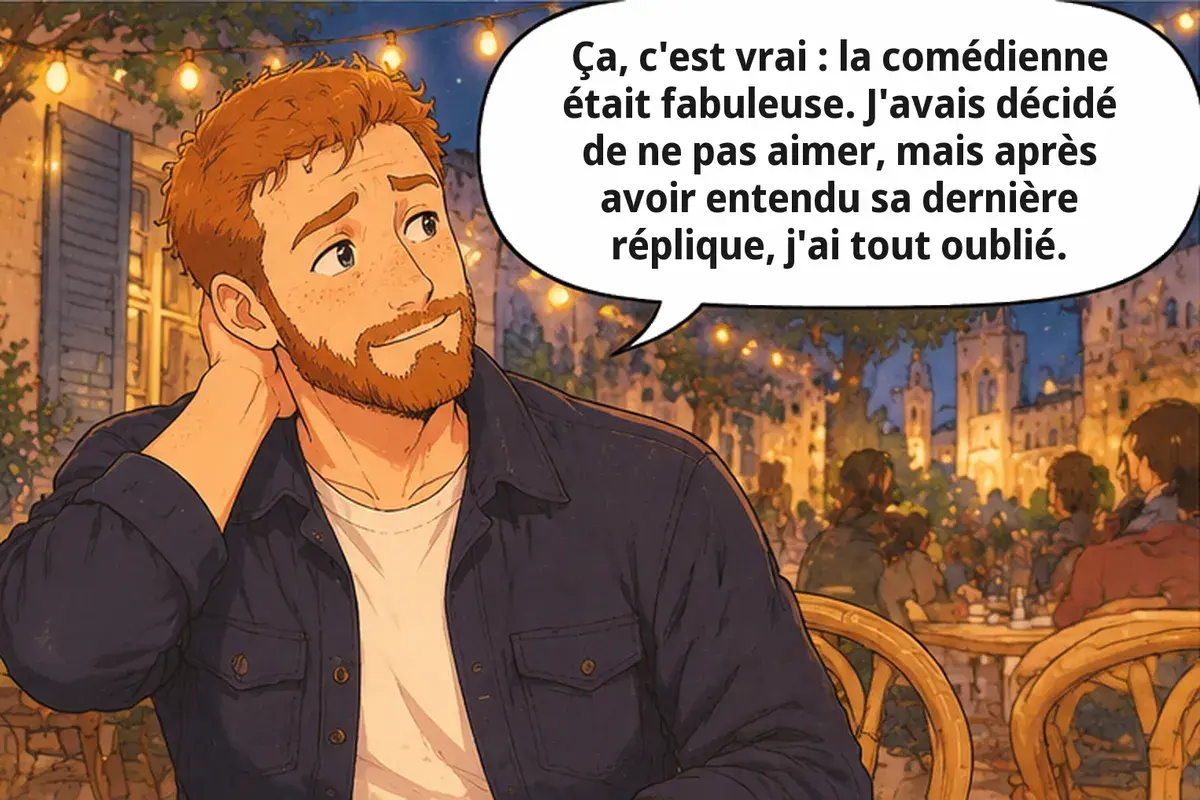
Ça, c'est vrai : la comédienne était fabuleuse. J'avais décidé de ne pas aimer, mais après avoir entendu sa dernière réplique, j'ai tout oublié.
That's true: the actress was fabulous. I had decided not to like it, but after hearing her last line, I forgot everything.
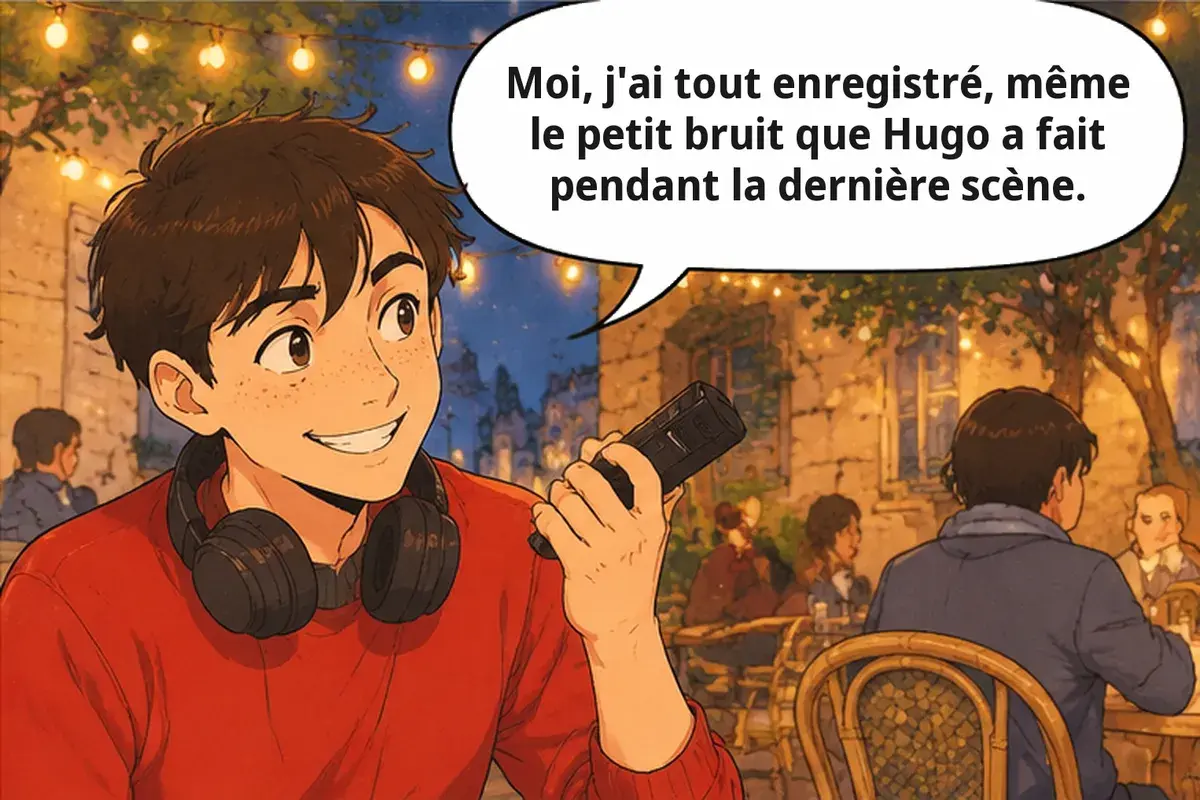
- Pacha
Moi, j'ai tout enregistré, même le petit bruit que Hugo a fait pendant la dernière scène.
Me, I recorded everything, even the little noise Hugo made during the last scene.
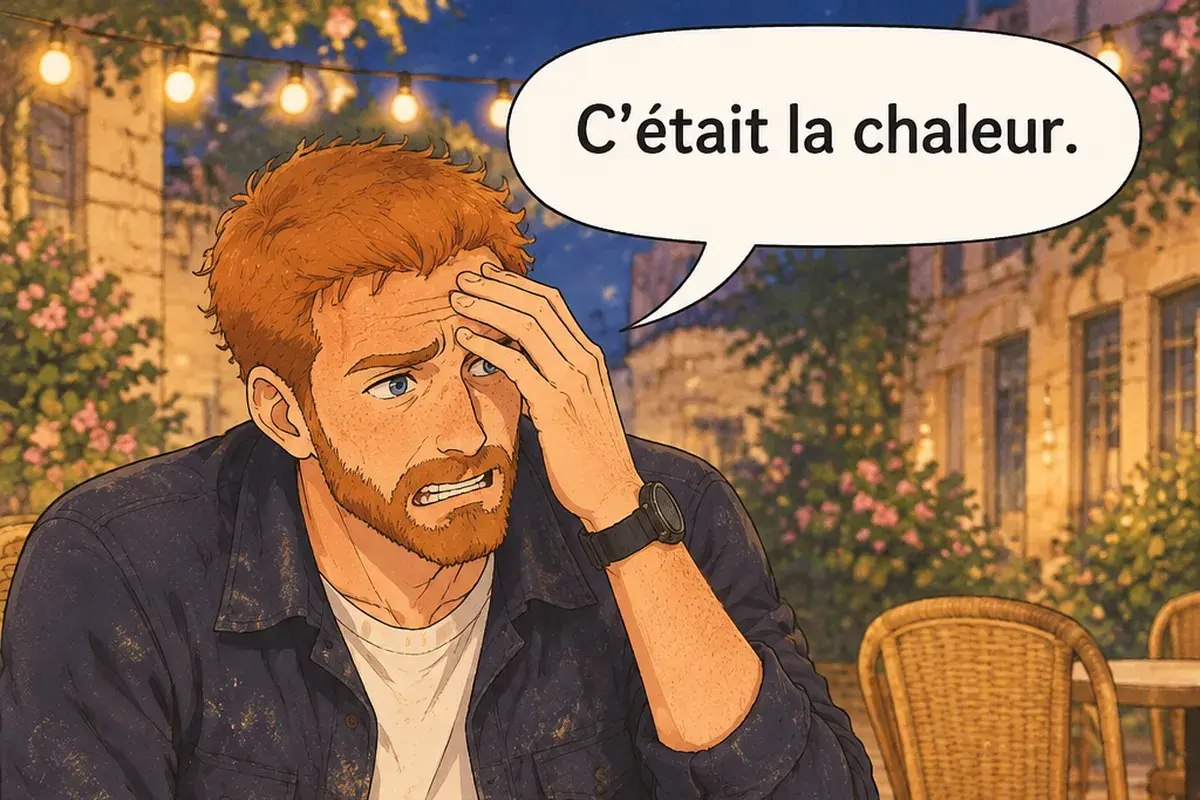
- Hugo
C'était la chaleur.
That was the heat.
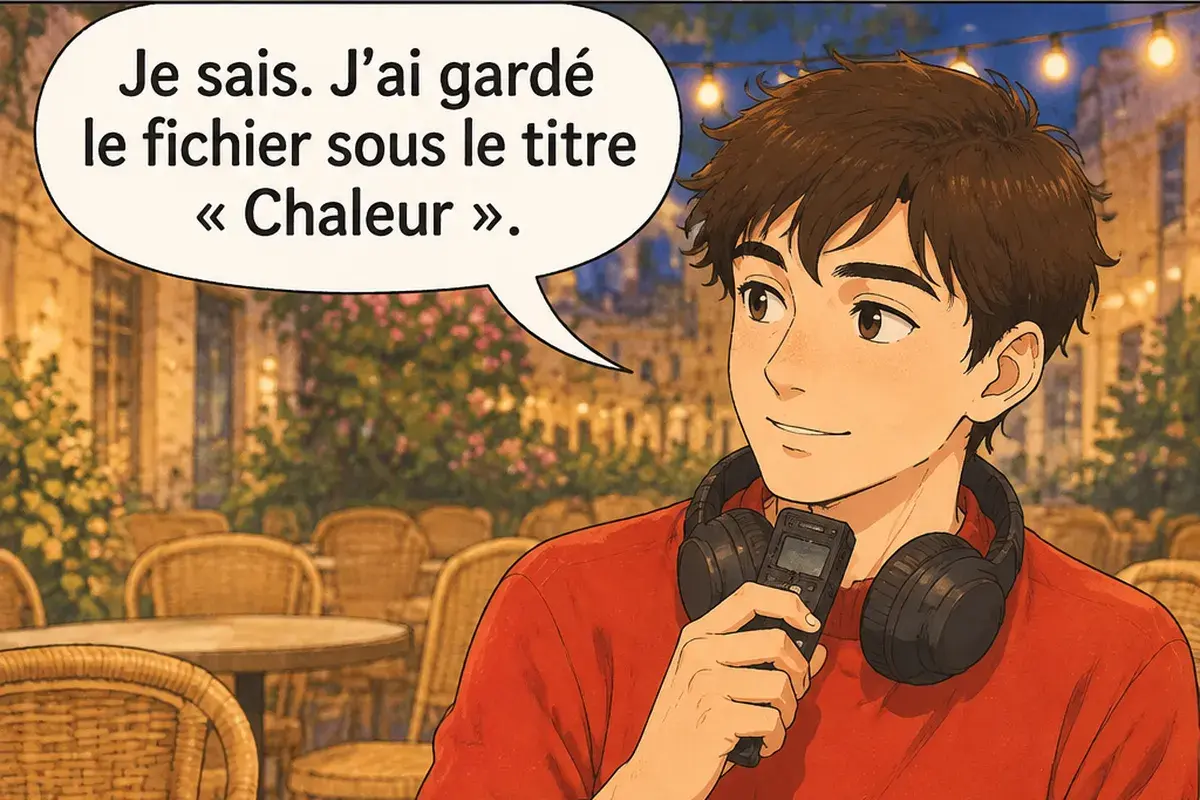
- Pacha
Je sais. J'ai gardé le fichier sous le titre « Chaleur ».
I know. I saved the file under the title "Heat".
Grammar for this text
- J'avais décidé de ne pas aimer — avais décidé: "had already decided" (before the actress came on); décider de + verb. More in the unit grammar.
- j'ai assisté à un spectacle — assister à means "to attend, to be at", not "to assist". j'étais absent : je dormais — absent — "not there"; the joke: his body was in the room, but his mind wasn't.
- Après avoir entendu sa dernière réplique — "after hearing her last line"; Hugo does both things.
- Ce qu'on appelle couramment — ce que — "what"; couramment — "commonly", from courant.
- on le connaît — le before the verb means "it" (that is, le dénouement); it's not the article.
- Personne ne parlait — personne before ne means "nobody": everyone in the room was quiet and listening.
- c'est évident — "it's obvious"; évident → the adverb évidemment (A2).
Words and grammar of the unit: Talk about a show you've seen.
Learn the words from the texts with flashcards
In the app, you can tap any word in a text to see its translation, forms and examples, and new words stick with flashcards. 15 minutes a day.
Start for freeEverything is open for free. No card needed to sign up.