

French dialogue with translation · A2 · 16 lines
Vous pouvez le réparer ? Can you fix it? (formal)
Comic · 16 panels
- Pacha
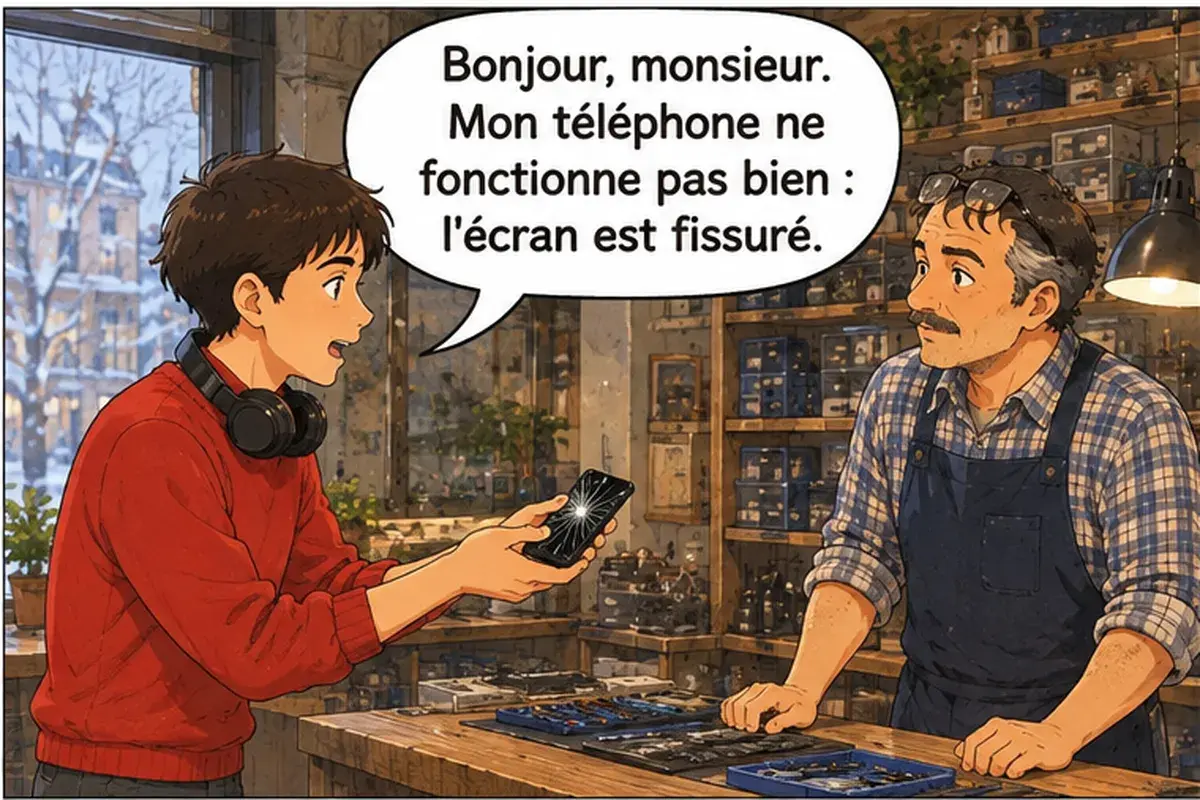
Bonjour, monsieur. Mon téléphone ne fonctionne pas bien : l'écran est fissuré.
Hello, sir. My phone doesn't work well: the screen is cracked.
- Réparateur
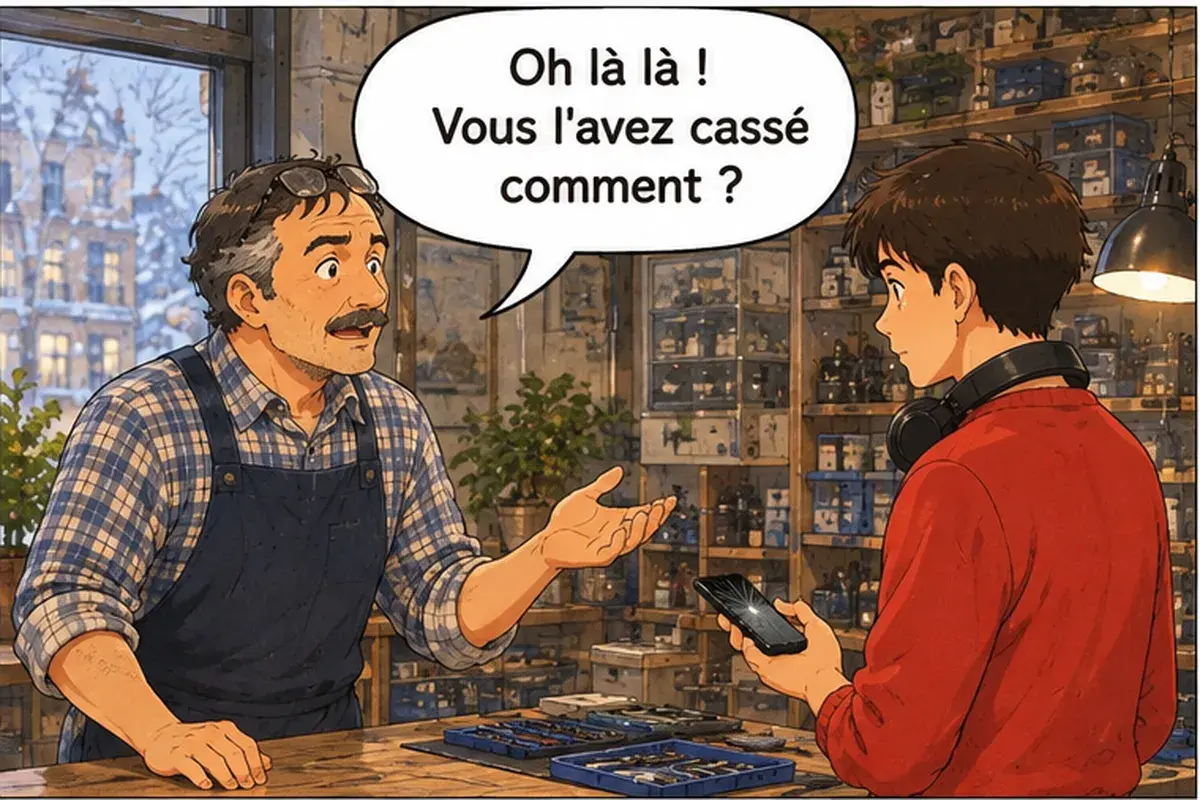
Oh là là ! Vous l'avez cassé comment ?
Oh dear! How did you break it? (formal)

- Pacha
Je l'ai lâché dans l'escalier. Je peux l'allumer, mais je ne vois presque rien.
I dropped it on the stairs. I can turn it on, but I can hardly see anything.
- Réparateur
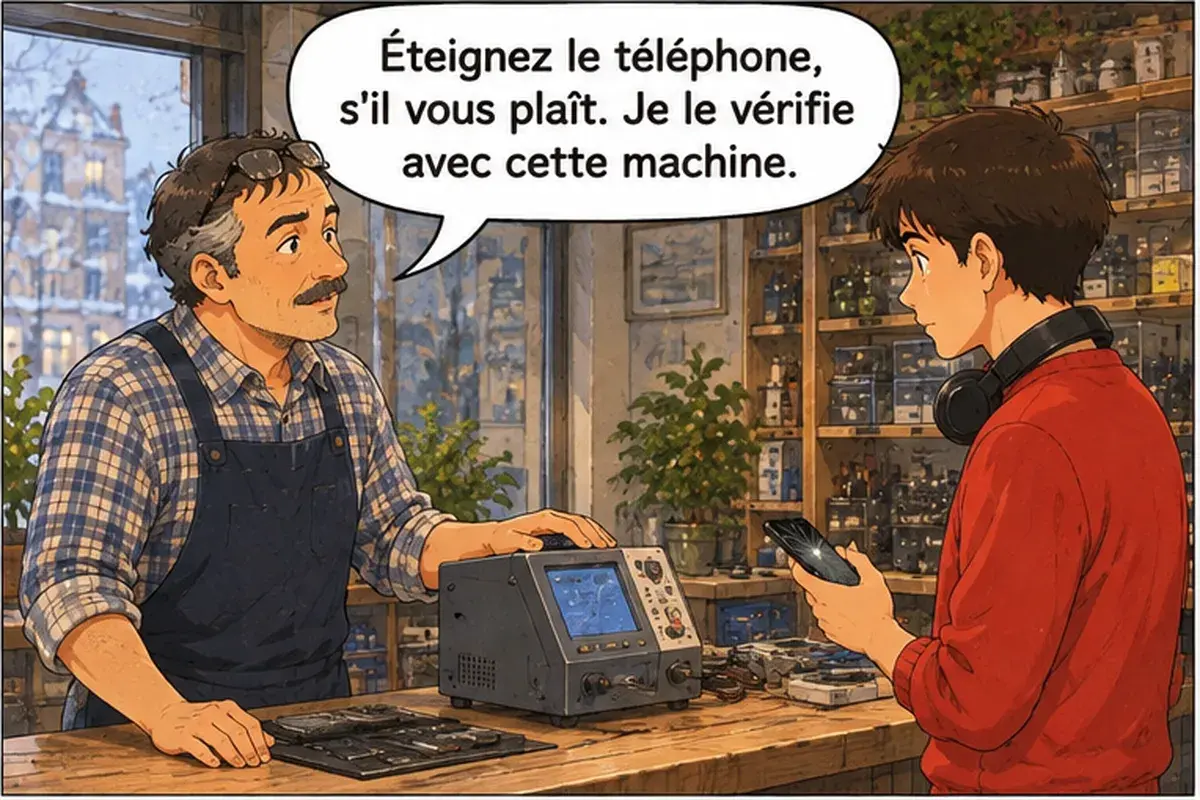
Éteignez le téléphone, s'il vous plaît. Je le vérifie avec cette machine.
Turn off the phone, please (formal). I'll check it with this machine.
- Pacha
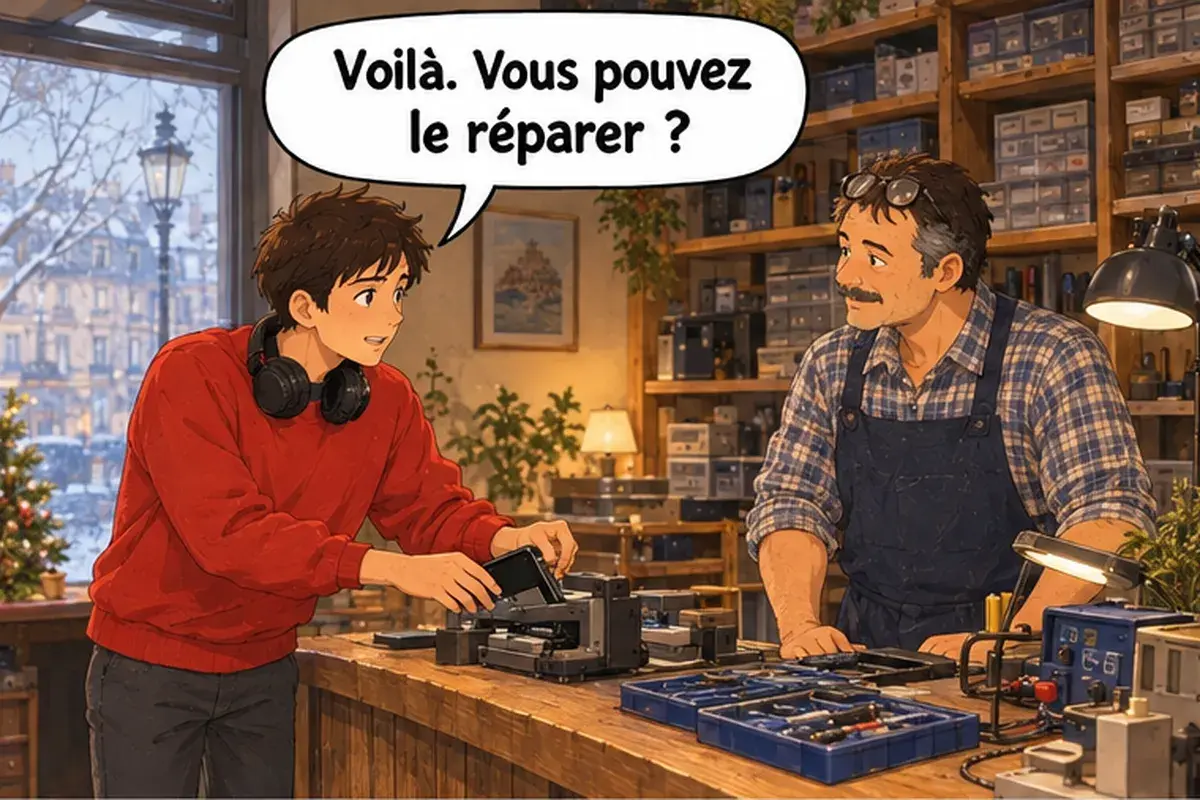
Voilà. Vous pouvez le réparer ?
There you go. Can you fix it? (formal)
- Réparateur
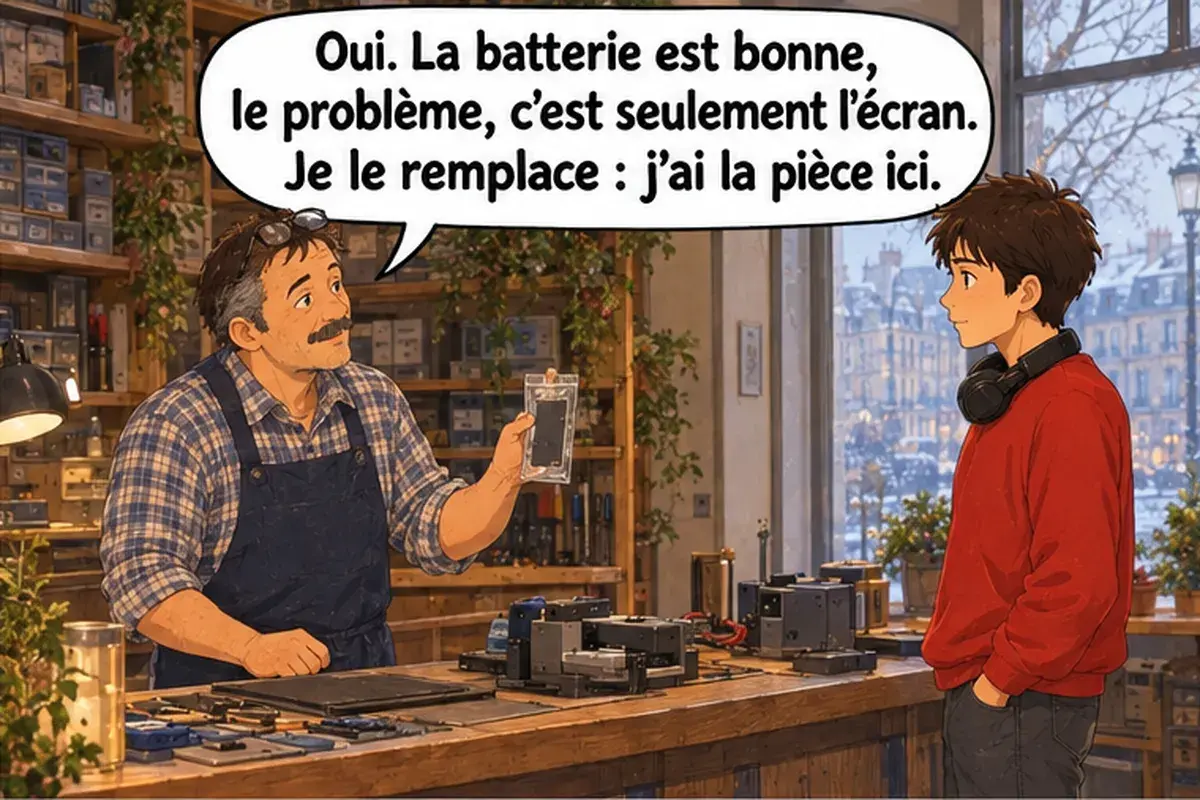
Oui. La batterie est bonne, le problème, c'est seulement l'écran. Je le remplace : j'ai la pièce ici.
Yes. The battery is good; the problem is only the screen. I'll replace it: I have the part here.
- Pacha
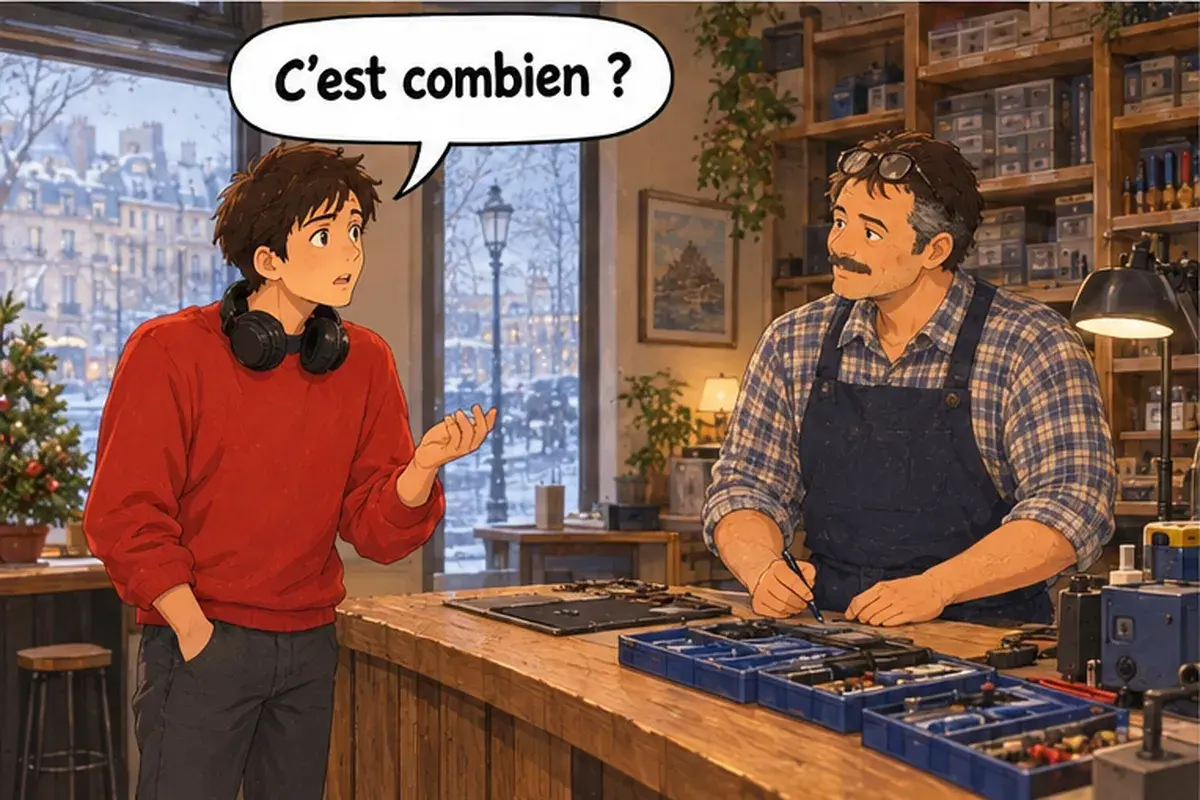
C'est combien ?
How much is it?
- Réparateur
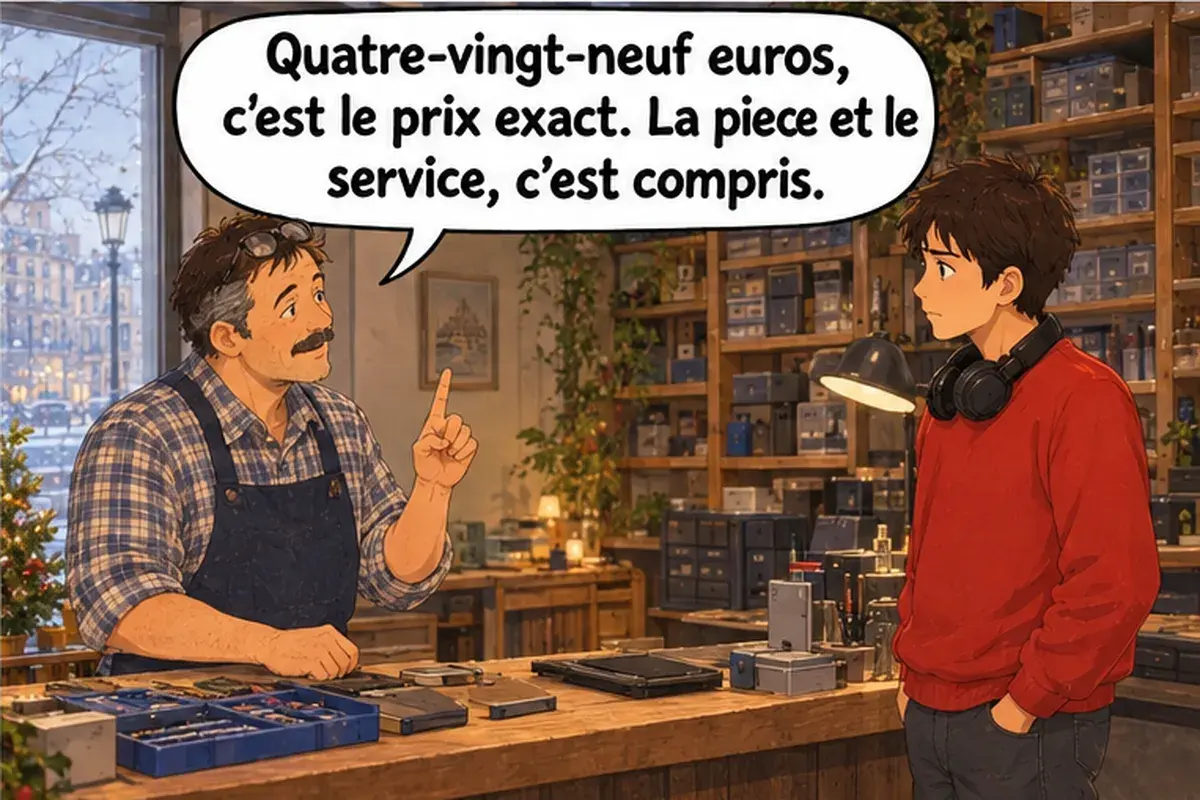
Quatre-vingt-neuf euros, c'est le prix exact. La pièce et le service, c'est compris.
Eighty-nine euros, that's the exact price. The part and the service are included.
- Pacha
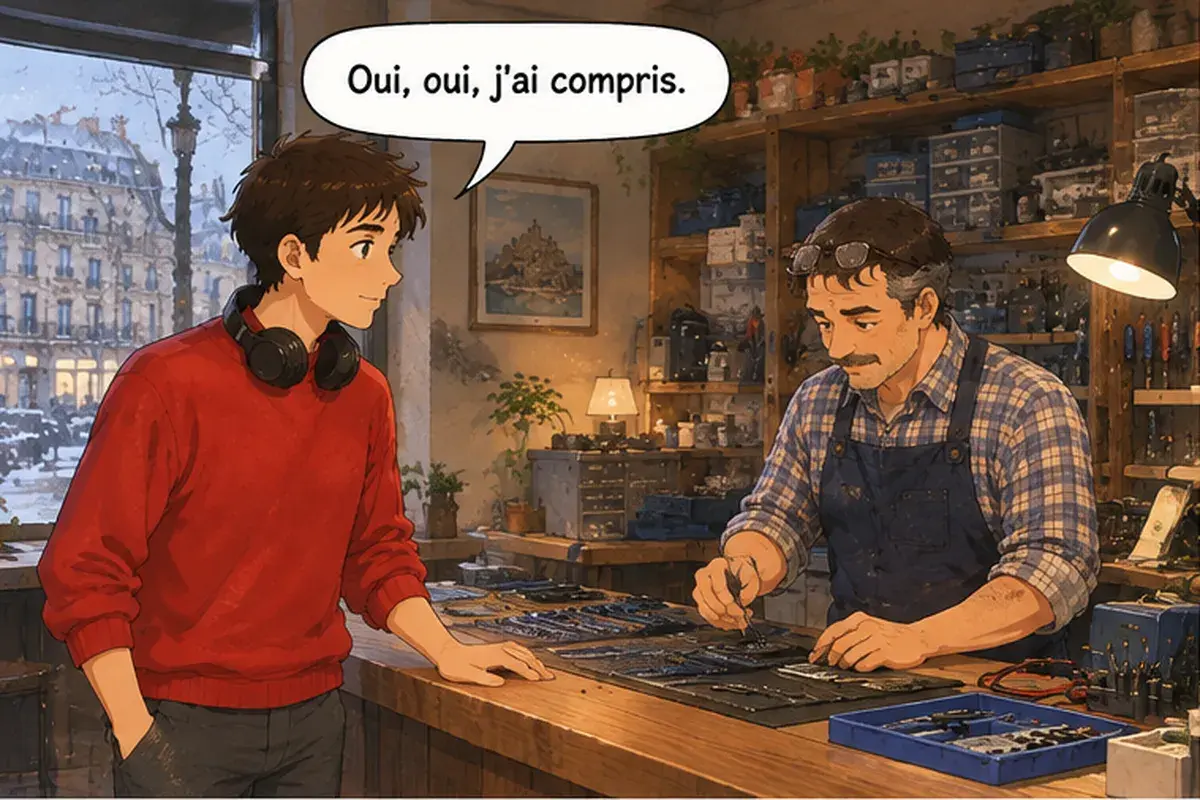
Oui, oui, j'ai compris.
Yes, yes, I got it.
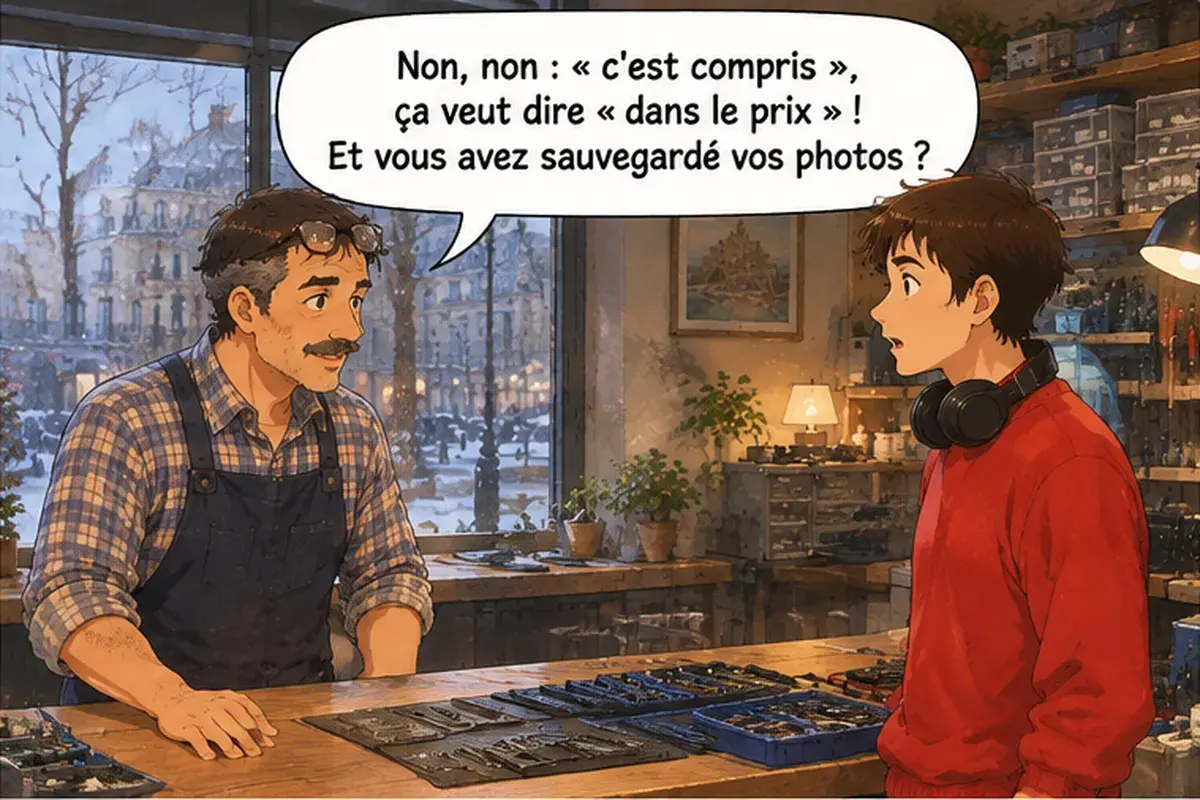
- Réparateur
Non, non : « c'est compris », ça veut dire « dans le prix » ! Et vous avez sauvegardé vos photos ?
No, no: "c'est compris" means "in the price"! And did you back up your photos? (formal)
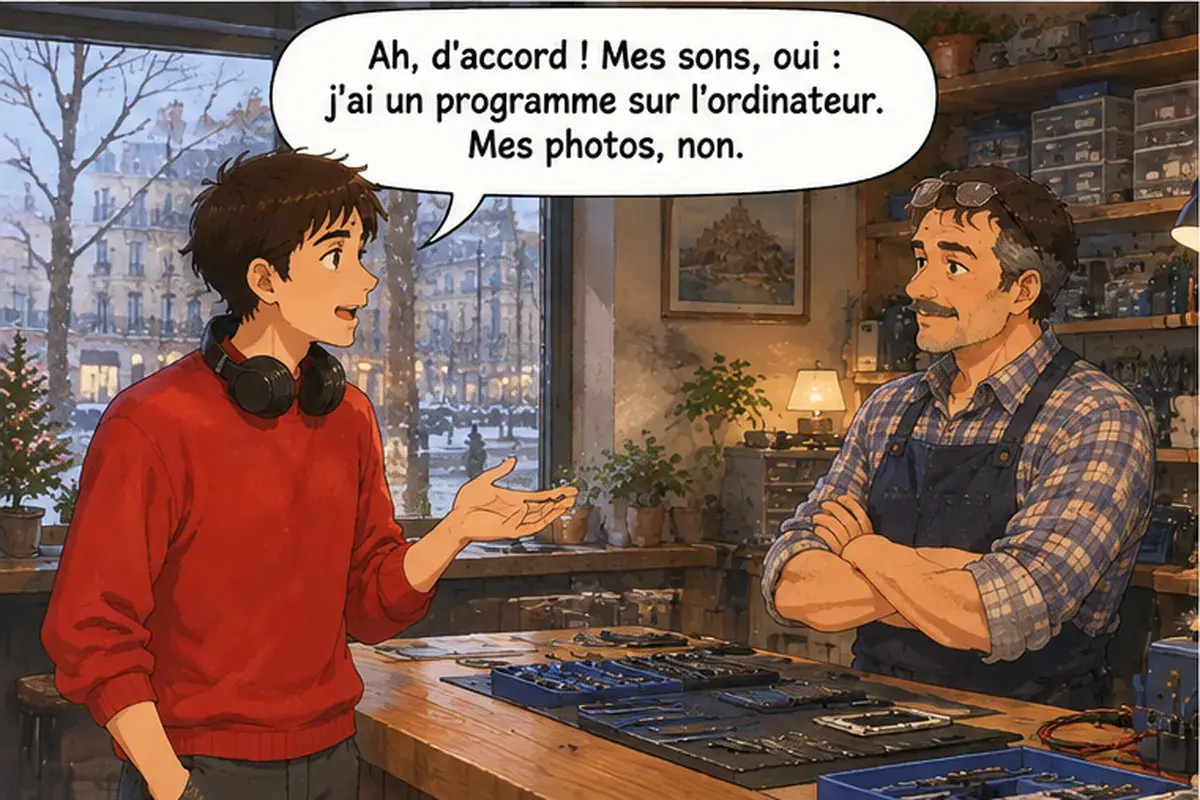
- Pacha
Ah, d'accord ! Mes sons, oui : j'ai un programme sur l'ordinateur. Mes photos, non.
Oh, OK! My sounds, yes: I have a program on the computer. My photos, no.
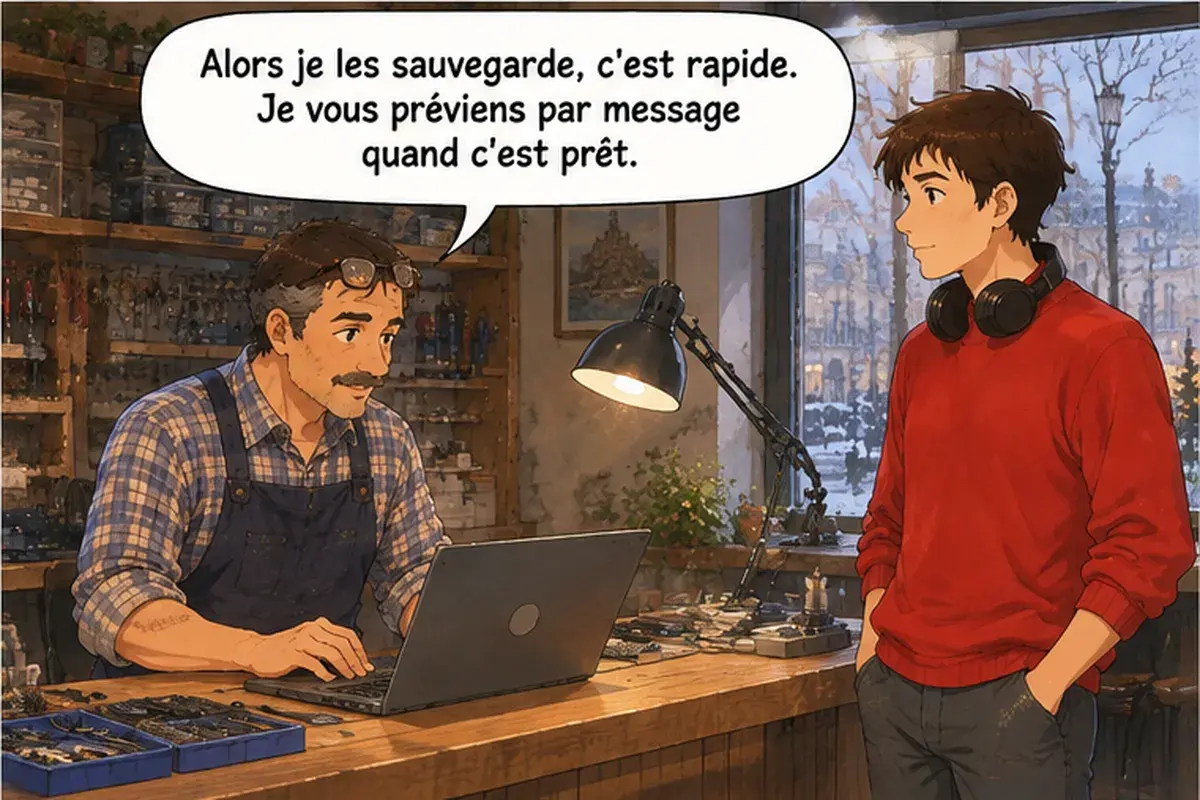
- Réparateur
Alors je les sauvegarde, c'est rapide. Je vous préviens par message quand c'est prêt.
Then I'll back them up, it's quick. I'll let you know by message when it's ready. (formal)
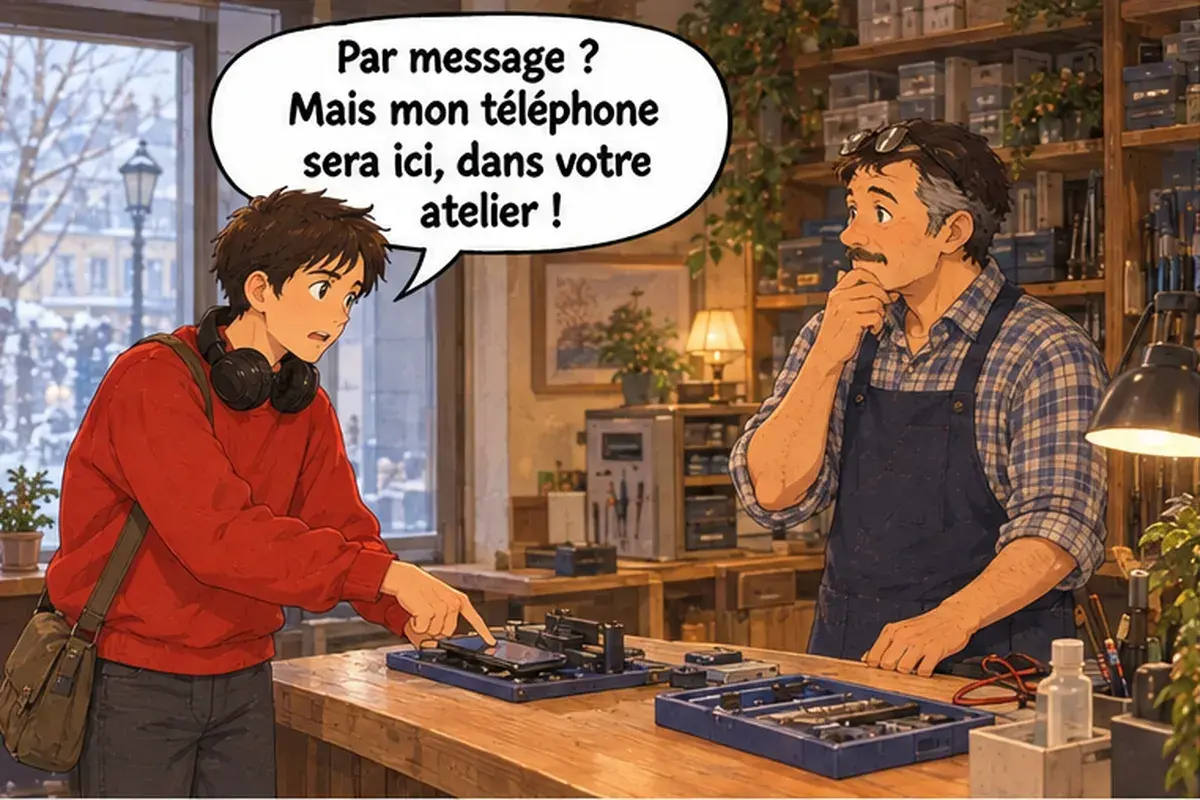
- Pacha
Par message ? Mais mon téléphone sera ici, dans votre atelier !
By message? But my phone will be here, in your repair shop! (formal)
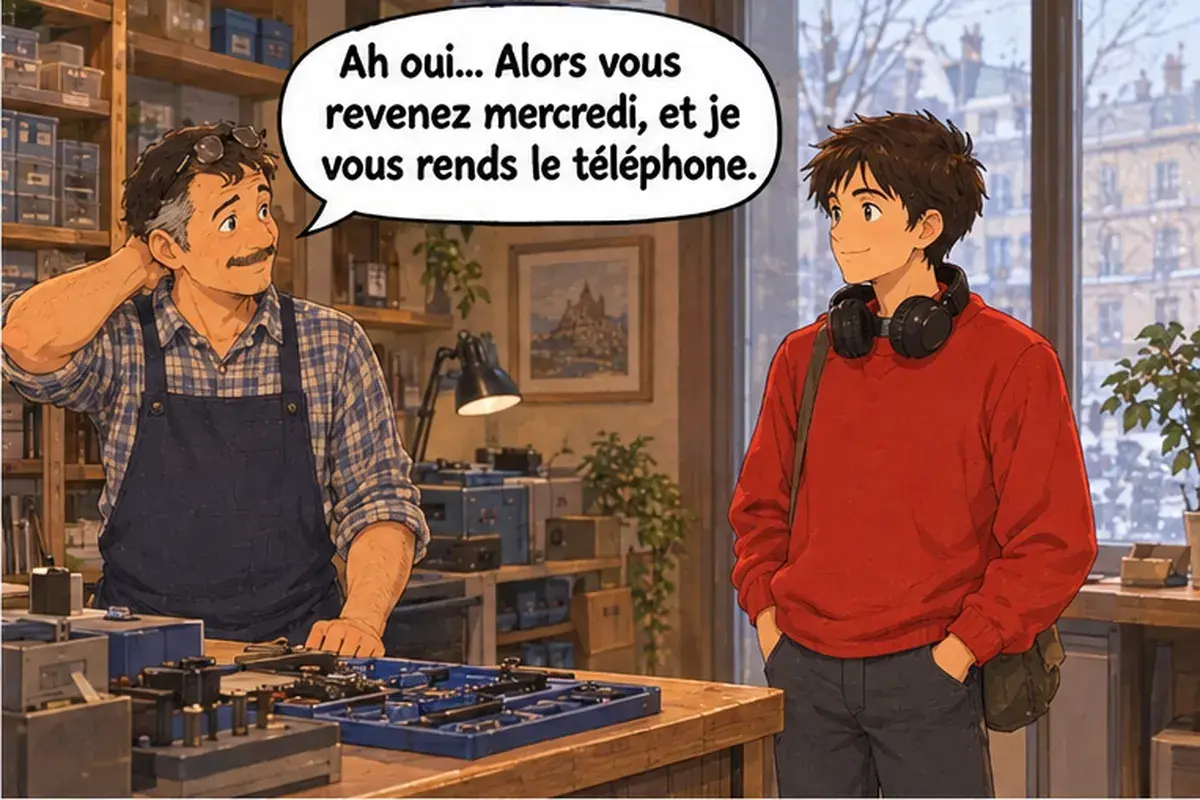
- Réparateur
Ah oui... Alors vous revenez mercredi, et je vous rends le téléphone.
Oh, right... Then you come back on Wednesday, and I give you back the phone. (formal)
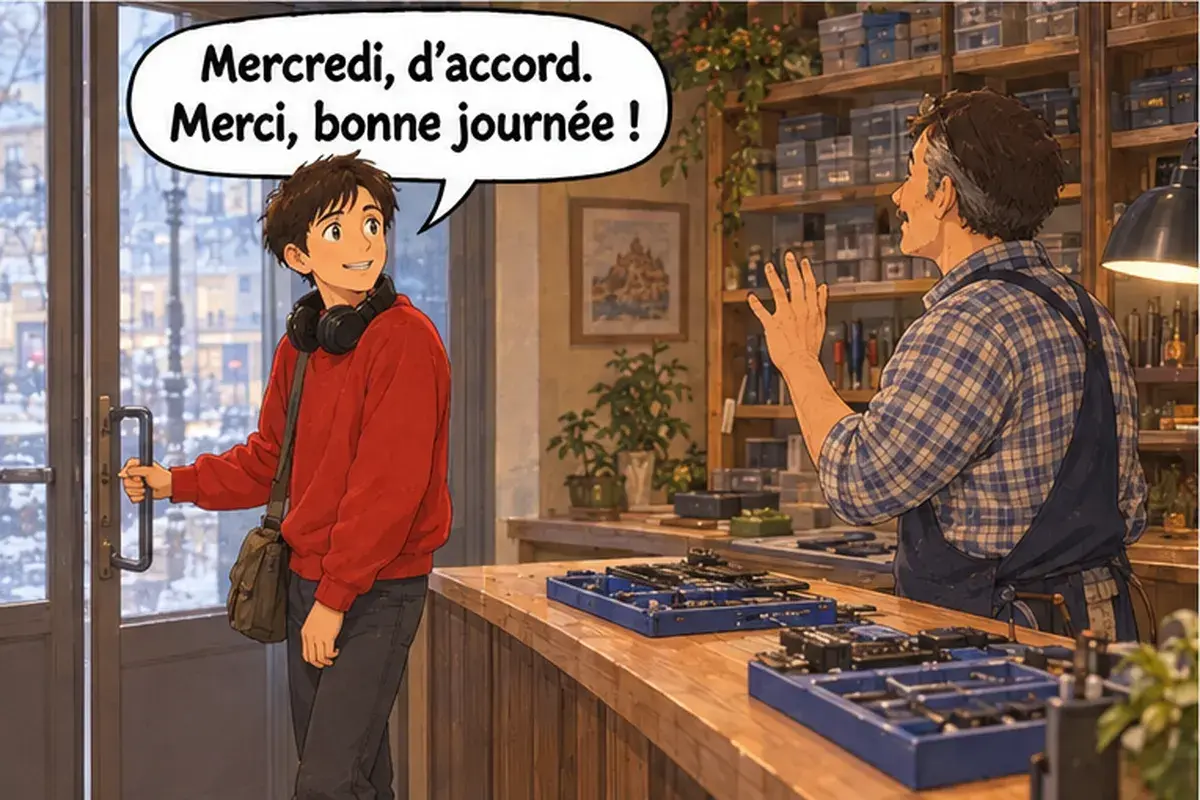
- Pacha
Mercredi, d'accord. Merci, bonne journée !
Wednesday, OK. Thanks, have a nice day!
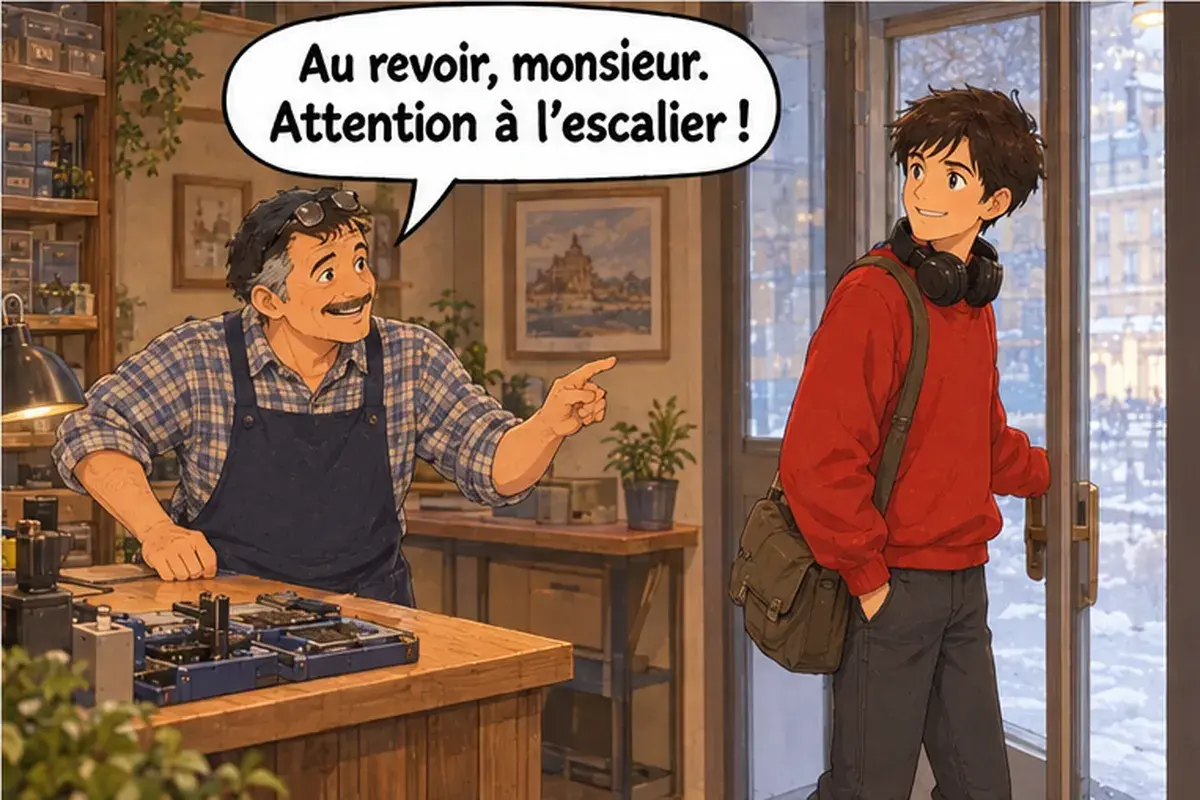
- Réparateur
Au revoir, monsieur. Attention à l'escalier !
Goodbye, sir. Careful on the stairs!
Grammar for this text
- Vous l'avez cassé comment ? — How did you break it? (formal) Here l' isn't an article but a pronoun, "it": it replaces "the phone" and goes before avez. vous avez cassé is the passé composé with avoir ("you broke"). Putting comment (how) at the end is the casual, spoken way to ask.
- Éteignez le téléphone — Turn off the phone (formal). éteignez is the vous command of éteindre (to turn off). Here le is an article, but in Je le vérifie — I'll check it, le is a pronoun: next to a noun it's an article, before a verb it's a pronoun.
- c'est compris — it's included (in the price). compris is the past participle of comprendre (to understand), but here it means "included". That's the joke with j'ai compris — I got it. c'est + past participle (c'est compris, c'est fermé, c'est cassé) comes back as the passive voice at B1; for now, learn these as set phrases.
- Je vous préviens — I'll let you know (formal). préviens is from prévenir (to let someone know, to warn), which changes like venir. vous here is the object, not the subject.
- je vous rends le téléphone — I give you back the phone (formal). rends is from rendre (to give back), like prends; the final d is silent.
- mon téléphone sera ici — my phone will be here. sera is "will be": the future tense of être (unit 6).
Words and grammar of the unit: Get your phone fixed.
Learn the words from the texts with flashcards
In the app, you can tap any word in a text to see its translation, forms and examples, and new words stick with flashcards. 15 minutes a day.
Start for freeEverything is open for free. No card needed to sign up.