

French story with translation · A2 · 15 lines
Je cherche la station Jourdain I'm looking for Jourdain station
Comic · 15 panels

Il y a dix minutes, je suis sorti de l'atelier sans mon téléphone.
Ten minutes ago, I left the repair shop without my phone.

Hier, j'ai trouvé l'atelier en ligne, sur un site avec les prix et les informations. Pour venir, j'ai utilisé la carte du téléphone.
Yesterday, I found the repair shop online, on a website with the prices and information. To get here, I used the map on my phone.

Maintenant, plus de plan, plus d'internet, plus de réseau. À quoi ça sert, un chargeur sans téléphone ? À rien : il est inutile.
Now: no more map, no more internet, no more signal. What's a charger for without a phone? Nothing: it's useless.
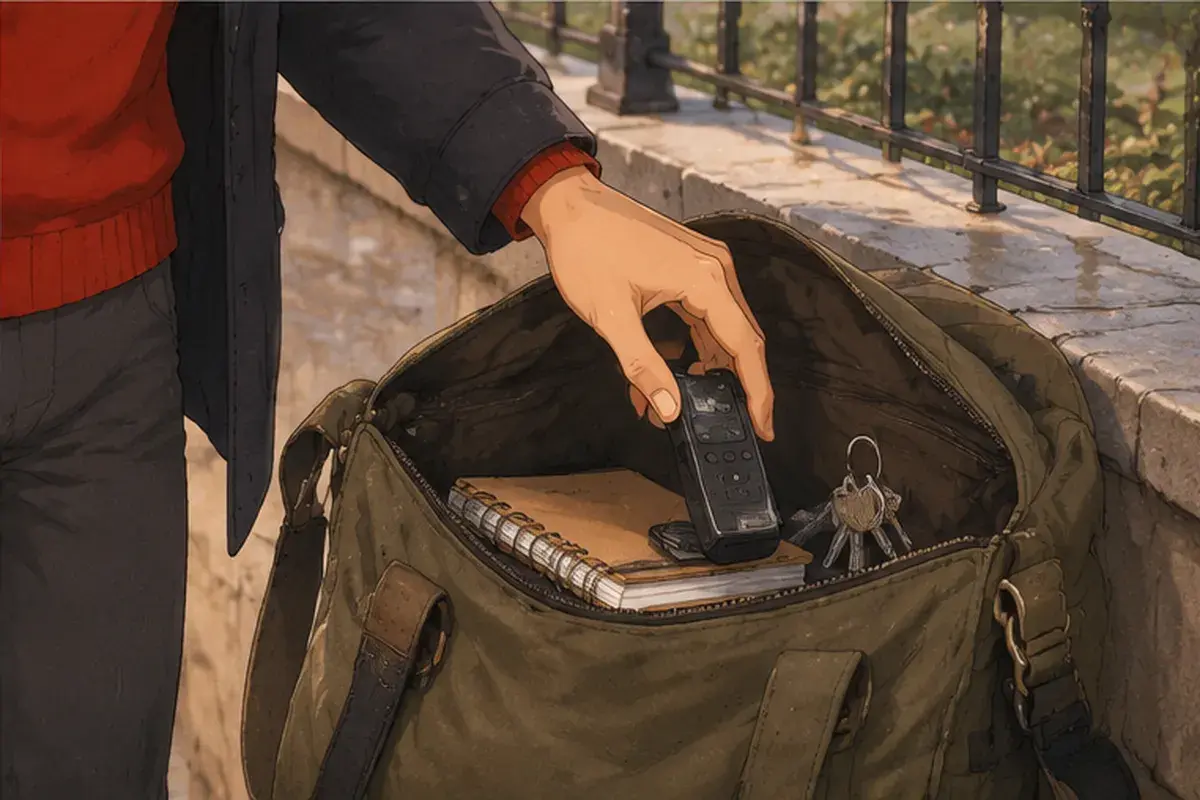
Dans mon sac, il y a aussi mon dictaphone, un petit appareil qui fonctionne sans réseau.
In my bag, there's also my voice recorder, a small device that works without a signal.

Je marche, je tourne à gauche, puis à droite, et je me perds.
I walk, I turn left, then right, and I get lost.

Il n'y a pas d'autre moyen : je dois demander mon chemin. Mais je n'aime pas parler à des gens dans la rue.
There's no other way: I have to ask for directions. But I don't like talking to people on the street.

Une femme sort de la boulangerie. Je dis : « Excusez-moi, madame, je cherche la station Jourdain. »
A woman comes out of the bakery. I say: "Excuse me, ma'am, I'm looking for Jourdain station." (formal)

Elle répond, et je comprends tout ! « Tout droit, puis à gauche. Ce n'est pas compliqué. »
She answers, and I understand everything! "Straight ahead, then left. It's not complicated."

Pour vérifier, je dis encore : tout droit, puis à gauche. Elle répond : « C'est exact ! »
To check, I say it again: straight ahead, then left. She answers: "That's right!"

À la station, je pense : pour trouver son chemin, un téléphone n'est pas toujours nécessaire. Il faut seulement des mots et un peu de courage.
At the station, I think: to find your way, a phone isn't always necessary. You only need words and a little courage.

Mercredi, le monsieur de l'atelier me rend mon téléphone avec un écran neuf.
On Wednesday, the man from the repair shop gives me back my phone with a new screen.

Il dit, très sérieux : « La garantie est de trois mois, mais pas dans l'escalier. »
He says, very seriously: "The warranty is three months, but not on the stairs."

Il me montre aussi une coque : je la prends.
He also shows me a case: I take it.

À la maison, j'allume le téléphone : la batterie est faible, alors je cherche une prise.
At home, I turn on the phone: the battery is low, so I look for an outlet.

Inès m'a laissé trois messages de cinq minutes. Deux jours sans téléphone, c'est aussi deux jours de calme !
Inès left me three five-minute messages. Two days without a phone is also two days of calm!
Grammar for this text
- Il y a dix minutes, je suis sorti — Ten minutes ago, I left.
il y a— followed by a length of time, it means "ago" (unit 2); je suis sorti is the passé composé with être, like je suis allé. - plus de plan, plus d'internet, plus de réseau — no more map, no more internet, no more signal. ne … plus means "not anymore, no more" (unit 3). In a list, ne and the verb are dropped and only plus de + noun is left.
- À quoi ça sert, un chargeur sans téléphone ? — What's a charger for without a phone? sert is from servir: ça sert à… means "it's for…". First à quoi ça sert, then what you're talking about — that's how people say it. À rien — for nothing.
- je me perds — I get lost. se perdre (to get lost) is a reflexive verb: je me perds, tu te perds, il se perd. Its past (je me suis perdu) comes in unit 12, so here it's in the present tense.
- C'est exact — That's right. The final ct is pronounced.
- Il me montre aussi une coque : je la prends — He also shows me a case: I take it. me here means "to me", and la means "it" (instead of une coque). Both go before the verb.
- Inès m'a laissé trois messages — Inès left me three messages. m' = me, and a laissé is the passé composé with avoir.
Words and grammar of the unit: Get your phone fixed.
Learn the words from the texts with flashcards
In the app, you can tap any word in a text to see its translation, forms and examples, and new words stick with flashcards. 15 minutes a day.
Start for freeEverything is open for free. No card needed to sign up.