
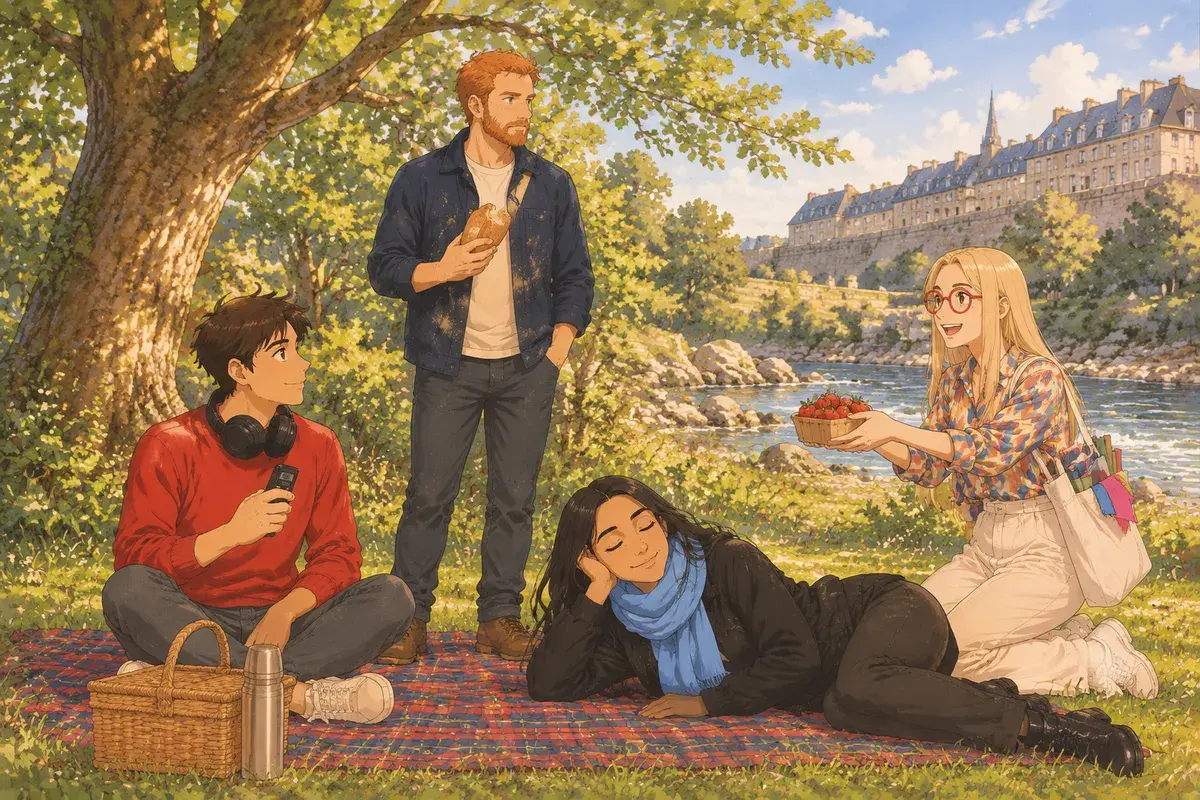
French story with translation · A2 · 16 lines
Le meilleur pique-nique de l'année The best picnic of the year
Comic · 16 panels

Dimanche matin, il faisait beau, et le ciel était ensoleillé. Inès est arrivée à la gare de Lyon à sept heures cinquante : personne n'a rien dit.
On Sunday morning, it was nice out, and the sky was sunny. Inès arrived at the Gare de Lyon at seven fifty: nobody said anything.
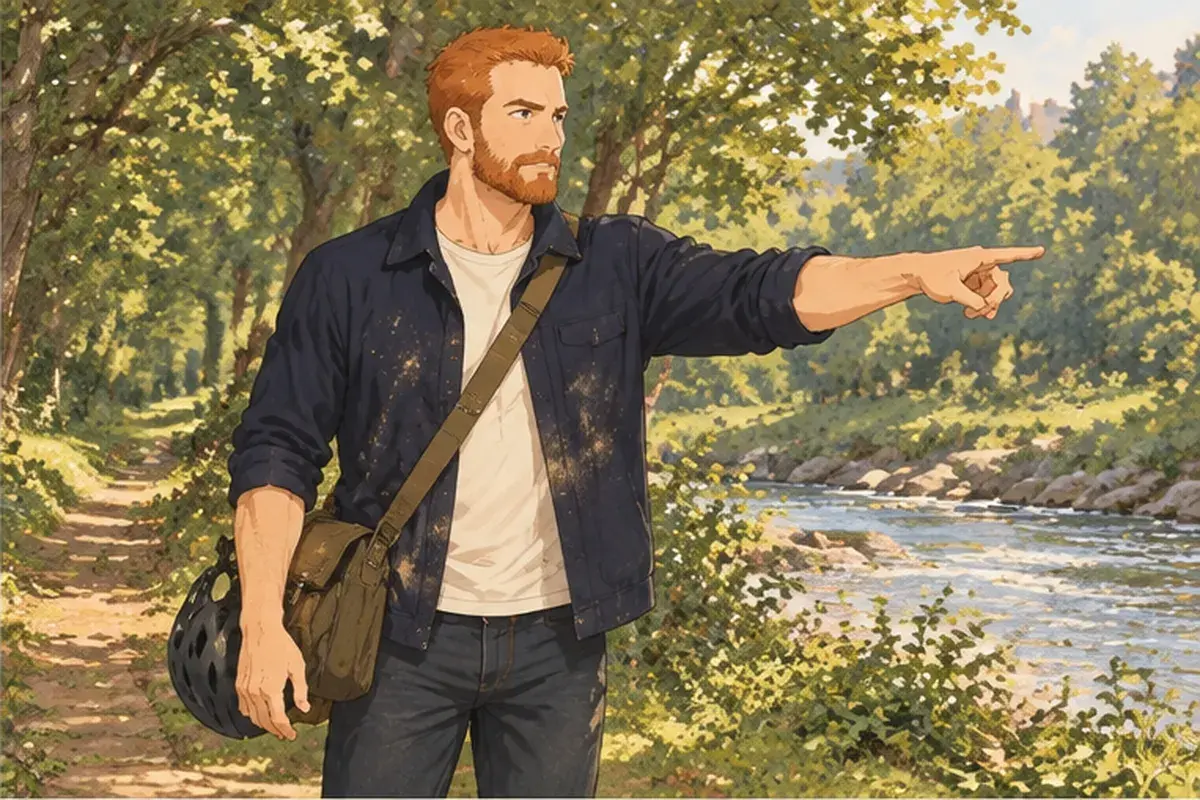
Après une heure de train, on a marché vingt minutes dans la forêt. Hugo connaissait un lieu près d'une petite rivière.
After an hour on the train, we walked for twenty minutes in the forest. Hugo knew a place near a small river.
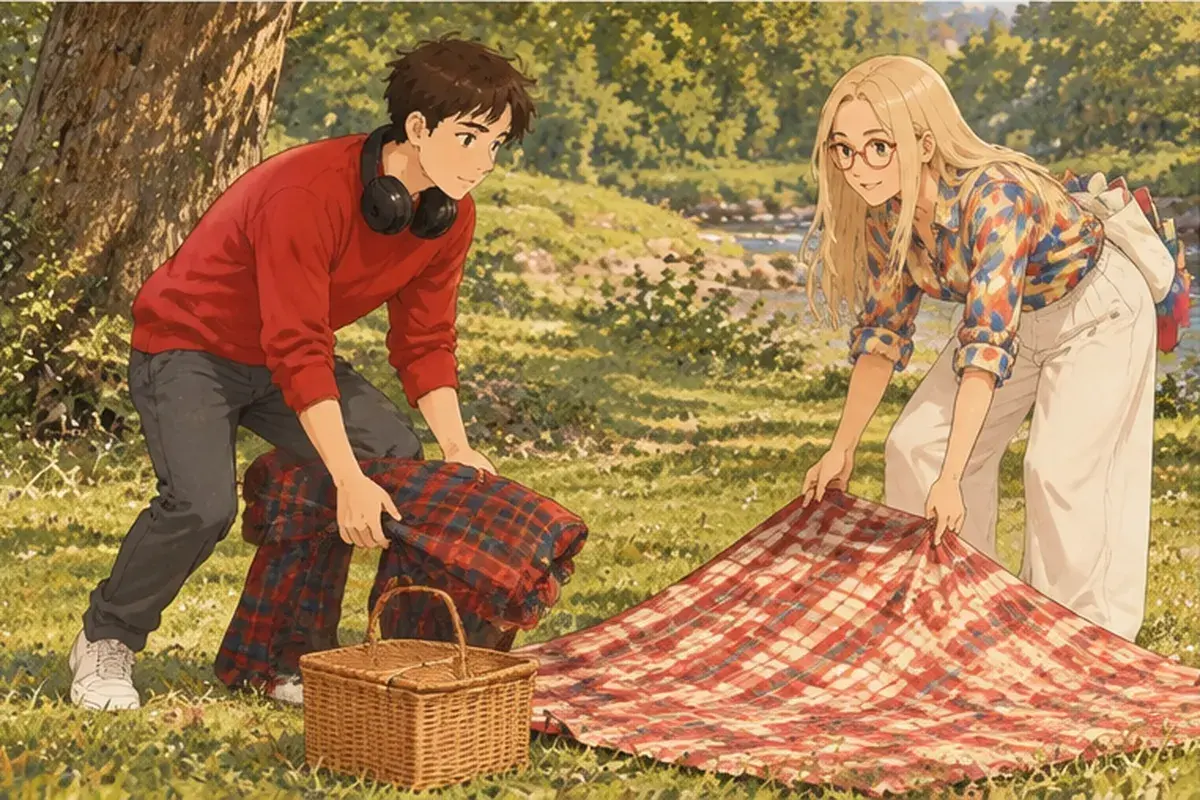
Il y avait de l'herbe, de l'ombre et une petite pelouse autour d'un grand arbre. Giulia a étalé la nappe, et j'ai posé le plaid et le panier.
There was grass, shade and a small lawn around a big tree. Giulia spread out the tablecloth, and I put down the throw blanket and the basket.

On a mangé les sandwichs d'Hugo et mon saucisson. Hugo a mangé son pain avec un visage très sérieux, puis il a dit : « Pas mal. »
We ate Hugo's sandwiches and my saucisson. Hugo ate his bread with a very serious face, then he said: "Not bad."

Giulia a sorti des fraises. Elles étaient très chères, mais elles avaient seulement le goût de l'eau. Hugo a dit : « En juin, les cerises sont meilleures. »
Giulia took out some strawberries. They were very expensive, but they only tasted like water. Hugo said: "In June, the cherries are better."
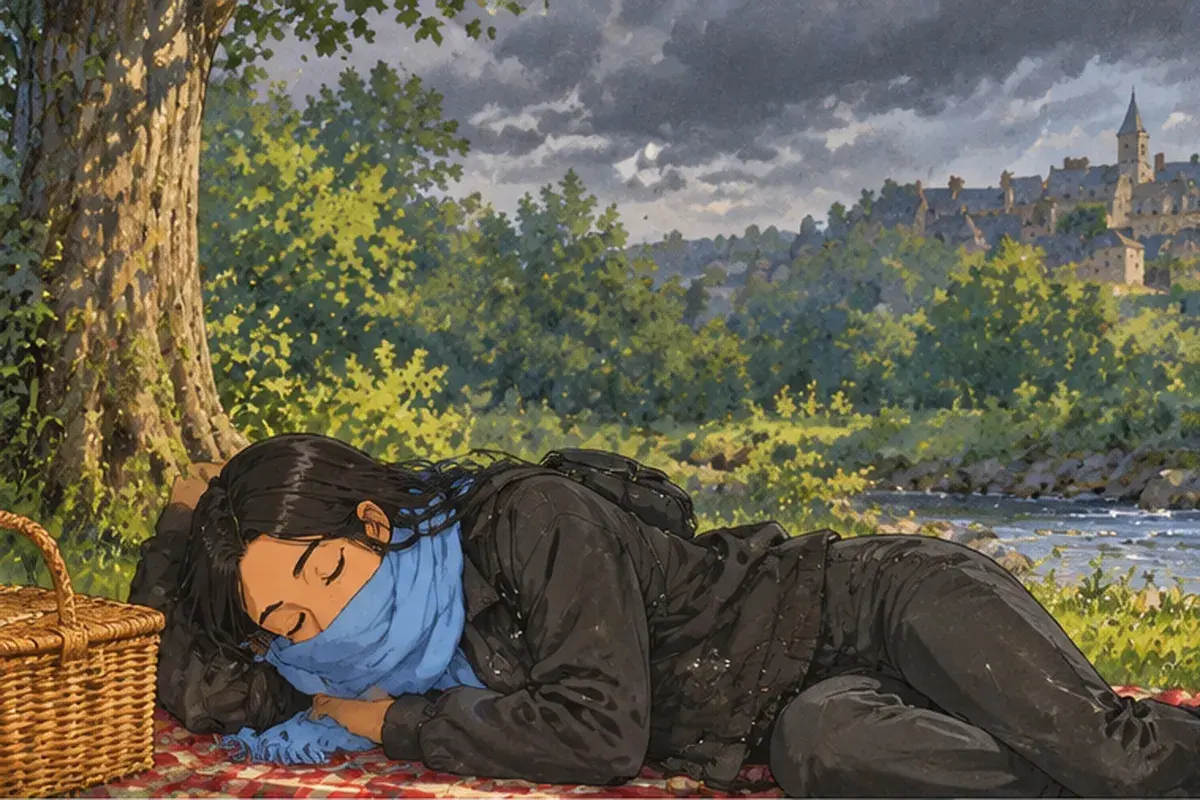
Inès a fait la sieste sur le plaid. Le ciel est devenu nuageux, puis très noir.
Inès took a nap on the throw blanket. The sky got cloudy, then very black.
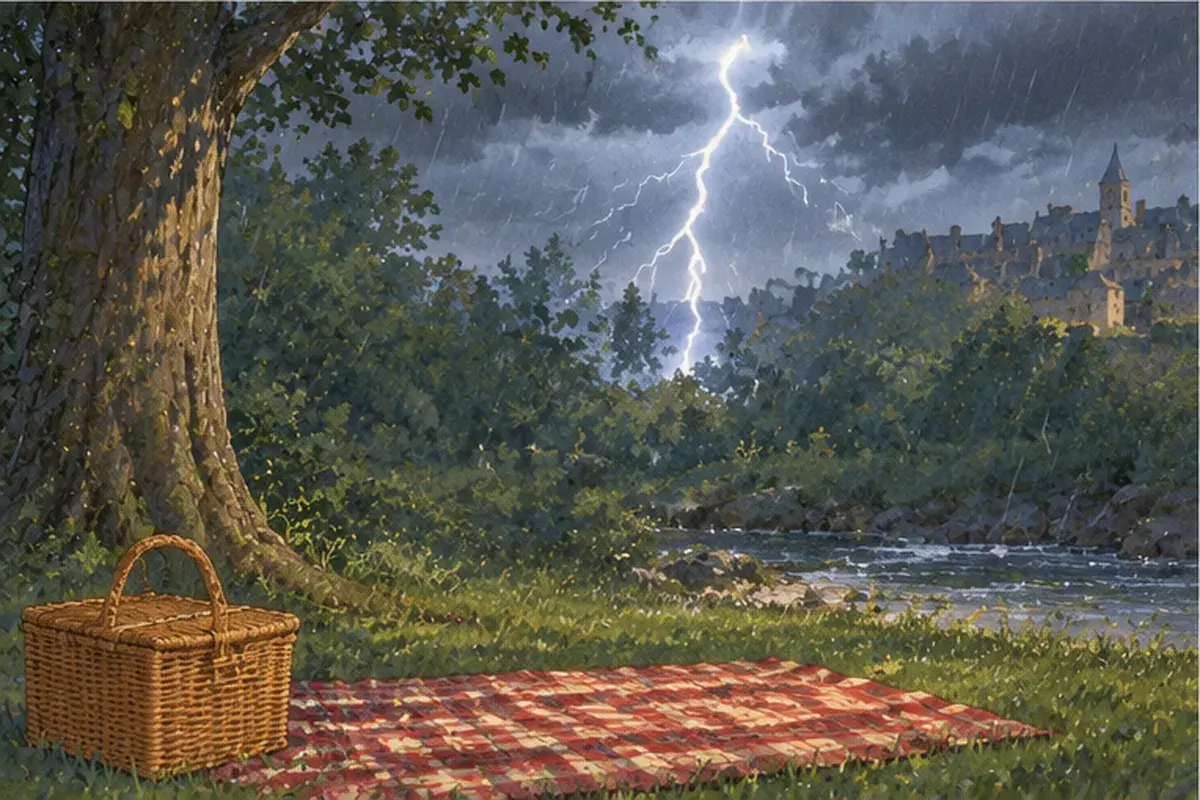
Tout à coup, un éclair, puis le tonnerre : ce n'était pas une averse, c'était un orage !
Suddenly, a flash of lightning, then thunder: it wasn't a shower, it was a thunderstorm!
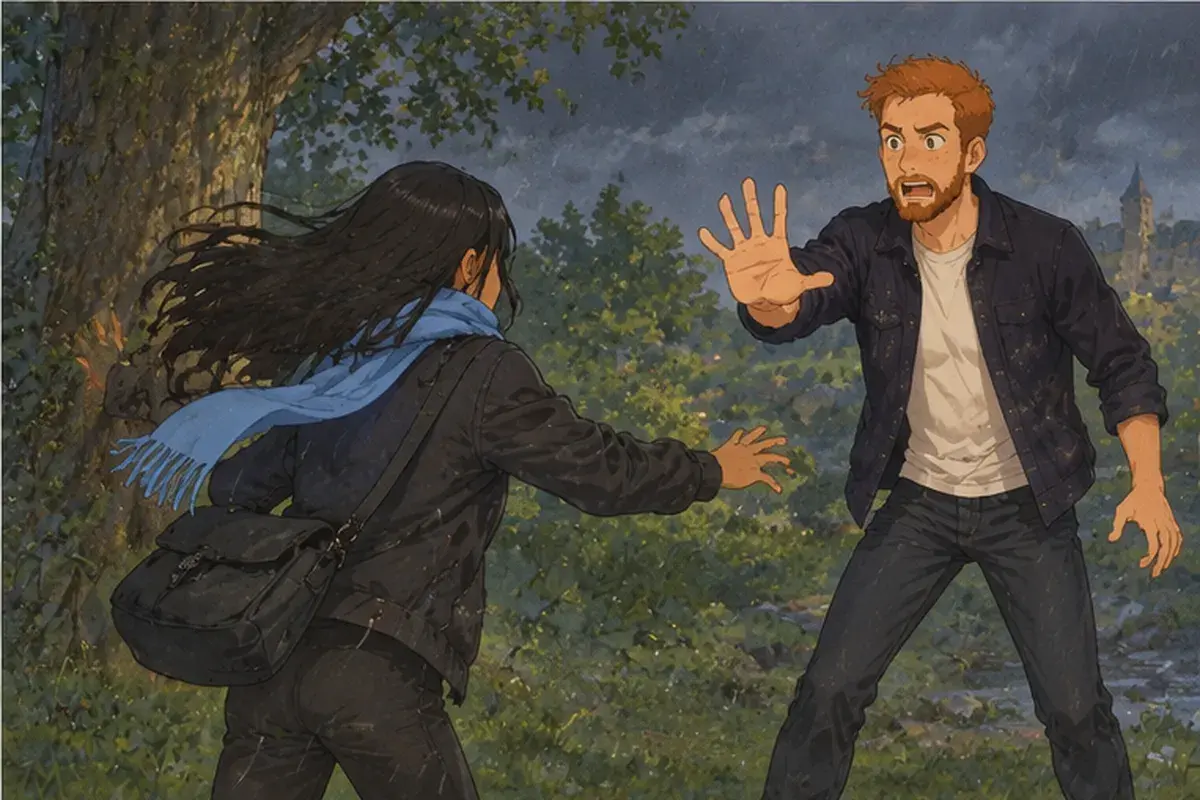
Inès a voulu courir sous le grand arbre, mais Hugo a dit : « Non ! Pendant un orage, un arbre, c'est un danger. »
Inès wanted to run under the big tree, but Hugo said: "No! During a thunderstorm, a tree is a danger."
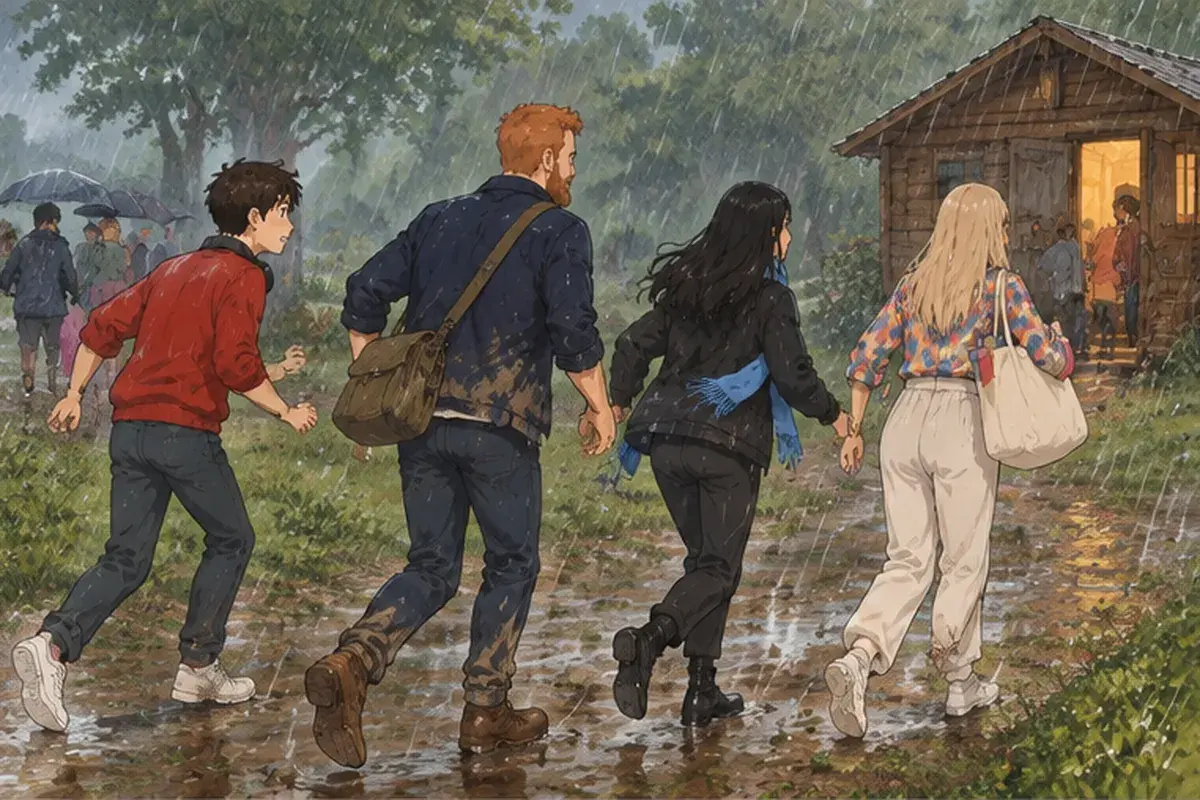
Les gens ont couru ailleurs. Nous, on a trouvé un abri : une petite cabane au bout du chemin.
People ran somewhere else. We found a shelter: a small cabin at the end of the path.

Dehors, l'herbe est devenue de la boue, avec des flaques partout. Dans la cabane, on était quatre, trempés mais contents.
Outside, the grass turned into mud, with puddles everywhere. In the cabin, there were four of us, soaked but happy.
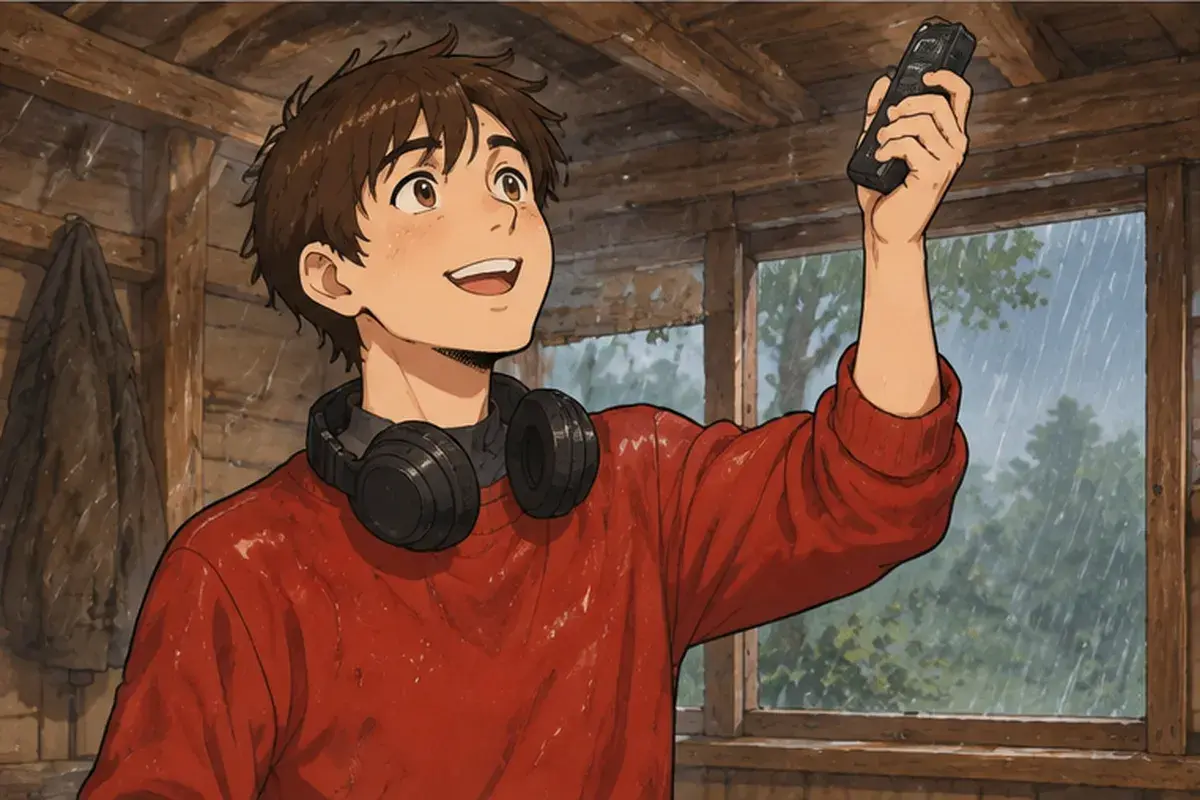
Sur le toit, la pluie faisait un bruit incroyable. J'ai sorti mon dictaphone : c'est certainement mon meilleur enregistrement de l'année.
On the roof, the rain was making an incredible noise. I took out my voice recorder: it's certainly my best recording of the year.

Giulia a chanté une chanson italienne. Inès a chanté aussi, mais sans connaître les mots.
Giulia sang an Italian song. Inès sang too, but without knowing the words.

Vers quatre heures, il y a eu une éclaircie. Le soleil est revenu, et Giulia a sauté dans la plus grande flaque.
Around four o'clock, there was a break in the clouds. The sun came back, and Giulia jumped into the biggest puddle.

Dans le train, Inès a demandé : « Qui ramène la nappe trempée à la maison ? » Personne n'a répondu : tout le monde regardait par la fenêtre.
On the train, Inès asked: "Who's taking the soaked tablecloth back home?" Nobody answered: everyone was looking out the window.

Giulia a dit que c'était le meilleur pique-nique de l'année. Elle avait raison.
Giulia said it was the best picnic of the year. She was right.

Lundi, à la gare, je lui ai donné l'enregistrement de la pluie. Elle a dit : « À bientôt », pas « adieu ».
On Monday, at the station, I gave her the recording of the rain. She said "See you soon," not "farewell."
Grammar for this text
- il faisait beau and le ciel était ensoleillé — the imperfect (imparfait): faisait from faire, était from être. This is how you set the scene, like what the weather was like. The events themselves come next, in the passé composé (the main past tense).
- Inès est arrivée — passé composé with être: est + arrivée; it ends in -e because Inès is a woman.
- personne n'a rien dit — personne (nobody) and rien (nothing) can go together, with just one ne: "nobody said anything".
- ce n'était pas une averse, c'était un orage — c'était means "it was"; ce n'était pas… c'était… — "it wasn't…, it was…".
- Pendant un orage, un arbre, c'est un danger — Hugo is right: a tall tree standing alone attracts lightning, so don't shelter under it in a thunderstorm.
- la plus grande flaque — la plus grande means "the biggest"; it's la because flaque is feminine.
- je lui ai donné l'enregistrement — lui means "(to) her" (unit 9) and goes before the verb; ai donné is the passé composé with avoir. Elle avait raison — "she was right": avoir raison in the imperfect.
Words and grammar of the unit: Plan a weekend trip out of town.
Learn the words from the texts with flashcards
In the app, you can tap any word in a text to see its translation, forms and examples, and new words stick with flashcards. 15 minutes a day.
Start for freeEverything is open for free. No card needed to sign up.