

French dialogue with translation · A2 · 16 lines
Qu'est-ce qui s'est passé ? What happened?
Comic · 16 panels

- Hugo
Quoi ? Le film est déjà fini ? Je dormais !
What? The movie's already over? I was sleeping!
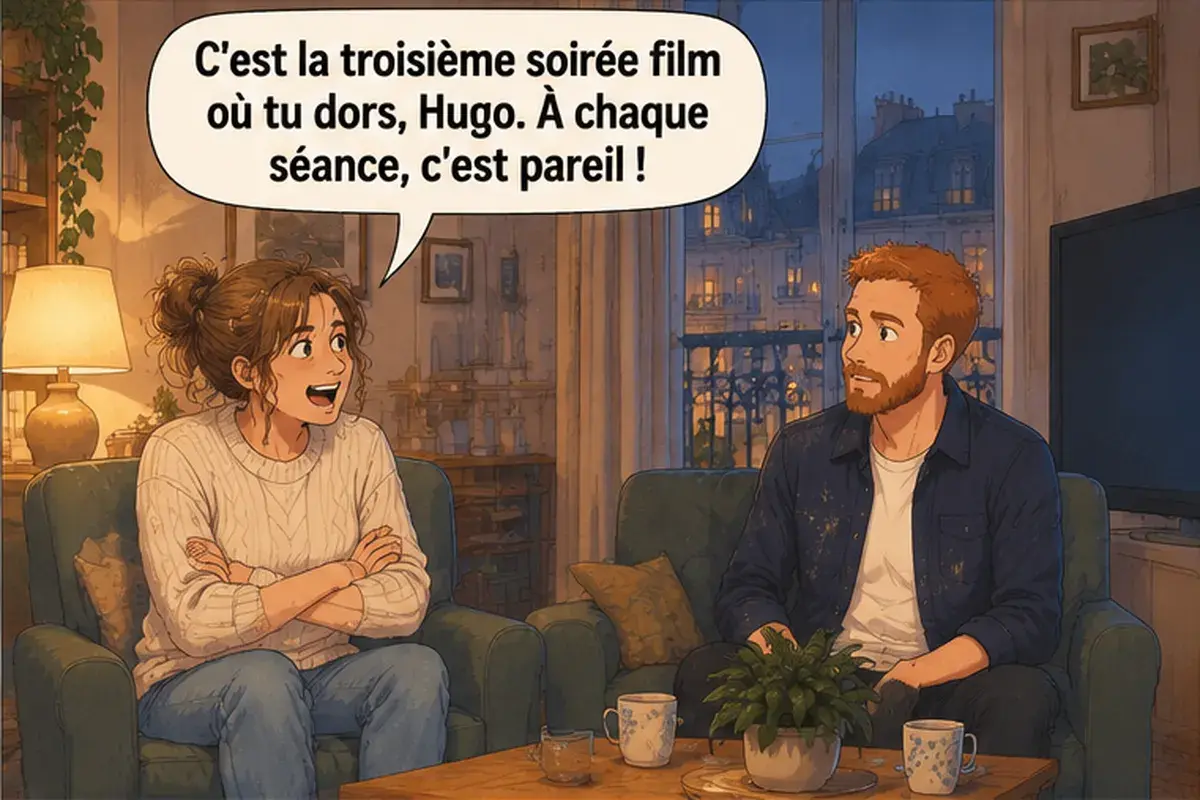
- Maëlle
C'est la troisième soirée film où tu dors, Hugo. À chaque séance, c'est pareil !
This is the third movie night where you sleep, Hugo. It's the same at every showing!
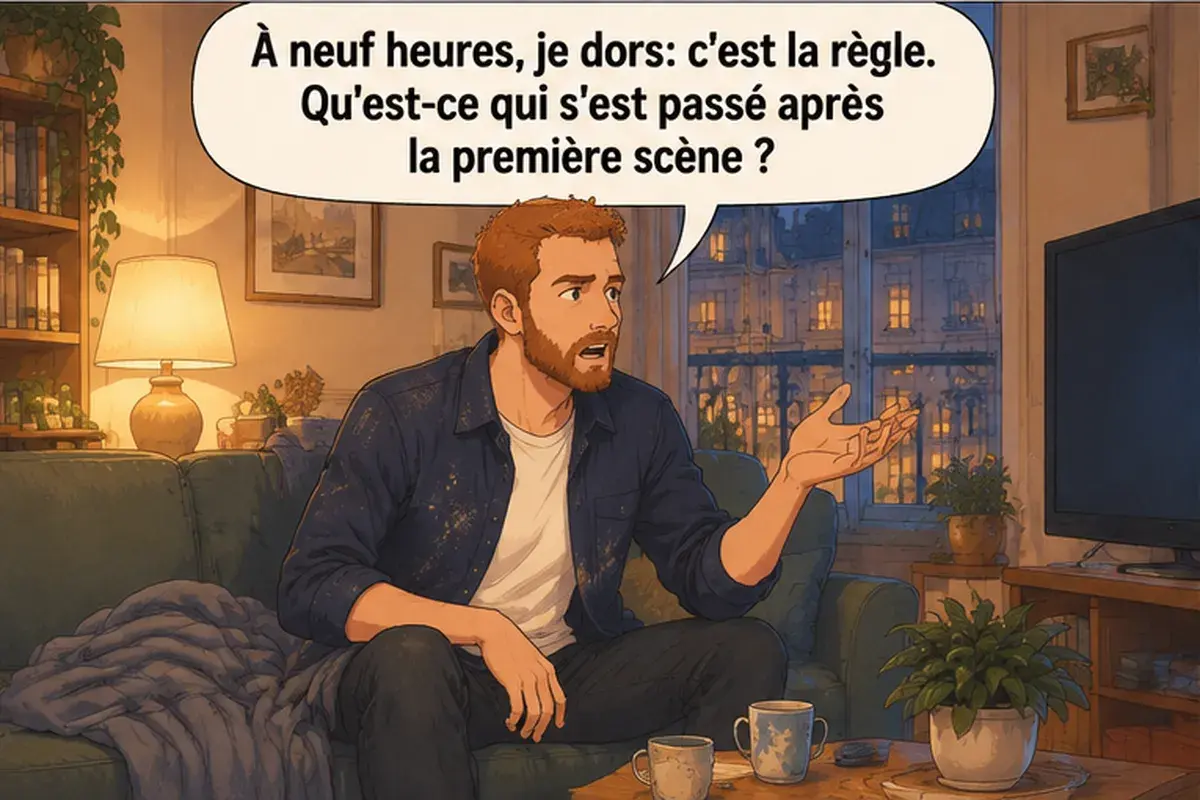
- Hugo
À neuf heures, je dors : c'est la règle. Qu'est-ce qui s'est passé après la première scène ?
At nine o'clock, I sleep: that's the rule. What happened after the first scene?
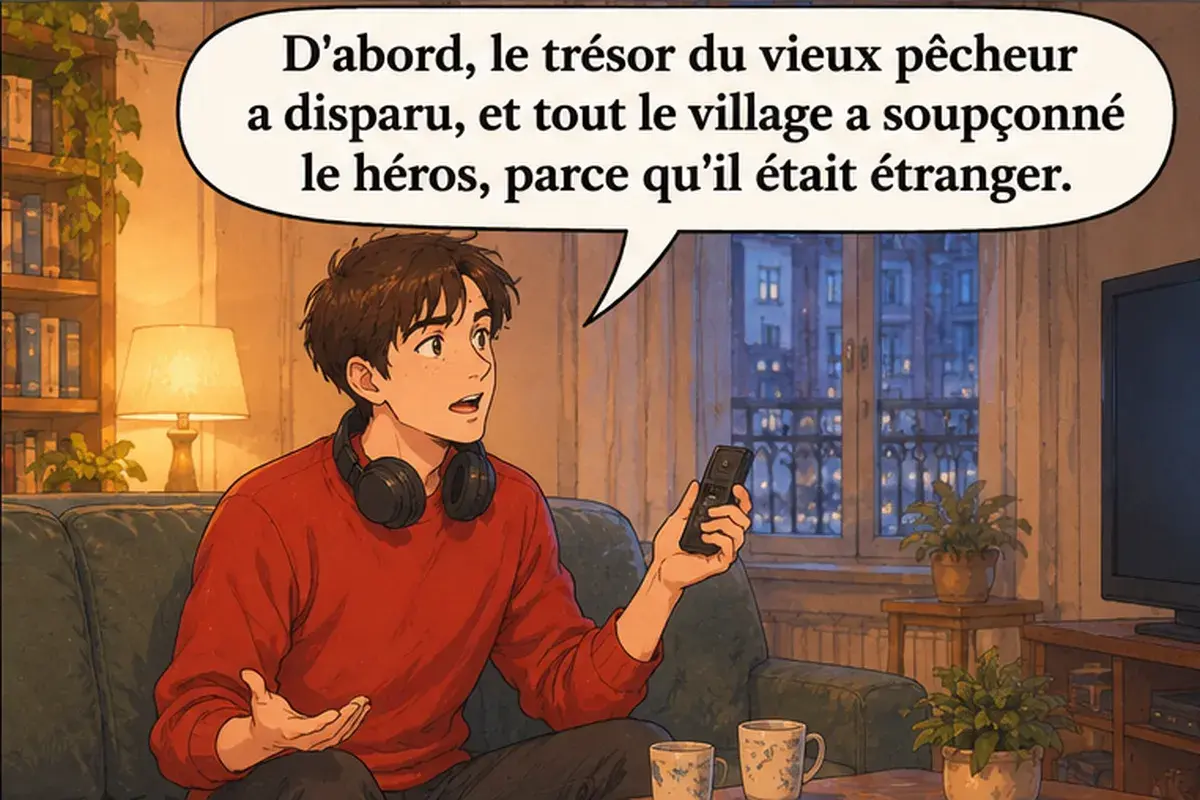
- Pacha
D'abord, le trésor du vieux pêcheur a disparu, et tout le village a soupçonné le héros, parce qu'il était étranger.
First, the old fisherman's treasure disappeared, and the whole village suspected the hero because he was an outsider.
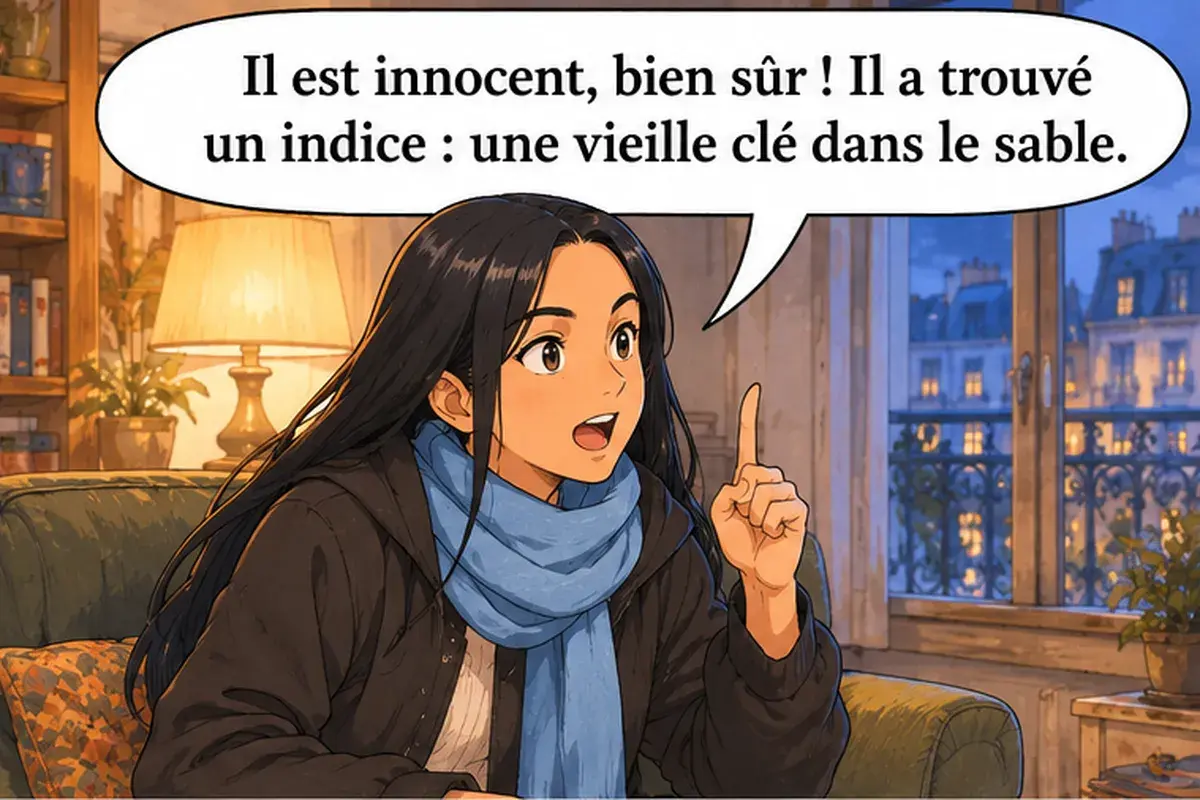
- Inès
Il est innocent, bien sûr ! Il a trouvé un indice : une vieille clé dans le sable.
He's innocent, of course! He found a clue: an old key in the sand.
- Pacha
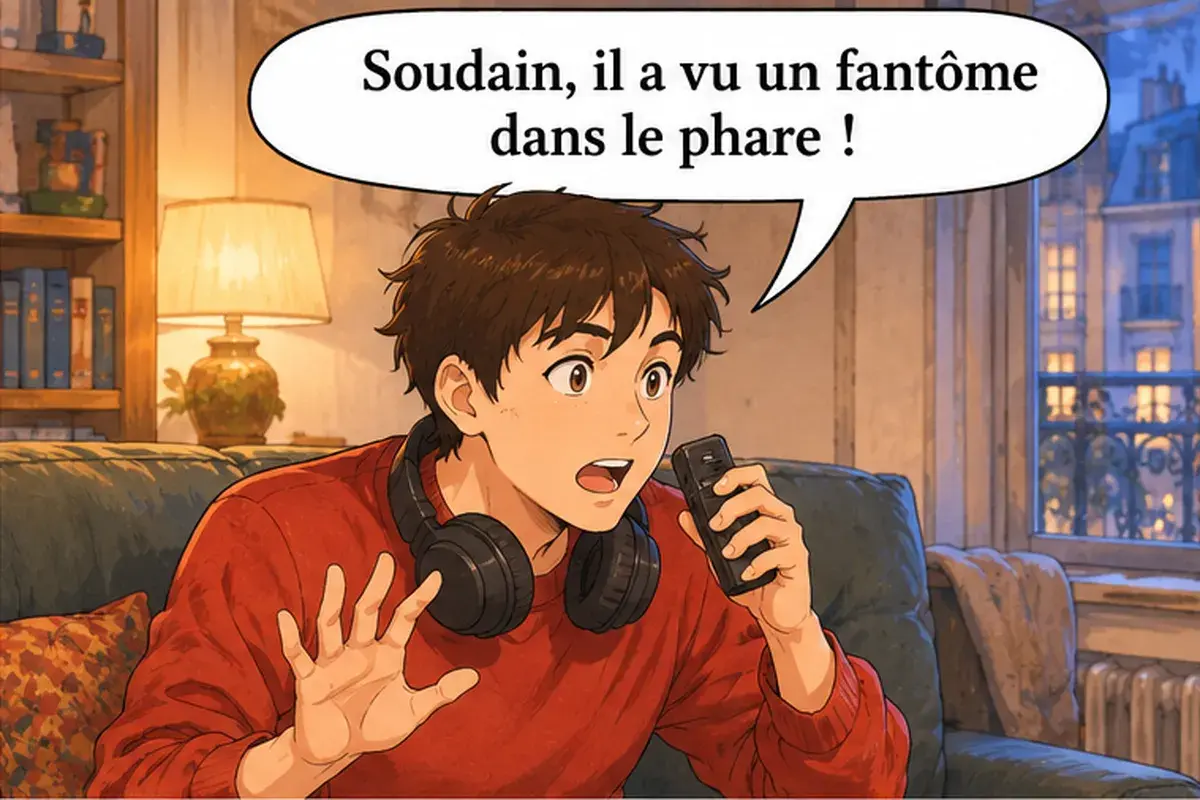
Soudain, il a vu un fantôme dans le phare !
Suddenly, he saw a ghost in the lighthouse!

- Inès
C'était un faux fantôme ! Le voleur, c'était le meilleur ami du héros, sous un drap.
It was a fake ghost! The thief was the hero's best friend, under a sheet.

- Maëlle
Il a menti à tout le monde et il a trahi le héros. Son mensonge était énorme !
He lied to everyone and betrayed the hero. His lie was huge!
- Inès
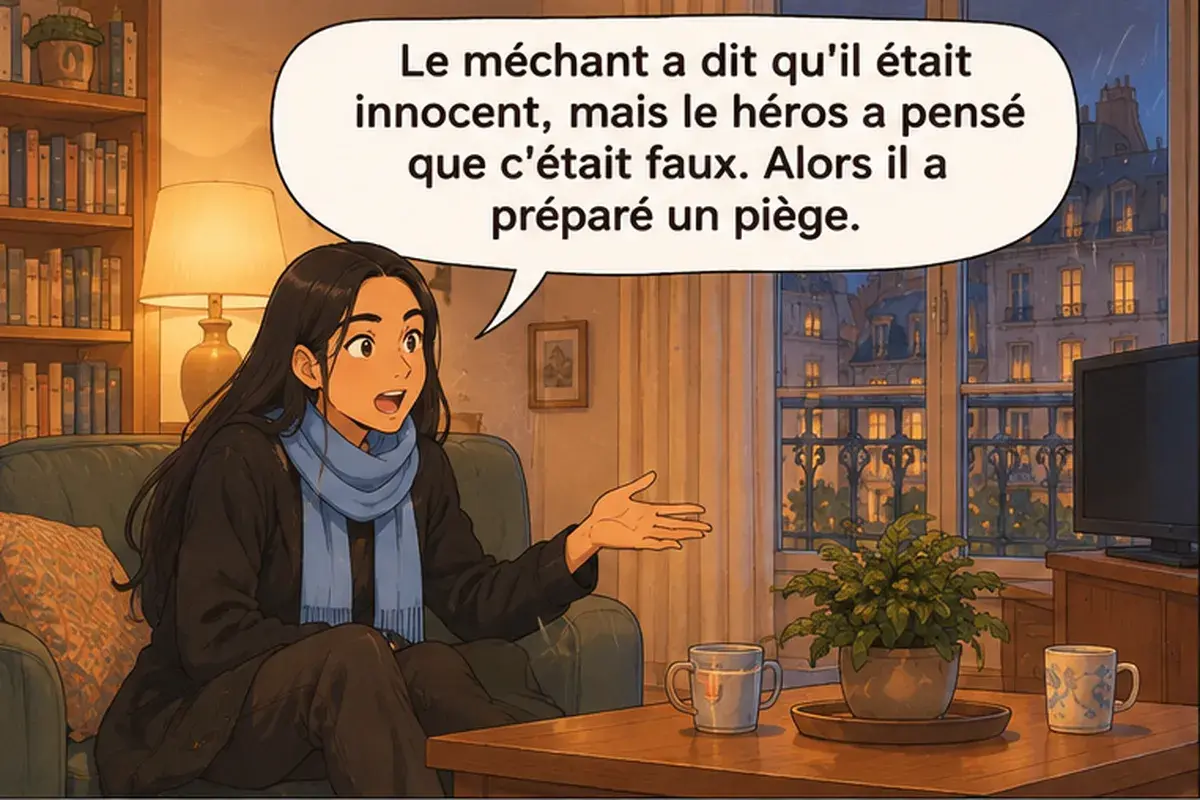
Le méchant a dit qu'il était innocent, mais le héros a pensé que c'était faux. Alors il a préparé un piège.
The villain said he was innocent, but the hero thought it was false. So he prepared a trap.
- Pacha
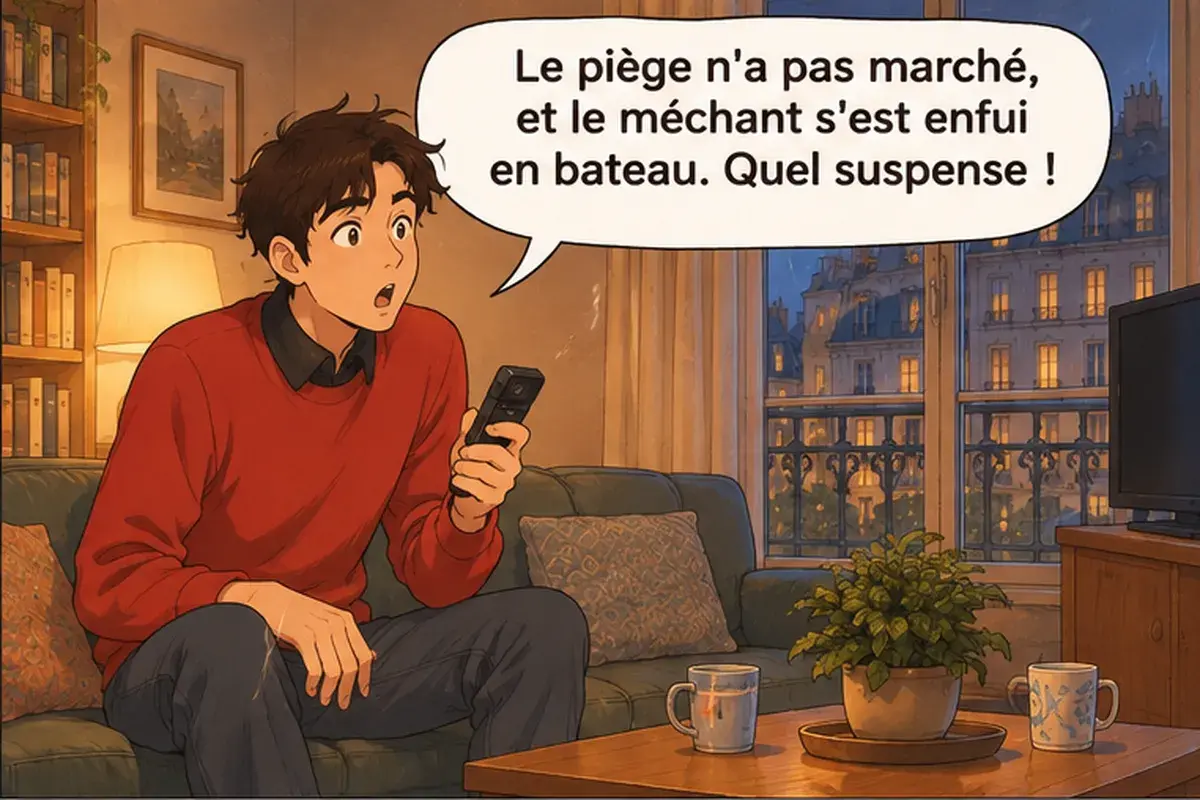
Le piège n'a pas marché, et le méchant s'est enfui en bateau. Quel suspense !
The trap didn't work, and the villain ran away by boat. What suspense!
- Maëlle
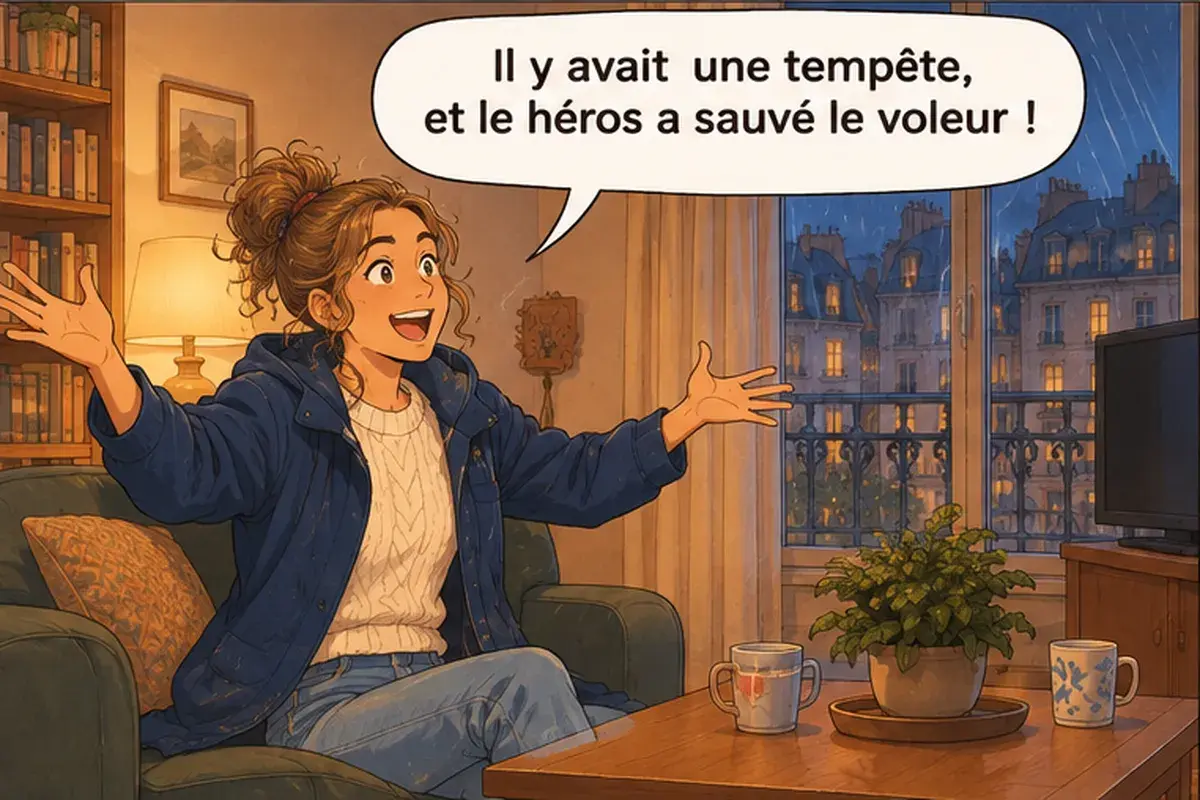
Il y avait une tempête, et le héros a sauvé le voleur !
There was a storm, and the hero saved the thief!
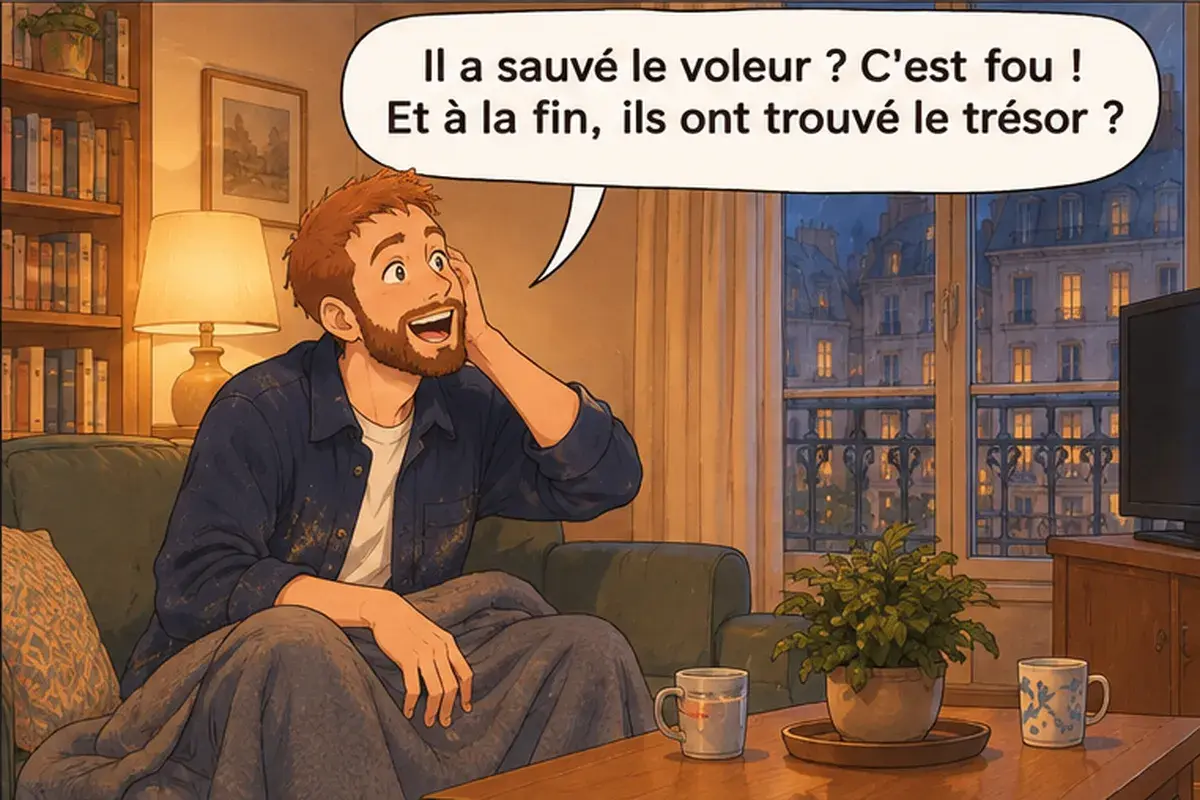
- Hugo
Il a sauvé le voleur ? C'est fou ! Et à la fin, ils ont trouvé le trésor ?
He saved the thief? That's crazy! And in the end, did they find the treasure?
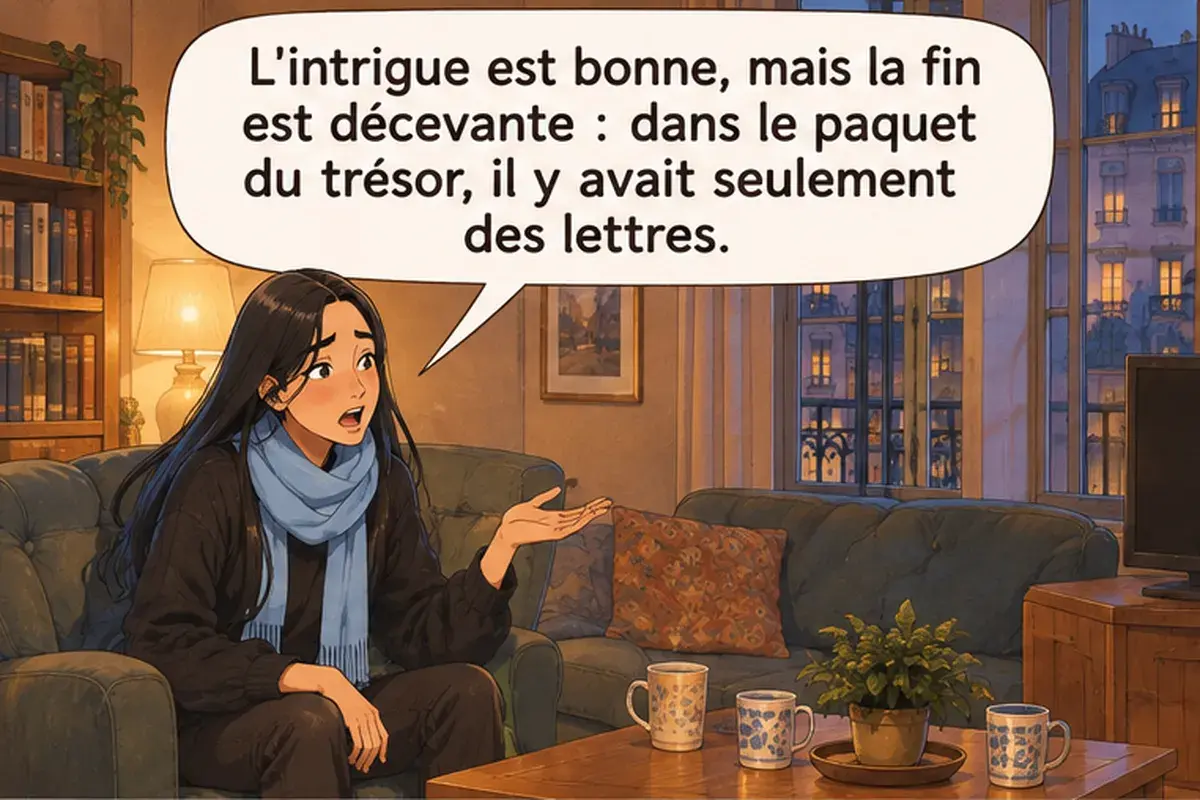
- Inès
L'intrigue est bonne, mais la fin est décevante : dans le paquet du trésor, il y avait seulement des lettres.
The plot is good, but the ending is disappointing: in the treasure package, there were only letters.
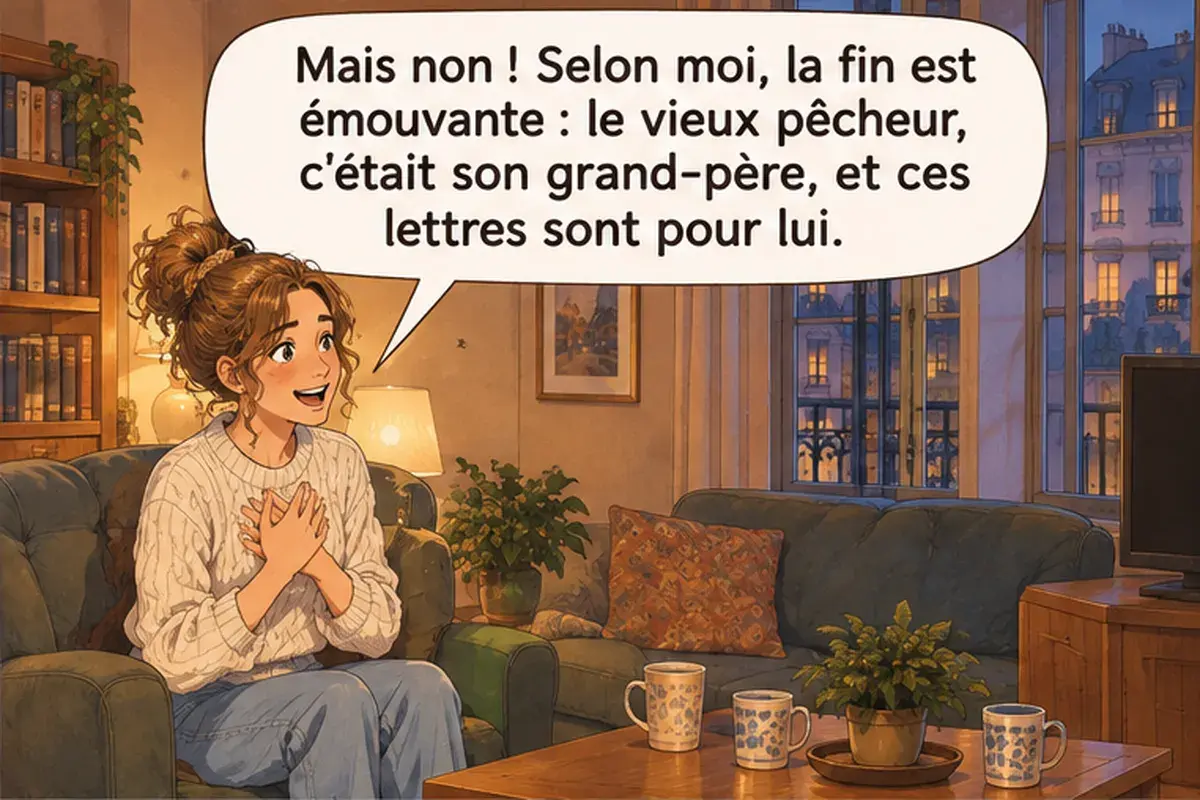
- Maëlle
Mais non ! Selon moi, la fin est émouvante : le vieux pêcheur, c'était son grand-père, et ces lettres sont pour lui.
No way! In my opinion, the ending is moving: the old fisherman was his grandfather, and these letters are for him.
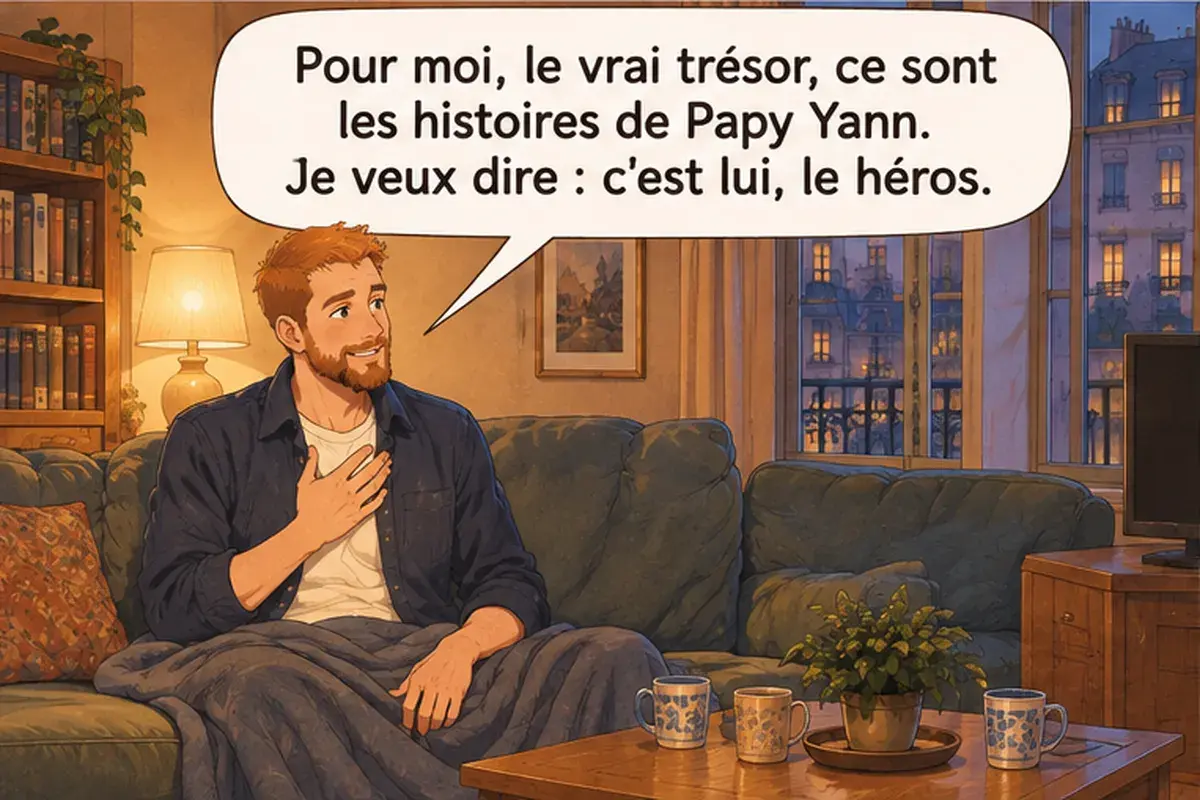
- Hugo
Pour moi, le vrai trésor, ce sont les histoires de Papy Yann. Je veux dire : c'est lui, le héros.
For me, the real treasure is Papy Yann's stories. I mean: he's the hero.
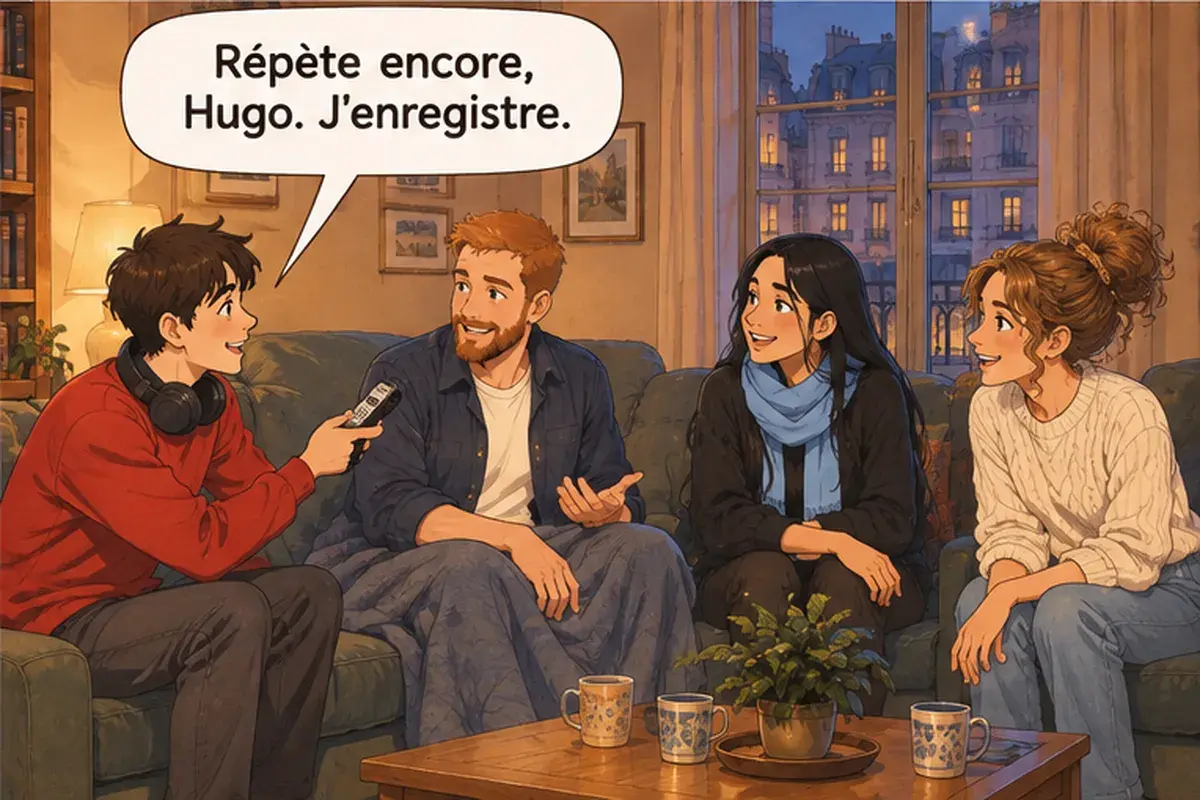
- Pacha
Répète encore, Hugo. J'enregistre.
Say it again, Hugo. I'm recording.
Grammar for this text
- Je dormais — "I was sleeping". The imperfect of dormir: the stem dorm- + -ais. Hugo isn't counting minutes: it's background, not a step in the plot (unit 4).
- Qu'est-ce qui s'est passé après la première scène ? — "What happened after the first scene?" se passer — to happen; s'est passé = se + est + passé: reflexive verbs make the passé composé with être (unit 12). qu'est-ce qui — "what" as the subject of the sentence (unit 10).
- Le trésor du vieux pêcheur a disparu — "the old fisherman's treasure disappeared". a disparu: a from avoir + the past participle disparu (from disparaître). du = de + le. Nearby, il a vu — vu is the irregular past participle of voir (A1, unit 15).
- Il y avait une tempête — "there was a storm". This is background (the imperfect of il y a). Next to it comes an event: le héros a sauvé le voleur.
- Le méchant a dit qu'il était innocent — "the villain said he was innocent": someone else's words. The main verb is in the past, so the next part uses the imperfect too: il était, c'était, not il est. English does the same: "said he was".
- Il a menti à tout le monde — "he lied to everyone". menti is from mentir; you lie to someone, so à. Il a trahi — from trahir, like fini from finir. s'est enfui — from s'enfuir; the passé composé uses être.
- Selon moi — "in my opinion". After selon comes moi, toi, lui or a name, with no que. Je veux dire — "I mean": you use it to make your idea clearer. The full phrase ce que je veux dire comes at B1.
Words and grammar of the unit: Retell a movie.
Learn the words from the texts with flashcards
In the app, you can tap any word in a text to see its translation, forms and examples, and new words stick with flashcards. 15 minutes a day.
Start for freeEverything is open for free. No card needed to sign up.