

French story with translation · A2 · 16 lines
J'ai une idée pour la suite du film I have an idea for the movie's sequel
Comic · 16 panels

Le lendemain de la soirée film, Hugo et Maëlle sont allés skier.
The day after movie night, Hugo and Maëlle went skiing.

Avec mon poignet, je ne pouvais pas skier, alors je suis monté en télésiège avec Inès.
With my wrist, I couldn't ski, so I went up on the chairlift with Inès (man speaking).

Il faisait très froid, mais le paysage était magnifique, et Inès, comme d'habitude, avait froid.
It was very cold, but the view was magnificent, and Inès, as usual, was cold.

Elle parlait de Marseille : là-bas, il fait toujours chaud.
She was talking about Marseille: over there, it's always warm.
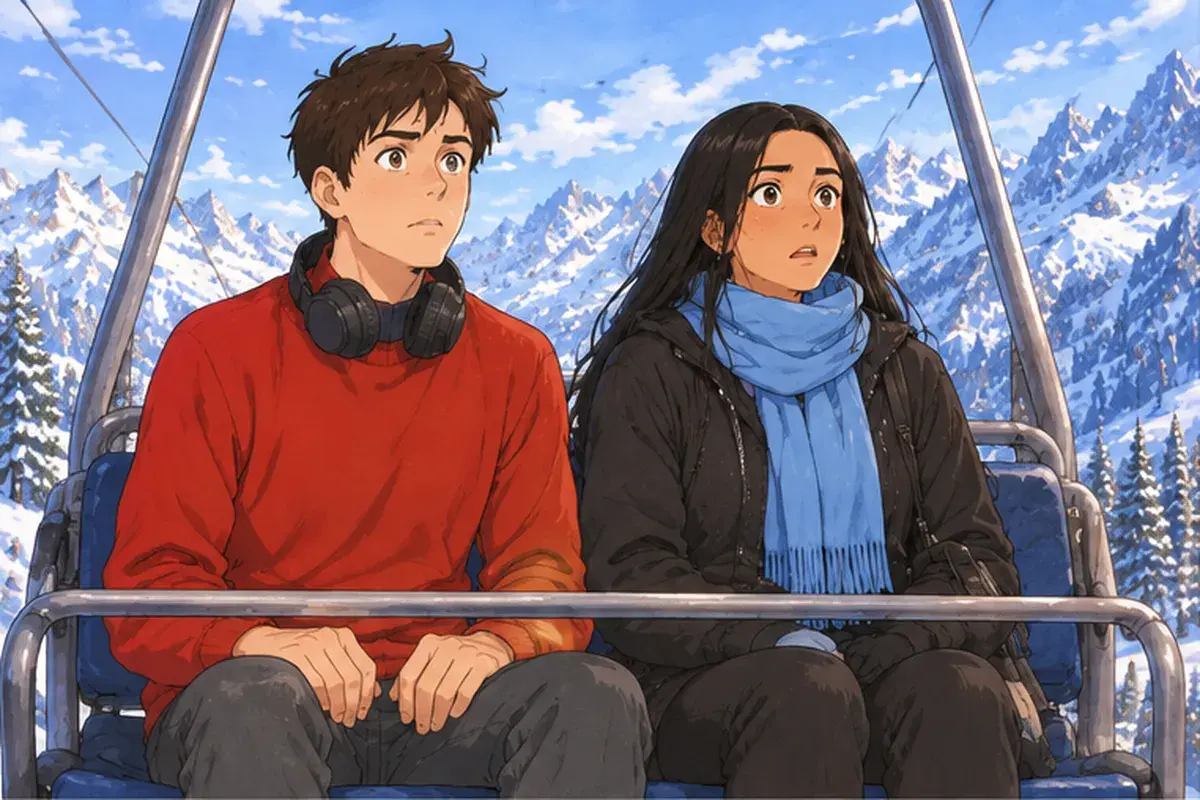
Tout à coup, le télésiège s'est arrêté. Il n'y avait plus de bruit, plus de vent, plus rien.
Suddenly, the chairlift stopped. There was no more noise, no more wind, nothing at all.
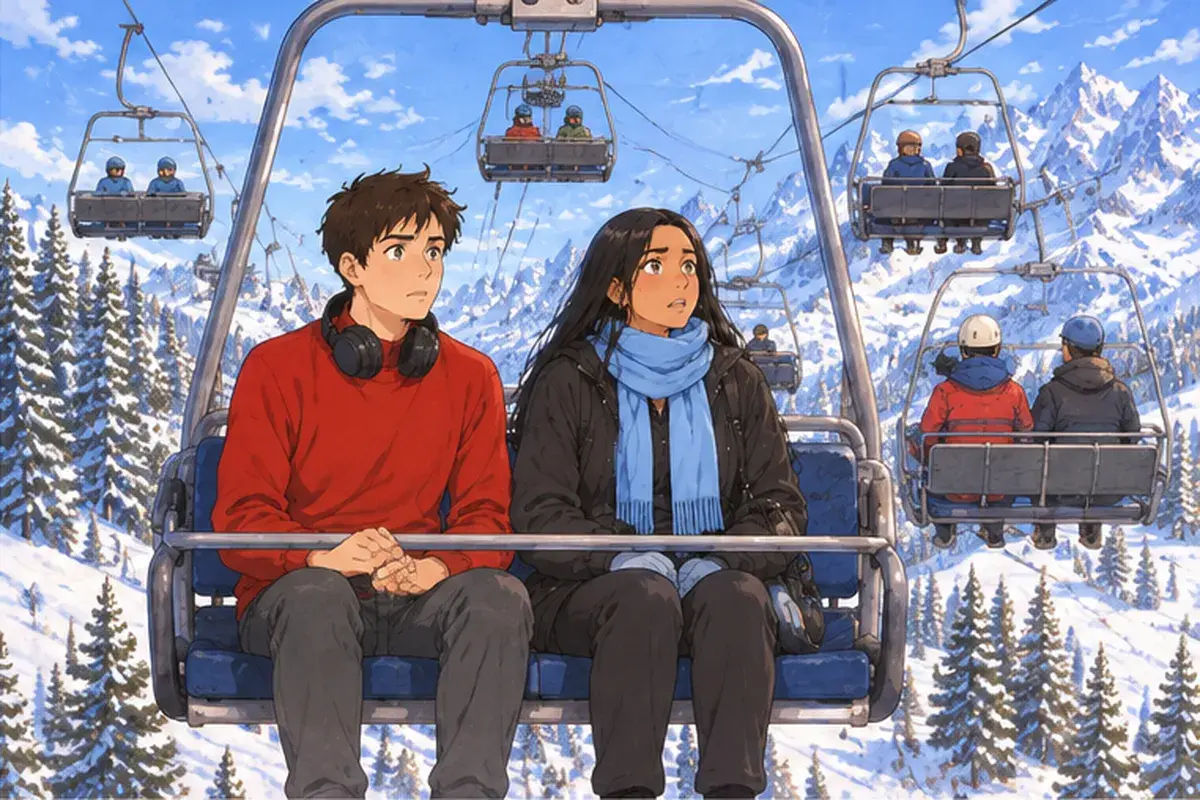
Nous étions coincés, avec des gens devant nous et derrière nous.
We were stuck, with people in front of us and behind us.
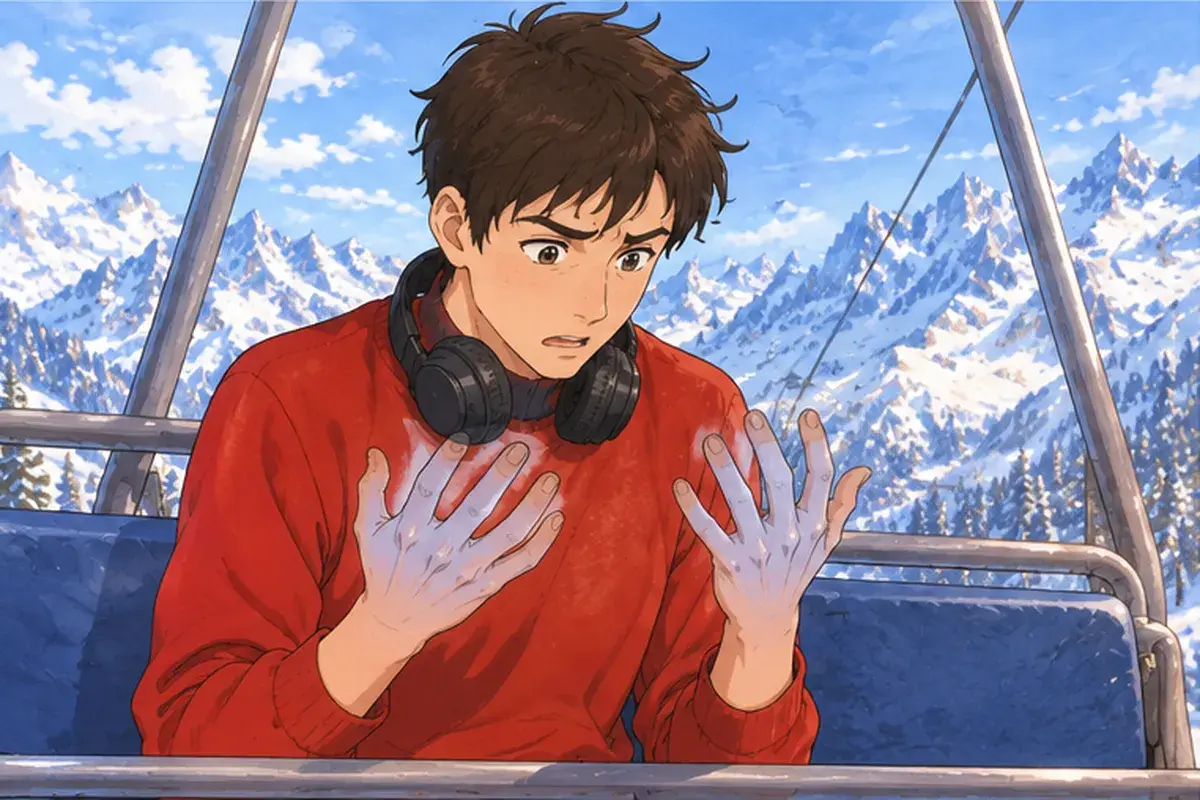
Le temps semblait long. J'ai remarqué que mes mains devenaient bleues.
Time seemed long. I noticed that my hands were turning blue.
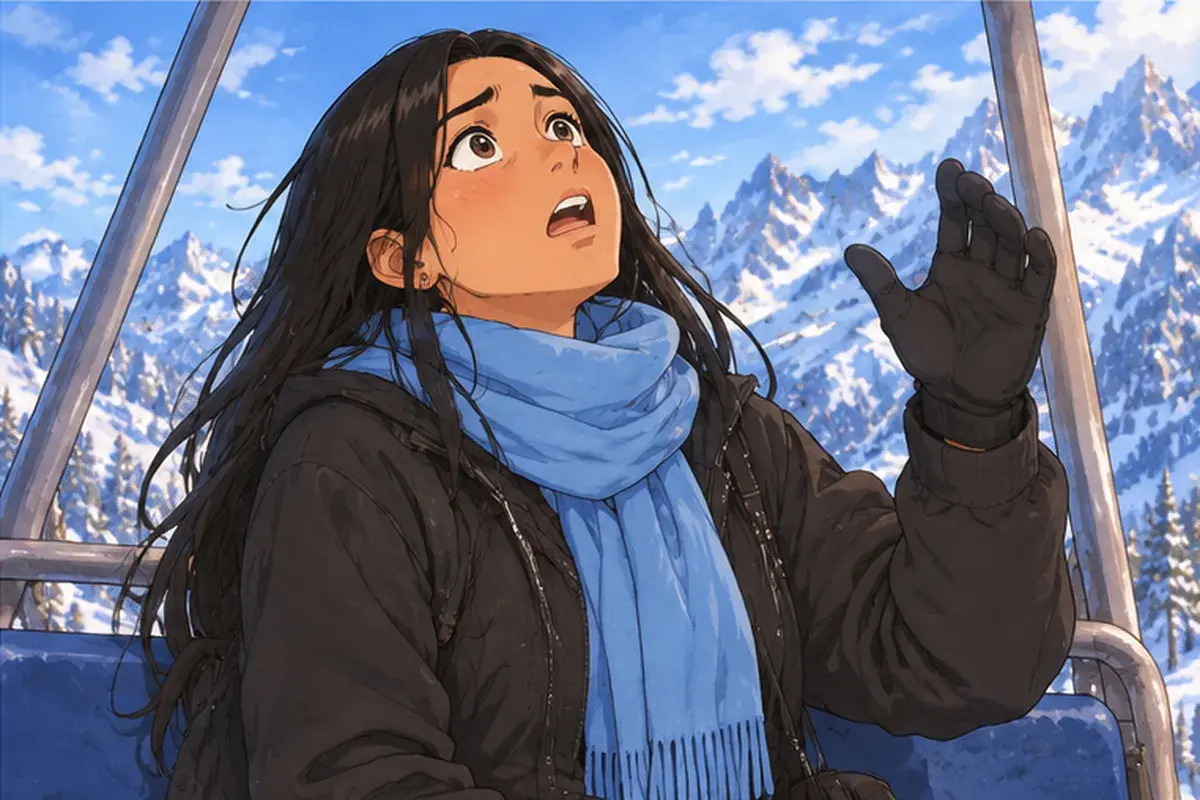
Inès a regardé le ciel et elle a dit : « Pas de doute, c'est le fantôme du film ! »
Inès looked at the sky and said, "No doubt about it, it's the ghost from the movie!"

Personne ne savait pourquoi le télésiège ne bougeait plus : c'était un vrai mystère.
No one knew why the chairlift wasn't moving anymore: it was a real mystery.

Alors Inès a ouvert son sac. Elle avait un secret : du chocolat, beaucoup de chocolat.
So Inès opened her bag. She had a secret: chocolate, lots of chocolate.

Elle en a donné à tout le monde, même aux gens derrière nous. Le chocolat nous a sauvés.
She gave some to everyone, even to the people behind us. The chocolate saved us.

Puis Inès a dit : « J'ai une idée pour la suite du film. Le scénario est facile : deux personnages sont coincés sur un télésiège. »
Then Inès said, "I have an idea for the movie's sequel. The script is easy: two characters are stuck on a chairlift."
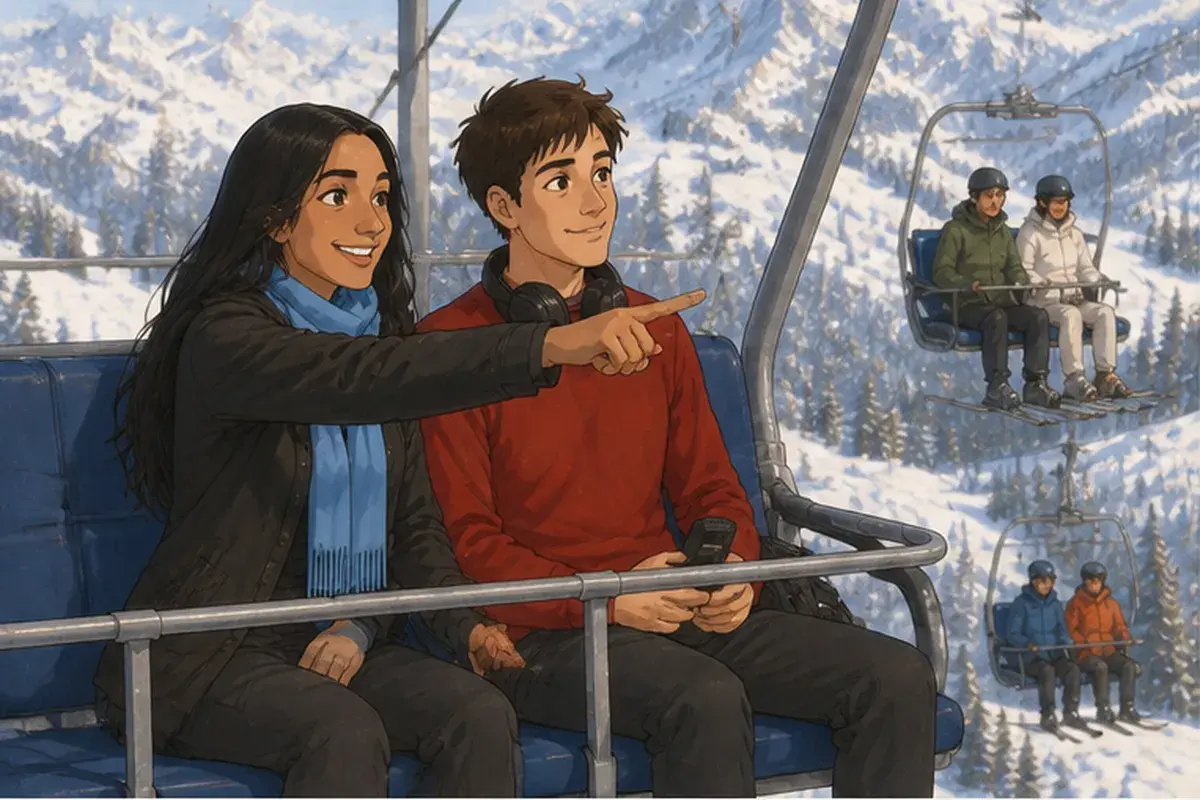
« Moi, je suis la réalisatrice. Toi, tu es l'acteur. Et eux, ce sont les spectateurs. »
"Me, I'm the director (woman speaking). You, you're the actor. And them, they're the spectators."
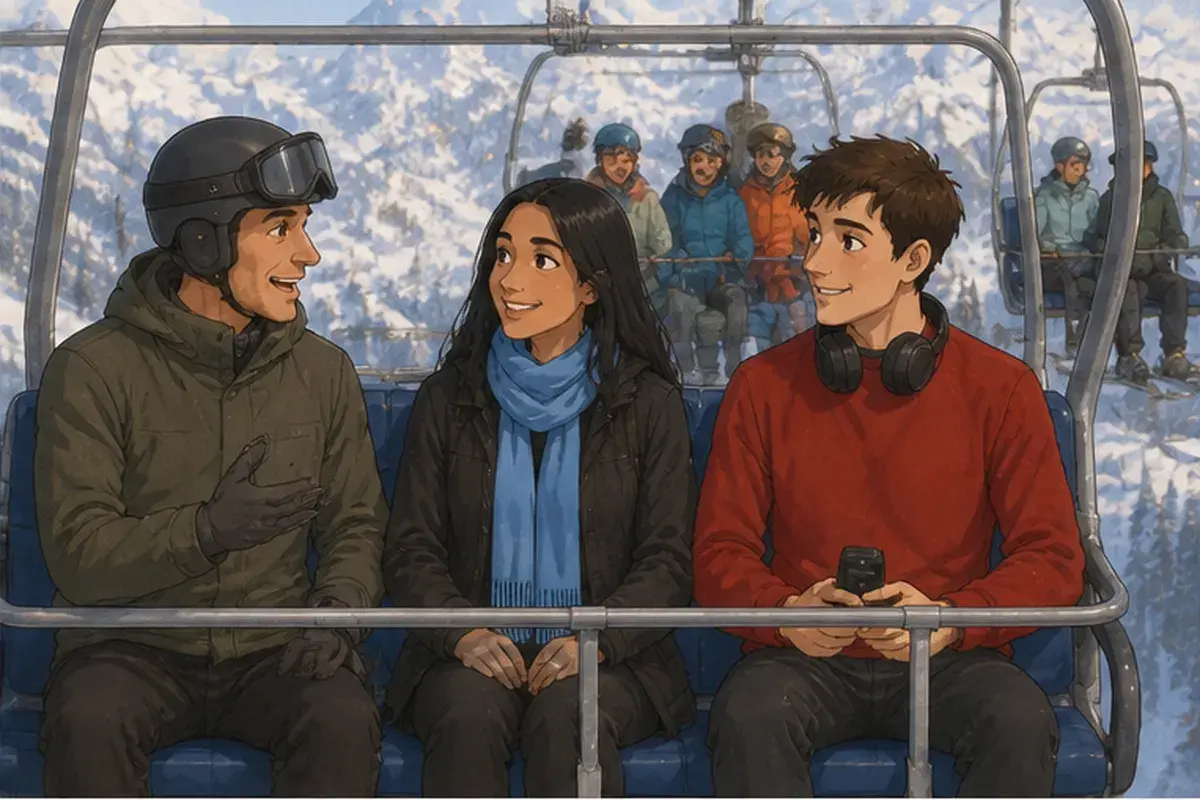
Les spectateurs ont rigolé, et un monsieur a demandé : « Et à la fin ? »
The spectators laughed, and a man asked, "And at the end?"
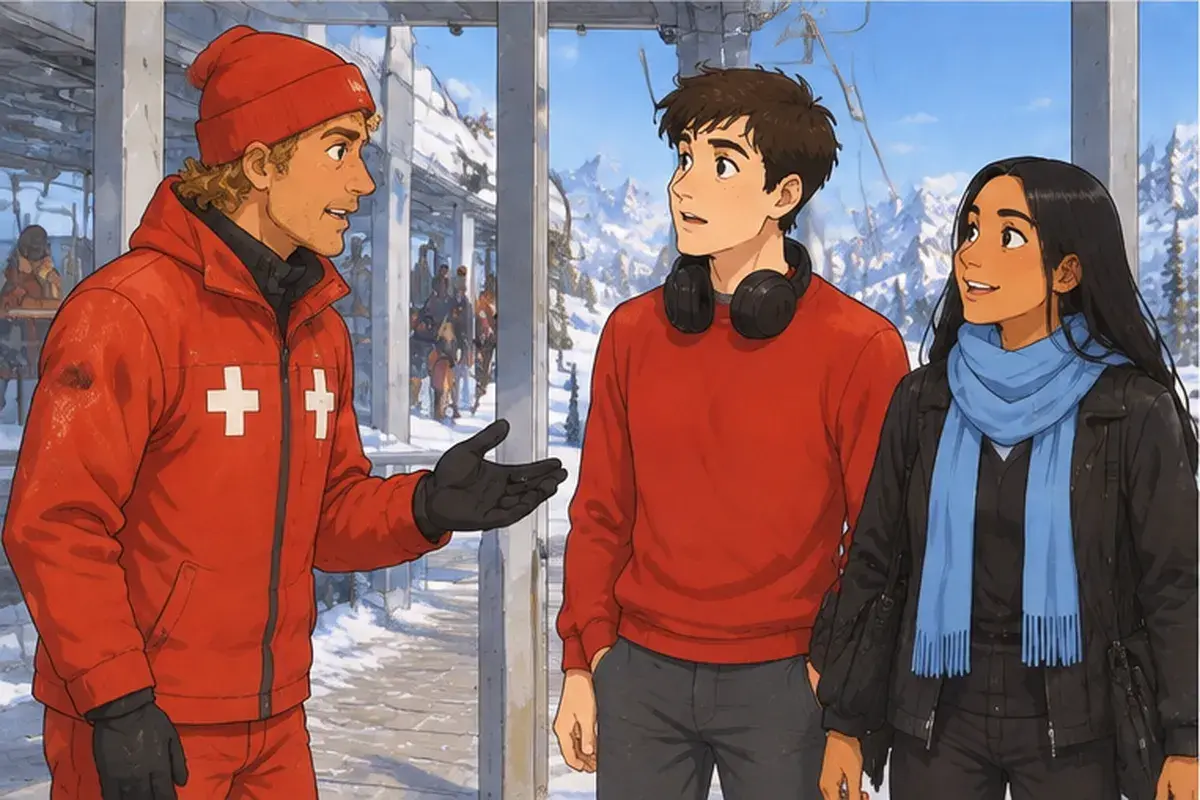
Au bout de vingt minutes, le télésiège a commencé à avancer. En haut, un moniteur nous a dit la vérité : un monsieur est tombé à l'arrivée du télésiège.
After twenty minutes, the chairlift started to move. At the top, an instructor told us the truth: a man fell getting off the chairlift.

Hugo a demandé : « Pourquoi vous êtes en retard ? » Inès a répondu : « Parce qu'on a tourné la suite du film ! »
Hugo asked, "Why are you late?" (to several people) Inès answered, "Because we filmed the sequel to the movie!"
Grammar for this text
- Il faisait très froid, mais le paysage était magnifique — "it was very cold, but the view was magnificent": background, the weather and the view, in the imperfect. The event comes right after: Tout à coup, le télésiège s'est arrêté — "suddenly, the chairlift stopped".
tout à coup— soudain, "suddenly": a turning-point word at the start of the sentence. s'est arrêté = se + est + arrêté: "stopped (by itself)". - J'ai remarqué que mes mains devenaient bleues — "I noticed that my hands were turning blue". remarquer que — to notice that. After que comes the imperfect: devenaient from devenir; the hands turned blue little by little.
- Pas de doute — "no doubt about it": pas de instead of an article. People say it when they're completely sure.
- Personne ne savait — "no one knew". personne ne — "no one" (unit 3), not "a person".
- Elle en a donné à tout le monde — "she gave some to everyone": en stands for the chocolate. It goes before a donné, as in j'en veux (unit 5).
- Le chocolat nous a sauvés — "the chocolate saved us": nous goes before the verb. The participle sauvés agrees with nous (there are several of us), but it sounds the same. In nous a dit — "told us" — nous means "to us", and the participle dit (from dire) doesn't change.
- Moi, je suis la réalisatrice — "I'm the director": réalisateur has a feminine form, réalisatrice.
Words and grammar of the unit: Retell a movie.
Learn the words from the texts with flashcards
In the app, you can tap any word in a text to see its translation, forms and examples, and new words stick with flashcards. 15 minutes a day.
Start for freeEverything is open for free. No card needed to sign up.