
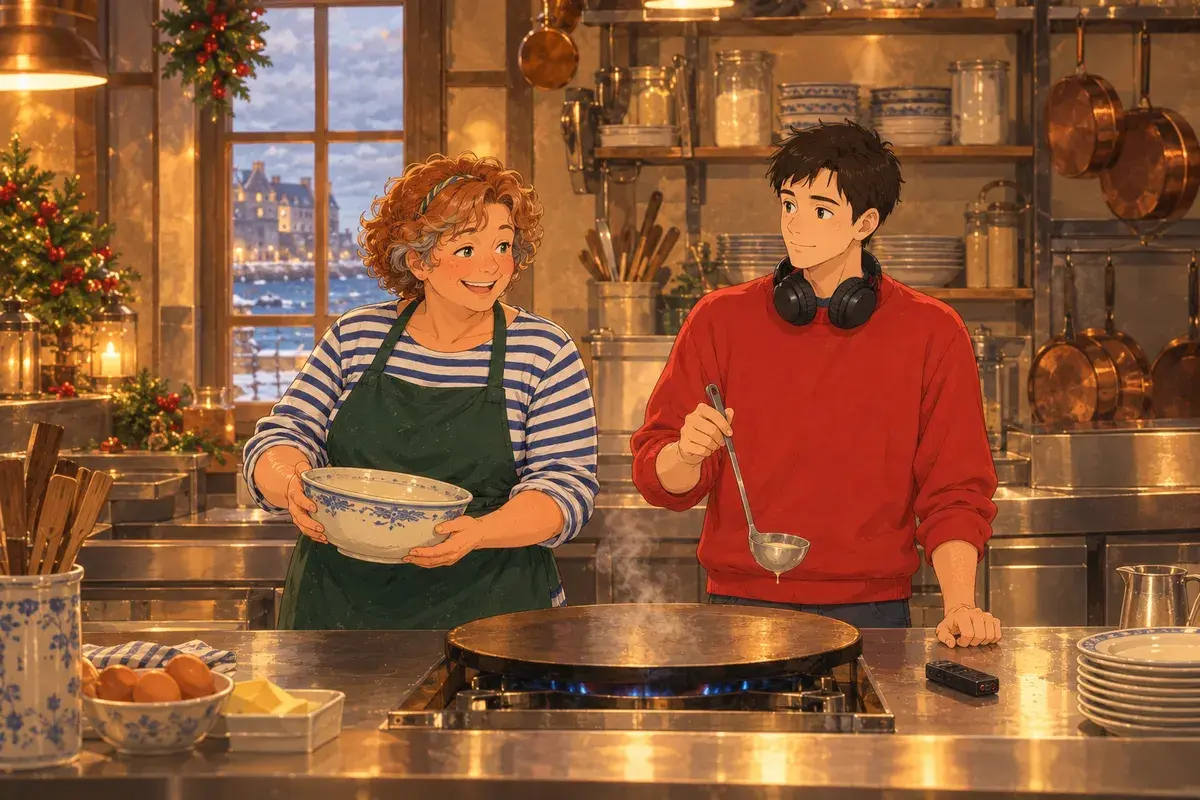
French dialogue with translation · A2 · 15 lines
Montre-moi comment on fait sauter une crêpe Show me how to toss a crêpe
Comic · 15 panels
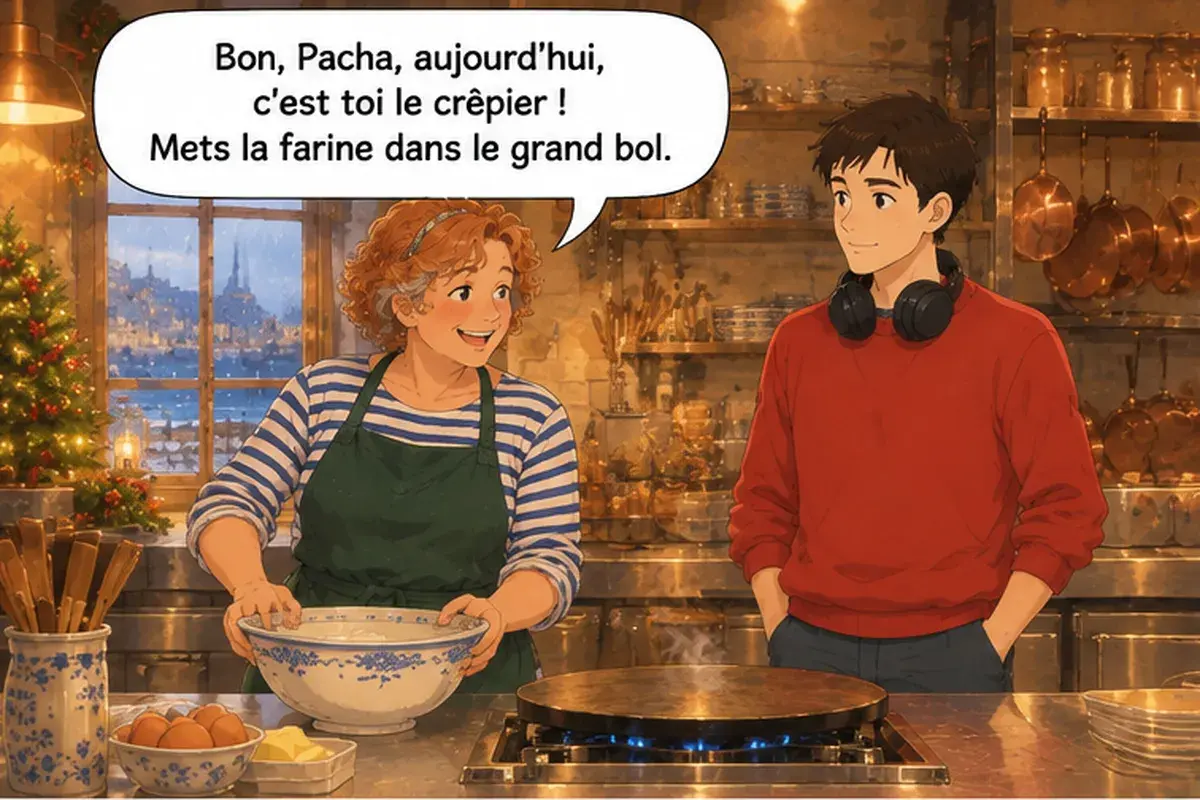
- Anne
Bon, Pacha, aujourd'hui, c'est toi le crêpier ! Mets la farine dans le grand bol.
OK, Pacha, today you're the crêpe maker! Put the flour in the big bowl.
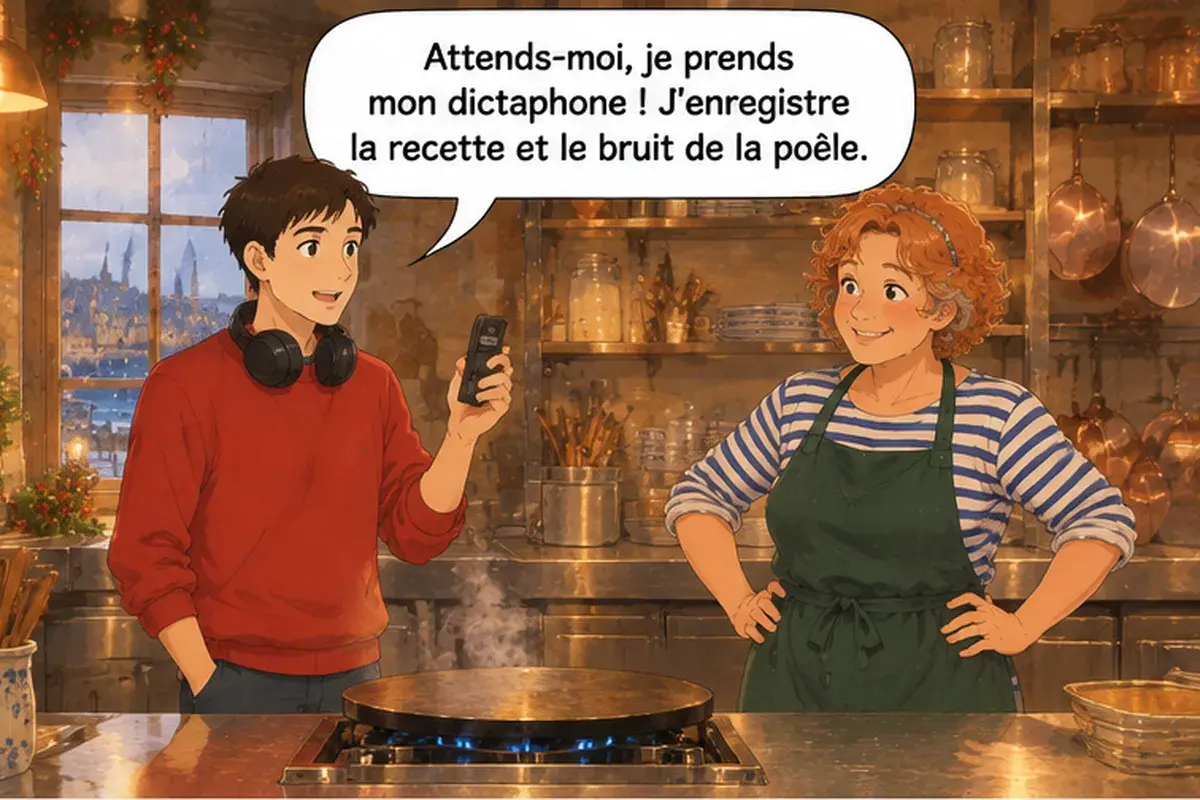
- Pacha
Attends-moi, je prends mon dictaphone ! J'enregistre la recette et le bruit de la poêle.
Wait for me, I'm getting my voice recorder! I'm recording the recipe and the noise of the pan.
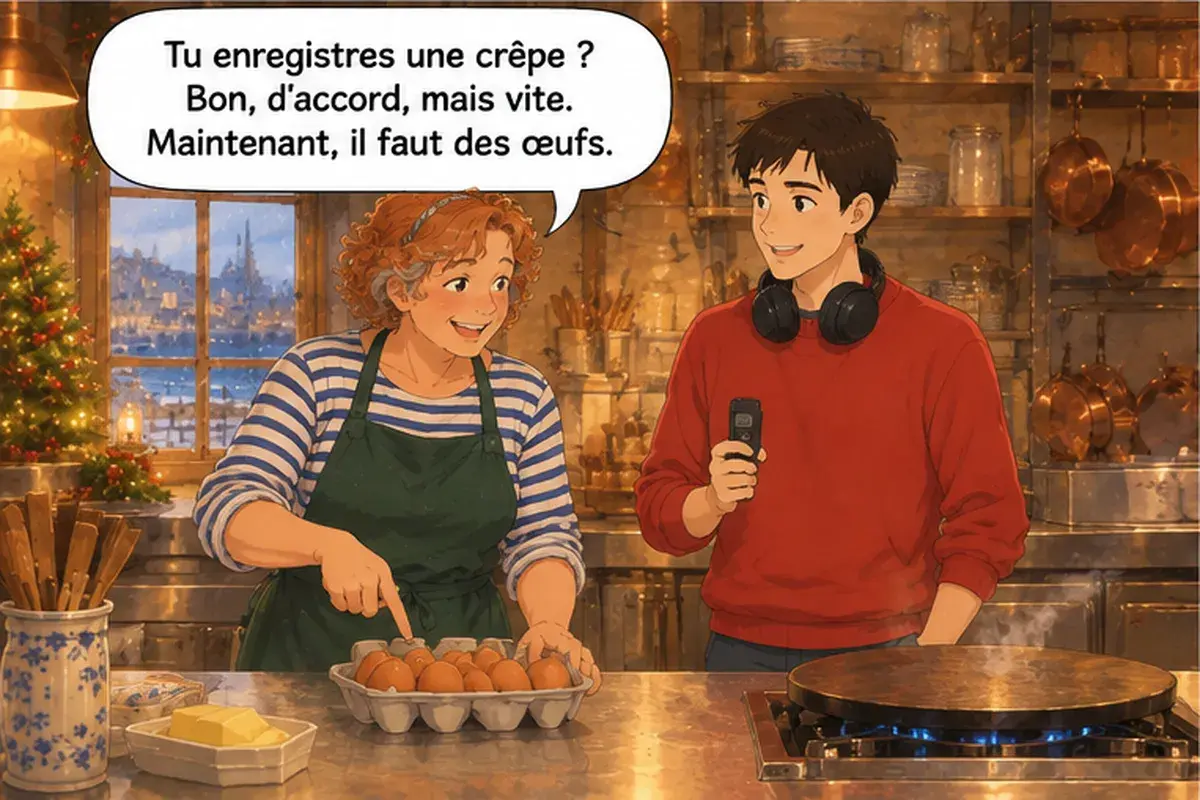
- Anne
Tu enregistres une crêpe ? Bon, d'accord, mais vite. Maintenant, il faut des œufs.
You're recording a crêpe? Well, OK, but quickly. Now we need eggs.
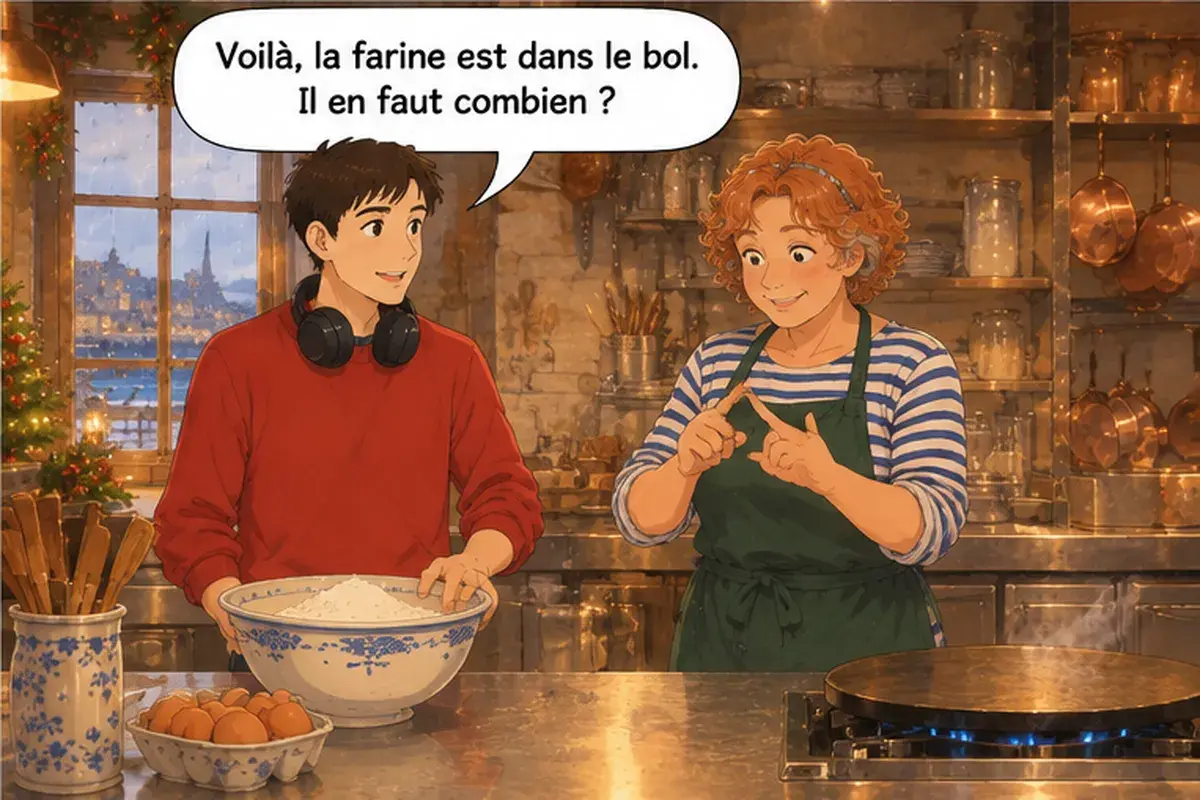
- Pacha
Voilà, la farine est dans le bol. Il en faut combien ?
There, the flour is in the bowl. How many do we need?
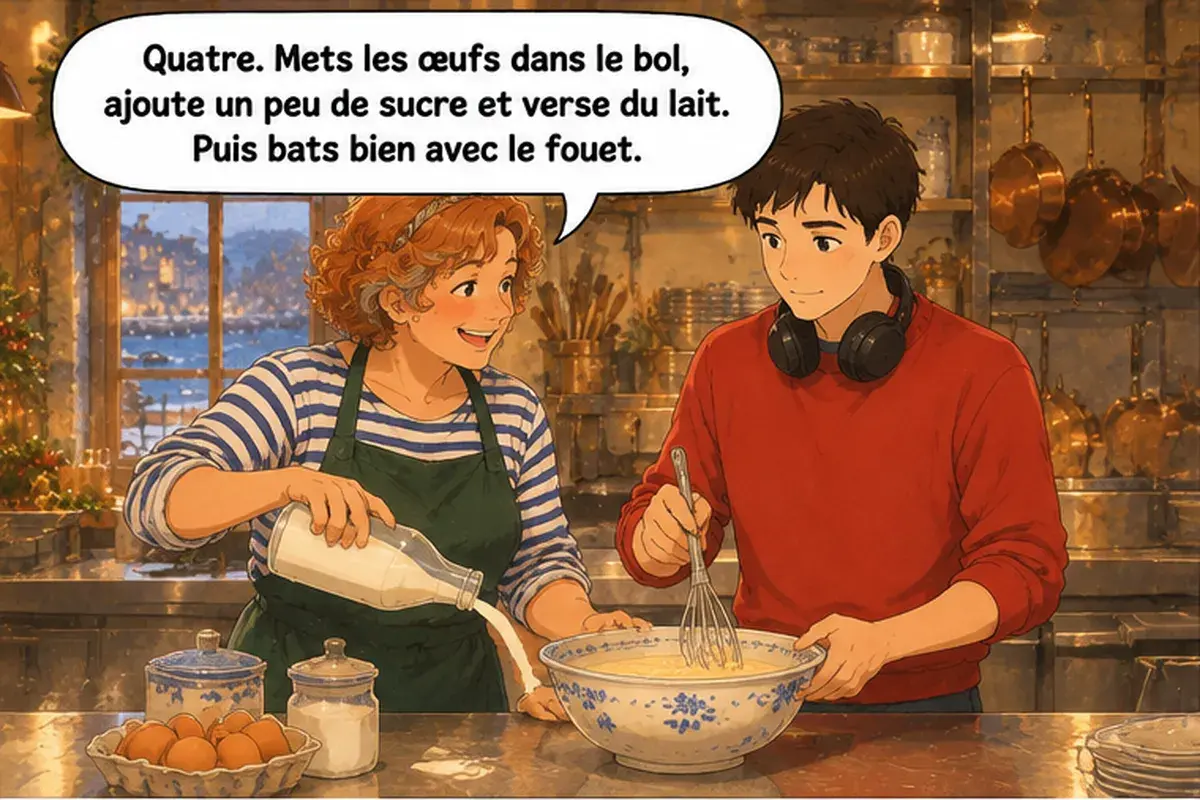
- Anne
Quatre. Mets les œufs dans le bol, ajoute un peu de sucre et verse du lait. Puis bats bien avec le fouet.
Four. Put the eggs in the bowl, add a little sugar and pour in some milk. Then beat well with the whisk.
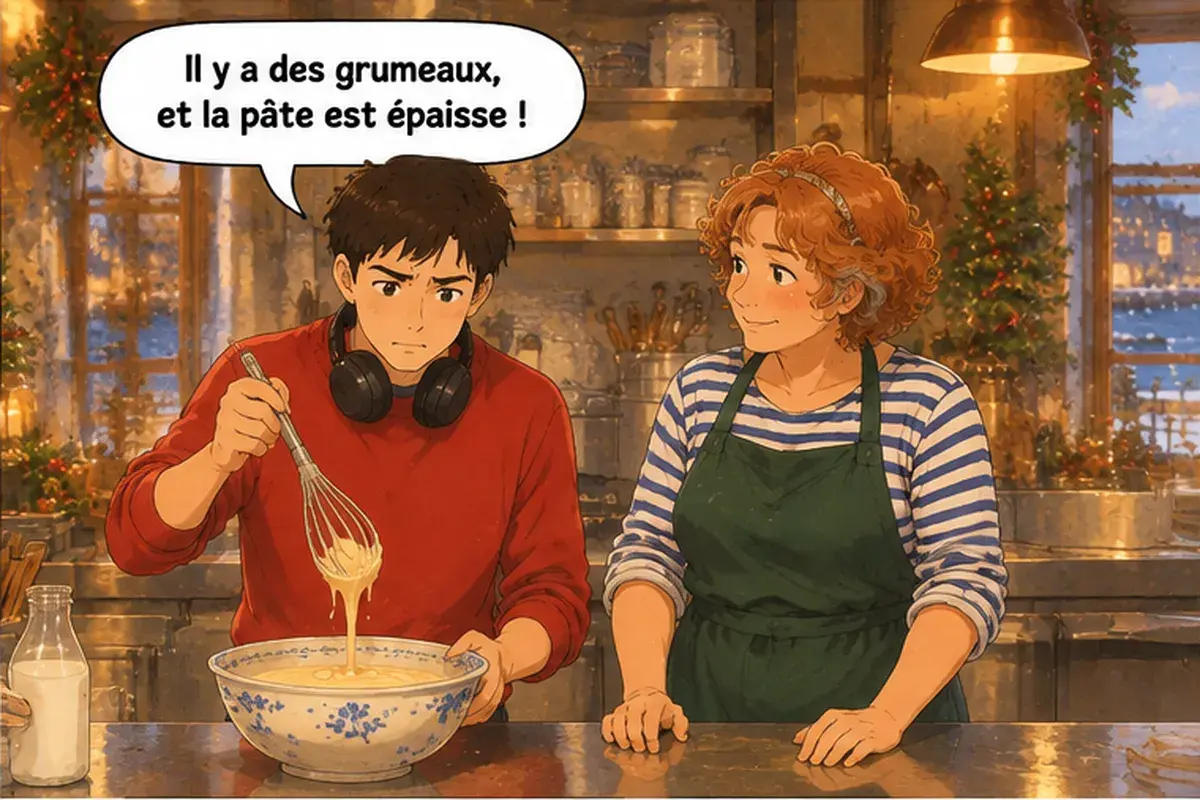
- Pacha
Il y a des grumeaux, et la pâte est épaisse !
There are lumps, and the batter is thick!
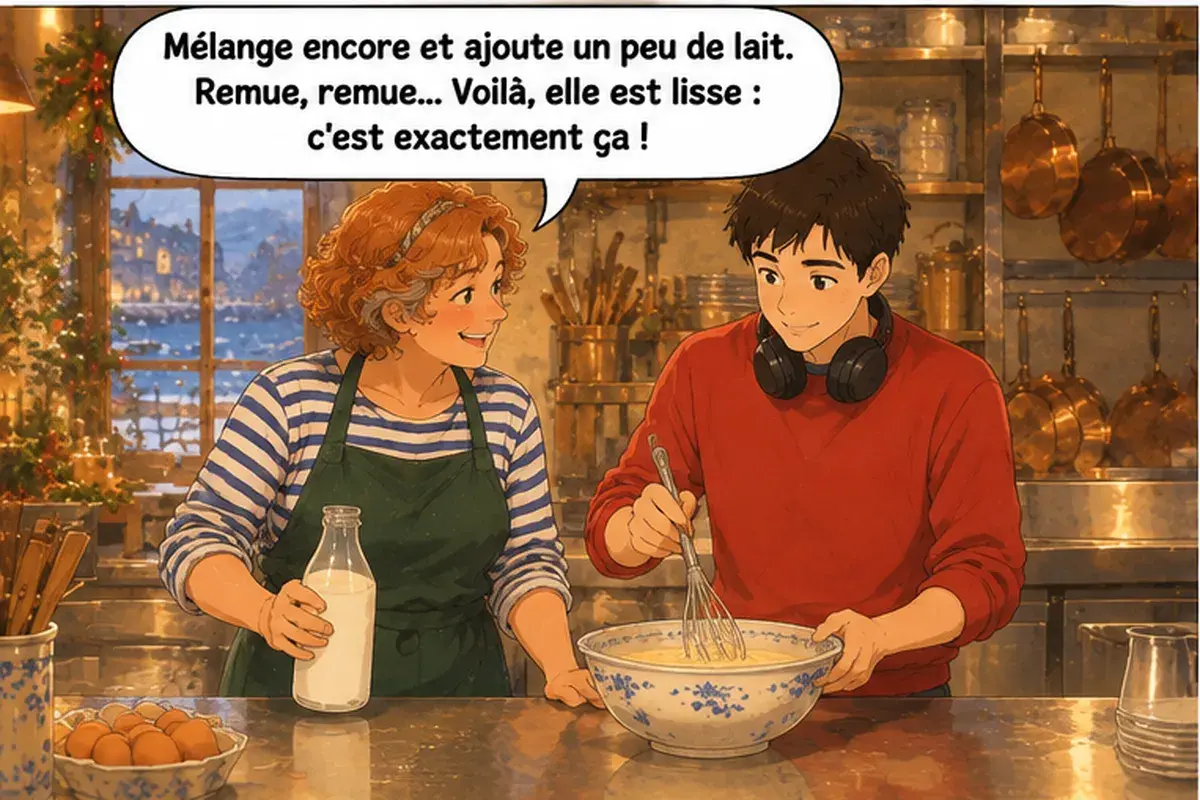
- Anne
Mélange encore et ajoute un peu de lait. Remue, remue... Voilà, elle est lisse : c'est exactement ça !
Mix some more and add a little milk. Stir, stir... There, it's smooth: that's exactly it!
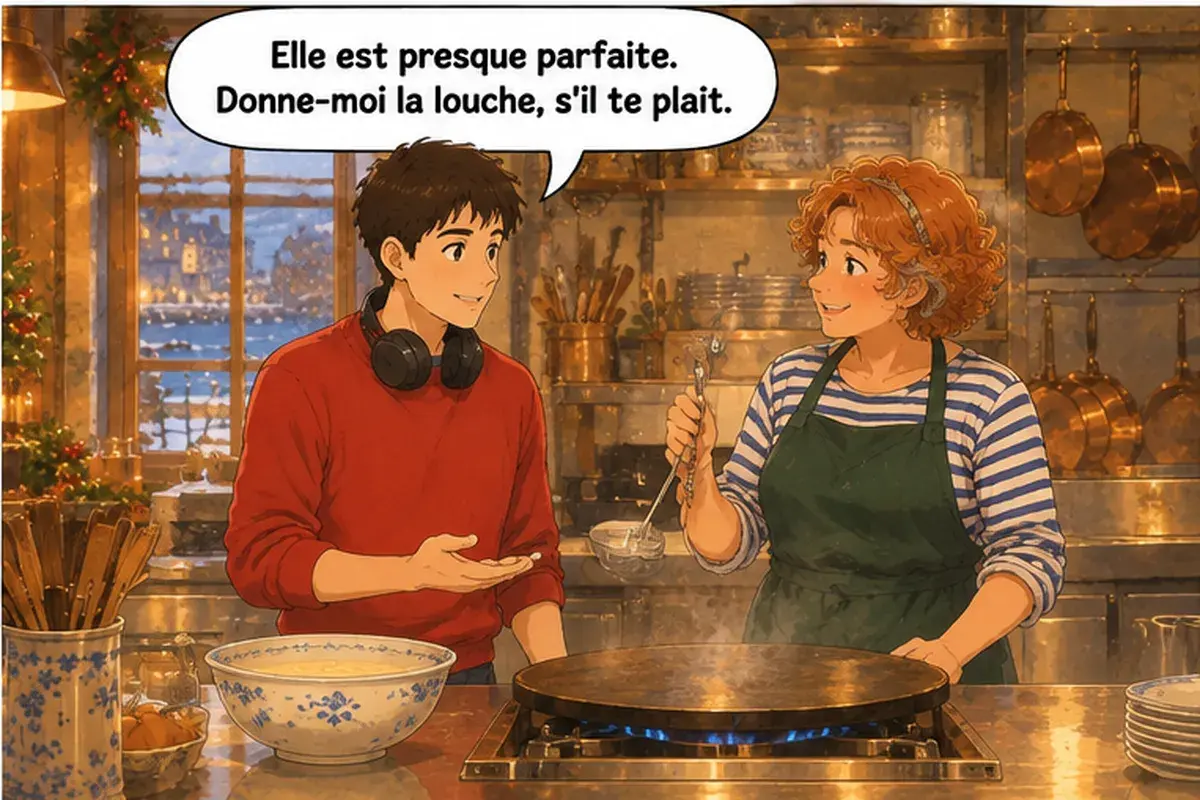
- Pacha
Elle est presque parfaite. Donne-moi la louche, s'il te plaît.
It's almost perfect. Give me the ladle, please.
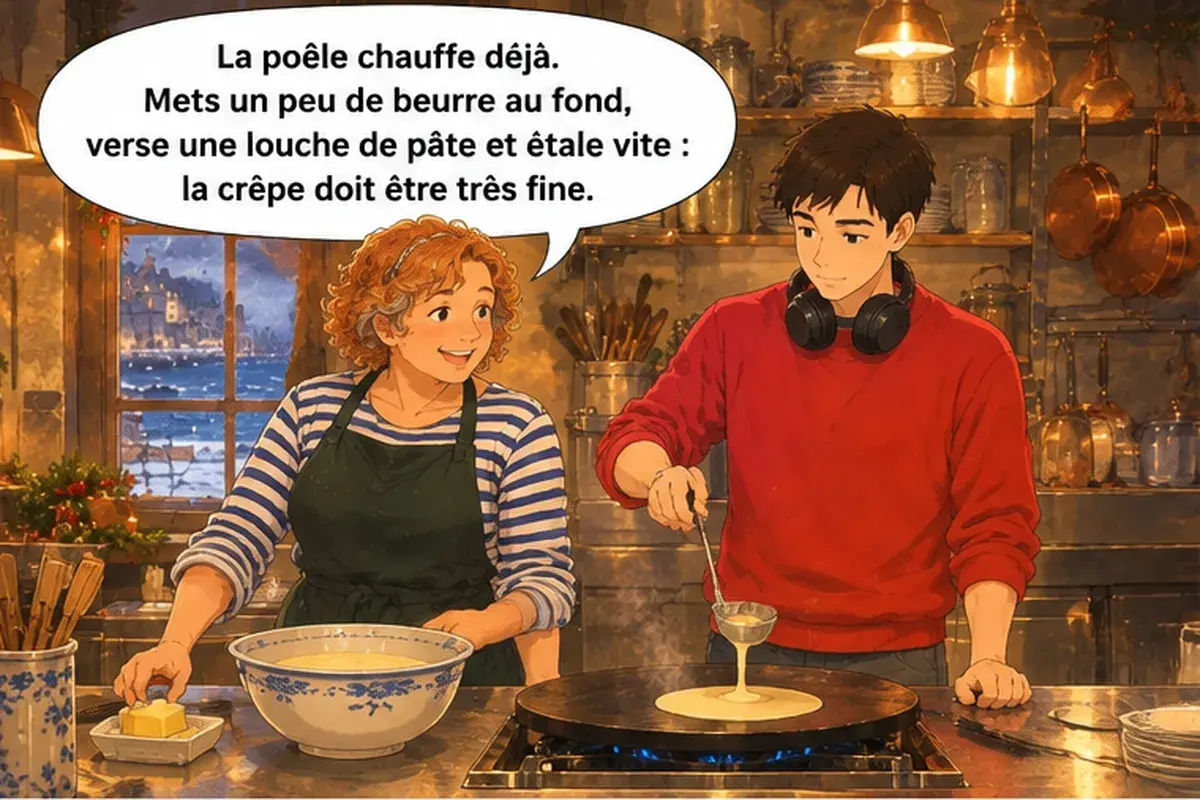
- Anne
La poêle chauffe déjà. Mets un peu de beurre au fond, verse une louche de pâte et étale vite : la crêpe doit être très fine.
The pan is already heating up. Put a little butter on the bottom, pour in a ladle of batter and spread it quickly: the crêpe has to be very thin.
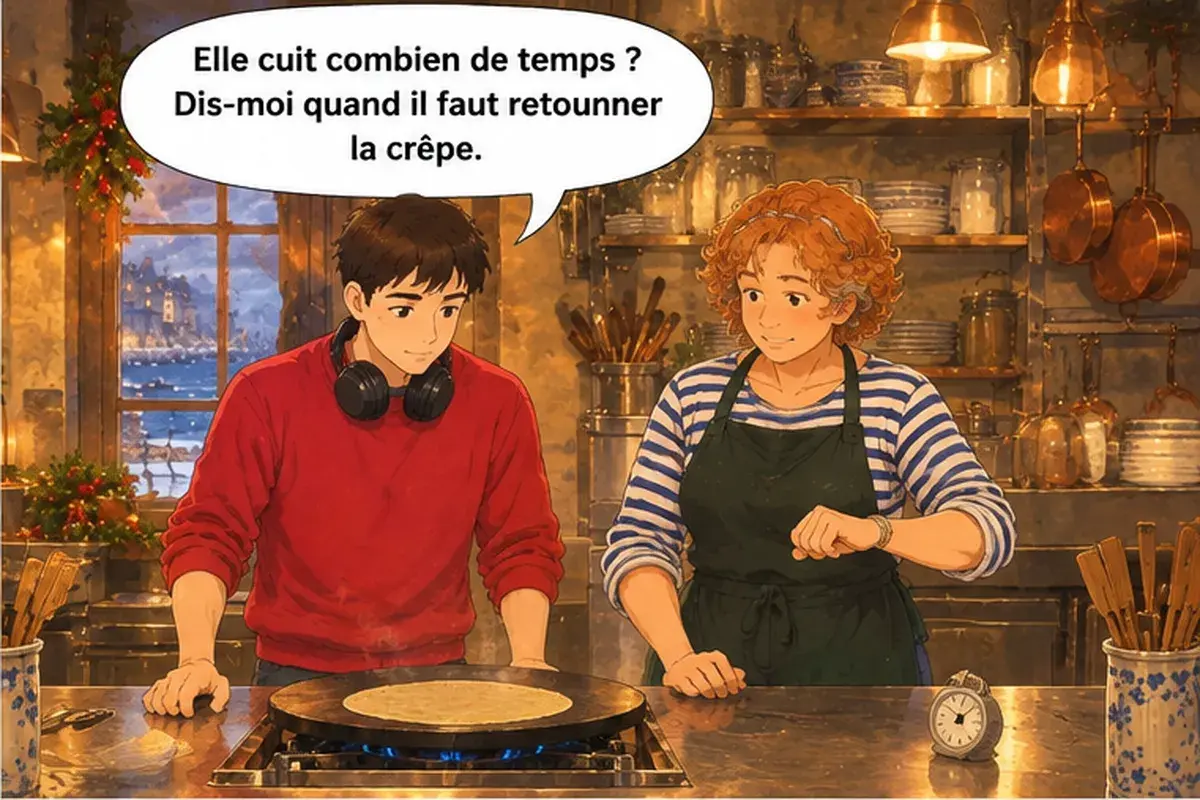
- Pacha
Elle cuit combien de temps ? Dis-moi quand il faut retourner la crêpe.
How long does it cook? Tell me when to flip the crêpe.
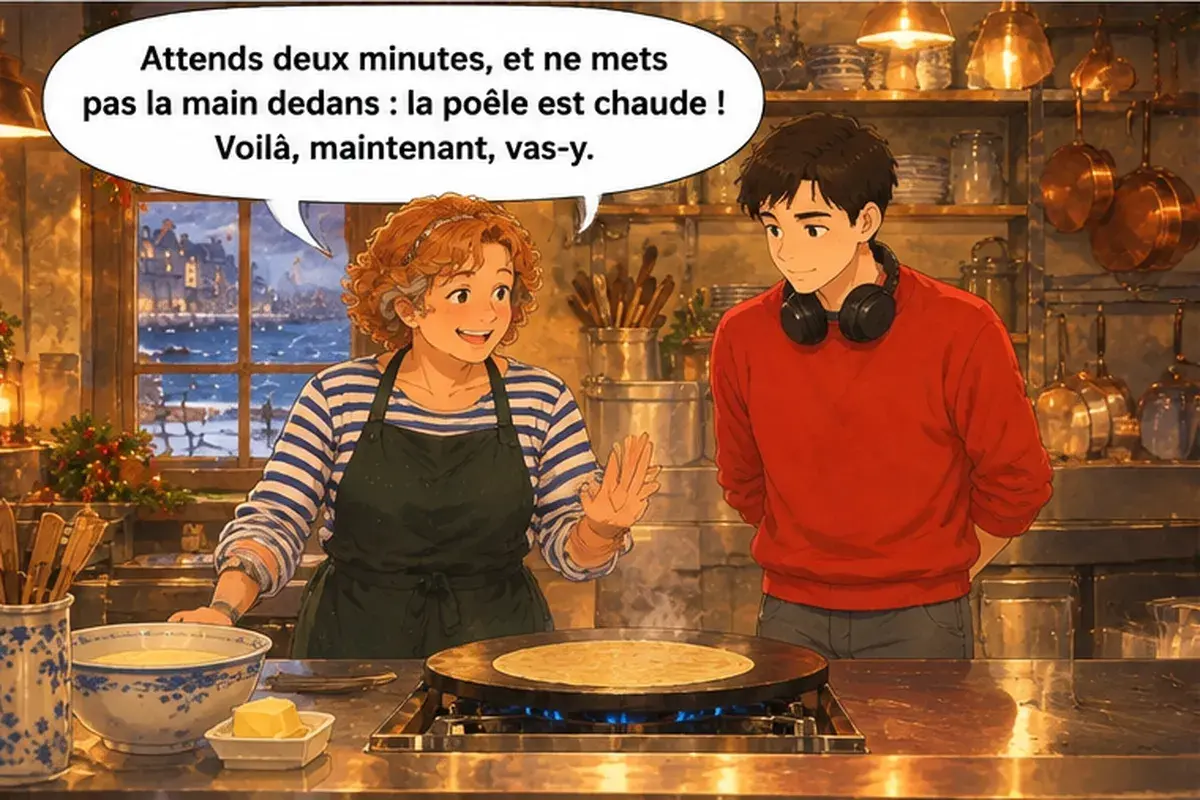
- Anne
Attends deux minutes, et ne mets pas la main dedans : la poêle est chaude ! Voilà, maintenant, vas-y.
Wait two minutes, and don't put your hand in it: the pan is hot! There, now go ahead.
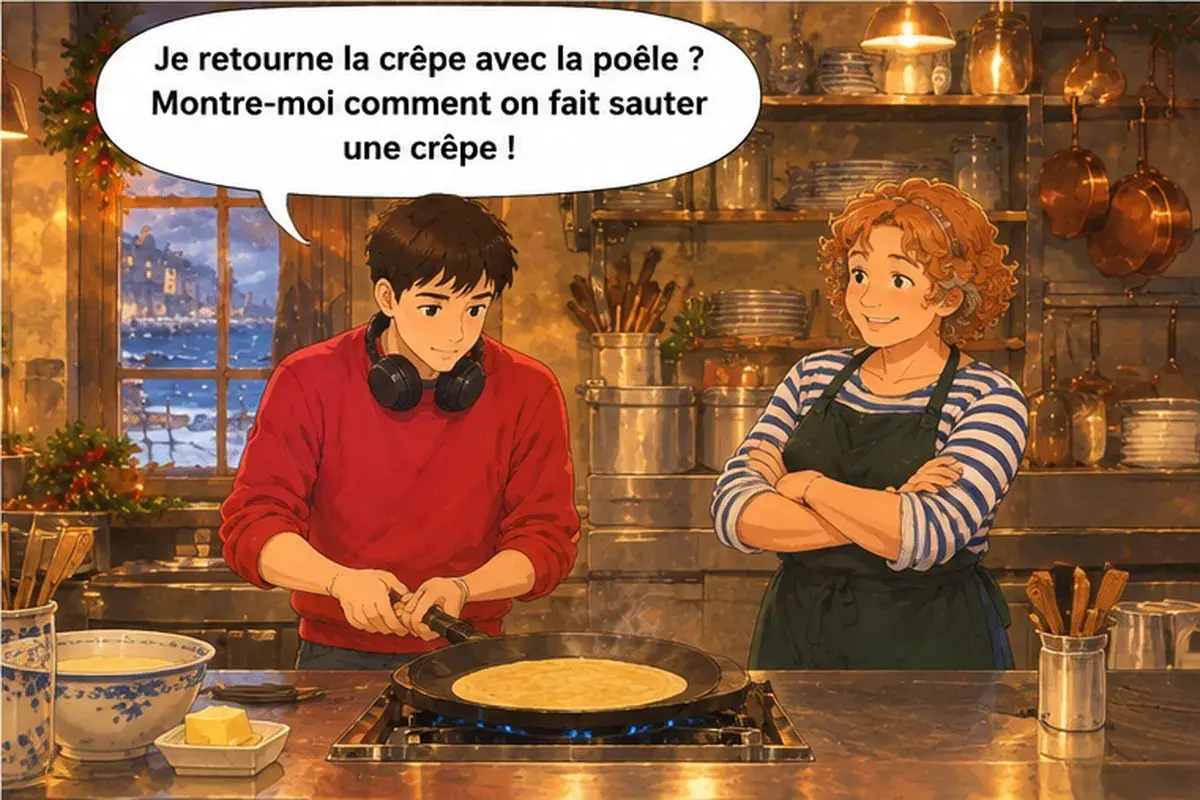
- Pacha
Je retourne la crêpe avec la poêle ? Montre-moi comment on fait sauter une crêpe !
Do I flip the crêpe with the pan? Show me how to toss a crêpe!
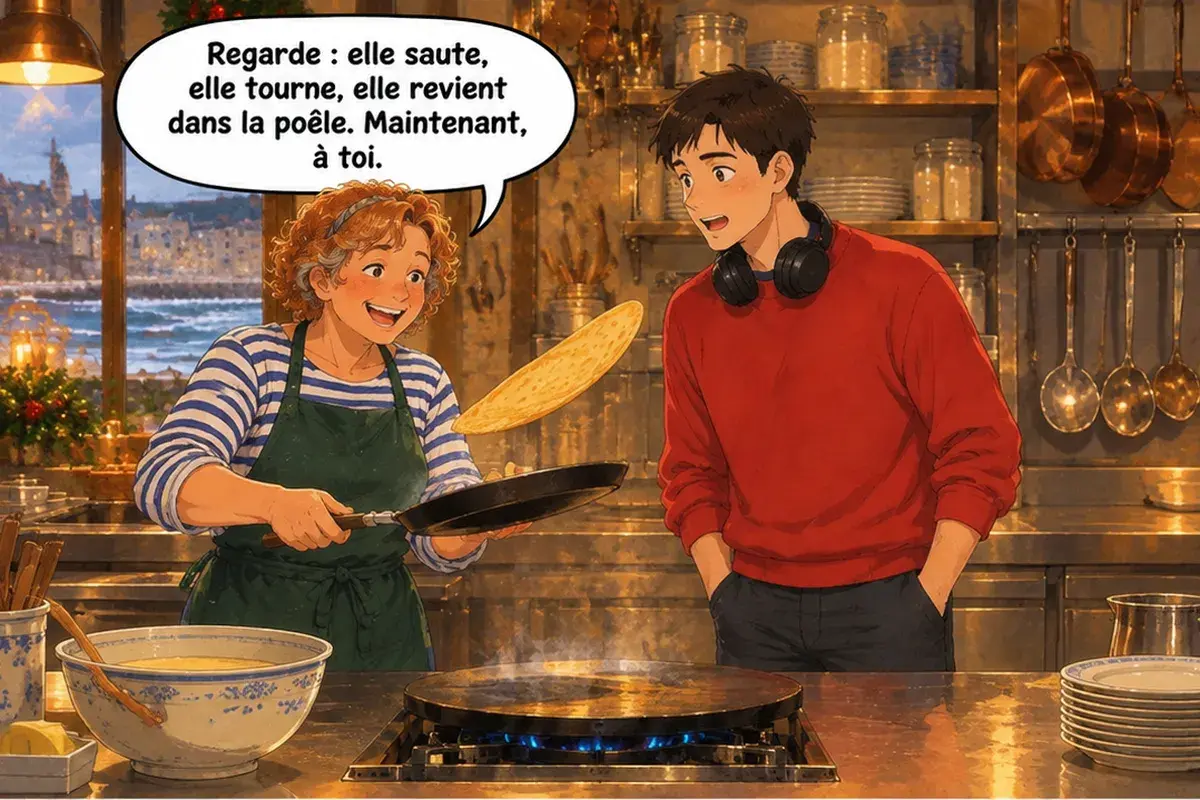
- Anne
Regarde : elle saute, elle tourne, elle revient dans la poêle. Maintenant, à toi.
Look: it jumps, it turns, it comes back down into the pan. Now it's your turn.
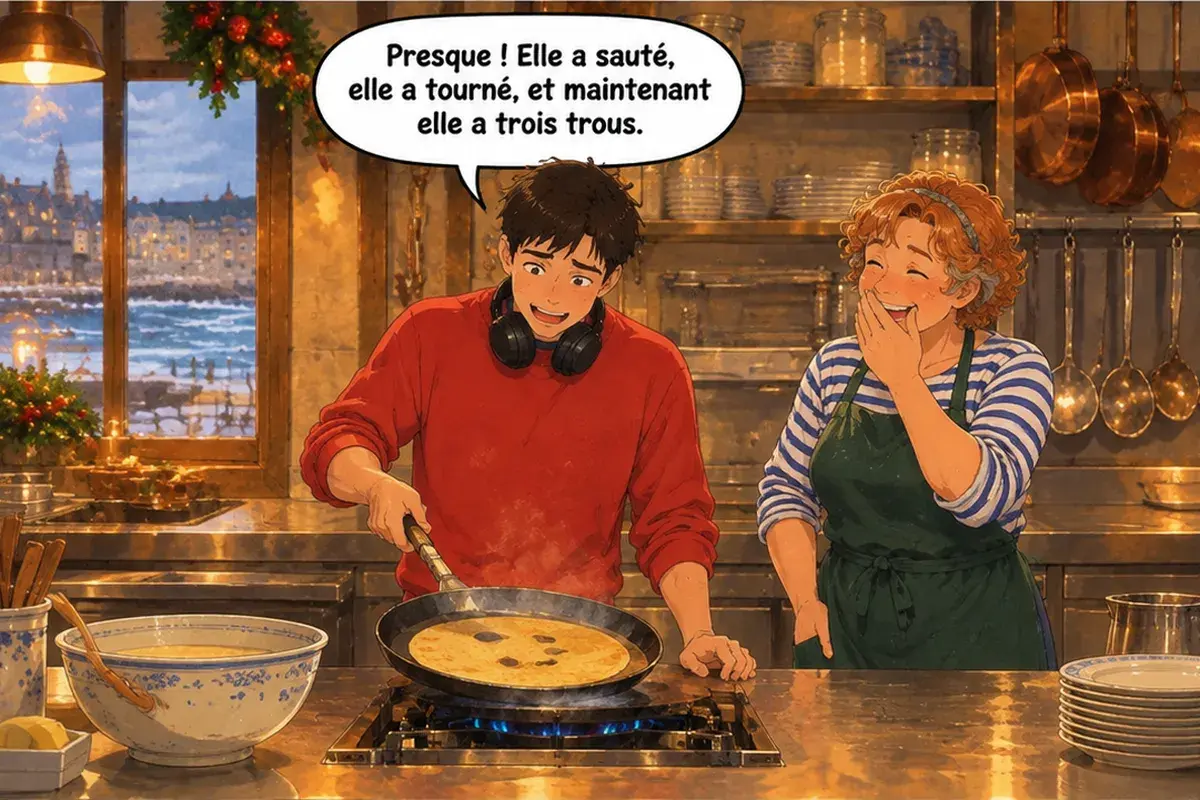
- Pacha
Presque ! Elle a sauté, elle a tourné, et maintenant elle a trois trous.
Almost! It jumped, it turned, and now it has three holes.
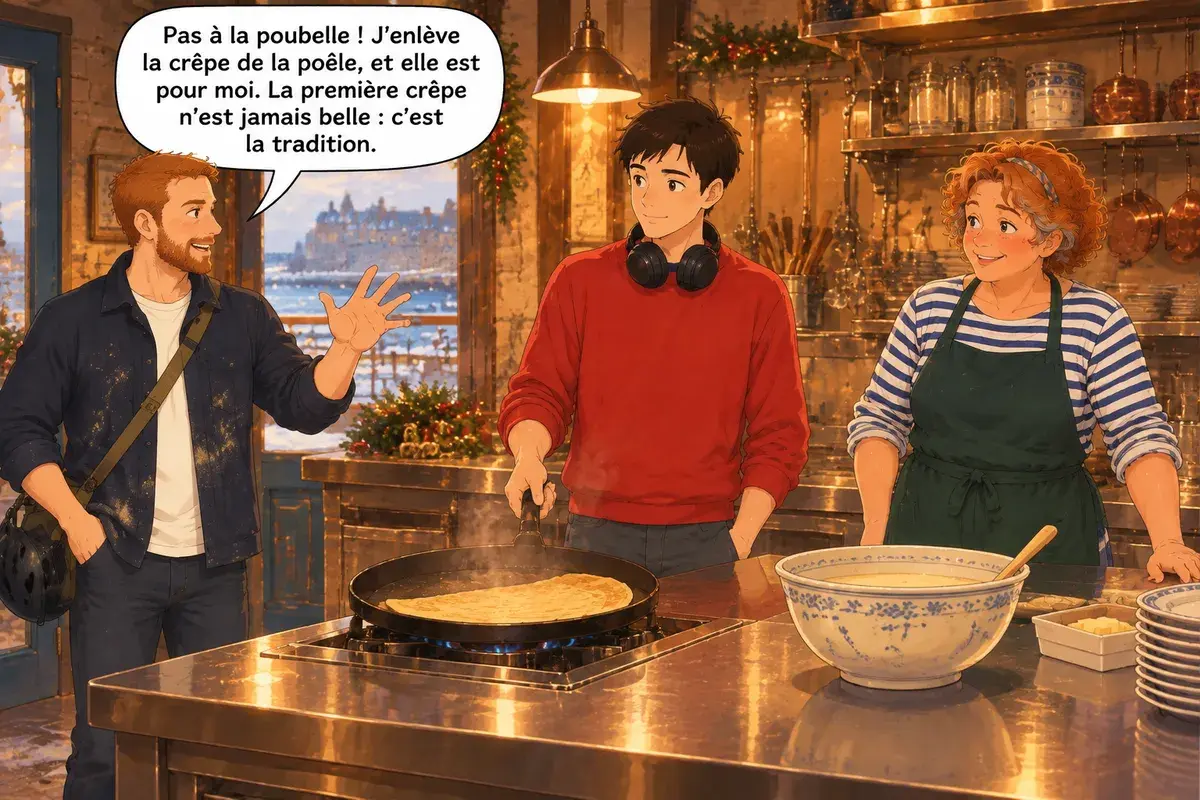
- Hugo
Pas à la poubelle ! J'enlève la crêpe de la poêle, et elle est pour moi. La première crêpe n'est jamais belle : c'est la tradition.
Not in the trash! I'm taking the crêpe out of the pan, and it's for me. The first crêpe is never pretty: that's tradition.
Grammar for this text
- Attends-moi — the tu command of attendre (to wait): attends + moi, "wait for me". No preposition: in English you wait for someone, in French you don't. moi goes after the verb, with a hyphen. It's a set phrase, like donne-moi, dis-moi and montre-moi below; the full rule comes in B1.
- Mets la farine, Ajoute, Verse, Bats bien, Remue — tu commands without the word tu. -er verbs drop the -s (tu ajoutes → ajoute); other verbs keep the tu form: mets (from mettre), bats (from battre, to beat).
- Il en faut combien ? — il faut (we need) plus en, which stands for the eggs: literally "of them it takes how many?"
- Donne-moi la louche, Dis-moi quand, Montre-moi comment — "give me", "tell me" (dis is from dire, to say), "show me".
- vas-y — "go ahead". vas is the tu form of aller (to go); the usual command is va, but before y the s comes back and sounds like z.
- ne mets pas la main dedans — "don't put your hand in it": ne and pas go around the verb; dedans — inside, in it, with no noun after it.
- Elle cuit — the elle form of cuire (to cook); the final t is silent. Elle a sauté, elle a tourné — the passé composé (the main past tense) with avoir (A1, unit 15).
Words and grammar of the unit: Make crêpes from a recipe.
Learn the words from the texts with flashcards
In the app, you can tap any word in a text to see its translation, forms and examples, and new words stick with flashcards. 15 minutes a day.
Start for freeEverything is open for free. No card needed to sign up.