

French dialogue with translation · A2 · 15 lines
J'en veux deux, avec du miel I want two, with honey
Comic · 15 panels
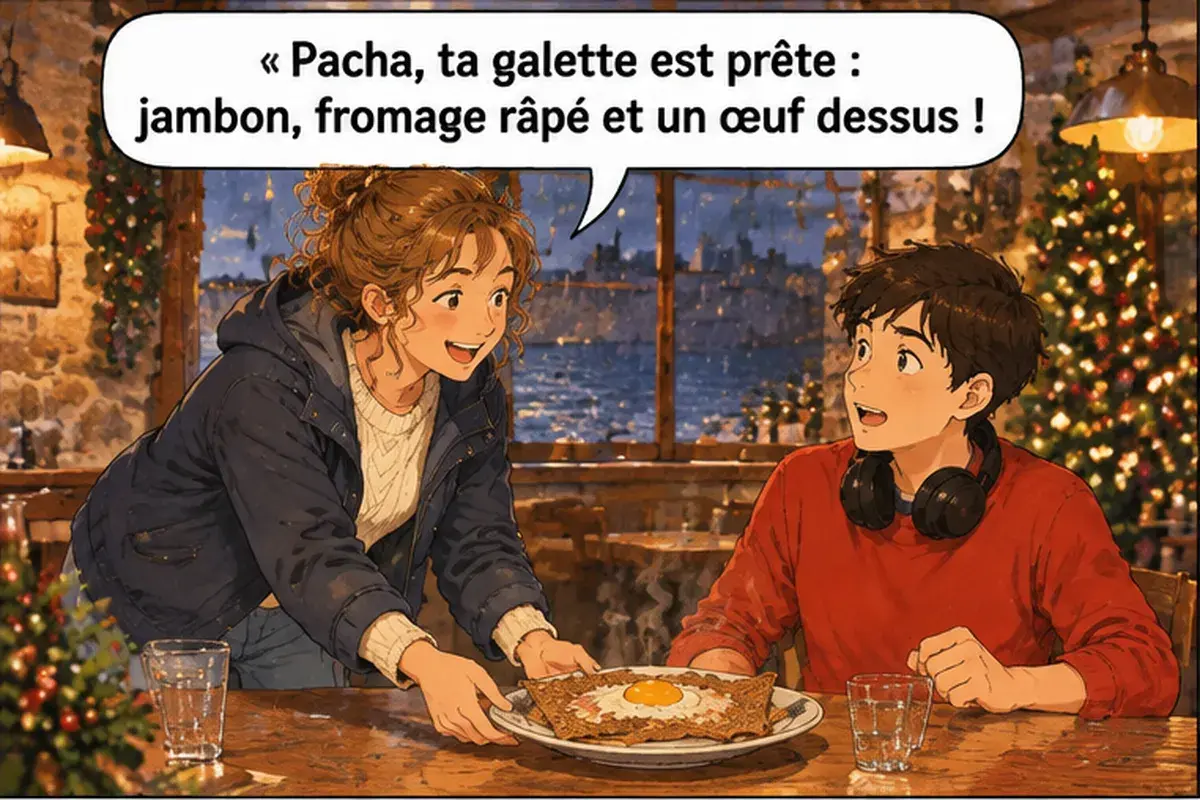
- Maëlle
Pacha, ta galette est prête : jambon, fromage râpé et un œuf dessus !
Pacha, your galette is ready: ham, grated cheese and an egg on top!
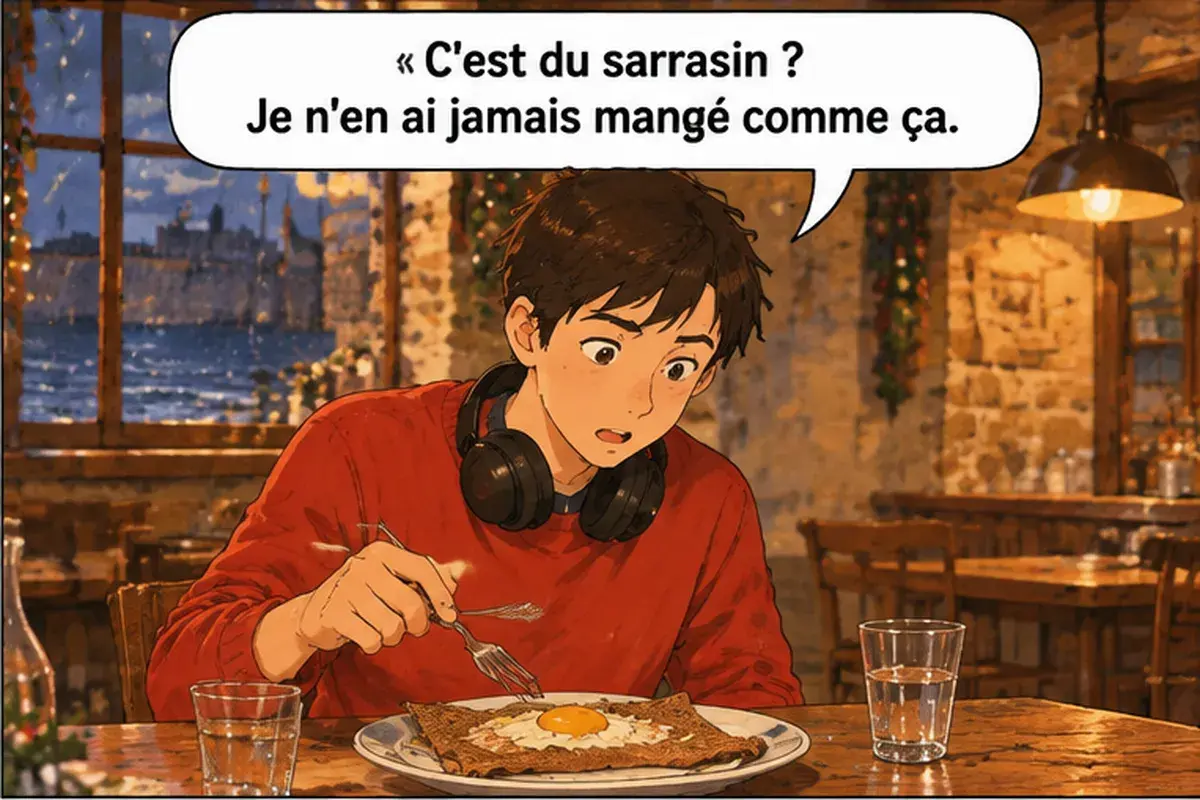
- Pacha
C'est du sarrasin ? Je n'en ai jamais mangé comme ça.
Is it buckwheat? I've never eaten it like this.
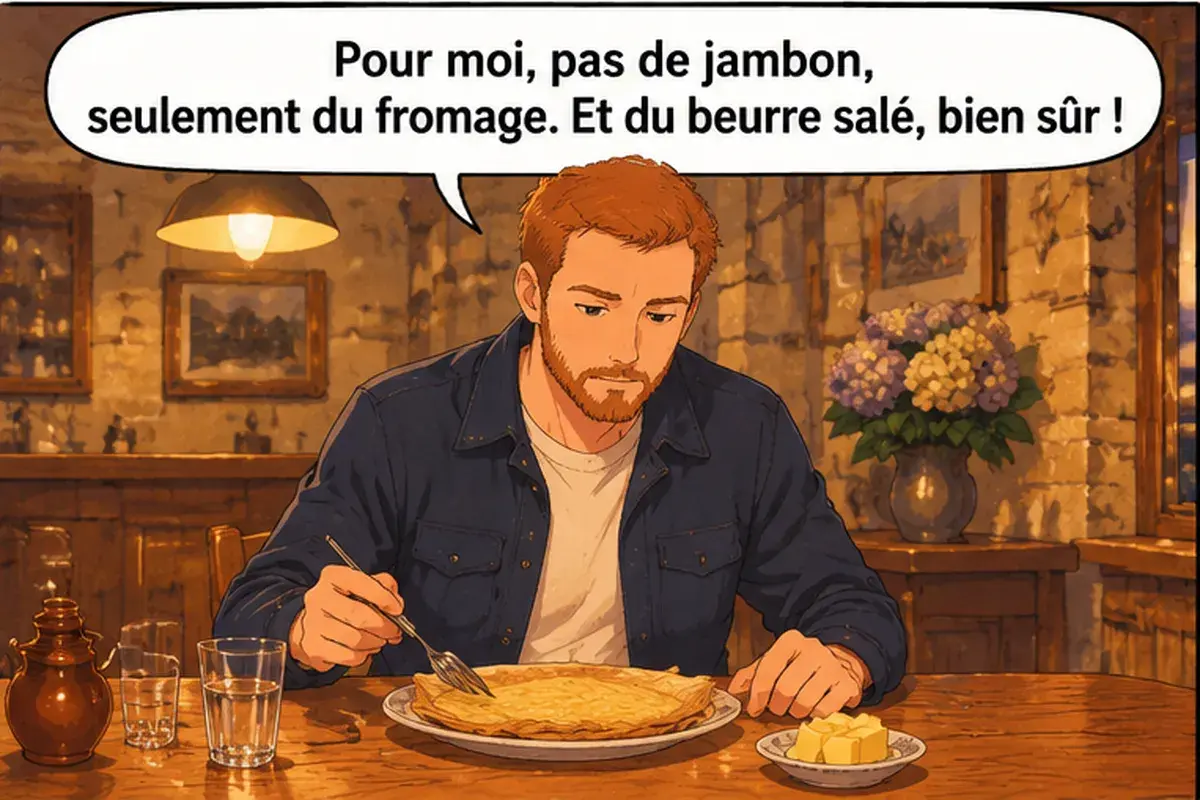
- Hugo
Pour moi, pas de jambon, seulement du fromage. Et du beurre salé, bien sûr !
For me, no ham, just cheese. And salted butter, of course!

- Pacha
Du beurre salé ? Chez moi, le beurre n'est pas salé.
Salted butter? Back home, butter isn't salted.

- Hugo
Du beurre sans sel ? C'est du lait fatigué, ce n'est pas du beurre !
Butter without salt? That's tired milk, it's not butter!
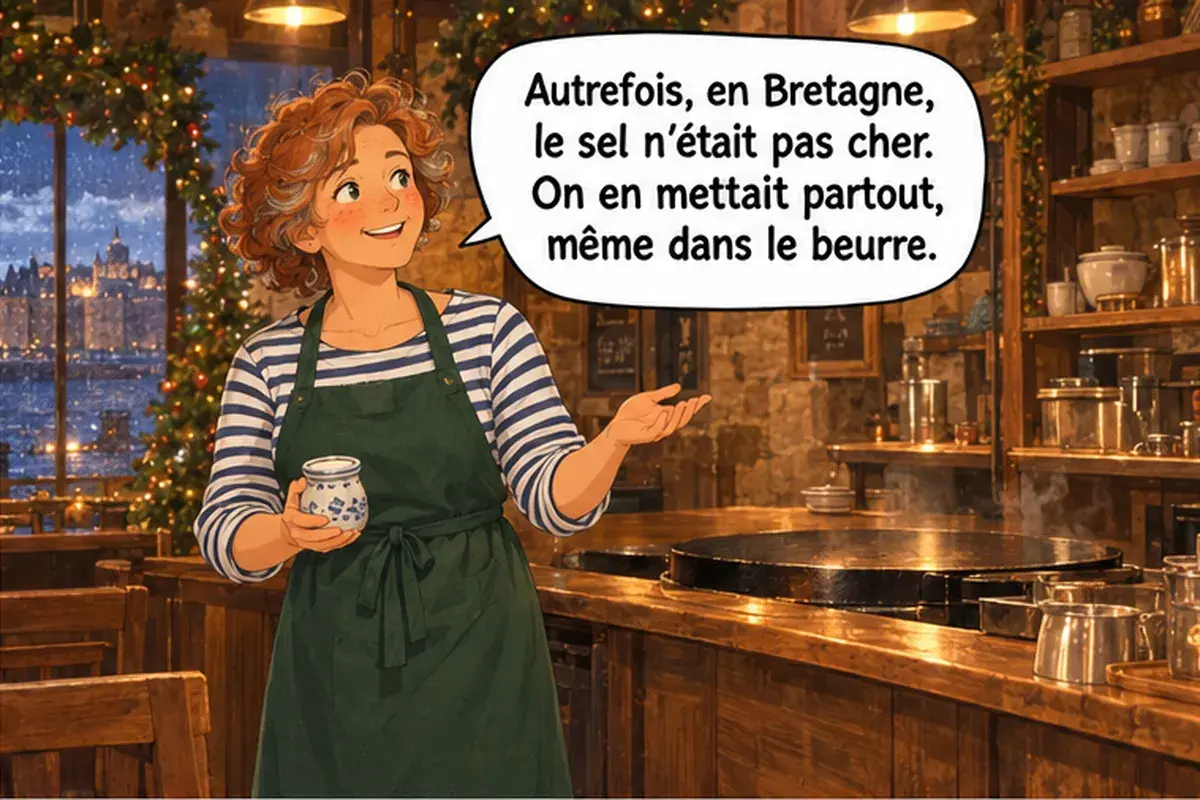
- Anne
Autrefois, en Bretagne, le sel n'était pas cher. On en mettait partout, même dans le beurre.
In the old days, in Brittany, salt wasn't expensive. People used to put it everywhere, even in butter.

- Maëlle
Et voilà les crêpes sucrées ! Pacha, tu en veux combien ?
And here are the sweet crêpes! Pacha, how many do you want?

- Pacha
J'en veux deux, avec du miel.
I want two, with honey.

- Hugo
Du miel ? Alors ce n'est plus une crêpe ! Une vraie crêpe, c'est du beurre salé et du sucre, rien d'autre.
Honey? Then it's not a crêpe anymore! A real crêpe is salted butter and sugar, nothing else.
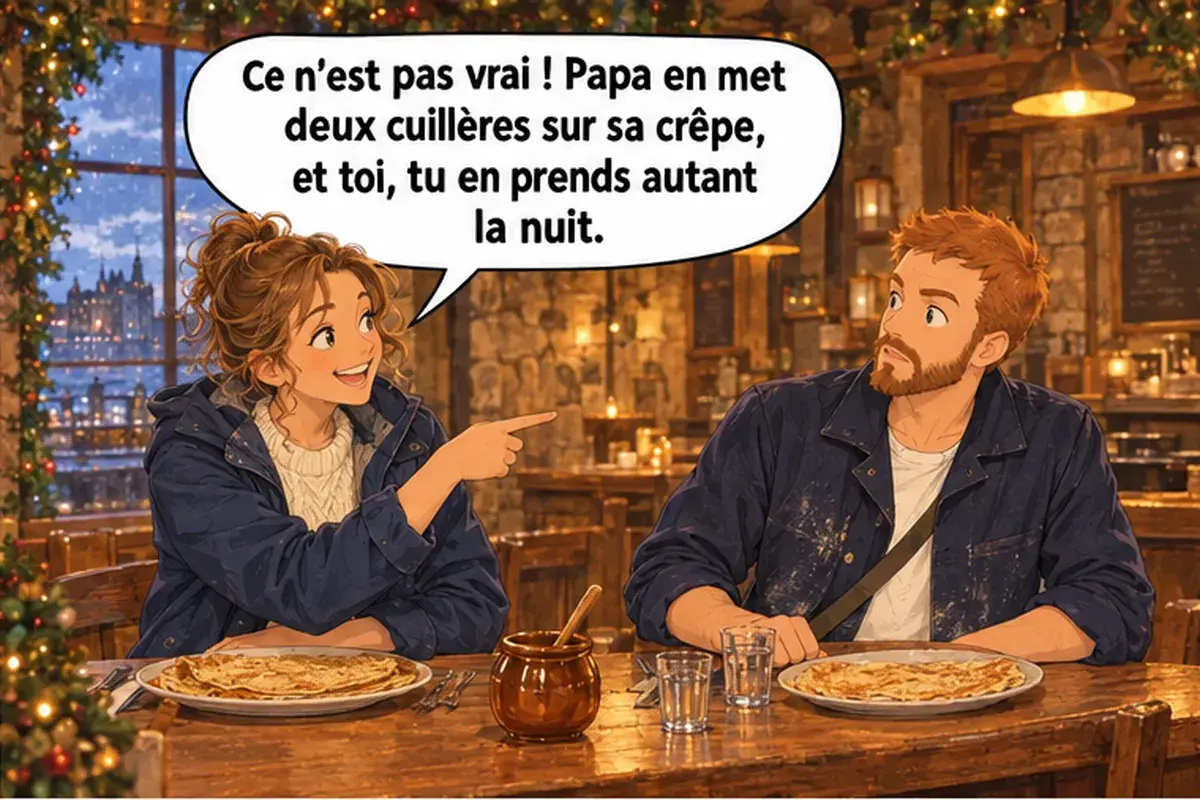
- Maëlle
Ce n'est pas vrai ! Papa en met deux cuillères sur sa crêpe, et toi, tu en prends autant la nuit.
That's not true! Dad puts two spoonfuls of it on his crêpe, and you take just as much at night.
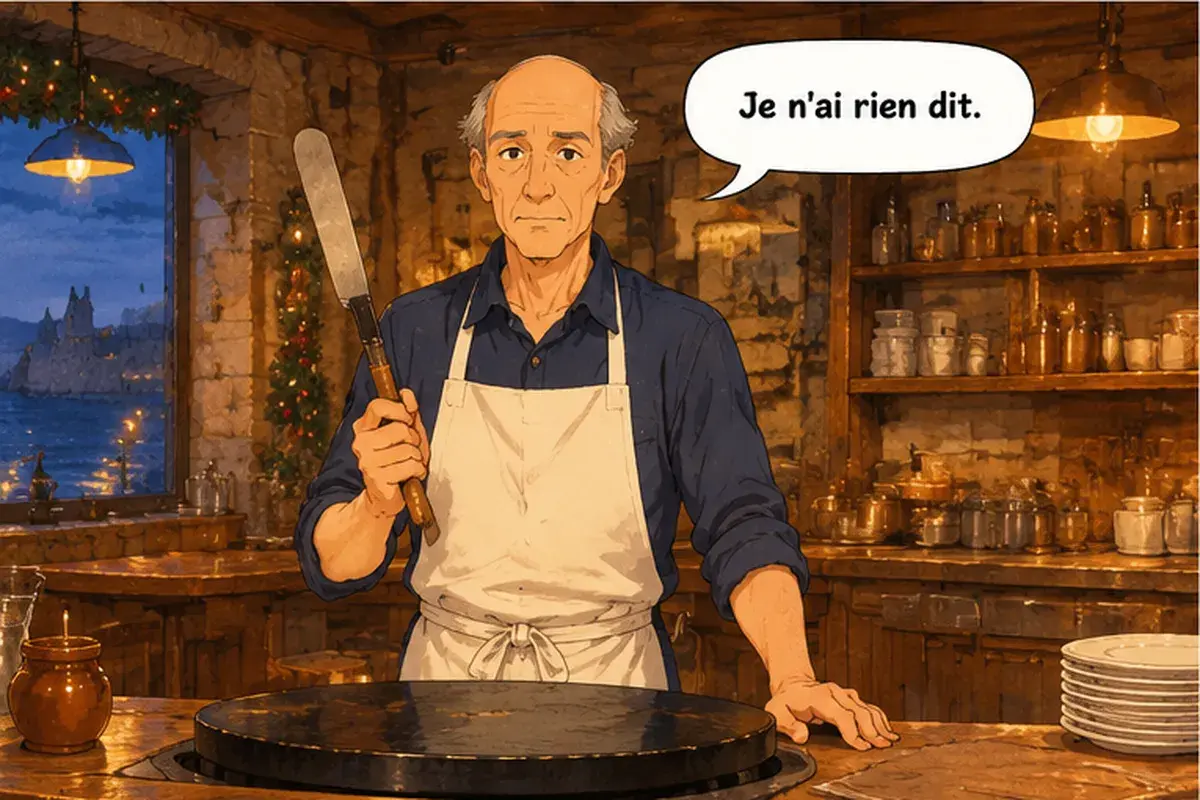
- Loïc
Je n'ai rien dit.
I didn't say anything.
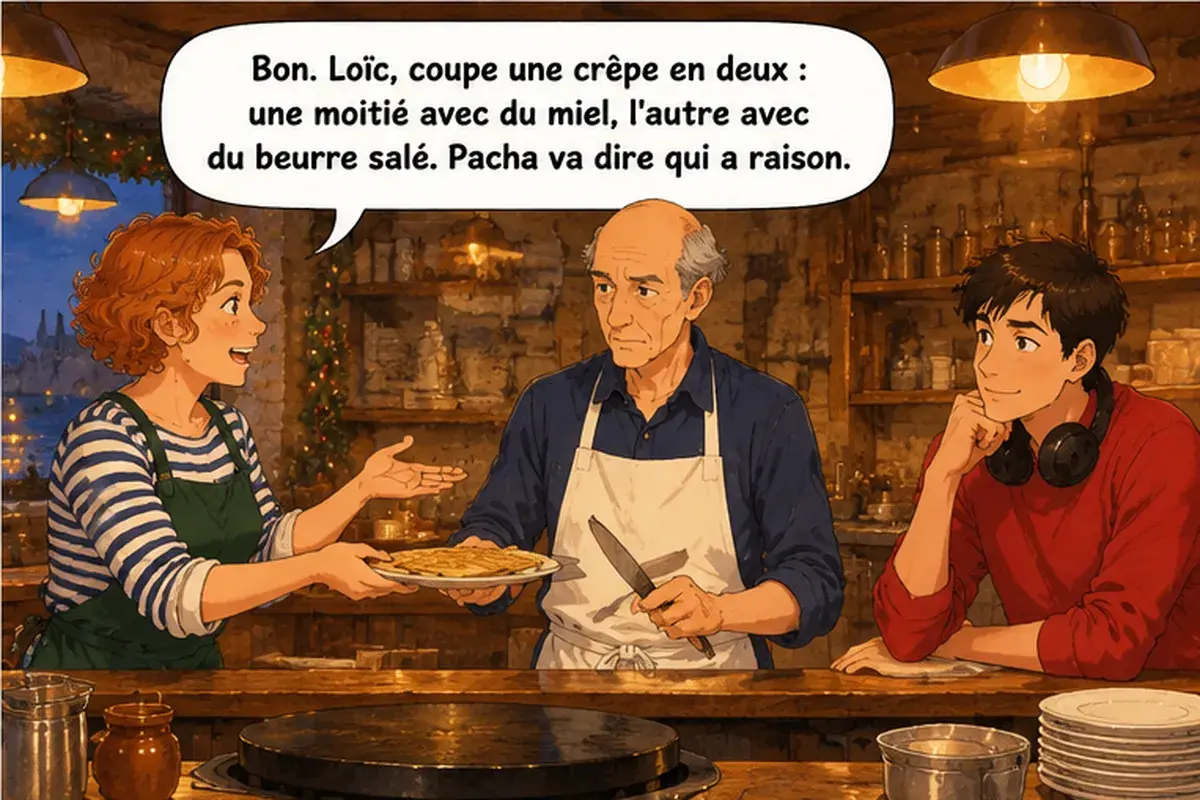
- Anne
Bon. Loïc, coupe une crêpe en deux : une moitié avec du miel, l'autre avec du beurre salé. Pacha va dire qui a raison.
OK. Loïc, cut a crêpe in half: one half with honey, the other with salted butter. Pacha is going to say who's right.

- Pacha
Les deux sont bonnes ! Mais beurre salé d'abord, puis miel dessus : c'est la bonne façon de manger une crêpe.
They're both good! But salted butter first, then honey on top: that's the right way to eat a crêpe.

- Hugo
Je ne dis rien. Mais donne-moi la moitié de ta crêpe.
I'm not saying anything. But give me half of your crêpe.
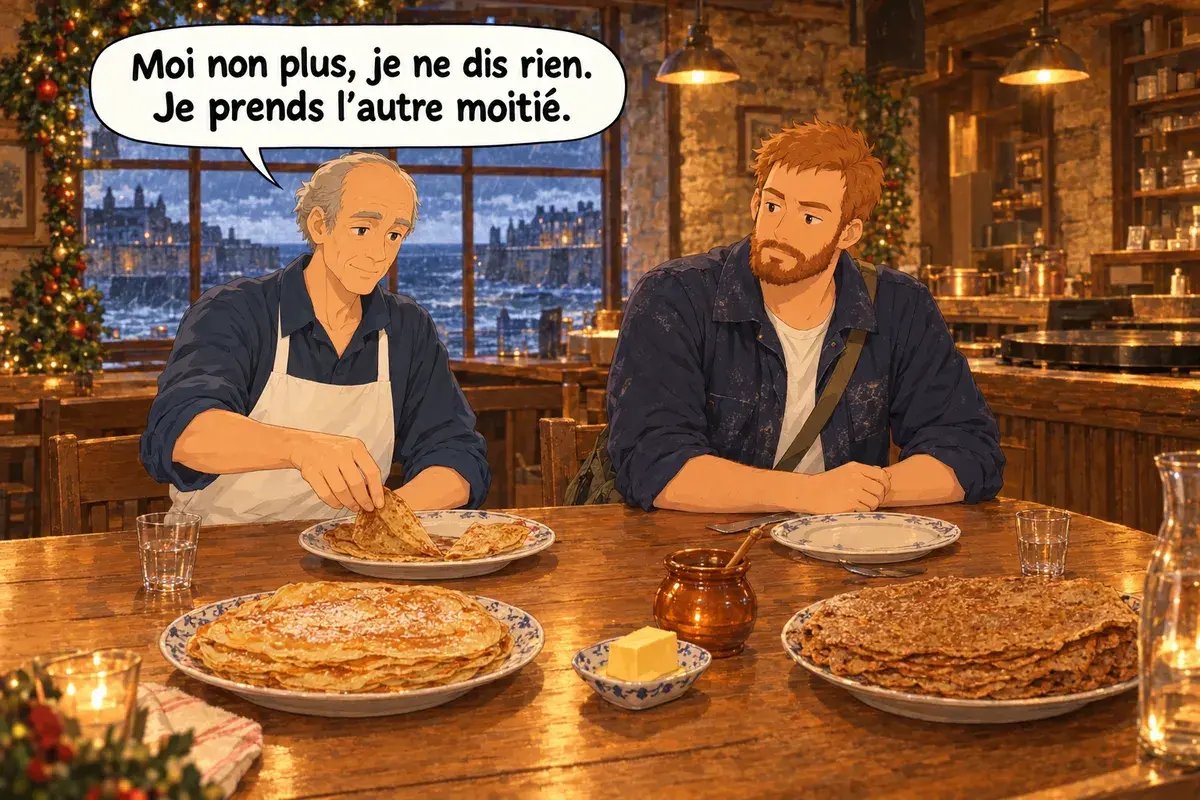
- Loïc
Moi non plus, je ne dis rien. Je prends l'autre moitié.
Me neither, I'm not saying anything. I'll take the other half.
Grammar for this text
- Je n'en ai jamais mangé comme ça — here en means "it": the buckwheat already mentioned. It goes before ai, inside the negative ne… jamais. Literally "I of it have never eaten like this."
- Tu en veux combien ?, J'en veux deux, Papa en met deux cuillères, tu en prends autant — en stands for something already named (crêpes, honey), and the number stays after the verb. More in the unit grammar.
- le sel n'était pas cher, On en mettait partout — n'était and mettait are the imperfect (imparfait) of être and mettre: how things used to be (unit 4). on en mettait — "people used to put it (salt)".
- ce n'est plus une crêpe — ne… plus, "not anymore". Je n'ai rien dit — ne… rien in the past: ne and rien go around ai; dit is the past participle of dire (unit 3).
- Moi non plus, je ne dis rien — "me neither" after a negative sentence is moi non plus, not moi aussi.
- Pacha va dire qui a raison — va dire, "is going to say" (aller + verb); avoir raison — to be right.
- du lait fatigué — Hugo's joke: "tired milk". Donne-moi la moitié — the set phrase "give me" from this unit.
Words and grammar of the unit: Make crêpes from a recipe.
Learn the words from the texts with flashcards
In the app, you can tap any word in a text to see its translation, forms and examples, and new words stick with flashcards. 15 minutes a day.
Start for freeEverything is open for free. No card needed to sign up.