
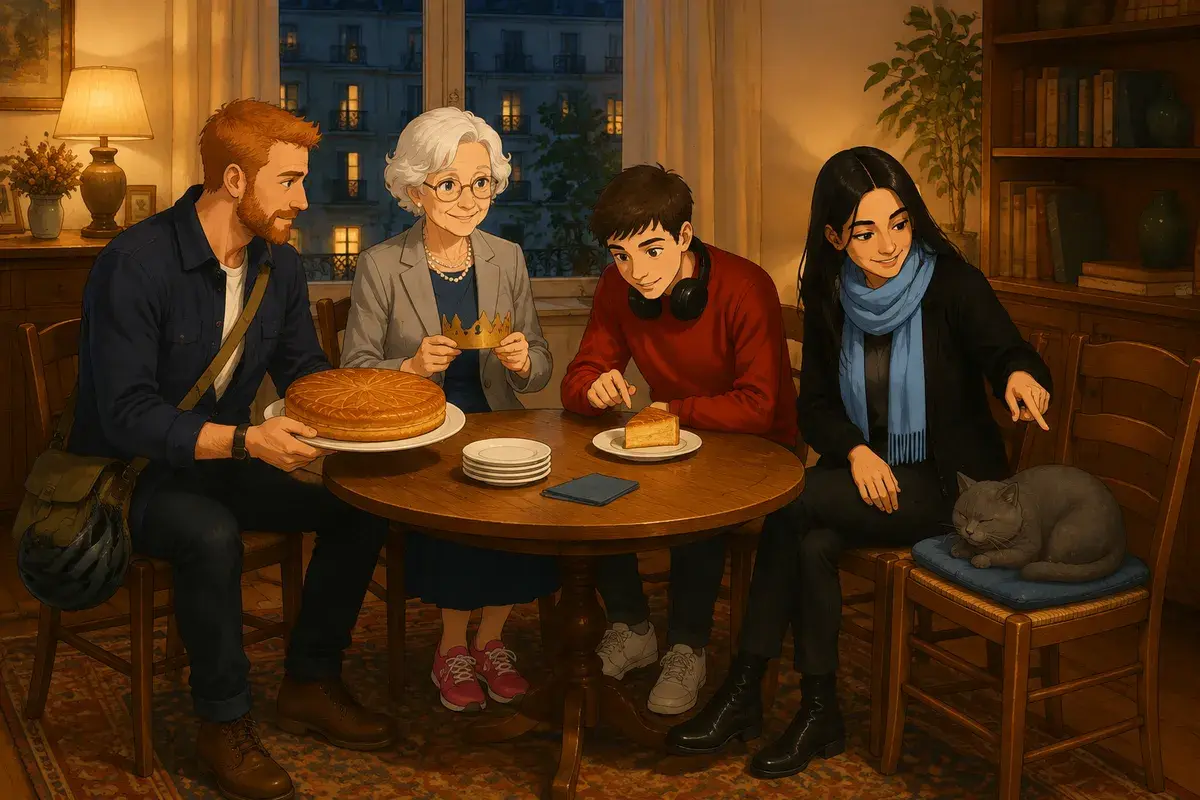
French dialogue with translation · A2 · 16 lines
On dit « meilleure », pas « plus bonne » We say "meilleure", not "plus bonne"
Comic · 16 panels
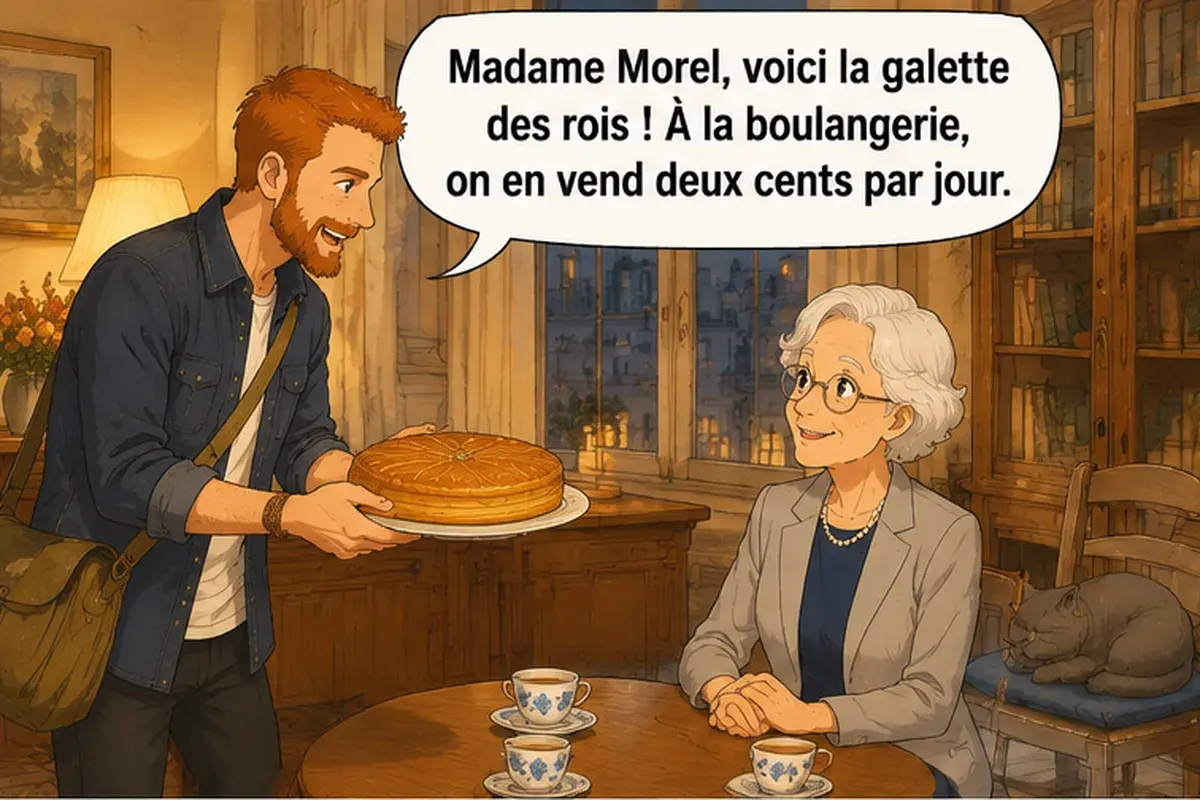
- Hugo
Madame Morel, voici la galette des rois ! À la boulangerie, on en vend deux cents par jour.
Madame Morel, here's the king cake! At the bakery, we sell two hundred of them a day.
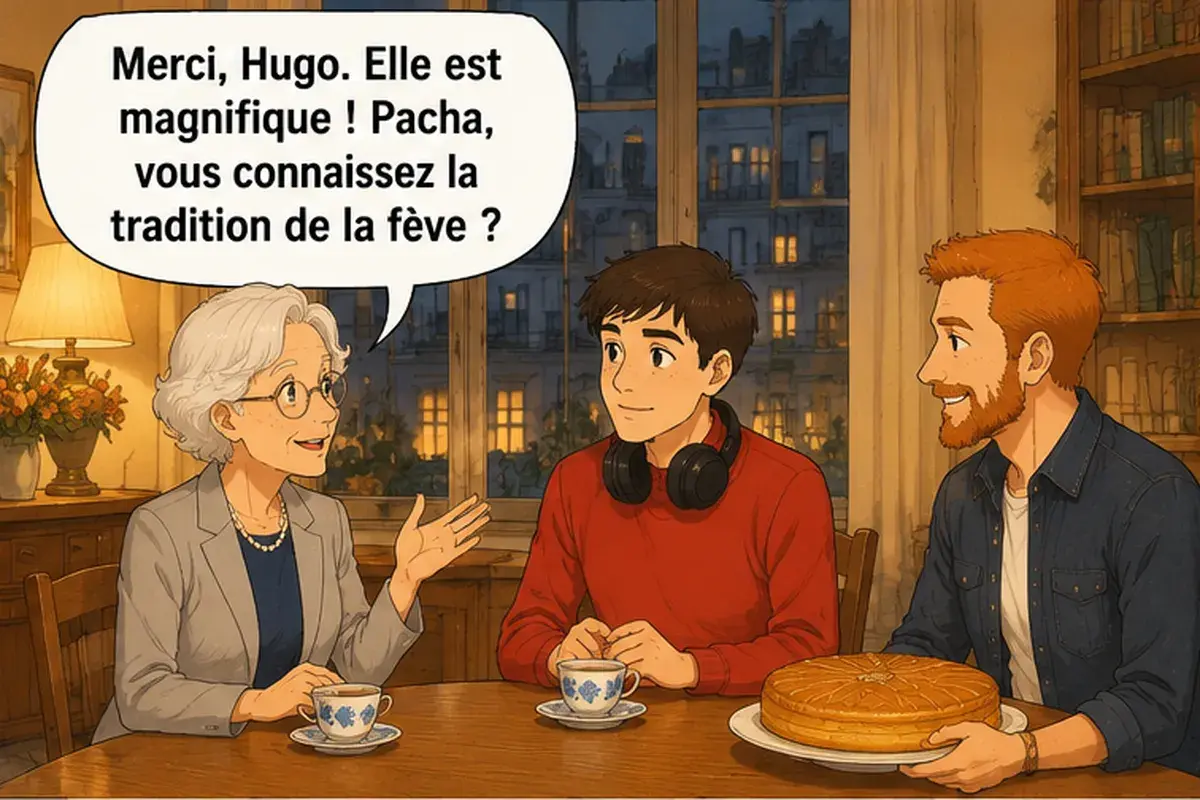
- Madame Morel
Merci, Hugo. Elle est magnifique ! Pacha, vous connaissez la tradition de la fève ?
Thank you, Hugo. It's magnificent! Pacha, do you know the tradition of the charm? (formal)
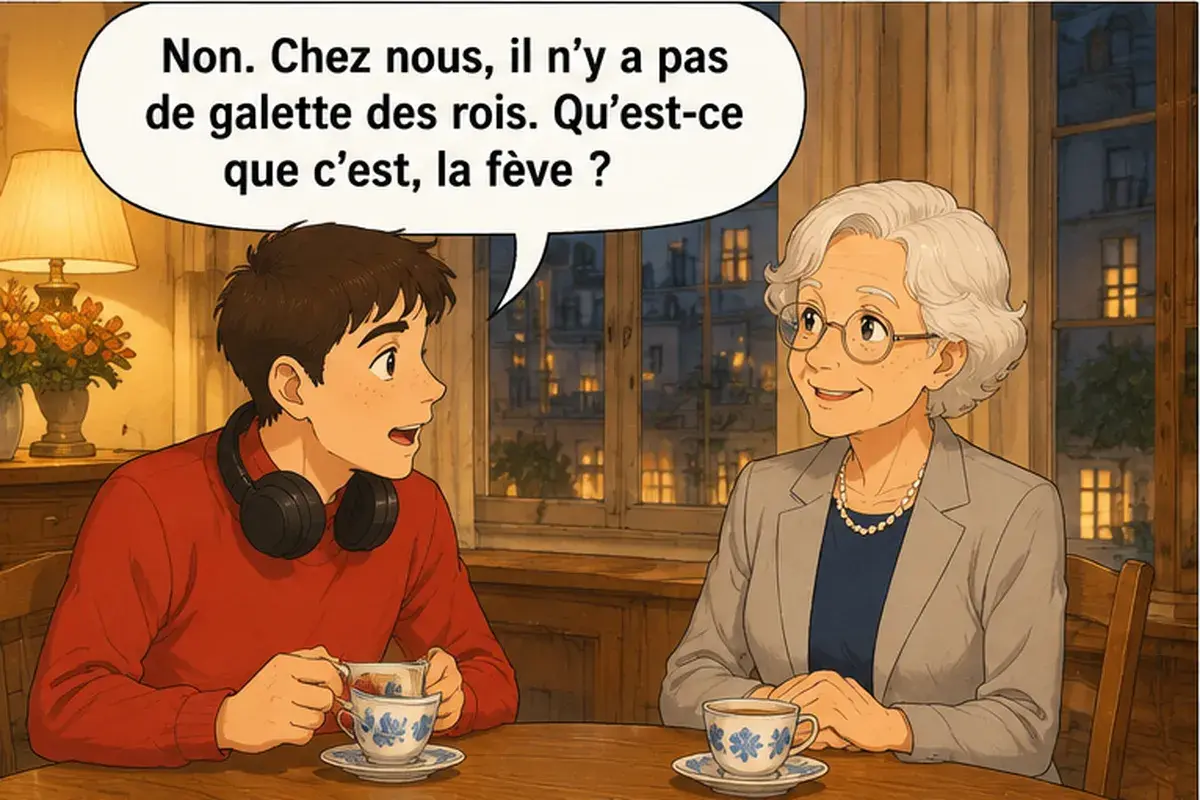
- Pacha
Non. Chez nous, il n'y a pas de galette des rois. Qu'est-ce que c'est, la fève ?
No. Back home, there's no king cake. What's the charm?
- Madame Morel
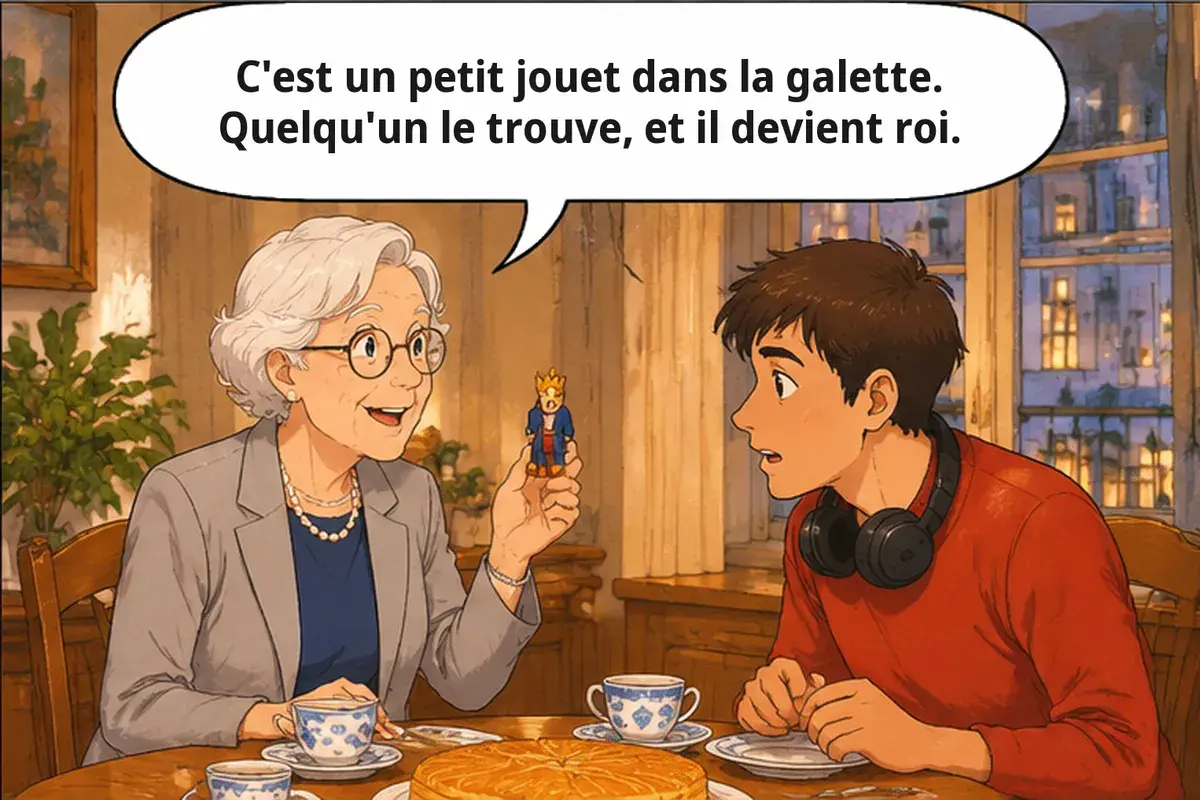
C'est un petit jouet dans la galette. Quelqu'un le trouve, et il devient roi.
It's a little toy in the cake. Someone finds it, and he becomes king.
- Inès
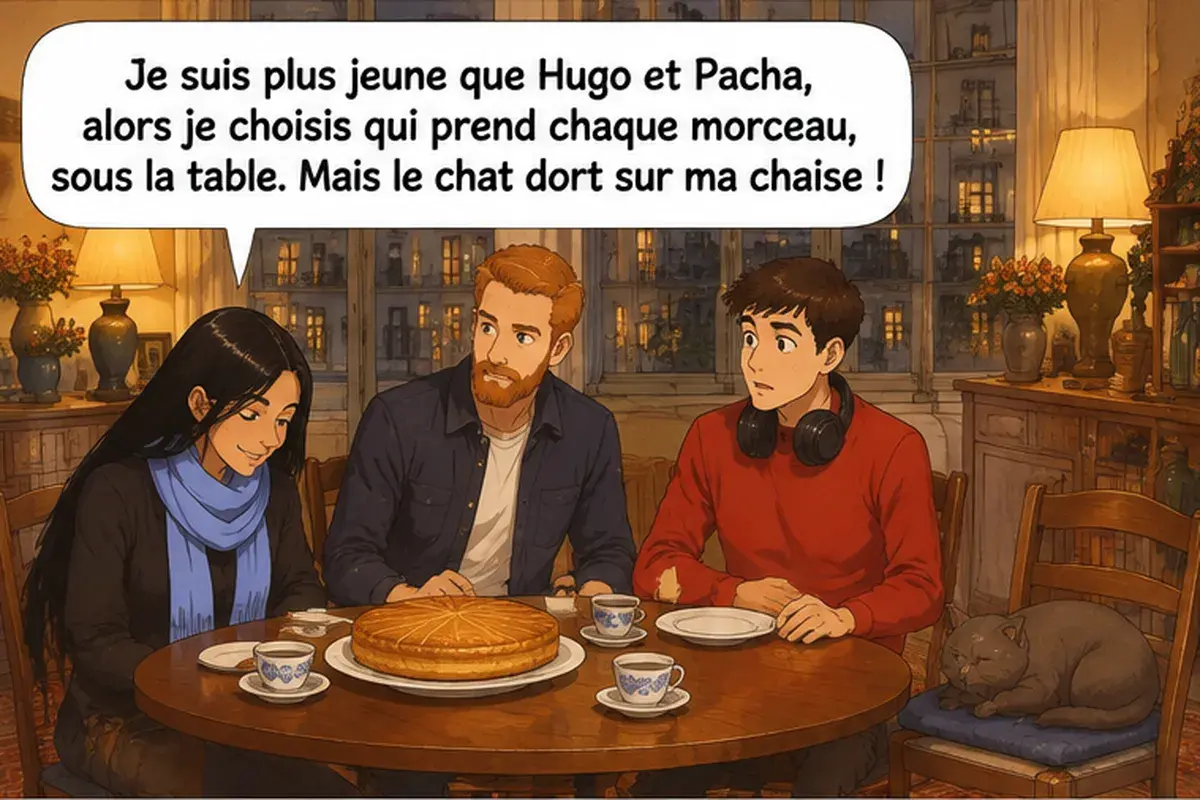
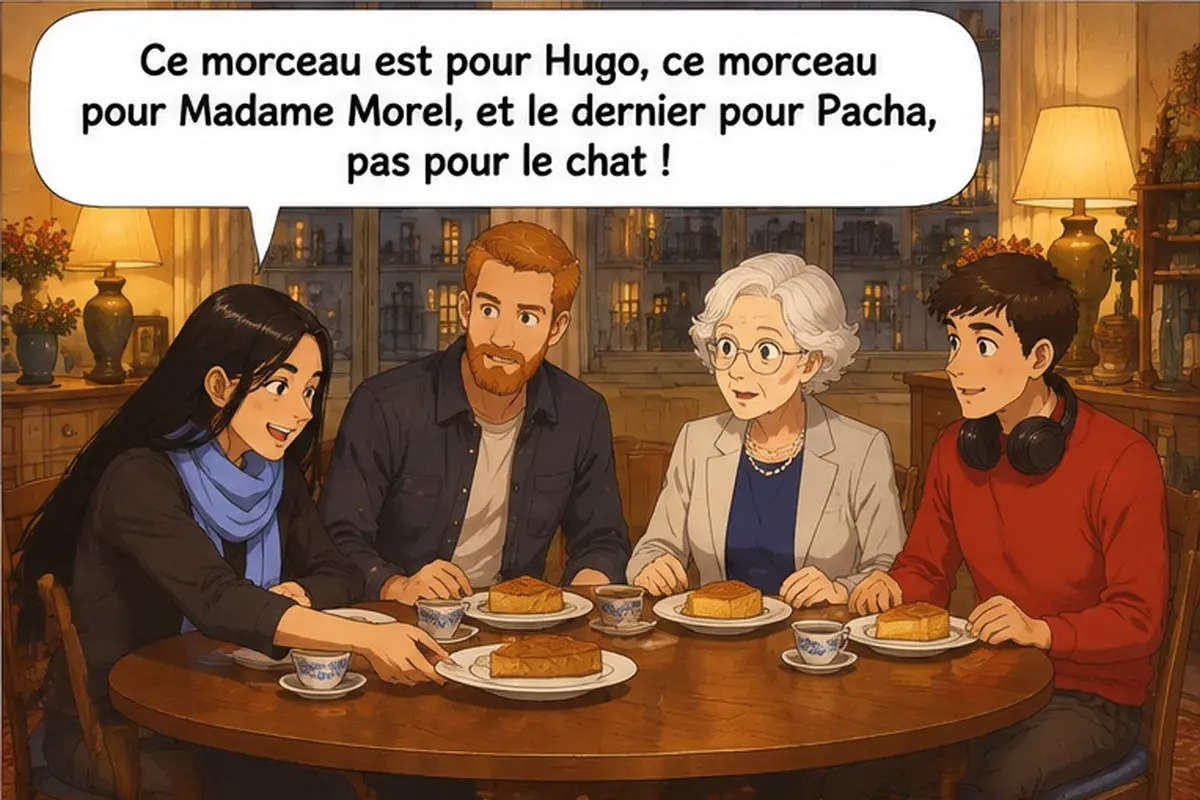
Je suis plus jeune que Hugo et Pacha, alors je choisis qui prend chaque morceau, sous la table. Mais le chat dort sur ma chaise !
I'm younger than Hugo and Pacha, so I choose who takes each piece, under the table. But the cat is sleeping on my chair!
- Madame Morel
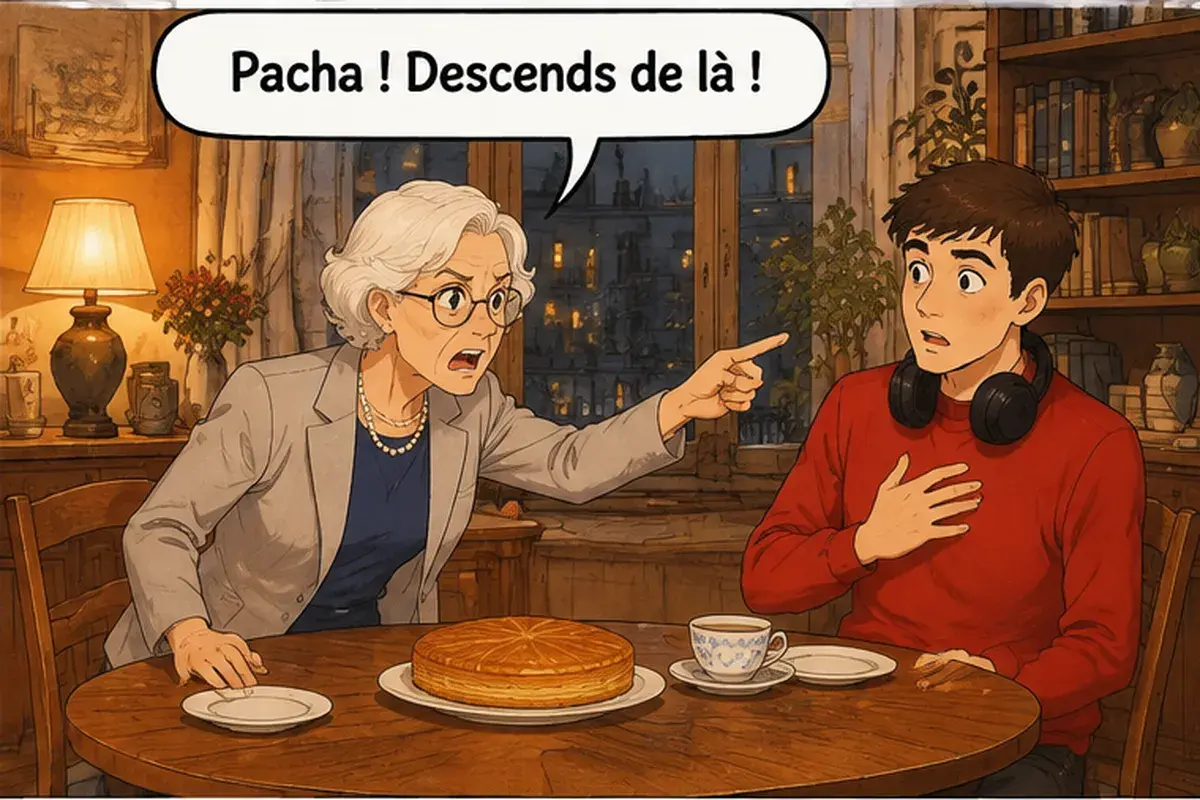
Pacha ! Descends de là !
Pacha! Get down from there!
- Pacha
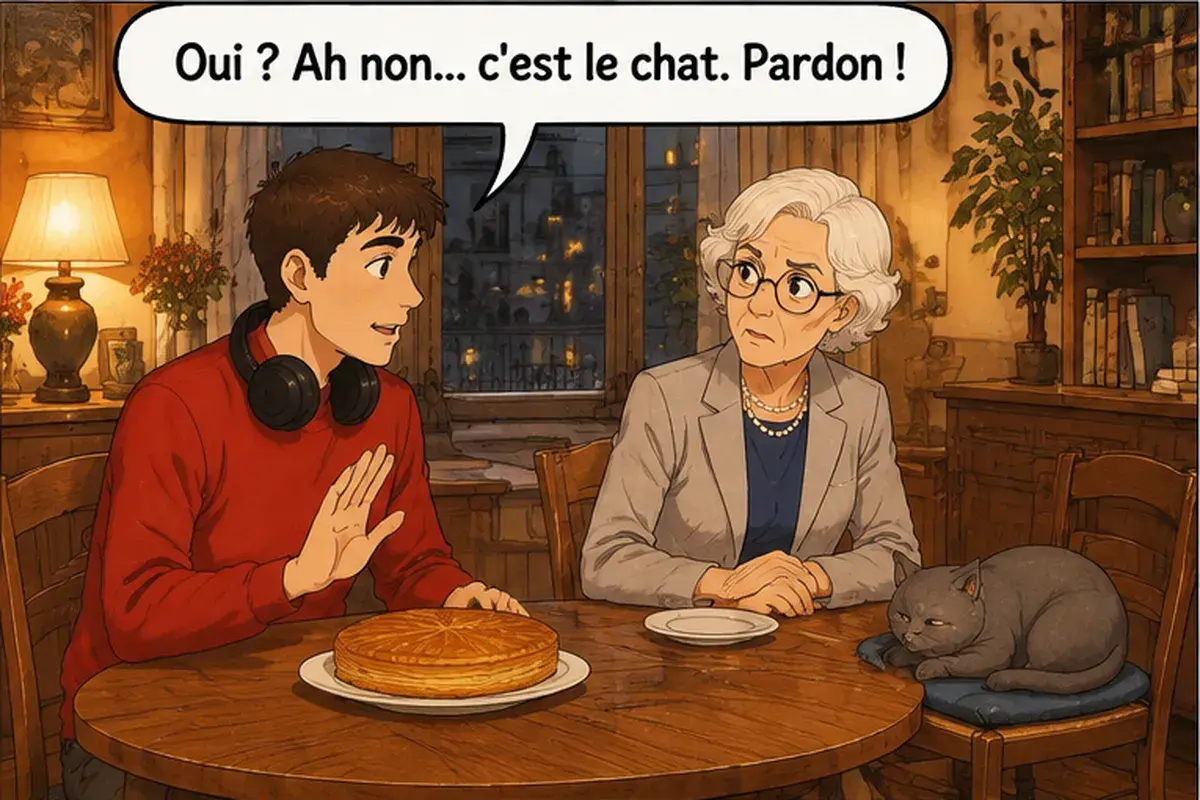
Oui ? Ah non… c'est le chat. Pardon !
Yes? Oh no… it's the cat. Sorry!
- Inès
Ce morceau est pour Hugo, ce morceau pour Madame Morel, et le dernier pour Pacha, pas pour le chat !
This piece is for Hugo, this piece for Madame Morel, and the last one for Pacha, not for the cat!
- Pacha
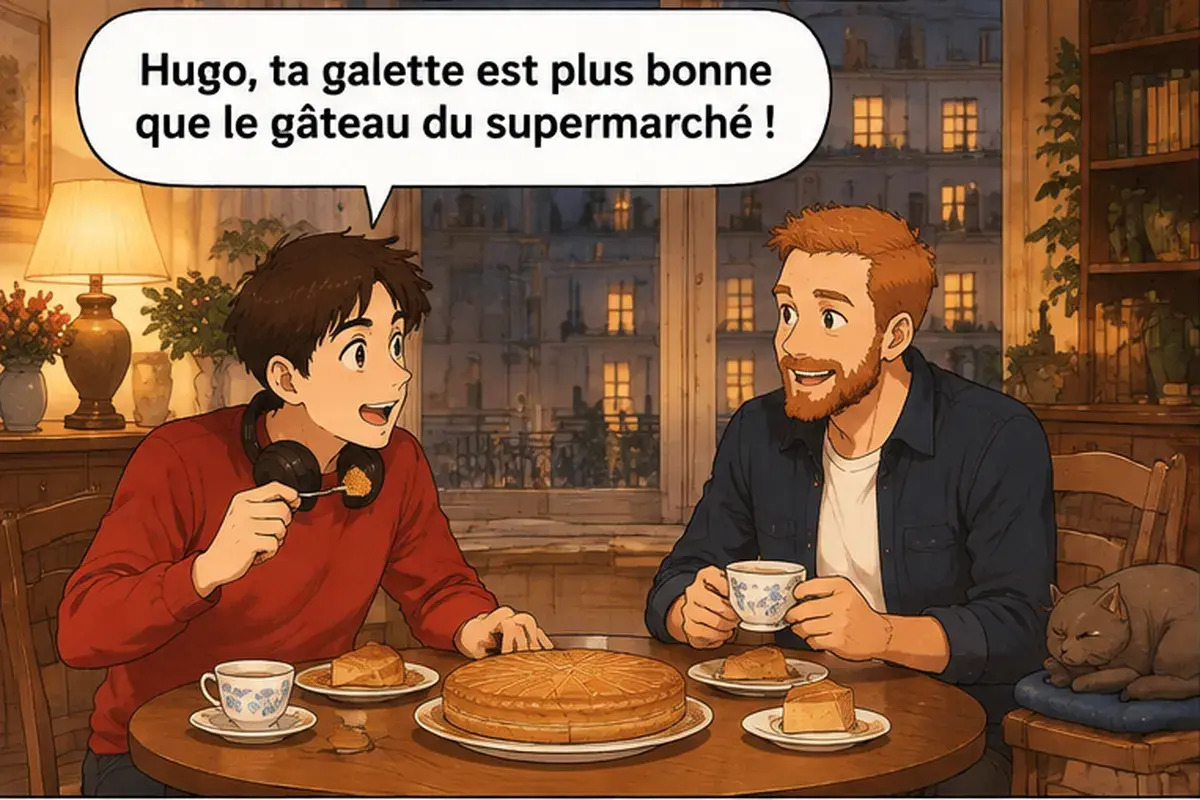
Hugo, ta galette est plus bonne que le gâteau du supermarché !
Hugo, your galette is more good than the cake from the supermarket!
- Madame Morel
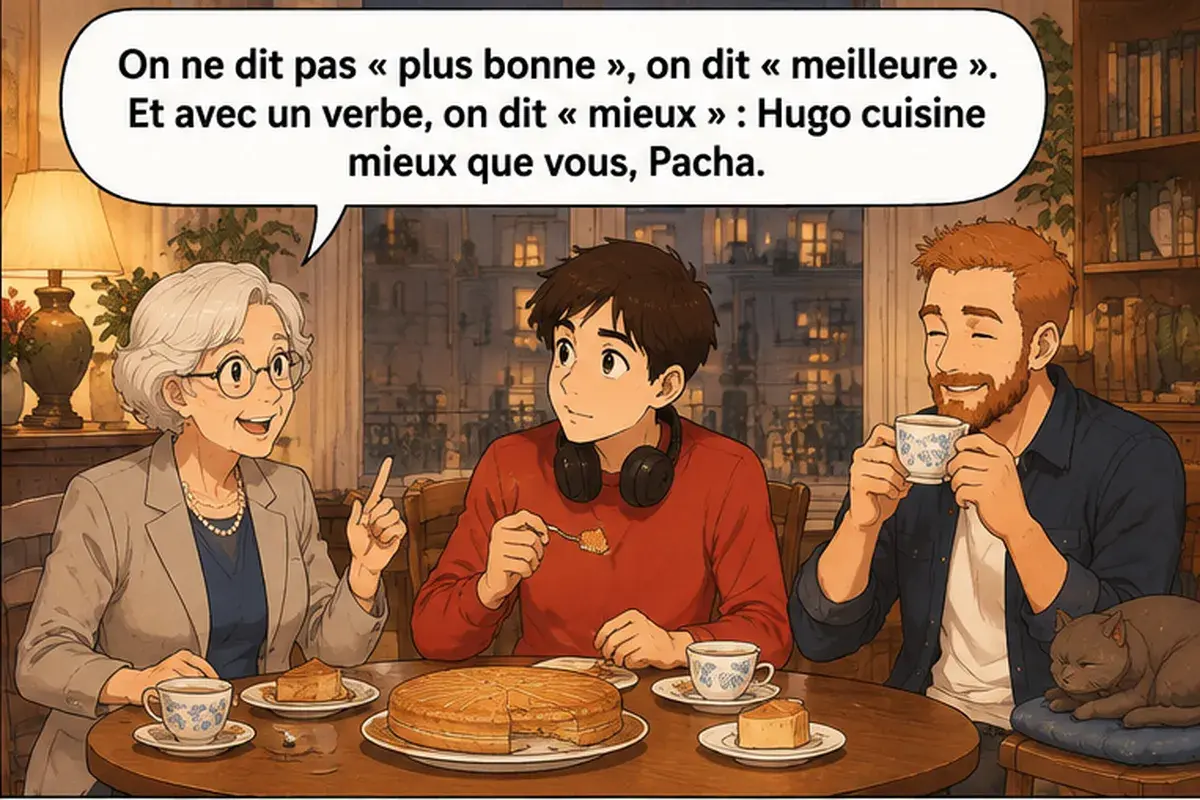
On ne dit pas « plus bonne », on dit « meilleure ». Et avec un verbe, on dit « mieux » : Hugo cuisine mieux que vous, Pacha.
We don't say "plus bonne", we say "meilleure". And with a verb, we say "mieux": Hugo cooks better than you, Pacha (formal).
- Pacha
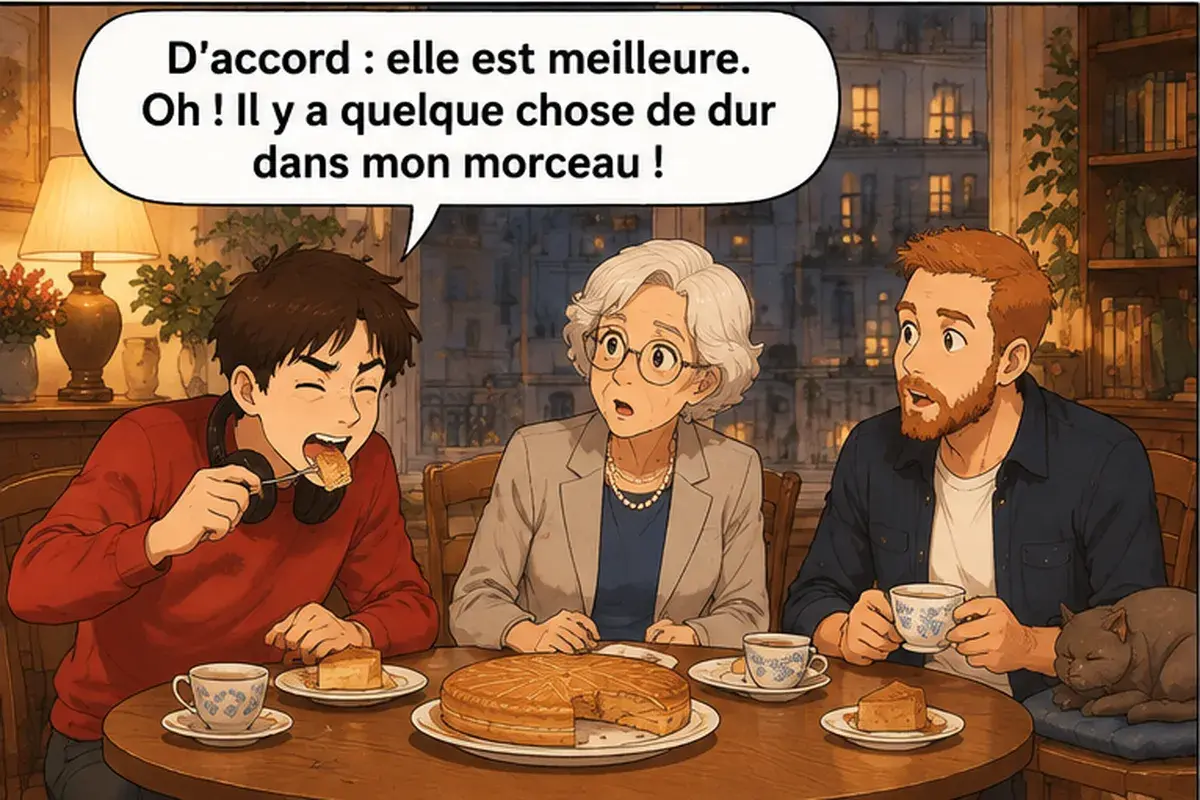
D'accord : elle est meilleure. Oh ! Il y a quelque chose de dur dans mon morceau !
OK: it's better. Oh! There's something hard in my piece!
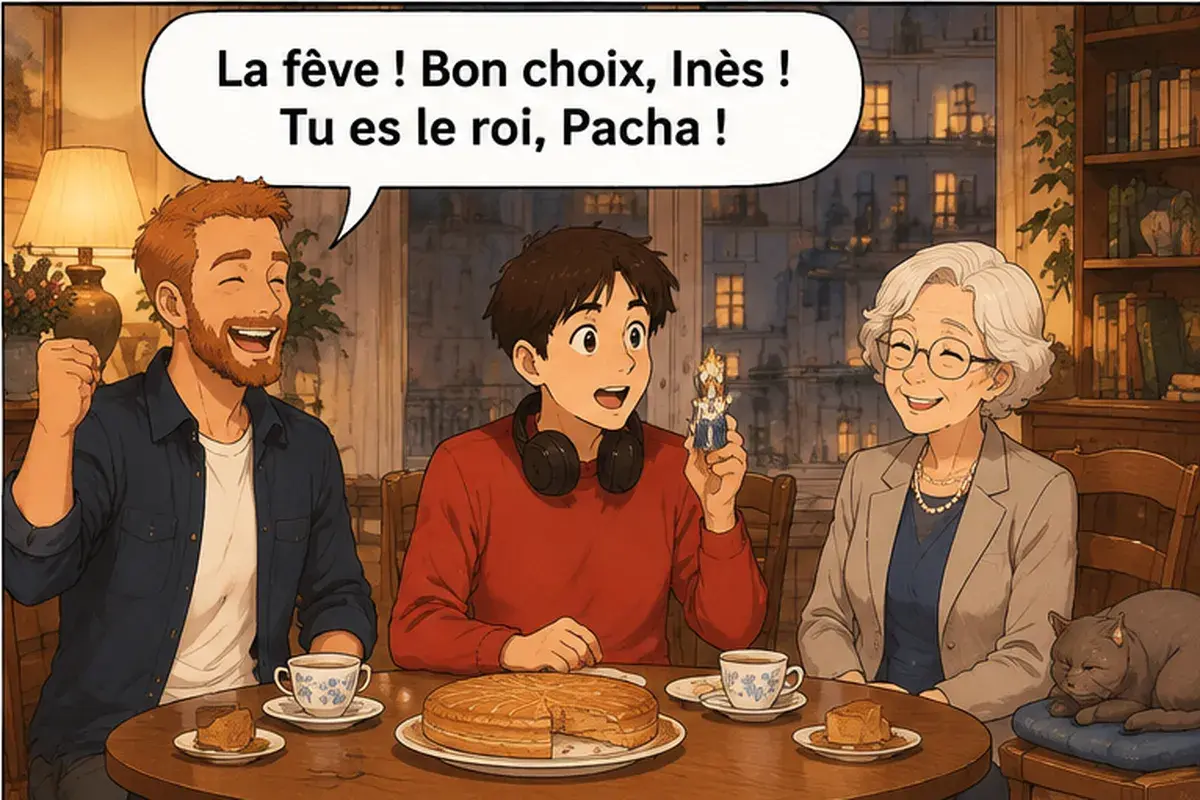
- Hugo
La fève ! Bon choix, Inès ! Tu es le roi, Pacha !
The charm! Good choice, Inès! You're the king, Pacha!
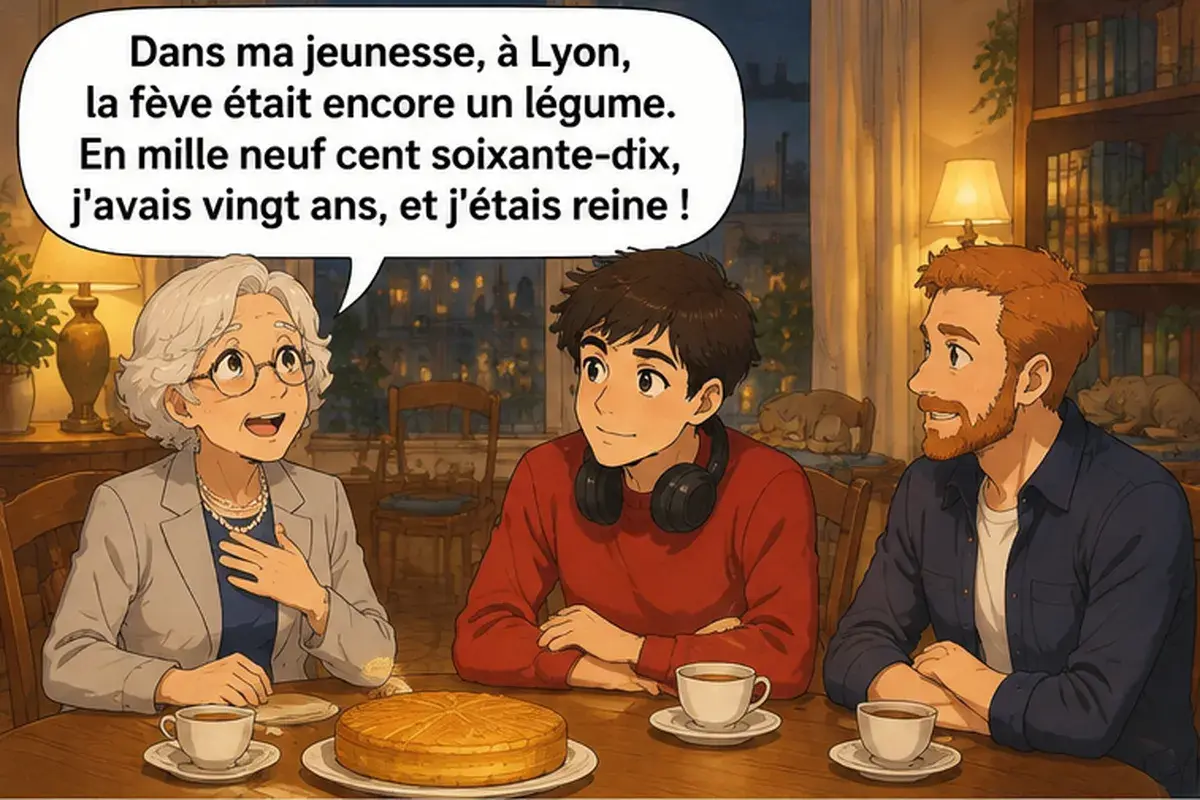
- Madame Morel
Dans ma jeunesse, à Lyon, la fève était encore un légume. En mille neuf cent soixante-dix, j'avais vingt ans, et j'étais reine !
In my youth, in Lyon, the charm was still a vegetable. In nineteen seventy, I was twenty, and I was queen!
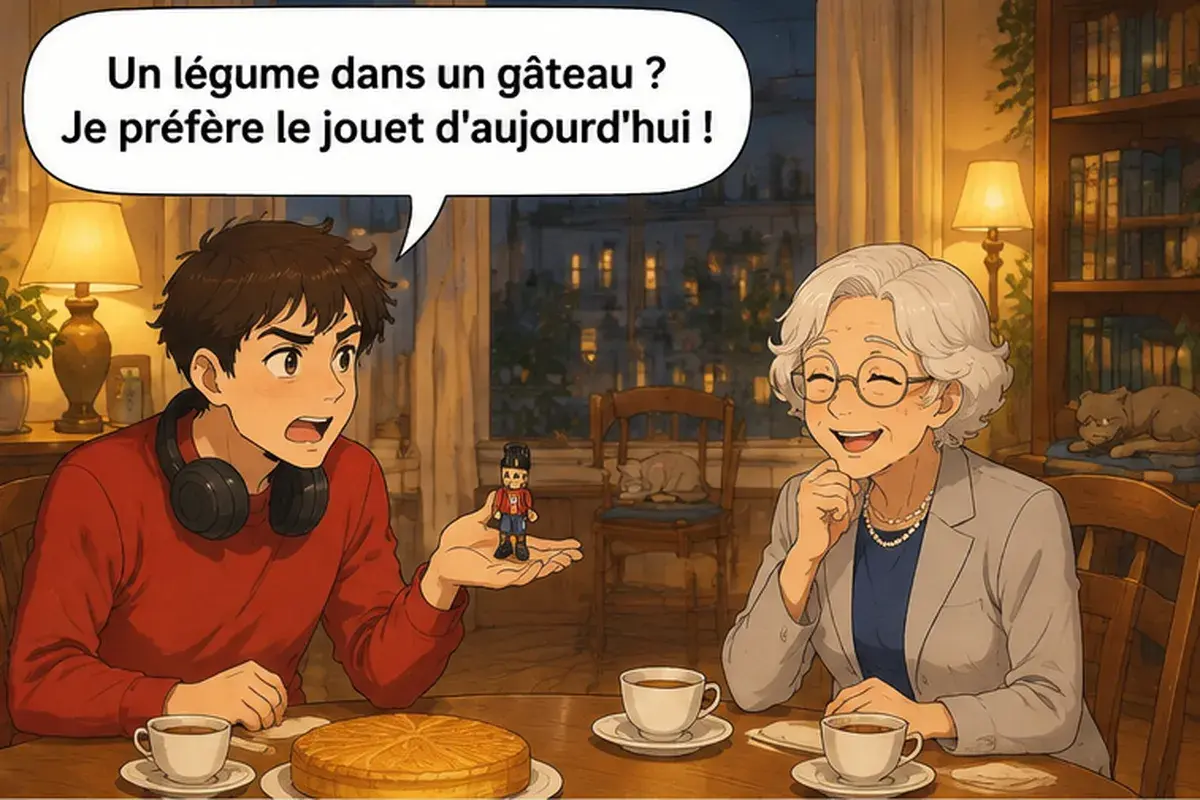
- Pacha
Un légume dans un gâteau ? Je préfère le jouet d'aujourd'hui !
A vegetable in a cake? I prefer today's toy!
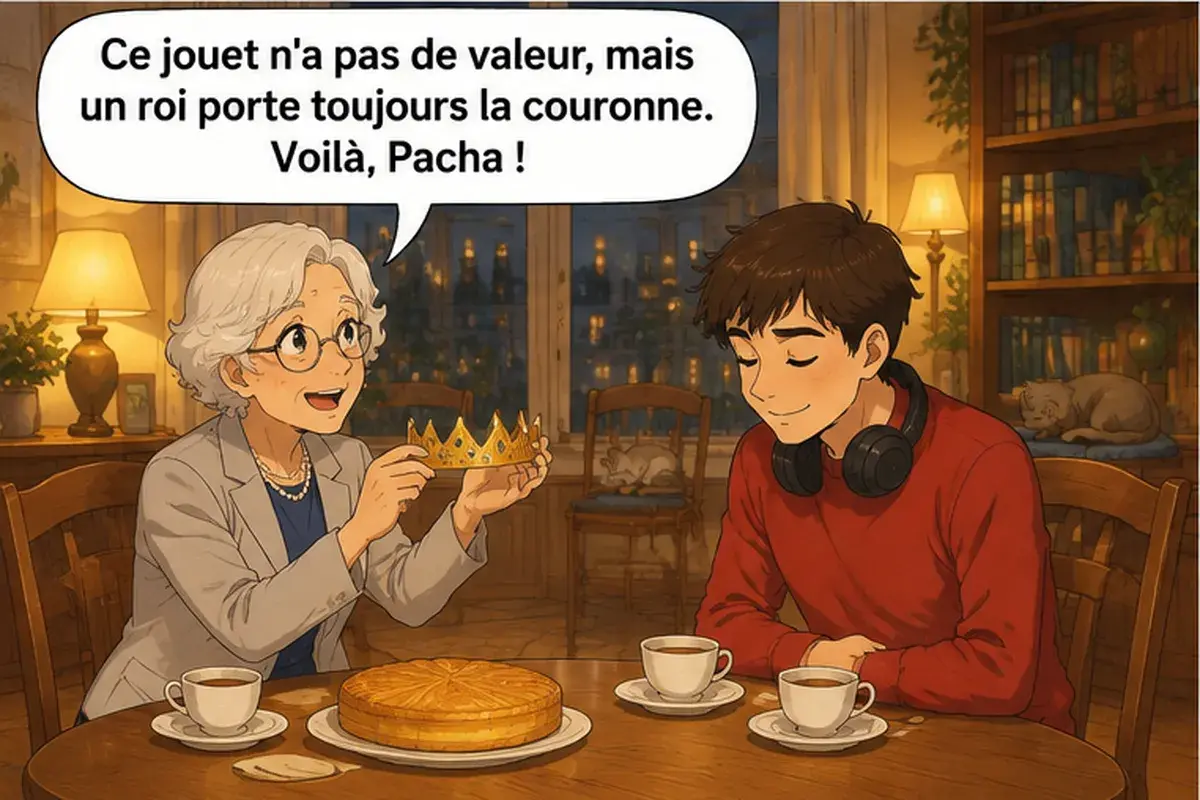
- Madame Morel
Ce jouet n'a pas de valeur, mais un roi porte toujours la couronne. Voilà, Pacha !
This toy has no value, but a king always wears the crown. Here you go, Pacha!
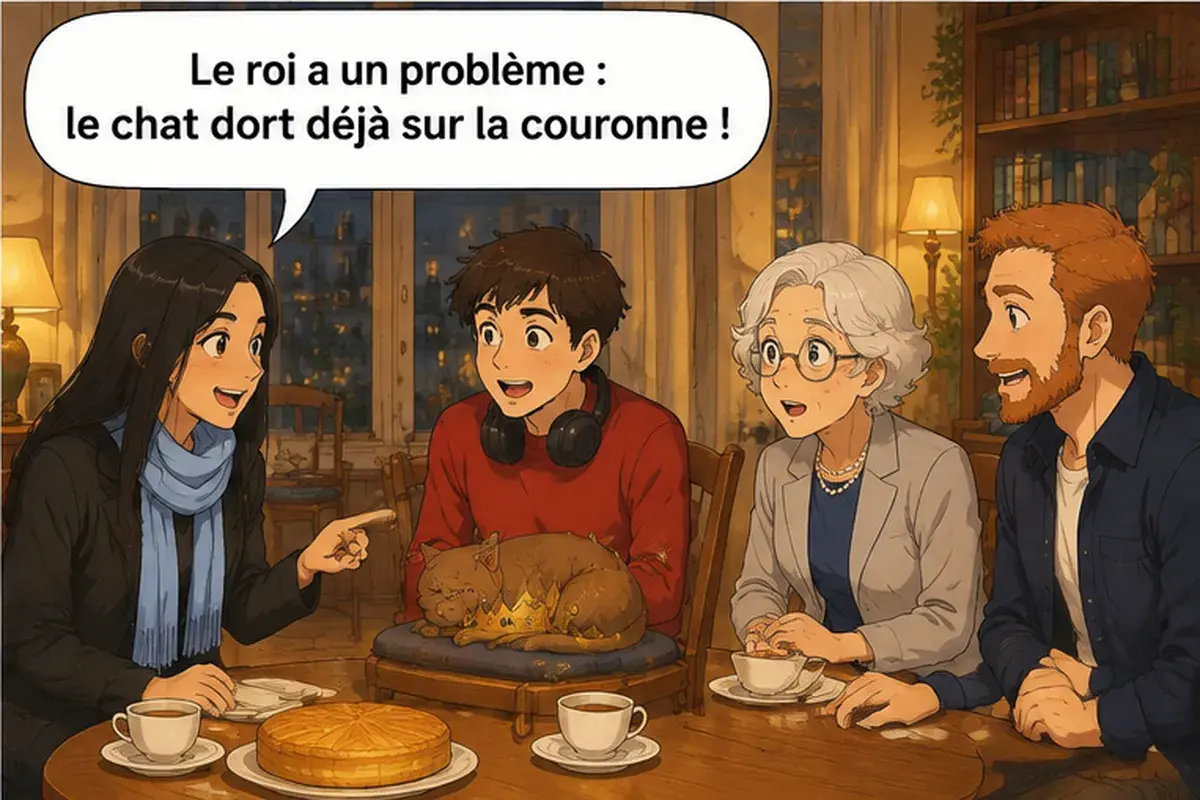
- Inès
Le roi a un problème : le chat dort déjà sur la couronne !
The king has a problem: the cat is already sleeping on the crown!
Grammar for this text
- plus jeune que Hugo et Pacha — "younger than Hugo and Pacha": plus… que is explained in the unit grammar. By tradition, the youngest person hides under the table and says who gets each piece — here that's Inès.
- la fève — a small figurine hidden in the galette des rois (king cake, eaten in January). Whoever gets it becomes king or queen and wears a paper crown (couronne). A real bean used to be hidden there instead of a figurine — that's why Madame Morel talks about a légume (vegetable).
- Quelqu'un le trouve, et il devient roi — here le is "it" (the toy), not an article. Devient is the il form of devenir ("to become", unit 6): it's conjugated like venir (je deviens, il devient). Roi has no article here, just like "becomes king" in English.
- Pacha ! Descends de là ! — descends is the tu command of descendre ("to get down"), the same form as tu descends; de là — "from there". Madame Morel is calling the cat, but Pacha the man jumps: they have the same name.
- On ne dit pas « plus bonne » — the comparative of bon is meilleur (here meilleure, because galette is feminine), and the comparative of bien is mieux. Madame Morel corrects everyone, as always.
- on en vend deux cents — en here means "of them" (the cakes), and vend is the il / on form of vendre ("to sell", like attendre: the d is silent). Deux cents has an s because no other number comes after cent.
- En mille neuf cent soixante-dix — a year is said like an ordinary number: 1970. J'avais vingt ans — "I was twenty" (unit 4).
Words and grammar of the unit: Compare prices and choose what to buy.
Learn the words from the texts with flashcards
In the app, you can tap any word in a text to see its translation, forms and examples, and new words stick with flashcards. 15 minutes a day.
Start for freeEverything is open for free. No card needed to sign up.