

French dialogue with translation · A2 · 16 lines
Je voudrais ouvrir un compte I'd like to open an account
Comic · 16 panels
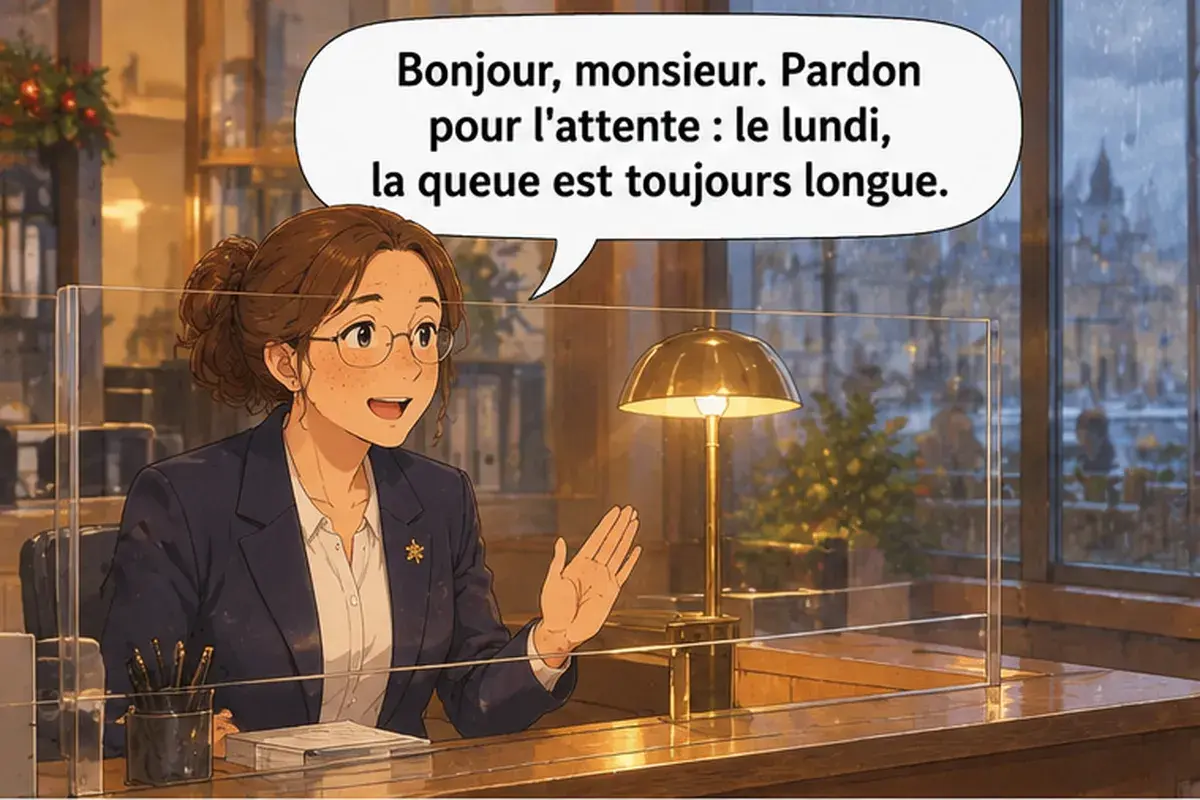
- Madame Petit
Bonjour, monsieur. Pardon pour l'attente : le lundi, la queue est toujours longue.
Hello, sir. Sorry for the wait: on Mondays, the line is always long.
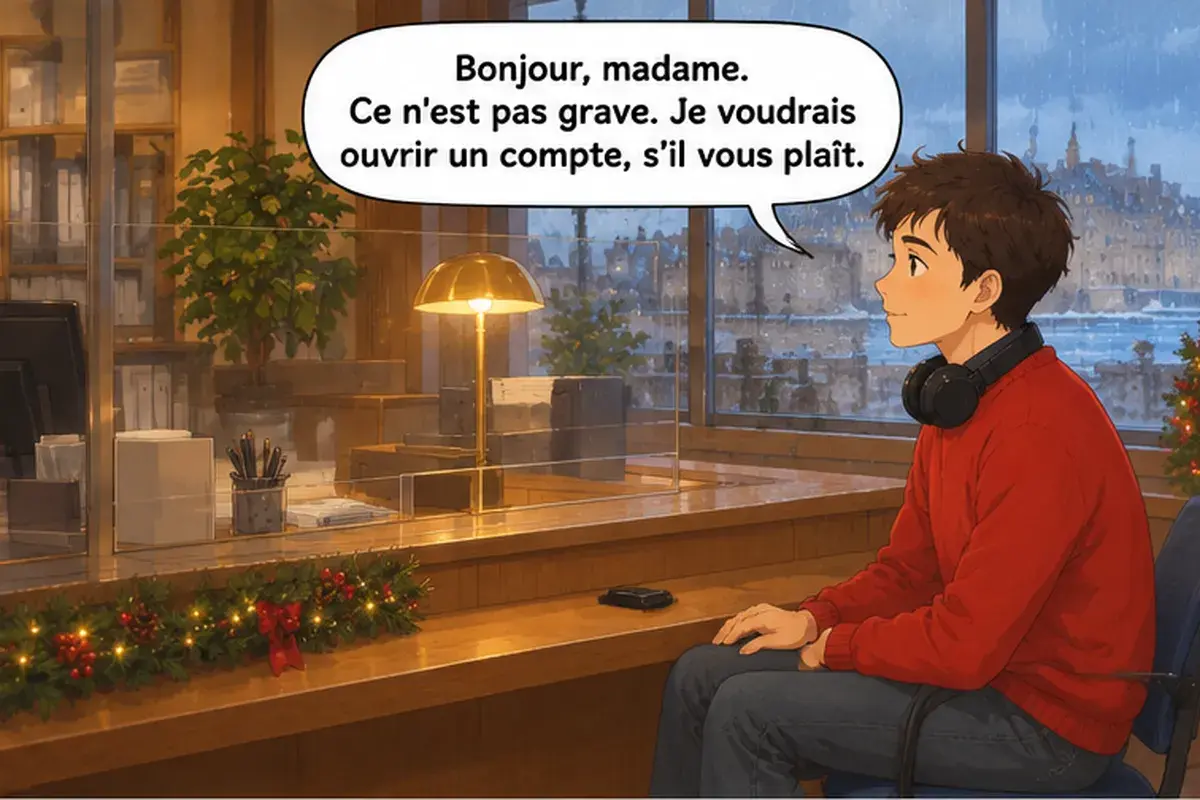
- Pacha
Bonjour, madame. Ce n'est pas grave. Je voudrais ouvrir un compte, s'il vous plaît.
Hello, ma'am. That's all right. I'd like to open an account, please. (formal)
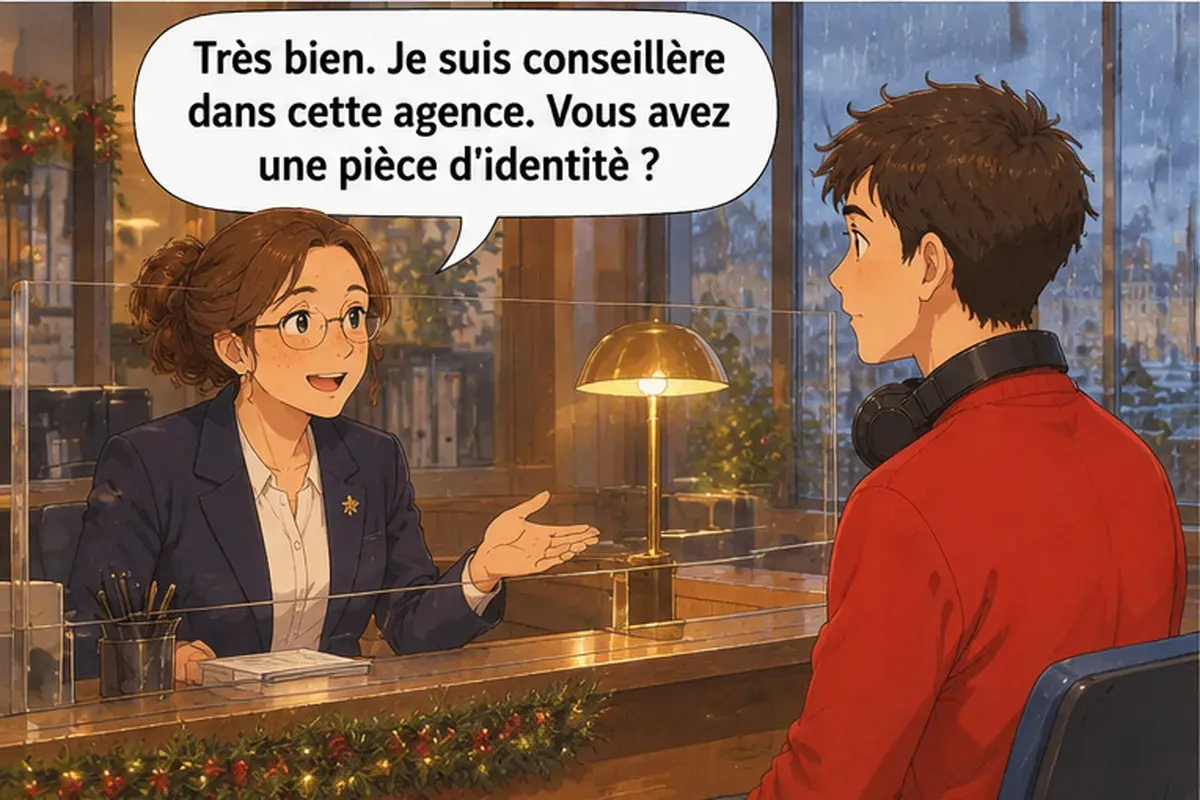
- Madame Petit
Très bien. Je suis conseillère dans cette agence. Vous avez une pièce d'identité ?
Very well. I'm an advisor at this branch (woman speaking). Do you have ID? (formal)
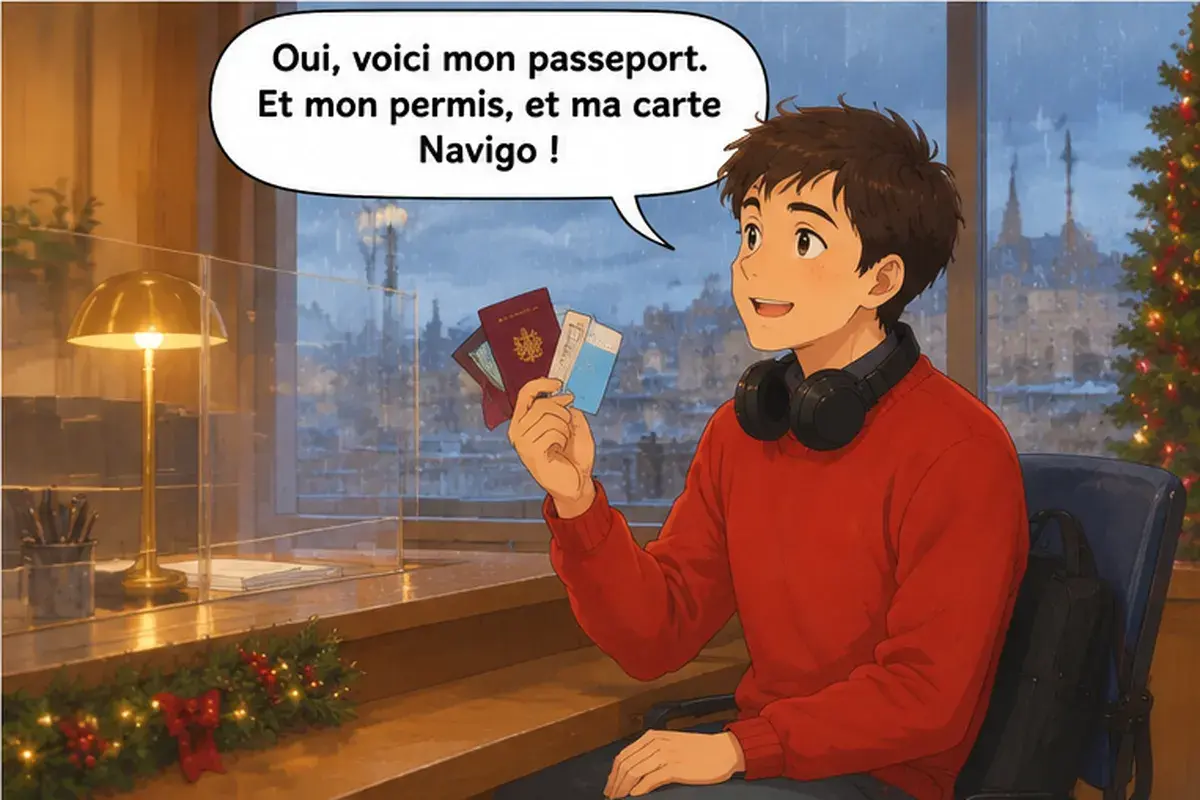
- Pacha
Oui, voici mon passeport. Et mon permis, et ma carte Navigo !
Yes, here's my passport. And my license, and my Navigo pass!
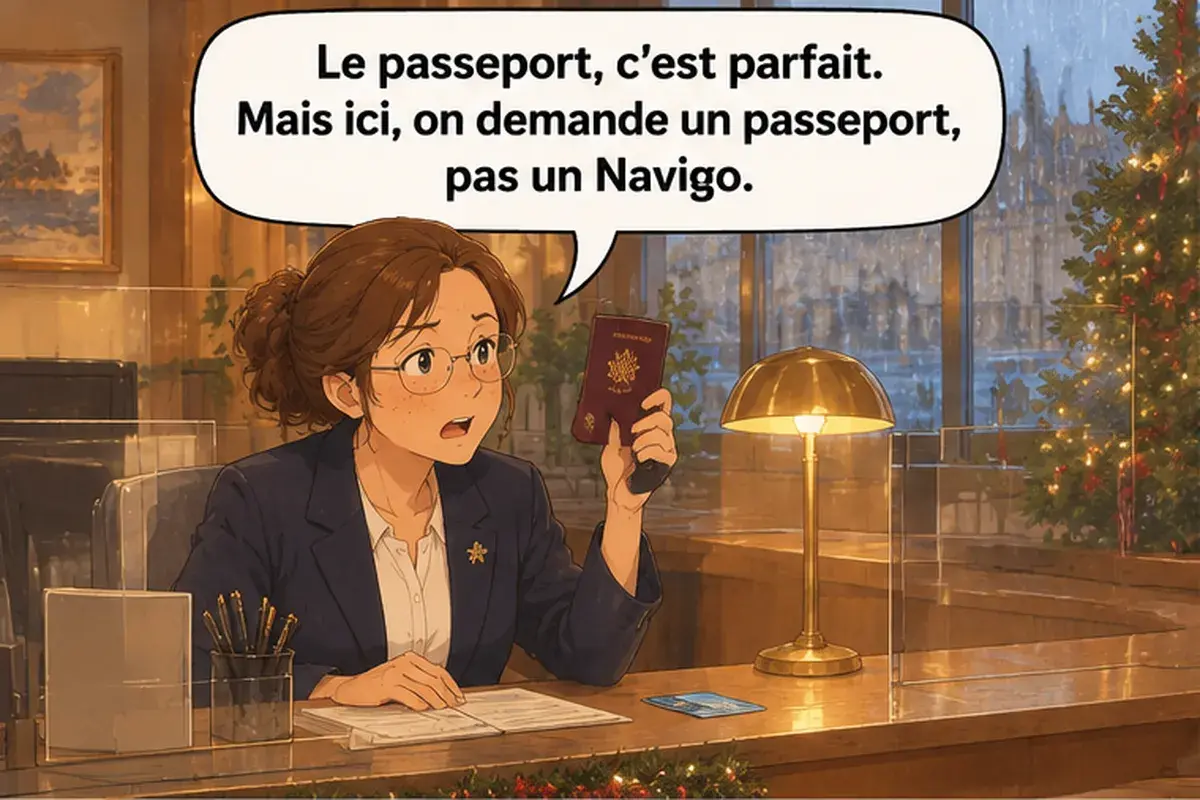
- Madame Petit
Le passeport, c'est parfait. Mais ici, on demande un passeport, pas un Navigo.
The passport is perfect. But here, we ask for a passport, not a Navigo.
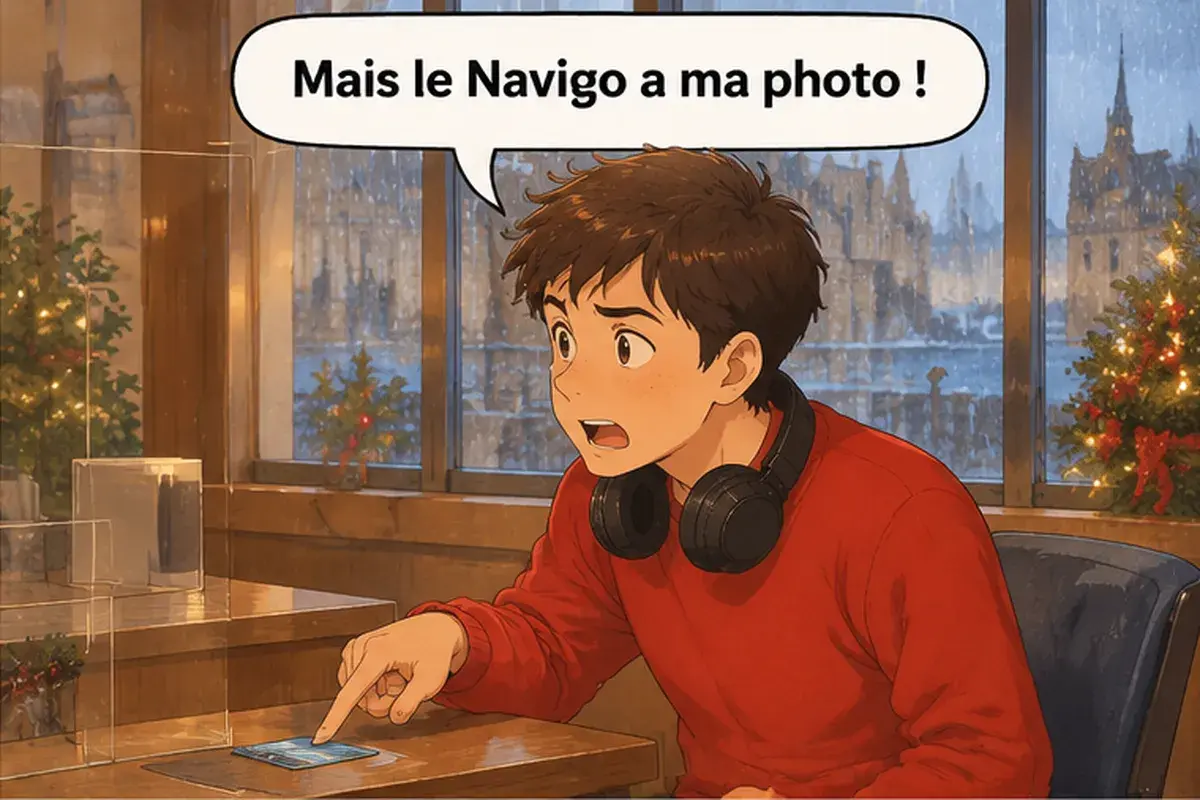
- Pacha
Mais le Navigo a ma photo !
But the Navigo has my photo on it!
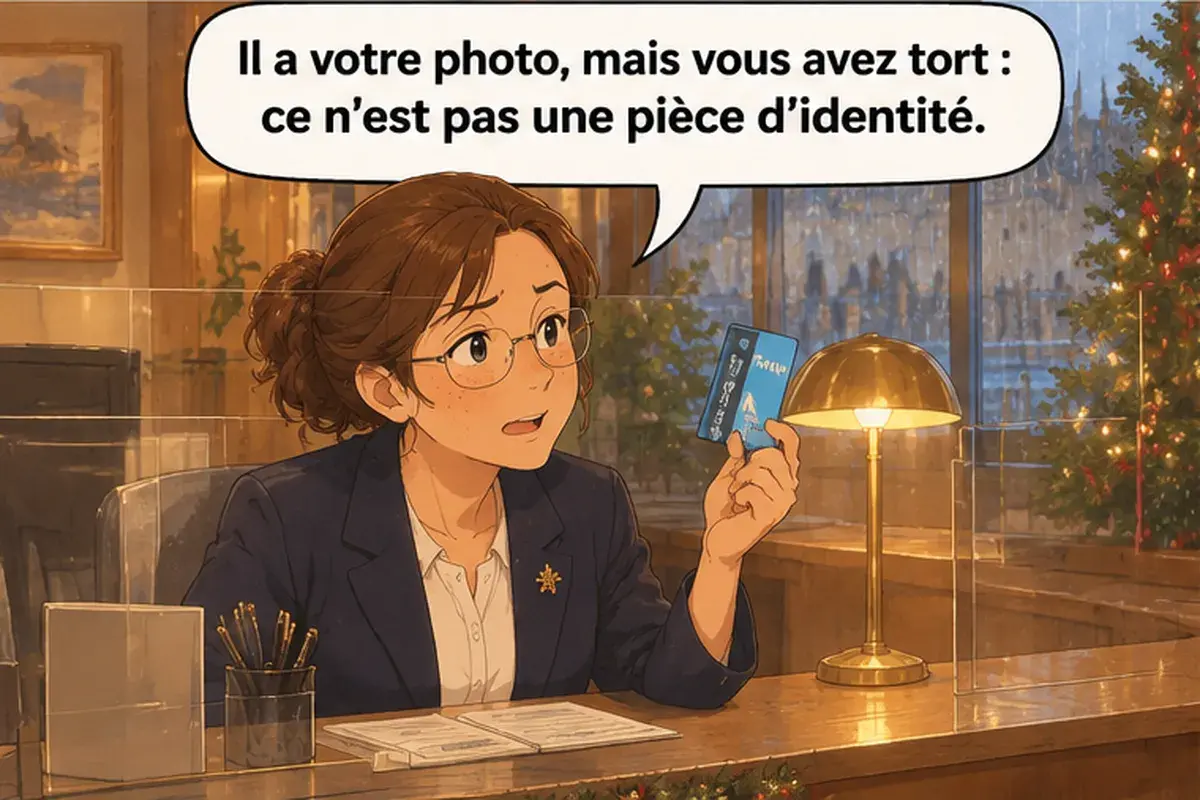
- Madame Petit
Il a votre photo, mais vous avez tort : ce n'est pas une pièce d'identité.
It has your photo, but you're wrong: it's not a form of ID. (formal)
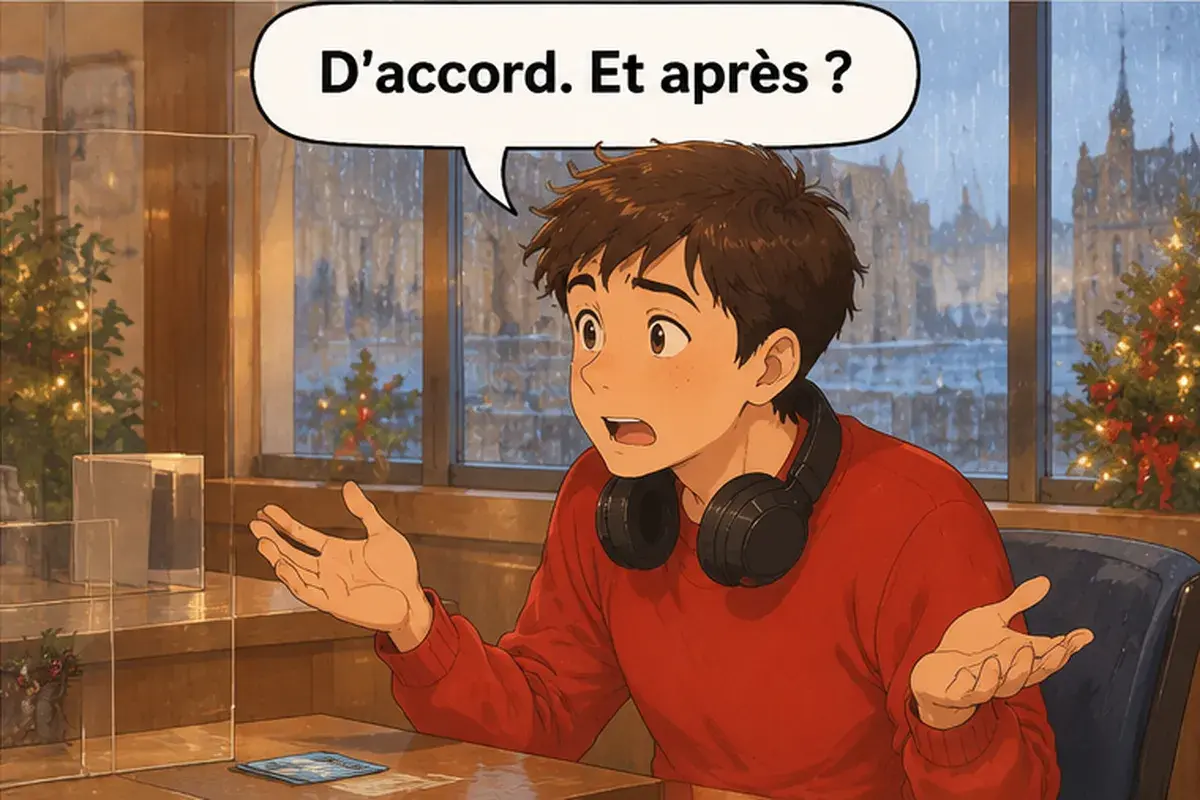
- Pacha
D'accord. Et après ?
OK. And then?
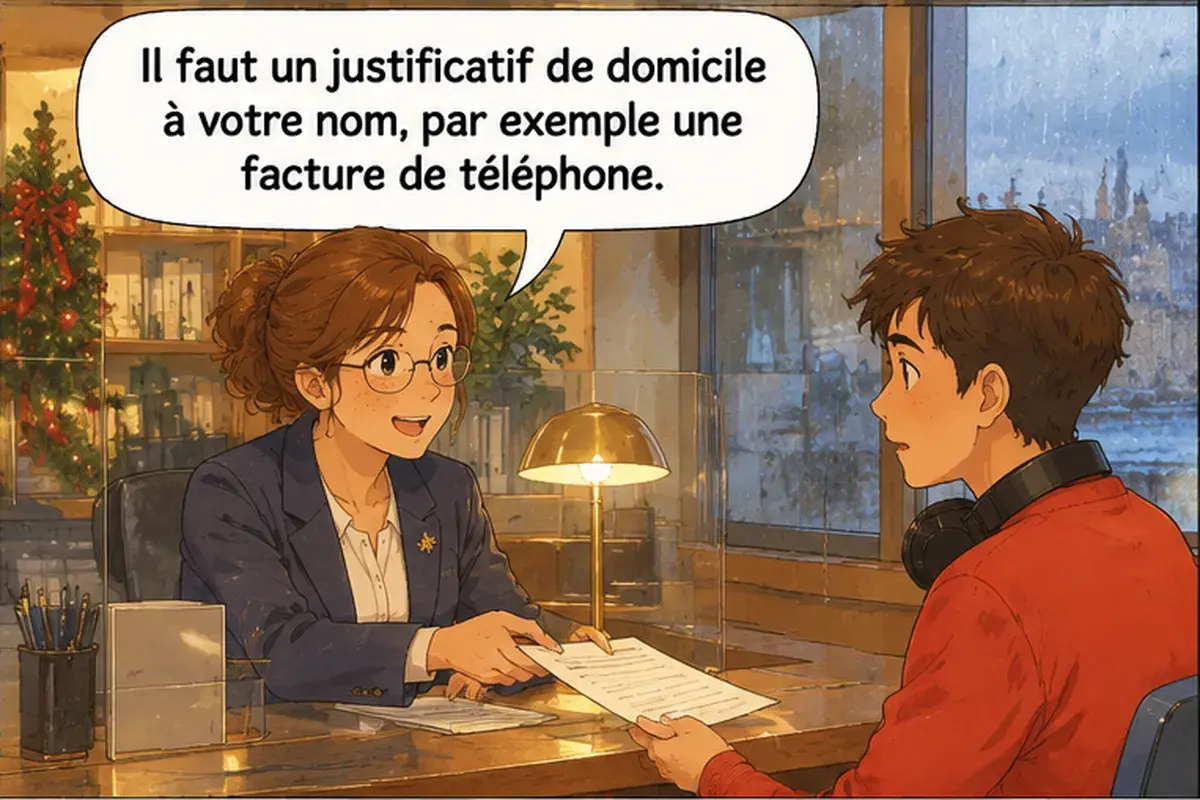
- Madame Petit
Il faut un justificatif de domicile à votre nom, par exemple une facture de téléphone.
You need proof of address in your name, for example a phone bill. (formal)
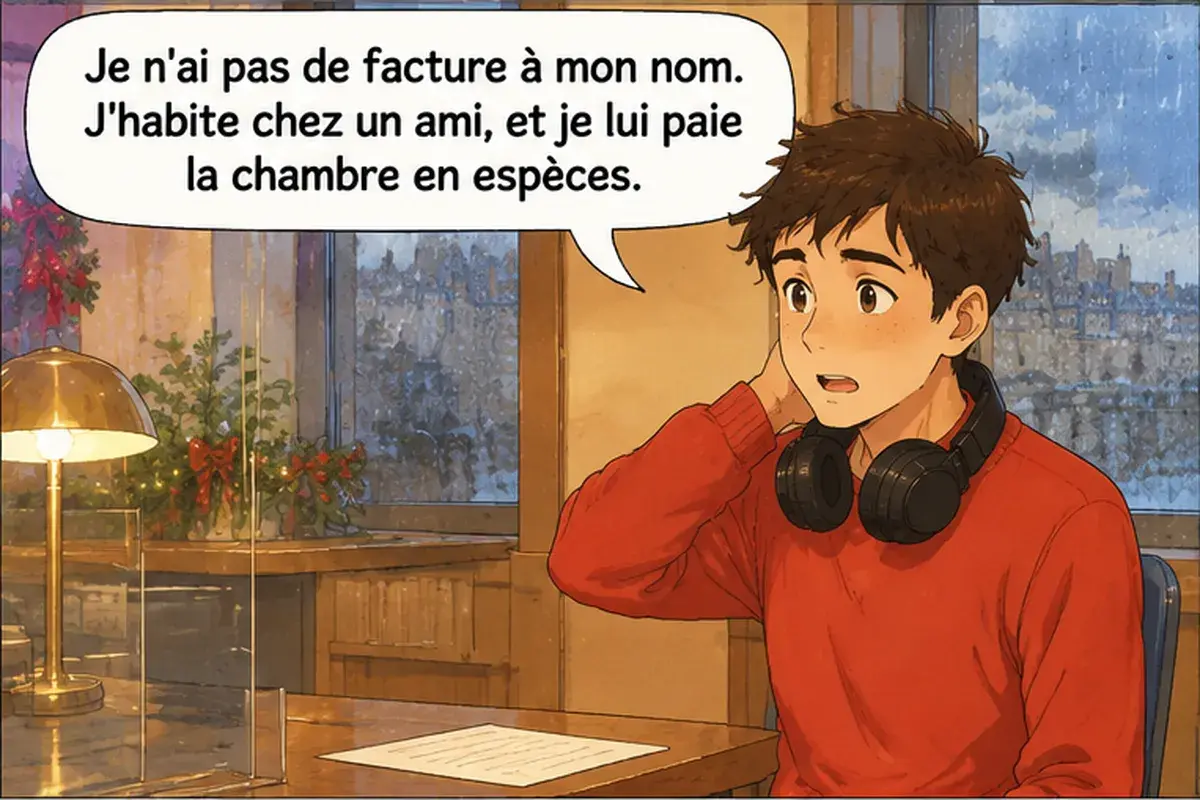
- Pacha
Je n'ai pas de facture à mon nom. J'habite chez un ami, et je lui paie la chambre en espèces.
I don't have a bill in my name. I live at a friend's place, and I pay him for the room in cash.
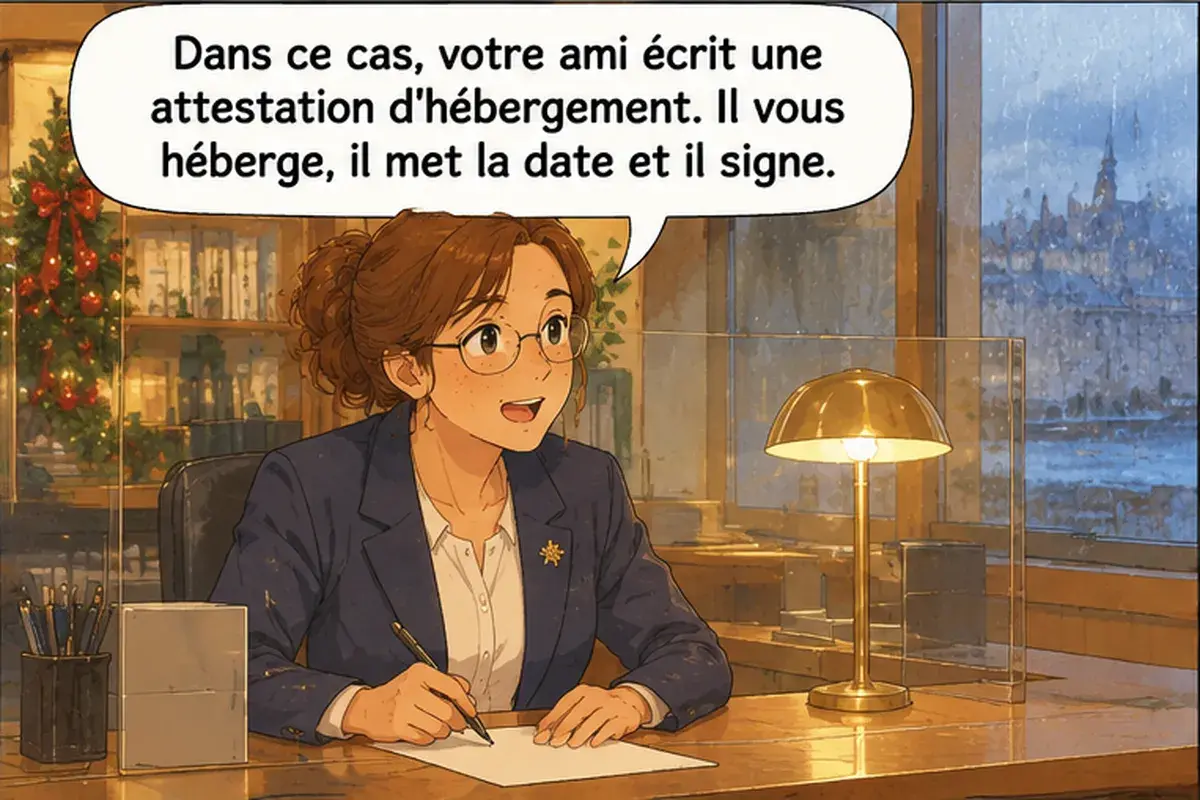
- Madame Petit
Dans ce cas, votre ami écrit une attestation d'hébergement. Il vous héberge, il met la date et il signe.
In that case, your friend writes a housing certificate. He's hosting you, he puts the date and he signs. (formal)
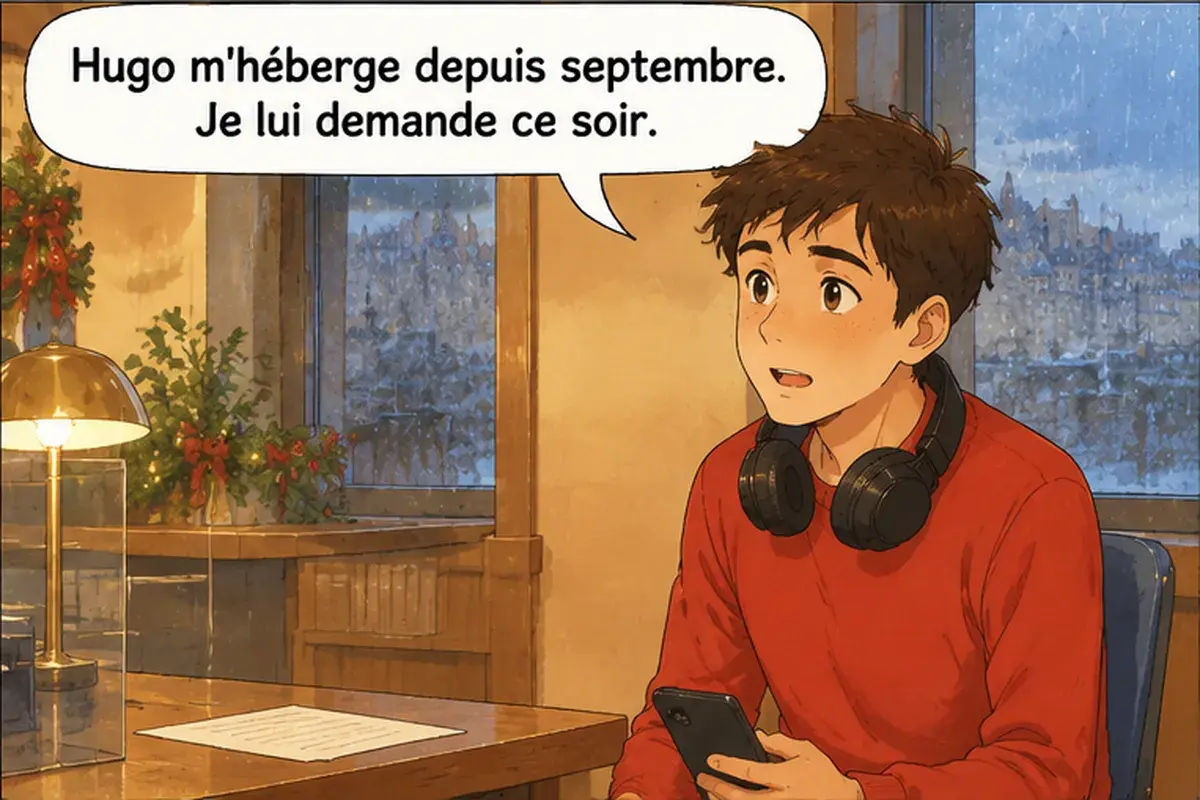
- Pacha
Hugo m'héberge depuis septembre. Je lui demande ce soir.
Hugo has been hosting me since September. I'll ask him tonight.
- Madame Petit
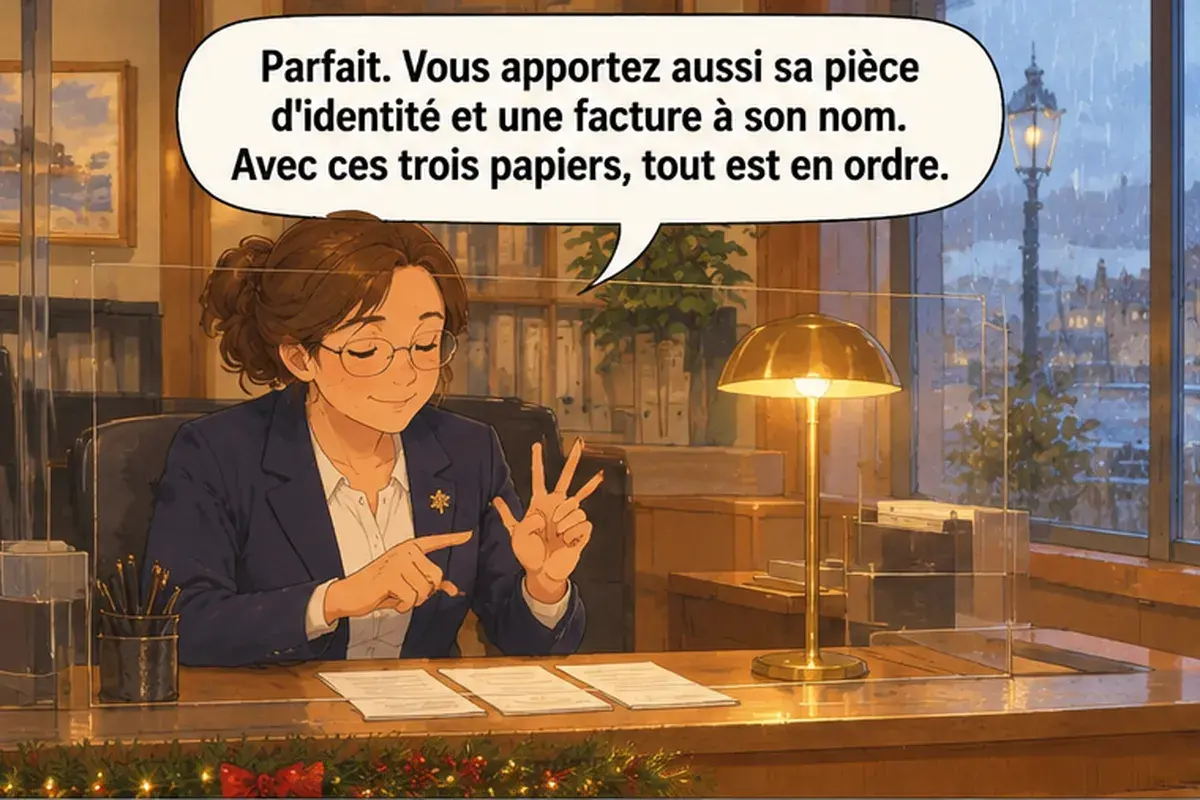
Parfait. Vous apportez aussi sa pièce d'identité et une facture à son nom. Avec ces trois papiers, tout est en ordre.
Perfect. You also bring his ID and a bill in his name. With these three papers, everything's in order. (formal)
- Pacha
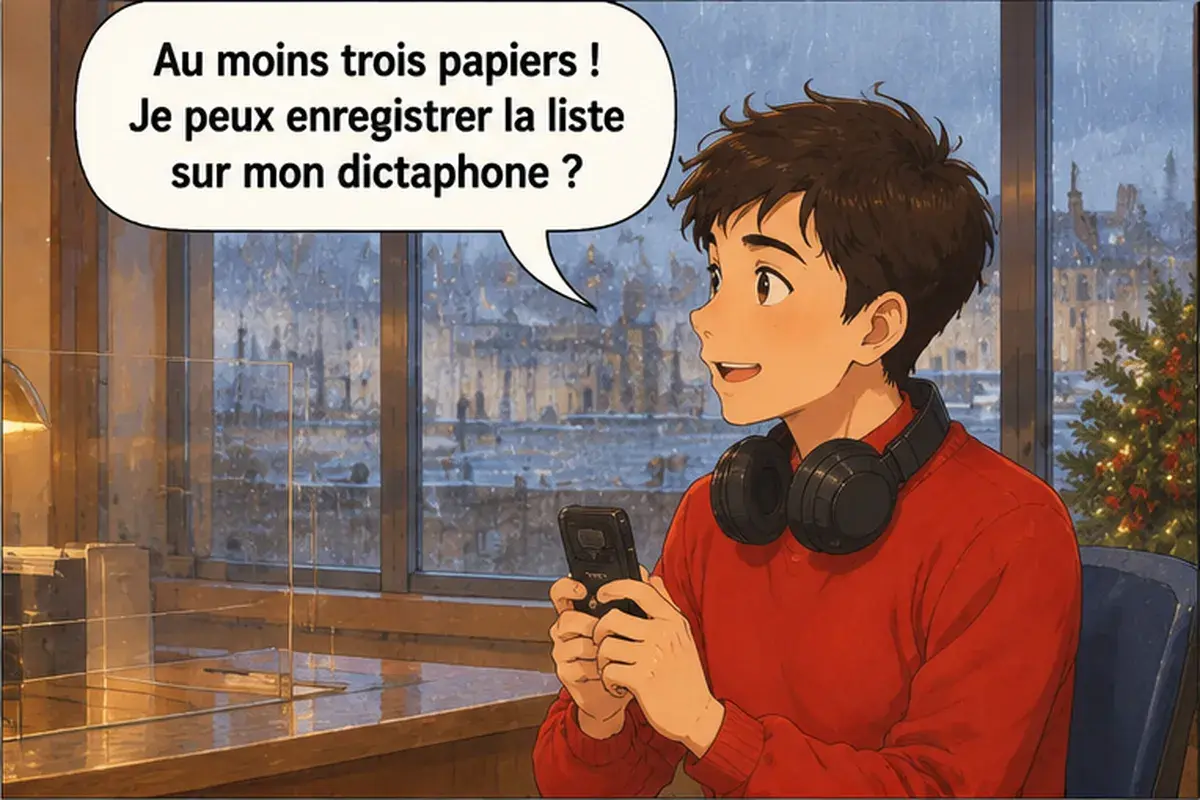
Au moins trois papiers ! Je peux enregistrer la liste sur mon dictaphone ?
At least three papers! Can I record the list on my voice recorder?
- Madame Petit
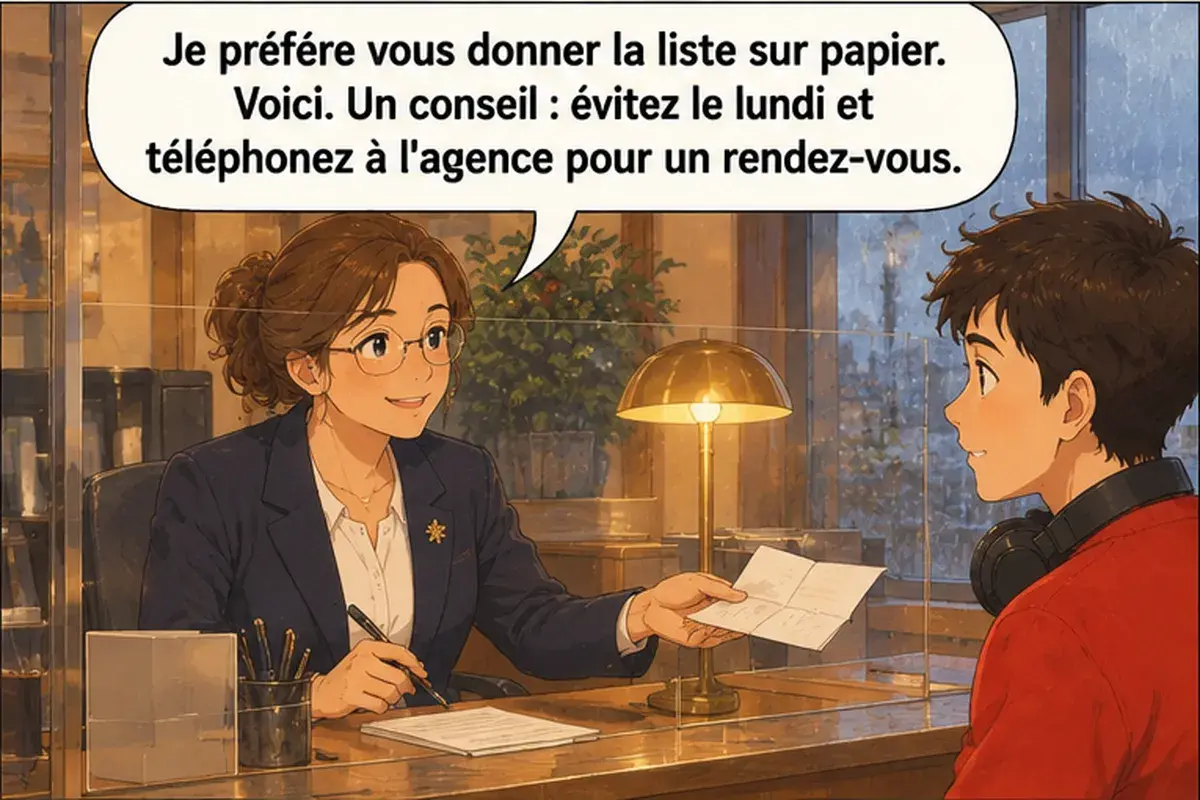
Je préfère vous donner la liste sur papier. Voici. Un conseil : évitez le lundi et téléphonez à l'agence pour un rendez-vous.
I'd rather give you the list on paper. Here you go. Some advice: avoid Mondays and call the branch for an appointment. (formal)
- Pacha
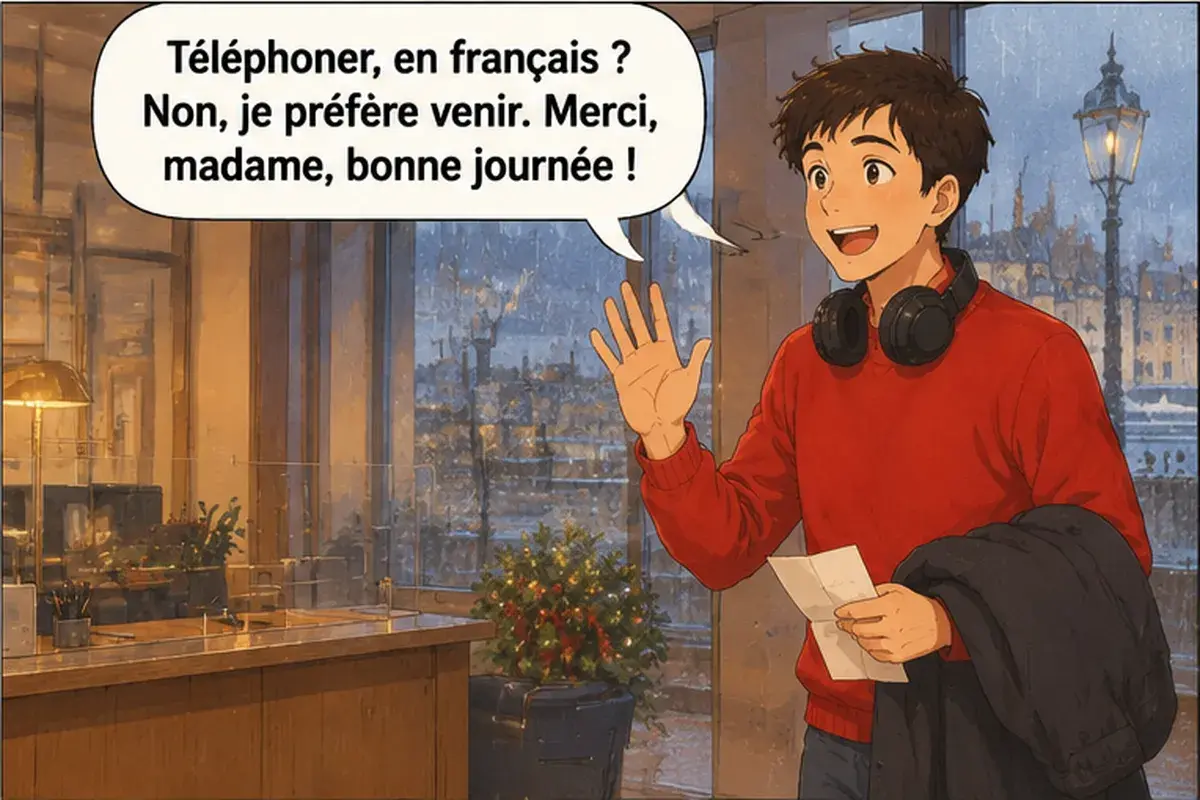
Téléphoner, en français ? Non, je préfère venir. Merci, madame, bonne journée !
Call, in French? No, I'd rather come in. Thank you, ma'am, have a nice day!
Grammar for this text
- la queue est toujours longue — la queue — "line" (and also "tail", like Pacha the cat's). To wait in line is faire la queue. In queue, qu sounds like k and eu is like the u in "fur" without the r. l'attente — the wait; Pardon pour l'attente — sorry for the wait.
- on demande un passeport, pas un Navigo — on here isn't the friendly "we": it states a rule, "this is what's asked for here" (see the unit grammar).
- vous avez tort — avoir tort — to be wrong (literally "to have wrong"). The opposite is avoir raison — to be right (A1, unit 16). English uses "be", French uses avoir: not ✗ vous êtes tort.
- un justificatif de domicile — proof of address: a paper with your name and address, like a phone or electricity bill or a rent receipt, usually less than three months old. une attestation d'hébergement — a housing certificate from the person you live with: "this person lives at my place", with a date and a signature. Don't confuse it with attestation d'accueil: the town hall issues that one when a French person invites a foreigner to visit.
- je lui paie la chambre — lui — "to him" (instead of à Hugo); it goes before the verb (more in the unit grammar). paie — "I pay": the je form of payer (A1, unit 6). In verbs ending in -ayer, the y can turn into i before a silent ending.
- Hugo m'héberge — héberger — to host, to put someone up. m' = me + héberge: the e drops before a vowel. The h is silent.
- évitez le lundi, téléphonez à l'agence — vous commands (unit 5) of éviter (to avoid) and téléphoner (to call). You call someone with à: téléphoner à.
Words and grammar of the unit: Open a bank account.
Learn the words from the texts with flashcards
In the app, you can tap any word in a text to see its translation, forms and examples, and new words stick with flashcards. 15 minutes a day.
Start for freeEverything is open for free. No card needed to sign up.