

French dialogue with translation · A1 · 14 lines
Je voudrais trois billets pour Trouville, aller-retour I'd like three tickets to Trouville, round trip
Comic · 14 panels
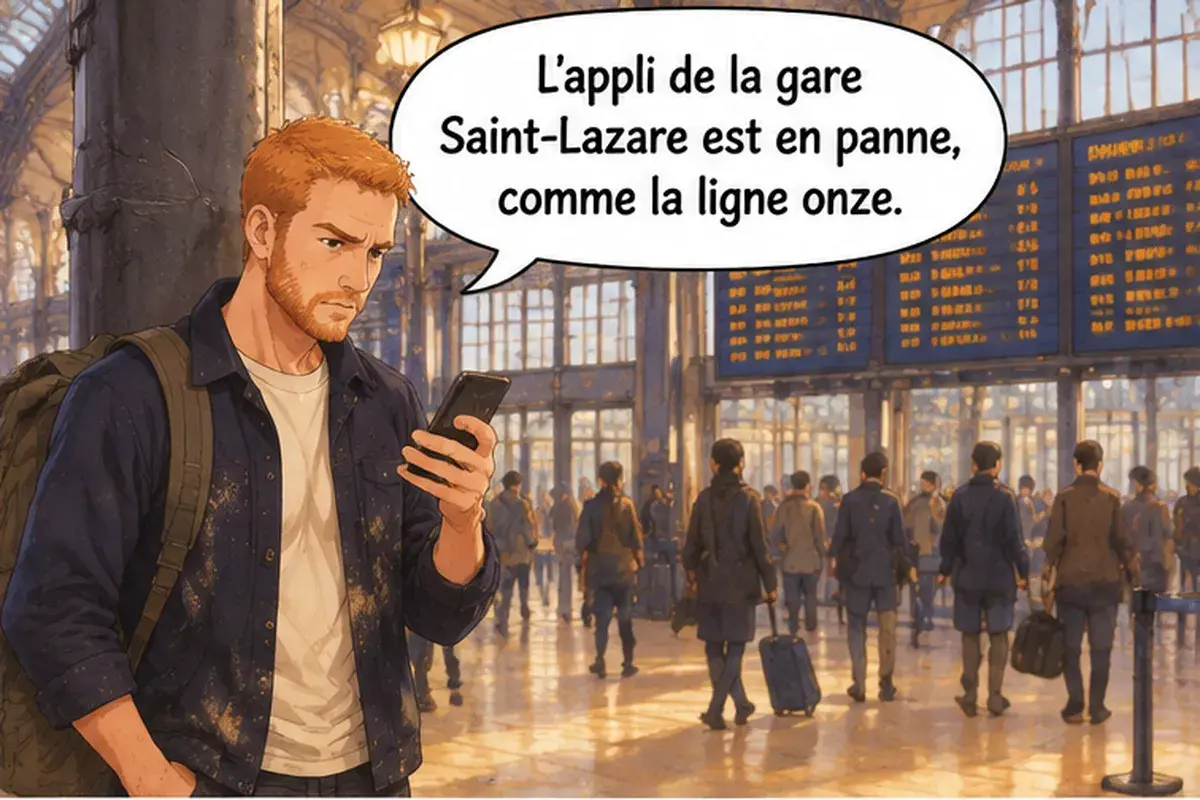
- Hugo
L'appli de la gare Saint-Lazare est en panne, comme la ligne onze.
The Saint-Lazare station app is down, like line eleven.
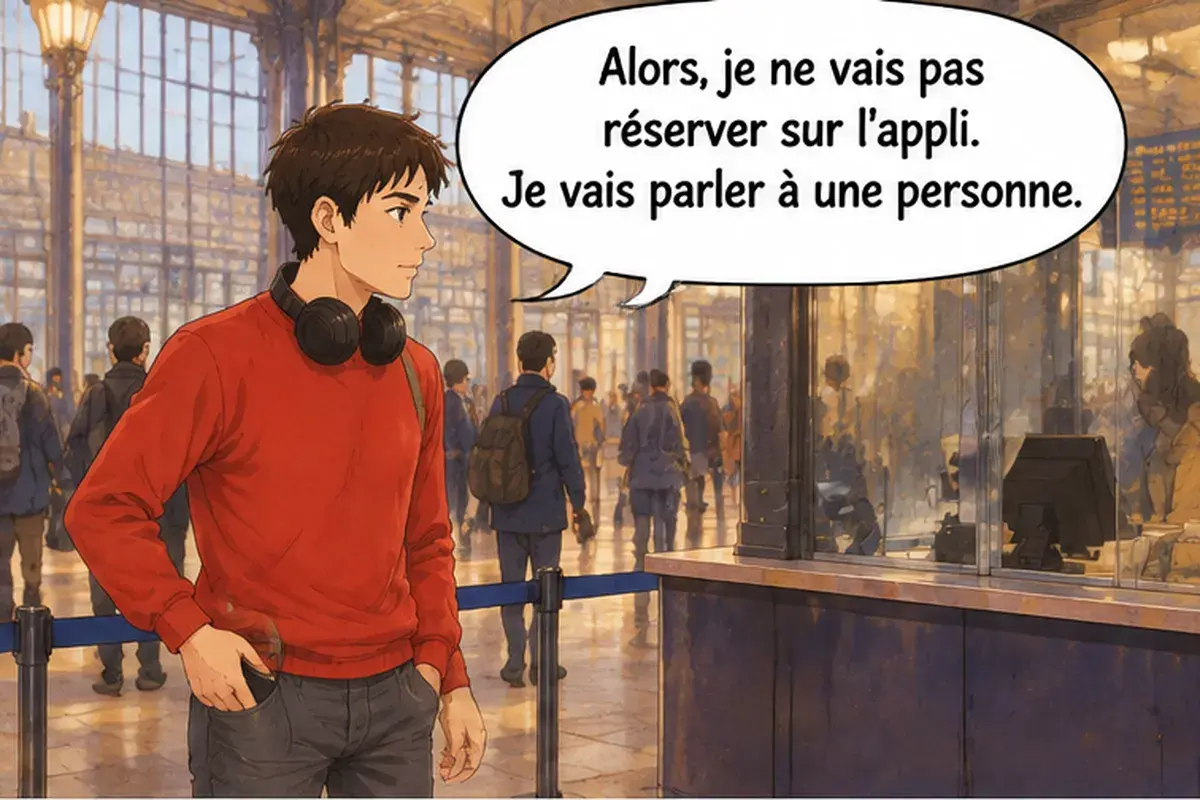
- Pacha
Alors, je ne vais pas réserver sur l'appli. Je vais parler à une personne.
So I'm not going to book on the app. I'm going to talk to a person.
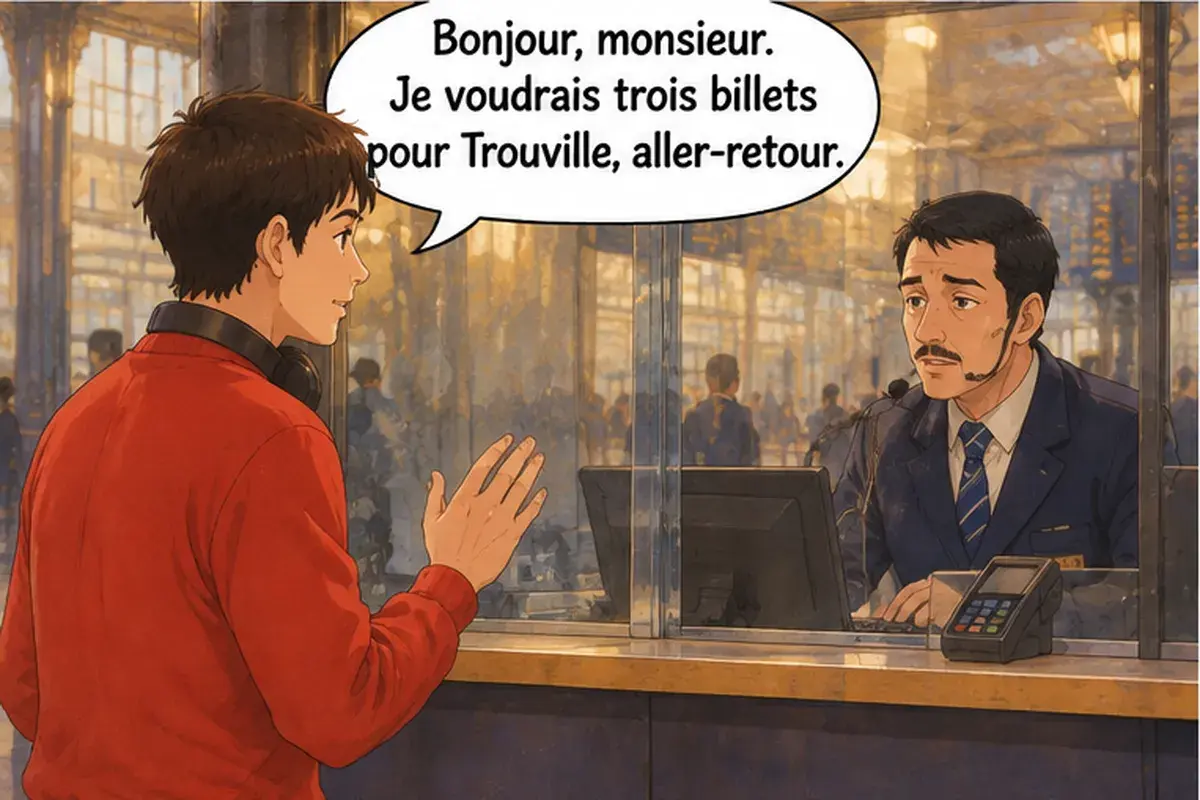
- Pacha
Bonjour, monsieur. Je voudrais trois billets pour Trouville, aller-retour.
Hello, sir. I'd like three tickets to Trouville, round trip.
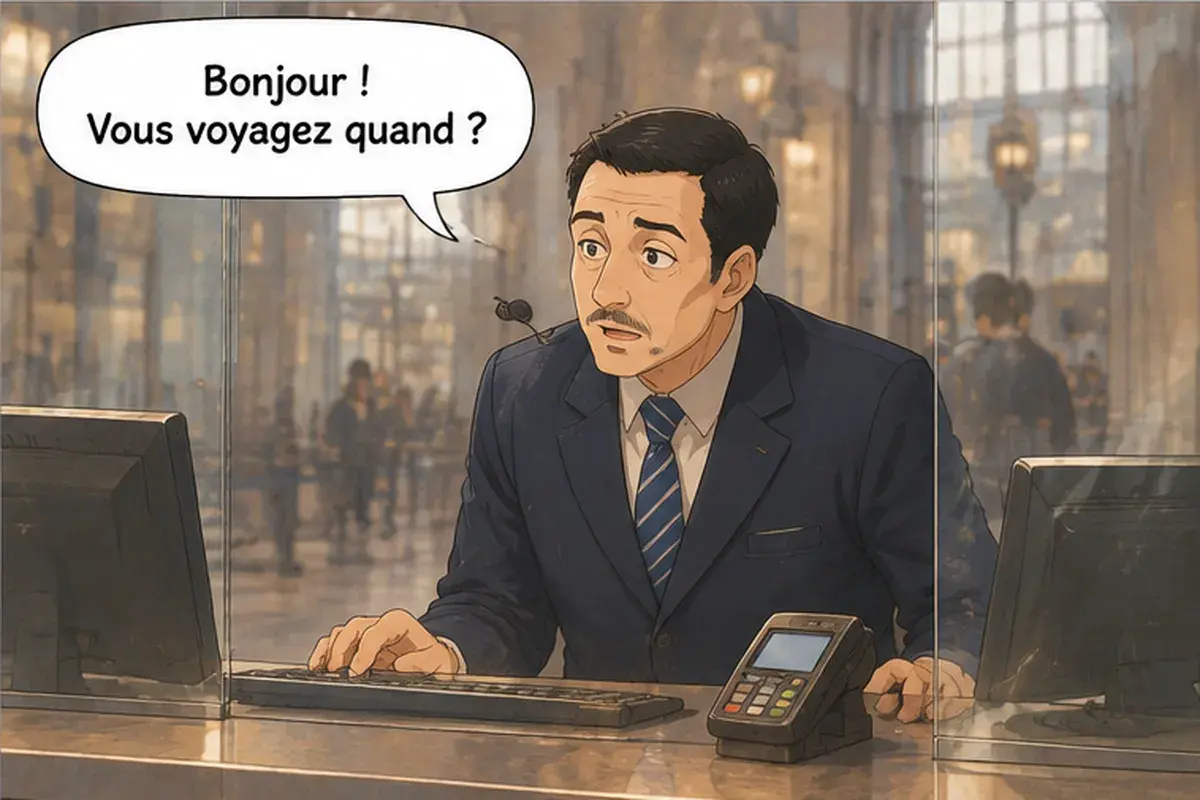
- Agent
Bonjour ! Vous voyagez quand ?
Hello! When are you traveling? (formal)
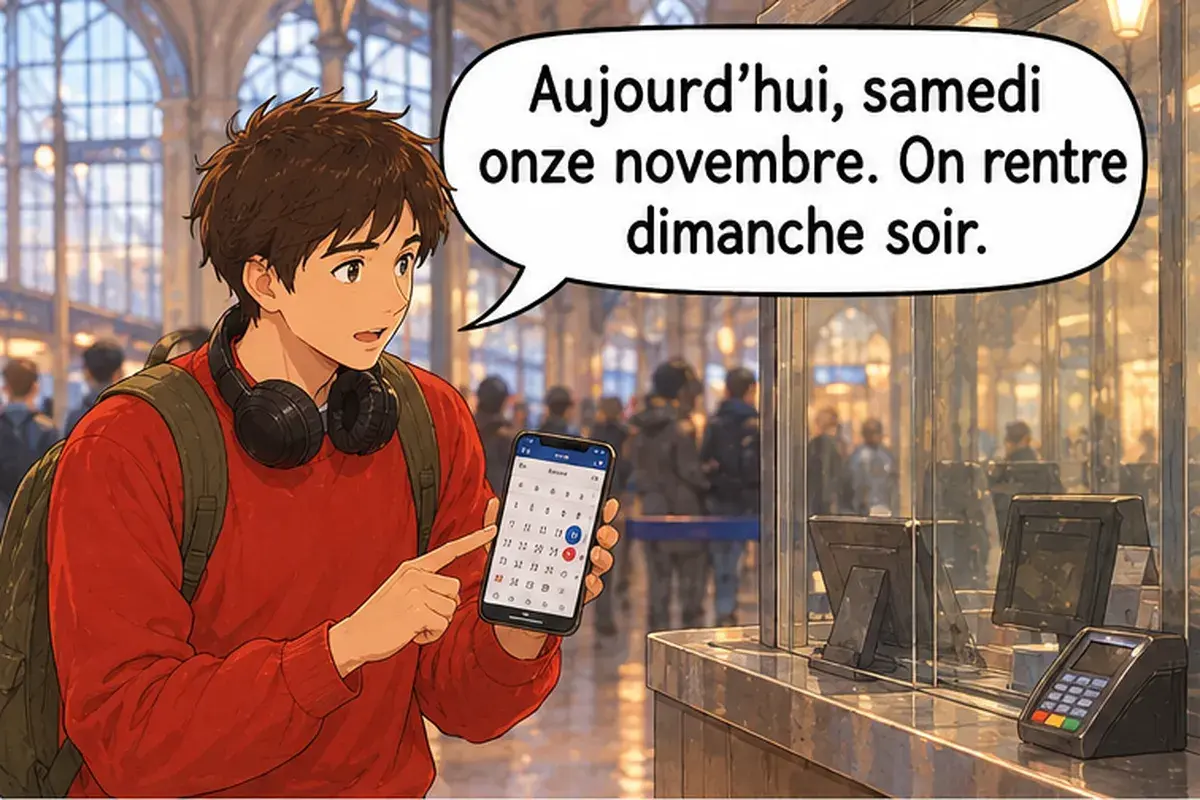
- Pacha
Aujourd'hui, samedi onze novembre. On rentre dimanche soir.
Today, Saturday, November eleventh. We're coming back Sunday evening.
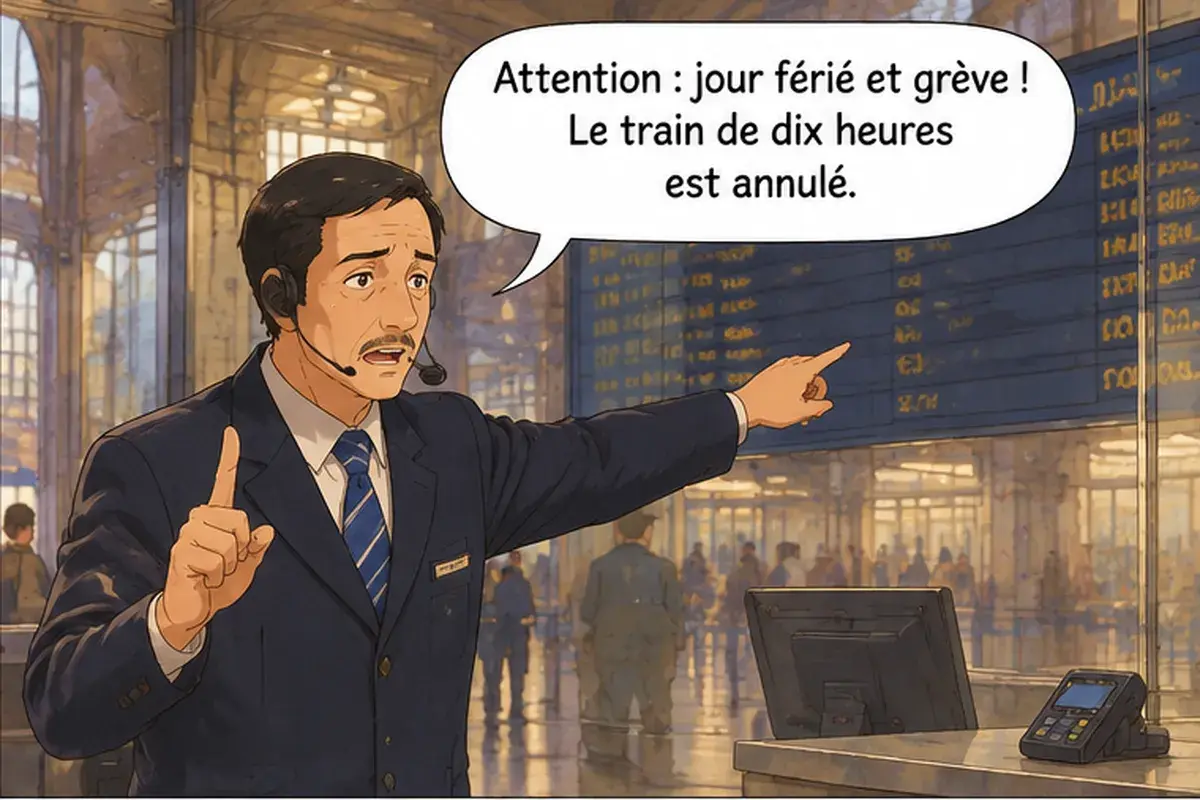
- Agent
Attention : jour férié et grève ! Le train de dix heures est annulé.
Attention: public holiday and strike! The ten o'clock train is canceled.
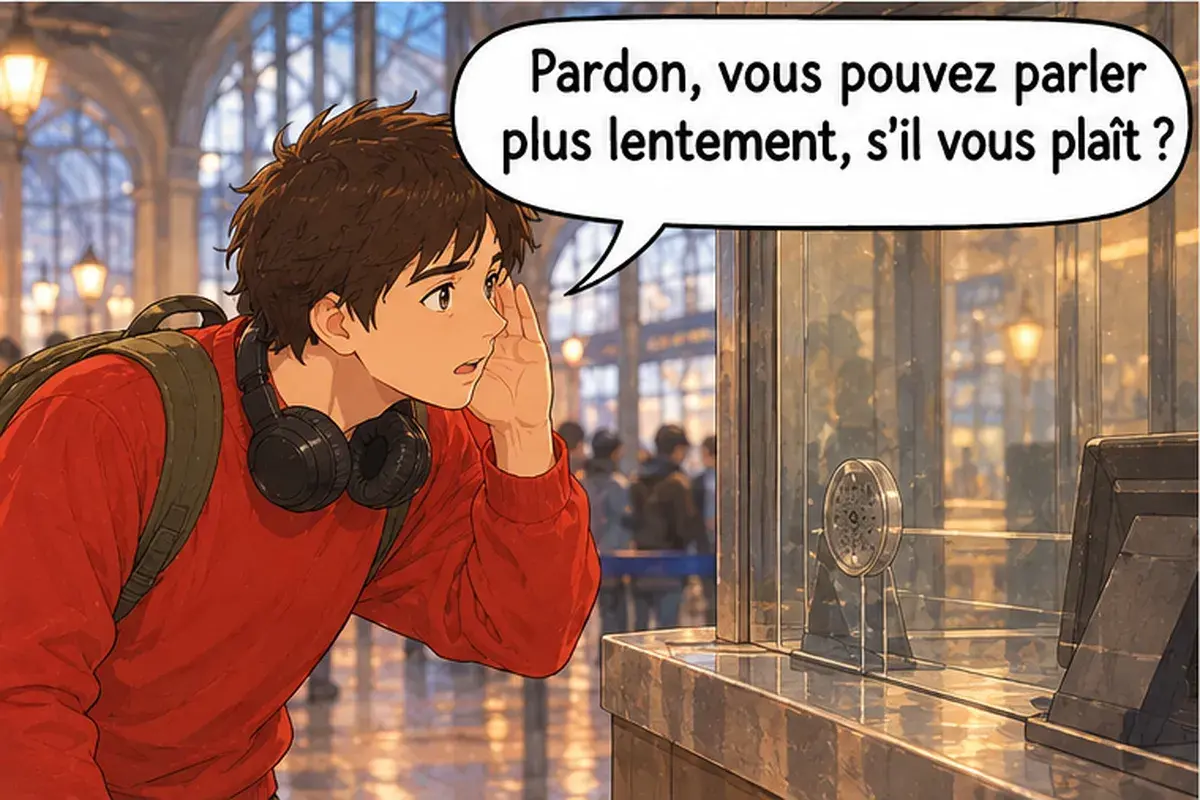
- Pacha
Pardon, vous pouvez parler plus lentement, s'il vous plaît ?
Sorry, can you speak more slowly, please? (formal)
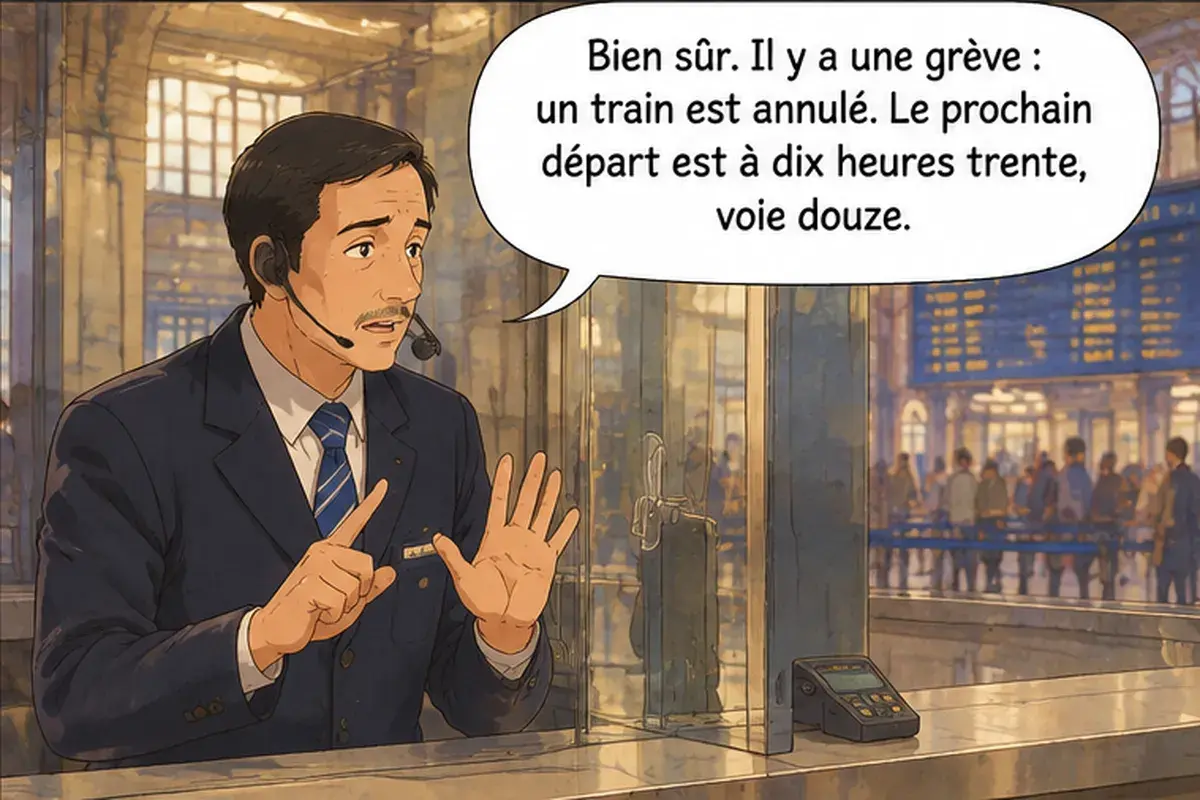
- Agent
Bien sûr. Il y a une grève : un train est annulé. Le prochain départ est à dix heures trente, voie douze.
Of course. There's a strike: one train is canceled. The next departure is at ten thirty, track twelve.
- Pacha
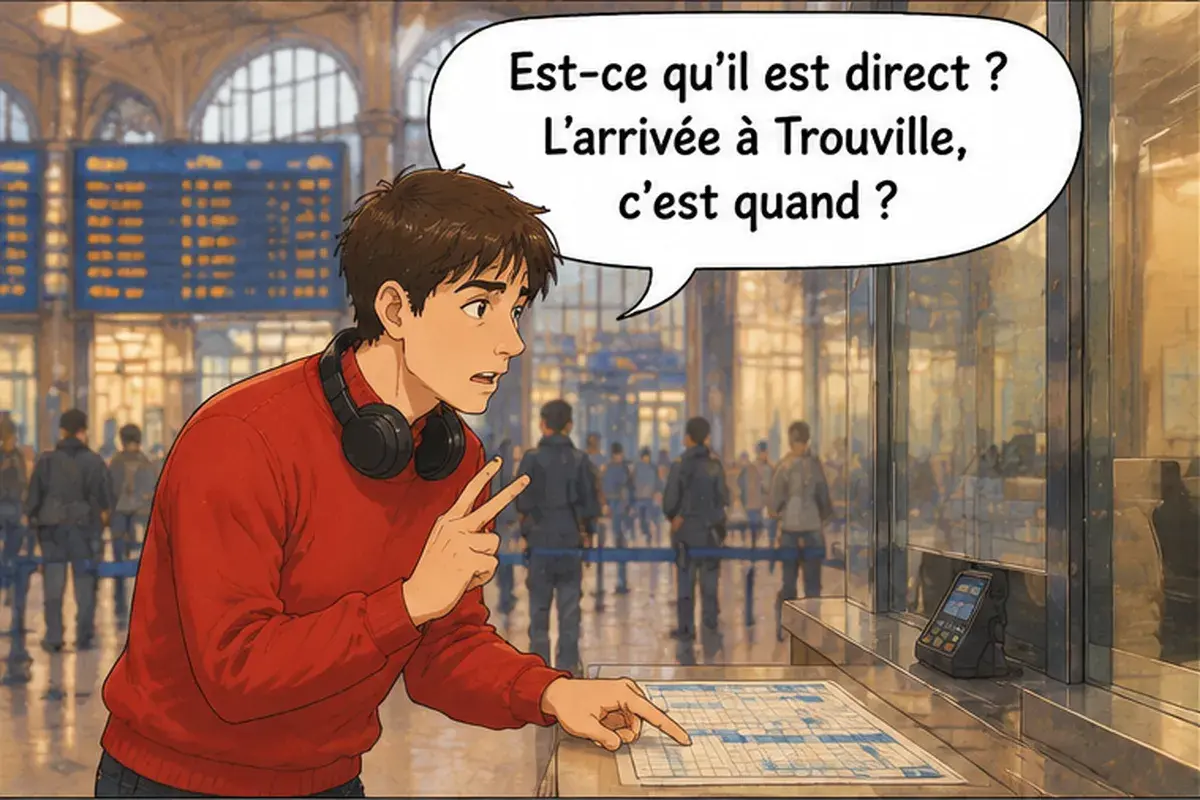
Est-ce qu'il est direct ? L'arrivée à Trouville, c'est quand ?
Is it direct? When's the arrival in Trouville?
- Agent
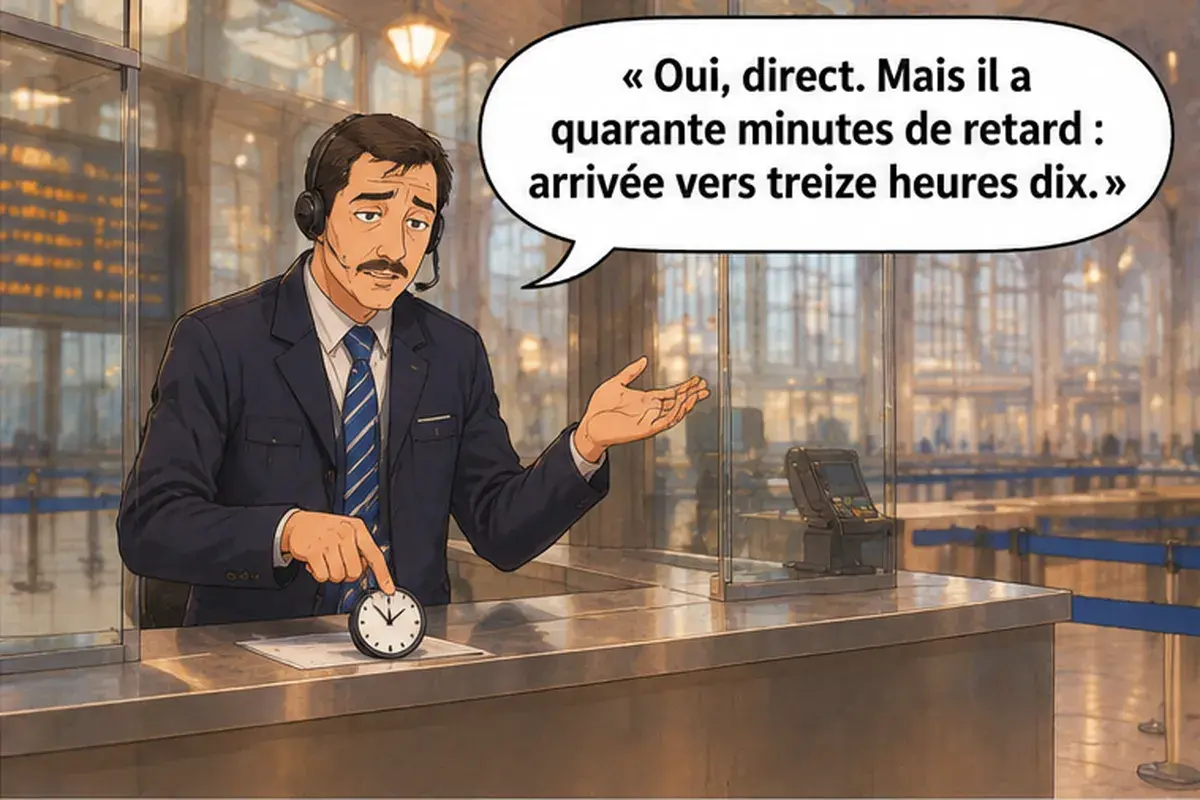
Oui, direct. Mais il a quarante minutes de retard : arrivée vers treize heures dix.
Yes, direct. But it's forty minutes late: arrival around 1:10 p.m.
- Inès
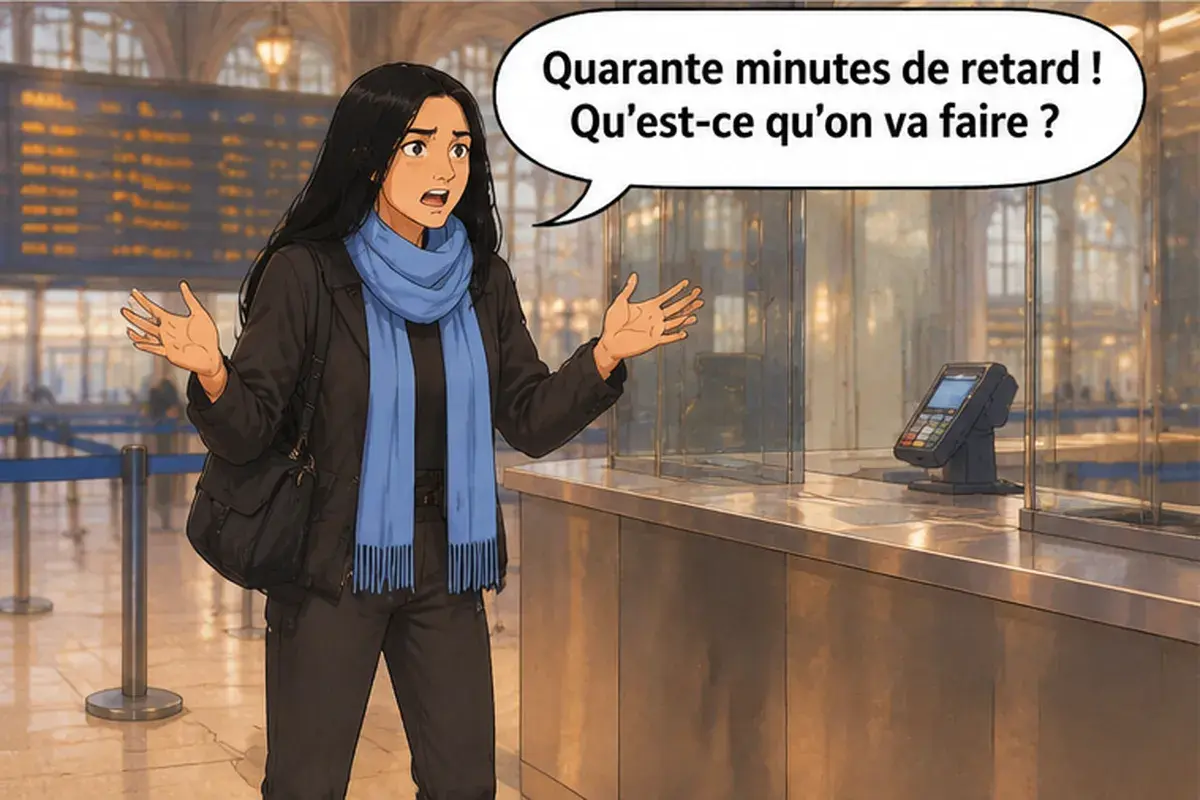
Quarante minutes de retard ! Qu'est-ce qu'on va faire ?
Forty minutes late! What are we going to do?
- Hugo
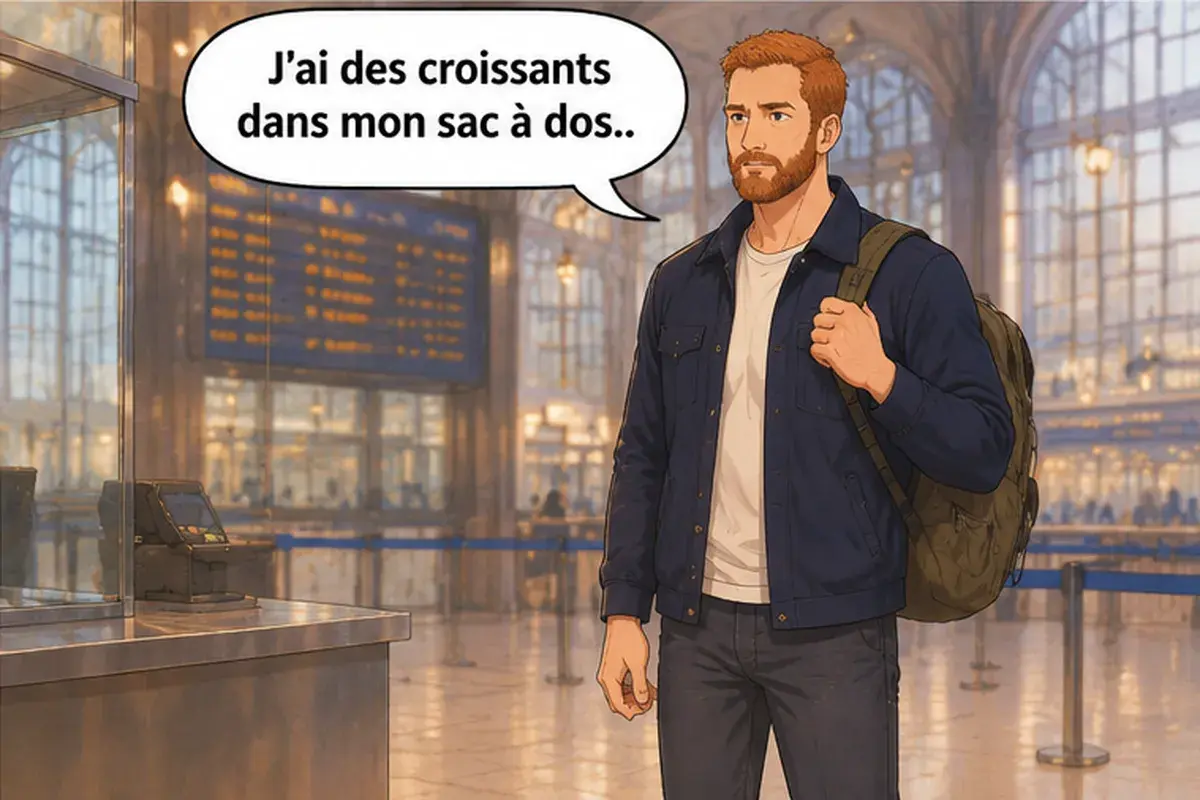
J'ai des croissants dans mon sac à dos.
I have croissants in my backpack.
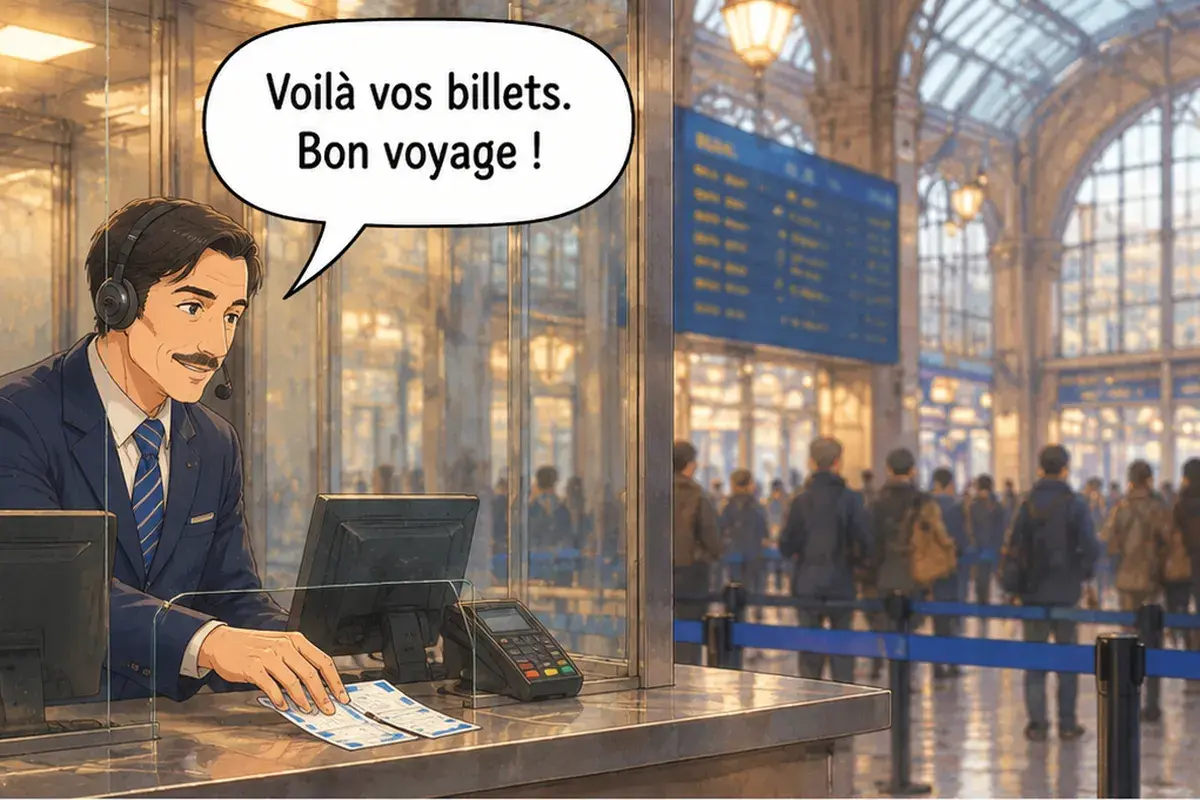
- Agent
Voilà vos billets. Bon voyage !
Here are your tickets. Have a good trip! (formal)

- Pacha
Merci, monsieur. Hugo, tu as combien de croissants ?
Thank you, sir. Hugo, how many croissants do you have?
Grammar for this text
- Je ne vais pas réserver sur l'appli. Je vais parler à une personne. — "I'm not going to book... I'm going to talk...". vais is the je form of aller (to go); aller + infinitive means "be going to". In the negative, ne and pas go around vais: je ne vais pas réserver. More in the first grammar block.
- Qu'est-ce qu'on va faire ? — "what are we going to do?". qu'est-ce que (what) drops its e before on; on va — "we're going to" (va is the form of aller for on, il, elle).
- Vous voyagez quand ? and L'arrivée à Trouville, c'est quand ? — the question word goes at the end, as in conversation. Est-ce qu'il est direct ? asks the same kind of question with est-ce que (before il it's est-ce qu'il).
- Attention : jour férié et grève ! — an announcement with no verbs: "attention: public holiday and strike". That's how stations announce things and write signs.
- Le train de dix heures — "the ten o'clock train": the departure time comes after de. And treize heures dix — stations use the 24-hour clock: 13:10, not "ten past one".
- il a quarante minutes de retard — "it's forty minutes late". Literally "it has forty minutes of delay" (avoir... de retard). il is the train here.
- voie douze — voie is the track the train stands on; the number comes after the word, with no article. quai is the platform where passengers wait.
- On rentre dimanche soir — "we're coming back Sunday evening": here on means "we". And French needs no word for English "on" before a day: just dimanche soir.
Words and grammar of the unit: Buy a train ticket.
Learn the words from the texts with flashcards
In the app, you can tap any word in a text to see its translation, forms and examples, and new words stick with flashcards. 15 minutes a day.
Start for freeEverything is open for free. No card needed to sign up.