

French dialogue with translation · A1 · 14 lines
Vous savez où est l'école Molière ? Do you know where the Molière school is?
Comic · 14 panels
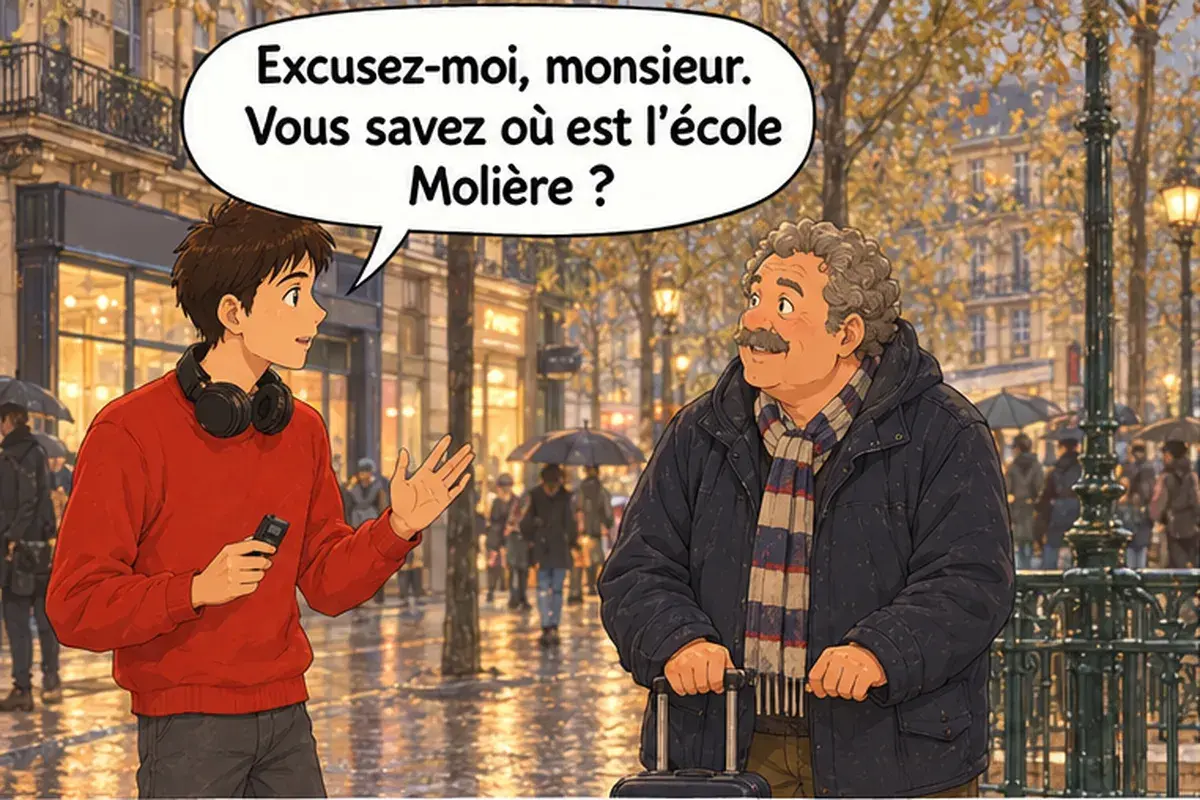
- Pacha
Excusez-moi, monsieur. Vous savez où est l'école Molière ?
Excuse me, sir. Do you know where the Molière school is? (formal)
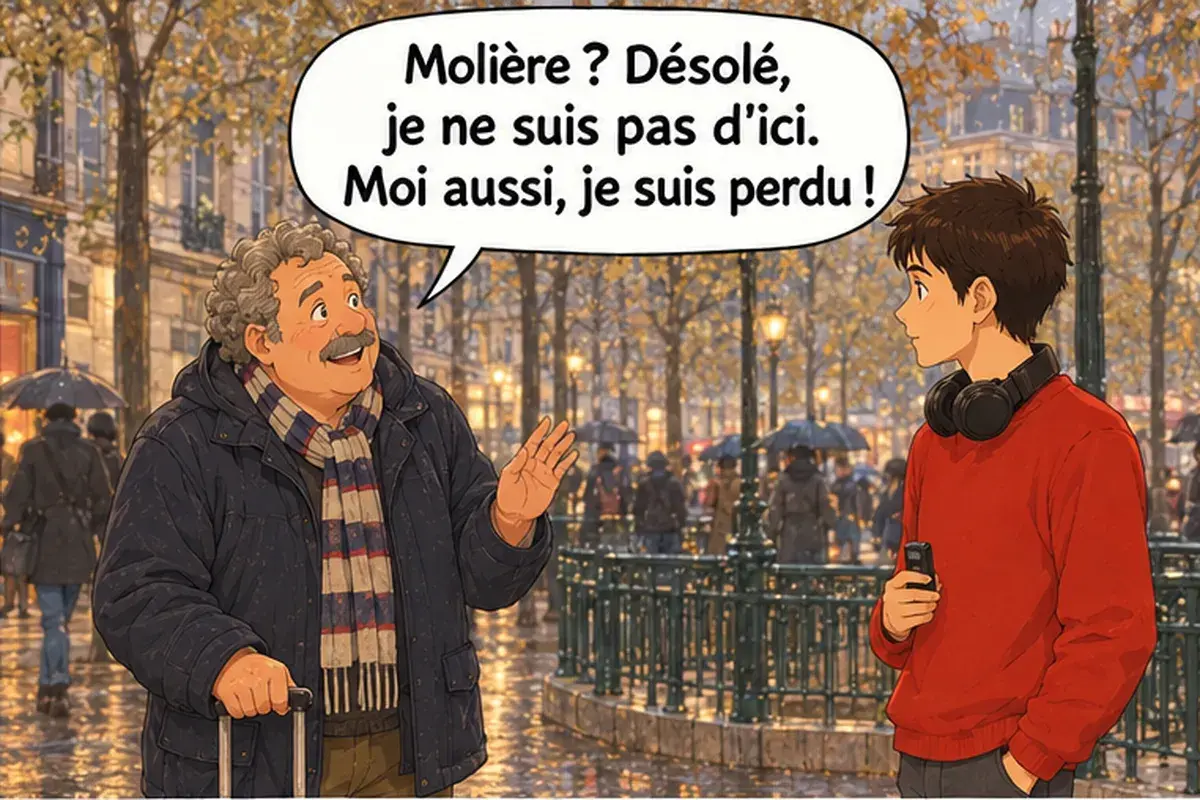
- Passant
Molière ? Désolé, je ne suis pas d'ici. Moi aussi, je suis perdu !
Molière? Sorry, I'm not from around here. I'm lost too! (man speaking)
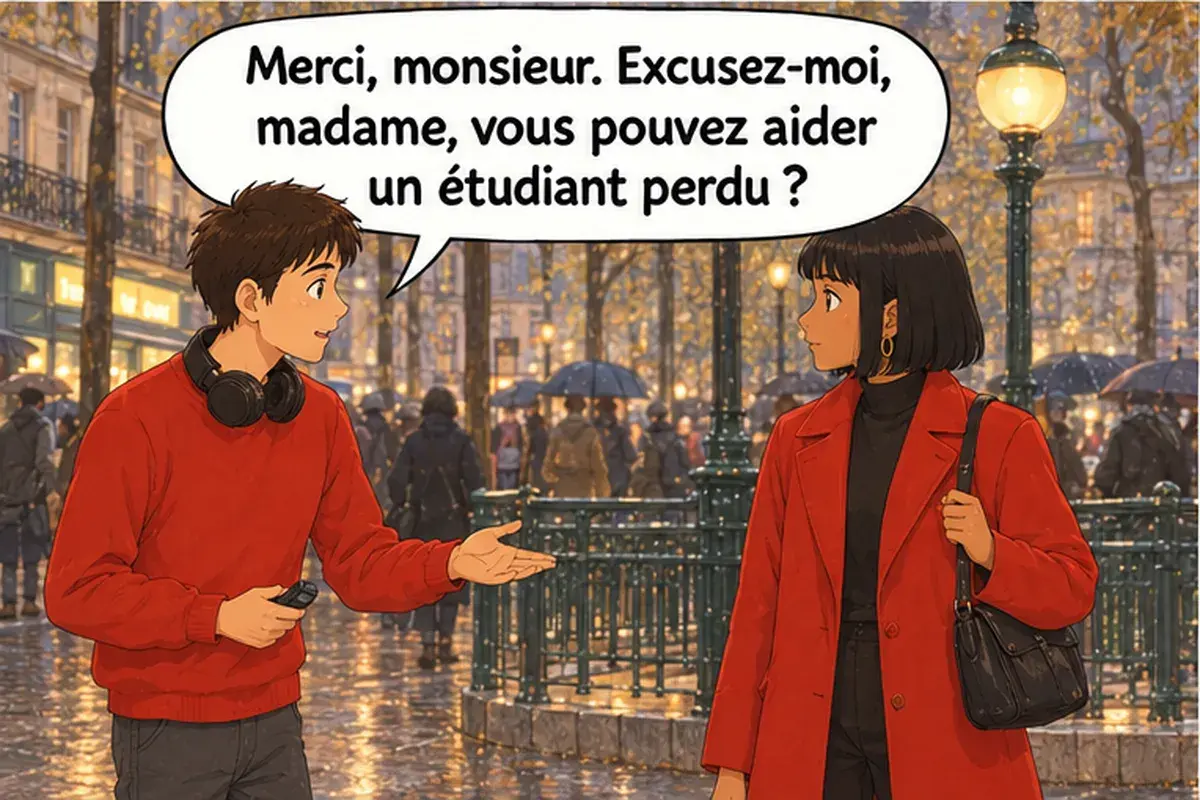
- Pacha
Merci, monsieur. Excusez-moi, madame, vous pouvez aider un étudiant perdu ?
Thank you, sir. Excuse me, ma'am, can you help a lost student? (man speaking, formal)
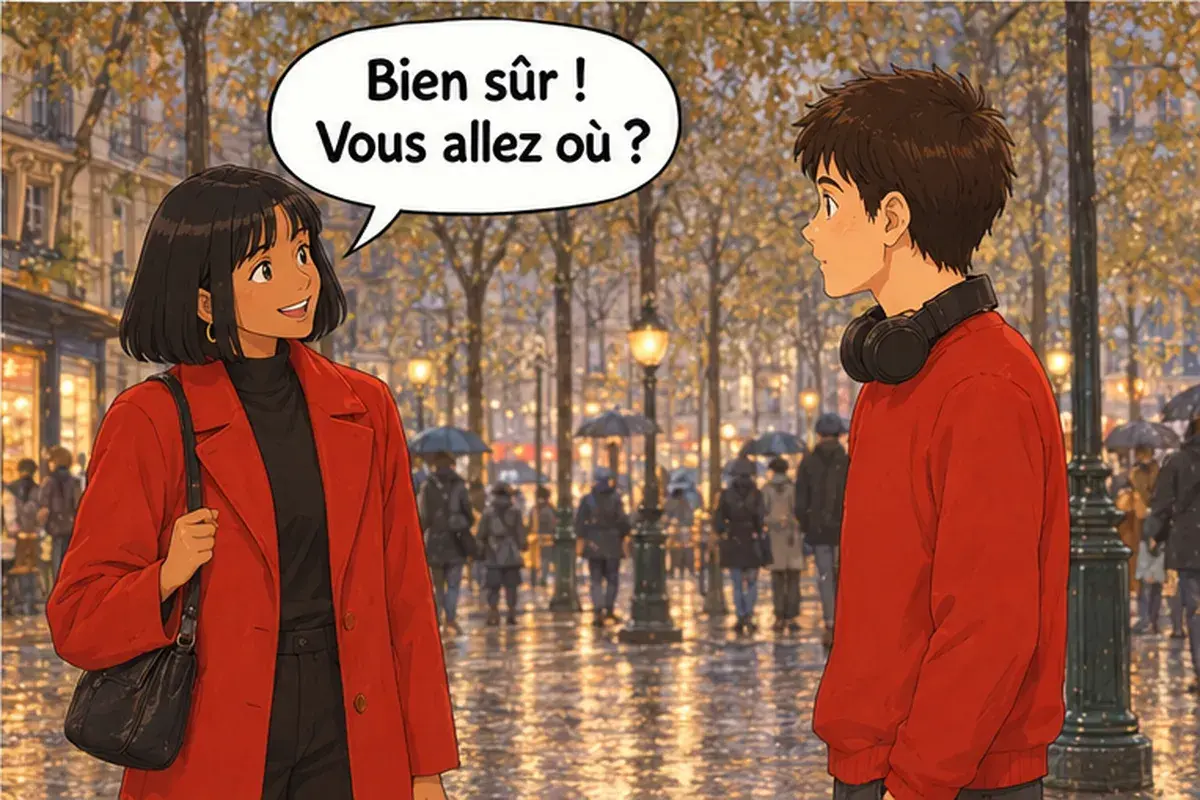
- Passante
Bien sûr ! Vous allez où ?
Of course! Where are you going? (formal)
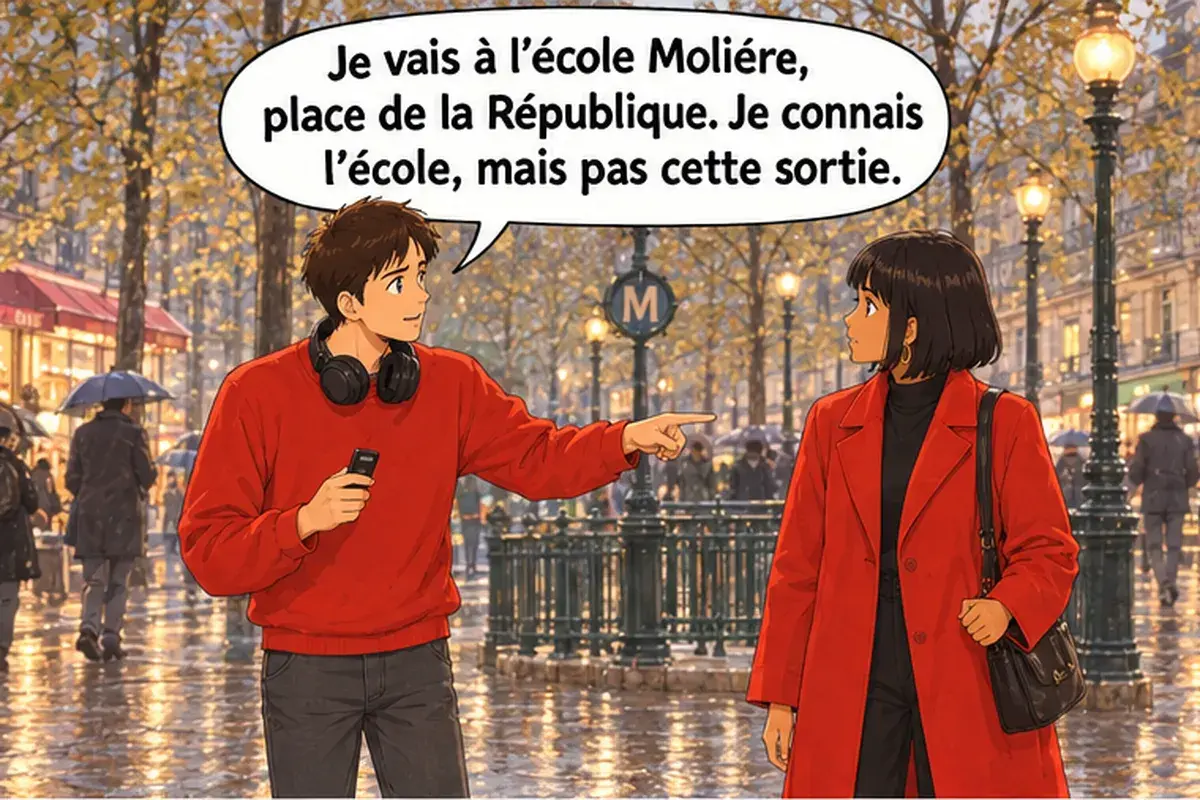
- Pacha
Je vais à l'école Molière, place de la République. Je connais l'école, mais pas cette sortie.
I'm going to the Molière school, on Place de la République. I know the school, but not this exit.
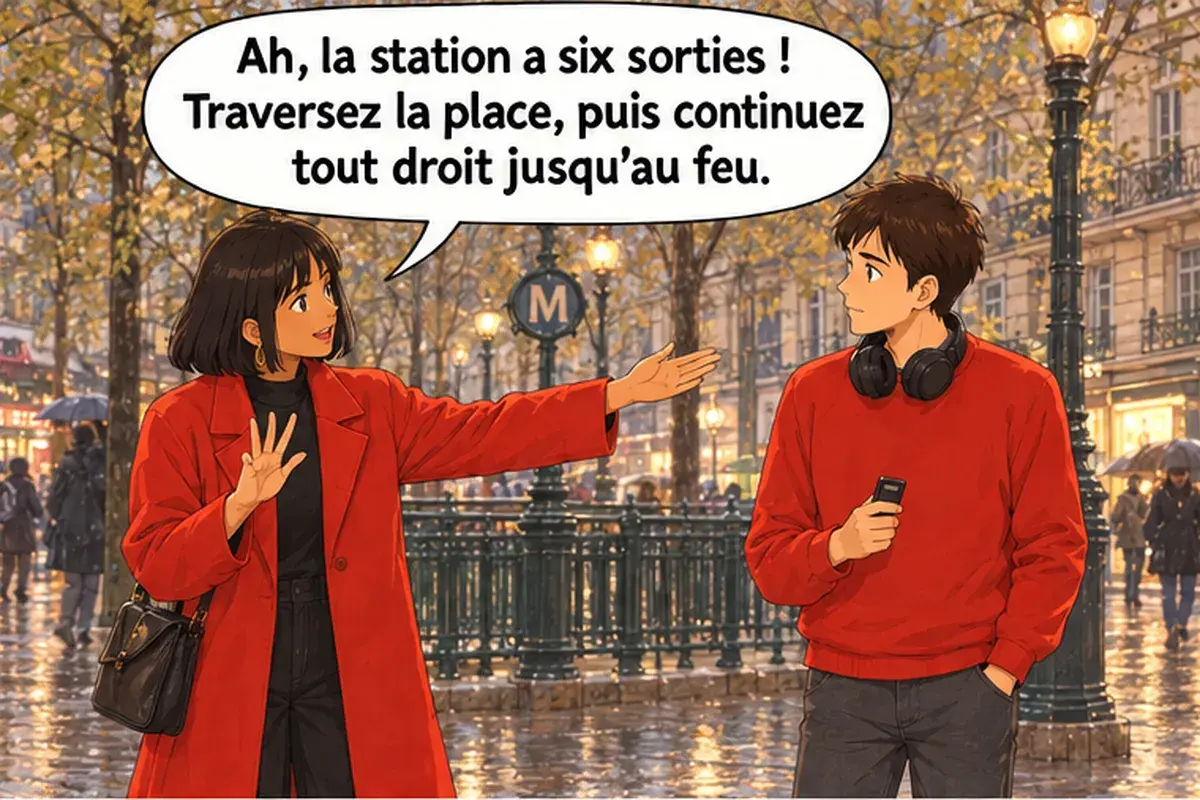
- Passante
Ah, la station a six sorties ! Traversez la place, puis continuez tout droit jusqu'au feu.
Oh, the station has six exits! Cross the square, then keep going straight as far as the traffic light. (formal)
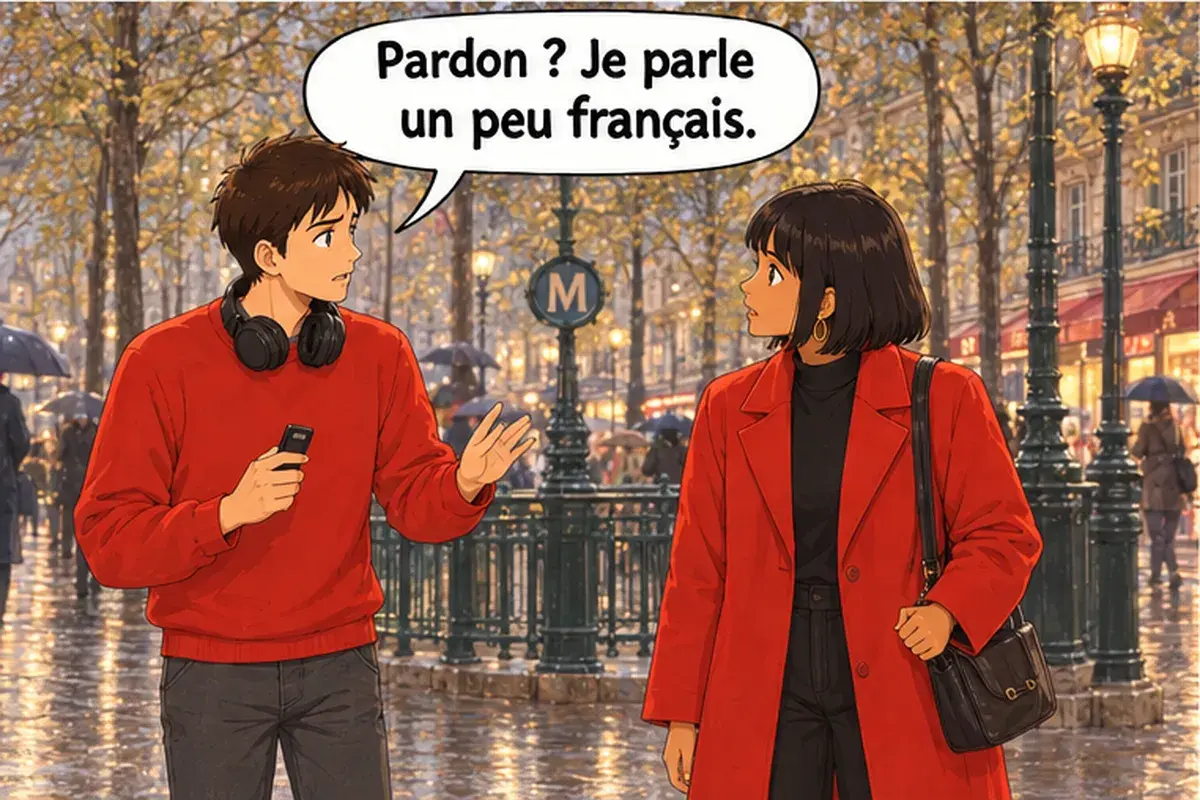
- Pacha
Pardon ? Je parle un peu français.
Sorry? I speak a little French.
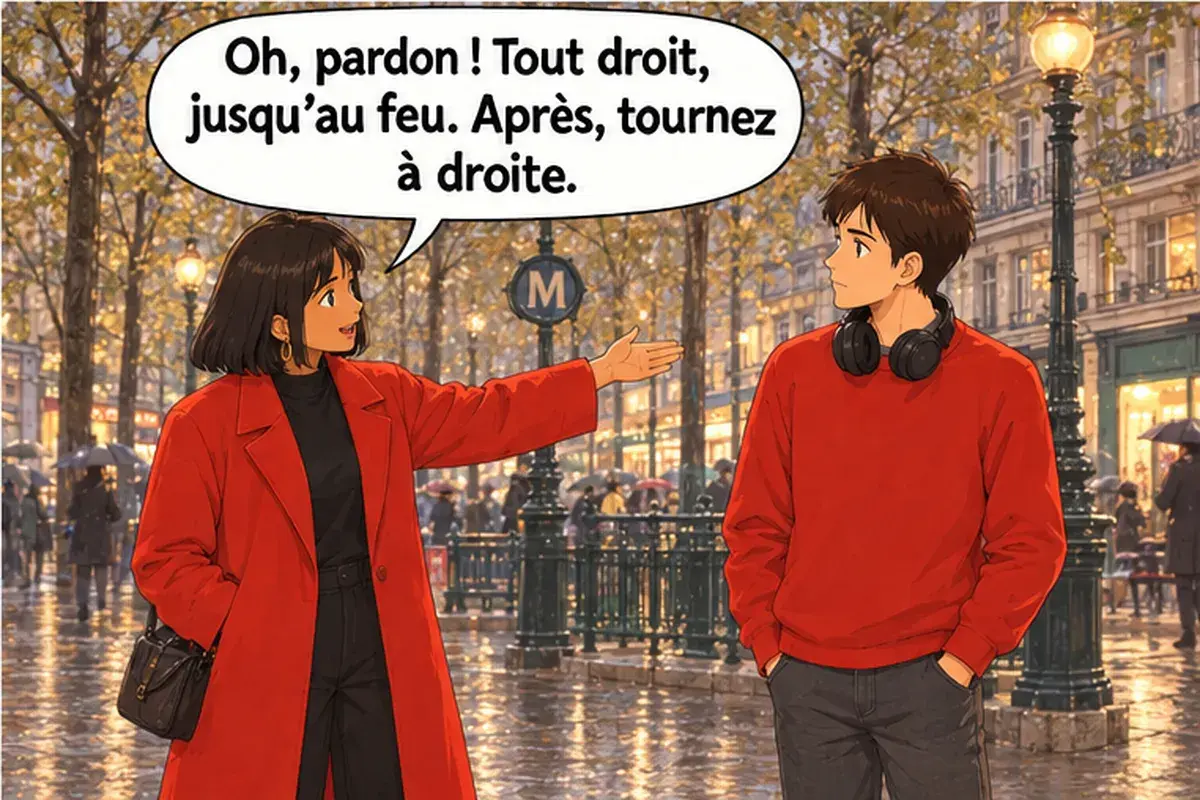
- Passante
Oh, pardon ! Tout droit, jusqu'au feu. Après, tournez à droite.
Oh, sorry! Straight ahead, as far as the traffic light. Then turn right. (formal)
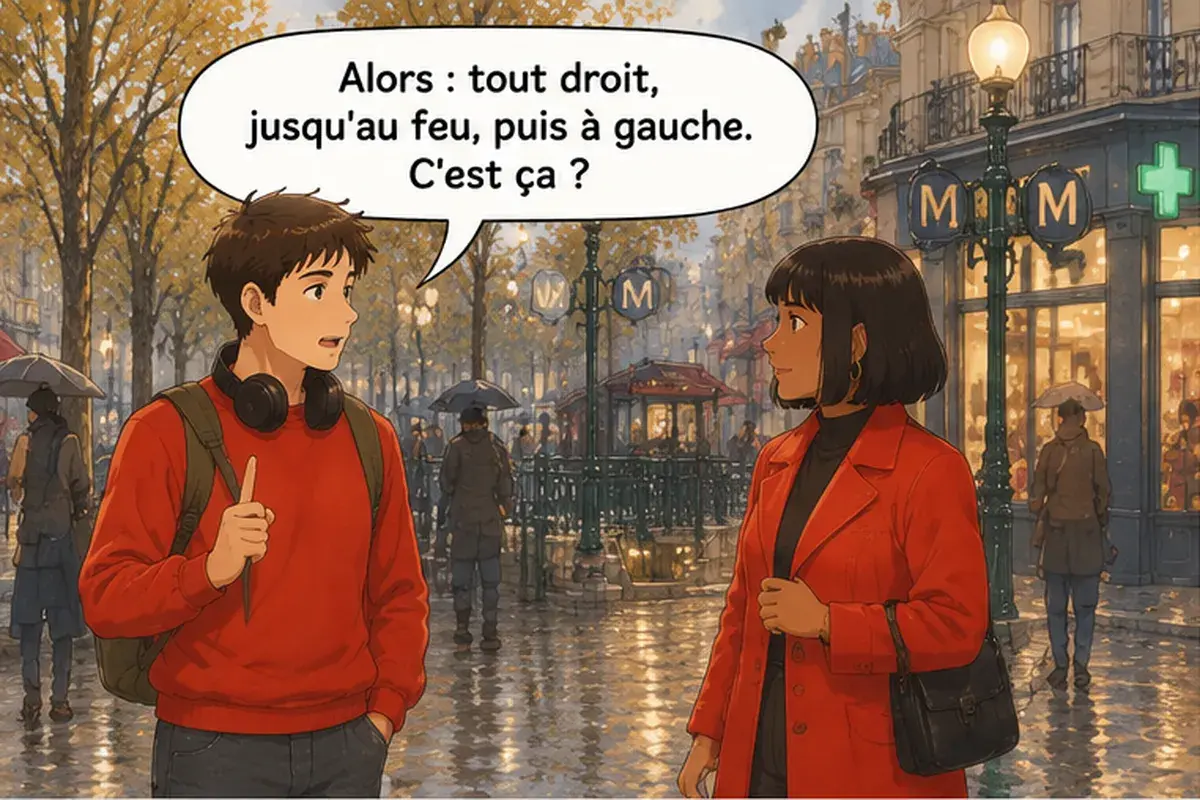
- Pacha
Alors : tout droit, jusqu'au feu, puis à gauche. C'est ça ?
So: straight ahead, as far as the traffic light, then left. Is that right?
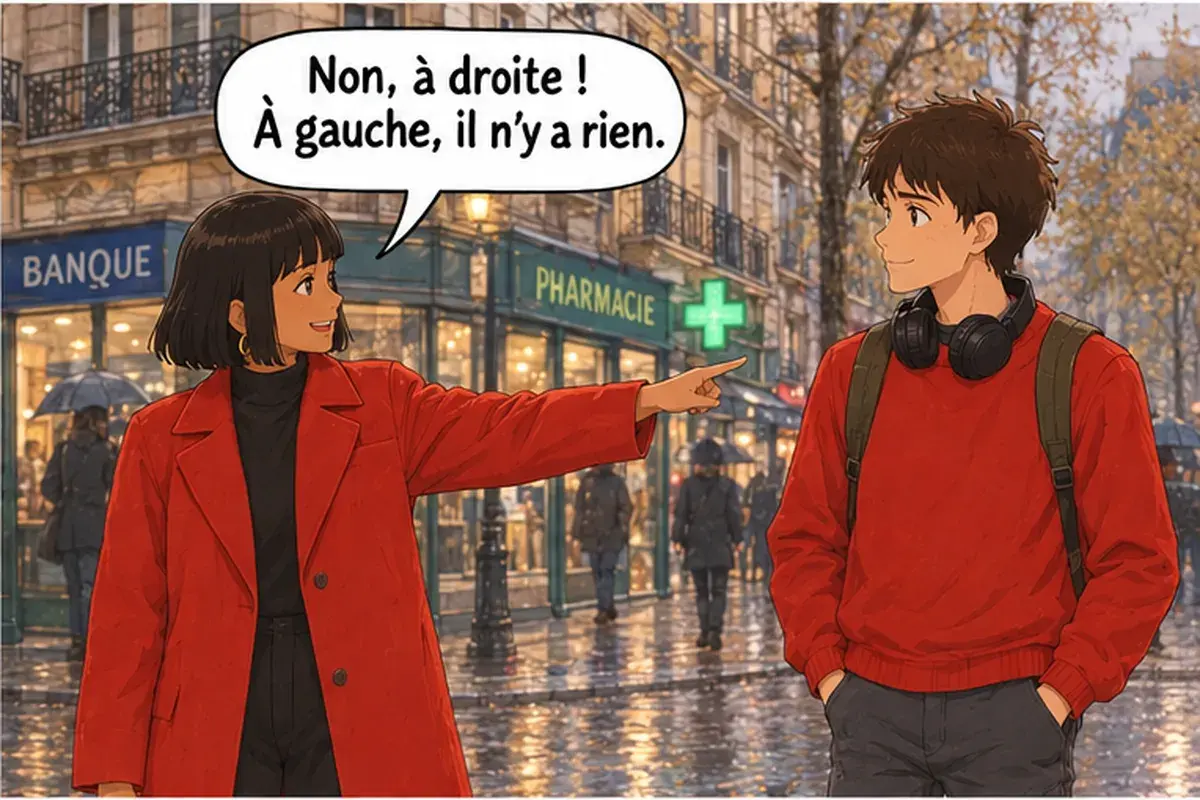
- Passante
Non, à droite ! À gauche, il n'y a rien.
No, right! There's nothing on the left.
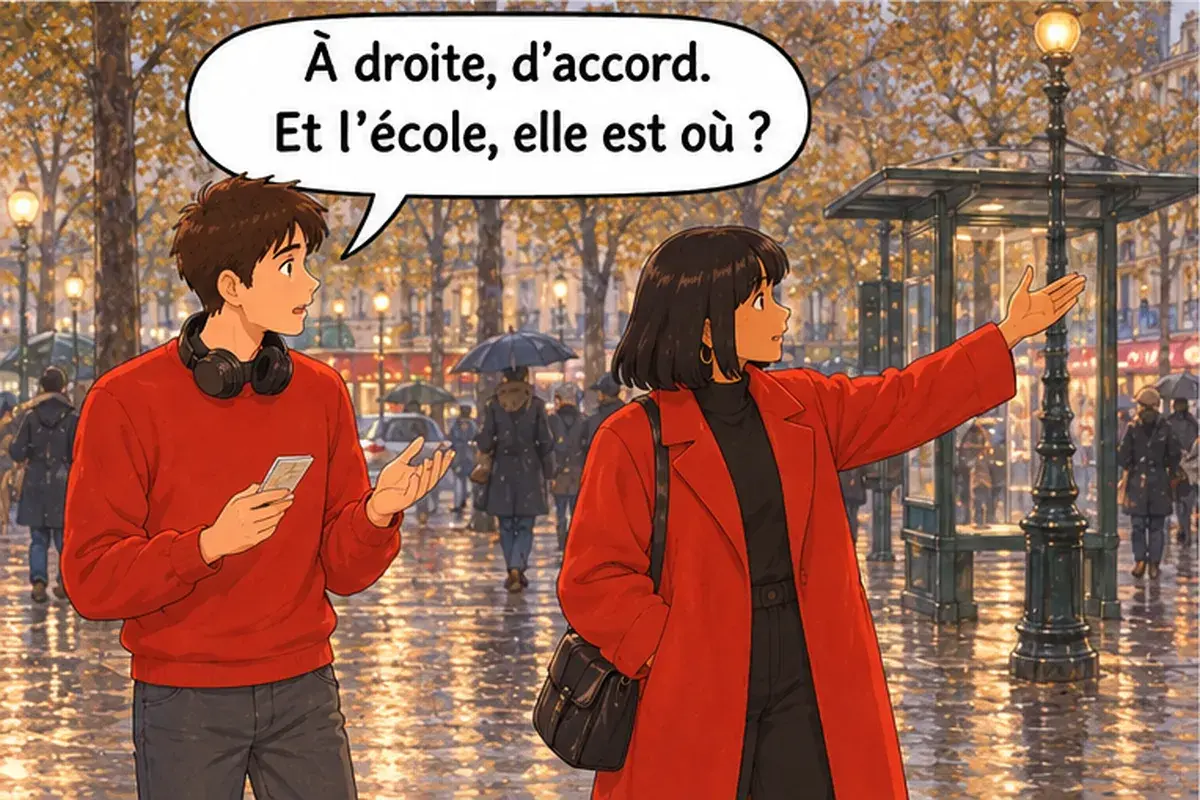
- Pacha
À droite, d'accord. Et l'école, elle est où ?
Right, OK. And where is the school?
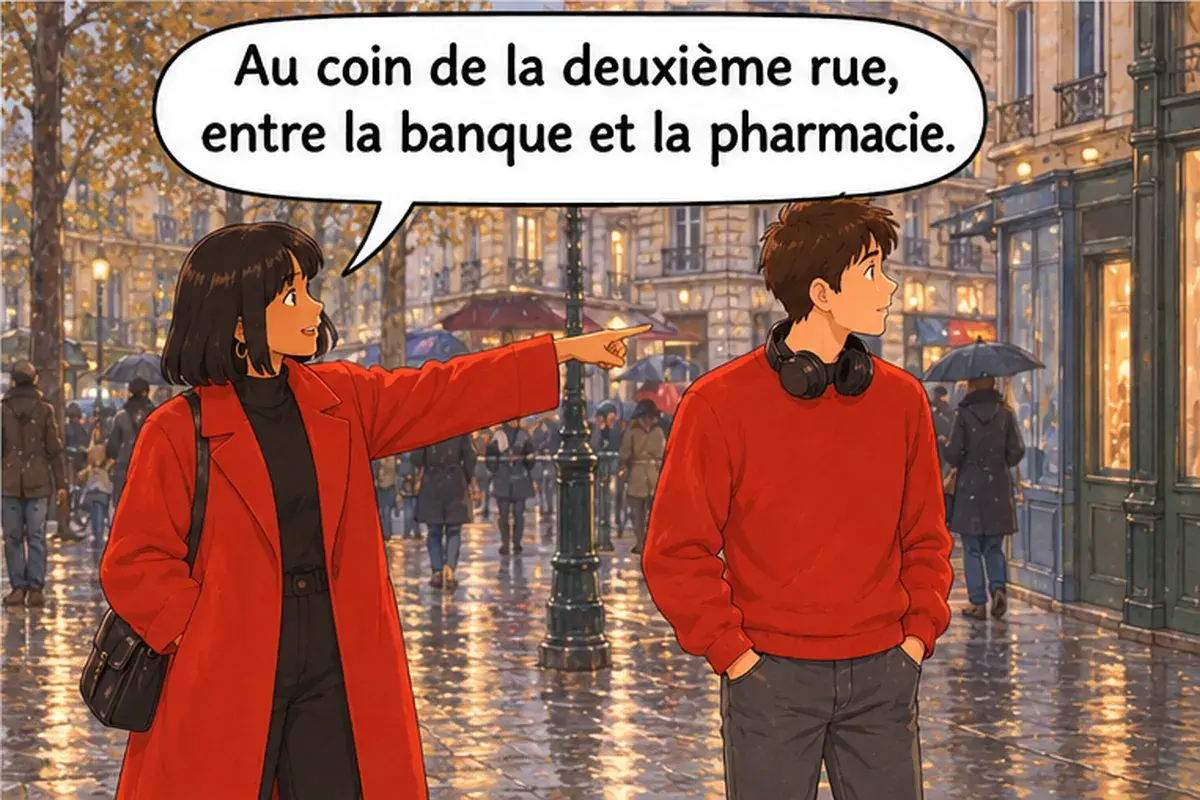
- Passante
Au coin de la deuxième rue, entre la banque et la pharmacie.
On the corner of the second street, between the bank and the pharmacy.
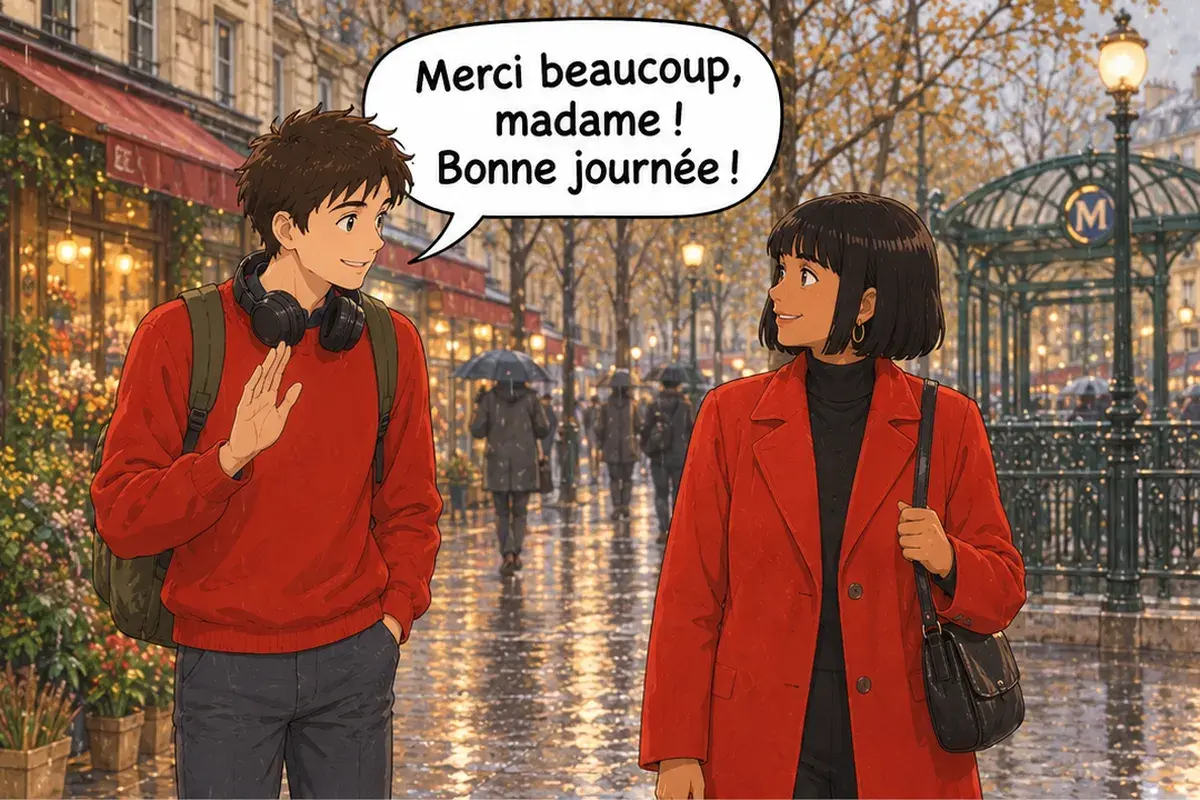
- Pacha
Merci beaucoup, madame ! Bonne journée !
Thank you very much, ma'am! Have a nice day!
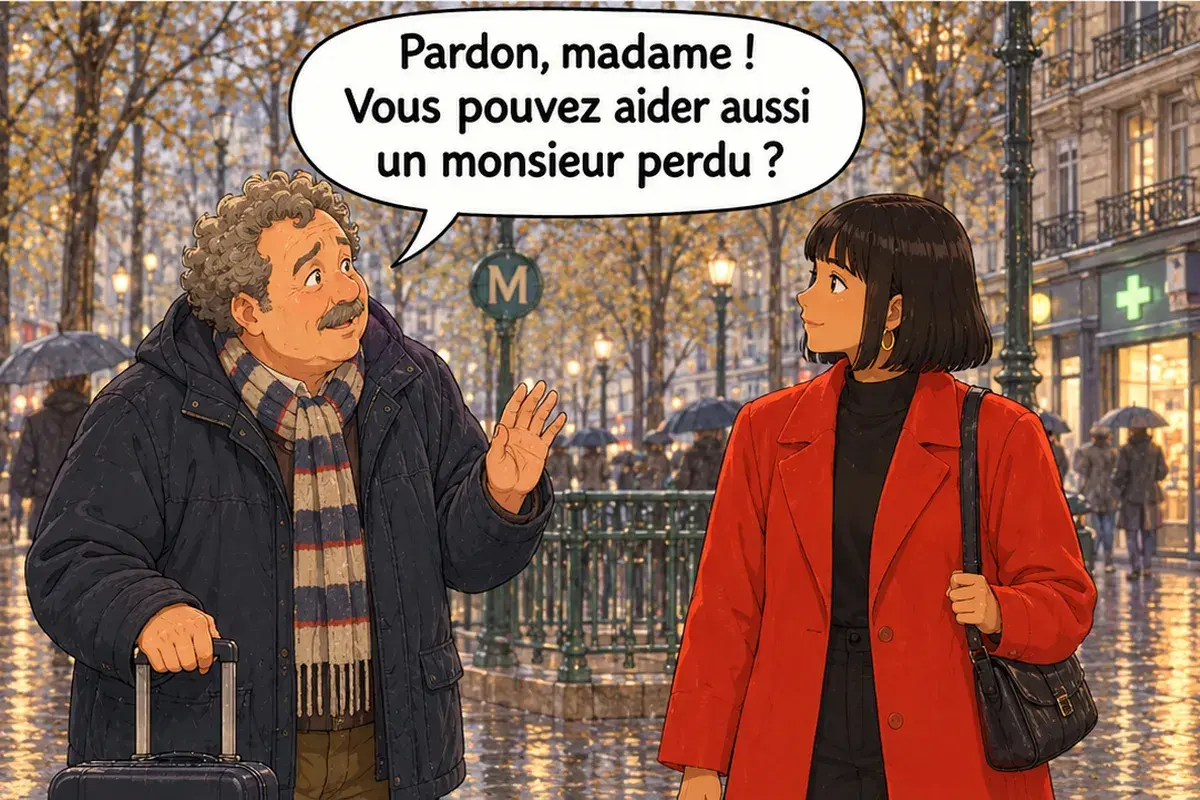
- Passant
Pardon, madame ! Vous pouvez aider aussi un monsieur perdu ?
Excuse me, ma'am! Can you help a lost gentleman too? (formal)
Grammar for this text
- Excusez-moi, monsieur. — excusez-moi is a ready-made polite phrase, "excuse me": that's how you start talking to a stranger you call vous (the rule comes at A2).
- Vous savez où est l'école Molière ? — a question made with a rising voice. After où (where), the verb comes before the noun: où est l'école — where the school is. savez is the vous form of savoir (to know), an irregular verb from this unit.
- Désolé, je ne suis pas d'ici. — "I'm not from around here": d'ici = de + ici, literally "from here".
- Vous allez où ? and Je vais à l'école Molière — allez and vais are the vous and je forms of aller (to go); they don't look like the infinitive. After aller comes à; before a vowel it's à l'.
- Je connais l'école, mais pas cette sortie. — connais is the je form of connaître (to know), used for places and people. cette means "this" before a feminine noun.
- Vous pouvez aider un étudiant perdu ? — pouvez is the vous form of pouvoir (can), followed by an infinitive. It's a polite way to ask instead of giving an order. perdu — lost; a woman would say perdue.
- Pardon ? Je parle un peu français. — Pardon ? with a rising voice means "sorry?": that's how you ask someone to repeat. After that come ready-made vous commands: Traversez la place, puis continuez tout droit jusqu'au feu and tournez à droite — traversez, continuez, tournez mean "cross", "keep going", "turn" (the rule comes at A2). jusqu'au = jusqu'à + le.
Words and grammar of the unit: Ask for directions and take the metro.
Learn the words from the texts with flashcards
In the app, you can tap any word in a text to see its translation, forms and examples, and new words stick with flashcards. 15 minutes a day.
Start for freeEverything is open for free. No card needed to sign up.