

French dialogue with translation · A1 · 10 lines
Ça fait soixante-quinze euros That'll be seventy-five euros
Comic · 10 panels
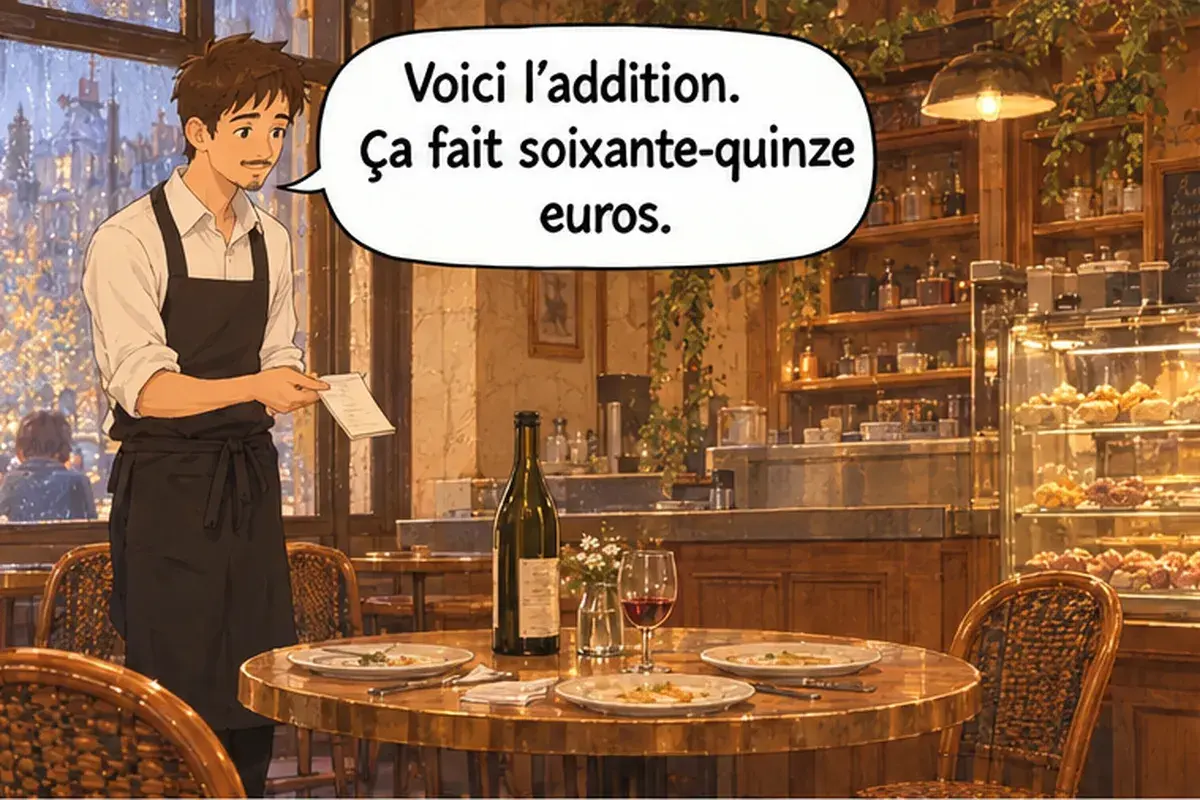
- Serveur
Voici l'addition. Ça fait soixante-quinze euros.
Here's the check. That'll be seventy-five euros.
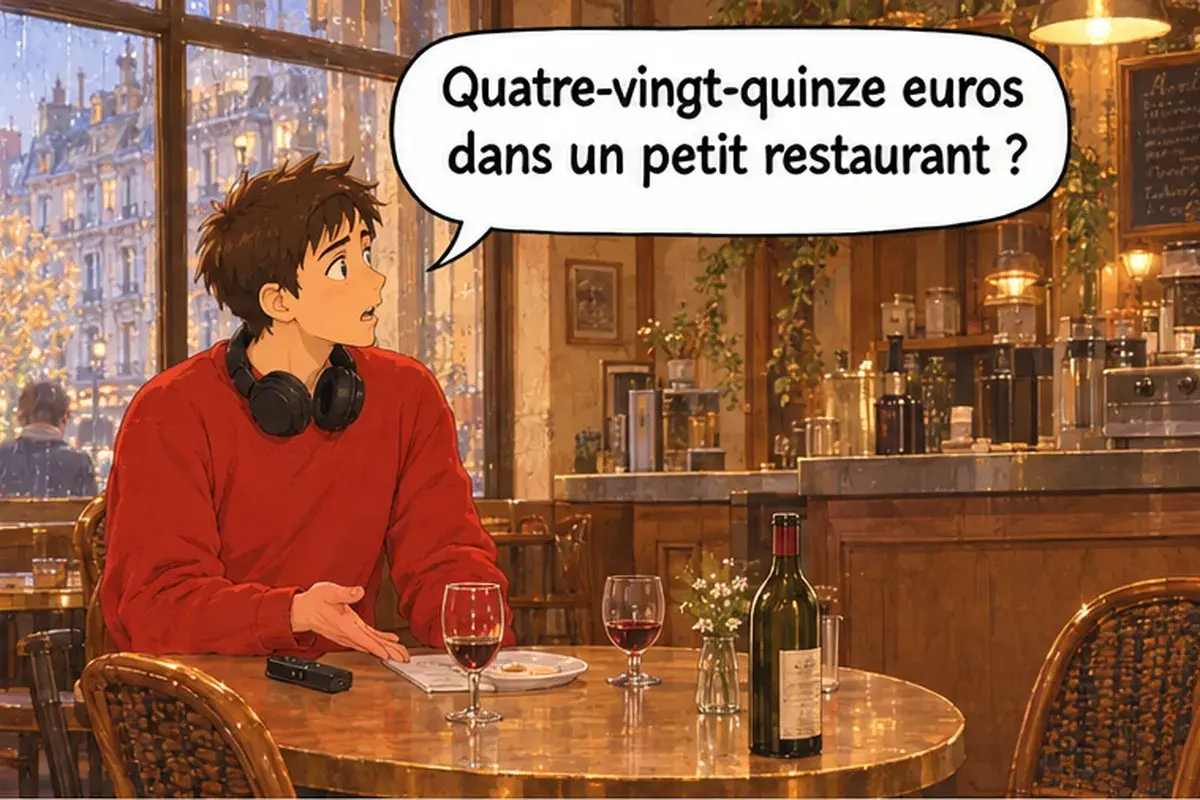
- Pacha
Quatre-vingt-quinze euros dans un petit restaurant ?
Ninety-five euros in a little restaurant?
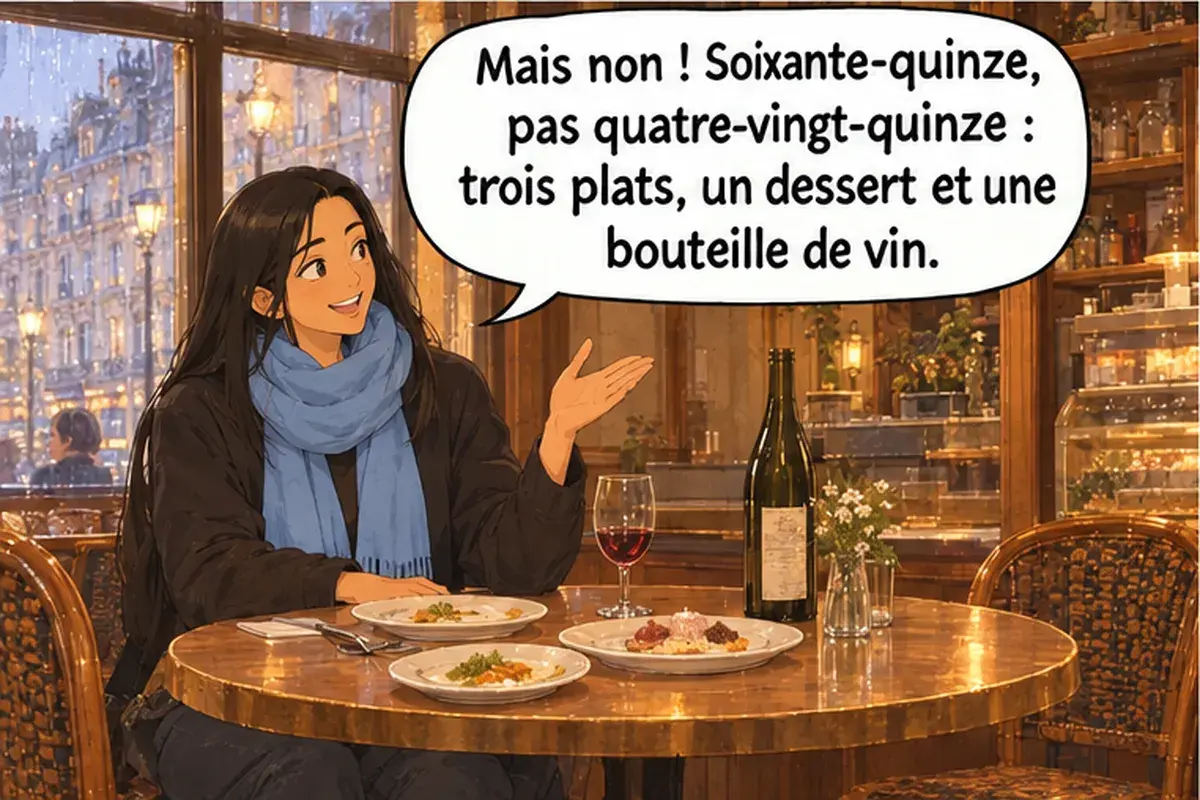
- Inès
Mais non ! Soixante-quinze, pas quatre-vingt-quinze : trois plats, un dessert et une bouteille de vin.
Of course not! Seventy-five, not ninety-five: three dishes, a dessert and a bottle of wine.
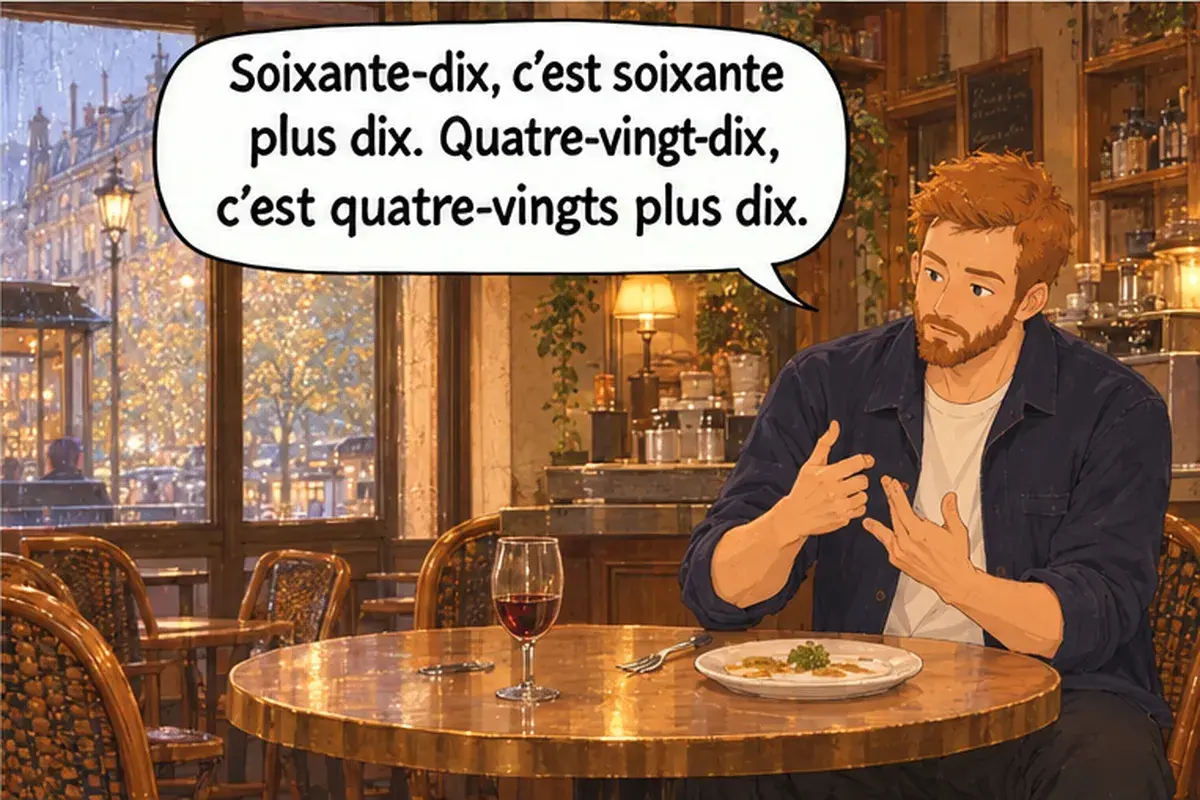
- Hugo
Soixante-dix, c'est soixante plus dix. Quatre-vingt-dix, c'est quatre-vingts plus dix.
Seventy is sixty plus ten. Ninety is eighty plus ten.
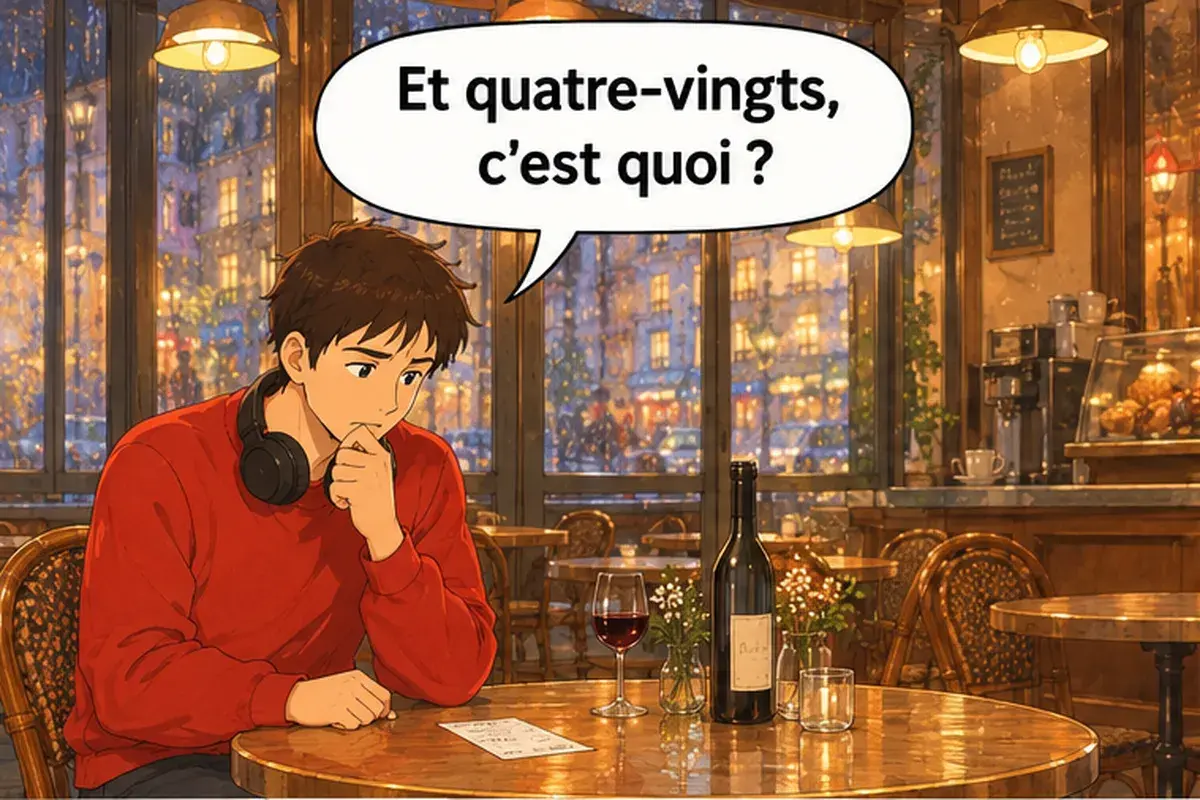
- Pacha
Et quatre-vingts, c'est quoi ?
And eighty, what's that?
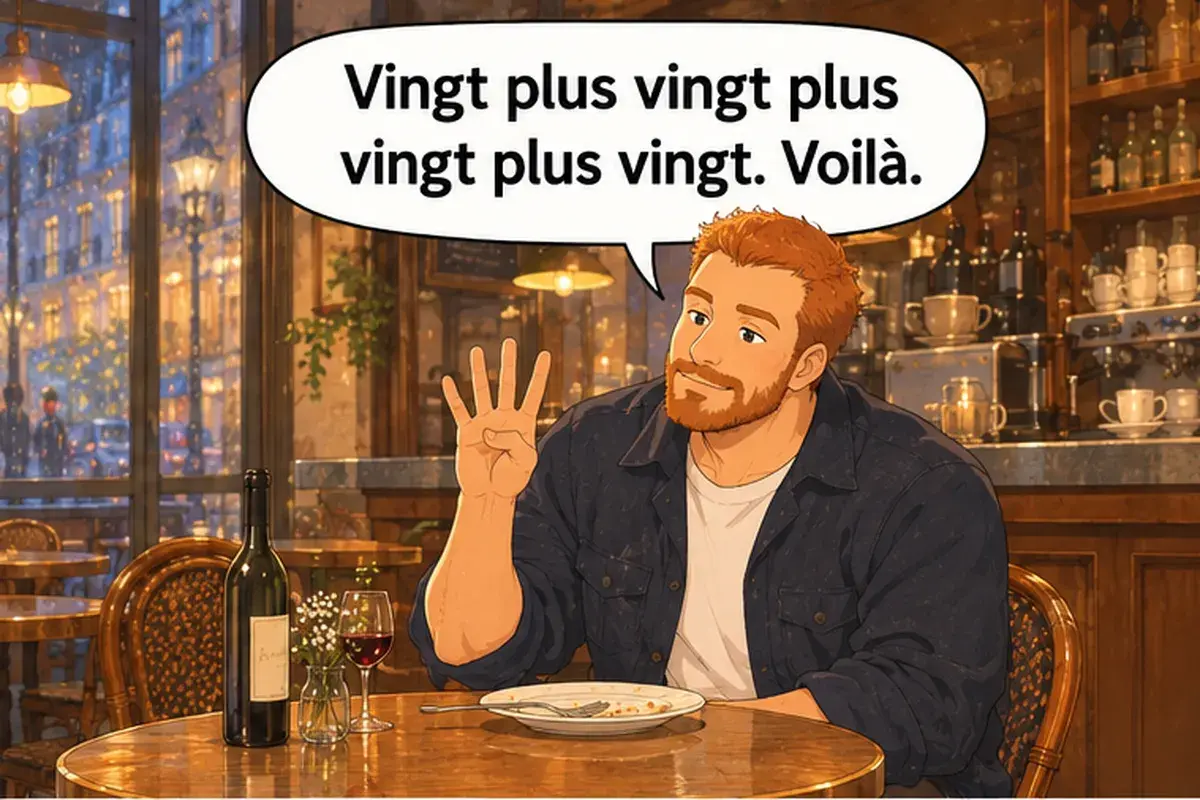
- Hugo
Vingt plus vingt plus vingt plus vingt. Voilà.
Twenty plus twenty plus twenty plus twenty. There you go.
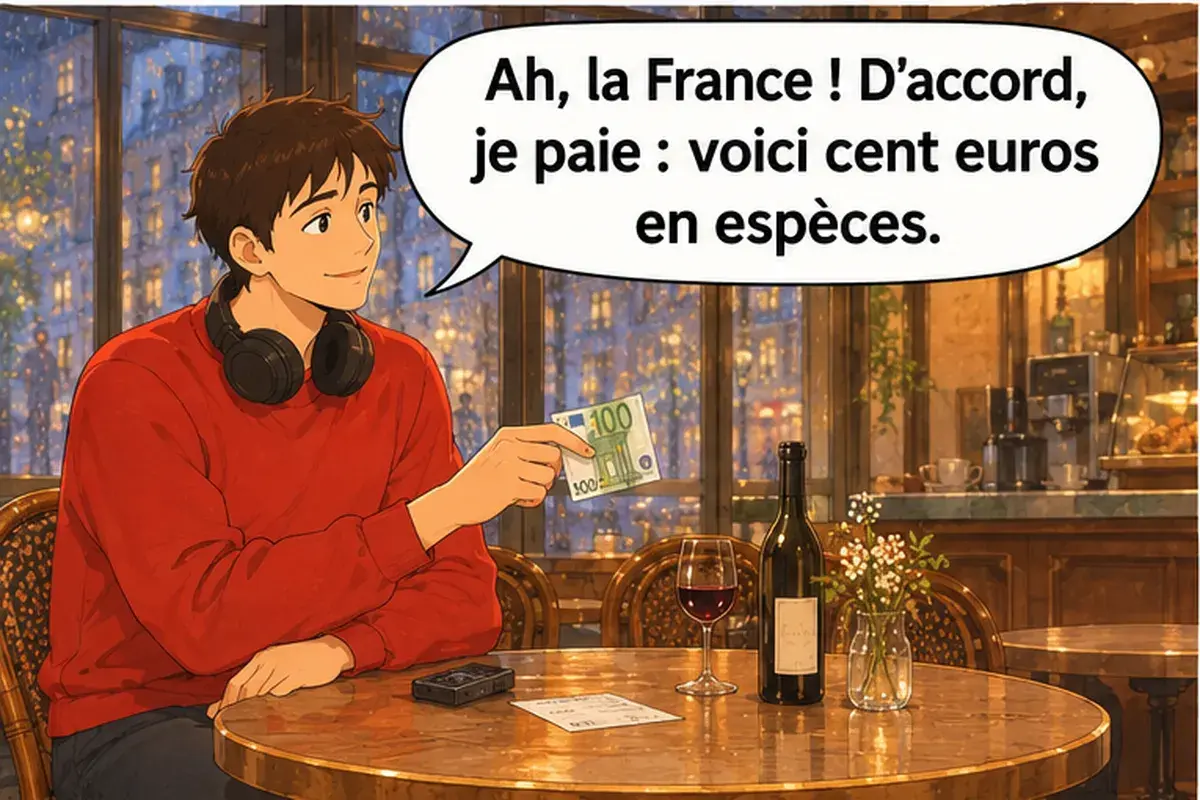
- Pacha
Ah, la France ! D'accord, je paie : voici cent euros en espèces.
Ah, France! OK, I'm paying: here's a hundred euros in cash.
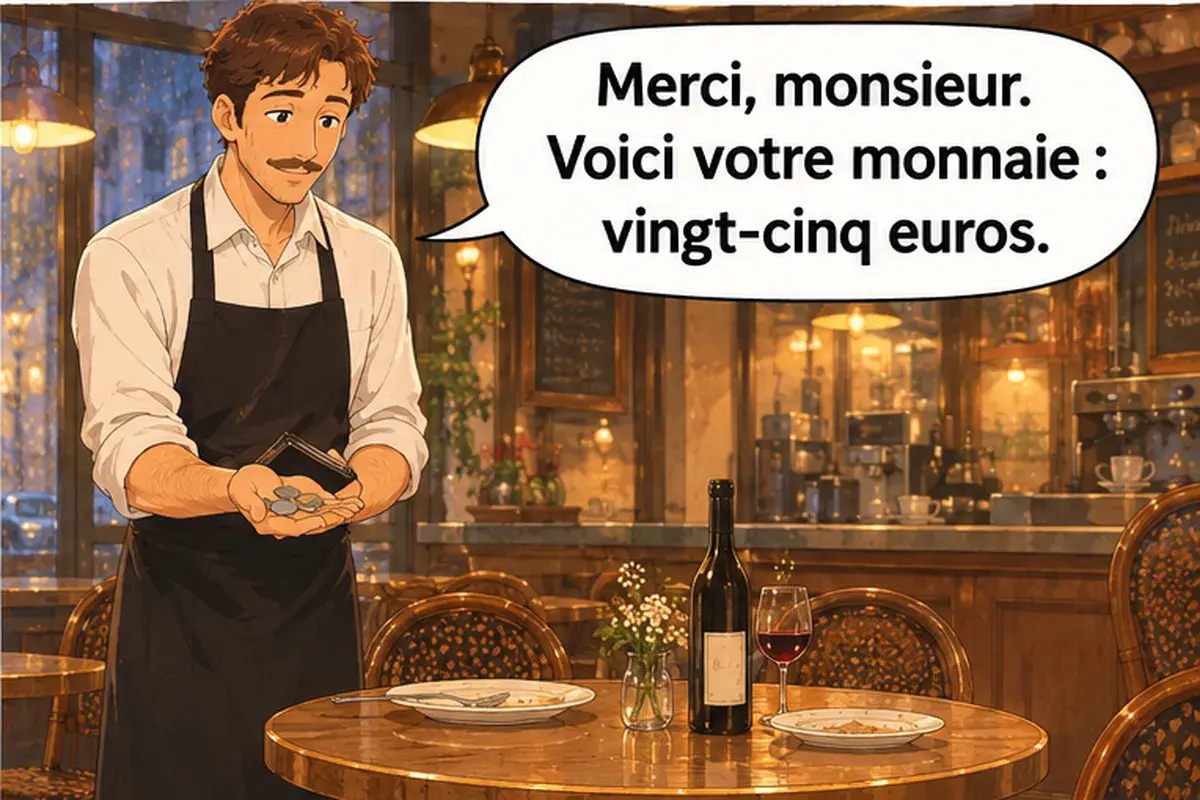
- Serveur
Merci, monsieur. Voici votre monnaie : vingt-cinq euros.
Thank you, sir. Here's your change: twenty-five euros.
- Hugo
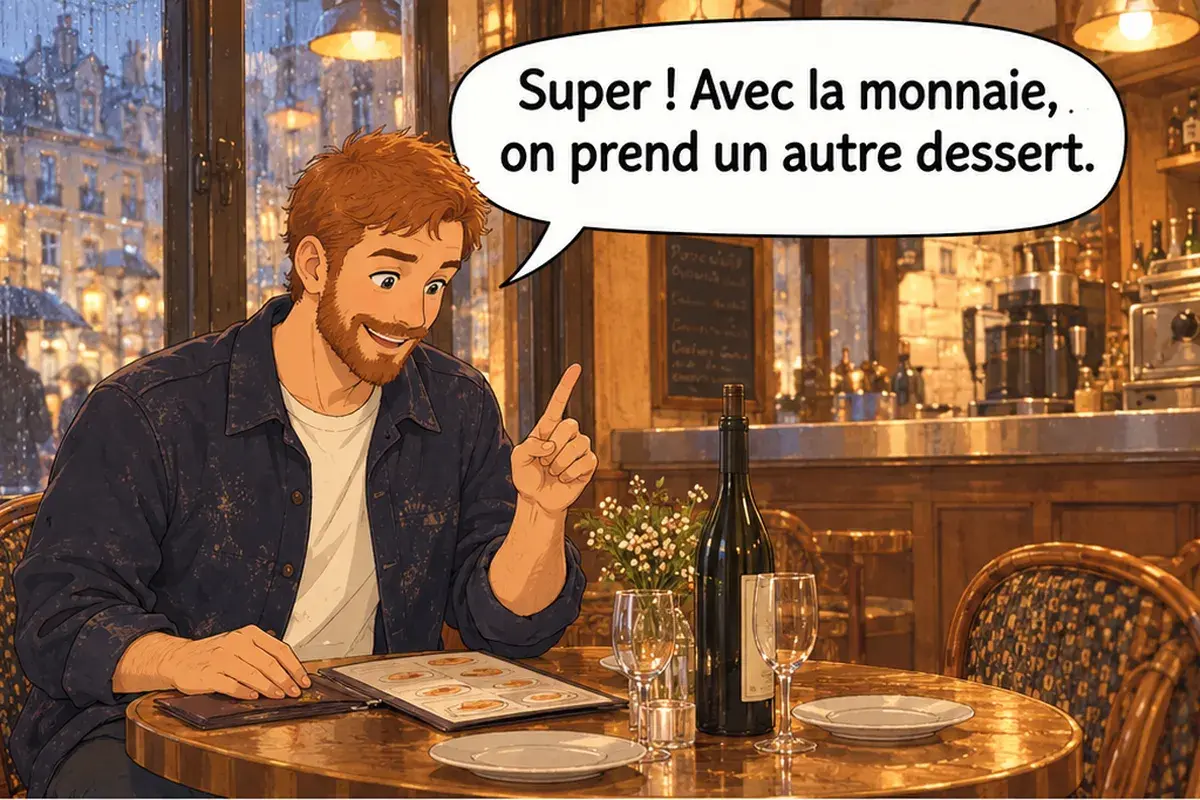
Super ! Avec la monnaie, on prend un autre dessert.
Great! With the change, we'll have another dessert.
- Inès
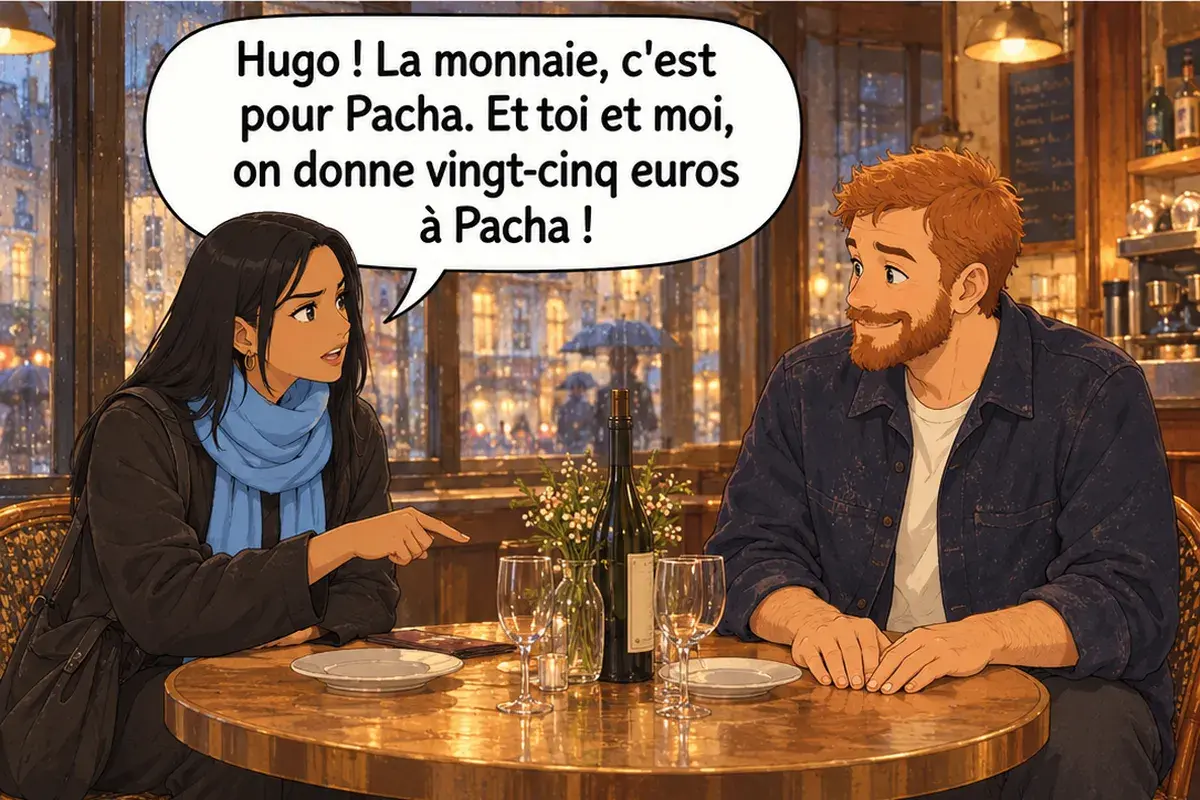
Hugo ! La monnaie, c'est pour Pacha. Et toi et moi, on donne vingt-cinq euros à Pacha !
Hugo! The change is for Pacha. And you and I, we're giving Pacha twenty-five euros!
Grammar for this text
- Ça fait soixante-quinze euros: soixante-quinze is 60 + 15 = 75 ("sixty-fifteen"), and quatre-vingt-quinze is 80 + 15 = 95 ("four-twenty-fifteen"). Pacha heard the wrong word. Listen for quatre: it means the number is 80 or more.
- Soixante-dix, c'est soixante plus dix. — Hugo explains with simple addition: seventy is sixty plus ten, ninety is eighty plus ten. Plus is the same word as in English.
- Vingt plus vingt plus vingt plus vingt. That's how Hugo explains quatre-vingts: four times twenty. A joke with a straight face.
- je paie means "I pay", the je form of payer. In verbs ending in -yer, the y changes to i in the je, tu, il and ils forms (tu paies, ils paient), but stays in nous payons and vous payez. Je paye is also correct. En espèces means "in cash".
- Voici votre monnaie: monnaie means "change" (the money you get back, and also coins).
- on prend un autre dessert: on here means "we", prend is a form of prendre (to take), and un autre means "another". In La monnaie, c'est pour Pacha. Et toi et moi, on donne vingt-cinq euros à Pacha, donne means "give", from donner, and toi et moi means "you and me". Pacha paid for everyone, and his friends pay him back their share: 75 ÷ 3 = 25 euros each.
Words and grammar of the unit: Order breakfast and ask for the check.
Learn the words from the texts with flashcards
In the app, you can tap any word in a text to see its translation, forms and examples, and new words stick with flashcards. 15 minutes a day.
Start for freeEverything is open for free. No card needed to sign up.